



Cody Christie
-
Posts
7,827 -
Joined
-
Last visited
-
Days Won
5
Content Type
Profiles
Minnesota Twins News, Rumors & Analysis
Minnesota Twins Videos
2026 Minnesota Twins Top Prospect Rankings
2022 Minnesota Twins Draft Picks & Signing Bonuses
Minnesota Twins Trade & Free Agent Rumors
Minnesota Twins Fan Guides & Resources
2023 Minnesota Twins Draft Picks & Signing Bonuses
The Minnesota Twins Players Project
2024 Minnesota Twins Draft Picks & Signing Bonuses
2025 Minnesota Twins Draft Picks & Signing Bonuses
2026 Minnesota Twins Draft Picks & Signing Bonuses
Forums
Blogs
Events
Store
Downloads
Gallery
Everything posted by Cody Christie
-
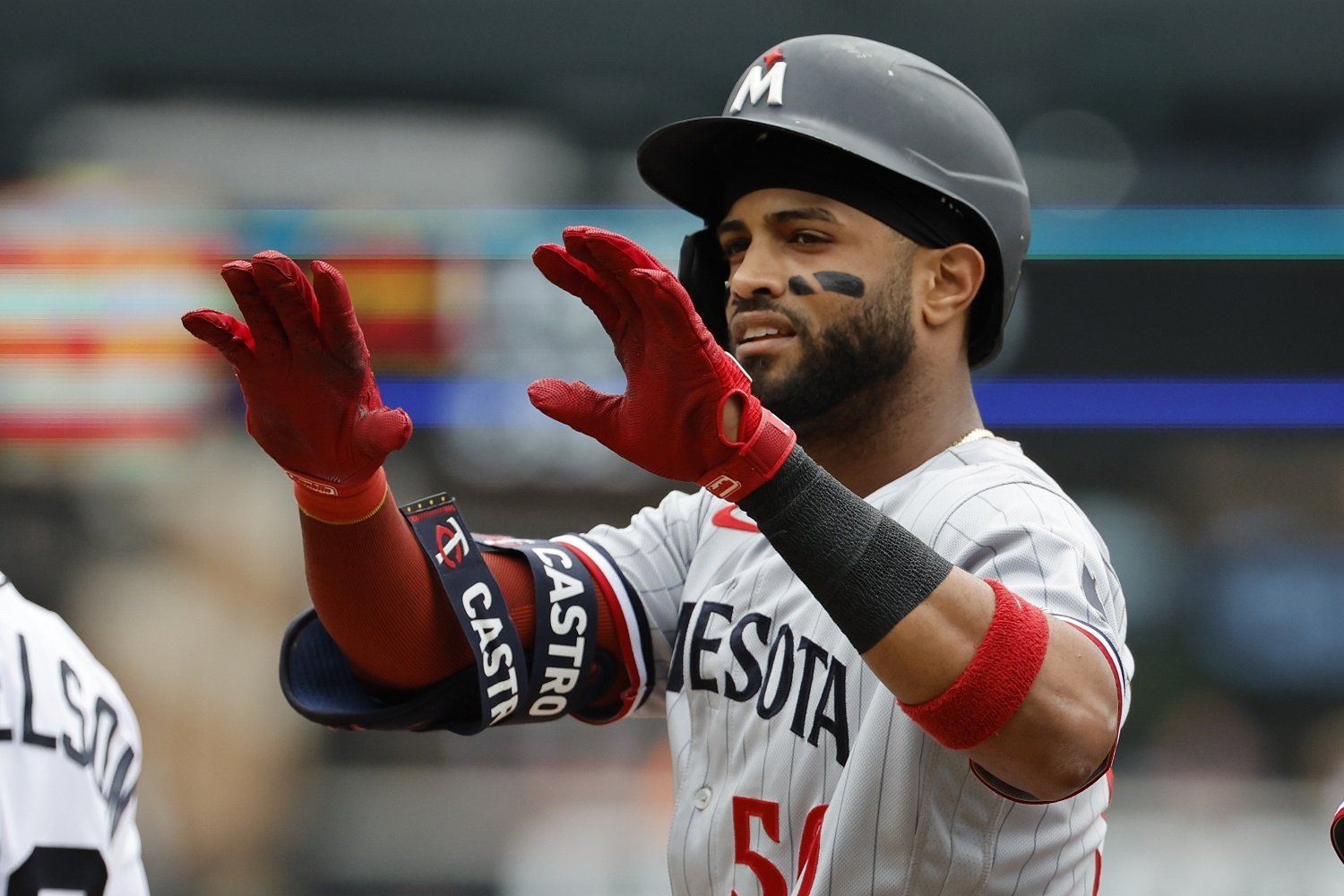 Last season, Willi Castro entered spring training as a non-roster invitee who had to prove he belonged on the big-league roster. The Twins had multiple injured players, and Castro performed well in the spring, with a .973 OPS while playing four different defensive positions. Entering the season, Tom Froemming crowned Castro the 2023 Sire of Fort Myers, based on his surprising spring. Castro was only 26 years old, and there was room for him to continue developing. His value to the Twins became even clearer during the regular season. Castro proved himself integral to the Twins in the regular season, playing 124 games and accumulating the third-highest rWAR among Minnesota hitters, behind Ryan Jeffers and Max Kepler. He hit .257/.339/.411, with 32 extra-base hits and a 106 OPS+. On the bases, Castro single-handedly moved the Twins from one of baseball’s worst baserunning teams to a slightly below-average one with his 33 steals in 38 chances. His defensive flexibility also added to his value, as he played every position except for first base and catcher. The strong spring wasn't the reason why he thrived, but it did give him the opportunity to prove himself. “We had him last year at 25 as an NRI in camp. That’s not standard practice,” Twins manager Rocco Baldelli told Twins Daily’s Nick Nelson over the weekend. “You usually don't get good athletic, switch-hitting, multi-positional guys. He did more than anyone could’ve expected him to last year." Entering 2024, Castro wasn’t fighting for a spot on the Twins roster. Instead, he entered camp knowing he’d be used at multiple defensive positions, with a chance to improve his offensive performance. Free to focus on that aspect of things, he's hitting the snot out of the ball this spring. Three of the 21 hardest-hit balls of his entire career, in any Statcast-covered setting, have come during spring training. Entering play on Monday, Castro had a 1.000 OPS this spring, with three extra-base hits in 30 plate appearances. “At that age, there’s still upside,” Baldelli told Nelson. “So, if he’s getting stronger still and doing things like that, that wouldn’t be surprising for a guy that's only 26 years old." So, what’s next for Castro, and is his spring performance any indication of further development? Projection systems view Castro as taking a step back, which can be expected when using his performance from multiple years. ZiPS projects Castro to hit .247/.306/.385, with a 93 OPS+ and a 0.7 WAR. Baseball-Reference expects .248/.312/.398, with 34 extra-base hits and 20 stolen bases over 444 plate appearances. There is regression baked into any projection system, but Castro may have started making adjustments at the end of last season. Last September, Castro showed signs of an improved approach at the plate. Some players wear down at the season’s end, but Castro had his best month in September. In 23 games, he hit .313/.398/.550, with nine extra-base hits and four stolen bases. His OPS was nearly 100 points higher than in any other month of the season. He was also a spark plug in the lineup when the Twins were winning last season, as he posted an .852 OPS, which was 214 points higher than when he played in the team’s losses. Other players will be impacted if Castro continues to hit well when the regular season begins. Matt Wallner has struggled this spring, going 2-for-29 (.069 BA) in 35 plate appearances. He is scheduled to be the team’s regular left fielder, but Castro can take playing time away from the left-handed slugger. Minnesota also acquired Manuel Margot to back up Byron Buxton in center field, but he, too, has been struggling this spring (.086 BA with no extra-base hits). Castro was one of the team’s center field options before they acquired Margot, and the team could turn to him if Buxton misses time. Contending teams typically get surprise performances from different parts of the roster. Castro certainly surprised in his first year with the Twins, but his age and development might point to him being even better in 2024. What role will Castro play this season? Should fans be excited about the way he is hitting the ball this spring? Leave a COMMENT and start the discussion.
- 20 comments
-
- 9
-

-

-
- willi castro
- matt wallner
- (and 2 more)
-
 The Blue Jays were supposed to develop into an American League powerhouse, with a trio of scintillating young talents leading the way. Minnesota needs to avoid Toronto’s shortcomings to avoid seeing their competitive window close early, as the Jays' might soon do. Image courtesy of Jesse Johnson-USA TODAY Sports The Blue Jays were supposed to develop into an American League powerhouse, with a trio of scintillating young talents leading the way. Minnesota needs to avoid Toronto’s shortcomings to avoid seeing their competitive window close early, as the Jays' might soon do. Baseball is a game of winning windows. Most teams attempting to contend will cycle through winning and losing seasons. During the losing seasons, a team can replenish their farm system with higher draft picks and trade away veterans headed for free agency. Teams can trade for MLB-caliber talent when the winning window opens, to supplement the roster and make a playoff run. Over the last five seasons, the Twins have won the AL Central three times, which points to the team being in their winning window. However, another AL club is attempting to keep its winning window open, and Minnesota must avoid some of the mistakes they've made. The Blue Jays have been one of baseball’s best teams since 2020, with a .557 winning percentage and MLB’s sixth-best record. Many believed the young core of Vladimir Guerrero Jr., Bo Bichette, and Cavan Biggio would turn Toronto into a perennial contender. Still, the club has failed to win the division or make it out of the Wild Card round. According to Baseball Trade Values, 22 of Toronto’s 26 starters will be free agents over the next one to three seasons, and 16 players can be gone after the 2025 campaign. Their winning window is quickly closing, so how do the Twins differ from the Blue Jays? Farm System The Twins have supplemented veteran players on their roster by continuing to fare well in terms of drafting and developing players in the farm system. Last season, the club saw the fruits of that labor, with young players taking on a critical role, including Royce Lewis, Edouard Julien, Bailey Ober, Louie Varland, and Matt Wallner. Minnesota also has other prospects on the cusp of the big leagues in 2024, such as Brooks Lee, Austin Martin, David Festa, and Simeon Woods Richardson. Like most teams, Minnesota values depth, and having players ready for the call can keep a winning window open. According to MLB Pipeline, the Twins have baseball’s 15th-ranked farm system, and the Blue Jays rank 24th. Toronto has two top-100 prospects with starting pitcher Ricky Tiedemann (29th) and infielder Orelvis Martinez (89th). Minnesota has four top-100 prospects, including Walker Jenkins (10th), Brooks Lee (18th), Emmanuel Rodriguez (42nd), and Gabriel Gonzalez (79th). Not every top-100 prospect will become a regular at the big-league level, but the Twins have more top-tier talent than the Blue Jays. Adding Value in Trades Derek Falvey has been aggressive on the trade market since stepping into the top spot in the Twins’ baseball operations department. Trades have much greater capacity to redound to a team's benefit than most free-agent signings, but that same wider range of possibilities makes them hurt more when they go poorly. Minnesota will feel the long-term ramifications of the Tyler Mahle and Jorge López trades, as those two players combined to provide negative WAR value in a Twins uniform. Not every trade has gone badly for the club, though, and some deals have helped the team expand their competitive window. In 2021, the Twins attempted to recreate the magic from the 2019 season by bringing back Nelson Cruz for a third season. Minnesota was out of the race by the trade deadline and sent Cruz and his expiring contract to the Rays for a package that included Joe Ryan. Ryan has established himself as a mid-rotation starter with the potential to continue developing. There are also other examples of Minnesota finding value in the trade market. The Twins acquired Sonny Gray from the Reds for Chase Petty, a late first-round pick. Gray performed at an All-Star level for two seasons, and now Minnesota will get a late first-round pick in the 2024 MLB Draft as compensation for his leaving. Entering 2023, the front office sent Luis Arráez to Miami for Pablo Lápez. Arráez was terrific for the Marlins last season, but the Twins had depth at second base and needed front-line starting pitching. Lopez made adjustments after joining the organization and projects to be one of the AL’s best starters in 2024. Avoiding Long-Term Free Agent Contracts During their current winning window, the Blue Jays have inked George Springer, Kevin Gausman, and Hyun-Jin Ryu to high-priced free-agent deals. Each player has provided glimpses of value, but some of those deals are starting to age poorly. The back end of most long-term deals is typically bad from the team’s perspective. Ironically, the Blue Jays traded with the Twins for José Berríos and immediately extended him to a long-term deal. Minnesota wasn’t interested in meeting Berríos’s demands, so they moved on. His time in Toronto has been filled with ups and downs, and the Twins are waiting to see what Martin and Woods-Richardson can provide. Like Toronto, Minnesota attempted to add a veteran, Josh Donaldson, to push the team to the next level. Injuries marred his Twins tenure, but the club was lucky to dump the last two years of his contract on the Yankees. Carlos Correa has signed multiple free-agent deals with the club and struggled with plantar fasciitis in the first year of his six-year deal. Correa was young when he reached the open market, so the team hopes he can provide more value over the next five seasons. Aging players will see a decline in performance, and the key is to avoid dedicating too much payroll space to these types of players, especially for mid-market teams. Toronto’s future isn’t set in stone, but it appears their winning window might be closing in the highly competitive AL East. Luckily, Minnesota plays in arguably baseball’s worst division, so it’s easier to stay competitive. The Twins have also been able to avoid some of the Blue Jays' shortcomings for the long term. Is Toronto’s winning window closing? How long can the Twins stay atop the AL Central? Leave a comment and start the discussion. View full article
- 19 replies
-
- 1
-
-
- jose berrios
- toronto blue jays
- (and 5 more)
-
What’s the Biggest Question Facing the Back of the Rotation for 2024?
Cody Christie posted an article in Twins
 Rotational depth is critical for any contending team because it takes more than five starters to complete a 162-game season. Last season, the Twins had ten pitchers make at least one start, and the club used 14 starters during an injury-plagued 2022 campaign. Minnesota started last year with a five-person rotation that included Pablo López, Sonny Gray, Joe Ryan, Tyler Mahle, and Kenta Maeda. By the end of April, Mahle was on the injured list before undergoing Tommy John surgery. Maeda was returning from Tommy John surgery, which limited his usage throughout the season. For the second consecutive season, the biggest question facing the back of the Twins rotation is, “How healthy are these arms?” Chris Paddack returned from Tommy John surgery at the end of the 2023 season and pitched out of the bullpen for the stretch run. Minnesota expects Paddack to be able to handle a return to the rotation this season, but there can be innings limitations for a player returning from this type of surgery. Last season, Maeda was in a similar recovery spot to Paddack and was limited to just over 100 innings pitched. Paddack has never thrown over 141 innings in a professional season, likely a trend that will continue in 2024. Paddack built up to over 50 pitches in his March 5th start while also seeing increased velocity on his newly developed slider. His approach when ahead in the count has been a focus for him this spring. Keeping opposing batters off balance with a changeup and slider should help him to miss more bats and be more effective. "Two-strike execution is one of his goals [and] something we want him thinking about every time he takes the mound," Twins manager Rocco Baldelli said. "He's a really good strike-thrower, and he gets into a lot of two-strike counts. It's what he does then [that matters]. His best off-speed pitch for much of his career has been his changeup, so now it's about getting breaking balls to get swings and misses. He doesn't have to be in the zone with two strikes, he knows that, he's working on it." Paddack’s return from injury isn’t the only health concern for the team’s projected Opening Day rotation. Anthony DeSclafani missed time last season with a flexor forearm strain, and the Twins shut him down earlier this spring after he experienced soreness in his right elbow. In 2023, DeSclafani was limited to 19 appearances (99 2/3 innings) with a 4.88 ERA and a 1.25 WHIP. The Twins hope he can return to his 2021 performance when he combined for a 3.17 ERA and a 1.09 WHIP over 167 2/3 innings. On Monday, the Twins announced that DeSclafani will meet with Dr. Keith Meister who previously performed reconstructive elbow surgeries on Maeda, Paddack, and Mahle. He will likely miss most, if not all, of the 2024 campaign. When injuries already impacting the rotation, the Twins have depth waiting in the wings at Triple-A. Louie Varland seems most likely to move into the fifth rotation spot for the season's start. Other pitchers expected to pitch at St. Paul this season include some of the team’s top pitching prospects like David Festa, Simeon Woods-Richardson, Brent Headrick, and Marco Raya. The Twins would like to wait until further into the season to dig into their pitching depth, but injuries might force a change in the season's early weeks. What are your expectations for the back end of the rotation? How many innings will Paddack and DeSclafani pitch for the Twins in 2024? Leave a COMMENT and start the discussion.
- 18 comments
-
- 1
-
-
- chris paddack
- anthony desclafani
- (and 1 more)
-
 Imitation is the sincerest form of flattery. Throughout MLB, teams continue to try and emulate the teams that have found continued success on the field and in their development process. For many owners, the Tampa Bay Rays have become the shining beacon, paving a path for other organizations. They are consistently one of baseball’s best teams while touting a minimal payroll and ranking as one of the top MLB farm systems. Every ownership group would love their team to be run like the Rays, and that’s why other franchises look to imitate their most successful strategies. Earlier this winter, Joe Pohlad made a controversial interview tour to try to explain some of the decisions made by the organization. "I think in today's game you can see there are a number of different ways to win," Pohlad said when discussing cutting payroll during the offseason. "You see that both with the Tampa Bay Rays and with the Baltimore Orioles having lower payrolls, turning out very successful products on the field but also investing in other areas of the business. That is something that we are doing. But without a question the television situation is having an impact on our business but beyond that we're just trying to right-size our business. That goes into it as well." So, what are the ways the Twins are emulating the Rays? Lower Payroll Tampa Bay has been known for its frugal spending throughout its history, tied to its small market and terrible ballpark. Over the last three seasons, the Rays have averaged a $88 million payroll, including a $99 million estimated payroll for 2024. Unfortunately for Tampa, Wander Franco comprises 16.7% of their total payroll, even though he is on an indefinite stay on administrative leave for acts committed in the Dominican Republic. The Rays are often forced to trade away talent before free agency as the club did with Tyler Glasnow, which restocks their farm system and keeps them as perennial contenders. The Twins dropped their payroll by the third-highest percentage of any team this winter. Most of the top five teams have revenue issues due to the collapse of regional sports networks. Minnesota’s ownership group claims the club has been outspending its revenue in recent years, so a payroll cut was required. Compared to other AL clubs, the Twins have the seventh-lowest payroll, which puts them in the middle of the pack and second in the AL Central. Next season, Pablo Lopez sees his contract extension kick in, which raises his salary from $8.25 million to $21.75 million. Other younger players will also be making more money as they reach arbitration. Minnesota’s payroll issues aren’t going away, especially with an uncertain television future. Platooning Platooning hitters has been a strategy managers employ for decades because it has proven to work. Overall, hitters fare worse against same-handed pitchers, with left-handed hitters struggling more than righties in these matchups. The Twins have fared poorly in recent years against southpaws, and one of the biggest reasons for those struggles has been Byron Buxton’s constant injury issues. Over the past three seasons, the Twins rank 20th in overall team production (.312 wOBA) against left-handed pitching and 17th (.323) against left-handed starting pitching. The Twins have young left-handed hitters who will begin games on the bench when the opposition starts a tough lefty. Matt Wallner posted a .481 OPS versus southpaws last season compared to a .970 OPS against righties. Edouard Julien’s OPS dropped from .898 against righties to a .447 against lefties. Twins manager Rocco Baldelli also has an opportunity to start a completely right-handed lineup (with one switch hitter) against lefties this season if he is willing to have one of his catchers serve as DH. Platooning isn’t going away, even for the team’s young core. Power Bullpen The Twins are projected to have one of baseball’s top-ranked starting staffs in 2024, but the bullpen might take on an even more critical role. Minnesota’s front office took a different approach to bullpen creation this winter, and the relief core is projected to be among baseball’s best. Many things can go wrong when projecting bullpen numbers, especially with the sample size that relievers throw in any given season. Still, it is exciting to think about how Baldelli will be able to unleash this group, especially with the assembled depth. Earlier this winter, Nick wrote about how the Twins might be able to utilize their bullpen as a weapon this season using a strategy similar to Tampa Bay. Last season, the Rays led the AL in pitching fWAR while getting the third-fewest innings from their starters. Starters struggle when opposing batters see a pitcher for a third time, so it makes sense to avoid that situation. Besides Pablo Lopez, few Twins starters will likely be allowed to pitch to a lineup for a third time. Fans should get used to Baldelli handing the game over to the bullpen in the fifth or sixth inning. There are plenty of things to get excited about for the 2024 season, and the bullpen is certainly high on that list. How else will the Twins try to imitate the Rays? Which strategy will work the best for the current roster? Leave a COMMENT and start the discussion.
- 60 comments
-
- 12
-
-
- matt wallner
- edouard julien
- (and 1 more)
-
Rocco Baldelli joined the Twins after spending most of his professional career in the Tampa Bay Rays organization. Here are three ways the Twins are trying to emulate what has made the Rays successful over the last decade. Image courtesy of Kim Klement-USA TODAY Sports Rocco Baldelli joined the Twins after spending most of his professional career in the Tampa Bay Rays organization. Here are three ways the Twins are trying to emulate what has made the Rays successful over the last decade. Imitation is the sincerest form of flattery. Throughout MLB, teams continue to try and emulate the teams that have found continued success on the field and in their development process. For many owners, the Tampa Bay Rays have become the shining beacon, paving a path for other organizations. They are consistently one of baseball’s best teams while touting a minimal payroll and ranking as one of the top MLB farm systems. Every ownership group would love their team to be run like the Rays, and that’s why other franchises look to imitate their most successful strategies. Earlier this winter, Joe Pohlad made a controversial interview tour to try to explain some of the decisions made by the organization. "I think in today's game you can see there are a number of different ways to win," Pohlad said when discussing cutting payroll during the offseason. "You see that both with the Tampa Bay Rays and with the Baltimore Orioles having lower payrolls, turning out very successful products on the field but also investing in other areas of the business. That is something that we are doing. But without a question the television situation is having an impact on our business but beyond that we're just trying to right-size our business. That goes into it as well." So, what are the ways the Twins are emulating the Rays? Lower Payroll Tampa Bay has been known for its frugal spending throughout its history, tied to its small market and terrible ballpark. Over the last three seasons, the Rays have averaged a $88 million payroll, including a $99 million estimated payroll for 2024. Unfortunately for Tampa, Wander Franco comprises 16.7% of their total payroll, even though he is on an indefinite stay on administrative leave for acts committed in the Dominican Republic. The Rays are often forced to trade away talent before free agency as the club did with Tyler Glasnow, which restocks their farm system and keeps them as perennial contenders. The Twins dropped their payroll by the third-highest percentage of any team this winter. Most of the top five teams have revenue issues due to the collapse of regional sports networks. Minnesota’s ownership group claims the club has been outspending its revenue in recent years, so a payroll cut was required. Compared to other AL clubs, the Twins have the seventh-lowest payroll, which puts them in the middle of the pack and second in the AL Central. Next season, Pablo Lopez sees his contract extension kick in, which raises his salary from $8.25 million to $21.75 million. Other younger players will also be making more money as they reach arbitration. Minnesota’s payroll issues aren’t going away, especially with an uncertain television future. Platooning Platooning hitters has been a strategy managers employ for decades because it has proven to work. Overall, hitters fare worse against same-handed pitchers, with left-handed hitters struggling more than righties in these matchups. The Twins have fared poorly in recent years against southpaws, and one of the biggest reasons for those struggles has been Byron Buxton’s constant injury issues. Over the past three seasons, the Twins rank 20th in overall team production (.312 wOBA) against left-handed pitching and 17th (.323) against left-handed starting pitching. The Twins have young left-handed hitters who will begin games on the bench when the opposition starts a tough lefty. Matt Wallner posted a .481 OPS versus southpaws last season compared to a .970 OPS against righties. Edouard Julien’s OPS dropped from .898 against righties to a .447 against lefties. Twins manager Rocco Baldelli also has an opportunity to start a completely right-handed lineup (with one switch hitter) against lefties this season if he is willing to have one of his catchers serve as DH. Platooning isn’t going away, even for the team’s young core. Power Bullpen The Twins are projected to have one of baseball’s top-ranked starting staffs in 2024, but the bullpen might take on an even more critical role. Minnesota’s front office took a different approach to bullpen creation this winter, and the relief core is projected to be among baseball’s best. Many things can go wrong when projecting bullpen numbers, especially with the sample size that relievers throw in any given season. Still, it is exciting to think about how Baldelli will be able to unleash this group, especially with the assembled depth. Earlier this winter, Nick wrote about how the Twins might be able to utilize their bullpen as a weapon this season using a strategy similar to Tampa Bay. Last season, the Rays led the AL in pitching fWAR while getting the third-fewest innings from their starters. Starters struggle when opposing batters see a pitcher for a third time, so it makes sense to avoid that situation. Besides Pablo Lopez, few Twins starters will likely be allowed to pitch to a lineup for a third time. Fans should get used to Baldelli handing the game over to the bullpen in the fifth or sixth inning. There are plenty of things to get excited about for the 2024 season, and the bullpen is certainly high on that list. How else will the Twins try to imitate the Rays? Which strategy will work the best for the current roster? Leave a COMMENT and start the discussion. View full article
-
On Saturday, the Twins and the Rays will face off in each organization’s inaugural Spring Breakout game, showcasing their top prospects. Here are three under-the-radar prospects to watch from Minnesota’s roster. Image courtesy of William Parmeter (photo of Zebby Matthews) On Saturday, the Twins and the Rays will face off in each organization’s inaugural Spring Breakout game, showcasing their top prospects. Here are three under-the-radar prospects to watch from Minnesota’s roster. Fans have followed their favorite teams' prospect lists for decades, and MLB finally decided to capitalize on the hype with an event that puts those players in the spotlight. According to MLB.com, “MLB Spring Breakout is a four-day event showcasing baseball’s future: the current stars of Minor League Baseball. The inaugural edition will be held from March 14-17 at Grapefruit and Cactus League stadiums during Spring Training. A series of 16 exhibition games will be played between teams comprised of each MLB organization’s top prospects, creating a new touchpoint on the baseball calendar that celebrates our sport’s budding talent.” On Saturday, the Twins will host the Rays at Hammond Stadium, with some of baseball’s best prospects scheduled to appear. The estimated start time for the game is 3:05 PM CST. Minnesota fans will get a first opportunity to see Walker Jenkins, the team’s top-ranked prospect, along with other highly-touted talents like Emmanuel Rodríguez, Gabriel González, David Festa, Marco Raya, and Charlee Soto. The entire Spring Breakout roster can be found here, but there are multiple players outside the team's top-10 prospects list to watch during Saturday’s game. Here are three lesser-known prospects worth your close attention. Kala’i Rosario, OF TD Prospect Rank: 13 The Twins selected Rosario with their fifth-round pick in the 2020 MLB Draft, out of high school in Hawaii. Since it was in the middle of the pandemic, it was a strange draft limited to five rounds. However, the Twins found two solid prospects with their last two picks (Marco Raya and Rosario). In 2023, Rosario played the entire season at High-A and hit .252/.364/.467, with 27 doubles, three triples, and 21 home runs. His OPS rose 105 points compared to the 2022 season, and he was two years younger than the average age of the competition in the Midwest League. Following the season, he was named the Midwest League MVP, as he helped the Kernels win the league’s championship. Defensively, he has limited range even in the corner outfield spots, so it will be critical for him to continue producing on the offensive side of the ball. Danny De Andrade, SS TD Prospect Rank: 15 De Andrade was among the top-ranked prospects during the 2021 international signing period, and the Twins signed the Venezuelan shortstop for $2.2 million. In 105 games in 2023, he hit .244/.354/.396, with 21 doubles, three triples, and 11 home runs for Low-A Fort Myers. Over 98 percent of his plate appearances came against older pitchers; he was one of the youngest players in the Florida State League. In February, I wrote about how ZiPS views him with surprising long-term value. He will likely play most of the upcoming season at Cedar Rapids, and must prove he can stick at shortstop as his body matures. He's at least two years away from MLB, but Saturday will offer fans a chance to get a better idea of what they're waiting for. Zebby Matthews, RHP TD Prospect Rank: NR The current Twins front office loves drafting college pitchers from smaller schools in the middle and late rounds of the draft. Once they identify a player with some latent upside, they bring them into the organization and try to make the necessary tweaks to turn them into a big-leaguer. As an 8th-round pick from the 2022 MLB Draft, Matthews fits the mold. Last season, he posted a 3.84 ERA with a 1.05 WHIP and 9.6 K/9. His fastball typically sits in the mid-90s, and it'll be fascinating to see where his velocity is when asked to pitch one inning in a showcase event. His command is outstanding, with 1.3 BB/9 last season, and he has a chance to pitch at Double-A in 2024. What do you hope to see in the team’s first Spring Breakout game? Which prospects do you view as under the radar? Leave a comment to start the discussion. View full article
-
 Fans have followed their favorite teams' prospect lists for decades, and MLB finally decided to capitalize on the hype with an event that puts those players in the spotlight. According to MLB.com, “MLB Spring Breakout is a four-day event showcasing baseball’s future: the current stars of Minor League Baseball. The inaugural edition will be held from March 14-17 at Grapefruit and Cactus League stadiums during Spring Training. A series of 16 exhibition games will be played between teams comprised of each MLB organization’s top prospects, creating a new touchpoint on the baseball calendar that celebrates our sport’s budding talent.” On Saturday, the Twins will host the Rays at Hammond Stadium, with some of baseball’s best prospects scheduled to appear. The estimated start time for the game is 3:05 PM CST. Minnesota fans will get a first opportunity to see Walker Jenkins, the team’s top-ranked prospect, along with other highly-touted talents like Emmanuel Rodríguez, Gabriel González, David Festa, Marco Raya, and Charlee Soto. The entire Spring Breakout roster can be found here, but there are multiple players outside the team's top-10 prospects list to watch during Saturday’s game. Here are three lesser-known prospects worth your close attention. Kala’i Rosario, OF TD Prospect Rank: 13 The Twins selected Rosario with their fifth-round pick in the 2020 MLB Draft, out of high school in Hawaii. Since it was in the middle of the pandemic, it was a strange draft limited to five rounds. However, the Twins found two solid prospects with their last two picks (Marco Raya and Rosario). In 2023, Rosario played the entire season at High-A and hit .252/.364/.467, with 27 doubles, three triples, and 21 home runs. His OPS rose 105 points compared to the 2022 season, and he was two years younger than the average age of the competition in the Midwest League. Following the season, he was named the Midwest League MVP, as he helped the Kernels win the league’s championship. Defensively, he has limited range even in the corner outfield spots, so it will be critical for him to continue producing on the offensive side of the ball. Danny De Andrade, SS TD Prospect Rank: 15 De Andrade was among the top-ranked prospects during the 2021 international signing period, and the Twins signed the Venezuelan shortstop for $2.2 million. In 105 games in 2023, he hit .244/.354/.396, with 21 doubles, three triples, and 11 home runs for Low-A Fort Myers. Over 98 percent of his plate appearances came against older pitchers; he was one of the youngest players in the Florida State League. In February, I wrote about how ZiPS views him with surprising long-term value. He will likely play most of the upcoming season at Cedar Rapids, and must prove he can stick at shortstop as his body matures. He's at least two years away from MLB, but Saturday will offer fans a chance to get a better idea of what they're waiting for. Zebby Matthews, RHP TD Prospect Rank: NR The current Twins front office loves drafting college pitchers from smaller schools in the middle and late rounds of the draft. Once they identify a player with some latent upside, they bring them into the organization and try to make the necessary tweaks to turn them into a big-leaguer. As an 8th-round pick from the 2022 MLB Draft, Matthews fits the mold. Last season, he posted a 3.84 ERA with a 1.05 WHIP and 9.6 K/9. His fastball typically sits in the mid-90s, and it'll be fascinating to see where his velocity is when asked to pitch one inning in a showcase event. His command is outstanding, with 1.3 BB/9 last season, and he has a chance to pitch at Double-A in 2024. What do you hope to see in the team’s first Spring Breakout game? Which prospects do you view as under the radar? Leave a comment to start the discussion.
- 17 comments
-
- 6
-
-
- kalai rosario
- zebby matthews
- (and 1 more)
-
How Can the 2024 Season Be Viewed as a Success for Byron Buxton?
Cody Christie posted an article in Twins
 One year ago, Byron Buxton was trying to find a way to get healthy enough to help the Twins during the 2023 season. Spring training was a nightmare, as he dealt with continual knee pain, so the team announced he’d begin the year in the designated hitter role. Some thought that Buxton would return to the outfield later in the season, but he was never truly healthy and was limited to 85 games, all as a DH. He hit .207/.294/.438 with 35 extra-base hits and a 98 OPS+. He described his condition last year as “feeling like a knife is in your knee every morning.” So, what’s changed for the 2024 season? Earlier today, our Nick Nelson published his analysis of the center field position for the Twins in 2024, and Buxton's various potential dimensions of success and failure are the main variable being analyzed there. During the offseason, Buxton underwent an arthroscopic procedure to excise the plica, a membrane flap, in his right knee. This type of surgery has a shorter recovery time than his previous procedures, and the Twins believed it would alleviate the issues he suffered through in recent years. Buxton’s attitude and performance look to be back on track this spring, which the Twins hope translates to a better regular season performance. Success in 2024 can take on multiple forms, and he likely has multiple goals he is aiming for to deem the season a success. Games in Center Field Buxton’s career high for games in center field came in 2017, when he played 137 games and logged 1,143 innings. His defense was so good that season that he was honored with the AL’s Platinum Glove as the league’s top defender. From 2021-22, he averaged fewer than 60 games in center field while dealing with multiple injuries. Earlier this winter, reports had the Twins hoping he’d start around 80 games in center, with his remaining time coming at DH or used as rest days. However, he needs to do more than play games in center field for the season to be deemed a success, so he likely needs to accomplish more on this list. Successful Season Goal: 75+ games in center field OPS+ Buxton’s offensive ability can change the entire dynamic of the Twins’ lineup. Over the last three seasons, he combined for a 131 OPS+ while averaging fewer than 80 games per season. ZiPS projects Buxton to finish the season with a 124 OPS+ in 364 plate appearances, which is more playing time than he has averaged over the last three seasons. Baseball-Reference projects him for an .817 OPS, an 86-point increase from 2023. In 2022, Buxton was an All-Star and posted an .824 OPS with 23 home runs in the season’s first half. Those totals are significant, especially if he is playing center field regularly. Successful Season Goal: 120 OPS+ Total Games Played In previous seasons, Buxton discussed a goal of reaching 100 games played, which he has only previously accomplished once in his big-league career. Even with limited availability, Buxton has provided tremendous value to the Twins. According to FanGraphs, Buxton averaged over 4.0 WAR in 2021-22, which translates to him being worth over $30 million per season. In 2024, the Twins will pay Buxton just north of $15 million, a value that has been easy for him to reach in previous seasons. Minnesota has paid Buxton close to $36 million in career salary, and he has provided the team with $151.7 million worth of value. Successful Season Goal: 100 games played Availability in October The Twins ended the playoff losing streak last season, but Buxton couldn’t contribute in October. He was added to the team’s roster in the Houston series after Alex Kirilloff landed on the IL with a shoulder injury. Buxton made one plate appearance, but failed to reach base. After the game, he said there was no way he could play in the field. Buxton has missed time in other playoff series during his career, too. In 2019, the Bomba Squad didn’t have Buxton in the lineup as the Yankees swept them in three games. Back in 2017, Buxton was removed from the Wild Card Game after crashing into the outfield wall. For the Twins to make a deeper run in the playoffs, the club needs its stars to play at their highest level in October. Carlos Correa showed the team what he could do in October, and he was playing through plantar fasciitis at the time. A healthy Buxton and Correa can wreak havoc on the AL playoff picture. Successful Season Goal: Peak Performance in October Some fans likely won’t be happy unless Buxton is playing every day in center field and performing at an All-Star level. Those aren’t realistic expectations at this point in his career, but there are performance milestones he can accomplish during the 2024 campaign. The Twins are better with a healthy Buxton in the lineup, as he can be one of baseball’s best players on both sides of the ball. How will you view this season as a success for Buxton? Is it based on games played, offensive performance, or wins in October? Leave a comment and start the discussion.
-
Byron Buxton’s health and performance have been a positive storyline throughout spring training. With Opening Day quickly approaching, what would make the 2024 season a success for the Twins’ center fielder? Image courtesy of William Parmeter Byron Buxton’s health and performance have been a positive storyline throughout spring training. With Opening Day quickly approaching, what would make the 2024 season a success for the Twins’ center fielder? One year ago, Byron Buxton was trying to find a way to get healthy enough to help the Twins during the 2023 season. Spring training was a nightmare, as he dealt with continual knee pain, so the team announced he’d begin the year in the designated hitter role. Some thought that Buxton would return to the outfield later in the season, but he was never truly healthy and was limited to 85 games, all as a DH. He hit .207/.294/.438 with 35 extra-base hits and a 98 OPS+. He described his condition last year as “feeling like a knife is in your knee every morning.” So, what’s changed for the 2024 season? Earlier today, our Nick Nelson published his analysis of the center field position for the Twins in 2024, and Buxton's various potential dimensions of success and failure are the main variable being analyzed there. During the offseason, Buxton underwent an arthroscopic procedure to excise the plica, a membrane flap, in his right knee. This type of surgery has a shorter recovery time than his previous procedures, and the Twins believed it would alleviate the issues he suffered through in recent years. Buxton’s attitude and performance look to be back on track this spring, which the Twins hope translates to a better regular season performance. Success in 2024 can take on multiple forms, and he likely has multiple goals he is aiming for to deem the season a success. Games in Center Field Buxton’s career high for games in center field came in 2017, when he played 137 games and logged 1,143 innings. His defense was so good that season that he was honored with the AL’s Platinum Glove as the league’s top defender. From 2021-22, he averaged fewer than 60 games in center field while dealing with multiple injuries. Earlier this winter, reports had the Twins hoping he’d start around 80 games in center, with his remaining time coming at DH or used as rest days. However, he needs to do more than play games in center field for the season to be deemed a success, so he likely needs to accomplish more on this list. Successful Season Goal: 75+ games in center field OPS+ Buxton’s offensive ability can change the entire dynamic of the Twins’ lineup. Over the last three seasons, he combined for a 131 OPS+ while averaging fewer than 80 games per season. ZiPS projects Buxton to finish the season with a 124 OPS+ in 364 plate appearances, which is more playing time than he has averaged over the last three seasons. Baseball-Reference projects him for an .817 OPS, an 86-point increase from 2023. In 2022, Buxton was an All-Star and posted an .824 OPS with 23 home runs in the season’s first half. Those totals are significant, especially if he is playing center field regularly. Successful Season Goal: 120 OPS+ Total Games Played In previous seasons, Buxton discussed a goal of reaching 100 games played, which he has only previously accomplished once in his big-league career. Even with limited availability, Buxton has provided tremendous value to the Twins. According to FanGraphs, Buxton averaged over 4.0 WAR in 2021-22, which translates to him being worth over $30 million per season. In 2024, the Twins will pay Buxton just north of $15 million, a value that has been easy for him to reach in previous seasons. Minnesota has paid Buxton close to $36 million in career salary, and he has provided the team with $151.7 million worth of value. Successful Season Goal: 100 games played Availability in October The Twins ended the playoff losing streak last season, but Buxton couldn’t contribute in October. He was added to the team’s roster in the Houston series after Alex Kirilloff landed on the IL with a shoulder injury. Buxton made one plate appearance, but failed to reach base. After the game, he said there was no way he could play in the field. Buxton has missed time in other playoff series during his career, too. In 2019, the Bomba Squad didn’t have Buxton in the lineup as the Yankees swept them in three games. Back in 2017, Buxton was removed from the Wild Card Game after crashing into the outfield wall. For the Twins to make a deeper run in the playoffs, the club needs its stars to play at their highest level in October. Carlos Correa showed the team what he could do in October, and he was playing through plantar fasciitis at the time. A healthy Buxton and Correa can wreak havoc on the AL playoff picture. Successful Season Goal: Peak Performance in October Some fans likely won’t be happy unless Buxton is playing every day in center field and performing at an All-Star level. Those aren’t realistic expectations at this point in his career, but there are performance milestones he can accomplish during the 2024 campaign. The Twins are better with a healthy Buxton in the lineup, as he can be one of baseball’s best players on both sides of the ball. How will you view this season as a success for Buxton? Is it based on games played, offensive performance, or wins in October? Leave a comment and start the discussion. View full article
-
Major League Baseball is experiencing a payroll crisis, with teams across the league cutting costs--ostensibly due to uncertainty surrounding regional television networks. Many teams cut payroll leading into the 2024 campaign, so let’s examine the five who cut the highest percentage of their 2023 salaries. Image courtesy of Jesse Johnson-USA TODAY Sports Major League Baseball is experiencing a payroll crisis, with teams across the league cutting costs--ostensibly due to uncertainty surrounding regional television networks. Many teams cut payroll leading into the 2024 campaign, so let’s examine the five who cut the highest percentage of their 2023 salaries. Much has been written about the Minnesota Twins and their payroll situation this winter. However, they were hardly the only club looking to cut costs due to the evaporating regional television markets (or at least, with that circumstance as cover for applying downward pressure on player salaries). Opening Day is at the end of March, and some of the top free agents remain unsigned because teams cut back on their spending for 2024. The Twins were one of the teams who trimmed their payroll for the upcoming season, but where do they rank in the top five? Honorable Mentions: Milwaukee Brewers (-12%), Detroit Tigers (-9.1%), and New York Mets (-7.9%) 5. Texas Rangers 2023 Payroll: $251 million 2024 Payroll: $220 million Payroll Drop: -12.4% The Rangers won the franchise's first World Series last year. That meant a big bump in revenue from their long playoff run and renewed interest in the team, leading to more season ticket sales. However, this winter, the Rangers' television deal affected the club’s free-agent spending. Initially, Texas had a deal with Diamond Sports to pay them $111 million annually, but they are expected to receive somewhere between $90-100 million for the upcoming season. Like the Twins, they don’t know where their home will be after the 2024 season, and that uncertainty has caused the team to be more cautious this winter. 4. Colorado Rockies 2023 Payroll: $171 million 2024 Payroll: $145 million Payroll Drop: -15.3% Colorado was one of the teams dropped by Diamond Sports in the middle of last season, causing MLB to shift television plans on the fly. For 2024, fans living in the club’s home television territory can purchase a package to watch all Rockies games in-market both live and on-demand. The package costs $99.99 for the season or $19.99 per month. The Rockies are one of baseball’s worst-run organizations, so their spending likely won’t impact their finish in the NL West. 3. Minnesota Twins 2023 Payroll: $156 million 2024 Payroll: $128 million Payroll Drop: -17.9% The Twins' payroll situation has been discussed at length from multiple perspectives at Twins Daily. For much of the offseason, it seemed like they would be heading toward a plan similar to the Rockies', since the team’s deal with Diamond Sports expired after the regular season. Instead, Minnesota agreed to a one-year deal to stay on Bally Sports North. Last season, the Twins made a bit less than $60 million from their television deal. This year, under the new short-term arrangement, they're expected to make between $40-50 million. (The exact total has not been reported, which says plenty on its own.) For fans, the entire television and payroll situation has been frustrating on multiple fronts. First, team officials made comments about blackouts being removed, which won’t happen in 2024. Second, the team received an influx of revenue with the new TV deal, but the team didn’t spend any more on the payroll after that unexpected infusion. Twins fans might be frustrated, but fans of the following two teams have even more to complain about. 2. Los Angeles Angels 2023 Payroll: $230 million 2024 Payroll: $174 million Payroll Drop: -24.4% The Angels are another one of the teams impacted by the ongoing bankruptcy issues with Diamond Sports. Some of this drop in payroll is also tied to the loss of Shohei Ohtani, who made $30 million last season in his final year of arbitration eligibility. Last season was a one-year payroll jump for the Angels in an attempt to get to the playoffs before Ohtani left for free agency. The club has hovered between $179-$182 million in payroll since the 2020 season. Los Angeles also caused a stir last season when they placed five players on waivers less than a month after trading for many of them at the deadline. It was an attempt by the front office to drop the team’s payroll under the luxury tax threshold, which they were able to do by $30,000. 1. San Diego Padres 2023 Payroll: $256 million 2024 Payroll: $160 million Payroll Drop: -37.5% The Padres have been interesting to follow of late, because their market is smaller than Minnesota, but they have outspent the Twins. San Diego was forced to trade Juan Soto this winter to clear his $31.5-million salary, an arbitration record, from their bloated books. They still have four players with an average annual contract value of over $20 million (Manny Machado, Xander Bogaerts, Fernando Tatis Jr., and Joe Musgrove). On the television side, the team was in the middle of a 20-year, $1.2-billion contract before being dropped by Diamond Sports in the middle of last season. Fans in the Padres viewing area can sign up for a television deal similar to the Rockies' through MLB’s streaming platform. Revenue and payroll issues will continue impacting teams until baseball has more clarity on regional TV rights. Regional sports networks have been vital to revenue and growth, but it’s time for baseball to update its antiquated rules about blackouts and find ways to reach a bigger audience. Without adjusting, baseball will continue to lose fans, which will have long-term impacts on the game’s growth. If the owners are using this as a cheap guise under which to tighten the screws in the run-up to the next collective bargaining negotiations with the MLBPA, that goes double. Did you expect the Twins to rank higher or lower on this list? Were any of the teams a surprise? Leave a comment and start the discussion. View full article
-
Ranking the Top 5 Teams by Percentage of MLB Payroll Dropped for 2024
Cody Christie posted an article in Twins
 Much has been written about the Minnesota Twins and their payroll situation this winter. However, they were hardly the only club looking to cut costs due to the evaporating regional television markets (or at least, with that circumstance as cover for applying downward pressure on player salaries). Opening Day is at the end of March, and some of the top free agents remain unsigned because teams cut back on their spending for 2024. The Twins were one of the teams who trimmed their payroll for the upcoming season, but where do they rank in the top five? Honorable Mentions: Milwaukee Brewers (-12%), Detroit Tigers (-9.1%), and New York Mets (-7.9%) 5. Texas Rangers 2023 Payroll: $251 million 2024 Payroll: $220 million Payroll Drop: -12.4% The Rangers won the franchise's first World Series last year. That meant a big bump in revenue from their long playoff run and renewed interest in the team, leading to more season ticket sales. However, this winter, the Rangers' television deal affected the club’s free-agent spending. Initially, Texas had a deal with Diamond Sports to pay them $111 million annually, but they are expected to receive somewhere between $90-100 million for the upcoming season. Like the Twins, they don’t know where their home will be after the 2024 season, and that uncertainty has caused the team to be more cautious this winter. 4. Colorado Rockies 2023 Payroll: $171 million 2024 Payroll: $145 million Payroll Drop: -15.3% Colorado was one of the teams dropped by Diamond Sports in the middle of last season, causing MLB to shift television plans on the fly. For 2024, fans living in the club’s home television territory can purchase a package to watch all Rockies games in-market both live and on-demand. The package costs $99.99 for the season or $19.99 per month. The Rockies are one of baseball’s worst-run organizations, so their spending likely won’t impact their finish in the NL West. 3. Minnesota Twins 2023 Payroll: $156 million 2024 Payroll: $128 million Payroll Drop: -17.9% The Twins' payroll situation has been discussed at length from multiple perspectives at Twins Daily. For much of the offseason, it seemed like they would be heading toward a plan similar to the Rockies', since the team’s deal with Diamond Sports expired after the regular season. Instead, Minnesota agreed to a one-year deal to stay on Bally Sports North. Last season, the Twins made a bit less than $60 million from their television deal. This year, under the new short-term arrangement, they're expected to make between $40-50 million. (The exact total has not been reported, which says plenty on its own.) For fans, the entire television and payroll situation has been frustrating on multiple fronts. First, team officials made comments about blackouts being removed, which won’t happen in 2024. Second, the team received an influx of revenue with the new TV deal, but the team didn’t spend any more on the payroll after that unexpected infusion. Twins fans might be frustrated, but fans of the following two teams have even more to complain about. 2. Los Angeles Angels 2023 Payroll: $230 million 2024 Payroll: $174 million Payroll Drop: -24.4% The Angels are another one of the teams impacted by the ongoing bankruptcy issues with Diamond Sports. Some of this drop in payroll is also tied to the loss of Shohei Ohtani, who made $30 million last season in his final year of arbitration eligibility. Last season was a one-year payroll jump for the Angels in an attempt to get to the playoffs before Ohtani left for free agency. The club has hovered between $179-$182 million in payroll since the 2020 season. Los Angeles also caused a stir last season when they placed five players on waivers less than a month after trading for many of them at the deadline. It was an attempt by the front office to drop the team’s payroll under the luxury tax threshold, which they were able to do by $30,000. 1. San Diego Padres 2023 Payroll: $256 million 2024 Payroll: $160 million Payroll Drop: -37.5% The Padres have been interesting to follow of late, because their market is smaller than Minnesota, but they have outspent the Twins. San Diego was forced to trade Juan Soto this winter to clear his $31.5-million salary, an arbitration record, from their bloated books. They still have four players with an average annual contract value of over $20 million (Manny Machado, Xander Bogaerts, Fernando Tatis Jr., and Joe Musgrove). On the television side, the team was in the middle of a 20-year, $1.2-billion contract before being dropped by Diamond Sports in the middle of last season. Fans in the Padres viewing area can sign up for a television deal similar to the Rockies' through MLB’s streaming platform. Revenue and payroll issues will continue impacting teams until baseball has more clarity on regional TV rights. Regional sports networks have been vital to revenue and growth, but it’s time for baseball to update its antiquated rules about blackouts and find ways to reach a bigger audience. Without adjusting, baseball will continue to lose fans, which will have long-term impacts on the game’s growth. If the owners are using this as a cheap guise under which to tighten the screws in the run-up to the next collective bargaining negotiations with the MLBPA, that goes double. Did you expect the Twins to rank higher or lower on this list? Were any of the teams a surprise? Leave a comment and start the discussion.
- 30 comments
-
- 6
-
-
- minnesota twins
- san diego padres
- (and 3 more)
-
The Twins must rely on depth at multiple positions to stay in contention during the 2024 season. Here are three names who were previously part of the team’s long-term plans before injuries derailed their path. Image courtesy of Sam Navarro-USA TODAY Sports The Twins must rely on depth at multiple positions to stay in contention during the 2024 season. Here are three names who were previously part of the team’s long-term plans before injuries derailed their path. Fans can be excited when a top prospect reaches the majors and has high success. However, there can be growing pains as the league adjusts to a player, which is only heightened when a player attempts to play through injuries. Each of the trio below has a different focus for the 2024 season, but they all need to prove they are healthy to work their way back into the team’s long-term plans. Alex Kirilloff, 1B/DH High Point (May 2023): .314/.448/.486 (.934), 3 2B, 3 HR Minnesota felt worried enough about Kirilloff’s injury history to bring in Carlos Santana, with the team planning for the veteran to get most of the starts at first base. In October, Kirilloff had shoulder surgery, but there was no tear to his labrum, so doctors were able to use a less invasive surgery. Kirilloff was considered one of the best pure-hitting prospects to come through the Twins organization in quite some time. He’s shown flashes of that hitting ability, but injuries have far too often impacted his overall career numbers. Last May, Kirilloff carried the team’s offense with a 167 wRC+ and a 7.1 Offense Above Average. The team might be planning on him playing more DH this season, but there is no question that his hitting profile can change the line-up’s entire dynamic. José Miranda, 1B/DH High Point (July 2022): .353/.405/.603 (1.008), 2 2B, 5 HR Unlike Kirilloff, Miranda isn’t projected to make the Twins’ Opening Day roster, so he must hit his way back to the big leagues in St. Paul. Like Kirilloff, Miranda had offseason shoulder surgery with his procedure removing scar tissue from his right labrum and rotator cuff. Early in camp, he was limited to designated hitter duties, but he is starting to get some work in at first base, a position with which he is less familiar. Hopes were high for Miranda entering the 2023 season after he posted a 114 OPS+ with 25 doubles and 15 home runs during a tremendous rookie campaign. His shoulder bothered him throughout the 2023 season, and he struggled to hit .211/.263/.303 (.566) with seven extra-base hits in 40 games. The offensive bar is higher at first base/DH than at third base, so he must prove he can hit like he did in 2022. Jorge Alcalá, RP High Point (Sept/Oct 2021): 0.71 ERA, 0.55 WHIP, 15 K, .309 OPS, 12 2/3 IP Few fans get overly excited about a pitching prospect heading for a bullpen role, but Alcalá has shown brief stints of what he can mean to the team’s relief core. During spring training, he has been hitting in the upper 90s with his fastball, which is an encouraging sign for the reliever who has battled injuries over the last two seasons. In 2021, it looked like Alcalá might be entering the team’s long-term bullpen plans, but elbow and forearm issues have held him to 19 2/3 innings over the last two seasons. To return to the big leagues, he must show he can better control the strike zone and use his offspeed pitches more effectively. Alcalá can be a late-inning weapon now that his health concerns are behind him. Each of these players seems destined for a long-term role with the club, but their futures have been clouded because of recent injuries. There are specific roles each can fill for the Twins in 2024, and that will help reestablish some of the luster that has worn off in recent years. Returning to their high point might be out of the question, but Minnesota needs the depth these players provide. Which player is a more significant part of the team’s long-term plans? Who provides the team with the most value in 2024? Leave a COMMENT and start the discussion. View full article
-
3 Post-Hype Prospects Attempting to Return to the Twins' Long-Term Plans
Cody Christie posted an article in Twins
 Fans can be excited when a top prospect reaches the majors and has high success. However, there can be growing pains as the league adjusts to a player, which is only heightened when a player attempts to play through injuries. Each of the trio below has a different focus for the 2024 season, but they all need to prove they are healthy to work their way back into the team’s long-term plans. Alex Kirilloff, 1B/DH High Point (May 2023): .314/.448/.486 (.934), 3 2B, 3 HR Minnesota felt worried enough about Kirilloff’s injury history to bring in Carlos Santana, with the team planning for the veteran to get most of the starts at first base. In October, Kirilloff had shoulder surgery, but there was no tear to his labrum, so doctors were able to use a less invasive surgery. Kirilloff was considered one of the best pure-hitting prospects to come through the Twins organization in quite some time. He’s shown flashes of that hitting ability, but injuries have far too often impacted his overall career numbers. Last May, Kirilloff carried the team’s offense with a 167 wRC+ and a 7.1 Offense Above Average. The team might be planning on him playing more DH this season, but there is no question that his hitting profile can change the line-up’s entire dynamic. José Miranda, 1B/DH High Point (July 2022): .353/.405/.603 (1.008), 2 2B, 5 HR Unlike Kirilloff, Miranda isn’t projected to make the Twins’ Opening Day roster, so he must hit his way back to the big leagues in St. Paul. Like Kirilloff, Miranda had offseason shoulder surgery with his procedure removing scar tissue from his right labrum and rotator cuff. Early in camp, he was limited to designated hitter duties, but he is starting to get some work in at first base, a position with which he is less familiar. Hopes were high for Miranda entering the 2023 season after he posted a 114 OPS+ with 25 doubles and 15 home runs during a tremendous rookie campaign. His shoulder bothered him throughout the 2023 season, and he struggled to hit .211/.263/.303 (.566) with seven extra-base hits in 40 games. The offensive bar is higher at first base/DH than at third base, so he must prove he can hit like he did in 2022. Jorge Alcalá, RP High Point (Sept/Oct 2021): 0.71 ERA, 0.55 WHIP, 15 K, .309 OPS, 12 2/3 IP Few fans get overly excited about a pitching prospect heading for a bullpen role, but Alcalá has shown brief stints of what he can mean to the team’s relief core. During spring training, he has been hitting in the upper 90s with his fastball, which is an encouraging sign for the reliever who has battled injuries over the last two seasons. In 2021, it looked like Alcalá might be entering the team’s long-term bullpen plans, but elbow and forearm issues have held him to 19 2/3 innings over the last two seasons. To return to the big leagues, he must show he can better control the strike zone and use his offspeed pitches more effectively. Alcalá can be a late-inning weapon now that his health concerns are behind him. Each of these players seems destined for a long-term role with the club, but their futures have been clouded because of recent injuries. There are specific roles each can fill for the Twins in 2024, and that will help reestablish some of the luster that has worn off in recent years. Returning to their high point might be out of the question, but Minnesota needs the depth these players provide. Which player is a more significant part of the team’s long-term plans? Who provides the team with the most value in 2024? Leave a COMMENT and start the discussion.
- 23 comments
-
- 13
-
-
- alex kirilloff
- jose miranda
- (and 1 more)
-
 Drafting a teenage pitching prospect comes with plenty of pitfalls because of the development required to move from the low minors to the big leagues. Some pitchers drafted out of high school can go on to have extraordinary careers, while others will suffer injuries or poor performance before reaching the high minors. There is a particular wild card element with high school pitchers, and some organizations do a better job of getting value from these players, who are viewed as lottery tickets. The Twins selected Charlee Soto with the 34th overall pick in the 2023 MLB Draft out of high school in Florida. After signing with Minnesota for $2.48 million, the club decided not to have him make his professional debut as he worked at the team’s facilities in Fort Myers. In high school, he was a shortstop until the summer leading into his senior season, so evaluators believe he can repeat his delivery because of his infield throwing experience. His fastball has good movement and regularly hits in the upper 90s. He combines a powerful sinker, a hard slider, and a split-change to complete his pitch mix. His lack of experience as a full-time pitcher likely means the Twins will be patient with him so he can continue to refine his craft. So, how have the Twins done drafting and developing other high school arms? 2021 Draft: Chase Petty (26th overall) Minnesota used their first-round pick in 2021 to draft Petty out of high school in New Jersey. He signed for $2.5 million and made two appearances with the FCL Twins during his professional debut. Leading into the 2022 season, the Twins traded him to the Reds for Sonny Gray, which worked out for both teams. Petty reached Double-A last season and posted a 1.72 ERA with a 1.15 WHP and 8.7 K/9. He is a borderline top-100 prospect who should move up national rankings with another solid season in the upper minors. Minnesota got two All-Star caliber seasons from Gray, and now they get the 33rd overall pick in the 2024 MLB Draft as compensation for his leaving. Perhaps the team will take another high school arm. 2013 Draft: Kohl Stewart (5th overall) Stewart was an intriguing prospect when the Twins selected him as one of the top five picks. He had Division 1 scholarship offers to play football, but the Twins signed him for over $4.5 million to coax him away from that commitment. All three national rankings had him in their top 55 prospects entering the 2014 season, and he peaked as the 28th-ranked prospect by Baseball Prospectus entering the 2015 campaign. Stewart slowly worked through the Twins system but failed to miss enough bats to be truly effective, with a 6.7 K/9 in over 680 minor league innings. He pitched 62 innings with the Twins while combining for a 4.79 ERA and a 1.44 WHIP. He’s bounced around to multiple organizations in recent years but hasn’t pitched a professional inning since 2021 while dealing with injuries. 2012 Draft: José Berríos (32nd overall) Berríos is one of the team’s bright spots when drafting and developing a high school pitcher. Like Soto, the Twins used a supplemental first-round pick to draft Berríos. He signed for $1.55 million and quickly became one of baseball’s best pitching prospects. Entering the 2016 season, MLB.com and Baseball Prospectus had him ranked as a top-20 prospect. During his Twins tenure, he was a two-time All-Star, posting a 4.08 ERA (107 ERA+) with a 1.23 WHIP and 9.0 K/9. At the 2021 trade deadline, the Twins traded Berrios to the Toronto Blue Jays for a package that included Austin Martin and Simeon Woods Richardson. Both players finished last season at Triple-A and should debut in 2024. It will be multiple years before the Twins know if Soto is following in the footsteps of Berríos or going down the same path as Stewart. The current front office regime prefers to draft college arms, so Soto will be an interesting case study in the coming years. He has all the potential in the world, but a lot can go wrong between now and when he first steps on the mound at Target Field. What are your expectations for Soto in 2024? How aggressive will the Twins be with him this season? Leave a COMMENT and start the discussion.
- 26 comments
-
- 5
-
-
- charlee soto
- jose berrios
- (and 2 more)
-
Charlee Soto has turned heads this spring with his combination of stuff and presence on the mound. Can he break the Twins’ trend of poor-performing high school pitching prospects? Image courtesy of William Parmeter Charlee Soto has turned heads this spring with his combination of stuff and presence on the mound. Can he break the Twins’ trend of poor-performing high school pitching prospects? Drafting a teenage pitching prospect comes with plenty of pitfalls because of the development required to move from the low minors to the big leagues. Some pitchers drafted out of high school can go on to have extraordinary careers, while others will suffer injuries or poor performance before reaching the high minors. There is a particular wild card element with high school pitchers, and some organizations do a better job of getting value from these players, who are viewed as lottery tickets. The Twins selected Charlee Soto with the 34th overall pick in the 2023 MLB Draft out of high school in Florida. After signing with Minnesota for $2.48 million, the club decided not to have him make his professional debut as he worked at the team’s facilities in Fort Myers. In high school, he was a shortstop until the summer leading into his senior season, so evaluators believe he can repeat his delivery because of his infield throwing experience. His fastball has good movement and regularly hits in the upper 90s. He combines a powerful sinker, a hard slider, and a split-change to complete his pitch mix. His lack of experience as a full-time pitcher likely means the Twins will be patient with him so he can continue to refine his craft. So, how have the Twins done drafting and developing other high school arms? 2021 Draft: Chase Petty (26th overall) Minnesota used their first-round pick in 2021 to draft Petty out of high school in New Jersey. He signed for $2.5 million and made two appearances with the FCL Twins during his professional debut. Leading into the 2022 season, the Twins traded him to the Reds for Sonny Gray, which worked out for both teams. Petty reached Double-A last season and posted a 1.72 ERA with a 1.15 WHP and 8.7 K/9. He is a borderline top-100 prospect who should move up national rankings with another solid season in the upper minors. Minnesota got two All-Star caliber seasons from Gray, and now they get the 33rd overall pick in the 2024 MLB Draft as compensation for his leaving. Perhaps the team will take another high school arm. 2013 Draft: Kohl Stewart (5th overall) Stewart was an intriguing prospect when the Twins selected him as one of the top five picks. He had Division 1 scholarship offers to play football, but the Twins signed him for over $4.5 million to coax him away from that commitment. All three national rankings had him in their top 55 prospects entering the 2014 season, and he peaked as the 28th-ranked prospect by Baseball Prospectus entering the 2015 campaign. Stewart slowly worked through the Twins system but failed to miss enough bats to be truly effective, with a 6.7 K/9 in over 680 minor league innings. He pitched 62 innings with the Twins while combining for a 4.79 ERA and a 1.44 WHIP. He’s bounced around to multiple organizations in recent years but hasn’t pitched a professional inning since 2021 while dealing with injuries. 2012 Draft: José Berríos (32nd overall) Berríos is one of the team’s bright spots when drafting and developing a high school pitcher. Like Soto, the Twins used a supplemental first-round pick to draft Berríos. He signed for $1.55 million and quickly became one of baseball’s best pitching prospects. Entering the 2016 season, MLB.com and Baseball Prospectus had him ranked as a top-20 prospect. During his Twins tenure, he was a two-time All-Star, posting a 4.08 ERA (107 ERA+) with a 1.23 WHIP and 9.0 K/9. At the 2021 trade deadline, the Twins traded Berrios to the Toronto Blue Jays for a package that included Austin Martin and Simeon Woods Richardson. Both players finished last season at Triple-A and should debut in 2024. It will be multiple years before the Twins know if Soto is following in the footsteps of Berríos or going down the same path as Stewart. The current front office regime prefers to draft college arms, so Soto will be an interesting case study in the coming years. He has all the potential in the world, but a lot can go wrong between now and when he first steps on the mound at Target Field. What are your expectations for Soto in 2024? How aggressive will the Twins be with him this season? Leave a COMMENT and start the discussion. View full article
- 26 replies
-
- 1
-
-
- charlee soto
- jose berrios
- (and 2 more)
-
The back of the Twins rotation looks very different than it did to start the 2023 campaign. With Opening Day on the horizon, what’s the biggest question facing this group? Image courtesy of Jesse Johnson-USA TODAY Sports The back of the Twins rotation looks very different than it did to start the 2023 campaign. With Opening Day on the horizon, what’s the biggest question facing this group? Rotational depth is critical for any contending team because it takes more than five starters to complete a 162-game season. Last season, the Twins had ten pitchers make at least one start, and the club used 14 starters during an injury-plagued 2022 campaign. Minnesota started last year with a five-person rotation that included Pablo López, Sonny Gray, Joe Ryan, Tyler Mahle, and Kenta Maeda. By the end of April, Mahle was on the injured list before undergoing Tommy John surgery. Maeda was returning from Tommy John surgery, which limited his usage throughout the season. For the second consecutive season, the biggest question facing the back of the Twins rotation is, “How healthy are these arms?” Chris Paddack returned from Tommy John surgery at the end of the 2023 season and pitched out of the bullpen for the stretch run. Minnesota expects Paddack to be able to handle a return to the rotation this season, but there can be innings limitations for a player returning from this type of surgery. Last season, Maeda was in a similar recovery spot to Paddack and was limited to just over 100 innings pitched. Paddack has never thrown over 141 innings in a professional season, likely a trend that will continue in 2024. Paddack built up to over 50 pitches in his March 5th start while also seeing increased velocity on his newly developed slider. His approach when ahead in the count has been a focus for him this spring. Keeping opposing batters off balance with a changeup and slider should help him to miss more bats and be more effective. "Two-strike execution is one of his goals [and] something we want him thinking about every time he takes the mound," Twins manager Rocco Baldelli said. "He's a really good strike-thrower, and he gets into a lot of two-strike counts. It's what he does then [that matters]. His best off-speed pitch for much of his career has been his changeup, so now it's about getting breaking balls to get swings and misses. He doesn't have to be in the zone with two strikes, he knows that, he's working on it." Paddack’s return from injury isn’t the only health concern for the team’s projected Opening Day rotation. Anthony DeSclafani missed time last season with a flexor forearm strain, and the Twins shut him down earlier this spring after he experienced soreness in his right elbow. In 2023, DeSclafani was limited to 19 appearances (99 2/3 innings) with a 4.88 ERA and a 1.25 WHIP. The Twins hope he can return to his 2021 performance when he combined for a 3.17 ERA and a 1.09 WHIP over 167 2/3 innings. On Monday, the Twins announced that DeSclafani will meet with Dr. Keith Meister who previously performed reconstructive elbow surgeries on Maeda, Paddack, and Mahle. He will likely miss most, if not all, of the 2024 campaign. When injuries already impacting the rotation, the Twins have depth waiting in the wings at Triple-A. Louie Varland seems most likely to move into the fifth rotation spot for the season's start. Other pitchers expected to pitch at St. Paul this season include some of the team’s top pitching prospects like David Festa, Simeon Woods-Richardson, Brent Headrick, and Marco Raya. The Twins would like to wait until further into the season to dig into their pitching depth, but injuries might force a change in the season's early weeks. What are your expectations for the back end of the rotation? How many innings will Paddack and DeSclafani pitch for the Twins in 2024? Leave a COMMENT and start the discussion. View full article
-
The Minnesota Twins’ front office attempted to add a playoff-caliber starter this offseason, to no avail. Enter Bailey Ober, and a new pitch mix that might push him to the top of the starting rotation. Image courtesy of William Parmeter The Minnesota Twins’ front office attempted to add a playoff-caliber starter this offseason, to no avail. Enter Bailey Ober, and a new pitch mix that might push him to the top of the starting rotation. Losing Sonny Gray and Kenta Maeda from the starting rotation would be a tough pill to swallow for any organization. Gray was the AL Cy Young runner-up, and Maeda pitched well down the stretch leading into the playoffs. Minnesota’s front office talked about adding a starting pitcher earlier in the offseason, but with the team’s self-imposed payroll cut, that would have been a tricky proposition. Free agent options were too expensive, and trading for a frontline starting pitcher often requires top prospects to be included in the deal. For those reasons, the Twins will rely on internal starting pitching options to take the next step in 2024. Spring training is a time for pitchers to work on things, to prepare for the upcoming season. Some hurlers have worked on refining specific pitches throughout the winter and spring training games, which are the first opportunity for fans to see these offerings. Multiple Twins pitchers have unveiled new pitches this spring, but Bailey Ober’s new pitch mix might be something that can elevate him from a mid-rotation arm to a playoff-caliber starter. During the 2023 season, Ober used a four-pitch mix, which included a four-seam fastball, changeup, slider/sweeper, and curveball. Throughout his big-league career, he has relied less on his fastball, with a 12.3% usage drop from 2021 to 2023. His changeup usage has increased in each of his first three seasons, including being his second most-used pitch last season (28%). Bailey Ober, 2023 Pitch Break Chart Last season, he saw a 5% increase in his Whiff% with his fastball, which will help set up his other offspeed offerings. Many believed he needed one more pitch, a harder breaking ball that could round out his pitch mix. Multiple Twins pitchers have been showcasing what is viewed as a gyro slider during spring training games. Last season, Ober's slider averaged 81.0 mph; his new version of the pitch has an increased velocity of 86.0 mph, with more glove-side break. Following one of his spring appearances, he told reporters, “Cutter, slider, whatever you want to call it. Something that’s hard and goes left.” Ober has also increased his release height while keeping his extension the same. These changes have helped him to add more ride to his fastball while increasing its velocity. His pitch mix now includes five pitches, with a four-seamer, gyro slider (marked below as a cutter), sweeper, curveball, and changeup. Bailey Ober, 2024 Pitch Break Chart His Stuff+ on his spring offerings has also seen some substantial increases. His fastball ranked slightly below average last season with a 94 Stuff+, but he has increased that to a 110 Stuff+ in his start on March 2. According to Stuff+, his slider was his best pitch last season, at 99. His tweaks to that pitch have moved it to 102. During spring training, there are small sample sizes to consider with pitchers, but the changes to his pitch mix continue to be encouraging. Earlier in spring training, I discussed the possibility of Ober being an extension candidate for the Twins. His price will likely increase throughout the 2024 season as he approaches free agency and his performance improves. The Twins need their young pitchers to take the next step if they want to win the division and make a deeper playoff run this season. Will Ober be able to translate his improved performance into the regular season? Can he be a playoff-caliber starter that the team needs? Leave a comment to start the discussion. View full article
-
Bailey Ober's Improved Pitch Mix Can Make Him a Playoff-Caliber Starter
Cody Christie posted an article in Twins
 Losing Sonny Gray and Kenta Maeda from the starting rotation would be a tough pill to swallow for any organization. Gray was the AL Cy Young runner-up, and Maeda pitched well down the stretch leading into the playoffs. Minnesota’s front office talked about adding a starting pitcher earlier in the offseason, but with the team’s self-imposed payroll cut, that would have been a tricky proposition. Free agent options were too expensive, and trading for a frontline starting pitcher often requires top prospects to be included in the deal. For those reasons, the Twins will rely on internal starting pitching options to take the next step in 2024. Spring training is a time for pitchers to work on things, to prepare for the upcoming season. Some hurlers have worked on refining specific pitches throughout the winter and spring training games, which are the first opportunity for fans to see these offerings. Multiple Twins pitchers have unveiled new pitches this spring, but Bailey Ober’s new pitch mix might be something that can elevate him from a mid-rotation arm to a playoff-caliber starter. During the 2023 season, Ober used a four-pitch mix, which included a four-seam fastball, changeup, slider/sweeper, and curveball. Throughout his big-league career, he has relied less on his fastball, with a 12.3% usage drop from 2021 to 2023. His changeup usage has increased in each of his first three seasons, including being his second most-used pitch last season (28%). Bailey Ober, 2023 Pitch Break Chart Last season, he saw a 5% increase in his Whiff% with his fastball, which will help set up his other offspeed offerings. Many believed he needed one more pitch, a harder breaking ball that could round out his pitch mix. Multiple Twins pitchers have been showcasing what is viewed as a gyro slider during spring training games. Last season, Ober's slider averaged 81.0 mph; his new version of the pitch has an increased velocity of 86.0 mph, with more glove-side break. Following one of his spring appearances, he told reporters, “Cutter, slider, whatever you want to call it. Something that’s hard and goes left.” Ober has also increased his release height while keeping his extension the same. These changes have helped him to add more ride to his fastball while increasing its velocity. His pitch mix now includes five pitches, with a four-seamer, gyro slider (marked below as a cutter), sweeper, curveball, and changeup. Bailey Ober, 2024 Pitch Break Chart His Stuff+ on his spring offerings has also seen some substantial increases. His fastball ranked slightly below average last season with a 94 Stuff+, but he has increased that to a 110 Stuff+ in his start on March 2. According to Stuff+, his slider was his best pitch last season, at 99. His tweaks to that pitch have moved it to 102. During spring training, there are small sample sizes to consider with pitchers, but the changes to his pitch mix continue to be encouraging. Earlier in spring training, I discussed the possibility of Ober being an extension candidate for the Twins. His price will likely increase throughout the 2024 season as he approaches free agency and his performance improves. The Twins need their young pitchers to take the next step if they want to win the division and make a deeper playoff run this season. Will Ober be able to translate his improved performance into the regular season? Can he be a playoff-caliber starter that the team needs? Leave a comment to start the discussion.
-
Since being drafted in 2019, Brent Headrick moved quickly through the Minnesota Twins system. Is he being overlooked because of other arms in the team’s pitching pipeline? Image courtesy of Bob DeChiara-USA TODAY Sports Since being drafted in 2019, Brent Headrick moved quickly through the Minnesota Twins system. Is he being overlooked because of other arms in the team’s pitching pipeline? Organizations need pitching depth throughout a 162-game season, to overcome injuries and poor performance. The Twins hired Derek Falvey to replicate the successful pitching pipeline he helped develop in Cleveland. Minnesota is starting to see the fruits of that labor, with the team projected to have one of the AL’s best pitching staffs in 2024. They have amassed depth by fishing in multiple rivers, including drafting and developing young players and trading for arms, then tweaking specific pitches. The Twins drafted Brent Headrick from Illinois State University in the 9th round of the 2019 MLB Draft. Minnesota’s current front office has shown a tendency to draft college pitchers from lesser-known schools in the draft’s later rounds, in hopes of working with the player on slight mechanical adjustments to improve velocity and pitch mix. Tracking his development in the Twins system has been challenging, because the pandemic wiped out what should have been his first full professional campaign. Headrick only sits in the low 90s with his fastball, but he has a good slider that can get swings and misses from lefties and righties. The 2021 season was Headrick’s first chance to make an impression on the Twins organization, but shoulder issues limited him to 16 appearances. In 63 innings, he posted a 3.71 ERA with a 1.59 WHIP and an 88-to-35 strikeout-to-walk ratio in Fort Myers. Minnesota moved him up to High-A for the start of the 2022 season, and he dominated, with a 2.34 ERA and 10.6 K/9 across 15 starts. His strikeout rate increased to 12.3 K/9 when he was promoted to Double-A in the second half, which made it easy to add him to the team’s 40-man roster. So, what have been Headrick’s strengths when moving through the upper minors? “For me, fastball has always been a strength, slider has always been good," Headrick told Twins Daily's John Bonnes. "And now this year, we’re trying to promote the splitter a little bit more to give that third weapon.” The left-handed pitcher went on to say that he was comfortable using his secondary pitches against righties and lefties, so it will be interesting to see how he approaches hitters early in the season. Last season, Headrick began the year at St. Paul, and it was the first time he was over a year younger than the average age of the competition at his level. At Triple-A, he posted a 4.68 ERA with a 1.30 WHIP and 10.0 K/9 in what is considered a hitter-friendly league. With the Twins, he was asked to pitch multiple innings in half of his appearances, but he continued to strike out more than 10 batters per inning. His biggest issue was keeping the ball in the park, with seven home runs allowed in 25 2/3 innings. Adding an improved splitter can help him to keep batters more off-balance and improve his big-league performance. Headrick pitched as a starter in the minors, but all his big-league appearances came in a relief role. He plans to build up as a starter to begin the season, because it's easier to transition from that to a relief role than to do the reverse. “I have pretty even splits for the most part, but the slider plays really well to lefties and righties," he said. "My biggest goal this year for righties is to get that splitter moving away from them, so they have a different look than just a slider coming in.” Headrick’s path to the big leagues in 2024 isn’t as straightforward as it would have been in previous seasons. The Twins have added to the bullpen this winter, which leaves the club with three left-handed options ahead of Headrick on the depth chart: Caleb Thielbar, Steven Okert, and Kody Funderburk. Minnesota has five pitchers penciled into the rotation, with other options slated for Triple-A, like Louie Varland, Simeon Woods Richardson, and Matt Canterino. Headrick will begin the year in St. Paul, and must prove his new pitch mix is effective to earn a call-up. Fans have clamored for the Twins to add pitching depth, and that’s one of the main goals of the current regime. Headrick fits into that pitching puzzle, and can play a significant role in 2024 and beyond. What role will Headrick play with the Twins this season? Will his new pitch mix make him more effective? Leave a comment and start the discussion. Reporter credit: @John Bonnes View full article
-
In a Crowded Twins Pitching Picture, Don't Overlook This Southpaw Prospect
Cody Christie posted an article in Twins
 Organizations need pitching depth throughout a 162-game season, to overcome injuries and poor performance. The Twins hired Derek Falvey to replicate the successful pitching pipeline he helped develop in Cleveland. Minnesota is starting to see the fruits of that labor, with the team projected to have one of the AL’s best pitching staffs in 2024. They have amassed depth by fishing in multiple rivers, including drafting and developing young players and trading for arms, then tweaking specific pitches. The Twins drafted Brent Headrick from Illinois State University in the 9th round of the 2019 MLB Draft. Minnesota’s current front office has shown a tendency to draft college pitchers from lesser-known schools in the draft’s later rounds, in hopes of working with the player on slight mechanical adjustments to improve velocity and pitch mix. Tracking his development in the Twins system has been challenging, because the pandemic wiped out what should have been his first full professional campaign. Headrick only sits in the low 90s with his fastball, but he has a good slider that can get swings and misses from lefties and righties. The 2021 season was Headrick’s first chance to make an impression on the Twins organization, but shoulder issues limited him to 16 appearances. In 63 innings, he posted a 3.71 ERA with a 1.59 WHIP and an 88-to-35 strikeout-to-walk ratio in Fort Myers. Minnesota moved him up to High-A for the start of the 2022 season, and he dominated, with a 2.34 ERA and 10.6 K/9 across 15 starts. His strikeout rate increased to 12.3 K/9 when he was promoted to Double-A in the second half, which made it easy to add him to the team’s 40-man roster. So, what have been Headrick’s strengths when moving through the upper minors? “For me, fastball has always been a strength, slider has always been good," Headrick told Twins Daily's John Bonnes. "And now this year, we’re trying to promote the splitter a little bit more to give that third weapon.” The left-handed pitcher went on to say that he was comfortable using his secondary pitches against righties and lefties, so it will be interesting to see how he approaches hitters early in the season. Last season, Headrick began the year at St. Paul, and it was the first time he was over a year younger than the average age of the competition at his level. At Triple-A, he posted a 4.68 ERA with a 1.30 WHIP and 10.0 K/9 in what is considered a hitter-friendly league. With the Twins, he was asked to pitch multiple innings in half of his appearances, but he continued to strike out more than 10 batters per inning. His biggest issue was keeping the ball in the park, with seven home runs allowed in 25 2/3 innings. Adding an improved splitter can help him to keep batters more off-balance and improve his big-league performance. Headrick pitched as a starter in the minors, but all his big-league appearances came in a relief role. He plans to build up as a starter to begin the season, because it's easier to transition from that to a relief role than to do the reverse. “I have pretty even splits for the most part, but the slider plays really well to lefties and righties," he said. "My biggest goal this year for righties is to get that splitter moving away from them, so they have a different look than just a slider coming in.” Headrick’s path to the big leagues in 2024 isn’t as straightforward as it would have been in previous seasons. The Twins have added to the bullpen this winter, which leaves the club with three left-handed options ahead of Headrick on the depth chart: Caleb Thielbar, Steven Okert, and Kody Funderburk. Minnesota has five pitchers penciled into the rotation, with other options slated for Triple-A, like Louie Varland, Simeon Woods Richardson, and Matt Canterino. Headrick will begin the year in St. Paul, and must prove his new pitch mix is effective to earn a call-up. Fans have clamored for the Twins to add pitching depth, and that’s one of the main goals of the current regime. Headrick fits into that pitching puzzle, and can play a significant role in 2024 and beyond. What role will Headrick play with the Twins this season? Will his new pitch mix make him more effective? Leave a comment and start the discussion. Reporter credit: @John Bonnes
-
The Leftovers: Who Remains from the Twins 2021 Draft Class?
Cody Christie posted an article in Minor Leagues
 Teams value the players they take in the MLB Draft because the process takes multiple years of scouting, building relationships with players, and development in a system. Minnesota viewed the players taken in the 2021 MLB Draft with high regard, but prospects are trade capital for many organizations. The Twins would have liked to keep some of their top picks from this draft, but things don’t always work out that way. Here is a quick recap of what the Twins have done with their early-round picks from the 2021 MLB Draft. Chase Petty was the team’s first-round pick (26th overall), and he was traded to Cincinnati for Sonny Gray. The Twins got two All-Star caliber seasons from Gray, and they will receive the 33rd overall pick in the 2024 MLB Draft after he left in free agency. Noah Miller was the team’s supplemental first-round pick (36th overall), and the Twins traded him to Los Angeles last week as part of the deal for Manuel Margot. Steve Hajjar (61st overall) and Christian Encarnacion-Strand (128th overall) were part of the package that brought Tyler Mahle to the Twins. Cade Povich (98th overall) was used to acquire Jorge Lopez and will likely make his big-league debut this season. So, who is left in the organization from the 2021 MLB Draft, and which players have big-league futures? David Festa is developing into the team’s crown jewel from this draft class after he was selected in the 13th round (399th overall). He is in the conversation as the organization’s best pitching prospect and represented the organization at last year’s Futures Game. Twins Daily currently ranks him as the team’s sixth overall prospect, the second-highest-ranked pitcher behind Marco Raya. When the Twins drafted Festa, he had a fastball in the low 90s, but the team worked with his mechanics, and now he consistently hits in the upper 90s. His slider and change-up combination help him keep righties and lefties off-balance at the plate. He finished last season at Triple-A and is expected to debut in 2024. Pierson Ohl is another intriguing pick from the team’s 2021 MLB Draft class, as he was taken 30 picks after Festa in the 14th round. Last season, he pitched 127 ⅓ innings with a 3.32 ERA and a 1.06 WHIP between High- and Double-A. Ohl controlled the strike zone with 15 walks and 115 strikeouts. Opposing batters hit .240/.270/.392 (.662) against him in over 500 plate appearances. He likely starts the year at Double-A, where he finished last season, and should make appearances for St. Paul in the season’s second half. Jake Rucker is the highest-drafted position player left from the 2021 MLB Draft and has been appearing in spring training games for the Twins. In 2023, he spent the season at Double-A and hit .248/.323/.381 (.704) with 21 doubles, four triples, and nine home runs. Defensively, he played over 100 innings at second, third, first, and left field. If his power continues to develop, he can fill a utility role in the big leagues. Notes on Other 2021 Draft Picks Christian MacLeod (159th overall): Made 16 starts between Low-A and High-A last season with a 4.08 ERA, a 1.41 WHIP, and 8.8 K/9. Travis Adams (189th overall): Pitched nearly 110 innings at Wichita in 2023 with a 1.47 WHIP and a 5.66 ERA. Noah Cardenas (249th overall): Posted a .779 OPS in 90 games for Cedar Rapids in 2023 while being one of the team’s primary catchers. Patrick Winkel (279th overall): He’s a non-roster invitee at spring training after finishing last season at Double-A. In 88 games, he hit .262/.362/.424 (.787) with 27 extra-base hits. Ernie Yake (309th overall): The Twins have been comfortable with him bouncing around to multiple levels in his professional career. Last season, he played four defensive positions and had a .718 OPS. Kyler Fedko (369th overall): Played both corner outfield spots for Cedar Rapids last season and hit .242/.398/.412 (.810) in 59 games. Mikey Perez (399th overall): Can play all over the infield and reached High-A in 2023. Across 67 games, he posted a .674 OPS with 13 extra-base hits. It would be great to have Petty, Povich, or Encarnacion-Strand still in the system. However, the organization’s 2021 draft haul still projects to provide value. Which player will the Twins regret trading away? When will Festa make his debut? Which other players from the draft class have an MLB future? Leave a COMMENT and start the discussion.
- 28 comments
-
- 9
-
-
- david festa
- pierson ohl
- (and 1 more)
-
The Twins have traded away their top five picks from the 2021 MLB Draft. So, who remains in the organization, and how many can impact the big-league roster in the coming years? Image courtesy of Ed Bailey, Wichita Wind Surge (photo of Pierson Ohl) The Twins have traded away their top five picks from the 2021 MLB Draft. So, who remains in the organization, and how many can impact the big-league roster in the coming years? Teams value the players they take in the MLB Draft because the process takes multiple years of scouting, building relationships with players, and development in a system. Minnesota viewed the players taken in the 2021 MLB Draft with high regard, but prospects are trade capital for many organizations. The Twins would have liked to keep some of their top picks from this draft, but things don’t always work out that way. Here is a quick recap of what the Twins have done with their early-round picks from the 2021 MLB Draft. Chase Petty was the team’s first-round pick (26th overall), and he was traded to Cincinnati for Sonny Gray. The Twins got two All-Star caliber seasons from Gray, and they will receive the 33rd overall pick in the 2024 MLB Draft after he left in free agency. Noah Miller was the team’s supplemental first-round pick (36th overall), and the Twins traded him to Los Angeles last week as part of the deal for Manuel Margot. Steve Hajjar (61st overall) and Christian Encarnacion-Strand (128th overall) were part of the package that brought Tyler Mahle to the Twins. Cade Povich (98th overall) was used to acquire Jorge Lopez and will likely make his big-league debut this season. So, who is left in the organization from the 2021 MLB Draft, and which players have big-league futures? David Festa is developing into the team’s crown jewel from this draft class after he was selected in the 13th round (399th overall). He is in the conversation as the organization’s best pitching prospect and represented the organization at last year’s Futures Game. Twins Daily currently ranks him as the team’s sixth overall prospect, the second-highest-ranked pitcher behind Marco Raya. When the Twins drafted Festa, he had a fastball in the low 90s, but the team worked with his mechanics, and now he consistently hits in the upper 90s. His slider and change-up combination help him keep righties and lefties off-balance at the plate. He finished last season at Triple-A and is expected to debut in 2024. Pierson Ohl is another intriguing pick from the team’s 2021 MLB Draft class, as he was taken 30 picks after Festa in the 14th round. Last season, he pitched 127 ⅓ innings with a 3.32 ERA and a 1.06 WHIP between High- and Double-A. Ohl controlled the strike zone with 15 walks and 115 strikeouts. Opposing batters hit .240/.270/.392 (.662) against him in over 500 plate appearances. He likely starts the year at Double-A, where he finished last season, and should make appearances for St. Paul in the season’s second half. Jake Rucker is the highest-drafted position player left from the 2021 MLB Draft and has been appearing in spring training games for the Twins. In 2023, he spent the season at Double-A and hit .248/.323/.381 (.704) with 21 doubles, four triples, and nine home runs. Defensively, he played over 100 innings at second, third, first, and left field. If his power continues to develop, he can fill a utility role in the big leagues. Notes on Other 2021 Draft Picks Christian MacLeod (159th overall): Made 16 starts between Low-A and High-A last season with a 4.08 ERA, a 1.41 WHIP, and 8.8 K/9. Travis Adams (189th overall): Pitched nearly 110 innings at Wichita in 2023 with a 1.47 WHIP and a 5.66 ERA. Noah Cardenas (249th overall): Posted a .779 OPS in 90 games for Cedar Rapids in 2023 while being one of the team’s primary catchers. Patrick Winkel (279th overall): He’s a non-roster invitee at spring training after finishing last season at Double-A. In 88 games, he hit .262/.362/.424 (.787) with 27 extra-base hits. Ernie Yake (309th overall): The Twins have been comfortable with him bouncing around to multiple levels in his professional career. Last season, he played four defensive positions and had a .718 OPS. Kyler Fedko (369th overall): Played both corner outfield spots for Cedar Rapids last season and hit .242/.398/.412 (.810) in 59 games. Mikey Perez (399th overall): Can play all over the infield and reached High-A in 2023. Across 67 games, he posted a .674 OPS with 13 extra-base hits. It would be great to have Petty, Povich, or Encarnacion-Strand still in the system. However, the organization’s 2021 draft haul still projects to provide value. Which player will the Twins regret trading away? When will Festa make his debut? Which other players from the draft class have an MLB future? Leave a COMMENT and start the discussion. View full article
- 28 replies
-
- 1
-
-
- david festa
- pierson ohl
- (and 1 more)
-
 Stylistically, baseball has changed in recent years. Besides the rare cases, gone are the days of players striving for a .300 batting average. Instead, batters have focused on increasing exit velocity and launch angle to drive the ball with power in the air. (To wit: last year nine qualified players had a batting average of .300 or better, in 2003 there were 40.) Teams are also deploying power arms out of the bullpen earlier in games, as some starters aren’t given an opportunity to go through a lineup more than twice. Swinging for the fences comes with other downfalls as strikeout totals rise and teams attempt to balance the art of hitting home runs and avoiding strikeouts. The Star Tribune’s Chip Scoggins asked Derek Falvey about the general acceptance of rising strikeout totals in baseball’s current landscape. "We never intend to hunt strikeout records. That's not a goal, I promise you,” he said. “Any fan that thinks that you need to tell them that is not the case. That was not our goal. That was never our mission." The Twins weren’t alone in their strikeout futility last season. Minnesota set the record for most strikeouts in a season, but the Seattle Mariners also would have broken the all-time mark with 1,603 strikeouts of their own. Minnesota had seven players with 100 strikeouts or more, but two of the team’s top three strikeout leaders (Joey Gallo and Michael A. Taylor) won’t be on the roster for 2024. So, how did the team replace those hitters, and can we expect the strikeout numbers to decrease? Joey Gallo Replacement: Carlos Santana Last season, the Twins signed Joey Gallo to a one-year, $11 million contract to add him to the team’s options at first base. Many fans were happy the team had moved on from Miguel Sanó, but the club went and signed the only other player in MLB history with a higher strikeout rate. Gallo has a 37.5 K% for his career, but his 2024 rate was over five percent higher. He can obviously hit some towering home runs and draw walks, but he is prone to more slumps with his massive strikeout rate. Santana is a very different player type than Gallo because they strike out at opposite ends of the spectrum. Last season, Santana posted a 16.8 K%, nearly identical to his career total. He’s only posted one season with a K% higher than 20%, which was back in 2011, his first full season in the big leagues. Santana is going to put the ball in play more regularly and he can hopefully avoid the prolonged slumps Twins fans witnessed with Gallo during the 2023 campaign. Michael A. Taylor Replacement: Manuel Margot Taylor outperformed many projections during the 2023 season with a career-high 21 home runs and an OPS more than 50 points higher than his career average. His jump in power came at a cost of 33.5 K%, his highest total since the 2019 campaign. For his career, Taylor has struck out in 30% of his plate appearances while also getting on base less than 29.5% of the time. Entering his age-33 season, it’s fair to expect age to impact Taylor on both sides of the ball. Margot has dealt with leg and arm injuries over the last two seasons but is four years younger than Taylor. He also has far less swing-and-miss to his offensive profile. For his career, Margot has a 17.8 K%, lower than that during the 2023 campaign (16.4 K%). He has only crossed the 100-strikeout total in one season (2017) while averaging 64 strikeouts over the last three seasons. Margot doesn’t have Taylor’s home run potential, but being able to avoid strikeouts is going to be a welcome addition to the back end of the lineup. Returning Players There are returning players who will also impact the Twins’ strikeout totals. Correa saw a jump from a career 20.8 K% to a 22.6 K% in 2023, the worst offensive season of his career. He battled through a plantar fasciitis injury last season that impacted his swing because he couldn’t put pressure on his heel. Correa is healthy and revamped his swing this winter, so that should help lower his strikeout totals. Buxton is another player returning from injury and looking to cut back on the missed cuts. His K% has been above 30% over the last two seasons while he dealt with a nagging knee injury. If he’s more regularly available, it would benefit the team to have his K% drop back to where he had been from 2019-2021 (mid-20s). Minnesota’s young core also includes some players to watch regarding strikeout percentage. Julien ranked near the top of the team in total strikeouts despite playing in 109 games. His 31.4 K% was significantly higher than his totals at Double- and Triple-A, so look for him to improve. Pitchers changed their approach versus Wallner later in the season, impacting his strikeout rate. Wallner’s offensive profile is full of swing and miss, so he must adjust and avoid falling into the Gallo realm. Like Julien, Gallo posted better strikeout numbers at Triple-A (28.0 K%), which points to potential improvement. Strikeouts will continue to be part of baseball. However, the Twins don’t need to perennially be at the bottom of the AL in total strikeouts. Key veteran additions and slight changes in offensive approach should help the 2024 Twins avoid swinging and missing. Do you think the team’s strikeout totals will drop this season? Which player(s) from 2023 can make the most improvements in the strikeout department? Leave a COMMENT and start the discussion.
- 29 comments
-
- 7
-
-
-
- carlos santana
- manuel margot
- (and 3 more)
-
The Minnesota Twins set an MLB record by striking out 1,654 times during the 2023 season. Veteran additions this winter point to the team digging themselves out of last year’s strikeout woes. Image courtesy of William Parmeter The Minnesota Twins set an MLB record by striking out 1,654 times during the 2023 season. Veteran additions this winter point to the team digging themselves out of last year’s strikeout woes. Stylistically, baseball has changed in recent years. Besides the rare cases, gone are the days of players striving for a .300 batting average. Instead, batters have focused on increasing exit velocity and launch angle to drive the ball with power in the air. (To wit: last year nine qualified players had a batting average of .300 or better, in 2003 there were 40.) Teams are also deploying power arms out of the bullpen earlier in games, as some starters aren’t given an opportunity to go through a lineup more than twice. Swinging for the fences comes with other downfalls as strikeout totals rise and teams attempt to balance the art of hitting home runs and avoiding strikeouts. The Star Tribune’s Chip Scoggins asked Derek Falvey about the general acceptance of rising strikeout totals in baseball’s current landscape. "We never intend to hunt strikeout records. That's not a goal, I promise you,” he said. “Any fan that thinks that you need to tell them that is not the case. That was not our goal. That was never our mission." The Twins weren’t alone in their strikeout futility last season. Minnesota set the record for most strikeouts in a season, but the Seattle Mariners also would have broken the all-time mark with 1,603 strikeouts of their own. Minnesota had seven players with 100 strikeouts or more, but two of the team’s top three strikeout leaders (Joey Gallo and Michael A. Taylor) won’t be on the roster for 2024. So, how did the team replace those hitters, and can we expect the strikeout numbers to decrease? Joey Gallo Replacement: Carlos Santana Last season, the Twins signed Joey Gallo to a one-year, $11 million contract to add him to the team’s options at first base. Many fans were happy the team had moved on from Miguel Sanó, but the club went and signed the only other player in MLB history with a higher strikeout rate. Gallo has a 37.5 K% for his career, but his 2024 rate was over five percent higher. He can obviously hit some towering home runs and draw walks, but he is prone to more slumps with his massive strikeout rate. Santana is a very different player type than Gallo because they strike out at opposite ends of the spectrum. Last season, Santana posted a 16.8 K%, nearly identical to his career total. He’s only posted one season with a K% higher than 20%, which was back in 2011, his first full season in the big leagues. Santana is going to put the ball in play more regularly and he can hopefully avoid the prolonged slumps Twins fans witnessed with Gallo during the 2023 campaign. Michael A. Taylor Replacement: Manuel Margot Taylor outperformed many projections during the 2023 season with a career-high 21 home runs and an OPS more than 50 points higher than his career average. His jump in power came at a cost of 33.5 K%, his highest total since the 2019 campaign. For his career, Taylor has struck out in 30% of his plate appearances while also getting on base less than 29.5% of the time. Entering his age-33 season, it’s fair to expect age to impact Taylor on both sides of the ball. Margot has dealt with leg and arm injuries over the last two seasons but is four years younger than Taylor. He also has far less swing-and-miss to his offensive profile. For his career, Margot has a 17.8 K%, lower than that during the 2023 campaign (16.4 K%). He has only crossed the 100-strikeout total in one season (2017) while averaging 64 strikeouts over the last three seasons. Margot doesn’t have Taylor’s home run potential, but being able to avoid strikeouts is going to be a welcome addition to the back end of the lineup. Returning Players There are returning players who will also impact the Twins’ strikeout totals. Correa saw a jump from a career 20.8 K% to a 22.6 K% in 2023, the worst offensive season of his career. He battled through a plantar fasciitis injury last season that impacted his swing because he couldn’t put pressure on his heel. Correa is healthy and revamped his swing this winter, so that should help lower his strikeout totals. Buxton is another player returning from injury and looking to cut back on the missed cuts. His K% has been above 30% over the last two seasons while he dealt with a nagging knee injury. If he’s more regularly available, it would benefit the team to have his K% drop back to where he had been from 2019-2021 (mid-20s). Minnesota’s young core also includes some players to watch regarding strikeout percentage. Julien ranked near the top of the team in total strikeouts despite playing in 109 games. His 31.4 K% was significantly higher than his totals at Double- and Triple-A, so look for him to improve. Pitchers changed their approach versus Wallner later in the season, impacting his strikeout rate. Wallner’s offensive profile is full of swing and miss, so he must adjust and avoid falling into the Gallo realm. Like Julien, Gallo posted better strikeout numbers at Triple-A (28.0 K%), which points to potential improvement. Strikeouts will continue to be part of baseball. However, the Twins don’t need to perennially be at the bottom of the AL in total strikeouts. Key veteran additions and slight changes in offensive approach should help the 2024 Twins avoid swinging and missing. Do you think the team’s strikeout totals will drop this season? Which player(s) from 2023 can make the most improvements in the strikeout department? Leave a COMMENT and start the discussion. View full article
- 29 replies
-
- 1
-
-
- carlos santana
- manuel margot
- (and 3 more)
-
Many national outlets will begin handing out grades based on the moves made by each organization this offseason. So, what grade should the Twins receive? The answer is complicated. Image courtesy of Kim Klement Neitzel-USA TODAY Sports Many national outlets will begin handing out grades based on the moves made by each organization this offseason. So, what grade should the Twins receive? The answer is complicated. In an ideal offseason, the Twins would build off a tremendous 2023 season where the club ended a playoff-losing drought. The front office would be free to stretch the payroll over $160 million for the first time in franchise history while keeping the team’s winning window open as long as possible. Instead, the payroll was reduced by nearly $30 million after uncertainty surrounded the team’s television situation. Minnesota’s roster seems set, with Opening Day less than a month away, but multiple grades should be handed out to all those responsible for the current roster. On a recent Patreon episode of Gleeman and the Geek, John and Aaron discussed how to evaluate the team's offseason. Below are grades for the ownership group, the front office, and an overall grade for the offseason. How would you grade the team? Ownership: Joe Pohlad and the Pohlad Family Twins ownership made it clear to the front office that the team would cut payroll for the 2023 season. It seemed like a natural consequence, with the team’s television home being in flux for most of the offseason. This decision forced Derek Falvey and company to be creative in their approach to roster construction (see below). In recent weeks, Joe Pohlad has made the rounds on local radio and television to discuss the reasons behind the financial decisions being forced onto the team’s decision-makers. Many pointed to the team's renewal of their deal with Diamond Sports as an opportunity to spend more money. Despite the influx of revenue, Pohlad explained that the Twins had been stretched in their recent spending, and a reduction was necessary for 2024. The MLBPA is also considering filing a grievance against the Twins because of comments made by Pohlad. During an interview with WCCO-AM Radio's Jason DeRusha, he addressed the Twins' free-agent plans: "We're not going to go out and spend $30 million on a player right now," Pohlad said. "The players that are out there right now that probably a bunch of fans are talking about, we are not in the market for those players." Combine the dropping payroll, the botched television situation, and other comments, and it’s hard not to give the front office a failing grade. Final Grade: F Front Office: Derek Falvey and Company Falvey has been known for his patience and creativity in roster building, and those skills were undoubtedly tested this winter. Minnesota’s most significant offseason move was parting ways with Jorge Polanco, the longest-tenured Twins player and an underrated player in the Target Field era. In return, the Twins got a set-up caliber reliever (Justin Topa), a back-of-the-rotation starter (Anthony DeSclafani), and two prospects (Gabriel Gonzalez and Darren Bowen). It might have been easier for the club to hang on to Polanco, but none of the team’s other moves would have been possible without the salary relief acquired in the Polanco deal. The team wanted a veteran bat to fit into the first base mix, and Carlos Santana has consistently tormented the Twins throughout his career. Nick Gordon was out of options and didn’t have a defined role on the roster, so the Twins were able to swap him for lefty reliever Steven Okert. Minnesota needed insurance for Buxton in center field but didn’t have the funds to sign a free agent. So, the club flipped shortstop prospect Noah Miller to the Dodgers for Manuel Margo, Rayne Doncon, and cash. Some can argue that the Twins are a worse team now than at the end of last season, but the front office did their best to add depth and make minor tweaks around the margins. Final Grade: B- Overall Grade From the outside, many national outlets will give the Twins a C grade, but that doesn't tell the whole story as shown above. The team lost Sonny Gray, the Cy Young runner-up, and Kenta Maeda from the rotation without making any critical upgrades to the starting staff. Minnesota’s bullpen added substantial depth and projects to be among baseball’s best, but relievers can be fickle. The Twins are also relying on returns to health for Byron Buxton and Carlos Correa while also hoping their terrific rookie trio from last year can avoid the dreaded sophomore slump. Combined, the front office and ownership had a slightly below-average offseason. Final Grade: C- What grade would you give the front office? How does the ownership group stack up? Does the club deserve a C for their final offseason grade? Leave a COMMENT and start the discussion. View full article
- 46 replies
-
- 1
-
-
- joe pohlad
- derek falvey
- (and 3 more)


