



Greggory Masterson
-
Posts
819 -
Joined
-
Last visited
-
Days Won
2
Content Type
Profiles
News
Minnesota Twins Videos
2026 Minnesota Twins Top Prospects Ranking
2022 Minnesota Twins Draft Picks
Minnesota Twins Free Agent & Trade Rumors, Notes, & Tidbits
Guides & Resources
2023 Minnesota Twins Draft Picks
The Minnesota Twins Players Project
2024 Minnesota Twins Draft Picks
2025 Minnesota Twins Draft Pick Tracker
2026 Minnesota Twins Draft Tracker: Picks & Bonuses
Forums
Blogs
Events
Store
Downloads
Gallery
Everything posted by Greggory Masterson
-
 Image courtesy of © Melissa Tamez-Imagn Images Taylor Rogers has accrued nine years and 145 days of MLB service time—just 27 days short of collecting his pension. The rest of the Twins’ projected Opening Day bullpen (Justin Topa, Cole Sands, Kody Funderburk, Eric Orze, Pierson Ohl, Travis Adams, John Klein) has 11 years and 83 days in total. About half of that time belongs to Topa, who sits at five years and 44 days, but three of those years (2021, 2022, 2024) he spent injured and threw 13 combined innings. Cole Sands has two fewer years of experience and eight more appearances. So, in terms of MLB experience not spent rehabbing, it’s closer to nine years between those seven bullpen arms. Put another way—Rogers has thrown 541 1/3 innings as a big leaguer. Those seven names, combined, have thrown 578 2/3 frames. If you want to throw one of the starting pitchers into a bullpen role, I don’t begrudge you, but David Festa only raises the service time count to 12 years and 135 days, then the innings count to 657 1/3. Rogers brings far and away the most experience in a bullpen stocked with players still wet behind the ears. Many players are slated to make their big-league debuts in the bullpen this season—like Klein, Marco Raya, or Connor Priellipp. It wouldn’t be surprising if some starters—like Festa, Mick Abel, or Zebby Matthews—spent time in the bullpen. Having someone like Rogers, a former All-Star closer, has value when dealing with this level of youth and inexperience. The nerds in the room may turn up their noses at such an idea. To many, it’s foolish to buy into the human element playing any role in a team’s success, but we have empirical evidence that these things matter. There’s a litany of organizational and managerial research that informs this, but there’s also been studies of MLB teams. In 2013, Jamal Shamsie of Michigan State and Michael Mannor of Notre Dame published a study analyzing MLB teams from 1985 to 2001 and attempting to measure tacit knowledge. Tacit knowledge refers to knowledge that is difficult to communicate, because it’s gained through experience. A player can have all the skill and instruction in the world, but without experience, they cannot reach their full potential. They have to live to learn. One form of tacit knowledge that the researchers identified was discrete productive knowledge: knowledge gained from doing the work repeatedly—essentially, the more times you do something, the better you’ll understand it, and the better you’ll perform. This isn’t a practice-makes-perfect skill acquisition idea; it’s understanding your job better and being better able to react when things go awry, because you’ve done it before. How did the researchers quantify discrete productive knowledge? Pretty simple: years of experience. They even split it up into regular-season experience and playoff experience. They found, over the span of their study, that regular-season and playoff experience both contribute to team success. That is, teams with more experienced players tend to do better. These findings were similar to those of a 2002 study by Shawn Berman, Jonathan Down, and Charles Hill on tacit knowledge among NBA players. Obviously, there are easy criticisms to make of this methodology. Players who have played longer tend to be better players. You don’t see a bunch of guys playing 15 years while also being bad. But the researchers attempted to control for that as well. Beyond other types of tacit knowledge, like manager experience, tenure within a team, or the number of lineup changes in a year, the authors also controlled for previous years’ winning percentage, market size, and payroll. And they found that even beyond those effects, experience made a real difference. Having 'been there' matters. Rogers understands the game in a way his less-experienced colleagues do not. He knows how to navigate late innings in a way his teammates don’t, simply by dint of having done it before. By definition, he’s in a better position to navigate bullpen and late-inning life. Even if he’s regressed to a similar skill as someone like Funderburk, he has the background to help him outperform his sheer talent at age 35. Sands might be better than him at this point in his career, but Rogers has two 30-save seasons under his belt. He knows what it feels like to close a nailbiter out. He’s done it dozens of times. Given that experience, he can immediately step into a high-leverage role. That might just be keeping a high-leverage seat warm for one of the younger guys, but it’s an experienced presence that can anchor a bullpen. Of course, there’s also explicit knowledge. There are things that he can teach younger guys. Not just “throw a slider in this count” or “move your index finger a little to the left,” but he can be a resource for living the big-league bullpen life, because this will be his 11th year doing it. Many pitchers struggle with finding the right weight-lifting and throwing routines to navigate the unpredictable schedule of a reliever's work. Some aren't as sharp as they need to be when they enter the game, because their preparation in the pen itself before entering is imperfect. Applying scouting and analytical data about opposing hitters is a skill that requires development. Rogers can help with all of that. A player can communicate some of their experience to others. It’s not all locked in their head, tacit and uncommunicable. A good veteran has both types of knowledge to share. Berman, S. L., Down, J., & Charles W. L. Hill. (2002). Tacit Knowledge as a Source of Competitive Advantage in the National Basketball Association. The Academy of Management Journal, 45(1), 13–31. Shamsie, J., & Mannor, M. J. (2013). Looking inside the dream team: Probing into the contributions of tacit knowledge as an organizational resource. Organization Science, 24(2), 513-529. View full article
 -
Taylor Rogers Brings More Than Left-Handed Relief to 2026 Twins
Greggory Masterson posted an article in Twins
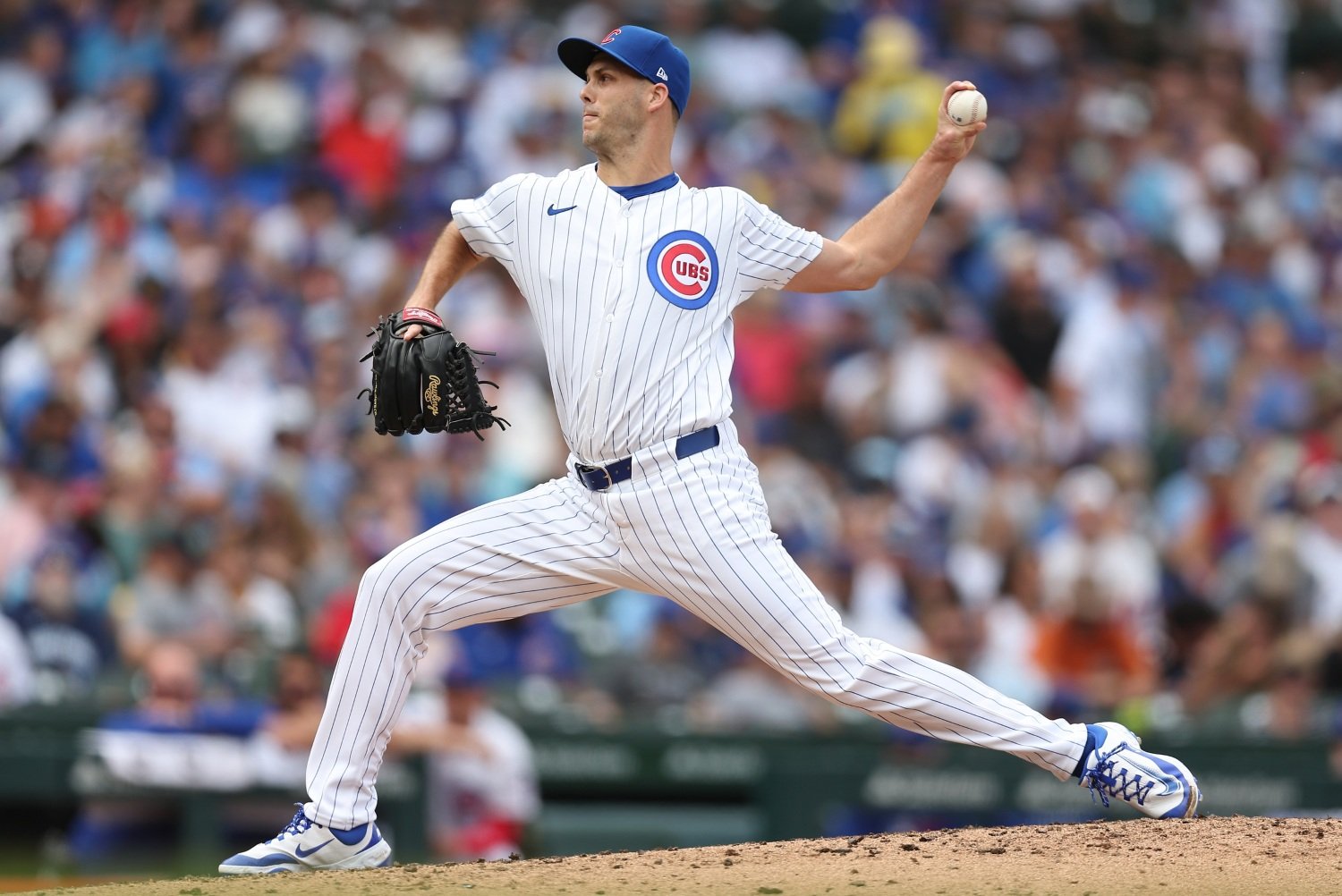 Taylor Rogers has accrued nine years and 145 days of MLB service time—just 27 days short of collecting his pension. The rest of the Twins’ projected Opening Day bullpen (Justin Topa, Cole Sands, Kody Funderburk, Eric Orze, Pierson Ohl, Travis Adams, John Klein) has 11 years and 83 days in total. About half of that time belongs to Topa, who sits at five years and 44 days, but three of those years (2021, 2022, 2024) he spent injured and threw 13 combined innings. Cole Sands has two fewer years of experience and eight more appearances. So, in terms of MLB experience not spent rehabbing, it’s closer to nine years between those seven bullpen arms. Put another way—Rogers has thrown 541 1/3 innings as a big leaguer. Those seven names, combined, have thrown 578 2/3 frames. If you want to throw one of the starting pitchers into a bullpen role, I don’t begrudge you, but David Festa only raises the service time count to 12 years and 135 days, then the innings count to 657 1/3. Rogers brings far and away the most experience in a bullpen stocked with players still wet behind the ears. Many players are slated to make their big-league debuts in the bullpen this season—like Klein, Marco Raya, or Connor Priellipp. It wouldn’t be surprising if some starters—like Festa, Mick Abel, or Zebby Matthews—spent time in the bullpen. Having someone like Rogers, a former All-Star closer, has value when dealing with this level of youth and inexperience. The nerds in the room may turn up their noses at such an idea. To many, it’s foolish to buy into the human element playing any role in a team’s success, but we have empirical evidence that these things matter. There’s a litany of organizational and managerial research that informs this, but there’s also been studies of MLB teams. In 2013, Jamal Shamsie of Michigan State and Michael Mannor of Notre Dame published a study analyzing MLB teams from 1985 to 2001 and attempting to measure tacit knowledge. Tacit knowledge refers to knowledge that is difficult to communicate, because it’s gained through experience. A player can have all the skill and instruction in the world, but without experience, they cannot reach their full potential. They have to live to learn. One form of tacit knowledge that the researchers identified was discrete productive knowledge: knowledge gained from doing the work repeatedly—essentially, the more times you do something, the better you’ll understand it, and the better you’ll perform. This isn’t a practice-makes-perfect skill acquisition idea; it’s understanding your job better and being better able to react when things go awry, because you’ve done it before. How did the researchers quantify discrete productive knowledge? Pretty simple: years of experience. They even split it up into regular-season experience and playoff experience. They found, over the span of their study, that regular-season and playoff experience both contribute to team success. That is, teams with more experienced players tend to do better. These findings were similar to those of a 2002 study by Shawn Berman, Jonathan Down, and Charles Hill on tacit knowledge among NBA players. Obviously, there are easy criticisms to make of this methodology. Players who have played longer tend to be better players. You don’t see a bunch of guys playing 15 years while also being bad. But the researchers attempted to control for that as well. Beyond other types of tacit knowledge, like manager experience, tenure within a team, or the number of lineup changes in a year, the authors also controlled for previous years’ winning percentage, market size, and payroll. And they found that even beyond those effects, experience made a real difference. Having 'been there' matters. Rogers understands the game in a way his less-experienced colleagues do not. He knows how to navigate late innings in a way his teammates don’t, simply by dint of having done it before. By definition, he’s in a better position to navigate bullpen and late-inning life. Even if he’s regressed to a similar skill as someone like Funderburk, he has the background to help him outperform his sheer talent at age 35. Sands might be better than him at this point in his career, but Rogers has two 30-save seasons under his belt. He knows what it feels like to close a nailbiter out. He’s done it dozens of times. Given that experience, he can immediately step into a high-leverage role. That might just be keeping a high-leverage seat warm for one of the younger guys, but it’s an experienced presence that can anchor a bullpen. Of course, there’s also explicit knowledge. There are things that he can teach younger guys. Not just “throw a slider in this count” or “move your index finger a little to the left,” but he can be a resource for living the big-league bullpen life, because this will be his 11th year doing it. Many pitchers struggle with finding the right weight-lifting and throwing routines to navigate the unpredictable schedule of a reliever's work. Some aren't as sharp as they need to be when they enter the game, because their preparation in the pen itself before entering is imperfect. Applying scouting and analytical data about opposing hitters is a skill that requires development. Rogers can help with all of that. A player can communicate some of their experience to others. It’s not all locked in their head, tacit and uncommunicable. A good veteran has both types of knowledge to share. Berman, S. L., Down, J., & Charles W. L. Hill. (2002). Tacit Knowledge as a Source of Competitive Advantage in the National Basketball Association. The Academy of Management Journal, 45(1), 13–31. Shamsie, J., & Mannor, M. J. (2013). Looking inside the dream team: Probing into the contributions of tacit knowledge as an organizational resource. Organization Science, 24(2), 513-529.
 -
Slow? The Twins have added or subtracted a backup shortstop candidate 7 times this offseason to avoid giving Isiah Kiner-Falefa 5 million dollars and you’re calling it slow?
-
 After 3,000 man-hours and nine transactions, the Twins' front office feels that they are halfway to finding a backup shortstop. In an offseason defined by the gaping holes in the bullpen, the Twins have been single-minded in their pursuit of a backup shortstop who is not Twins legend Isiah Kiner-Falefa, the only backup shortstop on the market. Kiner-Falefa spent 19 hours as the Twins' starting shortstop in March of 2022, and they're determined not to make that mistake again. "It seems straightforward to add IKF to backup Brooks Lee," an unnamed executive told Twins Daily. "But, ultimately, sometimes, the most obvious thing is the most obvious wrong thing." Instead of paying Kiner-Falefa the five million dollars it would take to purchase his services for the year, the team would prefer to spend that money on [unclear].00 Since the end of the season, the Twins have added significant depth at the position, including recent trade acquisition Tristan Gray, waiver claims Ryan Kreidler and Vidal Bruján, and minor league free agent Orlando Arcia. The cost? Pretty modest: Backup shortstop candidate Ryan Fitzgerald (claimed by Los Angeles) Utilityman Mickey Gasper (claimed by Washington) $500,000 owed to Vidal Bruján if he’s in the minor leagues Catching prospect Nate Baez (traded to Boston for Gray) Backup shortstop candidate Vidal Bruján (traded to New York) Lefty relief prospect Kade Bragg (traded for heretofor unmentioned backup third base candidate Eric Wagaman) Many very original comments from Twins fans like "Plan the parade" or "This will get me to renew my season tickets" or "Wagaman? I hardly Knowaman" The offseason is still young, and the Twins have many other levers to pull. They have active feelers out on former shortstop Andrelton Simmons, general nuisance Jeff Frye, and local businessman Alex Rodriguez, hoping to add at least two of the names to their pile of backup shortstops who are not Isiah Kiner-Falefa. The list is now longer than the team’s bullpen hierarchy. Other options who have been bandied about: Joe Pohlad, who has a lot of free time on his hands to learn new skills. Putting him on the roster would mean $780,000 of the payroll would stay in Pohlad hands Nick Punto, though this was suggested by your mother. Yes, you, the person reading this. Your mom loved Little Nicky, didn't she? JJ Hardy, finally righting that wrong Ryan Fitzgerald Trevor Larnach Clyde Sneavly, a 34-year-old kindergarten teacher with a glove and a dream A man in a Groucho Marx mask named "Kisiah Finer-Alfalfa" At the time of publication, Kiner-Falefa is still available for five million dollars, but the Twins’ most recent unsuccessful attempt was to trade for a mysterious Rockies shortstop named Ryan Ritter. I’ve never heard of him, and neither, apparently, had the Twins until 11 minutes ago.
 -
Image courtesy of © Kirby Lee-Imagn Images After 3,000 man-hours and nine transactions, the Twins' front office feels that they are halfway to finding a backup shortstop. In an offseason defined by the gaping holes in the bullpen, the Twins have been single-minded in their pursuit of a backup shortstop who is not Twins legend Isiah Kiner-Falefa, the only backup shortstop on the market. Kiner-Falefa spent 19 hours as the Twins' starting shortstop in March of 2022, and they're determined not to make that mistake again. "It seems straightforward to add IKF to backup Brooks Lee," an unnamed executive told Twins Daily. "But, ultimately, sometimes, the most obvious thing is the most obvious wrong thing." Instead of paying Kiner-Falefa the five million dollars it would take to purchase his services for the year, the team would prefer to spend that money on [unclear].00 Since the end of the season, the Twins have added significant depth at the position, including recent trade acquisition Tristan Gray, waiver claims Ryan Kreidler and Vidal Bruján, and minor league free agent Orlando Arcia. The cost? Pretty modest: Backup shortstop candidate Ryan Fitzgerald (claimed by Los Angeles) Utilityman Mickey Gasper (claimed by Washington) $500,000 owed to Vidal Bruján if he’s in the minor leagues Catching prospect Nate Baez (traded to Boston for Gray) Backup shortstop candidate Vidal Bruján (traded to New York) Lefty relief prospect Kade Bragg (traded for heretofor unmentioned backup third base candidate Eric Wagaman) Many very original comments from Twins fans like "Plan the parade" or "This will get me to renew my season tickets" or "Wagaman? I hardly Knowaman" The offseason is still young, and the Twins have many other levers to pull. They have active feelers out on former shortstop Andrelton Simmons, general nuisance Jeff Frye, and local businessman Alex Rodriguez, hoping to add at least two of the names to their pile of backup shortstops who are not Isiah Kiner-Falefa. The list is now longer than the team’s bullpen hierarchy. Other options who have been bandied about: Joe Pohlad, who has a lot of free time on his hands to learn new skills. Putting him on the roster would mean $780,000 of the payroll would stay in Pohlad hands Nick Punto, though this was suggested by your mother. Yes, you, the person reading this. Your mom loved Little Nicky, didn't she? JJ Hardy, finally righting that wrong Ryan Fitzgerald Trevor Larnach Clyde Sneavly, a 34-year-old kindergarten teacher with a glove and a dream A man in a Groucho Marx mask named "Kisiah Finer-Alfalfa" At the time of publication, Kiner-Falefa is still available for five million dollars, but the Twins’ most recent unsuccessful attempt was to trade for a mysterious Rockies shortstop named Ryan Ritter. I’ve never heard of him, and neither, apparently, had the Twins until 11 minutes ago. View full article
-
My point wasn’t that the Twins have too many lefties, per se, it’s that given all these lefties, a player like James Outman doesn’t have enough of a role to justify a spot on the roster.
- 37 replies
-
- 3
-

-
- james outman
- austin martin
- (and 6 more)
-
He’s uniquely seen as a backup center field option—or at minimum that’s how he appears
-
Image courtesy of © Jerome Miron-Imagn Images This is not an article about James Outman. It’s written around James Outman, but he didn’t really do anything to deserve it. Instead, James Outman has become the poster boy for a concerning trend with the functional utility of the Minnesota Twins’ roster. Let’s start in 2023: the season in which the Twins put together one of their most functional rosters of all time, even if it wasn’t the best roster. Roster functionality, in this case, can be understood as each player having a specific role and providing something uniquely valuable for the team’s success. As the team awaited the return of the injured Jorge Polanco, Royce Lewis, and Alex Kirilloff, each of whom would go on to play significant roles during the season, the Twins started Opening Day with the following lineup: C: Christian Vázquez 1B: Joey Gallo 2B: Nick Gordon 3B: Jose Miranda SS: Carlos Correa LF: Trevor Larnach CF: Michael A. Taylor RF: Max Kepler DH: Byron Buxton Not all of these players made it to the end of the season in a Twins uniform, and many had rough years. But what we’re focusing on is utility, not just quality. The Opening Day bench underscores what I’m talking about: catcher Ryan Jeffers, infielders Kyle Farmer and Donovan Solano, and super-utility Willi Castro (note: Castro wasn’t in that role at the time; he was expected to be sent down once Polanco returned, and he was more emergency depth and pinch-running). Let’s highlight some of the roles these players filled, or were expected to fill. Taylor was acquired via trade to add depth behind Byron Buxton in center field. He was hailed as an elite defender, and he was right-handed, so he could platoon with Gallo, Larnach, Kirilloff, or Kepler, moving over to a corner against lefty staters. Obviously, he played the whole season in center field, but that just highlights his usefulness. They tried to do the same in 2024 and 2025 with Manuel Margot and Harrison Bader, with mixed results. Farmer was also acquired via trade to start at shortstop, though that was short-lived, as the Twins re-signed Carlos Correa a month later. Farmer was bumped to a utility infield role, as a good enough defender to handle shortstop, second base, and third base. He also was an effective hitter against lefties, so he had a second role: platooning with Gordon at the beginning of the season and Edouard Julien at the end. Gordon had a unique role, too. He started at second base while Polanco was hurt, but his intended role was to bounce around the infield and outfield, hit a bit, and pinch-run. Essentially, he was expected to provide what Castro eventually did. This role was reduced when Buxton moved to a full-time DH role, but there was a clear intention to get his bat into the lineup, coming off the 2022 season in which he batted .272/.316/.427. Solano was a late signing, not joining the Twins until spring training had already started, but he was counted on to platoon with Kirilloff during the season and provide infield depth. Beyond that, he was a reliable pinch-hitting option against both lefties and righties, given his pure hitting ability. They brought in a platoon partner for Kirilloff again in 2024, which ended up being a very good offensive and defensive year from Carlos Santana. I could go on, but I’ll add one more tidbit to the pile—this team had a bunch of multi-positional players. Gallo and Kirilloff could both play the outfield and first base; Gallo could even fake it in center. Gordon and Castro could both play infield and outfield, including up-the-middle positions. Miranda could play first and third. Today, though, the Twins look nothing like that. Let’s assume the following starting lineup: C: Ryan Jeffers 1B: Kody Clemens 2B: Luke Keaschall 3B: Royce Lewis SS: Brooks Lee LF: Trevor Larnach CF: Byron Buxton RF: Matt Wallner DH: Josh Bell And a bench of: Victor Caratini Ryan Kreidler Austin Martin James Outman This projection leaves Alan Roden in St. Paul, starting alongside top prospects Walker Jenkins and Emmanuel Rodriguez. This is also the only way to put James Outman on the Opening Day roster without either starting him or playing without a backup shortstop. I want to preface the Outman discussion by acknowledging that the offseason is not over. The Twins have more moves to make, and that I’m not privy to the real plans the front office is making. We saw them add one plausible backup shortstop via trade on Wednesday, in Tristan Gray. But focusing on Outman is, I believe, the best way to convey my point. Outman has no options left. He’s been below replacement level since his very good rookie season in 2023. But he’s on the roster, after being the return in the trade that sent Brock Stewart to the Dodgers at the 2025 trade deadline. Right now, he’s wedged into the Opening Day picture, at least in the popular imagination (you’re welcome to disagree; I have my doubts he makes it to Opening Day). Why? Because he can play center field. It didn’t look pretty, honestly, after he arrived in Minnesota, but that’s his reputation. He can play it better than Martin, Kreidler, and Keaschall, probably. But that’s really it. Recall Taylor’s role in 2023. He could play center—better than Outman, mind you. But he also hit better in 2023 than Outman has across 2024 and 2025. He also suited the roster beter, hitting right-handed and hypothetically being a platoon option in a corner. Outman, on the other hand, is a lefty on a team full of lefties. To get regular reps in a corner, he needs to outplay Wallner, Larnach, Roden, probably Clemens and Bell, and eventually Jenkins and Rodriguez. If he can’t, he might cover center field once or twice a week against righties and pinch-run a little. That's not a positive net value from a roster spot. The Twins have lefties covering left and right field, first base, (effectively) DH, (effectively) shortstop, and (effectively) backup catcher. Their only platoon option is the batting average-dependent Martin, mostly in left field. If they want to commit to Roden in left field, that costs them either Outman or a shortstop, and it can’t be a shortstop, because Kreidler (or Vidal Bruján, or Orlando Arcia, or Gray) would be the only player beyond Lee who can cover shortstop. Even with one of those three infielders on the roster, their roles will be very limited—basically only playing shortstop, because none of them hit. Unlike Farmer, they can’t even fake league-average production or platoon against lefties. Caratini might be the bench player with the most utility right now, because he can hit from both sides and plays a passable first base, but in every remedial math class, there’s a brightest pupil. Martin has some flexibility, but it’s unclear whether the Twins want to play him in center field or at second base. Gregg’s note: Clemens, if considered to be a bench player—perhaps if Martin is the everyday left fielder—does have the most utility, because he plays a fine first base, second base, and corner outfield, but it’s unclear that will be his role at this point. So, if Outman does make the roster, the bench is a backup catcher; a left-field platoon bat who can play emergency second base and center field; a lefty who should only play center field once a week; and an infielder who should only play shortstop—again, once a week. Again, they aren’t done, but the current outlook pales in comparison to the average player's usefulness in 2023, regardless of overall ability. There may be things that clear the outlook up—committing to one of Martin, Kreidler, or Keaschall as a backup center fielder; trading a corner outfielder; opting to play Caratini at first base and DH; acquiring another infielder who bats right-handed and/or is a better option as a backup shortstop. But right now, it’s bleak. No one exemplifies that more than poor James Outman, a man whose profile lies at the unfortunate crossroads of uniqueness and redundancy. View full article
- 37 replies
-
- 1
-
-
- james outman
- austin martin
- (and 6 more)
-
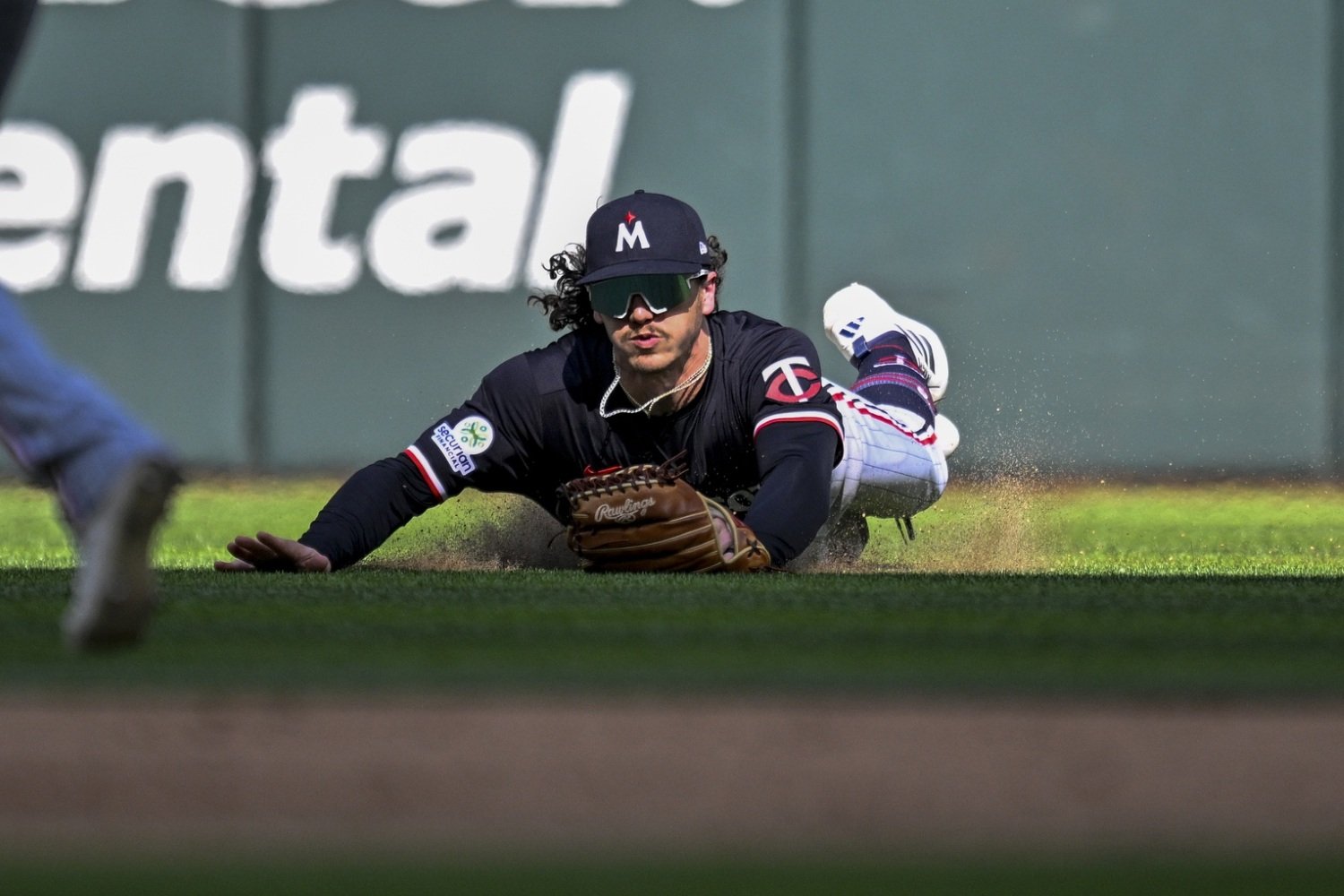 This is not an article about James Outman. It’s written around James Outman, but he didn’t really do anything to deserve it. Instead, James Outman has become the poster boy for a concerning trend with the functional utility of the Minnesota Twins’ roster. Let’s start in 2023: the season in which the Twins put together one of their most functional rosters of all time, even if it wasn’t the best roster. Roster functionality, in this case, can be understood as each player having a specific role and providing something uniquely valuable for the team’s success. As the team awaited the return of the injured Jorge Polanco, Royce Lewis, and Alex Kirilloff, each of whom would go on to play significant roles during the season, the Twins started Opening Day with the following lineup: C: Christian Vázquez 1B: Joey Gallo 2B: Nick Gordon 3B: Jose Miranda SS: Carlos Correa LF: Trevor Larnach CF: Michael A. Taylor RF: Max Kepler DH: Byron Buxton Not all of these players made it to the end of the season in a Twins uniform, and many had rough years. But what we’re focusing on is utility, not just quality. The Opening Day bench underscores what I’m talking about: catcher Ryan Jeffers, infielders Kyle Farmer and Donovan Solano, and super-utility Willi Castro (note: Castro wasn’t in that role at the time; he was expected to be sent down once Polanco returned, and he was more emergency depth and pinch-running). Let’s highlight some of the roles these players filled, or were expected to fill. Taylor was acquired via trade to add depth behind Byron Buxton in center field. He was hailed as an elite defender, and he was right-handed, so he could platoon with Gallo, Larnach, Kirilloff, or Kepler, moving over to a corner against lefty staters. Obviously, he played the whole season in center field, but that just highlights his usefulness. They tried to do the same in 2024 and 2025 with Manuel Margot and Harrison Bader, with mixed results. Farmer was also acquired via trade to start at shortstop, though that was short-lived, as the Twins re-signed Carlos Correa a month later. Farmer was bumped to a utility infield role, as a good enough defender to handle shortstop, second base, and third base. He also was an effective hitter against lefties, so he had a second role: platooning with Gordon at the beginning of the season and Edouard Julien at the end. Gordon had a unique role, too. He started at second base while Polanco was hurt, but his intended role was to bounce around the infield and outfield, hit a bit, and pinch-run. Essentially, he was expected to provide what Castro eventually did. This role was reduced when Buxton moved to a full-time DH role, but there was a clear intention to get his bat into the lineup, coming off the 2022 season in which he batted .272/.316/.427. Solano was a late signing, not joining the Twins until spring training had already started, but he was counted on to platoon with Kirilloff during the season and provide infield depth. Beyond that, he was a reliable pinch-hitting option against both lefties and righties, given his pure hitting ability. They brought in a platoon partner for Kirilloff again in 2024, which ended up being a very good offensive and defensive year from Carlos Santana. I could go on, but I’ll add one more tidbit to the pile—this team had a bunch of multi-positional players. Gallo and Kirilloff could both play the outfield and first base; Gallo could even fake it in center. Gordon and Castro could both play infield and outfield, including up-the-middle positions. Miranda could play first and third. Today, though, the Twins look nothing like that. Let’s assume the following starting lineup: C: Ryan Jeffers 1B: Kody Clemens 2B: Luke Keaschall 3B: Royce Lewis SS: Brooks Lee LF: Trevor Larnach CF: Byron Buxton RF: Matt Wallner DH: Josh Bell And a bench of: Victor Caratini Ryan Kreidler Austin Martin James Outman This projection leaves Alan Roden in St. Paul, starting alongside top prospects Walker Jenkins and Emmanuel Rodriguez. This is also the only way to put James Outman on the Opening Day roster without either starting him or playing without a backup shortstop. I want to preface the Outman discussion by acknowledging that the offseason is not over. The Twins have more moves to make, and that I’m not privy to the real plans the front office is making. We saw them add one plausible backup shortstop via trade on Wednesday, in Tristan Gray. But focusing on Outman is, I believe, the best way to convey my point. Outman has no options left. He’s been below replacement level since his very good rookie season in 2023. But he’s on the roster, after being the return in the trade that sent Brock Stewart to the Dodgers at the 2025 trade deadline. Right now, he’s wedged into the Opening Day picture, at least in the popular imagination (you’re welcome to disagree; I have my doubts he makes it to Opening Day). Why? Because he can play center field. It didn’t look pretty, honestly, after he arrived in Minnesota, but that’s his reputation. He can play it better than Martin, Kreidler, and Keaschall, probably. But that’s really it. Recall Taylor’s role in 2023. He could play center—better than Outman, mind you. But he also hit better in 2023 than Outman has across 2024 and 2025. He also suited the roster beter, hitting right-handed and hypothetically being a platoon option in a corner. Outman, on the other hand, is a lefty on a team full of lefties. To get regular reps in a corner, he needs to outplay Wallner, Larnach, Roden, probably Clemens and Bell, and eventually Jenkins and Rodriguez. If he can’t, he might cover center field once or twice a week against righties and pinch-run a little. That's not a positive net value from a roster spot. The Twins have lefties covering left and right field, first base, (effectively) DH, (effectively) shortstop, and (effectively) backup catcher. Their only platoon option is the batting average-dependent Martin, mostly in left field. If they want to commit to Roden in left field, that costs them either Outman or a shortstop, and it can’t be a shortstop, because Kreidler (or Vidal Bruján, or Orlando Arcia, or Gray) would be the only player beyond Lee who can cover shortstop. Even with one of those three infielders on the roster, their roles will be very limited—basically only playing shortstop, because none of them hit. Unlike Farmer, they can’t even fake league-average production or platoon against lefties. Caratini might be the bench player with the most utility right now, because he can hit from both sides and plays a passable first base, but in every remedial math class, there’s a brightest pupil. Martin has some flexibility, but it’s unclear whether the Twins want to play him in center field or at second base. Gregg’s note: Clemens, if considered to be a bench player—perhaps if Martin is the everyday left fielder—does have the most utility, because he plays a fine first base, second base, and corner outfield, but it’s unclear that will be his role at this point. So, if Outman does make the roster, the bench is a backup catcher; a left-field platoon bat who can play emergency second base and center field; a lefty who should only play center field once a week; and an infielder who should only play shortstop—again, once a week. Again, they aren’t done, but the current outlook pales in comparison to the average player's usefulness in 2023, regardless of overall ability. There may be things that clear the outlook up—committing to one of Martin, Kreidler, or Keaschall as a backup center fielder; trading a corner outfielder; opting to play Caratini at first base and DH; acquiring another infielder who bats right-handed and/or is a better option as a backup shortstop. But right now, it’s bleak. No one exemplifies that more than poor James Outman, a man whose profile lies at the unfortunate crossroads of uniqueness and redundancy.
- 37 comments
-
- 7
-
-
- james outman
- austin martin
- (and 6 more)
-
My personal opinion is that they're doing what they've typically done: gone into the offseason with plans A-Z and seen where the opportunities are, with the intention to have a sensible construction by the end of the offseason. It doesn't always work, and when it does, it's likely not what anyone has envisioned, but this has been their MO. I'd assume they were fine with Jackson, but got opportunistic with Caratini. What's next is anyone's guess, and they probably don't know either--not because they lack a plan per se, but because they have a lot of branching paths on their overall, much more nebulous plan.
- 47 replies
-
- 5
-
-

-
- ryan jeffers
- victor caratini
- (and 2 more)
-
My intent was for people to think of Castro, assuming they'd forget Vazquez's brief stint as an Astro. Alas!
- 47 replies
-
- 1
-

-
- ryan jeffers
- victor caratini
- (and 2 more)
-
Image courtesy of Brett Davis-Imagn Images On Friday evening, Robert Murray of FanSided announced that the Twins had agreed to terms with 31-year-old free agent catcher Victor Caratini. Stop me if you’ve heard this one before: the Twins signed a 30-something Astros backup catcher to a multi-year deal to pair with Ryan Jeffers (this also describes the Christian Vázquez signing). The signing comes as something of a surprise to many, given the Twins’ noted lack of financial flexibility (at least among onlookers), their current catching situation, and the other holes on the roster. So, let’s discuss who Caratini is, what sense the signing makes, and how the Twins might use his services. Who is Victor Caratini? A former second-round draft pick in 2013, Caratini will start his tenth season in the big leagues come Opening Day 2026. He’s spent time with the Cubs, Padres, Brewers, and Astros before Minnesota, mainly in a backup or timeshare role. Offense Since settling in as a semi-regular in 2019, Caratini has been a roughly league-average hitter (.245/.323/.379, .702 OPS, 94 OPS+). Although a league-average bat doesn’t sound like much, among catchers — especially backup catchers — that number carries more weight. Since 2019, catchers as a whole produced a .690 OPS, meaning that Caratini’s OPS during that time was about five percent above the average catcher. Over the past two seasons, Caratini’s .735 OPS (.263/.329/.406) is about five percent above the average hitter and 15% better than the average catcher. Those impressive numbers have come against both righties and lefties, as Caratini is a switch-hitter with pretty even splits. It should be noted that his best offensive production has come over the past two seasons as a member of the Astros (his age-30 and -31 seasons). Those were the only two seasons that he’s recorded a slugging percentage over .400 in his career, so it’s natural to wonder if his numbers were aided by playing in Daikan Field, where the left field fence can inflate some hitters’ power production. However, Caratini is a switch-hitter (meaning that he only hits right-handed about a third of the time), and only two of the 20 home runs he hit over the past two seasons were aided by the Crawford Boxes. A lot of his recent improvements can be chalked up to very good strike zone control (despite not walking much) and pulling fly balls more (going from a very low rate to about league average).. As noted, Caratini has roughly even splits as a switch-hitter. He has historically been more effective against righties (batting left-handed), but in both 2024 and 2025, he improved his production against lefties, and he was more effective as a right-handed batter—albeit in about 60 plate appearances each season. His 105 OPS+ against righties since 2024 still outpaces the incumbent Ryan Jeffers’s 95 OPS+ during the same stretch. Defense Caratini’s defense has been a mixed bag throughout his career — in more ways than one. First, he has never been a full-time catcher. He’s topped out at 87 starts at catcher in 2021 for the Padres. His next-highest number of starts at catcher in a season was 73 in 2022 in Milwaukee. Since then, he’s logged 54, 55, and 48 starts at catcher over the past three seasons. There’s room for debate about what the Twins ought to do with him, but it seems unlikely that he’s suited for more than a timeshare role. However, Caratini has some flexibility beyond catcher, namely at first base. He’s played over there at least once every season of his career, and he’s started double-digit games at the position four times in his nine-year career. He doesn’t have the bat to be an everyday first baseman. Still, there are worse options, and Joe Espada indicated that he was comfortable playing Caratini at first, even when another first baseman like Jon Singleton was in the lineup as the DH. Caratini has also served as a designated hitter in his career, with over half of his starts at the spot coming last season. But anyway, back to his catching. Caratini has had a shaky performance behind the plate from year to year. He doesn’t have a particularly effective arm, and teams will run on him. His strong skill at this point in his career is as a blocker. At one point in his career, he was lauded for his framing, but that slipped in 2025. Speaking of framing, it’s unclear how much framing will matter in 2026, the first season that MLB will adopt an automated ball-strike (ABS) challenge system. Being a good receiver will still matter, but missed calls can be corrected, and we will learn in real time which catchers are effective at detecting balls and strikes, rather than making balls look like strikes. Perhaps, with this change, catchers who struggle with framing but can hit will be more valuable, and the Twins have two catchers who are above-average producers at the position. Does This Signing Make Sense? Yes, well, sort of. Maybe? It depends on what happens next. As noted, the Twins are dealing with a nebulous payroll limit that has yet to be publicly disclosed. The team has many holes in the bullpen following 2026’s deadline fire sale, and it also wouldn’t have hurt to add another infielder beyond Josh Bell — either to split time at first base with Kody Clemens or to back up shortstop. And yet, the Twins spent $14 million (seven million this season) on a second catcher, pairing Caratini with Ryan Jeffers, a quality starting catcher in his own right. And this signing comes after trading Payton Eeles for Baltimore’s Alex Jackson, whom the cash-strapped Twins owe $1.35 million. Their payroll is about $100 million right now, and 14% of that is dedicated to three catchers. There should hypothetically be at least a couple more moves on the way as the Twins try to reassemble their bullpen, add infield depth, and sort through their surplus of big-league outfielders. Adding Caratini, even at a modest contract, raises more questions as to how they plan to fill out the rest of the roster. But that’s a conversation for another blog. Let’s briefly touch on how Caratini might be used. What Role Will Caratini Fill? There are a few ways the Twins could deploy Caratini, and they all relate to the elephant in the room: Ryan Jeffers. Timeshare Jeffers has never taken the lion’s share of reps at catcher. He maxed out at 81 starts in 2024, and he’s been in a timeshare role every season of his career. He did get his first taste of an everyday role in 2025, and he has made comments suggesting that he hopes to finally be an everyday player this season, but that has not been Derek Falvey’s modus operandi with catchers. Instead, Jeffers and Caratini can split duties behind the plate, even if Jeffers takes the bulk of starts. Caratini is a better hitter against righties, and Jeffers can take most plate appearances against lefties, whom he has hit far better than righties in his career. Actually, it would be possible to play both on any given day, but it would make more sense to do so against lefties. Given Caratini’s recent success against lefties, the Twins could feasibly start one of the two at catcher and either stick Caratini at first base or Jeffers at designated hitter. It checks off a box — a platoon partner for Clemens — without using a roster space on the short side of a first base platoon. Caratini is a Backup Instead of splitting time, Jeffers could be relied on as a more everyday option, leaving about a third of games for Caratini at catcher. This strategy would work out to about 100 games for Jeffers and 50 for Caratini (which is right in line with the number of games he’s started at catcher over the past three seasons), with the switch-hitter mostly facing right-handed starters. Caratini could probably receive a start at designated hitter or first base each week and rack up about 300 plate appearances as Jeffers’s backup. He’s getting high-end backup money, and that’s the role he could play. Jeffers is Traded and Caratini Starts Everyday Alright, let’s address it. Someone here will address it in full soon, but it needs to be noted here. Jeffers is in his last season of team control and will be a free agent this offseason. He’s making a not-insubstantial $6.7 million this season, and cost-aware teams like to get something of value before letting a player walk for free in free agency. Should Jeffers be traded, the team still has two catchers with MLB experience in Caratini and Jackson. Caratini could see the most starts of his life, with Jackson taking a quarter to a third of games himself in this scenario. Caratini Will Primarily Play Elsewhere Because the Twins do not have a clear picture at first base and designated hitter, it's possible that Caratini primarily plays one of those two positions. Both Clemens and Bell have hit righties better than lefties, and Caratini's recent performance has been better against lefties. Additionally, Clemens is no sure asset, and he also may be better suited for a utility role. Caratini would not be a good option at first or DH, but he might be preferable to the alternative. This may justify carrying Jackson as a third catcher. View full article
-
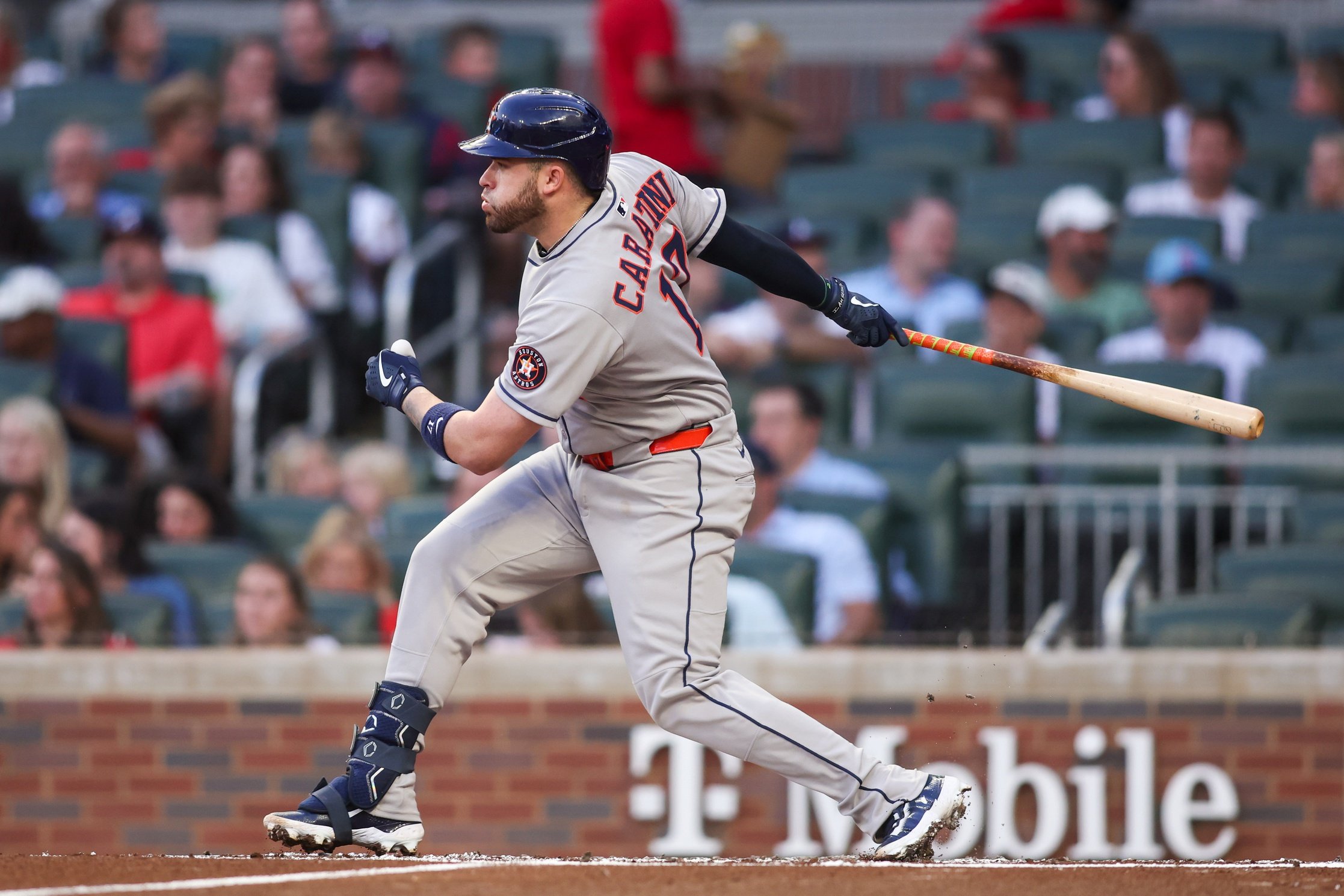 On Friday evening, Robert Murray of FanSided announced that the Twins had agreed to terms with 31-year-old free agent catcher Victor Caratini. Stop me if you’ve heard this one before: the Twins signed a 30-something Astros backup catcher to a multi-year deal to pair with Ryan Jeffers (this also describes the Christian Vázquez signing). The signing comes as something of a surprise to many, given the Twins’ noted lack of financial flexibility (at least among onlookers), their current catching situation, and the other holes on the roster. So, let’s discuss who Caratini is, what sense the signing makes, and how the Twins might use his services. Who is Victor Caratini? A former second-round draft pick in 2013, Caratini will start his tenth season in the big leagues come Opening Day 2026. He’s spent time with the Cubs, Padres, Brewers, and Astros before Minnesota, mainly in a backup or timeshare role. Offense Since settling in as a semi-regular in 2019, Caratini has been a roughly league-average hitter (.245/.323/.379, .702 OPS, 94 OPS+). Although a league-average bat doesn’t sound like much, among catchers — especially backup catchers — that number carries more weight. Since 2019, catchers as a whole produced a .690 OPS, meaning that Caratini’s OPS during that time was about five percent above the average catcher. Over the past two seasons, Caratini’s .735 OPS (.263/.329/.406) is about five percent above the average hitter and 15% better than the average catcher. Those impressive numbers have come against both righties and lefties, as Caratini is a switch-hitter with pretty even splits. It should be noted that his best offensive production has come over the past two seasons as a member of the Astros (his age-30 and -31 seasons). Those were the only two seasons that he’s recorded a slugging percentage over .400 in his career, so it’s natural to wonder if his numbers were aided by playing in Daikan Field, where the left field fence can inflate some hitters’ power production. However, Caratini is a switch-hitter (meaning that he only hits right-handed about a third of the time), and only two of the 20 home runs he hit over the past two seasons were aided by the Crawford Boxes. A lot of his recent improvements can be chalked up to very good strike zone control (despite not walking much) and pulling fly balls more (going from a very low rate to about league average).. As noted, Caratini has roughly even splits as a switch-hitter. He has historically been more effective against righties (batting left-handed), but in both 2024 and 2025, he improved his production against lefties, and he was more effective as a right-handed batter—albeit in about 60 plate appearances each season. His 105 OPS+ against righties since 2024 still outpaces the incumbent Ryan Jeffers’s 95 OPS+ during the same stretch. Defense Caratini’s defense has been a mixed bag throughout his career — in more ways than one. First, he has never been a full-time catcher. He’s topped out at 87 starts at catcher in 2021 for the Padres. His next-highest number of starts at catcher in a season was 73 in 2022 in Milwaukee. Since then, he’s logged 54, 55, and 48 starts at catcher over the past three seasons. There’s room for debate about what the Twins ought to do with him, but it seems unlikely that he’s suited for more than a timeshare role. However, Caratini has some flexibility beyond catcher, namely at first base. He’s played over there at least once every season of his career, and he’s started double-digit games at the position four times in his nine-year career. He doesn’t have the bat to be an everyday first baseman. Still, there are worse options, and Joe Espada indicated that he was comfortable playing Caratini at first, even when another first baseman like Jon Singleton was in the lineup as the DH. Caratini has also served as a designated hitter in his career, with over half of his starts at the spot coming last season. But anyway, back to his catching. Caratini has had a shaky performance behind the plate from year to year. He doesn’t have a particularly effective arm, and teams will run on him. His strong skill at this point in his career is as a blocker. At one point in his career, he was lauded for his framing, but that slipped in 2025. Speaking of framing, it’s unclear how much framing will matter in 2026, the first season that MLB will adopt an automated ball-strike (ABS) challenge system. Being a good receiver will still matter, but missed calls can be corrected, and we will learn in real time which catchers are effective at detecting balls and strikes, rather than making balls look like strikes. Perhaps, with this change, catchers who struggle with framing but can hit will be more valuable, and the Twins have two catchers who are above-average producers at the position. Does This Signing Make Sense? Yes, well, sort of. Maybe? It depends on what happens next. As noted, the Twins are dealing with a nebulous payroll limit that has yet to be publicly disclosed. The team has many holes in the bullpen following 2026’s deadline fire sale, and it also wouldn’t have hurt to add another infielder beyond Josh Bell — either to split time at first base with Kody Clemens or to back up shortstop. And yet, the Twins spent $14 million (seven million this season) on a second catcher, pairing Caratini with Ryan Jeffers, a quality starting catcher in his own right. And this signing comes after trading Payton Eeles for Baltimore’s Alex Jackson, whom the cash-strapped Twins owe $1.35 million. Their payroll is about $100 million right now, and 14% of that is dedicated to three catchers. There should hypothetically be at least a couple more moves on the way as the Twins try to reassemble their bullpen, add infield depth, and sort through their surplus of big-league outfielders. Adding Caratini, even at a modest contract, raises more questions as to how they plan to fill out the rest of the roster. But that’s a conversation for another blog. Let’s briefly touch on how Caratini might be used. What Role Will Caratini Fill? There are a few ways the Twins could deploy Caratini, and they all relate to the elephant in the room: Ryan Jeffers. Timeshare Jeffers has never taken the lion’s share of reps at catcher. He maxed out at 81 starts in 2024, and he’s been in a timeshare role every season of his career. He did get his first taste of an everyday role in 2025, and he has made comments suggesting that he hopes to finally be an everyday player this season, but that has not been Derek Falvey’s modus operandi with catchers. Instead, Jeffers and Caratini can split duties behind the plate, even if Jeffers takes the bulk of starts. Caratini is a better hitter against righties, and Jeffers can take most plate appearances against lefties, whom he has hit far better than righties in his career. Actually, it would be possible to play both on any given day, but it would make more sense to do so against lefties. Given Caratini’s recent success against lefties, the Twins could feasibly start one of the two at catcher and either stick Caratini at first base or Jeffers at designated hitter. It checks off a box — a platoon partner for Clemens — without using a roster space on the short side of a first base platoon. Caratini is a Backup Instead of splitting time, Jeffers could be relied on as a more everyday option, leaving about a third of games for Caratini at catcher. This strategy would work out to about 100 games for Jeffers and 50 for Caratini (which is right in line with the number of games he’s started at catcher over the past three seasons), with the switch-hitter mostly facing right-handed starters. Caratini could probably receive a start at designated hitter or first base each week and rack up about 300 plate appearances as Jeffers’s backup. He’s getting high-end backup money, and that’s the role he could play. Jeffers is Traded and Caratini Starts Everyday Alright, let’s address it. Someone here will address it in full soon, but it needs to be noted here. Jeffers is in his last season of team control and will be a free agent this offseason. He’s making a not-insubstantial $6.7 million this season, and cost-aware teams like to get something of value before letting a player walk for free in free agency. Should Jeffers be traded, the team still has two catchers with MLB experience in Caratini and Jackson. Caratini could see the most starts of his life, with Jackson taking a quarter to a third of games himself in this scenario. Caratini Will Primarily Play Elsewhere Because the Twins do not have a clear picture at first base and designated hitter, it's possible that Caratini primarily plays one of those two positions. Both Clemens and Bell have hit righties better than lefties, and Caratini's recent performance has been better against lefties. Additionally, Clemens is no sure asset, and he also may be better suited for a utility role. Caratini would not be a good option at first or DH, but he might be preferable to the alternative. This may justify carrying Jackson as a third catcher.
- 47 comments
-
- 12
-
-
-
- ryan jeffers
- victor caratini
- (and 2 more)
-
Why the Twins Didn't Sign Luis Arraez
Greggory Masterson replied to Greggory Masterson's topic in Twins Daily Front Page News
I am begging everyone to stop comparing Luis Arraez to Tony Gwynn. He’s not Tony Gwynn. He was never on a Tony Gwynn trajectory. -
To provide league-wide context here: in 2025, only 4 of the top 50 international amateur players ranked by MLB were pitchers. Roki Sasaki was #1, and the other 3 were ranked 39, 40, and 46. In 2026, there are 3 in their top 50: ranked 25, 45, and 46. No international amateur free agents aged 16 or 17 are easy to predict, but league-wide, there's far more confidence in hitters developing than pitchers.
- 32 replies
-
- 1
-
-
- emmanuel rodriguez
- danny de andrade
- (and 4 more)
-
Why the Twins Didn't Sign Luis Arraez
Greggory Masterson replied to Greggory Masterson's topic in Twins Daily Front Page News
Well, no. If Arraez hit .220 for the first 3 weeks of the season and then .330 for the rest, his batting average would have been like .315-.320. So that's not true on its face. But also, his batting average in March and April was .298, which is higher than his overall line for the season. Shoot, he had a .780 OPS during that stretch, which is 20% above league-average. If he held his performance over the first 5 weeks over the full season, none of this conversation would be happening. BA by month: March/April: .298 May: .274 June: .288 July: .323 August: .235 Sept/Oct: .352 But of course, if you just took away his bad performances, then all the rest were good. -
How Drafting Michael Cuddyer in 1997 Turned into Two Current Twins
Greggory Masterson posted an article in Twins
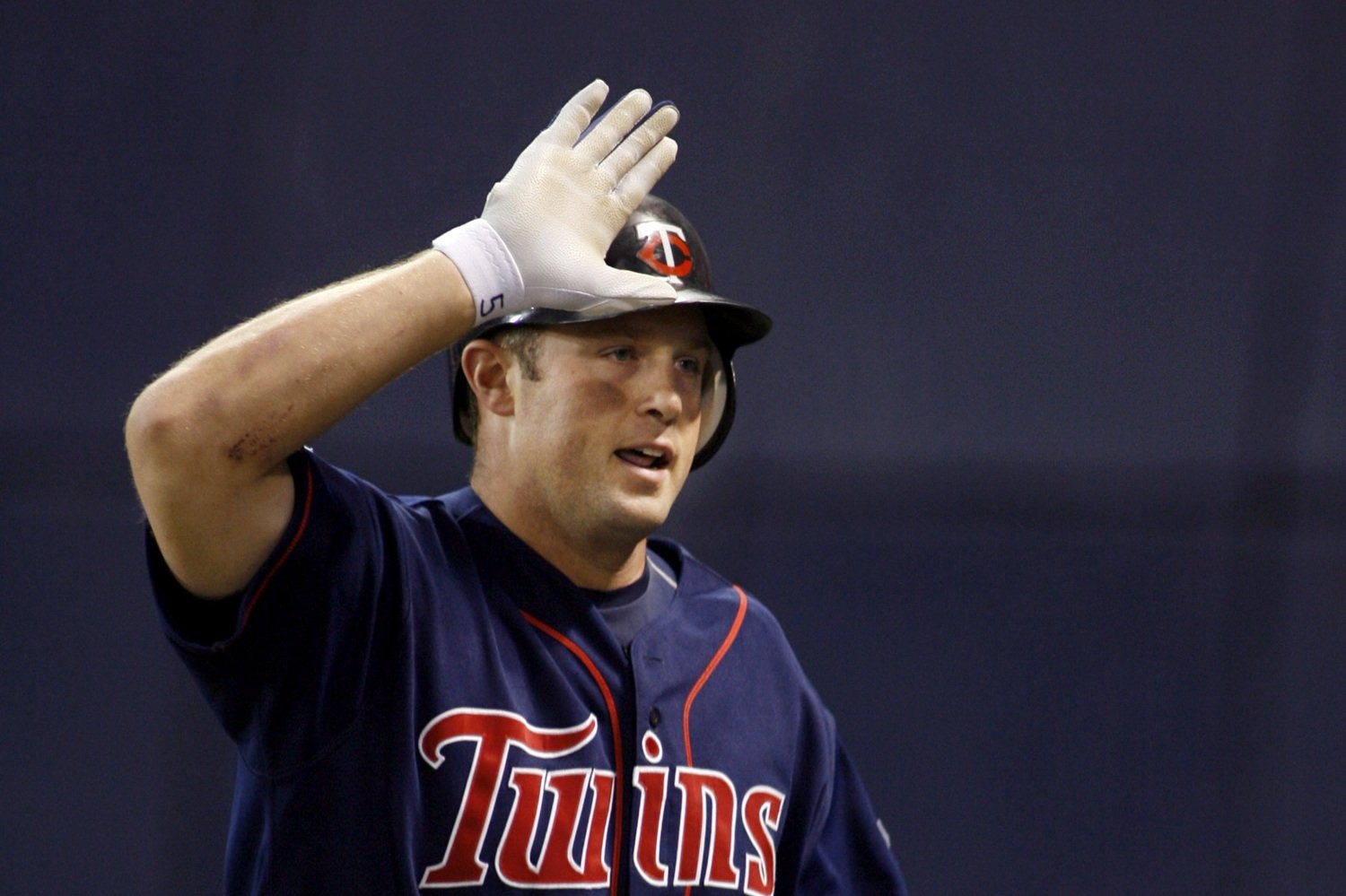 Baseball trade trees are fun. I’ve previously outlined two of the biggest in Twins history, one positive (A.J. Pierzynski) and one negative (Delmon Young). One transaction can set off a chain reaction that lasts decades. This isn’t a complete trade tree, but it is a continuous line that links Michael Cuddyer to Austin Martin and Simeon Woods Richardson. Cuddyer was drafted ninth overall in 1997 out of a Virginia high school. He was listed as a pitcher and shortstop. It took a while for the Twins to pony up enough money to convince him not to go to Florida State, as he eventually received the sixth-largest signing bonus in the draft at $1.8 million. Cuddyer consistently ranked in Baseball America’s top 50 prospects, but his major league career did not start smoothly, as he bounced back and forth between the majors and minors from 2001 to 2003, between the ages of 22 and 24. He bounced around the diamond as well, playing five different positions in his first five years. Finally, he hit his stride in 2006 as a 27-year-old, and he put together six seasons as a solid MLB regular, mostly playing first base and right field, with a 115 OPS+ and an All-Star nod to his name. In 2008, he signed a four-year extension that the Twins. That certainly paid off, and he hit free agency as a 32-year-old ahead of 2011. Now, this is where the tree would end, if it weren’t for free agent compensation. That year, Cuddyer was a "Type A" free agent, and after he turned down arbitration with the Twins, they were entitled to an additional draft pick. Cuddyer signed a contract with the Rockies, and the Twins were awarded the 32nd pick in the 2012 draft for their troubles. That 32nd pick? They turned it into Jose Berrios. Berrios was a high school pitcher out of Puerto Rico and signed for $1.6 million. He was a Top 100 prospect from 2014 to 2016, when he made his messy, messy MLB debut. Across 14 starts in 2016 as a 22-year-old, he had an ERA that started with an eight, but he blossomed into one of the most dependable starters in baseball over the next five seasons in Minnesota. Unlike with Cuddyer, the Twins had little interest in extending Berrios—at least for the price he wanted. At the trade deadline during the trainwreck 2021 season, the Twins elected to flip Berrios to Toronto for two highly touted prospects. Berrios almost immediately signed a seven-year extension with the Blue Jays. In return, the Twins received infielder Austin Martin and pitcher Simeon Woods Richardson. Baseball America immediately slotted Martin in as the team’s top prospect and the 19th-best prospect in baseball. Woods Richardson was a borderline Top 100 prospect and was ranked sixth in the system. Both Martin and Woods Richardson saw their stocks drop over the next few years, but both got their first extended runs in 2024. Martin had a poor showing, raising even more questions about his long-term outlook, but Woods Richardson emerged as a quality backend starter with roughly equivalent performance to Berrios, now 30, in Toronto. Woods Richardson made the team out of spring training in 2025 but had a rockier start to his season than most had hoped. However, by the end of the season, he’d turned in a solid overall showing in 22 starts. Martin did not make the team out of spring training and spent considerable time injured at Triple-A St. Paul. However, he may have salvaged his Twins career by being the only hitter to give a quality showing after the team’s historic trade deadline selloff. Now, both Woods Richardson and Martin are projected to make the Opening Day lineup as a backend starter and a fourth outfielder. Although many expected more from them to this point in their careers, both appear to be useful assets on a team that is trying to get back on track. If you’re a WAR person, by Baseball Reference’s count, Cuddyer was worth 12.8 rWAR for the Twins. Berrios accumulated 10.0, and Woods Richardson is at 4.0 thus far. Martin accumulated 0.7 in 50 2025 games, but he’s 0.3 wins below replacement for his career. That’s a total of 26.1 rWAR from this string, though, and it could continue to grow. Who knows, Woods Richardson might be traded to create room in the rotation and add another branch onto this tree. And for the real sickos out there, there might even be another layer to this chain reaction, if you squint and use your imagination, though it is a sad one. Kirby Puckett was forced into an early retirement before the 1996 season due to glaucoma. The Twins went 78-84 in his absence, tying the Athletics for the American League’s fifth-worst record. At that time, the draft order alternated between leagues, and in 1997, the American League drafted first, meaning that the Twins would either have the ninth or 11th pick. The Twins had a worse record in 1995 than the Athletics, so they were awarded the higher pick. With just one more win, they would have picked 11th. Now, I’m no soothsayer, and I can’t create an alternative history. But had Puckett not been forced into retirement, and the Twins instead had their aging superstar patrolling right field (instead of Matt Lawton, Roberto Kelly, Denny Hocking, and Ron Coomer), it’s not difficult to imagine the team winning at least one more game. And had they won one more game, picking 11th instead of ninth, it’s possible that Cuddyer could have gone to the Athletics or the Cubs (Oakland’s pick that year was Chris Enochs, a college pitcher who never made the majors). Obviously, this is desperately searching for an extra layer that can only be tenuously held together, but hey. I find it interesting. Either way, the Cuddyer-to-Berrios-to-Martin-and-Woods Richardson thread is a fun one to pull.
- 31 comments
-
- 9
-
-
- michael cuddyer
- jose berrios
- (and 3 more)
-
Baseball trade trees are fun. I’ve previously outlined two of the biggest in Twins history, one positive (A.J. Pierzynski) and one negative (Delmon Young). One transaction can set off a chain reaction that lasts decades. This isn’t a complete trade tree, but it is a continuous line that links Michael Cuddyer to Austin Martin and Simeon Woods Richardson. Cuddyer was drafted ninth overall in 1997 out of a Virginia high school. He was listed as a pitcher and shortstop. It took a while for the Twins to pony up enough money to convince him not to go to Florida State, as he eventually received the sixth-largest signing bonus in the draft at $1.8 million. Cuddyer consistently ranked in Baseball America’s top 50 prospects, but his major league career did not start smoothly, as he bounced back and forth between the majors and minors from 2001 to 2003, between the ages of 22 and 24. He bounced around the diamond as well, playing five different positions in his first five years. Finally, he hit his stride in 2006 as a 27-year-old, and he put together six seasons as a solid MLB regular, mostly playing first base and right field, with a 115 OPS+ and an All-Star nod to his name. The 2008 four-year extension that the Twins signed him to paid off, and he hit free agency as a 32-year-old ahead of 2011. Now, this is where the tree would end, if it weren’t for free agent compensation. That year, Cuddyer was a Type A free agent, and after he turned down arbitration with the Twins, they were entitled to an additional draft pick. Cuddyer signed a contract with the Rockies, and the Twins were awarded the 32nd pick in the 2012 draft for their troubles. That 32nd pick? They turned it into Jose Berrios. Berrios was a high school pitcher out of Puerto Rico and signed for $1.6 million. He was a top-100 prospect from 2014 to 2016, when he made his messy, messy MLB debut. Across 14 starts in 2016 as a 22-year-old, he had an ERA that started with an 8, but he blossomed into one of the most dependable starters in baseball over the next five seasons in Minnesota. Unlike with Cuddyer, the Twins had little interest in extending Berrios—at least for the price he wanted. At the trade deadline during the trainwreck 2021season, the Twins elected to flip Berrios to Toronto for two highly touted prospects. Berrios almost immediately signed a seven-year extension with the Blue Jays. In return, the Twins received infielder Austin Martin and pitcher Simeon Woods Richardson. Baseball America immediately slotted Martin in as the team’s top prospect and the 19th-best prospect in baseball. Woods Richardson was a borderline top-100 prospect and was ranked sixth in the system. Both Martin and Woods Richardson saw their stocks drop over the next few years, but both got their first extended runs in 2024. Martin had a poor showing, raising even more questions about his long-term outlook, but Woods Richardson emerged as a quality backend starter with roughly equivalent performance to Berrios, now 30, in Toronto. Woods Richardson made the team out of spring training in 2025, but had a rockier start to his season than most had hoped. However, by the end of the season, he’d turned in a solid overall showing in 22 starts. Martin did not make the team out of spring training and spent considerable time injured at Triple-A St. Paul. However, he may have salvaged his Twins career by being the only hitter to give a quality showing after the team’s historic trade deadline selloff. Now, both Woods Richardson and Martin are projected to make the Opening Day lineup as a backend starter and a fourth outfielder. Although many expected more from them to this point in their careers, both appear to be useful assets on a team that is trying to get back on track. If you’re a WAR person, by Baseball Reference’s count, Cuddyer was worth 12.8 rWAR for the Twins. Berrios accumulated 10.0, and Woods Richardson is at 4.0 thus far. Martin accumulated 0.7 in 50 2025 games, but he’s 0.3 wins below replacement for his career. That’s a total of 26.1 rWAR from this string, though, and it could continue to grow. Who knows, Woods Richardson might be traded to create room in the rotation and add another branch onto this tree. And for the real sickos out there, there might even be another layer to this chain reaction, if you quint and use your imagination, though it is a sad one. Kirby Puckett was forced into an early retirement before the 1996 season due to glaucoma. The Twins went 78-84 in his absence, tying the Athletics for the American League’s 5th-worst record. At that time, the draft order alternated between leagues, and in 1997, the American League drafted first, meaning that the Twins would either have pick 9 or 11. The Twins had a worse record in 1995 than the Athletics, so they were awarded the higher pick. With just one more win, they would have picked 11th. Now, I’m no soothsayer, and I can’t create an alternative history. But had Puckett not been forced into retirement, and the Twins instead had their aging superstar patrolling right field (instead of Matt Lawton, Roberto Kelly, Denny Hocking, and Ron Coomer), it’s not difficult to imagine the team winning at least one more game. And had they won one more game, picking 11th instead of ninth, it’s possible that Cuddyer could have gone to the Athletics or the Cubs (Oakland’s pick that year was Chris Enochs, a college pitcher who never made the majors). Obviously, this is desperately searching for an extra layer that can only be tenuously held together, but hey. I find it interesting. Either way, the Cuddyer-to-Berrios-to-Martin-and-Woods Richardson thread is a fun one to pull. View full article
- 31 replies
-
- 1
-
-
- michael cuddyer
- jose berrios
- (and 3 more)
-
Image courtesy of RDNE Stock project on Pexels Gerald Knutson, 42, has had his holiday season ruined. Twins Daily once again supplied me with the funds to interview one local fan about his feelings about the ballclub. Unfortunately, Gerald hasn’t watched an inning since they traded Brusdar Graterol away to Los Angeles. Fox Sports North left YouTube TV around that time, and he refuses to pay cable prices to watch meaningless regular season games. The “Twins” causing him distress aren’t the Twins at all. The nativity scene outside of Our Lady of Perpetual Helplessness—a favorite parish among Minnesota sports fans–included two baby Jesuses this year. “What child is this?” he asks, gesturing at the second infant nestled among the barn animals. I suggest that was an oversight, but Gerald is positive he missed a doctrinal update in the bulletin. I offer to go in and get an explanation. Inside, I run into the parish priest, Fr. Maloney. He greets me, “Remember when Brett Favre threw that interception in the NFC Championship?” I then introduce myself as a reporter for Twins Daily and ask him about the double Messiahs outside. He blinks. “Twins Daily?” He asks. “Do you know the young man who writes there and keeps coming in asking to buy indulgences? He wrote an ill-advised satire piece about the Pope last May. That site should only let RandballsStu write satire. Everyone else there sucks.” “Well, some of it’s more parody,” I start. “And some of it’s surreal—" “Ask the Church Lady about the two Christ childs,” he says, cutting me off before I can point out the red box drawn around this very transcript. Where is that coming from? You can see it too, right? “Oh, we installed a new nativity scene this year,” says the Church Lady. I am in a different room. It’s like my childhood living room, except blue and there were no doors or windows. I think the Church Lady’s name was Barbara Rethke, but I think she just went by Church Lady. “We must have left the old child out there on accident. “And while we’re talking about the Twins, they should not sign Luis Arraez. His swing decisions are horrendous, and he doesn’t have another tool to support him if his BABIP starts with a two.” Finally, I have my Twins fan. “They also need to move David Festa to the bullpen. Two plus-plus pitches. Closer stuff. By the way, did you read Matthew this morning?” “Of course,” I reply. “Riveting genealogy.” “Not the scripture,” she scoffs. “Matthew from Twins Daily. He wrote about whether the Twins should sign Kennys Vargas to platoon with Clemens. 13,000 views. 173 comments.” She turns her computer monitor toward me. Below the Vargas story was a second Matthew, chronicling the time he made the A-Honor Roll despite being a truant, reflecting poorly on Highland Park Senior High. “I guess we really do plagiarize everything Gleeman says,” I muse. “There is nothing new under the sun,” she replies. “Every story has been told and will be told again. Though if Gleeman wants to protect his material, he should invest in a VPN, promo code CHURCHLADY. And also, Matt Wallner has a huge hole in his swing at the top of the zone.” Why is the definition of satire at the top of this page? This clearly isn’t satire. Through one of the room's many windows, I see Gerald has organized a protest. Some of the protesters seem to understand it’s about the mysterious twins in the manger, but more seem convinced it’s a protest of the Twins. Most wear Vikings purple, naturally. Santa Claus out there, too. He gives me a wry smile and says he’s on his way to give cheap pohlad a lump of coal. “I’m hoping to catch him before he leaves for Target Field with the Ghost of Christmas Present,” says Father Christmas. “Who is the Ghost of Christmas Present?” I ask. “They refuse to announce it,” he replies. “But if payroll doesn’t go up, does it even matter?” A Vikings helmet rolls out of the crowd. St. Nicholas kicks it. He screams in agony, dropping to his knees. “Did you know Santa broke his toe when they shot this scene?” the Church Lady asks me. Was she wearing that Guardians cap this whole time? I wonder if the Twins should sign Miguel Sano as a pitcher. My phone buzzes. I have an MLB notification. The Twins signed Josh Bell. One year, seven million. Wait. Am I dreaming? That’s not realistic at all. And what’s the meaning— I wake up. I'm lying swaddled in a hospital bed. Around me sat three wise men—RandballsStu, Phil Miller, and … “Gerald Knutson?” I ask the stranger, whose face I had only ever seen in the dream. “No, I’m Parker Hageman,” the man replies. “I thought you were a myth,” I say. “No, I just don’t really write much anymore.” “Greggory,” says Stu, “if that is your real name. I’m here to talk about satire. It’s not funny when anyone but me does it.” “But I’m not doing satire,” I protest. “You of all people must understand.” “Not. Funny,” said he. “It’s not supposed to be funny,” I exasperatedly reply. “It’s supposed to be amusing. But what is Phil doing here?” “I don’t have anything better to do in retirement,” the aged writer admits as he got up to fiddle with the hospital jukebox. “You’ve been in a coma for weeks,” Stu says. “TC Bear dropped a piano on your head. You popped out with piano keys for teeth and everything.” At least I knew I hadn’t missed any Twins news. It was still December. “So then what’s the true meaning of Christmas?” I ask. “I’m a nihilist,” answers Stu. “Christmas doesn’t mean anything to me. An ass spat in my face earlier today. I felt nothing. I never have.” Don’t Stop Believing by Journey started playing on the hospital jukebox. “Say what you will about the tenets of Chicago White Sox fanhood, but at least it’s an ethos,” a voice from behind me says. I turned my head to see Santa Claus leaning through the open window, away from the three. “I just gave a lump of— View full article
-
Local Man Unable to Enjoy Christmas Because of the Twins
Greggory Masterson posted an article in Just For Fun
 Gerald Knutson, 42, has had his holiday season ruined. Twins Daily once again supplied me with the funds to interview one local fan about his feelings about the ballclub. Unfortunately, Gerald hasn’t watched an inning since they traded Brusdar Graterol away to Los Angeles. Fox Sports North left YouTube TV around that time, and he refuses to pay cable prices to watch meaningless regular season games. The “Twins” causing him distress aren’t the Twins at all. The nativity scene outside of Our Lady of Perpetual Helplessness—a favorite parish among Minnesota sports fans–included two baby Jesuses this year. “What child is this?” he asks, gesturing at the second infant nestled among the barn animals. I suggest that was an oversight, but Gerald is positive he missed a doctrinal update in the bulletin. I offer to go in and get an explanation. Inside, I run into the parish priest, Fr. Maloney. He greets me, “Remember when Brett Favre threw that interception in the NFC Championship?” I then introduce myself as a reporter for Twins Daily and ask him about the double Messiahs outside. He blinks. “Twins Daily?” He asks. “Do you know the young man who writes there and keeps coming in asking to buy indulgences? He wrote an ill-advised satire piece about the Pope last May. That site should only let RandballsStu write satire. Everyone else there sucks.” “Well, some of it’s more parody,” I start. “And some of it’s surreal—" “Ask the Church Lady about the two Christ childs,” he says, cutting me off before I can point out the red box drawn around this very transcript. Where is that coming from? You can see it too, right? “Oh, we installed a new nativity scene this year,” says the Church Lady. I am in a different room. It’s like my childhood living room, except blue and there were no doors or windows. I think the Church Lady’s name was Barbara Rethke, but I think she just went by Church Lady. “We must have left the old child out there on accident. “And while we’re talking about the Twins, they should not sign Luis Arraez. His swing decisions are horrendous, and he doesn’t have another tool to support him if his BABIP starts with a two.” Finally, I have my Twins fan. “They also need to move David Festa to the bullpen. Two plus-plus pitches. Closer stuff. By the way, did you read Matthew this morning?” “Of course,” I reply. “Riveting genealogy.” “Not the scripture,” she scoffs. “Matthew from Twins Daily. He wrote about whether the Twins should sign Kennys Vargas to platoon with Clemens. 13,000 views. 173 comments.” She turns her computer monitor toward me. Below the Vargas story was a second Matthew, chronicling the time he made the A-Honor Roll despite being a truant, reflecting poorly on Highland Park Senior High. “I guess we really do plagiarize everything Gleeman says,” I muse. “There is nothing new under the sun,” she replies. “Every story has been told and will be told again. Though if Gleeman wants to protect his material, he should invest in a VPN, promo code CHURCHLADY. And also, Matt Wallner has a huge hole in his swing at the top of the zone.” Why is the definition of satire at the top of this page? This clearly isn’t satire. Through one of the room's many windows, I see Gerald has organized a protest. Some of the protesters seem to understand it’s about the mysterious twins in the manger, but more seem convinced it’s a protest of the Twins. Most wear Vikings purple, naturally. Santa Claus out there, too. He gives me a wry smile and says he’s on his way to give cheap pohlad a lump of coal. “I’m hoping to catch him before he leaves for Target Field with the Ghost of Christmas Present,” says Father Christmas. “Who is the Ghost of Christmas Present?” I ask. “They refuse to announce it,” he replies. “But if payroll doesn’t go up, does it even matter?” A Vikings helmet rolls out of the crowd. St. Nicholas kicks it. He screams in agony, dropping to his knees. “Did you know Santa broke his toe when they shot this scene?” the Church Lady asks me. Was she wearing that Guardians cap this whole time? I wonder if the Twins should sign Miguel Sano as a pitcher. My phone buzzes. I have an MLB notification. The Twins signed Josh Bell. One year, seven million. Wait. Am I dreaming? That’s not realistic at all. And what’s the meaning— I wake up. I'm lying swaddled in a hospital bed. Around me sat three wise men—RandballsStu, Phil Miller, and … “Gerald Knutson?” I ask the stranger, whose face I had only ever seen in the dream. “No, I’m Parker Hageman,” the man replies. “I thought you were a myth,” I say. “No, I just don’t really write much anymore.” “Greggory,” says Stu, “if that is your real name. I’m here to talk about satire. It’s not funny when anyone but me does it.” “But I’m not doing satire,” I protest. “You of all people must understand.” “Not. Funny,” said he. “It’s not supposed to be funny,” I exasperatedly reply. “It’s supposed to be amusing. But what is Phil doing here?” “I don’t have anything better to do in retirement,” the aged writer admits as he got up to fiddle with the hospital jukebox. “You’ve been in a coma for weeks,” Stu says. “TC Bear dropped a piano on your head. You popped out with piano keys for teeth and everything.” At least I knew I hadn’t missed any Twins news. It was still December. “So then what’s the true meaning of Christmas?” I ask. “I’m a nihilist,” answers Stu. “Christmas doesn’t mean anything to me. An ass spat in my face earlier today. I felt nothing. I never have.” Don’t Stop Believing by Journey started playing on the hospital jukebox. “Say what you will about the tenets of Chicago White Sox fanhood, but at least it’s an ethos,” a voice from behind me says. I turned my head to see Santa Claus leaning through the open window, away from the three. “I just gave a lump of—
 -
Why the Twins Didn't Sign Luis Arraez
Greggory Masterson replied to Greggory Masterson's topic in Twins Daily Front Page News
Arráez had 37 plate appearances last season with a man on third and 2 outs. That’s a difference of 2 RBI over the course of a season with a .240 batting average vs a .290 batting average. We don’t build lineups for niche situations. OPS is 70% batting average, 30% walks and power combined. I don’t think that’s BA being underrated. -
Why the Twins Didn't Sign Luis Arraez
Greggory Masterson replied to Greggory Masterson's topic in Twins Daily Front Page News
This is a great question and one I looked up while writing this. among the 147 qualified batters this season, Arraez ranked 123rd at 3.64 pitches per plate appearance. League average is 3.88. The average team has 4 qualified batters (i.e., 501 plate appearances or more) who saw more pitches per plate appearance than Arraez this season. the simple explanation for this is that he is swinging more often than at any time in his career, in line with what’s written in this piece. He sees fewer pitches because he’s more likely to put them in play early with his elite bat to ball skills. like Willians Astudillo -
Why the Twins Didn't Sign Luis Arraez
Greggory Masterson replied to Greggory Masterson's topic in Twins Daily Front Page News
Next you’re gonna tell me no one thought line drives were good until analytics
