



Theodore Tollefson
-
Posts
495 -
Joined
-
Last visited
Content Type
Profiles
News
Minnesota Twins Videos
2026 Minnesota Twins Top Prospects Ranking
2022 Minnesota Twins Draft Picks
Minnesota Twins Free Agent & Trade Rumors, Notes, & Tidbits
Guides & Resources
2023 Minnesota Twins Draft Picks
The Minnesota Twins Players Project
2024 Minnesota Twins Draft Picks
2025 Minnesota Twins Draft Pick Tracker
2026 Minnesota Twins Draft Tracker: Picks & Bonuses
Forums
Blogs
Events
Store
Downloads
Gallery
Everything posted by Theodore Tollefson
-
Jorge Polanco's departure from the Twins leaves some holes to fill on the infield. However, the Twins' have no shortage of options for the right side, even without him. Image courtesy of © Brad Rempel-USA TODAY Sports The trade itself didn’t come as much of a surprise, but the timing and return for Jorge Polanco did. Monday night, the Twins traded one of their two longest-tenured players away. They shipped Polanco to the Seattle Mariners in exchange for four players: major-league pitchers Anthony DeSclafani and Justin Topa, and prospects Gabriel Gonzalez (a High-A outfielder) and Darren Bowen (a Low-A pitcher). The return package opened some eyes, even as Twins fans expected Polanco would be dealt this offseason. He was the odd man out in a crowded infield here, but a highly-valued asset for teams in need of an All-Star-caliber second baseman. Seattle was the team to land the deal out of those interested, and they paid a higher price than many had been expecting. Now, the Twins infield has cleared up its depth at each position, and the team has a bit more flexibility to shuffle players between the two spots to the right of the keystone. Second Base 1. Edouard Julien Second base was Polanco’s position for the last three seasons and the breakout rookie season of Edouard Julien hastened the end of Polanco’s time with the Twins. Julien’s performance at the plate was phenomenal, as he posted a .263/.381/.459 triple-slash with a 130 OPS+. His plate discipline is the strongest asset he brings to the Twins. His defense, not so much. Julien did not start the 2023 season as a solid defender at second, as he had a lot of errors and fumbles with the ball. But as the campaign went on, he made substantial improvements. Still, his defensive skills at second being what they were prompted the Twins to try him out at first base. Per the FanGraphs depth chart projection of the Twins, Julien is expected to start at second 52% of the time this season. It may be slightly more or slightly less, pending how the rest of the season plays out with injuries and performance. But second base is likely not the only position Julien plays this year. 2. Kyle Farmer Farmer remains the Twins' utility infielder for 2024. His versatility will give the Twins and Rocco Baldelli the luxury to give Julien, Carlos Correa, and Royce Lewis a day off each week at their position, if they’re so inclined. Second base appears to be the position where Farmer will see the majority of his playing time, as Julien’s defensive prowess is still unclear at second and a timeshare between him and Kirilloff at first appears more likely than it did at the end of the season. The majority of the games Farmer played for the Twins in 2023 were at second, playing at the position for 45 games. It’s also the position FanGraphs projects him to play the most, at 16% of the time. Farmer will shuffle around the infield on a weekly basis this season and be the best right-handed platoon option at second until Brooks Lee is called up. 3. Brooks Lee A week ago, Twins general manager Thad Levine said on SiriusXM’s MLB Network Radio, “We're going to employ the strategy of when [Brooks Lee] tells us he's ready to go, we're going to get him up in the big leagues." That's a non-answer about when we'll see the top prospect in the upper levels of the farm system, but it does hint that Lee has a strong chance of making his MLB debut before Memorial Day. If and when Lee shows he’s big league ready, he’ll likely find his way into the role Farmer has now. Lee would be the perfect platoon mate opposite Julien, to face left-handed pitchers and play second base. Until games start in spring training, it’ll be too early to call if Lee will be on the Twins’ active roster full-time before May, but if he does, second base will be the position at which he sees the most playing time. FanGraphs has Lee projected to play second for the Twins in 10% of his games played, the most at any position. 4. Nick Gordon Gordon’s 2023 season was cut short with a broken tibia on May 17. His absence from the team was noticeable on the field, but he was still uplifting on the bench as the club made their playoff push. However, players such as Farmer and (especially) Willi Castro stepped up and stopped the gap. Castro, in particular, surprised everyone in 2023, with some even considering him the team MVP. With Byron Buxton announcing his return to playing center field, Castro will line up as his primary backup; the Twins have (so far) held off on pursuing other players at the position. Gordon seems better-suited to be a backup in the outfield. The infield depth ahead of him at second base, with Julien, Farmer, and soon Lee, suggest that Gordon’s opportunities at the position will be limited. First Base 1. Alex Kirilloff Kirilloff has yet to have a season in the majors that wasn’t plagued by injury. For now, he's set for spring training and expecting to be healthy for the season, following a shoulder injury that left him off the roster for the Twins final postseason game and led to surgery in the fall. If Kirilloff can overcome the biggest hurdle, this could be the best season of his career so far. His time in the outfield is all but done. FanGraphs has Kirilloff set to play at first 64% of the time for the Twins this year, and it’s likely that that number is only limited by his career splits against left-handed pitchers. 2. José Miranda Miranda has a lot of question marks surrounding him as he enters Spring Training. Will he remain healthy? If so, can he perform at the same level he did as a rookie in 2022? If not, can he maintain a level of performance sufficient even to keep him in the major leagues? Miranda’s best chance of cracking the Opening Day roster is as a platoon option at the corner infield positions, specifically as the first base platoon partner for Kirilloff. His plate appearances in the majors are still limited, but he’s a much better hitter in his pro career against lefties than righties. A .774 OPS against lefties (compared to a .680 OPS against righties) might be good enough for Miranda to earn playing time at the start of the season. FanGraphs had him with the second-highest percentage of playing time at first for the Twins, at 26%. His biggest hurdle will be overcoming the sophomore slump and proving it was only that. 3. Edouard Julien Julien played at first for 17 innings in 2023 and practiced at the position before games frequently at the end of the season. Pending Kirilloff’s health and performance as the season goes on, Julien would make a solid replacement for him at first, if Miranda cannot reestablish his footing in 2024. With two other players who can play solid second base behind Julien on the depth chart. It would not be a surprise to see Julien play anywhere from 30-50 games at first base this season. Opening Day is less than two months away and a lot will play out and shake up before the Twins' roster is set for March 28. While Polanco’s presence will be missed as a clubhouse leader and selfless player, the optimism to come out of his departure lies in the opportunity presented to the players who can fill in at first and second base. Whom do you want to see soak up the biggest share of the newly available playing time after the Polanco trade? Weigh in yourself, below. View full article
-
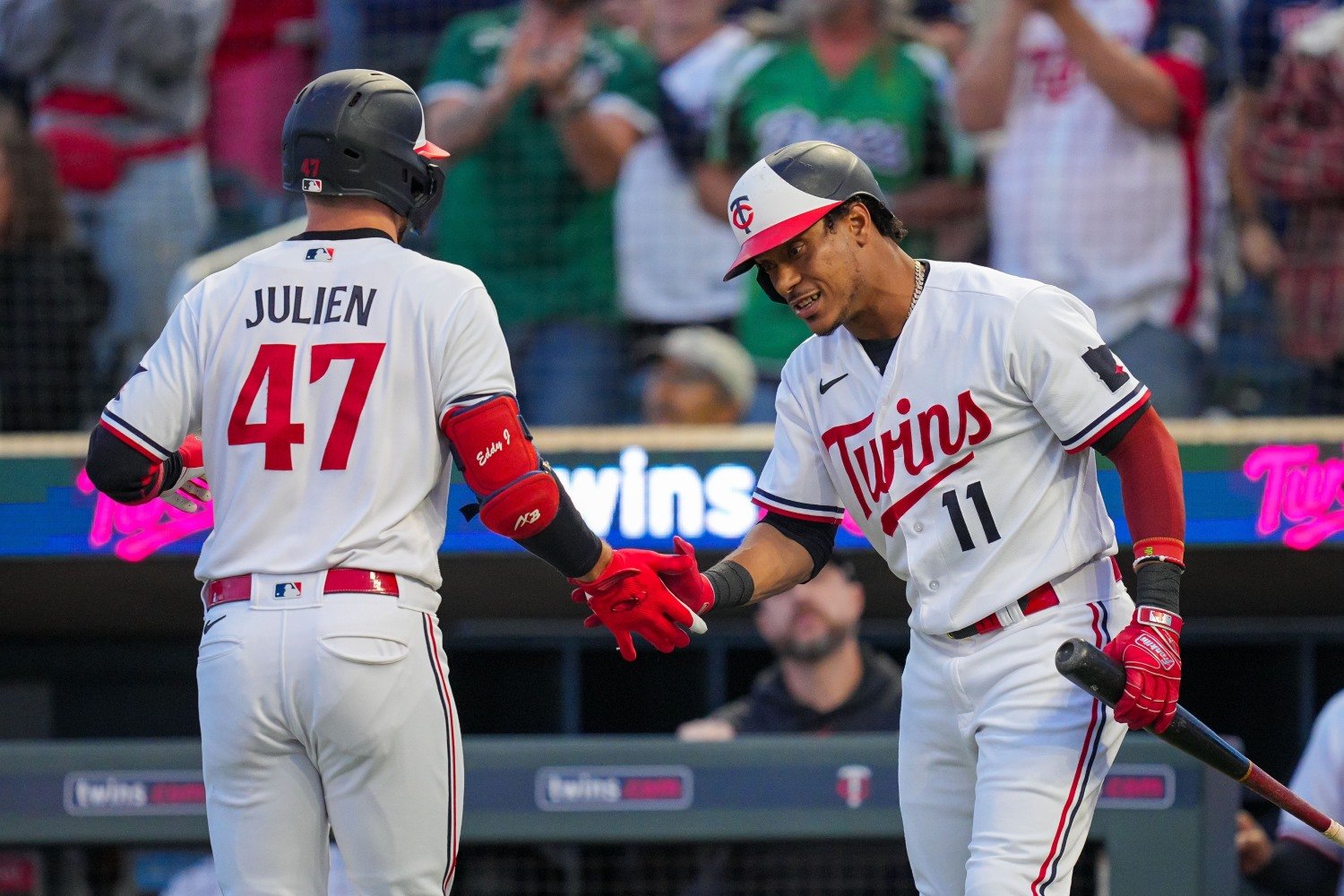 The trade itself didn’t come as much of a surprise, but the timing and return for Jorge Polanco did. Monday night, the Twins traded one of their two longest-tenured players away. They shipped Polanco to the Seattle Mariners in exchange for four players: major-league pitchers Anthony DeSclafani and Justin Topa, and prospects Gabriel Gonzalez (a High-A outfielder) and Darren Bowen (a Low-A pitcher). The return package opened some eyes, even as Twins fans expected Polanco would be dealt this offseason. He was the odd man out in a crowded infield here, but a highly-valued asset for teams in need of an All-Star-caliber second baseman. Seattle was the team to land the deal out of those interested, and they paid a higher price than many had been expecting. Now, the Twins infield has cleared up its depth at each position, and the team has a bit more flexibility to shuffle players between the two spots to the right of the keystone. Second Base 1. Edouard Julien Second base was Polanco’s position for the last three seasons and the breakout rookie season of Edouard Julien hastened the end of Polanco’s time with the Twins. Julien’s performance at the plate was phenomenal, as he posted a .263/.381/.459 triple-slash with a 130 OPS+. His plate discipline is the strongest asset he brings to the Twins. His defense, not so much. Julien did not start the 2023 season as a solid defender at second, as he had a lot of errors and fumbles with the ball. But as the campaign went on, he made substantial improvements. Still, his defensive skills at second being what they were prompted the Twins to try him out at first base. Per the FanGraphs depth chart projection of the Twins, Julien is expected to start at second 52% of the time this season. It may be slightly more or slightly less, pending how the rest of the season plays out with injuries and performance. But second base is likely not the only position Julien plays this year. 2. Kyle Farmer Farmer remains the Twins' utility infielder for 2024. His versatility will give the Twins and Rocco Baldelli the luxury to give Julien, Carlos Correa, and Royce Lewis a day off each week at their position, if they’re so inclined. Second base appears to be the position where Farmer will see the majority of his playing time, as Julien’s defensive prowess is still unclear at second and a timeshare between him and Kirilloff at first appears more likely than it did at the end of the season. The majority of the games Farmer played for the Twins in 2023 were at second, playing at the position for 45 games. It’s also the position FanGraphs projects him to play the most, at 16% of the time. Farmer will shuffle around the infield on a weekly basis this season and be the best right-handed platoon option at second until Brooks Lee is called up. 3. Brooks Lee A week ago, Twins general manager Thad Levine said on SiriusXM’s MLB Network Radio, “We're going to employ the strategy of when [Brooks Lee] tells us he's ready to go, we're going to get him up in the big leagues." That's a non-answer about when we'll see the top prospect in the upper levels of the farm system, but it does hint that Lee has a strong chance of making his MLB debut before Memorial Day. If and when Lee shows he’s big league ready, he’ll likely find his way into the role Farmer has now. Lee would be the perfect platoon mate opposite Julien, to face left-handed pitchers and play second base. Until games start in spring training, it’ll be too early to call if Lee will be on the Twins’ active roster full-time before May, but if he does, second base will be the position at which he sees the most playing time. FanGraphs has Lee projected to play second for the Twins in 10% of his games played, the most at any position. 4. Nick Gordon Gordon’s 2023 season was cut short with a broken tibia on May 17. His absence from the team was noticeable on the field, but he was still uplifting on the bench as the club made their playoff push. However, players such as Farmer and (especially) Willi Castro stepped up and stopped the gap. Castro, in particular, surprised everyone in 2023, with some even considering him the team MVP. With Byron Buxton announcing his return to playing center field, Castro will line up as his primary backup; the Twins have (so far) held off on pursuing other players at the position. Gordon seems better-suited to be a backup in the outfield. The infield depth ahead of him at second base, with Julien, Farmer, and soon Lee, suggest that Gordon’s opportunities at the position will be limited. First Base 1. Alex Kirilloff Kirilloff has yet to have a season in the majors that wasn’t plagued by injury. For now, he's set for spring training and expecting to be healthy for the season, following a shoulder injury that left him off the roster for the Twins final postseason game and led to surgery in the fall. If Kirilloff can overcome the biggest hurdle, this could be the best season of his career so far. His time in the outfield is all but done. FanGraphs has Kirilloff set to play at first 64% of the time for the Twins this year, and it’s likely that that number is only limited by his career splits against left-handed pitchers. 2. José Miranda Miranda has a lot of question marks surrounding him as he enters Spring Training. Will he remain healthy? If so, can he perform at the same level he did as a rookie in 2022? If not, can he maintain a level of performance sufficient even to keep him in the major leagues? Miranda’s best chance of cracking the Opening Day roster is as a platoon option at the corner infield positions, specifically as the first base platoon partner for Kirilloff. His plate appearances in the majors are still limited, but he’s a much better hitter in his pro career against lefties than righties. A .774 OPS against lefties (compared to a .680 OPS against righties) might be good enough for Miranda to earn playing time at the start of the season. FanGraphs had him with the second-highest percentage of playing time at first for the Twins, at 26%. His biggest hurdle will be overcoming the sophomore slump and proving it was only that. 3. Edouard Julien Julien played at first for 17 innings in 2023 and practiced at the position before games frequently at the end of the season. Pending Kirilloff’s health and performance as the season goes on, Julien would make a solid replacement for him at first, if Miranda cannot reestablish his footing in 2024. With two other players who can play solid second base behind Julien on the depth chart. It would not be a surprise to see Julien play anywhere from 30-50 games at first base this season. Opening Day is less than two months away and a lot will play out and shake up before the Twins' roster is set for March 28. While Polanco’s presence will be missed as a clubhouse leader and selfless player, the optimism to come out of his departure lies in the opportunity presented to the players who can fill in at first and second base. Whom do you want to see soak up the biggest share of the newly available playing time after the Polanco trade? Weigh in yourself, below.
- 26 comments
-
- 7
-

-
- jorge polanco
- edouard julien
- (and 4 more)
-
Justin Topa joins the Twins bullpen as one of four new players in the trade for Jorge Polanco. Topa's 2023 season was a breakout season with the Mariners, and Theo suggests his high ceiling and what it can mean for the Twins bullpen in 2024.
-
Justin Topa joins the Twins bullpen as one of four new players in the trade for Jorge Polanco. Topa's 2023 season was a breakout season with the Mariners, and Theo suggests his high ceiling and what it can mean for the Twins bullpen in 2024. View full video
-
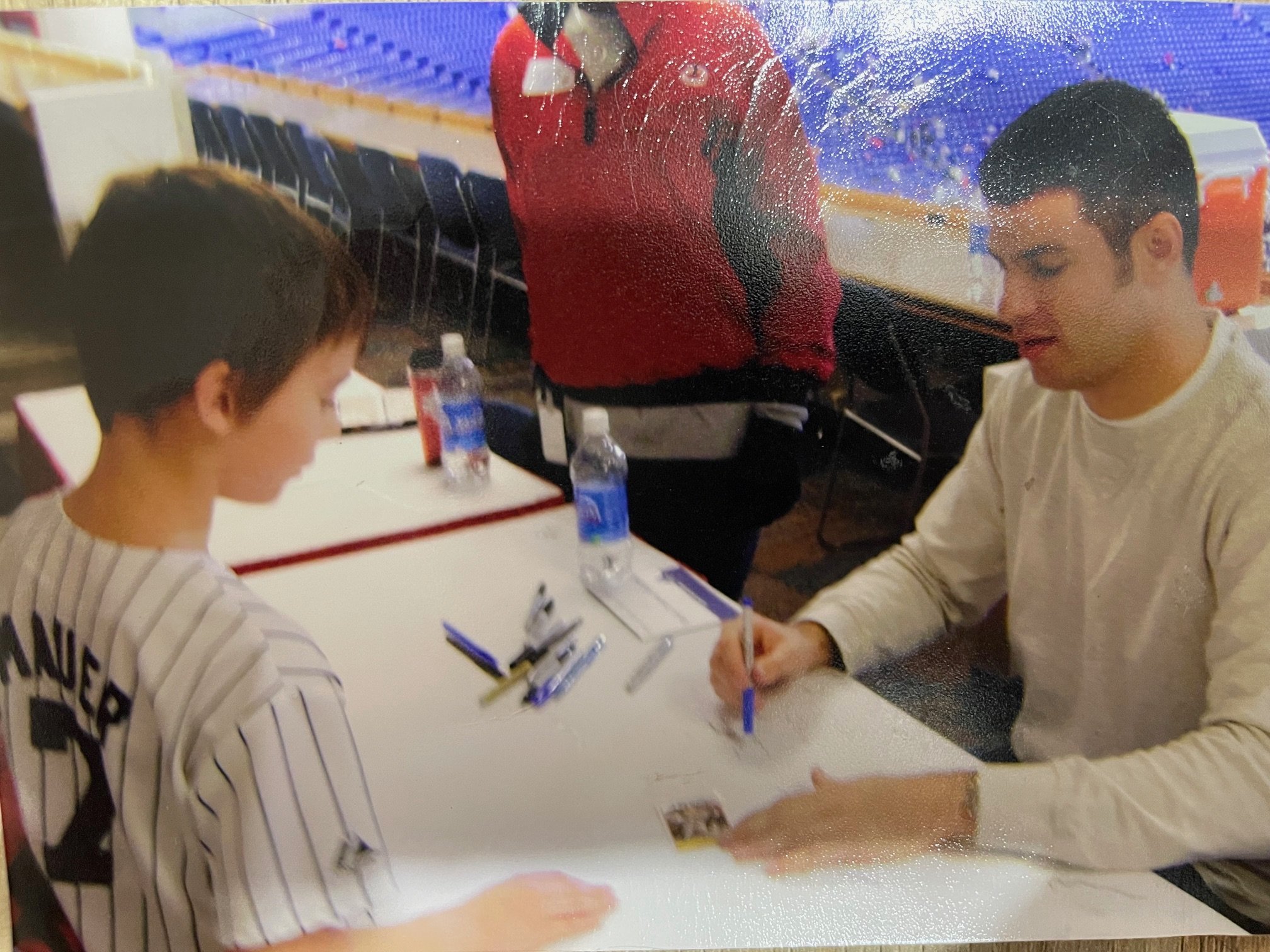 Joe Mauer has been many things, to many people, at many times. He was a three-sport high-school superstar, the number-one overall pick in the 2001 MLB draft, and the best catching prospect in all of baseball. He made his MLB debut on April 5, 2004, and went 2-for-3 with two singles, two walks, and the game-winning run scored via a Shannon Stewart walk-off homer. On that day, a title was thrust upon him that he was never able to shake--for all the right reasons. He became the hometown hero not only for the kids of the Twin Cities and surrounding suburbs, but for all of Minnesota. From there, Mauer went on to become an All-Star, three-time batting champion, Silver Slugger and Gold Glove winner, and MVP. It’s those accolades, his character, and the way he went about treating the fans (especially the kids admiring him) that have earned him the call to Cooperstown. Five-plus years have passed since Mauer’s retirement, and those who were kids for the majority of his career have entered adulthood. While time has changed many things, it hasn’t changed the perception these kids had of Mauer when they were young. “Joe gave every kid growing up someone to idolize,” said Sam Pahl, who graduated from Burnsville High School in 2017. “His induction to the Hall of Fame puts a bow on his prolific career while giving us kids growing up one last fond memory of our hometown hero.” Mauer quickly became a role model for many Minnesotan kids. Whether it be doing commercials with his mother as his dinner date, destroying prized possessions with Joe Nathan in the basement, or public appearances throughout the Twin Cities at charity events, hospital visits, or even Winter Caravan stops, Mauer found ways to connect with the community beyond the diamond. While individual interactions Mauer had with kids were limited by his schedule, those five minutes he gave every kid could mean the world to them. Meeting a hero who lived up to expectations is rare, but Mauer was that rare exception for so many kids in the state. The man they saw on TV ads and behind the plate almost every day for the Twins showed himself to be the exceptional human being kids' imaginations made him out to be. “Joe represented my pride in the Twins and in Minnesota,” said 2018 Wayzata High School graduate and fellow Twins Daily contributor, Nash Walker. “A hometown hero who never left our state means everything as a fan.” “Most kids grow up at a young age wanting to be like Spiderman or whoever their favorite superhero is,” said Jacob Becker, a fellow Burnsville High School graduate from 2017. “But I wanted to be like Joe Mauer. I had a poster [of Mauer] in my room that said ‘Fast, Fearless, Strong, and Tobacco Free!’ I looked at the poster every day and it served its purpose as I grew up.” The icon on countless kids posters across Minnesota bedrooms was a common sight from 2006-2013. As many of these kids came of age playing Little League, Mauer’s batting stance was commonly emulated at the plate (as best they could), even if they couldn’t hit the ball the other way. “Joe Mauer was everyone’s favorite player in elementary school,” said Blake Andert, another Burnsville High School grad from 2017. “Whenever we played baseball at recess, it was always a competition to decide who got to pretend to be Mauer and then Justin Morneau.” “Mauer inspired me to play baseball growing up and made me believe a guy from the Twin Cities could be an all-star,” Zach McGovern, another Burnsville alumnus, said. “He was an inspiration on and off the field.” Efforts to emulate his smooth swing and a desire to play catcher hit almost every Minnesota kid as their baseball career progressed (or ended) in those years. Even for the kids who were able to make it to their high-school teams, Mauer’s career wasn’t the same at first base. The memory of who he was in his prime was still a massive influence at these kids' points in life. “Joe Mauer was the reason I started batting left-handed when I was eight years old,” said Michael Michelizzi, a 2017 Proctor High School graduate. “I was so upset when he moved to first base, because it felt like such a changing of the guard. Seeing him put the catcher gear back on one final time brought a tear to my eye.” “Not only is it incredibly rare to have one player with one team, let alone his hometown team,” said Hunter Pinke, a 2016 Hastings High School graduate. “Because of that, every Minnesotan has a Joe Mauer story. For us, playing ball in Hastings stories were always told that there was only one player in Hastings who ever stole a base off Mauer. He was that special." Hastings High School was and remains in the same Minnesota State High School League conference as Cretin-Derham Hall. Mauer even introduced many of the more, ah, suburban Twin Cities kids to hip-hop. From 2006 onward, not an at-bat went by at either the Metrodome or Target Field where Mauer’s walk-up song wasn’t T.I.’s ‘What You Know’. If it wasn’t a genre your parents would let you listen to, Mauer’s walk-up song would be one place to start finding out more. Now, the moment of fulfillment has arrived. All these kids of Mauer’s career are adults, and they get to see their childhood icon get waved into Baseball immortality. "He's my childhood hero, just like any young baseball player in Minnesota," said Alex Cotter, a 2017 Lakeville South graduate. "Although the stats and accolades on the field are what you'll always see next to his name, what he's done for Twins Territory and what he's meant to his home state. That alone is enough for him to be in the Hall of Fame." “It’s rare for a player to spend their whole career with one team and play there at such a high level,” said Blake Mattson, a 2017 Andover High School graduate. “It felt special to have Joe Mauer, a player who grew up in Minnesota, play for the Twins for so many years with so much success. It’s an honor to see him get inducted.” Then, there’s my own experience, mixed in with friends (old and new) who grew up with Mauer as their icon. The first time I met him was a quick in-line autograph at Twins Fest 2009. It took almost two hours of waiting, but I handed him my copy of his 2006 Topps Update All-Star card to sign. Two years later (when Twins Fest was in Blaine, following the collapse of the Metrodome roof), I sat in on the kids' Q&A with my friend Carl Johnson, and was lucky enough to get a question in for Mauer myself. It wasn’t what his favorite food or color was like any other kid wanted to ask him. It was baseball-specific. “My name is Theo, and I wanted to ask if you think you’re the next player to hit .400?” “Woof, wow. I don’t know, I can definitely shoot for it. That would be something but I think I am more worried about trying to win a World Series first,” Mauer answered. Years went on, and the interactions halted until TwinsFest 2019. It was a dark day for me, personally, but going to TwinsFest was the light in it. There was only one goal for me. Getting an autograph of Mauer’s on the college student newspaper article I wrote on reflecting on his retirement from the game, two months earlier. He signed a copy and I gave him one to read. Four years later and finally a professional journalist, the opportunity to interview Mauer came again on his team Hall of Fame induction day this past August. Coming full circle from interviewing him as a kid. MAUER THROUGH THE YEARS.mp4 Now, with many friends, we will get to see our baseball icon, who may have let us down as a player sometimes, but never as a person. That’s why his Hall of Fame induction is hard to describe to so many who were kids during his career--and who are now adults, seeing the dream come true. What are your memories of Mauer? How does he fit into your image of the Twins, five years and three division titles after his retirement? Feel free to share some personal stories in the comments.
 -
Joe Mauer is officially a member of the National Baseball Hall of Fame. It's a triumphant moment for many Minnesotans, but for those who were kids as the prime of his career played out, it holds a special significance. Image courtesy of Dan Tollefson Joe Mauer has been many things, to many people, at many times. He was a three-sport high-school superstar, the number-one overall pick in the 2001 MLB draft, and the best catching prospect in all of baseball. He made his MLB debut on April 5, 2004, and went 2-for-3 with two singles, two walks, and the game-winning run scored via a Shannon Stewart walk-off homer. On that day, a title was thrust upon him that he was never able to shake--for all the right reasons. He became the hometown hero not only for the kids of the Twin Cities and surrounding suburbs, but for all of Minnesota. From there, Mauer went on to become an All-Star, three-time batting champion, Silver Slugger and Gold Glove winner, and MVP. It’s those accolades, his character, and the way he went about treating the fans (especially the kids admiring him) that have earned him the call to Cooperstown. Five-plus years have passed since Mauer’s retirement, and those who were kids for the majority of his career have entered adulthood. While time has changed many things, it hasn’t changed the perception these kids had of Mauer when they were young. “Joe gave every kid growing up someone to idolize,” said Sam Pahl, who graduated from Burnsville High School in 2017. “His induction to the Hall of Fame puts a bow on his prolific career while giving us kids growing up one last fond memory of our hometown hero.” Mauer quickly became a role model for many Minnesotan kids. Whether it be doing commercials with his mother as his dinner date, destroying prized possessions with Joe Nathan in the basement, or public appearances throughout the Twin Cities at charity events, hospital visits, or even Winter Caravan stops, Mauer found ways to connect with the community beyond the diamond. While individual interactions Mauer had with kids were limited by his schedule, those five minutes he gave every kid could mean the world to them. Meeting a hero who lived up to expectations is rare, but Mauer was that rare exception for so many kids in the state. The man they saw on TV ads and behind the plate almost every day for the Twins showed himself to be the exceptional human being kids' imaginations made him out to be. “Joe represented my pride in the Twins and in Minnesota,” said 2018 Wayzata High School graduate and fellow Twins Daily contributor, Nash Walker. “A hometown hero who never left our state means everything as a fan.” “Most kids grow up at a young age wanting to be like Spiderman or whoever their favorite superhero is,” said Jacob Becker, a fellow Burnsville High School graduate from 2017. “But I wanted to be like Joe Mauer. I had a poster [of Mauer] in my room that said ‘Fast, Fearless, Strong, and Tobacco Free!’ I looked at the poster every day and it served its purpose as I grew up.” The icon on countless kids posters across Minnesota bedrooms was a common sight from 2006-2013. As many of these kids came of age playing Little League, Mauer’s batting stance was commonly emulated at the plate (as best they could), even if they couldn’t hit the ball the other way. “Joe Mauer was everyone’s favorite player in elementary school,” said Blake Andert, another Burnsville High School grad from 2017. “Whenever we played baseball at recess, it was always a competition to decide who got to pretend to be Mauer and then Justin Morneau.” “Mauer inspired me to play baseball growing up and made me believe a guy from the Twin Cities could be an all-star,” Zach McGovern, another Burnsville alumnus, said. “He was an inspiration on and off the field.” Efforts to emulate his smooth swing and a desire to play catcher hit almost every Minnesota kid as their baseball career progressed (or ended) in those years. Even for the kids who were able to make it to their high-school teams, Mauer’s career wasn’t the same at first base. The memory of who he was in his prime was still a massive influence at these kids' points in life. “Joe Mauer was the reason I started batting left-handed when I was eight years old,” said Michael Michelizzi, a 2017 Proctor High School graduate. “I was so upset when he moved to first base, because it felt like such a changing of the guard. Seeing him put the catcher gear back on one final time brought a tear to my eye.” “Not only is it incredibly rare to have one player with one team, let alone his hometown team,” said Hunter Pinke, a 2016 Hastings High School graduate. “Because of that, every Minnesotan has a Joe Mauer story. For us, playing ball in Hastings stories were always told that there was only one player in Hastings who ever stole a base off Mauer. He was that special." Hastings High School was and remains in the same Minnesota State High School League conference as Cretin-Derham Hall. Mauer even introduced many of the more, ah, suburban Twin Cities kids to hip-hop. From 2006 onward, not an at-bat went by at either the Metrodome or Target Field where Mauer’s walk-up song wasn’t T.I.’s ‘What You Know’. If it wasn’t a genre your parents would let you listen to, Mauer’s walk-up song would be one place to start finding out more. Now, the moment of fulfillment has arrived. All these kids of Mauer’s career are adults, and they get to see their childhood icon get waved into Baseball immortality. "He's my childhood hero, just like any young baseball player in Minnesota," said Alex Cotter, a 2017 Lakeville South graduate. "Although the stats and accolades on the field are what you'll always see next to his name, what he's done for Twins Territory and what he's meant to his home state. That alone is enough for him to be in the Hall of Fame." “It’s rare for a player to spend their whole career with one team and play there at such a high level,” said Blake Mattson, a 2017 Andover High School graduate. “It felt special to have Joe Mauer, a player who grew up in Minnesota, play for the Twins for so many years with so much success. It’s an honor to see him get inducted.” Then, there’s my own experience, mixed in with friends (old and new) who grew up with Mauer as their icon. The first time I met him was a quick in-line autograph at Twins Fest 2009. It took almost two hours of waiting, but I handed him my copy of his 2006 Topps Update All-Star card to sign. Two years later (when Twins Fest was in Blaine, following the collapse of the Metrodome roof), I sat in on the kids' Q&A with my friend Carl Johnson, and was lucky enough to get a question in for Mauer myself. It wasn’t what his favorite food or color was like any other kid wanted to ask him. It was baseball-specific. “My name is Theo, and I wanted to ask if you think you’re the next player to hit .400?” “Woof, wow. I don’t know, I can definitely shoot for it. That would be something but I think I am more worried about trying to win a World Series first,” Mauer answered. Years went on, and the interactions halted until TwinsFest 2019. It was a dark day for me, personally, but going to TwinsFest was the light in it. There was only one goal for me. Getting an autograph of Mauer’s on the college student newspaper article I wrote on reflecting on his retirement from the game, two months earlier. He signed a copy and I gave him one to read. Four years later and finally a professional journalist, the opportunity to interview Mauer came again on his team Hall of Fame induction day this past August. Coming full circle from interviewing him as a kid. MAUER THROUGH THE YEARS.mp4 Now, with many friends, we will get to see our baseball icon, who may have let us down as a player sometimes, but never as a person. That’s why his Hall of Fame induction is hard to describe to so many who were kids during his career--and who are now adults, seeing the dream come true. What are your memories of Mauer? How does he fit into your image of the Twins, five years and three division titles after his retirement? Feel free to share some personal stories in the comments. View full article
- 1 reply
-
- 1
-
-
- joe mauer
- justin morneau
- (and 1 more)
-
Theo takes a more realistic approach with his mock trade. Proposing the Twins go after Bryce Elder, who doesn't fill the need of a solid number 2 starter, but provides middle rotation depth and has a dominating slider that he throws just as frequently as his fastball. And a trade for Elder would strengthen a Braves Minor League system depleted on hitters. View full video
- 2 replies
-
- 1
-

-
- bryce elder
- emmanuel rodriguez
- (and 1 more)
-
Theo takes a more realistic approach with his mock trade. Proposing the Twins go after Bryce Elder, who doesn't fill the need of a solid number 2 starter, but provides middle rotation depth and has a dominating slider that he throws just as frequently as his fastball. And a trade for Elder would strengthen a Braves Minor League system depleted on hitters.
-
Which Twins Prospects Ranked in Baseball Prospectus’s Top 40 in 2003?
Theodore Tollefson posted an article in Twins
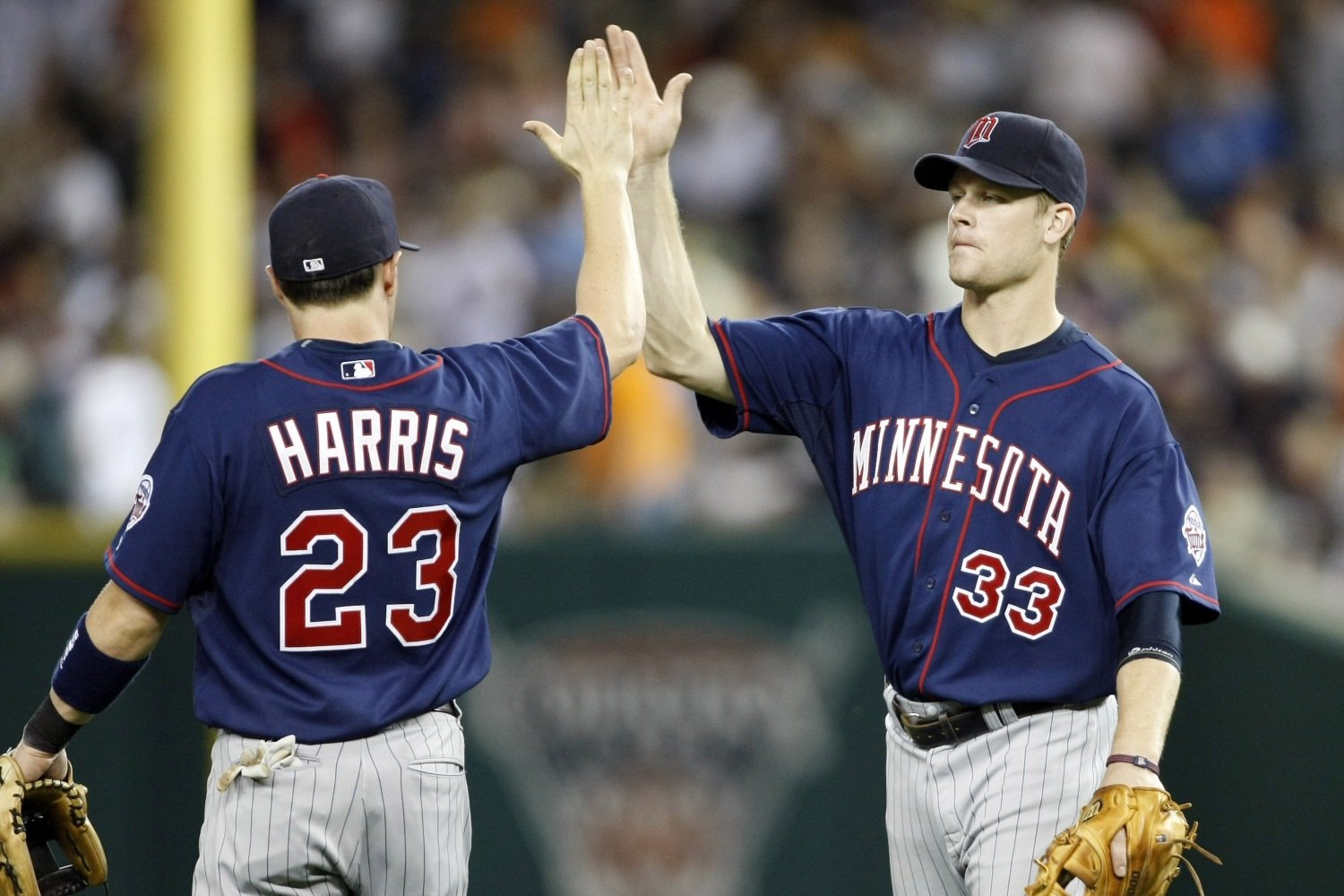 Let’s set the scene. It was 2003. The unexpected Anaheim Angels were coming off the first World Series championship in franchise history. Kids who are adults now were glued to their TVs, growing up with shows such as SpongeBob Squarepants and quoting it non-stop. The Minnesota Twins were staying home after a hard-fought 2002 division title and an equally hard-won court ruling prevented their move out of town. In the mix of all that, an up-and-coming website going all-in on covering baseball from the majors to the minor leagues was entering its seventh season on the scene: Baseball Prospectus. Now, it is one of the leading sites in covering the sport online and has produced or been home to some of today's beat writers (Aaron Gleeman) and even front office executives (ex-GMs Chaim Bloom and James Click, longtime Cleveland guru Keith Woolner, and Twins staffer Kevin Goldstein, among many others). That year, Prospectus released its first comprehensive, online top 40 prospect rankings. This list included three players in the Twins system at the time, one future Twins player, and one manager. The three Twins ranked on the list at the time were Joe Mauer, Michael Cuddyer, and Justin Morneau. Mauer was the only one of the three ranked within the top 10, coming in ninth overall according to the writers who made up the panel at the time. There were some names ranked higher than Mauer that certainly were understandable at that time, notably the top three on this list. At number one, Mark Teixeira; at number two, the Japanese superstar who earned the nickname Godzilla, Hideki Matsui; and at number three, José Reyes. However, with 20/20 hindsight (and perhaps just with the new knowledge about the game we have gained in the last two decades), there were a few names ahead of Mauer on this list that were a bit baffling. Full disclosure: This author has his biases on the rankings. I was only four years old in 2003 and it wouldn’t be another two years until I really cultivated a basic understanding of the game I love most, but Mauer was my childhood hero in this game. Yet, even with those biases and hindsight taken into account, it’s still odd to see a prospect list where Victor Martinez, Hee-Seop Choi, and Jerome Williams were all ranked higher than Mauer. Martinez proved to be a worthy adversary to Mauer on rival teams dating back to his early years with the former Cleveland Guardians. By the time both were in the majors full-time in 2006, Mauer and Martinez would often be found on top-10 catcher lists by writers and fantasy experts league-wide until 2012. Martinez, like Mauer, had his time spent behind the plate cut short (although more by his defensive limitations than by injury issues), and caught only five games in his final six seasons. Mauer came out the better catcher during their peak seasons behind the plate. Mauer’s 2006-2013 seasons, compared to Martinez’s peak seasons (2004-2010) behind the plate, eclipse him in all but a few facets. Mauer had a .327/.410/.473 slash line, with an OPS+ of 139. Martinez had a .304/.372/.475 line, good for an OPS+ of 124. Despite the differences in peaks and rankings in 2003, Martinez and Mauer both turned out to be among the fantastic catchers of their eras, proving their rankings by Baseball Prospectus 20 years ago to be sound. Williams and Choi, on the other hand, didn’t have their careers pan out as prospect gurus were predicting at the time. Williams had a strong rookie campaign with the Giants in 2003 at the age of 21, posting a 3.30 ERA in 131 innings of work across 21 starts, along with an ERA+ of 128. But his strikeout-to-walk ratio of 1.8 wasn’t glamorous. Williams would never reach the heights of his rookie campaign again, and by the end of a dismal 2007 season making six starts with the Washington Nationals, it looked as though his career was over. He would make a comeback in 2011 and stayed in the Majors as a journeyman, back-end starter for six seasons, but stardom eluded him entirely. Choi, who was signed out of South Korea by the Chicago Cubs in 1999, was expected to be Shin-Soo Choo (whom, fun fact, Baseball Prospectus ranked 16th on this list) before Choo broke into the majors. But Choi only played 80 games with the Cubs in 2003, hitting .218/.350/.421 in 245 plate appearances. A nasty collision with pitcher Kerry Wood on a pop-up that summer concussed him and changed the trajectory of his career. Choi would split time between the Marlins and Dodgers in 2004 and played a full season with LA in 2005, but beyond appearing in the 2005 MLB Home Run Derby, representing his home country, Choi’s career wouldn’t see much more excitement. In hindsight, Mauer may be the only one of Baseball Prospectus's Top 10 prospects in 2003 to make the Baseball Hall of Fame. While Reyes is on the ballot alongside Mauer this year, he has garnered zero votes amongst public ballots so far released. The only other player some writers (and, someday, an Eras Committee) may take into consideration is Teixeira, with his 400-home run club membership being the greatest point in his favor. Others who had substantial careers, like José Contreras and Brandon Phillips, will never get the Hall of Fame accolades. Returning to the other former Twins mentioned back then, sitting at their No. 15 spot was outfielder Michael Cuddyer. Cuddyer’s career earned him a batting title with the Rockies in 2012, after a Minnesota tenure that garnered membership in the Twins Hall of Fame. He became a fan favorite, and hit home runs to get out of slumps when Twins fans sitting behind the first base dugout yelled “You suck Cuddyer!” (True story.) The famous baseball player-cum-amateur magician didn’t have much ground separating him and his longtime teammate in these rankings. Like those ranked ahead of Mauer, many can argue Cuddyer had a better career than all those ranked between him and Joe. Ranked 10 through 14 at the time were Chris Snelling (Mariners), Jason Stokes (Marlins), Rich Harden (Athletics), Jesse Foppert (Giants), and Marlon Byrd (Phillies). Byrd would be the only player to end up with more plate appearances (6,123) than Cuddyer (6,102), but Byrd was dinged with steroid suspensions in his career and retired after the second suspension in 2016 that landed him 162 games out. Despite a higher career bWAR than Cuddyer’s (17.6), Byrd’s 25.8 career bWAR might be the only accolade in his career to make an argument of a better outcome based on ranking. Snelling only accumulated 273 plate appearances across five seasons. Stokes never made the majors. Harden enjoyed a few frustrating but strong seasons in his mid-20s, then became one of baseball’s biggest ‘what if he stayed healthy’ cases in the 2000s, behind Mark Prior, and Foppert would only pitch in 27 total games for the Giants between 2003 and 2005 before retiring. Cuddyer’s WAR certainly doesn’t seem to reflect the good feelings Twins, Rockies, and even Mets fans got from him throughout his career. With hindsight, it’s safe to say this is one BP writers at the time got right. Next on the list among the Twins alumni was a guy not even in the Twins system at the time. Ranked 18th overall was infielder Brendan Harris, who was with the Cubs and had a strong 2002 campaign between High-A and Double-A. That season, Harris posted a .329/.389/.534 slash, with 15 home runs and 65 RBI in 530 plate appearances. These numbers certainly gave Harris recognition as one of the Cubs' best prospects at the time, but it also gave him one of the most bizarre player comps by a baseball writer ever documented on the internet. Prospectus co-founder Rany Jazayerli was so high on the potential Harris showed as a prospect in 2002, that he compared the production to that of a breakout prospect in the Cardinals system two years earlier; Albert Pujols. For context, Pujols had only 14 more plate appearances as a prospect in 2000 going to the plate 544 times between High A, Double A, and Triple A. In his first professional season, the 20-year-old Pujols had a .314/.378/.543 triple slash, 19 home runs and 96 RBI. The similarities in statistical production were so enticing to Jazayerli at the time, that he was confident in making the comparison. Jazayerli wrote about Harris, “There are some differences–notably that Harris was a classification higher than Pujols–but the raw numbers are eerily similar. Harris is the biggest sleeper prospect in the game, and I was compelled to move him into our Top 20.” Boy, would he get that one wrong. That's not to say that Harris didn’t have a decent career, but he was never going to be Albert Pujols. By mid-2004, he was a small piece of a huge trade, conveyed from the Cubs to the Twins in the four-team deal that brought Nomar Garciaparra to Chicago and sent Doug Mientkiewicz to Boston. His first two seasons with the Twins were solid, but in 2010, he fell to the bottom of the pecking order on the Twins bench, hitting only .157 in 120 plate appearances. Harris would be sent (alongside J.J. Hardy) to the Orioles in the subsequent offseason, but wouldn’t return to the majors until 2013 with the Angels. Lastly, there’s Morneau and future Twins manager Rocco Baldelli. These two were ranked very close to each other, toward the bottom quartile of the top 40 list--Baldelli at 28, and Morneau at 30. The only player separating them (in the 29th overall spot) was Miguel Cabrera. Baldelli’s story as a superstar prospect whose career became derailed by injuries has become all too familiar to Twins fans. Twins fans have experienced their version of Baldelli’s journey with Byron Buxton. Despite constant injuries in his career, his first two seasons with the Devil Rays were solid, as he had a .285/.326/.425 line in 1,249 plate appearances across 292 games. But after missing all of 2005, Baldelli would never play more than 100 games in a season again. His transition into coaching has made him one of the more respected managers in the league and a Manager of the Year Award winner in his rookie season in 2019. For someone ranked as the 30th-best prospect in the league at the time, Morneau panned out well beyond expectations. He was the 2006 AL MVP, a four-time All-Star, the 2008 Home Run Derby champion, owner of two Silver Sluggers, and the winner of a batting title with the Colorado Rockies in 2014. Like so many others ranked on this list, Morneau’s career was altered by a head injury, which came on July 7, 2010. Morneau was sliding into second base when Blue Jays shortstop John McDonald accidentally drilled him in the head with his kneecap. What resulted was a concussion that stopped Morneau short of a second MVP campaign, and he was never the same again. Despite that, Morneau’s career has landed him in the Twins Hall of Fame. He’s fourth on the Twins' all-time home run list with 221, only behind Bob Allison (256), Kent Hrbek (293) and Harmon Killebrew (559). In retrospect, the Twins on Baseball Prospectus's Top 40 prospect list 20 years ago may have had the best collective outcome (for the team they were with at that time) out of any. Mauer, Cuddyer, and Morneau all gave the Twins at least six full seasons of production. The three combined for a bWAR of 90.9 in their Twins' tenures. The only other player on this list guaranteed to enter the Hall of Fame, Cabrera, had a career bWAR of 67.3. The Twins had a good run of these five guys in the organization in the long run, and outside of Harris, all still contribute to the team’s front office in some capacity today. All and all, it’s safe to say the Baseball Prospectus writers of 2003 got it right with the Twins prospects of the time, but also that we evaluate prospects much differently (and much better) now than we did then.
- 15 comments
-
- 8
-
-
- joe mauer
- justin morneau
- (and 3 more)
-
Hard to believe it's been 20 years since 2003, but it was a much different time, long before many future Twins Hall of Famers made their debuts on the Metrodome's carpet. Image courtesy of © Leon Halip-USA TODAY Sports Let’s set the scene. It was 2003. The unexpected Anaheim Angels were coming off the first World Series championship in franchise history. Kids who are adults now were glued to their TVs, growing up with shows such as SpongeBob Squarepants and quoting it non-stop. The Minnesota Twins were staying home after a hard-fought 2002 division title and an equally hard-won court ruling prevented their move out of town. In the mix of all that, an up-and-coming website going all-in on covering baseball from the majors to the minor leagues was entering its seventh season on the scene: Baseball Prospectus. Now, it is one of the leading sites in covering the sport online and has produced or been home to some of today's beat writers (Aaron Gleeman) and even front office executives (ex-GMs Chaim Bloom and James Click, longtime Cleveland guru Keith Woolner, and Twins staffer Kevin Goldstein, among many others). That year, Prospectus released its first comprehensive, online top 40 prospect rankings. This list included three players in the Twins system at the time, one future Twins player, and one manager. The three Twins ranked on the list at the time were Joe Mauer, Michael Cuddyer, and Justin Morneau. Mauer was the only one of the three ranked within the top 10, coming in ninth overall according to the writers who made up the panel at the time. There were some names ranked higher than Mauer that certainly were understandable at that time, notably the top three on this list. At number one, Mark Teixeira; at number two, the Japanese superstar who earned the nickname Godzilla, Hideki Matsui; and at number three, José Reyes. However, with 20/20 hindsight (and perhaps just with the new knowledge about the game we have gained in the last two decades), there were a few names ahead of Mauer on this list that were a bit baffling. Full disclosure: This author has his biases on the rankings. I was only four years old in 2003 and it wouldn’t be another two years until I really cultivated a basic understanding of the game I love most, but Mauer was my childhood hero in this game. Yet, even with those biases and hindsight taken into account, it’s still odd to see a prospect list where Victor Martinez, Hee-Seop Choi, and Jerome Williams were all ranked higher than Mauer. Martinez proved to be a worthy adversary to Mauer on rival teams dating back to his early years with the former Cleveland Guardians. By the time both were in the majors full-time in 2006, Mauer and Martinez would often be found on top-10 catcher lists by writers and fantasy experts league-wide until 2012. Martinez, like Mauer, had his time spent behind the plate cut short (although more by his defensive limitations than by injury issues), and caught only five games in his final six seasons. Mauer came out the better catcher during their peak seasons behind the plate. Mauer’s 2006-2013 seasons, compared to Martinez’s peak seasons (2004-2010) behind the plate, eclipse him in all but a few facets. Mauer had a .327/.410/.473 slash line, with an OPS+ of 139. Martinez had a .304/.372/.475 line, good for an OPS+ of 124. Despite the differences in peaks and rankings in 2003, Martinez and Mauer both turned out to be among the fantastic catchers of their eras, proving their rankings by Baseball Prospectus 20 years ago to be sound. Williams and Choi, on the other hand, didn’t have their careers pan out as prospect gurus were predicting at the time. Williams had a strong rookie campaign with the Giants in 2003 at the age of 21, posting a 3.30 ERA in 131 innings of work across 21 starts, along with an ERA+ of 128. But his strikeout-to-walk ratio of 1.8 wasn’t glamorous. Williams would never reach the heights of his rookie campaign again, and by the end of a dismal 2007 season making six starts with the Washington Nationals, it looked as though his career was over. He would make a comeback in 2011 and stayed in the Majors as a journeyman, back-end starter for six seasons, but stardom eluded him entirely. Choi, who was signed out of South Korea by the Chicago Cubs in 1999, was expected to be Shin-Soo Choo (whom, fun fact, Baseball Prospectus ranked 16th on this list) before Choo broke into the majors. But Choi only played 80 games with the Cubs in 2003, hitting .218/.350/.421 in 245 plate appearances. A nasty collision with pitcher Kerry Wood on a pop-up that summer concussed him and changed the trajectory of his career. Choi would split time between the Marlins and Dodgers in 2004 and played a full season with LA in 2005, but beyond appearing in the 2005 MLB Home Run Derby, representing his home country, Choi’s career wouldn’t see much more excitement. In hindsight, Mauer may be the only one of Baseball Prospectus's Top 10 prospects in 2003 to make the Baseball Hall of Fame. While Reyes is on the ballot alongside Mauer this year, he has garnered zero votes amongst public ballots so far released. The only other player some writers (and, someday, an Eras Committee) may take into consideration is Teixeira, with his 400-home run club membership being the greatest point in his favor. Others who had substantial careers, like José Contreras and Brandon Phillips, will never get the Hall of Fame accolades. Returning to the other former Twins mentioned back then, sitting at their No. 15 spot was outfielder Michael Cuddyer. Cuddyer’s career earned him a batting title with the Rockies in 2012, after a Minnesota tenure that garnered membership in the Twins Hall of Fame. He became a fan favorite, and hit home runs to get out of slumps when Twins fans sitting behind the first base dugout yelled “You suck Cuddyer!” (True story.) The famous baseball player-cum-amateur magician didn’t have much ground separating him and his longtime teammate in these rankings. Like those ranked ahead of Mauer, many can argue Cuddyer had a better career than all those ranked between him and Joe. Ranked 10 through 14 at the time were Chris Snelling (Mariners), Jason Stokes (Marlins), Rich Harden (Athletics), Jesse Foppert (Giants), and Marlon Byrd (Phillies). Byrd would be the only player to end up with more plate appearances (6,123) than Cuddyer (6,102), but Byrd was dinged with steroid suspensions in his career and retired after the second suspension in 2016 that landed him 162 games out. Despite a higher career bWAR than Cuddyer’s (17.6), Byrd’s 25.8 career bWAR might be the only accolade in his career to make an argument of a better outcome based on ranking. Snelling only accumulated 273 plate appearances across five seasons. Stokes never made the majors. Harden enjoyed a few frustrating but strong seasons in his mid-20s, then became one of baseball’s biggest ‘what if he stayed healthy’ cases in the 2000s, behind Mark Prior, and Foppert would only pitch in 27 total games for the Giants between 2003 and 2005 before retiring. Cuddyer’s WAR certainly doesn’t seem to reflect the good feelings Twins, Rockies, and even Mets fans got from him throughout his career. With hindsight, it’s safe to say this is one BP writers at the time got right. Next on the list among the Twins alumni was a guy not even in the Twins system at the time. Ranked 18th overall was infielder Brendan Harris, who was with the Cubs and had a strong 2002 campaign between High-A and Double-A. That season, Harris posted a .329/.389/.534 slash, with 15 home runs and 65 RBI in 530 plate appearances. These numbers certainly gave Harris recognition as one of the Cubs' best prospects at the time, but it also gave him one of the most bizarre player comps by a baseball writer ever documented on the internet. Prospectus co-founder Rany Jazayerli was so high on the potential Harris showed as a prospect in 2002, that he compared the production to that of a breakout prospect in the Cardinals system two years earlier; Albert Pujols. For context, Pujols had only 14 more plate appearances as a prospect in 2000 going to the plate 544 times between High A, Double A, and Triple A. In his first professional season, the 20-year-old Pujols had a .314/.378/.543 triple slash, 19 home runs and 96 RBI. The similarities in statistical production were so enticing to Jazayerli at the time, that he was confident in making the comparison. Jazayerli wrote about Harris, “There are some differences–notably that Harris was a classification higher than Pujols–but the raw numbers are eerily similar. Harris is the biggest sleeper prospect in the game, and I was compelled to move him into our Top 20.” Boy, would he get that one wrong. That's not to say that Harris didn’t have a decent career, but he was never going to be Albert Pujols. By mid-2004, he was a small piece of a huge trade, conveyed from the Cubs to the Twins in the four-team deal that brought Nomar Garciaparra to Chicago and sent Doug Mientkiewicz to Boston. His first two seasons with the Twins were solid, but in 2010, he fell to the bottom of the pecking order on the Twins bench, hitting only .157 in 120 plate appearances. Harris would be sent (alongside J.J. Hardy) to the Orioles in the subsequent offseason, but wouldn’t return to the majors until 2013 with the Angels. Lastly, there’s Morneau and future Twins manager Rocco Baldelli. These two were ranked very close to each other, toward the bottom quartile of the top 40 list--Baldelli at 28, and Morneau at 30. The only player separating them (in the 29th overall spot) was Miguel Cabrera. Baldelli’s story as a superstar prospect whose career became derailed by injuries has become all too familiar to Twins fans. Twins fans have experienced their version of Baldelli’s journey with Byron Buxton. Despite constant injuries in his career, his first two seasons with the Devil Rays were solid, as he had a .285/.326/.425 line in 1,249 plate appearances across 292 games. But after missing all of 2005, Baldelli would never play more than 100 games in a season again. His transition into coaching has made him one of the more respected managers in the league and a Manager of the Year Award winner in his rookie season in 2019. For someone ranked as the 30th-best prospect in the league at the time, Morneau panned out well beyond expectations. He was the 2006 AL MVP, a four-time All-Star, the 2008 Home Run Derby champion, owner of two Silver Sluggers, and the winner of a batting title with the Colorado Rockies in 2014. Like so many others ranked on this list, Morneau’s career was altered by a head injury, which came on July 7, 2010. Morneau was sliding into second base when Blue Jays shortstop John McDonald accidentally drilled him in the head with his kneecap. What resulted was a concussion that stopped Morneau short of a second MVP campaign, and he was never the same again. Despite that, Morneau’s career has landed him in the Twins Hall of Fame. He’s fourth on the Twins' all-time home run list with 221, only behind Bob Allison (256), Kent Hrbek (293) and Harmon Killebrew (559). In retrospect, the Twins on Baseball Prospectus's Top 40 prospect list 20 years ago may have had the best collective outcome (for the team they were with at that time) out of any. Mauer, Cuddyer, and Morneau all gave the Twins at least six full seasons of production. The three combined for a bWAR of 90.9 in their Twins' tenures. The only other player on this list guaranteed to enter the Hall of Fame, Cabrera, had a career bWAR of 67.3. The Twins had a good run of these five guys in the organization in the long run, and outside of Harris, all still contribute to the team’s front office in some capacity today. All and all, it’s safe to say the Baseball Prospectus writers of 2003 got it right with the Twins prospects of the time, but also that we evaluate prospects much differently (and much better) now than we did then. View full article
- 15 replies
-
- 1
-
-
- joe mauer
- justin morneau
- (and 3 more)
-
Tom gets to make his case for a few prospects that we're not paying enough attention to. View full video
-
Tom gets to make his case for a few prospects that we're not paying enough attention to.
-
Get to know Ben Hartman, the head grounds keeper of the Wichita Wind Surge Image courtesy of Tim Grubbs, Wichita Wind Surge Wichita – Walking into any ballpark in America, what are some sights, sounds, and smells that commonly catch people’s attention? Hot dogs grilling at every concession stand, ushers, offering programs, the crack of a player's bat during batting practice, and the smell of the freshly cut grass on the field that’ll showcase teams we come to cheer for and root against. Perhaps not at the top of our minds are the people behind the scenes at the ballpark maintaining the landscape we have come to love. Ben Hartman is the head groundskeeper for the Wichita Wind Surge, the Minnesota Twins Double-A affiliate. He’s been with the team all three seasons and was recently minted the Texas League Head Groundskeeper of the Year for the second consecutive season. “My office is a baseball field,” Hartman said. “I think that's pretty sweet, and not too many people can say that.” Determined by managers, players, and executives in the league, Hartman greatly appreciated the recognition, but it's far from why he's in this profession. “It's really humbling to get recognized for the hard work. We don't do this for the recognition though. We do this because we take pride in our job and want to be the best at what we do,” said Hartman. Hartman grew up a half hour north of the Kansas City Royals home ballpark in Smithsville, Missouri, a town of around 10,000 people per the 2020 U.S. Census. His first job ever was groundskeeping at a local golf course at 15 years old. By the end of his first week there, Hartman was in love with what he did for work every day. “That first day, I got that job, I ran home and said, ‘This is what I want to do for the rest of my life.’ Then through the combination of working golf courses and baseball, I come to realize that I could make a living maintaining baseball fields,” Hartman said. The focus and determination to become a groundskeeper carried with him the rest of high school. Hartman was fortunate enough to find a college with a turf management major at Iowa Central Community College. There, Hartman continued the pursuit of his dream job while serving as the Iowa Central Tritons bullpen catcher. “I always joke about it. I said I played baseball, but I got one mercy at bat as the bullpen catcher. But I still had fun nonetheless,” recalled Hartman. While being a member of the Tritons clubhouse, Hartman and his teammates always maintained the home field after the games and giving him the real-time practice for the career path he was pursuing. Most often, Hartman would be working on the field for two hours at a time. After completing his degree in 2017, Hartman returned to the Kansas City area, working with the American Association’s Kansas City T-Bones, now known as the Monarchs. When he had the downtime, he continued surfing the web for future opportunities; one he just happened to stumble upon was a fall internship with the Houston Astros grounds crew. A few weeks later, he got the offer and accepted it. September is a daunting time for anyone to join a Major League Baseball team. Let alone the 2017 Houston Astros. A metropolitan area still recovering from Hurricane Harvey’s landfall, the Astros playing at a neutral site because of it, and unbeknownst to many, the biggest cheating scandal in baseball of the last decade was occurring. “I'm 20 years old and little did I know how good the Astros were. And I know it's the 2017 year, it's the cheating year, but it was so cool for me to get thrown right into playoffs and World Series,” Hartman said. The internship with the Astros during the run to their first World Series was a whirlwind for Hartman, but there wasn’t a task he couldn’t meet. He enjoyed all he did and ask the Astros head groundskeeper, Izzy Hinojosa, if he could stay on for the 2018 season. Hinojosa obliged. Hartman attributes Hinjosa’s mentorship during his internship and the 2018 season spent on the Astros grounds crew as an excellent molding into the head groundkeeper he is today. “I love the guy to death,” complimented Hartman. “He knew what I wanted to do and he really pushed me hard to the point where some of the other employees were like, holy cow, we've never seen him do this or anybody else. But I'm so glad he did it.” The 2018 season with the Astros helped Hartman discover his limits and his next opportunity. He was ready to move up in role and ranking in his career. An opportunity opened up with the Texas Rangers Triple A affiliate Round Rock Express for an assistant groundskeeper. “I applied at like 9am and got a call at like three and afternoon. So it was pretty quick turnaround. But went up, did an interview and ended up getting the job,” Hartman said. Hartman was placed under the mentorship of Nick Roedilski, the Express’s head groundskeeper. Roedilski was impressed with Hartman’s skills from the get-go of the 2019 Express season; he knew he had the right man working alongside him. “I think he already had it as far as how he knew what the field should be; maintaining the mound, maintaining the infield, and he had a really good idea with that,” Roedilski said. “I think the only thing that we kind of fine tune a little bit was just more of the details.” The pair worked on fine-tuning details with transition edges from infield dirt to outfield grass, balancing conditioner, and the best details to take care of following a game’s end. Their tag team efforts paved the way for a great season in 2019. Roedilski knew he had the right guy in Hartman. “He's the type of kid that when he left here, he knew that he had to step it up a little bit more for him to be successful. And that's what he did. He definitely put the time in to make sure that his field and his reputation is one of the best that there could be so very hard worker, very smart,” Roedilski said. Hartman was one of many people whose workload was reduced in 2020 due to COVID-19 lockdowns. But once those lockdown restrictions lifted, collegiate baseball and other events returned in Texas, giving him more opportunities to maintain the field. Like many others in his life, Hartman’s journey to Wichita was a quick turnaround. “March of 2021 rolls around and Nick, comes up to me and goes, ‘What do you think of Wichita?’ I said, I saw it, but I wasn't gonna apply because quite frankly, I didn't think I was ready for a head job. I was only 24 at the time.” He did apply, going for an interview on a Monday morning, and getting the offer to the Wind Surge’s head groundskeeper 90 minutes later. And the rest is history. One reason Hartman attributes the success and recognition he’s received is through the player perspective he gained from his high school and JUCO days. “That really helps us be successful. All the pitchers know that I go up to him after starts and relieves, how was the mound? Most of the time, it's the mound is perfect. But they also know to not be afraid to tell me if, let's say it was a little soft, or, you know, or a little too firm,” said Hartman. The same sort of relationship can be said between the Wind Surge catchers and infielders when it comes to communication and maintaining the field. The outfielders, though, as Hartman jokes, “I just tell all the outfielders to get off the grass and they give me crap for that.” With his third season concluded with Wichita, Hartman looks forward to keeping things the same in 2024. And if more recognition comes, he’ll take it, but being a humble groundskeeper who does what he loves, he can’t wait to get back to the ballpark for another season of baseball. View full article
-
Ben Hartman: The Unsung Hero of the Wichita Wind Surge
Theodore Tollefson posted an article in Minor Leagues
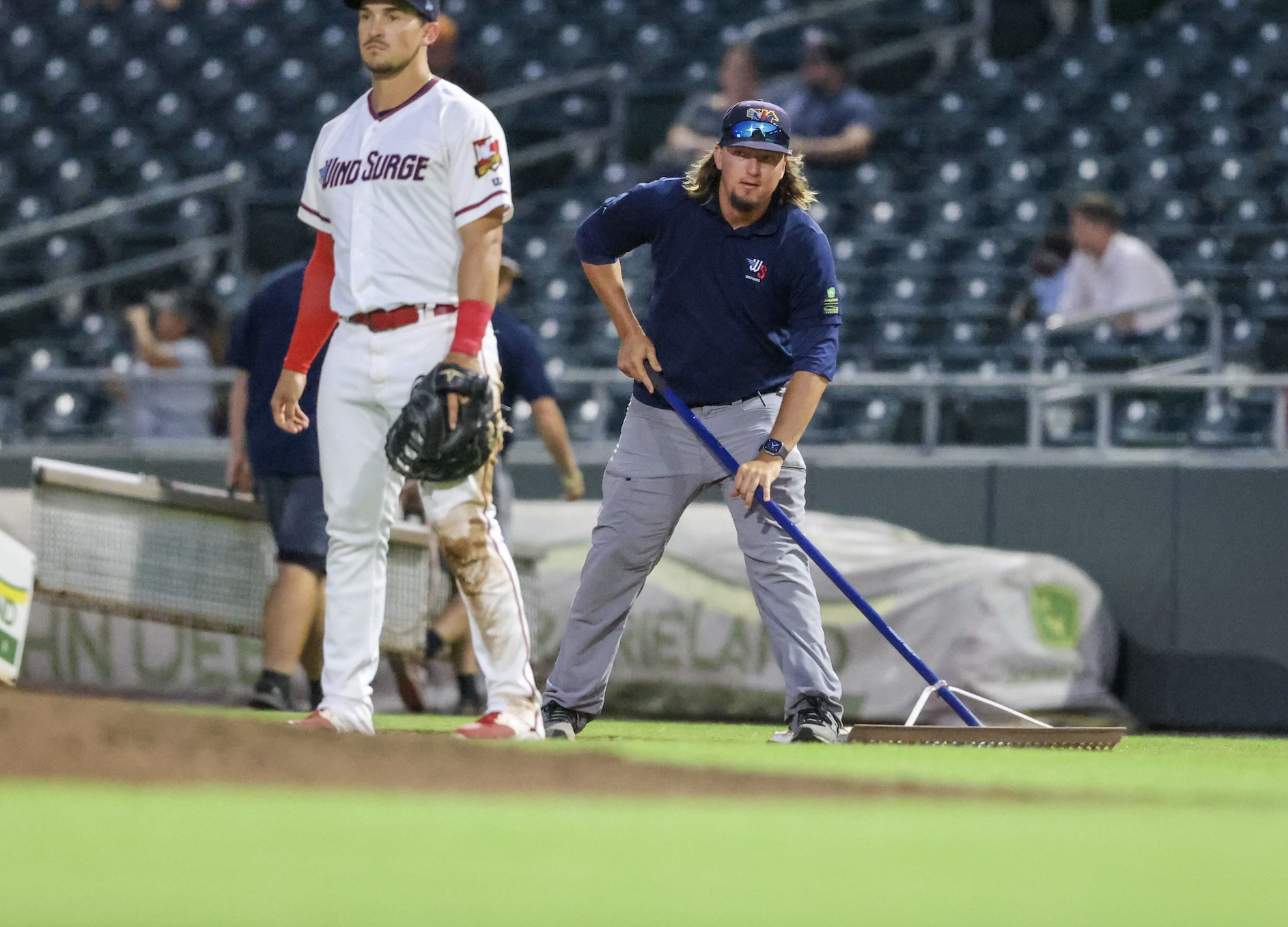 Wichita – Walking into any ballpark in America, what are some sights, sounds, and smells that commonly catch people’s attention? Hot dogs grilling at every concession stand, ushers, offering programs, the crack of a player's bat during batting practice, and the smell of the freshly cut grass on the field that’ll showcase teams we come to cheer for and root against. Perhaps not at the top of our minds are the people behind the scenes at the ballpark maintaining the landscape we have come to love. Ben Hartman is the head groundskeeper for the Wichita Wind Surge, the Minnesota Twins Double-A affiliate. He’s been with the team all three seasons and was recently minted the Texas League Head Groundskeeper of the Year for the second consecutive season. “My office is a baseball field,” Hartman said. “I think that's pretty sweet, and not too many people can say that.” Determined by managers, players, and executives in the league, Hartman greatly appreciated the recognition, but it's far from why he's in this profession. “It's really humbling to get recognized for the hard work. We don't do this for the recognition though. We do this because we take pride in our job and want to be the best at what we do,” said Hartman. Hartman grew up a half hour north of the Kansas City Royals home ballpark in Smithsville, Missouri, a town of around 10,000 people per the 2020 U.S. Census. His first job ever was groundskeeping at a local golf course at 15 years old. By the end of his first week there, Hartman was in love with what he did for work every day. “That first day, I got that job, I ran home and said, ‘This is what I want to do for the rest of my life.’ Then through the combination of working golf courses and baseball, I come to realize that I could make a living maintaining baseball fields,” Hartman said. The focus and determination to become a groundskeeper carried with him the rest of high school. Hartman was fortunate enough to find a college with a turf management major at Iowa Central Community College. There, Hartman continued the pursuit of his dream job while serving as the Iowa Central Tritons bullpen catcher. “I always joke about it. I said I played baseball, but I got one mercy at bat as the bullpen catcher. But I still had fun nonetheless,” recalled Hartman. While being a member of the Tritons clubhouse, Hartman and his teammates always maintained the home field after the games and giving him the real-time practice for the career path he was pursuing. Most often, Hartman would be working on the field for two hours at a time. After completing his degree in 2017, Hartman returned to the Kansas City area, working with the American Association’s Kansas City T-Bones, now known as the Monarchs. When he had the downtime, he continued surfing the web for future opportunities; one he just happened to stumble upon was a fall internship with the Houston Astros grounds crew. A few weeks later, he got the offer and accepted it. September is a daunting time for anyone to join a Major League Baseball team. Let alone the 2017 Houston Astros. A metropolitan area still recovering from Hurricane Harvey’s landfall, the Astros playing at a neutral site because of it, and unbeknownst to many, the biggest cheating scandal in baseball of the last decade was occurring. “I'm 20 years old and little did I know how good the Astros were. And I know it's the 2017 year, it's the cheating year, but it was so cool for me to get thrown right into playoffs and World Series,” Hartman said. The internship with the Astros during the run to their first World Series was a whirlwind for Hartman, but there wasn’t a task he couldn’t meet. He enjoyed all he did and ask the Astros head groundskeeper, Izzy Hinojosa, if he could stay on for the 2018 season. Hinojosa obliged. Hartman attributes Hinjosa’s mentorship during his internship and the 2018 season spent on the Astros grounds crew as an excellent molding into the head groundkeeper he is today. “I love the guy to death,” complimented Hartman. “He knew what I wanted to do and he really pushed me hard to the point where some of the other employees were like, holy cow, we've never seen him do this or anybody else. But I'm so glad he did it.” The 2018 season with the Astros helped Hartman discover his limits and his next opportunity. He was ready to move up in role and ranking in his career. An opportunity opened up with the Texas Rangers Triple A affiliate Round Rock Express for an assistant groundskeeper. “I applied at like 9am and got a call at like three and afternoon. So it was pretty quick turnaround. But went up, did an interview and ended up getting the job,” Hartman said. Hartman was placed under the mentorship of Nick Roedilski, the Express’s head groundskeeper. Roedilski was impressed with Hartman’s skills from the get-go of the 2019 Express season; he knew he had the right man working alongside him. “I think he already had it as far as how he knew what the field should be; maintaining the mound, maintaining the infield, and he had a really good idea with that,” Roedilski said. “I think the only thing that we kind of fine tune a little bit was just more of the details.” The pair worked on fine-tuning details with transition edges from infield dirt to outfield grass, balancing conditioner, and the best details to take care of following a game’s end. Their tag team efforts paved the way for a great season in 2019. Roedilski knew he had the right guy in Hartman. “He's the type of kid that when he left here, he knew that he had to step it up a little bit more for him to be successful. And that's what he did. He definitely put the time in to make sure that his field and his reputation is one of the best that there could be so very hard worker, very smart,” Roedilski said. Hartman was one of many people whose workload was reduced in 2020 due to COVID-19 lockdowns. But once those lockdown restrictions lifted, collegiate baseball and other events returned in Texas, giving him more opportunities to maintain the field. Like many others in his life, Hartman’s journey to Wichita was a quick turnaround. “March of 2021 rolls around and Nick, comes up to me and goes, ‘What do you think of Wichita?’ I said, I saw it, but I wasn't gonna apply because quite frankly, I didn't think I was ready for a head job. I was only 24 at the time.” He did apply, going for an interview on a Monday morning, and getting the offer to the Wind Surge’s head groundskeeper 90 minutes later. And the rest is history. One reason Hartman attributes the success and recognition he’s received is through the player perspective he gained from his high school and JUCO days. “That really helps us be successful. All the pitchers know that I go up to him after starts and relieves, how was the mound? Most of the time, it's the mound is perfect. But they also know to not be afraid to tell me if, let's say it was a little soft, or, you know, or a little too firm,” said Hartman. The same sort of relationship can be said between the Wind Surge catchers and infielders when it comes to communication and maintaining the field. The outfielders, though, as Hartman jokes, “I just tell all the outfielders to get off the grass and they give me crap for that.” With his third season concluded with Wichita, Hartman looks forward to keeping things the same in 2024. And if more recognition comes, he’ll take it, but being a humble groundskeeper who does what he loves, he can’t wait to get back to the ballpark for another season of baseball.
 -
With Sonny Gray leaving free agency, what does that mean for the Twins and their bonus pool?
-
With Sonny Gray leaving free agency, what does that mean for the Twins and their bonus pool? View full video
-
A key member of the Twins' relief corps for the last two seasons officially moved on Wednesday. Image courtesy of © Ron Chenoy-USA TODAY Sports Mark Feinsand of MLB.com reported Wednesday that free-agent reliever and (now-)former Twin Emilio Pagan had agreed to a two-year deal with the Cincinnati Reds. Pagán, 32, spent the last two seasons with the Twins and became a polarizing member of the bullpen among fans. Minnesota landed Pagán the day before Opening Day 2022, in a trade with San Diego that sent Taylor Rogers and Brent Rooker back to the Padres for him and starter Chris Paddack. During the first month of the 2022 season, both Pagán and Paddack pitched well for the Twins. Then, Paddack went down with an injury that required him to get his second Tommy John surgery. And Pagán... well, as many Twins fans remember, he pitched himself out of the unofficial closer role, as he blew four crucial games against the Cleveland Guardians in late June 2022. Those four appearances ballooned his ERA, which stood at 2.45 on the season when he faced them on June 21. After the fourth appearance, it was 5.26. Pagán allowed nine earned runs in 2 1/3 innings against the Guardians that month, and many argued that it was the deciding factor keeping the Twins behind the Guardians in the AL Central race. Pagán remained mediocre for the remainder of 2022, and things were looking just as bad for him for the first seven weeks of the 2023 season. He struggled through his first 16 relief appearances and appeared all but cooked on May 17, when he allowed a game-losing grand slam to Dodgers rookie James Outman. But then, something surprising happened: He returned to form and dominated for the remaining 50 games in which he appeared for the Twins. He brought his ERA down from 5.60 after that home run to end the season at 2.99 and help the Twins reach the postseason for the first time in three years. Pagán’s rejuvenation from mid-May through the end of the 2023 season has earned him this pact with the Reds. They're buying into him in full, too, with a player-friendly structure and substantial guaranteed money, Emilio Pagán deal with Reds, pending physical, source tells @TheAthletic: Two years, $16M with performance bonuses. Player option after year one. First with agreement: @Feinsand @JonHeyman — Ken Rosenthal (@Ken_Rosenthal) November 29, 2023 But for some Twins fans, the implosion of 2022 will be how they always remember him. Like Matt Capps before him, Pagán is one of those relievers who was not truly awful in his Twins tenure. However, the bad moments overshadowed the good, and will forever keep him among the ranks of polarizing relievers in Twins history. Do you think the Twins even considered a reunion with Pagán? How far should they go in reinforcing the bullpen this winter? Let's discuss. View full article
-
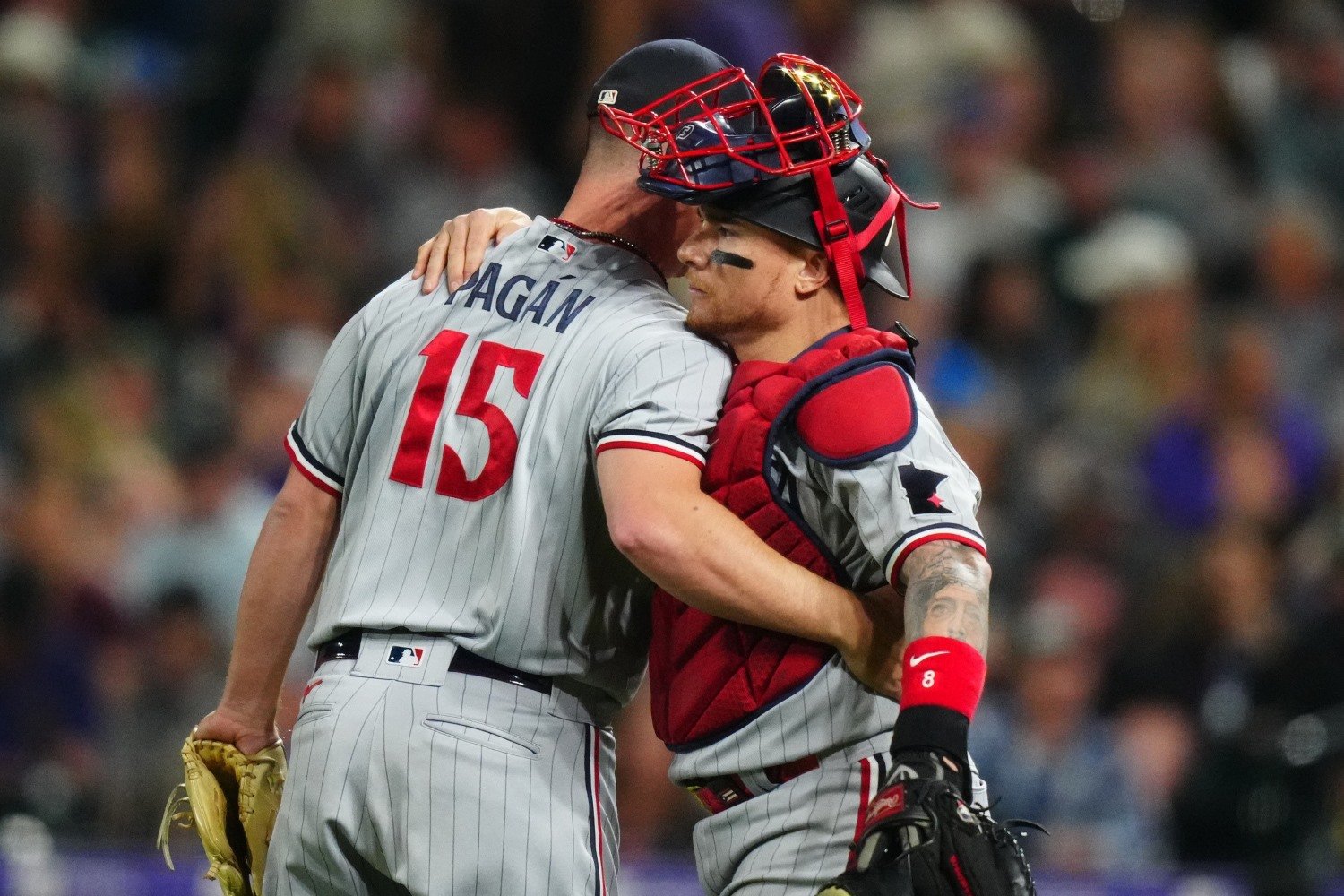 Mark Feinsand of MLB.com reported Wednesday that free-agent reliever and (now-)former Twin Emilio Pagan had agreed to a two-year deal with the Cincinnati Reds. Pagán, 32, spent the last two seasons with the Twins and became a polarizing member of the bullpen among fans. Minnesota landed Pagán the day before Opening Day 2022, in a trade with San Diego that sent Taylor Rogers and Brent Rooker back to the Padres for him and starter Chris Paddack. During the first month of the 2022 season, both Pagán and Paddack pitched well for the Twins. Then, Paddack went down with an injury that required him to get his second Tommy John surgery. And Pagán... well, as many Twins fans remember, he pitched himself out of the unofficial closer role, as he blew four crucial games against the Cleveland Guardians in late June 2022. Those four appearances ballooned his ERA, which stood at 2.45 on the season when he faced them on June 21. After the fourth appearance, it was 5.26. Pagán allowed nine earned runs in 2 1/3 innings against the Guardians that month, and many argued that it was the deciding factor keeping the Twins behind the Guardians in the AL Central race. Pagán remained mediocre for the remainder of 2022, and things were looking just as bad for him for the first seven weeks of the 2023 season. He struggled through his first 16 relief appearances and appeared all but cooked on May 17, when he allowed a game-losing grand slam to Dodgers rookie James Outman. But then, something surprising happened: He returned to form and dominated for the remaining 50 games in which he appeared for the Twins. He brought his ERA down from 5.60 after that home run to end the season at 2.99 and help the Twins reach the postseason for the first time in three years. Pagán’s rejuvenation from mid-May through the end of the 2023 season has earned him this pact with the Reds. They're buying into him in full, too, with a player-friendly structure and substantial guaranteed money, Emilio Pagán deal with Reds, pending physical, source tells @TheAthletic: Two years, $16M with performance bonuses. Player option after year one. First with agreement: @Feinsand @JonHeyman — Ken Rosenthal (@Ken_Rosenthal) November 29, 2023 But for some Twins fans, the implosion of 2022 will be how they always remember him. Like Matt Capps before him, Pagán is one of those relievers who was not truly awful in his Twins tenure. However, the bad moments overshadowed the good, and will forever keep him among the ranks of polarizing relievers in Twins history. Do you think the Twins even considered a reunion with Pagán? How far should they go in reinforcing the bullpen this winter? Let's discuss.
 -
 Michael A. Taylor made himself a standout for the Twins in Buxton’s absence this season. In the scenario that he doesn’t re-sign, the internal organizational options don’t pan out as well as having a semi-healthy Buxton or a returning Taylor. Willi Castro proved himself useful as a backup and left-handed hitting platoon in center with Taylor. But he would be very stretched as a starter and the Twins value his versatility. Then there’s Austin Martin. Martin ended the season strong with the St. Paul Saints and has set himself up well to make his MLB debut in 2024. But he’s still a player who doesn’t need to be rushed and still has elements of his game to iron out. It’s hard to see him arriving before Memorial Day, at least as a full-time option, unless injuries force the front office’s hand. Another option is Nick Gordon, who missed the majority of the 2023 season with a broken tibia. While Gordon looks to be healthy, his future with the organization is in question as Castro has overtaken him in the pecking order as the team’s super-utility man. Gordon is arbitration eligible and out of options, which doesn't help his case. Royce Lewis may be another option in center this upcoming season too. However, for now the Twins and Lewis both seem to be opposed to a return to the outfield, after his last start in center ended with a torn ACL. While he did remain healthy with his knees upon his return on Memorial Day this season, Lewis still experienced some leg issues during the season, including a hamstring strain that forced him to finish on the IL. There are many who still believe his best-fit position is center field, but it’s possible Lewis remains on the infield to ensure longevity in playing time versus risking another injury that puts him out for a long while. Removing Lewis as an option in center, that leaves Castro as the only man currently on the Twins' outfield depth chart that can hit from the right side of the plate. And the last thing the Twins outfield needs is another left-handed hitter, which makes a reunion with Taylor, or a signing like Kevin Kiermaier or Harrison Bader, the best outfield options in free agency. If payroll limitations price these higher-end free agents out of Minnesota's range, there are some lower-tier right-handed hitting center fielders that can work as a one-year deal, platoon options alongside Castro, Martin, or Lewis. Kevin Pillar, Jake Marisnick, and even former Twin Aaron Hicks are all suitable fallback options if Taylor signs elsewhere. Pillar played in 81 games with the Braves this last season. The Braves used him more frequently as a defensive option than for his offense, as he slashed .228/.248/.416 in 206 plate appearances. Pillar would remain that defensive-first, bat-second option to keep things afloat until the Twins line up their primary center fielder. Marisnick played less than Pillar, showing up in 46 games between the White Sox, Tigers, and Dodgers this year. Marisnick had a .228/.248/.416 triple slash in 83 plate appearances. The limited playing time and injuries this season do show a decline in his performance, but Marisnick will only be 33 and has shown the ability to mash lefties. Speaking of players who showed they still have something left in the tank, former Twin Aaron Hicks. After being released by the Yankees on May 26th, Hicks revitalized his career with the Orioles on May 30th. Hicks played in only 65 of the remaining 106 games on the season but he had his best stretch of games at the plate since 2018. Hicks posted an .806 OPS in 236 plate appearances with the Birds. The switch-hitter has always been more effective swinging from the right side, and that was definitely true in 2023. He may not be the player he once was, but he’s likely the best fallback of this group if the Twins miss out on the top CF names in free agency. It bears noting that Hicks rarely played center down the stretch in Baltimore, more often starting in the outfield corners. The offseason is still young and the options in centerfield outside of Buxton are still plentiful. However, with the Twins likely to move slow and facing payroll constraints, it behooves us to become familiar with the lower tier of free agents.
- 35 comments
-
- 2
-
-
- michael a taylor
- byron buxton
- (and 3 more)
-
No position has more question marks around it for the Twins than center field. Byron Buxton has undergone a surgical knee repair once more, but leaving his CF outlook hazier than ever. Even if he does return, how long can he keep playing out there? Image courtesy of Matt Blewett-USA TODAY Sports Michael A. Taylor made himself a standout for the Twins in Buxton’s absence this season. In the scenario that he doesn’t re-sign, the internal organizational options don’t pan out as well as having a semi-healthy Buxton or a returning Taylor. Willi Castro proved himself useful as a backup and left-handed hitting platoon in center with Taylor. But he would be very stretched as a starter and the Twins value his versatility. Then there’s Austin Martin. Martin ended the season strong with the St. Paul Saints and has set himself up well to make his MLB debut in 2024. But he’s still a player who doesn’t need to be rushed and still has elements of his game to iron out. It’s hard to see him arriving before Memorial Day, at least as a full-time option, unless injuries force the front office’s hand. Another option is Nick Gordon, who missed the majority of the 2023 season with a broken tibia. While Gordon looks to be healthy, his future with the organization is in question as Castro has overtaken him in the pecking order as the team’s super-utility man. Gordon is arbitration eligible and out of options, which doesn't help his case. Royce Lewis may be another option in center this upcoming season too. However, for now the Twins and Lewis both seem to be opposed to a return to the outfield, after his last start in center ended with a torn ACL. While he did remain healthy with his knees upon his return on Memorial Day this season, Lewis still experienced some leg issues during the season, including a hamstring strain that forced him to finish on the IL. There are many who still believe his best-fit position is center field, but it’s possible Lewis remains on the infield to ensure longevity in playing time versus risking another injury that puts him out for a long while. Removing Lewis as an option in center, that leaves Castro as the only man currently on the Twins' outfield depth chart that can hit from the right side of the plate. And the last thing the Twins outfield needs is another left-handed hitter, which makes a reunion with Taylor, or a signing like Kevin Kiermaier or Harrison Bader, the best outfield options in free agency. If payroll limitations price these higher-end free agents out of Minnesota's range, there are some lower-tier right-handed hitting center fielders that can work as a one-year deal, platoon options alongside Castro, Martin, or Lewis. Kevin Pillar, Jake Marisnick, and even former Twin Aaron Hicks are all suitable fallback options if Taylor signs elsewhere. Pillar played in 81 games with the Braves this last season. The Braves used him more frequently as a defensive option than for his offense, as he slashed .228/.248/.416 in 206 plate appearances. Pillar would remain that defensive-first, bat-second option to keep things afloat until the Twins line up their primary center fielder. Marisnick played less than Pillar, showing up in 46 games between the White Sox, Tigers, and Dodgers this year. Marisnick had a .228/.248/.416 triple slash in 83 plate appearances. The limited playing time and injuries this season do show a decline in his performance, but Marisnick will only be 33 and has shown the ability to mash lefties. Speaking of players who showed they still have something left in the tank, former Twin Aaron Hicks. After being released by the Yankees on May 26th, Hicks revitalized his career with the Orioles on May 30th. Hicks played in only 65 of the remaining 106 games on the season but he had his best stretch of games at the plate since 2018. Hicks posted an .806 OPS in 236 plate appearances with the Birds. The switch-hitter has always been more effective swinging from the right side, and that was definitely true in 2023. He may not be the player he once was, but he’s likely the best fallback of this group if the Twins miss out on the top CF names in free agency. It bears noting that Hicks rarely played center down the stretch in Baltimore, more often starting in the outfield corners. The offseason is still young and the options in centerfield outside of Buxton are still plentiful. However, with the Twins likely to move slow and facing payroll constraints, it behooves us to become familiar with the lower tier of free agents. View full article
- 35 replies
-
- 1
-
-
- michael a taylor
- byron buxton
- (and 3 more)
-
The Twins need another starter to solidify themselves with the best chance to capture the American League Central Division title again in 2024. Aside from Shohei Ohtani, Blake Snell, and Sonny Gray, this free agent class is meek in depth for top to middle-rotation guys. Image courtesy of Kamil Krzaczynski, USA Today Sports There is one name that stands out among free agent starters available that not only fits into the mold as a good option for the Twins budget but also his stuff: Michael Wacha. Wacha’s situation is more tricky than others this off-season. The Padres have a two-year, $32 million team option built into his one-year deal from last off-season, but Wacha also has a $6.5 million player option he can exercise with the Padres for 2024. However, the Padres might be more willing to cut costs where they can as news broke last week from The Athletic’s Evan Drellich, Ken Rosenthal, and Dennis Lin reported the Padres took out a $50 million loan to cover payroll in September. They could be looking to cut costs wherever they can, and Wacha’s contract would be an easy decision. While the team option complicates the clearness of his availability in free agency, Wacha was easily the second-best starter for the Padres this season behind Snell. He made 24 starts, had a 3.22 ERA in 134.1 innings pitched, a 1.16 WHIP, a .224 opponents batting average, 124 strikeouts, and 14 wins. For the more analytical heads, Wacha also found himself in the 94th percentile in pitching run value and the 98th percentile for off-speed pitches run value this year per Baseball Savant. Wacha is entering his age-32 season in 2024, making him one of the younger, better-available middle-rotation starters in this free-agency class. Given his age and performance in 2023, there’s a good possibility Wacha won’t exercise his player option if the Padres decline his team option. This winter could be his last opportunity to get a long-term, massive payday in his career and test the free agency waters for it. Per Baseball Reference, Wacha has never earned more money in a single season than he did this year at $7.5 million. After his 2023 performance, he is certainly closer in value to the $16 million a season that can be exercised in his team option with the Swinging Friars. Fortunately for the Twins, if Wacha enters this free agency market, offering him a couple extra million a season in the $18-$20 million range would not be detrimental to the spending budget, with it shrinking due to TV revenue losses. The price range is what Gray will receive in his qualifying offer. Still, he’s all but guaranteed to decline, as everyone and their mother knows he will receive a greater annual salary in almost every free agency offer. The significant upside with Wacha compared to Maeda is his younger age. Maeda will be 36 in 2024 and while he stabilized himself in the rotation and bullpen to end the season, the decline of age and recovery from Tommy John showed in Game 1 of the ALDS against the Astros. Wacha would undoubtedly be a safer gamble to pursue on that merit alone. Then there’s the workload that Wacha would be undertaking compared to other starters the Twins currently have. In theory, the Twins could make due with the five starters they have in the organization for Opening Day: Pablo Lopez, Joe Ryan, Bailey Ober, Chris Paddack, and Louie Varland. In an ideal world, this would be perfect, but as the game shows us again and again, depth is a necessity for a winning team. Wacha would be great in providing that depth if the Twins opt to have Varland in the bullpen or St. Paul or if any of the listed starters suffer injury setbacks. 2023 was the first time Wacha pitched over 130 innings in a season since 2017, when he threw 165.2 innings with the Cardinals and posted a 4.13 ERA. It’s unclear if Wacha will have a workload that heavy again, but the 134.1 innings this season puts him between Maeda’s 104.1 innings and Ober’s 144.1 innings in 2023. The amount of workload that Wacha can currently take on is a good balance to avoid rushing Varland back into the rotation, or call up the likes of David Festa from St. Paul too early in 2024. It will also be good to have him either in front of or behind Paddack in the rotation in case he still needs to rebuild his innings limits workload as he returns to the Twins rotation in 2024. If Wacha does end up being available, his price tag, workload capabilities on the mound, and 2023 performance make him the perfect candidate for the Twins to pursue if they are unable to resign Gray. In the unlikely case that the Padres exercise Wacha’s option, $32 million over 2-years is still worth pursuing via trade. Given the Twins' recent success in their trade history with the Friars, it would be an offer worth pursuing. View full article
-
If Reunions Can’t Be Made, Michael Wacha Might Be the Starter to Sign
Theodore Tollefson posted an article in Twins
 There is one name that stands out among free agent starters available that not only fits into the mold as a good option for the Twins budget but also his stuff: Michael Wacha. Wacha’s situation is more tricky than others this off-season. The Padres have a two-year, $32 million team option built into his one-year deal from last off-season, but Wacha also has a $6.5 million player option he can exercise with the Padres for 2024. However, the Padres might be more willing to cut costs where they can as news broke last week from The Athletic’s Evan Drellich, Ken Rosenthal, and Dennis Lin reported the Padres took out a $50 million loan to cover payroll in September. They could be looking to cut costs wherever they can, and Wacha’s contract would be an easy decision. While the team option complicates the clearness of his availability in free agency, Wacha was easily the second-best starter for the Padres this season behind Snell. He made 24 starts, had a 3.22 ERA in 134.1 innings pitched, a 1.16 WHIP, a .224 opponents batting average, 124 strikeouts, and 14 wins. For the more analytical heads, Wacha also found himself in the 94th percentile in pitching run value and the 98th percentile for off-speed pitches run value this year per Baseball Savant. Wacha is entering his age-32 season in 2024, making him one of the younger, better-available middle-rotation starters in this free-agency class. Given his age and performance in 2023, there’s a good possibility Wacha won’t exercise his player option if the Padres decline his team option. This winter could be his last opportunity to get a long-term, massive payday in his career and test the free agency waters for it. Per Baseball Reference, Wacha has never earned more money in a single season than he did this year at $7.5 million. After his 2023 performance, he is certainly closer in value to the $16 million a season that can be exercised in his team option with the Swinging Friars. Fortunately for the Twins, if Wacha enters this free agency market, offering him a couple extra million a season in the $18-$20 million range would not be detrimental to the spending budget, with it shrinking due to TV revenue losses. The price range is what Gray will receive in his qualifying offer. Still, he’s all but guaranteed to decline, as everyone and their mother knows he will receive a greater annual salary in almost every free agency offer. The significant upside with Wacha compared to Maeda is his younger age. Maeda will be 36 in 2024 and while he stabilized himself in the rotation and bullpen to end the season, the decline of age and recovery from Tommy John showed in Game 1 of the ALDS against the Astros. Wacha would undoubtedly be a safer gamble to pursue on that merit alone. Then there’s the workload that Wacha would be undertaking compared to other starters the Twins currently have. In theory, the Twins could make due with the five starters they have in the organization for Opening Day: Pablo Lopez, Joe Ryan, Bailey Ober, Chris Paddack, and Louie Varland. In an ideal world, this would be perfect, but as the game shows us again and again, depth is a necessity for a winning team. Wacha would be great in providing that depth if the Twins opt to have Varland in the bullpen or St. Paul or if any of the listed starters suffer injury setbacks. 2023 was the first time Wacha pitched over 130 innings in a season since 2017, when he threw 165.2 innings with the Cardinals and posted a 4.13 ERA. It’s unclear if Wacha will have a workload that heavy again, but the 134.1 innings this season puts him between Maeda’s 104.1 innings and Ober’s 144.1 innings in 2023. The amount of workload that Wacha can currently take on is a good balance to avoid rushing Varland back into the rotation, or call up the likes of David Festa from St. Paul too early in 2024. It will also be good to have him either in front of or behind Paddack in the rotation in case he still needs to rebuild his innings limits workload as he returns to the Twins rotation in 2024. If Wacha does end up being available, his price tag, workload capabilities on the mound, and 2023 performance make him the perfect candidate for the Twins to pursue if they are unable to resign Gray. In the unlikely case that the Padres exercise Wacha’s option, $32 million over 2-years is still worth pursuing via trade. Given the Twins' recent success in their trade history with the Friars, it would be an offer worth pursuing.
- 17 comments
-
- 3
-
-
- michael wacha
- sonny gray
- (and 3 more)
-
How the Twins' Top 30 Prospects from 2020 Panned Out in 2023
Theodore Tollefson posted an article in Twins
 The lost opportunity of 2020 was no prospect's fault. Minor-leaguers, like many others around the world, were dealt a bad hand; in some cases, at very costly times in their development. Some did get MLB playing time such as Ryan Jeffers who played in his first 26 MLB games in the shortened 60-game season. Others have yet to find the crack on an active roster after missing out on an entire professional season. Enough time has now passed and three full seasons of Major and Minor League Baseball have been completed. So where did each of the Twins' top 30 prospects, according to MLB Pipeline, finish their 2023 seasons? Let’s find out. On active rosters for the end of 2023 1. Royce Lewis At long last, Lewis arrived at the majors full-time, and he did not disappoint. He was still limited to 58 games, returning on Memorial Day and facing strained hamstring that sidelined him from July to mid-August. Lewis returned as the best power hitter with the bases loaded any rookie has ever been. He’s quickly become known as Mr. Grand Slam, per teammate Chris Paddack. He carried the team on his back in Game 1 of the Wild Card Series against Toronto, hitting the only two home runs the team needed to win. Lewis has finally arrived and exceeded the expectations that were put on him when he was drafted number one overall in 2017. The next mountain for this future star to climb over is remaining healthy for at least 75% of the season. If he can repeat the same level of success he had in the majors this year, then he will be a force to reckon with in 2024. 2. Alex Kirilloff Kirilloff didn't make it through the playoffs but he finished the regular season healthy. The injuries still derailed Kirilloff even as he reached a career-high of 88 games played in 2023. His best stretch of the season came from Memorial Day weekend until his shoulder injury sidelined him in Kansas City at the end of July, performing as one of the Twins' best hitters at the time. The unfortunate side with Kirilloff is his inescapability of the injury bug, but good news came through when doctors found no tear in his labrum surgery. As of now, he is projected to be fully healthy for spring training, which could lead to the first-ever fully healthy season of his MLB career. 3. Trevor Larnach Larnach had an up-and-down season both literally and figuratively. He split more time between the Twins active roster and St. Paul Saints than any other player. His time in St. Paul showed more flourishment than his time in the majors as he posted a .271/.384/.504 triple slash with a .888 OPS across 323 plate appearances with the Saints. But with the Twins, it was a .213/.311/.415 triple slash with a .727 OPS across 212 plate appearances. While it isn’t quite clear if Larnach will remain a Twin this offseason, his playing time both in the majors and minors over the last few seasons has landed him as a 4th outfielder with this team. Matt Wallner has surpassed him in the pecking order of Twins corner outfielders and Larnach turns 27 in February. If he wants to finally land a full-time role before he’s out of his prime age, he may have a better chance of that with a different team than the Twins. 5. Jhoan Duran Duran looked a little more human in 2023 than his lights-out rookie season last year. Despite that, he was still the hardest-throwing pitcher in baseball topping out the fastest pitch thrown in 2023 at 104.8 MPH. Even with five blown saves on the season and an ERA that jumped from 1.86 in 2022 to 2.45 in 2023, Duran was the man he’s lived up to be out of the bullpen when it mattered the most in the postseason. The sky will continue to be the only limit for Duran in 2024. Twins fans will continue to hope the flamethrowing 26-year-old will continue on his path as one of the best relievers this franchise has ever seen. 6. Ryan Jeffers The catcher's 2022 season pushed him into a backup role, but 2023 saw him improve from those struggles and take over the Twins' starting role in the postseason. With his numbers improving drastically from a .648 OPS in 2022 to .858 OPS in 2023, Jeffers cemented himself as the best right-handed hitting catcher in baseball this year. What’s most impressive, and is due credit to his battery-mate behind the plate, Christian Vazquez, is that both these men were healthy all season. And for the first time in a long time, the Twins had to only use two catchers on the active roster all year. The next hurdle for Jeffers is the amount of games played. He still has yet to reach 100 games played in a season in his career, falling just four short of the benchmark this year. However, if the Twins go through with the possibility of trading Vazquez to save on the payroll a bit, there will be nothing to stop him from 100 games in 2024. 12. Brent Rooker The Oakland Athletics did not have many bright spots in a depressing 2023 season. Fortunately, former Twin Brent Rooker was one of those bright spots. Rooker started off the year hot in April, leading the American League with a 1.245 OPS over 22 games. While he cooled off over the next two months, he was still rewarded with the lone all-star selection from the A’s this season. Rooker returned to performing at his All-Star level from April in the final months of the season, reaching the 30 home run mark with a .817 OPS on the season and playing in 137 games. Rooker will likely remain on the Athletics roster as their top power hitter to start 2024. Unless his breakout 2023 season has enticed a team enough to trade for him and bring him to a team that will be in a better place to contend for the 2024 postseason. 13. Akil Baddoo Baddoo kept himself on the Tigers' active roster for most of 2023 playing in 112 games for the runner-up in the American League Central. But Baddoo has not been able to recapture the magic he showed on the diamond during the first half of his rookie year. Baddoo has worked himself into the 4th outfielder role with the Tigers having only 357 plate appearances across those 112 games. His triple slash wasn’t glamorous by any means as he hit .218/.310/.372 with a .682 OPS. He is still a season away from arbitration eligibility and won’t turn 26 until August 16. Time is still favorable for Baddoo to show the success he had when he burst into the majors, but that will also be dependent on who else finds playing time in the Tigers outfield for 2024. 14. Matt Wallner The Forest Lake native fulfilled expectations that were put to him during his brief call-up in 2022. The Twins' reigning Minor League Player of the Year exceeded his rookie status in 2023 and didn’t disappoint in the 76 games he played in. On top of a .249/.370/.507 triple slash and .877 OPS, Wallner quickly became one of the best throwing arms in the outfield per Baseball Savant landing, himself in the 100th percentile in arm strength. Wallner has forged himself into a power-hitting, laser pointer in the outfield that can throw almost any runner out, and it’s a valuable commodity for where the Twins start their outfield in 2024. As fellow Forest Lake native and avid Twins fan Aaron Rupar has said, “Wallner has done some of the coolest things as anyone raised in that town.” Seventy-six games in 2023 was only a sampling of what he can hopefully do in a full season’s worth of games in 2024. 25. Jorge Alcala 2023 looked to be a bounce-back year at the start for Alcala, who missed the majority of last year due to injury. The season did not turn out as many hoped for him, as he once again was limited to 11 games on the year because of injuries. On top of that, he looked rather dreadful across those 11 relief appearances posting a 6.23 ERA, 1.38 WHIP, and walked 10 batters in 17.1 innings. He was left off the postseason roster despite seemingly having recovered from injury. Alcala enters his first year of arbitration this offseason. The Twins may consider cutting him loose due to his bad health and poor performance over the last two years. Alcala will be entering his age 28 season, and could still bounce back. Whether that’s in Minnesota or elsewhere remains to be seen. 28. Ben Rortvedt Rortvedt left the Twins alongside Josh Donaldson and Twin-for-a-day Isaiah Kiner-Falefa as a part of the salary dump of Donaldson to New York for Gio Urshela and Gary Sanchez. Rortvedt was either hurt or in the minors all of 2022, but that finally changed in 2023 as he made his Yankee debut on May 20 this year. Rortvedt was up and down all season with the Yankees and was far from glamorous. He only had a .118 batting average in 79 plate appearances across 32 games. Of course, his calling card is his defense, and that's been on display during his time in the majors. He'll keep working to carve out a niche as a quality backup. 30. Josh Winder After making 11 starts in the majors in 2022, Josh Winder converted into a full-time reliever with the Twins in 2023. Winder’s season had limitations due to injury but appeared in 40 games out of the bullpen between the majors and minors. Winder’s days as a starter are likely over, but he’s still a valuable asset to be in the Twins bullpen as the front office formulates what it’ll look like in 2024. Especially if he can maintain his role as a long reliever. Injured most of season 11. Matt Canterino Unlike the above players, Canterino did not play in the majors this season. In fact, he did not pitch at all as he recovered from a late-season Tommy John surgery he underwent in August of 2022. Given he is the only player from the Twins' Top 30 prospect list in 2020 to miss the entire 2023 season due to injury, he falls into this category for simplicity's sake. Before his Tommy John surgery in 2022, Canterino made a name for himself at Double-A Wichita. He had a 1.83 ERA in 34.1 innings across 11 games and was talked about as potential bullpen reinforcement for the end of the Twins 2022 season. The front office did add him to the 40-man roster last offseason to protect him from the Rule 5 draft. There have been no indications he will lose that spot this off-season which could make him a sleeper name to break into the Twins bullpen next spring training. 17. Nick Gordon Gordon started the season off cold, but he may have been cursed the same day teammate Kyle Farmer was drilled in the jaw. He only accumulated six hits across 21 games from April 12th to May 9th and just as he seemed to recover from a bad month at the plate, he broke his tibia in a game against the Dodgers on May 17th. The fracture left Gordon on the injured list for the remainder of the season, with other players such as Farmer, Edouard Julien, and Willi Castro stepping up in roles he often filled in 2022. Now, Gordon’s future with the Twins is up in the air. The Twins may not re-sign him through arbitration this season, and it’s more likely than not he won’t be a part of the team in 2024. 22. Jose Miranda It’s easy to say Miranda had the most disappointing 2023 season out of any Twin. The expectations were high coming off a breakout rookie season, but he fell short of them from the start. A shoulder injury in spring training kept him from playing in the World Baseball Classic, but the effects of that injury lingered into the start of the season. Miranda’s power at the plate was all but zapped away as he was homerless through the first 24 games of the season, before finally getting his first two of the year against the Yankees on April 26th in a 12-6 loss. That two-homer game was the high point of his season as he continued to decline in his performance at the plate, never having his batting average above .240 from that day on. Miranda was optioned down to St. Paul to fix his swing on May 10, and even after Lewis pulled his hamstring and landed on the IL, Miranda wouldn’t last more than five games before reinjuring his shoulder and effectively ending his season. Miranda’s future role with the Twins has more questions than answers. He’s fallen behind Lewis at third base on the depth chart, but could still work as the right-handed hitting side of a first base platoon with Kirilloff. Played in 2023, mostly in the Minors or Indy Ball 4. Jordan Balazovic Balazovic’s longevity with the Twins was tittering on the edge to start the 2023 season. Between a spring training scuffle that left him with a broken jaw, and a bullpen role with the Saints that wasn’t faring much better than his 2022 struggles, Balazovic looked as though he might be let go by the team in mid-June. Then the bullpen had too many injuries to count and he was the last man available in the pecking order of the 40-man roster options. His call-up to the majors turned out to be his saving grace. Balazovic didn’t give up a run in 5 innings over his first three career appearances. He had an even more impressive stretch that followed into July over 12 relief appearances, with only one outing in that stretch where he surrendered more than one run. But he ended the year on a sour note and his future with the organization is very much in doubt. 7. Keoni Cavaco The Twins top draft pick from 2019 missed out on what would've been his first pro season in 2020 and never seemed to recover. He hasn't produced at any level since. Cavaco spent the majority of last season with the Cedar Rapids Kernels. He barely hit above the Mendoza line with his batting average at .203 and had an OPS of .574 across 238 plate appearances in 63 games. Cavaco will not be turning 23 until June 2, 2024, but the young infielder will be growing old for the age group at High A. He needs emerge and break out in a big way. 9. Blayne Enlow Enlow spent the first two months of the season at Double A Wichita and had a dominant stretch posting a 3.17 ERA across 54 innings in 10 starts. Those numbers earned him a call-up to the St. Paul Saints in mid-June, and the effects of Triple-A hitting showed against his stuff. Enlow had a 7.94 ERA in 45.1 innings across 15 outings as a starter and reliever for the Saints. His struggles during his first month and a half with the Saints were bad enough to keep his numbers inflated as he improved over the last two months of the season with the Saints. Enlow still has a good opportunity to turn himself around in the early months of the 2024 season with St. Paul to make himself available as a bullpen call-up option to make his MLB debut with the Twins in 2024. 15. Gilberto Celestino Celestino may have spent a few days on the Twins active roster in 2023, but he never appeared in a game. All of his playing time came in St. Paul this year, and even that was limited to 59 games. His numbers at the plate weren’t as eye-popping as his defense still proved to be. Celestino posted a .244/.385/.386 triple slash with a .771 OPS in 245 plate appearances. The rushed development of Celestino during the center fielder shortage of 2021 proved costly to his hitting abilities. And with Castro filling in as the primary backup centerfielder to Michael A. Taylor, his role with the team doesn’t seem to be necessary anymore going into 2024. 16. Edwar Colina Colina made his MLB debut with the Twins in 2020 but hasn’t appeared in the majors since then. He was in the Rangers organization for all of 2023 pitching at Triple-A Round Rock. This marked his first season in professional baseball since his 2023 debut, and he struggled a bit after a two-year absence. Colina had a 4.65 ERA in 31 innings across 26 relief appearances. His most concerning aspect of his return was lack of command as he had 20 walks to 30 strikeouts adding up to a 1.5 K to BB ratio. Colina is in the Venezuelan League this Winter to refine his command and hope for a better outcome in 2024. 18. Travis Blankenhorn Blankenhorn has become a journeyman minor leaguer since the Twins released him in early 2021. This season was spent in the Nationals organization for Blankenhorn and he didn’t disappoint for the Rochester Red Wings posting a .262/.360/.517 triple slash and .877 OPS in 455 plate appearances across 108 games with them. He earned himself a roster expansion call-up in September and played in 10 games with the Nats, but only had a .161 batting average in 37 plate appearances. 19. Cole Sands Sands's greatest achievement in 2023 may have been the amount of MLB service time accumulated compared to amount of pitches thrown with the Twins. Sands pitched a total of 34 games between the Saints and Twins in 2023. His 19 games with the Saints were some of the most impressive from any pitcher on their roster in 2023 as he posted a 1.47 ERA in 30.2 innings of work. His numbers in his 15 games with the Twins weren’t exactly the same, but they still were an improvement from 2022 as he had a 3.74 ERA in 21.2 innings of work with Minnesota this year. 20. Will Holland Holland has never had a full season of success in the minor leagues since being drafted in the fifth round of the 2019 draft by the Twins. 2023 played out similarly to other seasons. He spent the whole season at Wichita and played in 101 games, but his offensive output was poor as he had a .197/.300/.306 with a .606 OPS. Holland has defensive versatility to play multiple positions on the field, but his offensive output at Double-A doesn’t show any signs of a promotion to Triple-A anytime soon. 21. Misael Urbina Urbina had his first full season up at High A but his performance there wasn’t all too impressive. Across 102 games, Urbina had a .180/.289/.282 triple slash with a .571 OPS across 412 plate appearances. Urbina’s development, like many others, saw drawbacks from the lost 2020 minor league season, and that still carried over into 2023 as he reached his highest level of pro ball yet. Urbina turns 22 in April next year with time still on his side but that window is closing on what he can do at higher levels if he doesn’t have a massive turnaround. 24. Yunior Severino No other minor leaguer hit more home runs across all levels in 2023 than Yunior Severino. His 35 home runs between Double-A and Triple-A powered him to an OPS just short of .900, at .898 on the season. Severino still isn’t a top-notch defensive player as he continued to shuffle around the infield playing all positions but shortstop. With the lack of a defensive home and being eligible for the Rule 5 Draft, there’s no certainty that he’ll remain in the organization for 2024. 26. Emmanuel Rodriguez He was signed as a 16-year-old out of the Dominican Republic in 2019, but COVID-19 delayed his first professional season until 2021. In 2023 Rodriguez felt some of the highest highs and lowest lows of his pro career so far. He enjoyed a sky-high walk rate and flashed big power while continuing to play an exceptional center field. At the same time, he continued striking out at a high rate with a lot of swing and miss in his game. Outside of Brooks Lee and Walker Jenkins, Rodriguez is the most exciting prospect in the Twins system. A strong performance in the Midwest League Championship Series has set him up well to start his 2024 season at Double-A Wichita. 29. Chris Vallimont Chirs Vallimont was claimed off waivers from the Twins by the Orioles in May of 2022. Over a year later, he made his MLB debut with the Birds on July 3. But that sole relief appearance where he only faced three batters would be his only action in the majors this year. Vallimont's contract was purchased by the Cleveland Guardians just three days later. He spent the remainder of the 2023 season at Triple-A Columbus throwing out of the Clippers bullpen. In 16 outings, he had an unimpressive 6.52 ERA in 29 innings. Out of professional baseball entirely 8. Wander Javier Javier once looked to be the next coming of Jorge Polanco, but that all dissipated as his performance stagnated and failed to elevate over several seasons. Javier had a minor league deal with the San Diego Padres in spring training but decided to retire from the game in March before the season even began. 10. Lewis Thorpe Thorpe threw his last pitch in the Twins organization on a cold Saturday afternoon on April 16th, 2022. During a comeback attempt with Independent League Kansas City Monarchs, he posted a 4.96 ERA in 81.2 innings across 16 starts, Thorpe then decided to return to his home country of Australia. The Australian Baseball League begins its 2023-24 season on November 16th, and Thorpe has found himself on the minor-league roster of his hometown Melbourne Aces. While his career in the majors may be over, he looks to continue it in the land down under. 23. Dakota Chalmers Chalmers spent time between the Dodgers organization and Independent Baseball in 2022. But his name was nowhere to be found in pro ball for the entire 2023 season. 27. Gabriel Maciel Maciel spent his 2022 season with the Oakland A’s High A affiliate. He elected free agency at season’s end and hasn’t been heard from since. Totals: 11 players on Active MLB rosters 3 players who could be on Active Rosters but are hurt 13 players who are in the Minors, Japan, or Indy Ball 4 players completely out of baseball The outcome from these top 30 MLB Pipeline prospects in 2020 just three years later is a strong showing for the franchise. One-third of the players ended their seasons in the majors, and half of them could find realistically themselves there in 2024. What’s most impressive is that the top six players (Lewis, Kirilloff, Larnach, Balazovic, Duran, and Jeffers), all had some form of consistent playing time with the Twins this season. Rarely does a team’s former top five or six prospects earn those opportunities all at the same time, and all have a chance to do so again in 2024.
- 16 comments
-
- 12
-
-

-
- royce lewis
- ryan jeffers
- (and 3 more)
-
It may be hard for some people to believe it’s only been three years since 2020. The events of that year feel like a lifetime ago. For the Twins top 30 MLB Pipeline prospects from that year, it was a year of lost opportunity. Image courtesy of Kamil Krzaczynski, USA Today Sports The lost opportunity of 2020 was no prospect's fault. Minor-leaguers, like many others around the world, were dealt a bad hand; in some cases, at very costly times in their development. Some did get MLB playing time such as Ryan Jeffers who played in his first 26 MLB games in the shortened 60-game season. Others have yet to find the crack on an active roster after missing out on an entire professional season. Enough time has now passed and three full seasons of Major and Minor League Baseball have been completed. So where did each of the Twins' top 30 prospects, according to MLB Pipeline, finish their 2023 seasons? Let’s find out. On active rosters for the end of 2023 1. Royce Lewis At long last, Lewis arrived at the majors full-time, and he did not disappoint. He was still limited to 58 games, returning on Memorial Day and facing strained hamstring that sidelined him from July to mid-August. Lewis returned as the best power hitter with the bases loaded any rookie has ever been. He’s quickly become known as Mr. Grand Slam, per teammate Chris Paddack. He carried the team on his back in Game 1 of the Wild Card Series against Toronto, hitting the only two home runs the team needed to win. Lewis has finally arrived and exceeded the expectations that were put on him when he was drafted number one overall in 2017. The next mountain for this future star to climb over is remaining healthy for at least 75% of the season. If he can repeat the same level of success he had in the majors this year, then he will be a force to reckon with in 2024. 2. Alex Kirilloff Kirilloff didn't make it through the playoffs but he finished the regular season healthy. The injuries still derailed Kirilloff even as he reached a career-high of 88 games played in 2023. His best stretch of the season came from Memorial Day weekend until his shoulder injury sidelined him in Kansas City at the end of July, performing as one of the Twins' best hitters at the time. The unfortunate side with Kirilloff is his inescapability of the injury bug, but good news came through when doctors found no tear in his labrum surgery. As of now, he is projected to be fully healthy for spring training, which could lead to the first-ever fully healthy season of his MLB career. 3. Trevor Larnach Larnach had an up-and-down season both literally and figuratively. He split more time between the Twins active roster and St. Paul Saints than any other player. His time in St. Paul showed more flourishment than his time in the majors as he posted a .271/.384/.504 triple slash with a .888 OPS across 323 plate appearances with the Saints. But with the Twins, it was a .213/.311/.415 triple slash with a .727 OPS across 212 plate appearances. While it isn’t quite clear if Larnach will remain a Twin this offseason, his playing time both in the majors and minors over the last few seasons has landed him as a 4th outfielder with this team. Matt Wallner has surpassed him in the pecking order of Twins corner outfielders and Larnach turns 27 in February. If he wants to finally land a full-time role before he’s out of his prime age, he may have a better chance of that with a different team than the Twins. 5. Jhoan Duran Duran looked a little more human in 2023 than his lights-out rookie season last year. Despite that, he was still the hardest-throwing pitcher in baseball topping out the fastest pitch thrown in 2023 at 104.8 MPH. Even with five blown saves on the season and an ERA that jumped from 1.86 in 2022 to 2.45 in 2023, Duran was the man he’s lived up to be out of the bullpen when it mattered the most in the postseason. The sky will continue to be the only limit for Duran in 2024. Twins fans will continue to hope the flamethrowing 26-year-old will continue on his path as one of the best relievers this franchise has ever seen. 6. Ryan Jeffers The catcher's 2022 season pushed him into a backup role, but 2023 saw him improve from those struggles and take over the Twins' starting role in the postseason. With his numbers improving drastically from a .648 OPS in 2022 to .858 OPS in 2023, Jeffers cemented himself as the best right-handed hitting catcher in baseball this year. What’s most impressive, and is due credit to his battery-mate behind the plate, Christian Vazquez, is that both these men were healthy all season. And for the first time in a long time, the Twins had to only use two catchers on the active roster all year. The next hurdle for Jeffers is the amount of games played. He still has yet to reach 100 games played in a season in his career, falling just four short of the benchmark this year. However, if the Twins go through with the possibility of trading Vazquez to save on the payroll a bit, there will be nothing to stop him from 100 games in 2024. 12. Brent Rooker The Oakland Athletics did not have many bright spots in a depressing 2023 season. Fortunately, former Twin Brent Rooker was one of those bright spots. Rooker started off the year hot in April, leading the American League with a 1.245 OPS over 22 games. While he cooled off over the next two months, he was still rewarded with the lone all-star selection from the A’s this season. Rooker returned to performing at his All-Star level from April in the final months of the season, reaching the 30 home run mark with a .817 OPS on the season and playing in 137 games. Rooker will likely remain on the Athletics roster as their top power hitter to start 2024. Unless his breakout 2023 season has enticed a team enough to trade for him and bring him to a team that will be in a better place to contend for the 2024 postseason. 13. Akil Baddoo Baddoo kept himself on the Tigers' active roster for most of 2023 playing in 112 games for the runner-up in the American League Central. But Baddoo has not been able to recapture the magic he showed on the diamond during the first half of his rookie year. Baddoo has worked himself into the 4th outfielder role with the Tigers having only 357 plate appearances across those 112 games. His triple slash wasn’t glamorous by any means as he hit .218/.310/.372 with a .682 OPS. He is still a season away from arbitration eligibility and won’t turn 26 until August 16. Time is still favorable for Baddoo to show the success he had when he burst into the majors, but that will also be dependent on who else finds playing time in the Tigers outfield for 2024. 14. Matt Wallner The Forest Lake native fulfilled expectations that were put to him during his brief call-up in 2022. The Twins' reigning Minor League Player of the Year exceeded his rookie status in 2023 and didn’t disappoint in the 76 games he played in. On top of a .249/.370/.507 triple slash and .877 OPS, Wallner quickly became one of the best throwing arms in the outfield per Baseball Savant landing, himself in the 100th percentile in arm strength. Wallner has forged himself into a power-hitting, laser pointer in the outfield that can throw almost any runner out, and it’s a valuable commodity for where the Twins start their outfield in 2024. As fellow Forest Lake native and avid Twins fan Aaron Rupar has said, “Wallner has done some of the coolest things as anyone raised in that town.” Seventy-six games in 2023 was only a sampling of what he can hopefully do in a full season’s worth of games in 2024. 25. Jorge Alcala 2023 looked to be a bounce-back year at the start for Alcala, who missed the majority of last year due to injury. The season did not turn out as many hoped for him, as he once again was limited to 11 games on the year because of injuries. On top of that, he looked rather dreadful across those 11 relief appearances posting a 6.23 ERA, 1.38 WHIP, and walked 10 batters in 17.1 innings. He was left off the postseason roster despite seemingly having recovered from injury. Alcala enters his first year of arbitration this offseason. The Twins may consider cutting him loose due to his bad health and poor performance over the last two years. Alcala will be entering his age 28 season, and could still bounce back. Whether that’s in Minnesota or elsewhere remains to be seen. 28. Ben Rortvedt Rortvedt left the Twins alongside Josh Donaldson and Twin-for-a-day Isaiah Kiner-Falefa as a part of the salary dump of Donaldson to New York for Gio Urshela and Gary Sanchez. Rortvedt was either hurt or in the minors all of 2022, but that finally changed in 2023 as he made his Yankee debut on May 20 this year. Rortvedt was up and down all season with the Yankees and was far from glamorous. He only had a .118 batting average in 79 plate appearances across 32 games. Of course, his calling card is his defense, and that's been on display during his time in the majors. He'll keep working to carve out a niche as a quality backup. 30. Josh Winder After making 11 starts in the majors in 2022, Josh Winder converted into a full-time reliever with the Twins in 2023. Winder’s season had limitations due to injury but appeared in 40 games out of the bullpen between the majors and minors. Winder’s days as a starter are likely over, but he’s still a valuable asset to be in the Twins bullpen as the front office formulates what it’ll look like in 2024. Especially if he can maintain his role as a long reliever. Injured most of season 11. Matt Canterino Unlike the above players, Canterino did not play in the majors this season. In fact, he did not pitch at all as he recovered from a late-season Tommy John surgery he underwent in August of 2022. Given he is the only player from the Twins' Top 30 prospect list in 2020 to miss the entire 2023 season due to injury, he falls into this category for simplicity's sake. Before his Tommy John surgery in 2022, Canterino made a name for himself at Double-A Wichita. He had a 1.83 ERA in 34.1 innings across 11 games and was talked about as potential bullpen reinforcement for the end of the Twins 2022 season. The front office did add him to the 40-man roster last offseason to protect him from the Rule 5 draft. There have been no indications he will lose that spot this off-season which could make him a sleeper name to break into the Twins bullpen next spring training. 17. Nick Gordon Gordon started the season off cold, but he may have been cursed the same day teammate Kyle Farmer was drilled in the jaw. He only accumulated six hits across 21 games from April 12th to May 9th and just as he seemed to recover from a bad month at the plate, he broke his tibia in a game against the Dodgers on May 17th. The fracture left Gordon on the injured list for the remainder of the season, with other players such as Farmer, Edouard Julien, and Willi Castro stepping up in roles he often filled in 2022. Now, Gordon’s future with the Twins is up in the air. The Twins may not re-sign him through arbitration this season, and it’s more likely than not he won’t be a part of the team in 2024. 22. Jose Miranda It’s easy to say Miranda had the most disappointing 2023 season out of any Twin. The expectations were high coming off a breakout rookie season, but he fell short of them from the start. A shoulder injury in spring training kept him from playing in the World Baseball Classic, but the effects of that injury lingered into the start of the season. Miranda’s power at the plate was all but zapped away as he was homerless through the first 24 games of the season, before finally getting his first two of the year against the Yankees on April 26th in a 12-6 loss. That two-homer game was the high point of his season as he continued to decline in his performance at the plate, never having his batting average above .240 from that day on. Miranda was optioned down to St. Paul to fix his swing on May 10, and even after Lewis pulled his hamstring and landed on the IL, Miranda wouldn’t last more than five games before reinjuring his shoulder and effectively ending his season. Miranda’s future role with the Twins has more questions than answers. He’s fallen behind Lewis at third base on the depth chart, but could still work as the right-handed hitting side of a first base platoon with Kirilloff. Played in 2023, mostly in the Minors or Indy Ball 4. Jordan Balazovic Balazovic’s longevity with the Twins was tittering on the edge to start the 2023 season. Between a spring training scuffle that left him with a broken jaw, and a bullpen role with the Saints that wasn’t faring much better than his 2022 struggles, Balazovic looked as though he might be let go by the team in mid-June. Then the bullpen had too many injuries to count and he was the last man available in the pecking order of the 40-man roster options. His call-up to the majors turned out to be his saving grace. Balazovic didn’t give up a run in 5 innings over his first three career appearances. He had an even more impressive stretch that followed into July over 12 relief appearances, with only one outing in that stretch where he surrendered more than one run. But he ended the year on a sour note and his future with the organization is very much in doubt. 7. Keoni Cavaco The Twins top draft pick from 2019 missed out on what would've been his first pro season in 2020 and never seemed to recover. He hasn't produced at any level since. Cavaco spent the majority of last season with the Cedar Rapids Kernels. He barely hit above the Mendoza line with his batting average at .203 and had an OPS of .574 across 238 plate appearances in 63 games. Cavaco will not be turning 23 until June 2, 2024, but the young infielder will be growing old for the age group at High A. He needs emerge and break out in a big way. 9. Blayne Enlow Enlow spent the first two months of the season at Double A Wichita and had a dominant stretch posting a 3.17 ERA across 54 innings in 10 starts. Those numbers earned him a call-up to the St. Paul Saints in mid-June, and the effects of Triple-A hitting showed against his stuff. Enlow had a 7.94 ERA in 45.1 innings across 15 outings as a starter and reliever for the Saints. His struggles during his first month and a half with the Saints were bad enough to keep his numbers inflated as he improved over the last two months of the season with the Saints. Enlow still has a good opportunity to turn himself around in the early months of the 2024 season with St. Paul to make himself available as a bullpen call-up option to make his MLB debut with the Twins in 2024. 15. Gilberto Celestino Celestino may have spent a few days on the Twins active roster in 2023, but he never appeared in a game. All of his playing time came in St. Paul this year, and even that was limited to 59 games. His numbers at the plate weren’t as eye-popping as his defense still proved to be. Celestino posted a .244/.385/.386 triple slash with a .771 OPS in 245 plate appearances. The rushed development of Celestino during the center fielder shortage of 2021 proved costly to his hitting abilities. And with Castro filling in as the primary backup centerfielder to Michael A. Taylor, his role with the team doesn’t seem to be necessary anymore going into 2024. 16. Edwar Colina Colina made his MLB debut with the Twins in 2020 but hasn’t appeared in the majors since then. He was in the Rangers organization for all of 2023 pitching at Triple-A Round Rock. This marked his first season in professional baseball since his 2023 debut, and he struggled a bit after a two-year absence. Colina had a 4.65 ERA in 31 innings across 26 relief appearances. His most concerning aspect of his return was lack of command as he had 20 walks to 30 strikeouts adding up to a 1.5 K to BB ratio. Colina is in the Venezuelan League this Winter to refine his command and hope for a better outcome in 2024. 18. Travis Blankenhorn Blankenhorn has become a journeyman minor leaguer since the Twins released him in early 2021. This season was spent in the Nationals organization for Blankenhorn and he didn’t disappoint for the Rochester Red Wings posting a .262/.360/.517 triple slash and .877 OPS in 455 plate appearances across 108 games with them. He earned himself a roster expansion call-up in September and played in 10 games with the Nats, but only had a .161 batting average in 37 plate appearances. 19. Cole Sands Sands's greatest achievement in 2023 may have been the amount of MLB service time accumulated compared to amount of pitches thrown with the Twins. Sands pitched a total of 34 games between the Saints and Twins in 2023. His 19 games with the Saints were some of the most impressive from any pitcher on their roster in 2023 as he posted a 1.47 ERA in 30.2 innings of work. His numbers in his 15 games with the Twins weren’t exactly the same, but they still were an improvement from 2022 as he had a 3.74 ERA in 21.2 innings of work with Minnesota this year. 20. Will Holland Holland has never had a full season of success in the minor leagues since being drafted in the fifth round of the 2019 draft by the Twins. 2023 played out similarly to other seasons. He spent the whole season at Wichita and played in 101 games, but his offensive output was poor as he had a .197/.300/.306 with a .606 OPS. Holland has defensive versatility to play multiple positions on the field, but his offensive output at Double-A doesn’t show any signs of a promotion to Triple-A anytime soon. 21. Misael Urbina Urbina had his first full season up at High A but his performance there wasn’t all too impressive. Across 102 games, Urbina had a .180/.289/.282 triple slash with a .571 OPS across 412 plate appearances. Urbina’s development, like many others, saw drawbacks from the lost 2020 minor league season, and that still carried over into 2023 as he reached his highest level of pro ball yet. Urbina turns 22 in April next year with time still on his side but that window is closing on what he can do at higher levels if he doesn’t have a massive turnaround. 24. Yunior Severino No other minor leaguer hit more home runs across all levels in 2023 than Yunior Severino. His 35 home runs between Double-A and Triple-A powered him to an OPS just short of .900, at .898 on the season. Severino still isn’t a top-notch defensive player as he continued to shuffle around the infield playing all positions but shortstop. With the lack of a defensive home and being eligible for the Rule 5 Draft, there’s no certainty that he’ll remain in the organization for 2024. 26. Emmanuel Rodriguez He was signed as a 16-year-old out of the Dominican Republic in 2019, but COVID-19 delayed his first professional season until 2021. In 2023 Rodriguez felt some of the highest highs and lowest lows of his pro career so far. He enjoyed a sky-high walk rate and flashed big power while continuing to play an exceptional center field. At the same time, he continued striking out at a high rate with a lot of swing and miss in his game. Outside of Brooks Lee and Walker Jenkins, Rodriguez is the most exciting prospect in the Twins system. A strong performance in the Midwest League Championship Series has set him up well to start his 2024 season at Double-A Wichita. 29. Chris Vallimont Chirs Vallimont was claimed off waivers from the Twins by the Orioles in May of 2022. Over a year later, he made his MLB debut with the Birds on July 3. But that sole relief appearance where he only faced three batters would be his only action in the majors this year. Vallimont's contract was purchased by the Cleveland Guardians just three days later. He spent the remainder of the 2023 season at Triple-A Columbus throwing out of the Clippers bullpen. In 16 outings, he had an unimpressive 6.52 ERA in 29 innings. Out of professional baseball entirely 8. Wander Javier Javier once looked to be the next coming of Jorge Polanco, but that all dissipated as his performance stagnated and failed to elevate over several seasons. Javier had a minor league deal with the San Diego Padres in spring training but decided to retire from the game in March before the season even began. 10. Lewis Thorpe Thorpe threw his last pitch in the Twins organization on a cold Saturday afternoon on April 16th, 2022. During a comeback attempt with Independent League Kansas City Monarchs, he posted a 4.96 ERA in 81.2 innings across 16 starts, Thorpe then decided to return to his home country of Australia. The Australian Baseball League begins its 2023-24 season on November 16th, and Thorpe has found himself on the minor-league roster of his hometown Melbourne Aces. While his career in the majors may be over, he looks to continue it in the land down under. 23. Dakota Chalmers Chalmers spent time between the Dodgers organization and Independent Baseball in 2022. But his name was nowhere to be found in pro ball for the entire 2023 season. 27. Gabriel Maciel Maciel spent his 2022 season with the Oakland A’s High A affiliate. He elected free agency at season’s end and hasn’t been heard from since. Totals: 11 players on Active MLB rosters 3 players who could be on Active Rosters but are hurt 13 players who are in the Minors, Japan, or Indy Ball 4 players completely out of baseball The outcome from these top 30 MLB Pipeline prospects in 2020 just three years later is a strong showing for the franchise. One-third of the players ended their seasons in the majors, and half of them could find realistically themselves there in 2024. What’s most impressive is that the top six players (Lewis, Kirilloff, Larnach, Balazovic, Duran, and Jeffers), all had some form of consistent playing time with the Twins this season. Rarely does a team’s former top five or six prospects earn those opportunities all at the same time, and all have a chance to do so again in 2024. View full article
- 16 replies
-
- 2
-
-
- royce lewis
- ryan jeffers
- (and 3 more)
-
We put Kernels co-pitching coach Jonas Lovino on the spot and asked him to name some under-the-radar pitching prospects. View full video

