



Parker Hageman
-
Posts
4,162 -
Joined
-
Last visited
-
Days Won
6
Content Type
Profiles
Minnesota Twins News, Rumors & Analysis
Minnesota Twins Videos
2026 Minnesota Twins Top Prospect Rankings
2022 Minnesota Twins Draft Picks & Signing Bonuses
Minnesota Twins Trade & Free Agent Rumors
Minnesota Twins Fan Guides & Resources
2023 Minnesota Twins Draft Picks & Signing Bonuses
2024 Minnesota Twins Draft Picks & Signing Bonuses
2025 Minnesota Twins Draft Picks & Signing Bonuses
2026 Minnesota Twins Draft Picks & Signing Bonuses
Forums
Blogs
Events
Store
Downloads
Gallery
Everything posted by Parker Hageman
-

Is The Buxton Era Beginning?
Parker Hageman replied to Cody Christie's topic in Twins Daily Front Page News
I assure you with all the showcases and club teams, there is ample coaching for all US kids as well -- particularly those who stand out. Most metro areas have multiple facilities run by former college and pro players which operate club teams and do bring in kids from outside of the metro as well. In Buxton's case, his area of Georgia had Round Trip Baseball which taught kids but the program was still pretty new and paled in comparison to some of the programs around Atlanta and East Cobb. I do think this puts rural and low-income players at a disadvantage but the opportunity to get the right instructions still exist. In many ways those are similar to the camps the agents in the Dominican run -- only parents pay through the nose to get their kids the "best" instruction whereas the DR agent takes a chunk of your pro earnings if you sign a contract. -
SARRIS: WHAT CAN HITTERS ACTUALLY SEE OUT OF THE PITCHER'S HAND? Fantastic and deep post from Fangraphs' Eno Sarris on what hitter's see when they are up to bat. Must read: http://www.fangraphs.com/blogs/what-can-hitters-actually-see-out-of-a-pitchers-hand/

-
Is The Buxton Era Beginning?
Parker Hageman replied to Cody Christie's topic in Twins Daily Front Page News
Cooooouuuuuupllllaaaa things: 1.) All due respect to Fangraphs, TwinsDaily was the first to report the "front foot down early" hitting approach: http://twinsdaily.com/_/minnesota-twins-news/joe-benson-and-the-twins-hitting-philosophy-r4302 2.) Buxton told me in spring about the Twins changing his approach in the minor leagues this past spring training: 3. He did come into the season with the leg kick, he just did not use it in 2-strike situations: https://twitter.com/ParkerHageman/status/773933777051488256 -
Brian Dozier's Incredible Turnaround
Parker Hageman replied to Parker Hageman's topic in Twins Daily Front Page News
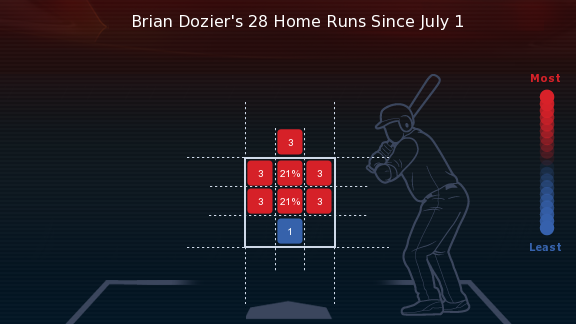
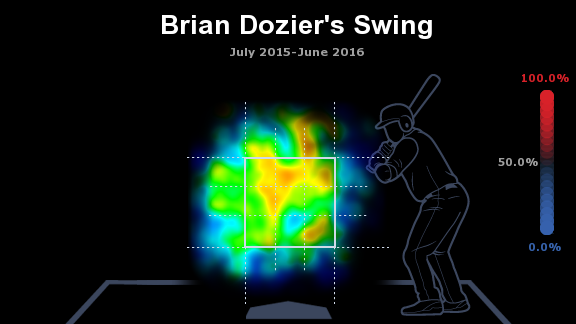
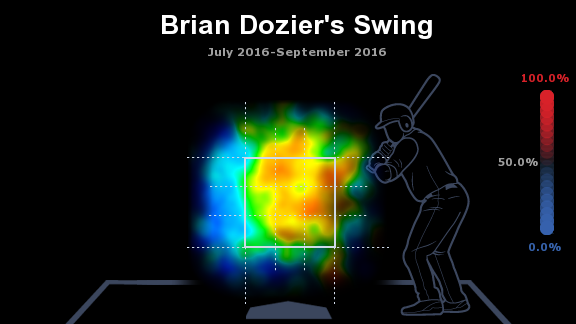
This was something I pointed out on Twitter during the Royals series: Teams aren't TRYING to pitch him up. They are definitely setting targets down-and-away but like all pitchers, they make mistakes. https://twitter.com/ParkerHageman/status/773201457881321472 For years I've preached that Brian Dozier crushes fastballs up in the zone and for years pitchers still leave that pitch in that area. Dating back to 2013, Dozier has more home runs than anyone on pitches in the upper third of the strike zone: 1. B. Dozier... 65 2. A. Pujols... 42 3. P. Goldschmidt... 37 4. E. Encarnacion... 34 5. M. Napoli... 34 I can't figure out why it happens so regularly. I don't know if his statute has something to do with it. When you look at the top three players with the most pitches in the upper portion of the strike zone over that time period, the leaders are Dozier, Brett Gardner and Jose Altuve. It must be exceedingly difficult for guys who are 6-foot-5+ to hit the knees of guys who are sub-6 and squatting. Here's where teams have been pitching him since the end of June: And here's where his home runs have been in the zone: In regards to where he swings overall, there is a stark difference between what he was swinging at since the start of the second half last season to the end of May this year. Then he began to really attack pitches on the inner half. This definitely jives with him discussing how he moved off the plate and opened up that portion of the zone again.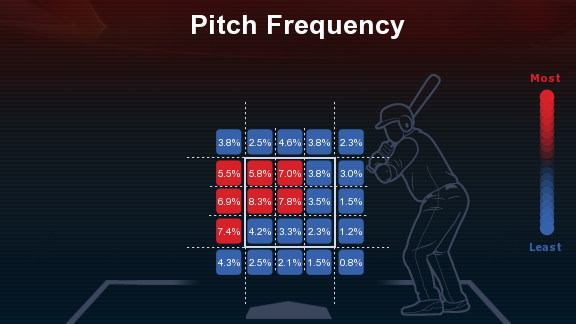
-
Brian Dozier's Incredible Turnaround
Parker Hageman replied to Parker Hageman's topic in Twins Daily Front Page News
That's far too simplistic for a complicated game. 1. Hughes was hurt in 2015. After 2014, he did not revert back to his normal the next year -- he got substantially worse. 2. Suzuki's 2015 got away from him. He struggled with his mechanics all season, constantly moving his head during his swing. Once again, he addressed some of those issues this offseason and bounced back to have a better year this season than 2014. As far as Dozier's future, you're right, it's likely to regress next year simply because this was a career year and opponents will spend all winter figuring out a strategy to keep him from beating them -- just like they did at the end of last season when they went away-away-away and this season when they stayed away and shifted the infield until he proved he could beat it. In regards to this statement... ...I don't believe this is a fact at all. Baseball is organic in the sense that once a player has success, the opposing team is going to do everything it can to eliminate that strength and exploit another weakness. You ask any veteran player in the game and they will tell you they have to adjust every season. Unless you are Miguel Cabrera and a human cheat code. -
Brian Dozier's Incredible Turnaround
Parker Hageman replied to Parker Hageman's topic in Twins Daily Front Page News
Such as the juiced ball theory or... -
In the top of the third inning on Monday night in Detroit, Brian Dozier tagged a 94 mile per hour Daniel Norris offering just over Comerica's left field wall and mere inches beyond a leaping Justin Upton's outstretched glove for home run number forty on the season. It marked the first time a member of the Minnesota Twins would reach that milestone since Harmon Killebrew did so on September 1, 1970. Dozier's current total is mind-boggling when you consider that on June 5 of this season, he had just six home runs to his name. (By comparison, Killebrew had 14.) Since then, Dozier has gone on a tear, launching 34 home runs. How did this drastic turnaround happen? A few weeks ago I stumbled across a post at Fangraphs.com that tried to explain why Brian Dozier was suddenly hitting every pitch 600 feet. It is something that Fangraphs does all the time. If there is a change in a player’s performance guys like Eno Sarris, Jeff Sullivan and August Fagerstrom do an excellent and thorough job of breaking down the ins-and-outs through stats and video. Occasionally when they are writing about a Twins player, they miss or overlook something that the local followers are aware of. It comes with the territory of trying to cover all 30 teams. This particular Dozier write-up was more geared for the roto reader -- those into fantasy baseball -- but the post dove head-long into a mechanical breakdown of Dozier swing. Based on this assessment, Sport Illustrated’s Jay Jaffe picked it up and used it as a part of his analysis in explaining why Dozier has been Baseball Jesus over the last few months. "[T]he 29 year old Dozier has done impressive damage thanks to an in-season mechanical adjustment," Jaffe wrote. Since many readers here also read a lot of Fangraph articles and writers like Jaffe, I figured I would take the time to make it clear what is and is not happening. As a preface, the author of the post is not wrong, per se. Fangraphs.com’s Scott Strandberg recognized that Brian Dozier has made some changes at the plate. There are some tweaks that are easily seen between his April stance and his August stance. It’s just that the conclusion is a bit off. The first change that Strandberg observed is that Dozier has indeed altered his pre-swing movements, adding a much more exaggerated bat tip prior to getting his hands back. You can easily see the differences in motion as he is now tipping his barrel all the way toward the catcher with a big sweeping movement: http://i.imgur.com/7afuWw3.gif http://i.imgur.com/rsYxTE5.gif That’s creating a rhythm to help time his movements with the pitcher. He's loose and oozing with confidence. In the screengrab from the Fangraphs article posted in the block quote above, the author notes that these are the two positions right before Dozier starts his swing in April and August. The conclusion is Dozier has brought his hands closer to his body and his bat upright right before he starts his swing. Depending on what you consider the start of his swing, it might not be wholly accurate. Backing out of the shot to where Dozier actually readies himself for the pitch, his hands and barrel are in a very similar position between the two dates. The newer model is slightly more upright than the previous version but in no way is it at the point that makes a significant difference to the overall swing. Certainly not to the extent that the screengrab would lead someone to believe. When he gathers himself into the pre-launch position, with the front foot making contact with the ground, his barrel and hands are back to the exact same spot. Dozier is doing something different prior to starting his swing that could be helping his timing which, in turn, may help him get to the pitch at the right moment. However, at all the critical portions of the swing, his hands and barrel are in the same spot. It is the second statement -- “This allows Dozier to get the barrel through the zone quicker, which goes a long way toward explaining the spike in hard contact, and his increased power on inside pitches” -- is a little off the mark. In regard to hitting the inside pitch, instead of focusing on the hand position in the screengrab, notice that Dozier is further off of the plate. In early May, Dozier explained to MLB.com's Rhett Bollinger the reason he moved away from the plate. "The way my swing works is that I have to create space," Dozier said. "I like to be able to get extended, but I felt trapped and that I had to cheat, which caused me to drop [my hands]. So it's night and day now. I feel good." Moreover, getting the barrel through the zone quicker has never been Dozier’s problem nor is it a reason why he's jacking so many bombs right now. As Tom Brunansky told me this spring, Dozier’s biggest problem was that his barrel was not in the zone long enough. He was too quick with his barrel in the zone, the exact opposite of what the author believes is happening. The major difference between the two style of swings is a bit more complicated and harder to see in video than what was present. Dozier has been getting behind the ball more -- meaning his barrel has stayed in the zone longer than it did at the beginning of the year. https://twitter.com/ParkerHageman/status/772893988034531328 As Dozier told the Star Tribune’s LaVelle Neal recently, his approach at the plate is now “trying to knock down the center field wall” which is a cue to stay behind the ball and not necessarily an attempt to drive the ball to the middle of the field. "Staying behind the ball doesn’t mean trying to hit the ball the other way or up the middle,” he told Fangraphs' Sarris back in June. “I can hit 100 balls to left field and as long as I stay behind the ball and really backspin it with the top hand in a good position, I’ll get what I want.” In a recent home run swing, you can see that in his barrel turn behind him -- which is working on getting behind the ball and staying in the zone: https://twitter.com/ParkerHageman/status/773380310369234944 This is the mechanical adjustment where the rubber meets the road for Brian Dozier. The pre-swing hand placement is mostly eyewash, a great timing mechanism that does add a small trigger difference but not an influential component of his power binge. The real question is, with 18 games remaining in 2016, does Dozier have it in him to break Harmon Killebrew's single-season record of 49? Image courtesy of Jordan Johnson // USA TODAY View full article
-
Twins Have New Minor League Hitting Instructor When the Twins let Bill Springman go after his contract expired in 2014, they did not hire a replacement to fill his vacated minor league hitting instructor role. At that time Brad Steil, the team's director of minor league operations, said that the organization felt like the hitting coaches at various levels would adequately serve the hitters. “We’re not going to hire a hitting coordinator,” Steil told the Pioneer Press's Mike Berardino in February 2015. “We just thought we’d try it this way. We have a lot of confidence in the minor-league (hitting) coaches we have. They all have great relationships with each other. There’s good rapport throughout the system.” Fast forward to this past July, the Twins quietly hired Rick Eckstein (first reported by Patrick Reusse in July), brother of former Major League shortstop David Eckstein as well as the Nationals hitting coach from 2009-2013, to work with players throughout the system and coordinate the organization’s hitting philosophy. By all published accounts about Eckstein's time as the Nationals' hitting coach, he had solid skills for relating to players, was well liked, and able to communicate the tricks of the trade well. "I've had good hitting coaches in the past," Adam Dunn told the Washington Post in 2010. "He takes it to another level. His life is hitting. Not baseball. It's hitting." In 2012, Eckstein shared his overall hitting philosophy with Fangraphs.com’s David Laurila: To be honest, I’m not thrilled by that philosophy. Still, being a hitting coach means being one-part instructor and one-part psychologist and, for the most part, Eckstein’s hitters in Washington did well. Until 2013, that is. He was made a scapegoat and fired in 2013 during a prolonged offensive drought by Washington but he was quickly hired by the Los Angeles Angels where he accepted a position as a "player information coach" -- a hybrid uniformed coaching position created to help players and coaches digest scouting reports and data better. Helping players make sense of the data is a critical element to the modern game. As Tom Brunansky told me, there’s enough information out there to choke a cow, part of being a good coach means understanding what types of info to feed them and when. He left the Angels in August 2014 when he was hired by the University of Kentucky (a program the Twins are intimately familiar with, drafting six players from the school dating back to 2010) as an assistant coach, but Eckstein’s contract with the school was not renewed when it expired this past June. The Wildcats’ head coach Gary Henderson was dismissed at the beginning of that month and there was some speculation that Eckstein could be a potential suitor however, under Eckstein’s guidance, the Wildcats’ offense slipped from the best in the SEC in runs scored (1st in OPS) to 9th in 2015 (7th in OPS) to 11th in 2016 (11th in OPS) and saw strikeouts grow and walks fall. Part of the reason for the decline is likely due to UK graduating key players after the 2014 season -- including one of the Astros’ top prospects A.J. Reed who hit 23 home runs for the Wildcats that year. Nevertheless, those stats did play a factor when Kentucky decided not to offer Eckstein the next head coach’s job. As pointed out by Seth Stohs in a Twins Daily forum thread, Eckstein will be involved in the fall instructs. Eckstein cut his teeth in the Twins' organization, first as the team's bullpen catcher in 2000 and then the minor league strength and conditioning instructor in 2001.
-
WHAT'S REALLY BEHIND BRIAN DOZIER'S INCREDIBLE TURNAROUND. A few weeks ago I stumbled across a post at Fangraphs.com that tried to explain why Brian Dozier was suddenly hitting every pitch 600 feet. It is something that sites like Fangraphs does all the time. If there is a change in a player’s performance guys like Eno Sarris, Jeff Sullivan and August Fagerstrom do an excellent and thorough job of breaking down the ins-and-outs through stats and video. Occasionally when the are forced to write about a Twins player and miss out on the clicks from a fan base of a more popular team, they miss or overlook something that the local followers are aware of. It comes with the territory of trying to cover all 30 teams. This Dozier write-up was more geared for the roto reader -- those into fantasy baseball -- but the post dove headlong into a mechanical breakdown of Dozier swing. That grabbed my attention. Based on this assessment, Sport Illustrated’s Jay Jaffe picked it up and used it as a part of his analysis in explaining why Dozier has been Baseball Jesus over the last few months. Since many readers here also read a lot of Fangraphs and writers like Jaffe, I figured I would take the time to make it clear what is and is not happening. I will preface this by saying the author of the post is not wrong, per se. Fangraphs.com’s Scott Strandberg recognized that Brian Dozier is indeed doing something different at the plate. It’s just that the conclusion on his analysis is off. I’ve added the bold to his statements that need to be discussed. Strandberg observed that Dozier has indeed altered his pre-swing movements, adding a much more exaggerated bat tip prior to getting his hands back. You can see the differences in motion: http://i.imgur.com/7afuWw3.gif http://i.imgur.com/rsYxTE5.gif That’s creating a rhythm to help with timing his movements with the pitcher. He's loose and oozing with confidence. In the screengrab from the Fangraphs article, the author notes that these are the two positions right before Dozier starts his swing and that because of it, he has brought his hands closer to his body and his bat upright. That’s not wholly accurate. If we back out of the shot to see where Dozier actually readies himself for the pitch, his hands and barrel are in a very similar position. The newer model is slightly more upright than the previous version but in no way is it at the point that makes a significant difference to the overall swing. Certainly not to the extent that the screengrab would lead someone to believe. When he gathers himself into the pre-launch position, with the front foot making contact with the ground, his barrel and hands are back to the exact same spot. That’s a small quibble, yes. Dozier is doing something different prior to starting his swing that could be helping his timing which, in turn, may help him get to the pitch at the right moment. However, at all the critical portions of the swing, his hands and barrel are in the same spot. It is the second statement -- “This allows Dozier to get the barrel through the zone quicker, which goes a long way toward explaining the spike in hard contact, and his increased power on inside pitches” -- that I have a bigger issue with. In regards to hitting the inside pitch, instead of focusing on the hand position, notice that Dozier is further off of the plate, allowing him to barrel up more inside pitches. More important, getting the barrel through the zone quicker has never been Dozier’s problem. As Tom Brunansky told me this spring, Dozier’s biggest problem was that his barrel was not in the zone long enough. He was too quick with his barrel in the zone, the exact opposite of what the author believes is happening. The major difference between the two style of swings is a bit more complicated and harder to see in video than what was present. Dozier has been getting behind the ball more -- meaning his barrel has stayed in the zone longer than it did at the beginning of the year. https://twitter.com/ParkerHageman/status/772893988034531328 As Dozier told the Star Tribune’s LaVelle Neal recently, his approach at the plate is now “trying to knock down the center field wall” which is a cue to stay behind the ball and not necessarily an attempt to drive the ball to the middle of the field. In his recent home run swing, you can see that in his barrel turn behind him: https://twitter.com/ParkerHageman/status/773380310369234944 This is the mechanical adjustment where the rubber meets the road for Brian Dozier. The pre-swing hand placement is eye wash. This is the catalyst for his power. This post has been promoted to an article


-
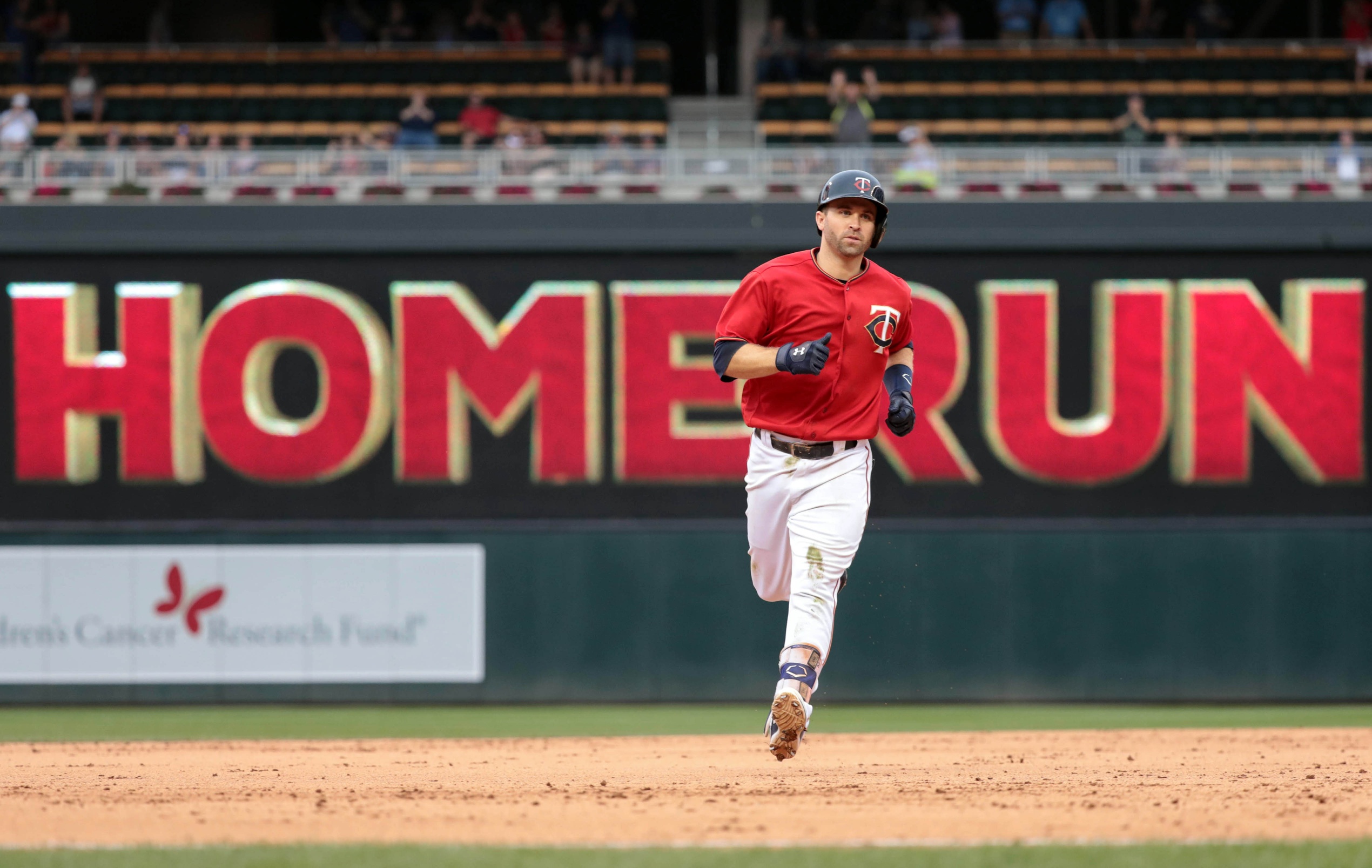 A few weeks ago I stumbled across a post at Fangraphs.com that tried to explain why Brian Dozier was suddenly hitting every pitch 600 feet. It is something that Fangraphs does all the time. If there is a change in a player’s performance guys like Eno Sarris, Jeff Sullivan and August Fagerstrom do an excellent and thorough job of breaking down the ins-and-outs through stats and video. Occasionally when they are writing about a Twins player, they miss or overlook something that the local followers are aware of. It comes with the territory of trying to cover all 30 teams. This particular Dozier write-up was more geared for the roto reader -- those into fantasy baseball -- but the post dove head-long into a mechanical breakdown of Dozier swing. Based on this assessment, Sport Illustrated’s Jay Jaffe picked it up and used it as a part of his analysis in explaining why Dozier has been Baseball Jesus over the last few months. "[T]he 29 year old Dozier has done impressive damage thanks to an in-season mechanical adjustment," Jaffe wrote. Since many readers here also read a lot of Fangraph articles and writers like Jaffe, I figured I would take the time to make it clear what is and is not happening. As a preface, the author of the post is not wrong, per se. Fangraphs.com’s Scott Strandberg recognized that Brian Dozier has made some changes at the plate. There are some tweaks that are easily seen between his April stance and his August stance. It’s just that the conclusion is a bit off. The first change that Strandberg observed is that Dozier has indeed altered his pre-swing movements, adding a much more exaggerated bat tip prior to getting his hands back. You can easily see the differences in motion as he is now tipping his barrel all the way toward the catcher with a big sweeping movement: http://i.imgur.com/7afuWw3.gif http://i.imgur.com/rsYxTE5.gif That’s creating a rhythm to help time his movements with the pitcher. He's loose and oozing with confidence. In the screengrab from the Fangraphs article posted in the block quote above, the author notes that these are the two positions right before Dozier starts his swing in April and August. The conclusion is Dozier has brought his hands closer to his body and his bat upright right before he starts his swing. Depending on what you consider the start of his swing, it might not be wholly accurate. Backing out of the shot to where Dozier actually readies himself for the pitch, his hands and barrel are in a very similar position between the two dates. The newer model is slightly more upright than the previous version but in no way is it at the point that makes a significant difference to the overall swing. Certainly not to the extent that the screengrab would lead someone to believe. When he gathers himself into the pre-launch position, with the front foot making contact with the ground, his barrel and hands are back to the exact same spot. Dozier is doing something different prior to starting his swing that could be helping his timing which, in turn, may help him get to the pitch at the right moment. However, at all the critical portions of the swing, his hands and barrel are in the same spot. It is the second statement -- “This allows Dozier to get the barrel through the zone quicker, which goes a long way toward explaining the spike in hard contact, and his increased power on inside pitches” -- is a little off the mark. In regard to hitting the inside pitch, instead of focusing on the hand position in the screengrab, notice that Dozier is further off of the plate. In early May, Dozier explained to MLB.com's Rhett Bollinger the reason he moved away from the plate. "The way my swing works is that I have to create space," Dozier said. "I like to be able to get extended, but I felt trapped and that I had to cheat, which caused me to drop [my hands]. So it's night and day now. I feel good." Moreover, getting the barrel through the zone quicker has never been Dozier’s problem nor is it a reason why he's jacking so many bombs right now. As Tom Brunansky told me this spring, Dozier’s biggest problem was that his barrel was not in the zone long enough. He was too quick with his barrel in the zone, the exact opposite of what the author believes is happening. The major difference between the two style of swings is a bit more complicated and harder to see in video than what was present. Dozier has been getting behind the ball more -- meaning his barrel has stayed in the zone longer than it did at the beginning of the year. https://twitter.com/ParkerHageman/status/772893988034531328 As Dozier told the Star Tribune’s LaVelle Neal recently, his approach at the plate is now “trying to knock down the center field wall” which is a cue to stay behind the ball and not necessarily an attempt to drive the ball to the middle of the field. "Staying behind the ball doesn’t mean trying to hit the ball the other way or up the middle,” he told Fangraphs' Sarris back in June. “I can hit 100 balls to left field and as long as I stay behind the ball and really backspin it with the top hand in a good position, I’ll get what I want.” In a recent home run swing, you can see that in his barrel turn behind him -- which is working on getting behind the ball and staying in the zone: https://twitter.com/ParkerHageman/status/773380310369234944 This is the mechanical adjustment where the rubber meets the road for Brian Dozier. The pre-swing hand placement is mostly eyewash, a great timing mechanism that does add a small trigger difference but not an influential component of his power binge. The real question is, with 18 games remaining in 2016, does Dozier have it in him to break Harmon Killebrew's single-season record of 49?
-
Jake Mauer And The Evolving Game Of Baseball. I overlooked this article from The Gazette's (Cedar Rapids) Jeff Johnson on Kernels' manager Jake Mauer and what he has learned in his four years heading the Twins' low-A affiliate. There's some good quotes in there but, for me, this was by far the most interesting portion: Mauer's right. The game has progress light-years beyond where it was -- particularly in the minor leagues. Teams now have access to some amazing data through the Trackman system. I'm told that Brad Steil and his team in the minor league ops side of things study that information closely. As I mentioned in a previous post, teams like the Rays are using that more and more in their evaluation of their system's players. I don't know to what degree the Twins are using the information but at the coaching and instructional level, it would be really interesting to know how that can be applied. Mauer seemed a little uncertain about the data and its ability to be used as a tool for player development. Interesting stuff.
-
Here's Buxton's HS swing versus his 2016 swing (link here): https://twitter.com/ParkerHageman/status/739626272888754178
-
Brian Dozier is a foot down early hitter, completely different than Donaldson, and his slight lift on his stride isn't all that new. From May 4th: https://baseballsavant.mlb.com/videos?video_id=658124783 From last night: https://baseballsavant.mlb.com/videos?video_id=1144778683
-
RIGHT HERE AT TWINS DAILY BACK IN MARCH! http://twinsdaily.com/_/minnesota-twins-news/spring-training-2016/byron-buxton-hopes-adjustments-pay-off-r4539
-
Right. You directly injured yourself on the field as a result of a play. That has some level of coverage. Pitchers who blow out their arms are not covered.
-
To clarify: MBA requires all teams to have accident insurance to cover for things like "ambulatory services" for on-field injuries. From my understanding, if you tear something on the field, cannot move and require immediate medical attention, that is covered. If you throw out your shoulder or tear your UCL in your elbow and need Tommy John surgery, that is not covered.
-
On Sunday's radio pregame show, Jack Morris was talking about Pat Light and his use of the splitter-forkball and the disappearance of the pitch in general because of injury concerns. In 2011, the New York Times documented some of that, citing teams like the Twins discouraging pitchers from throwing it. While the pitch MAY be potentially harmful, I still haven't seen any scientific evidence that it is somehow more or less dangerous than all the other pitches.
-
I can't see if Dahl does the "Tommy John Twist" in that picture. LOL.
-
Just to clarify my stance on this issue: 1. It's town ball. I'm not advocating there should be any regulations to deal with pitch counts/limits. Everyone is an adult and is aware of the potential dangers. In regards to Dahl specifically, good for him. That's a hell of a performance that he will retell over and over again, regardless how the rest of his career goes. 2. I think there definitely should be pitch limits for youth/HS although I'm not certain I agree with the proposed 105 limit at HS level. Every pitcher is different. Some work and condition extremely hard and can easily hit those numbers. Others are bean poles and put a lot of undue pressure on the arm. Feels like there should be more case-by-case basis on how far a kid can go but I suppose the league would rather take that responsibility out of the coach's hands. 3. I think colleges need to be more diligent about their pitch counts but not as much as HS obviously. Especially around tournament time when there is a need to lean on arms. With the condensed schedule at that time and the finite amount of arms, I don't know what the recommendation should be. Guys like Roach who have college years ahead of him plus a possibility of playing pro ball shouldn't be leaned on for 170 pitches.
-
This past Friday, in the thick of the Minnesota State Amateur Baseball Tournament, the Moorhead Brewers’ pitcher Tanner Dahl threw not one but two complete games. When all was said and done Dahl, a recent University of Jamestown (North Dakota) graduate, walked away with two Moorhead victories, allowing just one run while running up his pitch count to a whopping 222 pitches. While the monumental performance was celebrated by Minnesota baseball enthusiasts as gritty and gutty, outside of the bubble, people were head scratching the decision to let a pitcher toss that many pitches. “It was simultaneously impressive as it was embarrassing,” Driveline Baseball’s Kyle Boddy told me about his reaction to reading Dahl’s stat line. Boddy, who works with pitchers from all levels of the game and uses a data-driven, science-based approach at studying the arm, understands the mindset of pitchers who often throw all rational thought out the window when the adrenaline is pumping. Baseball observers work themselves in to a lather over two triple-digit figures when it comes to pitching -- velocity and pitch counts. Whenever a pitcher encroaches upon either, it becomes a topic of conversation. Dahl’s totals are unfathomable at any level in this day and age. The news of Dahl’s feat spread among Baseball Twitter and soon the influencers were levying their thoughts on the crazy total of pitches. “I’m curious,” ESPN.com’s Keith Law tweeted. “Will the Brewers pay for his rehab or surgery if he hurt himself today?” The answer, obviously, is no, the Brewers will not. Not in a direct, insurance-policy-gots-you-covered-Chief sort of way. However, knowing the camaraderie and community that goes into a Minnesota town ball team, they would assuredly organize a Kickstarter or (more likely) a beer bust to help offset medical expenses incurred because of his dedication to his team. Clearly, that was Law’s point. When someone signs the mandated player contract to participate in the Minnesota Baseball Association, the language says nothing about bankrolling any major surgeries and rehab that may come from participating in the game. The 23-year-old pitcher -- who was recently a part of the Fargo-Moorhead Redhawks independent league team -- was risking his future baseball livelihood and would be left paying for the repairs if his arm blew out. “Pitcher abuse” is a hot button topic. If it wasn’t, Jeff Passan’s amazing book, The Arm, would not be a New York Times bestseller. Each year during the NCAA tournament we see reports of a school having a pitcher throw 150 or more pitches only to throw again in another day or two. This season alone, a Minnesota State-Mankato pitcher caught everyone’s attention by tossing 171 pitches in an 11-inning game. On May 19, the Mavericks’ Dalton Roach threw 171 pitches in a victory over St Cloud State in NCAA D-II Regional play. Meanwhile SCSU’s starter, Reese Gregory, threw an efficient 121 pitches, just for comparison. Roach told the media after the game that he felt fine and it was OK because he threw mostly fastballs (“The single most dangerous pitch out there right now is a hard fastball. That’s typically the pitch a player gets hurt on,” Dr Pearce McCarty III, one of the Minnesota Twins’ orthopedic surgeons, told the Star Tribune recently). People called for his coach’s head. To prove how fine his arm was after the outing that incited all the pearl-clutching, a little over a week later Roach was pitching in the Northwoods League where, in his first start on May 31, he threw 101 pitches and struck out an Eau Claire Express-record 18 (he started the game by striking out the first 12 batters he faced). Roach, who is heading into his third year of college ball, would make one more start for the Express before being shut down because of an imposed innings limit. Maybe Roach is one of the genetically lucky ones -- the proverbial rubber arm. The guy whose mechanics and muscle structure refuse to break. (Or maybe the wear-and-tear just hasn’t caught up to him yet.) Still, the idea of risking his arm for a Division II championship feels short-sighted. As Boddy put it, almost all pitchers have the mentality of *wanting* to keep throwing but someone (I don’t know, a paid coach perhaps) has to be the adult in that situation. That burden of deciding when to lift the pitcher will likely be removed from the coach’s responsibility this coming season, at least at the high school level. In the Minnesota high school ranks, the state organization is currently weighing the idea of setting a pitch restriction for the young, developing arms. As it stands now, the rules are written in a way that says a pitcher cannot throw more than 14 innings in three days. That is a large enough loophole for a bullpen car to drive through. As written, it means a high school pitcher could essentially pull a Tanner Dahl, throwing back-to-back complete 7-inning games while amassing 200+ pitches. There’s nothing to stop a coach from doing that beside some attentive and vocal parents or their own conscience. It should be noted that the state’s coaches association already has suggested guidelines designed by the Mayo Clinic for pitch counts for their high school players posted on their website, such as a max of 90 pitches for a 17-to-18-year-old on four days of rest, but that’s like a beer company suggesting a fraternity “drink responsibly” during a toga party. That is why the Minnesota State High School League is taking measures to correct that. In October, the state coaches association will discuss the proposed pitch limits which caps the amount at 105 for the upperclassmen (Alabama has a 120 pitch limit) and 85 for the younger grades with required rest days in between outings. How would that process work? The high school association in Illinois recently outlined a similar proposal, limiting their pitchers to a 115-pitch count. It would require teams to keep track of both theirs and the opposing team’s pitch count, and compare pitch count totals during even-numbered innings. The oversight is needed. These are all good steps for the developing pitcher with a future ahead of him. While it makes sense to monitor a college pitcher whose financial aid or potential professional career may be tied to being able to pitch (and not recovering from arm surgery) or keeping the teenage hurler injury-free so that he may have better looks from colleges and the professional ranks, amateur players like Dahl and others operate in a Lord of the Flies-like town ball baseball society. From personal experience, I played on a team with a pitcher who had a decent college career and played for several years in independent ball prior to joining the team. Despite the fact that he was retired from his professional ranks, he was no less tenacious in his approach. He was six-foot-plus, the size of a fullback and had legs like sequoias. On his day to pitch, he had such intense, laser focus that I was positive that somewhere in the universe another planet exploded from its force. It was going to take a tranq gun to pry the ball out of his hand. He could, and routinely did, throw over 120 pitches a game. There’s no question in my mind that someone was constantly asking Dahl if he felt all right each time he came back in the dugout beyond the seventh inning of the first game and each inning into the second game. One of the team’s administrators tweeted back at Law and said that their number two starter was ready to go the moment Dahl said he was done. Hell, even former major league catcher Chris Coste plays on Dahl’s team (he smacked a dinger in the tournament). There were plenty of grown adults well aware of the situation. At 23 years old, you probably still want to play some baseball in the summer for a few more years, or eventually play catch with your kid, or not pay for major surgery. For outsiders, risking all that for a Class “B” town ball title feels like a silly gamble. That being said, if he does blow out his arm because of the 222-pitch day, Dahl will always be able to retell the story about the day he threw back-to-back complete games and helped lift his team into the 2016 championship game. Image courtesy of Charles LeClaire // USA TODAY View full article
-
Prior to the Fangraphs' article, I pointed out on Twitter that Buxton wasn't going back to the toe-tap with two strikes like he did earlier in the year. https://twitter.com/ParkerHageman/status/771728670633238533 When you look at his spray charts in Rochester the second go-round, you see him pulling the ball more and in the air. He was swinging with intent, like we have seen now.
-
On Pitch Counts. This past Friday, in the thick of the Minnesota State Amateur Baseball Tournament, the Moorhead Brewers’ pitcher Tanner Dahl threw not one but two complete games. When all was said and done Dahl, a recent University of Jamestown (North Dakota) graduate, walked away with two Moorhead victories while allowed just one run while running up his pitch count to a whopping 222 pitches. While the monumental performance was celebrated by Minnesota baseball enthusiast as gritty and gutty, outside of the bubble, people were head scratching the decision to let a pitcher toss that many pitches. “It was simultaneously impressive as it was embarrassing,” Driveline Baseball’s Kyle Boddy told me about his reaction to reading Dahl’s stat line. Boddy, who works with pitchers from all levels of the game and uses a data-driven, science-based approach at studying the arm, understands the mindset of pitchers which often throws all the rational thought out the window when the adrenaline is pumping. Baseball observers work themselves in a lather over two triple-digit figures when it comes to pitching -- velocity and pitch counts. Whenever a pitcher encroaches either, it becomes a topic of conversation. Dahl’s totals are unfathomable at any level this day and age. The news of Dahl’s feat spread among Baseball Twitter and soon the influencers were levying their thoughts on the crazy total of pitches. “I’m curious,” ESPN.com’s Keith Law tweeted. “Will the Brewers pay for his rehab or surgery if he hurt himself today?” The answer, obviously, is no, the Brewers will not. Not in a direct, insurance-policy-gots-you-covered-Chief sort of way. However, knowing the camaraderie and community that goes into a Minnesota town ball team, they would assuredly organize a Kickstarter or (more likely) a beer bust to help offset medical expenses incurred because of his dedication to his team. Clearly, that was Law’s point. When someone signs their mandated player contract to participate in the Minnesota Baseball Association, the language says nothing about bankrolling any major surgeries and rehab that may come from participating in the game. The 23-year-old pitcher -- who was recently a part of the Fargo-Moorhead Redhawks independent league team -- was risking his future baseball livelihood and would be left paying for the repairs if his arm blew out. “Pitcher abuse” is a hot button topic. If it wasn’t, Jeff Passan’s amazing book, The Arm, would not be a New York Times bestseller. Each year during the NCAA tournament we see reports of a school having a pitcher throw 150 or more pitches only to throw again in another day or two. This season alone, a Minnesota State-Mankato pitcher caught everyone’s attention by tossing 171 pitches in an 11-inning game. On May 19, the Mavericks’ Dalton Roach threw 171 pitches in a victory over St Cloud State in NCAA D-II Regional play (meanwhile SCSU’s starter, Reese Gregory, threw an efficient 121 pitches by comparison). Roach told the media after the game that he felt fine and it was Ok because he threw mostly fastballs (“The single most dangerous pitch out there right now is a hard fastball. That’s typically the pitch a player gets hurt on,” Dr Pearce McCarty III, one of the Minnesota Twins’ orthopedic surgeons, told the Star Tribune recently). People called for his coach’s head. To prove how fine his arm was after the outing that inciting all the pearl-clutching, a little over a week later Roach was pitching in the Northwoods League where, in his first start on May 31, he threw 101 pitches and struck out an Eau Claire Express-record 18 (he started the game by striking out the first 12 batters he faced). Roach, who is heading into his third year of college ball, would make one more start for the Express before being shut down because of an imposed innings limit. Maybe Roach is one of the genetically lucky ones -- the proverbial rubber arm. The guy whose mechanics and muscle structure refuse to break. (Or maybe the wear-and-tear just hasn’t caught up to him yet.) Still, the idea of risking his arm for a Division II championship feels short-sighted. As Boddy put it, almost all pitchers have the mentality of *wanting* to keep throwing but someone (I don’t know, a paid coach perhaps) has to be the adult in that situation. That burden of deciding when to lift their pitcher will likely be removed from the coach’s responsibility this coming season, at least at the high school level. In the Minnesota high school ranks, the state organization is currently weighing the idea of setting a pitch restriction for the young, developing arms. As it stands now, the rules are written in a way that says a pitcher cannot throw more than 14 innings in three days. That is a large enough loophole for a bullpen car to drive through. As written, it means a high school pitcher could essentially pull a Tanner Dahl, throwing back-to-back complete 7-inning games while amassing 200+ pitches. There’s nothing to stop a coach from doing that beside some attentive and vocal parents or their own conscious. It should be noted that the state’s coaches association already has suggested guidelines designed by the Mayo Clinic for pitch counts for their high school players posted on their website, such as a max of 90 pitches for a 17-to-18-year-old on four days of rest, but that’s like a beer company suggesting a fraternity “drink responsibly” during a toga party. That is why the Minnesota State High School League is taking measures to correct that. In October, the state coaches association will discuss the proposed pitch limits which caps the amount at 105 for the upperclassmen (Alabama has a 120 pitch limit) and 85 for the younger grades with required rest days in between outings. How would that process work? The high school association in Illinois recently outlined a similar proposal, limiting their pitchers to a 115-pitch count. It would require teams to keep track of both theirs and the opposing team’s pitch count, and compare pitch count totals during even number innings. The oversight is needed but there These are all good steps for the developing pitcher with a future ahead of him. While it makes sense to monitor a college pitcher whose financial aid or potential professional career may be tied to being able to pitch (and not recovering from arm surgery) or keeping the teenaged hurler injury-free so that he may have better looks from colleges and the professional ranks, amateur players like Dahl and others operate in a Lord of the Flies-like town ball baseball society. From a personal experience, I played on a team with a pitcher who had a decent college career and played for several years in independent ball prior to joining the team. Despite the fact that he was retired from his professional ranks, he was no less tenacious in his approach. He was six-foot-plus, the size of a fullback and had legs like sequoias. On his day to pitch,he had such intense, laser focus that I was positive that somewhere in the universe another planet exploded from its force. It was going to take a tranq gun to pry the ball out of his hand. He could, and routinely did, throw over 120 pitches a game. There’s no question in my mind that someone was constantly asking Dahl if he felt alright each time he came back in the dugout beyond the seventh inning of the first game and each inning into the second game. One of the team’s administrators tweeted back at Law and said that their number two starter was ready to go the moment Dahl said he was done. Hell, even former Major League catcher Chris Coste plays on Dahl’s team (he smack a dinger in the tournament). There were plenty of grown adults well aware of the situation. At 23 years old, you probably still want to play some baseball in the summer for a few more years, or eventually play catch with your kid, or not pay for major surgery. For outsiders, risking all that for a Class “B” town ball title feels like a silly gamble. That being said, if he does blow out his arm because of the 222-pitch day, Dahl will always be able to retell the story about the day he threw back-to-back complete games and helped lift his team into the 2016 championship game. This post has been promoted to an article
-
 Baseball observers work themselves in to a lather over two triple-digit figures when it comes to pitching -- velocity and pitch counts. Whenever a pitcher encroaches upon either, it becomes a topic of conversation. Dahl’s totals are unfathomable at any level in this day and age. The news of Dahl’s feat spread among Baseball Twitter and soon the influencers were levying their thoughts on the crazy total of pitches. “I’m curious,” ESPN.com’s Keith Law tweeted. “Will the Brewers pay for his rehab or surgery if he hurt himself today?” The answer, obviously, is no, the Brewers will not. Not in a direct, insurance-policy-gots-you-covered-Chief sort of way. However, knowing the camaraderie and community that goes into a Minnesota town ball team, they would assuredly organize a Kickstarter or (more likely) a beer bust to help offset medical expenses incurred because of his dedication to his team. Clearly, that was Law’s point. When someone signs the mandated player contract to participate in the Minnesota Baseball Association, the language says nothing about bankrolling any major surgeries and rehab that may come from participating in the game. The 23-year-old pitcher -- who was recently a part of the Fargo-Moorhead Redhawks independent league team -- was risking his future baseball livelihood and would be left paying for the repairs if his arm blew out. “Pitcher abuse” is a hot button topic. If it wasn’t, Jeff Passan’s amazing book, The Arm, would not be a New York Times bestseller. Each year during the NCAA tournament we see reports of a school having a pitcher throw 150 or more pitches only to throw again in another day or two. This season alone, a Minnesota State-Mankato pitcher caught everyone’s attention by tossing 171 pitches in an 11-inning game. On May 19, the Mavericks’ Dalton Roach threw 171 pitches in a victory over St Cloud State in NCAA D-II Regional play. Meanwhile SCSU’s starter, Reese Gregory, threw an efficient 121 pitches, just for comparison. Roach told the media after the game that he felt fine and it was OK because he threw mostly fastballs (“The single most dangerous pitch out there right now is a hard fastball. That’s typically the pitch a player gets hurt on,” Dr Pearce McCarty III, one of the Minnesota Twins’ orthopedic surgeons, told the Star Tribune recently). People called for his coach’s head. To prove how fine his arm was after the outing that incited all the pearl-clutching, a little over a week later Roach was pitching in the Northwoods League where, in his first start on May 31, he threw 101 pitches and struck out an Eau Claire Express-record 18 (he started the game by striking out the first 12 batters he faced). Roach, who is heading into his third year of college ball, would make one more start for the Express before being shut down because of an imposed innings limit. Maybe Roach is one of the genetically lucky ones -- the proverbial rubber arm. The guy whose mechanics and muscle structure refuse to break. (Or maybe the wear-and-tear just hasn’t caught up to him yet.) Still, the idea of risking his arm for a Division II championship feels short-sighted. As Boddy put it, almost all pitchers have the mentality of *wanting* to keep throwing but someone (I don’t know, a paid coach perhaps) has to be the adult in that situation. That burden of deciding when to lift the pitcher will likely be removed from the coach’s responsibility this coming season, at least at the high school level. In the Minnesota high school ranks, the state organization is currently weighing the idea of setting a pitch restriction for the young, developing arms. As it stands now, the rules are written in a way that says a pitcher cannot throw more than 14 innings in three days. That is a large enough loophole for a bullpen car to drive through. As written, it means a high school pitcher could essentially pull a Tanner Dahl, throwing back-to-back complete 7-inning games while amassing 200+ pitches. There’s nothing to stop a coach from doing that beside some attentive and vocal parents or their own conscience. It should be noted that the state’s coaches association already has suggested guidelines designed by the Mayo Clinic for pitch counts for their high school players posted on their website, such as a max of 90 pitches for a 17-to-18-year-old on four days of rest, but that’s like a beer company suggesting a fraternity “drink responsibly” during a toga party. That is why the Minnesota State High School League is taking measures to correct that. In October, the state coaches association will discuss the proposed pitch limits which caps the amount at 105 for the upperclassmen (Alabama has a 120 pitch limit) and 85 for the younger grades with required rest days in between outings. How would that process work? The high school association in Illinois recently outlined a similar proposal, limiting their pitchers to a 115-pitch count. It would require teams to keep track of both theirs and the opposing team’s pitch count, and compare pitch count totals during even-numbered innings. The oversight is needed. These are all good steps for the developing pitcher with a future ahead of him. While it makes sense to monitor a college pitcher whose financial aid or potential professional career may be tied to being able to pitch (and not recovering from arm surgery) or keeping the teenage hurler injury-free so that he may have better looks from colleges and the professional ranks, amateur players like Dahl and others operate in a Lord of the Flies-like town ball baseball society. From personal experience, I played on a team with a pitcher who had a decent college career and played for several years in independent ball prior to joining the team. Despite the fact that he was retired from his professional ranks, he was no less tenacious in his approach. He was six-foot-plus, the size of a fullback and had legs like sequoias. On his day to pitch, he had such intense, laser focus that I was positive that somewhere in the universe another planet exploded from its force. It was going to take a tranq gun to pry the ball out of his hand. He could, and routinely did, throw over 120 pitches a game. There’s no question in my mind that someone was constantly asking Dahl if he felt all right each time he came back in the dugout beyond the seventh inning of the first game and each inning into the second game. One of the team’s administrators tweeted back at Law and said that their number two starter was ready to go the moment Dahl said he was done. Hell, even former major league catcher Chris Coste plays on Dahl’s team (he smacked a dinger in the tournament). There were plenty of grown adults well aware of the situation. At 23 years old, you probably still want to play some baseball in the summer for a few more years, or eventually play catch with your kid, or not pay for major surgery. For outsiders, risking all that for a Class “B” town ball title feels like a silly gamble. That being said, if he does blow out his arm because of the 222-pitch day, Dahl will always be able to retell the story about the day he threw back-to-back complete games and helped lift his team into the 2016 championship game.
-
Bunt strikes is something I believe we can access from the ESPN/TruMedia database but I'm not 100% on that. I believe some of the private stat companies like BIS and Inside Edge do track things like check swings (that requires video scouts) but that is not made available to the public (Fangraphs just buys a small portion of the mounds of data those companies have). Maybe I'm just a huge baseball nerd but that type of data is something I'd like to parse. For instance, when Sano was crushing last season, was he checking his swing as much? My gut says aggressive hitters will have a higher percentage of check swing strikes but I'd love to know the data behind it. Good thoughts.
-
Twins Daily Short-Season Hitter Of The Year
Parker Hageman replied to Seth Stohs's topic in Twins Daily Front Page News
Lewin Diaz was definitely one of my five favorite swingers coming into the season -- http://twinsdaily.com/_/minnesota-twins-news/minnesota-twins-minor-leagues/five-hitters-deserving-of-your-attention-r4332 (four out of five ain't bad) -- good to see that he continued to mash.- 13 replies
-
- 3
-

-
- lewin diaz
- alex kirilloff
- (and 3 more)


