



Nick Nelson
-
Posts
8,327 -
Joined
-
Last visited
-
Days Won
56
Content Type
Profiles
News
Minnesota Twins Videos
2026 Minnesota Twins Top Prospects Ranking
2022 Minnesota Twins Draft Picks
Minnesota Twins Free Agent & Trade Rumors, Notes, & Tidbits
Guides & Resources
2023 Minnesota Twins Draft Picks
The Minnesota Twins Players Project
2024 Minnesota Twins Draft Picks
2025 Minnesota Twins Draft Pick Tracker
2026 Minnesota Twins Draft Tracker: Picks & Bonuses
Forums
Blogs
Events
Store
Downloads
Gallery
Everything posted by Nick Nelson
-
Who stays? Who goes? The Twins have eight (or maybe nine) players from the 2020 team set to hit free agency this offseason, and most of them were major contributors. On Thursday night, I was joined by Matthew Taylor and David Youngs on Offseason Live as we break down each of these players, and how likely they are to return. Watch the show below!Which players have we seen for the last time in a Twins uniform? Watch the show below to see us break it down. You can catch these broadcasts live on Tuesday and Thursday nights via Twins Daily's Twitter, Facebook, or YouTube page. You'll also always be able to watch the replay tomorrow here on the site, or via audio by subscribing to our podcast. Click here to view the article
-
 Which players have we seen for the last time in a Twins uniform? Watch the show below to see us break it down. You can catch these broadcasts live on Tuesday and Thursday nights via Twins Daily's Twitter, Facebook, or YouTube page. You'll also always be able to watch the replay tomorrow here on the site, or via audio by subscribing to our podcast.
 -
 It was a shortened season, but an official one nonetheless. And so, our panel of 23 Twins Daily writers came together to vote on the annual TD Awards: Rookie of the Year, Most Improved, Best Pitcher, and MVP. Today we look at the first category, where Ryan Jeffers narrowly edges Randy Dobnak in the balloting.There is always much to learn for a rookie first entering the big-league ranks, but it's a steeper curve for catchers. They not only participate in games, but are essentially asked to run them. Catchers must signal for and interact with every pitch, and (as framing metrics illuminate) they can impact game outcomes in deeply subtle ways. Mix in the circumstances that surrounded Jeffers when he joined the Twins in mid-August, and the crash course grows all the more daunting. Think about it: replacing a reigning Silver Slugger (and former Twins Daily Rookie of the Year), on a team battling for first place, with championship aspirations, amidst a sprint of a season just five weeks away from ending. Jeffers had to gel with a new pitching staff, acclimate to major-league competition, and perform at an extremely high level, despite the lack of any opportunity to sharpen up in minor-league games. It's a great deal to ask of a 23-year-old who had played 167 games in the minors since being drafted in 2018, including just 24 above Single-A. Jeffers was up to the task. IMMEDIATE IMPACT For some context, Mitch Garver had played 508 games in the minors before he debuted in the big leagues. Even Joe Mauer, who rocketed through the Twins system as a No. 1 overall draft pick and No. 1 overall prospect, played 277 games in the minors before first reaching the Show. Jeffers, a former second-round pick out of UNC-Wilmington, was barely two years removed from being drafted when the Twins called him over from St. Paul's alternate site on August 20th. The front office's decision to tab him as replacement for an injured Garver was somewhat surprising, given the availability of a familiar and experienced option in Willians Astudillo. But it wasn't THAT surprising, if you've ever heard Twins people sing Jeffers' praises. The young backstop wasted no time making his presence felt. He started in the first game after he was called up, and delivered a go-ahead RBI single in his first MLB at-bat. From that point forward, Jeffers was a mainstay. A DEPENDABLE WORKHORSE After Jeffers was called up, Garver made only 21 more plate appearances, the same number as Alex Avila. Minnesota's veteran backstop depth evaporated halfway through the campaign, making Jeffers an absolutely vital asset. He started 18 of the team's final 35 games behind the plate following his promotion, including nine out of 13 at one point while Garver was sidelined and Avila was hampered. Through it all, Jeffers gained confidence from the pitching staff while proving a reliable battery partner. In 162 innings behind the plate, he was charged with zero errors and only one past ball. Not only did he grade out well defensively according to these traditional statistics, but by advanced metrics as well. Statcast him had as a 90th percentile pitch-framer, and Baseball Prospectus' FRAA pegged him as above-average. Granted, this is all based on a small sample, but it jibes with the rep on Jeffers from the minors, and what we saw with our own eyes as he smoothly received pitches and stole strikes consistently. For his part, Jeffers takes a lot of pride in this aspect of his game. "Every pitch is an opportunity for me to change the count," he told our Seth Stohs in a recognizing him as Rookie of the Year. "I love making a hitter mad." Offensively, Jeffers was more solid than spectacular, but that's still an accomplishment on its own from a rookie who specialized in defense behind the plate. He slashed .273/.355/.436 with three home runs in 62 plate appearances, posting a .791 OPS that ranked fifth on the team among players with 50+ PA. The only higher finishers: Nelson Cruz, Byron Buxton, Josh Donaldson, Eddie Rosario. There was nothing fluky about the rookie catcher's production. He showed excellent discipline, and an ability to crush his pitch. Jeffers generated a Barrel % of 13.9%, higher than any qualified Twin other than Miguel Sanó and Cruz. His average exit velocity was above all teammates save for Sanó, Donaldson, and Garver. Jeffers swung at only 26.7% of pitches outside the zone, which is significantly better than average, and lower than all Twins except LaMonte Wade Jr., Donaldson, Garver, and Avila. On both sides of the ball, Jeffers look like a comfortably seasoned MLB veteran. For that reason, he was our pick for Twins Rookie of the Year – but only by the slimmest of margins. OTHER CANDIDATES As you can see in the ballot results below, Jeffers actually received fewer first-place votes than Randy Dobnak (12-to-9) but managed to narrowly edge him in overall points, 50-to-48. That's about as close as it gets. (Twitter was a little more decisive.) Either one would've been deserving. Why did Jeffers get the nod? Part of it is recency bias, I'm sure. Dobnak was sensational over the first half, and on a legitimate AL Rookie of the Year path, but his play cratered after that and he was in the minors when the regular season concluded. Jeffers, meanwhile, came along right around the time Dobnak dropped off. He was a fixture the rest of the way and into the playoffs. There's also the fact that, unlike Jeffers, Dobnak wasn't an entirely new commodity. We'd already seen him look great over 28 innings in 2019. Novelty makes an impression. But really, speaking as a Jeffers-first voter, I think it comes down to this: While Dobnak ended up having a good year in a year where many pitchers had good years – on the Twins, and across the Central divisions generally – Jeffers came up and outperformed most others in a lackluster lineup. His comparative edge in OPS+ (118) to Dobnak's ERA+ (108) is telling. And, while Dobnak's performance may have been above-average on balance, there's no downplaying the extreme and dramatic plunge that stamped his ticket. It doesn't negate his outstanding early performance, but it does cast serious doubt on the sustainability. Others who deservingly received votes: Jorge Alcala, Brent Rooker, and Cody Stashak. (Had we polled people after the playoff series, Alex Kirilloff might've received a down-ballot vote or two.) THE BALLOTS Here’s a look at the ballots from our 23 voters. Seth Stohs: 1) Randy Dobnak, 2) Ryan Jeffers, 3) Jorge Alcala Nick Nelson: 1) Ryan Jeffers, 2) Jorge Alcala, 3) Randy Dobnak John Bonnes: 1) Randy Dobnak, 2) Ryan Jeffers, 3) Jorge Alcala Tom Froemming: 1) Randy Dobnak, 2) Ryan Jeffers, 3) Jorge Alcala Andrew Gebo: 1) Ryan Jeffers, 2) Jorge Alcala, 3) Randy Dobnak AJ Condon: 1) Ryan Jeffers, 2) Jorge Alcala, 3) Brent Rooker Cody Christie: 1) Ryan Jeffers, 2) Randy Dobnak, 3) Jorge Alcala Cody Pirkl: 1) Randy Dobnak, 2) Jorge Alcala, 3) Ryan Jeffers Cooper Carlson: 1) Randy Dobnak, 2) Ryan Jeffers, 3) Jorge Alcala Jeremy Nygaard: 1) Jorge Alcala, 2) Randy Dobnak, 3) Ryan Jeffers Lucas Seehafer: 1) Randy Dobnak, 2) Jorge Alcala, 3) Ryan Jeffers Matt Braun: 1) Randy Dobnak, 2) Ryan Jeffers, 3) Cody Stashak Matt Lenz: 1) Ryan Jeffers, 2) Jorge Alcala, 3) Cody Stashak Matthew Taylor: 1) Randy Dobnak, 2) Ryan Jeffers, 3) Jorge Alcala Matthew Trueblood: 1) Ryan Jeffers, 2) Randy Dobnak, 3) Jorge Alcala Nash Walker: 1) Ryan Jeffers, 2) Randy Dobnak, 3) Jorge Alcala Nate Palmer: 1) Ryan Jeffers, 2) Randy Dobnak, 3) Brent Rooker Patrick Wozniak: 1) Randy Dobnak, 2) Ryan Jeffers, 3) Jorge Alcala Derek Wetmore: 1) Randy Dobnak, 2) Ryan Jeffers, 3) Jorge Alcala Steve Lein: 1) Randy Dobnak, 2) Ryan Jeffers, 3) Jorge Alcala Renabanena: 1) Randy Dobnak, 2) Jorge Alcala, 3) Ryan Jeffers Ted Schwerzler: 1) Ryan Jeffers, 2) Jorge Alcala, 3) Brent Rooker Thiéres Rabelo: 1) Jorge Alcala, 2) Randy Dobnak, 3) Ryan Jeffers POINTS Ryan Jeffers: 50 Randy Dobnak: 48 Jorge Alcala: 35 Brent Rooker: 3 Cody Stashak: 2 How would your ballot look? Leave a comment and make your case. Previous Twins Daily Rookie of the Year Winners 2015: Miguel Sano 2016: Max Kepler 2017: Trevor Hildenberger 2018: Mitch Garver 2019: Luis Arráez Click here to view the article
 -
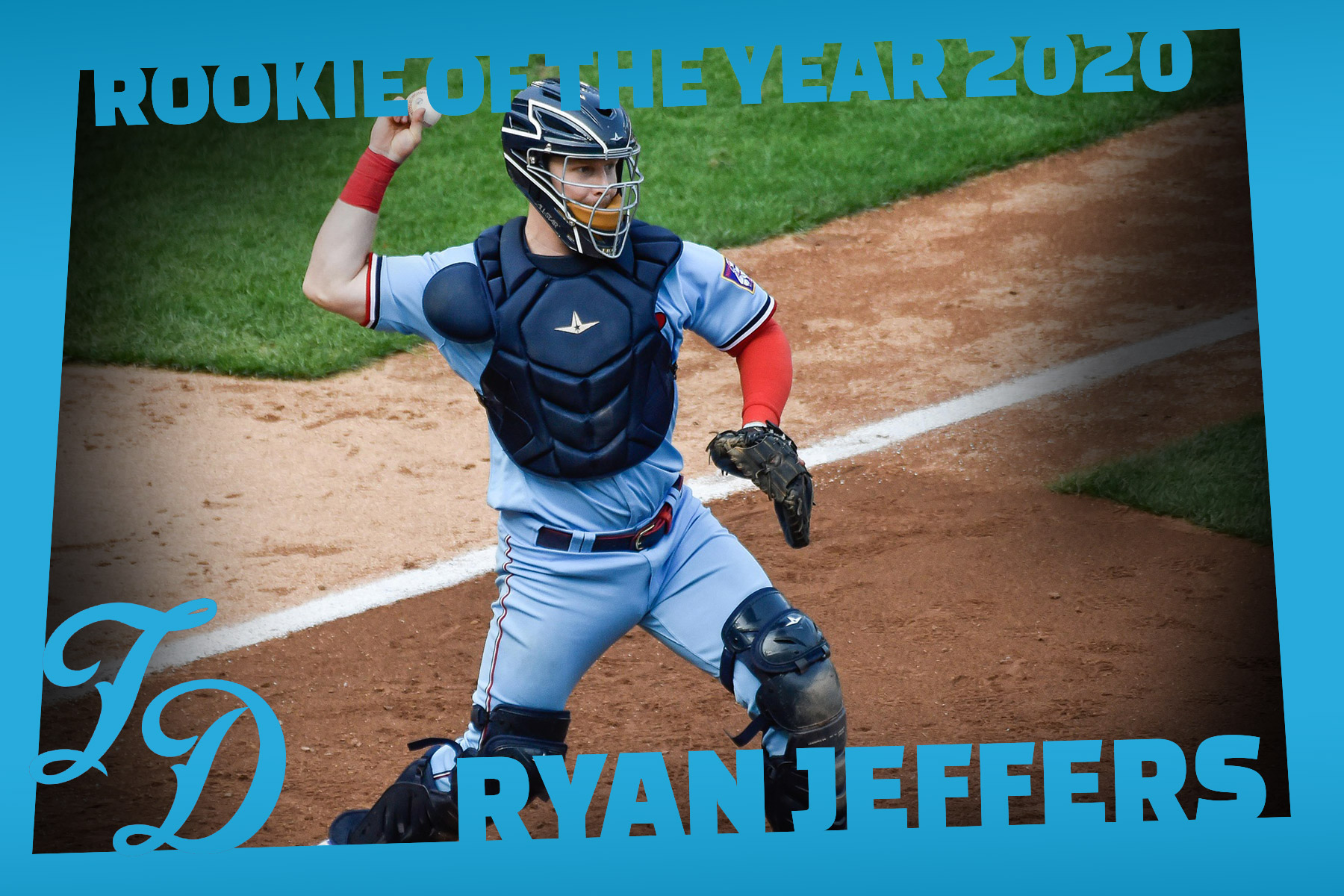 There is always much to learn for a rookie first entering the big-league ranks, but it's a steeper curve for catchers. They not only participate in games, but are essentially asked to run them. Catchers must signal for and interact with every pitch, and (as framing metrics illuminate) they can impact game outcomes in deeply subtle ways. Mix in the circumstances that surrounded Jeffers when he joined the Twins in mid-August, and the crash course grows all the more daunting. Think about it: replacing a reigning Silver Slugger (and former Twins Daily Rookie of the Year), on a team battling for first place, with championship aspirations, amidst a sprint of a season just five weeks away from ending. Jeffers had to gel with a new pitching staff, acclimate to major-league competition, and perform at an extremely high level, despite the lack of any opportunity to sharpen up in minor-league games. It's a great deal to ask of a 23-year-old who had played 167 games in the minors since being drafted in 2018, including just 24 above Single-A. Jeffers was up to the task. IMMEDIATE IMPACT For some context, Mitch Garver had played 508 games in the minors before he debuted in the big leagues. Even Joe Mauer, who rocketed through the Twins system as a No. 1 overall draft pick and No. 1 overall prospect, played 277 games in the minors before first reaching the Show. Jeffers, a former second-round pick out of UNC-Wilmington, was barely two years removed from being drafted when the Twins called him over from St. Paul's alternate site on August 20th. The front office's decision to tab him as replacement for an injured Garver was somewhat surprising, given the availability of a familiar and experienced option in Willians Astudillo. But it wasn't THAT surprising, if you've ever heard Twins people sing Jeffers' praises. The young backstop wasted no time making his presence felt. He started in the first game after he was called up, and delivered a go-ahead RBI single in his first MLB at-bat. From that point forward, Jeffers was a mainstay. A DEPENDABLE WORKHORSE After Jeffers was called up, Garver made only 21 more plate appearances, the same number as Alex Avila. Minnesota's veteran backstop depth evaporated halfway through the campaign, making Jeffers an absolutely vital asset. He started 18 of the team's final 35 games behind the plate following his promotion, including nine out of 13 at one point while Garver was sidelined and Avila was hampered. Through it all, Jeffers gained confidence from the pitching staff while proving a reliable battery partner. In 162 innings behind the plate, he was charged with zero errors and only one past ball. Not only did he grade out well defensively according to these traditional statistics, but by advanced metrics as well. Statcast him had as a 90th percentile pitch-framer, and Baseball Prospectus' FRAA pegged him as above-average. Granted, this is all based on a small sample, but it jibes with the rep on Jeffers from the minors, and what we saw with our own eyes as he smoothly received pitches and stole strikes consistently. For his part, Jeffers takes a lot of pride in this aspect of his game. "Every pitch is an opportunity for me to change the count," he told our Seth Stohs in a recognizing him as Rookie of the Year. "I love making a hitter mad." Offensively, Jeffers was more solid than spectacular, but that's still an accomplishment on its own from a rookie who specialized in defense behind the plate. He slashed .273/.355/.436 with three home runs in 62 plate appearances, posting a .791 OPS that ranked fifth on the team among players with 50+ PA. The only higher finishers: Nelson Cruz, Byron Buxton, Josh Donaldson, Eddie Rosario. There was nothing fluky about the rookie catcher's production. He showed excellent discipline, and an ability to crush his pitch. Jeffers generated a Barrel % of 13.9%, higher than any qualified Twin other than Miguel Sanó and Cruz. His average exit velocity was above all teammates save for Sanó, Donaldson, and Garver. Jeffers swung at only 26.7% of pitches outside the zone, which is significantly better than average, and lower than all Twins except LaMonte Wade Jr., Donaldson, Garver, and Avila. On both sides of the ball, Jeffers look like a comfortably seasoned MLB veteran. For that reason, he was our pick for Twins Rookie of the Year – but only by the slimmest of margins. OTHER CANDIDATES As you can see in the ballot results below, Jeffers actually received fewer first-place votes than Randy Dobnak (12-to-9) but managed to narrowly edge him in overall points, 50-to-48. That's about as close as it gets. (Twitter was a little more decisive.) Either one would've been deserving. Why did Jeffers get the nod? https://twitter.com/twinsdaily/status/1315403648361476103 Part of it is recency bias, I'm sure. Dobnak was sensational over the first half, and on a legitimate AL Rookie of the Year path, but his play cratered after that and he was in the minors when the regular season concluded. Jeffers, meanwhile, came along right around the time Dobnak dropped off. He was a fixture the rest of the way and into the playoffs. There's also the fact that, unlike Jeffers, Dobnak wasn't an entirely new commodity. We'd already seen him look great over 28 innings in 2019. Novelty makes an impression. But really, speaking as a Jeffers-first voter, I think it comes down to this: While Dobnak ended up having a good year in a year where many pitchers had good years – on the Twins, and across the Central divisions generally – Jeffers came up and outperformed most others in a lackluster lineup. His comparative edge in OPS+ (118) to Dobnak's ERA+ (108) is telling. And, while Dobnak's performance may have been above-average on balance, there's no downplaying the extreme and dramatic plunge that stamped his ticket. It doesn't negate his outstanding early performance, but it does cast serious doubt on the sustainability. Others who deservingly received votes: Jorge Alcala, Brent Rooker, and Cody Stashak. (Had we polled people after the playoff series, Alex Kirilloff might've received a down-ballot vote or two.) THE BALLOTS Here’s a look at the ballots from our 23 voters. Seth Stohs: 1) Randy Dobnak, 2) Ryan Jeffers, 3) Jorge Alcala Nick Nelson: 1) Ryan Jeffers, 2) Jorge Alcala, 3) Randy Dobnak John Bonnes: 1) Randy Dobnak, 2) Ryan Jeffers, 3) Jorge Alcala Tom Froemming: 1) Randy Dobnak, 2) Ryan Jeffers, 3) Jorge Alcala Andrew Gebo: 1) Ryan Jeffers, 2) Jorge Alcala, 3) Randy Dobnak AJ Condon: 1) Ryan Jeffers, 2) Jorge Alcala, 3) Brent Rooker Cody Christie: 1) Ryan Jeffers, 2) Randy Dobnak, 3) Jorge Alcala Cody Pirkl: 1) Randy Dobnak, 2) Jorge Alcala, 3) Ryan Jeffers Cooper Carlson: 1) Randy Dobnak, 2) Ryan Jeffers, 3) Jorge Alcala Jeremy Nygaard: 1) Jorge Alcala, 2) Randy Dobnak, 3) Ryan Jeffers Lucas Seehafer: 1) Randy Dobnak, 2) Jorge Alcala, 3) Ryan Jeffers Matt Braun: 1) Randy Dobnak, 2) Ryan Jeffers, 3) Cody Stashak Matt Lenz: 1) Ryan Jeffers, 2) Jorge Alcala, 3) Cody Stashak Matthew Taylor: 1) Randy Dobnak, 2) Ryan Jeffers, 3) Jorge Alcala Matthew Trueblood: 1) Ryan Jeffers, 2) Randy Dobnak, 3) Jorge Alcala Nash Walker: 1) Ryan Jeffers, 2) Randy Dobnak, 3) Jorge Alcala Nate Palmer: 1) Ryan Jeffers, 2) Randy Dobnak, 3) Brent Rooker Patrick Wozniak: 1) Randy Dobnak, 2) Ryan Jeffers, 3) Jorge Alcala Derek Wetmore: 1) Randy Dobnak, 2) Ryan Jeffers, 3) Jorge Alcala Steve Lein: 1) Randy Dobnak, 2) Ryan Jeffers, 3) Jorge Alcala Renabanena: 1) Randy Dobnak, 2) Jorge Alcala, 3) Ryan Jeffers Ted Schwerzler: 1) Ryan Jeffers, 2) Jorge Alcala, 3) Brent Rooker Thiéres Rabelo: 1) Jorge Alcala, 2) Randy Dobnak, 3) Ryan Jeffers POINTS Ryan Jeffers: 50 Randy Dobnak: 48 Jorge Alcala: 35 Brent Rooker: 3 Cody Stashak: 2 How would your ballot look? Leave a comment and make your case. Previous Twins Daily Rookie of the Year Winners 2015: Miguel Sano 2016: Max Kepler 2017: Trevor Hildenberger 2018: Mitch Garver 2019: Luis Arráez
 -
For the first time in memory, the Minnesota Twins are heading into the offseason without a glaring need at the front of the rotation. With Kenta Maeda, José Berríos and Michael Pineda all set to return, the team already boasts a viable playoff stable. Here's one stat from each this season that reinforces my confidence heading into 2021.Kenta Maeda led the Twins in innings with 66 ⅔, but issued only 10 walks with zero hit-by-pitches and zero wild pitches. Maeda's control was fairly mediocre over the past two seasons in Los Angeles (3.0 BB/9), and worse as a starter than as a reliever, which might've been among reasons the Dodgers were open to moving on. The right-hander turned a corner in 2020, joining the league's elite with a 1.35 BB/9 rate that ranked fourth among all MLB starters. Maeda chopped his baseline BB percentage in half, going from 8.1% in 2018 and 8.2% in 2019 to 4.0% in his first year with the Twins. He walked one or zero batters in nine of his 11 regular-season starts, and held opponents to a ridiculous .202 on-base percentage overall. Over the course of his career he hasn't been especially prone to HBPs (one every 27 innings) or wild pitches (one every 39 innings) but we've seen neither from him in a Twins uniform. Maeda was executing on the hill from start to finish in 2020. Opponents batted .167 and slugged .231 against José Berríos' curveball. The curve has always been crucial to Berríos' arsenal, and now more than ever. This season was the first time he threw it more than any other pitch, and his results with it were better than ever. In 84 plate appearances ending in a curveball this year, Berríos allowed only two doubles and one home run. His curve produced the lowest wOBA (.205) and second-lowest average exit velocity (84.0 MPH) of any pitch during any season in his career. It also produced the highest putaway rate (26.9%), meaning he was able to complete a strikeout more than one out of every four times he threw the pitch with two strikes. In the past, Berríos' curveball has generally been quite effective but he's been susceptible to hanging it here and there. He gave up 10 home runs on curveballs in each of the past two years. The 2020 season saw him executing the offering better than ever before, and that's an excellent sign heading into his age 27 season. (The flip side is that Berríos' fastball was far worse than it's ever been – opponents batted .345 and slugged .709 against the righty's four-seamer. Fixing that will be a clear priority for him in 2021.) Michael Pineda allowed zero home runs in 26 ⅔ over five starts. Prior to joining the Minnesota Twins, Pineda was one of the most homer-prone starting pitchers in baseball. From 2015 through 2017, his 1.4 HR/9 rate ranked 12th-highest among qualified starters. He posted the same mark in his first year as a Twin, surrendering 23 long balls across 26 starts in 2019. However, it bears noting that 14 of those home runs came in his first 10 starts. During his final 16 turns last year, Pineda gave up only nine homers, and in his five starts in 2020, he didn't give up a single one. It appears that Pineda has managed to mitigate his biggest weakness. And when he's keeping the ball in the yard, he's a tremendously effective pitcher. In those past 21 starts where he has allowed only nine home runs, he has a 3.23 ERA and 9-2 record. The Twins have gone 16-5 in those games. With Pineda under contract for one more season at a highly reasonable $10 million, the Twins can feel confident taking the field behind him, as well as the other two members of this outstanding rotation-fronting trio. Whatever moves Minnesota makes to improve the starting pitching corps this winter, they'll be building upon a clear strength. MORE FROM TWINS DAILY — Latest Twins coverage from our writers — Recent Twins discussion in our forums — Follow Twins Daily via Twitter, Facebook or email Click here to view the article
-
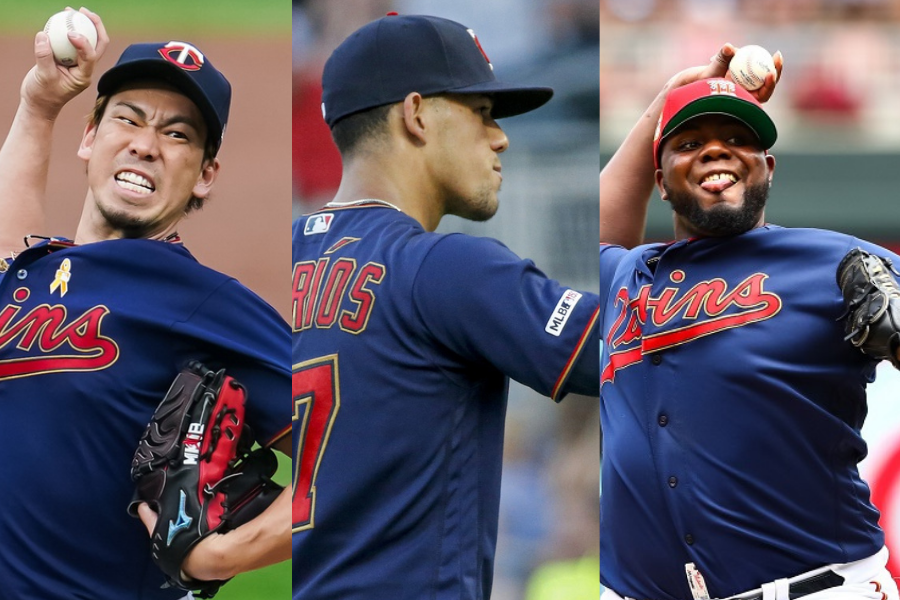 Kenta Maeda led the Twins in innings with 66 ⅔, but issued only 10 walks with zero hit-by-pitches and zero wild pitches. Maeda's control was fairly mediocre over the past two seasons in Los Angeles (3.0 BB/9), and worse as a starter than as a reliever, which might've been among reasons the Dodgers were open to moving on. The right-hander turned a corner in 2020, joining the league's elite with a 1.35 BB/9 rate that ranked fourth among all MLB starters. Maeda chopped his baseline BB percentage in half, going from 8.1% in 2018 and 8.2% in 2019 to 4.0% in his first year with the Twins. He walked one or zero batters in nine of his 11 regular-season starts, and held opponents to a ridiculous .202 on-base percentage overall. Over the course of his career he hasn't been especially prone to HBPs (one every 27 innings) or wild pitches (one every 39 innings) but we've seen neither from him in a Twins uniform. Maeda was executing on the hill from start to finish in 2020. Opponents batted .167 and slugged .231 against José Berríos' curveball. The curve has always been crucial to Berríos' arsenal, and now more than ever. This season was the first time he threw it more than any other pitch, and his results with it were better than ever. In 84 plate appearances ending in a curveball this year, Berríos allowed only two doubles and one home run. His curve produced the lowest wOBA (.205) and second-lowest average exit velocity (84.0 MPH) of any pitch during any season in his career. It also produced the highest putaway rate (26.9%), meaning he was able to complete a strikeout more than one out of every four times he threw the pitch with two strikes. In the past, Berríos' curveball has generally been quite effective but he's been susceptible to hanging it here and there. He gave up 10 home runs on curveballs in each of the past two years. The 2020 season saw him executing the offering better than ever before, and that's an excellent sign heading into his age 27 season. (The flip side is that Berríos' fastball was far worse than it's ever been – opponents batted .345 and slugged .709 against the righty's four-seamer. Fixing that will be a clear priority for him in 2021.) Michael Pineda allowed zero home runs in 26 ⅔ over five starts. Prior to joining the Minnesota Twins, Pineda was one of the most homer-prone starting pitchers in baseball. From 2015 through 2017, his 1.4 HR/9 rate ranked 12th-highest among qualified starters. He posted the same mark in his first year as a Twin, surrendering 23 long balls across 26 starts in 2019. However, it bears noting that 14 of those home runs came in his first 10 starts. During his final 16 turns last year, Pineda gave up only nine homers, and in his five starts in 2020, he didn't give up a single one. It appears that Pineda has managed to mitigate his biggest weakness. And when he's keeping the ball in the yard, he's a tremendously effective pitcher. In those past 21 starts where he has allowed only nine home runs, he has a 3.23 ERA and 9-2 record. The Twins have gone 16-5 in those games. With Pineda under contract for one more season at a highly reasonable $10 million, the Twins can feel confident taking the field behind him, as well as the other two members of this outstanding rotation-fronting trio. Whatever moves Minnesota makes to improve the starting pitching corps this winter, they'll be building upon a clear strength. MORE FROM TWINS DAILY — Latest Twins coverage from our writers — Recent Twins discussion in our forums — Follow Twins Daily via Twitter, Facebook or email
 -
LaMonte Wade Jr. is Too Interesting To Ignore
Nick Nelson replied to Matt Braun's topic in Twins Daily Front Page News
I'd take Wade Jr. over Cave -
This is legit one of the most creative and hilarious pieces I've ever read on this site. Amazing work. I'm skeptical of Eddie never entering your mind during the 12:31-5:00 block.
-
An offseason of uncertainty and intrigue lies ahead for the Minnesota Twins. Today we're excited to share and kick off our plans for wall-to-wall multimedia coverage of every key narrative, decision, and target. Welcome to the first installment of Twins Daily Offseason Live.Faithful readers and community members may have noticed that for the first time in more than a decade, we're not publishing an Offseason Handbook this year. It's a bummer, because we always love putting that passion project together, but everyone around here had their hands too full to give it the effort it deserved here in the chaos of 2020. There's also this: more than any time in memory, we simply have no idea what to expect in the coming months. That doesn't mean we aren't gonna break it down and discuss this offseason from every angle. And you'll be able to consume it in whatever format you prefer: interactive live shows, videos, podcasts, and of course written content here on the site. Offseason Live is a 10+ part series of live-streamed shows, where Twins Daily writers will discuss critical topics relating to the team's planning and strategy — payroll, arbitration, free agents, trades — on Tuesday and Thursday nights as Hot Stove season fires up. (We expect there will be more episodes after that, based on timely milestones and big news.) You can find an initial schedule below. But first, take our first episode for a spin. Last night, I hosted a game of Offseason Jeopardy and was joined by contestants Andrew Gebo, Matthew Taylor and Nash Walker. The three competed to tackle questions on offseason-related questions from our board, and we used each answer as an opportunity to discuss an element of the offseason ahead. (If nothing else, I recommend checking out the absolute magical moment that took place around the 43:15 mark.) The idea is for this first episode to serve as an overview, scratching the surface of the topics Offseason Live will be exploring much more robustly in future episodes. Here's a (tentative) look at what's ahead: Ep 1: Twins Offseason Jeopardy! (Thurs, 10/8)Ep 2: Projecting the Twins’ 2021 Payroll (Tues, 10/13)Ep 3: Stay or Go? Twins Impending Free Agents (Thurs, 10/15)Ep 4: Twins Arbitration Decisions (Tues, 10/20)Ep 5: Free Agency – Catchers & Infield (Thurs, 10/22)Ep 6: Free Agency – Outfield & DH (Tues, 10/27)Ep 7: Free Agency – Starting Pitchers (Thurs, 10/29)Ep 8: Free Agency – Relief Pitchers (Thurs, 11/5)Ep 9: Twins Trade Targets (Tues, 11/10)Ep 10: Offseason Blueprints (Thurs, 11/12)Follow us on social media to catch the live shows (they're broadcast via Twitter, Facebook, and YouTube) and subscribe to our podcast to receive the audio versions of any episodes you miss. We'll also be featuring the content and embedding the videos in articles here on the site. This is going to be a strange but exciting winter for the Twins and baseball. We're eager to take the journey with you and deliver coverage that is deeper and more expansive than ever before. The offseason is nearly here. Let's do it live. MORE FROM TWINS DAILY — Latest Twins coverage from our writers — Recent Twins discussion in our forums — Follow Twins Daily via Twitter, Facebook or email Click here to view the article
-
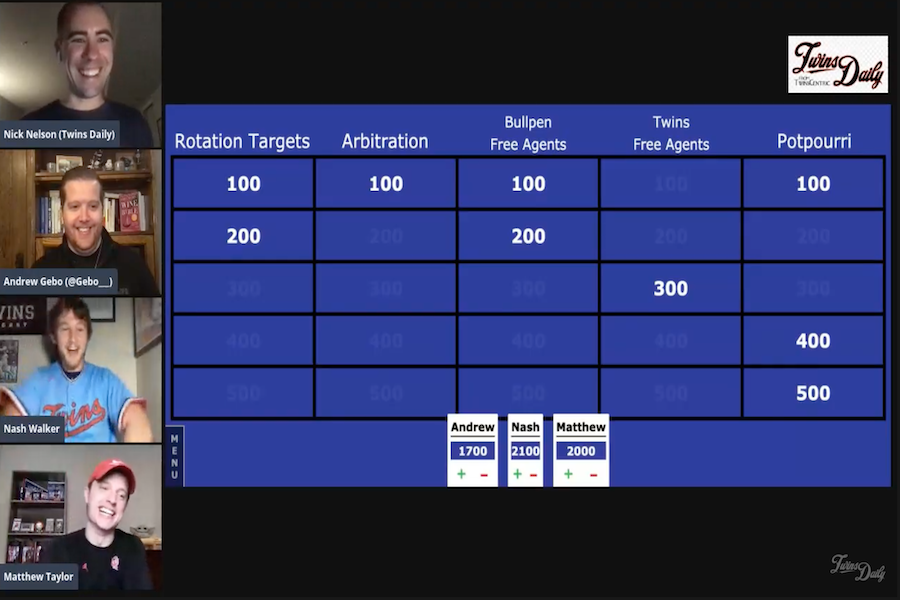 Faithful readers and community members may have noticed that for the first time in more than a decade, we're not publishing an Offseason Handbook this year. It's a bummer, because we always love putting that passion project together, but everyone around here had their hands too full to give it the effort it deserved here in the chaos of 2020. There's also this: more than any time in memory, we simply have no idea what to expect in the coming months. That doesn't mean we aren't gonna break it down and discuss this offseason from every angle. And you'll be able to consume it in whatever format you prefer: interactive live shows, videos, podcasts, and of course written content here on the site. Offseason Live is a 10+ part series of live-streamed shows, where Twins Daily writers will discuss critical topics relating to the team's planning and strategy — payroll, arbitration, free agents, trades — on Tuesday and Thursday nights as Hot Stove season fires up. (We expect there will be more episodes after that, based on timely milestones and big news.) You can find an initial schedule below. But first, take our first episode for a spin. Last night, I hosted a game of Offseason Jeopardy and was joined by contestants Andrew Gebo, Matthew Taylor and Nash Walker. The three competed to tackle questions on offseason-related questions from our board, and we used each answer as an opportunity to discuss an element of the offseason ahead. (If nothing else, I recommend checking out the absolute magical moment that took place around the 43:15 mark.) The idea is for this first episode to serve as an overview, scratching the surface of the topics Offseason Live will be exploring much more robustly in future episodes. Here's a (tentative) look at what's ahead: Ep 1: Twins Offseason Jeopardy! (Thurs, 10/8) Ep 2: Projecting the Twins’ 2021 Payroll (Tues, 10/13) Ep 3: Stay or Go? Twins Impending Free Agents (Thurs, 10/15) Ep 4: Twins Arbitration Decisions (Tues, 10/20) Ep 5: Free Agency – Catchers & Infield (Thurs, 10/22) Ep 6: Free Agency – Outfield & DH (Tues, 10/27) Ep 7: Free Agency – Starting Pitchers (Thurs, 10/29) Ep 8: Free Agency – Relief Pitchers (Thurs, 11/5) Ep 9: Twins Trade Targets (Tues, 11/10) Ep 10: Offseason Blueprints (Thurs, 11/12) Follow us on social media to catch the live shows (they're broadcast via Twitter, Facebook, and YouTube) and subscribe to our podcast to receive the audio versions of any episodes you miss. We'll also be featuring the content and embedding the videos in articles here on the site. This is going to be a strange but exciting winter for the Twins and baseball. We're eager to take the journey with you and deliver coverage that is deeper and more expansive than ever before. The offseason is nearly here. Let's do it live. MORE FROM TWINS DAILY — Latest Twins coverage from our writers — Recent Twins discussion in our forums — Follow Twins Daily via Twitter, Facebook or email
 -
My answers, for the record: 1: As of now, I guess ... no? 2: Lean towards no, but depends on his level of demand 3: Best relief arm you can reasonably acquire 4: Sure why not 5: Stay the course ... mostly
-
Another exciting season ended in bitter disappointment. Now, the Twins — and baseball at large — look ahead to an offseason of unprecedented uncertainty. As we size up the months ahead, here are the top five questions on my mind.1: Will fans be back at at Target Field in 2021? In some ways, this question is more pertinent to fans like myself than it is to the team. I missed seeing games at Target Field this year, and I know I'm not alone. Summer isn't the same without regular trips to the ballpark. I dread the idea of another one stripped of this cherished staple. But, it's also a legitimate factor for the Twins and their planning. The reality is that if ownership and the front office are anticipating another season of no fans in the stands, or severely diminished capacity, it's going to affect revenue expectations. And that is going to impact spending. We'd all like to hope and believe that 2021 will bring a return to normalcy, or something close. But the sad fact is that right now, there is no specific reason to think that'll happen. The world, and especially our country, have a lot of progress to make before packed outdoor venues are a plausible scenario. And, suddenly, spring training is less than five months away. Another key question that falls under the same largely uncontrollable pandemic-related scope: will there be minor league baseball (at least as we've come to know it)? 2: Will Nelson Cruz return? Should he? The Twins have a number of major decisions to make on players, but none loom larger than this one. Cruz has been the heart of this team. He was named Twins Most Valuable Player last year, and was a top 10 finisher for AL MVP. Both will likely be true again this year. Cruz is without question the foremost clubhouse leader, and the outward face of the franchise. (Did you happen to see any MLB postseason promo relating to the Twins?) While some might not like to hear it, there is a fairly good chance the Boomstick is not back in 2021. If it were simply a matter of picking up a reasonably-priced team option, as was the case last year, this would be a no-brainer: he'd be back. But that's not the case. Cruz is hitting the open market as a free agent, and his suitors have doubled since last time around via the universal DH. Minnesota will have far more competition for his services, especially after he put together two of the best seasons of his career here. Cruz indicated in mid-September that he hoped to stay with the Twins, but was angling for a multi-year contract. The good news is that it's now a little hard to envision him getting a guaranteed two-year deal, but the bad news is that — for the very same reason — the Twins may shy away from a competitive bidding war. As incredible and elite as Cruz looked for the vast majority of his time here, he is at an age where baseball players can lose it very quickly. And in the final weeks of the 2020 season, the 40-year-old started to look his age in a hurry. After participating in both ends of a doubleheader on September 8th, Cruz hit .154/.267/.256 with one home run, one double, and two RBIs in his final 11 games. And while he was the team's sole source of offense in the playoffs, driving in two runs on two doubles, it wasn't exactly Nelly Takeover Mode as we've come to know it. The versions of Cruz we saw during the opening series in Chicago, and the final series against Houston, were plainly and obviously very different. It's a small sample, of course, but the timing and circumstances make the drop-off impossible to ignore. Minnesota has a number of young hitters looking for opportunities, and no shortage of bats they could theoretically rotate through the DH spot next year. The front office will have to deliberate on just how hard it wants to pursue Cruz this winter. What has changed since last year? Well, in a sense, everything. (And that really should be taken into account when assessing anybody's struggles.) But when it comes strictly to the Twins and baseball, we know this: heralded hitting coach James Rowson was fished away by Miami last winter, and replaced by a relatively unknown commodity in Edgar Varela. To what extent were the offense's shortcomings attributable to this change? Personally, I have a hard time believing it's a very significant factor. But in a results-based business, Varela could be vulnerable. Assistant hitting coach Rudy Hernandez might also be on the hot seat, though that seems less likely since he was also here for the 2019 bash-fest. 5: What strategy will drive the Twins forward? This really is the ultimate question. A forum thread here at Twins Daily the other day put it well: Should the team reload, retool, or rebuild? Those three words represent very different paths, and there's an argument to be made for each. On the one hand, this has been a .600+ team over the past two seasons, winning back-to-back division championships. The Twins have the ability to keep things mostly intact if they choose to do so. It's just not a given that they will. Those aforementioned core pieces who came out flat, again, in the playoffs – Kepler, Sanó, Rosario, Polanco? They're all holdovers from the previous regime. So is Byron Buxton, whose game-changing ability on the field is as undeniable as his inability to stay on it. Not to mention Taylor Rogers, who hasn't been a consistently effective reliever since the 2019 All-Star break. To what extent is the Twins front office, under Derek Falvey and Thad Levine, committed to sticking with this group, which has yet to produce a postseason victory in about half a decade of playing together? Falvey and Levine have already begun to filter in some of their own hand-picked pieces, like Ryan Jeffers and Brent Rooker and (most recently) Alex Kirilloff. There are more on the way. Would the Twins consider shipping out ostensible building blocks they inherited, in order to create paths for their own guys? It really comes down to the big-picture strategy. Either the Twins are going to stay the course, making minor moves on the fringes and hoping it all comes together for this (clearly capable) nucleus, or shake things up in a big way. That choice will dictate items two through four on this list, and it could well be dictated by the first one. If the Twins see an unfavorable economic outlook on the horizon, and want to take a more frugal approach in 2021 – giving Cruz's at-bats to the up-and-comers, passing on major offseason additions, allowing Varela more time to settle in as hitting instructor – that can all be explained reasonably. It wouldn't be a bad strategy on its own merits, financial implications aside. At the same time, this current team has played at a 100-win pace over a long period, and the postseason sample – while utterly gut-wrenching – is minuscule. There's also evidence that almost every regular was hampered by injury as things unraveled (although, this recurrent theme is not exactly a point in favor of the status quo). As Falvey himself put it, the Twins have some "soul-searching" to do, and they'll need to do it while swimming through an ocean of unknowns. What to expect in 2021? What to expect in December? What to expect next week? It's going to be an interesting several months ahead. MORE FROM TWINS DAILY — Latest Twins coverage from our writers — Recent Twins discussion in our forums — Follow Twins Daily via Twitter, Facebook or email Click here to view the article
-
 1: Will fans be back at at Target Field in 2021? In some ways, this question is more pertinent to fans like myself than it is to the team. I missed seeing games at Target Field this year, and I know I'm not alone. Summer isn't the same without regular trips to the ballpark. I dread the idea of another one stripped of this cherished staple. But, it's also a legitimate factor for the Twins and their planning. The reality is that if ownership and the front office are anticipating another season of no fans in the stands, or severely diminished capacity, it's going to affect revenue expectations. And that is going to impact spending. We'd all like to hope and believe that 2021 will bring a return to normalcy, or something close. But the sad fact is that right now, there is no specific reason to think that'll happen. The world, and especially our country, have a lot of progress to make before packed outdoor venues are a plausible scenario. And, suddenly, spring training is less than five months away. Another key question that falls under the same largely uncontrollable pandemic-related scope: will there be minor league baseball (at least as we've come to know it)? 2: Will Nelson Cruz return? Should he? The Twins have a number of major decisions to make on players, but none loom larger than this one. Cruz has been the heart of this team. He was named Twins Most Valuable Player last year, and was a top 10 finisher for AL MVP. Both will likely be true again this year. Cruz is without question the foremost clubhouse leader, and the outward face of the franchise. (Did you happen to see any MLB postseason promo relating to the Twins?) While some might not like to hear it, there is a fairly good chance the Boomstick is not back in 2021. If it were simply a matter of picking up a reasonably-priced team option, as was the case last year, this would be a no-brainer: he'd be back. But that's not the case. Cruz is hitting the open market as a free agent, and his suitors have doubled since last time around via the universal DH. Minnesota will have far more competition for his services, especially after he put together two of the best seasons of his career here. Cruz indicated in mid-September that he hoped to stay with the Twins, but was angling for a multi-year contract. The good news is that it's now a little hard to envision him getting a guaranteed two-year deal, but the bad news is that — for the very same reason — the Twins may shy away from a competitive bidding war. As incredible and elite as Cruz looked for the vast majority of his time here, he is at an age where baseball players can lose it very quickly. And in the final weeks of the 2020 season, the 40-year-old started to look his age in a hurry. After participating in both ends of a doubleheader on September 8th, Cruz hit .154/.267/.256 with one home run, one double, and two RBIs in his final 11 games. And while he was the team's sole source of offense in the playoffs, driving in two runs on two doubles, it wasn't exactly Nelly Takeover Mode as we've come to know it. The versions of Cruz we saw during the opening series in Chicago, and the final series against Houston, were plainly and obviously very different. It's a small sample, of course, but the timing and circumstances make the drop-off impossible to ignore. Minnesota has a number of young hitters looking for opportunities, and no shortage of bats they could theoretically rotate through the DH spot next year. The front office will have to deliberate on just how hard it wants to pursue Cruz this winter. https://twitter.com/AaronGleeman/status/1311708021907693568 3: What is this roster's biggest need? Heading into the offseason a year ago, the Twins' top priorities were fairly well understood: they needed a front-end starting pitcher, and a star-caliber acquisition to build upon their momentum. Many of us assumed those would be one in the same. Instead, Minnesota ended up going two different routes, trading for Kenta Maeda and signing Josh Donaldson. Now, they have already given up one of their premier young talents and committed $23 million over the next three years, for long-term fixtures. When you add in the likelihood of dialed back spending, it's unlikely the Twins will venture quite as far into the aggressive ends of the market this offseason. Besides, it's tough to pinpoint exactly what they need in order to take another step forward. Could they use another high-end starting pitcher? Sure, but it's not the glaring hole it was a year ago. The Twins were one of the best pitching teams in the league, and their starters were lights-out against Houston. I'd trust Maeda, José Berríos and Michael Pineda — all due back in '21 — as my top three in the rotation once again. The lineup underperformed, but there aren't obvious opportunities to resurrect it through offseason tinkering. Mainly they just need guys to stay healthy and get back to producing. I don't know that any starting position player is likely to be replaced from this year's (albeit rarely seen) optimal lineup, with the possible exception of Eddie Rosario. Bench depth, bullpen arms, back-end starters ... all areas that the Twins are likely to address. But as of now, it isn't clear where they would aim to make a true impact addition. 4: Should Edgar Varela be back as hitting coach? There's no way around it: Every Twins hitter took a significant step back in 2020, with performances ranging between mildly disappointing and confidence-shattering. The team's OPS dropped by nearly 100 points. Several mainstays never managed to navigate out of season-long slumps, and in the postseason, Houston's pitching picked Minnesota's long-tenured core apart: https://twitter.com/NickNelsonMN/status/1311430180745949184 What has changed since last year? Well, in a sense, everything. (And that really should be taken into account when assessing anybody's struggles.) But when it comes strictly to the Twins and baseball, we know this: heralded hitting coach James Rowson was fished away by Miami last winter, and replaced by a relatively unknown commodity in Edgar Varela. To what extent were the offense's shortcomings attributable to this change? Personally, I have a hard time believing it's a very significant factor. But in a results-based business, Varela could be vulnerable. Assistant hitting coach Rudy Hernandez might also be on the hot seat, though that seems less likely since he was also here for the 2019 bash-fest. 5: What strategy will drive the Twins forward? This really is the ultimate question. A forum thread here at Twins Daily the other day put it well: Should the team reload, retool, or rebuild? Those three words represent very different paths, and there's an argument to be made for each. On the one hand, this has been a .600+ team over the past two seasons, winning back-to-back division championships. The Twins have the ability to keep things mostly intact if they choose to do so. It's just not a given that they will. Those aforementioned core pieces who came out flat, again, in the playoffs – Kepler, Sanó, Rosario, Polanco? They're all holdovers from the previous regime. So is Byron Buxton, whose game-changing ability on the field is as undeniable as his inability to stay on it. Not to mention Taylor Rogers, who hasn't been a consistently effective reliever since the 2019 All-Star break. To what extent is the Twins front office, under Derek Falvey and Thad Levine, committed to sticking with this group, which has yet to produce a postseason victory in about half a decade of playing together? Falvey and Levine have already begun to filter in some of their own hand-picked pieces, like Ryan Jeffers and Brent Rooker and (most recently) Alex Kirilloff. There are more on the way. Would the Twins consider shipping out ostensible building blocks they inherited, in order to create paths for their own guys? It really comes down to the big-picture strategy. Either the Twins are going to stay the course, making minor moves on the fringes and hoping it all comes together for this (clearly capable) nucleus, or shake things up in a big way. That choice will dictate items two through four on this list, and it could well be dictated by the first one. If the Twins see an unfavorable economic outlook on the horizon, and want to take a more frugal approach in 2021 – giving Cruz's at-bats to the up-and-comers, passing on major offseason additions, allowing Varela more time to settle in as hitting instructor – that can all be explained reasonably. It wouldn't be a bad strategy on its own merits, financial implications aside. At the same time, this current team has played at a 100-win pace over a long period, and the postseason sample – while utterly gut-wrenching – is minuscule. There's also evidence that almost every regular was hampered by injury as things unraveled (although, this recurrent theme is not exactly a point in favor of the status quo). As Falvey himself put it, the Twins have some "soul-searching" to do, and they'll need to do it while swimming through an ocean of unknowns. What to expect in 2021? What to expect in December? What to expect next week? It's going to be an interesting several months ahead. MORE FROM TWINS DAILY — Latest Twins coverage from our writers — Recent Twins discussion in our forums — Follow Twins Daily via Twitter, Facebook or email
 -
It didn't matter that the names and faces had changed. It didn't matter that they were facing a clearly inferior team, with home field advantage, in a series where two mere victories would've meant advancing. It didn't matter that they had just about everything going in their favor. At the end of the day, the Minnesota Twins did the same thing they've done in their past eight postseason appearances: came up short with a lackluster performance that screamed 'the moment is too big.'Over the past two regular seasons, Minnesota has gone 137-85, winning 62% of their games and capturing back-to-back division titles. In the postseason, those same teams have gone 0-5, extending the franchise's streak of postseason futility to 18 games while rarely even making the Yankees or Astros or sweat. The Twins have trailed almost constantly in all of these games. They are not dramatic affairs. These teams aren't getting outplayed by high-caliber opponents that are stepping up. It's bad baseball and a chronic deluge of self-inflicted pain. One thing that was different this time around was the quality of starting pitching: Kenta Maeda and José Berríos both brought it on the big stage. Nearly everything else, however, was all too familiar. A lineup that went completely silent, with key figures disappearing. Defenders failing to execute in critical spots. Normally reliable relievers lapsing at the worst possible moments. Yes, the Twins had their share of misfortune, with Josh Donaldson unavailable for the series and Byron Buxton unable to start the second game. That's certainly been a recurring theme in their endless playoff struggles. But good clubs rise up and overcome. I mean, the Houston team they faced off against in this latest series was without its bona fide ace and single most valuable postseason asset in Justin Verlander. Here are just a few of the characteristically vexing blunders I counted in two losses against Houston: Tyler Duffey, who never allowed four baserunners in an appearance all season, gave up three hits and a walk (plus the game-tying run) in his one inning of work Tuesday. He finished his outing by issuing a leadoff walk in the eighth to Jose Altuve, who posted a .629 OPS in the regular season. Duffey now has a 2.31 ERA and 0.94 WHIP ratio in 80 regular-season appearances over the past two years. In four postseason appearances: 3 ⅔ IP, 6 H, 5 ER, 3 BB.Jorge Polanco, a 2019 All-Star whose game has taken a massive step backward this year, was especially flat. He went 1-for-7 with a single at the plate, and committed the most costly gaffe of the series when he failed to cleanly deliver a throw to Luis Arraez 15 feet away at second base, leading a decisive three-run inning for the Astros.Sergio Romo, a heralded postseason performer who's generally been effective for the Twins, was on the hill for said three-run inning. While Polanco's error didn't help him, Romo also didn't help himself. He gave up two hits and a walk while recording just two outs, and the walk brought home the go-ahead run (for the first time in MLB postseason history – another ignominious record for the Twins). Oh, and it was the weak-hitting Altuve who drew that walk, his second of the game.Eddie Rosario, known for his big-game theatrics and clutch moments, went 0-for-7 at the plate before getting himself ejected in the sixth inning of Game 2. Batting fourth and fifth in the two contests, he was a total nonfactor at the heart of the order. It's likely that we've seen the last of Rosario in a Twins uniform, and if so, his career in Minnesota ends on a very sour note.Even Rocco Baldelli – whom I hold in high esteem as a manager – had a tough series. It's easy to judge in hindsight, but nearly every questionable decision he made failed to work out. Despite both starting pitchers looking stellar, he went to the bullpen early in each game – relievers couldn't hold ties or leads. He went through several relievers twice without ever turning to Tyler Clippard or Matt Wisler, who were among his most effective all year. He pinch-hit Mitch Garver for Ryan Jeffers early in Game 1, then pulled Garver for Alex Avila immediately afterward, leading to the eventuality of Willians Astudillo coming up as the tying run in the bottom of the ninth. These were just a few notable lowlights from another collectively uninspiring and underwhelming all-around performance. The Twins failed to capitalize on any of the numerous mistake pitches that came their way, went 1-for-10 with runners in scoring position and stranded 13 men on base. They left the bases loaded without scoring in the first inning of both games. They ran into multiple outs on the base paths, squandering opportunities that were in short supply. Nobody other than Nelson Cruz drove in a run. The Twins made things so easy on Houston that Dusty Baker almost never had to go to his bullpen, using only six total pitchers as long relievers cruised through successful innings. These are just the indicators of a team that wasn't up to the task, and sadly that's been a perpetual reality for the Minnesota Twins in October (or, in this case, late September). It's unfortunate that the current coaches and players have to bear the weight of 18 consecutive postseason losses spread across 17 years, but they've done their part in contributing to it. So it goes. There's always next year. Until then we can only sit and wonder how this cursed run of impossible ineptitude keeps on snowballing, and when it will ever end. MORE FROM TWINS DAILY — Latest Twins coverage from our writers — Recent Twins discussion in our forums — Follow Twins Daily via Twitter, Facebook or email Click here to view the article
-
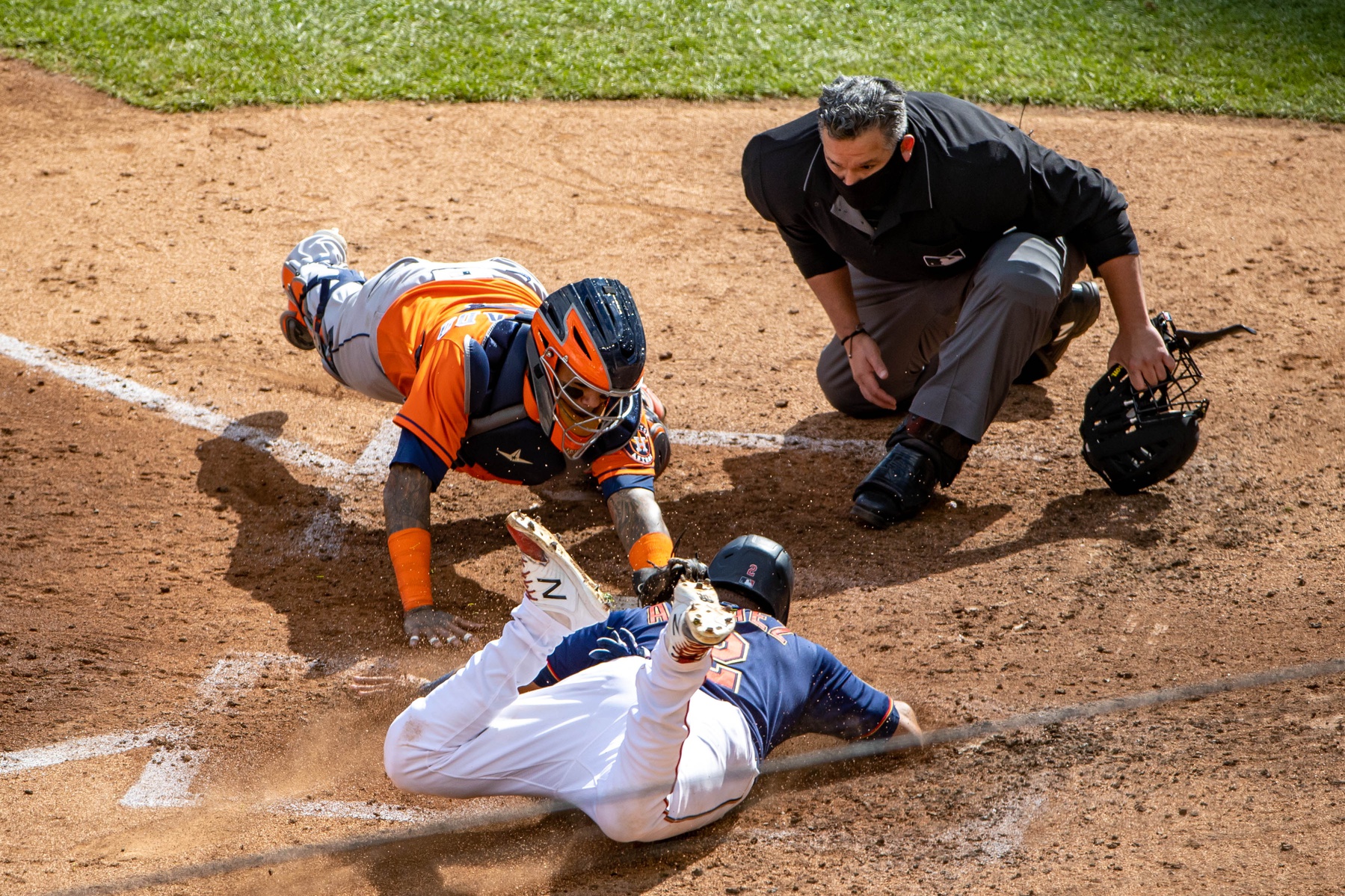 Over the past two regular seasons, Minnesota has gone 137-85, winning 62% of their games and capturing back-to-back division titles. In the postseason, those same teams have gone 0-5, extending the franchise's streak of postseason futility to 18 games while rarely even making the Yankees or Astros or sweat. The Twins have trailed almost constantly in all of these games. They are not dramatic affairs. These teams aren't getting outplayed by high-caliber opponents that are stepping up. It's bad baseball and a chronic deluge of self-inflicted pain. One thing that was different this time around was the quality of starting pitching: Kenta Maeda and José Berríos both brought it on the big stage. Nearly everything else, however, was all too familiar. A lineup that went completely silent, with key figures disappearing. Defenders failing to execute in critical spots. Normally reliable relievers lapsing at the worst possible moments. Yes, the Twins had their share of misfortune, with Josh Donaldson unavailable for the series and Byron Buxton unable to start the second game. That's certainly been a recurring theme in their endless playoff struggles. But good clubs rise up and overcome. I mean, the Houston team they faced off against in this latest series was without its bona fide ace and single most valuable postseason asset in Justin Verlander. Here are just a few of the characteristically vexing blunders I counted in two losses against Houston: Tyler Duffey, who never allowed four baserunners in an appearance all season, gave up three hits and a walk (plus the game-tying run) in his one inning of work Tuesday. He finished his outing by issuing a leadoff walk in the eighth to Jose Altuve, who posted a .629 OPS in the regular season. Duffey now has a 2.31 ERA and 0.94 WHIP ratio in 80 regular-season appearances over the past two years. In four postseason appearances: 3 ⅔ IP, 6 H, 5 ER, 3 BB. Jorge Polanco, a 2019 All-Star whose game has taken a massive step backward this year, was especially flat. He went 1-for-7 with a single at the plate, and committed the most costly gaffe of the series when he failed to cleanly deliver a throw to Luis Arraez 15 feet away at second base, leading a decisive three-run inning for the Astros. Sergio Romo, a heralded postseason performer who's generally been effective for the Twins, was on the hill for said three-run inning. While Polanco's error didn't help him, Romo also didn't help himself. He gave up two hits and a walk while recording just two outs, and the walk brought home the go-ahead run (for the first time in MLB postseason history – another ignominious record for the Twins). Oh, and it was the weak-hitting Altuve who drew that walk, his second of the game. Eddie Rosario, known for his big-game theatrics and clutch moments, went 0-for-7 at the plate before getting himself ejected in the sixth inning of Game 2. Batting fourth and fifth in the two contests, he was a total nonfactor at the heart of the order. It's likely that we've seen the last of Rosario in a Twins uniform, and if so, his career in Minnesota ends on a very sour note. Even Rocco Baldelli – whom I hold in high esteem as a manager – had a tough series. It's easy to judge in hindsight, but nearly every questionable decision he made failed to work out. Despite both starting pitchers looking stellar, he went to the bullpen early in each game – relievers couldn't hold ties or leads. He went through several relievers twice without ever turning to Tyler Clippard or Matt Wisler, who were among his most effective all year. He pinch-hit Mitch Garver for Ryan Jeffers early in Game 1, then pulled Garver for Alex Avila immediately afterward, leading to the eventuality of Willians Astudillo coming up as the tying run in the bottom of the ninth. https://twitter.com/cjzer0/status/1311378905811628033 These were just a few notable lowlights from another collectively uninspiring and underwhelming all-around performance. The Twins failed to capitalize on any of the numerous mistake pitches that came their way, went 1-for-10 with runners in scoring position and stranded 13 men on base. They left the bases loaded without scoring in the first inning of both games. They ran into multiple outs on the base paths, squandering opportunities that were in short supply. Nobody other than Nelson Cruz drove in a run. The Twins made things so easy on Houston that Dusty Baker almost never had to go to his bullpen, using only six total pitchers as long relievers cruised through successful innings. These are just the indicators of a team that wasn't up to the task, and sadly that's been a perpetual reality for the Minnesota Twins in October (or, in this case, late September). It's unfortunate that the current coaches and players have to bear the weight of 18 consecutive postseason losses spread across 17 years, but they've done their part in contributing to it. So it goes. There's always next year. Until then we can only sit and wonder how this cursed run of impossible ineptitude keeps on snowballing, and when it will ever end. MORE FROM TWINS DAILY — Latest Twins coverage from our writers — Recent Twins discussion in our forums — Follow Twins Daily via Twitter, Facebook or email
 -
Week in Review: Stealing the Central
Nick Nelson replied to Nick Nelson's topic in Twins Daily Front Page News
Eh, you could make that argument solely on the basis of the 2020 sample but I'm gonna lean on track record here. Both are 26, but Berrios has made 115 MLB starts and thrown 659 innings compared to 23 and 178 for Valdez. When you get to the postseason, experience matters (as we've seen a few times).- 16 replies
-
- 2
-

-
- kenta maeda
- luis arraez
- (and 2 more)
-
They got plenty of help from a White Sox team that fell flat on its face, but the Minnesota Twins did their part as well, posting a winning week to rally from behind and secure their second consecutive AL Central title. Up next: a postseason matchup against the Houston Astros at Target Field. Weekly Snapshot: Mon, 9/21 through Sun, 9/27 *** Record Last Week: 3-2 (Overall: 36-24) Run Differential Last Week: -1 (Overall: +55) Standing: 1st Place in AL Central Bomba Counter: 91 Three weeks ago in this column, when I was recapping a week in which Byron Buxton and Josh Donaldson both returned from the Injured List and immediately made big impacts, I wrote: "It's crystal-clear that nothing is more important to the Twins' chances of a deep postseason run than keeping Donaldson and Buxton healthy and effective." Things were shaping up well on this front heading into the final weekend of the regular season. Then, suddenly, they weren't. On Friday night, Donaldson exited following his first at-bat, which ended with him gingerly stepping out of the batter's box after hitting a pop-up to right field. Later in the game, Buxton took a wayward fastball to the helmet, ending his night. Donaldson was diagnosed with a right calf cramp. Buxton was said to be experiencing mild concussion symptoms. Neither played on Saturday or Sunday, and their statuses for the first round of the postseason are up in the air. LOOKING AHEAD We know who the Twins are planning to throw in all three games. For Houston, it's less clear. The absence of Justin Verlander, who underwent Tommy John surgery, looms large and leaves a void after the Game 1 starter Greinke. It sounds like Lance McCullers Jr. would likely take the hill for a Game 3 if needed. As for Game 2? Right-hander Jose Urquidy, who started Friday, is a possibility. But given the Twins' struggles against lefties this year, it wouldn't surprise me to see Dusty Baker and the Astros opt for southpaw Framber Valdez, who last started Tuesday in Seattle. Suffice to say that no matter which direction Houston goes, it'll be Minnesota with the on-paper advantage in every pitching match-up. TUESDAY, 9/29: AL Wild Card, Game 1 vs. Houston – RHP Kenta Maeda v. RHP Zack Greinke WEDNESDAY, 9/30: AL Wild Card, Game 2 vs. Houston – RHP José Berríos v. TBD THURSDAY, 10/1: AL Wild Card Game 3 (if necessary) vs. Houston – RHP Michael Pineda v. TBD Catch Up On Twins Daily Game Recaps Game 56 | MIN 5, DET 4: Kepler Delivers Walk-Off Hit, Twins Half Game Back in DivisionGame 57 | MIN 7, DET 6: Jake Cave Rakes, Twins Take Division LeadGame 58 | CIN 7, MIN 2: Twins Lose Game, Donaldson, BuxtonGame 59 | MIN 7, CIN 3: Arráez and ShineGame 60 | CIN 5, MIN 3: Twins Lose In Extras, Win DivisionMORE FROM TWINS DAILY — Latest Twins coverage from our writers — Recent Twins discussion in our forums — Follow Twins Daily via Twitter, Facebook or email Click here to view the article
- 16 replies
-
- 2
-
-
- kenta maeda
- luis arraez
- (and 2 more)
-
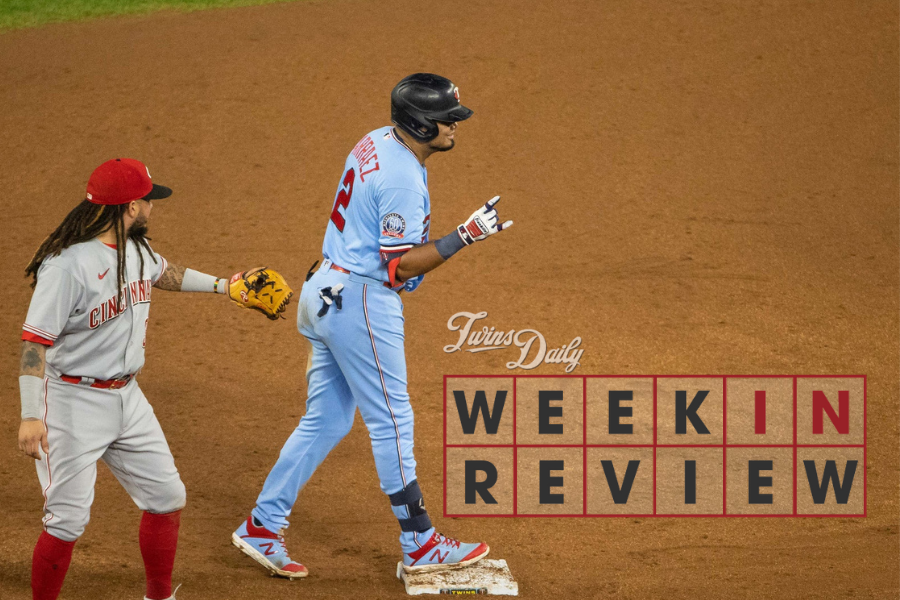 Weekly Snapshot: Mon, 9/21 through Sun, 9/27 *** Record Last Week: 3-2 (Overall: 36-24) Run Differential Last Week: -1 (Overall: +55) Standing: 1st Place in AL Central Bomba Counter: 91 Three weeks ago in this column, when I was recapping a week in which Byron Buxton and Josh Donaldson both returned from the Injured List and immediately made big impacts, I wrote: "It's crystal-clear that nothing is more important to the Twins' chances of a deep postseason run than keeping Donaldson and Buxton healthy and effective." Things were shaping up well on this front heading into the final weekend of the regular season. Then, suddenly, they weren't. On Friday night, Donaldson exited following his first at-bat, which ended with him gingerly stepping out of the batter's box after hitting a pop-up to right field. Later in the game, Buxton took a wayward fastball to the helmet, ending his night. Donaldson was diagnosed with a right calf cramp. Buxton was said to be experiencing mild concussion symptoms. Neither played on Saturday or Sunday, and their statuses for the first round of the postseason are up in the air. The good news is that neither injury seems too serious on the surface, and Rocco Baldelli has expressed optimism that both players could be available on Tuesday. The bad news is ... well, where to begin? Baldelli has had a tendency to downplay injury severity all year (and why wouldn't he in this case?). The specific nature of each injury is concerning due to each player's history (Donaldson with his calves, Buxton with concussions). And most of all, it's just an extremely short window – these incidents occurred four days before an intense playoff gauntlet with no off days. All we can do is wait and see. In the meantime, there were plenty of other developments worth tracking in the final week of the regular season, so let's break them down, and then look ahead to the coming playoff tilt against the Astros. HIGHLIGHTS Minnesota's chances of repeating as division champs looked bleak when they left the south side of Chicago 10 days ago, having dropped three of four and cost themselves a tiebreaker against the White Sox. At that time, the odds were heavily tilted against the Twins, and even a week ago, as I mapped out scenarios for the final seven days, Chicago was in the driver's seat. Ultimately, the Sox played poorly enough that Minnesota had to merely take care of business. The Twins did just that, finishing 3-2 at home against the Tigers and Reds while Chicago went 1-6. As a result, the Twins won the American League Central despite dropping the final series against Cincinnati. This marks Minnesota's first time capturing back-to-back division titles since exactly one decade ago, when they did it in 2009 and 2010. Those two teams had a collective winning percentage of .557; the 2019/20 Twins have a collective winning percentage of .617. Now, they'll host two or three games of the AL Wild Card Series at Target Field, where the Twins went 24-6 in the regular season. The visiting Houston Astros, meanwhile, went 9-23 away from MInute Maid, and finished two games below .500 overall. It would've been hard to hand-pick a better outcome for Minnesota, in theory, but now they need to go out and slay their postseason demons under these relatively favorable circumstances. They'll have a decisive pitching advantage in Game 1, which wouldn't have been the case under any other match-up scenario. Zack Greinke is good, but Kenta Maeda's been much better, and on Wednesday, Minnesota's No. 1 starter made his final regular-season start in preparation. While the results weren't great by his own high standards – in six innings, he allowed three runs, matching his highest total of the season – Maeda still looked plenty good while picking up the win and improving to 6-1. He struck out nine and walked none, inducing a season-high 22 swinging strikes. In his final two starts of the season, Maeda struck out 17 men with zero walks and nine hits allowed over 11 innings. He's locked in and ready to go, and has earned plenty of confidence. Maeda is unlikely to shrink in the moment because, as our Cody Christie wrote last week, he's no stranger to October. Just as Maeda is critical to the rotation's postseason success, Taylor Rogers is a vital bullpen crux. His struggles throughout the season have been a primary source of anxiety for fans, already thinking ahead (and backward) to late-game lapses in the playoffs. Nerves flared up again on Tuesday when Rogers came in to pitch the 10th inning of a tie game and allowed Detroit to pull ahead, singling in the auto-runner from second. It wasn't a terrible outing on its own merit, but another spot where the previously infallible closer failed to deliver. Seeking to feed his relief fireman some confidence, Baldelli threw Rogers back into the heat on Saturday, bringing him into the seventh inning of a three-run game with two on, and one out. Once again, Rogers got nipped, yielding an RBI single (on an 0-2 count) and then hitting Aristides Aquino with a pitch (on a 1-2 count) to load the bases. From there, the lefty buckled down, retiring four straight batters with a strikeout and three grounders. It was a much-needed glimmer of positivity for Rogers, who threw 75% strikes in his two appearances last week after an oddly erratic showing on the previous road trip. He's restoring some faith, although in terms of leverage Baldelli should pretty clearly have him pegged behind Tyler Duffey, who finished out Saturday's victory in dominant fashion (1.1 IP, 0 H, 0 BB, 3 K). On offense, although the losses of Donaldson and Buxton were the banner stories for the weekend, one major gain cannot be overlooked: Luis Arráez is back and looking as good as ever. He went off in his return on Saturday night, going 4-for-4 with three doubles, and followed with two more hits on Sunday. The second baseman was in vintage form, slashing the ball with lightning-quick wrists and driving liners in all direction, raising his final batting average to .321. Most critically, he was running hard, with no apparent limitations stemming from his knee or ankle ailments. Getting Arráez's bat back is huge with a couple of Minnesota's other key left-handed hitters starting to find their strokes in timely fashion. Max Kepler snapped out of his prolonged slump last Sunday, and kept it rolling by going 6-for-20 with a homer, two doubles, and a walk-off single in the final week. Meanwhile, Eddie Rosario went 6-for-19 with a homer and a double, striking out just twice in 22 plate appearances. With the Astros figuring to throw at least two right-handed starters in the Wild Card round, and featuring a RH-heavy bullpen, it's good to see Minnesota's lefty sticks finishing in a good place. LOWLIGHTS While Maeda was plenty sharp in his final tune-up, the two other projected first-round starters were less so. Michael Pineda saw his control go amiss on Saturday night, when he issued a season-high three walks while laboring through four innings against Cincinnati. He later (hilariously) addressed the uncharacteristic hiccup by referring to himself in the third-person: "I had a little bit of frustration with me because it’s not Big Mike, you know. Big Mike loves to attack the zone." The previous night, José Berríos saw his hot streak (4-0 with a 2.14 ERA in six starts) come to an end as he coughed up four runs in five innings. Facing the Reds, he surrendered multiple home runs for the first time all year. Neither Pineda nor Berríos looked all that bad necessarily, but it isn't ideal to see two of their greatest strengths – throwing strikes and keeping the ball in the park, respectively – fall through at this stage. The margin for error next time out will likely be razor-thin. On that note, the pitching staff would benefit from a bit of breathing room, but this will depend on an inconsistent lineup finding itself in a hurry. While lefty swingers like Arráez, Kepler and Rosario are carrying the load right now, it's difficult to envision the Twins exerting their offensive force against Houston without key bats from the right side stepping up. On this front, we haven't been seeing many encouraging signs. Donaldson and Buxton are total question marks. Nelson Cruz, who was a trendy MVP candidate for much of the season, saw his performance tail off in a major way down the stretch, as he hit just .171 with one home run and two RBIs in his final 10 games, while missing time in the middle due to a knee issue. In three starts over the past week, Cruz went 1-for-10 with five strikeouts. Given the injury implications and his age, this can't be treated as a passing slump and dismissed as such. With that said, Cruz's skid has nothing on that of Miguel Sanó, who was a major drag on the lineup throughout September after carrying it at times in August. Sanó finished 2-for-16 with zero extra-base hits last week, rarely putting together decent at-bats. In September, he slashed .148/.178/.383 with 39 strikeouts and three walks in 84 plate appearances. Hideous. Mitch Garver had three hits in 11 plate appearances, including a monster home run and a crushed double, but he also struck out seven times. He hasn't drawn a walk since returning from IL and finishes with a .167/.247/.264 line on the season coming off his Silver Slugger campaign. That Ryan Jeffers starts Game 1 is basically a given at this point – the question is whether Garver will get any starts. Minnesota has a top-notch pitching corps, and there are a few promising trends on offense, but seeing all these pivotal hitters in such bad ways heading into the postseason is alarming to say the least. TRENDING STORYLINE It's time for playoff baseball! Plenty of narratives will be at play as the Astros travel to Target Field for a first-ever postseason meeting between these two clubs. Houston is returning to the national stage for the first time since becoming universally villainized by the revelation of their cheating scandal last winter. It's safe to say they'll have plenty more than just Twins fans cheering for their defeat. Meanwhile, the Twins are haunted by the specter of 16 consecutive postseason losses. They'll be hoping to vanquish it against the defending AL champs, in an unprecedented best-of-three Wild Card round, aiming to move on and face the winner of A's/White Sox in the bubble. Strangeness aside, it's about to get real. LOOKING AHEAD We know who the Twins are planning to throw in all three games. For Houston, it's less clear. The absence of Justin Verlander, who underwent Tommy John surgery, looms large and leaves a void after the Game 1 starter Greinke. It sounds like Lance McCullers Jr. would likely take the hill for a Game 3 if needed. As for Game 2? Right-hander Jose Urquidy, who started Friday, is a possibility. But given the Twins' struggles against lefties this year, it wouldn't surprise me to see Dusty Baker and the Astros opt for southpaw Framber Valdez, who last started Tuesday in Seattle. Suffice to say that no matter which direction Houston goes, it'll be Minnesota with the on-paper advantage in every pitching match-up. TUESDAY, 9/29: AL Wild Card, Game 1 vs. Houston – RHP Kenta Maeda v. RHP Zack Greinke WEDNESDAY, 9/30: AL Wild Card, Game 2 vs. Houston – RHP José Berríos v. TBD THURSDAY, 10/1: AL Wild Card Game 3 (if necessary) vs. Houston – RHP Michael Pineda v. TBD Catch Up On Twins Daily Game Recaps Game 56 | MIN 5, DET 4: Kepler Delivers Walk-Off Hit, Twins Half Game Back in Division Game 57 | MIN 7, DET 6: Jake Cave Rakes, Twins Take Division Lead Game 58 | CIN 7, MIN 2: Twins Lose Game, Donaldson, Buxton Game 59 | MIN 7, CIN 3: Arráez and Shine Game 60 | CIN 5, MIN 3: Twins Lose In Extras, Win Division MORE FROM TWINS DAILY — Latest Twins coverage from our writers — Recent Twins discussion in our forums — Follow Twins Daily via Twitter, Facebook or email
 -
With just one weekend left in the 2020 regular season, the Minnesota Twins are right where they want to be. They're 13 games above .500, on track for the division title, and all but assured home field advantage in the postseason's first round. It's not by accident. Many of the driving forces in this team's success – and bright outlook – are directly attributable to the front office's masterful execution of a grand plan.What we're seeing this year is the same thing we saw last year: an elite team, loaded with talent and performing at an extraordinarily high level. There's plenty of credit to go around, but it's hard to ignore the direct impact of moves made by Derek Falvey and Thad Levine over the past couple years. And I'm talking beyond their broader work building out the organization's infrastructure, and investing in innovation. Here are five decisions that loom large as the Twins charge toward the postseason: 1. Hiring Rocco Baldell as manager and Wes Johnson as pitching coach. The entire coaching staff seems quite effective, really, but these two stand out. Baldelli was the deserving recipient of AL Manager of the Year in 2019, his first season at the helm, and he's in the running for it again. The Twins definitely took a chance on Rocco, replacing a local legend in Paul Molitor with a total outsider who became the youngest skipper in the game. Their faith has been validated at every level. Baldelli is a brilliant tactical manager with tremendous strategic vision, and his ability to connect with players – stuffing out drama and constantly maintaining an even-keeled vibe – is uncanny. Selecting Johnson as pitching coach required a leap of faith on its own for the Twins. He became the first person ever to jump into the major-league role straight of out college, and Wes brought with him new-age philosophies. He was known at Arkansas as an instructor who could truly elevate performance, and he has translated this knack to the highest level. Roster-building has of course played a part (and we'll get to that) but under Johnson, Twins pitchers are throwing harder, dominating more, and consistently reaching their potential. 2. Building a power bullpen. A deep and dominant bullpen was key to the World Series run from Derek Falvey's Cleveland Indians in 2016. When he took over the Twins afterward, the relief corps he inherited was a far cry. But over the course of these past four years, Minnesota's bullpen has been gradually upgraded and enhanced. The past year alone has seen a dramatic overhaul; consider that their Opening Day bullpen in 2019 consisted of Trevor May, Taylor Rogers, Blake Parker, Trevor Hildenberger, Ryne Harper, Martín Pérez, and Adalberto Mejía. This radically reconstructed Twins bullpen is currently tied with Tampa Bay for first in the majors in fWAR. They're fifth in ERA, sixth in FIP, and fifth in strikeout rate. It's a top-tier unit by almost any measure, helping the Twins weather frequent bullpen games without much issue. The origin stories vary for this collection of standouts, but each one has the front office's fingerprints all over it. There was Sergio Romo, acquired at the deadline last year and re-signed as a free agent during the offseason. Caleb Thielbar was more or less talked out of retirement, and he has come back more effective than ever before. Matt Wisler was claimed off waivers, and has been reinvented as an overpowering weapon with his unsolvable slider. Jorge Alcala came over in a 2018 trade. Tyler Clippard was plucked from the rival Indians as a free agent. Tyler Duffey was an incumbent who finally unlocked his potential. It all adds up to a bullpen that's been a phenomenal asset, and a crucial contributor to the team's success. 3. Signing Nelson Cruz I think we can safely say it's the best free agent signing in franchise history. (A sentimental fan might point to Jack Morris, but I'd heartily disagree.) Cruz signed for a relatively modest sum two offseasons ago, and immediately became the heart and soul of this team, with his likability and leadership qualities somehow overshadowing back-to-back MVP-caliber performances on the field. We're already seeing the impact of Josh Donaldson, who became the front office's new marquee signing over the winter, and I hope we'll continue to see it for years to come. But nothing can contend right now with the impact of Cruz. He's been an absolute revelation. 4. Drafting Ryan Jeffers Many outside observers considered it a reach when the Twins used the 59th overall pick in 2018 to select Jeffers, a slugging college catcher out of UNC-Wilmington whose defensive skills were generally considered suspect. The Twins saw something different, and two years later they've been proven 100% correct. Despite having zero experience above Double-A, and having had no opportunity to play in real games this summer, Jeffers stepped in after Mitch Garver got hurt and has looked like a natural. His smoothness and confidence behind the plate are shocking for a 23-year-old rookie, as his keen eye at the plate. He rarely chases outside of the zone and has shown the ability to absolutely decimate baseballs when he squares up. His pitch-framing ranks in the 85th percentile of all major leaguers according to Statcast. Jeffers has instantly settled in as an above-average MLB catcher, and what he did as a rookie while both Garver and Alex Avila were sidelined should not be overlooked as a major factor in the team's success this year. Jeffers may very well start behind the plate for Game 1 in the playoffs. 5. Acquiring Kenta Maeda Falvey and Levine set out this past offseason with one guiding mission: upgrade the rotation. That meant adding a pitcher better than José Berríos or Jake Odorizzi, who were both All-Stars last season, as well as Michael Pineda, who was also brought back with a savvy deal during the offseason. Initially, Falvey and Levine set their sights on Zack Wheeler (wisely, it seems – he's currently 4-1 with a 2.67 ERA for the Phillies). When he chose to go elsewhere, they reportedly engaged with other free agents but weren't too aggressive. The Twins weren't going to commit a historic contract, or trade a premium talent, unless they felt confident in what they were getting back. They felt confident in Maeda, and they have been rewarded. By almost any worthwhile measure, the right-hander has been a top 10 pitcher in baseball. Already a dominant force against righty hitters, Maeda has unlocked a new level of effectiveness against lefties by tweaking his pitch mix, with help from the Twins (and Johnson). He's been an ace under any definition of the word, and while it hurts to give up an arm like Brusdar Graterol, even there we find signs of a responsible, proactive front office. Alcala, whom they acquired as a prospect two years ago, has filled the role of young fireballer with the triple-digit heater and ferocious slider, and he's doing it equally well. Maeda will be Minnesota's Game 1 starter in the playoffs. Alcala will be one of the first arms out of the bullpen. Jeffers might start behind the plate. Cruz will (hopefully) bat in the heart of the lineup. Like I said, this front office's fingerprints are all over a fantastic 2020 Twins team that's well positioned to make some serious noise in October. Take a bow, Falvine and Co. MORE FROM TWINS DAILY — Latest Twins coverage from our writers — Recent Twins discussion in our forums — Follow Twins Daily via Twitter, Facebook or email Click here to view the article
-
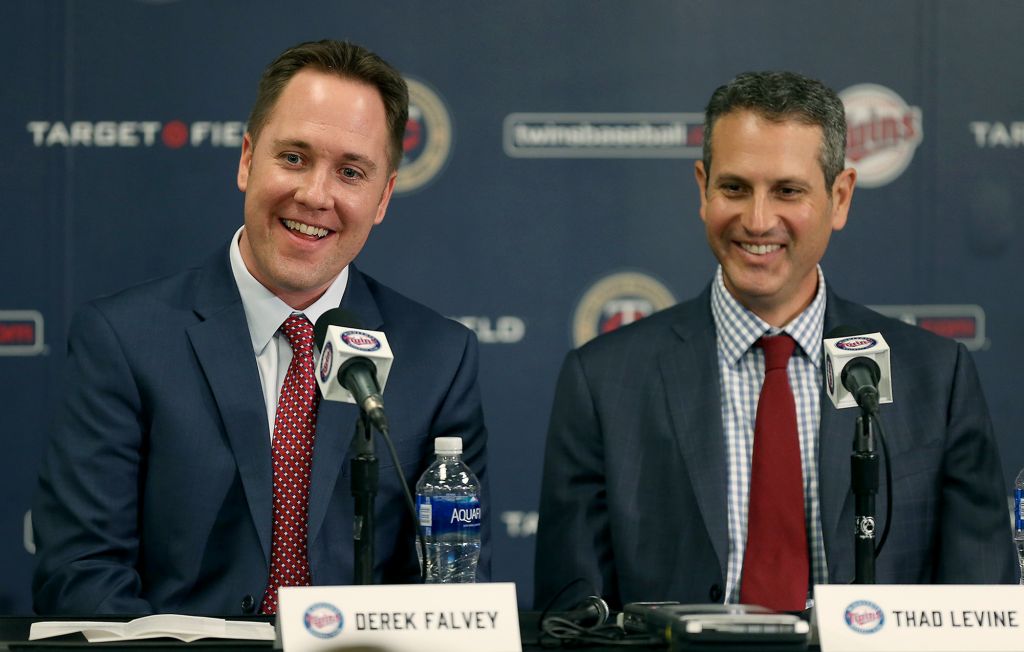 What we're seeing this year is the same thing we saw last year: an elite team, loaded with talent and performing at an extraordinarily high level. There's plenty of credit to go around, but it's hard to ignore the direct impact of moves made by Derek Falvey and Thad Levine over the past couple years. And I'm talking beyond their broader work building out the organization's infrastructure, and investing in innovation. Here are five decisions that loom large as the Twins charge toward the postseason: 1. Hiring Rocco Baldell as manager and Wes Johnson as pitching coach. The entire coaching staff seems quite effective, really, but these two stand out. Baldelli was the deserving recipient of AL Manager of the Year in 2019, his first season at the helm, and he's in the running for it again. The Twins definitely took a chance on Rocco, replacing a local legend in Paul Molitor with a total outsider who became the youngest skipper in the game. Their faith has been validated at every level. Baldelli is a brilliant tactical manager with tremendous strategic vision, and his ability to connect with players – stuffing out drama and constantly maintaining an even-keeled vibe – is uncanny. Selecting Johnson as pitching coach required a leap of faith on its own for the Twins. He became the first person ever to jump into the major-league role straight of out college, and Wes brought with him new-age philosophies. He was known at Arkansas as an instructor who could truly elevate performance, and he has translated this knack to the highest level. Roster-building has of course played a part (and we'll get to that) but under Johnson, Twins pitchers are throwing harder, dominating more, and consistently reaching their potential. 2. Building a power bullpen. A deep and dominant bullpen was key to the World Series run from Derek Falvey's Cleveland Indians in 2016. When he took over the Twins afterward, the relief corps he inherited was a far cry. But over the course of these past four years, Minnesota's bullpen has been gradually upgraded and enhanced. The past year alone has seen a dramatic overhaul; consider that their Opening Day bullpen in 2019 consisted of Trevor May, Taylor Rogers, Blake Parker, Trevor Hildenberger, Ryne Harper, Martín Pérez, and Adalberto Mejía. This radically reconstructed Twins bullpen is currently tied with Tampa Bay for first in the majors in fWAR. They're fifth in ERA, sixth in FIP, and fifth in strikeout rate. It's a top-tier unit by almost any measure, helping the Twins weather frequent bullpen games without much issue. The origin stories vary for this collection of standouts, but each one has the front office's fingerprints all over it. There was Sergio Romo, acquired at the deadline last year and re-signed as a free agent during the offseason. Caleb Thielbar was more or less talked out of retirement, and he has come back more effective than ever before. Matt Wisler was claimed off waivers, and has been reinvented as an overpowering weapon with his unsolvable slider. Jorge Alcala came over in a 2018 trade. Tyler Clippard was plucked from the rival Indians as a free agent. Tyler Duffey was an incumbent who finally unlocked his potential. It all adds up to a bullpen that's been a phenomenal asset, and a crucial contributor to the team's success. 3. Signing Nelson Cruz I think we can safely say it's the best free agent signing in franchise history. (A sentimental fan might point to Jack Morris, but I'd heartily disagree.) Cruz signed for a relatively modest sum two offseasons ago, and immediately became the heart and soul of this team, with his likability and leadership qualities somehow overshadowing back-to-back MVP-caliber performances on the field. We're already seeing the impact of Josh Donaldson, who became the front office's new marquee signing over the winter, and I hope we'll continue to see it for years to come. But nothing can contend right now with the impact of Cruz. He's been an absolute revelation. 4. Drafting Ryan Jeffers Many outside observers considered it a reach when the Twins used the 59th overall pick in 2018 to select Jeffers, a slugging college catcher out of UNC-Wilmington whose defensive skills were generally considered suspect. The Twins saw something different, and two years later they've been proven 100% correct. Despite having zero experience above Double-A, and having had no opportunity to play in real games this summer, Jeffers stepped in after Mitch Garver got hurt and has looked like a natural. His smoothness and confidence behind the plate are shocking for a 23-year-old rookie, as his keen eye at the plate. He rarely chases outside of the zone and has shown the ability to absolutely decimate baseballs when he squares up. His pitch-framing ranks in the 85th percentile of all major leaguers according to Statcast. Jeffers has instantly settled in as an above-average MLB catcher, and what he did as a rookie while both Garver and Alex Avila were sidelined should not be overlooked as a major factor in the team's success this year. Jeffers may very well start behind the plate for Game 1 in the playoffs. 5. Acquiring Kenta Maeda Falvey and Levine set out this past offseason with one guiding mission: upgrade the rotation. That meant adding a pitcher better than José Berríos or Jake Odorizzi, who were both All-Stars last season, as well as Michael Pineda, who was also brought back with a savvy deal during the offseason. Initially, Falvey and Levine set their sights on Zack Wheeler (wisely, it seems – he's currently 4-1 with a 2.67 ERA for the Phillies). When he chose to go elsewhere, they reportedly engaged with other free agents but weren't too aggressive. The Twins weren't going to commit a historic contract, or trade a premium talent, unless they felt confident in what they were getting back. They felt confident in Maeda, and they have been rewarded. By almost any worthwhile measure, the right-hander has been a top 10 pitcher in baseball. Already a dominant force against righty hitters, Maeda has unlocked a new level of effectiveness against lefties by tweaking his pitch mix, with help from the Twins (and Johnson). He's been an ace under any definition of the word, and while it hurts to give up an arm like Brusdar Graterol, even there we find signs of a responsible, proactive front office. Alcala, whom they acquired as a prospect two years ago, has filled the role of young fireballer with the triple-digit heater and ferocious slider, and he's doing it equally well. Maeda will be Minnesota's Game 1 starter in the playoffs. Alcala will be one of the first arms out of the bullpen. Jeffers might start behind the plate. Cruz will (hopefully) bat in the heart of the lineup. Like I said, this front office's fingerprints are all over a fantastic 2020 Twins team that's well positioned to make some serious noise in October. Take a bow, Falvine and Co. MORE FROM TWINS DAILY — Latest Twins coverage from our writers — Recent Twins discussion in our forums — Follow Twins Daily via Twitter, Facebook or email
 -
Week in Review: Bumps in the Road
Nick Nelson replied to Nick Nelson's topic in Twins Daily Front Page News
It definitely seems to my eye like both of them have become totally powerless against a well-executed breaking ball down and away. Which really scares me because in the playoffs they'll be facing pitchers who execute that pitch very consistently.- 30 replies
-
- 1
-
-
- josh donaldson
- byron buxton
- (and 1 more)
-
Week in Review: Bumps in the Road
Nick Nelson replied to Nick Nelson's topic in Twins Daily Front Page News
This is fair, and some good perspective. To me, the week was really all about the White Sox series, and Thursday's game more than anything. Just some super costly (and ugly) losses. -
Week in Review: Bumps in the Road
Nick Nelson replied to Nick Nelson's topic in Twins Daily Front Page News
He proved he actually cared about his at-bats by taking himself out of the game so he couldn't make one in a critical spot? I see. It's a good question. Obviously this year has been nothing but a struggle for him, but you do think some other team would maybe take a flyer based on what he showed last year. I believe it's hard for teams to make waiver claims with many already feeling roster crunches late in the season. Perhaps the Twins felt that they were especially likely to get him through at the specific time they made the move ... there's no other reason I can really see for why they'd have done it when they did, since they still have not filled that roster spot yet. -
The final road trip of the season was an ugly one for the Twins, as they dropped four of seven and saw their hopes for a second straight AL Central title grow dim. However, they also officially clinched a trip to the playoffs, where Minnesota will likely face the Yankees in the first round. The remaining question – and a pertinent one in light of their noticeably worse play away from home – is: where? Weekly Snapshot: Mon, 9/14 through Sun, 9/20 *** Record Last Week: 3-4 (Overall: 33-22) Run Differential Last Week: +7 (Overall: +58) Standing: 2nd Place in AL Central (2.0 GB) Bomba Counter: 84 (Pace: 92) It's been a hell of a year for Jake Odorizzi, and the hits just keep on coming. Last Wednesday he took the hill against the White Sox and was looking quite sharp through 3 ⅔ innings before being forced out of the game by a bloody wound on his middle finger, which evidently split open on one particular pitch. After the game, back to the Injured List he went, and it's unclear whether he can get right in time for a potential postseason role. On the additions side of the ledger, the Twins restored their catching depth with both Mitch Garver and Alex Avila being activated. This meant goodbye for Willians Astudillo. The past week's roster moves included a couple of real surprises: Randy Dobnak was optioned to the alternate site following another rough outing on Tuesday – a major fall for someone who was, not long ago, Minnesota's steadiest starter and a Rookie of the Year candidate. On the same day, Zack Littell was outrighted from the 40-man roster, and he passed through waivers unclaimed. It's a similarly drastic downfall given that Littell was such a key bullpen figure last year, and pitched twice in the ALDS. As of yet, Littell's roster spot hasn't been used and remains open. Perhaps the Twins will use it to active Homer Bailey from IL for a start in the final week? We'll map out what's to come in these last seven days of the regular season shortly, but first: a look back at the previous seven. HIGHLIGHTS The Twins are showing some warts here as the season winds down, especially in the lineup and bullpen. But when he's healthy and on his game, Byron Buxton can offset a whole lot of shortcomings. He's one of the biggest difference-makers in the game and we saw it over the past week. At times Buxton was the only source of energy and output for an enduringly ineffective offense. He started six of seven games, and collected at least one hit in each, launching four homers with a double and six RBIs. As usual, he was exquisite defensively. With the top part of the lineup stalling out, Rocco Baldelli did something over the weekend that he's never done before as manager: moved Buxton there. The speedy center fielder batted leadoff on Friday, and second on Saturday before getting Sunday off. Look, Donaldson has a point about the umpires and accountability. Umps have been egregiously bad this year on whole, and Bellino was clearly being an ass. At the same time, Donaldon's actions accomplished nothing, other than costing the Twins one of their best players in a pivotal point of the season. As an emotional reaction in the moment, I can get past it, but seeing him defiantly defend it is irksome, and sends a troubling message about priorities. He'll have an opportunity to redeem himself when the games matter most, starting after next week. It'd be nice if he and the offense can build up some late-game margins for a bullpen that looks more and more worrisome at the back end. Taylor Rogers saw his challenges keep compounding last week. On Monday he entered in the eighth inning of a tie game and coughed up two earned runs on two hits and two walks, recording just one out. He took the loss, his fourth of the season. On Thursday, Sergio Romo entered in the seventh with two on, two outs, and the Twins leading 3-2. He promptly gave up consecutive hits as the White Sox pulled even, and then ahead. On Sunday night Romo loaded the bases in the ninth before squeaking out unscathed. Over the past calendar month, Rogers and Romo rank second- and third-to-last on the Twins pitching staff in Win Probability Added. (Dobnak is last, and now off the roster.) Not exactly ideal for the two top candidates to handle a save situation in the playoffs. TRENDING STORYLINE While trying to ensure they're healthy and clicking as much as possible heading into the playoffs, the Twins will also be jockeying for position in the seeding system. I went through the scenarios on a Twitter thread Sunday but here's the rub: The Twins still have an outside shot at winning the AL Central, but it's gonna be tough. They play five games at home while the White Sox, two games up in the standings, have seven remaining contests (4 @ CLE, 3 vs. CHC). Since Minnesota and Chicago split their season series 5-5, the tiebreaker moves to intra-division record, where the Sox have an edge thanks to their 18-2 record against KC/DET. That means the Twins need a better record to take the division. So... If the White Sox go 4-3 or better, they win it.If the White Sox go 3-4, the Twins need to go 5-0.If the White Sox go 2-5, the Twins need to go 4-1 or better.If the White Sox go 1-6, the Twins need to go 3-2 or better.If the White Sox go 0-7, the Twins need to go 2-3 or better.The Sox haven't fared all that well against playoff-caliber teams (last week's series against the Twins notwithstanding) so it's not inconceivable they could post a losing record against the Indians and Cubs, thus opening the window a crack for Minnesota. In all likelihood, though, the division is Chicago's. If the Twins finish second, they'll probably find themselves facing off against the Yankees in round one, with home field advantage left to be decided. Let's map out those scenarios. The Yankees are 31-22 and have seven games remaining (4 @ TOR, 3 vs. MIA). While it could change with a poor showing at Toronto (er, Buffalo), the Yanks will probably have the intra-division record tiebreaker over the Twins, so Minnesota needs to finish with a better record to bring the series to Target Field. This means... If the Yankees go 7-0, they get home field.If the Yankees go 6-1, the Twins need to go 5-0.If the Yankees go 5-2, the Twins need to go 4-1 or better.If the Yankees go 4-3, the Twins need to go 3-2 or better.If the Yankees go 3-4, the Twins need to go 2-3 or better.If the Yankees go 2-5, the Twins need to go 1-4 or better.If the Yankees go 1-6 or 0-7, the Twins get home field.A few numbers to keep in mind with regards to this race: The Twins have been baseball's best home team this year (21-5), followed by the Yankees (21-7). Both teams have been significantly worse on the road (12-17 and 10-15, respectively). Since 2015, the Twins are 2-17 at Yankee Stadium. LOOKING AHEAD The probables below are based on what I currently see listed in ESPN's schedule, though we won't see it play out as such. There's no chance Berríos pitches on the last day of the regular season, given that the Twins will want to have him ready to go two or three days later for Game 1 or Game 2. My best guess is that they swap him with Hill, so Berríos goes Friday on regular rest (putting him in line to start Game 2 the following Wednesday) and Hill gets a few extra days between starts. TUESDAY, 9/22: TIGERS @ TWINS – LHP Tarik Skubal v. TBD WEDNESDAY, 9/23: TIGERS @ TWINS – RHP Casey Mize v. RHP Kenta Maeda FRIDAY, 9/25: REDS @ TWINS – RHP Trevor Bauer v. LHP Rich Hill SATURDAY, 9/26: REDS @ TWINS – RHP Luis Castillo v. RHP Michael Pineda SUNDAY, 9/27: REDS @ TWINS – TBD v. RHP Jose Berrios Catch Up On Twins Daily Game Recaps Game 49 | CHW 3, MIN 1: Twins Leave 15 Runners On BaseGame 50 | CHW 6, MIN 2: White-Hot White SoxGame 51 | MIN 5, CHW 1: Bullpen Shines as Twins Beat GiolitoGame 52 | CHW 4, MIN 3: Donaldson Ejection Steals the Show, White Sox Take SeriesGame 53 | CHC 1, MIN 0: The Professor Schools TwinsGame 54 | MIN 8, CHC 1: Big Inning Sparks Twins WinGame 55 | MIN 4, CHC 0: Twins Down Darvish, Shutout CubsMORE FROM TWINS DAILY — Latest Twins coverage from our writers — Recent Twins discussion in our forums — Follow Twins Daily via Twitter, Facebook or email Click here to view the article
-
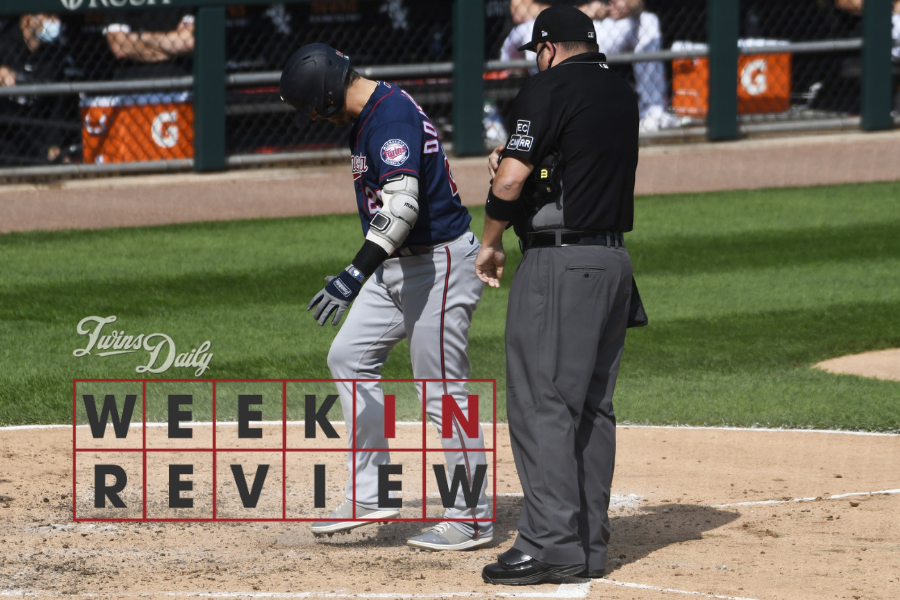 Weekly Snapshot: Mon, 9/14 through Sun, 9/20 *** Record Last Week: 3-4 (Overall: 33-22) Run Differential Last Week: +7 (Overall: +58) Standing: 2nd Place in AL Central (2.0 GB) Bomba Counter: 84 (Pace: 92) It's been a hell of a year for Jake Odorizzi, and the hits just keep on coming. Last Wednesday he took the hill against the White Sox and was looking quite sharp through 3 ⅔ innings before being forced out of the game by a bloody wound on his middle finger, which evidently split open on one particular pitch. After the game, back to the Injured List he went, and it's unclear whether he can get right in time for a potential postseason role. On the additions side of the ledger, the Twins restored their catching depth with both Mitch Garver and Alex Avila being activated. This meant goodbye for Willians Astudillo. The past week's roster moves included a couple of real surprises: Randy Dobnak was optioned to the alternate site following another rough outing on Tuesday – a major fall for someone who was, not long ago, Minnesota's steadiest starter and a Rookie of the Year candidate. On the same day, Zack Littell was outrighted from the 40-man roster, and he passed through waivers unclaimed. It's a similarly drastic downfall given that Littell was such a key bullpen figure last year, and pitched twice in the ALDS. As of yet, Littell's roster spot hasn't been used and remains open. Perhaps the Twins will use it to active Homer Bailey from IL for a start in the final week? We'll map out what's to come in these last seven days of the regular season shortly, but first: a look back at the previous seven. HIGHLIGHTS The Twins are showing some warts here as the season winds down, especially in the lineup and bullpen. But when he's healthy and on his game, Byron Buxton can offset a whole lot of shortcomings. He's one of the biggest difference-makers in the game and we saw it over the past week. At times Buxton was the only source of energy and output for an enduringly ineffective offense. He started six of seven games, and collected at least one hit in each, launching four homers with a double and six RBIs. As usual, he was exquisite defensively. With the top part of the lineup stalling out, Rocco Baldelli did something over the weekend that he's never done before as manager: moved Buxton there. The speedy center fielder batted leadoff on Friday, and second on Saturday before getting Sunday off. While Buxton can hopefully be a spark for the offense, it looks increasingly like the pitching staff will need to pave the way for October success. Fortunately, the rotation mostly looking up to the task. Last week, each of the presumed starters for a best-of-three first round made strong impressions in the final action they'll see against playoff-caliber competition before then. José Berríos wasn't necessarily dominant on Monday, but he held an an elite White Sox offense to one run in five innings. He worked through trouble, kept the ball in the yard, and – importantly – threw strikes, with only one walk allowed. It was just the third time in his 10 starts he hasn't issued multiple free passes. He did it again in his second start of the week, shutting out the Cubs over six innings while yielding just one walk and four hits. His ERA is down to 3.72, which is almost identical to where he finished 2019 (3.68). Kenta Maeda was stellar on Thursday against the White Sox outside of a pair of solo homers. Those were his only runs allowed over five frames, while he struck out eight and walked none. Michael Pineda added five innings of one-run ball against the Cubs on Saturday night, improving to 2-0 with a 3.18 ERA. These three instill a fair amount of confidence in the rotation's outlook for the first round. Should the Twins move beyond that match-up and on to the best-of-5 ALDS, they'll arrive at a fourth starter decision, which feels a lot more clear after the past week's events. Odorizzi could be available again by that point, since he'll have had multiple weeks to heal, but he won't have a chance to get back on the mound and build up. Dobnak seems all but out of the discussion at this point. Meanwhile, Rich Hill made his biggest statement of the season on Friday night, holding the Cubs to one run over seven innings in a fantastic duel with Kyle Hendricks. After giving up two walks and a single against the first three batters he faced, Hill allowed just one hit the rest of the way. There are certainly areas of concern with the aging southpaw. He has routinely struggled to find his curveball command in the early going and his 6.7% whiff rate would rank as second-lowest in baseball if he qualified. Having said that, he's got a 17-to-4 K/BB ratio in 17 September innings and has entrenched himself as the clear choice for a Game 4 ALDS start if it comes to that. LOWLIGHTS Even if their starting pitchers can come through, can the Twins really hope to outslug a potent Yankees lineup when so many key bats are flatlining? While Buxton excelled, almost ever other hitter sputtered: Max Kepler had three hits all week, and was slashing .122/.163/.146 in his past 12 games, up until Sunday night's slump-breaking 3-for-5 performance, which included a homer and a double. It's good to see his bat come to life, but he continues to commit stunning miscues on defense (including Sunday when he uncorked an ill-advised throw to third base, allowing a runner to move up). Even after coming around to finish the week, Kepler still sports a .736 OPS on the season, down 120 points from last year. Jorge Polanco, another 2019 breakout star and fixture atop the lineup, has produced even less than Kepler this season. His impressive strides on defense have been completely overshadowed by a total lack of punch at the plate. He went 4-for-21 with one double last week, bringing his season's line to .264/.313/.363. When he appeared in the All-Star Game last year, Polanco had a .312 average and .514 slugging percentage with 41 extra-base hits in 85 games. Since then, he's batting .269 and slugging .412 with 39 extra-base hits in 119 games. It was a very all-or-nothing week from Miguel Sanó, marred by too much of the latter. He hit a pair of home runs, but otherwise went 0-for-21 with 13 strikeouts and zero walks. The slugger will always be prone to slumps and Ks, but the Twins need him showing some level of patience and getting on base via the BB when he's not in crush mode. That quality of his game has slipped; after drawing 15 walks and posting a .394 OBP in August, he's worked just two in September and is getting aboard at a dreadful .179 clip. Garver is back, but it still doesn't look like he's *BACK* – at least not to 2019 form or anything close to it. While it is too early to be drawing any solid conclusions, the reigning Silver Slugger doesn't look much different from the diminished version who batted .154 with a .474 OPS before landing on IL. He did drive in two runs with a ground ball double on Saturday night, but that represents his only hit in nine at-bats since being activated, and he's struck out six times. Even Nelson Cruz has seen his performance drop off here in the late stretch of the season. Last week he went 3-for-18 with a double, and didn't drive in a single run. In fact, Cruz has driven in just seven runs in 24 games over the past month, all of them on solo homers. It speaks largely to the lack of production from those ahead of him in the lineup (namely: Kepler and Polanco) but Cruz is also not taking over and impacting games as he once did – this past road trip serving as a stark example. Then you have Josh Donaldson, who was reasonably productive, launching a pair of home runs and drawing six walks in seven games. But it was the contest he took himself out of that served as my lowest lowlight of the week. After taking issue with a strike call by home plate umpire Dan Bellino in the sixth inning of Thursday's series finale against the White Sox, Donaldson exchanged words, and then went back to work in the box. On the following pitch, he launched a solo shot to left field, putting the Twins ahead 3-2. Then, as he came across home plate, the third baseman dragged his foot to kick dirt over it, and went back again afterward for good measure. He was of course ejected, removing himself from a one-run game with critical implications. Donaldson was replaced by Ehire Adrianza, and the Twins were outscored 2-0 the rest of the way in a loss that probably cost them a shot at the AL Central title. The Twins made a historic investment in Donaldson as a free agent during the offseason, believing him to be a transformative veteran presence capable of tilting the odds in their favor for division titles and, ideally, postseason success. Fans spent half of his first season waiting for the former MVP to get on the field and materialize that impact. Now he's finally here, and was playing in the biggest game of the season before removing himself from the action with several innings left, all so he could show up an umpire. He later followed by doubling down on his decision to the media, claiming he "nailed it" with his performative display. Quite disappointing to see. Look, Donaldson has a point about the umpires and accountability. Umps have been egregiously bad this year on whole, and Bellino was clearly being an ass. At the same time, Donaldon's actions accomplished nothing, other than costing the Twins one of their best players in a pivotal point of the season. As an emotional reaction in the moment, I can get past it, but seeing him defiantly defend it is irksome, and sends a troubling message about priorities. He'll have an opportunity to redeem himself when the games matter most, starting after next week. It'd be nice if he and the offense can build up some late-game margins for a bullpen that looks more and more worrisome at the back end. Taylor Rogers saw his challenges keep compounding last week. On Monday he entered in the eighth inning of a tie game and coughed up two earned runs on two hits and two walks, recording just one out. He took the loss, his fourth of the season. On Thursday, Sergio Romo entered in the seventh with two on, two outs, and the Twins leading 3-2. He promptly gave up consecutive hits as the White Sox pulled even, and then ahead. On Sunday night Romo loaded the bases in the ninth before squeaking out unscathed. Over the past calendar month, Rogers and Romo rank second- and third-to-last on the Twins pitching staff in Win Probability Added. (Dobnak is last, and now off the roster.) Not exactly ideal for the two top candidates to handle a save situation in the playoffs. TRENDING STORYLINE While trying to ensure they're healthy and clicking as much as possible heading into the playoffs, the Twins will also be jockeying for position in the seeding system. I went through the scenarios on a Twitter thread Sunday but here's the rub: The Twins still have an outside shot at winning the AL Central, but it's gonna be tough. They play five games at home while the White Sox, two games up in the standings, have seven remaining contests (4 @ CLE, 3 vs. CHC). Since Minnesota and Chicago split their season series 5-5, the tiebreaker moves to intra-division record, where the Sox have an edge thanks to their 18-2 record against KC/DET. That means the Twins need a better record to take the division. So... If the White Sox go 4-3 or better, they win it. If the White Sox go 3-4, the Twins need to go 5-0. If the White Sox go 2-5, the Twins need to go 4-1 or better. If the White Sox go 1-6, the Twins need to go 3-2 or better. If the White Sox go 0-7, the Twins need to go 2-3 or better. The Sox haven't fared all that well against playoff-caliber teams (last week's series against the Twins notwithstanding) so it's not inconceivable they could post a losing record against the Indians and Cubs, thus opening the window a crack for Minnesota. In all likelihood, though, the division is Chicago's. If the Twins finish second, they'll probably find themselves facing off against the Yankees in round one, with home field advantage left to be decided. Let's map out those scenarios. The Yankees are 31-22 and have seven games remaining (4 @ TOR, 3 vs. MIA). While it could change with a poor showing at Toronto (er, Buffalo), the Yanks will probably have the intra-division record tiebreaker over the Twins, so Minnesota needs to finish with a better record to bring the series to Target Field. This means... If the Yankees go 7-0, they get home field. If the Yankees go 6-1, the Twins need to go 5-0. If the Yankees go 5-2, the Twins need to go 4-1 or better. If the Yankees go 4-3, the Twins need to go 3-2 or better. If the Yankees go 3-4, the Twins need to go 2-3 or better. If the Yankees go 2-5, the Twins need to go 1-4 or better. If the Yankees go 1-6 or 0-7, the Twins get home field. A few numbers to keep in mind with regards to this race: The Twins have been baseball's best home team this year (21-5), followed by the Yankees (21-7). Both teams have been significantly worse on the road (12-17 and 10-15, respectively). Since 2015, the Twins are 2-17 at Yankee Stadium. LOOKING AHEAD The probables below are based on what I currently see listed in ESPN's schedule, though we won't see it play out as such. There's no chance Berríos pitches on the last day of the regular season, given that the Twins will want to have him ready to go two or three days later for Game 1 or Game 2. My best guess is that they swap him with Hill, so Berríos goes Friday on regular rest (putting him in line to start Game 2 the following Wednesday) and Hill gets a few extra days between starts. TUESDAY, 9/22: TIGERS @ TWINS – LHP Tarik Skubal v. TBD WEDNESDAY, 9/23: TIGERS @ TWINS – RHP Casey Mize v. RHP Kenta Maeda FRIDAY, 9/25: REDS @ TWINS – RHP Trevor Bauer v. LHP Rich Hill SATURDAY, 9/26: REDS @ TWINS – RHP Luis Castillo v. RHP Michael Pineda SUNDAY, 9/27: REDS @ TWINS – TBD v. RHP Jose Berrios Catch Up On Twins Daily Game Recaps Game 49 | CHW 3, MIN 1: Twins Leave 15 Runners On Base Game 50 | CHW 6, MIN 2: White-Hot White Sox Game 51 | MIN 5, CHW 1: Bullpen Shines as Twins Beat Giolito Game 52 | CHW 4, MIN 3: Donaldson Ejection Steals the Show, White Sox Take Series Game 53 | CHC 1, MIN 0: The Professor Schools Twins Game 54 | MIN 8, CHC 1: Big Inning Sparks Twins Win Game 55 | MIN 4, CHC 0: Twins Down Darvish, Shutout Cubs MORE FROM TWINS DAILY — Latest Twins coverage from our writers — Recent Twins discussion in our forums — Follow Twins Daily via Twitter, Facebook or email

