



Nick Nelson
-
Posts
8,322 -
Joined
-
Last visited
-
Days Won
56
Content Type
Profiles
News
Minnesota Twins Videos
2026 Minnesota Twins Top Prospects Ranking
2022 Minnesota Twins Draft Picks
Minnesota Twins Free Agent & Trade Rumors, Notes, & Tidbits
Guides & Resources
2023 Minnesota Twins Draft Picks
The Minnesota Twins Players Project
2024 Minnesota Twins Draft Picks
2025 Minnesota Twins Draft Pick Tracker
2026 Minnesota Twins Draft Tracker: Picks & Bonuses
Forums
Blogs
Events
Store
Downloads
Gallery
Everything posted by Nick Nelson
-
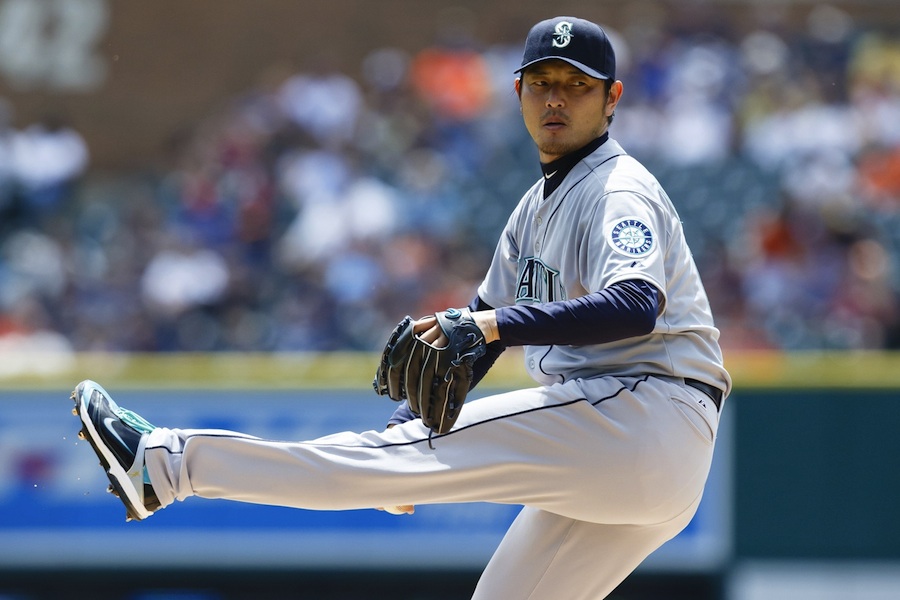 The Twins, 52-48, and maintaining a slim lead for the second wild-card spot, are in a fairly different place from the Mariners, who at 46-56 are on the outside looking in. But the two clubs share a commonality in that they are future-focused and in no position to act as aggressive buyers with a championship mindset. With that in mind, let's take a look at the five most likely players in both organizations to be gone before 3:00 PM on Friday, with notes on potential matches between the two teams: Top 5 Most Likely Mariners To Be Traded: 1) Hisashi Iwakuma, SP His name has been mentioned most often in trade rumors among Seattle players. Iwakuma is in the final season of his contract with the M's and although his 5.10 ERA might not pop out, his peripherals are mostly in line with the ones he posted over the past three years, during which he has gone 38-20 with a 3.07 ERA. He is scheduled to pitch on Sunday, but we'll see if he's still around. 2) Fernando Rodney, RP Here's an interesting case. Rodney led the American League with 48 saves as Seattle's closer last year, and opened this season back in the same role, but lost his hold on it after a terrible first two months. The veteran reliever has continued to deliver uneven performances but his velocity is there. The Mariners reportedly believe he's been tipping his pitches, which seems correctable. Could another team – like, say, the Twins – take a shot at trying to straighten him out? The impending free agent wouldn't theoretically cost a ton. 3) Austin Jackson, CF Jackson has been an ineffective player ever since coming over to the Mariners at the deadline a year ago in the three-team blockbuster that sent David Price to Detroit. He'll be eligible for free agency this winter and Seattle probably doesn't have a lot of interest in keeping him around. Given his past success, he might be viewed as a guy who could benefit from a change of scenery, and plenty of teams could use a two-way outfielder. 4) J.A. Happ, SP Another hurler on the verge of free agency, Happ has been struggling lately after performing decently over the first two months. He doesn't boast a ton of value but could interest some club as a fifth starter, and the Mariners would take what they can get. Happ is slated to start against Phil Hughes in the series opener on Thursday. 5) Jesus Montero, DH The Mariners hoped to be getting a cornerstone offensive piece when they acquired Montero from the Yankees for Michael Pinedo back in 2012. He played in 135 games for Seattle as a 22-year-old that year, batting .260 with 15 homers. Since then, he has played only 40 total games in the majors. It seems odd the team so hungry for offense would be so opposed to giving a talented young bat a more extensive chance, but as things stand, Montero will be out of options next year and remains trapped in Triple-A. Top 5 Most Likely Twins To Be Traded: 1) Oswaldo Arcia, OF Arcia is currently stuck in limbo. He's a major-league caliber hitter but there's no room for him in the Twins outfield with Eddie Rosario, Aaron Hicks and Torii Hunter entrenched. This isn't exactly the ideal time to move Arcia, given that he hasn't played in the bigs since getting hurt back in early May and his Triple-A numbers aren't overwhelming. Still, he's been one of the best hitters for his age in the majors over the past couple years, and I believe his raw hitting ability is highly respected across the league. He'll be out of options next year, so if he isn't in the Twins plans they might see if they can flip him and help themselves out this year. An offense-needy team like the Mariners could make sense. 2) Aaron Hicks, OF Another outfielder who will be out of options next year is Hicks, and while dealing him doesn't seem to make sense given that he appears to be turning a corner, that also might be why it makes the most sense. With everything he's been showing since his latest call-up, I have to imagine that his value is as high as it has ever been, and while he's looking like he'd be a fine right fielder for the Twins next year, he might have more value to another team in center. 3) Mike Pelfrey, SP There's little question that the Twins would like to move Pelfrey, given their logjam in the rotation and his status as the only starter who is not under team control after this year. The question is whether they can flip him for anything of value. His dreadful run over the past month, combined with a mediocre long-term track record, aren't particularly appealing. But there's a chance some contender that misses out on other options might settle for him as a plug-in at the back of the rotation. 4) Jorge Polanco, SS Losing Polanco would be tough, since the Twins obviously have a hole at shortstop, but no one seems fully convinced he can play there in the majors, and with his combination of age, excellent minor-league numbers and MLB experience make him a valuable chip. 5) Trevor May, SP May is a much more attractive target than Pelfrey. He has shown he can strike out big-league hitters and he has many years of inexpensive team control ahead. He's also currently miscast in a relief role. Ryan will be rightfully reluctant to part with him, but May is the kind of piece that would need to be included if the Twins want to make a substantial acquisition – like, say, a young catcher.
 -
 This week's short series against the Pirates at Target Field has a little bit of everything: a rarely seen interleague opponent with one of the game's biggest stars, an old friend taking the hill on Wednesday, and plenty of drama as two teams in the thick of the wild card race face off with the trade deadline bearing down.Proving Grounds The Twins have a lot to prove this week. With a record that is six games above .500, they're still very much in the wild card mix, but ever since their magical run in May, they haven't shown the ability to overcome quality opponents. If you count the home-and-away with the Cardinals – where the Twins lost two in St. Louis and then took two at Target Field – as a split, Minnesota has won only three series since the start of June. Those have come against the last-place White Sox, and the Orioles and Tigers – two reeling clubs that are now weighing the idea of selling and packing it in for 2015. With the Pirates coming to town, the Twins have a chance to erase the bad taste from that brutal setback against the Yankees over the weekend and score some big wins against a high-end team. Steel Curtain At 57-41, the Pirates have the second-best record in the National League and third-best in baseball. They largely owe their success to some truly splendid work on the mound. Pittsburgh's 3.05 team ERA ranks second in the majors, trailing only St. Louis' ridiculous 2.65 mark. This is a very difficult team to score against, which won't play in favor of a Twins offense that has been held to three or fewer runs in six of nine contests since the break. Center Stage Byron Buxton is gearing up to start a rehab stint after losing more than a month to a thumb injury, and it's not clear what Minnesota's plan will be with the young outfielder when he's ready. However, fans at Target Field this week will get to catch a glimpse of the kind of player that we're all hoping Buxton eventually develops into. Pirates center fielder Andrew McCutchen appeared in his fifth straight All-Star Game earlier this month. He has placed among the Top 3 vote-getters for the NL MVP in each of the last three seasons, winning the award in 2013. Although he may have trouble breaking into that conversation this year, with sluggers like Bryce Harper and Paul Goldschmidt leading the pack, McCutchen is enjoying another excellent season. He's sporting a .292/.388/.488 slash line to go along with 25 doubles, 13 homers and five steals. McCutchen is a special talent and a guy who's worth the price admission to see, especially in light of how rarely the opportunity arises. This is his first ever trip to Target Field and he probably won't be back soon. Containing the Cutch will be a primary imperative for Twins pitchers in these two games. Speaking of pitchers, let's take a look at the starters that will be facing off. PITCHING MATCH-UPS Tuesday, 7:10 PM: RHP Charlie Morton vs. RHP Mike Pelfrey This is a compelling tilt from numerous angles. On the one end, you've got a beatable opponent in Morton. His 4.59 ERA ranks as the worst of the Pirates starters and he has allowed nine runs over 12 2/3 innings in his two starts since the break. On the other end, you've got Pelfrey, who might be pitching for his job. Pelf has gone 0-5 with a 6.87 ERA in his past seven starts and it's tough to imagine the Twins putting up with that kind of output much longer, especially with Trevor May and Jose Berrios standing by. If you want to see some runs scored, this game is your best bet. Forecast (via Weather.com): Chance of storms early, high of 86 Wednesday, 12:10 PM: LHP Francisco Liriano vs. RHP Ervin Santana Liriano is enjoying a third straight fantastic season in Pittsburgh, where he has recaptured the dominance that flashed so sporadically in his early career. He had his worst start of the year against Minnesota back in mid-May, when the Twins jumped all over him for seven runs in two innings, but since then he has gone 5-2 with a 2.10 ERA, .192 opponents' average and 84-to-21 K/BB ratio in 73 innings. He's really good. Of course, Santana has also been really good since returning from his suspension, putting up a 2.60 ERA in four starts while holding the opposition to a .196 average. When they're on their game, both Liriano and Santana feature wipe-out sliders, so life could be pretty tough in the batter's box on Wednesday afternoon. Fans of a good pitching duel ought to enjoy this one. Forecast: Sunny, high of 83 Click here to view the article
 -
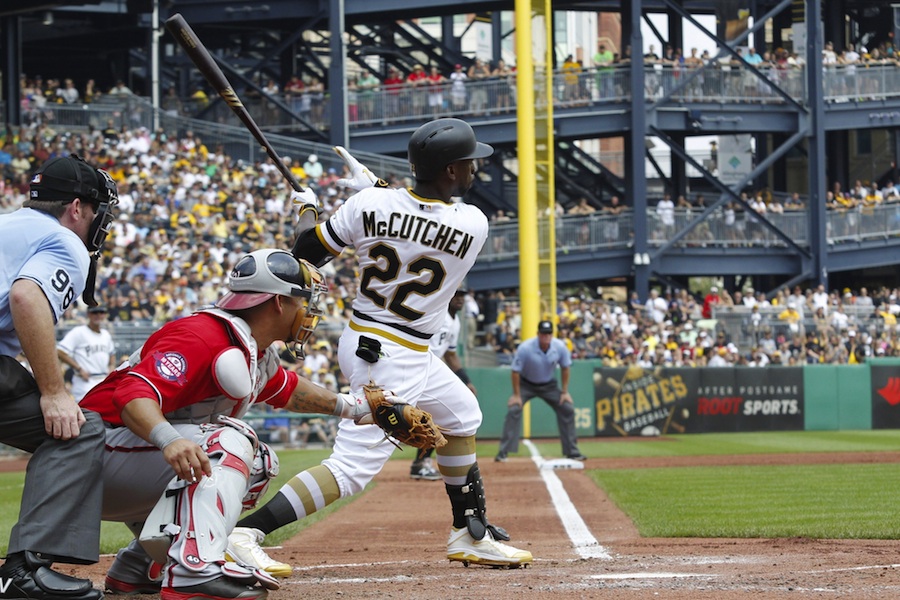 Proving Grounds The Twins have a lot to prove this week. With a record that is six games above .500, they're still very much in the wild card mix, but ever since their magical run in May, they haven't shown the ability to overcome quality opponents. If you count the home-and-away with the Cardinals – where the Twins lost two in St. Louis and then took two at Target Field – as a split, Minnesota has won only three series since the start of June. Those have come against the last-place White Sox, and the Orioles and Tigers – two reeling clubs that are now weighing the idea of selling and packing it in for 2015. With the Pirates coming to town, the Twins have a chance to erase the bad taste from that brutal setback against the Yankees over the weekend and score some big wins against a high-end team. Steel Curtain At 57-41, the Pirates have the second-best record in the National League and third-best in baseball. They largely owe their success to some truly splendid work on the mound. Pittsburgh's 3.05 team ERA ranks second in the majors, trailing only St. Louis' ridiculous 2.65 mark. This is a very difficult team to score against, which won't play in favor of a Twins offense that has been held to three or fewer runs in six of nine contests since the break. Center Stage Byron Buxton is gearing up to start a rehab stint after losing more than a month to a thumb injury, and it's not clear what Minnesota's plan will be with the young outfielder when he's ready. However, fans at Target Field this week will get to catch a glimpse of the kind of player that we're all hoping Buxton eventually develops into. Pirates center fielder Andrew McCutchen appeared in his fifth straight All-Star Game earlier this month. He has placed among the Top 3 vote-getters for the NL MVP in each of the last three seasons, winning the award in 2013. Although he may have trouble breaking into that conversation this year, with sluggers like Bryce Harper and Paul Goldschmidt leading the pack, McCutchen is enjoying another excellent season. He's sporting a .292/.388/.488 slash line to go along with 25 doubles, 13 homers and five steals. McCutchen is a special talent and a guy who's worth the price admission to see, especially in light of how rarely the opportunity arises. This is his first ever trip to Target Field and he probably won't be back soon. Containing the Cutch will be a primary imperative for Twins pitchers in these two games. Speaking of pitchers, let's take a look at the starters that will be facing off. PITCHING MATCH-UPS Tuesday, 7:10 PM: RHP Charlie Morton vs. RHP Mike Pelfrey This is a compelling tilt from numerous angles. On the one end, you've got a beatable opponent in Morton. His 4.59 ERA ranks as the worst of the Pirates starters and he has allowed nine runs over 12 2/3 innings in his two starts since the break. On the other end, you've got Pelfrey, who might be pitching for his job. Pelf has gone 0-5 with a 6.87 ERA in his past seven starts and it's tough to imagine the Twins putting up with that kind of output much longer, especially with Trevor May and Jose Berrios standing by. If you want to see some runs scored, this game is your best bet. Forecast (via Weather.com): Chance of storms early, high of 86 Wednesday, 12:10 PM: LHP Francisco Liriano vs. RHP Ervin Santana Liriano is enjoying a third straight fantastic season in Pittsburgh, where he has recaptured the dominance that flashed so sporadically in his early career. He had his worst start of the year against Minnesota back in mid-May, when the Twins jumped all over him for seven runs in two innings, but since then he has gone 5-2 with a 2.10 ERA, .192 opponents' average and 84-to-21 K/BB ratio in 73 innings. He's really good. Of course, Santana has also been really good since returning from his suspension, putting up a 2.60 ERA in four starts while holding the opposition to a .196 average. When they're on their game, both Liriano and Santana feature wipe-out sliders, so life could be pretty tough in the batter's box on Wednesday afternoon. Fans of a good pitching duel ought to enjoy this one. Forecast: Sunny, high of 83
 -
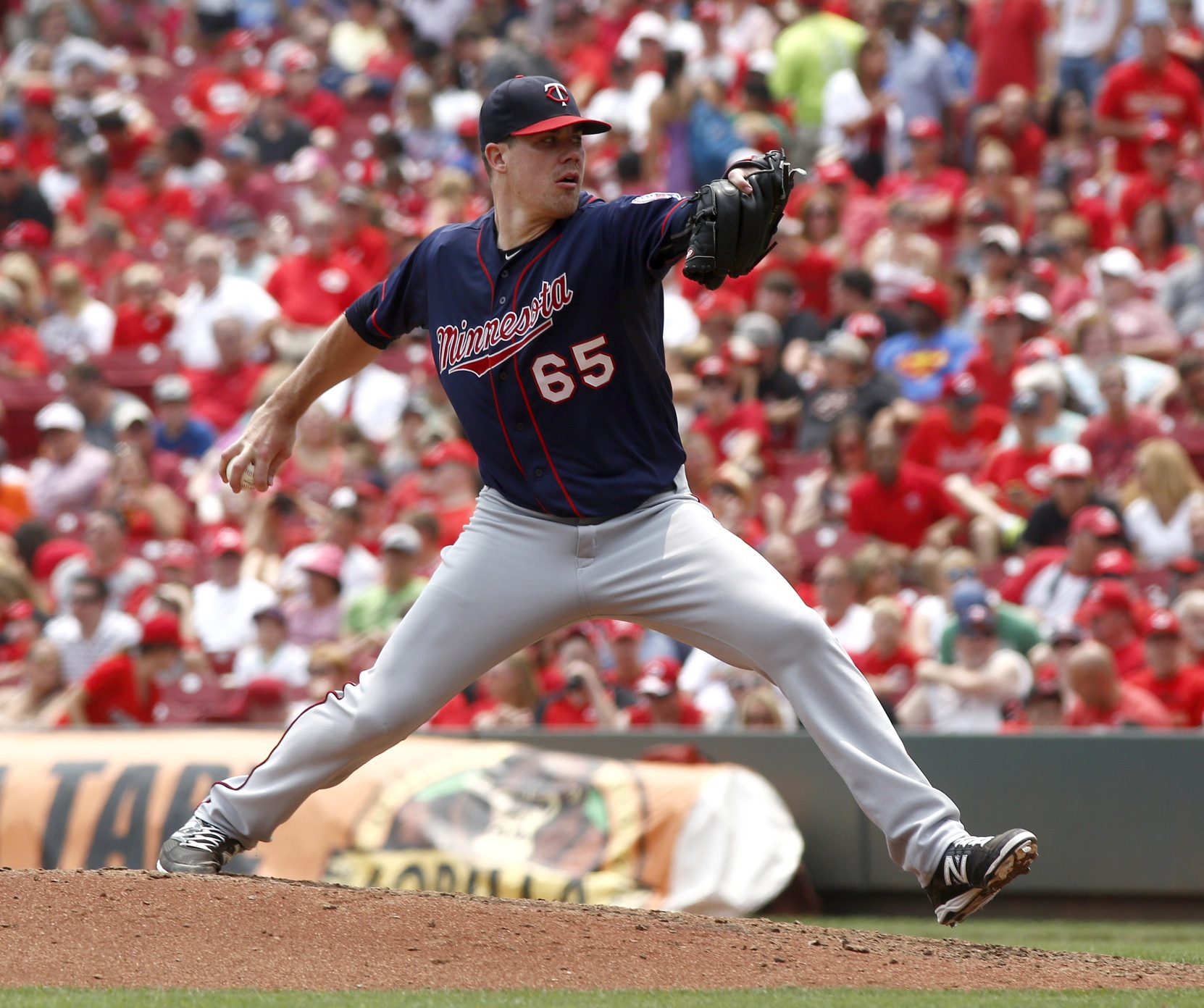 The most obvious opportunity to improve the club is in the rotation, where Mike Pelfrey has been flat-out terrible and multiple talented young starters are in line to make an impact. In mid-June, Pelfrey was on top of the world following a run of match-ups against weak offenses (Pittsburgh, Boston, Milwaukee) that lowered his ERA to an eye-popping 2.28. Since then, however, Pelfrey has looked much like the mediocre hurler that his unimpressive peripherals and lengthy track record would suggest. Over his past seven starts, he's 0-5 with a 6.87 ERA and 16-to-14 K/BB ratio in 38 innings. Opponents have mashed him to the tune of .365/.417/.528 during that span. It's somewhat unfair to pile on a guy during his worst stretch of the season -- and in fairness his overall ERA is still below 4 -- but Pelfrey's latest outing in Anaheim was indicative of what you can expect from him on any given night. He wasn't necessarily terrible, and his defense didn't help him out much leading to two unearned runs, but he allowed too much contact, gave up hits in bunches, and wasn't saved by the double plays that he has grown so desperately dependent upon. Pelf could have some value to a sub-.500 club that simply needs a guy to eat innings while treading water, but for a team like the Twins that is in the race and has blatantly superior options in the wings, he's a liability. Sliding Trevor May, who was arguably the team's best starter before being demoted to the bullpen, back into a starting role would be the easy move. The bolder move would be promoting Jose Berrios, who fired seven scoreless innings in Rochester on Thursday. Either switch would signal that the Twins are ready to put their chips on the table and make a run. There are several other areas where Ryan and Co. can make some quick fixes to improve the product on the field. One is installing Eduardo Escobar as full-time starter at shortstop. Another would be calling Oswaldo Arcia back up to the majors; the slugger has been crushing for weeks in Triple-A and Eddie Rosario is hitting .258/.269/.348 with 17 strikeouts and one walk in the month of July. How about bumping Blaine Boyer in favor of Michael Tonkin? There are other steps the organization could take to set up potential reinforcements down the line. For instance, Nick Burdi has been lights out in Ft. Myers since being demoted at the beginning of the month, with 18 strikeouts and zero walks in 13 innings. Quickly getting him back up to Chattanooga would create an opportunity for the 22-year-old fireballer to put together a strong month at Double-A and join the big-league bullpen in September. There are a lot of considerations in play, such as patiently developing young talent and in some cases (possibly Burdi and Arcia) sending a message. But how do the Twins balance that with trying to put the best possible team on the field over these final two months? It will be interesting to see how everything plays out.
 -
Article: Escobar Needs To Be Everyday Shortstop
Nick Nelson replied to Nick Nelson's topic in Twins Daily Front Page News
Escobar played 98 games at SS last year. Committed 5 errors. Rated well by UZR. Looked pretty good to my eyes. (shrug) The Twins also did not view JJ Hardy as a strong defensive SS. I don't view their opinion on these matters as gospel. -
Article: Escobar Needs To Be Everyday Shortstop
Nick Nelson replied to Nick Nelson's topic in Twins Daily Front Page News
Zero range?? Did you see the grounder he got to in the hole last night? Would have been one of the best infield plays the Twins have made all year if Mauer could've scooped the (admittedly tough) short hop. -
Article: Escobar Needs To Be Everyday Shortstop
Nick Nelson replied to Nick Nelson's topic in Twins Daily Front Page News
See, I don't get that at all. Escobar's a very solid defensive shortstop, albeit not a Gold Glover. What don't you like about his game? -
With the trade deadline less than 10 days away, our coverage of potential targets at positions of need has been ramping up here at Twins Daily. Recently we looked at relievers and catchers. Yesterday, Seth eyed the shortstop market and Jeremy wrote about a long-shot deal for Troy Tulowitzki. Personally, I see shortstop as a much less urgent need than the other two positions mentioned. For one thing, there are legit prospects in the system, namely Jorge Polanco and Nick Gordon, and that isn't true at catcher. Secondly, they have a decent option at shortstop on the roster right now. He just hasn't been playing much, inexplicably.When the Twins optioned Danny Santana to Triple-A in early June, they were making a commitment to Eduardo Escobar at shortstop. Escobar was a very productive starter at the position for Minnesota in 2014, and Paul Molitor had shown a clear affinity for the 26-year-old infielder over the first two months of 2015, regularly inserting him into the lineup as left fielder or even DH with no openings available in the infield. Swapping out Santana for Escobar looked like a win-win, providing a moderate upgrade at short while also allowing Molitor to use more offensive-oriented options in the spots where he'd previously been plugging Escobar. And the switch worked well. Escobar, who had struggled with the stick in April and May, started to find a groove, batting .303/.343/.485 in his first seven games after Santana's demotion. Slashing liners all over the field, Escobar flashed the kind of ability that he had in 2014, beginning to validate the immense faith Molitor had shown in his bat early on. The hot streak helped raise Escobar's OPS to where it currently sits at .684; while that might not seem at all impressive on the surface, it is above the average mark for a major-league shortstop, and more than 100 points higher than the player he replaced. Yet, when Byron Buxton went down with an injury in late June, Santana was recalled and immediately handed the reins at short despite Escobar's success as a fill-in. Since stepping back in, Santana has continued to hit poorly – .236/.263/.364 with 14 strikeouts and one unintentional walk in 18 games – and even more perturbingly, he has been sloppy defensively. The 24-year-old has committed 15 errors this year, more than all but three MLB shortstops (and those three have all played about 30 more games). Even when he hasn't been charged with errors, there have been countless miscues and hiccups. While Santana clearly has all the physical tools to be a good shortstop, he is far too prone to mistakes, backing up the reputation that came along with him from the minors. Nevertheless, he has continued to play over the more sure-handed Escobar, who has started only five of Minnesota's 16 games in July. Escobar was back in the lineup on Tuesday night, making just his second start at shortstop since the fourth of July. The smart money is on him sticking there, especially after what we saw from Santana in Oakland over the weekend. Click here to view the article
-
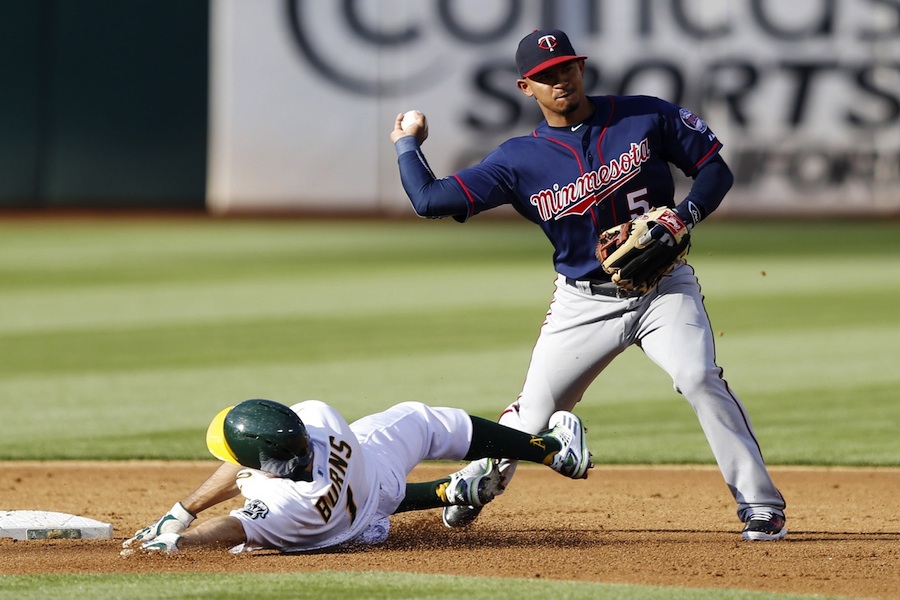 When the Twins optioned Danny Santana to Triple-A in early June, they were making a commitment to Eduardo Escobar at shortstop. Escobar was a very productive starter at the position for Minnesota in 2014, and Paul Molitor had shown a clear affinity for the 26-year-old infielder over the first two months of 2015, regularly inserting him into the lineup as left fielder or even DH with no openings available in the infield. Swapping out Santana for Escobar looked like a win-win, providing a moderate upgrade at short while also allowing Molitor to use more offensive-oriented options in the spots where he'd previously been plugging Escobar. And the switch worked well. Escobar, who had struggled with the stick in April and May, started to find a groove, batting .303/.343/.485 in his first seven games after Santana's demotion. Slashing liners all over the field, Escobar flashed the kind of ability that he had in 2014, beginning to validate the immense faith Molitor had shown in his bat early on. The hot streak helped raise Escobar's OPS to where it currently sits at .684; while that might not seem at all impressive on the surface, it is above the average mark for a major-league shortstop, and more than 100 points higher than the player he replaced. Yet, when Byron Buxton went down with an injury in late June, Santana was recalled and immediately handed the reins at short despite Escobar's success as a fill-in. Since stepping back in, Santana has continued to hit poorly – .236/.263/.364 with 14 strikeouts and one unintentional walk in 18 games – and even more perturbingly, he has been sloppy defensively. The 24-year-old has committed 15 errors this year, more than all but three MLB shortstops (and those three have all played about 30 more games). Even when he hasn't been charged with errors, there have been countless miscues and hiccups. While Santana clearly has all the physical tools to be a good shortstop, he is far too prone to mistakes, backing up the reputation that came along with him from the minors. Nevertheless, he has continued to play over the more sure-handed Escobar, who has started only five of Minnesota's 16 games in July. Escobar was back in the lineup on Tuesday night, making just his second start at shortstop since the fourth of July. The smart money is on him sticking there, especially after what we saw from Santana in Oakland over the weekend.
 -
Mike Berardino has a column in the Pioneer Press today listing targets that the Twins have been "closely monitoring." He mentions two players covered in this piece, Lucroy and Norris: http://www.twincities.com/twins/ci_28511974/do-twins-need-hitting-catcher-complement-kurt-suzuki
-
It's odd for me to see so many people down on Arcia. He's had a tough season, and the defensive issues are problematic, but few players in the entire league have had as much offensive success at such a young age. These "bust" comments are going to look silly in a few years.
-
This is about more than this season, though. This is a major long-term need for the club. They will have potential internal answers in the bullpen and at SS down the line, maybe even later this year. Nothing at catcher.
-
OK. Do you have an alternative package that might get it done? It may take different players but I'm not sure it takes a whole lot more, given the bar that has recently been set for Norris' trade value and his lack of production this year.
-
I didn't suggest any specific trades in this article, so I'm not sure what you're referring to. I asked if people thought Arcia & Meyer might be enough to get Norris. Otherwise, I said Milwaukee would be unlikely to give up Lucroy without getting back one of Buxton/Sano/Berrios and said the Giants would need to be "blown away" to give up Susac. So. Yeah. "Absurdly cheap," eh? The Padres acquired Norris in December for Jesse Hahn and R.J. Alvarez, a minor-league starter and reliever, neither of whom were ranked as Top 100 prospects. Now Norris has a 684 OPS through his first half-season with them. I'm going to need you to elaborate on this viewpoint. It might not be enough, I don't know, that's why I was genuinely asking for feedback... but "absurd"? Nah. If I'm the offense-needy Padres, I'd love to get my hands on a young hitter of Arcia's caliber. The notion that anyone views him as a "bust" at age 24, as someone posited earlier on this thread, is what's absurd.
-
With the trade deadline approaching and the Twins firmly in the mix, much talk has surrounded the need for bullpen upgrades, and rightfully so. Recently we looked at some potentially available relievers that could help that unit. However, if the Twins want to address their greatest weakness, both now and going forward, they're going to have to make a bolder and more aggressive move.After going 0-for-8 this weekend against the A's, Kurt Suzuki is hitting .227/.283/.303 for a .585 OPS that ranks 14th out of 15 MLB catchers with 250+ plate appearances. The only lower mark belongs to Mike Zunino, who at least offers some upside as a 24-year-old former top draft pick with big minor league numbers. There's no such hidden promise with Suzuki. He is what he is: a very competent backup catcher who has been holding onto a starting role, based on a good first half in 2014, and a lack of viable alternatives. That lack of alternatives is the deep issue at play here. Because while the Twins don't desperately need to replace Suzuki at this moment – he can be hidden at the bottom of the lineup and mostly holds his own defensively – it's a clear spot where they need to get better going forward. And unlike shortstop, where Danny Santana's struggles are rendered less perturbing by the presence of names like Jorge Polanco and Nick Gordon in the system, the cupboard here is bare. The organization's depth at catcher is dreadfully thin. The Twins have tried Chris Herrmann and Eric Fryer as backups for Suzuki this year. Both are fringe major-league talents. Josmil Pinto, who was a hopeful successor behind the plate, lacks strong receiving skills and now has been battling concussion symptoms for most of the season, so he's basically out of the mix. Looking deeper into the system, you won't find much. Stuart Turner, who at No. 17 was the only backstop to rank among our Top 20 Twins prospects before the season, has a .577 OPS at Double-A. Mitch Garver, who showed some good signs in Cedar Rapids last year, has stalled out at Ft. Myers. The Twins need a long-term answer at the position and they're not going to find it from within, at least not for several years, so trading for a quality young catcher with some team control makes an awful lot of sense. It is something that could be addressed during the offseason, but pulling off a deal now would have the obvious added bonus of boosting their chances down the stretch this year. The problem is that acquiring such a player is a pricy proposition, particularly under the seller-friendly circumstances of the trade deadline. Young catchers with two-way skills are highly valued, with good reason. They are hard to find and they are major assets. Still, here are three players that I would target: Jonathan Lucroy - Brewers He's very appealing, for many reasons. He's under 30. He's a very good hitter who can be slotted into the middle of the lineup when healthy. He is considered strong defensively and is rated very highly by pitch-framing metrics. And best of all, he is under team control for 2016 and 2017 for less than $10 million – a tremendous value. Of course, for all those reasons and especially the latter, the Brewers will be very reluctant to trade Lucroy even though they're hopelessly out of contention. If he could be pried away for any prospect package that doesn't include Buxton, Sano or Berrios, Terry Ryan would have to pull the trigger. However, I'm doubtful that Milwaukee will be amenable, especially since they lack an MLB-ready replacement for Lucroy. Derek Norris - Padres Like Lucroy, Norris is a fairly young catcher with some offensive chops who could stick around for a while. Just 26, he is not eligible for free agency until 2018. San Diego might be a little more open to dealing, however, since they have a potential successor in place. Austin Hedges is one of their top prospects and is already up in the majors backing up Norris. Would a package built around, say, Oswaldo Arcia and Alex Meyer do the trick? Andrew Susac - Giants Here's a sneaky option. Susac is presently Buster Posey's backup in San Francisco, but many believe he has the stuff to start. A former second-round draft pick, he was rated as a Top 100 prospect prior to this year by both Baseball America and Baseball Prospectus, has smashed Double-A and Triple-A pitching, and has an impressive .752 OPS in 218 big-league plate appearances. The Giants might have their own plans for Susac – no one expects Posey to stay at catcher forever – but if they were blown away by an offer they'd have to consider it. None of these three players would be easy to land. It would surely mean parting with multiple high-end young talents, and that's a tough pill for a rebuilding team to swallow. But if the Twins want to make the leap to the next level, sooner or later they'll need to address their situation behind the plate. Click here to view the article
-
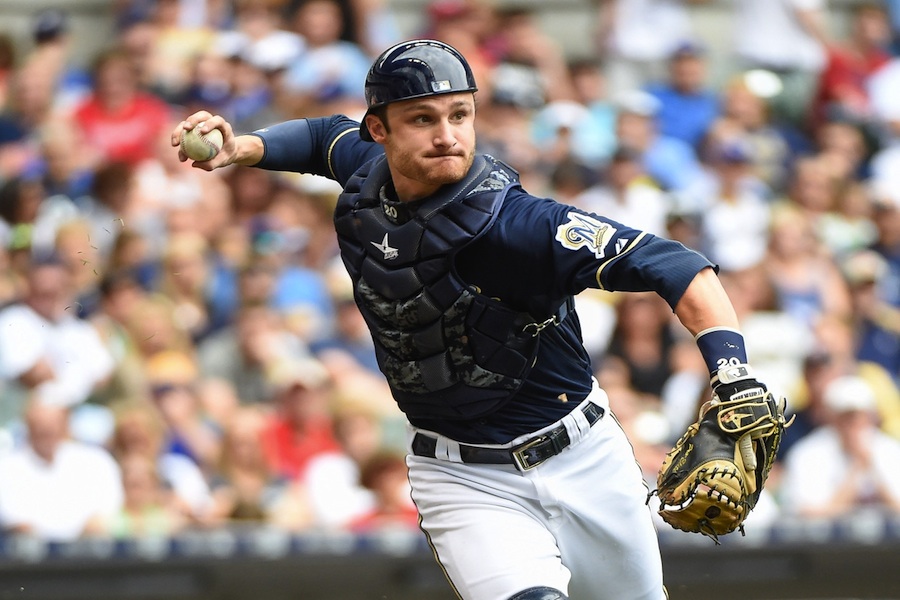 After going 0-for-8 this weekend against the A's, Kurt Suzuki is hitting .227/.283/.303 for a .585 OPS that ranks 14th out of 15 MLB catchers with 250+ plate appearances. The only lower mark belongs to Mike Zunino, who at least offers some upside as a 24-year-old former top draft pick with big minor league numbers. There's no such hidden promise with Suzuki. He is what he is: a very competent backup catcher who has been holding onto a starting role, based on a good first half in 2014, and a lack of viable alternatives. That lack of alternatives is the deep issue at play here. Because while the Twins don't desperately need to replace Suzuki at this moment – he can be hidden at the bottom of the lineup and mostly holds his own defensively – it's a clear spot where they need to get better going forward. And unlike shortstop, where Danny Santana's struggles are rendered less perturbing by the presence of names like Jorge Polanco and Nick Gordon in the system, the cupboard here is bare. The organization's depth at catcher is dreadfully thin. The Twins have tried Chris Herrmann and Eric Fryer as backups for Suzuki this year. Both are fringe major-league talents. Josmil Pinto, who was a hopeful successor behind the plate, lacks strong receiving skills and now has been battling concussion symptoms for most of the season, so he's basically out of the mix. Looking deeper into the system, you won't find much. Stuart Turner, who at No. 17 was the only backstop to rank among our Top 20 Twins prospects before the season, has a .577 OPS at Double-A. Mitch Garver, who showed some good signs in Cedar Rapids last year, has stalled out at Ft. Myers. The Twins need a long-term answer at the position and they're not going to find it from within, at least not for several years, so trading for a quality young catcher with some team control makes an awful lot of sense. It is something that could be addressed during the offseason, but pulling off a deal now would have the obvious added bonus of boosting their chances down the stretch this year. The problem is that acquiring such a player is a pricy proposition, particularly under the seller-friendly circumstances of the trade deadline. Young catchers with two-way skills are highly valued, with good reason. They are hard to find and they are major assets. Still, here are three players that I would target: Jonathan Lucroy - Brewers He's very appealing, for many reasons. He's under 30. He's a very good hitter who can be slotted into the middle of the lineup when healthy. He is considered strong defensively and is rated very highly by pitch-framing metrics. And best of all, he is under team control for 2016 and 2017 for less than $10 million – a tremendous value. Of course, for all those reasons and especially the latter, the Brewers will be very reluctant to trade Lucroy even though they're hopelessly out of contention. If he could be pried away for any prospect package that doesn't include Buxton, Sano or Berrios, Terry Ryan would have to pull the trigger. However, I'm doubtful that Milwaukee will be amenable, especially since they lack an MLB-ready replacement for Lucroy. Derek Norris - Padres Like Lucroy, Norris is a fairly young catcher with some offensive chops who could stick around for a while. Just 26, he is not eligible for free agency until 2018. San Diego might be a little more open to dealing, however, since they have a potential successor in place. Austin Hedges is one of their top prospects and is already up in the majors backing up Norris. Would a package built around, say, Oswaldo Arcia and Alex Meyer do the trick? Andrew Susac - Giants Here's a sneaky option. Susac is presently Buster Posey's backup in San Francisco, but many believe he has the stuff to start. A former second-round draft pick, he was rated as a Top 100 prospect prior to this year by both Baseball America and Baseball Prospectus, has smashed Double-A and Triple-A pitching, and has an impressive .752 OPS in 218 big-league plate appearances. The Giants might have their own plans for Susac – no one expects Posey to stay at catcher forever – but if they were blown away by an offer they'd have to consider it. None of these three players would be easy to land. It would surely mean parting with multiple high-end young talents, and that's a tough pill for a rebuilding team to swallow. But if the Twins want to make the leap to the next level, sooner or later they'll need to address their situation behind the plate.
 -
Concerns swirled around Glen Perkins at the end of the 2014 season. After dominating consistently for the first five months, the Minnesota closer fell apart in September, allowing eight earned runs and four home runs in six appearances, with only one strikeout. It was uncharacteristic to say the least, based on what we've seen from Perkins as a reliever. Fresh off extending his contract through 2017, the shocking struggles led some to wonder whether the 31-year-old was beginning to break down. The answer, it turns out, is a resounding no.Perkins has been about as good as anyone could ask this year, converting all 28 of his save chances with a 1.21 ERA and 0.83 WHIP. For a team with as little margin for error as the Twins, he has been beyond crucial. Perkins leads all AL relievers in Win Probability Added at 2.80, and even that seems to understate his impact. We saw over the weekend how demoralizing it can be to see a victory turn into a defeat in the final inning. The Twins jumped on Joakim Soria to rally back from a 6-2 deficit on Friday night, and it's hard to imagine that the devastation from that loss didn't feed into Detroit's flat efforts on Saturday and Sunday. Perkins has avoided any such meltdowns. Hell, he has mostly been able to avoid any hot water. He has faced 104 batters in save situations and allowed 18 hits, just two of them for extra-bases. Rarely have opponents even been able to muster a threat. Now the question is whether he can keep it going. Last September's arm fatigue was somewhat ominous and Perk's usage this year has been almost the same (he has 38 appearances, compared to 39 at the break a year ago). Yet, the savvy and self-analytical closer has always been extremely adept at managing his body – this piece from Jim Souhan in the Star Tribune on his workout routine, which involves no weight lifting, was quite interesting – so I have faith in his ability to stay away from a repeat. Still, it's something that should be kept in mind when people start complaining every time Perkins isn't used in a close game outside of a save situation. Reducing wear on his arm is more important than a statistic, even if that's not the main motivation. And when it comes to that statistic, Perkins is potentially headed toward rarified air. He's on pace for 51 saves, which would break Joe Nathan's franchise record of 47, set back in 2009. His 28 consecutive conversions this year represent his entire running total (he blew his final save chance in 2014), so he's got a long way to go in order to reach Eric Gagne's incredible MLB record of 84. However, Perkins could become the first closer to convert every save chance in a season since Jose Valverde went 49-for-49 back in 2011. Valverde finished fifth in the Cy Young voting and his Tigers won 95 games en route to the AL Championship Series. The last to accomplish the feat before that was Brad Lidge, who nailed down all 41 of his opportunities and finished fourth in the Cy Young voting while the Phillies cruised to a World Series victory. Clearly, the recent track record for baseball teams with closers who convert every save is very, very good. And that's not exactly a coincidence. When you've got a guy who legitimately turns games into eight-inning affairs, it makes things a whole lot easier. The Twins were lucky enough to have that luxury for many years under Joe Nathan, who had one of the greatest stretches for a closer in baseball history from 2004 through 2009 and ranks seventh all-time in saves. Now, in Perkins, they have a successor who is somehow just as effective as Nathan in his prime. He's also a Minnesota native, closing out games for the same team he grew up watching. You could hardly write it up more perfectly. How much history can Perkins make before his remarkable 2015 campaign reaches an end? Click here to view the article
-
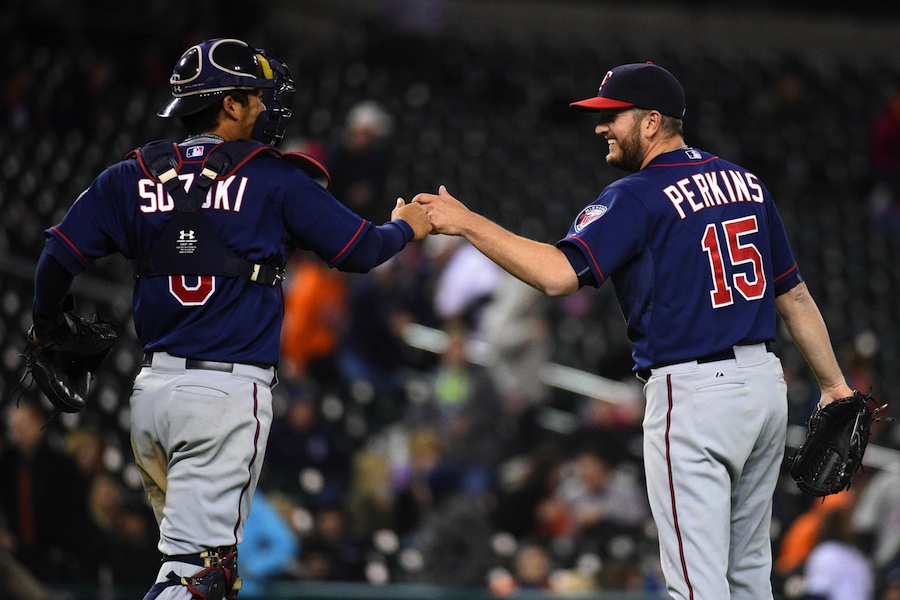 Perkins has been about as good as anyone could ask this year, converting all 28 of his save chances with a 1.21 ERA and 0.83 WHIP. For a team with as little margin for error as the Twins, he has been beyond crucial. Perkins leads all AL relievers in Win Probability Added at 2.80, and even that seems to understate his impact. We saw over the weekend how demoralizing it can be to see a victory turn into a defeat in the final inning. The Twins jumped on Joakim Soria to rally back from a 6-2 deficit on Friday night, and it's hard to imagine that the devastation from that loss didn't feed into Detroit's flat efforts on Saturday and Sunday. Perkins has avoided any such meltdowns. Hell, he has mostly been able to avoid any hot water. He has faced 104 batters in save situations and allowed 18 hits, just two of them for extra-bases. Rarely have opponents even been able to muster a threat. Now the question is whether he can keep it going. Last September's arm fatigue was somewhat ominous and Perk's usage this year has been almost the same (he has 38 appearances, compared to 39 at the break a year ago). Yet, the savvy and self-analytical closer has always been extremely adept at managing his body – this piece from Jim Souhan in the Star Tribune on his workout routine, which involves no weight lifting, was quite interesting – so I have faith in his ability to stay away from a repeat. Still, it's something that should be kept in mind when people start complaining every time Perkins isn't used in a close game outside of a save situation. Reducing wear on his arm is more important than a statistic, even if that's not the main motivation. And when it comes to that statistic, Perkins is potentially headed toward rarified air. He's on pace for 51 saves, which would break Joe Nathan's franchise record of 47, set back in 2009. His 28 consecutive conversions this year represent his entire running total (he blew his final save chance in 2014), so he's got a long way to go in order to reach Eric Gagne's incredible MLB record of 84. However, Perkins could become the first closer to convert every save chance in a season since Jose Valverde went 49-for-49 back in 2011. Valverde finished fifth in the Cy Young voting and his Tigers won 95 games en route to the AL Championship Series. The last to accomplish the feat before that was Brad Lidge, who nailed down all 41 of his opportunities and finished fourth in the Cy Young voting while the Phillies cruised to a World Series victory. Clearly, the recent track record for baseball teams with closers who convert every save is very, very good. And that's not exactly a coincidence. When you've got a guy who legitimately turns games into eight-inning affairs, it makes things a whole lot easier. The Twins were lucky enough to have that luxury for many years under Joe Nathan, who had one of the greatest stretches for a closer in baseball history from 2004 through 2009 and ranks seventh all-time in saves. Now, in Perkins, they have a successor who is somehow just as effective as Nathan in his prime. He's also a Minnesota native, closing out games for the same team he grew up watching. You could hardly write it up more perfectly. How much history can Perkins make before his remarkable 2015 campaign reaches an end?
 -
The Minnesota Twins are heading into the All-Star break hot, with three straight victories against the Tigers putting them on pace to finish at 89 wins. Here are 10 noteworthy on-pace projections for members of the team with a little over half the season in the books:1. Glen Perkins is on pace for 51 saves. Joe Nathan set the franchise record when he notched 47 back in 2009. 2. Brian Dozier is on pace for 35 home runs, 87 extra-base hits and 122 runs scored. All incredible numbers. Only three Twins have ever scored 120 or more runs in a season: Chuck Knoblauch (1996), Rod Carew ('77) and Zoilo Versalles ('65). Tony Oliva currently holds the franchise record for extra-base hits with 84, set in 1964. It's worth noting that Dozier had 18 homers at the break last year and finished with 23. 3. Phil Hughes is on pace to allow 245 hits and 40 home runs. Only Bert Blyleven and Brad Radke have given up 40 homers as Twins. That's not necessarily the worst sign, because both those guys were pretty good. And despite leading the league in both hits and homers allowed, Hughes has still been fairly effective (especially lately). That is, in no small part, because… 4. Phil Hughes is on pace to allow 20 walks. That would equate to 36 total over the span of two seasons. To say he is in control would be a putting it lightly. 5. Kyle Gibson is on pace to throw 207 innings. At 27, he would be the youngest Twins pitcher to eclipse 200 innings since Scott Baker and Nick Blackburn both did so in 2009. 6. Kyle Gibson and Mike Pelfrey are on pace to induce a combined 76 ground ball double plays. They rank first and second in the majors with 22 and 20, respectively. Gibson has already matched his total from last year, which ranked him sixth in the AL. 7. Joe Mauer is on pace to make 658 plate appearances. It would set a career high, so the shift to first base is at least having its desired effect in terms of keeping him on the field. He's also on pace for 106 strikeouts, which would be the first triple-digit K season in his 12-year career. 8. Torii Hunter is on pace for 25 home runs. He hasn't hit 20 since 2011, and hasn't hit 25 since his last year with the Twins in 2007. It's been a heck of a first half for Hunter, who turns 40 next week. 9. Blaine Boyer is on pace to make 76 relief appearances. It'd be the most for a Twins pitcher since Matt Guerrier was called upon 79 times back in 2009. Boyer has been one of the most oft-used bullpen arms in the league, tying for the AL lead with 42. Prior to this season, he had appeared in 37 major-league games over the past four years. 10. The Twins are on pace to get caught stealing 55 times. They haven't been pinched that many times since 2002. Interesting, in that Paul Molitor is viewed as a base-running guru. Click here to view the article
- 20 replies
-
- 1
-

-
- glen perkins
- brian dozier
- (and 1 more)
-
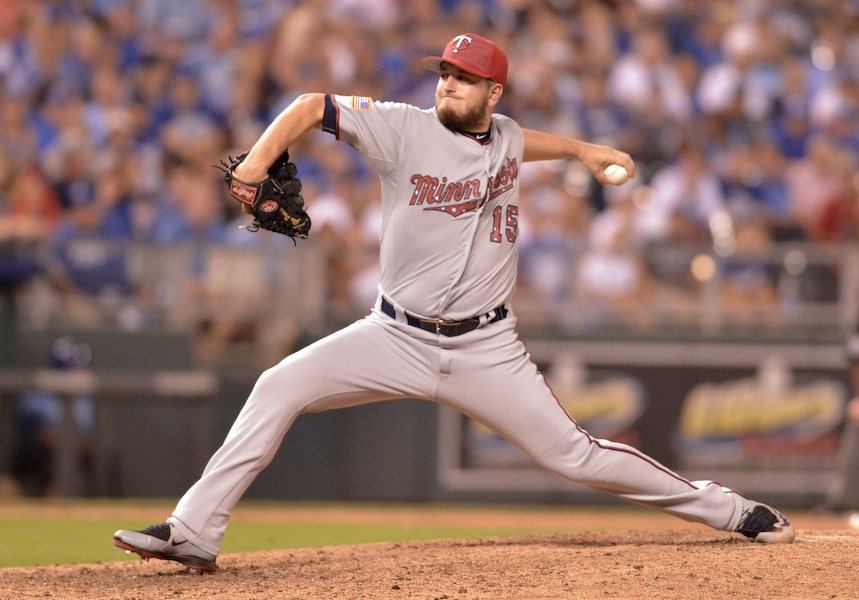 1. Glen Perkins is on pace for 51 saves. Joe Nathan set the franchise record when he notched 47 back in 2009. 2. Brian Dozier is on pace for 35 home runs, 87 extra-base hits and 122 runs scored. All incredible numbers. Only three Twins have ever scored 120 or more runs in a season: Chuck Knoblauch (1996), Rod Carew ('77) and Zoilo Versalles ('65). Tony Oliva currently holds the franchise record for extra-base hits with 84, set in 1964. It's worth noting that Dozier had 18 homers at the break last year and finished with 23. 3. Phil Hughes is on pace to allow 245 hits and 40 home runs. Only Bert Blyleven and Brad Radke have given up 40 homers as Twins. That's not necessarily the worst sign, because both those guys were pretty good. And despite leading the league in both hits and homers allowed, Hughes has still been fairly effective (especially lately). That is, in no small part, because… 4. Phil Hughes is on pace to allow 20 walks. That would equate to 36 total over the span of two seasons. To say he is in control would be a putting it lightly. 5. Kyle Gibson is on pace to throw 207 innings. At 27, he would be the youngest Twins pitcher to eclipse 200 innings since Scott Baker and Nick Blackburn both did so in 2009. 6. Kyle Gibson and Mike Pelfrey are on pace to induce a combined 76 ground ball double plays. They rank first and second in the majors with 22 and 20, respectively. Gibson has already matched his total from last year, which ranked him sixth in the AL. 7. Joe Mauer is on pace to make 658 plate appearances. It would set a career high, so the shift to first base is at least having its desired effect in terms of keeping him on the field. He's also on pace for 106 strikeouts, which would be the first triple-digit K season in his 12-year career. 8. Torii Hunter is on pace for 25 home runs. He hasn't hit 20 since 2011, and hasn't hit 25 since his last year with the Twins in 2007. It's been a heck of a first half for Hunter, who turns 40 next week. 9. Blaine Boyer is on pace to make 76 relief appearances. It'd be the most for a Twins pitcher since Matt Guerrier was called upon 79 times back in 2009. Boyer has been one of the most oft-used bullpen arms in the league, tying for the AL lead with 42. Prior to this season, he had appeared in 37 major-league games over the past four years. 10. The Twins are on pace to get caught stealing 55 times. They haven't been pinched that many times since 2002. Interesting, in that Paul Molitor is viewed as a base-running guru.
 -
Earlier this week, I ran through the setbacks that have struck nearly every high-upside reliever in the Twins' system. A day before, Seth had run through some of the bullpen options that are available to the Twins in the minors, but none look like difference-makers at this point in time. So if the Twins want to upgrade their most prevalent weakness for the stretch run, they will need to make a trade. What's out there, and what would it take to get something done?First, let's discuss the merits of making a deal. I've seen many people suggest that giving up prospects for temporary relief help is an ill-advised and short-sighted strategy, and to some extent, that's true. The Twins absolutely must avoid anything resembling a Wilson Ramos-for-Matt Capps swap, where a valuable future piece was forfeited to bring in a rather ordinary bullpen arm. However, that trade is not exactly the standard. The Twins, like many other teams, have been able to add quality relievers in July (and August) without giving up too much. Minnesota also faces an interesting situation with its stacked system leading to potential overcrowding on the 40-man roster. While protecting the A-level prospects shouldn't be a problem, there are numerous second-tier guys in the minors that might be appealing to other clubs, and the Twins would benefit from moving those youngsters for a return before being forced to risk losing them for nothing. One other player to keep an eye on as a trade chit is Oswaldo Arcia, who has turned it on in Triple-A recently with six home runs in his last nine games but has no clear path to playing time in Minnesota. He'll be out of options next year. As the trade deadline approaches, it's a seller's market with so many teams theoretically "in the race" due to the close groupings of W/L records and the presence of four wild-card spots, but there are a lot of relievers out there who could be available and some might not cost all that much. Here's a breakdown of some stand-out names: Neal Cotts - LHP, MIL Right now the Twins are relying on Brian Duensing, who has a 6.00 ERA and 11/10 K/BB ratio, and Ryan O'Rourke, who has two major-league appearances, as the lefty options in the pen, so the allure of an established veteran southpaw is obvious. Cotts fits that bill: the 35-year-old is averaging more than a strikeout per inning and holding left-handed batters to a .533 OPS. He's an impending free agent for a last-place club, making him an obvious trade candidate. Will Smith - LHP, MIL If the Twins want to target a younger player with more long-term appeal, Smith is an intriguing option in the Brewers bullpen. The 25-year-old has been a dominant force over the past three seasons, averaging 11.6 K/9 and holding opponents to a .224 average. He would obviously take more to get, but he's under team control for a couple more years and could be a fixture. Would an Arcia-for-Smith swap make mutual sense? Francisco Rodriguez - RHP, MIL Rounding out our look at Milwaukee's relief corps is the club's closer, a five-time All-Star who is enjoying another exceptional year. In Perkins-like fashion, K-Rod has converted every save chance this year, carrying a 1.41 ERA, 0.88 WHIP and 37-to-9 K/BB ratio in 32 innings. With those numbers, and his closer status, he'll be a pricy acquisition, but the club could use a dominant right-handed setup man with Casey Fien and Blaine Boyer failing to impress. Rodriguez is signed through next year, with an option for 2017. Alexi Ogando - RHP, BOS Once a talented young starter for the Rangers, Ogando saw his stock drop off a cliff during an injury-plagued 2014 campaign and had to settle for a one-year, $1.5 million deal with Boston. He has made good, and is holding opponents to a .223/.289/.439 slash line in 31 appearances out of the Red Sox bullpen. Joaquin Benoit - RHP, SD Ken Rosenthal of FOX Sports reported yesterday that the Twins are interested in Benoit, a long-time excellent reliever who recently pitched for the Tigers. The 37-year-old is enjoying a characteristically stellar year for the Padres, with a 2.25 ERA and .133 opponents' batting average, and could be the lockdown eighth-inning guy that Minnesota needs as a bridge to Glen Perkins. He's making $8 million this year, with another $8 million option for 2016. Zach Putnam - RHP, CWS The Sox are mired at the bottom of the Central and would likely be open to moving players for young talent, even if it means doing business with a division rival. Putnam has moved around quite a bit -- he's with his fourth organization since 2011 -- but has really found a late-inning groove over the last two seasons, with 2.62 ERA and 87-to-33 K/BB ratio in 82 innings. He is 27 and has four years of team control remaining. Mark Lowe - RHP, SEA Lowe signed with Seattle on a minor-league deal in the offseason and has been doing tremendous work out of the Mariners bullpen since being called up in early May. In 27 innings, he has allowed only 21 hits, and zero homers, for a 0.67 ERA. He has 23 strikeouts in 14 innings since the start of June. Tyler Clippard - RHP, OAK Trading an impending free agent closer for prospects at the deadline after falling out of the race early is exactly the kind of move you'd expect from the Athletics, so Clippard seems highly likely to go somewhere. Will it be Minnesota? The bespectacled righty offers the performance, track record, and bat-missing stuff that the Twins are likely seeking in a late-inning upgrade, but with free agency approaching, he probably wouldn't care for being dealt to a destination where he can't add to his saves total. LaTroy Hawkins - RHP, COL Hawkins debuted with the Twins 20 years ago, in 1995, and at age 42 he is still somehow getting big-league hitters out. Since returning from an early-season stint on the disabled list, Hawk has a 0.84 ERA with 10 strikeouts and one walk over 10 2/3 innings. Reuniting him with bullpen coach Eddie Guardado would be a fun story, and the price to acquire Hawkins couldn't be that high. Christian Friedrich - LHP, COL The former first-round draft pick fizzled out as a starter in Colorado, but has found his niche as a lefty specialist out of the Rockies bullpen, where he is holding same-sided hitters to a .203/.262/.271 line. Just 27 and not yet in his arbitration stage, Friedrich is a guy who could stick around for a while. Steve Cishek - RHP, MIA Not only is Cishek's last name similar to Pat Neshek's, his quirky delivery and historical dominance are also reminiscent of the former Twins reliever in his prime. Over the past four years, Cishek has posted a 2.70 ERA with 281 strikeouts in 253 innings for the Fish. He's currently going through his toughest season, and was actually sent to Double-A at the beginning of June, but he has looked much more like himself since returning from the brief demotion. Barry Jackson of the Miami Herald stated earlier this month that the Marlins are willing to move Cishek, adding that he's unlikely to be tendered in arbitration this winter. Jim Johnson - RHP, ATL Johnson has never been a big strikeout guy but has always been effective late in games, and led the league in saves as Baltimore's closer in both 2012 and 2013. He endured a messy 2014 campaign but has bounced back this year with the Braves, putting up a 2.14 ERA and 1.23 WHIP over 43 appearances as an oft-used setup man. Johnson hasn't allowed a run since June 6th. He just seems like the kind of guy Minnesota would target. What do you think? Do any of the names listed above appeal to you? Are there other names potentially on the market that intrigue you? Sound off in the comments. Click here to view the article
-
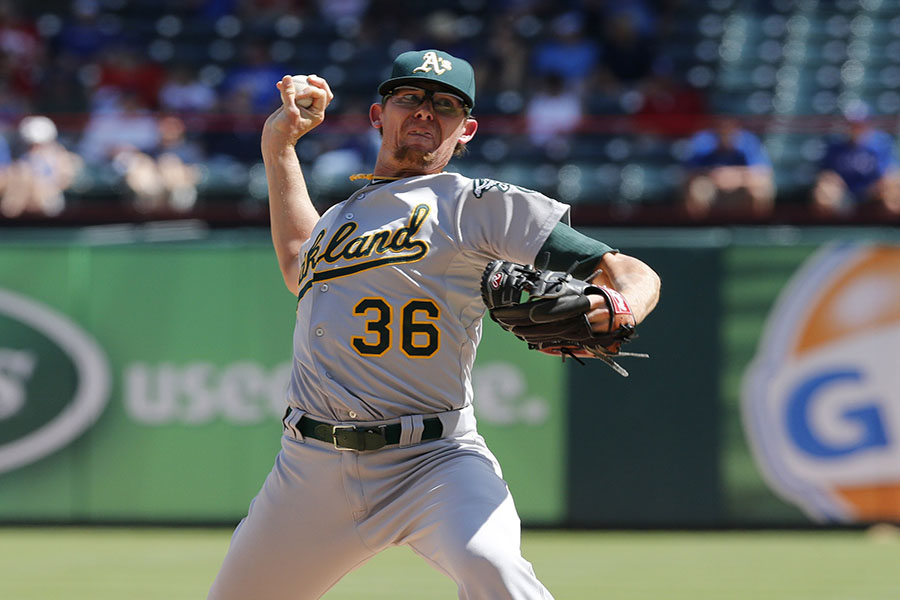 First, let's discuss the merits of making a deal. I've seen many people suggest that giving up prospects for temporary relief help is an ill-advised and short-sighted strategy, and to some extent, that's true. The Twins absolutely must avoid anything resembling a Wilson Ramos-for-Matt Capps swap, where a valuable future piece was forfeited to bring in a rather ordinary bullpen arm. However, that trade is not exactly the standard. The Twins, like many other teams, have been able to add quality relievers in July (and August) without giving up too much. Minnesota also faces an interesting situation with its stacked system leading to potential overcrowding on the 40-man roster. While protecting the A-level prospects shouldn't be a problem, there are numerous second-tier guys in the minors that might be appealing to other clubs, and the Twins would benefit from moving those youngsters for a return before being forced to risk losing them for nothing. One other player to keep an eye on as a trade chit is Oswaldo Arcia, who has turned it on in Triple-A recently with six home runs in his last nine games but has no clear path to playing time in Minnesota. He'll be out of options next year. As the trade deadline approaches, it's a seller's market with so many teams theoretically "in the race" due to the close groupings of W/L records and the presence of four wild-card spots, but there are a lot of relievers out there who could be available and some might not cost all that much. Here's a breakdown of some stand-out names: Neal Cotts - LHP, MIL Right now the Twins are relying on Brian Duensing, who has a 6.00 ERA and 11/10 K/BB ratio, and Ryan O'Rourke, who has two major-league appearances, as the lefty options in the pen, so the allure of an established veteran southpaw is obvious. Cotts fits that bill: the 35-year-old is averaging more than a strikeout per inning and holding left-handed batters to a .533 OPS. He's an impending free agent for a last-place club, making him an obvious trade candidate. Will Smith - LHP, MIL If the Twins want to target a younger player with more long-term appeal, Smith is an intriguing option in the Brewers bullpen. The 25-year-old has been a dominant force over the past three seasons, averaging 11.6 K/9 and holding opponents to a .224 average. He would obviously take more to get, but he's under team control for a couple more years and could be a fixture. Would an Arcia-for-Smith swap make mutual sense? Francisco Rodriguez - RHP, MIL Rounding out our look at Milwaukee's relief corps is the club's closer, a five-time All-Star who is enjoying another exceptional year. In Perkins-like fashion, K-Rod has converted every save chance this year, carrying a 1.41 ERA, 0.88 WHIP and 37-to-9 K/BB ratio in 32 innings. With those numbers, and his closer status, he'll be a pricy acquisition, but the club could use a dominant right-handed setup man with Casey Fien and Blaine Boyer failing to impress. Rodriguez is signed through next year, with an option for 2017. Alexi Ogando - RHP, BOS Once a talented young starter for the Rangers, Ogando saw his stock drop off a cliff during an injury-plagued 2014 campaign and had to settle for a one-year, $1.5 million deal with Boston. He has made good, and is holding opponents to a .223/.289/.439 slash line in 31 appearances out of the Red Sox bullpen. Joaquin Benoit - RHP, SD Ken Rosenthal of FOX Sports reported yesterday that the Twins are interested in Benoit, a long-time excellent reliever who recently pitched for the Tigers. The 37-year-old is enjoying a characteristically stellar year for the Padres, with a 2.25 ERA and .133 opponents' batting average, and could be the lockdown eighth-inning guy that Minnesota needs as a bridge to Glen Perkins. He's making $8 million this year, with another $8 million option for 2016. Zach Putnam - RHP, CWS The Sox are mired at the bottom of the Central and would likely be open to moving players for young talent, even if it means doing business with a division rival. Putnam has moved around quite a bit -- he's with his fourth organization since 2011 -- but has really found a late-inning groove over the last two seasons, with 2.62 ERA and 87-to-33 K/BB ratio in 82 innings. He is 27 and has four years of team control remaining. Mark Lowe - RHP, SEA Lowe signed with Seattle on a minor-league deal in the offseason and has been doing tremendous work out of the Mariners bullpen since being called up in early May. In 27 innings, he has allowed only 21 hits, and zero homers, for a 0.67 ERA. He has 23 strikeouts in 14 innings since the start of June. Tyler Clippard - RHP, OAK Trading an impending free agent closer for prospects at the deadline after falling out of the race early is exactly the kind of move you'd expect from the Athletics, so Clippard seems highly likely to go somewhere. Will it be Minnesota? The bespectacled righty offers the performance, track record, and bat-missing stuff that the Twins are likely seeking in a late-inning upgrade, but with free agency approaching, he probably wouldn't care for being dealt to a destination where he can't add to his saves total. LaTroy Hawkins - RHP, COL Hawkins debuted with the Twins 20 years ago, in 1995, and at age 42 he is still somehow getting big-league hitters out. Since returning from an early-season stint on the disabled list, Hawk has a 0.84 ERA with 10 strikeouts and one walk over 10 2/3 innings. Reuniting him with bullpen coach Eddie Guardado would be a fun story, and the price to acquire Hawkins couldn't be that high. Christian Friedrich - LHP, COL The former first-round draft pick fizzled out as a starter in Colorado, but has found his niche as a lefty specialist out of the Rockies bullpen, where he is holding same-sided hitters to a .203/.262/.271 line. Just 27 and not yet in his arbitration stage, Friedrich is a guy who could stick around for a while. Steve Cishek - RHP, MIA Not only is Cishek's last name similar to Pat Neshek's, his quirky delivery and historical dominance are also reminiscent of the former Twins reliever in his prime. Over the past four years, Cishek has posted a 2.70 ERA with 281 strikeouts in 253 innings for the Fish. He's currently going through his toughest season, and was actually sent to Double-A at the beginning of June, but he has looked much more like himself since returning from the brief demotion. Barry Jackson of the Miami Herald stated earlier this month that the Marlins are willing to move Cishek, adding that he's unlikely to be tendered in arbitration this winter. Jim Johnson - RHP, ATL Johnson has never been a big strikeout guy but has always been effective late in games, and led the league in saves as Baltimore's closer in both 2012 and 2013. He endured a messy 2014 campaign but has bounced back this year with the Braves, putting up a 2.14 ERA and 1.23 WHIP over 43 appearances as an oft-used setup man. Johnson hasn't allowed a run since June 6th. He just seems like the kind of guy Minnesota would target. What do you think? Do any of the names listed above appeal to you? Are there other names potentially on the market that intrigue you? Sound off in the comments.
 -
Reed is actually the same age as Burdi. Jones was drafted only three years ago, but his lingering control problems are worrisome. Hawkins and Guardado reunited. That'd be something!
-
It comes as no real surprise that the bullpen has developed into a weakness for the Minnesota Twins. That much was easy enough to foresee in spring training. After some surprising early success gave way, we've reached a point where Paul Molitor has basically one reliever he can trust. That one reliever happens to be quite possibly the best in the game at what he does, but Glen Perkins needs some help if the Twins want to hang on as contenders in the AL Central. Before the season started, it appeared that the organization might have plenty of options for late-inning reinforcements around this point in the summer. But those options have dried up in shocking fashion over the first half, helping illustrate the volatility of relief prospects in general.No player exemplifies this better than Nick Burdi. He was perhaps the most dominant college closer in the country with Louisville before being drafted 46th overall last year, and had all the looks of an MLB-ready arm while mowing through the low minors in July and August. Between two levels of A-ball, he struck out 38 hitters in 20 innings. No one stood a chance. Burdi opened this season at Double-A, and got on track after a rough first month, rattling off shutdown appearances for five weeks from May into June. Then the wheels fell off, leading to a demotion to back to Single-A. Suddenly, the idea of Burdi helping this year seems far-fetched. He's not the only fast-rising arm to stall out at Chattanooga this year. Jake Reed, another 2014 pick who blew through the low levels after being drafted out of college, has been knocked around by Double-A hitters for a 5.40 ERA and 1.48 WHIP. Fellow fireballer Zack Jones landed on the disabled list last week following a trainwreck outing in which he walked four and allowed four runs. These are the big power arms that were viewed as potential wild cards coming into the season. They're not going to help, and it doesn't look like the Twins are going find a difference-maker at Triple-A either. Michael Tonkin has been ineffective in a few stints with Minnesota, Lester Oliveros is injured, and Alex Meyer... yikes. A.J. Achter has put up dazzling numbers, and got a bit of big-league experience last September, but as was the case with Anthony Slama, there clearly is skepticism about how his stuff will play in the majors. Despite already being on the 40-man roster and posting otherworldly numbers at Triple-A (he has a 0.80 WHIP, and that's after giving up four runs in his last outing), he has been bypassed for promotions by Ryan Pressly, Meyer, and Tonkin twice. Almost everywhere you look, things are going awry for the numerous prospects that Minnesota hoped might provide a midseason bullpen jolt. The few that are healthy and performing are evidently not trusted. So if the Twins want an impactful upgrade, they will need to look externally to the trade market. We'll explore the options there, and the merits of making a move, on Friday. Click here to view the article
-
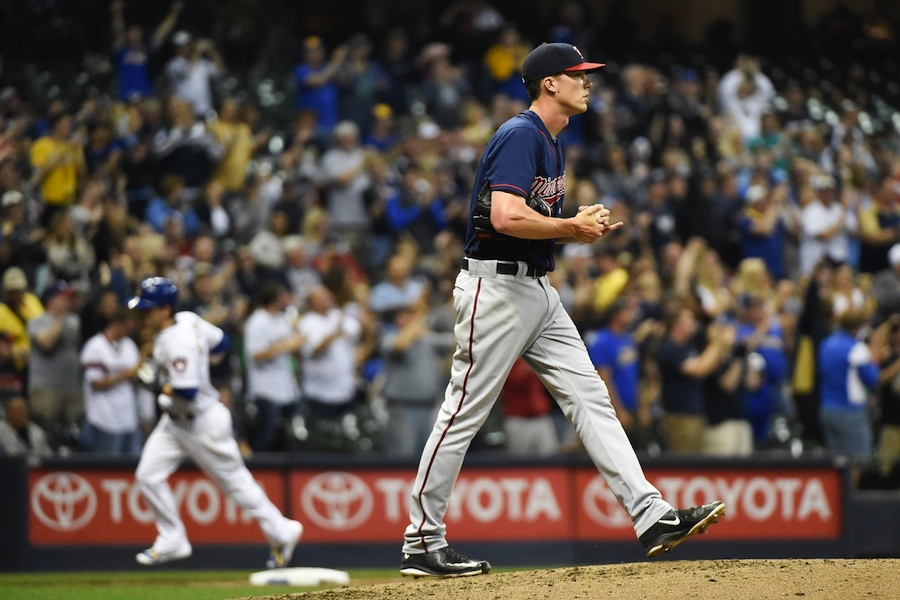 No player exemplifies this better than Nick Burdi. He was perhaps the most dominant college closer in the country with Louisville before being drafted 46th overall last year, and had all the looks of an MLB-ready arm while mowing through the low minors in July and August. Between two levels of A-ball, he struck out 38 hitters in 20 innings. No one stood a chance. Burdi opened this season at Double-A, and got on track after a rough first month, rattling off shutdown appearances for five weeks from May into June. Then the wheels fell off, leading to a demotion to back to Single-A. Suddenly, the idea of Burdi helping this year seems far-fetched. He's not the only fast-rising arm to stall out at Chattanooga this year. Jake Reed, another 2014 pick who blew through the low levels after being drafted out of college, has been knocked around by Double-A hitters for a 5.40 ERA and 1.48 WHIP. Fellow fireballer Zack Jones landed on the disabled list last week following a trainwreck outing in which he walked four and allowed four runs. These are the big power arms that were viewed as potential wild cards coming into the season. They're not going to help, and it doesn't look like the Twins are going find a difference-maker at Triple-A either. Michael Tonkin has been ineffective in a few stints with Minnesota, Lester Oliveros is injured, and Alex Meyer... yikes. A.J. Achter has put up dazzling numbers, and got a bit of big-league experience last September, but as was the case with Anthony Slama, there clearly is skepticism about how his stuff will play in the majors. Despite already being on the 40-man roster and posting otherworldly numbers at Triple-A (he has a 0.80 WHIP, and that's after giving up four runs in his last outing), he has been bypassed for promotions by Ryan Pressly, Meyer, and Tonkin twice. Almost everywhere you look, things are going awry for the numerous prospects that Minnesota hoped might provide a midseason bullpen jolt. The few that are healthy and performing are evidently not trusted. So if the Twins want an impactful upgrade, they will need to look externally to the trade market. We'll explore the options there, and the merits of making a move, on Friday.
