



Nick Nelson
-
Posts
8,327 -
Joined
-
Last visited
-
Days Won
56
Content Type
Profiles
News
Minnesota Twins Videos
2026 Minnesota Twins Top Prospects Ranking
2022 Minnesota Twins Draft Picks
Minnesota Twins Free Agent & Trade Rumors, Notes, & Tidbits
Guides & Resources
2023 Minnesota Twins Draft Picks
The Minnesota Twins Players Project
2024 Minnesota Twins Draft Picks
2025 Minnesota Twins Draft Pick Tracker
2026 Minnesota Twins Draft Tracker: Picks & Bonuses
Forums
Blogs
Events
Store
Downloads
Gallery
Everything posted by Nick Nelson
-
 I'm just speaking to his general demeanor on the mound and after games with the press. No inside info or anything there. Can't say I've heard one good thing about his attitude here though. People seem way overly worked up about Rosario. Outside of the shiny ERA he hasn't been good for the Cubs this year. Rodriguez is a great story but does anyone really think he'd have even gotten a shot here? Chargois is the loss that bums me out, but it's not a given that he's gonna have more success than Drake going forward. I'm not sure why it's necessary to label these players "mediocrities," as all three have the potential to be more than that (and have been) but the key point here is that the Twins have found players to fill important areas of needed. They needed a 4th OF to replace Grossman. They needed a RH masher on the bench. And they need all the high-upside relievers they can get. Plenty of other teams have thought they could find something in Drake. The Twins were in a position where they could afford to give him a longer tryout and they should be commended for doing so. That's what you do in a year like this. I get why people are keeping expectations in check with Drake but guys like that -- with monster Triple-A numbers and a stupendous MLB strikeout rate -- aren't available everywhere, despite what some of the comments above might suggest. He has a 12.4% swinging strike rate in the majors and 12.5% this year, putting him in the same range as Busenitz and Hildy.
- 101 replies
-
- 12
-

-
- jake cave
- tyler austin
- (and 1 more)
-
If the Minnesota Twins are going to return to contention, it'll be primarily on the strength of their nucleus, which needs to rebound after a down year in 2018. But getting over the top will require a full team effort. That means identifying the right complementary pieces. Finding quality supporting parts was a continual struggle as the Twins failed to push their last formidable core past the first round of the playoffs. But this reconfigured front office has managed to add a few potentially key assets on the sly. It could prove to be a major positive amidst an otherwise dreary campaign.Through two drafts and two deadlines worth of "sell" trades, Derek Falvey and Thad Levine have netted a bounty of minor-league talent, supplementing the long-term pipeline. But the front office has also acquired more immediate help through low-key maneuvers While these players aren't going to be stars, they could all bring real value for essentially no acquisition cost. Let's take a look at three current contributors of modest origins who may factor for years to come. Jake Cave, OF: Acquired in March from NYY for RHP Luis Gil The Twins took notice of Cave while scouting the Yankees system during trade discussions at the 2017 deadline. They ended up getting back two pitchers for Jaime Garcia at that time, but later snagged Cave via trade this spring when he landed on waivers. Last summer, Cave was amidst a slugging breakout at Triple-A, hitting 15 home runs in 72 games after previously totaling 24 in 568 career contests. "He made some adjustments that we thought led to the power surge that he had, and we think those will continue going forward," said Falvey when the Twins acquired Cave in March. So far, that assessment has proven astute. The 25-year-old outfielder has launched a dozen home runs, which would've been a career-high before last year's 20. Six of those have come in the majors, including an absolutely majestic blast to straightaway center on Sunday that flashed his raw strength. Cave went to a part of Target Field only three have reached before: Jim Thome, Byungho Park, Miguel Sano. Through 164 plate appearances in the big leagues, Cave has tallied 17 extra-base hits with a .480 slugging percentage – awfully impressive for a guy who slugged .398 through four minor-league seasons prior to 2017. As a semi-random comparison, Michael Cuddyer slugged .399 with 14 extra-base hits through his first 164 plate appearances in the majors. The MLB sample size remains small, but Cave has looked very capable at the plate and he's also a strong runner – albeit not a burner – with the makings of an asset in the outfield. He's a bit stretched in center, and his rookie season has been marred by some painful defensive blunders, but that'll happen. Given what the Twins risked to get Cave – Luis Gil, a 20-year-old righty currently at rookie ball in the Yankees system, and Kennys Vargas, who was DFA'd to make room but ended up back here anyway – the move looks like a slam dunk. Cave probably won't be a full-time starter but he can be a valuable bench piece or platoon mate, and the Twins control him through age 30. Tyler Austin, 1B: Acquired in July from NYY along with RHP Luis Rijo for RHP Lance Lynn Last offseason, one of Minnesota's top needs was a right-handed masher for the bench, to complement a predominantly left-handed lineup. It went unaddressed, and still existed when the Twins were able to bring Austin aboard in the Lance Lynn trade. Scavenging 40-man casualties from one of baseball's best systems is a strategy that's now paid off in the form of multiple instantly productive power hitters. Austin was the odd bat out in a loaded mix for the Yankees, but offers a welcome infusion for Minnesota. Through eight games in the new uniform he already has three homers, a double, and six RBIs. With 298 plate appearances under his belt, Austin has a .487 slugging percentage in the majors, and a 1.075 OPS against left-handed pitching. He's solid at first, and can play the outfield corners in a pinch. In others words, he's pretty much exactly what this offense needed – a gem of a find. And all the Twins had to do was expend four months, several groans, and a few million bucks on a non-performing malcontent. Oliver Drake, RP: Acquired in August off waivers from TOR We're dealing with small samples in all cases here, and Drake's is tinier than either of the above. So the praise here needs to be qualified with that. However... he has looked really, really good. On Monday night, Drake ran his hitless streak as a Twin to 8 1/3 innings by tossing two perfect frames with four strikeouts. He has now averaged 10.1 K/9 rate as a big-leaguer – albeit with a 4.67 ERA and 1.48 WHIP – and his Triple-A numbers are immaculate: 1.80 ERA, 1.04 WHIP, 12.7 K/9. Much like lefty bullpen counterpart Gabriel Moya, Drake plays up his unspectacular fastball with a quirky delivery and standout offspeed pitch that give hitters fits. The 31-year-old has pitched for a record five different MLB teams this season, which speaks to his perceived expendability, but in a way, it also speaks to the opposite. He's hardly entrenched already as a long-term bullpen cog, but Drake adds another very intriguing arm to the mix going forward. Like Cave and Austin, the Twins can control him very reasonably for a long time if they desire. These sort of pickups aren't necessarily the flashiest, but they're crafty, and each could pay immense dividends as affordable components alongside those central building blocks in the sustainable winner Falvey envisions. Click here to view the article
- 101 replies
-
- 6
-
-
- jake cave
- tyler austin
- (and 1 more)
-
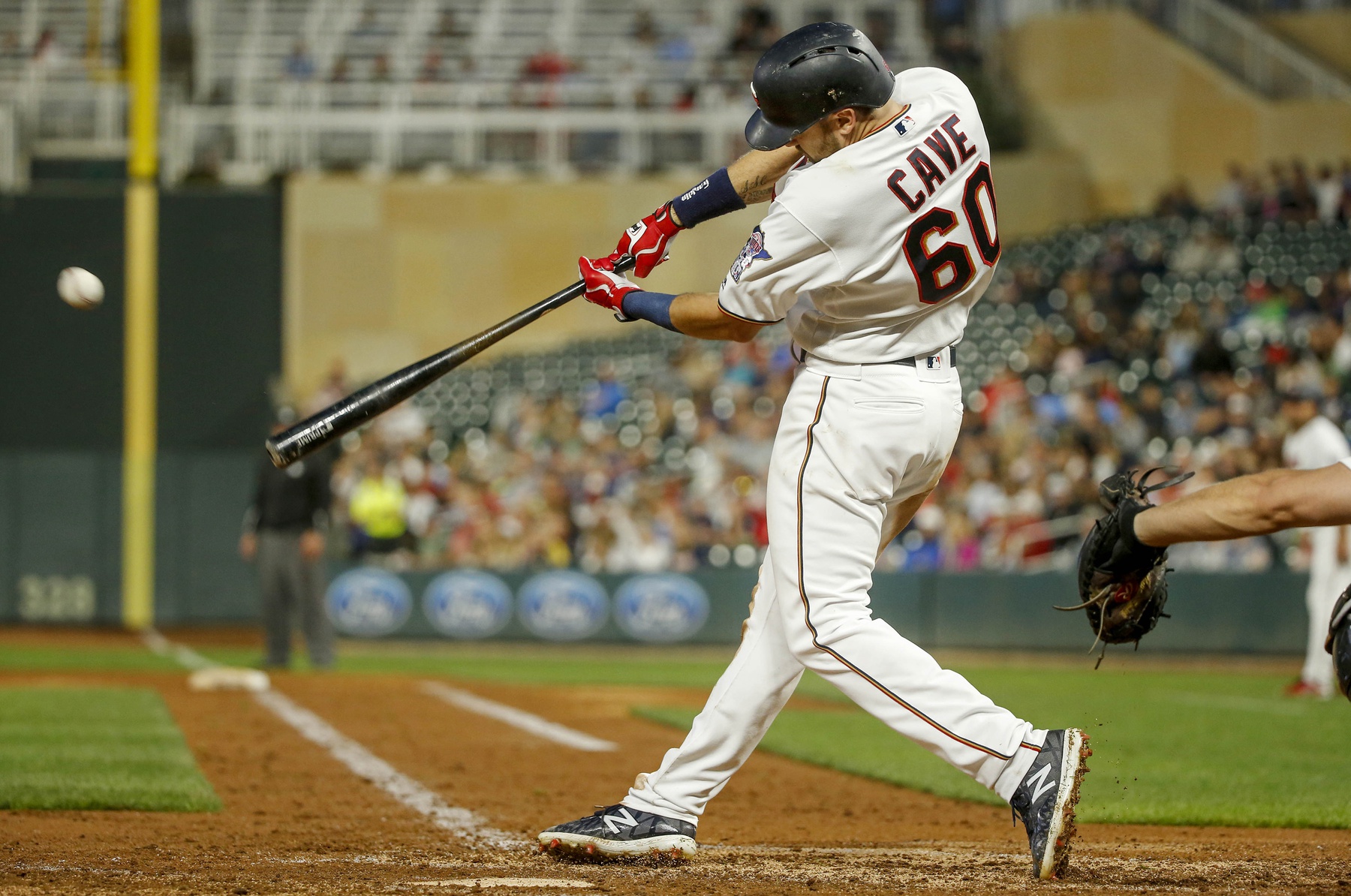 Through two drafts and two deadlines worth of "sell" trades, Derek Falvey and Thad Levine have netted a bounty of minor-league talent, supplementing the long-term pipeline. But the front office has also acquired more immediate help through low-key maneuvers While these players aren't going to be stars, they could all bring real value for essentially no acquisition cost. Let's take a look at three current contributors of modest origins who may factor for years to come. Jake Cave, OF: Acquired in March from NYY for RHP Luis Gil The Twins took notice of Cave while scouting the Yankees system during trade discussions at the 2017 deadline. They ended up getting back two pitchers for Jaime Garcia at that time, but later snagged Cave via trade this spring when he landed on waivers. Last summer, Cave was amidst a slugging breakout at Triple-A, hitting 15 home runs in 72 games after previously totaling 24 in 568 career contests. "He made some adjustments that we thought led to the power surge that he had, and we think those will continue going forward," said Falvey when the Twins acquired Cave in March. So far, that assessment has proven astute. The 25-year-old outfielder has launched a dozen home runs, which would've been a career-high before last year's 20. Six of those have come in the majors, including an absolutely majestic blast to straightaway center on Sunday that flashed his raw strength. Cave went to a part of Target Field only three have reached before: Jim Thome, Byungho Park, Miguel Sano. Through 164 plate appearances in the big leagues, Cave has tallied 17 extra-base hits with a .480 slugging percentage – awfully impressive for a guy who slugged .398 through four minor-league seasons prior to 2017. As a semi-random comparison, Michael Cuddyer slugged .399 with 14 extra-base hits through his first 164 plate appearances in the majors. The MLB sample size remains small, but Cave has looked very capable at the plate and he's also a strong runner – albeit not a burner – with the makings of an asset in the outfield. He's a bit stretched in center, and his rookie season has been marred by some painful defensive blunders, but that'll happen. Given what the Twins risked to get Cave – Luis Gil, a 20-year-old righty currently at rookie ball in the Yankees system, and Kennys Vargas, who was DFA'd to make room but ended up back here anyway – the move looks like a slam dunk. Cave probably won't be a full-time starter but he can be a valuable bench piece or platoon mate, and the Twins control him through age 30. Tyler Austin, 1B: Acquired in July from NYY along with RHP Luis Rijo for RHP Lance Lynn Last offseason, one of Minnesota's top needs was a right-handed masher for the bench, to complement a predominantly left-handed lineup. It went unaddressed, and still existed when the Twins were able to bring Austin aboard in the Lance Lynn trade. Scavenging 40-man casualties from one of baseball's best systems is a strategy that's now paid off in the form of multiple instantly productive power hitters. Austin was the odd bat out in a loaded mix for the Yankees, but offers a welcome infusion for Minnesota. Through eight games in the new uniform he already has three homers, a double, and six RBIs. With 298 plate appearances under his belt, Austin has a .487 slugging percentage in the majors, and a 1.075 OPS against left-handed pitching. He's solid at first, and can play the outfield corners in a pinch. In others words, he's pretty much exactly what this offense needed – a gem of a find. And all the Twins had to do was expend four months, several groans, and a few million bucks on a non-performing malcontent. Oliver Drake, RP: Acquired in August off waivers from TOR We're dealing with small samples in all cases here, and Drake's is tinier than either of the above. So the praise here needs to be qualified with that. However... he has looked really, really good. On Monday night, Drake ran his hitless streak as a Twin to 8 1/3 innings by tossing two perfect frames with four strikeouts. He has now averaged 10.1 K/9 rate as a big-leaguer – albeit with a 4.67 ERA and 1.48 WHIP – and his Triple-A numbers are immaculate: 1.80 ERA, 1.04 WHIP, 12.7 K/9. Much like lefty bullpen counterpart Gabriel Moya, Drake plays up his unspectacular fastball with a quirky delivery and standout offspeed pitch that give hitters fits. The 31-year-old has pitched for a record five different MLB teams this season, which speaks to his perceived expendability, but in a way, it also speaks to the opposite. He's hardly entrenched already as a long-term bullpen cog, but Drake adds another very intriguing arm to the mix going forward. Like Cave and Austin, the Twins can control him very reasonably for a long time if they desire. These sort of pickups aren't necessarily the flashiest, but they're crafty, and each could pay immense dividends as affordable components alongside those central building blocks in the sustainable winner Falvey envisions.
 -
Article: Week in Review: Hitting a Stride
Nick Nelson replied to Nick Nelson's topic in Twins Daily Front Page News
In what sense did the FO "botch" the offseason? They compelled ownership to boost payroll beyond its comfort zone. They paid little for Lynn or Duke and got prospects back for them at the deadline. Odorizzi trade was fine. Reed and Morrison have been busts but hard to anticipate that. Those moves certainly don't constrict them going forward to the extent a Darvish signing. Bottom line is that nothing they did would've offset the massive decline from the Twins' internal core. Last year the combo of Erv/Buxton/Dozier/Sano produced 13.7 WAR, this year they have produced 0.7. Not sure how you can hold management accountable for that.- 33 replies
-
- 7
-
-
- joe mauer
- jorge polanco
- (and 2 more)
-
The Minnesota Twins haven't been at .500 or above since April 22nd. Will they get back there before the season ends? They are running out of time with less than a quarter of the schedule remaining, but they made inroads with a strong week at Target Field that saw the Twins hit their stride – emphasis on hit. Weekly Snapshot: Mon, 8/13 through Sun, 8/19 *** Record Last Week: 5-1 (Overall: 59-64) Run Differential Last Week: +12 (Overall: -21) Standing: 2nd Place in AL Central (12.0 GB) HIGHLIGHTS It's been awhile since we've had a noteworthy Joe Mauer highlight to celebrate, which speaks to his generally disappointing production this summer, but that didn't make last week's big moment feel any less special. Called upon as a pinch-hitter Friday night with the Twins trailing by a run in the seventh, Mauer got a hold of one and drove it over the wall in right-center, propelling Minnesota to victory. For all his shortcomings – among 23 qualified MLB first basemen, he ranks 18th in OPS – no one could accuse of Mauer of being unclutch: Even in his greatly diminished state, Mauer remains a genuinely trustworthy player in key spots. He's not the best hitter on the team but I'll still take him over anyone else with a crucial run 90 or 180 feet away. If this is the end of the road for him (more on that in a bit), that's definitely something I'll always remember about the latest stage of his career. Mauer added another home run in his first at-bat on Saturday, nearly matching his previous season total (3) in a week that saw him go 8-for-21 (.381) overall. Elsewhere: Although he has moved around in Paul Molitor's lineups a little, last week Jorge Polanco batted third in every game, and sure looked like a No. 3 hitter, driving in eight runs in six games. He flashed some nice pop with three doubles and a big home run. There were several other big contributors in an outstanding week for the offense, which produced 41 runs in six games. Miguel Sano sustained his invigorating re-emergence, launching three home runs and a double while driving in six. Logan Forsythe tallied five hits in Thursday's 15-run explosion and is batting .361 since joining the team at the end of July. Tyler Austin went 8-for-16 with two homers. Eddie Rosario collected hits in every game, and delivered the decisive dinger on Sunday afternoon. In the bullpen, Trevor Hildenberger rebounded from a run of bad outings, converting all three save chances in his first full week as closer. But it's Taylor Rogers who now stands out as the leader and stalwart of this bullpen. He's been pretty much spotless in August, and kept it rolling last week with four scoreless appearances. LOWLIGHTS Fresh off his misguided "front office gave up on us" grumblings, Ervin Santana took the hill and contributed another clunker. Despite being staked to eight early runs on Thursday night, Santana made things interesting by serving meatballs to Detroit's meager lineup, coughing up seven runs over four innings. In five starts since rejoining the Twins rotation, Santana has an 8.03 ERA and 4% swinging strike rate, with his fastball rarely reaching the 90s. Astonishingly, he has surrendered nine home runs in 24 2/3 innings. Clearly not close to 100%, and showing no meaningful progress, Santana was shut down again following his latest outing. It's unlikely we'll see him on the mound again this season, and that's for the best. The Twins gain far more benefit from giving those starts to others going forward. One very deserving candidate will finally get his chance on Monday, jumping into Santana's vacant spot. We'll cover this excellent news shortly. Jose Berrios endured his own struggles on Wednesday against Pittsburgh. It was the third time in his past four turns he's failed to complete the fifth inning, and on this occasion he couldn't even get through four. The right-hander's control, so sharp for much of the first half, has gradually deteriorated – in his first 13 starts he issued 14 walks in 83 2/3 innings (1.5 BB/9), while in the latter 12 he's issued 30 in 70 innings (4.3 BB/9). Speaking of shaky control, Kohl Stewart was plagued by it in his second MLB start, which lasted only 2 2/3 innings on Saturday. He threw just 31 of 65 pitches for strikes, and issued four walks, showing poor command while failing to replicate the grounder-heavy contact mix from his debut. I've said it before and I'll say it again: I'd love to see Stewart in relief before year's end. It's fairly evident the stuff doesn't play as a starter. But it'll all be moot if he can't stay in the zone. TRENDING STORYLINE Mauer's big home run on Friday night was a nice moment, but it doesn't change the reality that he's having one of his worst seasons at age 35. One has to believe he's had conversations with the Twins about his future. Maybe they're happy to bring him back on a cheapish short-term deal. Mauer can still be helpful in some capacity. Then again, the new regime isn't really attached to him, and Mauer doesn't necessarily fit with the vision of a rebuilt winner for the future. It's hard to imagine him playing anywhere else, so if the front office is signaling lukewarm interest, perhaps Mauer will determine the time has come. If so, how would it be handled? The homegrown MVP has enjoyed one of the better careers in franchise history, one deserving of celebration. It's not exactly in Joe's nature to make himself the center of attention, but I'd hope he will facilitate a bit of a send-off if he decides to retire with time remaining in the season. The fans would really enjoy it and I'm sure the team's marketing department would too. Following Monday's makeup game against the White Sox, the Twins have three homestands remaining – a four-game set against Oakland next weekend, followed by a six-gamer in early September and seven games to wrap up year, with Ron Gardenhire and the Tigers on hand for the second-to-last series. Worth keeping in mind. DOWN ON THE FARM The top three Twins pitching prospects are all trending up, and one is moving up. Brusdar Graterol and Stephen Gonsalves were already established as the cream of the system's crop, and reinforced their standings with big performances last week. On Wednesday, Graterol fired seven innings of one-run ball for the Miracle, scattering three hits and three walks while striking out six. In his last five starts he is 4-0 with a 2.37 ERA, and opponents are batting .196. The hard-throwing righty, who turns 20 next week, has wasted little time transferring his dominance from the Midwest League to the Florida State League. Meanwhile, Gonsalves took care of business yet again, and finally got his just reward. He tossed six shutout innings on Tuesday to extend a spectacular run in the International League, where he has allowed only nine runs on 34 hits in his past 64 innings. On Sunday, we learned that he'll be making his major-league debut on Monday against the White Sox. A brief Red Wings teammate after joining Gonsalves in Rochester roster last week, Lewis Thorpe solidified his case for being mentioned alongside him and Graterol. In his first Triple-A start on Wednesday, Thorpe threw 6 1/3 innings of three-run ball with no walks and nine strikeouts, inducing an eye-popping 22 swinging strikes. In his last 10 Double A starts before the promotion he'd posted a 2.09 ERA and 66-to-10 K/BB ratio in 52 innings with opponents slashing .178/.221/.259. Thorpe is a stud and given his presence on the 40-man roster I wouldn't be surprised if we see him in September alongside the newly promoted Gonsalves. LOOKING AHEAD Monday's game is the kind of exciting draw that keeps fans watching in a lost season. We've been waiting a long time to see Gonsalves on the big-league stage and now we'll finally get our chance after his magnificent stretch at Triple-A. It's a much-needed glimpse of the team's hopefully bright future. White Sox fans are surely feeling the same way about the next game, which will see Michael Kopech make his big-league debut against Minnesota. Ranked as the game's 13th-best prospect by Baseball America, Kopech has an incredible fastball that's sure to give Twins hitters fits, on Tuesday and well beyond. MONDAY, 8/20: WHITE SOX @ TWINS – RHP Lucas Giolito v. LHP Stephen Gonsalves TUESDAY, 8/21: TWINS @ WHITE SOX – RHP Jose Berrios v. RHP Michael Kopech WEDNESDAY, 8/22: TWINS @ WHITE SOX – RHP Kyle Gibson v. LHP Carlos Rodon THURSDAY, 8/23: ATHLETICS @ TWINS – RHP Trevor Cahill v. RHP Kohl Stewart FRIDAY, 8/24: ATHLETICS @ TWINS – LHP Sean Manaea v. RHP Jake Odorizzi SATURDAY, 8/25: ATHLETICS @ TWINS – RHP Mike Fiers v. LHP Stephen Gonsalves SUNDAY, 8/26: ATHLETICS @ TWINS – LHP Brett Anderson v. RHP Jose Berrios Catch Up On Twins Daily Game Recaps Game 117 | MIN 5, PIT 2: Odorizzi, Polanco Spark ComebackGame 118 | MIN 6, PIT 4: New-Look Bullpen Boosts Twins Over BuccosGame 119 | MIN 15, DET 8: Five Hits for Forsythe in Busy Night on the BasesGame 120 | MIN 5, DET 4: Take a Bow, JoeGame 121 | DET 7, MIN 5: Stewart Bombs Second AuditionGame 122 | MIN 5, DET 4: Late Rosario Homer Lifts Twins to Elusive One-Run Victory Click here to view the article
- 33 replies
-
- 2
-
-
- joe mauer
- jorge polanco
- (and 2 more)
-
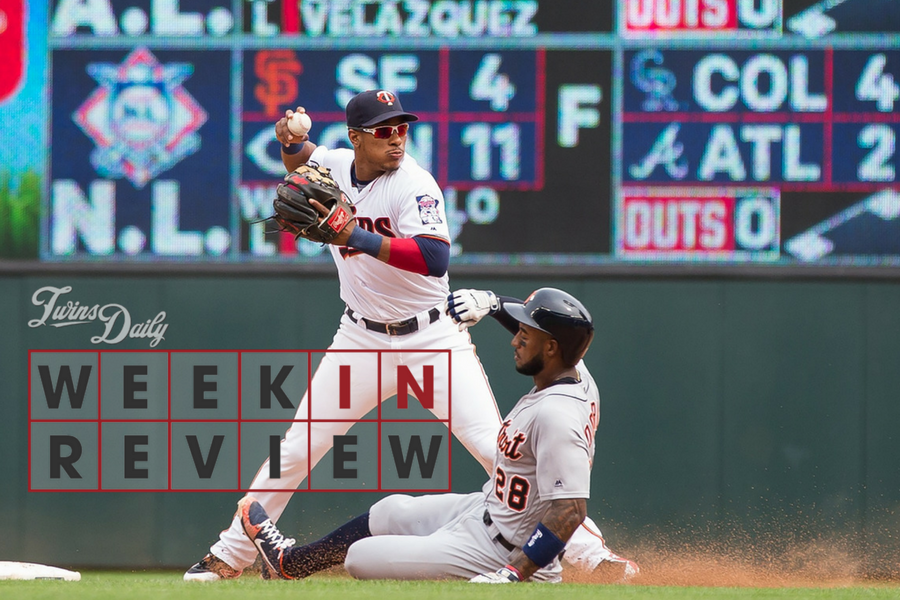 Weekly Snapshot: Mon, 8/13 through Sun, 8/19 *** Record Last Week: 5-1 (Overall: 59-64) Run Differential Last Week: +12 (Overall: -21) Standing: 2nd Place in AL Central (12.0 GB) HIGHLIGHTS It's been awhile since we've had a noteworthy Joe Mauer highlight to celebrate, which speaks to his generally disappointing production this summer, but that didn't make last week's big moment feel any less special. Called upon as a pinch-hitter Friday night with the Twins trailing by a run in the seventh, Mauer got a hold of one and drove it over the wall in right-center, propelling Minnesota to victory. For all his shortcomings – among 23 qualified MLB first basemen, he ranks 18th in OPS – no one could accuse of Mauer of being unclutch: https://twitter.com/morsecode/status/1030588064282931200 Even in his greatly diminished state, Mauer remains a genuinely trustworthy player in key spots. He's not the best hitter on the team but I'll still take him over anyone else with a crucial run 90 or 180 feet away. If this is the end of the road for him (more on that in a bit), that's definitely something I'll always remember about the latest stage of his career. Mauer added another home run in his first at-bat on Saturday, nearly matching his previous season total (3) in a week that saw him go 8-for-21 (.381) overall. Elsewhere: Although he has moved around in Paul Molitor's lineups a little, last week Jorge Polanco batted third in every game, and sure looked like a No. 3 hitter, driving in eight runs in six games. He flashed some nice pop with three doubles and a big home run. There were several other big contributors in an outstanding week for the offense, which produced 41 runs in six games. Miguel Sano sustained his invigorating re-emergence, launching three home runs and a double while driving in six. Logan Forsythe tallied five hits in Thursday's 15-run explosion and is batting .361 since joining the team at the end of July. Tyler Austin went 8-for-16 with two homers. Eddie Rosario collected hits in every game, and delivered the decisive dinger on Sunday afternoon. In the bullpen, Trevor Hildenberger rebounded from a run of bad outings, converting all three save chances in his first full week as closer. But it's Taylor Rogers who now stands out as the leader and stalwart of this bullpen. He's been pretty much spotless in August, and kept it rolling last week with four scoreless appearances. LOWLIGHTS Fresh off his misguided "front office gave up on us" grumblings, Ervin Santana took the hill and contributed another clunker. Despite being staked to eight early runs on Thursday night, Santana made things interesting by serving meatballs to Detroit's meager lineup, coughing up seven runs over four innings. In five starts since rejoining the Twins rotation, Santana has an 8.03 ERA and 4% swinging strike rate, with his fastball rarely reaching the 90s. Astonishingly, he has surrendered nine home runs in 24 2/3 innings. Clearly not close to 100%, and showing no meaningful progress, Santana was shut down again following his latest outing. It's unlikely we'll see him on the mound again this season, and that's for the best. The Twins gain far more benefit from giving those starts to others going forward. One very deserving candidate will finally get his chance on Monday, jumping into Santana's vacant spot. We'll cover this excellent news shortly. Jose Berrios endured his own struggles on Wednesday against Pittsburgh. It was the third time in his past four turns he's failed to complete the fifth inning, and on this occasion he couldn't even get through four. The right-hander's control, so sharp for much of the first half, has gradually deteriorated – in his first 13 starts he issued 14 walks in 83 2/3 innings (1.5 BB/9), while in the latter 12 he's issued 30 in 70 innings (4.3 BB/9). Speaking of shaky control, Kohl Stewart was plagued by it in his second MLB start, which lasted only 2 2/3 innings on Saturday. He threw just 31 of 65 pitches for strikes, and issued four walks, showing poor command while failing to replicate the grounder-heavy contact mix from his debut. I've said it before and I'll say it again: I'd love to see Stewart in relief before year's end. It's fairly evident the stuff doesn't play as a starter. But it'll all be moot if he can't stay in the zone. TRENDING STORYLINE Mauer's big home run on Friday night was a nice moment, but it doesn't change the reality that he's having one of his worst seasons at age 35. One has to believe he's had conversations with the Twins about his future. Maybe they're happy to bring him back on a cheapish short-term deal. Mauer can still be helpful in some capacity. Then again, the new regime isn't really attached to him, and Mauer doesn't necessarily fit with the vision of a rebuilt winner for the future. It's hard to imagine him playing anywhere else, so if the front office is signaling lukewarm interest, perhaps Mauer will determine the time has come. If so, how would it be handled? The homegrown MVP has enjoyed one of the better careers in franchise history, one deserving of celebration. It's not exactly in Joe's nature to make himself the center of attention, but I'd hope he will facilitate a bit of a send-off if he decides to retire with time remaining in the season. The fans would really enjoy it and I'm sure the team's marketing department would too. Following Monday's makeup game against the White Sox, the Twins have three homestands remaining – a four-game set against Oakland next weekend, followed by a six-gamer in early September and seven games to wrap up year, with Ron Gardenhire and the Tigers on hand for the second-to-last series. Worth keeping in mind. DOWN ON THE FARM The top three Twins pitching prospects are all trending up, and one is moving up. Brusdar Graterol and Stephen Gonsalves were already established as the cream of the system's crop, and reinforced their standings with big performances last week. On Wednesday, Graterol fired seven innings of one-run ball for the Miracle, scattering three hits and three walks while striking out six. In his last five starts he is 4-0 with a 2.37 ERA, and opponents are batting .196. The hard-throwing righty, who turns 20 next week, has wasted little time transferring his dominance from the Midwest League to the Florida State League. Meanwhile, Gonsalves took care of business yet again, and finally got his just reward. He tossed six shutout innings on Tuesday to extend a spectacular run in the International League, where he has allowed only nine runs on 34 hits in his past 64 innings. On Sunday, we learned that he'll be making his major-league debut on Monday against the White Sox. A brief Red Wings teammate after joining Gonsalves in Rochester roster last week, Lewis Thorpe solidified his case for being mentioned alongside him and Graterol. In his first Triple-A start on Wednesday, Thorpe threw 6 1/3 innings of three-run ball with no walks and nine strikeouts, inducing an eye-popping 22 swinging strikes. In his last 10 Double A starts before the promotion he'd posted a 2.09 ERA and 66-to-10 K/BB ratio in 52 innings with opponents slashing .178/.221/.259. Thorpe is a stud and given his presence on the 40-man roster I wouldn't be surprised if we see him in September alongside the newly promoted Gonsalves. LOOKING AHEAD Monday's game is the kind of exciting draw that keeps fans watching in a lost season. We've been waiting a long time to see Gonsalves on the big-league stage and now we'll finally get our chance after his magnificent stretch at Triple-A. It's a much-needed glimpse of the team's hopefully bright future. White Sox fans are surely feeling the same way about the next game, which will see Michael Kopech make his big-league debut against Minnesota. Ranked as the game's 13th-best prospect by Baseball America, Kopech has an incredible fastball that's sure to give Twins hitters fits, on Tuesday and well beyond. MONDAY, 8/20: WHITE SOX @ TWINS – RHP Lucas Giolito v. LHP Stephen Gonsalves TUESDAY, 8/21: TWINS @ WHITE SOX – RHP Jose Berrios v. RHP Michael Kopech WEDNESDAY, 8/22: TWINS @ WHITE SOX – RHP Kyle Gibson v. LHP Carlos Rodon THURSDAY, 8/23: ATHLETICS @ TWINS – RHP Trevor Cahill v. RHP Kohl Stewart FRIDAY, 8/24: ATHLETICS @ TWINS – LHP Sean Manaea v. RHP Jake Odorizzi SATURDAY, 8/25: ATHLETICS @ TWINS – RHP Mike Fiers v. LHP Stephen Gonsalves SUNDAY, 8/26: ATHLETICS @ TWINS – LHP Brett Anderson v. RHP Jose Berrios Catch Up On Twins Daily Game Recaps Game 117 | MIN 5, PIT 2: Odorizzi, Polanco Spark Comeback Game 118 | MIN 6, PIT 4: New-Look Bullpen Boosts Twins Over Buccos Game 119 | MIN 15, DET 8: Five Hits for Forsythe in Busy Night on the Bases Game 120 | MIN 5, DET 4: Take a Bow, Joe Game 121 | DET 7, MIN 5: Stewart Bombs Second Audition Game 122 | MIN 5, DET 4: Late Rosario Homer Lifts Twins to Elusive One-Run Victory
 -
It wasn't so long ago that the Twins were flush with quality righties out of the bullpen. Even though the rest of his team was lagging around the middle of the season, Paul Molitor could feel confident in calling upon any number of stalwarts. Ryan Pressly, blowing people away. Addison Reed, living up to his billing. Trevor Hildenberger, as reliable as they get. Fernando Rodney, rattling off saves. Even Matt Magill was cruising along. Now, things have changed — most crucially, with respect to the 2019 bullpen outlook.Pressly and Rodney are gone. Reed's turned into a disaster. Hildenberger has been a mess for weeks (7.45 ERA and .620 opponents' SLG since July 1st). Magill started his Twins career by allowing one run in his first eight appearances, but has since by allowed 16 in 30 2/3 innings (4.70 ERA) and an .833 OPS. Suddenly, there is a great deal of uncertainty plaguing next year's bullpen – at least, one critical element of it. The left-handed contingent is far less worrisome. Taylor Rogers has enjoyed a spectacular year, and currently looks to be the club's best reliever. Gabriel Moya can be written in with ink. Lewis Thorpe or Adalberto Mejia could potentially join the fray. And even if the Twins feel short on internal options, it's never too hard to go out and find a free agent like Zach Duke who can get it done as a secondary southpaw. But there is far less assurance when it comes to bullpen right-handers (and, one might conclude, closer candidates). Unfortunately, the Twins have deprived themselves of opportunities to more thoroughly evaluate several of them this season. In any case, let's break down each key figure and where he stands as we roll toward the end of the 2018 campaign. Trevor Hildenberger When I ranked the top 20 Twins assets last offseason, I had Hildenberger as the highest reliever, and 11th overall. "The 27-year-old bears every attribute of a closer or high-leverage fireman for years to come, and is controllable through 2022." Hildenberger was only reinforcing his value through the first three months of this season, continuing to excel as one of the league's steadiest setup men, but things took a turn one sweltering day in Chicago at the end of June. In his 37th appearance, he coughed up five earned runs on four hits and four walks, while recording one out. It was not only the worst outing of his career, but one of the worst you're likely to see from any relief pitcher. Since then, things just haven't been the same. Before that game, the sidearmer had registered a 2.06 ERA and held opponents to a .197 average. Since then, he has a 7.45 ERA and opponents have hit .329. Hildy was nearly spotless throughout the minors, and during his first calendar year in the majors, so these extended struggles are unprecedented for him. The good news is that his peripherals aren't nearly so startling. Hildenberger's swinging strike rate has remained static, his walks have stayed in check, and his velocity hasn't dropped to an alarming degree (though it has dipped from where it was in the middle of the summer). There have been plenty of theories as to what's causing this dramatic drop-off in results — overuse, tipping pitches, maybe something so simple as MLB hitters catching on to his quirky delivery. Whatever the case, I'm not overly concerned, and still view him as a key long-term piece in this unit. But, it'd sure be reassuring to see the interim (?) closer string together a nice stretch over the final weeks. Addison Reed For the entirety of his tenure as Twins GM, Terry Ryan consistently opted against investing significantly in free agent relievers. Never once during his run did the team sign an outside bullpen piece to a multi-year deal. Derek Falvey and Thad Levine broke that pattern during their first full offseason at the helm, signing Addison Reed to a two-year, $16.25 million deal in January. Now? That contract has very quickly become a banner example of why Ryan's regime fiercely avoided such commitments. Relief pitchers are notoriously volatile, which was the primary thinking behind Minnesota's steadfast avoidance, but many fans (including myself) longed for the club to step up and pay the price for an established name. While not a top-tier talent, per se, Reed was certainly a more bold investment than we've ever seen from the Twins before on this front: A consistent performer. A successful closer. A hired bullpen ace, on one of the larger deals handed out to a reliever during the winter. Now, Reed is Exhibit A of the position's volatility. Following some solid initial returns, he has broken down, and can't be relied upon in any capacity. Frankly, it's impossible to believe at this point his arm is sound. Reed's velocity is as low as it's ever been. No one's swinging and missing at any of his pitches; he has induced a total of two whiffs on 71 pitches since coming off the DL. Two! What to do at this point? Shut him down? Take a closer look at that elbow? All I know is that sending him out to the mound is doing little good, and Reed is destined to enter 2018 as a complete question mark at best. Somewhere, Terry Ryan is nodding knowingly. Trevor May Enough with the bad news. While several of his peers have nosedived in the second half, May has been busy reintroducing himself – with authority. The 28-year-old rejoined Minnesota at the end of July, and has been fantastic. Yeah, he had a little hiccup on Thursday night when he entered and walked two with the bases loaded, but May was otherwise spotless over two frames, and throwing strikes hasn't exactly been a problem for him despite the long layoff. Those walks are the only he's issued in 6 2/3 innings, during which he has registered a 21% swinging strike rate. To say May is dominating at an elite level would be an understatement; Josh Hader leads all qualified MLB relievers with a 19.5% whiff rate, and might be the best reliever in baseball. May is the best bet to fulfill Pressly's vacancy as a high-octane late-inning weapon. He's got closer stuff but is more alluring as a situational fireman. I'm beyond giddy to have this guy back in the mix, and am more optimistic about him than any other player listed here going forward. Matt Magill He was a nice story for a while. Plenty of failed starters have gone on to establish themselves as quality MLB relievers, and Magill had a chance to be join those ranks. He still might. But the 28-year-old journeyman has given Minnesota little reason to maintain intrigue. Even when Magill was experiencing a surprising early run of success, Molitor was reluctant to use him in any kind of meaningful situation. Perhaps he sensed what was coming. Magill hasn't been a disaster by any means, but he also hasn't been anything special, and given his circumstances it's tough to see him edging enough others on this list to stay in the picture. Working against him is a sudden decline in control – after walking four batters in 17 appearances through the end of June, he's walked six in nine appearances since. Tyler Duffey Duffey deserved better. It's befuddling that Magill slid ahead of him in line, and utterly baffling that Matt Belisle did. Why are these random pickups being prioritized over a homegrown talent with proven ability? Duffey was never meant to a be a starter, and unfortunately much time was wasted on that failed experiment, but the former college closer has shown plenty since moving back to relief duty. He pitched far better than his 4.94 ERA in the Twins bullpen showed last year, with a 67-to-18 K/BB ratio in 71 innings. He's got a hammer curve that works beautifully in short stints. He's been shutting down Triple-A hitters all year. And yet it took Duffey until August to get another real shot with Minnesota. I guess that speaks to the front office's opinion of him. I can't say I understand it, personally. Duffey's fine work since rejoining the Twins bullpen (zero hits allowed in 3 1/3 innings) speaks to what he can do. But now he's in the tough position of trying to make an overwhelming impression in the final weeks, and next spring, because he's out of options in 2019. Given their ambiguity with bullpen righties going forward, the Twins' refusal to take an extended look at Duffey this summer strikes me as one of their biggest follies. We'll see what happens. Alan Busenitz In many ways, Busenitz falls in the same category as Duffey. He's been brilliant in Triple-A all year and has major-league experience, but has repeatedly been passed up by less deserving candidates. Operating with mid-90s heat and a solid curveball, Busenitz has turned in a 2.48 ERA and 45-to-8 K/BB ratio in 40 innings at Triple-A. Meanwhile, he's gotten only 13 innings in the majors. I will say that I'm not quite as miffed with the team's handling of Busenitz as Duffey. On merit, he absolutely has deserved more of a chance, but to me there are ominous harbingers in Booze's profile. As I noted in spring training when he was competing for a roster spot, fly ball pitchers who don't miss a ton of bats don't tend to fare well in the majors. Busenitz still has an option left, which surely will work against him. Based on his treatment this year it's hard to see him being legitimately in the running for a bullpen spot next spring. Oliver Drake He's one of the ostensible journeymen who's gotten a look ahead of Duffey and Busenitz, but Drake isn't as bothersome as others. Yes, he's 31. Yes, he's pitched with four other teams this season. But there is actually a lot to like about him. He's been a monster in Triple-A (1.80 ERA, 12.7 K/9 in 110 IP). He has also averaged 9.9 K/9 in the majors, where his 3.47 FIP clashes with a 4.82 ERA. And since joining the Twins, the waiver pickup has looked great, striking out six while allowing one hit and three walks over 5 1/3 innings. He's got a funky delivery and some eye-catching breaking balls. If he throws it over the plate, Drake can be a real factor. I'm actually quite interested in watching him over these finals weeks, and would love to see a few higher-leverage chances. To me Drake is exactly the kind of player a team like the Twins should be auditioning in their current position. John Curtiss Inadequate control can be the bane of so many otherwise capable pitchers. Perhaps that'll prove to be the case with Curtiss, whose dazzling strikeout rates through the minors have raised eyebrows. As he's moved up and hitters have become more selective, the 25-year-old's strike-throwing issues have been magnified. He's averaged 4.4 BB/9 in 71 innings at Triple-A, and has barely gotten a chance in the majors. His extremely brief stint with the Twins this year was nightmarish, and included two run-scoring wild pitches in a single inning. With an option left for 2019, he will stay on hand as depth, but Curtiss needs to make serious strides with his command to have any chance of breaking into Minnesota's bullpen for good. Luke Bard It was frustrating to see Bard swooped away in December's Rule 5 draft, when the Twins left room on their roster to select Tyler Kinley (remember him?). But the Angels didn't stick with Bard and his elite spin rate for long, returning him to the Twins in late April. Since rejoining the organization, the former first-round pick has remained in Triple-A, where his season's been a mixed bag. The strikeouts have been there for Bard (43 K in 38.2 IP) but he's been oddly hittable, allowing a 4.89 ERA and .807 opponents' OPS. He turns 28 this offseason so his prospect luster is diminishing, but Bard isn't without hope. *** Beyond the above list, there are several others who could be right-handed bullpen factors in 2019, including Nick Anderson, Jake Reed and (if they'll just give him a dang chance in relief) Kohl Stewart. But right now the nine players listed above look like the main contenders. Are you comfortable with this depth amidst some clear uncertainty at the highest ranks? Click here to view the article
-
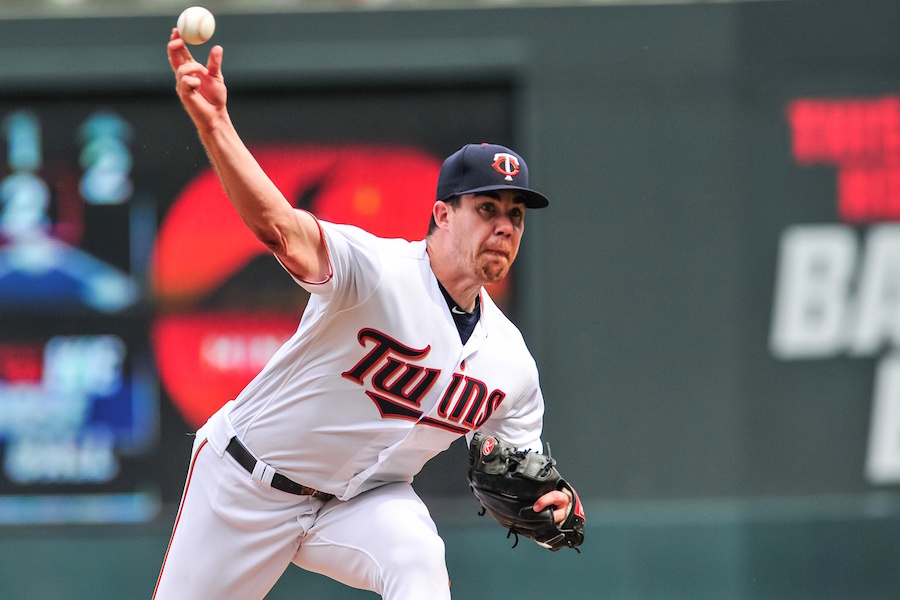 Pressly and Rodney are gone. Reed's turned into a disaster. Hildenberger has been a mess for weeks (7.45 ERA and .620 opponents' SLG since July 1st). Magill started his Twins career by allowing one run in his first eight appearances, but has since by allowed 16 in 30 2/3 innings (4.70 ERA) and an .833 OPS. Suddenly, there is a great deal of uncertainty plaguing next year's bullpen – at least, one critical element of it. The left-handed contingent is far less worrisome. Taylor Rogers has enjoyed a spectacular year, and currently looks to be the club's best reliever. Gabriel Moya can be written in with ink. Lewis Thorpe or Adalberto Mejia could potentially join the fray. And even if the Twins feel short on internal options, it's never too hard to go out and find a free agent like Zach Duke who can get it done as a secondary southpaw. But there is far less assurance when it comes to bullpen right-handers (and, one might conclude, closer candidates). Unfortunately, the Twins have deprived themselves of opportunities to more thoroughly evaluate several of them this season. In any case, let's break down each key figure and where he stands as we roll toward the end of the 2018 campaign. Trevor Hildenberger When I ranked the top 20 Twins assets last offseason, I had Hildenberger as the highest reliever, and 11th overall. "The 27-year-old bears every attribute of a closer or high-leverage fireman for years to come, and is controllable through 2022." Hildenberger was only reinforcing his value through the first three months of this season, continuing to excel as one of the league's steadiest setup men, but things took a turn one sweltering day in Chicago at the end of June. In his 37th appearance, he coughed up five earned runs on four hits and four walks, while recording one out. It was not only the worst outing of his career, but one of the worst you're likely to see from any relief pitcher. Since then, things just haven't been the same. Before that game, the sidearmer had registered a 2.06 ERA and held opponents to a .197 average. Since then, he has a 7.45 ERA and opponents have hit .329. Hildy was nearly spotless throughout the minors, and during his first calendar year in the majors, so these extended struggles are unprecedented for him. The good news is that his peripherals aren't nearly so startling. Hildenberger's swinging strike rate has remained static, his walks have stayed in check, and his velocity hasn't dropped to an alarming degree (though it has dipped from where it was in the middle of the summer). There have been plenty of theories as to what's causing this dramatic drop-off in results — overuse, tipping pitches, maybe something so simple as MLB hitters catching on to his quirky delivery. Whatever the case, I'm not overly concerned, and still view him as a key long-term piece in this unit. But, it'd sure be reassuring to see the interim (?) closer string together a nice stretch over the final weeks. Addison Reed For the entirety of his tenure as Twins GM, Terry Ryan consistently opted against investing significantly in free agent relievers. Never once during his run did the team sign an outside bullpen piece to a multi-year deal. Derek Falvey and Thad Levine broke that pattern during their first full offseason at the helm, signing Addison Reed to a two-year, $16.25 million deal in January. Now? That contract has very quickly become a banner example of why Ryan's regime fiercely avoided such commitments. Relief pitchers are notoriously volatile, which was the primary thinking behind Minnesota's steadfast avoidance, but many fans (including myself) longed for the club to step up and pay the price for an established name. While not a top-tier talent, per se, Reed was certainly a more bold investment than we've ever seen from the Twins before on this front: A consistent performer. A successful closer. A hired bullpen ace, on one of the larger deals handed out to a reliever during the winter. Now, Reed is Exhibit A of the position's volatility. Following some solid initial returns, he has broken down, and can't be relied upon in any capacity. Frankly, it's impossible to believe at this point his arm is sound. Reed's velocity is as low as it's ever been. No one's swinging and missing at any of his pitches; he has induced a total of two whiffs on 71 pitches since coming off the DL. Two! What to do at this point? Shut him down? Take a closer look at that elbow? All I know is that sending him out to the mound is doing little good, and Reed is destined to enter 2018 as a complete question mark at best. Somewhere, Terry Ryan is nodding knowingly. Trevor May Enough with the bad news. While several of his peers have nosedived in the second half, May has been busy reintroducing himself – with authority. The 28-year-old rejoined Minnesota at the end of July, and has been fantastic. Yeah, he had a little hiccup on Thursday night when he entered and walked two with the bases loaded, but May was otherwise spotless over two frames, and throwing strikes hasn't exactly been a problem for him despite the long layoff. Those walks are the only he's issued in 6 2/3 innings, during which he has registered a 21% swinging strike rate. To say May is dominating at an elite level would be an understatement; Josh Hader leads all qualified MLB relievers with a 19.5% whiff rate, and might be the best reliever in baseball. May is the best bet to fulfill Pressly's vacancy as a high-octane late-inning weapon. He's got closer stuff but is more alluring as a situational fireman. I'm beyond giddy to have this guy back in the mix, and am more optimistic about him than any other player listed here going forward. Matt Magill He was a nice story for a while. Plenty of failed starters have gone on to establish themselves as quality MLB relievers, and Magill had a chance to be join those ranks. He still might. But the 28-year-old journeyman has given Minnesota little reason to maintain intrigue. Even when Magill was experiencing a surprising early run of success, Molitor was reluctant to use him in any kind of meaningful situation. Perhaps he sensed what was coming. Magill hasn't been a disaster by any means, but he also hasn't been anything special, and given his circumstances it's tough to see him edging enough others on this list to stay in the picture. Working against him is a sudden decline in control – after walking four batters in 17 appearances through the end of June, he's walked six in nine appearances since. Tyler Duffey Duffey deserved better. It's befuddling that Magill slid ahead of him in line, and utterly baffling that Matt Belisle did. Why are these random pickups being prioritized over a homegrown talent with proven ability? Duffey was never meant to a be a starter, and unfortunately much time was wasted on that failed experiment, but the former college closer has shown plenty since moving back to relief duty. He pitched far better than his 4.94 ERA in the Twins bullpen showed last year, with a 67-to-18 K/BB ratio in 71 innings. He's got a hammer curve that works beautifully in short stints. He's been shutting down Triple-A hitters all year. And yet it took Duffey until August to get another real shot with Minnesota. I guess that speaks to the front office's opinion of him. I can't say I understand it, personally. Duffey's fine work since rejoining the Twins bullpen (zero hits allowed in 3 1/3 innings) speaks to what he can do. But now he's in the tough position of trying to make an overwhelming impression in the final weeks, and next spring, because he's out of options in 2019. Given their ambiguity with bullpen righties going forward, the Twins' refusal to take an extended look at Duffey this summer strikes me as one of their biggest follies. We'll see what happens. Alan Busenitz In many ways, Busenitz falls in the same category as Duffey. He's been brilliant in Triple-A all year and has major-league experience, but has repeatedly been passed up by less deserving candidates. Operating with mid-90s heat and a solid curveball, Busenitz has turned in a 2.48 ERA and 45-to-8 K/BB ratio in 40 innings at Triple-A. Meanwhile, he's gotten only 13 innings in the majors. I will say that I'm not quite as miffed with the team's handling of Busenitz as Duffey. On merit, he absolutely has deserved more of a chance, but to me there are ominous harbingers in Booze's profile. As I noted in spring training when he was competing for a roster spot, fly ball pitchers who don't miss a ton of bats don't tend to fare well in the majors. Busenitz still has an option left, which surely will work against him. Based on his treatment this year it's hard to see him being legitimately in the running for a bullpen spot next spring. Oliver Drake He's one of the ostensible journeymen who's gotten a look ahead of Duffey and Busenitz, but Drake isn't as bothersome as others. Yes, he's 31. Yes, he's pitched with four other teams this season. But there is actually a lot to like about him. He's been a monster in Triple-A (1.80 ERA, 12.7 K/9 in 110 IP). He has also averaged 9.9 K/9 in the majors, where his 3.47 FIP clashes with a 4.82 ERA. And since joining the Twins, the waiver pickup has looked great, striking out six while allowing one hit and three walks over 5 1/3 innings. He's got a funky delivery and some eye-catching breaking balls. If he throws it over the plate, Drake can be a real factor. I'm actually quite interested in watching him over these finals weeks, and would love to see a few higher-leverage chances. To me Drake is exactly the kind of player a team like the Twins should be auditioning in their current position. John Curtiss Inadequate control can be the bane of so many otherwise capable pitchers. Perhaps that'll prove to be the case with Curtiss, whose dazzling strikeout rates through the minors have raised eyebrows. As he's moved up and hitters have become more selective, the 25-year-old's strike-throwing issues have been magnified. He's averaged 4.4 BB/9 in 71 innings at Triple-A, and has barely gotten a chance in the majors. His extremely brief stint with the Twins this year was nightmarish, and included two run-scoring wild pitches in a single inning. With an option left for 2019, he will stay on hand as depth, but Curtiss needs to make serious strides with his command to have any chance of breaking into Minnesota's bullpen for good. Luke Bard It was frustrating to see Bard swooped away in December's Rule 5 draft, when the Twins left room on their roster to select Tyler Kinley (remember him?). But the Angels didn't stick with Bard and his elite spin rate for long, returning him to the Twins in late April. Since rejoining the organization, the former first-round pick has remained in Triple-A, where his season's been a mixed bag. The strikeouts have been there for Bard (43 K in 38.2 IP) but he's been oddly hittable, allowing a 4.89 ERA and .807 opponents' OPS. He turns 28 this offseason so his prospect luster is diminishing, but Bard isn't without hope. *** Beyond the above list, there are several others who could be right-handed bullpen factors in 2019, including Nick Anderson, Jake Reed and (if they'll just give him a dang chance in relief) Kohl Stewart. But right now the nine players listed above look like the main contenders. Are you comfortable with this depth amidst some clear uncertainty at the highest ranks?
 -
Article: What To Do With Byron Buxton?
Nick Nelson replied to Nick Nelson's topic in Twins Daily Front Page News
Part of the issue here is that it'll be hard to buy into any ostensible improvements as meaningful indicators for the start of next year. Buxton in Sept 2016: .287/.357/.653, 9 HR Buxton in April 2017: .147/.256/.176, 0 HR Buxton in Aug/Sept 2017: .298/.342/.541, 11 HR Buxton in April/May 2018: .156/.183/.200, 0 HR -
Article: What To Do With Byron Buxton?
Nick Nelson replied to Nick Nelson's topic in Twins Daily Front Page News
So he would file a grievance and base it entirely on performance from the previous season? That doesn't seem totally frivolous to you? In order to make such a claim Buxton would need to show that Minnesota's intent with their handling of him was not in good faith, and almost entirely to manipulate his service time. I don't think that's a case you can make. They optioned him originally in early July and there was no angst at that time because it was justified. He then got hurt and (up to this point) hasn't performed well enough to warrant a recall. I'll grant that if he keeps hitting like he did last night the dynamic changes. But if he's whiffing at a 35% rate and hitting .220 when the Triple-A season wraps up, I don't think the Twins would really need to "defend" their decision not to recall him, especially with other outfielders earning their playing time and Buxton's health in a constantly precarious state. This report has some really good and comprehensive info on the topic: -
Article: What To Do With Byron Buxton?
Nick Nelson replied to Nick Nelson's topic in Twins Daily Front Page News
Ahhh, I was wrong on this. I looked at his log and saw he'd been optioned in 2015 also but as noted by spycake that was fewer than 20 days and thus didn't qualify. Doesn't change the overall thinking too much but I'll fix the article, thank you. -
On Tuesday, the Minnesota Twins activated Byron Buxton from his fourth separate stint on the disabled list this season. It's been a nightmarish year for the outfielder, but now Minnesota must look ahead. How should the Twins handle their embattled franchise centerpiece, presently in Triple-A, as the season winds down? It's a thorny issue with no easy answers.Buxton returns to a Rochester Red Wings team with 22 games remaining on the schedule. Their season runs through September 3rd, at which point (if not before) the Twins will need to make a decision. They have two options: A ) Recall Buxton, either once the Triple-A seasons ends or before then B ) Send Buxton home once Rochester's season is over I find myself torn here. On the one hand... I love Buxton. I love watching him play baseball. The Twins are a more interesting team to watch with him on the field, even while struggling. I also want to see a very likable and (outwardly) unselfish guy get his due. Buck's an established major-league player, with more than a thousand plate appearances under his belt, and there's no question he can help the Twins in September, even if still broken at the plate. Assuming his toe is back to 100%, you won't find a better pinch runner or defensive replacement. There's also this: The Twins kinda need Buxton to figure it out at the big-league level in short order. Patience is becoming an unaffordable luxury. He turns 25 this offseaosn and will be eligible for Super 2 arbitration. Starting over again in the minors next year is hardly palatable. Might as well get him as many ABs as you can the rest of the way. On the other hand... There is a bigger picture at play, yielding two crucial considerations. First: Buxton's health. The old sports adage "bubble-wrap this kid" has never seemed more plausible as a literal course of action. The 24-year-old has barely been able to go two weeks without getting hurt or aggravating a previous malady. On two occasions this year, the Twins have brought him off the disabled list before an injury was fully healed. I'm not claiming medical malpractice here – these things happen. But why risk letting them happen any more in a totally lost season, for both player and club? Buxton's recklessly aggressive playing style puts him perpetually at risk, and that's before you account for the possibility that his left wrist, which he's injured significantly at least twice in the past, won't be a lingering issue, nor the fractured toe that never received much time to heal. A jumpstart to the offseason, with an extra month to rest and recuperate, wouldn't be a bad thing from any perspective. Second: Buxton's service time. As Mike Berardino pointed out when Buxton was optioned, Minnesota stands to gain an additional year of control (2022) should the center fielder fail to accrue another 13 days in the majors. Pretty straightforward math here: Is one month of Buxton, utterly out of sorts at age 24, worth forfeiting a full season at age 28, when he's hopefully amidst his superstar prime? On the surface it's a nonstarter. From a strategic standpoint, that one year of team control is enormously valuable, whether the Twins wanna run out his clock, or leverage it in extension or trade talks. Derek Falvey and Thad Levine are well aware of this, to be sure. And it's not like they would be totally unjustified in leaving Buxton off the September roster, should his performance in the final 22 games at Rochester resemble that in the first 22 (.215/.295/.380, 32% K-rate). When Minnesota exercised that his option in July, it was a directive to get healthy and on track, earn his way back. Thus far I'm not sure anyone can argue that he has. But it's certainly not for lack of effort. No one who's ever met Buxton would question his heart or his commitment. The man has endured some absolute crap luck and in a way, opting not to recall Buck would be penalizing him for it. Pushing back free agency a year would be lovely from the team's perspective, but it'd be a major gut-punch for the player. As Dr. Dre once said, "Sometimes the business end of this sh*t can turn your friends against you." Shutting Buxton down in September would unquestionably be the sound business decision. But is it worth creating ill will with an incredibly talented player you view as a long-term cornerstone? My view, right now, is that if Buxton shows serious improvement over these next three weeks in Triple-A – in terms of process more so than results – I bring him back up to play regularly in September. But like I said, I'm torn. It appears that's true of the fan base at large. I asked Twitter what Buxton needs to do to warrant a September call-up, and here's a smattering of the wide-ranging replies: I'm curious to hear what you all think. Call Buxton up in September? Sooner? Rest him and claim the extra year of service? Or should the outcome be merit-based, and if so, how do you make meaningful determinations over a couple dozen games? Click here to view the article
-
 Buxton returns to a Rochester Red Wings team with 22 games remaining on the schedule. Their season runs through September 3rd, at which point (if not before) the Twins will need to make a decision. They have two options: A ) Recall Buxton, either once the Triple-A seasons ends or before then B ) Send Buxton home once Rochester's season is over I find myself torn here. On the one hand... I love Buxton. I love watching him play baseball. The Twins are a more interesting team to watch with him on the field, even while struggling. I also want to see a very likable and (outwardly) unselfish guy get his due. Buck's an established major-league player, with more than a thousand plate appearances under his belt, and there's no question he can help the Twins in September, even if still broken at the plate. Assuming his toe is back to 100%, you won't find a better pinch runner or defensive replacement. There's also this: The Twins kinda need Buxton to figure it out at the big-league level in short order. Patience is becoming an unaffordable luxury. He turns 25 this offseaosn and will be eligible for Super 2 arbitration. Starting over again in the minors next year is hardly palatable. Might as well get him as many ABs as you can the rest of the way. On the other hand... There is a bigger picture at play, yielding two crucial considerations. First: Buxton's health. The old sports adage "bubble-wrap this kid" has never seemed more plausible as a literal course of action. The 24-year-old has barely been able to go two weeks without getting hurt or aggravating a previous malady. On two occasions this year, the Twins have brought him off the disabled list before an injury was fully healed. I'm not claiming medical malpractice here – these things happen. But why risk letting them happen any more in a totally lost season, for both player and club? Buxton's recklessly aggressive playing style puts him perpetually at risk, and that's before you account for the possibility that his left wrist, which he's injured significantly at least twice in the past, won't be a lingering issue, nor the fractured toe that never received much time to heal. A jumpstart to the offseason, with an extra month to rest and recuperate, wouldn't be a bad thing from any perspective. Second: Buxton's service time. As Mike Berardino pointed out when Buxton was optioned, Minnesota stands to gain an additional year of control (2022) should the center fielder fail to accrue another 13 days in the majors. Pretty straightforward math here: Is one month of Buxton, utterly out of sorts at age 24, worth forfeiting a full season at age 28, when he's hopefully amidst his superstar prime? On the surface it's a nonstarter. From a strategic standpoint, that one year of team control is enormously valuable, whether the Twins wanna run out his clock, or leverage it in extension or trade talks. Derek Falvey and Thad Levine are well aware of this, to be sure. And it's not like they would be totally unjustified in leaving Buxton off the September roster, should his performance in the final 22 games at Rochester resemble that in the first 22 (.215/.295/.380, 32% K-rate). When Minnesota exercised that his option in July, it was a directive to get healthy and on track, earn his way back. Thus far I'm not sure anyone can argue that he has. But it's certainly not for lack of effort. No one who's ever met Buxton would question his heart or his commitment. The man has endured some absolute crap luck and in a way, opting not to recall Buck would be penalizing him for it. Pushing back free agency a year would be lovely from the team's perspective, but it'd be a major gut-punch for the player. As Dr. Dre once said, "Sometimes the business end of this sh*t can turn your friends against you." Shutting Buxton down in September would unquestionably be the sound business decision. But is it worth creating ill will with an incredibly talented player you view as a long-term cornerstone? My view, right now, is that if Buxton shows serious improvement over these next three weeks in Triple-A – in terms of process more so than results – I bring him back up to play regularly in September. But like I said, I'm torn. It appears that's true of the fan base at large. I asked Twitter what Buxton needs to do to warrant a September call-up, and here's a smattering of the wide-ranging replies: https://twitter.com/JohntheConquero/status/1029446010735677440 https://twitter.com/coal_bauer/status/1029444364366499840 https://twitter.com/mrplombon/status/1029474901638504452 https://twitter.com/TBo45/status/1029437713634807808 https://twitter.com/rcarpenter7/status/1029475645259227137 https://twitter.com/HaroldWiggins/status/1029464703502888960 https://twitter.com/BenKnegendorf/status/1029486601607364608 I'm curious to hear what you all think. Call Buxton up in September? Sooner? Rest him and claim the extra year of service? Or should the outcome be merit-based, and if so, how do you make meaningful determinations over a couple dozen games?
 -
Article: Week in Review: Stumbling and Grumbling
Nick Nelson replied to Nick Nelson's topic in Twins Daily Front Page News
It was a bit of a tongue-in-cheek exaggeration, but I was talking about the timing of their ascents after being drafted, not in relation to their ages. Correa reached High-A in his third pro season, with 190 games under his belt between rookie leagues, PR winter league and Low-A. Lewis is now excelling in High-A during his second pro season, having been promoted after only 129 games. I don't think anyone would actually describe Correa's minor-league development path as sluggish with a straight face, but then, that's sorta the point. -
Article: Week in Review: Stumbling and Grumbling
Nick Nelson replied to Nick Nelson's topic in Twins Daily Front Page News
This was tremendous.- 63 replies
-
- 1
-
-
- ervin santana
- miguel sano
- (and 2 more)
-
Article: Week in Review: Stumbling and Grumbling
Nick Nelson replied to Nick Nelson's topic in Twins Daily Front Page News
Beloved in the clubhouse, by his teammates.- 63 replies
-
- 6
-
-
- ervin santana
- miguel sano
- (and 2 more)
-
Article: Week in Review: Stumbling and Grumbling
Nick Nelson replied to Nick Nelson's topic in Twins Daily Front Page News
I was referring more to Lewis there than Kirilloff. If Royce starts in Double-A (which feels like almost a given at this point) it's hard for me to imagine him staying in the minors for the entire season.- 63 replies
-
- 1
-
-
- ervin santana
- miguel sano
- (and 2 more)
-
The Twins lost two series, and their beloved closer. It wasn't a great week, and the messaging from the clubhouse wasn't great either. Your full recap lies ahead. Weekly Snapshot: Mon, 8/6 through Sun, 8/12 *** Record Last Week: 2-5 (Overall: 54-63) Run Differential Last Week: -16 (Overall: -33) Standing: 2nd Place in AL Central (12.0 GB) HIGHLIGHTS After going 3-for-28 through eight August games, dropping his average to .186, Logan Morrison finally succumbed to a hip impingement that's been bothering him for much of the season. He's set to undergo surgery that'll knock him out for the rest of the year. This is good news for a couple of reasons. We finally have some clarity around the root causes in a hugely disappointing season for Morrison, who can hopefully rehab and get his career back on track. Meanwhile, the Twins can now give his at-bats to others more likely to figure into their future plans. One such player is Tyler Austin, who's been called up to fill Morrison's roster spot and role. Making his Twins debut on Saturday, the Austin launched a two-run bomb against old friend Francisco Liriano. The thunderous smash plated Miguel Sano, whose encouraging week included his first home run since being recalled and four walks. Yeah, he's still striking out a ton, but that's just okay when he's notching hits and coaxing walks at respectable clips. LOWLIGHTS Look. I get that, to some extent, expressing dismay over a deadline talent dump is part of being a leader. We saw it from Brian Dozier last year and now we're seeing it from Ervin Santana. "We’re not giving up, but they did," Santana lamented of the Twins front office after Friday night's loss, on the heels of Fernando Rodney being dealt to Oakland. I'm sure he's channeling the mood in the clubhouse, and in essence, that's fine – you want your players to be fired up at times like this. I'd be disappointed if they weren't ticked off. But Santana is striking all the wrong notes, with this entirely unwarranted bitterness toward a baseball ops department that's only doing its job. For the right-hander to be proclaiming his team is "only 10 games out" in mid-August seems almost comically oblivious. They have the largest deficit for any second-place team in baseball, in the worst division. And the Twins have reached this point largely because of lifeless, underwhelming efforts like the one put forth in Friday's series-opening loss to Detroit. While it's convenient for Santana to insinuate that this lackluster showing against one of the AL's worst teams was due to shell-shock, or the absence of key pieces, we saw too many such performances in the first four months for that notion to hold water. I don't blame Santana for getting hurt, nor do I hold it against him, but the fact remains: he wasn't here for those first four months. And now that he's back, he looks terrible. He gave up five runs against an abysmal offense on Friday and hasn't contributed one quality start since returning. In four turns he has surrendered six home runs with an almost impossibly low 4.2% swinging strike rate. Out of 451 MLB pitchers to throw 20+ innings this season, his mark ranks dead-last. The Twins would surely love to dump Santana's remaining salary, and $1 million option buyout, and generally counterproductive attitude. But his play has turned even a modest return like Rodney's into wishful thinking. No one's going to give up so much as a Dakota Chalmers type lotto ticket on the hope that Santana suddenly finds his stuff as he approaches 36. The veteran's got nothing right now. And so he, like many others on the roster, slogs forth through these final weeks. Frankly if anyone has grounds for complaining, it's the potential future contributors being held back by the presence of Santana's depleted arm on the roster. The same night Erv was getting knocked around by Detroit, Stephen Gonsalves was delivering another quality start in Rochester with nine strikeouts over six innings. He has a 3.15 ERA in Triple-A but remains unable to crack the Minnesota rotation. Fernando Romero looked better at his worst than Santana has it his best this year, but continues to compile innings in the minors. At least Kohl Stewart got his chance on Sunday, starting against the Tigers and looking more or less as advertised. The 23-year-old former top draft pick flashed mid-90s heat on a fastball with good movement, but allowed tons of contact with only two swinging strikes on 74 pitches. He finessed enough grounders to make it work through four frames, but things fell apart in the fifth as Detroit strung together four straight hits and a walk to break through and knock him out of the game. On merit, Stewart certainly doesn't deserve to be promoted ahead of Romero or Gonsalves, but I suppose the Twins have a more urgent need to give him a look, given his status as a fringe 40-man roster hold this offseason. Presumably we'll see more of him going forward. Personally, I'd be curious to see if the pitches play up in relief at all. TRENDING STORYLINE With Rodney shipped out, the Twins can use these final weeks to evaluate internal closer options for 2019. Unfortunately, no one's exactly rising as a prime candidate. Ryan Pressly would've likely been first in line, but of course, he's gone. Trevor Hildenberger got the call on Saturday night and almost blew a three-run lead, coughing up a two-run homer and putting the tying run on base before closing out the win. The ugly outing extended a very poor stretch for Hildenberger, who hasn't looked like himself for weeks. Since the All-Star break, he has allowed 19 hits and five home runs in 11 innings of work. He had previously surrendered nine total homers in 88 MLB innings. A natural choice for the closer nod would be Addison Reed, if he were throwing well at all. He's not. It doesn't appear his three-week stint on the DL did much to repair his arm, which continues to produce jarringly low velocity readings. The stuff just isn't there for Reed, who has induced only one swinging strike on 39 pitches in three appearances since returning from the shelf. Who else might get a look in the ninth inning? Gabriel Moya? Taylor Rogers? Matt Magill? One reliever I'd like to see get a few chances is Tyler Duffey, who was a very successful collegiate closer at Rice. He was recalled alongside Austin last week after posting a 2.72 ERA, 1.15 WHIP and 9.3 K/9 rate in Triple-A. DOWN ON THE FARM The ascent of Astros shortstop Carlos Correa was about as smooth and optimal as one could hope for from a No. 1 overall pick out of high school. He cruised through the minors, developed into an elite prospect by the end of his first full pro season, and reached the majors at age 20, becoming an instant superstar and Rookie of the Year. The pace that Royce Lewis is currently on makes Correa's look decidedly sluggish. The shortstop is crushing High-A and hurtling toward a 2019 Twins debut. He and Alex Kirilloff have taken the Florida State League by storm. Among players with 100 PA in the league, they rank seventh and eighth in OPS; at 19 and 20 they are the youngest members of the Top 25. Kirilloff snapped a 13-game hitting streak when he went 0-for-2 on the final day of July, but now has another going, pushed to 10 last week as he tallied at least one knock in each game. Among FSL players with 150+ PA, he has the highest average and the seventh-lowest walk rate. Kirilloff swings at everything and hits everything. On Saturday, Michael Pineda made his first rehab start at Fort Myers, and he looked excellent, tossing three scoreless innings with three strikeouts and no walks. The big righty induced seven swinging strikes on 33 pitches and reportedly touched 95 MPH. All signs are positive as he works his way back from 2017 Tommy John surgery. LOOKING AHEAD The Twins will get a look at Chris Archer in his new Pirates uniform on Wednesday. He hasn't looked great since coming over from Tampa at the deadline. On Saturday, the Tigers will get another look at Stewart as the 23-year-old makes his Target Field debut. TUESDAY, 8/14: PIRATES @ TWINS – RHP Jameson Taillon v. RHP Jake Odorizzi WEDNESDAY, 8/15: PIRATES @ TWINS – RHP Chris Archer v. RHP Jose Berrios THURSDAY, 8/16: TIGERS @ TWINS – LHP Francisco Liriano v. RHP Ervin Santana FRIDAY, 8/17: TIGERS @ TWINS – LHP Matthew Boyd v. RHP Kyle Gibson SATURDAY, 8/18: TIGERS @ TWINS – Undecided v. RHP Kohl Stewart SUNDAY, 8/19: TIGERS @ TWINS – LHP Blaine Hardy v. RHP Jake Odorizzi Catch Up On Twins Daily Game Recaps Game 111 | CLE 10, MIN 0: Who Needs Chris Gimenez?Game 112 | MIN 3, CLE 2: Mitch Garver Makes it RainGame 113 | CLE 5, MIN 2: Cleveland Prevails on Lindor Walk-Off HomerGame 114| CLE 5, MIN 4: Walks and a Walk-OffGame 114 | DET 5, MIN 3: Is There Anything Left?Game 115 | MIN 4, DET 3: Austin Homers, Hildy Survives Save ChancGame 116 | DET 4, MIN 2: Stewart Debuts, Bats Slump in Loss Click here to view the article
- 63 replies
-
- 3
-
-
- ervin santana
- miguel sano
- (and 2 more)
-
 Weekly Snapshot: Mon, 8/6 through Sun, 8/12 *** Record Last Week: 2-5 (Overall: 54-63) Run Differential Last Week: -16 (Overall: -33) Standing: 2nd Place in AL Central (12.0 GB) HIGHLIGHTS After going 3-for-28 through eight August games, dropping his average to .186, Logan Morrison finally succumbed to a hip impingement that's been bothering him for much of the season. He's set to undergo surgery that'll knock him out for the rest of the year. This is good news for a couple of reasons. We finally have some clarity around the root causes in a hugely disappointing season for Morrison, who can hopefully rehab and get his career back on track. Meanwhile, the Twins can now give his at-bats to others more likely to figure into their future plans. One such player is Tyler Austin, who's been called up to fill Morrison's roster spot and role. Making his Twins debut on Saturday, the Austin launched a two-run bomb against old friend Francisco Liriano. The thunderous smash plated Miguel Sano, whose encouraging week included his first home run since being recalled and four walks. Yeah, he's still striking out a ton, but that's just okay when he's notching hits and coaxing walks at respectable clips. LOWLIGHTS Look. I get that, to some extent, expressing dismay over a deadline talent dump is part of being a leader. We saw it from Brian Dozier last year and now we're seeing it from Ervin Santana. "We’re not giving up, but they did," Santana lamented of the Twins front office after Friday night's loss, on the heels of Fernando Rodney being dealt to Oakland. I'm sure he's channeling the mood in the clubhouse, and in essence, that's fine – you want your players to be fired up at times like this. I'd be disappointed if they weren't ticked off. But Santana is striking all the wrong notes, with this entirely unwarranted bitterness toward a baseball ops department that's only doing its job. For the right-hander to be proclaiming his team is "only 10 games out" in mid-August seems almost comically oblivious. They have the largest deficit for any second-place team in baseball, in the worst division. And the Twins have reached this point largely because of lifeless, underwhelming efforts like the one put forth in Friday's series-opening loss to Detroit. While it's convenient for Santana to insinuate that this lackluster showing against one of the AL's worst teams was due to shell-shock, or the absence of key pieces, we saw too many such performances in the first four months for that notion to hold water. I don't blame Santana for getting hurt, nor do I hold it against him, but the fact remains: he wasn't here for those first four months. And now that he's back, he looks terrible. He gave up five runs against an abysmal offense on Friday and hasn't contributed one quality start since returning. In four turns he has surrendered six home runs with an almost impossibly low 4.2% swinging strike rate. Out of 451 MLB pitchers to throw 20+ innings this season, his mark ranks dead-last. The Twins would surely love to dump Santana's remaining salary, and $1 million option buyout, and generally counterproductive attitude. But his play has turned even a modest return like Rodney's into wishful thinking. No one's going to give up so much as a Dakota Chalmers type lotto ticket on the hope that Santana suddenly finds his stuff as he approaches 36. The veteran's got nothing right now. And so he, like many others on the roster, slogs forth through these final weeks. Frankly if anyone has grounds for complaining, it's the potential future contributors being held back by the presence of Santana's depleted arm on the roster. The same night Erv was getting knocked around by Detroit, Stephen Gonsalves was delivering another quality start in Rochester with nine strikeouts over six innings. He has a 3.15 ERA in Triple-A but remains unable to crack the Minnesota rotation. Fernando Romero looked better at his worst than Santana has it his best this year, but continues to compile innings in the minors. At least Kohl Stewart got his chance on Sunday, starting against the Tigers and looking more or less as advertised. The 23-year-old former top draft pick flashed mid-90s heat on a fastball with good movement, but allowed tons of contact with only two swinging strikes on 74 pitches. He finessed enough grounders to make it work through four frames, but things fell apart in the fifth as Detroit strung together four straight hits and a walk to break through and knock him out of the game. On merit, Stewart certainly doesn't deserve to be promoted ahead of Romero or Gonsalves, but I suppose the Twins have a more urgent need to give him a look, given his status as a fringe 40-man roster hold this offseason. Presumably we'll see more of him going forward. Personally, I'd be curious to see if the pitches play up in relief at all. TRENDING STORYLINE With Rodney shipped out, the Twins can use these final weeks to evaluate internal closer options for 2019. Unfortunately, no one's exactly rising as a prime candidate. Ryan Pressly would've likely been first in line, but of course, he's gone. Trevor Hildenberger got the call on Saturday night and almost blew a three-run lead, coughing up a two-run homer and putting the tying run on base before closing out the win. The ugly outing extended a very poor stretch for Hildenberger, who hasn't looked like himself for weeks. Since the All-Star break, he has allowed 19 hits and five home runs in 11 innings of work. He had previously surrendered nine total homers in 88 MLB innings. A natural choice for the closer nod would be Addison Reed, if he were throwing well at all. He's not. It doesn't appear his three-week stint on the DL did much to repair his arm, which continues to produce jarringly low velocity readings. The stuff just isn't there for Reed, who has induced only one swinging strike on 39 pitches in three appearances since returning from the shelf. Who else might get a look in the ninth inning? Gabriel Moya? Taylor Rogers? Matt Magill? One reliever I'd like to see get a few chances is Tyler Duffey, who was a very successful collegiate closer at Rice. He was recalled alongside Austin last week after posting a 2.72 ERA, 1.15 WHIP and 9.3 K/9 rate in Triple-A. DOWN ON THE FARM The ascent of Astros shortstop Carlos Correa was about as smooth and optimal as one could hope for from a No. 1 overall pick out of high school. He cruised through the minors, developed into an elite prospect by the end of his first full pro season, and reached the majors at age 20, becoming an instant superstar and Rookie of the Year. The pace that Royce Lewis is currently on makes Correa's look decidedly sluggish. The shortstop is crushing High-A and hurtling toward a 2019 Twins debut. He and Alex Kirilloff have taken the Florida State League by storm. Among players with 100 PA in the league, they rank seventh and eighth in OPS; at 19 and 20 they are the youngest members of the Top 25. Kirilloff snapped a 13-game hitting streak when he went 0-for-2 on the final day of July, but now has another going, pushed to 10 last week as he tallied at least one knock in each game. Among FSL players with 150+ PA, he has the highest average and the seventh-lowest walk rate. Kirilloff swings at everything and hits everything. On Saturday, Michael Pineda made his first rehab start at Fort Myers, and he looked excellent, tossing three scoreless innings with three strikeouts and no walks. The big righty induced seven swinging strikes on 33 pitches and reportedly touched 95 MPH. All signs are positive as he works his way back from 2017 Tommy John surgery. LOOKING AHEAD The Twins will get a look at Chris Archer in his new Pirates uniform on Wednesday. He hasn't looked great since coming over from Tampa at the deadline. On Saturday, the Tigers will get another look at Stewart as the 23-year-old makes his Target Field debut. TUESDAY, 8/14: PIRATES @ TWINS – RHP Jameson Taillon v. RHP Jake Odorizzi WEDNESDAY, 8/15: PIRATES @ TWINS – RHP Chris Archer v. RHP Jose Berrios THURSDAY, 8/16: TIGERS @ TWINS – LHP Francisco Liriano v. RHP Ervin Santana FRIDAY, 8/17: TIGERS @ TWINS – LHP Matthew Boyd v. RHP Kyle Gibson SATURDAY, 8/18: TIGERS @ TWINS – Undecided v. RHP Kohl Stewart SUNDAY, 8/19: TIGERS @ TWINS – LHP Blaine Hardy v. RHP Jake Odorizzi Catch Up On Twins Daily Game Recaps Game 111 | CLE 10, MIN 0: Who Needs Chris Gimenez? Game 112 | MIN 3, CLE 2: Mitch Garver Makes it Rain Game 113 | CLE 5, MIN 2: Cleveland Prevails on Lindor Walk-Off Homer Game 114| CLE 5, MIN 4: Walks and a Walk-Off Game 114 | DET 5, MIN 3: Is There Anything Left? Game 115 | MIN 4, DET 3: Austin Homers, Hildy Survives Save Chanc Game 116 | DET 4, MIN 2: Stewart Debuts, Bats Slump in Loss
 -
I'm on board with this. As long as the QO sticks around, the Twins will be in solid position.
-
I'm not sure you'd have to go that high because his earning potential over the next couple seasons is so limited. He's not even arb eligible until 2020. Would a structure like this make sense? Maybe the last couple years are team options, a la Kluber/Carrasco? 2019: $1.5M (he'd be making 500k otherwise) 2020: $5.5M 2021: $9M 2022: $12M 2023: $14M 2024: $16M 2025: $16M That's 7 years, $74 million and seems pretty reasonable to me, especially if there are incentives that can boost his earnings based on performance. I wonder if the uncertainty of the free agent market would make a young player and his agent more open to something like this, too.
-
It's a great question. I thought about touching on that here but it's not really the same discussion. I wonder what kind of extension would make sense for both sides. Probably deserving of its own article.
-
The Cleveland Indians are rolling toward a third straight division title, and once again, they're doing it on the strength of elite starting pitching. Here's what's scary: Corey Kluber and Carlos Carrasco, the duo that has powered this unit ever since Cleveland's return to relevance in 2014, both remain under control for years to come, and at extremely reasonable rates. It's safe to say the wizardry performed by Cleveland's front office hasn't gone unnoticed by Derek Falvey. After all, he was part of the group that orchestrated those brilliant contracts.In a letter to season-ticket holders, Falvey used a familiar term when rationalizing the club's deadline fire-sale, referencing a desire to "achieve sustainable championship-caliber baseball." Admittedly, it sounds like the usual jargon of front office types trying to soothe an agitated fanbase amidst tumultuous times, but... Falvey is a bit of an authority on the subject. He was a key fixture in Cleveland's front office when the Indians struck long-term deals with Kluber (a five-year, $38.5 million extension) and Carrasco (four years, $22 million) on the same weekend in April of 2015. Kluber was four years away from free agency, Carrasco three. The figures listed above don't fully convey the beauty of these incredibly team-friendly contracts, both of which include a pair of economical team option years. Although Carrasco's guaranteed term expires after this year, Cleveland can bring him back for $9 million in 2019 and $9.5 million 2020. Given that the 31-year-old is once again performing at an exemplary level, those decisions are looking like no-brainers. The same is true for Kluber's options in 2020 ($13.5M) and 2021 ($14M). A two-time (so far) Cy Young winner making Ricky Nolasco-type money. Wow. Granted, the salaries for both players can escalate based on Cy Young finishes, but either way we are talking about unbelievably favorable pacts for the club, which set itself up for inexpensive prolonged control if the starters fulfilled their promise (as they have), with escape valves if things went awry. In retrospect, these contracts almost seem too good to be true. But they speak to the powerful value of long-term security for a young and somewhat unestablished major-league pitcher. It's not like Kluber or Carrasco were leveraged all that much; the former was coming off a Cy Young season in 2014, and the latter had broken out with a 2.55 ERA in 134 frames. But when you've earned relatively little, and you know you're one elbow pinch away from everything changing, the prospect of many millions in guaranteed money can be very alluring. Which brings us back to Mr. Falvey, and his current position overseeing baseball operations for the Minnesota Twins. He now finds himself with another rising frontline arm in Jose Berrios. Like Cleveland, Minnesota faces finite payroll constraints. Maintaining a reasonable price tag on core pieces like Berrios is critical in the "sustainable championship-caliber baseball" framework, and it's why those savvy extensions for Kluber and Carrasco are such critical ingredients in Cleveland's ongoing supremacy. Berrios is under team control for four more seasons after this one. The Twins have almost no hope of a striking deal with him quite as favorable as those of Kluber and Carrasco – both late bloomers who followed winding paths to stardom. Berrios is a 24-year-old All-Star with an impeccable record of health; needless to say, it'll be tougher to impress upon him the downside of holding steady and betting on himself. But that downside exists. He and his agent both know it. No one is invincible. With free agency still so far away, the Twins have enough leverage to work out a mutually beneficial deal that locks up Berrios into his 30s while still giving the team some protection. I really like the makeup of those Kluber/Carrasco contracts – the team option years are fairly cheap but in both cases can be increased up to $4 million by Cy Young finishes, bringing them closer to market value. So in a way, the pitchers still were able to bet on themselves, and remain highly incentivized to keep improving. I don't believe Berrios needs that incentive. But, knowing what I know about him, I think he'd embrace it. Whatever the terms, Minnesota would be very wise to make an extension for Berrios their No.1 priority for the offseason. Obviously, that'll mean loosening their stance after they reportedly tried and came short last winter. But a rotation building block is worth his weight in gold. No one needs to tell Derek Falvey that. Click here to view the article
-
Cleveland's Controllable Rotation Presents Blueprint for Twins
Nick Nelson posted an article in Twins
 In a letter to season-ticket holders, Falvey used a familiar term when rationalizing the club's deadline fire-sale, referencing a desire to "achieve sustainable championship-caliber baseball." Admittedly, it sounds like the usual jargon of front office types trying to soothe an agitated fanbase amidst tumultuous times, but... Falvey is a bit of an authority on the subject. He was a key fixture in Cleveland's front office when the Indians struck long-term deals with Kluber (a five-year, $38.5 million extension) and Carrasco (four years, $22 million) on the same weekend in April of 2015. Kluber was four years away from free agency, Carrasco three. The figures listed above don't fully convey the beauty of these incredibly team-friendly contracts, both of which include a pair of economical team option years. Although Carrasco's guaranteed term expires after this year, Cleveland can bring him back for $9 million in 2019 and $9.5 million 2020. Given that the 31-year-old is once again performing at an exemplary level, those decisions are looking like no-brainers. The same is true for Kluber's options in 2020 ($13.5M) and 2021 ($14M). A two-time (so far) Cy Young winner making Ricky Nolasco-type money. Wow. Granted, the salaries for both players can escalate based on Cy Young finishes, but either way we are talking about unbelievably favorable pacts for the club, which set itself up for inexpensive prolonged control if the starters fulfilled their promise (as they have), with escape valves if things went awry. In retrospect, these contracts almost seem too good to be true. But they speak to the powerful value of long-term security for a young and somewhat unestablished major-league pitcher. It's not like Kluber or Carrasco were leveraged all that much; the former was coming off a Cy Young season in 2014, and the latter had broken out with a 2.55 ERA in 134 frames. But when you've earned relatively little, and you know you're one elbow pinch away from everything changing, the prospect of many millions in guaranteed money can be very alluring. Which brings us back to Mr. Falvey, and his current position overseeing baseball operations for the Minnesota Twins. He now finds himself with another rising frontline arm in Jose Berrios. Like Cleveland, Minnesota faces finite payroll constraints. Maintaining a reasonable price tag on core pieces like Berrios is critical in the "sustainable championship-caliber baseball" framework, and it's why those savvy extensions for Kluber and Carrasco are such critical ingredients in Cleveland's ongoing supremacy. Berrios is under team control for four more seasons after this one. The Twins have almost no hope of a striking deal with him quite as favorable as those of Kluber and Carrasco – both late bloomers who followed winding paths to stardom. Berrios is a 24-year-old All-Star with an impeccable record of health; needless to say, it'll be tougher to impress upon him the downside of holding steady and betting on himself. But that downside exists. He and his agent both know it. No one is invincible. With free agency still so far away, the Twins have enough leverage to work out a mutually beneficial deal that locks up Berrios into his 30s while still giving the team some protection. I really like the makeup of those Kluber/Carrasco contracts – the team option years are fairly cheap but in both cases can be increased up to $4 million by Cy Young finishes, bringing them closer to market value. So in a way, the pitchers still were able to bet on themselves, and remain highly incentivized to keep improving. I don't believe Berrios needs that incentive. But, knowing what I know about him, I think he'd embrace it. Whatever the terms, Minnesota would be very wise to make an extension for Berrios their No.1 priority for the offseason. Obviously, that'll mean loosening their stance after they reportedly tried and came short last winter. But a rotation building block is worth his weight in gold. No one needs to tell Derek Falvey that.
 -
I just noticed that for some reason none of the links made it into the original version of this post. Apologies to the authors whose work was cited. They've now been added.
