



Nick Nelson
-
Posts
8,327 -
Joined
-
Last visited
-
Days Won
56
Content Type
Profiles
News
Minnesota Twins Videos
2026 Minnesota Twins Top Prospects Ranking
2022 Minnesota Twins Draft Picks
Minnesota Twins Free Agent & Trade Rumors, Notes, & Tidbits
Guides & Resources
2023 Minnesota Twins Draft Picks
The Minnesota Twins Players Project
2024 Minnesota Twins Draft Picks
2025 Minnesota Twins Draft Pick Tracker
2026 Minnesota Twins Draft Tracker: Picks & Bonuses
Forums
Blogs
Events
Store
Downloads
Gallery
Everything posted by Nick Nelson
-
 What follows is an excerpt from the foreword for the 2019 Offseason Handbook, which you can order here on a name-your-price basis and receive as soon as the last out of the World Series is recorded. Mike Berardino just wrapped up a stellar six-year run as Twins beat writer for the Pioneer Press and has now moved onto Indianapolis to cover Notre Dame athletics. Through his relentless effort and unparalleled content production, Berardino served hardcore Twins fans brilliantly. We’ll miss him around here, but are awfully glad he contributed his talents for this product, which reflects the thorough and ravenous style of coverage he brought to the beat.By Mike Berardino: Minnesota Twins offseasons typically haven’t been like most others around the major leagues. Well-practiced stealth and ultimate frustration have mostly been their M.O., with far more tire-kicking than jersey-holding marking their frozen winters of so-called hot stove activity. Oh, there was the wild week in late 2012 – just before I joined the St. Paul Pioneer Press as Twins beat writer – that saw both Denard Span and Ben Revere dealt away for young pitching prospects Alex Meyer and Trevor May, respectively. The winter of 2013-14 brought the two-pronged free agency push that lured veteran right- handers Ricky Nolasco and Phil Hughes to the Upper Midwest despite their Southern California upbringing. And, of course, there was the signing of free agent right-hander Ervin Santana in December 2014 – a quick pivot after the failed pursuit of a Francisco Liriano reunion – that worked out better than most such investments did for the Terry Ryan regime. Since the arrival of Falvine (imaginary trademark) in the fall of 2016, however, the Twins have been far more active during baseball’s supposed downtime. They jumped in quickly and signed catcher Jason Castro away from the Houston Astros for three years and $24.5 million shortly after taking over. That, of course, was followed by the month-long Brian Dozier soap opera in which the slugging second baseman and team MVP was peddled around the league in hopes his historic 42-homer season would bring a cache of high-end prospects in return. (It didn’t.) *** Want to read the rest of this story, followed by 70 pages of in-depth analysis of the Twins offseason that’s about to get underway? Claim your copy of the 2019 Offseason Handbook and you’ll receive it as soon as the World Series ends. Also, make sure to follow Mike on Twitter. Click here to view the article
-
- 1
-

-
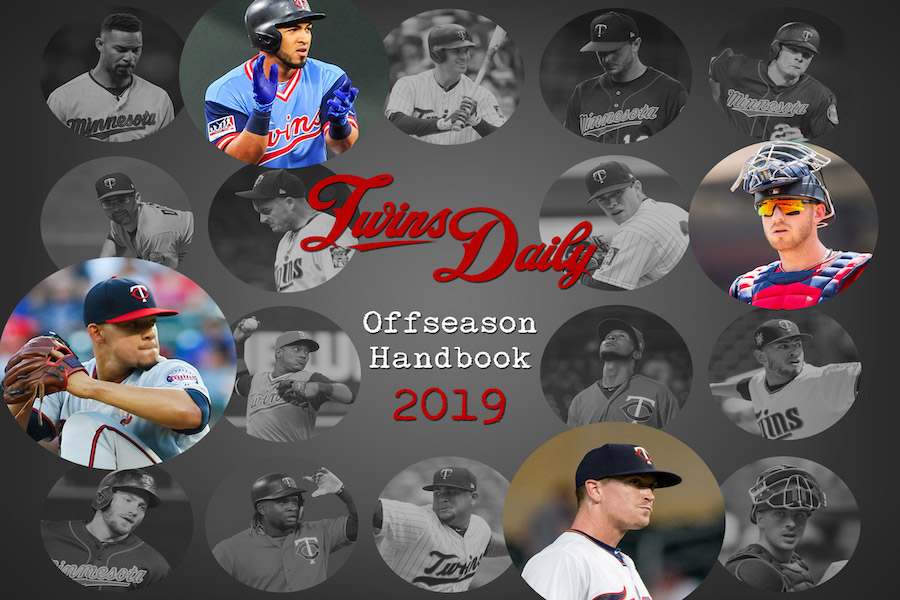 By Mike Berardino: Minnesota Twins offseasons typically haven’t been like most others around the major leagues. Well-practiced stealth and ultimate frustration have mostly been their M.O., with far more tire-kicking than jersey-holding marking their frozen winters of so-called hot stove activity. Oh, there was the wild week in late 2012 – just before I joined the St. Paul Pioneer Press as Twins beat writer – that saw both Denard Span and Ben Revere dealt away for young pitching prospects Alex Meyer and Trevor May, respectively. The winter of 2013-14 brought the two-pronged free agency push that lured veteran right- handers Ricky Nolasco and Phil Hughes to the Upper Midwest despite their Southern California upbringing. And, of course, there was the signing of free agent right-hander Ervin Santana in December 2014 – a quick pivot after the failed pursuit of a Francisco Liriano reunion – that worked out better than most such investments did for the Terry Ryan regime. Since the arrival of Falvine (imaginary trademark) in the fall of 2016, however, the Twins have been far more active during baseball’s supposed downtime. They jumped in quickly and signed catcher Jason Castro away from the Houston Astros for three years and $24.5 million shortly after taking over. That, of course, was followed by the month-long Brian Dozier soap opera in which the slugging second baseman and team MVP was peddled around the league in hopes his historic 42-homer season would bring a cache of high-end prospects in return. (It didn’t.) *** Want to read the rest of this story, followed by 70 pages of in-depth analysis of the Twins offseason that’s about to get underway? Claim your copy of the 2019 Offseason Handbook and you’ll receive it as soon as the World Series ends. Also, make sure to follow Mike on Twitter.
 -
WARNE: How Can the Twins Find Their Brewers-like Path to October?
Nick Nelson commented on Brandon Warne's blog entry in BW on the Beat
This story seems familiar. -
From the article: "As a legendary ballplayer and No. 3 overall draft pick back in 1974, Paul Molitor shares the first two commonalities mentioned above, but not this one. His career wasn't without speed bumps but over 21 years of playing, he stayed mostly healthy and forever productive en route to the Hall of Fame."
-
Buxton's career with Twins up to this point: 2015 (age 21): 0.1 WAR 2016 (age 22): 1.4 WAR 2017 (age 23): 3.5 WAR 2018 (age 24): -0.4 WAR Seems pretty clear to me? Also I don't think it's fair to downplay his performance with descriptors like "serviceable." Buxton was an MVP-caliber player the last 2 months of 2017. That doesn't really happen by accident or fluke.
-
We all know he's struggled to hit. What makes you so certain the numbers you're referencing aren't impacted by health issues? Buxton's competitive drive had him playing through a broken toe and strained wrist this season, and personally I think that wrist has been a bigger issue than anyone's letting on. Perhaps Baldelli can help dissuade Buxton from that play-through-everything mindset as part of the "big-picture" thinking.
-
There are many reasons to like Rocco Baldelli as Minnesota's new managerial choice. One attribute that's being thrown around frequently right now: 'he's just relatable.' As I wrote last week, that's been a key trait in many recent (successful) hires around the league. And in this case, a specific relatability to one colossally vital Twins player may be especially noteworthy.The Twins have a bevy of tasks in front of them, but none are more important to their short-term outlook than getting Byron Buxton back on track. His game-changing ability makes him an elite difference-maker in the game, and Buxton's total lack of contribution in 2018 was one of the biggest reasons Minnesota went nowhere. “When you have a staff that can relate to different players in different ways, I think you have a much better chance of touching these guys and helping them in their careers and getting them where they need to be," said Baldelli during his introductory press conference at Target Field on Thursday. Buxton's career up to this point has been one of huge upside, sky-high expectations, and physical setbacks. In all three of those areas, his new manager can provide an empathetic perspective and relate in some unique ways. Rocco Baldelli Knows About Being Gifted with Incredible Talent Like Buxton, Baldelli was a nationally recognized talent from a young age, and became a Top 10 draft pick out of high school. Both quickly developed into elite prospects and reached the major leagues at age 21. As players, they were of a similar mold: spectacular defensive center fielders and aggressive right-handed swingers with power. Few people throughout the game's history have been blessed with the kind of pure athleticism and ability Buxton has. I'm not sure even Baldelli makes that cut, but he's closer than most. Rocco Baldelli Knows About Dealing with Pressure and Expectations Of course, being a top draft pick (Buxton was second overall in 2012, Baldelli sixth overall in 2000) brings with it a burden of its own. These two blue-chip studs were subject to extreme levels of pressure and expectation, which only grew as they dominated the minors and rocketed to early big-league debuts. Buxton's perpetual stumbles and regressions have been made ever more frustrating by the Hall of Famer we all know resides within him. We've seen glimmers at times, but for various reasons, it just hasn't all fully come together. And that clearly weighs on him – why wouldn't it? Baldelli's been there. As a Rookie of the Year candidate in 2003, there was hoping he'd help lift a still-fresh Tampa Bay franchise – last-place finisher in each of its first six years – out of the cellar. He knows that level of scrutiny, which can often be fiercest from oneself. And that leads us to the most important thing: Rocco Baldelli Knows About Being Derailed by the Uncontrollable In a career that was sabotaged by physical breakdown, Baldelli faced maladies of all manners. He tore his ACL playing basketball during his third offseason. While rehabbing, he injured his elbow and required Tommy John surgery. Once he made it back he started experiencing chronic fatigue. Upon undergoing tests, he was diagnosed with "metabolic and/or mitochondrial abnormalities." Doctors attempted to work out a plan to manage it, but the inexplicable ailment sapped and drained him. He battled on for years, participating in Tampa's first World Championship in 2008, but was finished as a player by age 29. Which brings us to Buxton. He's had it bad up to this point, with major injuries scattered throughout his ascent and now casting doubt on his once brilliant outlook. But he's a long way from going down Baldelli's road. It's often said that great players don't make great coaches, because they can't empathize with the adversity and tribulations experienced by lesser talents. In a way, that dynamic is at play with this managerial transition. As a legendary ballplayer and No. 3 overall draft pick back in 1974, Paul Molitor shares the first two commonalities mentioned above, but not this one. His career wasn't without speed bumps but over 21 years of playing, he stayed mostly healthy and forever productive en route to the Hall of Fame. Buxton is currently at a crossroad between the best-case scenario where he turns it around and realizes his potential as a top player in the game for many years (the Molitor path), or the worst-case scenario where that potential is squashed by endless time spent in the trainer's room (the Baldelli path). To a large extent, it's out of his hands. And who better than Baldelli to get that message across? Focus on the big picture, manage what you can control, and don't let the setbacks get you down. Buxton doesn't need more heart, or determination, or motivation. That's all there. But he might benefit from a fresh perspective and a new type of mentorship that Baldelli can seemingly provide. Click here to view the article
-
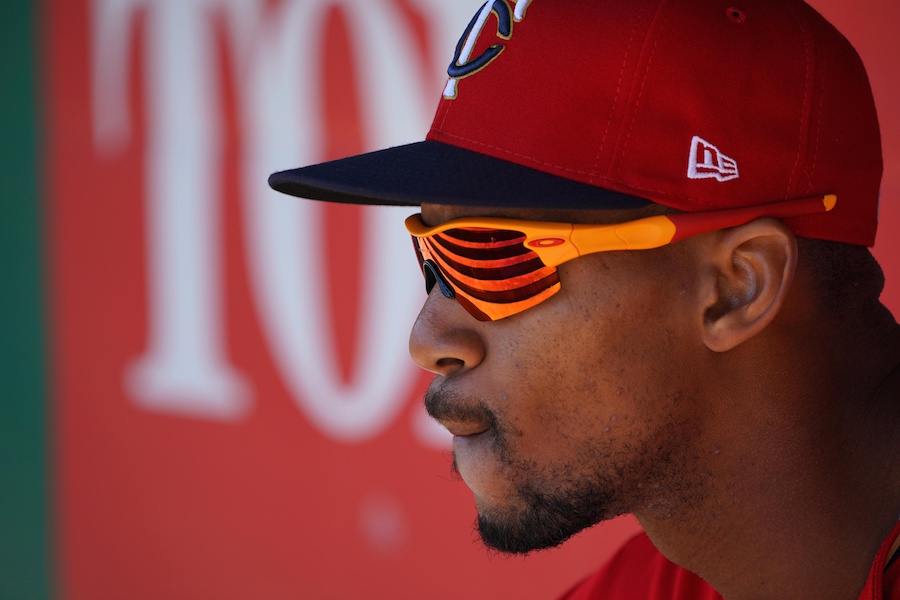 The Twins have a bevy of tasks in front of them, but none are more important to their short-term outlook than getting Byron Buxton back on track. His game-changing ability makes him an elite difference-maker in the game, and Buxton's total lack of contribution in 2018 was one of the biggest reasons Minnesota went nowhere. “When you have a staff that can relate to different players in different ways, I think you have a much better chance of touching these guys and helping them in their careers and getting them where they need to be," said Baldelli during his introductory press conference at Target Field on Thursday. Buxton's career up to this point has been one of huge upside, sky-high expectations, and physical setbacks. In all three of those areas, his new manager can provide an empathetic perspective and relate in some unique ways. Rocco Baldelli Knows About Being Gifted with Incredible Talent Like Buxton, Baldelli was a nationally recognized talent from a young age, and became a Top 10 draft pick out of high school. Both quickly developed into elite prospects and reached the major leagues at age 21. As players, they were of a similar mold: spectacular defensive center fielders and aggressive right-handed swingers with power. Few people throughout the game's history have been blessed with the kind of pure athleticism and ability Buxton has. I'm not sure even Baldelli makes that cut, but he's closer than most. Rocco Baldelli Knows About Dealing with Pressure and Expectations Of course, being a top draft pick (Buxton was second overall in 2012, Baldelli sixth overall in 2000) brings with it a burden of its own. These two blue-chip studs were subject to extreme levels of pressure and expectation, which only grew as they dominated the minors and rocketed to early big-league debuts. Buxton's perpetual stumbles and regressions have been made ever more frustrating by the Hall of Famer we all know resides within him. We've seen glimmers at times, but for various reasons, it just hasn't all fully come together. And that clearly weighs on him – why wouldn't it? Baldelli's been there. As a Rookie of the Year candidate in 2003, there was hoping he'd help lift a still-fresh Tampa Bay franchise – last-place finisher in each of its first six years – out of the cellar. He knows that level of scrutiny, which can often be fiercest from oneself. And that leads us to the most important thing: Rocco Baldelli Knows About Being Derailed by the Uncontrollable In a career that was sabotaged by physical breakdown, Baldelli faced maladies of all manners. He tore his ACL playing basketball during his third offseason. While rehabbing, he injured his elbow and required Tommy John surgery. Once he made it back he started experiencing chronic fatigue. Upon undergoing tests, he was diagnosed with "metabolic and/or mitochondrial abnormalities." Doctors attempted to work out a plan to manage it, but the inexplicable ailment sapped and drained him. He battled on for years, participating in Tampa's first World Championship in 2008, but was finished as a player by age 29. Which brings us to Buxton. He's had it bad up to this point, with major injuries scattered throughout his ascent and now casting doubt on his once brilliant outlook. But he's a long way from going down Baldelli's road. It's often said that great players don't make great coaches, because they can't empathize with the adversity and tribulations experienced by lesser talents. In a way, that dynamic is at play with this managerial transition. As a legendary ballplayer and No. 3 overall draft pick back in 1974, Paul Molitor shares the first two commonalities mentioned above, but not this one. His career wasn't without speed bumps but over 21 years of playing, he stayed mostly healthy and forever productive en route to the Hall of Fame. Buxton is currently at a crossroad between the best-case scenario where he turns it around and realizes his potential as a top player in the game for many years (the Molitor path), or the worst-case scenario where that potential is squashed by endless time spent in the trainer's room (the Baldelli path). To a large extent, it's out of his hands. And who better than Baldelli to get that message across? Focus on the big picture, manage what you can control, and don't let the setbacks get you down. Buxton doesn't need more heart, or determination, or motivation. That's all there. But he might benefit from a fresh perspective and a new type of mentorship that Baldelli can seemingly provide.
 -
For those interested, you can watch video of this baseball analytics panel Baldelli was on at the 2012 Sloan Sports Conference. Alongside him on that panel were Jeff Luhnow, Mark Shapiro, Bill James and Scott Boras. Says a lot about Baldelli that he was in that group six years ago, IMO. He comes off well when speaking here: https://youtu.be/ZU2UTCtvEZs
-
Late Wednesday night, strong indications emerged that the Minnesota Twins are set to hire Rocco Baldelli as the team’s new manager. FOX 9 Sports reports that he'll be announced at Target Field on Thursday. The 37-year-old from Rhode Island was the Major League Field Coordinator for the Tampa Bay Rays in 2018. He will become the 14th manager in club history.Rocco Baldelli is replacing Hall of Famer Paul Molitor as the Twins manager. Baldelli’s playing career was unfortunately cut short due to mitochondrial channelopathy, a rare disease that caused injury and fatigue. Baldelli finished third in Rookie of the Year voting in 2003 when he hit .289/.326/.416 (.742) with 32 doubles, eight triples, 11 homers and 27 stolen bases for the Rays. He missed all of 2005 with a knee injury and later Tommy John surgery. It was at this time his rare disease was first identified. He retired at 29 in 2010. At that point, Baldelli joined the Rays organization in a coaching capacity. He spent three years as a roving minor league instructor and was a special assistant to the Baseball Operations. That's the same title Minnesota's front office has given to former players Torii Hunter, LaTroy Hawkins, Michael Cuddyer and Justin Morneau. In 2014, Baldelli joined the big-league coaching staff as first base coach, a role he kept through the 2017 season. After that 2017 season, he was named the Major League Field Coordinator. In that role, he worked on defensive skills with players. According to a recent Tampa Bay Times article by Marc Topkin, Baldelli is "young, bright, sharp, communicative, confident, humble, versed in analytics — all characteristics that fit well with what teams seem to be looking for now in managers. Plus, he has the perspective of four years in a front/office scouting role.” In the same article, Topkin explained why the Texas Rangers consider him a good candidate for their job. “The Rangers seem high on Baldelli, with some chatter that after picking tough-guy Jeff Banister over Cash going into 2015 they now want to go the other way for a leader, and see Baldelli in that culture-building/positive-thinking mold.” In addition, Baldelli is very smart. He posted a 4.25 GPA in high school and scored 1300 on the SAT. Among the colleges he was considering before the Rays made him the sixth overall pick in 2000 were Princeton and Yale. “Baldelli also would seem a good fit with the analytic-driven execs running the Jays and Twins, who came from the Indians, where, for what it's worth, Cash coached for two years before getting the Rays' job. (In Minnesota, Baldelli is competing against former Rays hitting coach Derek Shelton, who spent 2018 as the Twins bench coach).” In a response to a Brandon Warne tweet about Baldelli, former Twins infielder Trevor Plouffe tweeted, “Rocco would be an awesome manager.” Plouffe spent about half of the 2017 season with the Tampa Bay Rays. Click here to view the article
-
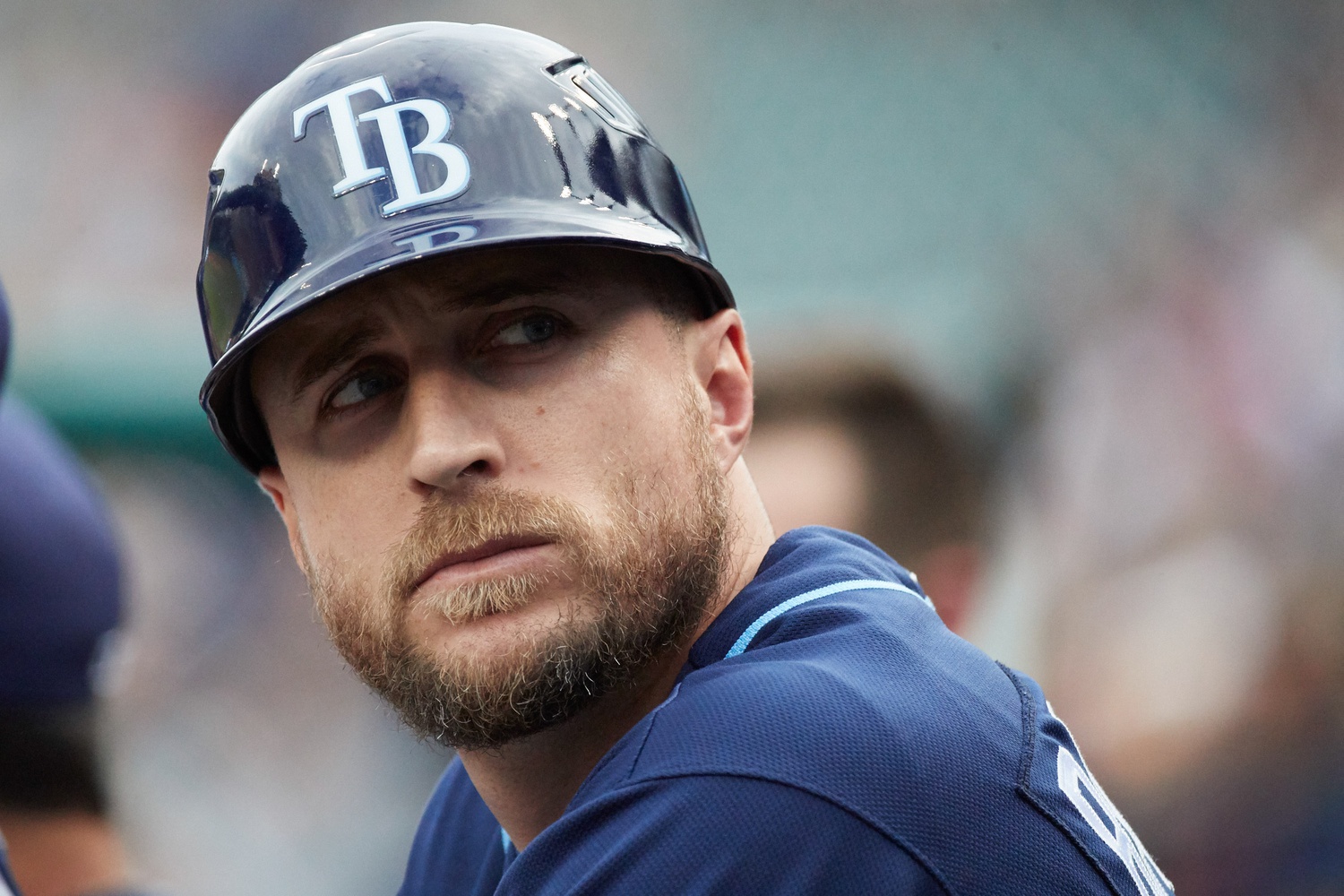 Rocco Baldelli is replacing Hall of Famer Paul Molitor as the Twins manager. Baldelli’s playing career was unfortunately cut short due to mitochondrial channelopathy, a rare disease that caused injury and fatigue. Baldelli finished third in Rookie of the Year voting in 2003 when he hit .289/.326/.416 (.742) with 32 doubles, eight triples, 11 homers and 27 stolen bases for the Rays. He missed all of 2005 with a knee injury and later Tommy John surgery. It was at this time his rare disease was first identified. He retired at 29 in 2010. At that point, Baldelli joined the Rays organization in a coaching capacity. He spent three years as a roving minor league instructor and was a special assistant to the Baseball Operations. That's the same title Minnesota's front office has given to former players Torii Hunter, LaTroy Hawkins, Michael Cuddyer and Justin Morneau. In 2014, Baldelli joined the big-league coaching staff as first base coach, a role he kept through the 2017 season. After that 2017 season, he was named the Major League Field Coordinator. In that role, he worked on defensive skills with players. According to a recent Tampa Bay Times article by Marc Topkin, Baldelli is "young, bright, sharp, communicative, confident, humble, versed in analytics — all characteristics that fit well with what teams seem to be looking for now in managers. Plus, he has the perspective of four years in a front/office scouting role.” In the same article, Topkin explained why the Texas Rangers consider him a good candidate for their job. “The Rangers seem high on Baldelli, with some chatter that after picking tough-guy Jeff Banister over Cash going into 2015 they now want to go the other way for a leader, and see Baldelli in that culture-building/positive-thinking mold.” In addition, Baldelli is very smart. He posted a 4.25 GPA in high school and scored 1300 on the SAT. Among the colleges he was considering before the Rays made him the sixth overall pick in 2000 were Princeton and Yale. “Baldelli also would seem a good fit with the analytic-driven execs running the Jays and Twins, who came from the Indians, where, for what it's worth, Cash coached for two years before getting the Rays' job. (In Minnesota, Baldelli is competing against former Rays hitting coach Derek Shelton, who spent 2018 as the Twins bench coach).” In a response to a Brandon Warne tweet about Baldelli, former Twins infielder Trevor Plouffe tweeted, “Rocco would be an awesome manager.” Plouffe spent about half of the 2017 season with the Tampa Bay Rays. https://twitter.com/trevorplouffe/status/1054441813925257216 Shelton was believed to be a leading candidate for the job as well before Baldelli impressed the front office. Others who were considered and received interviews include Twins hitting coach James Rowson, Giants bench coach Hensley Meulens, Cubs bench coach Brandon Hyde, and Astros bench coach Joe Espada. In recent days, the Reds named David Bell their new manager, and the Angels named Brad Ausmus as their new manager. The Twins are coming off of a 2018 season curtailed by injuries, unexpected poor performances and a PED suspension. The team finished strong to end the year with a record of 78-84. ------------ On Thursday morning, the Minnesota Twins officially announced that Rocco Baldelli will be their next manager. He is flying to Minneapolis this morning and there will be a press conference at 3:00 this afternoon.
 -
As we count down to the 2020 Offseason Handbook's official release (order yours here!) I thought a little retrospective might be fun. So I skimmed through the past seven years worth of Handbooks, seeking fun nuggets of nostalgia or insight. In this new three-part series, I'll go through highlights that tell the tales of offseasons past, while also linking to freely accessible previous editions if you're hankering for a trip down memory lane. Today we start with looks back at the winters of 2011-12 and 2012-13. THE 2011-12 OFFSEASON Download attachment: 2012cover.png Download the 2012 Offseason Handbook Here (Free) Off the Marq Jason Marquis was on the list of free agent starter options we profiled, but certainly not near the top coming off a mediocre 2012 campaign. Our blurb on hIm: Jason Marquis’s one redeeming quality at this point is his ability to induce ground balls as his 54.5% worm-burning rate was in the top 12 among pitchers who threw a minimum of 120 innings. Outside of that, he offers very little except for maybe “veteran leadership.” After a midseason trade to the Diamondbacks, who wanted some of that sweet “VL” for their youthful rotation, Marquis fractured his fibula and was placed on the DL for the balance of the season. He’s likely staring down a “make good” type of contract in the face. Estimated contract: 1 year, $5 million (plus incentives) He actually ended up signing for a bit less than we projected ($3 million), and indeed, Marquis offered very little except for that sweet VL, which didn't take him very far as he was designated for assignment in May with an 8.47 ERA. Dropping the Hammer Here's what we wrote about Josh Willingham before the Twins signed him to a three-year, $21 million deal in December: Mr. Willingham, the USS Multi-Year has finally pulled into port. After playing a series of one-year contracts, Willingham looks poised for a big deal. He actually had a better year than Cuddyer, but lacks some of the hype. Still, don’t be surprised if the 32-year-old ends up with a longer deal, or one that includes a playable option year. Estimated Contract: 3 years, $30 million Willingham enjoyed an excellent first year with the Twins, launching 35 homers and driving in 110 runs, but his body pretty much gave out on him after that. He limped to the end of his three-year contract (the final stretch in Kansas City), then retired. Reusse Reminisces All the way back in 2011, when Twins Daily was but a gleam in John's eye, and its four founders were but a motley band of wayward bloggers, local sports-page institution Patrick Reusse was kind enough to pen a foreword for our "Offseason GM Handbook," which was then a vague and raw conception of what it would become. Here's how he kicked it off: Bob Fowler left the St. Paul newspapers for the Minneapolis Star in 1974. I replaced him as the Twins beat writer for the Pioneer Press and Dispatch. Yes, we had the privilege of writing for both the morning and afternoon newspapers in St. Paul, which I looked back at as quite a burden until modern beat reports started offering blogs, Tweets and articles in an endless, day-long news cycle. I also didn’t have any of these independent journalists – such as the TwinsCentric crew of Seth Stohs, Parker Hageman, Nick Nelson and John Bonnes – to compete with, which is fortunate, since those were my drinking days. It's a little funny to read that now, because if ever Mr. Reusse considered us competitors, he sure never acted like it. Betraying his curmudgeonly shtick, Patrick has always shown us genuine kindness, even though we represented a model that has shaken his deeply beloved newspaper medium to the core. I'm proud to say that Reusse once again lent his talent to this year's edition of the Handbook, contributing an excellent anecdote-filled story about Paul Molitor, and the crucial difference between ability and teachability. It provides readers with some real food for thought as the manager search carries on. THE 2012-13 OFFSEASON Download attachment: 2013cover.png Download the 2013 Offseason Handbook Here (Free) Front Office Spin General manager Terry Ryan on Jose Berrios, freshly selected with the 32nd overall pick that June: "He has got pitches. He’s got athleticism. He’s got makeup. He has got the ability to spin the ball better than most. So yeah, we like him a lot." Ryan offered this assessment during our interview with him for the 2013 Offseason Handbook. And, well... You said it, Terry. Six years later, Berrios would appear in his first All-Star Game at age 24, on the strength of those very traits. He became the youngest Twin to earn the honor since Francisco Liriano, another of TR's greatest finds. Kevin. Freakin. Correia. Here was our profile on the oh-so ordinary 32-year-old Kevin Correia, who would go on to sign a lamentable two-year, $10 million contract with Minnesota in one of Ryan's least inspiring moves ever: Correia is a back-end starter in the low-strikeout, OK-control, pitch-to-contact mold. Even this year with the Pirates, a year in which he posted a 4.21 ERA, he was the guy bumped to the bullpen when they acquired Wandy Rodriguez at the deadline. But he’s relatively young, cheap and fairly durable. Unfortunately, he has also spent his entire eight-year MLB career in the National League. There is no guarantee the limited success he has experienced there would carry over to the AL (see: Marquis, Jason). Estimated Contract: 1 year, $2.5 million Well, Correia outlasted Marquis and – to his credit – achieved average results in 2013 before totally falling off in 2014. But he was the epitome of Ryan's fascination with contact-heavy veteran inning-eaters possessing zero upside. It was a dark time. Wide-Spanning Opinions Heading into the 2012-13 offseason, to say the writing was on the wall with regards to an impending Denard Span trade would be an understatement. All four Handbook authors (John, Seth, Parker and myself) wrote separate blueprints, and each of the four suggested trading Span for a different player. For John, it was to the Reds for SS Zack Cozart. Seth was also sending him to the Reds, in exchange for RHP Mike Leake. Parker shipped Span to the Rays for RHP Wade Davis. I also drew up a deal with Tampa, adding in prospect B.J. Hermsen to acquire RHP James Shields. Okay, so maybe they weren't all suuuuuper realistic in retrospect. But hey, blueprints are made for imaginative thinking! Turns out Shields and Davis would both head to Kansas City during that offseason, setting up a championship reign for the Royals. Meanwhile, Ryan ended up sending Span to Washington for prospect Alex Meyer in a future-focused move that ultimately never panned. Incidentally, the best move TR made that winter took place in the same week, when he traded Ben Revere to Philadelphia. Trevor May, acquired alongside (ugh) Vance Worley in the deal, figures to be a major factor in Minnesota's bullpen next year. (The story of this Twins offseason has yet to be written, but you'll be ready to expertly follow along with the 2019 Offseason Handbook. Order your copy of this digital product now!) Click here to view the article
-
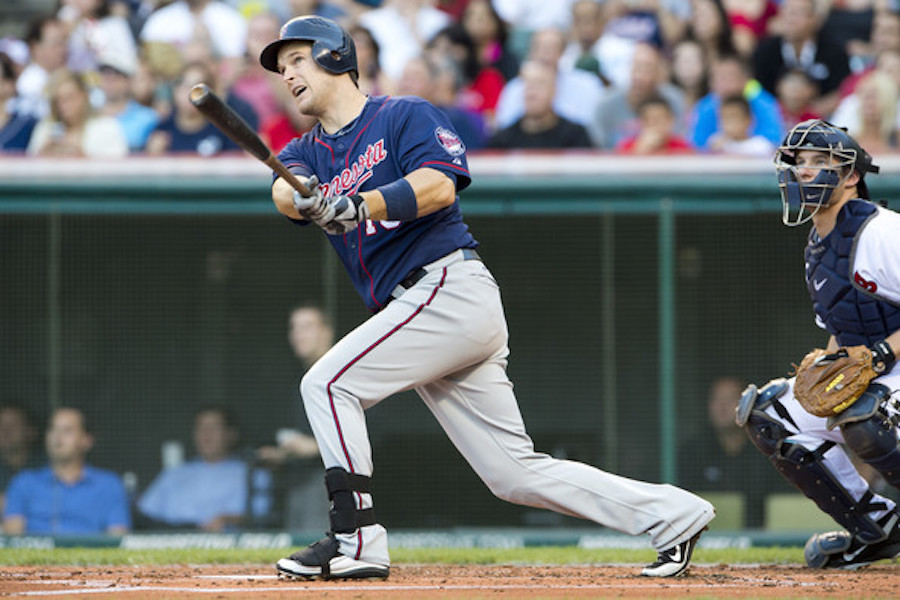 THE 2011-12 OFFSEASON Download the 2012 Offseason Handbook Here (Free) Off the Marq Jason Marquis was on the list of free agent starter options we profiled, but certainly not near the top coming off a mediocre 2012 campaign. Our blurb on hIm: Jason Marquis’s one redeeming quality at this point is his ability to induce ground balls as his 54.5% worm-burning rate was in the top 12 among pitchers who threw a minimum of 120 innings. Outside of that, he offers very little except for maybe “veteran leadership.” After a midseason trade to the Diamondbacks, who wanted some of that sweet “VL” for their youthful rotation, Marquis fractured his fibula and was placed on the DL for the balance of the season. He’s likely staring down a “make good” type of contract in the face. Estimated contract: 1 year, $5 million (plus incentives) He actually ended up signing for a bit less than we projected ($3 million), and indeed, Marquis offered very little except for that sweet VL, which didn't take him very far as he was designated for assignment in May with an 8.47 ERA. Dropping the Hammer Here's what we wrote about Josh Willingham before the Twins signed him to a three-year, $21 million deal in December: Mr. Willingham, the USS Multi-Year has finally pulled into port. After playing a series of one-year contracts, Willingham looks poised for a big deal. He actually had a better year than Cuddyer, but lacks some of the hype. Still, don’t be surprised if the 32-year-old ends up with a longer deal, or one that includes a playable option year. Estimated Contract: 3 years, $30 million Willingham enjoyed an excellent first year with the Twins, launching 35 homers and driving in 110 runs, but his body pretty much gave out on him after that. He limped to the end of his three-year contract (the final stretch in Kansas City), then retired. Reusse Reminisces All the way back in 2011, when Twins Daily was but a gleam in John's eye, and its four founders were but a motley band of wayward bloggers, local sports-page institution Patrick Reusse was kind enough to pen a foreword for our "Offseason GM Handbook," which was then a vague and raw conception of what it would become. Here's how he kicked it off: Bob Fowler left the St. Paul newspapers for the Minneapolis Star in 1974. I replaced him as the Twins beat writer for the Pioneer Press and Dispatch. Yes, we had the privilege of writing for both the morning and afternoon newspapers in St. Paul, which I looked back at as quite a burden until modern beat reports started offering blogs, Tweets and articles in an endless, day-long news cycle. I also didn’t have any of these independent journalists – such as the TwinsCentric crew of Seth Stohs, Parker Hageman, Nick Nelson and John Bonnes – to compete with, which is fortunate, since those were my drinking days.It's a little funny to read that now, because if ever Mr. Reusse considered us competitors, he sure never acted like it. Betraying his curmudgeonly shtick, Patrick has always shown us genuine kindness, even though we represented a model that has shaken his deeply beloved newspaper medium to the core. I'm proud to say that Reusse once again lent his talent to this year's edition of the Handbook, contributing an excellent anecdote-filled story about Paul Molitor, and the crucial difference between ability and teachability. It provides readers with some real food for thought as the manager search carries on. THE 2012-13 OFFSEASON Download the 2013 Offseason Handbook Here (Free) Front Office Spin General manager Terry Ryan on Jose Berrios, freshly selected with the 32nd overall pick that June: "He has got pitches. He’s got athleticism. He’s got makeup. He has got the ability to spin the ball better than most. So yeah, we like him a lot."Ryan offered this assessment during our interview with him for the 2013 Offseason Handbook. And, well... You said it, Terry. Six years later, Berrios would appear in his first All-Star Game at age 24, on the strength of those very traits. He became the youngest Twin to earn the honor since Francisco Liriano, another of TR's greatest finds. Kevin. Freakin. Correia. Here was our profile on the oh-so ordinary 32-year-old Kevin Correia, who would go on to sign a lamentable two-year, $10 million contract with Minnesota in one of Ryan's least inspiring moves ever: Correia is a back-end starter in the low-strikeout, OK-control, pitch-to-contact mold. Even this year with the Pirates, a year in which he posted a 4.21 ERA, he was the guy bumped to the bullpen when they acquired Wandy Rodriguez at the deadline. But he’s relatively young, cheap and fairly durable. Unfortunately, he has also spent his entire eight-year MLB career in the National League. There is no guarantee the limited success he has experienced there would carry over to the AL (see: Marquis, Jason). Estimated Contract: 1 year, $2.5 millionWell, Correia outlasted Marquis and – to his credit – achieved average results in 2013 before totally falling off in 2014. But he was the epitome of Ryan's fascination with contact-heavy veteran inning-eaters possessing zero upside. It was a dark time. Wide-Spanning Opinions Heading into the 2012-13 offseason, to say the writing was on the wall with regards to an impending Denard Span trade would be an understatement. All four Handbook authors (John, Seth, Parker and myself) wrote separate blueprints, and each of the four suggested trading Span for a different player. For John, it was to the Reds for SS Zack Cozart. Seth was also sending him to the Reds, in exchange for RHP Mike Leake. Parker shipped Span to the Rays for RHP Wade Davis. I also drew up a deal with Tampa, adding in prospect B.J. Hermsen to acquire RHP James Shields. Okay, so maybe they weren't all suuuuuper realistic in retrospect. But hey, blueprints are made for imaginative thinking! Turns out Shields and Davis would both head to Kansas City during that offseason, setting up a championship reign for the Royals. Meanwhile, Ryan ended up sending Span to Washington for prospect Alex Meyer in a future-focused move that ultimately never panned. Incidentally, the best move TR made that winter took place in the same week, when he traded Ben Revere to Philadelphia. Trevor May, acquired alongside (ugh) Vance Worley in the deal, figures to be a major factor in Minnesota's bullpen next year. (The story of this Twins offseason has yet to be written, but you'll be ready to expertly follow along with the 2019 Offseason Handbook. Order your copy of this digital product now!)
 -
Well, not so much when you consider the Cubs deal was for 6 years and MN's offer was most likely 5. Darvish bet against himself by very possibly taking less annually for a longer deal, and insisting on an opt-out. It was a terrible contract for Chicago and I was glad the Twins said no thanks. Said so at the time. But that is all beside the point because again, by all accounts, they were quite serious in their pursuit of the top free agent on the market. (Also, the only thing I've seen reported is that the Twins offered $100M+, why are we just assuming it was exactly 100 and running with that number? To suit the argument?) Well, no one said that. The original statement in question was that they are unwilling to take chances or risks. I find it dubious. They were deep in Dozier trade talks their first offseason and they were in on Darvish all of last winter. They just weren't going to take a risk that didn't make sense, and given how things have played out, I hardly think it's something to be criticized.
-
They reportedly offered $100M+ and he signed for $126M. How is that not close? (Also, as it turns out, they were wise to draw a line and stand their ground, despite all the immense grumbling around here.) Acting like that's not a significant step, nor committing $17M to a free agent reliever, just completely ignores the context and history of this franchise. Yes, it is a low bar, but that's just what it is. Let's be clear: the past regime never made that kind of plunge on the RP market and would've never dreamed of being a serious bidder on someone like Darvish. Do you disagree?
-
By all accounts they made an adamant effort to sign the top free agent on the market, to what would've been the biggest FA contract in franchise history. They DID sign Addison Reed to the largest RP contract. I don't really think there's any question that the willingness is there.
-
I think the truth lies somewhere in the middle. It's entirely possible (even likely) the Brewers saw something in Yelich that made them believe he had further room go grow, and/or they helped him make adjustments enabling that growth. That doesn't mean they anticipated him instantly becoming an MVP-caliber hitter, but claiming they got just got lucky sorta downplays the savviness of this move by Stearns and Co.
-
Their division, the NLDS, Game 1 of the NLCS... I'm not even gonna bother engaging with another of your intentional missings of the point. Funny thing, though: Boston has won as many World Series as Milwaukee in the last 5 years, and one more playoff game.
-
What evidence exists showing they are unwilling to take chances or risks?
-
Good point. One wonders if the Twins might've found their own version of Aguilar in Tyler Austin. It's not unthinkable...
-
There are more things tying the Twins and Brewers together than geographic proximity. Both are mid-market teams with finite resources. Both have struggled in recent years to get over the hump in their respective divisions. And in attempting to do so, both franchises have reinvented themselves, under the leadership of baseball's two youngest head executives. This year, we've seen Milwaukee's vision come to fruition. As general manager David Stearns and the Brewers extend their run into late October, Derek Falvey and the Twins are looking on.This story helps set the stage for a truly pivotal offseason ahead. It's just a taste of what you'll find in the 2019 Offseason Handbook, which is currently available for preorder. If you wanna learn more about it, and the benefits of preordering, check out our FAQ. Also, we just shared our list of guest contributors you might find familiar. ~~~ In December of 2011, the Cleveland Indians named Falvey and Stearns – both still in their mid-20s – co-directors of baseball operations. One year later, Stearns would be fished away by the Houston Astros, who made him their assistant GM under Jeff Luhnow. And after three years in that role, Milwaukee hired Stearns to run its front office. Falvey, still holding a pivotal role in Cleveland's baseball ops, was promoted to assistant GM in 2016. One year later the Twins poached Falvey from their division rivals and named him Chief Baseball Officer. They even went through the same search firm (Korn Ferry) that aided the Brewers in finding Stearns. Milwaukee's results in Years 1 and 2 under Stearns were nearly identical to Minnesota's under Falvey – one non-competitive season and one fairly competitive season that showed promise. Here in Year 3, it all came together for Stearns' Brewers: they won 96 games and now they're playing for a World Series bid. Next year will be Falvey's third in Minnesota. Can the Twins take a similar step forward under his guidance? In addressing this question, let's reflect on some components of Milwaukee's 2018 rise and how the Twins are implementing them in their own ways. Major Makeover In his first offseason at the helm, Stearns overturned half of Milwaukee's 40-man roster, a thorough house-cleaning in the wake of a 94-loss campaign. Falvey's initial tweaking was not quite as aggressive, in part because his early focus was more on changes behind the scenes, but two years after taking the job he and GM Thad Levine have reshaped the roster plenty. These newly hired execs weren't equipped for a complete overhaul out of the gates, due to inherited commitments. But with Joe Mauer, Brian Dozier and Ervin Santana presumably moving on, the team will be forging an entirely new identity. It seems likely next year's Opening Day 40-man roster will feature, at most, seven holdovers from the version Falvine took on two years ago: Max Kepler, Eddie Rosario, Byron Buxton, Miguel Sano, Jorge Polanco, Kyle Gibson and Trevor May. Innovative and Malleable Manager Like Stearns, Falvey kept his incumbent manager rather than replacing him, in what was more or less a mandate from ownership. Milwaukee's Craig Counsell, who'd been tabbed during the season to replace Ron Roenicke, was an internal hire with no formal managerial experience, much like Paul Molitor. But at 45, Counsell was considerably younger, and only a few years removed from his playing days. It's nigh impossible to quantify or definitively analyze a manager's impact, but Counsell sure seems to be a positive difference-maker. He embraces a discerning new-school mentality (we've seen plenty of creative tactics deployed here in October, especially with pitching usage), and perhaps most importantly, strikes a note of relatability and resonance with his players, having been in their shoes not so long ago. That's a trend we see around the game. Look at the other playoff teams and you see several skippers with profiles similar to Counsell: recently retired players with zero formal experience in the role. Dave Roberts (Los Angeles), Alex Cora (Boston), Aaron Boone (New York) are all under 50, and all stopped playing within the past decade. The same is true of guys like Gabe Kapler (Philadelphia) and Kevin Cash (Tampa), whose underdog squads exceeded expectations and flirted with contention. Now that Falvey and Co. finally have the chance to handpick their own man for the job, I suspect we'll see them follow this emerging paradigm. Relentless Bullpen One thing that's enabled Milwaukee's stunning success – especially here in October – is a deep and cleverly utilized relief corps. It helps offset an unspectacular rotation, and places the Brewers on even footing with today's high-powered bullpen units. They have perhaps the game's most dominant reliever in Josh Hader, and complement him with plenty of other high-caliber arms like Jeremy Jeffress, Corey Knebel, Dan Jennings, Brandon Woodruff, Corbin Burnes and Joakim Soria. In the playoffs, Counsell has been leveraging this depth to prevent his starters from seeing lineups multiple times, or even bypassing them completely – Milwaukee went with a full-on bullpen game in the first NLDS contest, defeating Colorado on the strength of its six best relievers. The Twins have a long way to go before boasting such bullpen strength, but they've at least got some key pieces in place. Falvey and Levine demonstrated their seriousness last winter by signing Addison Reed to the largest contract for a free agent reliever in franchise history, and while that one hasn't worked out so well, they'll doubtlessly be active again on this acquisition front. Subtle Additions Add Up Whereas deadline waffling was a signature characteristic of the Terry Ryan era, this new front office has proven bold and decisive. Taking honest stock of teams that lacked championship viability, Falvey and Levine have repeatedly seized opportunities to capture intriguing talent from other organizations. Stearns has benefitted hugely from one such move that took place before his arrival – in July of 2015, his predecessor Doug Melvin dealt Carlos Gomez and Mike Fiers to Houston in exchange for, among others, Hader and slugging outfielder Domingo Santana. (Ironically, Stearns was assistant GM for the Astros at the time.) Since taking over, though, Stearns has savvily acquired key pieces through many avenues. He claimed Junior Guerra off waivers from the White Sox. He picked up top prospect Lewis Brinson from Texas at the 2016 deadline, in exchange for Jonathan Lucroy and Jeffress, then later flipped Brinson into the headliner of the Christian Yelich trade. Stearns signed Eric Thames out of Korea, landing a cost-effective top-tier slugger. He acquired young standout starter Freddy Peralta from Seattle in the low-key Adam Lind trade of December 2015. "Opportunistic" is a credo that Falvey recites often, and his regime has largely lived it. That same mindset has served Stearns and the Brewers well, and as we've seen, the payoff can be huge even if not immediately apparent. Key Offseason Pickups Stearns also has some marquee acquisitions under his belt, and a couple of slam dunks last offseason have largely fueled his team's elevation here in 2018. Maybe it's just a short memory, but I have a hard time recalling two players immediately moving the needle in their first year with a new team like Yelich and Lorenzo Cain have. Both are credible candidates for National League MVP. Yelich is actually the odds-on favorite, having led the NL in WAR (7.6). Cain was close behind in fourth place (5.7). That's more than 13 wins added by two additions, according to FanGraphs; if the Twins were somehow able to inject a similar boost while receiving at least modest turnarounds from their internal core, a leap from 78 wins to 90+ is very feasible. Milwaukee's high-profile acquisitions were of a sort that Minnesota could realistically pull off this winter. Cain was a free agent, signed by the Brewers to a five-year, $80 million contract that now looks beyond reasonable in hindsight. The Twins have plenty of spending flexibility for such a move. Yelich came in a trade, which required Stearns to part with some of his most prized minor-league talent – Brinson was Milwaukee's top prospect, and among the highest-ranked in the game, while Monte Harrison and Isan Diaz also were among the organization's Top 10 – but in return the Brewers got a 26-year-old superstar under reasonable control through 2022. The Twins possess one of the best farm systems in the game, with premier talent at the top and plenty of depth throughout. They are well positioned to deal from this cache for assets that can make both immediate and long-term impacts. During his late-August interview with Baseball Prospectus at Target Field, Levine suggested that this route was appealing to him: "As we sit here today, it’s not to say we’re not going to get aggressive in this free agent market, but we may actually shift our attention to the trade market. This might not be the perfect time for us to invest in a guy who’s 30 years old and would need to perform today in order for us to realize his true potential." In Yelich, Milwaukee got the best of both worlds. As far as free agents and trade targets go, there are plenty of big names out there this offseason, making for a wealth of intrigue given Minnesota's circumstances. You'll be able to explore all of the possibilities in our 2019 Offseason Handbook, which is available for preorder. Claim your copy now, get it before its official release. Today we revealed the front cover and our star-studded lineup of guest authors. Click here to view the article
-
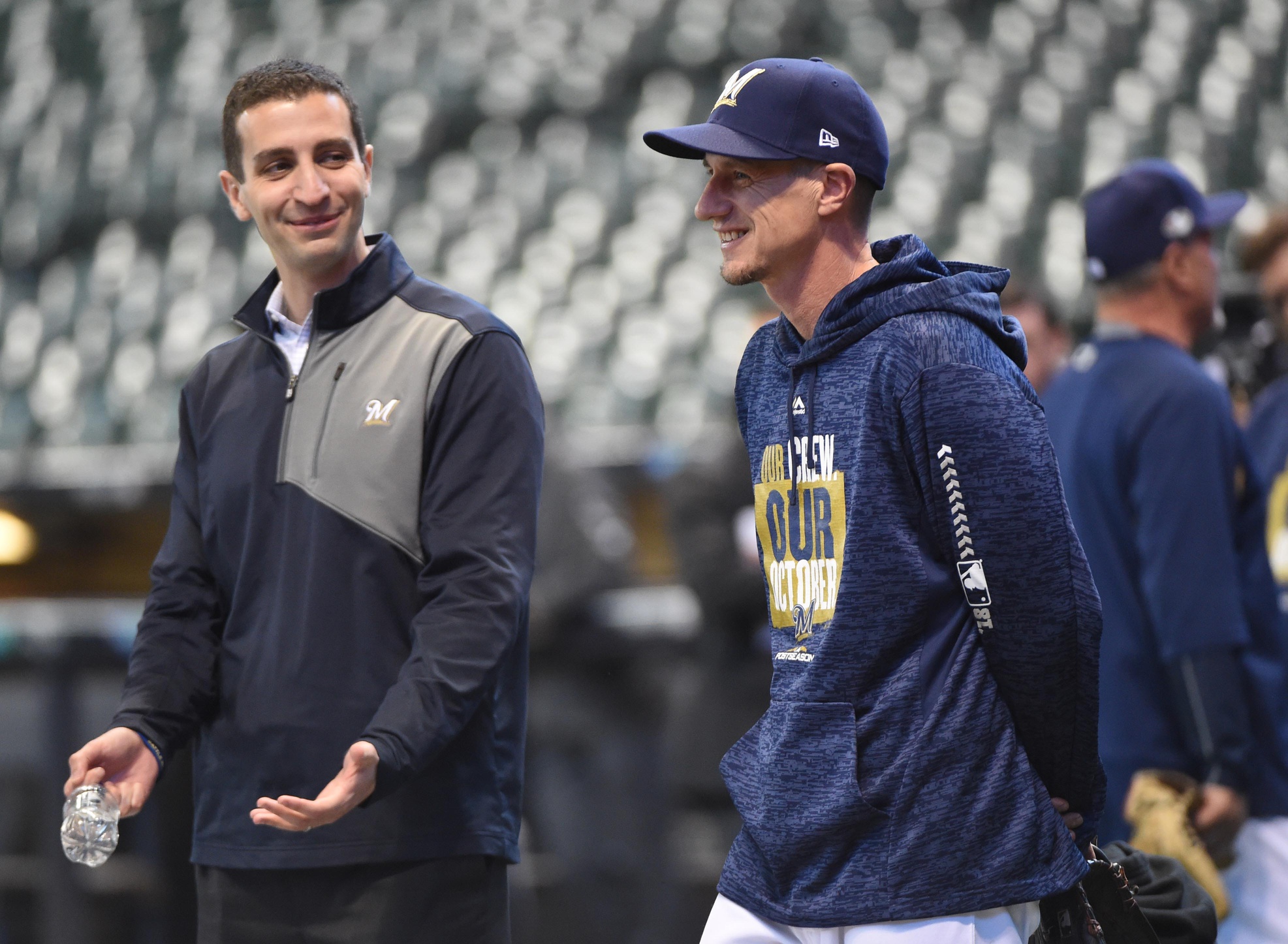 This story helps set the stage for a truly pivotal offseason ahead. It's just a taste of what you'll find in the 2019 Offseason Handbook, which is currently available for preorder. If you wanna learn more about it, and the benefits of preordering, check out our FAQ. Also, we just shared our list of guest contributors you might find familiar. ~~~ In December of 2011, the Cleveland Indians named Falvey and Stearns – both still in their mid-20s – co-directors of baseball operations. One year later, Stearns would be fished away by the Houston Astros, who made him their assistant GM under Jeff Luhnow. And after three years in that role, Milwaukee hired Stearns to run its front office. Falvey, still holding a pivotal role in Cleveland's baseball ops, was promoted to assistant GM in 2016. One year later the Twins poached Falvey from their division rivals and named him Chief Baseball Officer. They even went through the same search firm (Korn Ferry) that aided the Brewers in finding Stearns. Milwaukee's results in Years 1 and 2 under Stearns were nearly identical to Minnesota's under Falvey – one non-competitive season and one fairly competitive season that showed promise. Here in Year 3, it all came together for Stearns' Brewers: they won 96 games and now they're playing for a World Series bid. Next year will be Falvey's third in Minnesota. Can the Twins take a similar step forward under his guidance? In addressing this question, let's reflect on some components of Milwaukee's 2018 rise and how the Twins are implementing them in their own ways. Major Makeover In his first offseason at the helm, Stearns overturned half of Milwaukee's 40-man roster, a thorough house-cleaning in the wake of a 94-loss campaign. Falvey's initial tweaking was not quite as aggressive, in part because his early focus was more on changes behind the scenes, but two years after taking the job he and GM Thad Levine have reshaped the roster plenty. These newly hired execs weren't equipped for a complete overhaul out of the gates, due to inherited commitments. But with Joe Mauer, Brian Dozier and Ervin Santana presumably moving on, the team will be forging an entirely new identity. It seems likely next year's Opening Day 40-man roster will feature, at most, seven holdovers from the version Falvine took on two years ago: Max Kepler, Eddie Rosario, Byron Buxton, Miguel Sano, Jorge Polanco, Kyle Gibson and Trevor May. Innovative and Malleable Manager Like Stearns, Falvey kept his incumbent manager rather than replacing him, in what was more or less a mandate from ownership. Milwaukee's Craig Counsell, who'd been tabbed during the season to replace Ron Roenicke, was an internal hire with no formal managerial experience, much like Paul Molitor. But at 45, Counsell was considerably younger, and only a few years removed from his playing days. It's nigh impossible to quantify or definitively analyze a manager's impact, but Counsell sure seems to be a positive difference-maker. He embraces a discerning new-school mentality (we've seen plenty of creative tactics deployed here in October, especially with pitching usage), and perhaps most importantly, strikes a note of relatability and resonance with his players, having been in their shoes not so long ago. That's a trend we see around the game. Look at the other playoff teams and you see several skippers with profiles similar to Counsell: recently retired players with zero formal experience in the role. Dave Roberts (Los Angeles), Alex Cora (Boston), Aaron Boone (New York) are all under 50, and all stopped playing within the past decade. The same is true of guys like Gabe Kapler (Philadelphia) and Kevin Cash (Tampa), whose underdog squads exceeded expectations and flirted with contention. Now that Falvey and Co. finally have the chance to handpick their own man for the job, I suspect we'll see them follow this emerging paradigm. Relentless Bullpen One thing that's enabled Milwaukee's stunning success – especially here in October – is a deep and cleverly utilized relief corps. It helps offset an unspectacular rotation, and places the Brewers on even footing with today's high-powered bullpen units. They have perhaps the game's most dominant reliever in Josh Hader, and complement him with plenty of other high-caliber arms like Jeremy Jeffress, Corey Knebel, Dan Jennings, Brandon Woodruff, Corbin Burnes and Joakim Soria. In the playoffs, Counsell has been leveraging this depth to prevent his starters from seeing lineups multiple times, or even bypassing them completely – Milwaukee went with a full-on bullpen game in the first NLDS contest, defeating Colorado on the strength of its six best relievers. The Twins have a long way to go before boasting such bullpen strength, but they've at least got some key pieces in place. Falvey and Levine demonstrated their seriousness last winter by signing Addison Reed to the largest contract for a free agent reliever in franchise history, and while that one hasn't worked out so well, they'll doubtlessly be active again on this acquisition front. Subtle Additions Add Up Whereas deadline waffling was a signature characteristic of the Terry Ryan era, this new front office has proven bold and decisive. Taking honest stock of teams that lacked championship viability, Falvey and Levine have repeatedly seized opportunities to capture intriguing talent from other organizations. Stearns has benefitted hugely from one such move that took place before his arrival – in July of 2015, his predecessor Doug Melvin dealt Carlos Gomez and Mike Fiers to Houston in exchange for, among others, Hader and slugging outfielder Domingo Santana. (Ironically, Stearns was assistant GM for the Astros at the time.) Since taking over, though, Stearns has savvily acquired key pieces through many avenues. He claimed Junior Guerra off waivers from the White Sox. He picked up top prospect Lewis Brinson from Texas at the 2016 deadline, in exchange for Jonathan Lucroy and Jeffress, then later flipped Brinson into the headliner of the Christian Yelich trade. Stearns signed Eric Thames out of Korea, landing a cost-effective top-tier slugger. He acquired young standout starter Freddy Peralta from Seattle in the low-key Adam Lind trade of December 2015. "Opportunistic" is a credo that Falvey recites often, and his regime has largely lived it. That same mindset has served Stearns and the Brewers well, and as we've seen, the payoff can be huge even if not immediately apparent. Key Offseason Pickups Stearns also has some marquee acquisitions under his belt, and a couple of slam dunks last offseason have largely fueled his team's elevation here in 2018. Maybe it's just a short memory, but I have a hard time recalling two players immediately moving the needle in their first year with a new team like Yelich and Lorenzo Cain have. Both are credible candidates for National League MVP. Yelich is actually the odds-on favorite, having led the NL in WAR (7.6). Cain was close behind in fourth place (5.7). That's more than 13 wins added by two additions, according to FanGraphs; if the Twins were somehow able to inject a similar boost while receiving at least modest turnarounds from their internal core, a leap from 78 wins to 90+ is very feasible. Milwaukee's high-profile acquisitions were of a sort that Minnesota could realistically pull off this winter. Cain was a free agent, signed by the Brewers to a five-year, $80 million contract that now looks beyond reasonable in hindsight. The Twins have plenty of spending flexibility for such a move. Yelich came in a trade, which required Stearns to part with some of his most prized minor-league talent – Brinson was Milwaukee's top prospect, and among the highest-ranked in the game, while Monte Harrison and Isan Diaz also were among the organization's Top 10 – but in return the Brewers got a 26-year-old superstar under reasonable control through 2022. The Twins possess one of the best farm systems in the game, with premier talent at the top and plenty of depth throughout. They are well positioned to deal from this cache for assets that can make both immediate and long-term impacts. During his late-August interview with Baseball Prospectus at Target Field, Levine suggested that this route was appealing to him: "As we sit here today, it’s not to say we’re not going to get aggressive in this free agent market, but we may actually shift our attention to the trade market. This might not be the perfect time for us to invest in a guy who’s 30 years old and would need to perform today in order for us to realize his true potential." In Yelich, Milwaukee got the best of both worlds. As far as free agents and trade targets go, there are plenty of big names out there this offseason, making for a wealth of intrigue given Minnesota's circumstances. You'll be able to explore all of the possibilities in our 2019 Offseason Handbook, which is available for preorder. Claim your copy now, get it before its official release. Today we revealed the front cover and our star-studded lineup of guest authors.
 -
As the postseason rolls on, we're getting closer to the World Series, and you know what that means: Offseason Handbook Day is almost upon us! (Preorders will receive their copies next Tuesday.) Today, we're excited to bring you a couple of big updates, including our star-studded list of guest contributors.Above, you're seeing the official front cover to the Twins Daily Offseason Handbook 2019, designed by Twins Daily's talented Brock Beauchamp. This visual reflects the larger realities weighing on the club this offseason – a few players took steps forward in 2018 to solidify themselves as building blocks, but many more endured tumultuous years, fading their shine and casting doubt on their future. It's a challenging landscape for the front office to navigate, with weighty decisions left and right. You'll get a firsthand look at them as you dive into the Handbook, which lays out the roster makeup, organizational depth, arbitration scenarios, free agent options, trade targets and more. To help you on your way, we've enlisted several brilliant writers – each with unique expertise and perspective regarding the Twins – to provide guidance, analysis, and context as you explore this offseason of uncertainty. We are proud to announce the 2019 Offseason Handbook will feature stories from the following guest authors (in addition to the core Twins Daily team of John Bonnes, Tom Froemming, Parker Hageman, Seth Stohs and myself): Mike Berardino, Twins beat writer for Pioneer Press (2013-18)Rhett Bollinger, Twins beat writer for MLB.comAaron Gleeman, editor-in-chief at BaseballProspectus.comPhil Miller, Twins beat writer for Star TribuneRandBall's Stu, contributor at TwinkieTown.comPatrick Reusse, longtime columnist for Star TribuneThis is a totally new wrinkle for the Handbook. We've frequently had foreword submissions from media folks in the past, but never before have we reached out to prolific writers covering the team elsewhere and incorporated their voices prominently throughout. Given the spirit of this product, I have no earthly idea why not. The Offseason Handbook is all about letting readers put together their own dream teams, so why not recruit an All-Star lineup of scribes we love and respect to be part of the fun? The end result is, I can promise, one you will love. There has never been more high-quality content packed into the Handbook. I'm so friggin' proud of this thing, and so grateful to all the talented writers who blessed it with their skills. Preorder yours now for $10+ and you'll get it next Tuesday, on the first day of the World Series, before it becomes publicly available. Got any questions? Read our FAQ. Click here to view the article
-
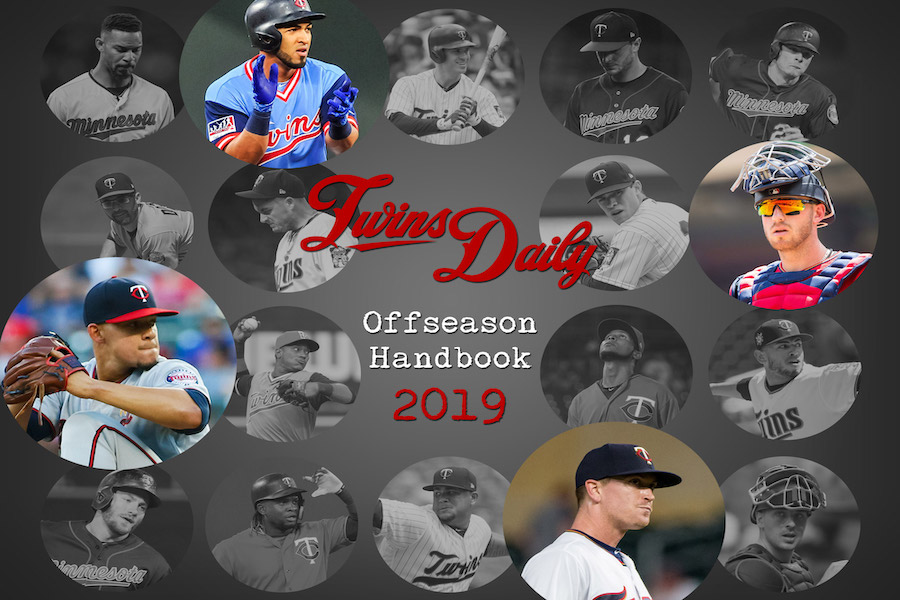 Above, you're seeing the official front cover to the Twins Daily Offseason Handbook 2019, designed by Twins Daily's talented Brock Beauchamp. This visual reflects the larger realities weighing on the club this offseason – a few players took steps forward in 2018 to solidify themselves as building blocks, but many more endured tumultuous years, fading their shine and casting doubt on their future. It's a challenging landscape for the front office to navigate, with weighty decisions left and right. You'll get a firsthand look at them as you dive into the Handbook, which lays out the roster makeup, organizational depth, arbitration scenarios, free agent options, trade targets and more. To help you on your way, we've enlisted several brilliant writers – each with unique expertise and perspective regarding the Twins – to provide guidance, analysis, and context as you explore this offseason of uncertainty. We are proud to announce the 2019 Offseason Handbook will feature stories from the following guest authors (in addition to the core Twins Daily team of John Bonnes, Tom Froemming, Parker Hageman, Seth Stohs and myself): Mike Berardino, Twins beat writer for Pioneer Press (2013-18) Rhett Bollinger, Twins beat writer for MLB.com Aaron Gleeman, editor-in-chief at BaseballProspectus.com Phil Miller, Twins beat writer for Star Tribune RandBall's Stu, contributor at TwinkieTown.com Patrick Reusse, longtime columnist for Star Tribune This is a totally new wrinkle for the Handbook. We've frequently had foreword submissions from media folks in the past, but never before have we reached out to prolific writers covering the team elsewhere and incorporated their voices prominently throughout. Given the spirit of this product, I have no earthly idea why not. The Offseason Handbook is all about letting readers put together their own dream teams, so why not recruit an All-Star lineup of scribes we love and respect to be part of the fun? The end result is, I can promise, one you will love. There has never been more high-quality content packed into the Handbook. I'm so friggin' proud of this thing, and so grateful to all the talented writers who blessed it with their skills. Preorder yours now for $10+ and you'll get it next Tuesday, on the first day of the World Series, before it becomes publicly available. Got any questions? Read our FAQ.
 -
It wasn't all bad. Yes, the Twins' 2018 season was a huge letdown, with alarming developments on multiple fronts, but amidst the wreckage there were some genuinely uplifting stories playing out. Today we highlight six important ones that brighten the franchise's future outlook.#1: Jose Berrios Blossoms In some ways, Berrios simply solidified his status after emerging in 2017. His ERA and FIP were nearly identical. His peripherals mainly held steady. There wasn't a huge difference in his overall performance between the two seasons, but backing up his breakout was an accomplishment on its own, especially with Berrios pushing his innings total to a career-high 192. That last part is very important. Berrios as at a critical juncture for any young pitcher, pushing his body to new limits in assuming a full MLB starter's workload. His arm is responding well to say the least; in his final outing on September 28th, Berrios averaged his highest fastball velo of the year (per Brooks Baseball) while tying his season-high for swinging strikes (17). He was an All-Star at age 24, and has established a high-caliber baseline with room for growth. In my mind, striking a long-term deal with Berrios is one of the club's foremost priorities this offseason. #2: Kyle Gibson Officially Turns the Corner Like that of Berrios, Gibson's story isn't entirely new to the 2018 season. He started figuring it out late last year, but has teased us with glimmers of success in the past. He needed to prove it here in 2018, and did just that. He threw his fastball and slider harder than ever, pushing his whiff rate to a career-high 11.5%. (Prior to 2017, he'd never reached double-digits.) Like Berrios, he set a new personal record for workload, coming just three frames short of 200. He stayed healthy from front to back, and delivered 18 quality starts in 32 turns. His persistently mediocre control makes Gibson more of a quality mid-rotation type than a frontman, but that he's better than most in that category. And the Twins conveniently have him under control for 2019, his age-31 season. #3: Mitch Garver Catches On The Twins have much vested in Garver. With Jason Castro's contract expiring after 2019, the organization has little else in the short-term pipeline at catcher. They really needed the 27-year-old to show something this year and thankfully he was up to the task. Our TD panel recently named Garver 2018 Twins Rookie of the Year after he posted a .749 OPS at a position where the AL average was .658. He showed exactly the kind of progressive improvement you hope to see in a first full year, shaking off a slow start to hit .293/.361/.476 in his final 55 games. He also put up a 32-to-18 K/BB ratio during that span. Garver's combination of power and discipline give him a sustainable formula for offensive success going forward. His defense also came along over the summer, though not quite as convincingly. Garver finished as one of the league's worst pitch framers and committed more than a couple head-scratching mental gaffes. But as he began to see more steady playing time following Castro's knee injury, Garver appeared to grow more adept. Paul Molitor spoke in late August of an "overall sense that my pitchers have gotten a lot more comfortable throwing with him as this season has gone on.” Of course, Garver's year did end on a bit of a somber note, as a concussion with lingering effects cost him much of September. But he made it back for a couple starts in the final week (albeit not at catcher), alleviating some concern. #4: Jake Cave Emerges Narrowly behind Garver in our ROTY balloting was Cave, who also turned in standout offensive production while playing most his defensive innings at a premium position. The outfielder was a pleasant surprise after being acquired in March from New York, where he was squeezed out of a roster already drenched in power. Cave had turned a corner in that regard last year in the Yankees system, hitting 20 homers after totaling 19 in his first four pro seasons, and in 2018 he proved it legit. In his first exposure to MLB pitching, the 25-year-old tallied 32 extra-base hits (13 bombs) to finish with a .481 slugging percentage in 91 games. He achieved these numbers through an extremely aggressive approach, striking out 33% of the time with minimal patience, but it worked out for him because – like fellow free-swinging outfielder (and Twins Daily 2018 MVP) Eddie Rosario – Cave hit the ball hard consistently. Only 8.6% of his contact qualified as "soft" (per FanGraphs), lowest on the team. Already, Cave has established himself as a valuable fourth outfielder and it's not hard to envision him becoming a quality starter. The Twins control his rights for the next five years. Great get. #5: Top Prospects Elevate All too often over the past eight years, Twins fans have been sold hope, as the system excelled and the major-league team flopped. So if you're having a hard time getting jazzed up about this, I get it. After all these years, Minnesota's vaunted pipeline still hasn't produced the desired impact, and now we're coming to grips with a realization that some young players who seemed destined for stardom may fall well short. But don't let that completely douse your enthusiasm over what happened on the farm this year – specifically in Fort Myers, with the organization's top three minor-leaguers. MLB Pipeline has shortstop Royce Lewis and outfielder Alex Kirilloff ranked as the seventh- and 10th-best prospects in baseball, respectively. The last time the Twins had two of the top 10 overall prospects? Well, it was only five years ago, when Byron Buxton was first and Miguel Sano was fourth, which... isn't gonna help with the dampered enthusiasm. But these are their own players, and they are incredibly talented – as is MLB.com's No. 70 prospect Brusdar Graterol, a fireballing 20-year-old righty. Any or all of these three could feasibly start next year in Double-A, putting them in range of a 2019 big-league debut. With Buxton and Sano on wayward paths, it sure helps to have another elite wave of youthful upside on the way. #6: Trevor May Returns Triumphantly I wrote earlier this week about May's phenomenal return to the Twins bullpen, which produced career highs in velocity, whiffs, K/BB rates, and just about every other metric. "I’m not a guy who’s gonna sit here and mope about how hard I worked and now it’s not gonna happen,” said a dejected yet determined May in spring of 2017, when his torn UCL was announced. True to his word, he went back to work and he made it happen. The righty underwent Tommy John surgery, spent about 16 months recovering and rehabbing, then returned to the major-league mound on July 31st. He allowed a run in that game, and then was essentially lights-out the rest of the way (excepting one clunky appearance as "opener"). He finished the year as closer, looking fantastic, and I don't think the Twins would be crazy to just leave him there. But they may opt for a more experienced guy who could slide May into a (potentially more valuable) fireman role. Either way, the 29-year-old surpassed all expectations in his return and his presence makes a huge difference in this bullpen's outlook. Let's hear your takes. What was the most promising development for the Twins in 2018, from your view? Click here to view the article
- 20 replies
-
- 3
-
-
- jose berrios
- kyle gibson
- (and 3 more)
