



Nick Nelson
-
Posts
8,327 -
Joined
-
Last visited
-
Days Won
56
Content Type
Profiles
News
Minnesota Twins Videos
2026 Minnesota Twins Top Prospects Ranking
2022 Minnesota Twins Draft Picks
Minnesota Twins Free Agent & Trade Rumors, Notes, & Tidbits
Guides & Resources
2023 Minnesota Twins Draft Picks
The Minnesota Twins Players Project
2024 Minnesota Twins Draft Picks
2025 Minnesota Twins Draft Pick Tracker
2026 Minnesota Twins Draft Tracker: Picks & Bonuses
Forums
Blogs
Events
Store
Downloads
Gallery
Everything posted by Nick Nelson
-
Article: Offseason Blueprint: Hey Big Spenders!
Nick Nelson replied to Nick Nelson's topic in Twins Daily Front Page News
Also, allow me to add that these comparisons to a typical corporate business setting are frightfully off-the-mark. Does anyone actually think pro sports operates in the same mindset as standard consumer-facing companies? Yes, ownership is interested in turning profit and driving revenue. But doing so is entirely dependent on fan interest, which is currently as low as it's been in 15 years (as far as attendance is concerned). I'm not sure how you can argue from a business standpoint that investing extra right now to rejuvenate interest and thrust the team back toward contention would be some sort of epic blunder, especially when it doesn't involve pigeonholing themselves into that kind of spending long-term. (To the contrary: I see players like Berrios/Corbin/Buxton becoming the building blocks surrounded by cheaper young talent from the pipeline.) -
Article: Offseason Blueprint: Hey Big Spenders!
Nick Nelson replied to Nick Nelson's topic in Twins Daily Front Page News
Sure, that's fair. BUT, I think a few folks are overstating the importance of historical trends and existing evidence in this discussion, while ignoring some pretty obviously relevant factors. Namely, this: Before last offseason, what reason was there to think we were gonna see an all-time high payroll in franchise history in 2018? Falvey and Levine have essentially had one full offseason at the helm, and it resulted in more spending than we've ever seen before from the organization. And while $150 million might seem like a huge number through the lens of Twins fans, it's really not that outrageous in the scope of today's MLB. It just isn't. -
Article: Offseason Blueprint: Hey Big Spenders!
Nick Nelson replied to Nick Nelson's topic in Twins Daily Front Page News
The Twins had a payroll of $129.5m this year and yet it is a "fantasy" to envision a rise over $130m? Ok. To reiterate (again) no one is saying you should expect this payroll. It's merely an exercise to show what might be possible under such flexible constraints. If the Twins land at $115m, as you suggest, they'll still have almost $50m to spend, and could make several of the moves outlined. These kinds of comments make me sad. And I think they'll look pretty silly a year from now. What short memories we seem to have... -
Article: Offseason Blueprint: Hey Big Spenders!
Nick Nelson replied to Nick Nelson's topic in Twins Daily Front Page News
I went back and forth on whether the Iglesias trade concept was realistic. In a way it does feel light because Raisel is a beast, and I'm sure no one's entirely sold on Gonsalves or Cave. But then again, with supply levels rising, the expected return for even established high-quality closers has clearly dropped. Look at what the Rays got for Alex Colome from Seattle in May, with almost 3 years of team control remaining. In any case, the concept is more important than the specifics here. Bottom line is that I think the Twins would be very wise to trade away some of their redundant, cheap young talent in exchange for semi-pricey veterans on rebuilding teams. -
Article: Offseason Blueprint: Hey Big Spenders!
Nick Nelson replied to Nick Nelson's topic in Twins Daily Front Page News
Did you miss the entire setup for this piece? The idea here is to show what kind of moves might be possible IF the Twins were to push payroll to the maximum level within reason. They probably won't spend as little as $80M either but we looked at that scenario last week. I'm not sure why you're acting like a ~$140M payroll is some absurd notion; it'd be 53% of the 2017 revenue total you listed, and MN supposedly aims to invest 51% of revenue back into player spending. What you're calling "assumptions" are really just hypothetical scenarios. It was stated repeatedly in the article that one shouldn't realistically expect quite this high of a total. -
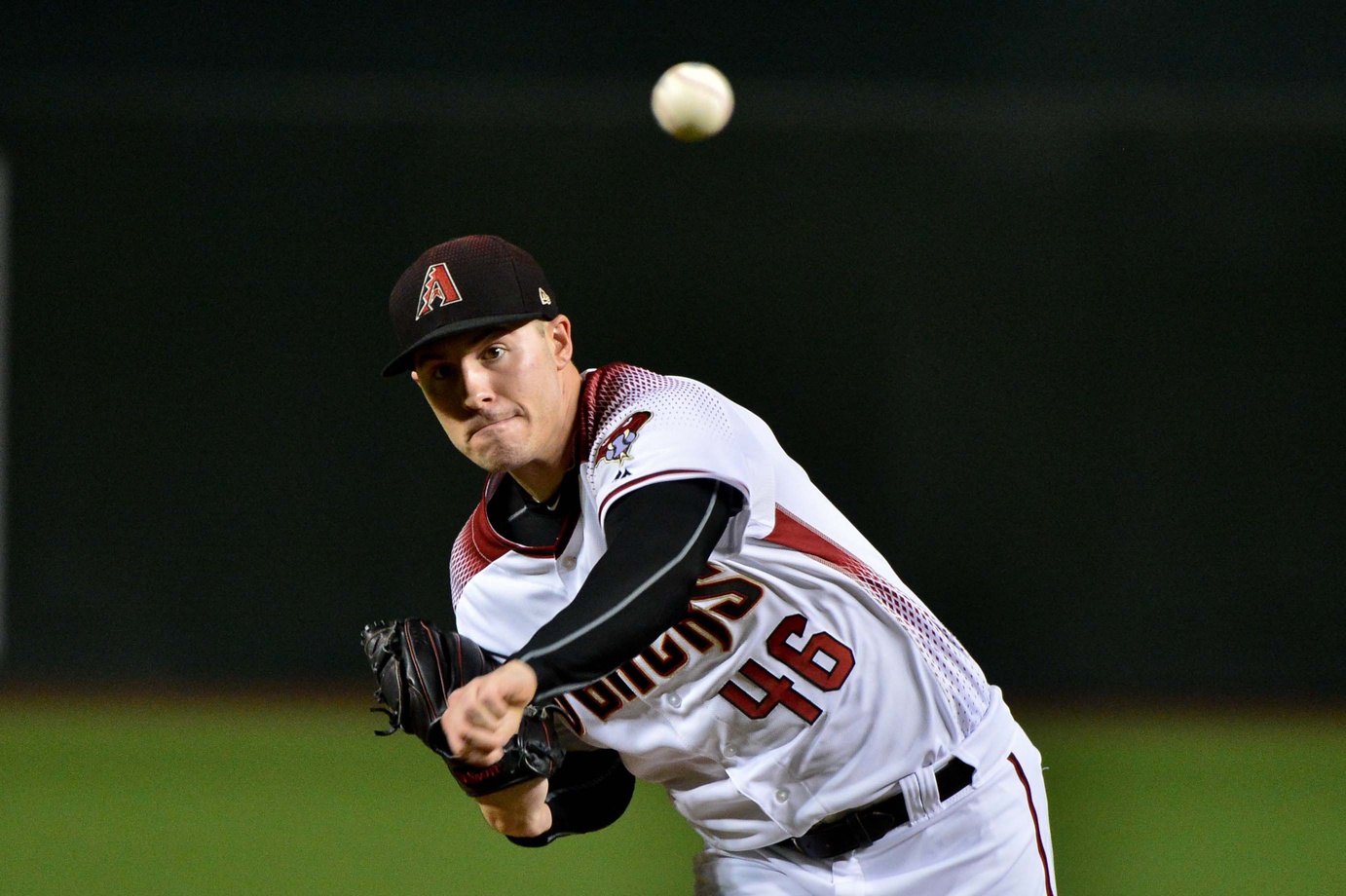
As the offseason gets underway, our team at Twins Daily is formulating blueprints that exemplify differing approaches the front office might take this offseason. Last week Tom presented a trade-heavy changing of course, while Seth envisioned an internally focused rebuild. Today we'll have some fun and draw up a scenario in which the Twins really open up the wallet and push payroll to new (not totally implausible) heights. Join the fun by downloading your copy of the 2019 Offseason Handbook and creating a blueprint in the forum.The Minnesota Twins opened the 2018 season with a $129.5 million payroll. It was the highest figure in franchise history, but still ranked just 16th among MLB teams. This tells you all you need to know about where the league currently stands with spending, even after a conspicuously splurge-averse 2017-18 offseason. The Twins probably won't spend more in 2019 than they did in 2018. But there's not much reason they couldn't. Pushing payroll into the $150 million range would still place Minnesota comfortably among baseball's mid-tier spenders. And if they actually were working under such a cap, they'd have about $80 million in available funds for next year. How to spend all that money?! I'll see if I can find a way while adhering to the model of sustainable, long-term thinking. Step 1 | Sign two building-block players to extensions: RHP Jose Berrios (4 years, $45M + two team options) and OF Byron Buxton (5 years, $54M + team option) Berrios and Buxton are both four years away from free agency. Neither has made big money yet, and each has motivation to lock up long-term financial security. This is the perfect time to strike, and with their financial flexibility, the Twins can offer upfront bonuses to incentivize. I'm envisioning a Berrios deal similar to the ones signed by Corey Kluber and Carlos Carrasco in Cleveland, with team options on the back end in exchange for guaranteed money now (pitching is a dangerous profession). Meanwhile, Buxton gets locked up for his prime years, reasonably if he's a solid contributor and ultra-reasonably if he's a star. Both can still hit the open market around age 30. The terms might not exactly align with what I've laid out above, but you get the idea. For the purposes of this blueprint and its payroll calculus, I'm carving out $4 million for each in 2019 (several times what either would otherwise stand to make). Step 2 | Grab your frontline starter by signing free agent LHP Patrick Corbin (5 years, $120M) In the Offseason Handbook, we deemed Corbin the best starting pitcher on the free agent market. Last year, the Twins pursued Yu Darvish late into the offseason but ultimately came up short. This time around they get their guy, reeling in the stud southpaw Corbin coming off a career year. He joins Berrios as entrenched rotation cornerstones for the next half-decade. It's not an investment without risk (we all saw what happened with Darvish), but I feel good about Corbin, who posted stellar numbers in hitter-friendly Arizona and only seems to be hitting his stride at age 29. Step 3 | Enlist two free agent relievers: RHP Kelvin Herrera (3 years, $25M) and LHP Jerry Blevins (1 year, $6 million) Power bullpens are the name of the game. The Addison Reed signing didn't work out, but I'm biting the bullet and spending on Herrera, aiming high but not quite at the Craig Kimbrel/Jeurys Familia tier. Herrera can step in as closer, or as top setup man with Trevor May keeping the ninth; either situation sounds great with Taylor Rogers also around as a proven late-inning arm. As lefty specialist, I'm enlisting one of the best in Blevins (585 career OPS vs LHB) on a short-term deal. Step 4 | Add another power relief arm by trading LHP Stephen Gonsalves and OF Jake Cave to Cincinnati for RHP Raisel Iglesias (2 years, $11.4M remaining on contract) I wasn't kidding about the power bullpen thing. Iglesias is a stud reliever with two years left on his contract, and the Reds are going nowhere at present. Flip them a couple young MLB-ready assets and weaponize Iglesias as a strategic fireman of the new era. Having Iglesias on hand in addition to Herrera, May, Rogers, Reed, Blevins and Trevor Hildenberger would enable Rocco Baldelli to stack relievers behind (or in front of, whatever floats your boat) the starters in the back half of the rotation. (By the way, the back half of my rotation includes Fernando Romero, because I think he's ready and I had to nontender or trade Jake Odorizzi, whose estimated $10 million via arbitration couldn't be justified in this scenario.) Step 5 | Alrighty, on to the offense: Sign 3B Josh Donaldson for 1 year, $15 million That contract estimate would've been unthinkable a couple years ago, but things have changed for the former MVP. He took a step backward in 2017 and stumbled badly in 2018, playing only 52 games amidst recurring calf issues. Admittedly this contract estimate (via the Handbook) might be a bit low, but it's feasible Donaldson could go for a one-year deal in that vicinity to rebuild value. He'd fit nicely with Minnesota, where there's flexibility to adjust to his new reality. If he can play still play third, great, Sano goes to first. If Donaldson is better off at first, then Sano gets another year to show what he can do at the hot corner. Granted, each of these sluggers has his question marks, but I'm not committed to either beyond 2019. And the upside of this corner combination... whew. Step 6 | Sprinkle in some versatility: Sign utilityman Marwin Gonzalez for 3 years, $33 million The thing about rostering Sano and Donaldson along with Tyler Austin and Robbie Grossman (who I'm bringing back as DH/OF for a reliable dose of OBP) is that there are some major defensive limitations going on. To offset this, we add Gonzalez, who's played all over the field for the Astros while providing a steadily solid switch-hitting bat. I'm actually plugging him in as the right field starter, with Buxton and Max Kepler rotating until at least one establishes himself as a clearly deserving full-time regular. And if both do (which I'm bullish on), Gonzalez can be used elsewhere. Crucially, he can play third, which helps reduce the risk of our previously stated Sano/Donaldson plan. Step 7 | Shore up the D: Sign SS Jose Iglesias (2 years, $18 million) He's not much of a hitter (.666 OPS the past three years), but Iglesias is among the best defensive shortstops in the league, and he's only 28, so I'm happy to pony up for him as my No. 9 hitter. Sliding Jorge Polanco to second while inserting Iglesias at short vastly improves my middle-infield defense, and this commitment is short enough to segue nicely to Royce Lewis in 2021. ROTATION ($45M) Jose Berrios (4M) Patrick Corbin (24M) Kyle Gibson (8.5M) Michael Pineda (8M) Fernando Romero (0.5M) Download attachment: rotation.png BULLPEN ($32M) Kelvin Herrera (8.3M) Trevor May (1.5M) Taylor Rogers (1.5M) Raisel Iglesias (5.7M) Addison Reed (8.5M) Jerry Blevins (6M) Trevor Hildenberger (0.5M) Download attachment: bullpen.png LINEUP ($55M) C: Jason Castro (8M) 1B: Miguel Sano (3M) 2B: Jorge Polanco (0.5M) SS: Jose Iglesias (9M) 3B: Josh Donaldson (15M) LF: Eddie Rosario (4M) CF: Byron Buxton (4M) RF: Marwin Gonzalez (11M) DH: Tyler Austin (0.5M) BENCH ($9.5M) C: Mitch Garver (0.5M) MI: Ehire Adrianza (2M) OF: Max Kepler (3M) OF: Robbie Grossman (4M) Download attachment: offense.png TOTAL: $141.5 million Okay, granted, when you add in the money still owed to Phil Hughes, and the buyouts for Ervin Santana and Logan Morrison, it's up closer to $150 million. But such a number still would've ranked around the league median in 2018, and that's before the anticipated spending spree poised to take place this winter. Plus, look at that beauty. This roster is built to win the division and boasts some staying power. With Chicago, Detroit and KC all rebuilding, and with Cleveland talking about trading away parts to trim payroll, one could argue the time is ripe for full-fledged investment. I think we can safely say the Twins won't be quite as active and splashy as I've suggested above, but the point to take away here is this: right now we're looking at an almost completely fresh slate, with a wide-open horizon of roster-building opportunity. You could pick and choose from the ambitious list above and arrive at a more realistic payroll figure while still upgrading with big names in several areas. High-profile free agents like Corbin, Gonzalez, Herrera and Donaldson are very much on the table, and Minnesota's front office should be seeking opportunities to acquire established difference-makers from rebuilding clubs. If you were calling the shots, what would be your course of action this winter? Download the Offseason Handbook to see all the options at your fingertips. Click here to view the article
-
 The Minnesota Twins opened the 2018 season with a $129.5 million payroll. It was the highest figure in franchise history, but still ranked just 16th among MLB teams. This tells you all you need to know about where the league currently stands with spending, even after a conspicuously splurge-averse 2017-18 offseason. The Twins probably won't spend more in 2019 than they did in 2018. But there's not much reason they couldn't. Pushing payroll into the $150 million range would still place Minnesota comfortably among baseball's mid-tier spenders. And if they actually were working under such a cap, they'd have about $80 million in available funds for next year. How to spend all that money?! I'll see if I can find a way while adhering to the model of sustainable, long-term thinking. Step 1 | Sign two building-block players to extensions: RHP Jose Berrios (4 years, $45M + two team options) and OF Byron Buxton (5 years, $54M + team option) Berrios and Buxton are both four years away from free agency. Neither has made big money yet, and each has motivation to lock up long-term financial security. This is the perfect time to strike, and with their financial flexibility, the Twins can offer upfront bonuses to incentivize. I'm envisioning a Berrios deal similar to the ones signed by Corey Kluber and Carlos Carrasco in Cleveland, with team options on the back end in exchange for guaranteed money now (pitching is a dangerous profession). Meanwhile, Buxton gets locked up for his prime years, reasonably if he's a solid contributor and ultra-reasonably if he's a star. Both can still hit the open market around age 30. The terms might not exactly align with what I've laid out above, but you get the idea. For the purposes of this blueprint and its payroll calculus, I'm carving out $4 million for each in 2019 (several times what either would otherwise stand to make). Step 2 | Grab your frontline starter by signing free agent LHP Patrick Corbin (5 years, $120M) In the Offseason Handbook, we deemed Corbin the best starting pitcher on the free agent market. Last year, the Twins pursued Yu Darvish late into the offseason but ultimately came up short. This time around they get their guy, reeling in the stud southpaw Corbin coming off a career year. He joins Berrios as entrenched rotation cornerstones for the next half-decade. It's not an investment without risk (we all saw what happened with Darvish), but I feel good about Corbin, who posted stellar numbers in hitter-friendly Arizona and only seems to be hitting his stride at age 29. Step 3 | Enlist two free agent relievers: RHP Kelvin Herrera (3 years, $25M) and LHP Jerry Blevins (1 year, $6 million) Power bullpens are the name of the game. The Addison Reed signing didn't work out, but I'm biting the bullet and spending on Herrera, aiming high but not quite at the Craig Kimbrel/Jeurys Familia tier. Herrera can step in as closer, or as top setup man with Trevor May keeping the ninth; either situation sounds great with Taylor Rogers also around as a proven late-inning arm. As lefty specialist, I'm enlisting one of the best in Blevins (585 career OPS vs LHB) on a short-term deal. Step 4 | Add another power relief arm by trading LHP Stephen Gonsalves and OF Jake Cave to Cincinnati for RHP Raisel Iglesias (2 years, $11.4M remaining on contract) I wasn't kidding about the power bullpen thing. Iglesias is a stud reliever with two years left on his contract, and the Reds are going nowhere at present. Flip them a couple young MLB-ready assets and weaponize Iglesias as a strategic fireman of the new era. Having Iglesias on hand in addition to Herrera, May, Rogers, Reed, Blevins and Trevor Hildenberger would enable Rocco Baldelli to stack relievers behind (or in front of, whatever floats your boat) the starters in the back half of the rotation. (By the way, the back half of my rotation includes Fernando Romero, because I think he's ready and I had to nontender or trade Jake Odorizzi, whose estimated $10 million via arbitration couldn't be justified in this scenario.) Step 5 | Alrighty, on to the offense: Sign 3B Josh Donaldson for 1 year, $15 million That contract estimate would've been unthinkable a couple years ago, but things have changed for the former MVP. He took a step backward in 2017 and stumbled badly in 2018, playing only 52 games amidst recurring calf issues. Admittedly this contract estimate (via the Handbook) might be a bit low, but it's feasible Donaldson could go for a one-year deal in that vicinity to rebuild value. He'd fit nicely with Minnesota, where there's flexibility to adjust to his new reality. If he can play still play third, great, Sano goes to first. If Donaldson is better off at first, then Sano gets another year to show what he can do at the hot corner. Granted, each of these sluggers has his question marks, but I'm not committed to either beyond 2019. And the upside of this corner combination... whew. Step 6 | Sprinkle in some versatility: Sign utilityman Marwin Gonzalez for 3 years, $33 million The thing about rostering Sano and Donaldson along with Tyler Austin and Robbie Grossman (who I'm bringing back as DH/OF for a reliable dose of OBP) is that there are some major defensive limitations going on. To offset this, we add Gonzalez, who's played all over the field for the Astros while providing a steadily solid switch-hitting bat. I'm actually plugging him in as the right field starter, with Buxton and Max Kepler rotating until at least one establishes himself as a clearly deserving full-time regular. And if both do (which I'm bullish on), Gonzalez can be used elsewhere. Crucially, he can play third, which helps reduce the risk of our previously stated Sano/Donaldson plan. Step 7 | Shore up the D: Sign SS Jose Iglesias (2 years, $18 million) He's not much of a hitter (.666 OPS the past three years), but Iglesias is among the best defensive shortstops in the league, and he's only 28, so I'm happy to pony up for him as my No. 9 hitter. Sliding Jorge Polanco to second while inserting Iglesias at short vastly improves my middle-infield defense, and this commitment is short enough to segue nicely to Royce Lewis in 2021. ROTATION ($45M) Jose Berrios (4M) Patrick Corbin (24M) Kyle Gibson (8.5M) Michael Pineda (8M) Fernando Romero (0.5M) BULLPEN ($32M) Kelvin Herrera (8.3M) Trevor May (1.5M) Taylor Rogers (1.5M) Raisel Iglesias (5.7M) Addison Reed (8.5M) Jerry Blevins (6M) Trevor Hildenberger (0.5M) LINEUP ($55M) C: Jason Castro (8M) 1B: Miguel Sano (3M) 2B: Jorge Polanco (0.5M) SS: Jose Iglesias (9M) 3B: Josh Donaldson (15M) LF: Eddie Rosario (4M) CF: Byron Buxton (4M) RF: Marwin Gonzalez (11M) DH: Tyler Austin (0.5M) BENCH ($9.5M) C: Mitch Garver (0.5M) MI: Ehire Adrianza (2M) OF: Max Kepler (3M) OF: Robbie Grossman (4M) TOTAL: $141.5 million Okay, granted, when you add in the money still owed to Phil Hughes, and the buyouts for Ervin Santana and Logan Morrison, it's up closer to $150 million. But such a number still would've ranked around the league median in 2018, and that's before the anticipated spending spree poised to take place this winter. Plus, look at that beauty. This roster is built to win the division and boasts some staying power. With Chicago, Detroit and KC all rebuilding, and with Cleveland talking about trading away parts to trim payroll, one could argue the time is ripe for full-fledged investment. I think we can safely say the Twins won't be quite as active and splashy as I've suggested above, but the point to take away here is this: right now we're looking at an almost completely fresh slate, with a wide-open horizon of roster-building opportunity. You could pick and choose from the ambitious list above and arrive at a more realistic payroll figure while still upgrading with big names in several areas. High-profile free agents like Corbin, Gonzalez, Herrera and Donaldson are very much on the table, and Minnesota's front office should be seeking opportunities to acquire established difference-makers from rebuilding clubs. If you were calling the shots, what would be your course of action this winter? Download the Offseason Handbook to see all the options at your fingertips.
 -
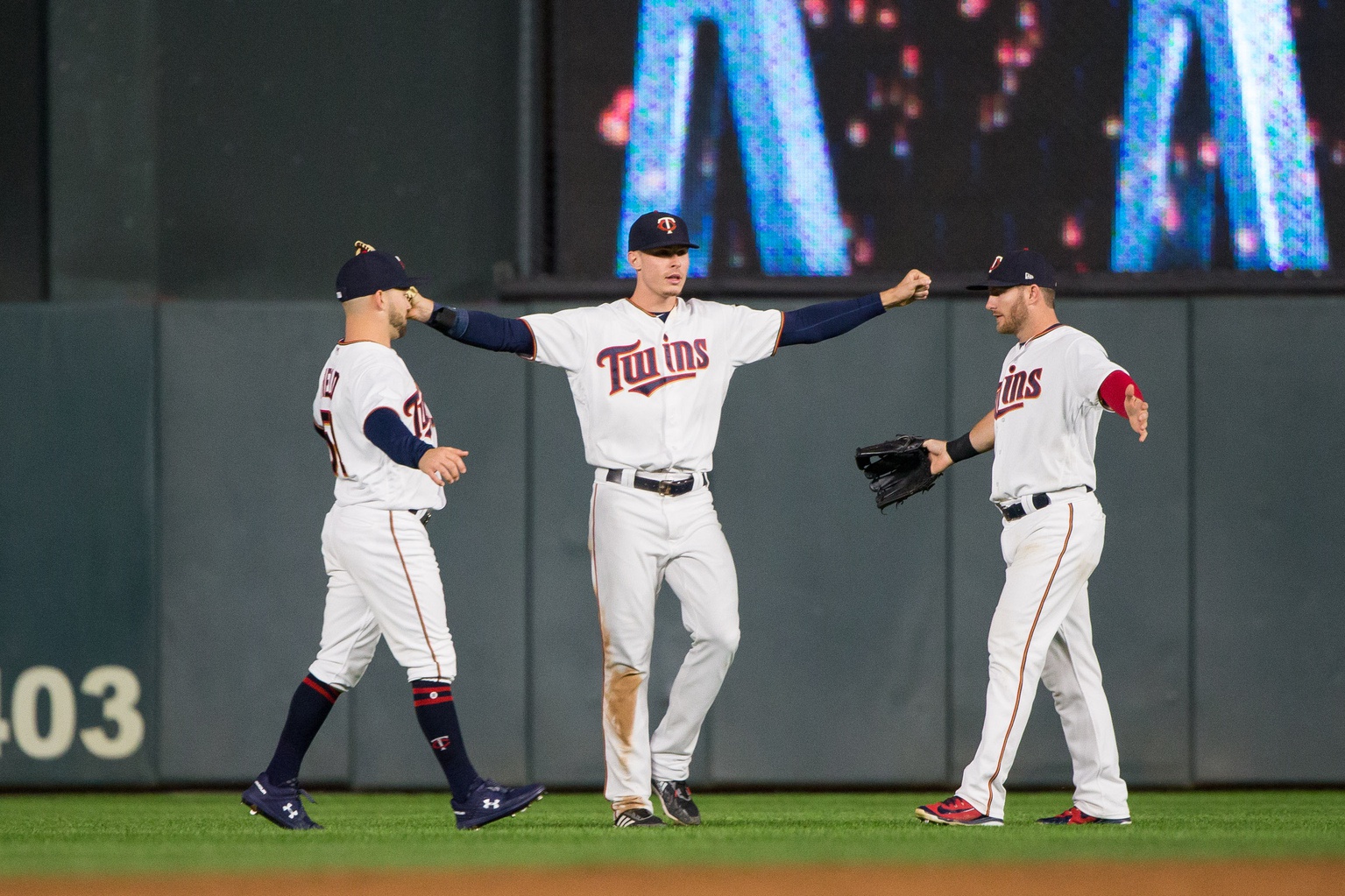
What follows is an excerpt from a feature for the 2019 Offseason Handbook, which you can order here on a name-your-price basis and receive it right away. Aaron Gleeman is editor-in-chief at Baseball Prospectus. He is one of the longest-tenured Twins bloggers and a longtime friend of Twins Daily. He recently authored an excellent book called The Big 50: Minnesota Twins, a great holiday gift for any baseball fan in your life. He also contributed an excellent feature for our new Handbook on Max Kepler, his unusual progression up to this point, and what we should make of him going forward. Taste a sample below.By Aaron Gleeman: The plan, heading into the 2016 season, was for 23-year-old Max Kepler to spend at least a couple months at Triple-A, smoothing out any remaining rough edges in his game after being named MVP of the Double-A Southern League the previous year. Instead, he played all of two games for Rochester before being summoned to Minnesota as an injury replacement, and then he returned to the Twins’ outfield for good on June 1. His finally tally at Triple-A? Thirty games, although he hit well (.282/.367/.455) and walked more (16) than he struck out (14), just like he had at Double-A in 2015. Kepler squashed any criticism of him being rushed to the majors by holding his own right away, hitting .252/.324/.447 in his first full month with the Twins. He slumped down the stretch, but still finished his rookie season hitting .235/.309/.424 with 17 homers and 42 walks in 113 games. It was a promising debut, as Kepler displayed three of the key skills—plate discipline, power, and plus defense—that had made him a consensus top-100 prospect. He rated as a below-average hitter, but just slightly, posting a 96 OPS+ where league average is always 100. And his defense in right field was good enough to make him an above-average all-around regular at 23. Predicting the futures of young baseball players is incredibly difficult. I’ve been writing about the sport as my profession for 15 years, with much of that spent ranking and analyzing prospects and specifically Twins prospects. I like to think I’m pretty decent at it, but there’s a garage full of Bobby Kielty rookie cards that might not agree. However, typically when a top-100 prospect has a rookie season like Kepler’s—showing polish and raw skill, earning praise from coaches, and producing average-ish offense with plus defense at 23—the projection fog lifts. Above-average 23-year-old rookies tend to develop into stars. Two years later, Kepler hasn’t moved an inch. Download attachment: keplertable.png How rare is it for a young hitter to hold his own as an average-ish rookie like Kepler did and then basically show zero improvement? In the history of baseball, he’s just the third corner outfielder to have three seasons with an OPS+ between 90 and 99 by age 25. The other two are Dayan Viciedo, a once-promising White Sox slugger who washed out of the majors at 25, and Nomar Mazara, the current Rangers right fielder about whom someone in Texas is probably writing an article just like this one right now. Even finding corner outfielders who had two or more 90-99 OPS+ seasons by 25 is difficult. There are only a dozen of them, total, and only six since 1980. Viciedo was a bust. The jury is still out on Mazara, much like for Kepler. The other three are Phil Plantier, Von Hayes, and—you may want to sit down or at least hold onto something—Delmon Young. Plantier had just one standout full season, posting a 122 OPS+ with 34 homers for the Padres in 1993, and he was finished at 28. Hayes is the success story, by far. He debuted at 22, hit .250/.310/.389 at 23, got traded, and hit .265/.337/.370 at 24. He broke out at 25 with a 124 OPS+ for the Phillies in 1983, and was a star-caliber player for a half-dozen seasons. He hit just .267 for his career, but Hayes drew tons of walks, had 20-homer pop, and played good defense. He’s certainly not a precise comp for Kepler—for one thing, Hayes was a speedster, swiping as many as 48 bases in a season—but you can squint while looking at his career numbers and see Kepler following a similar path. I would not advise squinting at Delmon Young’s numbers, and to save yourself the agita I’d suggest not even looking at all. But if we’re talking corner outfielders who initially hold their own in the majors and then show zero real improvement … well, Delmon is the archetype. Kepler is not Delmon Young, of course, as a player (a million times better on defense, a billion times more plate discipline) or as a person (a trillion times less of a jerk). *** Want to read the rest of this story, and 70 pages of in-depth analysis of the offseason that’s about to get underway? Claim your copy of the 2019 Offseason Handbook, at a price of your choosing, and you’ll receive it right away. Also, make sure to follow Aaron on Twitter. Click here to view the article
-
 By Aaron Gleeman: The plan, heading into the 2016 season, was for 23-year-old Max Kepler to spend at least a couple months at Triple-A, smoothing out any remaining rough edges in his game after being named MVP of the Double-A Southern League the previous year. Instead, he played all of two games for Rochester before being summoned to Minnesota as an injury replacement, and then he returned to the Twins’ outfield for good on June 1. His finally tally at Triple-A? Thirty games, although he hit well (.282/.367/.455) and walked more (16) than he struck out (14), just like he had at Double-A in 2015. Kepler squashed any criticism of him being rushed to the majors by holding his own right away, hitting .252/.324/.447 in his first full month with the Twins. He slumped down the stretch, but still finished his rookie season hitting .235/.309/.424 with 17 homers and 42 walks in 113 games. It was a promising debut, as Kepler displayed three of the key skills—plate discipline, power, and plus defense—that had made him a consensus top-100 prospect. He rated as a below-average hitter, but just slightly, posting a 96 OPS+ where league average is always 100. And his defense in right field was good enough to make him an above-average all-around regular at 23. Predicting the futures of young baseball players is incredibly difficult. I’ve been writing about the sport as my profession for 15 years, with much of that spent ranking and analyzing prospects and specifically Twins prospects. I like to think I’m pretty decent at it, but there’s a garage full of Bobby Kielty rookie cards that might not agree. However, typically when a top-100 prospect has a rookie season like Kepler’s—showing polish and raw skill, earning praise from coaches, and producing average-ish offense with plus defense at 23—the projection fog lifts. Above-average 23-year-old rookies tend to develop into stars. Two years later, Kepler hasn’t moved an inch. How rare is it for a young hitter to hold his own as an average-ish rookie like Kepler did and then basically show zero improvement? In the history of baseball, he’s just the third corner outfielder to have three seasons with an OPS+ between 90 and 99 by age 25. The other two are Dayan Viciedo, a once-promising White Sox slugger who washed out of the majors at 25, and Nomar Mazara, the current Rangers right fielder about whom someone in Texas is probably writing an article just like this one right now. Even finding corner outfielders who had two or more 90-99 OPS+ seasons by 25 is difficult. There are only a dozen of them, total, and only six since 1980. Viciedo was a bust. The jury is still out on Mazara, much like for Kepler. The other three are Phil Plantier, Von Hayes, and—you may want to sit down or at least hold onto something—Delmon Young. Plantier had just one standout full season, posting a 122 OPS+ with 34 homers for the Padres in 1993, and he was finished at 28. Hayes is the success story, by far. He debuted at 22, hit .250/.310/.389 at 23, got traded, and hit .265/.337/.370 at 24. He broke out at 25 with a 124 OPS+ for the Phillies in 1983, and was a star-caliber player for a half-dozen seasons. He hit just .267 for his career, but Hayes drew tons of walks, had 20-homer pop, and played good defense. He’s certainly not a precise comp for Kepler—for one thing, Hayes was a speedster, swiping as many as 48 bases in a season—but you can squint while looking at his career numbers and see Kepler following a similar path. I would not advise squinting at Delmon Young’s numbers, and to save yourself the agita I’d suggest not even looking at all. But if we’re talking corner outfielders who initially hold their own in the majors and then show zero real improvement … well, Delmon is the archetype. Kepler is not Delmon Young, of course, as a player (a million times better on defense, a billion times more plate discipline) or as a person (a trillion times less of a jerk). *** Want to read the rest of this story, and 70 pages of in-depth analysis of the offseason that’s about to get underway? Claim your copy of the 2019 Offseason Handbook, at a price of your choosing, and you’ll receive it right away. Also, make sure to follow Aaron on Twitter.
 -
Minor, possibly irrelevant note: Our friend Nathan responded to a tweet from Seth about this article saying "I like the idea of Gimenez as 1B coach" and Gimenez himself 'liked' the tweet. So, for whatever that's worth; again, probably nothing.
- 16 replies
-
- 5
-

-
- rocco baldelli
- james rowson
- (and 1 more)
-
As long as they're not on the active player roster I don't see why anyone would have a problem with it.
- 16 replies
-
- 6
-
-
- rocco baldelli
- james rowson
- (and 1 more)
-
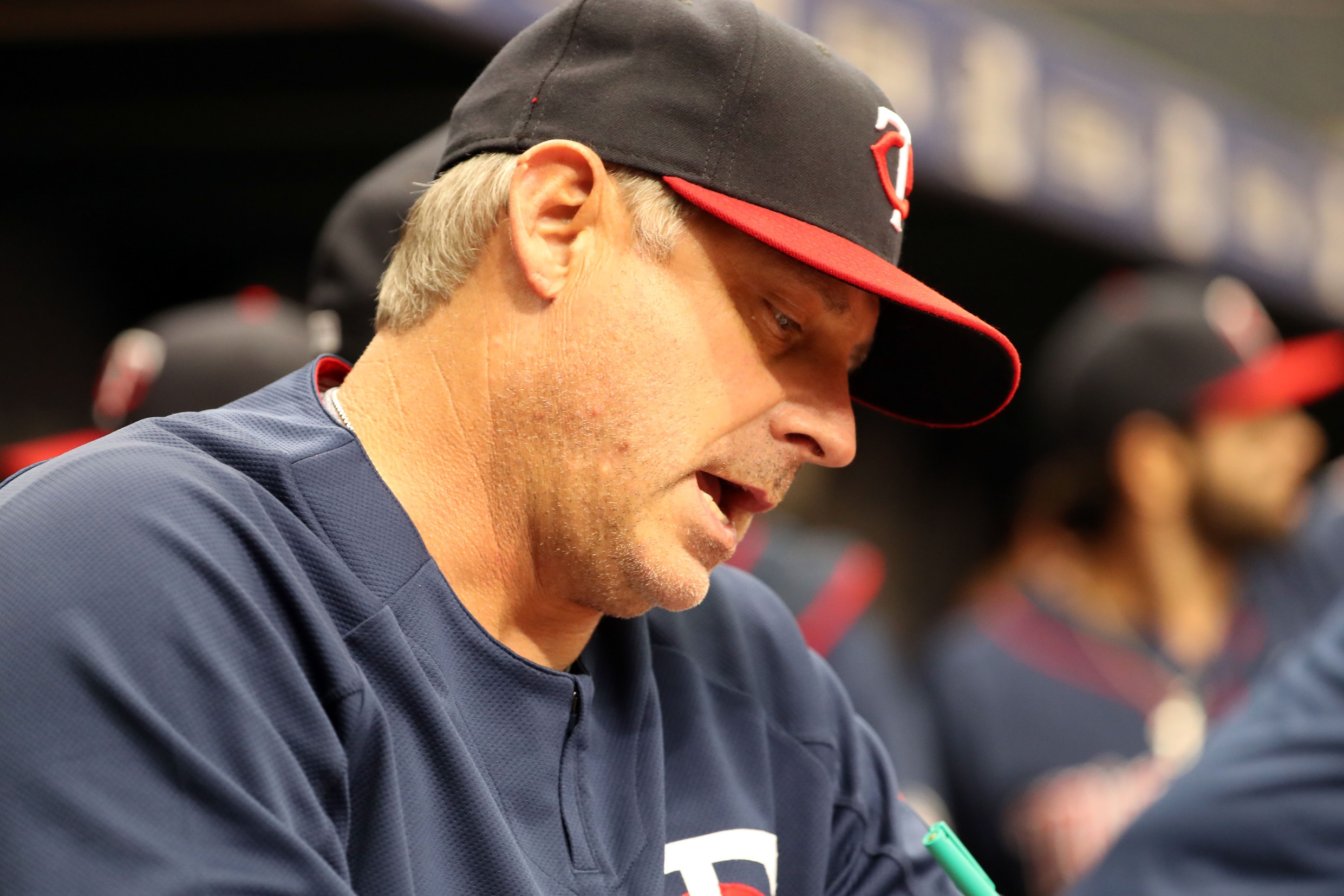
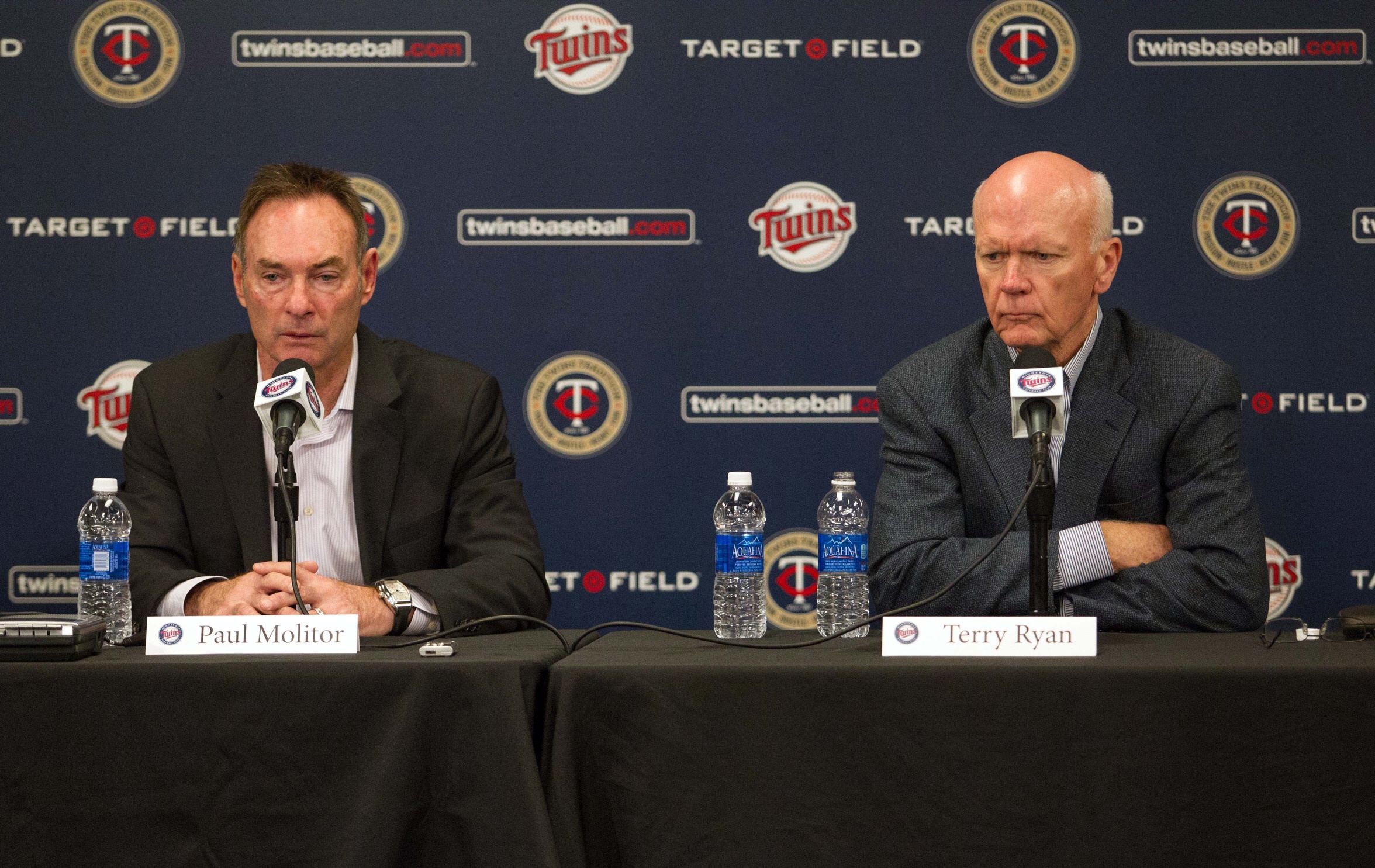
When the Twins dismissed manager Paul Molitor at the end of the season, it set into motion a major overhaul of the coaching staff that's still underway. Read on for a comprehensive breakdown of who's still in, who was sent out, and which names are worth monitoring for the newly vacant roles.It's clear that Minnesota's front office is placing an emphatic priority on optimizing this unit. "In my opinion, a staff is not just a manager and a bunch of guys," GM Thad Levine told The Athletic. "We hope to put together the best staff we possibly can." The Twins reportedly vetted up to two dozen candidates in their managerial search, so there's no question they'll turn over every stone in surrounding him with the right pieces. Let's get up to speed on what the coaching staff currently looks like, and who to keep an eye on for the open spots. MANAGER Last Thursday, the Minnesota Twins formally introduced Rocco Baldelli as the franchise's 14th manager. He brings with him many likable traits and attributes, but not a lick of experience. At 37, Baldelli is the youngest man in MLB to hold the job, and he has never managed at any pro level. (His titles with the Rays after retiring from playing: roving minor-league instructor/special assistant to baseball operations, first base coach, major league field coordinator.) As such, it makes sense to offset this deficiency, so we'll presumably see the Twins bring in seasoned perspective with at least some of their coming hires – especially at bench coach, where the front office is envisioning a highly collaborative, almost symbiotic relationship. BENCH COACH Incumbent Derek Shelton was a finalist for the manager nod before falling short of Baldelli, who must have blown away Falvey and Levine because the two top execs raved about Shelton's performance while interviewing. Shelton now appears to be one of the top choices for Texas' managerial opening, but if he misses out, Falvey and Levine are clearly hoping he'll return to his previous gig. And while the 48-year-old may not be jazzed about returning to bench coach duties after coming so close to the top job. twice, the Twins are trying to make it as appealing to him as they can. Said Levine: "The analogy we presented to (Shelton) that we truly believe in is, (Falvey) and I are tackling the role of general manager together. We are hopeful that he would be open-minded about tackling the leadership in our clubhouse with Rocco Baldelli.” Baldelli's bench coach will be instrumental in helping the rookie skipper acclimate to a new organization and a new world of responsibility. Shelton, who managed for three seasons in the minors before coaching in various capacities for three major-league teams, is ideally suited for the task, especially because of his existing relationships in the locker room (not to mention with Baldelli, from their days in Tampa). I think the odds are strongly in favor of Shelton remaining as bench coach. But if the Rangers pluck him away, the Twins will need to pivot elsewhere. HITTING COACH Both James Rowson and assistant hitting coach Rudy Hernandez were kept on, as perhaps the only ones to survive this exodus (pending Shelton). Rowson interviewed for the manager job so evidently the front office views him highly. Hernandez has strong rapport with the Spanish-speaking players on the team. In terms of on-field results, the instructional duo doesn't have a ton to show; Minnesota took significant steps backward in key offensive categories this year. But in so many cases – Byron Buxton, Miguel Sano, Jorge Polanco, Jason Castro, Brian Dozier, etc. – there were deeper issues at play. And we did see some successes, most notably rookies Jake Cave and Mitch Garver. So, I'm good with these two being kept on. They'll have plenty of new colleagues. PITCHING COACH Garvin Alston's tenure with the Twins lasted just one season. The team is quickly changing gears after bringing in the former A's bullpen coach one year ago, even though the pitching staff was altogether solid in 2018. It sounds like the new manager will have significant influence over this decision. Per Dan Hayes of The Athletic, a "source suggested that Baldelli might want to bring in his own guy at pitching coach, a position he will likely rely upon heavily in his first season as the club’s manager." One name that's been brought up (again, by Hayes, who's been very tuned in and is a must-follow on Twitter) is Charles Nagy. He brings the experience, both as a pitcher (he spent 14 seasons in the majors) and as an MLB pitching coach (three years with the D-backs, three years with the Angels). He has recent ties to Falvey, having spent the 2015 season as Special Assistant to Player Development for Cleveland. Nagy spent the last three seasons in Anaheim before being ousted along with manager Mike Scioscia in a purge of the Angels coaching staff. But he has a solid reputation around the game. He's credited with helping left-hander Patrick Corbin (a potential Twins offseason target) develop during his time in Arizona. Considered a laid-back type and an excellent communicator, Nagy seems stylistically similar to Rowson, and his breadth of experience would surely be invaluable to Baldelli. This match would make a lot of sense. But if it doesn't happen, another name to keep in mind is Carl Willis, who has twice interviewed for Twins pitching coach vacancies (losing out to Alston and Neil Allen). The Cleveland connection is present there as well, obviously. In terms of people with connections to Baldelli, Stan Boroski is the Rays bullpen coach and has been for seven years. BULLPEN COACH After four years in the position, Eddie Guardado is out. It's anyone's guess where the Twins might go now. As the nature of major-league bullpens evolves before our eyes, presumably Minnesota will opt for a new-school mind, capable of preparing his staff for experimental usage patterns and non-traditional roles. Stu Cliburn seems most likely among internal candidates. Currently the pitching coach at Triple-A Rochester, Cliburn is a well-known commodity in the organization with nearly three decades of tenure. But despite his entrenchment, the 62-year-old is not closed-minded. In his feature for the Offseason Handbook, Parker Hageman described how Cliburn helped sell Rochester's pitchers on the merits of the "Opener" strategy. This quotes from the piece feels relevant: “Routine adjustment is going to be big,” Cliburn said regarding what the biggest challenge is for his players. “Sometimes routines can get disrupted for different reasons, rain and whatnot, but you just have to learn to adjust your program.” He'd be a solid anchor of familiarity on a staff that figures to be crowded with newcomers. Pete Maki, the former Duke pitching coach who took over for Erik Rasmussen as minor-league pitching coordinator a year ago and led the charge with implementation of the opener method, is another possibility from within. A potential sleeper to watch: Matt Belisle, who was essentially serving as pseudo-bullpen coach for much of this season. 1B/3B COACHES The Twins are moving on from both first base coach Jeff Smith and third base coach Gene Glynn. If you're looking within, Tommy Watkins stands out as a great option. He managed the Double-A team this year and is currently managing the Salt River Rafters in the Arizona Fall League. "I am humbled that the Twins trust me with this role," Watkins told our Seth Stohs last month. While the Twins have severed ties with holdovers at almost all levels, Watkins just continues to rise. He is extremely well liked within the organization. One thing to consider is that first and third base coaches tend to have specializations in terms of player instruction. Smith often worked with the catchers, and – given the rawness of Garver – it's only logical the Twins will seek out an individual who can teach at that position. I've got a feeling about clubhouse favorite Chris Gimenez. Another consideration in this search: Baldelli stated during his introductory presser that he's "looking for a very diverse staff." "One of my best friends, who was just named manager of the Blue Jays [Charlie Montoyo], I’ve seen him relate to players in ways that I can’t. Although I would try very hard in some ways, I see him just step up and do things." The Twins will have at least one Spanish-speaker on the staff in Hernandez. But it wouldn't be surprising to see them add another in one of these important roles. Jose Molina, currently the minor-league catching coordinator for the Angels, would check both of the last two boxes mentioned. If the front office is aiming for experience and elder statesmanship, they could look toward Edwin Rodriguez. The 58-year-old started his post-playing career as a scout with the Twins back in 1989. He's managed all over in the minors and is currently doing so at San Diego's Class-A affiliate. Rodriguez was interim skipper in Miami for a spell back in 2010. Oh, and he was also manager of the Appalachian League's Princeton Devil Rays in 2000, when a teenager by the name of Rocco Baldelli was breaking into pro baseball for the first time. QUALITY CONTROL COACH This is a relatively new position around the league, and it doesn't technically exist on the Twins' staff, but seems to be the rough equivalent of what Jeff Pickler was doing under the bland title of "Major League Coach." Pickler won't be back in that capacity, though there are rumblings he'll land in Minnesota's front office. It's not clear the Twins will fill this position, but I'm guessing they will. The choice could very well end up being someone most of us have never heard before. One name to keep an eye on is Mark Kotsay, currently the quality control coach for an Oakland team that blew everyone away with its quality this year. Kotsay and Baldelli were teammates in Boston back in '09. (Big shout-outs to Seth Stohs, Tom Froemming and John Bonnes for helping chip in ideas and names to mention in this rundown.) Click here to view the article
-
State of the Twins Coaching Staff: Who's In, Who's Out, Names to Watch
Nick Nelson posted an article in Twins
 It's clear that Minnesota's front office is placing an emphatic priority on optimizing this unit. "In my opinion, a staff is not just a manager and a bunch of guys," GM Thad Levine told The Athletic. "We hope to put together the best staff we possibly can." The Twins reportedly vetted up to two dozen candidates in their managerial search, so there's no question they'll turn over every stone in surrounding him with the right pieces. Let's get up to speed on what the coaching staff currently looks like, and who to keep an eye on for the open spots. MANAGER Last Thursday, the Minnesota Twins formally introduced Rocco Baldelli as the franchise's 14th manager. He brings with him many likable traits and attributes, but not a lick of experience. At 37, Baldelli is the youngest man in MLB to hold the job, and he has never managed at any pro level. (His titles with the Rays after retiring from playing: roving minor-league instructor/special assistant to baseball operations, first base coach, major league field coordinator.) As such, it makes sense to offset this deficiency, so we'll presumably see the Twins bring in seasoned perspective with at least some of their coming hires – especially at bench coach, where the front office is envisioning a highly collaborative, almost symbiotic relationship. BENCH COACH Incumbent Derek Shelton was a finalist for the manager nod before falling short of Baldelli, who must have blown away Falvey and Levine because the two top execs raved about Shelton's performance while interviewing. Shelton now appears to be one of the top choices for Texas' managerial opening, but if he misses out, Falvey and Levine are clearly hoping he'll return to his previous gig. And while the 48-year-old may not be jazzed about returning to bench coach duties after coming so close to the top job. twice, the Twins are trying to make it as appealing to him as they can. Said Levine: "The analogy we presented to (Shelton) that we truly believe in is, (Falvey) and I are tackling the role of general manager together. We are hopeful that he would be open-minded about tackling the leadership in our clubhouse with Rocco Baldelli.” Baldelli's bench coach will be instrumental in helping the rookie skipper acclimate to a new organization and a new world of responsibility. Shelton, who managed for three seasons in the minors before coaching in various capacities for three major-league teams, is ideally suited for the task, especially because of his existing relationships in the locker room (not to mention with Baldelli, from their days in Tampa). I think the odds are strongly in favor of Shelton remaining as bench coach. But if the Rangers pluck him away, the Twins will need to pivot elsewhere. HITTING COACH Both James Rowson and assistant hitting coach Rudy Hernandez were kept on, as perhaps the only ones to survive this exodus (pending Shelton). Rowson interviewed for the manager job so evidently the front office views him highly. Hernandez has strong rapport with the Spanish-speaking players on the team. In terms of on-field results, the instructional duo doesn't have a ton to show; Minnesota took significant steps backward in key offensive categories this year. But in so many cases – Byron Buxton, Miguel Sano, Jorge Polanco, Jason Castro, Brian Dozier, etc. – there were deeper issues at play. And we did see some successes, most notably rookies Jake Cave and Mitch Garver. So, I'm good with these two being kept on. They'll have plenty of new colleagues. PITCHING COACH Garvin Alston's tenure with the Twins lasted just one season. The team is quickly changing gears after bringing in the former A's bullpen coach one year ago, even though the pitching staff was altogether solid in 2018. It sounds like the new manager will have significant influence over this decision. Per Dan Hayes of The Athletic, a "source suggested that Baldelli might want to bring in his own guy at pitching coach, a position he will likely rely upon heavily in his first season as the club’s manager." One name that's been brought up (again, by Hayes, who's been very tuned in and is a must-follow on Twitter) is Charles Nagy. He brings the experience, both as a pitcher (he spent 14 seasons in the majors) and as an MLB pitching coach (three years with the D-backs, three years with the Angels). He has recent ties to Falvey, having spent the 2015 season as Special Assistant to Player Development for Cleveland. Nagy spent the last three seasons in Anaheim before being ousted along with manager Mike Scioscia in a purge of the Angels coaching staff. But he has a solid reputation around the game. He's credited with helping left-hander Patrick Corbin (a potential Twins offseason target) develop during his time in Arizona. Considered a laid-back type and an excellent communicator, Nagy seems stylistically similar to Rowson, and his breadth of experience would surely be invaluable to Baldelli. This match would make a lot of sense. But if it doesn't happen, another name to keep in mind is Carl Willis, who has twice interviewed for Twins pitching coach vacancies (losing out to Alston and Neil Allen). The Cleveland connection is present there as well, obviously. In terms of people with connections to Baldelli, Stan Boroski is the Rays bullpen coach and has been for seven years. BULLPEN COACH After four years in the position, Eddie Guardado is out. It's anyone's guess where the Twins might go now. As the nature of major-league bullpens evolves before our eyes, presumably Minnesota will opt for a new-school mind, capable of preparing his staff for experimental usage patterns and non-traditional roles. Stu Cliburn seems most likely among internal candidates. Currently the pitching coach at Triple-A Rochester, Cliburn is a well-known commodity in the organization with nearly three decades of tenure. But despite his entrenchment, the 62-year-old is not closed-minded. In his feature for the Offseason Handbook, Parker Hageman described how Cliburn helped sell Rochester's pitchers on the merits of the "Opener" strategy. This quotes from the piece feels relevant: “Routine adjustment is going to be big,” Cliburn said regarding what the biggest challenge is for his players. “Sometimes routines can get disrupted for different reasons, rain and whatnot, but you just have to learn to adjust your program.” He'd be a solid anchor of familiarity on a staff that figures to be crowded with newcomers. Pete Maki, the former Duke pitching coach who took over for Erik Rasmussen as minor-league pitching coordinator a year ago and led the charge with implementation of the opener method, is another possibility from within. A potential sleeper to watch: Matt Belisle, who was essentially serving as pseudo-bullpen coach for much of this season. 1B/3B COACHES The Twins are moving on from both first base coach Jeff Smith and third base coach Gene Glynn. If you're looking within, Tommy Watkins stands out as a great option. He managed the Double-A team this year and is currently managing the Salt River Rafters in the Arizona Fall League. "I am humbled that the Twins trust me with this role," Watkins told our Seth Stohs last month. While the Twins have severed ties with holdovers at almost all levels, Watkins just continues to rise. He is extremely well liked within the organization. One thing to consider is that first and third base coaches tend to have specializations in terms of player instruction. Smith often worked with the catchers, and – given the rawness of Garver – it's only logical the Twins will seek out an individual who can teach at that position. I've got a feeling about clubhouse favorite Chris Gimenez. Another consideration in this search: Baldelli stated during his introductory presser that he's "looking for a very diverse staff." "One of my best friends, who was just named manager of the Blue Jays [Charlie Montoyo], I’ve seen him relate to players in ways that I can’t. Although I would try very hard in some ways, I see him just step up and do things." The Twins will have at least one Spanish-speaker on the staff in Hernandez. But it wouldn't be surprising to see them add another in one of these important roles. Jose Molina, currently the minor-league catching coordinator for the Angels, would check both of the last two boxes mentioned. If the front office is aiming for experience and elder statesmanship, they could look toward Edwin Rodriguez. The 58-year-old started his post-playing career as a scout with the Twins back in 1989. He's managed all over in the minors and is currently doing so at San Diego's Class-A affiliate. Rodriguez was interim skipper in Miami for a spell back in 2010. Oh, and he was also manager of the Appalachian League's Princeton Devil Rays in 2000, when a teenager by the name of Rocco Baldelli was breaking into pro baseball for the first time. QUALITY CONTROL COACH This is a relatively new position around the league, and it doesn't technically exist on the Twins' staff, but seems to be the rough equivalent of what Jeff Pickler was doing under the bland title of "Major League Coach." Pickler won't be back in that capacity, though there are rumblings he'll land in Minnesota's front office. It's not clear the Twins will fill this position, but I'm guessing they will. The choice could very well end up being someone most of us have never heard before. One name to keep an eye on is Mark Kotsay, currently the quality control coach for an Oakland team that blew everyone away with its quality this year. Kotsay and Baldelli were teammates in Boston back in '09. (Big shout-outs to Seth Stohs, Tom Froemming and John Bonnes for helping chip in ideas and names to mention in this rundown.)
 -
With the 2020 Offseason Handbook now available for download (grab yours here), I've been recounting the tales of offseasons past through the lenses of previous editions. With Part 1 and Part 2 in the books, our final installment begins with the ending of an era. THE 2015-16 OFFSEASON Download attachment: 2016cover.png Download the 2016 Offseason Handbook (Free) TR's Swan Song For four straight years, Twins general manager Terry Ryan was generous enough to grant us exclusive interviews for the Offseason Handbook, openly sharing his views and perspectives with our avid segment of the fan base. It said a lot about the man: his accessibility, his transparency, and his appreciation for the hardcore types who still visited our site each morning and watched Twins games each night as the team floundered. He didn't owe us anything. We weren't a major media organization. And coming from an analytical fan's mindset, we often asked questions that would – as he so lovably put it – "get at his goat." But without fail, TR stayed engaged through lengthy interviews spanning every hot topic among the base, and he answered every damn question. When you hear people in the game refer to Terry Ryan as one of the greatest people they've ever met (and I've heard it often), that's the kind of thing they're talking about. The guy is gold. Ultimately, this would be his last interview for the Handbook. Ryan was fired before the end of a disastrous 2016 season, in a painful but necessary pivot. As usual, his final conversation with Parker offered plenty of fun moments and still-relevant insights, so I thought I'd highlight a few of my favorite nuggets: On Eddie Guardado, fresh off his first year as bullpen coach (a position he held up until this week, when he was dismissed): "There’s no question that Eddie Guardado I think was a piece in that clubhouse as much as he was on the field. He’s just a good guy and he’s got a knack for keeping people loose. But he also has the knack of teaching. There’s a guy that never coached in his life, and he was certainly aware that, ‘Listen, you’re here more than just a presence. We want you to teach.’ " On Miguel Sano's sky-high strikeout rate as a rookie in 2015: We’ve got to fix that. That just cannot happen. It’s way too often, 37 percent or so, I’m sure that’s probably, maybe even in the history of the game, that’s got to be up there. He’s a young kid, we’ll give him credit for that. And he’s got a fair idea of what he’s looking for. But that last month or so... just way too much of that." (Three years later, Sano has a career strikeout rate of 36.2%) On Byron Buxton's midseason promotion at age 21: "I readily admit that I rushed him the first crack because we got stuck a little bit with that center field spot. Then he hurt the thumb which was the worst thing that could have happened. That was my biggest concern. He gets hurt, that’s not good." On the 2015 season of Aaron Hicks, who would be traded to New York shortly after the Handbook published: "He’s very athletic and he can go and get balls and he’s got a strong arm and all the things that are requisites to play that position. He showed some power. And now we need to see him take the next step. He finally got back to even, I would say. It was a tough, tough haul for him. He’s another one I pushed, and now he’s back to even it looks like." (It took a couple more years, but Hicks definitely did take the next step.) The Plouffe Trade That Never Was Heading into the 2015-16 offseason, a Trevor Plouffe trade felt all but inevitable. Miguel Sano had emerged as a young stud hitter at the same position, and Plouffe seemed moderately value coming off a 22-homer campaign. Our blueprint suggested trading him to Washington for reliever Drew Storen. In reality, Ryan couldn't find a taker for Plouffe, and signed Byung Ho Park to play DH, which led to the bewildering move of Sano to right field. Quiet. Too Quiet. There was probably nothing the front office could've done to steer clear of the Total System Failure that was about to ensue in 2016, but their passive approach during the preceding offseason didn't help. We laid out plenty of ideas and possibilities in the Handbook, but this ended up being one of the most inactive winters in memory. Obviously the Park signing bombed, as did the Hicks-for-JR Murphy trade, which was really the only other move of note. THE 2016-17 OFFSEASON Download attachment: 2017cover.png Download the 2017 Offseason Handbook (Free, just set price to zero) Great Minds Think Alike? "With Ryan being dismissed and new leadership being ushered in," we wrote when introducing the 2017 Offseason Handbook, "the Twins have a chance to reinvent themselves, and chart a new course for the future." Derek Falvey and Thad Levine took the reins shortly after season's end. They did indeed begin charting a new course, and well, suffice to say we found this direction agreeable. In our Offseason Blueprint, we suggested this... Sign free agent catcher Jason Castro for 3 years, $21 million. With the cupboard mostly bare in the minors as far as starting catchers go, the Twins would be wise to lock up a somewhat long-term solution. Castro, at 29, would be a good fit on a reasonably priced three-year deal. He has been a mostly mediocre hitter but there’s enough quality elsewhere in the lineup to make up for his low average. What we really like is his ability to help out the pitching staff. Castro ranked among the top three MLB catchers in pitch framing this season. ... And this... Trade second baseman Brian Dozier to Dodgers for starting pitcher Jose De Leon plus prospects. This is the doozy. Giving up the team’s best player is a tough pill to swallow, but desperate times call for desperate measures, and the need for pitching is beyond desperate. After falling just short of the big show in 2016, the Dodgers are in position to make a bold move for two years of Dozier, who would instantly become their best power hitter. De Leon is a premier pitching prospect who ranked 25th in the game on the Baseball America Midseason Top 100 list, so the “plus” might not be a ton, but you should be able to add in a few younger minor-leaguers with high ceilings. The Twins did the former, signing Castro for just a tad more than we projected (3 years, $24.5m), and came very close to doing the latter. Minnesota's lengthy trade talks with LA, which were known to feature De Leon as a central piece, dragged through much of the winter before eventually fizzling out. The "plus prospects" part never quite added up for Falvey and Levine, and in the end they made the right choice because De Leon's stock has plummeted since. Big Sexy From the Free Agent Starters section: Bartolo Colon (43): Something tells us that if the ageless wonder plays another year it won’t be with a 100-loss team. Little did we know... Familiar Feeling In a feature article he wrote for the 2017 Offseason Handbook entitled "Past & Present: We’ve Been Here Before," John laid out some interesting parallels between the organizational rebuild we were watching unfold, and one that took place some 30 years earlier. In 1985 the Twins had hired 32-year-old Andy MacPhail (the original "Boy Genius") to basically run their baseball operations. And shortly after he came aboard, the Twins would hire a 36-year-old manager by the name of Tom Kelly. Leaders in the front office and dugout both ranking among the game's youngest in their respective positions? That sounds familiar. Bonnes recounted the decision: MacPhail’s mind was made up. He had seen the energy the team played with during Kelly’s short tenure, and he had received personal pleas from players begging him to make Kelly their full-time manager. But Pohlad was worried about having two 30-somethings running his $45 million investment. There needed to be some balance. That balance was Ralph Houk, a 68-year-old retiree who managed the pennant- winning Yankees teams in the early ‘60s. He was hired as “Vice President of Personnel” but really he was a consultant upon whom MacPhail and Kelly could lean. MacPhail says that Houk helped them avoid some rookie mistakes in his first couple of years, but primarily he was around to soothe the Pohlads’ concerns. Reading this passage about Houk was interesting for me, because recently I've had this thought bouncing around in my head: Is that dynamic what's missing with this front office? While I love the infusion of fresh blood and hungry young minds, would the inexperience of Falvey and Levine be better balanced with a seasoned executive – say, if Terry Ryan stayed on in the same advisory role Doug Melvin did in Milwaukee when David Stearns took over? That question is only magnified with Rocco Baldelli stepping in as the game's youngest manager, lacking any practical experience. THE 2017-18 OFFSEASON Download attachment: 2018cover.png Download the 2018 Offseason Handbook Here (Free, just right-click the link) Predicting the Unpredictable As I've paged through past editions of the Handbook to put together this retrospective series, I've noticed something pleasantly surprising (maybe you've noticed too): our contract projections for players signed by the Twins were amazingly accurate. Castro, Ervin Santana, Ricky Nolasco, Phil Hughes, Torii Hunter, Josh Willingham... we estimated the correct length on all of them and were usually within a few million in total value. This goes to show that forecasting free agent contracts based on precedent and trendlines is very possible. Or, at least, it was until the 2017-18 offseason. Last year's depressed market was unlike anything we've seen in the lifespan of our Handbook product, and as a result many of our free agent predictions missed the mark. Badly. Here's all you need to know: we estimated Lance Lynn would land a six-year, $150 contract. Speaking of Lynn, who would eventually sign a one-year, $12 million deal with the Twins in mid-March, here was our appraisal: After missing 2016 due to Tommy John surgery, Lynn came back strong in 2017, starting every fifth day and getting better as the season progressed. His velocity trended upward throughout the summer and in the second half he mostly looked like a rotation-fronter. Lynn has a 3.38 career ERA and has been extremely reliable in St. Louis. He’s also two years younger than Arrieta. Estimated Contract: 6 years, $150 million Seemed reasonable at the time? Anyway we all know how that one turned out. Darvish Derby As we put together last year's Handbook, Yu Darvish was clearly an attractive target. He was one of the top free agent starters available for a team in need of a frontliner. His premier strikeout stuff was seemingly the tonic this contact-plagued rotation needed. And the Twins actually had budget, not to mention an "in" via Thad Levine. In the Offseason Blueprint, we posed this suggestion: Trade Ervin Santana to Cincy for prospect Robert Stephenson, and put his cleared salary toward a blockbuster. 3) Sign SP Yu Darvish for 5 years, $135 million. The sum result here is that you are swapping out two years of the 35-year-old Santana in exchange for five years of the 31-year-old Darvish, a superior pitcher with elite stuff that shined on the big stage in October. Then it’s up to someone like Stephenson or Berrios to emerge as that legit No. 2, and others to step as well. It’s a potentially very good rotation. In a year of butchered estimates, this one wasn't actually too far off, as Darvish eventually signed with the Cubs for six years and $122 million. By all accounts, the Twins did seriously pursue the righty, offering five years and $100M+, but they came up short and it's just as well. Hitting the Bullseye In the Free Agent Relievers section, Fernando Rodney was one of the lower names listed, but he did get his picture plastered on a page in another of Brock's classic foreshadowing design choices. Download attachment: hb18rodney.png "Want closing experience?" we asked. "Rodney offers plenty, ranking among the active leaders in saves. But his iffy control makes him a less-than-ideal bet." The Twins did procure that closing experience, adding Rodney on a one-year, $4.5 million deal, and he managed to rein in the control a bit; his 3.9 BB/9 rate with Minnesota was his lowest since a career season in 2014. The results were there for Rodney, who pitched very well for the Twins before an August trade to Oakland. The A's just exercised his 2019 option. (The story of this Twins offseason has yet to be written, but you'll be ready to expertly follow along with the 2020 Offseason Handbook. Order your copy of this digital product now!) Click here to view the article
-
 THE 2015-16 OFFSEASON Download the 2016 Offseason Handbook (Free) TR's Swan Song For four straight years, Twins general manager Terry Ryan was generous enough to grant us exclusive interviews for the Offseason Handbook, openly sharing his views and perspectives with our avid segment of the fan base. It said a lot about the man: his accessibility, his transparency, and his appreciation for the hardcore types who still visited our site each morning and watched Twins games each night as the team floundered. He didn't owe us anything. We weren't a major media organization. And coming from an analytical fan's mindset, we often asked questions that would – as he so lovably put it – "get at his goat." But without fail, TR stayed engaged through lengthy interviews spanning every hot topic among the base, and he answered every damn question. When you hear people in the game refer to Terry Ryan as one of the greatest people they've ever met (and I've heard it often), that's the kind of thing they're talking about. The guy is gold. Ultimately, this would be his last interview for the Handbook. Ryan was fired before the end of a disastrous 2016 season, in a painful but necessary pivot. As usual, his final conversation with Parker offered plenty of fun moments and still-relevant insights, so I thought I'd highlight a few of my favorite nuggets: On Eddie Guardado, fresh off his first year as bullpen coach (a position he held up until this week, when he was dismissed): "There’s no question that Eddie Guardado I think was a piece in that clubhouse as much as he was on the field. He’s just a good guy and he’s got a knack for keeping people loose. But he also has the knack of teaching. There’s a guy that never coached in his life, and he was certainly aware that, ‘Listen, you’re here more than just a presence. We want you to teach.’ " On Miguel Sano's sky-high strikeout rate as a rookie in 2015: We’ve got to fix that. That just cannot happen. It’s way too often, 37 percent or so, I’m sure that’s probably, maybe even in the history of the game, that’s got to be up there. He’s a young kid, we’ll give him credit for that. And he’s got a fair idea of what he’s looking for. But that last month or so... just way too much of that." (Three years later, Sano has a career strikeout rate of 36.2%) On Byron Buxton's midseason promotion at age 21: "I readily admit that I rushed him the first crack because we got stuck a little bit with that center field spot. Then he hurt the thumb which was the worst thing that could have happened. That was my biggest concern. He gets hurt, that’s not good." On the 2015 season of Aaron Hicks, who would be traded to New York shortly after the Handbook published: "He’s very athletic and he can go and get balls and he’s got a strong arm and all the things that are requisites to play that position. He showed some power. And now we need to see him take the next step. He finally got back to even, I would say. It was a tough, tough haul for him. He’s another one I pushed, and now he’s back to even it looks like." (It took a couple more years, but Hicks definitely did take the next step.)The Plouffe Trade That Never Was Heading into the 2015-16 offseason, a Trevor Plouffe trade felt all but inevitable. Miguel Sano had emerged as a young stud hitter at the same position, and Plouffe seemed moderately value coming off a 22-homer campaign. Our blueprint suggested trading him to Washington for reliever Drew Storen. In reality, Ryan couldn't find a taker for Plouffe, and signed Byung Ho Park to play DH, which led to the bewildering move of Sano to right field. Quiet. Too Quiet. There was probably nothing the front office could've done to steer clear of the Total System Failure that was about to ensue in 2016, but their passive approach during the preceding offseason didn't help. We laid out plenty of ideas and possibilities in the Handbook, but this ended up being one of the most inactive winters in memory. Obviously the Park signing bombed, as did the Hicks-for-JR Murphy trade, which was really the only other move of note. THE 2016-17 OFFSEASON Download the 2017 Offseason Handbook (Free, just set price to zero) Great Minds Think Alike? "With Ryan being dismissed and new leadership being ushered in," we wrote when introducing the 2017 Offseason Handbook, "the Twins have a chance to reinvent themselves, and chart a new course for the future." Derek Falvey and Thad Levine took the reins shortly after season's end. They did indeed begin charting a new course, and well, suffice to say we found this direction agreeable. In our Offseason Blueprint, we suggested this... Sign free agent catcher Jason Castro for 3 years, $21 million. With the cupboard mostly bare in the minors as far as starting catchers go, the Twins would be wise to lock up a somewhat long-term solution. Castro, at 29, would be a good fit on a reasonably priced three-year deal. He has been a mostly mediocre hitter but there’s enough quality elsewhere in the lineup to make up for his low average. What we really like is his ability to help out the pitching staff. Castro ranked among the top three MLB catchers in pitch framing this season.... And this... Trade second baseman Brian Dozier to Dodgers for starting pitcher Jose De Leon plus prospects. This is the doozy. Giving up the team’s best player is a tough pill to swallow, but desperate times call for desperate measures, and the need for pitching is beyond desperate. After falling just short of the big show in 2016, the Dodgers are in position to make a bold move for two years of Dozier, who would instantly become their best power hitter. De Leon is a premier pitching prospect who ranked 25th in the game on the Baseball America Midseason Top 100 list, so the “plus” might not be a ton, but you should be able to add in a few younger minor-leaguers with high ceilings.The Twins did the former, signing Castro for just a tad more than we projected (3 years, $24.5m), and came very close to doing the latter. Minnesota's lengthy trade talks with LA, which were known to feature De Leon as a central piece, dragged through much of the winter before eventually fizzling out. The "plus prospects" part never quite added up for Falvey and Levine, and in the end they made the right choice because De Leon's stock has plummeted since. Big Sexy From the Free Agent Starters section: Bartolo Colon (43): Something tells us that if the ageless wonder plays another year it won’t be with a 100-loss team.Little did we know... Familiar Feeling In a feature article he wrote for the 2017 Offseason Handbook entitled "Past & Present: We’ve Been Here Before," John laid out some interesting parallels between the organizational rebuild we were watching unfold, and one that took place some 30 years earlier. In 1985 the Twins had hired 32-year-old Andy MacPhail (the original "Boy Genius") to basically run their baseball operations. And shortly after he came aboard, the Twins would hire a 36-year-old manager by the name of Tom Kelly. Leaders in the front office and dugout both ranking among the game's youngest in their respective positions? That sounds familiar. Bonnes recounted the decision: MacPhail’s mind was made up. He had seen the energy the team played with during Kelly’s short tenure, and he had received personal pleas from players begging him to make Kelly their full-time manager. But Pohlad was worried about having two 30-somethings running his $45 million investment. There needed to be some balance. That balance was Ralph Houk, a 68-year-old retiree who managed the pennant- winning Yankees teams in the early ‘60s. He was hired as “Vice President of Personnel” but really he was a consultant upon whom MacPhail and Kelly could lean. MacPhail says that Houk helped them avoid some rookie mistakes in his first couple of years, but primarily he was around to soothe the Pohlads’ concerns.Reading this passage about Houk was interesting for me, because recently I've had this thought bouncing around in my head: Is that dynamic what's missing with this front office? While I love the infusion of fresh blood and hungry young minds, would the inexperience of Falvey and Levine be better balanced with a seasoned executive – say, if Terry Ryan stayed on in the same advisory role Doug Melvin did in Milwaukee when David Stearns took over? That question is only magnified with Rocco Baldelli stepping in as the game's youngest manager, lacking any practical experience. THE 2017-18 OFFSEASON Download the 2018 Offseason Handbook Here (Free, just right-click the link) Predicting the Unpredictable As I've paged through past editions of the Handbook to put together this retrospective series, I've noticed something pleasantly surprising (maybe you've noticed too): our contract projections for players signed by the Twins were amazingly accurate. Castro, Ervin Santana, Ricky Nolasco, Phil Hughes, Torii Hunter, Josh Willingham... we estimated the correct length on all of them and were usually within a few million in total value. This goes to show that forecasting free agent contracts based on precedent and trendlines is very possible. Or, at least, it was until the 2017-18 offseason. Last year's depressed market was unlike anything we've seen in the lifespan of our Handbook product, and as a result many of our free agent predictions missed the mark. Badly. Here's all you need to know: we estimated Lance Lynn would land a six-year, $150 contract. Speaking of Lynn, who would eventually sign a one-year, $12 million deal with the Twins in mid-March, here was our appraisal: After missing 2016 due to Tommy John surgery, Lynn came back strong in 2017, starting every fifth day and getting better as the season progressed. His velocity trended upward throughout the summer and in the second half he mostly looked like a rotation-fronter. Lynn has a 3.38 career ERA and has been extremely reliable in St. Louis. He’s also two years younger than Arrieta. Estimated Contract: 6 years, $150 millionSeemed reasonable at the time? Anyway we all know how that one turned out. Darvish Derby As we put together last year's Handbook, Yu Darvish was clearly an attractive target. He was one of the top free agent starters available for a team in need of a frontliner. His premier strikeout stuff was seemingly the tonic this contact-plagued rotation needed. And the Twins actually had budget, not to mention an "in" via Thad Levine. In the Offseason Blueprint, we posed this suggestion: Trade Ervin Santana to Cincy for prospect Robert Stephenson, and put his cleared salary toward a blockbuster. 3) Sign SP Yu Darvish for 5 years, $135 million. The sum result here is that you are swapping out two years of the 35-year-old Santana in exchange for five years of the 31-year-old Darvish, a superior pitcher with elite stuff that shined on the big stage in October. Then it’s up to someone like Stephenson or Berrios to emerge as that legit No. 2, and others to step as well. It’s a potentially very good rotation.In a year of butchered estimates, this one wasn't actually too far off, as Darvish eventually signed with the Cubs for six years and $122 million. By all accounts, the Twins did seriously pursue the righty, offering five years and $100M+, but they came up short and it's just as well. Hitting the Bullseye In the Free Agent Relievers section, Fernando Rodney was one of the lower names listed, but he did get his picture plastered on a page in another of Brock's classic foreshadowing design choices. "Want closing experience?" we asked. "Rodney offers plenty, ranking among the active leaders in saves. But his iffy control makes him a less-than-ideal bet." The Twins did procure that closing experience, adding Rodney on a one-year, $4.5 million deal, and he managed to rein in the control a bit; his 3.9 BB/9 rate with Minnesota was his lowest since a career season in 2014. The results were there for Rodney, who pitched very well for the Twins before an August trade to Oakland. The A's just exercised his 2019 option. (The story of this Twins offseason has yet to be written, but you'll be ready to expertly follow along with the 2020 Offseason Handbook. Order your copy of this digital product now!)
 -
Article: Twins Claim OF Michael Reed From Atlanta
Nick Nelson replied to Seth Stohs's topic in Twins Daily Front Page News
Big spikes in OBP and SLG this year were driven almost entirely by his batting average, which jumped up to .342 from .262 prior career mark. BB rate was essentially static and ISO Power was up a bit but not enormously. So I'm a little skeptical as to the sustainability of his breakout but this still seems like a very solid pickup, especially with that Jake Cave context in mind. -
Agreed. It's hard to imagine anyone offering a package that would make trading him worthwhile. Sano's gonna be an interesting project for Baldelli.
-
What follows is an excerpt from a feature for the 2019 Offseason Handbook, which you can order here on a name-your-price basis and receive it right away. Rhett Bollinger has covered the Twins as MLB.com beat writer for many years, and he's as tuned into what’s happening with the team as anyone on the beat. As such, he was the perfect choice for providing a high-level overview of the key decisions lying ahead of Minnesota’s front office this winter.By Rhett Bollinger: The 2018-19 offseason is set up to be one of the most interesting ones in years for the Twins, who have plenty of payroll flexibility with several contracts coming off the books, including Joe Mauer ($23 million) and Ervin Santana ($13 million). With roughly $70 million in payroll commitments in 2019, the front office should be able to target roster holes via free agency even with 10 players eligible for arbitration raises. Here’s a look at how the offseason could go for the Twins. Who to protect from Rule 5 Draft After the typical roster cleaning in October, the Twins have to decide who to protect from the Rule 5 Draft by Nov. 20. The Twins have a few no-brainers such as infielders Nick Gordon and Luis Arraez, outfielder LaMonte Wade and right-handed reliever Jake Reed, while several others are worth a look such as right-hander Nick Anderson, infielder/outfielder Zander Wiel, catcher Brian Navarreto and left-hander Tyler Jay. Anderson and Jay are both close to the Majors, so they’re worth protecting, while Wiel and Navarreto are both interesting decisions. With the emergence of Willians Astudillo at catcher and as a utilityman, the Twins can afford to leave Wiel and Navarreto off the 40-man. Who to non-tender The Twins have 10 players eligible for arbitration: infielders Miguel Sano and Ehire Adrianza, outfielders Eddie Rosario, Max Kepler, Byron Buxton and Robbie Grossman, right-handers Jake Odorizzi, Kyle Gibson and Trevor May and left-hander Taylor Rogers. Of that group, only Adrianza and Grossman are non tender candidates but I’d tender contracts to both and let them compete for jobs in Spring Training. Adrianza has versatility and Grossman finished the year strong, so I’d give them another look. I’d also consider trading Sano this offseason, but his value is so low it doesn’t make as much sense. Want to read the rest of this story, and 70 pages of in-depth analysis of the offseason about to get underway? Download your copy of the 2019 Offseason Handbook and dig in. Also, make sure to follow Rhett on Twitter. Click here to view the article
-
 By Rhett Bollinger: The 2018-19 offseason is set up to be one of the most interesting ones in years for the Twins, who have plenty of payroll flexibility with several contracts coming off the books, including Joe Mauer ($23 million) and Ervin Santana ($13 million). With roughly $70 million in payroll commitments in 2019, the front office should be able to target roster holes via free agency even with 10 players eligible for arbitration raises. Here’s a look at how the offseason could go for the Twins. Who to protect from Rule 5 Draft After the typical roster cleaning in October, the Twins have to decide who to protect from the Rule 5 Draft by Nov. 20. The Twins have a few no-brainers such as infielders Nick Gordon and Luis Arraez, outfielder LaMonte Wade and right-handed reliever Jake Reed, while several others are worth a look such as right-hander Nick Anderson, infielder/outfielder Zander Wiel, catcher Brian Navarreto and left-hander Tyler Jay. Anderson and Jay are both close to the Majors, so they’re worth protecting, while Wiel and Navarreto are both interesting decisions. With the emergence of Willians Astudillo at catcher and as a utilityman, the Twins can afford to leave Wiel and Navarreto off the 40-man. Who to non-tender The Twins have 10 players eligible for arbitration: infielders Miguel Sano and Ehire Adrianza, outfielders Eddie Rosario, Max Kepler, Byron Buxton and Robbie Grossman, right-handers Jake Odorizzi, Kyle Gibson and Trevor May and left-hander Taylor Rogers. Of that group, only Adrianza and Grossman are non tender candidates but I’d tender contracts to both and let them compete for jobs in Spring Training. Adrianza has versatility and Grossman finished the year strong, so I’d give them another look. I’d also consider trading Sano this offseason, but his value is so low it doesn’t make as much sense. Want to read the rest of this story, and 70 pages of in-depth analysis of the offseason about to get underway? Download your copy of the 2019 Offseason Handbook and dig in. Also, make sure to follow Rhett on Twitter.
 -
With the new Offseason Handbook available for download, we'll continue our retrospective of offseasons past. I went through the last seven years worth of Handbooks, seeking fun nuggets of nostalgia or insight and linking to previous freely accessible editions if you're hankering for a trip down memory lane. Last time we looked at the winters of 2011-12 and 2012-13. Next up: 2013-14 and 2014-15. THE 2013-14 OFFSEASON Download attachment: 2014cover.png Download the 2014 Offseason Handbook (Free) Mauer Makes His Move Ahh, what a prescient cover design this turned out to be from our guy Brock Beauchamp: Joe Mauer, staring pensively off into the distance with his catcher's mask pulled over his head, symbolically walking off the field as backstop for the last time (well, not quite last, it turns out). When we published the 2014 Offseason Handbook, it wasn't yet known whether Mauer would change positions in the wake of a serious concussion with lasting effects. When questioned on the topic in our interview with him (Parker wasted no time), Terry Ryan responded with the following: TD: Are you preparing for a season in which Joe Mauer is catching less and playing the field more in 2014? TR: Not really. I’m not preparing for anything different than we prepared for last year. That decision’s still coming down to whether or not he wants to catch for sure. The good thing is he’s, I would say he’s 95 percent right now, which is good. That’s a decision that’s going to come down on whether or not he wants to stay back there, and how much he wants to stay back there. But right now I’m preparing for him to be back there. It wasn't long before Mauer did indeed make the call, smartly recognizing the serious health hazards of remaining behind the plate. "When I kept gathering information, to be honest with you, it wasn't really even a decision," Mauer told reporters in mid-November. "I kept searching to see if it was going to be OK, if it was going to be safe for me to go back there and catch, and I just wasn't finding that." Ryan obliged and changed course. In Comes Kurt Although he got a big feature image on his respective page in the Free Agent Catchers section, it's safe to say we didn't think a ton of Kurt Suzuki heading into this offseason, dedicating him this entire in-depth scouting report: "Hasn't had an OPS above .700 since 2009." Download attachment: suzuki.png It was true: Suzuki had settled in comfortably as a light-hitting gamer capable of maybe helping out in a part-time role. Signed on the cheap ($2.75 million) to fill an unexpected need, Suzuki was a classic bargain-bin find by TR, and one of his finest. Out of nowhere, the veteran catcher emerged as an All-Star in his first year with the Twins, sparking a mid-career renaissance with the bat. He would go on to post an OPS above .700 in four of the next five seasons, and now has become – against all odds – a legitimate slugger for the Braves. Wild stuff. Rickety Nolasco Here's what we wrote in our free agent profile on Ricky Nolasco, a 31-year-old righty hitting the open market for the first time: Nolasco has been a decidedly average pitcher over his career. In terms of ERA+, where the stat is equalized and 100 is average, Nolasco has a career ERA+ of 94. His value comes in the form of innings pitched; he throws approximately 202 innings per season. He misses some bats but not a ton, though he is coming off a career-best strikeout rate and he has been stingy when it comes to serving up the long ball. He hasn’t had many injuries lately so a long-term deal isn’t out of the question, but he really is more a No. 3 starter. Estimated Contract: 4 years, $52 million The Twins signed Nolasco to a four-year, $49 million deal and boy did he come up well short of that entirely underwhelming forecast. Nolasco was lousy in his first year (6-12, 5.38 ERA), and threw only 37 innings amidst injury woes in the second. Midway through Year 3, the Twins were ready to wipe their hands clean, trading Nolasco alongside Alex Meyer to the Angels. Getting Their Phil Coming off a mediocre season with the Yankees, Phil Hughes was another of the free agent starters we wrote up: Hughes is sort of the darling among the stat people. Yes, he suffered in Yankee Stadium (.909 OPS, 6.32 ERA in ’12) versus the road (.735 OPS, 3.88 ERA), which may suggest that he would be a different pitcher in, say, spacious Target Field and its fly ball-killing gaps. Plus, he’s so full of youth he knew what “twerking” was long before you Googled it. On one hand he has never been consistent; on the other he has been jerked around by the Yankees his entire career. A change of scenery could get him on the right track. Estimated Contract: 3 years, $30 million A change of scenery did just that. Hughes signed with the Twins for three years and $24 million, a deal that looked like a bargain even before he turned in a career year in 2014. The combination of an ill-advised extension and debilitating shoulder issues would turn Hughes' contract from gift to hindrance, and Minnesota will still be paying on the tail end of it in 2019 (about $6.5 million), but this was a tremendous initial signing. PMKI: The letter grade assigned to Glen Perkins coming off what'd prove to be his best season. It remains the only time this Report Card score (traditionally on an A-F scale) has ever been awarded. THE 2014-15 OFFSEASON Download attachment: 2015cover.png Download the 2015 Offseason Handbook (Free) Gardy Gone When Parker conducted this year's interview with Terry Ryan for the Handbook, Ron Gardenhire had been dismissed but his replacement hadn't yet been hired. I found this portion of the Q&A session, regarding the lines of questioning with candidates for the gig, quite interesting in retrospect: PH: Do you ask them if they use defensive shifts? TR: Yes. PH: Is that an emphasis on the next manager? TR: Defensive shifts? PH: Defensive shifts. Strategy. TR: It’s a piece. Strategy is more important than some. Yeah, that would be important. The most important thing out of many managerial interviews is how they handle the pitching staff. As it turns out, the guy Ryan selected – Paul Molitor – was big on shifts and strategy, but perpetually questionable in his handling of the pitching staff. Gathering Hunter The Twins entered this offseason with a pretty clear need for a starting corner outfielder. Torii Hunter was among the options we highlighted: Still producing at age 39, Hunter has become something of an ageless wonder. He took a bit of a step back in 2014 after back-to-back seasons with an 800-plus OPS, but still batted .286/.319/.446 with 17 homers and 83 RBI. His numbers over the years have been extremely consistent but his defensive skills have diminished, even in the corners. The Twins might like the idea of a familiar veteran joining their young outfield group, but would Hunter be interested in joining a non-contender? Estimated Contract: 1 year, $8 million Hunter was indeed interested, inking a one-year deal worth $10.5 million. And with his help, the Twins returned to (fringe) contender status, broaching the .500 mark for the first time in five years. But while he was credited with making a big clubhouse impact, Hunter's production took another step backward as he finished with a .702 OPS, lowest since he was an overmatched rookie in Minnesota 17 years earlier. After the season, Hunter hung up his cleats. Swervin' Toward Ervin In the two preceding offseasons, our Handbooks had identified Ervin Santana as a logical free agent target, but in both cases he signed one-year deals elsewhere (Kansas City, then Atlanta). This time around, as if by fate, the two sides finally met with Erv signing a four-year, $55 million contract that was very close to what we projected in sizing him up: After that abysmal season in 2012 with the Angels, Santana has posted two quality seasons with the Royals and Braves on one-year deals. This past year in Atlanta, he reduced the number of long balls allowed and used his deadly slider more effectively against an unsuspecting group of National Leaguers. He also pitched inside with his fastball more, helping to lower his home run totals -- allowing just six dingers on his heater after averaging 18 a year the past three seasons. The Braves will likely submit a qualifying offer of $15.3 million which, odds are, he will turn down to seek a multi-year deal after the one year with the Braves. Nobody wants to part with draft pool money -- especially a rebuilding franchise -- but Santana could provide solid pitching depth. Estimated Contract: 4 years, $50 million Recipient of the most lucrative free agent investment in franchise history, Santana's anticipated debut with the Twins would ultimately be delayed by an 80-game PED suspension. But he pitched well in the second half of 2015 and then performed like a frontline starter over the next two seasons with a 3.32 ERA over nearly 400 innings. His 2018 was a complete loss, but when Santana was actually healthy and on the mound, he was arguably the best starting pitcher Minnesota's had since the last guy to sport the same name on his jersey. (The story of this Twins offseason has yet to be written, but you'll be ready to expertly follow along with the 2019 Offseason Handbook. Order your copy of this digital product now!) Click here to view the article
-
 THE 2013-14 OFFSEASON Download the 2014 Offseason Handbook (Free) Mauer Makes His Move Ahh, what a prescient cover design this turned out to be from our guy Brock Beauchamp: Joe Mauer, staring pensively off into the distance with his catcher's mask pulled over his head, symbolically walking off the field as backstop for the last time (well, not quite last, it turns out). When we published the 2014 Offseason Handbook, it wasn't yet known whether Mauer would change positions in the wake of a serious concussion with lasting effects. When questioned on the topic in our interview with him (Parker wasted no time), Terry Ryan responded with the following: TD: Are you preparing for a season in which Joe Mauer is catching less and playing the field more in 2014? TR: Not really. I’m not preparing for anything different than we prepared for last year. That decision’s still coming down to whether or not he wants to catch for sure. The good thing is he’s, I would say he’s 95 percent right now, which is good. That’s a decision that’s going to come down on whether or not he wants to stay back there, and how much he wants to stay back there. But right now I’m preparing for him to be back there.It wasn't long before Mauer did indeed make the call, smartly recognizing the serious health hazards of remaining behind the plate. "When I kept gathering information, to be honest with you, it wasn't really even a decision," Mauer told reporters in mid-November. "I kept searching to see if it was going to be OK, if it was going to be safe for me to go back there and catch, and I just wasn't finding that." Ryan obliged and changed course. In Comes Kurt Although he got a big feature image on his respective page in the Free Agent Catchers section, it's safe to say we didn't think a ton of Kurt Suzuki heading into this offseason, dedicating him this entire in-depth scouting report: "Hasn't had an OPS above .700 since 2009." It was true: Suzuki had settled in comfortably as a light-hitting gamer capable of maybe helping out in a part-time role. Signed on the cheap ($2.75 million) to fill an unexpected need, Suzuki was a classic bargain-bin find by TR, and one of his finest. Out of nowhere, the veteran catcher emerged as an All-Star in his first year with the Twins, sparking a mid-career renaissance with the bat. He would go on to post an OPS above .700 in four of the next five seasons, and now has become – against all odds – a legitimate slugger for the Braves. Wild stuff. Rickety Nolasco Here's what we wrote in our free agent profile on Ricky Nolasco, a 31-year-old righty hitting the open market for the first time: Nolasco has been a decidedly average pitcher over his career. In terms of ERA+, where the stat is equalized and 100 is average, Nolasco has a career ERA+ of 94. His value comes in the form of innings pitched; he throws approximately 202 innings per season. He misses some bats but not a ton, though he is coming off a career-best strikeout rate and he has been stingy when it comes to serving up the long ball. He hasn’t had many injuries lately so a long-term deal isn’t out of the question, but he really is more a No. 3 starter. Estimated Contract: 4 years, $52 millionThe Twins signed Nolasco to a four-year, $49 million deal and boy did he come up well short of that entirely underwhelming forecast. Nolasco was lousy in his first year (6-12, 5.38 ERA), and threw only 37 innings amidst injury woes in the second. Midway through Year 3, the Twins were ready to wipe their hands clean, trading Nolasco alongside Alex Meyer to the Angels. Getting Their Phil Coming off a mediocre season with the Yankees, Phil Hughes was another of the free agent starters we wrote up: Hughes is sort of the darling among the stat people. Yes, he suffered in Yankee Stadium (.909 OPS, 6.32 ERA in ’12) versus the road (.735 OPS, 3.88 ERA), which may suggest that he would be a different pitcher in, say, spacious Target Field and its fly ball-killing gaps. Plus, he’s so full of youth he knew what “twerking” was long before you Googled it. On one hand he has never been consistent; on the other he has been jerked around by the Yankees his entire career. A change of scenery could get him on the right track. Estimated Contract: 3 years, $30 millionA change of scenery did just that. Hughes signed with the Twins for three years and $24 million, a deal that looked like a bargain even before he turned in a career year in 2014. The combination of an ill-advised extension and debilitating shoulder issues would turn Hughes' contract from gift to hindrance, and Minnesota will still be paying on the tail end of it in 2019 (about $6.5 million), but this was a tremendous initial signing. PMKI: The letter grade assigned to Glen Perkins coming off what'd prove to be his best season. It remains the only time this Report Card score (traditionally on an A-F scale) has ever been awarded. THE 2014-15 OFFSEASON Download the 2015 Offseason Handbook (Free) Gardy Gone When Parker conducted this year's interview with Terry Ryan for the Handbook, Ron Gardenhire had been dismissed but his replacement hadn't yet been hired. I found this portion of the Q&A session, regarding the lines of questioning with candidates for the gig, quite interesting in retrospect: PH: Do you ask them if they use defensive shifts? TR: Yes. PH: Is that an emphasis on the next manager? TR: Defensive shifts? PH: Defensive shifts. Strategy. TR: It’s a piece. Strategy is more important than some. Yeah, that would be important. The most important thing out of many managerial interviews is how they handle the pitching staff.As it turns out, the guy Ryan selected – Paul Molitor – was big on shifts and strategy, but perpetually questionable in his handling of the pitching staff. Gathering Hunter The Twins entered this offseason with a pretty clear need for a starting corner outfielder. Torii Hunter was among the options we highlighted: Still producing at age 39, Hunter has become something of an ageless wonder. He took a bit of a step back in 2014 after back-to-back seasons with an 800-plus OPS, but still batted .286/.319/.446 with 17 homers and 83 RBI. His numbers over the years have been extremely consistent but his defensive skills have diminished, even in the corners. The Twins might like the idea of a familiar veteran joining their young outfield group, but would Hunter be interested in joining a non-contender? Estimated Contract: 1 year, $8 millionHunter was indeed interested, inking a one-year deal worth $10.5 million. And with his help, the Twins returned to (fringe) contender status, broaching the .500 mark for the first time in five years. But while he was credited with making a big clubhouse impact, Hunter's production took another step backward as he finished with a .702 OPS, lowest since he was an overmatched rookie in Minnesota 17 years earlier. After the season, Hunter hung up his cleats. Swervin' Toward Ervin In the two preceding offseasons, our Handbooks had identified Ervin Santana as a logical free agent target, but in both cases he signed one-year deals elsewhere (Kansas City, then Atlanta). This time around, as if by fate, the two sides finally met with Erv signing a four-year, $55 million contract that was very close to what we projected in sizing him up: After that abysmal season in 2012 with the Angels, Santana has posted two quality seasons with the Royals and Braves on one-year deals. This past year in Atlanta, he reduced the number of long balls allowed and used his deadly slider more effectively against an unsuspecting group of National Leaguers. He also pitched inside with his fastball more, helping to lower his home run totals -- allowing just six dingers on his heater after averaging 18 a year the past three seasons. The Braves will likely submit a qualifying offer of $15.3 million which, odds are, he will turn down to seek a multi-year deal after the one year with the Braves. Nobody wants to part with draft pool money -- especially a rebuilding franchise -- but Santana could provide solid pitching depth. Estimated Contract: 4 years, $50 millionRecipient of the most lucrative free agent investment in franchise history, Santana's anticipated debut with the Twins would ultimately be delayed by an 80-game PED suspension. But he pitched well in the second half of 2015 and then performed like a frontline starter over the next two seasons with a 3.32 ERA over nearly 400 innings. His 2018 was a complete loss, but when Santana was actually healthy and on the mound, he was arguably the best starting pitcher Minnesota's had since the last guy to sport the same name on his jersey. (The story of this Twins offseason has yet to be written, but you'll be ready to expertly follow along with the 2019 Offseason Handbook. Order your copy of this digital product now!)
 -
What follows is the introduction I wrote for the 2019 Twins Daily Offseason Handbook, which you can order here on a name-your-price basis, and receive it right away. This story sets up the Handbook, and the coming offseason at large, which figures to be one of the most interesting in franchise history. We hope you’ll grab your copy of this 70-page ebook and geek out with us over what’s to come.Welcome to the offseason. This is the ninth Offseason Handbook our crew has produced – a tradition that predates even the launch of our website, Twins Daily. When we released the sad-looking first version of this little passion project (see cover below), the Twins had just completed a thrilling 2009 season, their last at the Metrodome. That winter, they signed Joe Mauer – coming off an MVP campaign – to an eight-year, $184 million extension. And in every iteration of the Handbook we’ve churned out since, that contract has been a constant reality, occupying roughly a quarter of the payroll. The objective of these guides is to let you, the reader, put on your GM hat and plot your own course for the offseason (or, predict what the actual front office will do). Now, for the first time, you’re really going to have free rein. Not only is Mauer’s hefty contract off the books; the Twins have almost no firm commitments for 2019 or beyond. You’ve got unprecedented spending flexibility. A deep farm system, chock full of appealing assets and incoming difference-makers. A new manager set to take the reins. And you’ve got an entrenched young core that, while reeling from a series of setbacks, still carries immense promise. In the following pages, you’ll find a comprehensive overview of the offseason landscape laid out through a TwinsCentric lens. Depth charts, free agents of interest, trade scenarios, payroll analysis, arbitration decisions, impact prospects: it’s all ahead. The sky’s the limit. Let your imagination run wild. Can you build a contender for 2019? *** Want to dig into the full 70 pages of in-depth analysis of the offseason that’s about to get underway? Download your copy of the 2019 Offseason Handbook, at any price you see fit. Click here to view the article
-
 Welcome to the offseason. This is the ninth Offseason Handbook our crew has produced – a tradition that predates even the launch of our website, Twins Daily. When we released the sad-looking first version of this little passion project (see cover below), the Twins had just completed a thrilling 2009 season, their last at the Metrodome. That winter, they signed Joe Mauer – coming off an MVP campaign – to an eight-year, $184 million extension. And in every iteration of the Handbook we’ve churned out since, that contract has been a constant reality, occupying roughly a quarter of the payroll. The objective of these guides is to let you, the reader, put on your GM hat and plot your own course for the offseason (or, predict what the actual front office will do). Now, for the first time, you’re really going to have free rein. Not only is Mauer’s hefty contract off the books; the Twins have almost no firm commitments for 2019 or beyond. You’ve got unprecedented spending flexibility. A deep farm system, chock full of appealing assets and incoming difference-makers. A new manager set to take the reins. And you’ve got an entrenched young core that, while reeling from a series of setbacks, still carries immense promise. In the following pages, you’ll find a comprehensive overview of the offseason landscape laid out through a TwinsCentric lens. Depth charts, free agents of interest, trade scenarios, payroll analysis, arbitration decisions, impact prospects: it’s all ahead. The sky’s the limit. Let your imagination run wild. Can you build a contender for 2019? *** Want to dig into the full 70 pages of in-depth analysis of the offseason that’s about to get underway? Download your copy of the 2019 Offseason Handbook, at any price you see fit.
 -
The World Series has come to an end. The Boston Red Sox are celebrating. And now we all can celebrate the arrival of a new offseason with its infinite possibilities. The 2019 Offseason Handbook is available for immediate download. Click this link and name your price to receive a copy of this TwinsCentric offseason primer immediately.Last year over 1,000 readers downloaded the Handbook to get a jump on the offseason. This year we enlisted numerous prominent writers to help give you an even better breakdown of what's to come. You can order now for whatever you think is fair (including zero, but recommended donation is $10), and you'll receive your download link via email right away. *** CHECK OUT THIS OFFSEASON HANDBOOK FAQ FOR ADDITIONAL DETAILS *** The Handbook includes everything you would need to know to rebuild the Twins into a championship contender. We'll break down the payroll and salaries, so you'll know how much you have to spend. We'll list free agent targets and trade options. We'll review the arbitration decisions you need to make. Oh, and we've enlisted some friends to help it all make sense: Mike Berardino (Pioneer Press), Aaron Gleeman (Baseball Prospectus), Patrick Reusse (Star Tribune), Rhett Bollinger (MLB.com), Phil Miller (Star Tribune) and RandBall's Stu (Twinkie Town and... RandBall, I guess?) all contributed must-read features. Order the 2019 Offseason Handbook, and let's get to work. Click here to view the article
-
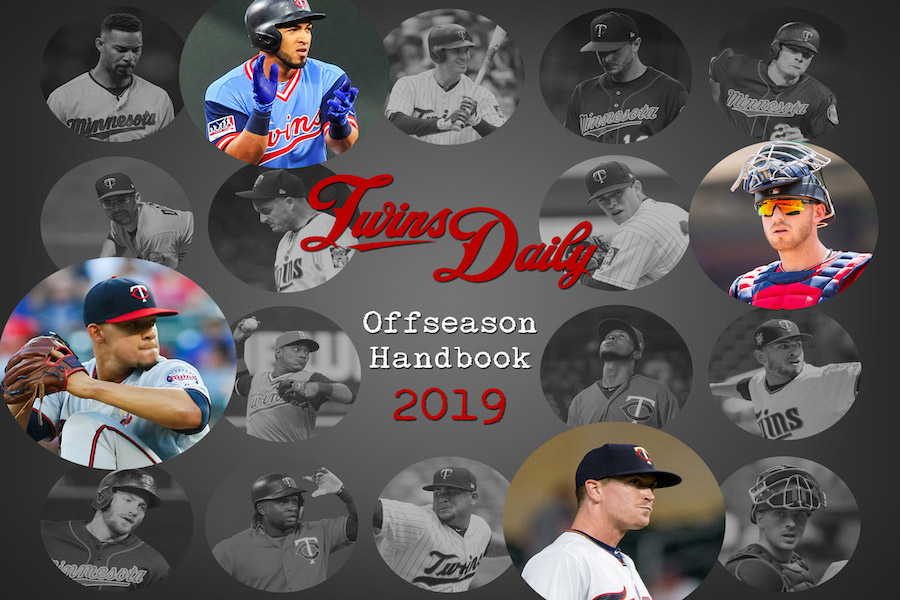 Last year over 1,000 readers downloaded the Handbook to get a jump on the offseason. This year we enlisted numerous prominent writers to help give you an even better breakdown of what's to come. You can order now for whatever you think is fair (including zero, but recommended donation is $10), and you'll receive your download link via email right away. *** CHECK OUT THIS OFFSEASON HANDBOOK FAQ FOR ADDITIONAL DETAILS *** The Handbook includes everything you would need to know to rebuild the Twins into a championship contender. We'll break down the payroll and salaries, so you'll know how much you have to spend. We'll list free agent targets and trade options. We'll review the arbitration decisions you need to make. Oh, and we've enlisted some friends to help it all make sense: Mike Berardino (Pioneer Press), Aaron Gleeman (Baseball Prospectus), Patrick Reusse (Star Tribune), Rhett Bollinger (MLB.com), Phil Miller (Star Tribune) and RandBall's Stu (Twinkie Town and... RandBall, I guess?) all contributed must-read features. Order the 2019 Offseason Handbook, and let's get to work.
