



Lucas Seehafer PT
-
Posts
525 -
Joined
-
Last visited
-
Days Won
2
Content Type
Profiles
News
Minnesota Twins Videos
2026 Minnesota Twins Top Prospects Ranking
2022 Minnesota Twins Draft Picks
Minnesota Twins Free Agent & Trade Rumors, Notes, & Tidbits
Guides & Resources
2023 Minnesota Twins Draft Picks
The Minnesota Twins Players Project
2024 Minnesota Twins Draft Picks
2025 Minnesota Twins Draft Pick Tracker
2026 Minnesota Twins Draft Tracker: Picks & Bonuses
Forums
Blogs
Events
Store
Downloads
Gallery
Everything posted by Lucas Seehafer PT
-
 Nothing that I've heard.
-
With Miranda, I think it's a couple things. 1. His short spring due to being on the 40-man during the lockout and 2. To my eye, his hips are opening up too quickly as he swings, which is causing him to reach too much with his hands. There are a number of pitches that's he's pummeled into the ground that he would hit in the air last summer. Not too concerned as it's still super early and his technical issues are very fixable.
- 18 replies
-
- 2
-

-
- christian encarnacion strand
- simeon woods richardson
- (and 3 more)
-
The Minnesota Twins' minor league starting pitchers dominated and a couple of young prospects crushed multiple home runs as the farm system combined to go 3-1 Friday night. The Minnesota Twins' minor league starting pitchers dominated and a couple of young prospects crushed multiple home runs as the farm system combined to go 3-1 Friday night. TRANSACTIONS OF Kyle Garlick selected by the Minnesota Twins RHP Dereck Rodriguez designated for assignment SAINTS SENTINEL St. Paul 6, Indianapolis 4 Box Score The Saints bounced back nicely after getting no-hit Wednesday and snowed out Thursday to pick up their sixth win of the young season. Devin Smeltzer started on the bump, going five scoreless innings, striking out three, and allowing only three Indianapolis batters to reach base. The lefty has yet to allow an earned run across his first nine innings, successfully piggybacking off of a strong Spring Training in which many thought he would be the final addition to the Twins bullpen. Mario Sanchez struggled in his two innings of relief, surrendering three runs. However, Yennier Cano and Juan Minaya shut the door on Indianapolis to secure the win. Mark Contreras and Royce Lewis powered the Saints offensively as the two combined to go 4-for-7 with two doubles, a home run, and four RBI. At 27 years old and over four years of minor league experience, you won’t find Contreras’s name on most Twins top prospect lists. However, he has a sweet swing and good pop from the left side of the plate. He can also play a capable right field. Should the Twins deal with multiple long-term injuries in the outfield this summer, it would not surprise to see Contreras get a call up. Curtis Terry (1-for-4, 2 RBI) also belted a home run, while Chance Sisco (1-for-3, BB), Jermaine Palacios (1-for-4, R), and Elliot Soto (1-for-3, R) contributed hits. WIND SURGE WISDOM Wichita 4, Northwest Arkansas 2 Box Score The Wind Surge picked up their second win of the season Friday night thanks to a solid outing from Simeon Woods Richardson as well as a combination of aggressive base running and timely hitting. Woods Richardson looked like a top 100 prospect during his first three innings of work as he effectively mixed his fastball with his loopy curve and running changeup. While he only picked up three strikeouts on the night, Natural batters from either side of the plate were largely unable to make solid contact against Wood Richardson. However, his last two frames were more laborious as he surrendered two hits, an unearned run, and lost some of his command. Cody Funderburk came on in relief for Woods Richardson and pitched three solid innings. He struck out one and allowed one earned run. Austin Schulfer picked up the save with a scoreless ninth. Alex Isola led the Wind Surge at the plate, going 3-for-4 with a home run and RBI. Spencer Steer added an RBI of his own on a double after Austin Martin (0-for-2, 3 BB, 4 SB) stole second. Michael Helman (1-for-3) also drove in Martin on a triple. Dennis Ortega (2-for-5), Andrew Bechtold (1-for-4, RBI) and DaShawn Keirsey (1-for-3, BB, R) also contributed hits. KERNELS NUGGETS Quad Cities 8, Cedar Rapids 3 Box Score A strong start from Brent Headrick and another two home run game from Christian Encarnacion-Strand was not enough to propel the Kernels past the River Bandits on Friday. Headrick tossed the first four innings of the game, surrendering only one hit and striking out eight. The lefty’s performance was largely derived from the success of his slider, which had Quad Cities batters off guard all evening. Unfortunately, Cody Lawyerson and Andrew Cabezas were unable to build off of Headrick’s dominance and combined to surrender eight runs, all earned, over their 3 ⅓ innings. Matt Mullenbach pitched the final ⅔ innings, striking out and walking one. Encarnacion-Strand was the lone Kernel to register a multi-hit game, slugging two home runs and driving in all three of Cedar Rapids’ runs. He now has five dingers and 20 RBI across his first 30 at-bats of the season. Anthony Prato (1-for-4, BB, R), Aaron Sabato (1-for-4), and Charles Mack (1-for-4, 2B) logged the Kernels other hits. MUSSEL MATTERS Fort Myers 12, Jupiter 0 Box Score Fort Myers dominated the Hammerheads Friday behind the thrust of overwhelming play from starting pitcher John Stankiewicz and burgeoning power hitter Emmanuel Rodriguez. Stankiewicz tossed six scoreless innings, striking out 10 Jupiter batters and limiting the Hammerheads to three singles. Through two starts, the former undrafted free agent owns a 1.64 ERA to go along with 19 strikeouts and only two walks. Hunter McMahon and Mike Paredes combined to strike out four batters across three scoreless innings of relief. Rodriguez belted two home runs in four plate appearances, raising his batting average and OPS to .409 and 1.618, respectively. Kyler Fedko (3-for-4, 2 RBI, 3 R) and Kyle Schmidt (2-for-4, 4 RBI, R) also launched home runs. Dylan Neuse added the Mighty Mussels only other extra base hit, a double. TWINS DAILY MINOR LEAGUE PLAYERS OF THE DAY Pitcher of the Day – RHP John Stankiewicz (Fort Myers): 6 IP, 3 H, 0 R, 0 BB, 10 K, 65 pitches Hitter of the Day – Christian Encarnacion-Strand (Cedar Rapids): 2-for-5, 2 HR, 3 RBI PROSPECT SUMMARY Here’s a look at how the current Twins Daily Top 20 performed: #1 - Austin Martin (Wichita) - 0-for-1, 3 BB, 4 SB, R #2 - Royce Lewis (St. Paul) - 2-for-3, 2B, RBI, R #3 - Jose Miranda (St. Paul) - 0-for-4, 2 K #4 - Jordan Balazovic (St. Paul) - IL #5 - Joe Ryan (Minnesota) - 6 IP, 5 H, 1 R, 1 ER, 0 BB, 7 K #6 - Matt Canterino (Wichita) - Did Not Pitch #7 - Jhoan Duran (Minnesota) - 2 IP, 3 H, 3 R, 3 ER, 0 BB, 4 K #8 - Simeon Woods Richardson (Wichita) - 5 IP, 2 H, 1 R, 0 ER, 2 BB, 3 K #9 - Josh Winder (Minnesota) - Did Not Pitch #10 - Noah Miller (Ft. Myers) - 0-for-4, BB, K, R #11 - Gilberto Celestino (Minnesota) - Did Not Play #12 - Matt Wallner (Wichita) - Did Not Play #13 - Cole Sands (St. Paul) - Did Not Pitch #14 - Louie Varland (Wichita) - Did Not Pitch #15 - Emmanuel Rodriguez (Ft. Myers) - 2-for-4, 2 HR, BB, 3 R #16 - Ronny Hendriquez (Development List) - Did Not Pitch #17 - Blayne Enlow (Wichita) - IL #18 - Spencer Steer (Wichita) - 1-for-3, 2B, RBI, 2 K #19 - Edouard Julien (Wichita) - IL #20 - Steve Hajjar (Ft. Myers) - Did Not Pitch SATURDAY’S PROBABLE STARTERS St. Paul vs. Indianapolis (2:07 PM CST) - LHP Lewis Thorpe Wichita @ Northwest Arkansas (6:05 PM CST) - RHP Chris Vallimont (0-1, 67.50 ERA) Cedar Rapids @ Quad Cities (6:30 PM CST) - RHP Sawyer Gipson-Long (0-0, 0.00 ERA) Fort Myers vs. Jupiter (6:00 PM CST) - RHP David Festa (1-0, 0.00 ERA) View full article
- 18 replies
-
- 2
-
-
- christian encarnacion strand
- simeon woods richardson
- (and 3 more)
-
 TRANSACTIONS OF Kyle Garlick selected by the Minnesota Twins RHP Dereck Rodriguez designated for assignment SAINTS SENTINEL St. Paul 6, Indianapolis 4 Box Score The Saints bounced back nicely after getting no-hit Wednesday and snowed out Thursday to pick up their sixth win of the young season. Devin Smeltzer started on the bump, going five scoreless innings, striking out three, and allowing only three Indianapolis batters to reach base. The lefty has yet to allow an earned run across his first nine innings, successfully piggybacking off of a strong Spring Training in which many thought he would be the final addition to the Twins bullpen. Mario Sanchez struggled in his two innings of relief, surrendering three runs. However, Yennier Cano and Juan Minaya shut the door on Indianapolis to secure the win. Mark Contreras and Royce Lewis powered the Saints offensively as the two combined to go 4-for-7 with two doubles, a home run, and four RBI. At 27 years old and over four years of minor league experience, you won’t find Contreras’s name on most Twins top prospect lists. However, he has a sweet swing and good pop from the left side of the plate. He can also play a capable right field. Should the Twins deal with multiple long-term injuries in the outfield this summer, it would not surprise to see Contreras get a call up. Curtis Terry (1-for-4, 2 RBI) also belted a home run, while Chance Sisco (1-for-3, BB), Jermaine Palacios (1-for-4, R), and Elliot Soto (1-for-3, R) contributed hits. WIND SURGE WISDOM Wichita 4, Northwest Arkansas 2 Box Score The Wind Surge picked up their second win of the season Friday night thanks to a solid outing from Simeon Woods Richardson as well as a combination of aggressive base running and timely hitting. Woods Richardson looked like a top 100 prospect during his first three innings of work as he effectively mixed his fastball with his loopy curve and running changeup. While he only picked up three strikeouts on the night, Natural batters from either side of the plate were largely unable to make solid contact against Wood Richardson. However, his last two frames were more laborious as he surrendered two hits, an unearned run, and lost some of his command. Cody Funderburk came on in relief for Woods Richardson and pitched three solid innings. He struck out one and allowed one earned run. Austin Schulfer picked up the save with a scoreless ninth. Alex Isola led the Wind Surge at the plate, going 3-for-4 with a home run and RBI. Spencer Steer added an RBI of his own on a double after Austin Martin (0-for-2, 3 BB, 4 SB) stole second. Michael Helman (1-for-3) also drove in Martin on a triple. Dennis Ortega (2-for-5), Andrew Bechtold (1-for-4, RBI) and DaShawn Keirsey (1-for-3, BB, R) also contributed hits. KERNELS NUGGETS Quad Cities 8, Cedar Rapids 3 Box Score A strong start from Brent Headrick and another two home run game from Christian Encarnacion-Strand was not enough to propel the Kernels past the River Bandits on Friday. Headrick tossed the first four innings of the game, surrendering only one hit and striking out eight. The lefty’s performance was largely derived from the success of his slider, which had Quad Cities batters off guard all evening. Unfortunately, Cody Lawyerson and Andrew Cabezas were unable to build off of Headrick’s dominance and combined to surrender eight runs, all earned, over their 3 ⅓ innings. Matt Mullenbach pitched the final ⅔ innings, striking out and walking one. Encarnacion-Strand was the lone Kernel to register a multi-hit game, slugging two home runs and driving in all three of Cedar Rapids’ runs. He now has five dingers and 20 RBI across his first 30 at-bats of the season. Anthony Prato (1-for-4, BB, R), Aaron Sabato (1-for-4), and Charles Mack (1-for-4, 2B) logged the Kernels other hits. MUSSEL MATTERS Fort Myers 12, Jupiter 0 Box Score Fort Myers dominated the Hammerheads Friday behind the thrust of overwhelming play from starting pitcher John Stankiewicz and burgeoning power hitter Emmanuel Rodriguez. Stankiewicz tossed six scoreless innings, striking out 10 Jupiter batters and limiting the Hammerheads to three singles. Through two starts, the former undrafted free agent owns a 1.64 ERA to go along with 19 strikeouts and only two walks. Hunter McMahon and Mike Paredes combined to strike out four batters across three scoreless innings of relief. Rodriguez belted two home runs in four plate appearances, raising his batting average and OPS to .409 and 1.618, respectively. Kyler Fedko (3-for-4, 2 RBI, 3 R) and Kyle Schmidt (2-for-4, 4 RBI, R) also launched home runs. Dylan Neuse added the Mighty Mussels only other extra base hit, a double. TWINS DAILY MINOR LEAGUE PLAYERS OF THE DAY Pitcher of the Day – RHP John Stankiewicz (Fort Myers): 6 IP, 3 H, 0 R, 0 BB, 10 K, 65 pitches Hitter of the Day – Christian Encarnacion-Strand (Cedar Rapids): 2-for-5, 2 HR, 3 RBI PROSPECT SUMMARY Here’s a look at how the current Twins Daily Top 20 performed: #1 - Austin Martin (Wichita) - 0-for-1, 3 BB, 4 SB, R #2 - Royce Lewis (St. Paul) - 2-for-3, 2B, RBI, R #3 - Jose Miranda (St. Paul) - 0-for-4, 2 K #4 - Jordan Balazovic (St. Paul) - IL #5 - Joe Ryan (Minnesota) - 6 IP, 5 H, 1 R, 1 ER, 0 BB, 7 K #6 - Matt Canterino (Wichita) - Did Not Pitch #7 - Jhoan Duran (Minnesota) - 2 IP, 3 H, 3 R, 3 ER, 0 BB, 4 K #8 - Simeon Woods Richardson (Wichita) - 5 IP, 2 H, 1 R, 0 ER, 2 BB, 3 K #9 - Josh Winder (Minnesota) - Did Not Pitch #10 - Noah Miller (Ft. Myers) - 0-for-4, BB, K, R #11 - Gilberto Celestino (Minnesota) - Did Not Play #12 - Matt Wallner (Wichita) - Did Not Play #13 - Cole Sands (St. Paul) - Did Not Pitch #14 - Louie Varland (Wichita) - Did Not Pitch #15 - Emmanuel Rodriguez (Ft. Myers) - 2-for-4, 2 HR, BB, 3 R #16 - Ronny Hendriquez (Development List) - Did Not Pitch #17 - Blayne Enlow (Wichita) - IL #18 - Spencer Steer (Wichita) - 1-for-3, 2B, RBI, 2 K #19 - Edouard Julien (Wichita) - IL #20 - Steve Hajjar (Ft. Myers) - Did Not Pitch SATURDAY’S PROBABLE STARTERS St. Paul vs. Indianapolis (2:07 PM CST) - LHP Lewis Thorpe Wichita @ Northwest Arkansas (6:05 PM CST) - RHP Chris Vallimont (0-1, 67.50 ERA) Cedar Rapids @ Quad Cities (6:30 PM CST) - RHP Sawyer Gipson-Long (0-0, 0.00 ERA) Fort Myers vs. Jupiter (6:00 PM CST) - RHP David Festa (1-0, 0.00 ERA)
- 18 comments
-
- 1
-
-
- christian encarnacion strand
- simeon woods richardson
- (and 3 more)
-
-
Juan Soto was almost a Twin...
Lucas Seehafer PT replied to lecroy24fan's topic in Minnesota Twins Talk
-
The Twins Have Their Shortstop; Another Starting Pitcher Next?
Lucas Seehafer PT posted an article in Twins
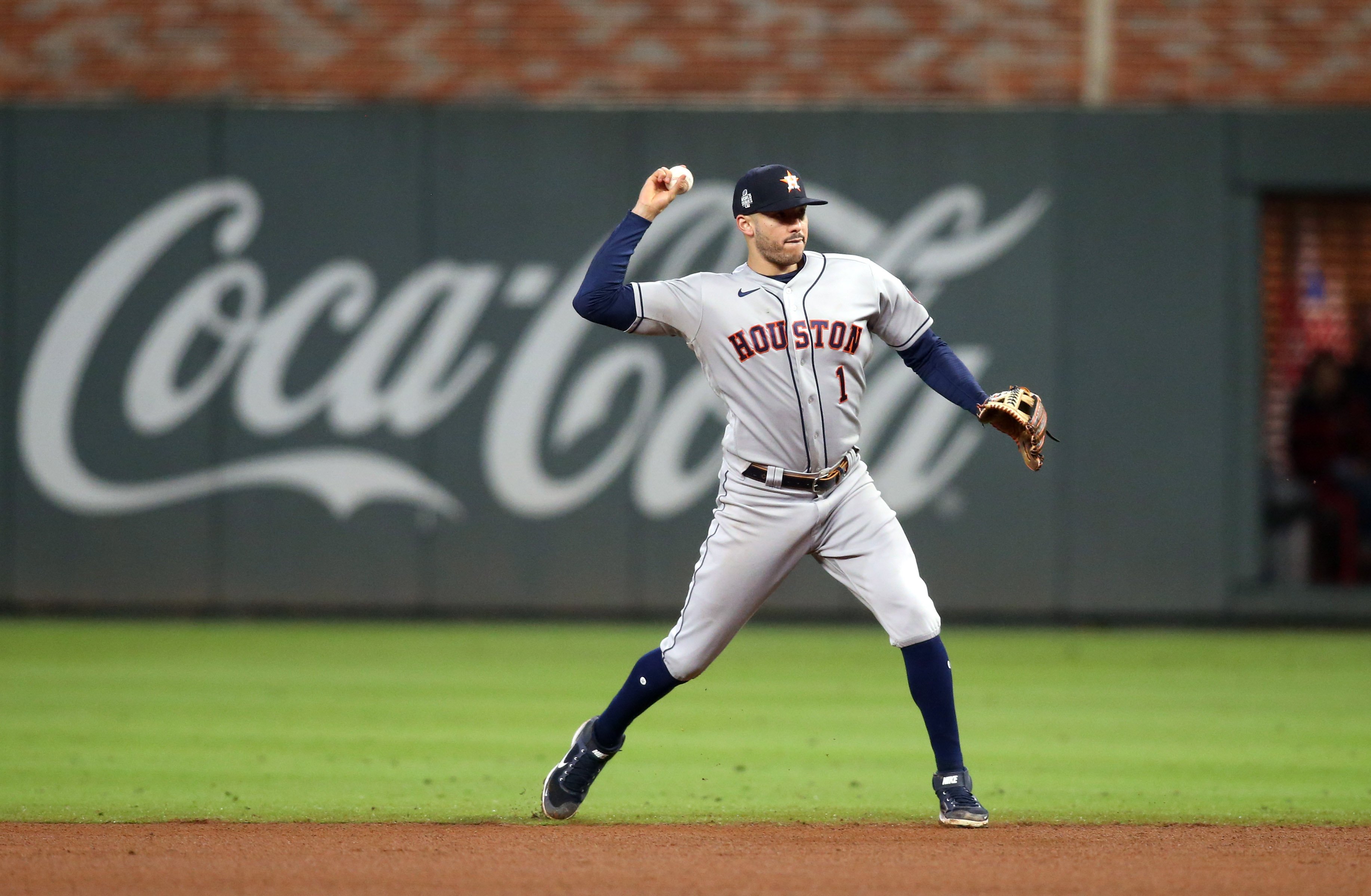 Correa, who had only been linked to the Twins in the most daydreamy of scenarios (if that), put pen to paper on a 3-year, $105.3 million contract, making him the highest-paid infielder in MLB history. He will immediately slot in as the team’s starting shortstop and help form one of the league’s most dynamic up-the-middle trios alongside Jorge Polanco and Byron Buxton. The 2012 No. 1 overall pick lived up to the hype during his seven seasons with the Houston Astros, slashing .277/.356/.481 and slugging 133 home runs, culminating in a 5.8 fWAR performance last summer that netted him a top five finish in MVP voting. But his excellence isn’t secluded to the plate. He’s also pretty proficient with the glove, registering 12 outs above average in 2021 and 27 since Statcast was implemented in 2016. (He won the American League’s Platinum Glove last summer, joining Buxton as the only Twins to have brought home the award.) To put it bluntly: In a league replete with shortstop talent, Correa is without question among the best, if not the best all around. Baseball is not like other sports in that a supreme individual talent can single-handedly carry a team into World Series contention. One need not look any further than the Los Angeles Angels for proof. However, the signing of Correa lends even further credence to the Twins’ belief that they can compete not only for an American League Central title, but perhaps more this season. Correa’s signing coupled with the trades for Sonny Gray, Gio Urshela, and Gary Sanchez has transformed the Twins from a team with two starting pitchers and no clear plan for the future to one that is perhaps a single piece away from being a true threat in the A.L. And with rumors swirling that they have significant interest in Oakland A’s pitchers Frankie Montas and Sean Manaea — both of whom figure to be very gettable at the moment — that single piece may soon arrive. The Twins now boast a lineup consisting of three players — the aforementioned Buxton, Correa, and Polanco — who registered at least 3.9 fWAR last season, with Sanchez, Urshela, and Max Kepler having accomplished the feat in the past as well. Add in promising youngsters Alex Kirilloff, Ryan Jeffers, and Trevor Larnach as well as the ever-steady Luis Arraez and the Twins could have a lineup on par or greater than 2019’s much-beloved Bomba Squad. However, their offseason remains incomplete. The Twins still need to add at least one more starting pitcher as well as a bullpen arm or two. They could also use another veteran catcher to supplement Jeffers and Sanchez, neither of whom is considered a sure thing at the moment. At this point, there is little reason why the Twins shouldn't open the gates to their farm system to usher in a Montas-caliber pitcher. While they lack elite truly elite prospects — though many have made the argument that Austin Martin is — the overall depth of the Twins' system is undoubtedly enticing to other teams. They could part with multiple of their top 10 prospects and still be full of talent. As such, this is the exact moment in which they should be aggressively shopping their minor league prospects and it would come as a bit of a shock if they weren't. But despite the prolonged nature of the offseason and the periods of wondering what the heck they were up to, the patience of Derek Falvey and Thad Levine once again paid off. The Twins have their shortstop (albeit perhaps for only one season). The Twins have their top-end starting pitcher (and perhaps another on the way). The Twins have had a great offseason. Now all that can be done is to wait to see how they tie a bow on it all. MORE FROM TWINS DAILY — Latest Twins coverage from our writers — Recent Twins discussion in our forums — Follow Twins Daily via Twitter, Facebook, or email — Read more from Lucas here
- 31 comments
-
- 5
-
-
- carlos correa
- sonny gray
- (and 2 more)
-
Fans and journalists alike learned a valuable lesson early Saturday morning — namely that sleep is for the weak of will — as many awoke to the one good piece of news going on at the moment: Carlos Correa is a Minnesota Twin. Image courtesy of Brett Davis | USA Today Fans and journalists alike learned a valuable lesson early Saturday morning — namely that sleep is for the weak of will — as many awoke to the one good piece of news going on at the moment: Carlos Correa is a Minnesota Twin. Correa, who had only been linked to the Twins in the most daydreamy of scenarios (if that), put pen to paper on a 3-year, $105.3 million contract, making him the highest-paid infielder in MLB history. He will immediately slot in as the team’s starting shortstop and help form one of the league’s most dynamic up-the-middle trios alongside Jorge Polanco and Byron Buxton. The 2012 No. 1 overall pick lived up to the hype during his seven seasons with the Houston Astros, slashing .277/.356/.481 and slugging 133 home runs, culminating in a 5.8 fWAR performance last summer that netted him a top five finish in MVP voting. But his excellence isn’t secluded to the plate. He’s also pretty proficient with the glove, registering 12 outs above average in 2021 and 27 since Statcast was implemented in 2016. (He won the American League’s Platinum Glove last summer, joining Buxton as the only Twins to have brought home the award.) To put it bluntly: In a league replete with shortstop talent, Correa is without question among the best, if not the best all around. Baseball is not like other sports in that a supreme individual talent can single-handedly carry a team into World Series contention. One need not look any further than the Los Angeles Angels for proof. However, the signing of Correa lends even further credence to the Twins’ belief that they can compete not only for an American League Central title, but perhaps more this season. Correa’s signing coupled with the trades for Sonny Gray, Gio Urshela, and Gary Sanchez has transformed the Twins from a team with two starting pitchers and no clear plan for the future to one that is perhaps a single piece away from being a true threat in the A.L. And with rumors swirling that they have significant interest in Oakland A’s pitchers Frankie Montas and Sean Manaea — both of whom figure to be very gettable at the moment — that single piece may soon arrive. The Twins now boast a lineup consisting of three players — the aforementioned Buxton, Correa, and Polanco — who registered at least 3.9 fWAR last season, with Sanchez, Urshela, and Max Kepler having accomplished the feat in the past as well. Add in promising youngsters Alex Kirilloff, Ryan Jeffers, and Trevor Larnach as well as the ever-steady Luis Arraez and the Twins could have a lineup on par or greater than 2019’s much-beloved Bomba Squad. However, their offseason remains incomplete. The Twins still need to add at least one more starting pitcher as well as a bullpen arm or two. They could also use another veteran catcher to supplement Jeffers and Sanchez, neither of whom is considered a sure thing at the moment. At this point, there is little reason why the Twins shouldn't open the gates to their farm system to usher in a Montas-caliber pitcher. While they lack elite truly elite prospects — though many have made the argument that Austin Martin is — the overall depth of the Twins' system is undoubtedly enticing to other teams. They could part with multiple of their top 10 prospects and still be full of talent. As such, this is the exact moment in which they should be aggressively shopping their minor league prospects and it would come as a bit of a shock if they weren't. But despite the prolonged nature of the offseason and the periods of wondering what the heck they were up to, the patience of Derek Falvey and Thad Levine once again paid off. The Twins have their shortstop (albeit perhaps for only one season). The Twins have their top-end starting pitcher (and perhaps another on the way). The Twins have had a great offseason. Now all that can be done is to wait to see how they tie a bow on it all. MORE FROM TWINS DAILY — Latest Twins coverage from our writers — Recent Twins discussion in our forums — Follow Twins Daily via Twitter, Facebook, or email — Read more from Lucas here View full article
-
Other names to keep an eye on, in no order: Encarnacion-Strand Rodriguez Steer Mercedes Rosario
- 13 replies
-
- 3
-
-
- matt wallner
- aaron sabato
- (and 3 more)
-
I'd say the 15ish range feels right. I think of him on the same plane as Sands. SWR and those in that range have far more potential and raw skills, imo.
-
In the footage I watched, the changeup had decent movement, but he could not locate it. I have a tough time saying it's his best pitch if he can't maximize it. It has good raw characteristics but needs refinement.
-
Ronny Henriquez was acquired by the Minnesota Twins on Saturday afternoon as part of the trade that sent Mitch Garver to the Rangers. He's a fireballing right-hander with a slight frame, who likely projects as more of a reliever in the long run. But, he’s exactly the type of arm that could excel in the Twins farm system. Image courtesy of Zach Del Bello/Frisco RoughRiders Ronny Henriquez was acquired by the Minnesota Twins on Saturday afternoon as part of the trade that sent Mitch Garver to the Rangers. He's a fireballing right-hander with a slight frame, who likely projects as more of a reliever in the long run. But, he’s exactly the type of arm that could excel in the Twins farm system. Age: 21 2021 Stats (High-A and Double-A): 5-7, 4.71 ERA, 21 G, 16 GS, 93 2/3 IP, 105 K, 25 BB, 17 HR ETA: Late 2022 out of the bullpen, 2023 as a potential starter National Top 100 Rankings BA: NR | MLB: NR | ATH: NR | BP: NR What’s to Like Despite being listed at 5’10” — a liberal measure of his height, to be sure — and 155 pounds, Henriquez boasts a fastball that consistently hits the mid-90s. Although its spin rate and other concrete metrics are elusive, its overall shape is consistent with successful fastballs in the modern MLB game: It plays best up in the zone and appears to possess good carry, giving it the illusion of rising action. Henriquez accomplishes this by getting on top of his fastball at the point of release. While he utilizes a three-quarter arm slot, a concurrent lateral lean of his trunk allows him to get more vertical spin on his heater, giving it that illusion of carry. His secondary stuff needs some work — more on that in a little bit — but his fastball will be a legitimate MLB offering, if it isn’t already. What’s Left to Work On Henriquez possesses two other offerings in his arsenal: a slider and a changeup. When on, his slider can be an effective pitch, particularly when placed on the outside edge of the plate for a right-handed batter. However, overall the pitch is rather uninspiring at the moment due to his iffy command of it as well as its lack of consistent bite. As for the changeup, well, it’s his third pitch and from the video I’ve seen, he rarely offers it up to right-handers and begrudgingly does so to lefties. In short, Henriquez only has one MLB caliber pitch at the moment, which raises questions about his future as a starter. If he can improve the consistency of at least his slider, he may have a shot at sticking in the rotation. Even so, his overall command can be iffy, even of his fastball. While Henriquez has never posted a strikeout rate less than 26% during his three-season career in the minors, his walk-rate has hovered around 6-7% or roughly three walks per nine innings. Improving his command will be imperative for him if he wants to remain a starter. Additionally, Henriquez is a fly ball pitcher who struggled with the long ball last summer. At Double-A, he surrendered 15 home runs to go along with a 41% fly-ball rate, which equated to a whopping 19.5% home run per fly ball rate, according to FanGraphs. That’s much too high, so it should come as no shock to see that he posted a 4.86 FIP in 69 2/3 innings. His ability to keep the ball in the park while continuing to miss bats will be a large factor in determining his ability to reach the major leagues. Finally, while his motion is rather compact and repeatable, he could probably stand to generate more force from his drive leg. Doing so will allow him to maintain velocity on his fastball while simultaneously cutting down on the force imparted on his shoulder and inner elbow, potentially reducing injury risk. What’s Next Henriquez will likely begin the season with Double-A Wichita and could reach Triple-A St. Paul relatively quickly if he finds success as his fastball is ready to test MLB waters. It wouldn’t come as a total shock if he made his Twins debut during the latter portion of the season out of the bullpen, though, if the Twins wish to continue to develop him as a starter, he likely won’t make his debut until the following summer. The Twins have had success in recent seasons developing young arms with some upside into viable MLB candidates. In many ways, Henriquez is exactly the kind of pitcher the Twins have been able to maximize, not unlike Louie Varland and Josh Winder. While he is not likely to be considered a top 10 prospect in the Twins system, he is the perfect athlete to take a flier on in the trade market. Other's Evaluations Seth chatted with a talent evaluator outside the Twins organization and received the following comments on Henriquez: Evaluator 1: I think the Twins fans will be happy with him. I really like his stuff. He’s undersized, so I don’t know if Starting Pitcher will be a long-term position for him. But he throws strikes with swing-and-miss stuff. Whatever role they decide to put him in, I think he’ll be effective. Don’t be too hung up on his AA numbers from last season. He was a 21-year-old competing at a high level. And friend of Twins Daily, Chris Blessing offered this on Twitter: MORE FROM TWINS DAILY — Latest Twins coverage from our writers — Recent Twins discussion in our forums — Follow Twins Daily via Twitter, Facebook, or email — Read more from Lucas here View full article
-
Scouting Twins Prospects: Who Is Ronny Henriquez?
Lucas Seehafer PT posted an article in Minor Leagues
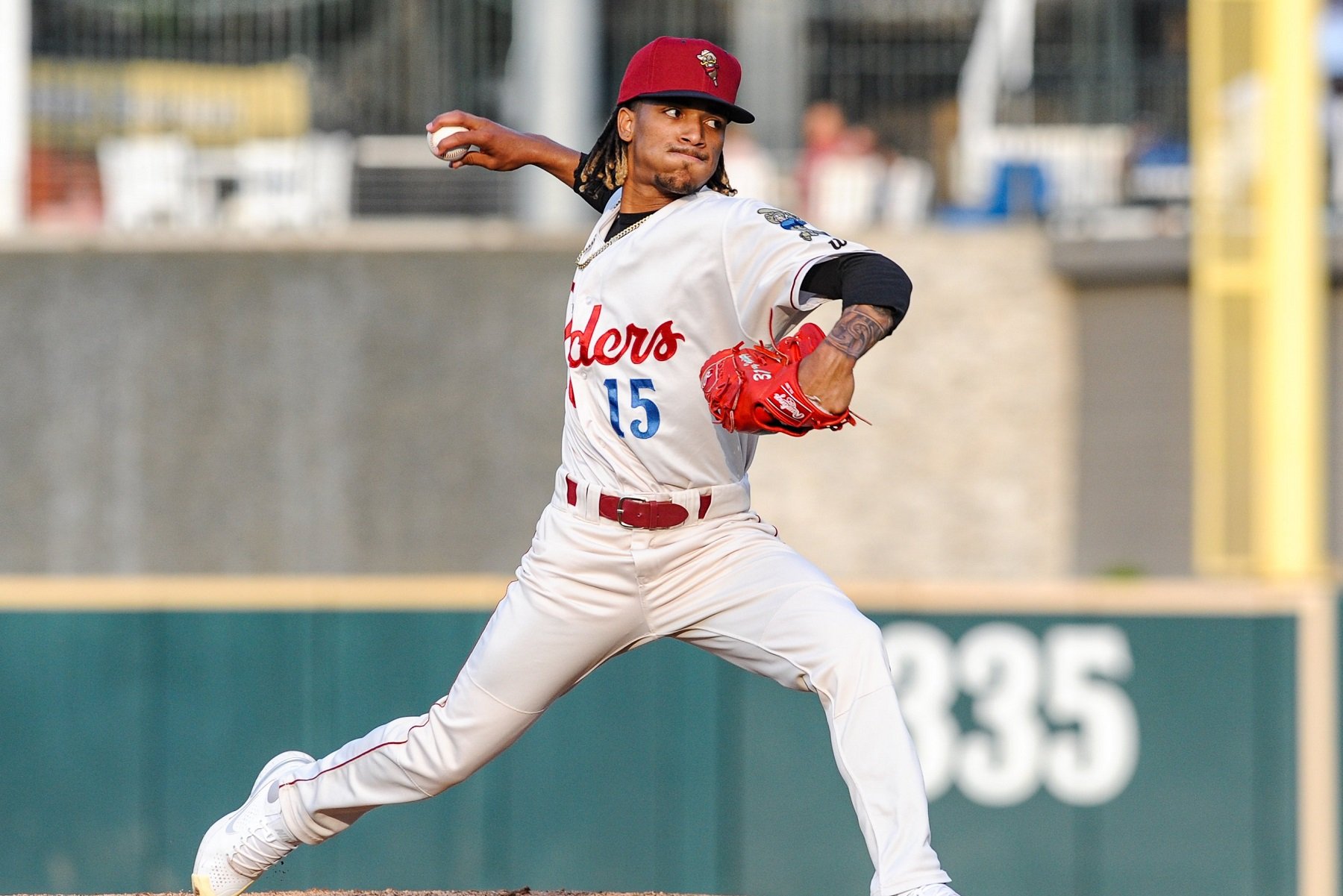 Age: 21 2021 Stats (High-A and Double-A): 5-7, 4.71 ERA, 21 G, 16 GS, 93 2/3 IP, 105 K, 25 BB, 17 HR ETA: Late 2022 out of the bullpen, 2023 as a potential starter National Top 100 Rankings BA: NR | MLB: NR | ATH: NR | BP: NR What’s to Like Despite being listed at 5’10” — a liberal measure of his height, to be sure — and 155 pounds, Henriquez boasts a fastball that consistently hits the mid-90s. Although its spin rate and other concrete metrics are elusive, its overall shape is consistent with successful fastballs in the modern MLB game: It plays best up in the zone and appears to possess good carry, giving it the illusion of rising action. Henriquez accomplishes this by getting on top of his fastball at the point of release. While he utilizes a three-quarter arm slot, a concurrent lateral lean of his trunk allows him to get more vertical spin on his heater, giving it that illusion of carry. His secondary stuff needs some work — more on that in a little bit — but his fastball will be a legitimate MLB offering, if it isn’t already. What’s Left to Work On Henriquez possesses two other offerings in his arsenal: a slider and a changeup. When on, his slider can be an effective pitch, particularly when placed on the outside edge of the plate for a right-handed batter. However, overall the pitch is rather uninspiring at the moment due to his iffy command of it as well as its lack of consistent bite. As for the changeup, well, it’s his third pitch and from the video I’ve seen, he rarely offers it up to right-handers and begrudgingly does so to lefties. In short, Henriquez only has one MLB caliber pitch at the moment, which raises questions about his future as a starter. If he can improve the consistency of at least his slider, he may have a shot at sticking in the rotation. Even so, his overall command can be iffy, even of his fastball. While Henriquez has never posted a strikeout rate less than 26% during his three-season career in the minors, his walk-rate has hovered around 6-7% or roughly three walks per nine innings. Improving his command will be imperative for him if he wants to remain a starter. Additionally, Henriquez is a fly ball pitcher who struggled with the long ball last summer. At Double-A, he surrendered 15 home runs to go along with a 41% fly-ball rate, which equated to a whopping 19.5% home run per fly ball rate, according to FanGraphs. That’s much too high, so it should come as no shock to see that he posted a 4.86 FIP in 69 2/3 innings. His ability to keep the ball in the park while continuing to miss bats will be a large factor in determining his ability to reach the major leagues. Finally, while his motion is rather compact and repeatable, he could probably stand to generate more force from his drive leg. Doing so will allow him to maintain velocity on his fastball while simultaneously cutting down on the force imparted on his shoulder and inner elbow, potentially reducing injury risk. What’s Next Henriquez will likely begin the season with Double-A Wichita and could reach Triple-A St. Paul relatively quickly if he finds success as his fastball is ready to test MLB waters. It wouldn’t come as a total shock if he made his Twins debut during the latter portion of the season out of the bullpen, though, if the Twins wish to continue to develop him as a starter, he likely won’t make his debut until the following summer. The Twins have had success in recent seasons developing young arms with some upside into viable MLB candidates. In many ways, Henriquez is exactly the kind of pitcher the Twins have been able to maximize, not unlike Louie Varland and Josh Winder. While he is not likely to be considered a top 10 prospect in the Twins system, he is the perfect athlete to take a flier on in the trade market. Other's Evaluations Seth chatted with a talent evaluator outside the Twins organization and received the following comments on Henriquez: Evaluator 1: I think the Twins fans will be happy with him. I really like his stuff. He’s undersized, so I don’t know if Starting Pitcher will be a long-term position for him. But he throws strikes with swing-and-miss stuff. Whatever role they decide to put him in, I think he’ll be effective. Don’t be too hung up on his AA numbers from last season. He was a 21-year-old competing at a high level. And friend of Twins Daily, Chris Blessing offered this on Twitter: MORE FROM TWINS DAILY — Latest Twins coverage from our writers — Recent Twins discussion in our forums — Follow Twins Daily via Twitter, Facebook, or email — Read more from Lucas here
-
Deron (Twins Scouting Director, 2007-16) and Sean (Scouting Director, 2016-Present) are not related by blood, but their similar histories in baseball and with the Twins serve not only as ties that bind them but also as beacons for the Black community. Deron (Twins Scouting Director, 2007-16) and Sean (Scouting Director, 2016-Present) are not related by blood, but their similar histories in baseball and with the Twins serve not only as ties that bind them but also as beacons for the Black community. Growing up in Vallejo, California, now a bustling metropolis just south of Napa Valley and across the bay from San Francisco, Deron Johnson always thought of himself as more of a basketball guy. That is until he got to high school. “My basketball skills weren’t where I thought they would be,” Johnson said with a wry smile, perhaps the heartache still a little raw. But even then, reality didn’t sit in until after his junior year, one in which he stopped playing baseball entirely. “I had aspirations of playing point guard in the PAC10. That didn’t happen, obviously.” Johnson picked up baseball again his senior season, a decision that would profoundly impact his life moving forward. He eventually walked on at St. Mary’s College in Moraga, California, and earned a partial scholarship before signing with the Pittsburgh Pirates during his senior season in 1988. Johnson’s life as a professional athlete was short-lived, having been cut by the Pirates in 1990 after posting a .225/.292/.370 slash line across rookie ball, Low-, and High-A. What followed was another period in which the game of baseball had lost its luster in Johnson’s eyes. But once again, a moment of serendipity occurred. Johnson was hired as a full-time assistant coach and recruiting coordinator at the University of San Francisco in 1992 and in no time fell in love with the process of scouting and recruiting. (He didn’t really care much for the on-field aspect of his job, he was quick to point out.) After yet another moment of what can only be described as divine intervention — the story involves a menagerie of scouts wanting and finding new jobs — the Twins’ Northern California Area Scout position opened in 1994, and Johnson was brought on. He eventually worked his way to earning a promotion to serve as the team’s Director of Scouting in 2007, a position he held for nine seasons. In 2016, he transitioned to a senior advising role. * * * Sean Johnson’s path took a slightly different route. Sean, a catcher who had a mind for the game and unparalleled work ethic, appeared in only 20 games during his four years as a member of the Wichita State University Shockers baseball team during the mid-1990s. He wasn't an elite athlete, nor did he have the defensive chops to warrant more playing time, but that didn't stop Sean from trying to have a positive impact on this team. “I always loved throwing to him,” former MLB pitcher Nate Robertson told The Wichita Eagle in 2016. “He always tried to get things as close to perfect as possible. He could read hitters. He knew how to set up a sequence of pitches.” While his production for the Shockers was not enough to earn him a spot in an MLB farm system, his experience in Wichita was exactly what eventually led him to Major League Baseball. “Being able to be a product of the Wichita State baseball program gave me a ton of exposure to being around scouts since we had a good amount of [draft picks] every year when I was there,” Sean said. “I was very fortunate that [former Miami Marlins scout and current assistant general manager for the Detroit Tigers] David Chadd also lived in Wichita, was very close to the coaching staff at WSU, and offered me a scouting opportunity with the Marlins.” Unfortunately, soon after his arrival in Florida, the Marlins went through an ownership change, and Sean was let go. However, he did not remain a free agent for long. “Long story short, I’m grateful that Deron Johnson and Mike Radcliff gave me an opportunity 20 years ago to join the Minnesota Twins as an area scout.” The Twins brought on Sean to serve as the area scout in the Four Corners region, a post he held for five years before being promoted to West Coast Supervisor in 2007. In 2016, he was promoted to Scouting Director. “I’ve been blessed and fortunate the entire way to have had the opportunity to have amazing mentors and teammates who have shaped me as a scout and also as a leader. It has been an amazing ride so far, and I have loved every second of it.” * * * Both Deron and Sean are Black men who have risen to prominent positions in a sport and league that is predominated by those who are white. While he is proud of what he has accomplished, Deron stated that when he first began working in baseball, it was not necessarily his goal to function as a beacon for the Black community. He simply wanted to do the best job he could. “I just wanted to be a good scout. I soaked up all the information from Mike Radcliff, Terry Ryan, Vern Followell. I just tried to be the best I could be. I was fortunate enough to get promoted, and I owe everything to Bill Smith. He gave me the job of Scouting Director back in 2007,” Deron said. However, his perspective shifted upon being named Scouting Director. “When I took that job, you want to do well. You want to draft All-Stars, you want to draft a ton of big leaguers, you want to put your stamp on it. But as I grew into that role, I wanted to do the best job I could do so the next African-American could have a shot, and hopefully, I did the job well enough that the Sean Johnson’s of the world can get a chance at that job. I’m proud. I thought our group did a pretty good job during my nine years. We signed some pretty good players. I’m very fortunate and thankful and blessed to have that opportunity.” The game of baseball is often discussed as a dying sport among Black youth in America, a sentiment that was backed by both Deron and Sean. The explanations for why baseball is in “a critical state” in the Black community, according to Sean, are myriad, ranging from the price of travel ball to the lack of opportunities to play in a little league to the lack of scholarship availability at the NCAA Division I level to the ever-increasing popularity of basketball and football. However, Deron offered yet another explanation in the form of a challenge to Major League Baseball. “I’ve always said that Major League Baseball needs to step up and be better at marketing the few African-American players that are in the Major Leagues in each city. I remember growing up, and you would see signs, billboards with Vida Blue and Bobby Bonds. I mean, we knew who the Black players were. Major League Baseball could do a better job at marketing the players.” Sean largely concurred, though, despite the challenges facing Black youth in incorporating the game of baseball back into their communities, he remains largely optimistic about the long-term prognosis. “But there is still some hope left for the future. I think the urban MLB academies that have been built around America are a good thing, and we’ve seen those start to bear fruit. There have been Black players showing up at the very top of the draft boards of late. We might see three African-American high school players go in the first ten picks of this draft — another good signal. But overall, I think there’s still much work to do to keep Black teens playing our sport.” MORE FROM TWINS DAILY — Latest Twins coverage from our writers — Recent Twins discussion in our forums — Follow Twins Daily via Twitter, Facebook, or email — Read more from Lucas here View full article
-
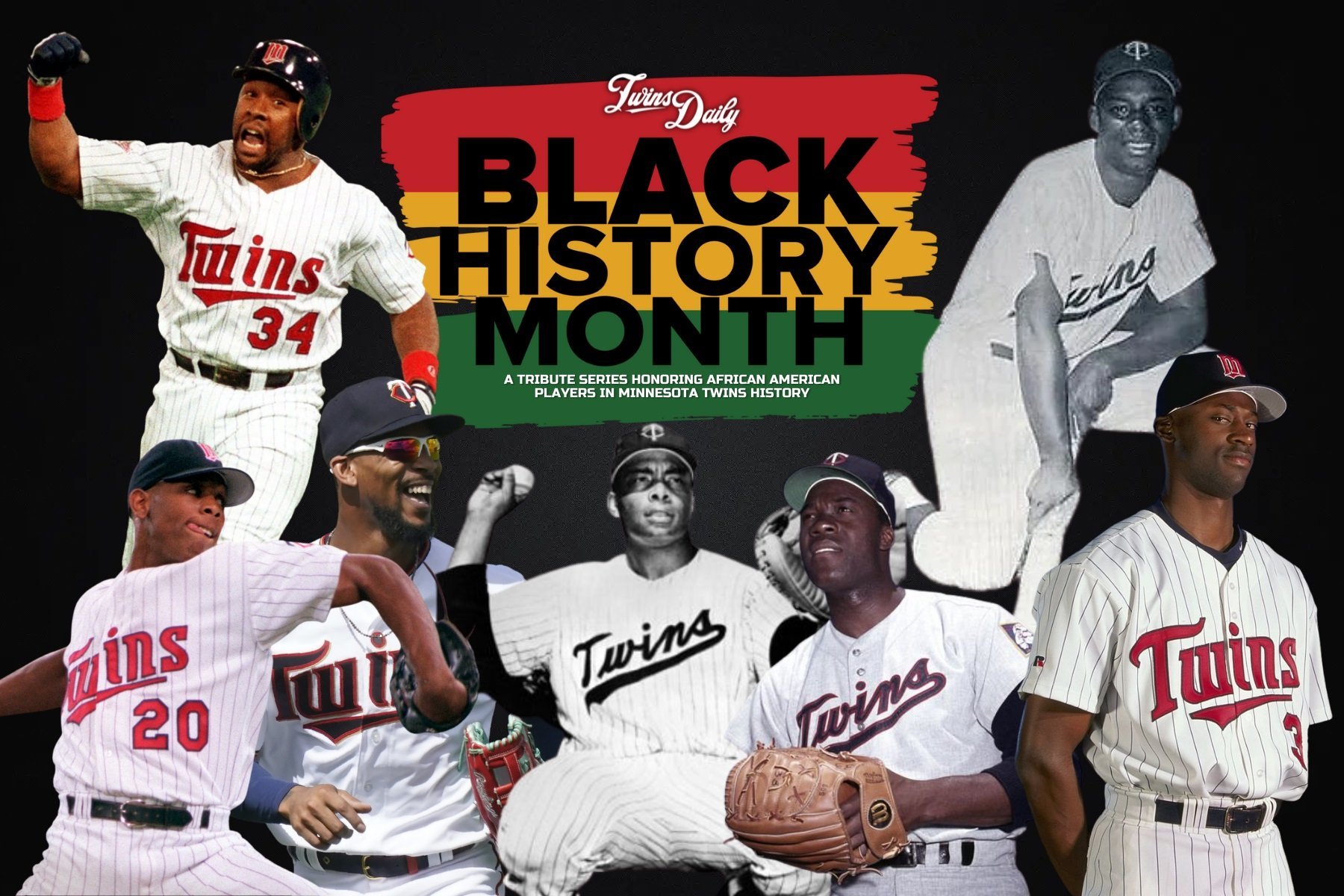 Growing up in Vallejo, California, now a bustling metropolis just south of Napa Valley and across the bay from San Francisco, Deron Johnson always thought of himself as more of a basketball guy. That is until he got to high school. “My basketball skills weren’t where I thought they would be,” Johnson said with a wry smile, perhaps the heartache still a little raw. But even then, reality didn’t sit in until after his junior year, one in which he stopped playing baseball entirely. “I had aspirations of playing point guard in the PAC10. That didn’t happen, obviously.” Johnson picked up baseball again his senior season, a decision that would profoundly impact his life moving forward. He eventually walked on at St. Mary’s College in Moraga, California, and earned a partial scholarship before signing with the Pittsburgh Pirates during his senior season in 1988. Johnson’s life as a professional athlete was short-lived, having been cut by the Pirates in 1990 after posting a .225/.292/.370 slash line across rookie ball, Low-, and High-A. What followed was another period in which the game of baseball had lost its luster in Johnson’s eyes. But once again, a moment of serendipity occurred. Johnson was hired as a full-time assistant coach and recruiting coordinator at the University of San Francisco in 1992 and in no time fell in love with the process of scouting and recruiting. (He didn’t really care much for the on-field aspect of his job, he was quick to point out.) After yet another moment of what can only be described as divine intervention — the story involves a menagerie of scouts wanting and finding new jobs — the Twins’ Northern California Area Scout position opened in 1994, and Johnson was brought on. He eventually worked his way to earning a promotion to serve as the team’s Director of Scouting in 2007, a position he held for nine seasons. In 2016, he transitioned to a senior advising role. * * * Sean Johnson’s path took a slightly different route. Sean, a catcher who had a mind for the game and unparalleled work ethic, appeared in only 20 games during his four years as a member of the Wichita State University Shockers baseball team during the mid-1990s. He wasn't an elite athlete, nor did he have the defensive chops to warrant more playing time, but that didn't stop Sean from trying to have a positive impact on this team. “I always loved throwing to him,” former MLB pitcher Nate Robertson told The Wichita Eagle in 2016. “He always tried to get things as close to perfect as possible. He could read hitters. He knew how to set up a sequence of pitches.” While his production for the Shockers was not enough to earn him a spot in an MLB farm system, his experience in Wichita was exactly what eventually led him to Major League Baseball. “Being able to be a product of the Wichita State baseball program gave me a ton of exposure to being around scouts since we had a good amount of [draft picks] every year when I was there,” Sean said. “I was very fortunate that [former Miami Marlins scout and current assistant general manager for the Detroit Tigers] David Chadd also lived in Wichita, was very close to the coaching staff at WSU, and offered me a scouting opportunity with the Marlins.” Unfortunately, soon after his arrival in Florida, the Marlins went through an ownership change, and Sean was let go. However, he did not remain a free agent for long. “Long story short, I’m grateful that Deron Johnson and Mike Radcliff gave me an opportunity 20 years ago to join the Minnesota Twins as an area scout.” The Twins brought on Sean to serve as the area scout in the Four Corners region, a post he held for five years before being promoted to West Coast Supervisor in 2007. In 2016, he was promoted to Scouting Director. “I’ve been blessed and fortunate the entire way to have had the opportunity to have amazing mentors and teammates who have shaped me as a scout and also as a leader. It has been an amazing ride so far, and I have loved every second of it.” * * * Both Deron and Sean are Black men who have risen to prominent positions in a sport and league that is predominated by those who are white. While he is proud of what he has accomplished, Deron stated that when he first began working in baseball, it was not necessarily his goal to function as a beacon for the Black community. He simply wanted to do the best job he could. “I just wanted to be a good scout. I soaked up all the information from Mike Radcliff, Terry Ryan, Vern Followell. I just tried to be the best I could be. I was fortunate enough to get promoted, and I owe everything to Bill Smith. He gave me the job of Scouting Director back in 2007,” Deron said. However, his perspective shifted upon being named Scouting Director. “When I took that job, you want to do well. You want to draft All-Stars, you want to draft a ton of big leaguers, you want to put your stamp on it. But as I grew into that role, I wanted to do the best job I could do so the next African-American could have a shot, and hopefully, I did the job well enough that the Sean Johnson’s of the world can get a chance at that job. I’m proud. I thought our group did a pretty good job during my nine years. We signed some pretty good players. I’m very fortunate and thankful and blessed to have that opportunity.” The game of baseball is often discussed as a dying sport among Black youth in America, a sentiment that was backed by both Deron and Sean. The explanations for why baseball is in “a critical state” in the Black community, according to Sean, are myriad, ranging from the price of travel ball to the lack of opportunities to play in a little league to the lack of scholarship availability at the NCAA Division I level to the ever-increasing popularity of basketball and football. However, Deron offered yet another explanation in the form of a challenge to Major League Baseball. “I’ve always said that Major League Baseball needs to step up and be better at marketing the few African-American players that are in the Major Leagues in each city. I remember growing up, and you would see signs, billboards with Vida Blue and Bobby Bonds. I mean, we knew who the Black players were. Major League Baseball could do a better job at marketing the players.” Sean largely concurred, though, despite the challenges facing Black youth in incorporating the game of baseball back into their communities, he remains largely optimistic about the long-term prognosis. “But there is still some hope left for the future. I think the urban MLB academies that have been built around America are a good thing, and we’ve seen those start to bear fruit. There have been Black players showing up at the very top of the draft boards of late. We might see three African-American high school players go in the first ten picks of this draft — another good signal. But overall, I think there’s still much work to do to keep Black teens playing our sport.” MORE FROM TWINS DAILY — Latest Twins coverage from our writers — Recent Twins discussion in our forums — Follow Twins Daily via Twitter, Facebook, or email — Read more from Lucas here
-
The Minnesota Twins acquired pitching prospect Simeon Woods Richardson along with fellow Twins Daily top 10 prospect Austin Martin in exchange for José Berríos at the 2021 trade deadline. Doing so provided fans with the sugar needed to swallow the bitter medicine that was parting with a fan-favorite and consummate professional. The Minnesota Twins acquired pitching prospect Simeon Woods Richardson along with fellow Twins Daily top 10 prospect Austin Martin in exchange for José Berríos at the 2021 trade deadline. Doing so provided fans with the sugar needed to swallow the bitter medicine that was parting with a fan-favorite and consummate professional. But while Simeon Woods Richardson was billed as one of the building blocks for the future of Twins baseball, the luster of his prospect-dom dulled a little after struggling during his four appearances with the Double-A Wichita Wind Surge. Despite this, the 21-year-old still ranks among the team’s most promising pitching prospects and comes in at No. 8 in Twins Daily’s preseason rankings. Age: 21 (DOB: 9/27/00) 2021 Stats (Double-A): 53 1/3 IP, 5.91 ERA, 1.54 WHIP, 77 K, 34 BB ETA: 2023 2021 Ranking: NR National Top 100 Rankings BA: NR | MLB: NR | ATH: NR | BP: NR What's to Like In many respects, Woods Richardson’s scouting report is fairly straightforward. He owns a traditional three-pitch mix, consisting of a fastball, curve, and changeup, with all three offerings having plus potential. His fastball sits in the low-90s but can reach 94-95 mph every now and then; the curveball, his most inconsistent pitch in terms of quality, can make hitters look foolish when on; and his changeup features significant tailing action and is probably his best pitch overall at the moment. Woods Richardson has never struggled to rack up strikeout numbers — he has 229 in 177 1/3 minor league innings — and it’s difficult to see that changing as he makes his way to the Majors. His raw stuff is among the best in the system and alone warrants his top 10 prospect ranking. Add in his age and athletic build, and there are few pitchers in the Twins’ farm system that possess a grander upside. What's Left to Work On However, his weaknesses are just as glaring as his strengths. Woods Richardson has never had great command despite owning respectable walk rates prior to the 2021 season. However, his BB/9 jumped from around two per nine innings during his first two minor league seasons to 5.16 while a member of the Blue Jays and a putrid 9.00 after being shipped to the Twins. (He posted a 77:34 KK/BB ratio in 53 ⅓ innings overall last season, though it should be mentioned 16 of his walks came across three particularly bad starts.) His struggles just prior and following his acquisition were likely the result of multiple factors. For starters, Woods Richardson missed approximately six weeks of action during the middle of the season as he was competing as a member of Team USA during the 2020 Olympics (he did not make a single appearance during the Games). Additionally, Woods Richardson, as was the case with most minor leaguers, did not pitch during games in 2020 due to the COVID-19 pandemic, which likely impacted his endurance in a negative fashion. But perhaps the most important factor of them all is his mechanics. Woods Richardson’s windup and arm motion mirror that of fellow Twins prospect Jordan Balazovic — who, perhaps coincidentally, also struggles with command at times — in that they extend their arm fully and drop the ball well below their respective belt lines during the stride phase of their delivery. They get a good push off from the legs and produce a great amount of force by tucking their glove hand powerfully under the armpit, rotating the torso powerfully. In and of itself, there isn’t necessarily anything wrong with the foundation of Woods Richardson’s mechanics, however, it isn’t very compact being composed of many moving parts and long levers. The larger the pitching motion, the more unlikely it is to repeat consistently and the more likely it is for minor blemishes to cause large effects. Tightening up his motion ever so slightly may result in improved command and, thus, decreased walks for the Twins prospect. What's Next The Twins pitching staff will doubtless work with Woods Richardson to improve his command and overall performance, picking and prodding until the results manifest. After all, he is still years away from arriving in Minneapolis despite reaching Double-A before being allowed to drink legally. In all likelihood he will spend the majority of the 2022 in Wichita with the Wind Surge. Woods Richardson has all of the talent to land as a Number 2 or 3 starter at the MLB level, it all just depends on his command. Previous Rankings Honorable Mentions Prospects 16-20 Prospects 11-15 #10: Josh Winder, RHP #9: Chase Petty, RHP #8: Simeon Woods Richardson, RHP #7: Coming Soon MORE FROM TWINS DAILY — Latest Twins coverage from our writers — Recent Twins discussion in our forums — Follow Twins Daily via Twitter, Facebook, or email — Read more from Lucas here View full article
-
Twins Daily 2022 Top Prospects: #8 Simeon Woods Richardson
Lucas Seehafer PT posted an article in Minor Leagues
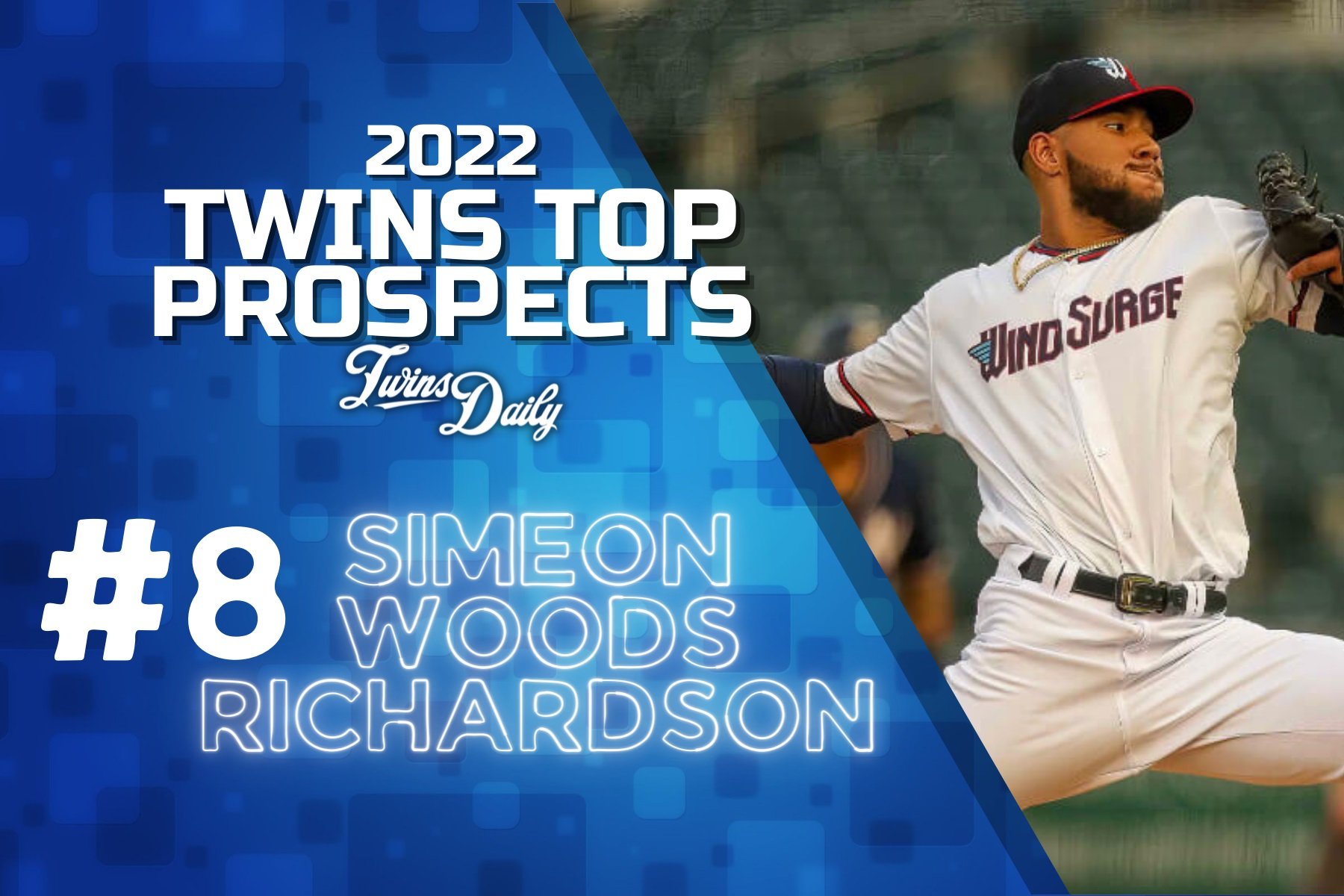 But while Simeon Woods Richardson was billed as one of the building blocks for the future of Twins baseball, the luster of his prospect-dom dulled a little after struggling during his four appearances with the Double-A Wichita Wind Surge. Despite this, the 21-year-old still ranks among the team’s most promising pitching prospects and comes in at No. 8 in Twins Daily’s preseason rankings. Age: 21 (DOB: 9/27/00) 2021 Stats (Double-A): 53 1/3 IP, 5.91 ERA, 1.54 WHIP, 77 K, 34 BB ETA: 2023 2021 Ranking: NR National Top 100 Rankings BA: NR | MLB: NR | ATH: NR | BP: NR What's to Like In many respects, Woods Richardson’s scouting report is fairly straightforward. He owns a traditional three-pitch mix, consisting of a fastball, curve, and changeup, with all three offerings having plus potential. His fastball sits in the low-90s but can reach 94-95 mph every now and then; the curveball, his most inconsistent pitch in terms of quality, can make hitters look foolish when on; and his changeup features significant tailing action and is probably his best pitch overall at the moment. Woods Richardson has never struggled to rack up strikeout numbers — he has 229 in 177 1/3 minor league innings — and it’s difficult to see that changing as he makes his way to the Majors. His raw stuff is among the best in the system and alone warrants his top 10 prospect ranking. Add in his age and athletic build, and there are few pitchers in the Twins’ farm system that possess a grander upside. What's Left to Work On However, his weaknesses are just as glaring as his strengths. Woods Richardson has never had great command despite owning respectable walk rates prior to the 2021 season. However, his BB/9 jumped from around two per nine innings during his first two minor league seasons to 5.16 while a member of the Blue Jays and a putrid 9.00 after being shipped to the Twins. (He posted a 77:34 KK/BB ratio in 53 ⅓ innings overall last season, though it should be mentioned 16 of his walks came across three particularly bad starts.) His struggles just prior and following his acquisition were likely the result of multiple factors. For starters, Woods Richardson missed approximately six weeks of action during the middle of the season as he was competing as a member of Team USA during the 2020 Olympics (he did not make a single appearance during the Games). Additionally, Woods Richardson, as was the case with most minor leaguers, did not pitch during games in 2020 due to the COVID-19 pandemic, which likely impacted his endurance in a negative fashion. But perhaps the most important factor of them all is his mechanics. Woods Richardson’s windup and arm motion mirror that of fellow Twins prospect Jordan Balazovic — who, perhaps coincidentally, also struggles with command at times — in that they extend their arm fully and drop the ball well below their respective belt lines during the stride phase of their delivery. They get a good push off from the legs and produce a great amount of force by tucking their glove hand powerfully under the armpit, rotating the torso powerfully. In and of itself, there isn’t necessarily anything wrong with the foundation of Woods Richardson’s mechanics, however, it isn’t very compact being composed of many moving parts and long levers. The larger the pitching motion, the more unlikely it is to repeat consistently and the more likely it is for minor blemishes to cause large effects. Tightening up his motion ever so slightly may result in improved command and, thus, decreased walks for the Twins prospect. What's Next The Twins pitching staff will doubtless work with Woods Richardson to improve his command and overall performance, picking and prodding until the results manifest. After all, he is still years away from arriving in Minneapolis despite reaching Double-A before being allowed to drink legally. In all likelihood he will spend the majority of the 2022 in Wichita with the Wind Surge. Woods Richardson has all of the talent to land as a Number 2 or 3 starter at the MLB level, it all just depends on his command. Previous Rankings Honorable Mentions Prospects 16-20 Prospects 11-15 #10: Josh Winder, RHP #9: Chase Petty, RHP #8: Simeon Woods Richardson, RHP #7: Coming Soon MORE FROM TWINS DAILY — Latest Twins coverage from our writers — Recent Twins discussion in our forums — Follow Twins Daily via Twitter, Facebook, or email — Read more from Lucas here
-
It's pronounced like Yoan Moncada.
-
Ryan Jeffers’ ability — or perhaps inability — to perform as he has in the minors could be a key factor in determining the Minnesota Twins’ future outlook. Image courtesy of Nick Wosika, USA TODAY Ryan Jeffers’ ability — or perhaps inability — to perform as he has in the minors could be a key factor in determining the Minnesota Twins’ future outlook. The book on Ryan Jeffers when coming out of the UNCW was pretty straight forward. Scouts knew that he possessed big power, but questioned his ability to make consistent enough contact to warrant an everyday role at the MLB level. While his play in the minor leagues suggested that the concern was unwarranted, it has risen anew after he posted a mediocre .211 batting average through his first 111 MLB games. Jeffers burst onto the scene during the pandemic-shortened 2020 season due to a combination of fortuitous luck as well as the betrayal of Mitch Garver at the hands of his own body. After splitting the 2019 season between High-A and Double-A — he slashed .264/.341/.421 with 14 home runs in 103 games — Jeffers was among the prospects selected to train in St. Paul following the cancellation of the minor league season. He was called up in late August after Garver landed on the injured list with an intercostal strain and remained with the team until the conclusion of the season. The former UNCW Seahawk performed admirably in 26 games, hitting three home runs and slashing .273/.355/.436, good for a 120 wRC+, bolstered by a .364 BABIP, while providing surprisingly solid defense behind the plate, particularly in regard to pitch framing. His performance left many wondering if he would soon supplant Garver, perhaps as soon as the coming offseason, as the Twins’ everyday starting catcher. The Twins, obviously with similar questions wafting through their heads, began the season with Jeffers and Garver splitting a roughly equal amount of time in the starting lineup. However, the decision, while sound in theory, turned out to be poor in practice as it wound up negating both of their strengths, namely hitting for power, while intensifying their weaknesses, striking out. Jeffers was eventually demoted to Triple-A while Garver spent more time on the injured list. (Garver absolutely crushed after his slow start and finished the season with a 137 wRC+ and .875 OPS in 68 games while Jeffers — 89 and .670, respectively, in 85 — did not.) Even upon his return to the majors after posting a .786 OPS with St. Paul, Jeffers’ season never really got on track offensively, which was likely the result of multiple factors. For starters, Jeffers wasn’t unable to do much against breaking balls, as he hit .136 with a 36.1% strikeout rate. His barrel rate against benders dropped 22 percentage points year over year while his fly ball rate nearly tripled. However, for as bad as his numbers against breaking balls were, they were more or less commensurate with his performance during 2020 (.133, 37.5%). Where Jeffers struggled the most was with making contact against fastballs, particularly those up in the zone. Overall, opposing pitchers offered fewer fastballs during Jeffers' at-bats — 54.7% of all pitches in 2021 compared to 60.5% in 2020 — and even when they did, he hit worse, posting a .228 batting average this past summer versus .313 throughout the previous. His strikeout rate against heaters also jumped an astronomic 10%, from 28.9% to 38.3%. Jeffers also ran into a bit of poor luck as his BABIP dropped precipitously from an egregious .364 in 2020 to a relatively unlucky .269 in 2021. While the sample sizes are incredibly small, teams did increase the frequency in which they shifted against Jeffers from 3.2% in 2020 to 7.5% in 2021, which may have influenced his BABIP numbers. In many ways Jeffers’ struggles during the 2021 season can be summed up similarly to that of Trevor Larnach: Former top prospect with a track record of mashing fastballs suddenly lost the ability to mash fastballs. Luckily for the Twins, as is also the case with Larnach, Jeffers is only 24 years old and has not yet played 162 MLB games, meaning he has plenty of time to make adjustments. If he is able to do so, the Twins likely possess their starting catcher for the foreseeable future. If not, Jeffers may find himself on the trade block sooner rather than later. MORE FROM TWINS DAILY — Latest Twins coverage from our writers — Recent Twins discussion in our forums — Follow Twins Daily via Twitter, Facebook, or email — Read more from Lucas here View full article
-
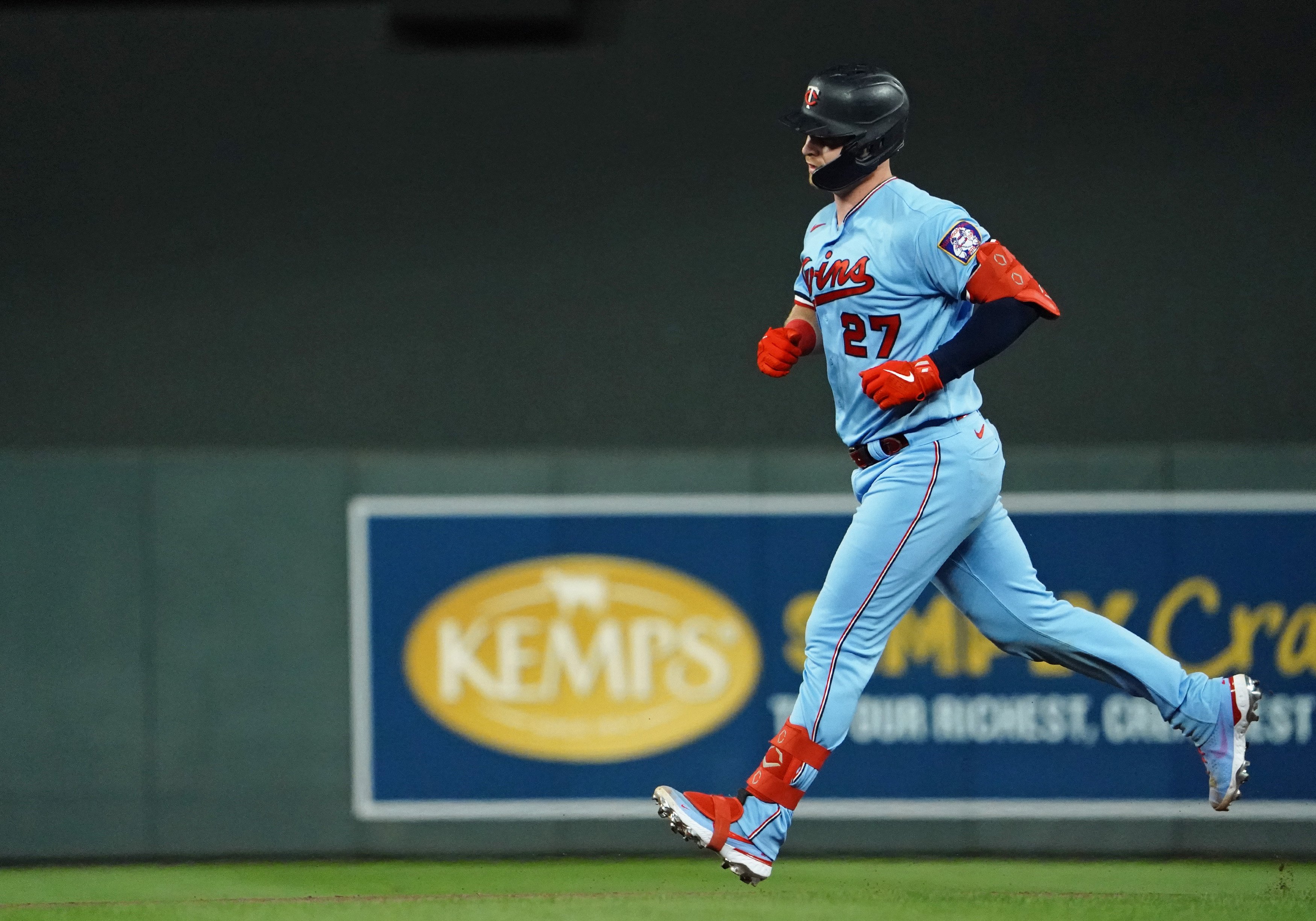 The book on Ryan Jeffers when coming out of the UNCW was pretty straight forward. Scouts knew that he possessed big power, but questioned his ability to make consistent enough contact to warrant an everyday role at the MLB level. While his play in the minor leagues suggested that the concern was unwarranted, it has risen anew after he posted a mediocre .211 batting average through his first 111 MLB games. Jeffers burst onto the scene during the pandemic-shortened 2020 season due to a combination of fortuitous luck as well as the betrayal of Mitch Garver at the hands of his own body. After splitting the 2019 season between High-A and Double-A — he slashed .264/.341/.421 with 14 home runs in 103 games — Jeffers was among the prospects selected to train in St. Paul following the cancellation of the minor league season. He was called up in late August after Garver landed on the injured list with an intercostal strain and remained with the team until the conclusion of the season. The former UNCW Seahawk performed admirably in 26 games, hitting three home runs and slashing .273/.355/.436, good for a 120 wRC+, bolstered by a .364 BABIP, while providing surprisingly solid defense behind the plate, particularly in regard to pitch framing. His performance left many wondering if he would soon supplant Garver, perhaps as soon as the coming offseason, as the Twins’ everyday starting catcher. The Twins, obviously with similar questions wafting through their heads, began the season with Jeffers and Garver splitting a roughly equal amount of time in the starting lineup. However, the decision, while sound in theory, turned out to be poor in practice as it wound up negating both of their strengths, namely hitting for power, while intensifying their weaknesses, striking out. Jeffers was eventually demoted to Triple-A while Garver spent more time on the injured list. (Garver absolutely crushed after his slow start and finished the season with a 137 wRC+ and .875 OPS in 68 games while Jeffers — 89 and .670, respectively, in 85 — did not.) Even upon his return to the majors after posting a .786 OPS with St. Paul, Jeffers’ season never really got on track offensively, which was likely the result of multiple factors. For starters, Jeffers wasn’t unable to do much against breaking balls, as he hit .136 with a 36.1% strikeout rate. His barrel rate against benders dropped 22 percentage points year over year while his fly ball rate nearly tripled. However, for as bad as his numbers against breaking balls were, they were more or less commensurate with his performance during 2020 (.133, 37.5%). Where Jeffers struggled the most was with making contact against fastballs, particularly those up in the zone. Overall, opposing pitchers offered fewer fastballs during Jeffers' at-bats — 54.7% of all pitches in 2021 compared to 60.5% in 2020 — and even when they did, he hit worse, posting a .228 batting average this past summer versus .313 throughout the previous. His strikeout rate against heaters also jumped an astronomic 10%, from 28.9% to 38.3%. Jeffers also ran into a bit of poor luck as his BABIP dropped precipitously from an egregious .364 in 2020 to a relatively unlucky .269 in 2021. While the sample sizes are incredibly small, teams did increase the frequency in which they shifted against Jeffers from 3.2% in 2020 to 7.5% in 2021, which may have influenced his BABIP numbers. In many ways Jeffers’ struggles during the 2021 season can be summed up similarly to that of Trevor Larnach: Former top prospect with a track record of mashing fastballs suddenly lost the ability to mash fastballs. Luckily for the Twins, as is also the case with Larnach, Jeffers is only 24 years old and has not yet played 162 MLB games, meaning he has plenty of time to make adjustments. If he is able to do so, the Twins likely possess their starting catcher for the foreseeable future. If not, Jeffers may find himself on the trade block sooner rather than later. MORE FROM TWINS DAILY — Latest Twins coverage from our writers — Recent Twins discussion in our forums — Follow Twins Daily via Twitter, Facebook, or email — Read more from Lucas here
-
I think he'd hold up better as a reliever if only because it would cut down on his innings and, thus, reduce his chances for injury to occur. As for Gore, I really like what he did last year. I'm not sure many people foresaw him pitching as well as he ultimately did, but obviously the Twins made the right call switching him to the mound. I think he has MLB stuff and wouldn't be surprised if he got a call up this coming summer.
- 9 replies
-
- 2
-
-
- jhoan duran
- cole sands
- (and 3 more)
-
I'm sure that's their plan. I don't imagine that he will convert to the pen (*if* he does so) until he reaches the majors and the Twins are contending. I really think his path is going to look like Graterol's.
- 9 replies
-
- 2
-
-
- jhoan duran
- cole sands
- (and 3 more)
-
In his three season as Twins manager, Rocco Baldelli is yet to name a closer, and that likely won't change anytime soon. But, we know which relievers get the highest-leverage situations and most of the ninth innings. It's hard to predict which pitchers will fill that role, especially in the future. However, today we consider which Twins minor leaguers mighty be strong candidates. Image courtesy of Dan Powers, USA TODAY In his three season as Twins manager, Rocco Baldelli is yet to name a closer, and that likely won't change anytime soon. But, we know which relievers get the highest-leverage situations and most of the ninth innings. It's hard to predict which pitchers will fill that role, especially in the future. However, today we consider which Twins minor leaguers mighty be strong candidates. Although most pitching prospects begin their minor league careers as starters, many of them eventually wind up in the bullpen at the MLB level. The Minnesota Twins are very familiar with how this transition can lead to a fruitful career with the likes of Joe Nathan, Glen Perkins, and, more recently, Tyler Duffey doing so under their watch. The Twins currently have a multitude of pitching prospects who are knocking on the door to the majors, but it is unlikely that all of them will stick as starters. Below are five names who could not only make the switch to the pen, but may ultimately perform well in the closer role. RHP JHOAN DURAN 2021 stats (Triple-A): 5 G, 4 GS, 16 IP, 5.06 ERA, 3.86 FIP, 22 K, 13 BB, 16.7% HR/FB Duran has, without a doubt, the most electric raw stuff in the Twins' farm system. He regularly hits 100 mph with his 4-seam fastball, which pairs well with his splitter-sinker hybrid (low-90s) and curveball (mid-80s). However, his poor command and right upper-extremity injury history may limit the overall height of his ceiling; he’s only ever thrown more than 70 innings in a season once. There are many similarities between Duran and former Twin Brusdar Graterol, so it would not be surprising to see their careers take indistinguishable paths. Graterol was solid out of the pen for the Los Angeles Dodgers in 2021, though he functioned more as a set-up man than a closer. A shift to the bullpen may be in Duran — and the Twins' — best interests in the short and long-term. RHP LOUIE VARLAND 2021 stats (Low-/High-A): 20 G, 18 GS, 103 IP, 2.10 ERA, 2.34/3.20 FIP, 142 K, 30 BB, 6.9%/5.8% HR/FB The Twins' 2021 Minor League Pitcher of the Year burst forth out of obscurity this past summer on the back of a fastball that jumped in average velocity from the low-90s while at Division II Concordia University, St. Paul to the mid- to upper-90s with above average spin. He also owns a biting curveball that plays well down in the zone, feeding off the dominance of his fastball up. However, he lacks a third pitch and, despite low walk numbers, occasionally struggles with command, particularly that of his breaking ball. Varland will likely stick in a starting role as he advances through the minor leagues, but unless he develops a third offering or cleans up his curveball, his future may be as a back of the bullpen ace. The Twins have had previous success with closers from St. Paul, after all. RHP OSIRIS GERMAN 2021 stats (Low-/High-A): 38 G, 0 GS, 4 SV, 59 1/3 IP, 3.34 ERA, 3.14/2.69 FIP, 90 K, 24 BB, 12.5%/4.5% HR/FB At just 23 years old, German is still at least a couple of years away from sniffing the majors, but it’s easy to see why he is highly thought of after watching just a couple of pitches. German has that undefinable, yet important electricity that many of the game’s best bullpen arms possess. While his fastball pops out of the hand and plays well up in the zone, it’s his breaking ball that is the star of his show. What may prevent German from reaching his potential, however, is his erraticism and high-effort delivery. German doesn’t possess good command of either his fastball or curve, often overthrowing both. From a mechanics perspective, doesn’t get enough push off from his lower extremity which causes him to rely on the whipping action of his core and shoulder to produce torque and velocity German is the perfect candidate for a tweak in his delivery as well as the development of a third pitch (perhaps a cutter?). If he can hone his command, his stuff is good enough to reach the majors. RHP COLE SANDS 2021 stats (Double-A): 19 G, 18 GS, 80 1/3 IP, 2.46 ERA, 3.55 FIP, 96 K, 35 BB, 7.2% HR/FB Sands was among the Twins’ most steady minor league starting pitchers in 2021. He consistently pitched until at least the fifth inning and racked up strikeouts with the best in the system, ranking ninth overall. The former Florida State Seminole has a three pitch mix consisting of a fastball, curve, and changeup, though only his breaking ball is currently an above average offering. (His fastball is close, and may already be there, depending on whose opinion you seek.) In many respects, Sands is a carbon copy of current Twins’ reliever Tyler Duffey, who has been among the team's more consistent bullpen arms over the past couple of seasons. Sands currently may lack an electric fastball — which is often a requirement among back of the bullpen arms — but his curveball and punch out pedigree is intriguing. HIBERNATION CANDIDATE: LHP AARON ROZEK 2021 stats (Rookie Ball through Double-A): 16 G, 7 GS, 56 1/3 IP, 2.40 ERA, 0.81/2.48/4.40/2.15 FIP, 74 K, 7 BB, 0.0%/14.3%/18.2%/0.0% HR/FB Rozek came out of nowhere during the 2021 season. The Burnsville native and Minnesota State University, Mankato alum signed with the Twins on a minor league deal in late June before proceeding to pitch to great success across four levels of play. (He had never played in the minors prior to his signing, though he did play Indy Ball during 2019.) Rozek possesses two breaking pitches — a slider and a loopier slurve — which he uses primarily as his out pitches as well as a a fastball, though it is rather mediocre. At age 26 with less than one season of MiLB experience under his belt, the likelihood Rozek ever makes it to the parent squad is slim. Add in the fact that he is left-handed and doesn’t possess an elite fastball, and the odds of him ever being a closer are nearly nil. But for an undrafted free agent from an NCAA Division II school, he displayed plenty of talent that should pique the interest of Twins’ fans. MORE FROM TWINS DAILY — Latest Twins coverage from our writers — Recent Twins discussion in our forums — Follow Twins Daily via Twitter, Facebook or email — Read more of Lucas's minor league prospect coverage here View full article
-
5 Sleeper Closer Candidates in the Twins Farm System
Lucas Seehafer PT posted an article in Minor Leagues
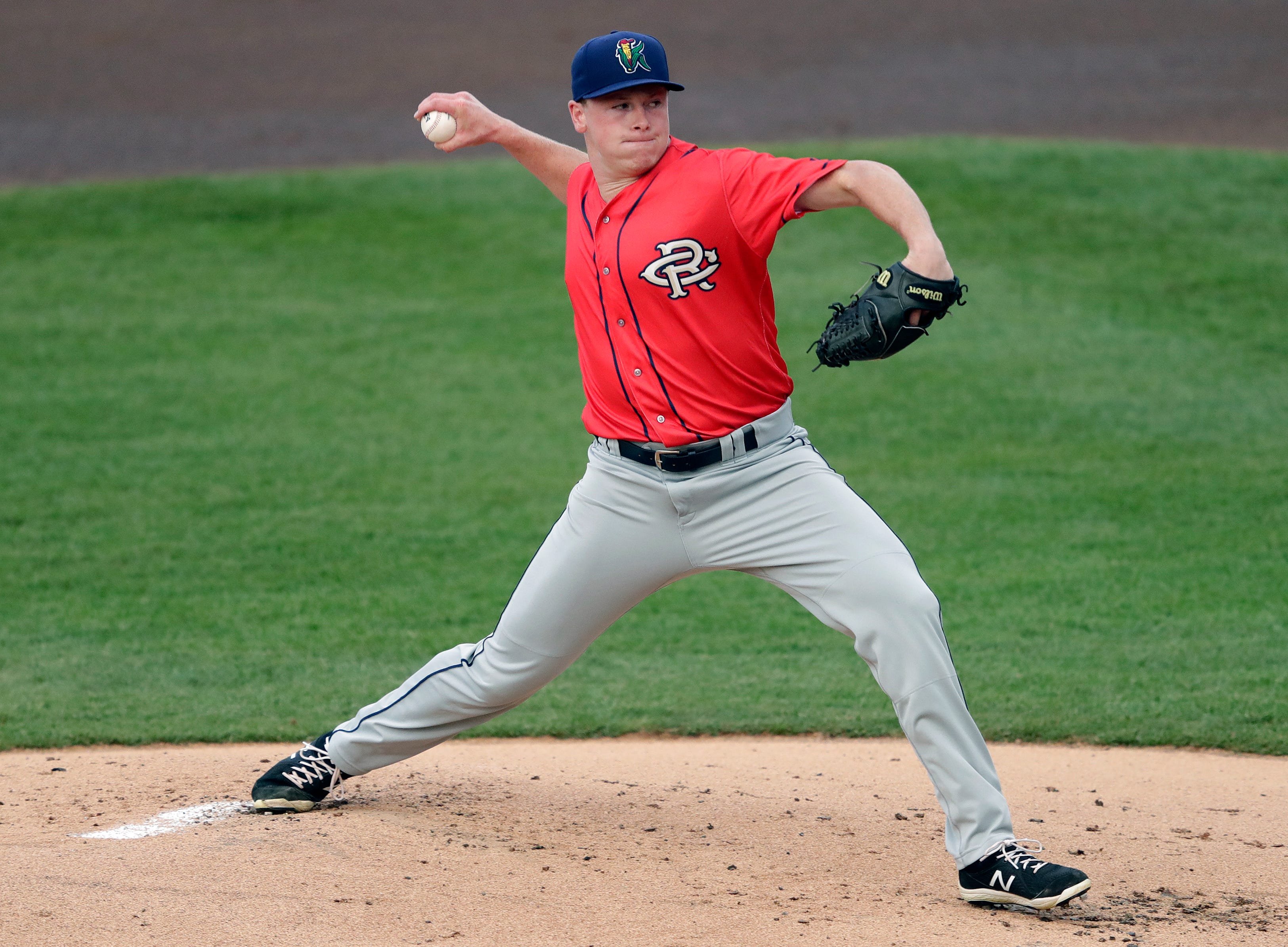 Although most pitching prospects begin their minor league careers as starters, many of them eventually wind up in the bullpen at the MLB level. The Minnesota Twins are very familiar with how this transition can lead to a fruitful career with the likes of Joe Nathan, Glen Perkins, and, more recently, Tyler Duffey doing so under their watch. The Twins currently have a multitude of pitching prospects who are knocking on the door to the majors, but it is unlikely that all of them will stick as starters. Below are five names who could not only make the switch to the pen, but may ultimately perform well in the closer role. RHP JHOAN DURAN 2021 stats (Triple-A): 5 G, 4 GS, 16 IP, 5.06 ERA, 3.86 FIP, 22 K, 13 BB, 16.7% HR/FB Duran has, without a doubt, the most electric raw stuff in the Twins' farm system. He regularly hits 100 mph with his 4-seam fastball, which pairs well with his splitter-sinker hybrid (low-90s) and curveball (mid-80s). However, his poor command and right upper-extremity injury history may limit the overall height of his ceiling; he’s only ever thrown more than 70 innings in a season once. There are many similarities between Duran and former Twin Brusdar Graterol, so it would not be surprising to see their careers take indistinguishable paths. Graterol was solid out of the pen for the Los Angeles Dodgers in 2021, though he functioned more as a set-up man than a closer. A shift to the bullpen may be in Duran — and the Twins' — best interests in the short and long-term. RHP LOUIE VARLAND 2021 stats (Low-/High-A): 20 G, 18 GS, 103 IP, 2.10 ERA, 2.34/3.20 FIP, 142 K, 30 BB, 6.9%/5.8% HR/FB The Twins' 2021 Minor League Pitcher of the Year burst forth out of obscurity this past summer on the back of a fastball that jumped in average velocity from the low-90s while at Division II Concordia University, St. Paul to the mid- to upper-90s with above average spin. He also owns a biting curveball that plays well down in the zone, feeding off the dominance of his fastball up. However, he lacks a third pitch and, despite low walk numbers, occasionally struggles with command, particularly that of his breaking ball. Varland will likely stick in a starting role as he advances through the minor leagues, but unless he develops a third offering or cleans up his curveball, his future may be as a back of the bullpen ace. The Twins have had previous success with closers from St. Paul, after all. RHP OSIRIS GERMAN 2021 stats (Low-/High-A): 38 G, 0 GS, 4 SV, 59 1/3 IP, 3.34 ERA, 3.14/2.69 FIP, 90 K, 24 BB, 12.5%/4.5% HR/FB At just 23 years old, German is still at least a couple of years away from sniffing the majors, but it’s easy to see why he is highly thought of after watching just a couple of pitches. German has that undefinable, yet important electricity that many of the game’s best bullpen arms possess. While his fastball pops out of the hand and plays well up in the zone, it’s his breaking ball that is the star of his show. What may prevent German from reaching his potential, however, is his erraticism and high-effort delivery. German doesn’t possess good command of either his fastball or curve, often overthrowing both. From a mechanics perspective, doesn’t get enough push off from his lower extremity which causes him to rely on the whipping action of his core and shoulder to produce torque and velocity German is the perfect candidate for a tweak in his delivery as well as the development of a third pitch (perhaps a cutter?). If he can hone his command, his stuff is good enough to reach the majors. RHP COLE SANDS 2021 stats (Double-A): 19 G, 18 GS, 80 1/3 IP, 2.46 ERA, 3.55 FIP, 96 K, 35 BB, 7.2% HR/FB Sands was among the Twins’ most steady minor league starting pitchers in 2021. He consistently pitched until at least the fifth inning and racked up strikeouts with the best in the system, ranking ninth overall. The former Florida State Seminole has a three pitch mix consisting of a fastball, curve, and changeup, though only his breaking ball is currently an above average offering. (His fastball is close, and may already be there, depending on whose opinion you seek.) In many respects, Sands is a carbon copy of current Twins’ reliever Tyler Duffey, who has been among the team's more consistent bullpen arms over the past couple of seasons. Sands currently may lack an electric fastball — which is often a requirement among back of the bullpen arms — but his curveball and punch out pedigree is intriguing. HIBERNATION CANDIDATE: LHP AARON ROZEK 2021 stats (Rookie Ball through Double-A): 16 G, 7 GS, 56 1/3 IP, 2.40 ERA, 0.81/2.48/4.40/2.15 FIP, 74 K, 7 BB, 0.0%/14.3%/18.2%/0.0% HR/FB Rozek came out of nowhere during the 2021 season. The Burnsville native and Minnesota State University, Mankato alum signed with the Twins on a minor league deal in late June before proceeding to pitch to great success across four levels of play. (He had never played in the minors prior to his signing, though he did play Indy Ball during 2019.) Rozek possesses two breaking pitches — a slider and a loopier slurve — which he uses primarily as his out pitches as well as a a fastball, though it is rather mediocre. At age 26 with less than one season of MiLB experience under his belt, the likelihood Rozek ever makes it to the parent squad is slim. Add in the fact that he is left-handed and doesn’t possess an elite fastball, and the odds of him ever being a closer are nearly nil. But for an undrafted free agent from an NCAA Division II school, he displayed plenty of talent that should pique the interest of Twins’ fans. MORE FROM TWINS DAILY — Latest Twins coverage from our writers — Recent Twins discussion in our forums — Follow Twins Daily via Twitter, Facebook or email — Read more of Lucas's minor league prospect coverage here
- 9 comments
-
- 7
-
-
- jhoan duran
- cole sands
- (and 3 more)
-
If there was any solace to be found in the Minnesota Twins’ 2021 season it was due to the metamorphosis many of their starting pitching prospects underwent. Louie Varland blossomed from a 2019 15th round pick out of NCAA Division II Concordia University, St. Paul into the franchise’s Minor League Pitcher of the Year; Matt Canterino and Blayne Enlow performed exceptionally when not beset by arm injuries; and many, including Cole Sands and Joe Ryan, outperformed even their rosiest pre-season projections. But of all the pitching prospects who prospered, it was Josh Winder emerged from his developmental chrysalis first, setting the tone for what was to come early in the season. Image courtesy of Seth Stohs, Twins Daily If there was any solace to be found in the Minnesota Twins’ 2021 season it was due to the metamorphosis many of their starting pitching prospects underwent. Louie Varland blossomed from a 2019 15th round pick out of NCAA Division II Concordia University, St. Paul into the franchise’s Minor League Pitcher of the Year; Matt Canterino and Blayne Enlow performed exceptionally when not beset by arm injuries; and many, including Cole Sands and Joe Ryan, outperformed even their rosiest pre-season projections. But of all the pitching prospects who prospered, it was Josh Winder emerged from his developmental chrysalis first, setting the tone for what was to come early in the season. Winder, a right-hander whom the Twins’ selected with their 7th round pick during the 2018 draft out of the Virginia Military Institute, stands at a robust 6’5” with an athletic 210 pound frame. A quick worker on the mound, Winder possesses a smooth, repeatable motion and utilizes a three-quarter arm slot for every pitch in his arsenal. He’s a traditional four-pitch pitcher and primarily relied on his 4-seam fastball up in the zone to get ahead in the count before unleashing a bevy of sliders, curveballs, and changeups to keep batters on their toes. His fastball sat 94-96 mph for the majority of his season — which he split between Double- (54 2/3 innings) and Triple-A (17 1/3 innings) — before tailing off to 91-96 mph by the end of the season. (Of note: He did not appear in another game after his start on July 21 due to right shoulder impingement/fatigue.) Winder’s slider typically sat in the mid-80s and featured a sharp downward break in the 1-to-7 o’clock direction. It played well off of his fastball, flying towards the plate in the same tunnel when his command was on. However, it was arguably the concurrent development of his changeup and fastball that leveled up Winder from a mid-tier prospect to inside the Twins’ top 10. Winder’s average fastball velocity increased from the low-90s during his college days into the mid-90s, which caused a greater differential between the speed of his heater and off-speed stuff. Winder, who turned 25 years old this past October, excelled at Double-A Wichita (2.84 FIP, 31.3% K rate, 4.8% BB rate, 0.82 HR/9), which resulted in a late-June promotion to Triple-A St. Paul and an appearance in the 2021 Futures Game during the All-Star break. However, after a dominant debut in which he struck out eight Omaha hitters and allowed only one run in 5 2/3 innings, Winder struggled during his final three starts, serving up four home runs, allowing eight earned runs, and striking out only seven in 11 2/3 innings. Winder’s downtick in performance was due to both a loss of velocity across his arsenal as well as iffy command, both of which were likely the result of his shoulder injury. However, even prior to being shut down, Winder’s command was no better than average at best. Although he rarely issues free passes (i.e. he has good control, always pitching in or near the strike zone), his ability to place the ball where he wants, particularly with his curveball, requires more seasoning. All told, Winder likely projects as a starter at the MLB-level and possesses the ceiling of a No. 3 pitcher on a playoff caliber team. As with any pitcher, however, his health, strikeout rate, and home run rate will play key roles in determining if he ever reaches his apex. There is a lot to like about Winder’s game, and while the comparison is far from perfect, it’s possible that he has a similar career to that of former Twin Scott Baker. MORE FROM TWINS DAILY — Latest Twins coverage from our writers — Recent Twins discussion in our forums — Follow Twins Daily via Twitter, Facebook, or email — Read more from Lucas here View full article
