



Lucas Seehafer PT
-
Posts
525 -
Joined
-
Last visited
-
Days Won
2
Content Type
Profiles
News
Minnesota Twins Videos
2026 Minnesota Twins Top Prospects Ranking
2022 Minnesota Twins Draft Picks
Minnesota Twins Free Agent & Trade Rumors, Notes, & Tidbits
Guides & Resources
2023 Minnesota Twins Draft Picks
The Minnesota Twins Players Project
2024 Minnesota Twins Draft Picks
2025 Minnesota Twins Draft Pick Tracker
2026 Minnesota Twins Draft Tracker: Picks & Bonuses
Forums
Blogs
Events
Store
Downloads
Gallery
Everything posted by Lucas Seehafer PT
-
 I suppose there is always a chance, but Martin is more than holding his own at Double-A at the moment. I think Woods Richardson will only get set down to High-A if he really struggles. I think there's an argument to be made that he's currently better suited for High-A. BUT, he crush Double-A competition during his first 6 starts. His last 5 were rough as he struggled with command, which was not something that was an issue before.
 -
Simeon Woods Richardson has been activated by the Wind Surge. Will be fun to see him pitch again soon.
-
Thanks! As of right now, my plan is to do this every Wednesday, at least until the season ends. I'm going to hedge a bit and say that your portrayal is both accurate and inaccurate. I think it's accurate in the sense that the lack of depth at SS in the system is something that the front office can be mildly criticized for. However, I think it's also inaccurate because "pure" shortstops are exceedingly rare, especially ones that can hit. It's why the Lindor's, Baez's, Story's, Franco's, etc. are so highly sought after once they reach the majors. Frankly, it's easier to go get one on the open market than it is to find one in high school/college and develop them. If your team develops one shortstop who is above average in the field and at the plate, well, that's an All-Star caliber talent and ideally you only need one of those every 7-10 years. That said, I do think it would be wise for the Twins to look heavily at shortstop during the draft next year. They like to take toolsy high schoolers with good hit tools and college boppers. They'll have a selection around pick 5 or so. They should be in position to grab a guy that could develop into a full-time SS. If they can't, they may try to continue to fish around in the FA market or hope that Lewis can stick there.
-
To a degree, I'm sure it is. I also think that the Twins being comfortably out of contention has impacted this as well. Maybe if the team was doing better, they'd be more willing to call on Jovani Moran and Ian Hamilton rather than Juan Minaya, Beau Burrows, etc. But at this point, there isn't a ton of reason to bring them up right now. I think they will before the season concludes, but why not let them get more seasoning in Triple-A then try them for a couple weeks in September before handing them the reigns next spring.
-
Unfortunately, Low-A games are incredibly difficult to watch because they generally aren't streamed by MiLB.tv, so I haven't gotten to see much of him beyond his stats. That said, his strikeout and walk numbers are encouraging. Despite getting 7 starts to date, he's only thrown 21 1/3 innings. The Mighty Mussels don't really use traditional starters, focusing more on volume of pitchers rather than going for distance into the game. He's also 23. So, basically, this is a long winded way of saying that he's probably a bullpen guy in the long run, but I'll be interested to watch him more once he reaches High-A.
-
I do think that the Twins will try to keep their workload relatively light. Basically, I don't think they'll often be extended beyond 5 or 6 innings and I could see them being skipped every now and then to give Randy Dobnak and Lewis Thorpe a turn.
-
I think the biggest faller is probably Aaron Sabato, though others such as Misael Urbina are right there as well. My justification is basically that the track record for athletes who have struggled as much offensively as they have at Low-A isn't great. You won't see many people who put up similar numbers reach the majors and if they do, they're short-career bit players. As far as the biggest riser, I really like the seasons that Louie Varland and Jermaine Palacios have put together. I think they've both performed much better than was expected of them. Also a bunch of the bullpen arms at Double-A like Jordan Gore have gone from no-namers to potential bullpen arms. However, I think one name to keep an eye on as the season progresses is Yunior Severino. Right now, he's tearing up High-A after performing decently at Low-A. It's easy to forget that he's only 21 and has a somewhat rocky start to his minor league career. He may never live up to the hype surrounding him when he signed, but I think things are starting to click for him.
-
Without a doubt Jose Miranda. He's been so fun to watch. He's not flashy, but he's smooth in the field and a killer at the plate. As far as raw impressiveness, though, watching Jhoan Duran in his first start off the IL was incredibly fun. Pumping a legit 100 mph and making batters look foolish. If only he could have stayed healthy...
-
I doubt we see any of the pitchers take the mound this summer, particularly the college guys. I'd think some of the bats will get work at the FCL and Fall League. As for Raya, I don't have any info.
-
By definition, if a prospect is Rule-5 eligible, the team has determined that they don't necessarily have much of a future on the team. If a prospect is Rule-5 eligible, it basically tanks their value because why would a team trade for them when they could just draft him or someone they think is equally talented. Now if the question is "What under the radar Twins prospect would fetch the most in return?" I'd probably say someone like Trey Cabbage. He hits dingers and has shown a more refined approach at the plate. Still strikes out a ton, but his overall numbers didn't drop at all with a promotion to Double-A.
-
If you would've asked me this a week ago, I probably would have said Josh Winder, but I think something we're starting to see now is that the minor league guys are starting to really feel the effects of not pitching in games last year. I'm not as convinced that we'll see the Winders, Balazovics, etc. up with the Twins as I was even two weeks ago. Maybe we see Joe Ryan and/or Drew Strotman get a brief look. Honestly, I think the best bets to get extended looks are Lewis Thorpe and Randy Dobnak. Not a fun answer, but the more realistic, imo.
-
Submit your Q's and I'll submit A's.
-
I think the big difference, and you probably picked up on this in my writing above, between 26-30 group and the 21-25 group is that the latter has much more variance in their games. The guys in 26-30 probably have lower floors and lower ceilings, but the guys in the 21-25 group could become legit MLB contributors if things go there way. A few may make it to the majors even if they hit bumps in the road. Personally I would swap Sabato and Moran between the two groups, but as you said, nitpicking prospects ranked 21-30 is a little degenerate lol.
-
He's athletic enough, for sure. I'm less than convinced about his bat. His overall numbers are pretty similar to what he put up in 2019. His OPS is currently below .700 despite putting up double-digit doubles, home runs, and nine triples. He strikes out way too much and doesn't walk enough or hit enough singles to make up for it. He's still young, he's only 22, but he also suffers from a similar issue as Sabato. Not many players with his track record...so on and so forth.
- 33 replies
-
- 2
-

-
- chris vallimont
- louis varland
- (and 3 more)
-
Sabato's performance has been disappointing, but it should be remembered that in many ways the MLB draft is much more of a crapshoot than the other major drafts. I forget the specific analysis, but essentially after the first overall pick, the odds of selecting an All-Star level player drops precipitously. If I recall, Sabato was similarly comped to Rooker, who was the 35th pick, coming out of the draft. At the point, Rooker is pretty much the consummate Quad-A player. Maybe Sabato gets there, but he was never a sure thing to be an MLB player.
- 33 replies
-
- 1
-
-
- chris vallimont
- louis varland
- (and 3 more)
-
Definitely something we can consider. I do think that part of the problem though, as you indicated, is that there really isn't a true shortstop in the system. I think the guy with the best shot to stick at the position in the long-term is Noah Miller, but he's an 18-year-old. Austin Martin is pretty extended there based on what I've seen, but could cover in spells. We'll see what Lewis is like once he gets back from injury.
- 33 replies
-
- 4
-
-
- chris vallimont
- louis varland
- (and 3 more)
-
In full transparency, when we voted I initially left Sabato off my top 30, but then slotted him in at 30 after I had to remove Ober. As I wrote above, there just isn't a good track record for prospects putting up the numbers he has in the low minors in the long-term.
- 33 replies
-
- 4
-
-
- chris vallimont
- louis varland
- (and 3 more)
-
25-21.png.77ceb5ad20eab073144192d3809e9212.png) 25. RHP Chris Vallimont (24-years-old) Season Stats (High-A + Double-A): 4-4, 4.76 ERA, 64 1/3 IP, 102 K, 40 BB, 6 HR Previous Rankings: 2021 Midseason: 20, 2021 Preseason: NR Chris Vallimont has the physical profile of a modern day pitcher. He stands nearly 6-foot-6-inches tall with an athletic 220 pound frame that he uses to generate fastballs in the mid-90s to go along with a hammer curve (as well as the occasional slider and changeup). When he's on, there's a strong argument to be made that he has some of the most dynamic stuff in the Twins' system. However, he is a bit of an enigma. His peripheral numbers suggest that he is a better pitcher than what the surface-level stats say, the main anchor dragging him down being his walks. If he hones his command, it's not out of the realm of possibility that he develops into, say, a No. 3 starter. If he doesn't, he may wind up in the bullpen long-term. There are few prospects in the Twins' system with more future outcome variance than Vallimont. 24: RHP Louie Varland (23-years-old) Season Stats (Low-A + High-A): 6-2, 1.70 ERA, 69 IP, 98 K, 25 BB, 2 HR Previous Rankings: 2021 Midseason: Honorable Mention, 2021 Preseason: NR Louie Varland is one of those Twins prospects who has shot up the rankings this season due to sustained dominance. Varland was an unknown prospect when the Twins selected him in the 15th round of the 2019 draft out of Concordia-St. Paul. He started out the 2021 season with the Low-A Fort Myers Mighty Mussels before earning a promotion to the High-A Cedar Rapids Kernels where he rattled off nearly 20 straight innings of scoreless ball to begin his run at that level. Varland primarily relies on a fastball-curveball pitch mix. His fastball plays well both up and low in the zone; it presents with decent rise when elevated and greater sinking action when down. His most likely future role is as a reliever, but he has the raw stuff — and performance, to this point — to suggest he'll be effective in the high minors and, possibly, the big leagues. 23: UTIL Nick Gordon (25-years-old) Season Stats (MLB): .250/.301/.333, 37 G, 3 2B, 3 3B, 1 HR, 5 RBI, 5 SB, 26/5 K:BB Previous Rankings: 2021 Midseason: NR, 2021 Preseason: NR To say that Nick Gordon was an after thought on the minds of Twins' fans entering the 2021 season would be an understatement. However, a strong showing at Triple-A combined with a fast start when promoted to the parent squad quickly got him back into people's minds. Gordon primarily played shortstop in the minors; however, the rash of injuries suffered by Twins' outfielders thrust Gordon into some minutes in centerfield. While he didn't provide Gold Glove caliber defense, he did show enough to suggest that he may have a brighter future as a true utility man than most thought. Gordon doesn't do anything great, but also doesn't do anything well-below average. He may not be an everyday-type of player, but he should find himself with a role in the majors — though perhaps ultimately not with the Twins — for years to come. 22: 1B/DH Aaron Sabato (22-years-old) Season Stats (Low-A): .181/.365/.309, 75 G, 13 2B, 6 HR, 32 RBI, 101/67 K:BB Previous Rankings: 2021 Midseason: 9, 2021 Preseason: 8 The tale of Aaron Sabato is virtually the opposite of that of Varland and Gordon. Sabato was known as a bopper with a good eye at the plate when the Twins selected him with the 27th overall pick in the 2020 draft but so far only his peepers have translated. Sabato has struggled to keep pace with Low-A pitching. His strikeout numbers are through the roof and his power has evaporated compared to what he displayed while with the Tar Heels. To put it bluntly, not many minor leaguers have struggled as much as he has to date and proceeded to carve out a productive major league career. Sabato's walk totals are encouraging, but he needs to show more the rest of the way. 21: INF Edouard Julien (22-years-old) Season Stats (Low-A + High-A): .251/.423/.449, 78 G, 21 2B, 1 3B, 10 HR, 47 RBI, 25 SB, 98/73 K:BB Previous Rankings: 2021 Midseason: Honorable Mention, 2021 Preseason: NR Alright, back to being positive. Edouard Julien is an on-base machine with some pop who has displayed the ability to play multiple positions defensively, though he is probably best at second base. He's also stolen far more bases this year than many thought possible when he came out of Auburn University. Julien's overall productivity has declined some since his promotion to Cedar Rapids — and, thus, the removal of Robo-umps — however, he has done more than enough to justify his placement on this list. Not bad for a former 18th round pick. What do you think of this set of five prospects? Future big-leaguers? MORE FROM TWINS DAILY — Latest Twins coverage from our writers — Recent Twins discussion in our forums — Follow Twins Daily via Twitter, Facebook or email
25. RHP Chris Vallimont (24-years-old) Season Stats (High-A + Double-A): 4-4, 4.76 ERA, 64 1/3 IP, 102 K, 40 BB, 6 HR Previous Rankings: 2021 Midseason: 20, 2021 Preseason: NR Chris Vallimont has the physical profile of a modern day pitcher. He stands nearly 6-foot-6-inches tall with an athletic 220 pound frame that he uses to generate fastballs in the mid-90s to go along with a hammer curve (as well as the occasional slider and changeup). When he's on, there's a strong argument to be made that he has some of the most dynamic stuff in the Twins' system. However, he is a bit of an enigma. His peripheral numbers suggest that he is a better pitcher than what the surface-level stats say, the main anchor dragging him down being his walks. If he hones his command, it's not out of the realm of possibility that he develops into, say, a No. 3 starter. If he doesn't, he may wind up in the bullpen long-term. There are few prospects in the Twins' system with more future outcome variance than Vallimont. 24: RHP Louie Varland (23-years-old) Season Stats (Low-A + High-A): 6-2, 1.70 ERA, 69 IP, 98 K, 25 BB, 2 HR Previous Rankings: 2021 Midseason: Honorable Mention, 2021 Preseason: NR Louie Varland is one of those Twins prospects who has shot up the rankings this season due to sustained dominance. Varland was an unknown prospect when the Twins selected him in the 15th round of the 2019 draft out of Concordia-St. Paul. He started out the 2021 season with the Low-A Fort Myers Mighty Mussels before earning a promotion to the High-A Cedar Rapids Kernels where he rattled off nearly 20 straight innings of scoreless ball to begin his run at that level. Varland primarily relies on a fastball-curveball pitch mix. His fastball plays well both up and low in the zone; it presents with decent rise when elevated and greater sinking action when down. His most likely future role is as a reliever, but he has the raw stuff — and performance, to this point — to suggest he'll be effective in the high minors and, possibly, the big leagues. 23: UTIL Nick Gordon (25-years-old) Season Stats (MLB): .250/.301/.333, 37 G, 3 2B, 3 3B, 1 HR, 5 RBI, 5 SB, 26/5 K:BB Previous Rankings: 2021 Midseason: NR, 2021 Preseason: NR To say that Nick Gordon was an after thought on the minds of Twins' fans entering the 2021 season would be an understatement. However, a strong showing at Triple-A combined with a fast start when promoted to the parent squad quickly got him back into people's minds. Gordon primarily played shortstop in the minors; however, the rash of injuries suffered by Twins' outfielders thrust Gordon into some minutes in centerfield. While he didn't provide Gold Glove caliber defense, he did show enough to suggest that he may have a brighter future as a true utility man than most thought. Gordon doesn't do anything great, but also doesn't do anything well-below average. He may not be an everyday-type of player, but he should find himself with a role in the majors — though perhaps ultimately not with the Twins — for years to come. 22: 1B/DH Aaron Sabato (22-years-old) Season Stats (Low-A): .181/.365/.309, 75 G, 13 2B, 6 HR, 32 RBI, 101/67 K:BB Previous Rankings: 2021 Midseason: 9, 2021 Preseason: 8 The tale of Aaron Sabato is virtually the opposite of that of Varland and Gordon. Sabato was known as a bopper with a good eye at the plate when the Twins selected him with the 27th overall pick in the 2020 draft but so far only his peepers have translated. Sabato has struggled to keep pace with Low-A pitching. His strikeout numbers are through the roof and his power has evaporated compared to what he displayed while with the Tar Heels. To put it bluntly, not many minor leaguers have struggled as much as he has to date and proceeded to carve out a productive major league career. Sabato's walk totals are encouraging, but he needs to show more the rest of the way. 21: INF Edouard Julien (22-years-old) Season Stats (Low-A + High-A): .251/.423/.449, 78 G, 21 2B, 1 3B, 10 HR, 47 RBI, 25 SB, 98/73 K:BB Previous Rankings: 2021 Midseason: Honorable Mention, 2021 Preseason: NR Alright, back to being positive. Edouard Julien is an on-base machine with some pop who has displayed the ability to play multiple positions defensively, though he is probably best at second base. He's also stolen far more bases this year than many thought possible when he came out of Auburn University. Julien's overall productivity has declined some since his promotion to Cedar Rapids — and, thus, the removal of Robo-umps — however, he has done more than enough to justify his placement on this list. Not bad for a former 18th round pick. What do you think of this set of five prospects? Future big-leaguers? MORE FROM TWINS DAILY — Latest Twins coverage from our writers — Recent Twins discussion in our forums — Follow Twins Daily via Twitter, Facebook or email- 33 comments
-
- 6
-
-
- chris vallimont
- louis varland
- (and 3 more)
-
On Monday, Twins Daily revealed prospects 26-30 in our post-draft and trade deadline updated rankings. We continue today with prospects 21-25. Image courtesy of Ed Bailey, Wichita Wind Surge On Monday, Twins Daily revealed prospects 26-30 in our post-draft and trade deadline updated rankings. We continue today with prospects 21-25. 25. RHP Chris Vallimont (24-years-old) Season Stats (High-A + Double-A): 4-4, 4.76 ERA, 64 1/3 IP, 102 K, 40 BB, 6 HR Previous Rankings: 2021 Midseason: 20, 2021 Preseason: NR Chris Vallimont has the physical profile of a modern day pitcher. He stands nearly 6-foot-6-inches tall with an athletic 220 pound frame that he uses to generate fastballs in the mid-90s to go along with a hammer curve (as well as the occasional slider and changeup). When he's on, there's a strong argument to be made that he has some of the most dynamic stuff in the Twins' system. However, he is a bit of an enigma. His peripheral numbers suggest that he is a better pitcher than what the surface-level stats say, the main anchor dragging him down being his walks. If he hones his command, it's not out of the realm of possibility that he develops into, say, a No. 3 starter. If he doesn't, he may wind up in the bullpen long-term. There are few prospects in the Twins' system with more future outcome variance than Vallimont. 24: RHP Louie Varland (23-years-old) Season Stats (Low-A + High-A): 6-2, 1.70 ERA, 69 IP, 98 K, 25 BB, 2 HR Previous Rankings: 2021 Midseason: Honorable Mention, 2021 Preseason: NR Louie Varland is one of those Twins prospects who has shot up the rankings this season due to sustained dominance. Varland was an unknown prospect when the Twins selected him in the 15th round of the 2019 draft out of Concordia-St. Paul. He started out the 2021 season with the Low-A Fort Myers Mighty Mussels before earning a promotion to the High-A Cedar Rapids Kernels where he rattled off nearly 20 straight innings of scoreless ball to begin his run at that level. Varland primarily relies on a fastball-curveball pitch mix. His fastball plays well both up and low in the zone; it presents with decent rise when elevated and greater sinking action when down. His most likely future role is as a reliever, but he has the raw stuff — and performance, to this point — to suggest he'll be effective in the high minors and, possibly, the big leagues. 23: UTIL Nick Gordon (25-years-old) Season Stats (MLB): .250/.301/.333, 37 G, 3 2B, 3 3B, 1 HR, 5 RBI, 5 SB, 26/5 K:BB Previous Rankings: 2021 Midseason: NR, 2021 Preseason: NR To say that Nick Gordon was an after thought on the minds of Twins' fans entering the 2021 season would be an understatement. However, a strong showing at Triple-A combined with a fast start when promoted to the parent squad quickly got him back into people's minds. Gordon primarily played shortstop in the minors; however, the rash of injuries suffered by Twins' outfielders thrust Gordon into some minutes in centerfield. While he didn't provide Gold Glove caliber defense, he did show enough to suggest that he may have a brighter future as a true utility man than most thought. Gordon doesn't do anything great, but also doesn't do anything well-below average. He may not be an everyday-type of player, but he should find himself with a role in the majors — though perhaps ultimately not with the Twins — for years to come. 22: 1B/DH Aaron Sabato (22-years-old) Season Stats (Low-A): .181/.365/.309, 75 G, 13 2B, 6 HR, 32 RBI, 101/67 K:BB Previous Rankings: 2021 Midseason: 9, 2021 Preseason: 8 The tale of Aaron Sabato is virtually the opposite of that of Varland and Gordon. Sabato was known as a bopper with a good eye at the plate when the Twins selected him with the 27th overall pick in the 2020 draft but so far only his peepers have translated. Sabato has struggled to keep pace with Low-A pitching. His strikeout numbers are through the roof and his power has evaporated compared to what he displayed while with the Tar Heels. To put it bluntly, not many minor leaguers have struggled as much as he has to date and proceeded to carve out a productive major league career. Sabato's walk totals are encouraging, but he needs to show more the rest of the way. 21: INF Edouard Julien (22-years-old) Season Stats (Low-A + High-A): .251/.423/.449, 78 G, 21 2B, 1 3B, 10 HR, 47 RBI, 25 SB, 98/73 K:BB Previous Rankings: 2021 Midseason: Honorable Mention, 2021 Preseason: NR Alright, back to being positive. Edouard Julien is an on-base machine with some pop who has displayed the ability to play multiple positions defensively, though he is probably best at second base. He's also stolen far more bases this year than many thought possible when he came out of Auburn University. Julien's overall productivity has declined some since his promotion to Cedar Rapids — and, thus, the removal of Robo-umps — however, he has done more than enough to justify his placement on this list. Not bad for a former 18th round pick. What do you think of this set of five prospects? Future big-leaguers? MORE FROM TWINS DAILY — Latest Twins coverage from our writers — Recent Twins discussion in our forums — Follow Twins Daily via Twitter, Facebook or email View full article
-
I believe that Canterino has the secondary stuff to remain a starter. Varland on the other hand is more likely to wind up in the bullpen. That said, there really isn't a huge need to fast track them to the majors at this point. Neither saw action last year and had limited looks the year before. May as well keep them starting until they show that they can't be effective in that role anymore.
- 26 replies
-
- 2
-
-
- cole sands
- yunior severino
- (and 1 more)
-
He's fine, but I don't think he'll stick there long-term. Lacks some range and doesn't have the athleticism to make up for it. I'd wager he's more of a second baseman in the long-term.
- 26 replies
-
- 1
-
-
- cole sands
- yunior severino
- (and 1 more)
-
*A LOT* of pitchers threw today and not very many hitters contributed hits of consequence. *A LOT* of pitchers threw today and not very many hitters contributed hits of consequence. TRANSACTIONS RHP Matt Canterino assigned to Low-A Fort Myers on rehab assignment LHP Lewis Thorpe activated from IL, assigned to Triple-A St. Paul Saints Sentinel Louisville 4, St. Paul 3 Box Score SP: Lewis Thorpe: 2 ⅔ IP, 4 H, 1 R, 1 ER, 0 BB, 1 K HR: None Multi-hit games: Mark Contreras: 2-for-3, 2B, BB Jose Miranda’s incredible streak has come to an end. The highly-touted Twins prospect went 0-for-5 on the day and did not reach base, marking the first time this has happened during his 35 games at Triple-A. Mark Contreras contributed the team’s only multi-hit game while Gilberto Celestino, Ben Rortvedt, and Drew Stankiewicz all drove in an RBI. Lewis Thorpe got the start after being activated from the IL. He looked every bit as much as the Lewis Thorpe we saw earlier in the season; fastball in the upper-80s, touching 90, with decent secondary stuff. Jovani Moran, Yennier Cano, and Kyle Barraclough combined for 5 ⅔ innings of scoreless ball and struck out five. Wind Surge Wisdom Wichita 5, Midland 2 Box Score SP: Cole Sands: 5 IP, 3 H, 1 R, 1 ER, 1 BB, 5 K HR: None Multi-hit games: Austin Martin: 3-for-4; Roy Morales: 2-for-4, 2B; Jermaine Palacios: 2-for-4, 2B, 2 RBI Cole Sands started his second game of the week and quickly settled into a groove after allowing a solo home run in the first inning. He surrendered only two more hits the rest of the way and struck out five en route to picking up the win. Zach Neff and Chris Nunn combined to throw the final four innings, striking out four and allowing one run. Austin Martin continued his hot streak since joining the Twins by picking up three hits in four at-bats as the DH. Martin is slashing .400/.571/.500 with two doubles, six walks, and only a single strikeout since being traded. Jermaine Palacios picked up his 12th double of the season and improved his OPS to .818, further cementing his argument for a promotion. Kernels Nuggets Quad Cities 7, Cedar Rapids 5 Box Score SP: Cody Lawyerson: 2 ⅔ IP, 6 H, 4 R, 4 ER, 3 BB, 3 K HR: Wander Javier (10) Multi-hit games: Yunior Severino: 4-for-5, RBI Seven of the nine Kernels that came to the plate on Sunday afternoon picked up hits, but only Yunior Severino grabbed more than one. The 21-year-old formerly-hyped prospect has been en fuego since being called up to High-A, having accumulated a .375 batting average and .944 OPS in 11 games. Fellow formerly-hyped prospect Wander Javier contributed his 10th home run of the season. On the mound, it was yet another group effort. Cody Lawyerson started, but was removed in the third inning after being roughed up. Ryan Shreve, Osiris German, Erik Manoah, Jr., and Derek Molina finished the game, but served up three more runs. As a group, the Kernels struckout seven and walked three. Mussel Matters Dunedin 3, Fort Myers 0 Box Score SP: Matt Canterino: 2 IP, 0 H, 0 R, 0 ER, 0 BB, 2 K HR: None Multi-hit games: None The Mighty Mussels must have had tomorrow’s off-day on their mind as they managed only a single hit — a single by Jesus Feliz — and struck out 13 times collectively during their loss to the Blue Jays. On the bright side, pitching prospect Matt Canterino made his first appearance since being shut down with an elbow injury in late May and tossed two perfect innings. Sawyer Gipson-Long came on in relief for Canterino and pitched the next four innings, striking out six while allowing two earned runs; he was ultimately tagged with the loss. Complex Chronicles FCL Twins No Game Scheduled. TWINS DAILY PLAYERS OF THE DAY Twins Daily Minor League Pitcher of the Day – Cole Sands: 5 IP, 3 H, 1 R, 1 ER, 1 BB, 5 K Twins Daily Co-Minor League Hitters of the Day – Austin Martin: 3-for-4; Yunior Severino: 4-for-5, RBI PROSPECT SUMMARY Here’s a look at how the Twins Daily Top 20 Twins Prospects performed: #1 – Royce Lewis (Rehab) – Out for season (torn ACL) #2 – Jhoan Duran (St. Paul) – Injured List (elbow strain) #3 – Jordan Balazovic (Wichita) – Did not pitch #4 – Matt Canterino (Cedar Rapids) – 2 IP, 0 H, 0 R, 0 ER, 0 BB, 2 K (Fort Myers) #5 – Jose Miranda (St. Paul) — 0-for-5 #6 – Keoni Cavaco (Fort Myers) – 0-for-4 #7 – Gilberto Celestino (St. Paul) – 0-for-4, RBI #8 – Josh Winder (St. Paul) – Injured List (Right Shoulder Impingement) #9 – Aaron Sabato (Fort Myers) – 0-for-3, BB #10 – Matt Wallner (Cedar Rapids) – 1-for-5 #11 – Blayne Enlow (Cedar Rapids) – Out for Season (Tommy John surgery) #12 – Bailey Ober (Minnesota) – Did not pitch #13 – Cole Sands (Wichita) – 5 IP, 3 H, 1 R, 1 ER, 1 BB, 5 K #14 – Brent Rooker (Minnesota) – 0-for-4, BB #15 – Misael Urbina (Fort Myers) – 0-for-4 #16 – Spencer Steer (Wichita) – 1-for-4 #17 – Wander Javier (Cedar Rapids) – 1-for-5, HR (10) #18 – Alerick Soularie (FCL Twins) – Did not play #19 – Edwar Colina (Rehab) – Injured List (elbow) #20 – Chris Vallimont (Wichita) – Did not pitch MONDAY’S PROBABLE STARTERS FCL Twins vs. FCL Braves — TBD MORE FROM TWINS DAILY — Latest Twins coverage from our writers — Recent Twins discussion in our forums — Follow Twins Daily via Twitter, Facebook or email — Checkout all of Lucas Seehafer's minor league reports here View full article
-
 TRANSACTIONS RHP Matt Canterino assigned to Low-A Fort Myers on rehab assignment LHP Lewis Thorpe activated from IL, assigned to Triple-A St. Paul Saints Sentinel Louisville 4, St. Paul 3 Box Score SP: Lewis Thorpe: 2 ⅔ IP, 4 H, 1 R, 1 ER, 0 BB, 1 K HR: None Multi-hit games: Mark Contreras: 2-for-3, 2B, BB Jose Miranda’s incredible streak has come to an end. The highly-touted Twins prospect went 0-for-5 on the day and did not reach base, marking the first time this has happened during his 35 games at Triple-A. Mark Contreras contributed the team’s only multi-hit game while Gilberto Celestino, Ben Rortvedt, and Drew Stankiewicz all drove in an RBI. Lewis Thorpe got the start after being activated from the IL. He looked every bit as much as the Lewis Thorpe we saw earlier in the season; fastball in the upper-80s, touching 90, with decent secondary stuff. Jovani Moran, Yennier Cano, and Kyle Barraclough combined for 5 ⅔ innings of scoreless ball and struck out five. Wind Surge Wisdom Wichita 5, Midland 2 Box Score SP: Cole Sands: 5 IP, 3 H, 1 R, 1 ER, 1 BB, 5 K HR: None Multi-hit games: Austin Martin: 3-for-4; Roy Morales: 2-for-4, 2B; Jermaine Palacios: 2-for-4, 2B, 2 RBI Cole Sands started his second game of the week and quickly settled into a groove after allowing a solo home run in the first inning. He surrendered only two more hits the rest of the way and struck out five en route to picking up the win. Zach Neff and Chris Nunn combined to throw the final four innings, striking out four and allowing one run. Austin Martin continued his hot streak since joining the Twins by picking up three hits in four at-bats as the DH. Martin is slashing .400/.571/.500 with two doubles, six walks, and only a single strikeout since being traded. Jermaine Palacios picked up his 12th double of the season and improved his OPS to .818, further cementing his argument for a promotion. Kernels Nuggets Quad Cities 7, Cedar Rapids 5 Box Score SP: Cody Lawyerson: 2 ⅔ IP, 6 H, 4 R, 4 ER, 3 BB, 3 K HR: Wander Javier (10) Multi-hit games: Yunior Severino: 4-for-5, RBI Seven of the nine Kernels that came to the plate on Sunday afternoon picked up hits, but only Yunior Severino grabbed more than one. The 21-year-old formerly-hyped prospect has been en fuego since being called up to High-A, having accumulated a .375 batting average and .944 OPS in 11 games. Fellow formerly-hyped prospect Wander Javier contributed his 10th home run of the season. On the mound, it was yet another group effort. Cody Lawyerson started, but was removed in the third inning after being roughed up. Ryan Shreve, Osiris German, Erik Manoah, Jr., and Derek Molina finished the game, but served up three more runs. As a group, the Kernels struckout seven and walked three. Mussel Matters Dunedin 3, Fort Myers 0 Box Score SP: Matt Canterino: 2 IP, 0 H, 0 R, 0 ER, 0 BB, 2 K HR: None Multi-hit games: None The Mighty Mussels must have had tomorrow’s off-day on their mind as they managed only a single hit — a single by Jesus Feliz — and struck out 13 times collectively during their loss to the Blue Jays. On the bright side, pitching prospect Matt Canterino made his first appearance since being shut down with an elbow injury in late May and tossed two perfect innings. Sawyer Gipson-Long came on in relief for Canterino and pitched the next four innings, striking out six while allowing two earned runs; he was ultimately tagged with the loss. Complex Chronicles FCL Twins No Game Scheduled. TWINS DAILY PLAYERS OF THE DAY Twins Daily Minor League Pitcher of the Day – Cole Sands: 5 IP, 3 H, 1 R, 1 ER, 1 BB, 5 K Twins Daily Co-Minor League Hitters of the Day – Austin Martin: 3-for-4; Yunior Severino: 4-for-5, RBI PROSPECT SUMMARY Here’s a look at how the Twins Daily Top 20 Twins Prospects performed: #1 – Royce Lewis (Rehab) – Out for season (torn ACL) #2 – Jhoan Duran (St. Paul) – Injured List (elbow strain) #3 – Jordan Balazovic (Wichita) – Did not pitch #4 – Matt Canterino (Cedar Rapids) – 2 IP, 0 H, 0 R, 0 ER, 0 BB, 2 K (Fort Myers) #5 – Jose Miranda (St. Paul) — 0-for-5 #6 – Keoni Cavaco (Fort Myers) – 0-for-4 #7 – Gilberto Celestino (St. Paul) – 0-for-4, RBI #8 – Josh Winder (St. Paul) – Injured List (Right Shoulder Impingement) #9 – Aaron Sabato (Fort Myers) – 0-for-3, BB #10 – Matt Wallner (Cedar Rapids) – 1-for-5 #11 – Blayne Enlow (Cedar Rapids) – Out for Season (Tommy John surgery) #12 – Bailey Ober (Minnesota) – Did not pitch #13 – Cole Sands (Wichita) – 5 IP, 3 H, 1 R, 1 ER, 1 BB, 5 K #14 – Brent Rooker (Minnesota) – 0-for-4, BB #15 – Misael Urbina (Fort Myers) – 0-for-4 #16 – Spencer Steer (Wichita) – 1-for-4 #17 – Wander Javier (Cedar Rapids) – 1-for-5, HR (10) #18 – Alerick Soularie (FCL Twins) – Did not play #19 – Edwar Colina (Rehab) – Injured List (elbow) #20 – Chris Vallimont (Wichita) – Did not pitch MONDAY’S PROBABLE STARTERS FCL Twins vs. FCL Braves — TBD MORE FROM TWINS DAILY — Latest Twins coverage from our writers — Recent Twins discussion in our forums — Follow Twins Daily via Twitter, Facebook or email — Checkout all of Lucas Seehafer's minor league reports here
- 26 comments
-
- 4
-
-
- cole sands
- yunior severino
- (and 1 more)
-
Michael Pineda performed well, but Luis Garcia was better as the Minnesota Twins fell to the Houston Astros. Image courtesy of © Thomas Shea | 2021 Aug 7 Michael Pineda performed well, but Luis Garcia was better as the Minnesota Twins fell to the Houston Astros. Box Score Michael Pineda: 6 IP, 7 H, 2 R, 2 ER, 0 BB, 3 K Home Runs: None Bottom 3 WPA: Max Kepler -.105, Trevor Larnach -.105, Jorge Polanco -.092 Win Probability Chart (via FanGraphs) On a scale of “Utter Snoozefest” to “Game 163”, the Twins’ loss to the Astros on Saturday night fell depressingly closer to the former end of the scale than the latter. Minnesota’s bats never gained steam as the team managed to muster a meager four hits, though two went for extra bases as both Brent Rooker and Ryan Jeffers contributed doubles. Houston’s Luis Garcia struckout eight across six innings of work and was followed in dominance by Ryne Stanek, Kendall Graveman, and Ryan Pressly who added four Ks of their own out of the bullpen. Large Michael Pineda continued his recent run of success by tossing six strong innings and allowing two earned runs. His ERA now stands at a more than respectable 3.83. John Gant also pitched well, striking out two of the four batters he faced, increasing his total to seven in his 4 2/3 innings since joining the team. Caleb Thielbar allowed two runs in the eighth inning, but by then the game was already out of the Twins’ reach. That’s pretty much all that happened in this one other than Yordan Alvarez hitting one to Nacogdoches. Luis Arraez pinch hit for Andrelton Simmons, laced a single, and remained in the game after leaving last night with yet another knee injury, so at least that's encouraging. Jake Cave also singled (yay.). The Twins’ record now stands at 47-64 and at least they are one day closer to the end of the season. Postgame Interviews Bullpen Usage Spreadsheet MON TUE WED THU FRI SAT TOT Minaya 0 0 44 0 17 0 61 Gant 0 22 0 0 17 13 52 Thielbar 0 0 22 8 0 20 50 Colomé 0 20 0 7 17 0 44 Coulombe 0 13 0 17 14 0 44 Duffey 0 0 0 21 20 0 41 Alcala 0 0 0 14 14 0 28 Burrows 0 0 13 0 0 0 13 MORE FROM TWINS DAILY — Latest Twins coverage from our writers — Recent Twins discussion in our forums — Follow Twins Daily via Twitter, Facebook or email View full article
-
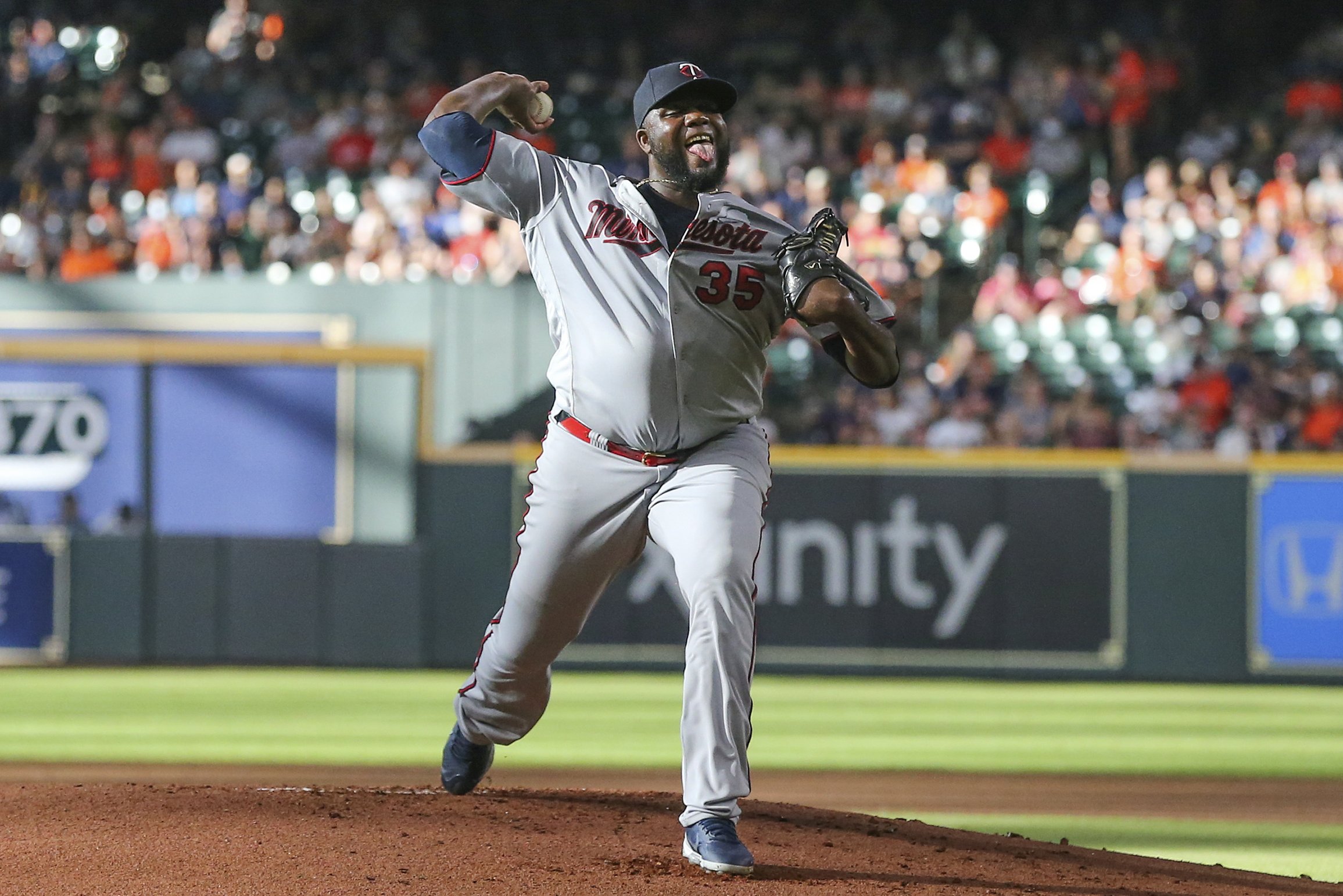 Box Score Michael Pineda: 6 IP, 7 H, 2 R, 2 ER, 0 BB, 3 K Home Runs: None Bottom 3 WPA: Max Kepler -.105, Trevor Larnach -.105, Jorge Polanco -.092 Win Probability Chart (via FanGraphs) On a scale of “Utter Snoozefest” to “Game 163”, the Twins’ loss to the Astros on Saturday night fell depressingly closer to the former end of the scale than the latter. Minnesota’s bats never gained steam as the team managed to muster a meager four hits, though two went for extra bases as both Brent Rooker and Ryan Jeffers contributed doubles. Houston’s Luis Garcia struckout eight across six innings of work and was followed in dominance by Ryne Stanek, Kendall Graveman, and Ryan Pressly who added four Ks of their own out of the bullpen. Large Michael Pineda continued his recent run of success by tossing six strong innings and allowing two earned runs. His ERA now stands at a more than respectable 3.83. John Gant also pitched well, striking out two of the four batters he faced, increasing his total to seven in his 4 2/3 innings since joining the team. Caleb Thielbar allowed two runs in the eighth inning, but by then the game was already out of the Twins’ reach. That’s pretty much all that happened in this one other than Yordan Alvarez hitting one to Nacogdoches. Luis Arraez pinch hit for Andrelton Simmons, laced a single, and remained in the game after leaving last night with yet another knee injury, so at least that's encouraging. Jake Cave also singled (yay.). The Twins’ record now stands at 47-64 and at least they are one day closer to the end of the season. Postgame Interviews Bullpen Usage Spreadsheet MON TUE WED THU FRI SAT TOT Minaya 0 0 44 0 17 0 61 Gant 0 22 0 0 17 13 52 Thielbar 0 0 22 8 0 20 50 Colomé 0 20 0 7 17 0 44 Coulombe 0 13 0 17 14 0 44 Duffey 0 0 0 21 20 0 41 Alcala 0 0 0 14 14 0 28 Burrows 0 0 13 0 0 0 13 MORE FROM TWINS DAILY — Latest Twins coverage from our writers — Recent Twins discussion in our forums — Follow Twins Daily via Twitter, Facebook or email
25-21.png.77ceb5ad20eab073144192d3809e9212.png)
