



Lucas Seehafer PT
-
Posts
525 -
Joined
-
Last visited
-
Days Won
2
Content Type
Profiles
News
Minnesota Twins Videos
2026 Minnesota Twins Top Prospects Ranking
2022 Minnesota Twins Draft Picks
Minnesota Twins Free Agent & Trade Rumors, Notes, & Tidbits
Guides & Resources
2023 Minnesota Twins Draft Picks
The Minnesota Twins Players Project
2024 Minnesota Twins Draft Picks
2025 Minnesota Twins Draft Pick Tracker
2026 Minnesota Twins Draft Tracker: Picks & Bonuses
Forums
Blogs
Events
Store
Downloads
Gallery
Everything posted by Lucas Seehafer PT
-
After three solid but accolade-light seasons at Florida State University, Cole Sands was the Twins' fifth-round pick in the 2018 draft. He catapulted up to Double-A during his first complete minor league season in 2019 after posting gaudy stats at both Low- and High-A, and his success at that level has continued into 2021. Image courtesy of Seth Stohs, Twins Daily After three solid but accolade-light seasons at Florida State University, Cole Sands was the Twins' fifth-round pick in the 2018 draft. He catapulted up to Double-A during his first complete minor league season in 2019 after posting gaudy stats at both Low- and High-A, and his success at that level has continued into 2021. Sands stands tall throughout his delivery and releases the ball from an almost wholly sidearm slot, though the slight tilt of his torso makes it appear as a three-quarters slot to opposing batters. He owns a three-pitch mix consisting of a fastball, curveball, and changeup. His fastball is good, if uninspiring, but his bread and butter pitch is his curveball. (The changeup has potential though he doesn't deploy it nearly as often as the other two.) What makes Sands' curveball so good is its heavy 12-6 break. In the video example above, the curve's movement isn't necessarily anything to write home about; however, as the game marches on and fatigue sets in, it tends to adopt a more significant break. Sands has the raw stuff to be an MLB pitcher, but two aspects of his game will determine whether he will be a starter or come out of the pen: His command and his changeup. As with many of the up-and-coming pitchers in the Twins' system, Sands sometimes struggles with walks while simultaneously boasting substantial strikeout numbers. This summer's 4.15 BB/9 is nearly double any rate he posted before this season, while his 12.25 K/9 is commensurate with what he's done in the past. If 2021 is a blip and his actual level of command is more in line with what he showed in 2019 and prior, he'll have a much greater chance at sticking as a starter. Likewise, Sands will be more likely to remain a starting pitcher if he develops his changeup further. As of this report, Sands' curveball is MLB-ready, while his fastball is good enough. His changeup boasts MLB caliber movement. He needs to, again, improve his command of it. A good player comparison for Sands may be Tyler Duffey. Duffey was a borderline starter who truly excelled with a move to the bullpen and an increased reliance on his excellent curveball. It also doesn't hurt that everything about their profile, from their background as college starters to even their mechanics, is similar. Cole Sands typically slots in around the 12-18 range in most Twins prospects lists alongside fellow pitchers Chris Vallimont and Drew Strotman. While all three are drastically different pitchers, much of the story behind their game is the same: They have at least one MLB level pitch, miss a ton of bats, and, at times, struggle with command. Sands's ceiling probably doesn't reach as high of the three, but his track record at the low minors suggests that his floor isn't as low either. Check back in five years, and you may find Sands as an anchor in the Twins bullpen. MORE FROM TWINS DAILY — Latest Twins coverage from our writers — Recent Twins discussion in our forums — Follow Twins Daily via Twitter, Facebook or email — Checkout all of Lucas Seehafer's minor league reports here View full article
-
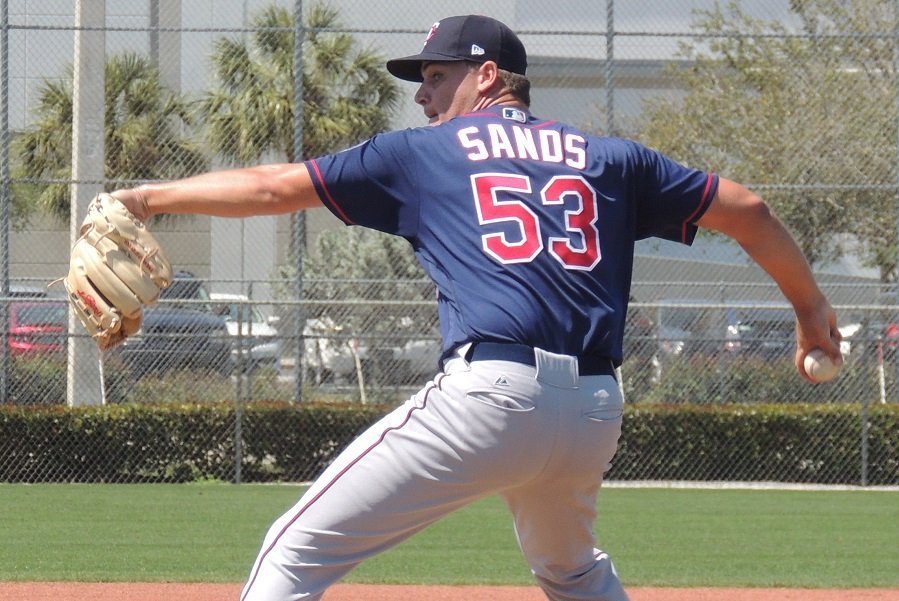 Sands stands tall throughout his delivery and releases the ball from an almost wholly sidearm slot, though the slight tilt of his torso makes it appear as a three-quarters slot to opposing batters. He owns a three-pitch mix consisting of a fastball, curveball, and changeup. His fastball is good, if uninspiring, but his bread and butter pitch is his curveball. (The changeup has potential though he doesn't deploy it nearly as often as the other two.) What makes Sands' curveball so good is its heavy 12-6 break. In the video example above, the curve's movement isn't necessarily anything to write home about; however, as the game marches on and fatigue sets in, it tends to adopt a more significant break. Sands has the raw stuff to be an MLB pitcher, but two aspects of his game will determine whether he will be a starter or come out of the pen: His command and his changeup. As with many of the up-and-coming pitchers in the Twins' system, Sands sometimes struggles with walks while simultaneously boasting substantial strikeout numbers. This summer's 4.15 BB/9 is nearly double any rate he posted before this season, while his 12.25 K/9 is commensurate with what he's done in the past. If 2021 is a blip and his actual level of command is more in line with what he showed in 2019 and prior, he'll have a much greater chance at sticking as a starter. Likewise, Sands will be more likely to remain a starting pitcher if he develops his changeup further. As of this report, Sands' curveball is MLB-ready, while his fastball is good enough. His changeup boasts MLB caliber movement. He needs to, again, improve his command of it. A good player comparison for Sands may be Tyler Duffey. Duffey was a borderline starter who truly excelled with a move to the bullpen and an increased reliance on his excellent curveball. It also doesn't hurt that everything about their profile, from their background as college starters to even their mechanics, is similar. Cole Sands typically slots in around the 12-18 range in most Twins prospects lists alongside fellow pitchers Chris Vallimont and Drew Strotman. While all three are drastically different pitchers, much of the story behind their game is the same: They have at least one MLB level pitch, miss a ton of bats, and, at times, struggle with command. Sands's ceiling probably doesn't reach as high of the three, but his track record at the low minors suggests that his floor isn't as low either. Check back in five years, and you may find Sands as an anchor in the Twins bullpen. MORE FROM TWINS DAILY — Latest Twins coverage from our writers — Recent Twins discussion in our forums — Follow Twins Daily via Twitter, Facebook or email — Checkout all of Lucas Seehafer's minor league reports here
-
 starting in left field! He's appeared at first, second, and third base, but this will be the first outfield appearance during his minor league career.
-
Seehafer: Twins, MiLB, etc. chat
Lucas Seehafer PT replied to Lucas Seehafer PT's topic in Twins Minor League Talk
No insider knowledge, but I'd say that the odds he sticks around beyond this season are 60-40 in favor of him being gone. What made him valuable was his ability to catch in a pinch, play multiple positions defensively, and put the ball in play. Well, now the Twins have Gordon, Arráez, maybe Austin Martin to fill those roles and have Ben Rortvedt who can more than fill the third catcher spot. I'm just not sure he has much value on the Twins moving forward. -
Seehafer: Twins, MiLB, etc. chat
Lucas Seehafer PT replied to Lucas Seehafer PT's topic in Twins Minor League Talk
The tough thing with Gordon is that he likely won't fetch anything in a trade. Many teams would love to have him in their system, I'm sure, but they probably don't want to give up anything to make it happen. Also, don't forget that the Twins could drop some players from the 40 man; Lewis Thorpe seems like a prime candidate, so is Kyle Garlick, Rob Refsnyder, etc. So that will open enough some space. -
Seehafer: Twins, MiLB, etc. chat
Lucas Seehafer PT replied to Lucas Seehafer PT's topic in Twins Minor League Talk
I'll grant, having all three of Arráez, Polanco, and Gordon is pretty redundant. Maybe one of them gets moved. I think the Twins go after another stop gap shortstop this winter to hold the fort for either Lewis or Martin when they're ready to be up fulltime. I think that's when Gordon becomes much more fungible. -
Seehafer: Twins, MiLB, etc. chat
Lucas Seehafer PT replied to Lucas Seehafer PT's topic in Twins Minor League Talk
I think the Twins view him as a utility man going forward. In my opinion, he displayed enough this season to warrant a 40-man spot during the offseason. He may not be a franchise cornerstone, but he has a role on this team. -
Seehafer: Twins, MiLB, etc. chat
Lucas Seehafer PT replied to Lucas Seehafer PT's topic in Twins Minor League Talk
A variety of reasons, though perhaps the biggest is that the players at Triple-A have a future with the team and their workloads are infinitely larger than they were last year. That's also why Bailey Ober isn't going long into games. While the season is lost and the MLB experience would probably be great for them, the team is likely wary of pushing their future athletes beyond what the bodies are capable of this season. -
I'll be sitting in an airport for a couple of hours here soon, so I thought it may be a fun idea to do a chat of sorts here in the forums. Post your questions below, Twins or minor league related, and I'll answer them as I wait for my flight.
-
Not really. He's still shut down. Originally I believe the Twins said something like 4-8 weeks and when I asked recently I was told "it hasn't been the full 8 weeks yet." So I'd be surprised if he pitches again this season to be honest.
-
He's working his way back at the compound in Ft. Myers. Sounds like he may be back relatively soonish.
- 35 replies
-
- 1
-

-
- simeon woods richardson
- austin martin
- (and 2 more)
-
I reached out to the Saints about Winder. Toby Gardenhire said that they essentially just gave him the week off. Didn't make it sound as if it was injury-related.
- 35 replies
-
- 2
-
-
- simeon woods richardson
- austin martin
- (and 2 more)
-
It's odd. I watched his last start for the majority of my analysis above and through 3 innings he was absolutely untouchable. The command wasn't great, but he had something like 7 Ks and 1 BB. Then he walked 3 in the fourth inning and was pulled mid-way through the fifth after giving up a home run and 4 ER overall. When he was rolling, he looked like a future ace, but when he fell apart, he was *no where* near the zone. I don't expect his command to be an issue to that degree in the future because there is little evidence that that was the case at lower levels.
-
But don't expect Rocco to go anywhere.
- 35 replies
-
- 1
-
-
- simeon woods richardson
- austin martin
- (and 2 more)
-
I would be surprised if there aren't significant changes in the coaching staff and personnel departments, particularly in the minors. I don't think they run everything back completely unchanged next season. Falvine bought themselves some time, and rightfully so in my opinion, thanks to back-to-back 100-win pace seasons. But there are definitely changes that should and will be made.
- 35 replies
-
- 4
-
-
- simeon woods richardson
- austin martin
- (and 2 more)
-
The Minnesota Twins sent shockwaves throughout Major League Baseball when they flipped starting pitcher Jose Berrios to the Toronto Blue Jays for top 100 prospects Austin Martin and Simeon Woods-Richardson. While Martin was undoubtedly the centerpiece of the deal, Woods-Richardson is no slouch either and could very well wind up as the better of the two players. Here are five things you should know about the new Twins prospect. Image courtesy of © Dan Hamilton | 2020 Jul 19 The Minnesota Twins sent shockwaves throughout Major League Baseball when they flipped starting pitcher Jose Berrios to the Toronto Blue Jays for top 100 prospects Austin Martin and Simeon Woods-Richardson. While Martin was undoubtedly the centerpiece of the deal, Woods-Richardson is no slouch either and could very well wind up as the better of the two players. Here are five things you should know about the new Twins prospect. 1. He has four legitimate pitches...and maybe a fifth Woods-Richardson boasts a traditional fastball, slider, curveball, changeup pitch mix and delivers them all from an overhead release point. His fastball typically sits 91-93 mph but can touch the mid-90s on occasion and features late tailing action that rides in on right-handed batters. His slider sits in the upper-70s to low-80s and features good horizontal motion with a tight spin. While the pitch will likely not be among the league's elite, it's good enough to strike batters out and induce weak contact. The curveball sits in the low-70s with a good 12-6 break, though on occasion, it tilts in the 1-7 direction. While Woods-Richardson's fastball is arguably his best pitch, his curveball might be his second-best or at least has the potential to be. Finally, Woods-Richardson's changeup sits in the low-80s with good tailing action that plays exceptionally well off his fastball. Even on his bad days, his changeup frequently catches opposing batters off guard and sends them flailing. Although he doesn't deploy it very often, there's some evidence to suggest that Woods Richardson may also be working on a cutter, though it may be just a miss-thrown slider. Suppose the cutter development is an actual, tangible pitch. In that case, Woods-Richardson may have five MLB-caliber pitchers in his arsenal, which is not something many pitchers can say, regardless of level. 2. He's only 20-years-old This one is pretty self-explanatory. Woods-Richardson was selected in the second round of the 2018 draft by the New York Mets and later traded to the Jays as the centerpiece of the Marcus Stroman deal. He's already pitched in 44 games in his minor league career and owns a 4.09 ERA and a FIP around 3.00. Almost 44% of his innings have come at High-A or above. 3. Walks have never been an issue of his until his last five starts Before the 2021 season, Woods-Richardson posted BB/9 numbers of 3.18, 1.95, and 2.22 at rookie ball, Low-A, and High-A, respectively. This season, this walk rate has ballooned to 5.16, though the vast majority of his free passes have come over his last five starts. So, is Woods-Richardson's control more like what he displayed for most of his minor league career or what he has done over his last handful of starts? That's the critical question when projecting Woods-Richardson's potential. His strikeout numbers have always been stellar, but if his command remains iffy, he may never reach his No. 2 or 3 starter ceiling. Luckily, as previously mentioned, he's young and has plenty of time to iron out this wrinkle in his game. While his motion is relatively fluid, it features long movements - such as a significant stride and trebuchet arm action - which increases the likelihood of mechanical breakdown and pitch inaccuracy. In many ways, his motion is similar to that of Jordan Balazovic, who also struggles with command from time to time. If the Twins can tighten up his delivery, even if just a skosh, it may improve his command enough for him to reach his full potential. 4. His peripheral numbers suggest he's been even better than his track record suggests While Woods-Richardson's ERA currently sits at 5.76 and his career number is, as previously mentioned, 4.09, his FIP numbers paint a completely different story. FIP's goal as a statistic is to project how a pitcher would perform if he had a league-average defense behind him. The stat aims to neutralize the impact of one's supporting cast on their pitching stats in an attempt to conclude how effective a pitcher truly is. Woods-Richardson's ERA is 5.76, which suggests his performance has been lacking. However, his FIP is 3.78, which indicates that he's been pretty good, especially for a 20-year-old at Double-A. Before this season, Woods-Richardson had posted FIPs of 2.07, 2.53, and 2.46 at rookie ball, Low-A, and High-A, respectively, compared to ERAs of 0.00, 4.25, and 2.54. In short, he's always been pretty good since getting drafted. 5. He's an Olympian Woods-Richardson, along with future teammate and fellow new Twin Joe Ryan, is playing on the United States Olympic Baseball team that is currently 2-0 and will soon face Japan in the tournament quarterfinals. MORE FROM TWINS DAILY — Latest Twins coverage from our writers — Recent Twins discussion in our forums — Follow Twins Daily via Twitter, Facebook or email View full article
-
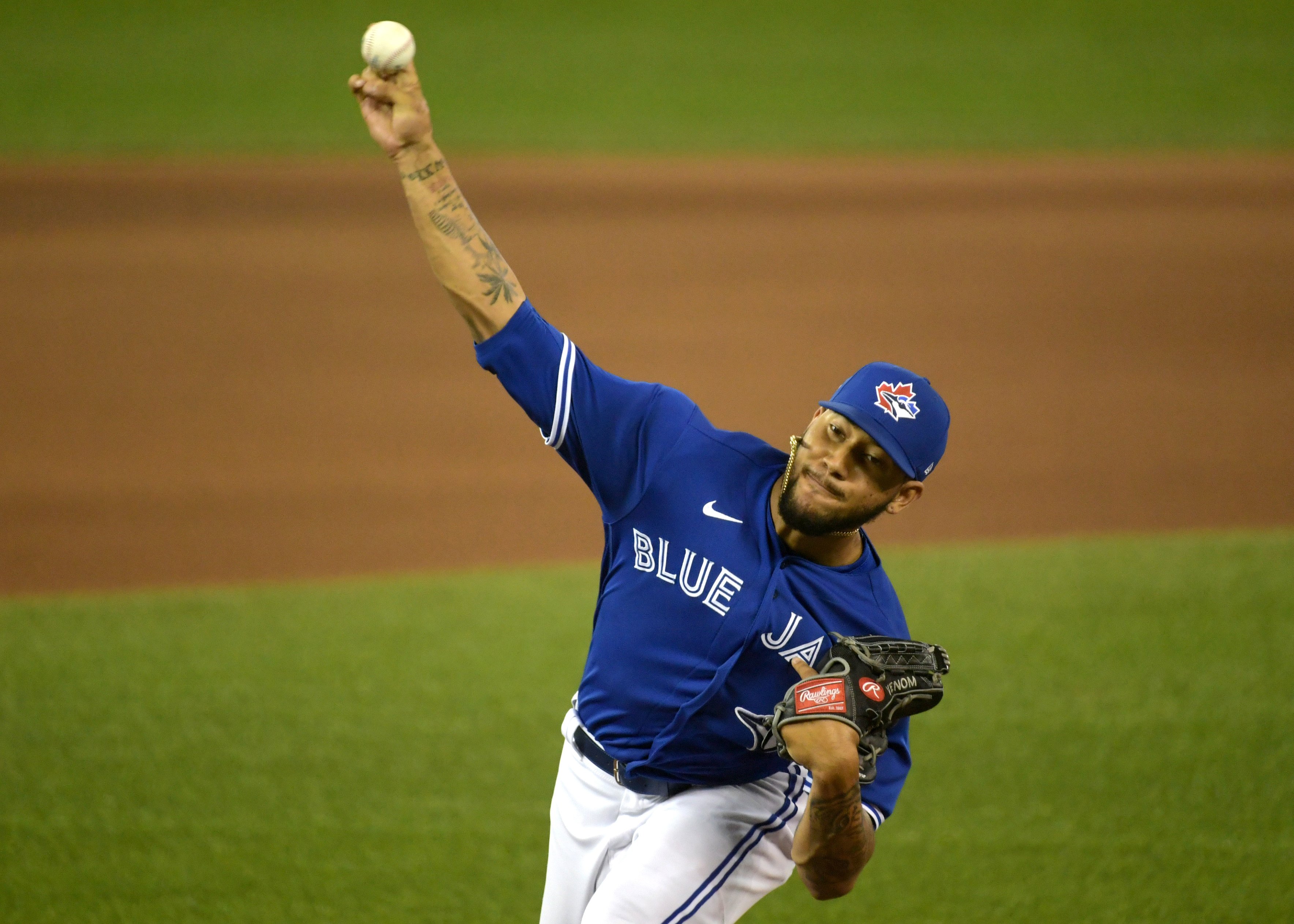 1. He has four legitimate pitches...and maybe a fifth Woods-Richardson boasts a traditional fastball, slider, curveball, changeup pitch mix and delivers them all from an overhead release point. His fastball typically sits 91-93 mph but can touch the mid-90s on occasion and features late tailing action that rides in on right-handed batters. His slider sits in the upper-70s to low-80s and features good horizontal motion with a tight spin. While the pitch will likely not be among the league's elite, it's good enough to strike batters out and induce weak contact. The curveball sits in the low-70s with a good 12-6 break, though on occasion, it tilts in the 1-7 direction. While Woods-Richardson's fastball is arguably his best pitch, his curveball might be his second-best or at least has the potential to be. Finally, Woods-Richardson's changeup sits in the low-80s with good tailing action that plays exceptionally well off his fastball. Even on his bad days, his changeup frequently catches opposing batters off guard and sends them flailing. Although he doesn't deploy it very often, there's some evidence to suggest that Woods Richardson may also be working on a cutter, though it may be just a miss-thrown slider. Suppose the cutter development is an actual, tangible pitch. In that case, Woods-Richardson may have five MLB-caliber pitchers in his arsenal, which is not something many pitchers can say, regardless of level. 2. He's only 20-years-old This one is pretty self-explanatory. Woods-Richardson was selected in the second round of the 2018 draft by the New York Mets and later traded to the Jays as the centerpiece of the Marcus Stroman deal. He's already pitched in 44 games in his minor league career and owns a 4.09 ERA and a FIP around 3.00. Almost 44% of his innings have come at High-A or above. 3. Walks have never been an issue of his until his last five starts Before the 2021 season, Woods-Richardson posted BB/9 numbers of 3.18, 1.95, and 2.22 at rookie ball, Low-A, and High-A, respectively. This season, this walk rate has ballooned to 5.16, though the vast majority of his free passes have come over his last five starts. So, is Woods-Richardson's control more like what he displayed for most of his minor league career or what he has done over his last handful of starts? That's the critical question when projecting Woods-Richardson's potential. His strikeout numbers have always been stellar, but if his command remains iffy, he may never reach his No. 2 or 3 starter ceiling. Luckily, as previously mentioned, he's young and has plenty of time to iron out this wrinkle in his game. While his motion is relatively fluid, it features long movements - such as a significant stride and trebuchet arm action - which increases the likelihood of mechanical breakdown and pitch inaccuracy. In many ways, his motion is similar to that of Jordan Balazovic, who also struggles with command from time to time. If the Twins can tighten up his delivery, even if just a skosh, it may improve his command enough for him to reach his full potential. 4. His peripheral numbers suggest he's been even better than his track record suggests While Woods-Richardson's ERA currently sits at 5.76 and his career number is, as previously mentioned, 4.09, his FIP numbers paint a completely different story. FIP's goal as a statistic is to project how a pitcher would perform if he had a league-average defense behind him. The stat aims to neutralize the impact of one's supporting cast on their pitching stats in an attempt to conclude how effective a pitcher truly is. Woods-Richardson's ERA is 5.76, which suggests his performance has been lacking. However, his FIP is 3.78, which indicates that he's been pretty good, especially for a 20-year-old at Double-A. Before this season, Woods-Richardson had posted FIPs of 2.07, 2.53, and 2.46 at rookie ball, Low-A, and High-A, respectively, compared to ERAs of 0.00, 4.25, and 2.54. In short, he's always been pretty good since getting drafted. 5. He's an Olympian Woods-Richardson, along with future teammate and fellow new Twin Joe Ryan, is playing on the United States Olympic Baseball team that is currently 2-0 and will soon face Japan in the tournament quarterfinals. MORE FROM TWINS DAILY — Latest Twins coverage from our writers — Recent Twins discussion in our forums — Follow Twins Daily via Twitter, Facebook or email
-
The Twins Have Got to Make Their Loaded Farm System Count
Lucas Seehafer PT posted an article in Twins
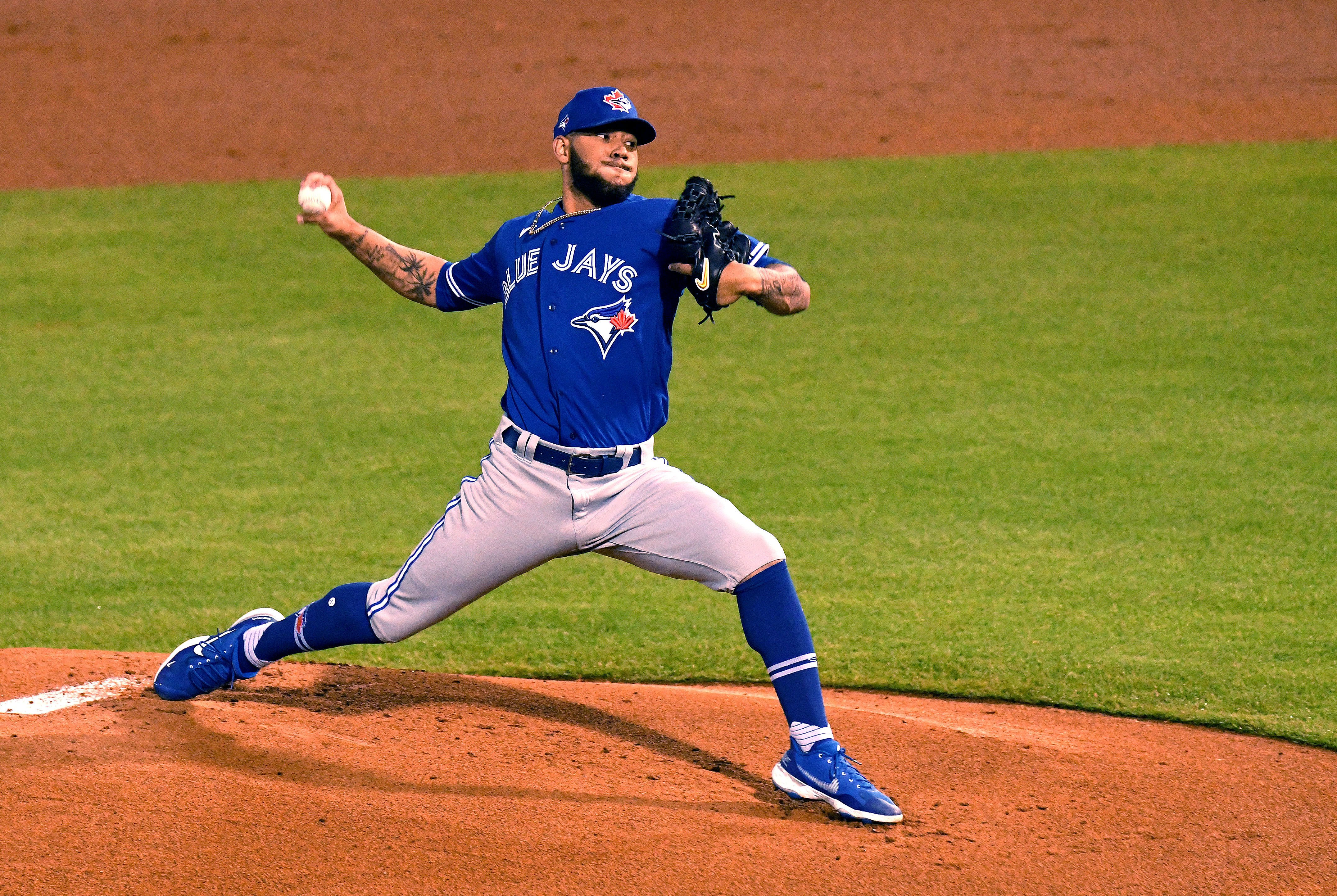 Royce Lewis and Alex Kirilloff were consensus top 100 prospects. However, outfielder Trevor Larnach, catcher Ryan Jeffers, and pitchers Jhoan Duran and Jordan Balazovic also found their names among the league's most exciting future players depending on which prospect rankings site one preferred. Royce Lewis lost a second straight campaign after he tore his ACL. Kirilloff, Larnach and Jeffers graduated thanks to a bevy of injuries and poor play from the MLB club. Duran and Balazovic missed time at the beginning of the season with arm injuries and slow starts. (Balazovic has turned it on as of late, while Duran was shut down with an elbow injury.) The sheen on the Twins' top 12-15 farm system became far duller by mid-June despite the encouraging progress shown by the likes of utility infielder Jose Miranda and pitcher Josh Winder. Before Friday's trade deadline, the Twins' system lacked a level of potential high-end talent that most of the teams inside the top 10 had, and some teams, like the Tampa Bay Rays and Los Angeles Dodgers, had in spades. However, that all changed when the Twins dealt Jose Berrios to the Toronto Blue Jays in exchange for shortstop Austin Martin and pitcher Simeon Woods Richardson. Martin is a consensus top 60 prospect who hits for average, gets on base at a high clip, and has projectable power, despite his low home run output this year at Double-A. His long-term fit at shortstop is dubious, with most experts believing he'll eventually find a home at either second base or center field. Woods Richardson is a consensus top 75 prospect who boasts four legit pitches and substantial strikeout numbers but struggles with command, though, to be fair, what 20-year-old doesn't? When paired alongside pitchers Joe Ryan and Drew Strotman, who the Twins acquired from the Rays in exchange for Nelson Cruz, the Twins added four prospects to their top 10 and two to their top five over the last two weeks to more than replenish their future talent cupboard. Their farm system metamorphosed from good to excellent, from deep to DEEP, from top 15 in the league to arguably top 5 in a brief amount of time. But a stockpile of minor league talent does nothing for a franchise unless it's developed adequately and positively impacts the major league team or tapped into to bring in quality MLB talent. No team gets to hang a banner for having the best farm system in place. Now the ball is in Derek Falvey, Thad Levine, and the various Twins coaching staffs' court. It is on their shoulders to make the Twins' newfound prospect currency count. The Twins possess the most depth at starting pitcher, with the majority of their top 20 prospects - Balazovic, Woods-Richardson, Canterino, Duran, Winder, Ryan, Strotman, Blayne Enlow, Chase Petty, Cole Sands, and Chris Vallimont - having the potential to one day slot into the team's starting rotation. Of course, not all of them will, but the more fish in the barrel, the more likely one is to snag a catch. The Twins need to develop at least two or three of their starting pitching prospects into legitimate No. 2 or 3 starters. They would also be wise to dangle a few of them as trade bait to bring in impact MLB talent, particularly if the likes of Byron Buxton, Josh Donaldson, and Jorge Polanco find themselves on new teams in the coming years. However, their talent extends beyond the mound. Miranda has exploded onto the scene and is far more likely to be considered a top 100 prospect now than entering the season. Similarly, relatively unknown prospects Matt Wallner, Edouard Julien, Jermaine Palacios, and Yunior Severino have had strong seasons, boosting their prospect status. Despite trading the best arm the franchise has employed since Johan Santana, the Twins still see themselves as a team that can contend for a playoff spot in the not-too-distant future, and perhaps as early as next year. "The future is very bright," Twins manager Rocco Baldelli told reporters following the Twins' trade of Berrios. "We have the pieces already here that we're trying to supplement right now with some of the moves that we're making in order to get to a point where we are a playoff baseball team again. And I don't think we're very far away." Falvey largely echoed Baldelli's sentiment. "Our view of this is sustainability," Falvey said of the trade. "[This year] has not been what we wanted. But we still feel, even as Jose walked out the door here, and that's not easy, don't get me wrong, that we feel we have a lot of talent in that clubhouse coming back in '22 and '23 and beyond and so how do you build a sustainable group? You've got to retool it sometimes." The only way the Twins can find themselves back in the playoff hunt next year and beyond is if the franchise capitalizes on their current wealth of young assets. Despite their current 100-loss pace, doing so is not an unrealistic goal. They simply need to go and make it happen. MORE FROM TWINS DAILY — Latest Twins coverage from our writers — Recent Twins discussion in our forums — Follow Twins Daily via Twitter, Facebook or email
- 35 comments
-
- 4
-
-
- simeon woods richardson
- austin martin
- (and 2 more)
-
The Minnesota Twins entered the 2021 season with a minor league system considered by many to be among the top 15 in all of baseball. Headlined by the likes of Royce Lewis, Alex Kirilloff, and Trevor Larnach, the Twins affiliates boasted lineups filled with athletes who projected to one day be big league-quality bats with a couple of intriguing arms sprinkled throughout the minor leagues. Then the 2021 season happened. Image courtesy of © Jonathan Dyer | 2021 Mar 3 The Minnesota Twins entered the 2021 season with a minor league system considered by many to be among the top 15 in all of baseball. Headlined by the likes of Royce Lewis, Alex Kirilloff, and Trevor Larnach, the Twins affiliates boasted lineups filled with athletes who projected to one day be big league-quality bats with a couple of intriguing arms sprinkled throughout the minor leagues. Then the 2021 season happened. Royce Lewis and Alex Kirilloff were consensus top 100 prospects. However, outfielder Trevor Larnach, catcher Ryan Jeffers, and pitchers Jhoan Duran and Jordan Balazovic also found their names among the league's most exciting future players depending on which prospect rankings site one preferred. Royce Lewis lost a second straight campaign after he tore his ACL. Kirilloff, Larnach and Jeffers graduated thanks to a bevy of injuries and poor play from the MLB club. Duran and Balazovic missed time at the beginning of the season with arm injuries and slow starts. (Balazovic has turned it on as of late, while Duran was shut down with an elbow injury.) The sheen on the Twins' top 12-15 farm system became far duller by mid-June despite the encouraging progress shown by the likes of utility infielder Jose Miranda and pitcher Josh Winder. Before Friday's trade deadline, the Twins' system lacked a level of potential high-end talent that most of the teams inside the top 10 had, and some teams, like the Tampa Bay Rays and Los Angeles Dodgers, had in spades. However, that all changed when the Twins dealt Jose Berrios to the Toronto Blue Jays in exchange for shortstop Austin Martin and pitcher Simeon Woods Richardson. Martin is a consensus top 60 prospect who hits for average, gets on base at a high clip, and has projectable power, despite his low home run output this year at Double-A. His long-term fit at shortstop is dubious, with most experts believing he'll eventually find a home at either second base or center field. Woods Richardson is a consensus top 75 prospect who boasts four legit pitches and substantial strikeout numbers but struggles with command, though, to be fair, what 20-year-old doesn't? When paired alongside pitchers Joe Ryan and Drew Strotman, who the Twins acquired from the Rays in exchange for Nelson Cruz, the Twins added four prospects to their top 10 and two to their top five over the last two weeks to more than replenish their future talent cupboard. Their farm system metamorphosed from good to excellent, from deep to DEEP, from top 15 in the league to arguably top 5 in a brief amount of time. But a stockpile of minor league talent does nothing for a franchise unless it's developed adequately and positively impacts the major league team or tapped into to bring in quality MLB talent. No team gets to hang a banner for having the best farm system in place. Now the ball is in Derek Falvey, Thad Levine, and the various Twins coaching staffs' court. It is on their shoulders to make the Twins' newfound prospect currency count. The Twins possess the most depth at starting pitcher, with the majority of their top 20 prospects - Balazovic, Woods-Richardson, Canterino, Duran, Winder, Ryan, Strotman, Blayne Enlow, Chase Petty, Cole Sands, and Chris Vallimont - having the potential to one day slot into the team's starting rotation. Of course, not all of them will, but the more fish in the barrel, the more likely one is to snag a catch. The Twins need to develop at least two or three of their starting pitching prospects into legitimate No. 2 or 3 starters. They would also be wise to dangle a few of them as trade bait to bring in impact MLB talent, particularly if the likes of Byron Buxton, Josh Donaldson, and Jorge Polanco find themselves on new teams in the coming years. However, their talent extends beyond the mound. Miranda has exploded onto the scene and is far more likely to be considered a top 100 prospect now than entering the season. Similarly, relatively unknown prospects Matt Wallner, Edouard Julien, Jermaine Palacios, and Yunior Severino have had strong seasons, boosting their prospect status. Despite trading the best arm the franchise has employed since Johan Santana, the Twins still see themselves as a team that can contend for a playoff spot in the not-too-distant future, and perhaps as early as next year. "The future is very bright," Twins manager Rocco Baldelli told reporters following the Twins' trade of Berrios. "We have the pieces already here that we're trying to supplement right now with some of the moves that we're making in order to get to a point where we are a playoff baseball team again. And I don't think we're very far away." Falvey largely echoed Baldelli's sentiment. "Our view of this is sustainability," Falvey said of the trade. "[This year] has not been what we wanted. But we still feel, even as Jose walked out the door here, and that's not easy, don't get me wrong, that we feel we have a lot of talent in that clubhouse coming back in '22 and '23 and beyond and so how do you build a sustainable group? You've got to retool it sometimes." The only way the Twins can find themselves back in the playoff hunt next year and beyond is if the franchise capitalizes on their current wealth of young assets. Despite their current 100-loss pace, doing so is not an unrealistic goal. They simply need to go and make it happen. MORE FROM TWINS DAILY — Latest Twins coverage from our writers — Recent Twins discussion in our forums — Follow Twins Daily via Twitter, Facebook or email View full article
- 35 replies
-
- 1
-
-
- simeon woods richardson
- austin martin
- (and 2 more)
-
Game Score: Tigers 17, Twins 14
Lucas Seehafer PT replied to Andrew Thares's topic in Twins Daily Front Page News
- 45 replies
-
- 7
-
-

-
- offensive explosion
- brent rooker
- (and 2 more)
-
Scouting Twins Prospects: Jose Miranda
Lucas Seehafer PT replied to Lucas Seehafer PT's topic in Twins Daily Front Page News
If the Twins make as many moves in the next couple of days as we all expect them to, I'd be surprised if we don't get a glimpse of him with the Twins. -
Not Seth, but I can jump in here. Steer has really struggled with Double-A pitching after starting off hot. He's slashing .189/.245/.389 in 23 games. The biggest issue has been strikeouts. At High-A he had a 32/35 K:BB ratio. At Double-A it's 27/7. I doubt they'll demote him, but he's definitely going threw some growing pains. Turns out, not everyone can be like Jose Miranda!
- 14 replies
-
- 1
-
-
- trey cabbage
- louis varland
- (and 3 more)
-
Pohlad: Twins "Absolutely Not" Having a Firesale
Lucas Seehafer PT replied to Brock Beauchamp's topic in Minnesota Twins Talk
I'm probably in the minority, but I firmly believe that the Twins could find themselves back in the playoff race even if they move Berrios and Donaldson *IF* they draw the right cards in the returning packages for them. There's simply too much talent on the roster and in the system. Sometimes baseball is just weird and good teams don't perform well only to rebound the next season. (Sometimes teams that are perceived to be bad perform exceptionally well *side-eyes Giants and Red Sox*.) I'm more willing to believe that this season is the fluke, not the previous two. -
Scouting Twins Prospects: Jose Miranda
Lucas Seehafer PT replied to Lucas Seehafer PT's topic in Twins Daily Front Page News
Yep, you definitely don't want to be overzealous with a prospect like Miranda and move him through the system too quickly, particularly since his production had been rather inconsistent/underwhelming prior to this season. That said, in a lost season where it seems likely that a number of players are going to be moved in the coming days, bringing him up for a few games in September wouldn't be a bad idea. I bet we see him in a Twins uniform towards the end of the season. If he keeps hitting at his current clip, there isn't a ton of reason to keep him in St. Paul. -
No single prospect in the Minnesota Twins farm system has seen their value grow more over the last three months than Jose Miranda. Image courtesy of © Jonathan Dyer | 2021 Mar 1 No single prospect in the Minnesota Twins farm system has seen their value grow more over the last three months than Jose Miranda. A highly regarded prep prospect out of Puerto Rico, the Twins selected Miranda with the 73rd overall pick in the 2016 draft based on his projected ability to hit for power and average while providing solid defense at third base. However, Miranda largely failed to live up to his reputation before the 2021 season as neither his power numbers nor batting average ever reached the levels many thought they would. However, 2021 has been a much different story. As of this writing, Miranda is slashing .337/.398/.653 in 24 games with Triple-A St. Paul - he's reached base safely in all 24 games - and that's after hitting .345/.408/.588 in 47 games at Double-A Wichita. His 167 wRC+ is 10th among all MiLB players who have accumulated at least 150 plate appearances. Bump up the required plate appearances to 230, a number that should be easily obtainable for minor leaguers who play nearly every night and have remained healthy - Miranda has 331, for example - and he jumps up to fourth. In essence, while the sample size is still relatively small, Miranda has displayed enough consistency at both the Double- and Triple-A levels to suggest that some level of his success is here to stay. His numbers will regress before the season winds down, but it's fair to say that FanGraphs needs to update his 35-grade hit tool and 30-grade game power. Miranda's 2021 season is likely the ceiling for what he can be at the major league level: 20-30 home run power with a high OBP and solid, versatile infield defense. That type of player is a multi-time All-Star, MVP candidate, and a cornerstone in the lineup for a contending team. However, the odds that he reaches his current production level while on an MLB roster remain slim. In all likelihood, Miranda won't reach his 100% outcome. A more likely scenario involves him developing into something more akin to former Twin Michael Cuddyer. Cuddy finished his career with 197 home runs and a .277 batting average across 15 major league seasons. It should be considered a wild success if Miranda develops into the next Michael Cuddyer. A significant reason why Miranda has been so successful this season and may continue to be in the future is his ability to control his bat head through the strike zone. Miranda generates loft on pitches, even those down in the zone. He accomplishes this by keeping the barrel of his bat relatively parallel to the ground, which increases the surface area of the bat that may come in contact with the ball, which, in turn, increases the likelihood that a ball will be barreled rather than squibbed or popped up. Suppose he can maintain his form while facing major league-level pitching and implement minor refinements to increase his power even more. In that case, Miranda should have no problem hitting 25 or more home runs per season and for a good average. Additionally, Miranda is solid in the field, particularly at third base. While he has seen time at first, second, and third base at both Double- and Triple-A, his future, or at least his near future, is most likely at the hot corner. He possesses enough arm strength to be at least average at third and could easily fill in for Jorge Polanco and Alex Kirilloff at his other positions as needed. Miranda's emergence this season has allowed the Twins to think long and hard about trading current third baseman Josh Donaldson, and if (or more likely, when) they decide to pull the trigger, he may find himself on the next city bus to Target Field. If not this season, then next. MORE FROM TWINS DAILY — Latest Twins coverage from our writers — Recent Twins discussion in our forums — Follow Twins Daily via Twitter, Facebook or email View full article
