



Lucas Seehafer PT
-
Posts
525 -
Joined
-
Last visited
-
Days Won
2
Content Type
Profiles
News
Minnesota Twins Videos
2026 Minnesota Twins Top Prospects Ranking
2022 Minnesota Twins Draft Picks
Minnesota Twins Free Agent & Trade Rumors, Notes, & Tidbits
Guides & Resources
2023 Minnesota Twins Draft Picks
The Minnesota Twins Players Project
2024 Minnesota Twins Draft Picks
2025 Minnesota Twins Draft Pick Tracker
2026 Minnesota Twins Draft Tracker: Picks & Bonuses
Forums
Blogs
Events
Store
Downloads
Gallery
Everything posted by Lucas Seehafer PT
-
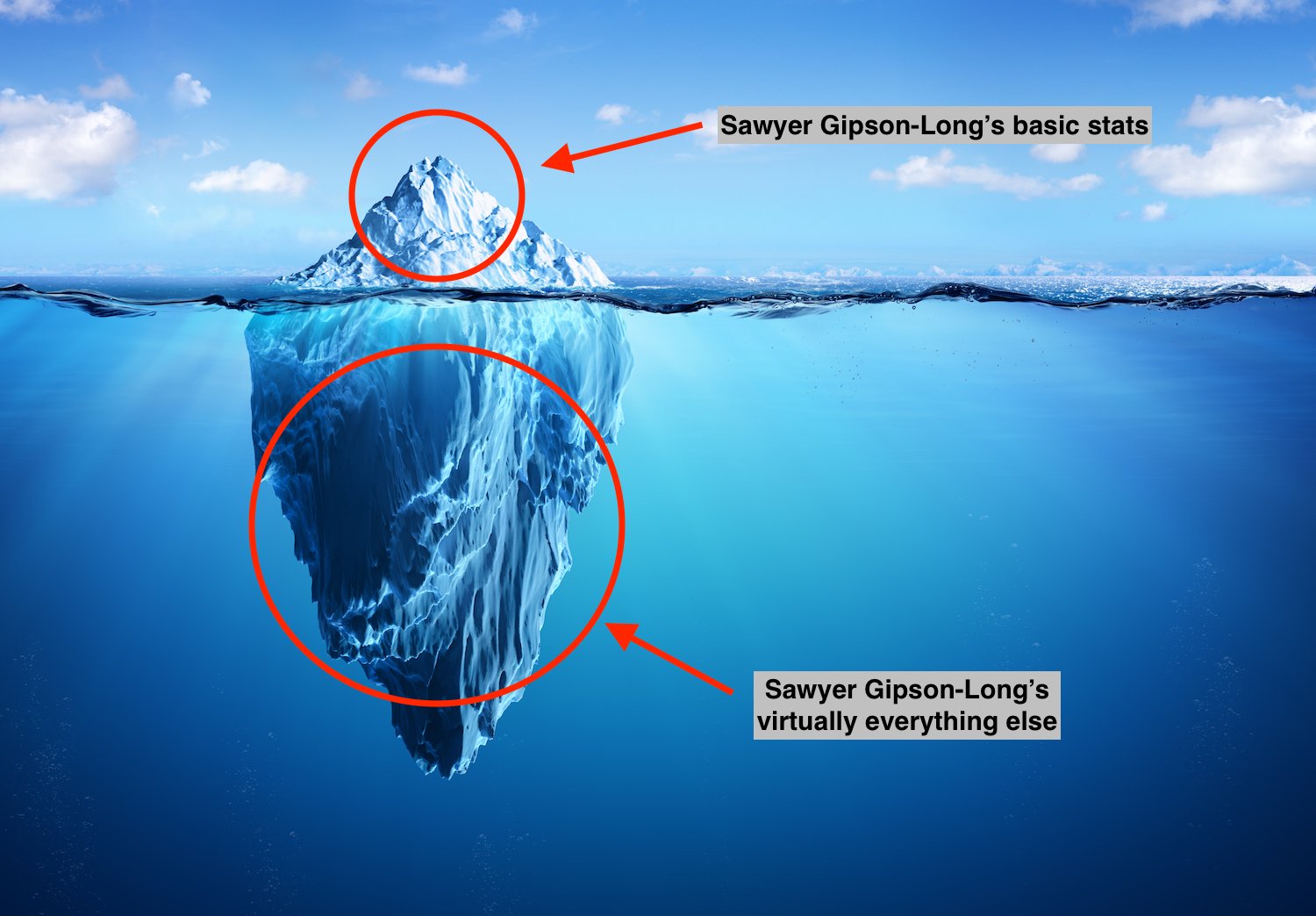 Gipson-Long stands at a robust and athletic 6-foot-4-inches tall with long arms and legs. His windup is smooth, athletic, and repeatable, and he utilizes a three-quarter arm slot for all three of his pitches. Gipson-Long's pitch mix consists primarily of a fastball and slider, though he does throw in an occasional changeup as well. What makes the former Mercer Bear stand out from most of his fellow pitching prospects is his overall command and control. To put it bluntly, the kid doesn't throw balls. In his 102 1/3 total innings in the minors, Gipson-Long has walked a total of 24 batters, has hit only two, and has issued a mere six wild pitches. However, Gipson-Long's impressiveness doesn't stop there. He's also struck out 144 and has never posted a FIP above 3.34, despite owning ERAs of 5.40 and 4.54 at rookie ball and Low-A. Since being called up to High-A Cedar Rapids on August 9, Gipson-Long has struck out 26 batters, walked two, and glided to a 1.86 FIP. In short, Gipson-Long has been one of the more dominant pitchers in the Twins system since 2019. And, yet, you won't find his name on any top prospect list, not even Twins Daily's. While being able to watch Gipson-Long's starts has been difficult due to Low-A Ft. Myers not broadcasting their games, leaving his name outside of the Twins' top 30 prospects has been a grand oversight, in my opinion. His fastball has pop and plays well up in the zone. His slider is a solid strikeout pitch that often leaves opposing batters flailing. And he's shown some signs of having a decent changeup. It would not surprise me if Gipson-Long quickly rises through the Twins system and begins making appearances on the top prospect lists in the not-so-distant future. What he is doing is truly not that different from, say, Louie Varland, and, frankly, Gipson-Long's stuff may be better, particularly when considering his command. There is no such thing as a sure-thing baseball prospect, especially concerning pitchers. However, what Gipson-Long has done this season should not be ignored. He's been great and should be considered among the likes of Varland, Drew Strotman, and Chris Vallimont as good, under-the-radar pitching prospects. MORE FROM TWINS DAILY — Latest Twins coverage from our writers — Recent Twins discussion in our forums — Follow Twins Daily via Twitter, Facebook or email
 -
 To put it bluntly, the surface-level stats of Minnesota Twins pitching prospect Sawyer Gipson-Long aren't overly impressive. Since coming to the Twins with the 179th overall pick in the 2019 draft, Gipson-Long has registered a record of 7-7 with a 4.30 ERA in 22 starts in the minors. However, as the intelligent readers of Twins Daily know full well, surface-level stats are much like an iceberg. They give some insight into who a pitcher is and how they perform, but there is often more lying under the surface, waiting to be discovered. Sawyer Gipson-Long is very much an iceberg. To put it bluntly, the surface-level stats of Minnesota Twins pitching prospect Sawyer Gipson-Long aren't overly impressive. Since coming to the Twins with the 179th overall pick in the 2019 draft, Gipson-Long has registered a record of 7-7 with a 4.30 ERA in 22 starts in the minors. However, as the intelligent readers of Twins Daily know full well, surface-level stats are much like an iceberg. They give some insight into who a pitcher is and how they perform, but there is often more lying under the surface, waiting to be discovered. Sawyer Gipson-Long is very much an iceberg. Gipson-Long stands at a robust and athletic 6-foot-4-inches tall with long arms and legs. His windup is smooth, athletic, and repeatable, and he utilizes a three-quarter arm slot for all three of his pitches. Gipson-Long's pitch mix consists primarily of a fastball and slider, though he does throw in an occasional changeup as well. What makes the former Mercer Bear stand out from most of his fellow pitching prospects is his overall command and control. To put it bluntly, the kid doesn't throw balls. In his 102 1/3 total innings in the minors, Gipson-Long has walked a total of 24 batters, has hit only two, and has issued a mere six wild pitches. However, Gipson-Long's impressiveness doesn't stop there. He's also struck out 144 and has never posted a FIP above 3.34, despite owning ERAs of 5.40 and 4.54 at rookie ball and Low-A. Since being called up to High-A Cedar Rapids on August 9, Gipson-Long has struck out 26 batters, walked two, and glided to a 1.86 FIP. In short, Gipson-Long has been one of the more dominant pitchers in the Twins system since 2019. And, yet, you won't find his name on any top prospect list, not even Twins Daily's. While being able to watch Gipson-Long's starts has been difficult due to Low-A Ft. Myers not broadcasting their games, leaving his name outside of the Twins' top 30 prospects has been a grand oversight, in my opinion. His fastball has pop and plays well up in the zone. His slider is a solid strikeout pitch that often leaves opposing batters flailing. And he's shown some signs of having a decent changeup. It would not surprise me if Gipson-Long quickly rises through the Twins system and begins making appearances on the top prospect lists in the not-so-distant future. What he is doing is truly not that different from, say, Louie Varland, and, frankly, Gipson-Long's stuff may be better, particularly when considering his command. There is no such thing as a sure-thing baseball prospect, especially concerning pitchers. However, what Gipson-Long has done this season should not be ignored. He's been great and should be considered among the likes of Varland, Drew Strotman, and Chris Vallimont as good, under-the-radar pitching prospects. MORE FROM TWINS DAILY — Latest Twins coverage from our writers — Recent Twins discussion in our forums — Follow Twins Daily via Twitter, Facebook or email View full article
 -
Seehafer Minor League and Other Topics Q&A
Lucas Seehafer PT replied to Lucas Seehafer PT's topic in Twins Minor League Talk
If I had the answer to this question, I would not be a freelance journalist writing for a Twins blog lol. In all seriousness, I'd wager a bulk of the reason is due to the relative lack of activity last year followed by the relative boom of activity this year. The difficult thing with discussing injuries is that there is almost never enough evidence to draw grand conclusions. Injuries are multifactorial and much less is known about them than we'd like to admit. However, the main thing that pops up in the research over and over again is that injuries are most likely to occur 1. if the injured body part had been previously injured and 2. when activity is increased too quickly and by a great extent. Most of the studies conducted on the second point, however, are on relatively short timelines and are often analyzed retrospectively, which greatly reduces the power of the findings. -
Another week, another Q&A session. If you've got questions or topics you'd like to discuss, drop them below!
-
100%. Though, I will say, rarely in such a situation would an athlete like Maeda try conservative options for several months. Of course there are exceptions, but, generally speaking, the docs/PTs/athlete/etc. will now within about 6-8 weeks if the rehab is working or not. They'll monitor MRIs, pain levels, velos, commands, force generation and numerous other variables and if things are just not progressing well, then they'll opt for surgery. Waiting a month or two won't delay the overall return to play too much, especially when it's this late in the season.
-
Hill had a quasi-experimental procedure in which a compound called "surgical tape" was dipped in collagen and sewn into his partially torn UCL. It can't be done on all UCL injuries, and in fact can only be done in particular cases. The results of not only his surgery but the ones completed before it are extremely encouraging, meaning we'll likely see more in the future.
-
One thing I cut from the article for length purposes that I think is still important to mention is the report when Maeda first signed with the Dodgers about "irregularities" in his elbow. I chatted with out own Nick Nelson on Twitter about my thoughts:
-
Minnesota Twins pitcher Kenta Maeda was placed on the IL on Tuesday with what the team is calling right forearm tightness. MLB.com's Do-Hyoung Park later reported that Maeda will seek a second opinion regarding his diagnosis and that surgery is possible. Assuming the surgery in question is the dreaded Tommy John procedure, why would Maeda and the Twins even go about seeking a second opinion? It's an easy question, but the answer is wrapped in layers of complexity. Image courtesy of Jordan Johnson, USA Today Minnesota Twins pitcher Kenta Maeda was placed on the IL on Tuesday with what the team is calling right forearm tightness. MLB.com's Do-Hyoung Park later reported that Maeda will seek a second opinion regarding his diagnosis and that surgery is possible. Assuming the surgery in question is the dreaded Tommy John procedure, why would Maeda and the Twins even go about seeking a second opinion? It's an easy question, but the answer is wrapped in layers of complexity. Let's begin with a brief anatomy and biomechanics lesson. The ulnar collateral ligament — more frequently referred to as the UCL — is a robust and triangular sheet of tissue that helps support the inner elbow against valgus stress. The elbow experiences the most valgus stress during a baseball game when the arm is driven forward at high rates of speed while throwing a ball. Damage to the UCL occurs when the torque produced as the arm is thrust forward — the technical term is internal rotation — is more significant than what the structure can compensate. Injury can occur chronically as well as acutely and is generally described as a sprain. The degree of damage is graded on a scale of 1-3. Grade 1 sprains are usually minor injuries that heal within a week or two. Grade 2 sprains — also referred to as partial tears — cause instability in the joint as some 50% of the ligament fibers have been damaged; the most frequently reported symptoms are pain and swelling. The recovery timeline for grade 2 sprains generally extends into months. Grade 3 sprains — or ruptures — result in significant instability and require Tommy John surgery to address. Grade 2 sprains are where the best route of treatment is murkiest. As the UCL is technically an extension of the joint capsule — a larger sheet of tissue that envelops a joint and provides stability and nourishment — it has a relatively good blood supply, meaning it is technically capable of healing on its own without surgery. (Side note: This is why ACL injuries require surgery in most instances. Although the ACL is inside the knee, it is technically separate from the joint capsule, and, thus, has almost no blood supply.) However, the UCL does not have the same blood supply throughout its structure. A recent study found evidence to suggest that the blood supply is best nearer where it connects to the upper arm bone — proximal — and decreases as the ligament extends to the forearm — distal. This finding may suggest that grade 2 sprains of the UCL that occur proximally are more likely to heal without surgery than those that are distal (or, read another way, Tommy John surgeries that treat proximal tears are more likely to be "successful" than their distal counterparts.) (Another side note: Interestingly, a study conducted in 2020 found data to suggest the opposite, though it should be noted that the study had a small sample size and was retrospective; both factors limit the findings' strength.) Rest and anti-inflammatory medication are most often the first two steps in treating a grade 2 UCL sprains followed by physical therapy to improve range of motion and increase the strength of the surrounding muscles. While the UCL provides static stability for the inner elbow (i.e., its fibers don't contract and act as a brace), the forearm musculature provides dynamic stability (i.e., its fibers do contract and pull the inner elbow together). Having strong forearm muscles is vital for protecting the healing UCL. Another treatment often reported after an athlete is diagnosed with a UCL sprain is platelet-rich plasma (PRP). The theory behind PRP is sound. The process involves drawing blood into a test tube, spinning it around rapidly in a centrifuge to separate the blood into plasma and red blood cells, sucking the plasma into a syringe, and injecting the plasma into the injured tissue. Plasma contains a variety of cells and other substances, one of which are platelets. Platelets help form the foundation on which new tissue grows and secret substances that help aid the healing process. Again, theoretically. The results surrounding PRP injections and return to play in baseball are … inconclusive, at best. Read one study, and you may come away believing that they work exceptionally well. Read another, and you may think they're just a bunch of hocus pocus. The fact of the matter is this: Despite being relatively well studied, there is little evidence, at this point, to suggest that PRP injections are the medical savior they were once considered to be. So, back to the original question. Why should Maeda and the Twins even pursue a second opinion? Well, the short answer is "Why not?" If the injury Maeda suffered is a UCL sprain, and if he ultimately undergoes surgery, he'll miss the entirety of the 2022 season anyway. Waiting another week or two to gather more information won't prevent him from playing next year. The longer answer is that the most appropriate course of treatment may or may not be surgery, depending on various factors, including grade, location, and, frankly, a specific doctor's training and treatment philosophy. Again, if Maeda is dealing with UCL damage and if it is partial and proximal, it may have a chance to heal on its own. Also, and this bears repeating, what's the harm in trying conservative rehabilitation and waiting on surgery? Best case scenario: Maeda can pitch again in relatively short order and definitely be next season. Worst case scenario: Maeda has to undergo surgery, which, again, would keep him out of 2022 anyway. At this stage, there is minimal downside for the Twins and Maeda in gathering as much information as possible. The team isn't going to the playoffs, he's under contract next year, and he's one of the more critical pitching pieces in the Twins' system. I'll pose the question again. Why should Maeda and the Twins seek a second opinion? Because it's the right thing to do. View full article
-
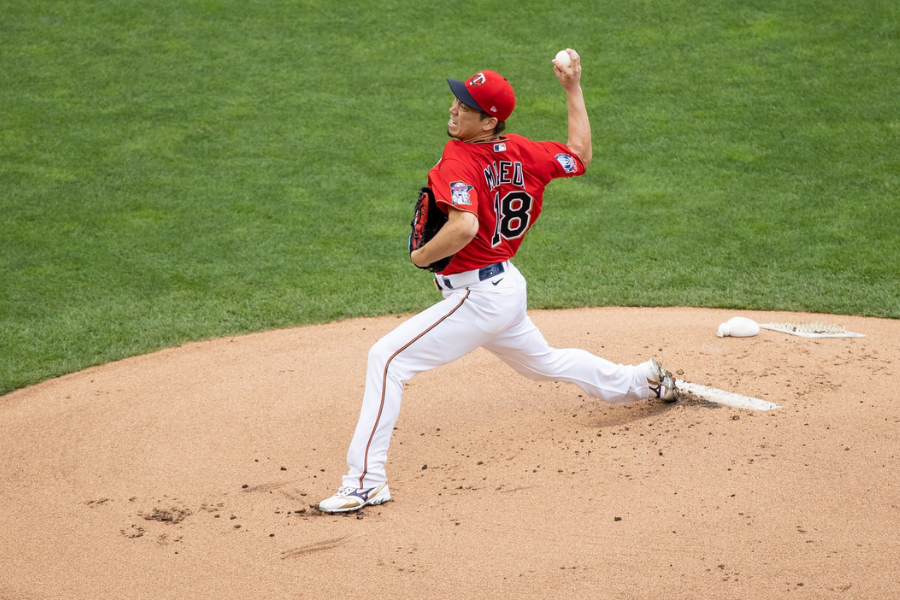 Let's begin with a brief anatomy and biomechanics lesson. The ulnar collateral ligament — more frequently referred to as the UCL — is a robust and triangular sheet of tissue that helps support the inner elbow against valgus stress. The elbow experiences the most valgus stress during a baseball game when the arm is driven forward at high rates of speed while throwing a ball. Damage to the UCL occurs when the torque produced as the arm is thrust forward — the technical term is internal rotation — is more significant than what the structure can compensate. Injury can occur chronically as well as acutely and is generally described as a sprain. The degree of damage is graded on a scale of 1-3. Grade 1 sprains are usually minor injuries that heal within a week or two. Grade 2 sprains — also referred to as partial tears — cause instability in the joint as some 50% of the ligament fibers have been damaged; the most frequently reported symptoms are pain and swelling. The recovery timeline for grade 2 sprains generally extends into months. Grade 3 sprains — or ruptures — result in significant instability and require Tommy John surgery to address. Grade 2 sprains are where the best route of treatment is murkiest. As the UCL is technically an extension of the joint capsule — a larger sheet of tissue that envelops a joint and provides stability and nourishment — it has a relatively good blood supply, meaning it is technically capable of healing on its own without surgery. (Side note: This is why ACL injuries require surgery in most instances. Although the ACL is inside the knee, it is technically separate from the joint capsule, and, thus, has almost no blood supply.) However, the UCL does not have the same blood supply throughout its structure. A recent study found evidence to suggest that the blood supply is best nearer where it connects to the upper arm bone — proximal — and decreases as the ligament extends to the forearm — distal. This finding may suggest that grade 2 sprains of the UCL that occur proximally are more likely to heal without surgery than those that are distal (or, read another way, Tommy John surgeries that treat proximal tears are more likely to be "successful" than their distal counterparts.) (Another side note: Interestingly, a study conducted in 2020 found data to suggest the opposite, though it should be noted that the study had a small sample size and was retrospective; both factors limit the findings' strength.) Rest and anti-inflammatory medication are most often the first two steps in treating a grade 2 UCL sprains followed by physical therapy to improve range of motion and increase the strength of the surrounding muscles. While the UCL provides static stability for the inner elbow (i.e., its fibers don't contract and act as a brace), the forearm musculature provides dynamic stability (i.e., its fibers do contract and pull the inner elbow together). Having strong forearm muscles is vital for protecting the healing UCL. Another treatment often reported after an athlete is diagnosed with a UCL sprain is platelet-rich plasma (PRP). The theory behind PRP is sound. The process involves drawing blood into a test tube, spinning it around rapidly in a centrifuge to separate the blood into plasma and red blood cells, sucking the plasma into a syringe, and injecting the plasma into the injured tissue. Plasma contains a variety of cells and other substances, one of which are platelets. Platelets help form the foundation on which new tissue grows and secret substances that help aid the healing process. Again, theoretically. The results surrounding PRP injections and return to play in baseball are … inconclusive, at best. Read one study, and you may come away believing that they work exceptionally well. Read another, and you may think they're just a bunch of hocus pocus. The fact of the matter is this: Despite being relatively well studied, there is little evidence, at this point, to suggest that PRP injections are the medical savior they were once considered to be. So, back to the original question. Why should Maeda and the Twins even pursue a second opinion? Well, the short answer is "Why not?" If the injury Maeda suffered is a UCL sprain, and if he ultimately undergoes surgery, he'll miss the entirety of the 2022 season anyway. Waiting another week or two to gather more information won't prevent him from playing next year. The longer answer is that the most appropriate course of treatment may or may not be surgery, depending on various factors, including grade, location, and, frankly, a specific doctor's training and treatment philosophy. Again, if Maeda is dealing with UCL damage and if it is partial and proximal, it may have a chance to heal on its own. Also, and this bears repeating, what's the harm in trying conservative rehabilitation and waiting on surgery? Best case scenario: Maeda can pitch again in relatively short order and definitely be next season. Worst case scenario: Maeda has to undergo surgery, which, again, would keep him out of 2022 anyway. At this stage, there is minimal downside for the Twins and Maeda in gathering as much information as possible. The team isn't going to the playoffs, he's under contract next year, and he's one of the more critical pitching pieces in the Twins' system. I'll pose the question again. Why should Maeda and the Twins seek a second opinion? Because it's the right thing to do.
 -
This is a particularly difficult question to answer this year. In a normal year, I'd put the odds that he gets called up in September around 100%. But because injuries are so prevalent and workloads are infinitely higher this season compared to last, I'd put the current odds at 50/50. Stuff and talent-wise, he's ready. It just comes down to managing his load. For the record, I'd love to see him up for a start or two.
-
Well...what did you expect? The Minnesota Twins fall to the New York Yankees in their series opener. Image courtesy of © Ben Ludeman-USA TODAY Sports Well...what did you expect? The Minnesota Twins fall to the New York Yankees in their series opener. Box Score John Gant: 3 1/3 IP, 3 H, 4 R, 4 ER, 1 BB, 4 K Home Runs: Jake Cave (2), Miguel Sanó (21) Bottom 3 WPA: John Gant -.211, Josh Donaldson -.107, Luis Arraez -.081 Win Probability Chart (via FanGraphs) Stop me if you’ve heard this one before, but the Minnesota Twins fell to the New York Yankees Thursday night. The game functioned as the Twins’ second-straight bullpen game after Lewis Thorpe was removed early in Wednesday’s action with a shoulder injury. John Gant was the lone Twin that didn’t make an appearance during the series finale against the Cleveland Guardians and, thus, was awarded his 15th start of the season against the Yankees. How generous. Gant performed admirably in his 3 ⅓ innings, striking out four. However, the Bronx Bombers scored four runs in a third inning capped off by a Kyle Higashioka home run. The Twins’ bats were kept quiet by Jameson Taillon until the sixth inning when Jake Cave hit his second home run of the year to get them on the board. Jorge Polanco later doubled in Andrelton Simmons and Max Kepler to cut the lead to 6-3. Polanco went 3-for-4 on the night with three RBI to raise his OPS to .822. However, Minnesota’s offense came a little too late. Miguel Sanó added his 21st dinger of the season to bring the Twins within two in the ninth, but they ultimately failed to capitalize further. One positive to arise Thursday night was the return of Andrew Albers to the Twins bullpen. Albers — who is 35-years-old and was called up for the first time this season on Thursday morning — last pitched for the Twins during the 2016 season and hadn’t thrown in the majors at all since 2017. After a rough start to the season at Triple-A, Albers pitched to a 3.86 ERA for the Saints in 15 starts. He also was a member of the Canadian national team who fell just short of an Olympic berth earlier this summer. He tossed four innings and struck out four while surrendering only a single earned run Thursday night. The Twins and Yankees return to action on Friday evening when Charlie Barnes (0-2, 4.91) is expected to go up against Nestor Cortes (1-1, 2.55). First pitch is scheduled for 6:05 p.m. CT. Postgame Interviews Bullpen Usage Spreadsheet SAT SUN MON TUE WED THURS TOT Gant 0 0 17 0 0 61 78 Barnes 0 73 0 0 0 0 73 Albers 0 0 0 0 0 63 63 Minaya 0 0 19 0 40 0 59 García 0 21 0 0 35 0 56 Colomé 0 13 10 0 31 0 54 Garza Jr. 16 0 0 13 23 0 52 Thielbar 0 15 19 0 9 0 43 Duffey 0 27 0 0 14 0 41 Coulombe 10 0 0 0 7 19 36 MORE FROM TWINS DAILY — Latest Twins coverage from our writers — Recent Twins discussion in our forums — Follow Twins Daily via Twitter, Facebook or email View full article
- 9 replies
-
- 1
-

-
- andrew albers
- jorge polanco
- (and 1 more)
-
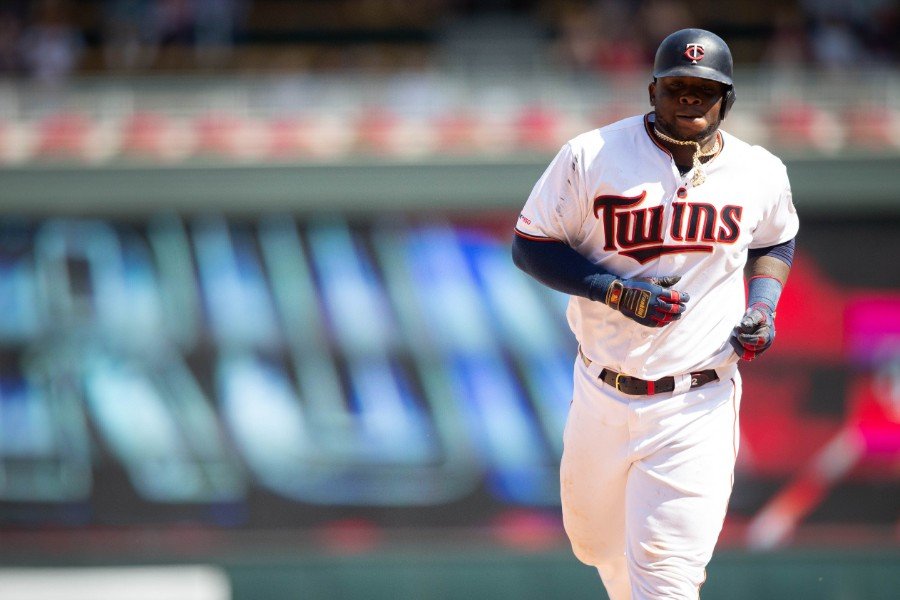 Box Score John Gant: 3 1/3 IP, 3 H, 4 R, 4 ER, 1 BB, 4 K Home Runs: Jake Cave (2), Miguel Sanó (21) Bottom 3 WPA: John Gant -.211, Josh Donaldson -.107, Luis Arraez -.081 Win Probability Chart (via FanGraphs) Stop me if you’ve heard this one before, but the Minnesota Twins fell to the New York Yankees Thursday night. The game functioned as the Twins’ second-straight bullpen game after Lewis Thorpe was removed early in Wednesday’s action with a shoulder injury. John Gant was the lone Twin that didn’t make an appearance during the series finale against the Cleveland Guardians and, thus, was awarded his 15th start of the season against the Yankees. How generous. Gant performed admirably in his 3 ⅓ innings, striking out four. However, the Bronx Bombers scored four runs in a third inning capped off by a Kyle Higashioka home run. The Twins’ bats were kept quiet by Jameson Taillon until the sixth inning when Jake Cave hit his second home run of the year to get them on the board. Jorge Polanco later doubled in Andrelton Simmons and Max Kepler to cut the lead to 6-3. Polanco went 3-for-4 on the night with three RBI to raise his OPS to .822. However, Minnesota’s offense came a little too late. Miguel Sanó added his 21st dinger of the season to bring the Twins within two in the ninth, but they ultimately failed to capitalize further. One positive to arise Thursday night was the return of Andrew Albers to the Twins bullpen. Albers — who is 35-years-old and was called up for the first time this season on Thursday morning — last pitched for the Twins during the 2016 season and hadn’t thrown in the majors at all since 2017. After a rough start to the season at Triple-A, Albers pitched to a 3.86 ERA for the Saints in 15 starts. He also was a member of the Canadian national team who fell just short of an Olympic berth earlier this summer. He tossed four innings and struck out four while surrendering only a single earned run Thursday night. The Twins and Yankees return to action on Friday evening when Charlie Barnes (0-2, 4.91) is expected to go up against Nestor Cortes (1-1, 2.55). First pitch is scheduled for 6:05 p.m. CT. Postgame Interviews Bullpen Usage Spreadsheet SAT SUN MON TUE WED THURS TOT Gant 0 0 17 0 0 61 78 Barnes 0 73 0 0 0 0 73 Albers 0 0 0 0 0 63 63 Minaya 0 0 19 0 40 0 59 García 0 21 0 0 35 0 56 Colomé 0 13 10 0 31 0 54 Garza Jr. 16 0 0 13 23 0 52 Thielbar 0 15 19 0 9 0 43 Duffey 0 27 0 0 14 0 41 Coulombe 10 0 0 0 7 19 36 MORE FROM TWINS DAILY — Latest Twins coverage from our writers — Recent Twins discussion in our forums — Follow Twins Daily via Twitter, Facebook or email
 -
Louie Varland is the big one. He lacks a third pitch, but his fastball and breaking ball are solid. Griffin Jax is great the first time he faces batters. Tyler Beck is another name to watch. Just got called up to Double-A. He's 25 already but similar to Gross he has great K numbers and doesn't walk many.
-
Admittedly, I don't know a ton about Peña. As for Boyd, he's a fun guy to watch! I think if the Saints weren't full of AAAA players and ex-MLBers he may have been called up. Maybe he will now that Broxton has been cut. Boyd actually played junior college football in 2019 after spending time with the As since 2012. Heres a link to a story: https://www.kwch.com/2021/06/19/bj-boyd-reflects-path-wichita-playing-college-football/. Probably not an MLB guy, but a cool story nonetheless.
-
I was pretty busy yesterday, so we'll do that chat today instead! Submit Qs and I'll submit As beginning in an hour or so.
-
Scouting Twins Prospects: RHP Ben Gross
Lucas Seehafer PT replied to Lucas Seehafer PT's topic in Twins Minor League Talk
Just visuals, unfortunately. As far as I'm aware, there's no great way to get Statcast-ish data from minor league teams. Also, the angle that most Cedar Rapids games are shown from isn't the greatest, which can make more minute vertical movement difficult to track. It may be a flawed eval, I'm more than willing to admit, but it's the best I got given the circumstances. -
Scouting Twins Prospects: RHP Ben Gross
Lucas Seehafer PT replied to Lucas Seehafer PT's topic in Twins Minor League Talk
Probably pretty fun for the player development staff as well! They took a decent college pitcher and turned him into a force in the minors. That's got to feel good. -
Scouting Twins Prospects: RHP Ben Gross
Lucas Seehafer PT replied to Lucas Seehafer PT's topic in Twins Minor League Talk
As they say, the best way to build a bullpen is to begin with 10 starters in the minors. -
When the Minnesota Twins selected right-hander Ben Gross out of Duke University with the 299th overall pick during the 2019 MLB Draft, they likely didn't envision that he would put together the kind of season he has in 2021. At least not this soon into his career and assuredly not after losing an entire season of development due to a global pandemic. Image courtesy of Image courtesy Bri Ostwinkle When the Minnesota Twins selected right-hander Ben Gross out of Duke University with the 299th overall pick during the 2019 MLB Draft, they likely didn't envision that he would put together the kind of season he has in 2021. At least not this soon into his career and assuredly not after losing an entire season of development due to a global pandemic. The New Jersey native had a solid if unremarkable college career, pitching for three seasons for the Princeton Tigers — where he achieved Second Team All-Ivy League honors in 2018 — before registering a 4.40 ERA in 75 innings for the Blue Devils during his senior year. Gross went undrafted out of high school and was selected with pick 1,032 in the 2018 draft by the Houston Astros before signing with the Twins. Gross pitches solely from the stretch and utilizes a three-quarter arm slot. His delivery is compact and fluid, with good push off his back leg. The Duke product primarily employs a fastball-slider pitch mix with the occasional changeup, though "occasional" might be a bit of an overestimate. His fastball touches the low- to mid-90s, sitting around 92-93 mph, and is … alright. It doesn't have a ton of ride, nor does it sink. However, on most nights, he can command it pretty well, placing it where he wants to and using it to get ahead in the count. It plays best up in the zone, but it will likely be an average pitch at best at the major league level. Gross's best offering, by far, is his slider. While his command of it sometimes waxes and wanes throughout a game, hitters have a tough time making any contact at all when it's working. Gross has struck out 98 batters in 77 innings this season for High-A Cedar Rapids, the majority of which have been a result of his slider. His 11.5 K/9 rate is among the best in the Twins' system, and his 2.7 BB/9 is a good indication of his overall control. Before his most recent start when he walked three batters, Gross had only walked more than two batters in an outing on one occasion this summer. In all likelihood, the role in which Gross would find the most success should he make it to the big leagues would be out of the bullpen. The limited upside of his fastball in combination with his lack of a third pitch makes it highly unlikely that he will stick as a starter. However, his slider has true MLB potential, particularly if he hones in his command. Hear more from Ben in his conversation with Seth on Twins Spotlight this past offseason. MORE FROM TWINS DAILY — Latest Twins coverage from our writers — Recent Twins discussion in our forums — Follow Twins Daily via Twitter, Facebook or email — Read more of Lucas's minor league prospect coverage here View full article
-
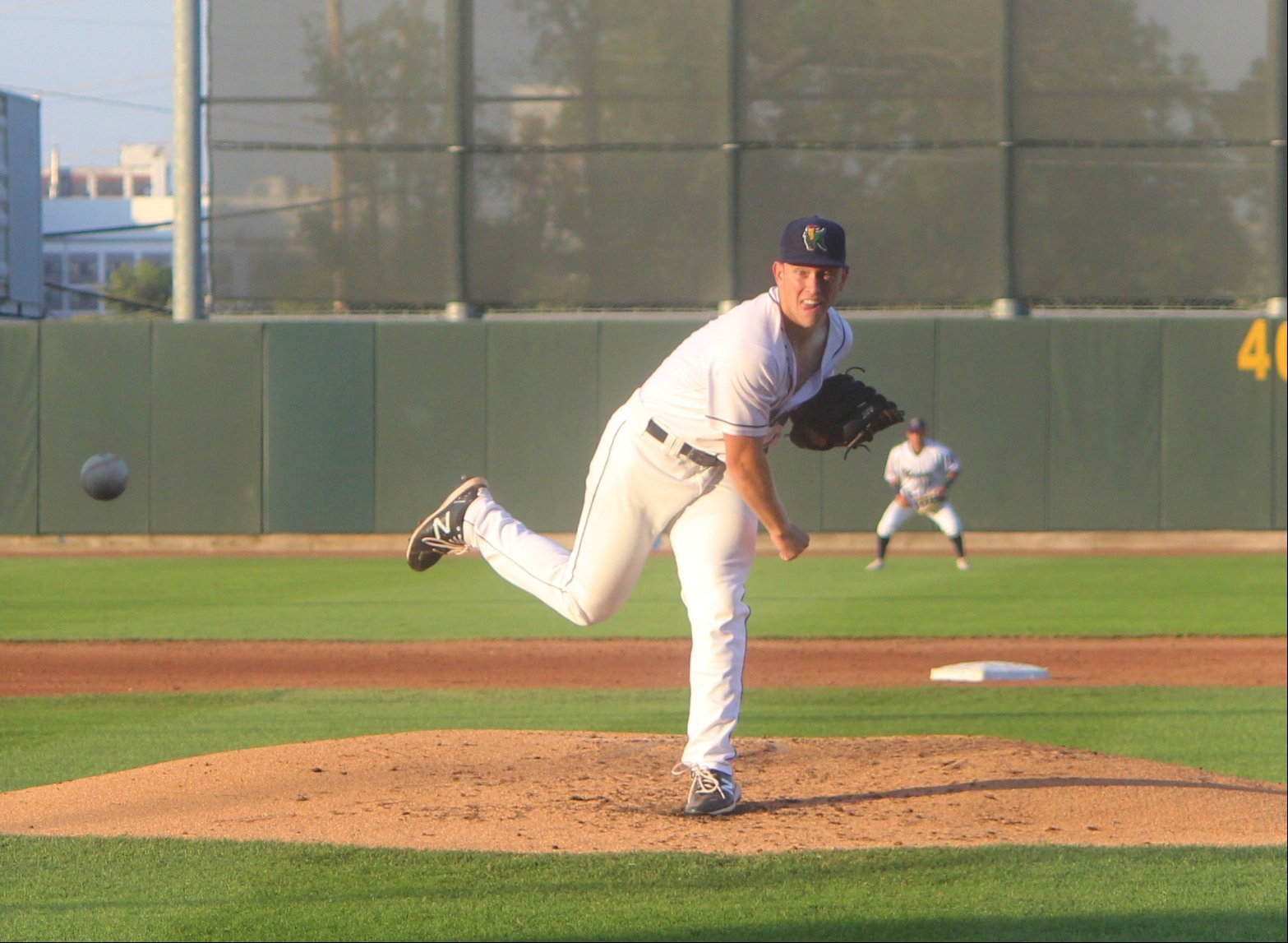 The New Jersey native had a solid if unremarkable college career, pitching for three seasons for the Princeton Tigers — where he achieved Second Team All-Ivy League honors in 2018 — before registering a 4.40 ERA in 75 innings for the Blue Devils during his senior year. Gross went undrafted out of high school and was selected with pick 1,032 in the 2018 draft by the Houston Astros before signing with the Twins. Gross pitches solely from the stretch and utilizes a three-quarter arm slot. His delivery is compact and fluid, with good push off his back leg. The Duke product primarily employs a fastball-slider pitch mix with the occasional changeup, though "occasional" might be a bit of an overestimate. His fastball touches the low- to mid-90s, sitting around 92-93 mph, and is … alright. It doesn't have a ton of ride, nor does it sink. However, on most nights, he can command it pretty well, placing it where he wants to and using it to get ahead in the count. It plays best up in the zone, but it will likely be an average pitch at best at the major league level. Gross's best offering, by far, is his slider. While his command of it sometimes waxes and wanes throughout a game, hitters have a tough time making any contact at all when it's working. Gross has struck out 98 batters in 77 innings this season for High-A Cedar Rapids, the majority of which have been a result of his slider. His 11.5 K/9 rate is among the best in the Twins' system, and his 2.7 BB/9 is a good indication of his overall control. Before his most recent start when he walked three batters, Gross had only walked more than two batters in an outing on one occasion this summer. In all likelihood, the role in which Gross would find the most success should he make it to the big leagues would be out of the bullpen. The limited upside of his fastball in combination with his lack of a third pitch makes it highly unlikely that he will stick as a starter. However, his slider has true MLB potential, particularly if he hones in his command. Hear more from Ben in his conversation with Seth on Twins Spotlight this past offseason. MORE FROM TWINS DAILY — Latest Twins coverage from our writers — Recent Twins discussion in our forums — Follow Twins Daily via Twitter, Facebook or email — Read more of Lucas's minor league prospect coverage here
 -
The doldrums of August have arrived, the Minnesota Twins are firmly outside of the playoff picture, and fans' eyes have begun to aim their gaze with increasing amounts of intensity towards the offseason. While free agency and trades most often dominate the conversation during the winter, another topic of conversation quietly drums on in the background: the 40-man roster. Image courtesy of Seth Stohs, Twins Daily The doldrums of August have arrived, the Minnesota Twins are firmly outside of the playoff picture, and fans' eyes have begun to aim their gaze with increasing amounts of intensity towards the offseason. While free agency and trades most often dominate the conversation during the winter, another topic of conversation quietly drums on in the background: the 40-man roster. The Twins will be faced with several decisions during the offseason concerning the makeup of their roster, beginning with who's placed on and removed from the 40-man. While it may seem as though the team will be confronted with many impossible decisions, the fact of the matter is that the Twins are well-positioned to add critical prospects to the 40-man without losing much in the way of established talent and productivity. Below is a discussion of the Twins 40-man roster, primarily regarding their top prospects. Twins Daily's most recent Top 30 prospect list was used for reference. Already on the 40-man Jordan Balazovic, RHP Jhoan Duran, RHP Drew Strotman, RHP Gilberto Celestino, OF Edwar Colina, RHP Brent Rooker, OF/DH Nick Gordon, UTIL Of the players listed above, only Rooker's future with the team appears to be dubious. Perhaps Gordon's as well. If the Twins were to try to drop them from the 40-man — something that I don't consider to be particularly likely — they both would be claimed. While Rooker and Gordon may not remain as Twins for the long haul, Minnesota likely won't just give them away for free. The remainder of the athletes above will probably fill critical roles with the Twins, if not next summer, then in the summers to follow. Not eligible for Rule 5 Draft or Minor League Free Agency Matt Canterino, RHP Simeon Woods Richardson, RHP Austin Martin, OF/SS Aaron Sabato, 1B/DH Keoni Cavaco, INF Misael Urbina, OF Matt Wallner, OF/DH Alerick Soulaire, UTIL Will Holland, INF Marco Raya, RHP Spencer Steer, INF Steve Hajjar, LHP Louie Varland, RHP Noah Miller, INF Chase Petty, RHP All of these guys are going to be sticking around for at least one more season, if not longer. To be eligible for the Rule 5 Draft, a player must have spent at least five seasons with the same team if they were signed or drafted during or after high school or at least four seasons if drafted out of college. To be eligible for minor league free agency, an athlete must have spent at least six full seasons with the same team. None of the players above meet the criteria, so they aren't going anywhere unless traded. Additionally, save for perhaps Austin Martin and Matt Canterino, it's unlikely that any of the above athletes will be promoted to the majors at any point next season. The majority are still fairly young or lack professional experience, meaning some more seasoning in the minor leagues is more than warranted. 40-man Locks Jose Miranda, INF Joe Ryan, RHP Josh Winder, RHP Cole Sands, RHP Royce Lewis, SS/OF Jovani Moran, LHP There's no chance that the Twins will risk losing any of these guys. Miranda has been the most impressive minor league player in the system — if not all of MiLB — and will likely slot in somewhere in the infield next season. Joe Ryan and Josh Winder will probably be among those competing for a starting rotation spot next spring. Cole Sands has dominated the minors when healthy. Royce Lewis is a potential franchise cornerstone. Jovani Moran is already an MLB-caliber reliever. While all five athletes may not make the Opening Day roster, they will all accumulate service time beginning next summer, if not sooner. 50/50 Chance Blayne Enlow, RHP Chris Vallimont, RHP Yennier Cano, RHP Ian Hamilton, RHP Yunior Severino, INF Jermaine Palacios, INF Here's where the Twins need to make some decisions. Enlow was a third-round pick in 2017 out of high school and has been phenomenal during his minor league career. However, he will miss a good chunk of next season — if not the entire season — after undergoing Tommy John surgery earlier this summer. While that may seem to disqualify him from Rule 5 consideration, a team could select Enlow and easily keep him on the 60-day IL for the entire season. Doing so would save his 40-man roster spot for another athlete and effectively eliminate the chance for Enlow to be returned to the Twins. Because of this, I would not be surprised if the Twins placed him on the 40-man rather than risk losing him for nothing. As I have discussed frequently, Vallimont is an enigma. He has fantastic raw stuff and strikeout numbers, but he lacks command and gives up too many free passes and runs. While he may eventually become an MLB pitcher, he isn't particularly close to being one at the moment. For this reason, I think it would be unlikely that a team would select him in the Rule 5 Draft, and, as such, I could see the Twins keeping him off their 40-man. Cano is an electric bullpen arm that dominated the lower minor leagues but has struggled a little bit since being promoted to Triple-A. That said, he has the raw stuff to carve out a major league career. He's already 27-years-old, but has only spent two seasons in the minors after signing as a free agent in 2019. So while he isn't eligible for the Rule 5 Draft or minor league free agency, one figures that if he's going to make it to the big leagues, he'll likely have to do it soon. I'd be surprised if we don't see him in Minneapolis at some point next season. Odds are that he won't be added to the 40-man until next season if he isn't by the end of this one. Both Severino and Palacios were former highly-touted prospects who failed to live up to expectations, though both have been performing exceptionally well as of late. As was the case with Vallimont, neither are ready to face MLB pitchers consistently. However, both still have a fair amount of potential, especially if their recent output remains. Palacios would be eligible for free agency if he is not rostered, while Severino would be exposed to the Rule 5 Draft. If I'm the Twins, I place Severino on the 40-man and hope I can re-sign Palacios. Hamilton's situation is akin to that of Palacios. He's a former highly-regarded prospect who will be eligible for free agency if not added to the 40-man. He's shown promise this season at the Triple-A level, hitting 100 mph with his fastball on multiple occasions. Frankly, it's a little surprising that the Twins haven't given him a shot to this point, and, who knows, maybe they'll do so before the summer is over. Regardless, Hamilton has shown that he still has MLB talent and simply letting him walk could prove to be a poor decision. Rather Unlikely Notable Prospects Wander Javier, SS Trey Cabbage, OF/DH Both Javier and Cabbage will be eligible for minor league free agency following the season, though I doubt that the Twins will use that fact as motivation to put them on the 40-man. Javier has been too inconsistent at the plate to justify a roster spot, while Cabbage is a power-hitting corner outfielder/1B/DH-type. Cabbage is in the midst of a career year and does have some value; however, the Twins are loaded with young, power-hitting outfield talent. He could probably fetch something like a potential bullpen arm in a trade, but the odds of a team trading for him when they could try to sign him away from the Twins are low. Impending Free Agents Michael Pineda, RHP Alexander Colome, RHP Andrelton Simmons, SS The Twins may try to re-sign Pineda and Colome this coming winter, but Simmons seems highly unlikely to return, especially with Lewis's arrival right around the corner. I'd put the over/under on open 40-man roster spots from this group at 1.5. 40-Man Spots That May Be Up For Grabs Charlie Barnes, LHP Devin Smeltzer, LHP Beau Burrows, RHP Danny Coulombe, LHP Luke Farrell, RHP Edgar Garcia, RHP Ralph Garza Jr., RHP Juan Minaya, RHP Cody Stashak, RHP Lewis Thorpe, LHP Nick Vincent, RHP Derek Law, RHP Willians Astudillo, UTIL Jake Cave, OF Kyle Garlick, OF Rob Refsnyder, OF The Twins have a bevy of bullpen arms, bench players, and trade candidates that could be on the move this offseason. As such, the team has at least 16 40-man spots — and that may be an underestimate — to play with. Add in the impending free agents, and that number jumps to 19. Subtract the locks, and that number falls to 14. So while it may seem as though the Twins are on the cusp of a roster crunch at first blush, the reality is that the team has plenty of room to play with this coming winter. If the team loses anyone to the Rule 5 Draft or minor league free agency, it's because the team determined that they were of little value to them moving forward. MORE FROM TWINS DAILY — Latest Twins coverage from our writers — Recent Twins discussion in our forums — Follow Twins Daily via Twitter, Facebook or email — Read more of Lucas's minor league prospect coverage here View full article
- 63 replies
-
- 3
-
-
- jose miranda
- josh winder
- (and 3 more)
-
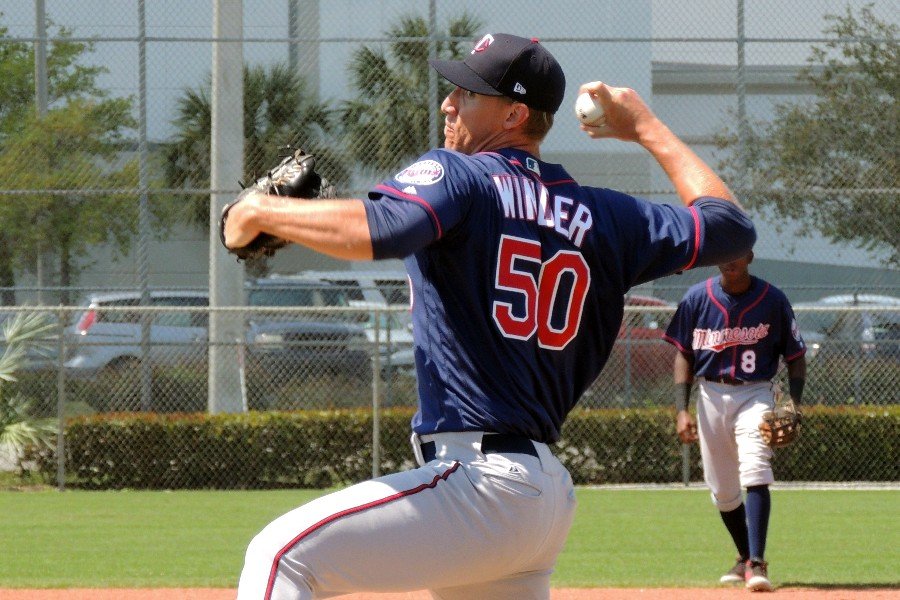 The Twins will be faced with several decisions during the offseason concerning the makeup of their roster, beginning with who's placed on and removed from the 40-man. While it may seem as though the team will be confronted with many impossible decisions, the fact of the matter is that the Twins are well-positioned to add critical prospects to the 40-man without losing much in the way of established talent and productivity. Below is a discussion of the Twins 40-man roster, primarily regarding their top prospects. Twins Daily's most recent Top 30 prospect list was used for reference. Already on the 40-man Jordan Balazovic, RHP Jhoan Duran, RHP Drew Strotman, RHP Gilberto Celestino, OF Edwar Colina, RHP Brent Rooker, OF/DH Nick Gordon, UTIL Of the players listed above, only Rooker's future with the team appears to be dubious. Perhaps Gordon's as well. If the Twins were to try to drop them from the 40-man — something that I don't consider to be particularly likely — they both would be claimed. While Rooker and Gordon may not remain as Twins for the long haul, Minnesota likely won't just give them away for free. The remainder of the athletes above will probably fill critical roles with the Twins, if not next summer, then in the summers to follow. Not eligible for Rule 5 Draft or Minor League Free Agency Matt Canterino, RHP Simeon Woods Richardson, RHP Austin Martin, OF/SS Aaron Sabato, 1B/DH Keoni Cavaco, INF Misael Urbina, OF Matt Wallner, OF/DH Alerick Soulaire, UTIL Will Holland, INF Marco Raya, RHP Spencer Steer, INF Steve Hajjar, LHP Louie Varland, RHP Noah Miller, INF Chase Petty, RHP All of these guys are going to be sticking around for at least one more season, if not longer. To be eligible for the Rule 5 Draft, a player must have spent at least five seasons with the same team if they were signed or drafted during or after high school or at least four seasons if drafted out of college. To be eligible for minor league free agency, an athlete must have spent at least six full seasons with the same team. None of the players above meet the criteria, so they aren't going anywhere unless traded. Additionally, save for perhaps Austin Martin and Matt Canterino, it's unlikely that any of the above athletes will be promoted to the majors at any point next season. The majority are still fairly young or lack professional experience, meaning some more seasoning in the minor leagues is more than warranted. 40-man Locks Jose Miranda, INF Joe Ryan, RHP Josh Winder, RHP Cole Sands, RHP Royce Lewis, SS/OF Jovani Moran, LHP There's no chance that the Twins will risk losing any of these guys. Miranda has been the most impressive minor league player in the system — if not all of MiLB — and will likely slot in somewhere in the infield next season. Joe Ryan and Josh Winder will probably be among those competing for a starting rotation spot next spring. Cole Sands has dominated the minors when healthy. Royce Lewis is a potential franchise cornerstone. Jovani Moran is already an MLB-caliber reliever. While all five athletes may not make the Opening Day roster, they will all accumulate service time beginning next summer, if not sooner. 50/50 Chance Blayne Enlow, RHP Chris Vallimont, RHP Yennier Cano, RHP Ian Hamilton, RHP Yunior Severino, INF Jermaine Palacios, INF Here's where the Twins need to make some decisions. Enlow was a third-round pick in 2017 out of high school and has been phenomenal during his minor league career. However, he will miss a good chunk of next season — if not the entire season — after undergoing Tommy John surgery earlier this summer. While that may seem to disqualify him from Rule 5 consideration, a team could select Enlow and easily keep him on the 60-day IL for the entire season. Doing so would save his 40-man roster spot for another athlete and effectively eliminate the chance for Enlow to be returned to the Twins. Because of this, I would not be surprised if the Twins placed him on the 40-man rather than risk losing him for nothing. As I have discussed frequently, Vallimont is an enigma. He has fantastic raw stuff and strikeout numbers, but he lacks command and gives up too many free passes and runs. While he may eventually become an MLB pitcher, he isn't particularly close to being one at the moment. For this reason, I think it would be unlikely that a team would select him in the Rule 5 Draft, and, as such, I could see the Twins keeping him off their 40-man. Cano is an electric bullpen arm that dominated the lower minor leagues but has struggled a little bit since being promoted to Triple-A. That said, he has the raw stuff to carve out a major league career. He's already 27-years-old, but has only spent two seasons in the minors after signing as a free agent in 2019. So while he isn't eligible for the Rule 5 Draft or minor league free agency, one figures that if he's going to make it to the big leagues, he'll likely have to do it soon. I'd be surprised if we don't see him in Minneapolis at some point next season. Odds are that he won't be added to the 40-man until next season if he isn't by the end of this one. Both Severino and Palacios were former highly-touted prospects who failed to live up to expectations, though both have been performing exceptionally well as of late. As was the case with Vallimont, neither are ready to face MLB pitchers consistently. However, both still have a fair amount of potential, especially if their recent output remains. Palacios would be eligible for free agency if he is not rostered, while Severino would be exposed to the Rule 5 Draft. If I'm the Twins, I place Severino on the 40-man and hope I can re-sign Palacios. Hamilton's situation is akin to that of Palacios. He's a former highly-regarded prospect who will be eligible for free agency if not added to the 40-man. He's shown promise this season at the Triple-A level, hitting 100 mph with his fastball on multiple occasions. Frankly, it's a little surprising that the Twins haven't given him a shot to this point, and, who knows, maybe they'll do so before the summer is over. Regardless, Hamilton has shown that he still has MLB talent and simply letting him walk could prove to be a poor decision. Rather Unlikely Notable Prospects Wander Javier, SS Trey Cabbage, OF/DH Both Javier and Cabbage will be eligible for minor league free agency following the season, though I doubt that the Twins will use that fact as motivation to put them on the 40-man. Javier has been too inconsistent at the plate to justify a roster spot, while Cabbage is a power-hitting corner outfielder/1B/DH-type. Cabbage is in the midst of a career year and does have some value; however, the Twins are loaded with young, power-hitting outfield talent. He could probably fetch something like a potential bullpen arm in a trade, but the odds of a team trading for him when they could try to sign him away from the Twins are low. Impending Free Agents Michael Pineda, RHP Alexander Colome, RHP Andrelton Simmons, SS The Twins may try to re-sign Pineda and Colome this coming winter, but Simmons seems highly unlikely to return, especially with Lewis's arrival right around the corner. I'd put the over/under on open 40-man roster spots from this group at 1.5. 40-Man Spots That May Be Up For Grabs Charlie Barnes, LHP Devin Smeltzer, LHP Beau Burrows, RHP Danny Coulombe, LHP Luke Farrell, RHP Edgar Garcia, RHP Ralph Garza Jr., RHP Juan Minaya, RHP Cody Stashak, RHP Lewis Thorpe, LHP Nick Vincent, RHP Derek Law, RHP Willians Astudillo, UTIL Jake Cave, OF Kyle Garlick, OF Rob Refsnyder, OF The Twins have a bevy of bullpen arms, bench players, and trade candidates that could be on the move this offseason. As such, the team has at least 16 40-man spots — and that may be an underestimate — to play with. Add in the impending free agents, and that number jumps to 19. Subtract the locks, and that number falls to 14. So while it may seem as though the Twins are on the cusp of a roster crunch at first blush, the reality is that the team has plenty of room to play with this coming winter. If the team loses anyone to the Rule 5 Draft or minor league free agency, it's because the team determined that they were of little value to them moving forward. MORE FROM TWINS DAILY — Latest Twins coverage from our writers — Recent Twins discussion in our forums — Follow Twins Daily via Twitter, Facebook or email — Read more of Lucas's minor league prospect coverage here
- 63 comments
-
- 7
-
-
- jose miranda
- josh winder
- (and 3 more)
-
 Box Score Kenta Maeda: 6 IP, 3 H, 0 R, 0 ER, 1 BB, 4 K (76 pitches) Home Runs: Max Kepler (15), Luis Arraez (2), Rooker (6), Ryan Jeffers (10) Top 3 WPA: Maeda .153, Luis Arraez .108, Mitch Garver .097 Win Probability Chart (via FanGraphs) Saturday's win for the Twins was one of those games where seemingly everything went according to plan, an exceedingly rare occurrence in the lost season that is Minnesota's 2021 campaign. Kenta Maeda started on the hill and gave the Twins six shutout innings more akin to his 2020 self than what he has put on display for the majority of the season. That said, Maeda has been dominant over his last eight starts, putting up All-Star caliber numbers. Minnesota's bats were hot from the jump as Max Kepler led off the charge with his 15th home run of the season on the game's second pitch. Luis Arraez, Brent Rooker, and Ryan Jeffers would later launch no-doubters of their own to add to the team's score. In all, the Twins registered an exit velocity of at least 100 mph on 12 balls that were put in play, which went for a combined 9-for-12 with four home runs and three doubles. Every member of the Twins lineup picked up at least one hit, save for Jorge Polanco — though he did reach base on a hit-by-pitch in the bottom of the seventh inning — and Willians Astudillo, who entered the game in the eighth inning as a pinch hitter. Since the trade deadline, the Twins have logged an 8-5 record against the St. Louis Cardinals, Cincinnati Reds, Houston Astros, Chicago White Sox, and Tampa Bay Rays. While it means little in the grander scheme of the season, it's encouraging to see the Twins perform as well as they have lately against quality opponents. In some ways, this stretch puts on display what the Twins could look like in 2022 if they're able to secure quality pitching to supplement their offense during the offseason. Remembering 1991 Prior to the start of the game, the Twins held a ceremony to honor the 1991 World Series champion team. It was a moving presentation that brought back great memories for Twins fans (and probably some not so great ones for Ron Gant). Below are some videos from the ceremony courtesy Bally Sports North. Postgame Interviews Coming soon Bullpen Usage Spreadsheet MON TUE WED THU FRI SAT TOT Barnes 68 0 0 0 0 0 68 García 32 0 0 0 27 0 59 Gant 0 11 0 0 41 0 52 Vincent 0 0 0 0 37 0 37 Colomé 0 10 14 0 0 0 24 Thielbar 0 0 20 0 0 0 20 Garza Jr. 0 0 0 0 0 16 16 Duffey 0 15 0 0 0 0 15 Minaya 0 0 15 0 0 0 15 Coulombe 0 0 0 0 0 10 10 MORE FROM TWINS DAILY — Latest Twins coverage from our writers — Recent Twins discussion in our forums — Follow Twins Daily via Twitter, Facebook or email
 -
Kenta Maeda continued his hot streak and the bats provided him with plenty of run support as the Minnesota Twins topped the Tampa Bay Rays. Image courtesy of Ken Blaze-USA TODAY Sports Kenta Maeda continued his hot streak and the bats provided him with plenty of run support as the Minnesota Twins topped the Tampa Bay Rays. Box Score Kenta Maeda: 6 IP, 3 H, 0 R, 0 ER, 1 BB, 4 K (76 pitches) Home Runs: Max Kepler (15), Luis Arraez (2), Rooker (6), Ryan Jeffers (10) Top 3 WPA: Maeda .153, Luis Arraez .108, Mitch Garver .097 Win Probability Chart (via FanGraphs) Saturday's win for the Twins was one of those games where seemingly everything went according to plan, an exceedingly rare occurrence in the lost season that is Minnesota's 2021 campaign. Kenta Maeda started on the hill and gave the Twins six shutout innings more akin to his 2020 self than what he has put on display for the majority of the season. That said, Maeda has been dominant over his last eight starts, putting up All-Star caliber numbers. Minnesota's bats were hot from the jump as Max Kepler led off the charge with his 15th home run of the season on the game's second pitch. Luis Arraez, Brent Rooker, and Ryan Jeffers would later launch no-doubters of their own to add to the team's score. In all, the Twins registered an exit velocity of at least 100 mph on 12 balls that were put in play, which went for a combined 9-for-12 with four home runs and three doubles. Every member of the Twins lineup picked up at least one hit, save for Jorge Polanco — though he did reach base on a hit-by-pitch in the bottom of the seventh inning — and Willians Astudillo, who entered the game in the eighth inning as a pinch hitter. Since the trade deadline, the Twins have logged an 8-5 record against the St. Louis Cardinals, Cincinnati Reds, Houston Astros, Chicago White Sox, and Tampa Bay Rays. While it means little in the grander scheme of the season, it's encouraging to see the Twins perform as well as they have lately against quality opponents. In some ways, this stretch puts on display what the Twins could look like in 2022 if they're able to secure quality pitching to supplement their offense during the offseason. Remembering 1991 Prior to the start of the game, the Twins held a ceremony to honor the 1991 World Series champion team. It was a moving presentation that brought back great memories for Twins fans (and probably some not so great ones for Ron Gant). Below are some videos from the ceremony courtesy Bally Sports North. Postgame Interviews Coming soon Bullpen Usage Spreadsheet MON TUE WED THU FRI SAT TOT Barnes 68 0 0 0 0 0 68 García 32 0 0 0 27 0 59 Gant 0 11 0 0 41 0 52 Vincent 0 0 0 0 37 0 37 Colomé 0 10 14 0 0 0 24 Thielbar 0 0 20 0 0 0 20 Garza Jr. 0 0 0 0 0 16 16 Duffey 0 15 0 0 0 0 15 Minaya 0 0 15 0 0 0 15 Coulombe 0 0 0 0 0 10 10 MORE FROM TWINS DAILY — Latest Twins coverage from our writers — Recent Twins discussion in our forums — Follow Twins Daily via Twitter, Facebook or email View full article
-
I don't think so. If Minaya is back, that means the Twins really struck out on free agents and don't think their arms in the minors are ready, neither of which I foresee. I could see the Twins being very aggressive in the starting pitcher trade market, especially since they have the prospect capital now. The best way to develop two or three minor league starters into major league starters is to start with 10 minor league starters. They have that now. Some will be traded, some will move to the bullpen. I don't think any of them possess the level of talent that would preclude the Twins from trying to add more talent this offseason. And if this season is any indication, you can never have too many starting pitchers (or pitchers in general).
