



Lucas Seehafer PT
-
Posts
525 -
Joined
-
Last visited
-
Days Won
2
Content Type
Profiles
News
Minnesota Twins Videos
2026 Minnesota Twins Top Prospects Ranking
2022 Minnesota Twins Draft Picks
Minnesota Twins Free Agent & Trade Rumors, Notes, & Tidbits
Guides & Resources
2023 Minnesota Twins Draft Picks
The Minnesota Twins Players Project
2024 Minnesota Twins Draft Picks
2025 Minnesota Twins Draft Pick Tracker
2026 Minnesota Twins Draft Tracker: Picks & Bonuses
Forums
Blogs
Events
Store
Downloads
Gallery
Everything posted by Lucas Seehafer PT
-
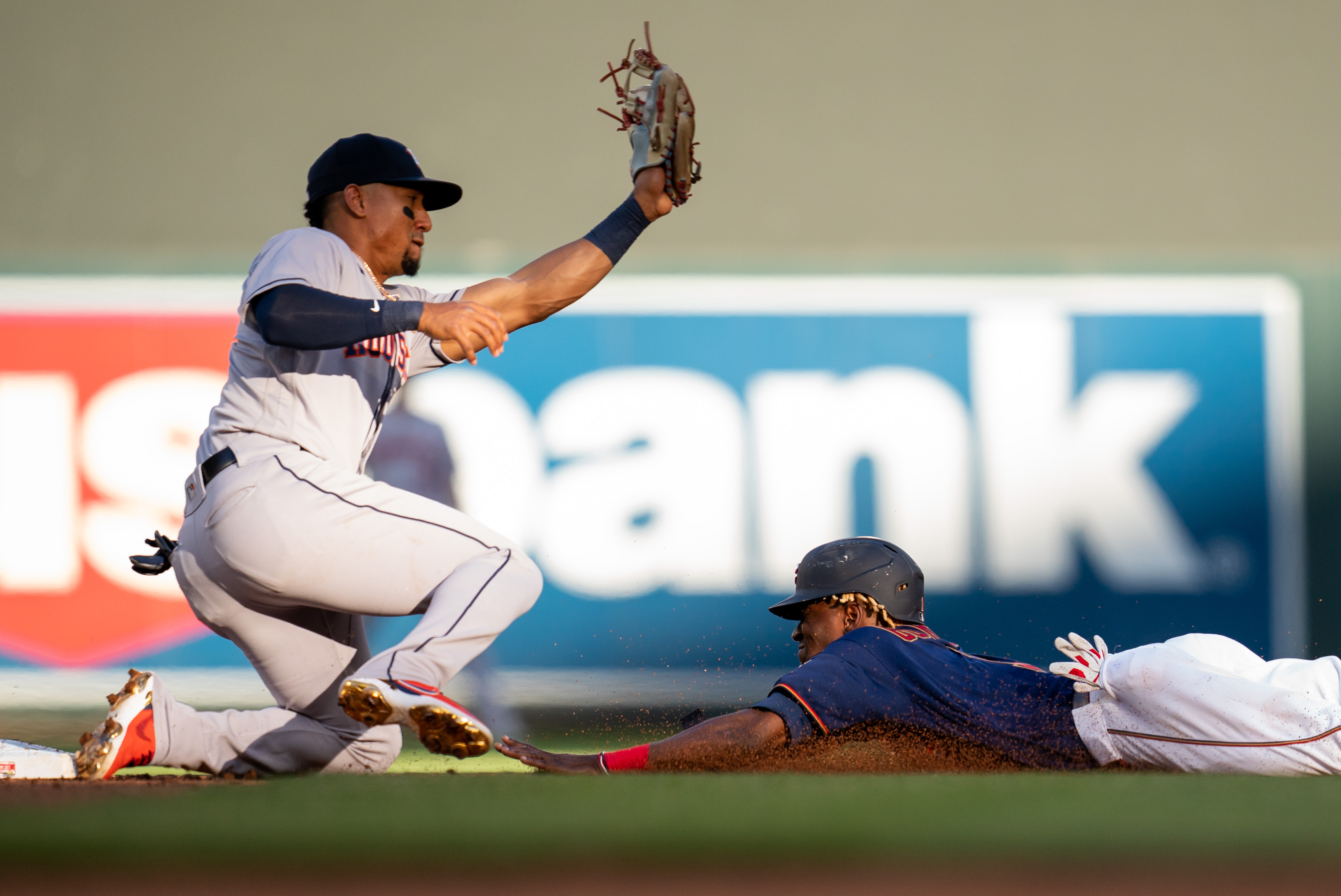 Box Score José Berríos: 7 IP, 5 H, 2 R, 2 ER, 1 BB, 8 K Home Runs: Jorge Polanco (9) Top 3 WPA: José Berríos .266, Jorge Polanco .126, Miguel Sanó .104 Win Probability Chart (via FanGraphs) The Minnesota Twins were in full control from the moment that José Berríos took the mound during the bottom of the first inning. Berríos tossed an absolute gem, striking out eight and lowering his ERA to 3.49 over the course of seven innings for one of his better performances of an already strong campaign. Other than two poorly located pitches against Kyle Tucker and Robel Garcia - the two went back-to-back during the top of the seventh inning - Berríos was virtually unhittable. At the plate, the Twins tagged eight balls with an exit velocity greater than 100 mph, producing five hits. Jorge Polanco continued to display signs of returning to his 2019 form as he went 3-for-4 with a home run and three RBI. He’s slashing .300/.358/.617 with 18 hits and five home runs over his last 15 games. His current .766 OPS would be the third-best of his career behind the 2018 (.773) and 2019 (.841) seasons. Miguel Sanó got the scoring going for the Twins in the bottom of the fourth inning when he launched a double high off the right centerfield wall to score Trevor Larnach. He was later robbed of more RBIs when Astros’ leftfielder Michael Brantley made a sliding catch on a sinking line drive with the bases loaded. While it could be easily argued that Sanó has had one of the more disappointing performances during a Twins’ season littered with disappointing performances, the fact of the matter remains that he has been largely a league-average player. (His wRC+ is hovering right around 100.) There's even some evidence that he's getting a little unlucky. Sanó currently owns a .214 batting average on balls in play (BABIP), which is the lowest of his career by far. (He owns a .329 BABIP for his career and his previous low was in 2018 with a .286 figure.) Entering play on Saturday, the MLB average BABIP was .289. Sanó will always have a high strikeout rate and will often fail to produce in situations where, frankly, he needs to, but if he continues to put the ball in play at the current rate that he is, odds are he’ll end the season as a slightly-above average player statistically speaking. Another bright spot for the Twins during their win was the continued strong play of Nick Gordon. Gordon made yet another start in centerfield and once again performed quite well defensively. His initial reactions on two balls in the right centerfield gap were solid and his strong path to the ball combined with his above-average speed allowed him to make two fairly difficult catches look easy. Gordon went 1-for-4 at the plate, but reached base a second time after a dropped third strike rolled to the backstop. He proceeded to steal second base both times he reached, putting him in some truly rarified air. The key for Gordon’s career moving forward is continuing to perform well in center. He can play a serviceable second base and, while it’s not his ideal defensive position, would be alright in fits and starts at shortstop. The biggest thing that was keeping Gordon as a fringe prospect - his health history notwithstanding - was his overall lack of power combined with mediocre arm strength. He had the speed to get to balls as short, but sometimes struggled with fielding the ball cleanly and throwing runners out. If he can show average to above-average skills in center, his value on the team will rise rather significantly. There just aren’t many role players on MLB rosters who can produce a .300 or so batting average and fill in at both shortstop, center and second base. Finally, and there really isn’t any way to relay this stat other than to shoehorn the bejeezus out of it, Larnach’s legs simply can’t catch a break. Postgame Interviews No postgame interviews tonight as the game was aired on Fox. Bullpen Usage Spreadsheet SUN TUE WED THU FRI SAT TOT Jax 0 23 51 0 0 0 74 Duffey 14 0 0 20 22 0 56 Farrell 13 19 0 23 0 0 55 Alcalá 10 21 0 7 15 0 53 Robles 15 0 0 11 0 15 41 Shoemaker 0 0 0 0 35 0 35 Colomé 0 9 25 0 0 0 34 Rogers 0 20 0 0 3 9 32 MORE FROM TWINS DAILY — Latest Twins coverage from our writers — Recent Twins discussion in our forums — Follow Twins Daily via Twitter, Facebook or email
 -
José Berríos threw one of his greatest games of the season and big, timely hits from Miguel Sanó and Jorge Polanco helped drive the Minnesota Twins past the Houston Astros Saturday evening. Oh, and Nick Gordon was a major factor on the base paths and in centerfield. Image courtesy of © Brad Rempel | 2021 Jun 12 José Berríos threw one of his greatest games of the season and big, timely hits from Miguel Sanó and Jorge Polanco helped drive the Minnesota Twins past the Houston Astros Saturday evening. Oh, and Nick Gordon was a major factor on the base paths and in centerfield. Box Score José Berríos: 7 IP, 5 H, 2 R, 2 ER, 1 BB, 8 K Home Runs: Jorge Polanco (9) Top 3 WPA: José Berríos .266, Jorge Polanco .126, Miguel Sanó .104 Win Probability Chart (via FanGraphs) The Minnesota Twins were in full control from the moment that José Berríos took the mound during the bottom of the first inning. Berríos tossed an absolute gem, striking out eight and lowering his ERA to 3.49 over the course of seven innings for one of his better performances of an already strong campaign. Other than two poorly located pitches against Kyle Tucker and Robel Garcia - the two went back-to-back during the top of the seventh inning - Berríos was virtually unhittable. At the plate, the Twins tagged eight balls with an exit velocity greater than 100 mph, producing five hits. Jorge Polanco continued to display signs of returning to his 2019 form as he went 3-for-4 with a home run and three RBI. He’s slashing .300/.358/.617 with 18 hits and five home runs over his last 15 games. His current .766 OPS would be the third-best of his career behind the 2018 (.773) and 2019 (.841) seasons. Miguel Sanó got the scoring going for the Twins in the bottom of the fourth inning when he launched a double high off the right centerfield wall to score Trevor Larnach. He was later robbed of more RBIs when Astros’ leftfielder Michael Brantley made a sliding catch on a sinking line drive with the bases loaded. While it could be easily argued that Sanó has had one of the more disappointing performances during a Twins’ season littered with disappointing performances, the fact of the matter remains that he has been largely a league-average player. (His wRC+ is hovering right around 100.) There's even some evidence that he's getting a little unlucky. Sanó currently owns a .214 batting average on balls in play (BABIP), which is the lowest of his career by far. (He owns a .329 BABIP for his career and his previous low was in 2018 with a .286 figure.) Entering play on Saturday, the MLB average BABIP was .289. Sanó will always have a high strikeout rate and will often fail to produce in situations where, frankly, he needs to, but if he continues to put the ball in play at the current rate that he is, odds are he’ll end the season as a slightly-above average player statistically speaking. Another bright spot for the Twins during their win was the continued strong play of Nick Gordon. Gordon made yet another start in centerfield and once again performed quite well defensively. His initial reactions on two balls in the right centerfield gap were solid and his strong path to the ball combined with his above-average speed allowed him to make two fairly difficult catches look easy. Gordon went 1-for-4 at the plate, but reached base a second time after a dropped third strike rolled to the backstop. He proceeded to steal second base both times he reached, putting him in some truly rarified air. The key for Gordon’s career moving forward is continuing to perform well in center. He can play a serviceable second base and, while it’s not his ideal defensive position, would be alright in fits and starts at shortstop. The biggest thing that was keeping Gordon as a fringe prospect - his health history notwithstanding - was his overall lack of power combined with mediocre arm strength. He had the speed to get to balls as short, but sometimes struggled with fielding the ball cleanly and throwing runners out. If he can show average to above-average skills in center, his value on the team will rise rather significantly. There just aren’t many role players on MLB rosters who can produce a .300 or so batting average and fill in at both shortstop, center and second base. Finally, and there really isn’t any way to relay this stat other than to shoehorn the bejeezus out of it, Larnach’s legs simply can’t catch a break. Postgame Interviews No postgame interviews tonight as the game was aired on Fox. Bullpen Usage Spreadsheet SUN TUE WED THU FRI SAT TOT Jax 0 23 51 0 0 0 74 Duffey 14 0 0 20 22 0 56 Farrell 13 19 0 23 0 0 55 Alcalá 10 21 0 7 15 0 53 Robles 15 0 0 11 0 15 41 Shoemaker 0 0 0 0 35 0 35 Colomé 0 9 25 0 0 0 34 Rogers 0 20 0 0 3 9 32 MORE FROM TWINS DAILY — Latest Twins coverage from our writers — Recent Twins discussion in our forums — Follow Twins Daily via Twitter, Facebook or email View full article
-
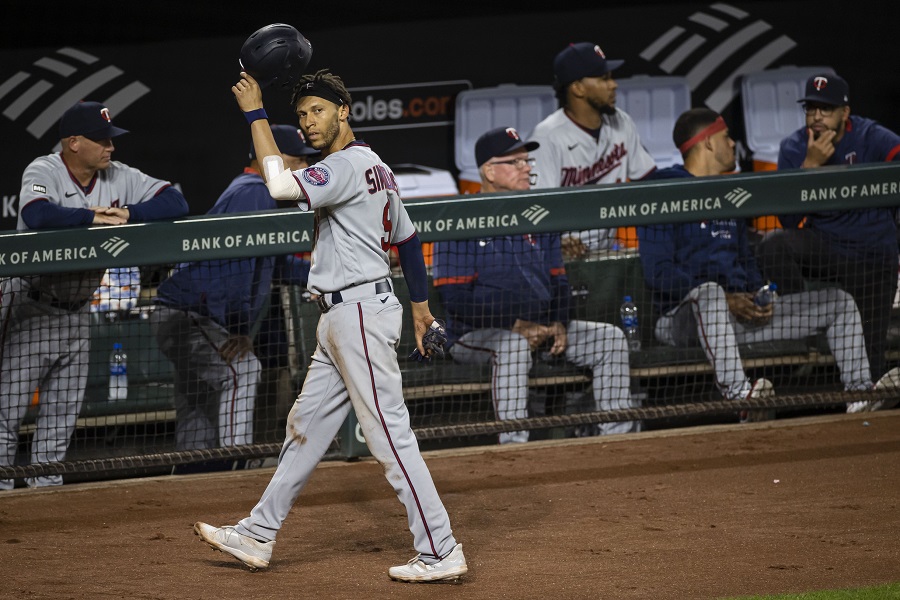 The deal at the time was widely respected, neither panned nor necessarily praised, as it was widely understood that the team’s primary target to replace Polanco, Marcus Semien, who ultimately signed with the Toronto Bluejays, simply did not want to come to Minnesota. Additionally, Simmons had been the definition of a generational talent defensively since his debut in 2012, so there was quite literally no better option on the market if improving the team’s defense was a top priority. Simmons has largely lived up to his defensive reputation on his way to compiling 10 outs above average, according to Baseball Savant, placing him third in all of MLB. However, he’s committed six errors this season, three each throwing and fielding, and his fielding percentage of .968 would be the second-lowest of his career if the season ended today. (He registered a .960 fielding percentage during the COVID shortened 2020 season.) Even still, it would be difficult to argue that a better defensive shortstop exists in the Majors as of this moment, which alone justifies his hefty eight-figure salary. But while Simmons’ glove hasn’t taken much of a dip, his bat has more or less fallen off of a cliff and it’s not as if his offensive “prowess” was akin to the peak of Mt. Everest. The 10-year veteran is currently averaging career-worsts in the following key offensive categories: Exit Velocity: 83.5 mph (peaked at 88.2 mph in 2018) Launch Angle: -3.1 degrees (peaked at +9.5 in 2019) Hard Hit%: 25.6% (peaked at 36.1% in 2018) Whiff%: 20.1% (low: 11.8% in 2015) K%: 17.8% (low: 7.3% in 2018) Simmons owns a .311 batting average on balls in play and has barreled only one(!) of his last 223 batted balls over the last two seasons. If anything, some good luck is preventing his numbers from looking worse. Simply put, Andrelton Simmons, who was never exactly known for his intimidating presence at the plate, is a complete non-factor offensively, even more so than usual. To recap: Simmons has been solid defensively, but is showing some signs of decline, he’s having by far his worst season at the plate, and he isn’t signed beyond this season. So, the question then becomes: What should the Twins do with Andrelton Simmons as the summer progresses? The answer is fairly straightforward, but trading Simmons may be more difficult than it sounds in theory. For starters, most teams in playoff contention, the kind of team that would be the most likely to swing a trade for Simmons due to his age and defensive capabilities, are already pretty set at shortstop, something touched on by Matthew Taylor here. A quick glance over most MLB rosters that are hovering towards the top of the division and wild card standings doesn’t reveal much in the way of obvious fits for Simmons. One potential fit could be the Chicago Cubs, but only if they decide to move on from Javier Báez during the season. Báez isn’t likely to return to Windy City next summer, so shipping him out for prospects may make sense, even as the Cubs stand in second place in the NL Central with a 34-27 record, 0.5 games out from the first-place Milwaukee Brewers. Similarly, the St. Louis Cardinals make some sense as current starter Paul DeJong is currently on rehab assignment and was batting .177/.277/.371 before going on the injured list. But DeJong is only 27-years-old and is under team control for a few more years. However, if Simmons is traded, to a contender or otherwise, expect the return the Twins get in exchange to be rather unimpressive. The most they could likely expect in return is a low-mid-level prospect, perhaps someone akin to infielder Seth Gray or pitcher Chris Vallimont in the Twins’ system (i.e. a prospect with potential, but glaring flaws). Andrelton Simmons is not in the Twins’ long-term plans and was only ever brought on to fill a one year gap before Royce Lewis’s arrival. While Lewis may not appear until late in 2022 after tearing his ACL earlier this year, Simmons’ overall disappointing season makes it wise for the team to move on from him by before the arrival of August. Just don’t expect much in return. MORE FROM TWINS DAILY — Latest Twins coverage from our writers — Recent Twins discussion in our forums — Follow Twins Daily via Twitter, Facebook or email
 -
 When the Minnesota Twins signed veteran shortstop Andrelton Simmons to a one-year, $10.5 million contract this past January they did so with the intention of him not only serving as a stopgap before top prospect Royce Lewis made his much anticipated jump to the Majors but also to shore up a Twins’ defense that desperately needed an upgrade over what Jorge Polanco was providing. Image courtesy of Scott Taetsch, USA TODAY When the Minnesota Twins signed veteran shortstop Andrelton Simmons to a one-year, $10.5 million contract this past January they did so with the intention of him not only serving as a stopgap before top prospect Royce Lewis made his much anticipated jump to the Majors but also to shore up a Twins’ defense that desperately needed an upgrade over what Jorge Polanco was providing. The deal at the time was widely respected, neither panned nor necessarily praised, as it was widely understood that the team’s primary target to replace Polanco, Marcus Semien, who ultimately signed with the Toronto Bluejays, simply did not want to come to Minnesota. Additionally, Simmons had been the definition of a generational talent defensively since his debut in 2012, so there was quite literally no better option on the market if improving the team’s defense was a top priority. Simmons has largely lived up to his defensive reputation on his way to compiling 10 outs above average, according to Baseball Savant, placing him third in all of MLB. However, he’s committed six errors this season, three each throwing and fielding, and his fielding percentage of .968 would be the second-lowest of his career if the season ended today. (He registered a .960 fielding percentage during the COVID shortened 2020 season.) Even still, it would be difficult to argue that a better defensive shortstop exists in the Majors as of this moment, which alone justifies his hefty eight-figure salary. But while Simmons’ glove hasn’t taken much of a dip, his bat has more or less fallen off of a cliff and it’s not as if his offensive “prowess” was akin to the peak of Mt. Everest. The 10-year veteran is currently averaging career-worsts in the following key offensive categories: Exit Velocity: 83.5 mph (peaked at 88.2 mph in 2018) Launch Angle: -3.1 degrees (peaked at +9.5 in 2019) Hard Hit%: 25.6% (peaked at 36.1% in 2018) Whiff%: 20.1% (low: 11.8% in 2015) K%: 17.8% (low: 7.3% in 2018) Simmons owns a .311 batting average on balls in play and has barreled only one(!) of his last 223 batted balls over the last two seasons. If anything, some good luck is preventing his numbers from looking worse. Simply put, Andrelton Simmons, who was never exactly known for his intimidating presence at the plate, is a complete non-factor offensively, even more so than usual. To recap: Simmons has been solid defensively, but is showing some signs of decline, he’s having by far his worst season at the plate, and he isn’t signed beyond this season. So, the question then becomes: What should the Twins do with Andrelton Simmons as the summer progresses? The answer is fairly straightforward, but trading Simmons may be more difficult than it sounds in theory. For starters, most teams in playoff contention, the kind of team that would be the most likely to swing a trade for Simmons due to his age and defensive capabilities, are already pretty set at shortstop, something touched on by Matthew Taylor here. A quick glance over most MLB rosters that are hovering towards the top of the division and wild card standings doesn’t reveal much in the way of obvious fits for Simmons. One potential fit could be the Chicago Cubs, but only if they decide to move on from Javier Báez during the season. Báez isn’t likely to return to Windy City next summer, so shipping him out for prospects may make sense, even as the Cubs stand in second place in the NL Central with a 34-27 record, 0.5 games out from the first-place Milwaukee Brewers. Similarly, the St. Louis Cardinals make some sense as current starter Paul DeJong is currently on rehab assignment and was batting .177/.277/.371 before going on the injured list. But DeJong is only 27-years-old and is under team control for a few more years. However, if Simmons is traded, to a contender or otherwise, expect the return the Twins get in exchange to be rather unimpressive. The most they could likely expect in return is a low-mid-level prospect, perhaps someone akin to infielder Seth Gray or pitcher Chris Vallimont in the Twins’ system (i.e. a prospect with potential, but glaring flaws). Andrelton Simmons is not in the Twins’ long-term plans and was only ever brought on to fill a one year gap before Royce Lewis’s arrival. While Lewis may not appear until late in 2022 after tearing his ACL earlier this year, Simmons’ overall disappointing season makes it wise for the team to move on from him by before the arrival of August. Just don’t expect much in return. MORE FROM TWINS DAILY — Latest Twins coverage from our writers — Recent Twins discussion in our forums — Follow Twins Daily via Twitter, Facebook or email View full article
 -
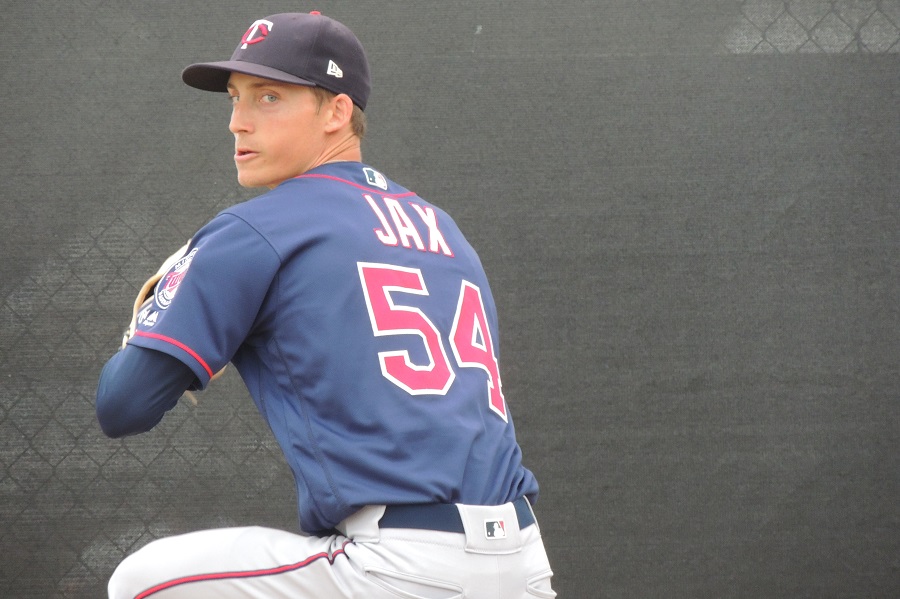 Amateur Career Jax was named the 2013 Gatorade Player of the Year for the state of Colorado as well as a Louisville Slugger High School First-Team All-American after going 7-1 with a 1.74 ERA and a 57/2 K:BB ratio for Cherry Creek High School. He started 29 games on the mound for the Air Force Academy Falcons across his freshman and sophomore seasons while posting a mediocre 5.49 ERA with 115 strikeouts and 56 walks. However, he exploded onto the scene in 2016 during his junior season by going 9-2 with a 2.05 ERA and striking out 90 batters while walking only 20. He was selected as the 2016 Mountain West co-Pitcher of the Year and was named a top 100 prospect for the 2016 MLB Draft by Baseball America. The Twins selected Jax with the 93rd overall pick. Professional Career Jax’s path to the Majors has taken a circuitous route due in large part to his military commitments. You can read all about this process in a story written by Twins Daily’s Seth Stohs (link below) but the long it short of it: Jax was required to remain on active duty following his graduation, which limited him to only nine games pitched during the 2016 and 2017 seasons. However, he has since transitioned into the Air Force reserves, freeing him up to pursue his dream of becoming an MLB pitcher full-time. He spent the 2018 season with the then Ft. Myers Miracle in High-A, starting 14 games and posting a 3.70 ERA in 87 ⅔ innings. He began the 2019 season in Double-A with Pensacola and performed extremely well, registering a 2.67 ERA in 111 ⅓ innings, though his strikeout numbers were paltry (84). Jax made three starts for Triple-A Rochester where he struck out 10 across 16 innings. The two biggest criticisms often thrown at Jax as he rose through the minor leagues were his lackluster strikeout numbers as well as his lack of a true third pitch. His role in today’s MLB, where velocity and strikeouts are king, has been in question throughout his career despite his established track record of success. However, his strikeout numbers saw a surprising and encouraging bump during his 27 innings with the St. Paul Saints this spring, as he struckout 29 batters across five starts, including a career-high 10 against the Iowa Cubs. While not phenomenal by any means, his 1.1 K/IP rate is by far the highest of his career and arguably changed his trajectory from at best a Quad-A player to one who may have a chance to stick, even if his home turns out to be in the bullpen long-term. Jax’s best pitch is his slider, which he most frequently employs to pick up his strikeouts, though he’ll throw it at any point in the count. He also boasts a fastball that sits in the low-90s and occasionally reaches as high as 94 mph. Jax will mix in a changeup as well as an occasional looping curveball, but his command on both, as well as their combination of velocity and movement, or lack thereof, leaves something to be desired. The Twins made a name for themselves for pursuing hurlers with this exact pitch mix and turning them into serviceable bullpen arms. Jax’s name won’t show up on any of the Twins top prospect lists, but it isn’t out of the realm of possibility that he becomes something akin to last season’s Matt Wisler. Twins Daily Coverage WATCH: Tom Froemming put together some highlights from Jax’s 10 K performance with the Saints earlier this season. READ: Not only is Jax an MLB pitcher, but he’s also pursuing a Master’s degree. Read more in this article from David Youngs. READ: Here’s a dispatch from Stohs when Jax resumed his professional pitching career in 2018 after serving his time in the Air Force. READ: And here’s a Q&A between Stohs and Jax from 2017. MORE FROM TWINS DAILY — Latest Twins coverage from our writers — Recent Twins discussion in our forums — Follow Twins Daily via Twitter, Facebook or email
 -
The Minnesota Twins made pitcher Griffin Jax the first athlete from the United States Air Force Academy to reach the Majors when they selected his contract and promoted him earlier this week from Triple-A St. Paul. While his route hasn’t exactly been straight forward, he has the potential to stick around. Image courtesy of Seth Stohs, Twins Daily The Minnesota Twins made pitcher Griffin Jax the first athlete from the United States Air Force Academy to reach the Majors when they selected his contract and promoted him earlier this week from Triple-A St. Paul. While his route hasn’t exactly been straight forward, he has the potential to stick around. Amateur Career Jax was named the 2013 Gatorade Player of the Year for the state of Colorado as well as a Louisville Slugger High School First-Team All-American after going 7-1 with a 1.74 ERA and a 57/2 K:BB ratio for Cherry Creek High School. He started 29 games on the mound for the Air Force Academy Falcons across his freshman and sophomore seasons while posting a mediocre 5.49 ERA with 115 strikeouts and 56 walks. However, he exploded onto the scene in 2016 during his junior season by going 9-2 with a 2.05 ERA and striking out 90 batters while walking only 20. He was selected as the 2016 Mountain West co-Pitcher of the Year and was named a top 100 prospect for the 2016 MLB Draft by Baseball America. The Twins selected Jax with the 93rd overall pick. Professional Career Jax’s path to the Majors has taken a circuitous route due in large part to his military commitments. You can read all about this process in a story written by Twins Daily’s Seth Stohs (link below) but the long it short of it: Jax was required to remain on active duty following his graduation, which limited him to only nine games pitched during the 2016 and 2017 seasons. However, he has since transitioned into the Air Force reserves, freeing him up to pursue his dream of becoming an MLB pitcher full-time. He spent the 2018 season with the then Ft. Myers Miracle in High-A, starting 14 games and posting a 3.70 ERA in 87 ⅔ innings. He began the 2019 season in Double-A with Pensacola and performed extremely well, registering a 2.67 ERA in 111 ⅓ innings, though his strikeout numbers were paltry (84). Jax made three starts for Triple-A Rochester where he struck out 10 across 16 innings. The two biggest criticisms often thrown at Jax as he rose through the minor leagues were his lackluster strikeout numbers as well as his lack of a true third pitch. His role in today’s MLB, where velocity and strikeouts are king, has been in question throughout his career despite his established track record of success. However, his strikeout numbers saw a surprising and encouraging bump during his 27 innings with the St. Paul Saints this spring, as he struckout 29 batters across five starts, including a career-high 10 against the Iowa Cubs. While not phenomenal by any means, his 1.1 K/IP rate is by far the highest of his career and arguably changed his trajectory from at best a Quad-A player to one who may have a chance to stick, even if his home turns out to be in the bullpen long-term. Jax’s best pitch is his slider, which he most frequently employs to pick up his strikeouts, though he’ll throw it at any point in the count. He also boasts a fastball that sits in the low-90s and occasionally reaches as high as 94 mph. Jax will mix in a changeup as well as an occasional looping curveball, but his command on both, as well as their combination of velocity and movement, or lack thereof, leaves something to be desired. The Twins made a name for themselves for pursuing hurlers with this exact pitch mix and turning them into serviceable bullpen arms. Jax’s name won’t show up on any of the Twins top prospect lists, but it isn’t out of the realm of possibility that he becomes something akin to last season’s Matt Wisler. Twins Daily Coverage WATCH: Tom Froemming put together some highlights from Jax’s 10 K performance with the Saints earlier this season. READ: Not only is Jax an MLB pitcher, but he’s also pursuing a Master’s degree. Read more in this article from David Youngs. READ: Here’s a dispatch from Stohs when Jax resumed his professional pitching career in 2018 after serving his time in the Air Force. READ: And here’s a Q&A between Stohs and Jax from 2017. MORE FROM TWINS DAILY — Latest Twins coverage from our writers — Recent Twins discussion in our forums — Follow Twins Daily via Twitter, Facebook or email View full article
-
Minor League Report (6/3): Wind Surge Win in Walk-Off Fashion
Lucas Seehafer PT posted an article in Minor Leagues
 TRANSACTIONS RHP Shaun Anderson promoted from St. Paul to Minnesota RHP Hunter McMahon to the 7-day IL with an elbow strain (Ft. Myers) SAINTS SENTINEL Louisville 6, St. Paul 3 Box Score Tomas Telis hit a 3-run home run, but the Saints’ bats were largely quiet during their loss to the Bats Thursday night. They were only able to gather two hits as a team, the other being a double off the bat of Mark Contreras. Additionally, Jhoan Duran - Twins Daily’s No. 5 prospect in the Twins system - looked like a mere mortal. He struggled with control all game, which resulted in him dishing out five walks and three hits in four innings of work. The good news was that the Saints stretched him out to 82 pitches, meaning he’s on pace for 95-100 in a week or so. The bad news was that he threw only 38 strikes; that’s a pretty putrid 46.3% strike rate. Outings like what he displayed Thursday night is the biggest factor preventing Duran from appearing in the upper-half of the league’s top 100 prospects. He’ll have nights where he’s unhittable, but he’ll also have nights where he can’t located the zone at all. That said, he was still pumping 101 mph and his ERA now registers at 3.27, so there is plenty to still be very excited about. WIND SURGE WISDOM Wichita 7, Arkansas 6 Box Score The Wind Surge won a wild one against the Travelers Thursday night in Wichita. The team led 5-1 heading into the seventh inning when the Wichita bullpen was touched for five runs across the final two frames. However, Jermaine Palacios played the hero, walking it off with a single to score Jose Miranda. All nine of the Wind Surge’s hits were singles with Andrew Bechtold and Aaron Whitefield contributing the only multi-hit games. Whitefield and teammate BJ Boyd each drove in two runs. Josh Winder took the mound for Wichita and, much like Duran, didn’t have his best showing. That said, he was still able to power through 6 ⅓ innings, even though it took him 83 pitches to do so. He struck out four and allowed a season-high three runs, elevating his ERA to 2.05. Yeah, he’s still doing just fine. Jovani Moran struck out two in his one inning of work out of the pen, lowering his ERA to 1.00 and giving him 27 strikeouts in 17 ⅔ innings. Could we see him in a Twins uniform before the end of the season? KERNELS NUGGETS Fort Wayne 8, Cedar Rapids 6 Box Score The Kernels scored four runs in the top of the ninth inning to make this game appear as though it were closer than it actually was. Michael Helman led Cedar Rapids at the plate, going 3-for-4 with a double as well as his fifth home run of the year, which earned him Minor League Hitter of the Day recognition. Seth Gray (4) and Leobaldo Cabrera (2) also contributed homers - Cabrera brought all four runs home in the ninth with a grand slam - but the remainder of the Kernels’ hits failed to produce any runs. Cedar Rapids went with an all bullpen game on the mound, with four pitchers - Owen Griffith, Tyler Palm, Melvi Acosta, and Tyler Watson - combining to strike out five and walk six. Palm was saddled with the loss after he allowed six runs over his two innings, though only two were earned. Watson was arguably the most successful of the group, tossing three innings, striking out two, allowing one hit, and not surrendering any runs. MUSSEL MATTERS Ft. Myers 7, St. Lucie 0 Box Score Louie Varland and the rest of the Ft. Myers’ squad lived up to their mascot’s namesake en route to shutting out the Mets. Varland earned Pitcher of the Day honors for his effort, as he struck out six and did not give up any runs over the span of six innings. (The game was called after eight innings due to rain.) You won’t find Varland’s name on the list of top Twins’ prospects, but thus far this season he’s accumulated 34 strikeouts in only 20 innings and owns a 3.15 ERA. He’s one to keep an eye on as the season progresses. Keoni Cavaco had a promising day at the plate, going 2-for-4 with his first career triple. Yunior Severino also contributed a multi-hit game to improve his batting average to .211 and OPS to .637. While those numbers won’t jump off the page, he is trending in the right direction having registered at least one hit in six of his last 10 contests. Catcher Kyle Schmidt went 2-for-4 on the night including his first professional home run. TWINS DAILY MINOR LEAGUE PLAYERS OF THE DAY Pitcher of the Day- Louie Varland: 6 IP, 3 H, 0 R, 0 ER, 0 BB, 6 K, 78 pitches (57 strikes) Hitter of the Day- Michael Helman: 3-for-4, 2B, HR(5), RBI, 2 runs PROSPECT SUMMARY Here’s a look at how the Twins Daily Top 20 Twins Prospects performed: #1 - Alex Kirilloff (Minnesota) – 0-for-1, K #2 - Royce Lewis (Rehab) - Out for Season (torn ACL) #3 - Trevor Larnach (Minnesota) – 0-for-4, 2 K #4 - Ryan Jeffers (Minnesota) – 2-for-3 #5 - Jhoan Duran (St. Paul) – 4 IP, 3 H, 3 R, 3 ER, 5 BB, 2 K, 82 pitches #6 - Jordan Balazovic (Wichita) – Injured List (back) #7 - Keoni Cavaco (Ft. Myers) – 2-for-4, 3B, RBI #8 - Aaron Sabato (Ft. Myers) – 1-for-4, BB #9 - Matt Canterino (Cedar Rapids) – Did not pitch #10 - Blayne Enlow (Cedar Rapids) – Injured list (elbow) #11 - Gilberto Celestino (Minnesota) – 0-for-3, K #12 - Brent Rooker (St. Paul) – 0-for-4, 3 K #13 - Matt Wallner (Cedar Rapids) – Injured list (wrist) #14 - Misael Urbina (Ft. Myers) – 1-for-3, 2 RBI #15 - Cole Sands (Wichita) – Did not pitch #16 - Edwar Colina (Rehab) - 60-Day IL (elbow) #17 - Ben Rortvedt (Minnesota) – Did not play #18 - Alerick Soularie (Complex) – N/A #19 - Jose Miranda (Wichita) – 1-for-3 #20 - Bailey Ober (St. Paul) – Did not pitch FRIDAY’S PROBABLE STARTERS St. Paul @ Louisville (4:35PM CST) – RHP Rob Whalen (0-1, 1.69 ERA)/G2 TBD Arkansas @ Wichita (7:05PM CST) – RHP Cole Sands (0-0, 2.45 ERA) Cedar Rapids @ Fort Wayne (6:05PM CST) – RHP Jon Olsen (0-3, 4.61 ERA) St. Lucie @ Ft. Myers (6:00PM CST) – RHP Sean Mooney (0-1, 1.17 ERA) MORE FROM TWINS DAILY — Latest Twins coverage from our writers — Recent Twins discussion in our forums — Follow Twins Daily via Twitter, Facebook or email
 -
Jermaine Palacios came through, Louie Varland dealt, and Jhoan Duran looked...mortal? Check out what happened on Thursday night in the Twins farm system. Jermaine Palacios came through, Louie Varland dealt, and Jhoan Duran looked...mortal? Check out what happened on Thursday night in the Twins farm system. TRANSACTIONS RHP Shaun Anderson promoted from St. Paul to Minnesota RHP Hunter McMahon to the 7-day IL with an elbow strain (Ft. Myers) SAINTS SENTINEL Louisville 6, St. Paul 3 Box Score Tomas Telis hit a 3-run home run, but the Saints’ bats were largely quiet during their loss to the Bats Thursday night. They were only able to gather two hits as a team, the other being a double off the bat of Mark Contreras. Additionally, Jhoan Duran - Twins Daily’s No. 5 prospect in the Twins system - looked like a mere mortal. He struggled with control all game, which resulted in him dishing out five walks and three hits in four innings of work. The good news was that the Saints stretched him out to 82 pitches, meaning he’s on pace for 95-100 in a week or so. The bad news was that he threw only 38 strikes; that’s a pretty putrid 46.3% strike rate. Outings like what he displayed Thursday night is the biggest factor preventing Duran from appearing in the upper-half of the league’s top 100 prospects. He’ll have nights where he’s unhittable, but he’ll also have nights where he can’t located the zone at all. That said, he was still pumping 101 mph and his ERA now registers at 3.27, so there is plenty to still be very excited about. WIND SURGE WISDOM Wichita 7, Arkansas 6 Box Score The Wind Surge won a wild one against the Travelers Thursday night in Wichita. The team led 5-1 heading into the seventh inning when the Wichita bullpen was touched for five runs across the final two frames. However, Jermaine Palacios played the hero, walking it off with a single to score Jose Miranda. All nine of the Wind Surge’s hits were singles with Andrew Bechtold and Aaron Whitefield contributing the only multi-hit games. Whitefield and teammate BJ Boyd each drove in two runs. Josh Winder took the mound for Wichita and, much like Duran, didn’t have his best showing. That said, he was still able to power through 6 ⅓ innings, even though it took him 83 pitches to do so. He struck out four and allowed a season-high three runs, elevating his ERA to 2.05. Yeah, he’s still doing just fine. Jovani Moran struck out two in his one inning of work out of the pen, lowering his ERA to 1.00 and giving him 27 strikeouts in 17 ⅔ innings. Could we see him in a Twins uniform before the end of the season? KERNELS NUGGETS Fort Wayne 8, Cedar Rapids 6 Box Score The Kernels scored four runs in the top of the ninth inning to make this game appear as though it were closer than it actually was. Michael Helman led Cedar Rapids at the plate, going 3-for-4 with a double as well as his fifth home run of the year, which earned him Minor League Hitter of the Day recognition. Seth Gray (4) and Leobaldo Cabrera (2) also contributed homers - Cabrera brought all four runs home in the ninth with a grand slam - but the remainder of the Kernels’ hits failed to produce any runs. Cedar Rapids went with an all bullpen game on the mound, with four pitchers - Owen Griffith, Tyler Palm, Melvi Acosta, and Tyler Watson - combining to strike out five and walk six. Palm was saddled with the loss after he allowed six runs over his two innings, though only two were earned. Watson was arguably the most successful of the group, tossing three innings, striking out two, allowing one hit, and not surrendering any runs. MUSSEL MATTERS Ft. Myers 7, St. Lucie 0 Box Score Louie Varland and the rest of the Ft. Myers’ squad lived up to their mascot’s namesake en route to shutting out the Mets. Varland earned Pitcher of the Day honors for his effort, as he struck out six and did not give up any runs over the span of six innings. (The game was called after eight innings due to rain.) You won’t find Varland’s name on the list of top Twins’ prospects, but thus far this season he’s accumulated 34 strikeouts in only 20 innings and owns a 3.15 ERA. He’s one to keep an eye on as the season progresses. Keoni Cavaco had a promising day at the plate, going 2-for-4 with his first career triple. Yunior Severino also contributed a multi-hit game to improve his batting average to .211 and OPS to .637. While those numbers won’t jump off the page, he is trending in the right direction having registered at least one hit in six of his last 10 contests. Catcher Kyle Schmidt went 2-for-4 on the night including his first professional home run. TWINS DAILY MINOR LEAGUE PLAYERS OF THE DAY Pitcher of the Day- Louie Varland: 6 IP, 3 H, 0 R, 0 ER, 0 BB, 6 K, 78 pitches (57 strikes) Hitter of the Day- Michael Helman: 3-for-4, 2B, HR(5), RBI, 2 runs PROSPECT SUMMARY Here’s a look at how the Twins Daily Top 20 Twins Prospects performed: #1 - Alex Kirilloff (Minnesota) – 0-for-1, K #2 - Royce Lewis (Rehab) - Out for Season (torn ACL) #3 - Trevor Larnach (Minnesota) – 0-for-4, 2 K #4 - Ryan Jeffers (Minnesota) – 2-for-3 #5 - Jhoan Duran (St. Paul) – 4 IP, 3 H, 3 R, 3 ER, 5 BB, 2 K, 82 pitches #6 - Jordan Balazovic (Wichita) – Injured List (back) #7 - Keoni Cavaco (Ft. Myers) – 2-for-4, 3B, RBI #8 - Aaron Sabato (Ft. Myers) – 1-for-4, BB #9 - Matt Canterino (Cedar Rapids) – Did not pitch #10 - Blayne Enlow (Cedar Rapids) – Injured list (elbow) #11 - Gilberto Celestino (Minnesota) – 0-for-3, K #12 - Brent Rooker (St. Paul) – 0-for-4, 3 K #13 - Matt Wallner (Cedar Rapids) – Injured list (wrist) #14 - Misael Urbina (Ft. Myers) – 1-for-3, 2 RBI #15 - Cole Sands (Wichita) – Did not pitch #16 - Edwar Colina (Rehab) - 60-Day IL (elbow) #17 - Ben Rortvedt (Minnesota) – Did not play #18 - Alerick Soularie (Complex) – N/A #19 - Jose Miranda (Wichita) – 1-for-3 #20 - Bailey Ober (St. Paul) – Did not pitch FRIDAY’S PROBABLE STARTERS St. Paul @ Louisville (4:35PM CST) – RHP Rob Whalen (0-1, 1.69 ERA)/G2 TBD Arkansas @ Wichita (7:05PM CST) – RHP Cole Sands (0-0, 2.45 ERA) Cedar Rapids @ Fort Wayne (6:05PM CST) – RHP Jon Olsen (0-3, 4.61 ERA) St. Lucie @ Ft. Myers (6:00PM CST) – RHP Sean Mooney (0-1, 1.17 ERA) MORE FROM TWINS DAILY — Latest Twins coverage from our writers — Recent Twins discussion in our forums — Follow Twins Daily via Twitter, Facebook or email View full article
-
Nothing solid, but this is the time of year when call-ups start cranking up. Not sure what else he can prove at High-A.
-
All four minor league teams won on Sunday, including the Saints who have won seven in a row. It was a Grand day in Cedar Rapids. Wichita had another late-inning comeback, and Ft. Myers got a great pitching performance. All four minor league teams won on Sunday, including the Saints who have won seven in a row. It was a Grand day in Cedar Rapids. Wichita had another late-inning comeback, and Ft. Myers got a great pitching performance. TRANSACTIONS C Ben Rortvedt called up to Minnesota Twins (from St. Paul) RHP Ryan Shreve called up to Cedar Rapids (from Ft. Myers) RHP Jonathan Cheshire to Cedar Rapids (from Wichita) SAINTS SENTINEL St. Paul 7, Iowa 3 Box Score The Saints wrapped up their 6-game sweep of the I-Cubs and won their seventh game in a row Sunday afternoon. Bailey Ober started on the mound for St. Paul and was dominant the first time through the order. He struck out the first six batters he faced and had opponents looking foolish with his curveball. However, his command dropped off precipitously in the third and fourth innings which resulted in him surrendering four hits - three of them doubles - two walks and three runs. Ober’s fastball sat in the 91-93 mph range, a continuation of what he displayed during his start with the Minnesota Twins as well as what he reportedly achieved at the alternate site last summer. It would appear as if this increase in velocity is legitimate and not just the result of increased adrenaline while pitching at Target Field. An Ober with a 93 mph fastball is a rather compelling prospect, much more so than one that tops out at 89 mph. At the plate, JT Riddle led the charge with two home runs and four RBI. Brent Rooker - who upped his OPS to .836 - and Ryan Jeffers also hit a ball over the fence. WIND SURGE WISDOM Wichita 6, Springfield 5 Box Score A run apiece in the bottom of the seventh and eight innings pushed the Wind Surge past the Cardinals. Jermaine Palacios hit a game-tying home run in the 8th inning and David Banuelos scored the winning run on a wild pitch. Jovani Moran and Ryan Mason combined to pitch five innings in relief and struck out four while not allowing a single run; Mason was credited with the win. Jermaine Palacios went 2-for-4 and contributed his fourth homer of the year. Gilberto Celestino, Jose Miranda and David Bañuelos - all of whom hit doubles - added two hits apiece. Miranda has been one of the more promising Twins’ hitting prospects this spring as he is slashing .319/.389/.564 with six home runs and five doubles. He’s also appeared at second, third and first base and performed well at all positions. While he is likely best suited at second or third in the long run, his defensive versatility as well as his power potential makes him a valuable prospect in the Twins’ system. KERNELS NUGGETS Cedar Rapids 10, Wisconsin 2 Box Score One day after nearly being no-hit twice, the Kernel bats exploded in their rout of the Timber Rattlers. Cedar Rapids hit two grand slams - one apiece from Wander Javier and Michael Helman - marking the first time the franchise has accomplished the feat since the 2018 season when two little known prospects named Royce Lewis and Alex Kirilloff did so in a win over Beloit. “Never,” Helman said when asked if he had ever played in a game before in which his team hit two grand slams. “I think that’s a rarity.” “I was just trying to get something in the air and in the outfield knowing there’s baseloaded and one out. I just happened to catch the jetstream up there,” Helman said of his grand slam. Helman (4) and Javier (5) combined to drive in the team’s nine total RBIs. However, not only did the bats perform well, but the pitching staff did as well. Ben Gross, Owen Griffith and Melvi Acosta combined to strikeout 13 batters and issue only one free base during the win. “When you strike out a bunch of guys and only walk one, that’s a good job by the pitching staff,” Cedar Rapids manager Brian Dinkelman told Twins Daily. MUSSEL MATTERS Ft. Myers 2, Lakeland 0 Box Score The Mighty Mussels lived up to their name on Saturday, shutting out the Flying Tigers en route to pulling off the victory. Hunter McMahon started on the bump and struckout seven across five scoreless innings. Steven Cruz and Bradley Hanner each pitched two innings in relief and didn’t allow a single baserunner. Misael Urbina connected for a double and a triple and drove in the team’s lone RBI. Keoni Cavaco returned to action after missing the last week due to a shoulder injury he sustained while swinging the bat last Sunday; he went hitless in four plate appearances. Aaron Sabato sat out his first game of the season as part of a scheduled day off. TWINS DAILY MINOR LEAGUE PLAYERS OF THE DAY Pitcher of the Day- Hunter McMahon: 5 IP, 4 H, 0 R, 0 ER, 1 BB, 7 K, 71 pitches Co-Hitters of the Day- Wander Javier: 2-for-4, GS (1), 5 RBI; JT Riddle: 2-for-5, 2 HR (3), 4 RBI PROSPECT SUMMARY Here’s a look at how the Twins Daily Top 20 Twins Prospects performed: #1 - Alex Kirilloff (Minnesota) – 3-for-4, BB, K #2 - Royce Lewis (Rehab) - Out for Season (torn ACL) #3 - Trevor Larnach (Minnesota) – 0-for-2, RBI, BB, K #4 - Ryan Jeffers (St. Paul) – 1-for-3, RBI, BB, 2 K #5 - Jhoan Duran (St. Paul) – Did not pitch #6 - Jordan Balazovic (Wichita) – Injured List (back) #7 - Keoni Cavaco (Ft. Myers) – 0-for-4, K #8 - Aaron Sabato (Ft. Myers) – Did not play #9 - Matt Canterino (Cedar Rapids) – Did not pitch #10 - Blayne Enlow (Cedar Rapids) – Injured list (elbow) #11 - Gilberto Celestino (Wichita) – 2-for-5, 2B, RBI, 2 K #12 - Brent Rooker (St. Paul) – 2-for-5, HR (5), RBI, K #13 - Matt Wallner (Cedar Rapids) – Injured list (wrist) #14 - Misael Urbina (Ft. Myers) – 2-for-4, 2B, 3B, RBI #15 - Cole Sands (Wichita) – Did not pitch #16 - Edwar Colina (Rehab) - 60-Day IL (elbow) #17 - Ben Rortvedt (Minnesota) – 1-for-3, HR (1), RBI, K #18 - Alerick Soularie (Complex) – N/A #19 - Jose Miranda (Wichita) – 2-for-4, 2B, BB #20 - Bailey Ober (St. Paul) – 4 IP, 4 H, 3 R, 3 ER, 2 BB, 8 K, 79 pitches TUESDAY’S PROBABLE STARTERS All levels to be determined. MORE FROM TWINS DAILY — Latest Twins coverage from our writers — Recent Twins discussion in our forums — Follow Twins Daily via Twitter, Facebook or email View full article
-
Minor League Report (5/30): Twins system sweeps the day
Lucas Seehafer PT posted an article in Minor Leagues
 TRANSACTIONS C Ben Rortvedt called up to Minnesota Twins (from St. Paul) RHP Ryan Shreve called up to Cedar Rapids (from Ft. Myers) RHP Jonathan Cheshire to Cedar Rapids (from Wichita) SAINTS SENTINEL St. Paul 7, Iowa 3 Box Score The Saints wrapped up their 6-game sweep of the I-Cubs and won their seventh game in a row Sunday afternoon. Bailey Ober started on the mound for St. Paul and was dominant the first time through the order. He struck out the first six batters he faced and had opponents looking foolish with his curveball. However, his command dropped off precipitously in the third and fourth innings which resulted in him surrendering four hits - three of them doubles - two walks and three runs. Ober’s fastball sat in the 91-93 mph range, a continuation of what he displayed during his start with the Minnesota Twins as well as what he reportedly achieved at the alternate site last summer. It would appear as if this increase in velocity is legitimate and not just the result of increased adrenaline while pitching at Target Field. An Ober with a 93 mph fastball is a rather compelling prospect, much more so than one that tops out at 89 mph. At the plate, JT Riddle led the charge with two home runs and four RBI. Brent Rooker - who upped his OPS to .836 - and Ryan Jeffers also hit a ball over the fence. WIND SURGE WISDOM Wichita 6, Springfield 5 Box Score A run apiece in the bottom of the seventh and eight innings pushed the Wind Surge past the Cardinals. Jermaine Palacios hit a game-tying home run in the 8th inning and David Banuelos scored the winning run on a wild pitch. Jovani Moran and Ryan Mason combined to pitch five innings in relief and struck out four while not allowing a single run; Mason was credited with the win. Jermaine Palacios went 2-for-4 and contributed his fourth homer of the year. Gilberto Celestino, Jose Miranda and David Bañuelos - all of whom hit doubles - added two hits apiece. Miranda has been one of the more promising Twins’ hitting prospects this spring as he is slashing .319/.389/.564 with six home runs and five doubles. He’s also appeared at second, third and first base and performed well at all positions. While he is likely best suited at second or third in the long run, his defensive versatility as well as his power potential makes him a valuable prospect in the Twins’ system. KERNELS NUGGETS Cedar Rapids 10, Wisconsin 2 Box Score One day after nearly being no-hit twice, the Kernel bats exploded in their rout of the Timber Rattlers. Cedar Rapids hit two grand slams - one apiece from Wander Javier and Michael Helman - marking the first time the franchise has accomplished the feat since the 2018 season when two little known prospects named Royce Lewis and Alex Kirilloff did so in a win over Beloit. “Never,” Helman said when asked if he had ever played in a game before in which his team hit two grand slams. “I think that’s a rarity.” “I was just trying to get something in the air and in the outfield knowing there’s baseloaded and one out. I just happened to catch the jetstream up there,” Helman said of his grand slam. Helman (4) and Javier (5) combined to drive in the team’s nine total RBIs. However, not only did the bats perform well, but the pitching staff did as well. Ben Gross, Owen Griffith and Melvi Acosta combined to strikeout 13 batters and issue only one free base during the win. “When you strike out a bunch of guys and only walk one, that’s a good job by the pitching staff,” Cedar Rapids manager Brian Dinkelman told Twins Daily. MUSSEL MATTERS Ft. Myers 2, Lakeland 0 Box Score The Mighty Mussels lived up to their name on Saturday, shutting out the Flying Tigers en route to pulling off the victory. Hunter McMahon started on the bump and struckout seven across five scoreless innings. Steven Cruz and Bradley Hanner each pitched two innings in relief and didn’t allow a single baserunner. Misael Urbina connected for a double and a triple and drove in the team’s lone RBI. Keoni Cavaco returned to action after missing the last week due to a shoulder injury he sustained while swinging the bat last Sunday; he went hitless in four plate appearances. Aaron Sabato sat out his first game of the season as part of a scheduled day off. TWINS DAILY MINOR LEAGUE PLAYERS OF THE DAY Pitcher of the Day- Hunter McMahon: 5 IP, 4 H, 0 R, 0 ER, 1 BB, 7 K, 71 pitches Co-Hitters of the Day- Wander Javier: 2-for-4, GS (1), 5 RBI; JT Riddle: 2-for-5, 2 HR (3), 4 RBI PROSPECT SUMMARY Here’s a look at how the Twins Daily Top 20 Twins Prospects performed: #1 - Alex Kirilloff (Minnesota) – 3-for-4, BB, K #2 - Royce Lewis (Rehab) - Out for Season (torn ACL) #3 - Trevor Larnach (Minnesota) – 0-for-2, RBI, BB, K #4 - Ryan Jeffers (St. Paul) – 1-for-3, RBI, BB, 2 K #5 - Jhoan Duran (St. Paul) – Did not pitch #6 - Jordan Balazovic (Wichita) – Injured List (back) #7 - Keoni Cavaco (Ft. Myers) – 0-for-4, K #8 - Aaron Sabato (Ft. Myers) – Did not play #9 - Matt Canterino (Cedar Rapids) – Did not pitch #10 - Blayne Enlow (Cedar Rapids) – Injured list (elbow) #11 - Gilberto Celestino (Wichita) – 2-for-5, 2B, RBI, 2 K #12 - Brent Rooker (St. Paul) – 2-for-5, HR (5), RBI, K #13 - Matt Wallner (Cedar Rapids) – Injured list (wrist) #14 - Misael Urbina (Ft. Myers) – 2-for-4, 2B, 3B, RBI #15 - Cole Sands (Wichita) – Did not pitch #16 - Edwar Colina (Rehab) - 60-Day IL (elbow) #17 - Ben Rortvedt (Minnesota) – 1-for-3, HR (1), RBI, K #18 - Alerick Soularie (Complex) – N/A #19 - Jose Miranda (Wichita) – 2-for-4, 2B, BB #20 - Bailey Ober (St. Paul) – 4 IP, 4 H, 3 R, 3 ER, 2 BB, 8 K, 79 pitches TUESDAY’S PROBABLE STARTERS All levels to be determined. MORE FROM TWINS DAILY — Latest Twins coverage from our writers — Recent Twins discussion in our forums — Follow Twins Daily via Twitter, Facebook or email
 -
Minor League Report (5/28): Jax, Canterino continue to shove
Lucas Seehafer PT posted an article in Minor Leagues
 TRANSACTIONS Shaun Anderson added to St. Paul on rehab assignment BJ Boyd signed and added to the Wichita Wind Surge SAINTS SENTINEL St. Paul 4, Iowa 0 Box Score Griffin Jax improved to 3-1 on the season and his ERA dropped to 3.33 after throwing six innings of one-hit ball. He struck out a career-high 10 batters, which brings him up to 29 on the season through 27 innings of work. Jax is an intriguing prospect. He was the Twins third round draft pick in 2016 out of the Air Force Academy and was only able to pitch part-time prior to the season due to military commitments. His fastball sits in the low- to mid-90s, though his best pitch is arguably his slider. He doesn’t possess much in the way of a third pitch, so he may end up in the bullpen long-term. Yet, it’s hard to argue with his results this season. He’s already 26-years-old, so his days being labeled as a prospect are dwindling, but of the pitchers in the Twins’ system, his performance thus far has, perhaps, been both the most surprising and encouraging. Mark Contreras and J.T. Riddle each contributed two hits at the plate and drove in two RBI combined. Ryan Jeffers also drove in a run and went 1-for-4. WIND SURGE WISDOM Springfield 5, Wichita 2 Box Score Andrew Bechtold and Aaron Whitefield each hit their third doubles of the season, but it was Jermaine Palacios who contributed the loudest hit of the night for the Wind Surge. The Wichita pitching staff combined to allow only three earned runs, however, the team’s 11 strikeouts at the plate doomed them in this one. KERNELS NUGGETS Wisconsin 6, Cedar Rapids 2 Box Score Matt Canterino once again pitched like a future star, striking out 10 batters and not issuing a single walk over the course of his four innings of work. His command was better than his previous outing - in which he issued a couple of free passes - and his curveball was particularly sharp. After the game, Cedar Rapids manager Brian Dinkelman stated that Canterino was pulled after the fourth as he was reaching his pitch limit, though the colder weather was also a factor. I asked Dinkelman if the Kernels’ pitching staff tries to have Canterino pitch in certain parts of the zone throughout the course of the game, but he said that their focus is more or less solely on having him throw strikes. “With Matt, I think his big focus is just being in the zone because all of his pitches work so well that he gets a lot of swing-and-misses on pitches that are in the zone,” Dinkelman said. “I know him and the pitching coaches have a plan they go through for each start. So far, he’s done a good job of executing that and getting a lot of swing-and-misses.” At this point, Canterino doesn’t have much left to prove at the High-A level. He’s struck out 35 batters across 18 innings and owns a 1.00 ERA. The Twins really can’t ask for much more than that. It would be unsurprising to see him elevated in the not so distant future. The Kernels were only able to amass two hits as a team, both of which went for extra bases. Wander Javier and Leobaldo Cabrera grabbed all four of the team’s total bases. MUSSEL MATTERS Lakeland 3, Ft. Myers 2 Box Score The Mighty Mussels scored one run each in the first two innings of the game, but were unable to get their offense rolling during their loss. Willie Joe Garry, Jr. - the Twins ninth round pick in 2018 - went 2-for-4 and picked up his first double of the season. Louie Varland started on the mound and pitched 2 2/3 innings. He struck out five, but struggled a bit with his control as he walked five as well. TWINS DAILY MINOR LEAGUE PLAYERS OF THE DAY Co-Pitchers of the Day- Matt Canterino: 4 IP, 3 H, 0 R, 0 ER, 0 BB, 10 K, 60 pitches; Griffin Jax: 6 IP, 1 H, 0 R, 0 ER, 2 BB, 10 K, 90 pitches Hitter of the Day- Mark Contreras: 2-for-4, 2B, RBI PROSPECT SUMMARY Here’s a look at how the Twins Daily Top 20 Twins Prospects performed: #1 - Alex Kirilloff (Minnesota) – 0-for-4 #2 - Royce Lewis (Rehab) - Out for Season (torn ACL) #3 - Trevor Larnach (Minnesota) – 1-for-1, RBI, BB #4 - Ryan Jeffers (St. Paul) – 1-for-4, RBI, 2 K #5 - Jhoan Duran (St. Paul) – Did not pitch #6 - Jordan Balazovic (Wichita) – Injured List (back) #7 - Keoni Cavaco (Ft. Myers) – Did not play #8 - Aaron Sabato (Ft. Myers) – 0-for-4, BB, K #9 - Matt Canterino (Cedar Rapids) – 4.0 IP, 3 H, 0 R, 0 ER, 0 BB, 10 K #10 - Blayne Enlow (Cedar Rapids) – Injured list (elbow) #11 - Gilberto Celestino (Wichita) – 0-for-4, 2 K #12 - Brent Rooker (St. Paul) – Did not play #13 - Matt Wallner (Cedar Rapids) – Injured list (wrist) #14 - Misael Urbina (Fort Myers) – 0-for-5, 3 K #15 - Cole Sands (Wichita) – Did not pitch #16 - Edwar Colina (Rehab) - 60-Day IL (elbow) #17 - Ben Rortvedt (St. Paul) – 1-for-4, 3 K #18 - Alerick Soularie (Complex) – N/A #19 - Jose Miranda (Wichita) – 1-for-4, RBI, BB #20 - Bailey Ober (St. Paul) – Did not pitch SATURDAY’S PROBABLE STARTERS St. Paul @ Iowa (7:08PM CST) – RHP Chandler Shepherd (0-1, 5.87 ERA) Springfield @ Wichita (7:05PM CST) – RHP Josh Winder (1-0, 0.93 ERA) Wisconsin @ Cedar Rapids (TBD CST) - RHP Jon Olsen (0-2, 4.50 ERA) Wisconsin @ Cedar Rapids (6:05PM CST) – RHP Andrew Cabezas (1-0, 2.13 ERA) Fort Meyers @ Lakeland (5:00PM CST) – RHP Casey Legumina (1-0, 5.23 ERA) MORE FROM TWINS DAILY — Latest Twins coverage from our writers — Recent Twins discussion in our forums — Follow Twins Daily via Twitter, Facebook or email
 -
Twins prospects dominated on the mound...and didn't fair as well at the plate Thursday night. Twins prospects dominated on the mound...and didn't fair as well at the plate Thursday night. TRANSACTIONS Shaun Anderson added to St. Paul on rehab assignment BJ Boyd signed and added to the Wichita Wind Surge SAINTS SENTINEL St. Paul 4, Iowa 0 Box Score Griffin Jax improved to 3-1 on the season and his ERA dropped to 3.33 after throwing six innings of one-hit ball. He struck out a career-high 10 batters, which brings him up to 29 on the season through 27 innings of work. Jax is an intriguing prospect. He was the Twins third round draft pick in 2016 out of the Air Force Academy and was only able to pitch part-time prior to the season due to military commitments. His fastball sits in the low- to mid-90s, though his best pitch is arguably his slider. He doesn’t possess much in the way of a third pitch, so he may end up in the bullpen long-term. Yet, it’s hard to argue with his results this season. He’s already 26-years-old, so his days being labeled as a prospect are dwindling, but of the pitchers in the Twins’ system, his performance thus far has, perhaps, been both the most surprising and encouraging. Mark Contreras and J.T. Riddle each contributed two hits at the plate and drove in two RBI combined. Ryan Jeffers also drove in a run and went 1-for-4. WIND SURGE WISDOM Springfield 5, Wichita 2 Box Score Andrew Bechtold and Aaron Whitefield each hit their third doubles of the season, but it was Jermaine Palacios who contributed the loudest hit of the night for the Wind Surge. The Wichita pitching staff combined to allow only three earned runs, however, the team’s 11 strikeouts at the plate doomed them in this one. KERNELS NUGGETS Wisconsin 6, Cedar Rapids 2 Box Score Matt Canterino once again pitched like a future star, striking out 10 batters and not issuing a single walk over the course of his four innings of work. His command was better than his previous outing - in which he issued a couple of free passes - and his curveball was particularly sharp. After the game, Cedar Rapids manager Brian Dinkelman stated that Canterino was pulled after the fourth as he was reaching his pitch limit, though the colder weather was also a factor. I asked Dinkelman if the Kernels’ pitching staff tries to have Canterino pitch in certain parts of the zone throughout the course of the game, but he said that their focus is more or less solely on having him throw strikes. “With Matt, I think his big focus is just being in the zone because all of his pitches work so well that he gets a lot of swing-and-misses on pitches that are in the zone,” Dinkelman said. “I know him and the pitching coaches have a plan they go through for each start. So far, he’s done a good job of executing that and getting a lot of swing-and-misses.” At this point, Canterino doesn’t have much left to prove at the High-A level. He’s struck out 35 batters across 18 innings and owns a 1.00 ERA. The Twins really can’t ask for much more than that. It would be unsurprising to see him elevated in the not so distant future. The Kernels were only able to amass two hits as a team, both of which went for extra bases. Wander Javier and Leobaldo Cabrera grabbed all four of the team’s total bases. MUSSEL MATTERS Lakeland 3, Ft. Myers 2 Box Score The Mighty Mussels scored one run each in the first two innings of the game, but were unable to get their offense rolling during their loss. Willie Joe Garry, Jr. - the Twins ninth round pick in 2018 - went 2-for-4 and picked up his first double of the season. Louie Varland started on the mound and pitched 2 2/3 innings. He struck out five, but struggled a bit with his control as he walked five as well. TWINS DAILY MINOR LEAGUE PLAYERS OF THE DAY Co-Pitchers of the Day- Matt Canterino: 4 IP, 3 H, 0 R, 0 ER, 0 BB, 10 K, 60 pitches; Griffin Jax: 6 IP, 1 H, 0 R, 0 ER, 2 BB, 10 K, 90 pitches Hitter of the Day- Mark Contreras: 2-for-4, 2B, RBI PROSPECT SUMMARY Here’s a look at how the Twins Daily Top 20 Twins Prospects performed: #1 - Alex Kirilloff (Minnesota) – 0-for-4 #2 - Royce Lewis (Rehab) - Out for Season (torn ACL) #3 - Trevor Larnach (Minnesota) – 1-for-1, RBI, BB #4 - Ryan Jeffers (St. Paul) – 1-for-4, RBI, 2 K #5 - Jhoan Duran (St. Paul) – Did not pitch #6 - Jordan Balazovic (Wichita) – Injured List (back) #7 - Keoni Cavaco (Ft. Myers) – Did not play #8 - Aaron Sabato (Ft. Myers) – 0-for-4, BB, K #9 - Matt Canterino (Cedar Rapids) – 4.0 IP, 3 H, 0 R, 0 ER, 0 BB, 10 K #10 - Blayne Enlow (Cedar Rapids) – Injured list (elbow) #11 - Gilberto Celestino (Wichita) – 0-for-4, 2 K #12 - Brent Rooker (St. Paul) – Did not play #13 - Matt Wallner (Cedar Rapids) – Injured list (wrist) #14 - Misael Urbina (Fort Myers) – 0-for-5, 3 K #15 - Cole Sands (Wichita) – Did not pitch #16 - Edwar Colina (Rehab) - 60-Day IL (elbow) #17 - Ben Rortvedt (St. Paul) – 1-for-4, 3 K #18 - Alerick Soularie (Complex) – N/A #19 - Jose Miranda (Wichita) – 1-for-4, RBI, BB #20 - Bailey Ober (St. Paul) – Did not pitch SATURDAY’S PROBABLE STARTERS St. Paul @ Iowa (7:08PM CST) – RHP Chandler Shepherd (0-1, 5.87 ERA) Springfield @ Wichita (7:05PM CST) – RHP Josh Winder (1-0, 0.93 ERA) Wisconsin @ Cedar Rapids (TBD CST) - RHP Jon Olsen (0-2, 4.50 ERA) Wisconsin @ Cedar Rapids (6:05PM CST) – RHP Andrew Cabezas (1-0, 2.13 ERA) Fort Meyers @ Lakeland (5:00PM CST) – RHP Casey Legumina (1-0, 5.23 ERA) MORE FROM TWINS DAILY — Latest Twins coverage from our writers — Recent Twins discussion in our forums — Follow Twins Daily via Twitter, Facebook or email View full article
-
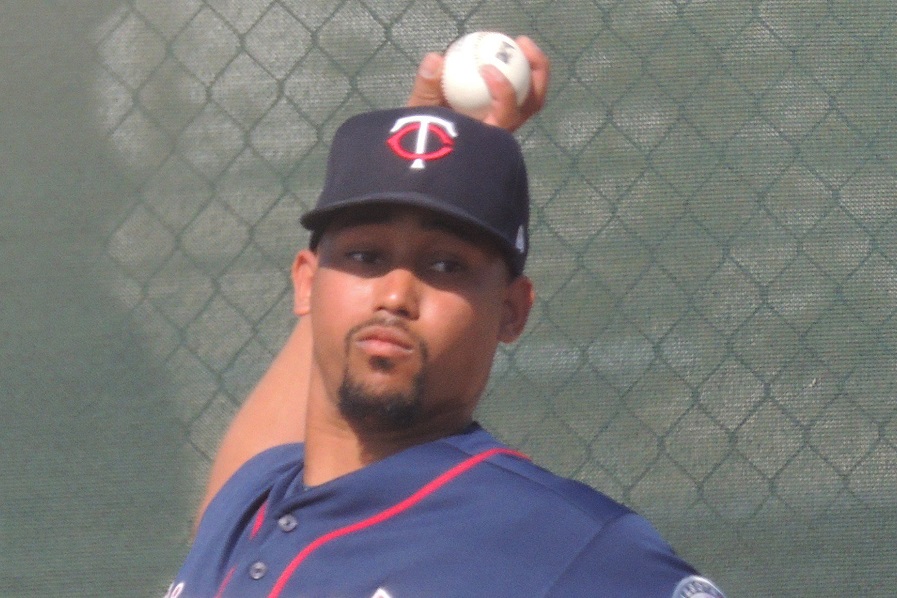 It was 81 degrees at CHS Field by the bottom of the third inning Saturday evening, but it wasn’t because it’s late May in Minnesota and summer is right around the corner. No, it was because St. Paul Saints starter Jhoan Duran was PUMPING HEAT. Duran - the Minnesota Twins’ #2 pitching prospect according to MLB Pipeline (#1 according to Twins Daily) - made his season debut for the Saints after being recently reinstated from the IL with a shoulder injury and touched 103 mph on multiple occasions according to CHS Field’s admittedly hot gun. He threw 63 pitches, allowed four hits and one earned run, and struck out six across three innings. (Check out the box score here.) The Twins’ right-handed, flamethrowing top prospect mixed in a fair amount of curveballs and “splinkers” - a splitter/sinker hybrid that dives down and in to right-handed batters - to go along with his four seam fastball, which, when combined with his erraticism, kept the Indianapolis batters on their heels; his fastball sat around 100 mph, while the splinker came in around the low-90s and the curveball in the low- to mid-80s. Duran used all three of his pitches to pick up six Ks over his three frames of work, though it was clear that nearly every Indianapolis batter was, understandably, sitting fastball. Even still, they couldn’t do much to prevent Duran from blowing it right past them. Even Ke’Bryan Hayes - the Pittsburgh Pirates top prospect who was in town on a rehab assignment - fell victim to his electric fastball. Duran’s delivery - out of the wind up as well as the stretch - is pretty fluid and repeatable. Unlike fellow top prospect Matt Canterino, it doesn’t force his arm into a violent whip-action, though the Twins pitching staff would probably like to see him use his legs a little more as doing so would relieve some pressure off his shoulder and elbow and may also help with his control; entering Saturday, Duran was averaging 3.2 BB/9 and owned a 2.8 K/BB ratio during his five seasons in the minors. However, it’s impossible to watch Duran pitch and not be excited about his raw stuff. Brusdar Graterol became an instant fan-favorite due to his triple-digit fastball, but what prevented him from being considered a starter in the long-term - other than his injury history - was his violent delivery in combination with his lack of a reliable second pitch. Duran checks both of those boxes and if his curveball - and more importantly, his control - continue to improve, he has the potential to be a high-end starter in the Big Leagues and relatively soon. A brief word on Nick Gordon Nick Gordon picked up two more hits Saturday night and has been primarily playing shortstop during his first eight games with the Saints. His OPS continues to hover around 1.000, though he only has four walks and two extra base hits, a home run and a triple. Still, Gordon has looked really good. He’s swinging the bat with confidence and his speed on the base paths has caused teams to keep many eyes on him, no matter what base he is on. It seems as though he has fully recovered from his rash of injuries and his scary battle with COVID-19. Defensively, he’s more than held his own. Though his arm strength will prevent him from playing at short for the Twins, he’s shown enough of an acumen there to be encouraged about his potential to play second base a la Jorge Polanco. He’ll never live up to the status of his No. 5 overall selection, but it’s becoming more and more clear with each passing day that he has the bat skills to carve out a legitimate Major League career. In many ways, he’s not all that dissimilar in profile from Luis Arráez. Should the Twins need a utilityman or should Arráez’s shoulder injury keep him out for some time, Gordon may get the nod as he has earned another call up. A briefer word on Ryan Jeffers Ryan Jeffers’ low batting average and OPS for the Saints may have some fans concerned, but the numbers aren’t as sinister as they seem at first blush. By and large, Jeffers has been doing fine at the plate, though his hits have admittedly come in fits and spurts. He’s tattooed a number of balls right at defenders and has walked eight times in 60 at-bats, both of which are encouraging signs. He even hit a walk-off home run last week. He could use a bit more seasoning at the Triple-A level, but Jeffers should find himself back across the river before too long. He hasn’t been great, but he hasn’t been terrible either. MORE FROM TWINS DAILY — Latest Twins coverage from our writers — Recent Twins discussion in our forums — Follow Twins Daily via Twitter, Facebook or email
 -
HE THREW 103* MPH MULTIPLE TIMES. *Realistically, 100 mph, but STILL. Image courtesy of Seth Stohs, Twins Daily HE THREW 103* MPH MULTIPLE TIMES. *Realistically, 100 mph, but STILL. It was 81 degrees at CHS Field by the bottom of the third inning Saturday evening, but it wasn’t because it’s late May in Minnesota and summer is right around the corner. No, it was because St. Paul Saints starter Jhoan Duran was PUMPING HEAT. Duran - the Minnesota Twins’ #2 pitching prospect according to MLB Pipeline (#1 according to Twins Daily) - made his season debut for the Saints after being recently reinstated from the IL with a shoulder injury and touched 103 mph on multiple occasions according to CHS Field’s admittedly hot gun. He threw 63 pitches, allowed four hits and one earned run, and struck out six across three innings. (Check out the box score here.) The Twins’ right-handed, flamethrowing top prospect mixed in a fair amount of curveballs and “splinkers” - a splitter/sinker hybrid that dives down and in to right-handed batters - to go along with his four seam fastball, which, when combined with his erraticism, kept the Indianapolis batters on their heels; his fastball sat around 100 mph, while the splinker came in around the low-90s and the curveball in the low- to mid-80s. Duran used all three of his pitches to pick up six Ks over his three frames of work, though it was clear that nearly every Indianapolis batter was, understandably, sitting fastball. Even still, they couldn’t do much to prevent Duran from blowing it right past them. Even Ke’Bryan Hayes - the Pittsburgh Pirates top prospect who was in town on a rehab assignment - fell victim to his electric fastball. Duran’s delivery - out of the wind up as well as the stretch - is pretty fluid and repeatable. Unlike fellow top prospect Matt Canterino, it doesn’t force his arm into a violent whip-action, though the Twins pitching staff would probably like to see him use his legs a little more as doing so would relieve some pressure off his shoulder and elbow and may also help with his control; entering Saturday, Duran was averaging 3.2 BB/9 and owned a 2.8 K/BB ratio during his five seasons in the minors. However, it’s impossible to watch Duran pitch and not be excited about his raw stuff. Brusdar Graterol became an instant fan-favorite due to his triple-digit fastball, but what prevented him from being considered a starter in the long-term - other than his injury history - was his violent delivery in combination with his lack of a reliable second pitch. Duran checks both of those boxes and if his curveball - and more importantly, his control - continue to improve, he has the potential to be a high-end starter in the Big Leagues and relatively soon. A brief word on Nick Gordon Nick Gordon picked up two more hits Saturday night and has been primarily playing shortstop during his first eight games with the Saints. His OPS continues to hover around 1.000, though he only has four walks and two extra base hits, a home run and a triple. Still, Gordon has looked really good. He’s swinging the bat with confidence and his speed on the base paths has caused teams to keep many eyes on him, no matter what base he is on. It seems as though he has fully recovered from his rash of injuries and his scary battle with COVID-19. Defensively, he’s more than held his own. Though his arm strength will prevent him from playing at short for the Twins, he’s shown enough of an acumen there to be encouraged about his potential to play second base a la Jorge Polanco. He’ll never live up to the status of his No. 5 overall selection, but it’s becoming more and more clear with each passing day that he has the bat skills to carve out a legitimate Major League career. In many ways, he’s not all that dissimilar in profile from Luis Arráez. Should the Twins need a utilityman or should Arráez’s shoulder injury keep him out for some time, Gordon may get the nod as he has earned another call up. A briefer word on Ryan Jeffers Ryan Jeffers’ low batting average and OPS for the Saints may have some fans concerned, but the numbers aren’t as sinister as they seem at first blush. By and large, Jeffers has been doing fine at the plate, though his hits have admittedly come in fits and spurts. He’s tattooed a number of balls right at defenders and has walked eight times in 60 at-bats, both of which are encouraging signs. He even hit a walk-off home run last week. He could use a bit more seasoning at the Triple-A level, but Jeffers should find himself back across the river before too long. He hasn’t been great, but he hasn’t been terrible either. MORE FROM TWINS DAILY — Latest Twins coverage from our writers — Recent Twins discussion in our forums — Follow Twins Daily via Twitter, Facebook or email View full article
-
Considering doing more articles like this if people find them worthwhile. Drop a name in the comments that you'd like to read about next!
-
Matt Canterino has put up some really intriguing numbers early in the season for Cedar Rapids. Image courtesy of Seth Stohs, Twins Daily Matt Canterino has put up some really intriguing numbers early in the season for Cedar Rapids. The Minnesota Twins own one of the deeper farm systems in all of baseball and their cupboard is chock full of intriguing pitching prospects, many of whom may find their way to Minneapolis over the next one to two seasons. One such pitcher is right-hander Matt Canterino of Southlake, Texas, a national hotbed for producing professional athletes, who is currently stashed at High-A Cedar Rapids. Canterio - the Twins’ 2019 second round pick out of Rice University - comes in at No. 7 down on the farm, according to MLB Pipeline, making him the team’s third-highest regarded pitching prospect, behind only Jordan Balazovic (No. 4) and Jhoan Duran (No. 5). Standing at 6’2” and weighing in at a robust 220 pounds, Canterino is a somewhat intimidating presence on the mound, particularly compared to his peers. While there isn’t much left in terms of projectability when it comes to the 23-year-old’s physical attributes, he owns the rubber and the surrounding area thanks to an intensity that is frequently on display, particularly after a strikeout in which he practically saunters around while waiting to get the ball back. Canterino possesses a traditional four pitch mix consisting of a four seam fastball, slider, curveball, and changeup. Through his two starts this spring for the Kernels, he has primarily relied on his fastball and slider with his curveball employed occasionally down and out of the zone to pick up strikeouts. His fastball sits in the low- to mid-90s, though you’ll just have to take MLB pipeline’s word on that as minor league broadcasts don’t usually display radar gun readings. However, his slider - which has a significant amount of bite and often leads to batters looking lost at the plate - is his best pitch. He likes to get ahead in the count with his fastball and then use his breaking balls to induce strikeouts, something that he has done with regularity during his abbreviated minor league career. (He’s only completed nine starts as the Twins elected to play it safe with him in 2019 following his selection as Rice is notorious for overworking their starting pitchers.) Canterino owns a 16.9 K/9 and 5.0 K/BB ratio in eight innings across his two starts and 2021 and 12.6 K/9 and 4.2 K/BB for his career. However, despite the gaudy numbers, his command has been somewhat suspect early this spring, particularly in regard to his curveball. Canterino employs a herky-jerky, high-effort windup that produces a significant amount of whip action from his arm, which can lead to control issues and has many concerned about his health long-term. When he misses the strike zone, he misses the strike zone. He spiked numerous pitches - the majority of which appeared to be curveballs - during his latest start against the Quad City River Bandits, which resulted in three wild pitches and directly led to two runs crossing the plate. However, if he can gain more control of the curve and smooth out his delivery a touch (and stay healthy), his stuff carries the potential for him to be quite good at the MLB level. Matt Canterino wind up 1.m4v From the stretch, Canterino is a little slow towards the plate despite not possessing a large leg kick, not that it matters as much as it may have, say, 10 years ago as the stolen base continues to go the way of the Dodo. Canterino stretch 1.m4v All in all, Canterino has displayed plenty to be encouraged about during his first couple of starts with Cedar Rapids, though some further development is required before he’s ready for The Show. I would be surprised to see him make his debut for the Twins later this season - particularly because the team has two high-level prospects ahead of him and he’s only thrown 33 innings in the minors - however, it’s possible that he may find himself as high as St. Paul prior to season’s end. MORE FROM TWINS DAILY — Latest Twins coverage from our writers — Recent Twins discussion in our forums — Follow Twins Daily via Twitter, Facebook or email View full article
-
Cedar Rapids Kernels Pitching Reports: Matt Canterino
Lucas Seehafer PT posted an article in Minor Leagues
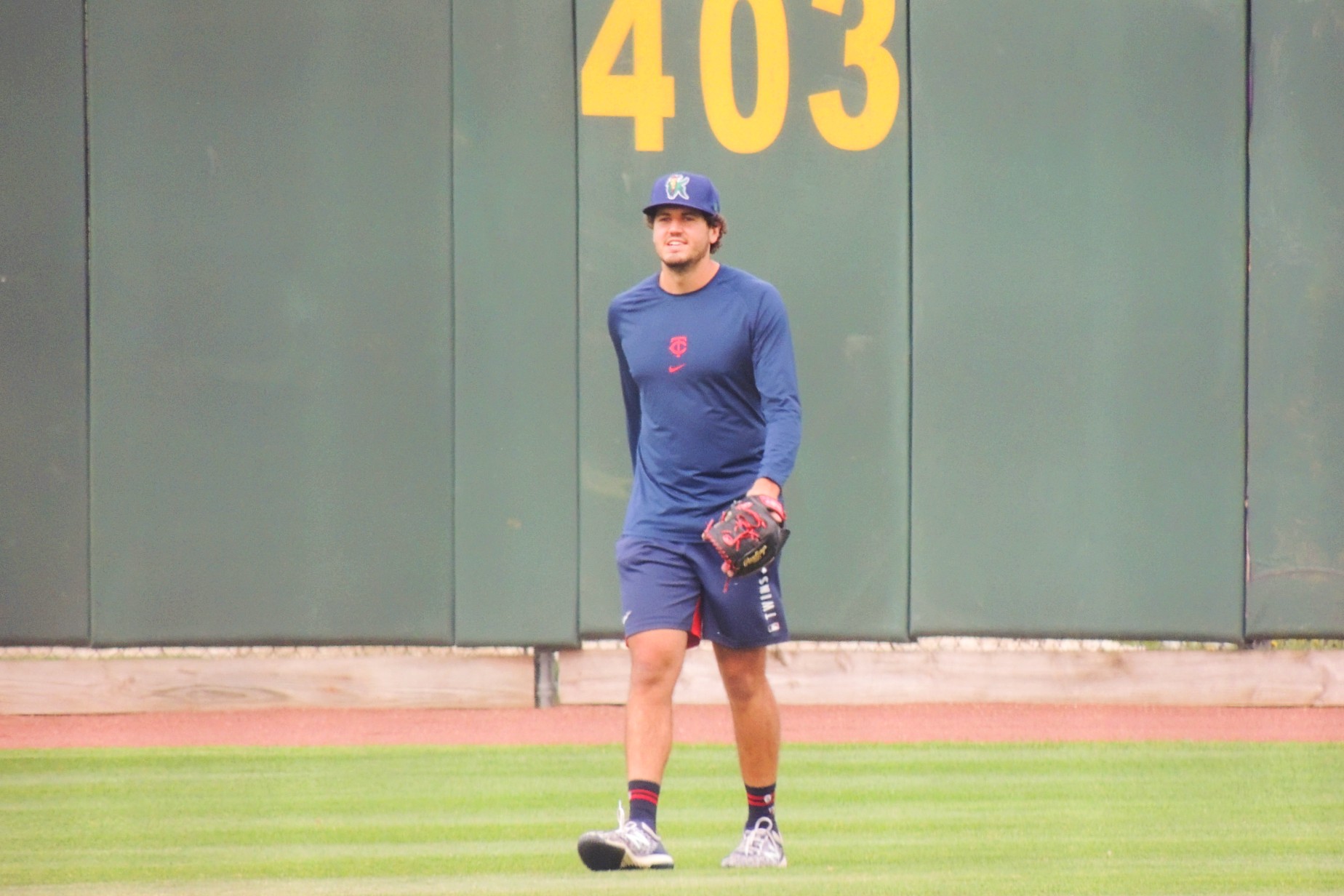 The Minnesota Twins own one of the deeper farm systems in all of baseball and their cupboard is chock full of intriguing pitching prospects, many of whom may find their way to Minneapolis over the next one to two seasons. One such pitcher is right-hander Matt Canterino of Southlake, Texas, a national hotbed for producing professional athletes, who is currently stashed at High-A Cedar Rapids. Canterio - the Twins’ 2019 second round pick out of Rice University - comes in at No. 7 down on the farm, according to MLB Pipeline, making him the team’s third-highest regarded pitching prospect, behind only Jordan Balazovic (No. 4) and Jhoan Duran (No. 5). Standing at 6’2” and weighing in at a robust 220 pounds, Canterino is a somewhat intimidating presence on the mound, particularly compared to his peers. While there isn’t much left in terms of projectability when it comes to the 23-year-old’s physical attributes, he owns the rubber and the surrounding area thanks to an intensity that is frequently on display, particularly after a strikeout in which he practically saunters around while waiting to get the ball back. Canterino possesses a traditional four pitch mix consisting of a four seam fastball, slider, curveball, and changeup. Through his two starts this spring for the Kernels, he has primarily relied on his fastball and slider with his curveball employed occasionally down and out of the zone to pick up strikeouts. His fastball sits in the low- to mid-90s, though you’ll just have to take MLB pipeline’s word on that as minor league broadcasts don’t usually display radar gun readings. However, his slider - which has a significant amount of bite and often leads to batters looking lost at the plate - is his best pitch. He likes to get ahead in the count with his fastball and then use his breaking balls to induce strikeouts, something that he has done with regularity during his abbreviated minor league career. (He’s only completed nine starts as the Twins elected to play it safe with him in 2019 following his selection as Rice is notorious for overworking their starting pitchers.) Canterino owns a 16.9 K/9 and 5.0 K/BB ratio in eight innings across his two starts and 2021 and 12.6 K/9 and 4.2 K/BB for his career. However, despite the gaudy numbers, his command has been somewhat suspect early this spring, particularly in regard to his curveball. Canterino employs a herky-jerky, high-effort windup that produces a significant amount of whip action from his arm, which can lead to control issues and has many concerned about his health long-term. When he misses the strike zone, he misses the strike zone. He spiked numerous pitches - the majority of which appeared to be curveballs - during his latest start against the Quad City River Bandits, which resulted in three wild pitches and directly led to two runs crossing the plate. However, if he can gain more control of the curve and smooth out his delivery a touch (and stay healthy), his stuff carries the potential for him to be quite good at the MLB level. Matt Canterino wind up 1.m4v From the stretch, Canterino is a little slow towards the plate despite not possessing a large leg kick, not that it matters as much as it may have, say, 10 years ago as the stolen base continues to go the way of the Dodo. Canterino stretch 1.m4v All in all, Canterino has displayed plenty to be encouraged about during his first couple of starts with Cedar Rapids, though some further development is required before he’s ready for The Show. I would be surprised to see him make his debut for the Twins later this season - particularly because the team has two high-level prospects ahead of him and he’s only thrown 33 innings in the minors - however, it’s possible that he may find himself as high as St. Paul prior to season’s end. MORE FROM TWINS DAILY — Latest Twins coverage from our writers — Recent Twins discussion in our forums — Follow Twins Daily via Twitter, Facebook or email
 -
Randy Dobnak and Lewis Thorpe threw for the St. Paul Saints on Sunday afternoon. This is how they've looked for the team thus far this spring. Image courtesy of © Jesse Johnson | 2021 Apr 13 Randy Dobnak and Lewis Thorpe threw for the St. Paul Saints on Sunday afternoon. This is how they've looked for the team thus far this spring. I witnessed the St. Paul Saints lose in Twinsian fashion live and in person Sunday afternoon after Ian Gibaut allowed eight earned runs to cross the plate in the ninth inning, but, thankfully, that’s not what this article is about. This article is about Randy Dobnak and Lewis Thorpe. Randy Dobnak made his third start for the Saints after being optioned off the Twins’ roster on May 3 with the intent of being stretched out and looked much more like his early 2020 self than he did during his previous outing. He sat 92-93 mph with his sinker on Sunday and touched as high as 96 mph with his four-seam according to the in-stadium gun, though there’s been plenty of evidence to suggest that CHS Field is running 1-2 mph hot thus far. His slider and changeup were consistently in the low- to mid-80s, which is commensurate with that he’s shown at the major league level. Dobnak’s command was much more precise on Sunday, something he struggled with mightily during the home opener. His second start of the season saw his sinker engage in its usual ridiculous movement pattern, but constantly dove down and out of the zone. Dobnak was unable to adjust and wasn’t able to locate his off-speed stuff, either, which resulted in five walks. During his third start, however, Dobnak was better able to start his sinker middle-out, allowing it to dive down and in across the plate to right handed batters. For the majority of the game, the Iowa Cubs batters appeared completely confused as to what to do with Dobnak’s sinker. This resulted in five strikeouts and five groundouts, though it could have been as many as seven, for Dobnak. (His first start for the Saints - his line is provided in the second tweet below - was nearly identical to his third.) If Dobnak can continue to locate his sinker and develop his slider, it won’t be long before he is back up with the Minnesota Twins, particularly if the team continues to lose and Matt Shoemaker continues to perform poorly. It would be nice to see Dobnak pitch further than five innings by tightening up his command even more, but two of his three starts with the Saints have shown why the Twins invested in him long-term. As for Lewis Thorpe, he remains a bit of an enigma in my eyes. His three appearances and two starts for the Twins, in which he combined for five strikeouts, five earned runs and two walks across 10 innings of work, were admirable, but largely unimpressive. His fastball averaged 89.7 mph and induced a meager 19.2% Whiff%, according to Baseball Savant, and while Thorpe is never going to be a strikeout king, one would like to see better numbers than that moving forward. While the Twins have primarily used Thorpe as a starter, the Saints have used him out of the bullpen, which may be of interest. He’s only thrown 78 pitches across five innings in his two appearances, striking out three and walking two. Thorpe’s first appearance for the Saints earlier in the week was extremely encouraging. He sat 92-93 mph with his fastball and relied heavily on his off-speed stuff during his second inning to keep batters off-guard. He was also able to locate his fastball, which is imperative for a lefty with his level of velocity. However, his second appearance, while not bad, per se, was less encouraging. Thorpe threw 32 pitches, 21 for strikes, across two innings, striking out and walking one. His fastball topped out at 91 mph, sitting at 90 (and remember the gun is likely fast), and frequently missed up and out of the zone. His command was much more iffy and likely would have been taken advantage of by better (i.e. major league) hitters. When it comes to his future with the Twins, Thorpe’s command of his fastball is of utter importance. Pitching coaches and front offices can live with some erraticism from their pitchers - whether they be starters or relievers - if the velocity and strikeout numbers are there, which hasn’t been the case with Thorpe above the Triple-A level. He doesn’t have the type of secondary stuff that can bail him out consistently if he can’t locate his fastball. Thorpe remains an intriguing prospect, but his stock may drop to that of, say, Devin Smeltzer if his command doesn’t improve and/or if his velo continues to hover closer to 88 mph than 93 mph. MORE FROM TWINS DAILY — Latest Twins coverage from our writers — Recent Twins discussion in our forums — Follow Twins Daily via Twitter, Facebook or email View full article
-
St. Paul Saints Pitching Reports: Randy Dobnak and Lewis Thorpe
Lucas Seehafer PT posted an article in Saints
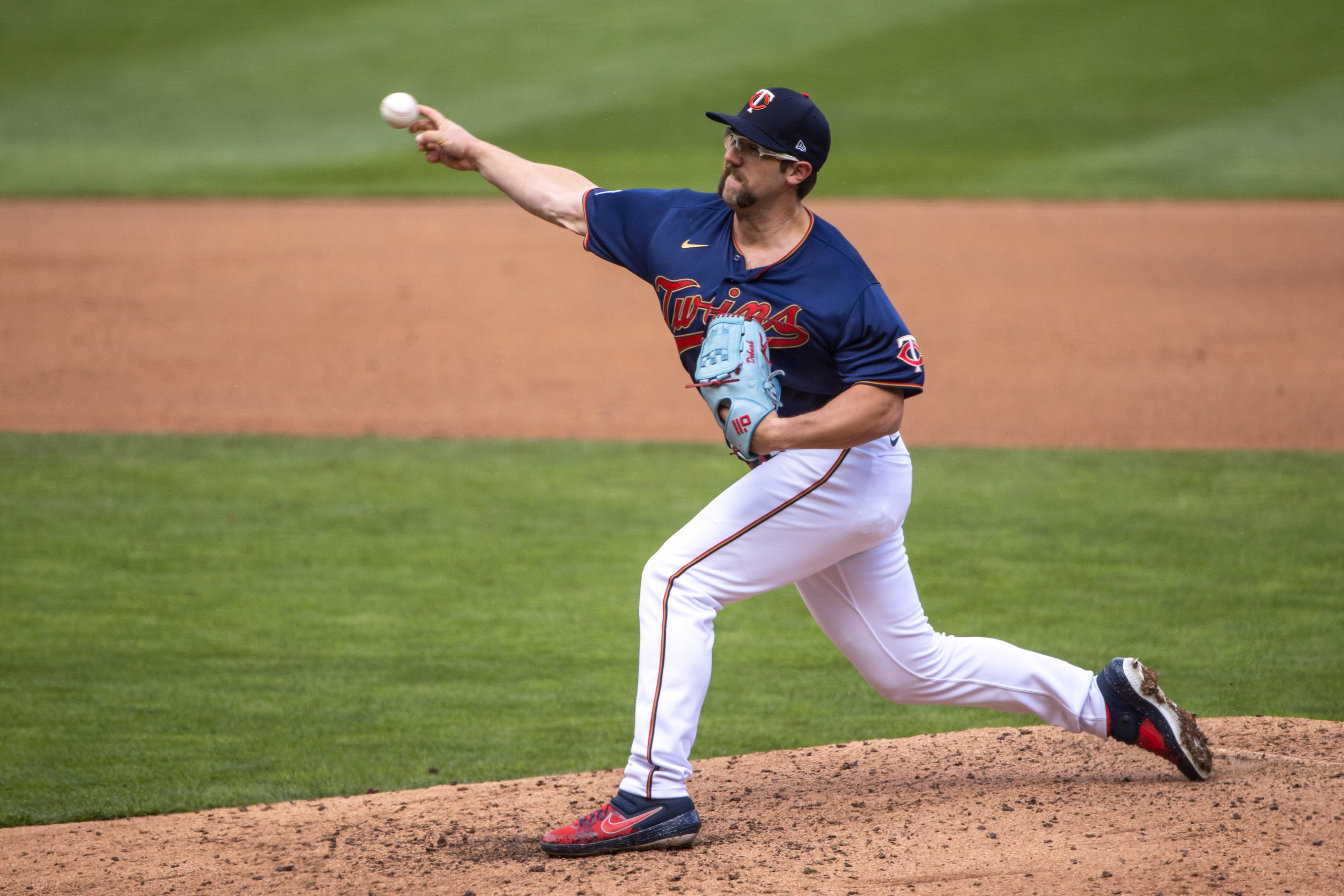 I witnessed the St. Paul Saints lose in Twinsian fashion live and in person Sunday afternoon after Ian Gibaut allowed eight earned runs to cross the plate in the ninth inning, but, thankfully, that’s not what this article is about. This article is about Randy Dobnak and Lewis Thorpe. Randy Dobnak made his third start for the Saints after being optioned off the Twins’ roster on May 3 with the intent of being stretched out and looked much more like his early 2020 self than he did during his previous outing. He sat 92-93 mph with his sinker on Sunday and touched as high as 96 mph with his four-seam according to the in-stadium gun, though there’s been plenty of evidence to suggest that CHS Field is running 1-2 mph hot thus far. His slider and changeup were consistently in the low- to mid-80s, which is commensurate with that he’s shown at the major league level. Dobnak’s command was much more precise on Sunday, something he struggled with mightily during the home opener. His second start of the season saw his sinker engage in its usual ridiculous movement pattern, but constantly dove down and out of the zone. Dobnak was unable to adjust and wasn’t able to locate his off-speed stuff, either, which resulted in five walks. During his third start, however, Dobnak was better able to start his sinker middle-out, allowing it to dive down and in across the plate to right handed batters. For the majority of the game, the Iowa Cubs batters appeared completely confused as to what to do with Dobnak’s sinker. This resulted in five strikeouts and five groundouts, though it could have been as many as seven, for Dobnak. (His first start for the Saints - his line is provided in the second tweet below - was nearly identical to his third.) If Dobnak can continue to locate his sinker and develop his slider, it won’t be long before he is back up with the Minnesota Twins, particularly if the team continues to lose and Matt Shoemaker continues to perform poorly. It would be nice to see Dobnak pitch further than five innings by tightening up his command even more, but two of his three starts with the Saints have shown why the Twins invested in him long-term. As for Lewis Thorpe, he remains a bit of an enigma in my eyes. His three appearances and two starts for the Twins, in which he combined for five strikeouts, five earned runs and two walks across 10 innings of work, were admirable, but largely unimpressive. His fastball averaged 89.7 mph and induced a meager 19.2% Whiff%, according to Baseball Savant, and while Thorpe is never going to be a strikeout king, one would like to see better numbers than that moving forward. While the Twins have primarily used Thorpe as a starter, the Saints have used him out of the bullpen, which may be of interest. He’s only thrown 78 pitches across five innings in his two appearances, striking out three and walking two. Thorpe’s first appearance for the Saints earlier in the week was extremely encouraging. He sat 92-93 mph with his fastball and relied heavily on his off-speed stuff during his second inning to keep batters off-guard. He was also able to locate his fastball, which is imperative for a lefty with his level of velocity. However, his second appearance, while not bad, per se, was less encouraging. Thorpe threw 32 pitches, 21 for strikes, across two innings, striking out and walking one. His fastball topped out at 91 mph, sitting at 90 (and remember the gun is likely fast), and frequently missed up and out of the zone. His command was much more iffy and likely would have been taken advantage of by better (i.e. major league) hitters. When it comes to his future with the Twins, Thorpe’s command of his fastball is of utter importance. Pitching coaches and front offices can live with some erraticism from their pitchers - whether they be starters or relievers - if the velocity and strikeout numbers are there, which hasn’t been the case with Thorpe above the Triple-A level. He doesn’t have the type of secondary stuff that can bail him out consistently if he can’t locate his fastball. Thorpe remains an intriguing prospect, but his stock may drop to that of, say, Devin Smeltzer if his command doesn’t improve and/or if his velo continues to hover closer to 88 mph than 93 mph. MORE FROM TWINS DAILY — Latest Twins coverage from our writers — Recent Twins discussion in our forums — Follow Twins Daily via Twitter, Facebook or email
 -
The Minnesota Twins won and now sit at 13-24. But many of the team's struggles continued to manifest on Saturday. When will the team start making changes? Image courtesy of © Bruce Kluckhohn | 2021 May 15 The Minnesota Twins won and now sit at 13-24. But many of the team's struggles continued to manifest on Saturday. When will the team start making changes? Boxscore José Berríos: 7.0 IP, 8 H, 4 R, 4 ER, 0 BB, 6 K Home Runs: Sanó (3) Top 3 WPA: Sanó .558, Donaldson .145, Cruz .141 Win Probability Chart (via FanGraphs) Well, that's one way to win a game. Trailing 4-1 entering the bottom of the eighth inning, the Minnesota Twins scored four runs — capped off by a three-run home run off the bat of Miguel Sanó — to claim their first win since defeating the Detroit Tigers 7-3 over a week ago. But — and at risk of being an brutal Debbie downer — suffice it to say that the Twins are still not playing very well right now. José Berríos was fine — his control was much improved compared to his last start, when he walked five and only struck out one — but largely unimpressive. The Athletics owned a 47.8% hard-hit percentage over Berríos’s seven innings and half of their hits — two home runs and two doubles — went for extra bases. (The below images are courtesy Baseball Savant.) But, pitching was not the Twins’ main issue Saturday. Building on a recurring theme, the Twins’ offense struggled mightily once again — the bottom of the eighth notwithstanding — going 3-for-11 with runners in scoring position. As the team entering play on Saturday, the Twins owned MLB's third-worst offense, according to FanGraphs, in regard to win probability added with a cumulative total of -3.45 and the worst in regard to their Clutch metric with a -3.29. A lineup possessing as much raw talent as the Twins — regardless of the number of key contributors who are injured — should not be saddled with such consistent — and truly baffling — ineptitude. While the distant rumblings of the developing storm that is the MLB trade season are starting to become audible, the fact of the matter is that the Twins likely won’t be partaking any time soon. But it is clear that something needs to change and probably sooner rather than later. The head of the head coach — or in baseball’s case, the manager — is rarely the first to roll when teams underperform expectations. Normally, the first order of business is to tweak the lineup and engage in various call-ups and send-downs in an attempt to ignite a spark that turns the offense aflame. The Twins have tried this method and while the likes of Alex Kirilloff, Trevor Larnach, and Kyle Garlick have largely performed well, the results have not followed. The next change that occurs is usually the firing or re-assigning of various assistant coaches. The seats under Rudy Hernandez and Edgar Varela — the Twins’ two hitting coaches — must be particularly hot at the moment and one would think that either or both are the leading candidates to be the first true casualty of the season. The Twins lineup is not performing to expectations and — rightly or wrongly — the hitting coach(es) are beginning to draw the ire of the team’s faithful. Would removing Hernandez and/or Varela from their duties truly impact the team’s on-field performance? It’s difficult to say with any amount of certainty. However, an unfortunate downside of being a coach at the professional level is that your job can sometimes be renounced, even if doing so is simply akin to putting a band-aid on a festering wound. The Twins aren’t going to ship out Donaldson, Mitch Garver or Max Kepler — at least not anytime soon — and while DFAing Miguel Sano may make some sense on paper, the odds of it actually occurring are probably slimmer than none. The Twins will make moves — and perhaps sooner rather than later — but the moves are more likely to do with anyone not named Rocco Baldelli on the coaching staff rather than a significant trade. Up next The Twins will try to pry the series away from the Athletics Sunday afternoon when Kenta Maeda (2-2, 5.08 ERA) goes up against Chris Bassitt (3-2, 3.54 ERA). First pitch is scheduled for 1:10 p.m. CT. Bullpen Usage Spreadsheet TUE WED THU FRI SAT TOT Thielbar 41 0 0 29 0 70 Law 19 13 0 35 0 67 Anderson 0 54 0 0 0 54 Robles 0 0 12 0 17 29 Alcala 12 0 16 0 0 28 Colomé 0 15 0 0 7 22 Rogers 0 0 20 0 0 20 Duffey 0 16 0 0 0 16 MORE FROM TWINS DAILY — Latest Twins coverage from our writers — Recent Twins discussion in our forums — Follow Twins Daily via Twitter, Facebook or email View full article
-
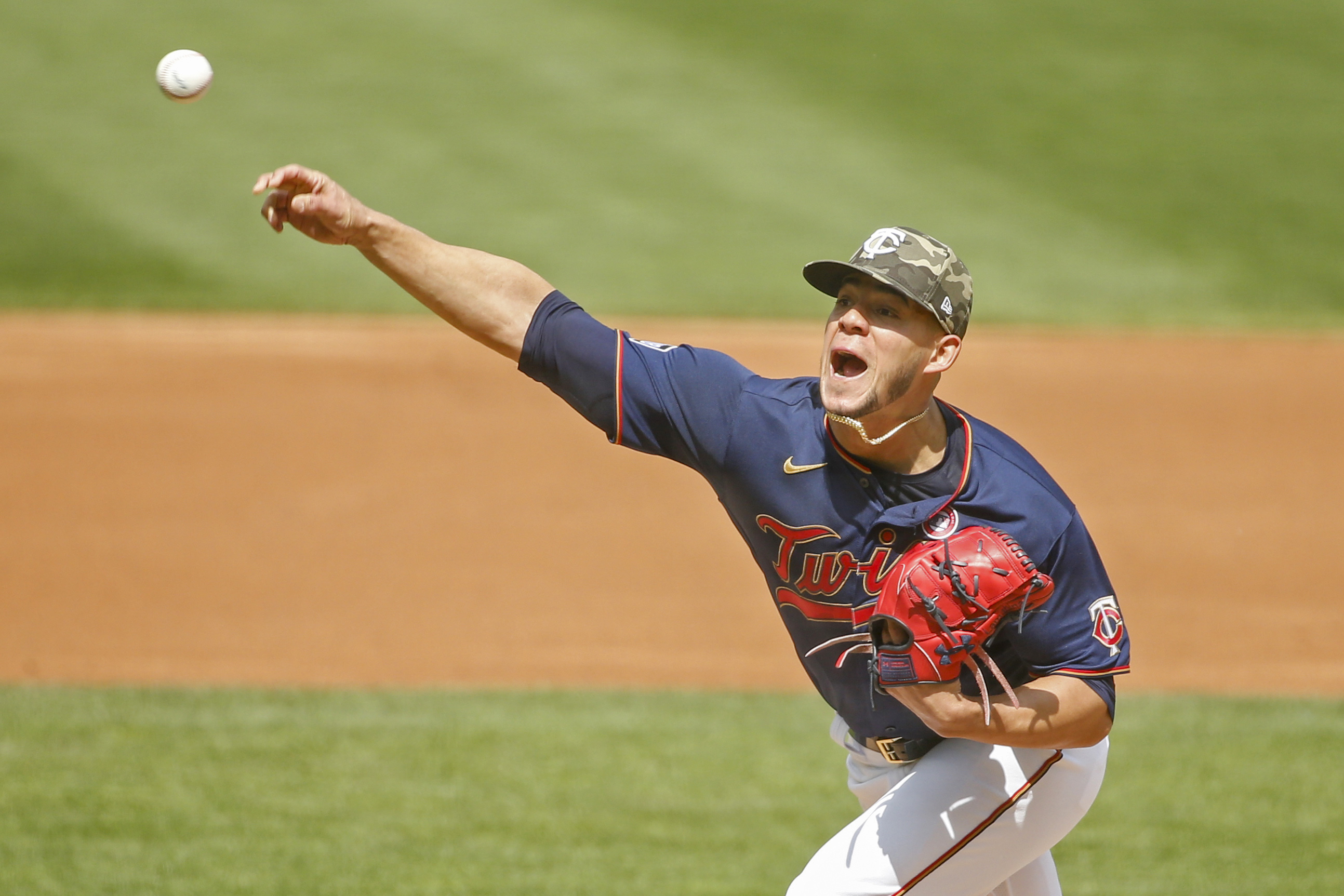 Boxscore José Berríos: 7.0 IP, 8 H, 4 R, 4 ER, 0 BB, 6 K Home Runs: Sanó (3) Top 3 WPA: Sanó .558, Donaldson .145, Cruz .141 Win Probability Chart (via FanGraphs) Well, that's one way to win a game. Trailing 4-1 entering the bottom of the eighth inning, the Minnesota Twins scored four runs — capped off by a three-run home run off the bat of Miguel Sanó — to claim their first win since defeating the Detroit Tigers 7-3 over a week ago. But — and at risk of being an brutal Debbie downer — suffice it to say that the Twins are still not playing very well right now. José Berríos was fine — his control was much improved compared to his last start, when he walked five and only struck out one — but largely unimpressive. The Athletics owned a 47.8% hard-hit percentage over Berríos’s seven innings and half of their hits — two home runs and two doubles — went for extra bases. (The below images are courtesy Baseball Savant.) But, pitching was not the Twins’ main issue Saturday. Building on a recurring theme, the Twins’ offense struggled mightily once again — the bottom of the eighth notwithstanding — going 3-for-11 with runners in scoring position. As the team entering play on Saturday, the Twins owned MLB's third-worst offense, according to FanGraphs, in regard to win probability added with a cumulative total of -3.45 and the worst in regard to their Clutch metric with a -3.29. A lineup possessing as much raw talent as the Twins — regardless of the number of key contributors who are injured — should not be saddled with such consistent — and truly baffling — ineptitude. While the distant rumblings of the developing storm that is the MLB trade season are starting to become audible, the fact of the matter is that the Twins likely won’t be partaking any time soon. But it is clear that something needs to change and probably sooner rather than later. The head of the head coach — or in baseball’s case, the manager — is rarely the first to roll when teams underperform expectations. Normally, the first order of business is to tweak the lineup and engage in various call-ups and send-downs in an attempt to ignite a spark that turns the offense aflame. The Twins have tried this method and while the likes of Alex Kirilloff, Trevor Larnach, and Kyle Garlick have largely performed well, the results have not followed. The next change that occurs is usually the firing or re-assigning of various assistant coaches. The seats under Rudy Hernandez and Edgar Varela — the Twins’ two hitting coaches — must be particularly hot at the moment and one would think that either or both are the leading candidates to be the first true casualty of the season. The Twins lineup is not performing to expectations and — rightly or wrongly — the hitting coach(es) are beginning to draw the ire of the team’s faithful. Would removing Hernandez and/or Varela from their duties truly impact the team’s on-field performance? It’s difficult to say with any amount of certainty. However, an unfortunate downside of being a coach at the professional level is that your job can sometimes be renounced, even if doing so is simply akin to putting a band-aid on a festering wound. The Twins aren’t going to ship out Donaldson, Mitch Garver or Max Kepler — at least not anytime soon — and while DFAing Miguel Sano may make some sense on paper, the odds of it actually occurring are probably slimmer than none. The Twins will make moves — and perhaps sooner rather than later — but the moves are more likely to do with anyone not named Rocco Baldelli on the coaching staff rather than a significant trade. Up next The Twins will try to pry the series away from the Athletics Sunday afternoon when Kenta Maeda (2-2, 5.08 ERA) goes up against Chris Bassitt (3-2, 3.54 ERA). First pitch is scheduled for 1:10 p.m. CT. Bullpen Usage Spreadsheet TUE WED THU FRI SAT TOT Thielbar 41 0 0 29 0 70 Law 19 13 0 35 0 67 Anderson 0 54 0 0 0 54 Robles 0 0 12 0 17 29 Alcala 12 0 16 0 0 28 Colomé 0 15 0 0 7 22 Rogers 0 0 20 0 0 20 Duffey 0 16 0 0 0 16 MORE FROM TWINS DAILY — Latest Twins coverage from our writers — Recent Twins discussion in our forums — Follow Twins Daily via Twitter, Facebook or email
 -
José Berríos struggled, the bullpen struggled, the lineup struggled, but other than that, this one went great! Image courtesy of © Raj Mehta | 2021 May 8 José Berríos struggled, the bullpen struggled, the lineup struggled, but other than that, this one went great! Box score José Berríos: 6.0 IP, 6 H, 2 R, 2 ER, 5 BB (1 HBP), 1 K Home Runs: Donaldson (3) Bottom 3 WPA: Duffey -.295, Rortvedt -.202, Sano -.146 Win Probability Chart (via FanGraphs? It’s often difficult to find words to describe déjà vu and déjà vu-like experiences. Sometimes it’s a nagging feeling in the back of the mind. Sometimes it takes the form of a word on the tip of the tongue that simply refuses to be uttered. Sometimes still it’s an unexplained, yet ominous, pit resting comfortably in the stomach. The Minnesota Twins are not causing their fans to experience déjà vu. They’re trapping them in a real-life manifestation of Groundhog Day. Stop me if you’ve heard this before, but the Minnesota Twins fell to the Detroit Tigers Saturday afternoon thanks to an offense that struggled to cash in runners when they were in scoring position and a bullpen that caved in on itself. We are Bill Murray. Berríos struggles with command José Berríos - who ultimately did see his ERA drop slightly — was unusually dull on the mound. He clearly did not have his best stuff working and struggled with locating his pitches, resulting in him not earning his strikeout until his 104th — and last — pitch of the game. His start on Saturday would have been the longest of his career without recording a strikeout had he not gotten Jake Rogers to chase an off-speed pitch out of the zone in the bottom of the sixth inning. Had Berríos not done so, it would have been his first start since 2018 without registering a punchout. However, if there is a bright side to look on, it’s that Berríos was largely able to battle through his struggles and keep the Twins within reach. As intrepid co-founder of Twins Daily John Bonnes pointed on Twitter, doing so consistently is perhaps the greatest hurdle Berríos has yet to climb en route to developing into a true ace-level starter. Unfortunately for the Twins, relievers Tyler Duffey and Derek Law didn’t have their best stuff either. The two combined to pitch the final two innings of the game, striking out two, walking four and allowing five runs to cross the plate. As a staff, the Twins struck out three and walked nine, which is not conducive for winning baseball. Offensive woes continue Josh Donaldson — who also doubled — hit his third home run of the season, while Jorge Polanco, Jake Cave and Kyle Garlick doubled, however, that was largely the extent of the team’s offensive output. The Twins stranded 16 runners on base and were a combined 1-for-14 as a team with runners in scoring position. Again, not exactly a performance that will lead to many victories. Larnach makes his MLB debut On a more positive note, Trevor Larnach — who recently spoke with Twins Daily — made his Major League debut Saturday afternoon, going 0-for-4 — three of which had runners in scoring position, hence the -.143 WPA — with a HBP. However, as was often the case with Alex Kirilloff during his first handful of games, the numbers are a little misleading. Larnach hit one ball that registered an exit velocity of 107.4 mph with a .420 xBA, according to Baseball Savant; a diving Jonathan Schoop at first base was the lone force that prevented it from being an RBI double. Up next The Twins will look to win the series Sunday afternoon in the rubber match with the Tigers. First pitch is scheduled for 12:10 p.m. CT and will feature Kenta Maeda (2-2, 5.02 ERA) going up against Matt Boyd (2-3, 2.27 ERA). Postgame Interview Bullpen Usage Spreadsheet Click here to see the bullpen usage over the past five days (link opens a Google Sheet). MORE FROM TWINS DAILY — Latest Twins coverage from our writers — Recent Twins discussion in our forums — Follow Twins Daily via Twitter, Facebook or email View full article
-
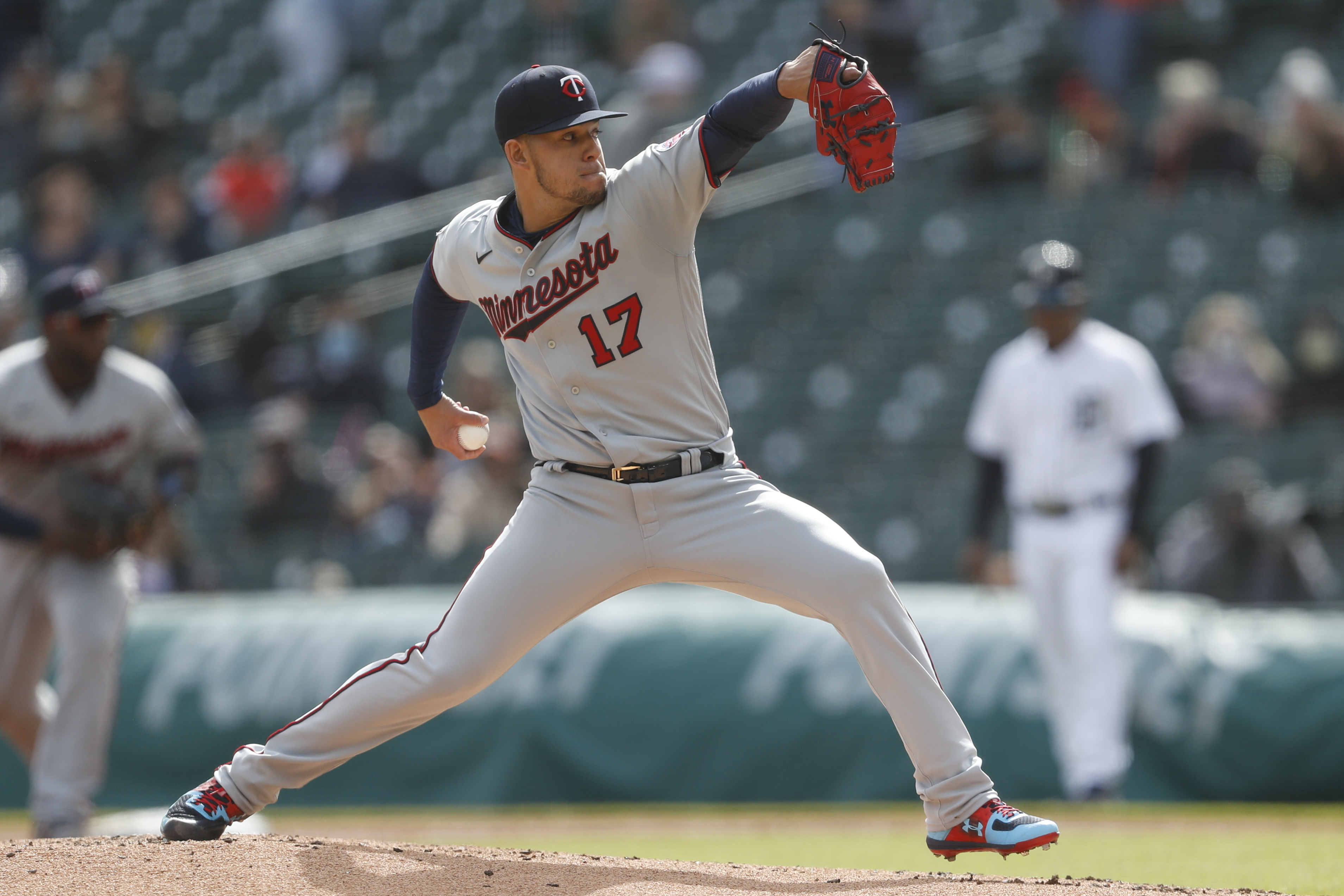 Box score José Berríos: 6.0 IP, 6 H, 2 R, 2 ER, 5 BB (1 HBP), 1 K Home Runs: Donaldson (3) Bottom 3 WPA: Duffey -.295, Rortvedt -.202, Sano -.146 Win Probability Chart (via FanGraphs? It’s often difficult to find words to describe déjà vu and déjà vu-like experiences. Sometimes it’s a nagging feeling in the back of the mind. Sometimes it takes the form of a word on the tip of the tongue that simply refuses to be uttered. Sometimes still it’s an unexplained, yet ominous, pit resting comfortably in the stomach. The Minnesota Twins are not causing their fans to experience déjà vu. They’re trapping them in a real-life manifestation of Groundhog Day. Stop me if you’ve heard this before, but the Minnesota Twins fell to the Detroit Tigers Saturday afternoon thanks to an offense that struggled to cash in runners when they were in scoring position and a bullpen that caved in on itself. We are Bill Murray. Berríos struggles with command José Berríos - who ultimately did see his ERA drop slightly — was unusually dull on the mound. He clearly did not have his best stuff working and struggled with locating his pitches, resulting in him not earning his strikeout until his 104th — and last — pitch of the game. His start on Saturday would have been the longest of his career without recording a strikeout had he not gotten Jake Rogers to chase an off-speed pitch out of the zone in the bottom of the sixth inning. Had Berríos not done so, it would have been his first start since 2018 without registering a punchout. However, if there is a bright side to look on, it’s that Berríos was largely able to battle through his struggles and keep the Twins within reach. As intrepid co-founder of Twins Daily John Bonnes pointed on Twitter, doing so consistently is perhaps the greatest hurdle Berríos has yet to climb en route to developing into a true ace-level starter. Unfortunately for the Twins, relievers Tyler Duffey and Derek Law didn’t have their best stuff either. The two combined to pitch the final two innings of the game, striking out two, walking four and allowing five runs to cross the plate. As a staff, the Twins struck out three and walked nine, which is not conducive for winning baseball. Offensive woes continue Josh Donaldson — who also doubled — hit his third home run of the season, while Jorge Polanco, Jake Cave and Kyle Garlick doubled, however, that was largely the extent of the team’s offensive output. The Twins stranded 16 runners on base and were a combined 1-for-14 as a team with runners in scoring position. Again, not exactly a performance that will lead to many victories. Larnach makes his MLB debut On a more positive note, Trevor Larnach — who recently spoke with Twins Daily — made his Major League debut Saturday afternoon, going 0-for-4 — three of which had runners in scoring position, hence the -.143 WPA — with a HBP. However, as was often the case with Alex Kirilloff during his first handful of games, the numbers are a little misleading. Larnach hit one ball that registered an exit velocity of 107.4 mph with a .420 xBA, according to Baseball Savant; a diving Jonathan Schoop at first base was the lone force that prevented it from being an RBI double. Up next The Twins will look to win the series Sunday afternoon in the rubber match with the Tigers. First pitch is scheduled for 12:10 p.m. CT and will feature Kenta Maeda (2-2, 5.02 ERA) going up against Matt Boyd (2-3, 2.27 ERA). Postgame Interview Bullpen Usage Spreadsheet Click here to see the bullpen usage over the past five days (link opens a Google Sheet). MORE FROM TWINS DAILY — Latest Twins coverage from our writers — Recent Twins discussion in our forums — Follow Twins Daily via Twitter, Facebook or email
 -
Unfortunately, the article is locked behind a paywall, but thought some of you may be interested in the news anyway: Former Twins' third base coach and Triple-A manager Gene Glynn will be coaching the St. Clair boys basketball team next winter. He retired last fall after a stint with the Marlins. For those who aren't aware, Glynn was the state's first Mr. Basketball in 1975 and played point guard as well as second base during his time at MSU-Mankato in the mid-1970s. https://www.southernminn.com/waseca_county_news/sports/article_01ce144b-84c3-5d6c-9f81-2dfb1f7e6131.html
- 1 reply
-
- 2
-

