Lucas Seehafer PT
-
Posts
525 -
Joined
-
Last visited
-
Days Won
2
Content Type
Profiles
News
Minnesota Twins Videos
2026 Minnesota Twins Top Prospects Ranking
2022 Minnesota Twins Draft Picks
Minnesota Twins Free Agent & Trade Rumors, Notes, & Tidbits
Guides & Resources
2023 Minnesota Twins Draft Picks
The Minnesota Twins Players Project
2024 Minnesota Twins Draft Picks
2025 Minnesota Twins Draft Pick Tracker
2026 Minnesota Twins Draft Tracker: Picks & Bonuses
Forums
Blogs
Events
Store
Downloads
Gallery
Everything posted by Lucas Seehafer PT
-
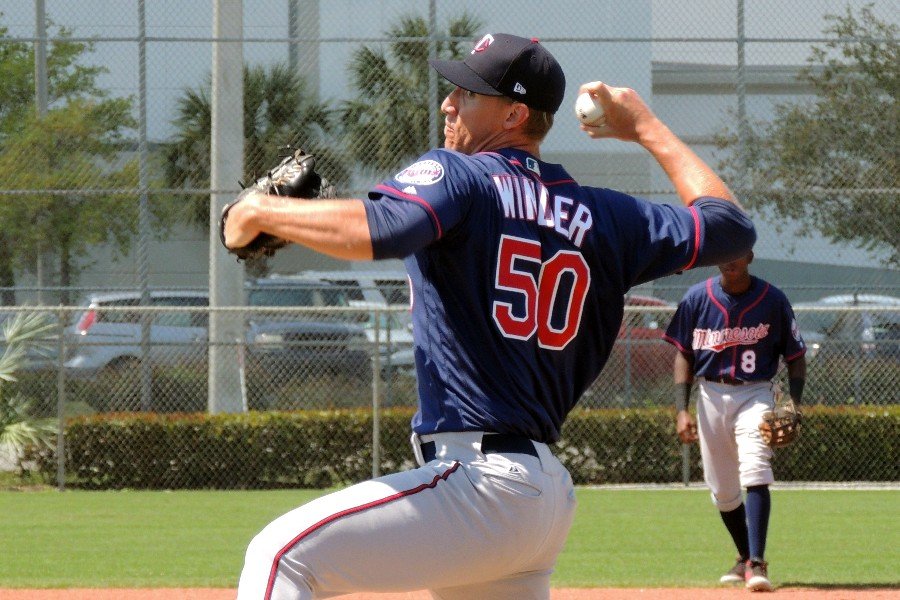 Winder, a right-hander whom the Twins’ selected with their 7th round pick during the 2018 draft out of the Virginia Military Institute, stands at a robust 6’5” with an athletic 210 pound frame. A quick worker on the mound, Winder possesses a smooth, repeatable motion and utilizes a three-quarter arm slot for every pitch in his arsenal. He’s a traditional four-pitch pitcher and primarily relied on his 4-seam fastball up in the zone to get ahead in the count before unleashing a bevy of sliders, curveballs, and changeups to keep batters on their toes. His fastball sat 94-96 mph for the majority of his season — which he split between Double- (54 2/3 innings) and Triple-A (17 1/3 innings) — before tailing off to 91-96 mph by the end of the season. (Of note: He did not appear in another game after his start on July 21 due to right shoulder impingement/fatigue.) Winder’s slider typically sat in the mid-80s and featured a sharp downward break in the 1-to-7 o’clock direction. It played well off of his fastball, flying towards the plate in the same tunnel when his command was on. However, it was arguably the concurrent development of his changeup and fastball that leveled up Winder from a mid-tier prospect to inside the Twins’ top 10. Winder’s average fastball velocity increased from the low-90s during his college days into the mid-90s, which caused a greater differential between the speed of his heater and off-speed stuff. Winder, who turned 25 years old this past October, excelled at Double-A Wichita (2.84 FIP, 31.3% K rate, 4.8% BB rate, 0.82 HR/9), which resulted in a late-June promotion to Triple-A St. Paul and an appearance in the 2021 Futures Game during the All-Star break. However, after a dominant debut in which he struck out eight Omaha hitters and allowed only one run in 5 2/3 innings, Winder struggled during his final three starts, serving up four home runs, allowing eight earned runs, and striking out only seven in 11 2/3 innings. Winder’s downtick in performance was due to both a loss of velocity across his arsenal as well as iffy command, both of which were likely the result of his shoulder injury. However, even prior to being shut down, Winder’s command was no better than average at best. Although he rarely issues free passes (i.e. he has good control, always pitching in or near the strike zone), his ability to place the ball where he wants, particularly with his curveball, requires more seasoning. All told, Winder likely projects as a starter at the MLB-level and possesses the ceiling of a No. 3 pitcher on a playoff caliber team. As with any pitcher, however, his health, strikeout rate, and home run rate will play key roles in determining if he ever reaches his apex. There is a lot to like about Winder’s game, and while the comparison is far from perfect, it’s possible that he has a similar career to that of former Twin Scott Baker. MORE FROM TWINS DAILY — Latest Twins coverage from our writers — Recent Twins discussion in our forums — Follow Twins Daily via Twitter, Facebook, or email — Read more from Lucas here
 -
 The Minnesota Twins once again reached into the barrel that is minor-league free agency on Thursday afternoon, signing former top outfield prospect Derek Fisher to a deal, according to KSTP’s Darren Wolfson. Although he has failed to live up to lofty expectations, Fisher is a potentially good signing who improves the outfield depth within the farm system at worst and could slot in as an occasional fourth outfielder when needed. Image courtesy of Mark J. Rebilas, USA TODAY The Minnesota Twins once again reached into the barrel that is minor-league free agency on Thursday afternoon, signing former top outfield prospect Derek Fisher to a deal, according to KSTP’s Darren Wolfson. Although he has failed to live up to lofty expectations, Fisher is a potentially good signing who improves the outfield depth within the farm system at worst and could slot in as an occasional fourth outfielder when needed. Derek Fisher was selected by the Houston Astros with the 37th overall pick during the 2014 MLB Draft out of the University of Virginia. He quickly ascended through the Astros’ farm system — he topped out as the team’s fourth-best prospect according to MLB.com in 2017 — reaching Triple-A in 2016 and eventually the majors the following summer, on the back of strong power numbers. The lefthanded slugger hit 16 home runs in 84 games at High-A in 2015, 21 across 129 games at Double-A and Triple-A in 2016, and 26 in 137 Triple-A and MLB games in 2017. Fisher bounced between the majors and minors in 2018 and 2019 before being traded to the Toronto Blue Jays at the deadline in exchange for RHP Aaron Sanchez, OF Cal Stevenson, and RHP Joe Biagini. He battled a couple of minor leg injuries during the 2020 season which limited him to 16 games and zapped him of his power. He was then traded to the Milwaukee Brewers during the offseason for a player to be named later and cash. Once again, he was bitten by the injury bug — this time a significant hamstring strain — which allowed him to appear in only four games for the Brewers and 25 for the Triple-A Nashville Sounds. Fisher’s various leg injuries and increasing age, he’ll be 29 next August, have largely robbed him of his once above-average speed. Upon making his debut in 2017, Fisher ranked in the 96th percentile in sprint speed, which helped him rack up 111 stolen bases during his minor-league career. However, during limited action this past season, his sprint speed had dropped precipitously to the 37th percentile. Unlike many left-handed batters these days, Fisher is not a dead-pull hitter. He tends to spray the ball all over the field throughout his major league career, with the majority of his batted balls going back up the middle (41.1%). What has kept Fisher from sticking in the majors is his propensity to strike out. He has done so 165 times in 466 MLB plate appearances, which equates to a whopping 35.5% K-rate. He possesses neither the power nor the defense to make up for his greatest weakness. In many respects, Fisher profiles similarly to that of Jake Cave, but with perhaps more power potential. He’s a fourth outfielder-type at best who could slot in at any spot, though he’s probably best in one of the corners. Odds are that he won’t play a significant role on the Twins next season, but could directly slide into Cave’s spot if he leaves the team and/or they don’t believe that someone like Gilberto Celestino is quite ready for the role. MORE FROM TWINS DAILY — Latest Twins coverage from our writers — Recent Twins discussion in our forums — Follow Twins Daily via Twitter, Facebook, or email — Read more from Lucas here View full article
- 21 replies
-
- 1
-

-
- derek fisher
- jake cave
- (and 1 more)
-
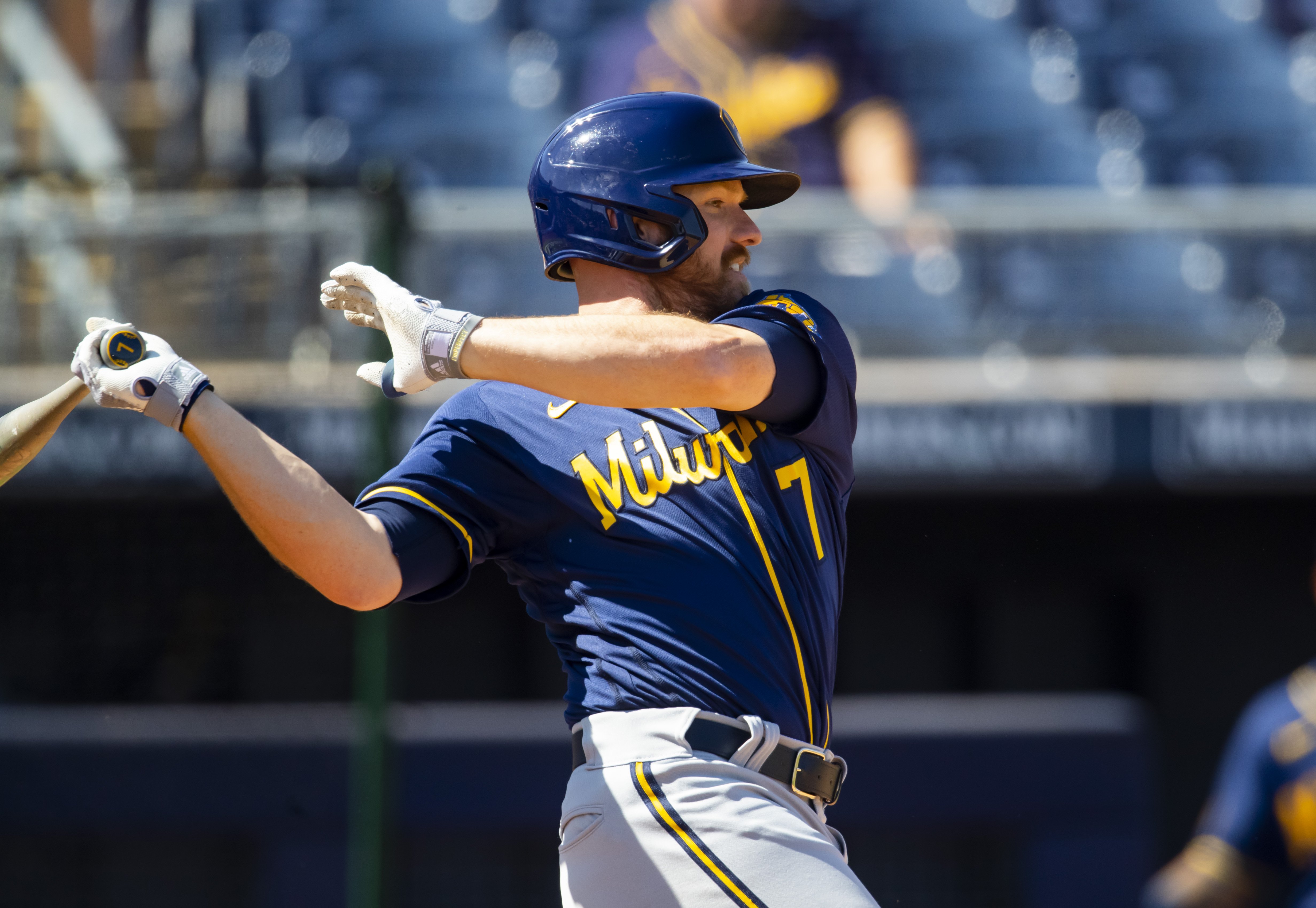 Derek Fisher was selected by the Houston Astros with the 37th overall pick during the 2014 MLB Draft out of the University of Virginia. He quickly ascended through the Astros’ farm system — he topped out as the team’s fourth-best prospect according to MLB.com in 2017 — reaching Triple-A in 2016 and eventually the majors the following summer, on the back of strong power numbers. The lefthanded slugger hit 16 home runs in 84 games at High-A in 2015, 21 across 129 games at Double-A and Triple-A in 2016, and 26 in 137 Triple-A and MLB games in 2017. Fisher bounced between the majors and minors in 2018 and 2019 before being traded to the Toronto Blue Jays at the deadline in exchange for RHP Aaron Sanchez, OF Cal Stevenson, and RHP Joe Biagini. He battled a couple of minor leg injuries during the 2020 season which limited him to 16 games and zapped him of his power. He was then traded to the Milwaukee Brewers during the offseason for a player to be named later and cash. Once again, he was bitten by the injury bug — this time a significant hamstring strain — which allowed him to appear in only four games for the Brewers and 25 for the Triple-A Nashville Sounds. Fisher’s various leg injuries and increasing age, he’ll be 29 next August, have largely robbed him of his once above-average speed. Upon making his debut in 2017, Fisher ranked in the 96th percentile in sprint speed, which helped him rack up 111 stolen bases during his minor-league career. However, during limited action this past season, his sprint speed had dropped precipitously to the 37th percentile. Unlike many left-handed batters these days, Fisher is not a dead-pull hitter. He tends to spray the ball all over the field throughout his major league career, with the majority of his batted balls going back up the middle (41.1%). What has kept Fisher from sticking in the majors is his propensity to strike out. He has done so 165 times in 466 MLB plate appearances, which equates to a whopping 35.5% K-rate. He possesses neither the power nor the defense to make up for his greatest weakness. In many respects, Fisher profiles similarly to that of Jake Cave, but with perhaps more power potential. He’s a fourth outfielder-type at best who could slot in at any spot, though he’s probably best in one of the corners. Odds are that he won’t play a significant role on the Twins next season, but could directly slide into Cave’s spot if he leaves the team and/or they don’t believe that someone like Gilberto Celestino is quite ready for the role. MORE FROM TWINS DAILY — Latest Twins coverage from our writers — Recent Twins discussion in our forums — Follow Twins Daily via Twitter, Facebook, or email — Read more from Lucas here
- 21 comments
-
- 2
-
-
- derek fisher
- jake cave
- (and 1 more)
-
What Happened to Trevor Larnach?
Lucas Seehafer PT replied to Lucas Seehafer PT's topic in Twins Daily Front Page News
Who's working with him right now? No one (thanks lockout). But Popkins will absolutely work with him once the lockout ends. Helping players make adjustments based on analytics is the main reason the Twins signed him. -
What Happened to Trevor Larnach?
Lucas Seehafer PT replied to Lucas Seehafer PT's topic in Twins Daily Front Page News
For sure, though even in the minor's Larnach's reputation was one of someone who can't hit off-speed stuff but absolutely mashes fastballs. He did that through the first two months after his debut but then stopped hitting them as the season went on. He'll always get a steady diet of off-speed stuff, particularly as that is the way the game is trending, but, to your point, if he doesn't adjust (and doing so is much easier said than done), he needs to continue to mash fastballs. I think that's the big adjustment he needs to make. He's going to see fewer fastballs and they're going to be primarily located outside when he does see them. He needs to learn how to better recognize those pitches and capitalize when he gets them. -
What Happened to Trevor Larnach?
Lucas Seehafer PT replied to Lucas Seehafer PT's topic in Twins Daily Front Page News
I don't necessarily disagree with you point about Larnach being a better trade chip, but to play devil's advocate a bit: For better or for worse, Kepler has a track record. He's shown that he can produce good power at the MLB level and provide elite defense in right field and solid defense in center. Teams value those attributes and I think we tend to take his talent for granted a bit because we see his negatives on a day-to-day basis. When you look at Larnach you see a guy who has the potential for above average power but no real home defensively. He'll like never be more than average in either corner due to his slower foot speed and decent arm. Frankly, I think his 80-90th percentile future outcome is something like a consistent left-handed 2012 Josh Willingham with slightly better defense. In that sense, Larnach's offense would be better than Kepler. However, Kepler's defense provides so much value that he'd probably be considered the more valuable player, even with his mediocre offense. -
Minnesota Twins outfielder Trevor Larnach was not supposed to make his MLB debut during the early portion of May 2021. In fact, somewhere in the multiverse, there is a world in which Larnach did not reach the major leagues at all this past summer, instead spending time marinating in Triple-A, a level at which he had not competed at prior to 2021. Image courtesy of Peter Aiken, USA TODAY Minnesota Twins outfielder Trevor Larnach was not supposed to make his MLB debut during the early portion of May 2021. In fact, somewhere in the multiverse, there is a world in which Larnach did not reach the major leagues at all this past summer, instead spending time marinating in Triple-A, a level at which he had not competed at prior to 2021. However, a bevy of early-season injuries suffered by Twins outfielders resulted in the erstwhile Oregon State Beaver making his big league debut on May 8. He went 0-for-4 with a hit by pitch as the Twins fell to the Detroit Tigers 7-3, but by the end of the month, Larnach was slashing .228/.389/.456 to go along with three home runs, four doubles, and a 19:12 K:BB ratio. By the end of June, his batting average had risen to .245, his home runs (5) and doubles (8) continued to climb at a steady pace, and it was widely believed that the lefty masher would not only be a staple in the Twins’ lineup for the remainder of the increasingly lost season, but for years to come as well. Larnach was demoted to Triple-A St. Paul on August 16th with his OPS sitting at a gloomy .672 and his strikeouts outnumbering his walks 3-to-1. His decrease in performance was less of a drop off and more of a sheer cliff. The reasons for Larnach’s struggles are often attributed primarily to an inability to hit off-speed pitches, and while it is true that he did struggle mightily, in actuality, they extend far deeper. Baseball Savant is a fount of knowledge if you know where to look. Within its walls of dizzying statistical text and confusing graphical representations exists all the insights one could ever desire to know about a given player. The data summarizing Trevor Larnach’s rookie campaign provides no exception. (Note: All images and data used and analyzed below come via Baseball Savant.) By adjusting inputs and parameters provided automatically by Savant, it’s possible to extract detailed information about Larnach’s season, including how opposing pitchers approached his at-bats and, ultimately, how he fared. To begin, the graph below displays the pitch-types Larnach faced on a month-to-month basis in the form of a percentage. In short, opponents offered Larnach a healthy helping of fastballs immediately upon being called up in May, but that number dropped precipitously in June and rose again in July before falling in August. Additionally, it should be noted that the number of breaking balls Larnach faced — defined as sliders, curves, knuckle-curves, and the ever-nebulous “other” — generally increased consistently as the summer progressed, to the point where he was seeing nearly an equal amount of fastballs and breaking balls in June and August. “I could tell teams were not going to be throwing fastballs a whole lot when I started to see a heavy dose of off-speed and changeups,” Larnach told Aaron Gleeman of The Athletic in late June. “You’re still going to get [fastballs]. They have to establish that or show them. I try to have a plan when I go up there and stick with it.” However, as the season progressed further, opponents began to offer fewer and fewer changeups while throwing more and more sliders. Simultaneously, Larnach’s swing and miss percentages increased across the board. (Note: There is quite a bit of noise present in Larnach’s batting data against off-speed pitches due to an extremely small sample size.) To make matters worse, Larnach’s average exit velocity numbers as well as his batting average and slugging percentages (.382/.765 in May compared to .229/.375 in July) against fastballs plummeted. In essence, not only was he swinging and missing more as the season progressed, he was also making weaker contact with the one pitch he generally destroyed when he did manage to meet leather with wood. Often such a significant drop in exit velo and overall contact is accompanied by an increased proclivity to chase pitches outside of the zone. In general, Larnach has a discerning eye at the plate, ranking above average in take rate compared to his major league peers; however, his propensity to swing at breaking balls out of the zone reached its zenith in July, just prior to being sent down. And even if he wasn’t chasing as many fastballs or off-speed pitches as one might assume based on the numbers provided above, he wasn’t exactly making a ton of contact when he did. By the time Larnach’s run in the bigs concluded, he was seeing an increased number of sliders down and away and fastballs on the outer-half of the plate, both of which were met by an alarming number of swings and misses. The end result was a statistical profile that laid out clearly the best way to get Larnach out. So, was Larnach’s inability to hit off-speed pitches and breaking balls a major factor in his decline during his rookie campaign? Undoubtedly. But so was a sudden inability to hit fastballs, due in part to pitchers throwing fewer — and the ones they did throw being closer to the outer edge of the plate — as well as what was likely a subsequent reduction in overall confidence. Larnach still overflows with raw talent and power, but it’s possible he never figures out how to hit breaking balls and off-speed pitches. If the 2021 season taught us anything, it’s that his overall success will rely on his ability to consistently mash fastballs and if he can’t, well, the consequences could be severe. MORE FROM TWINS DAILY — Latest Twins coverage from our writers — Recent Twins discussion in our forums — Follow Twins Daily via Twitter, Facebook, or email — Read more from Lucas here View full article
-
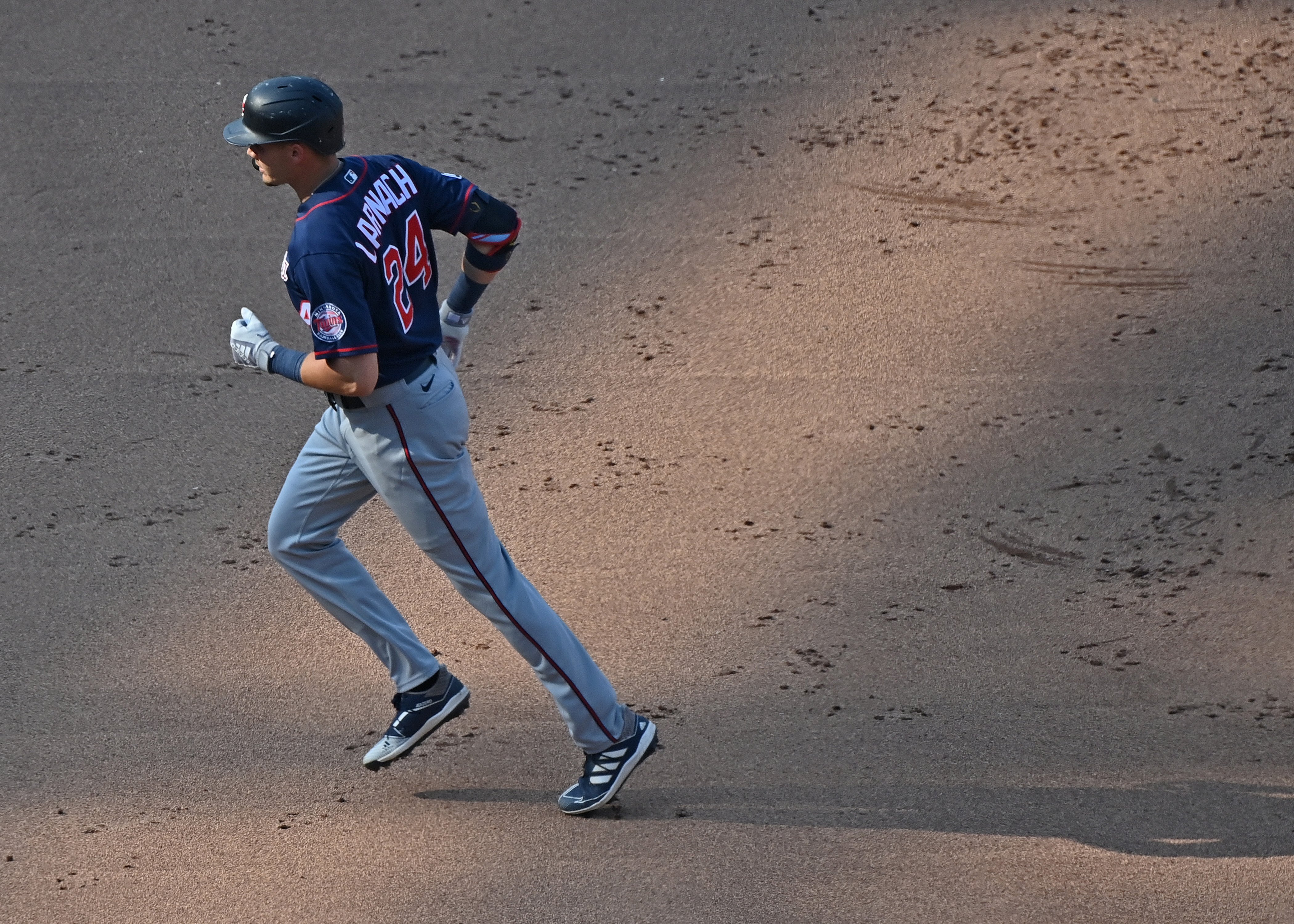 However, a bevy of early-season injuries suffered by Twins outfielders resulted in the erstwhile Oregon State Beaver making his big league debut on May 8. He went 0-for-4 with a hit by pitch as the Twins fell to the Detroit Tigers 7-3, but by the end of the month, Larnach was slashing .228/.389/.456 to go along with three home runs, four doubles, and a 19:12 K:BB ratio. By the end of June, his batting average had risen to .245, his home runs (5) and doubles (8) continued to climb at a steady pace, and it was widely believed that the lefty masher would not only be a staple in the Twins’ lineup for the remainder of the increasingly lost season, but for years to come as well. Larnach was demoted to Triple-A St. Paul on August 16th with his OPS sitting at a gloomy .672 and his strikeouts outnumbering his walks 3-to-1. His decrease in performance was less of a drop off and more of a sheer cliff. The reasons for Larnach’s struggles are often attributed primarily to an inability to hit off-speed pitches, and while it is true that he did struggle mightily, in actuality, they extend far deeper. Baseball Savant is a fount of knowledge if you know where to look. Within its walls of dizzying statistical text and confusing graphical representations exists all the insights one could ever desire to know about a given player. The data summarizing Trevor Larnach’s rookie campaign provides no exception. (Note: All images and data used and analyzed below come via Baseball Savant.) By adjusting inputs and parameters provided automatically by Savant, it’s possible to extract detailed information about Larnach’s season, including how opposing pitchers approached his at-bats and, ultimately, how he fared. To begin, the graph below displays the pitch-types Larnach faced on a month-to-month basis in the form of a percentage. In short, opponents offered Larnach a healthy helping of fastballs immediately upon being called up in May, but that number dropped precipitously in June and rose again in July before falling in August. Additionally, it should be noted that the number of breaking balls Larnach faced — defined as sliders, curves, knuckle-curves, and the ever-nebulous “other” — generally increased consistently as the summer progressed, to the point where he was seeing nearly an equal amount of fastballs and breaking balls in June and August. “I could tell teams were not going to be throwing fastballs a whole lot when I started to see a heavy dose of off-speed and changeups,” Larnach told Aaron Gleeman of The Athletic in late June. “You’re still going to get [fastballs]. They have to establish that or show them. I try to have a plan when I go up there and stick with it.” However, as the season progressed further, opponents began to offer fewer and fewer changeups while throwing more and more sliders. Simultaneously, Larnach’s swing and miss percentages increased across the board. (Note: There is quite a bit of noise present in Larnach’s batting data against off-speed pitches due to an extremely small sample size.) To make matters worse, Larnach’s average exit velocity numbers as well as his batting average and slugging percentages (.382/.765 in May compared to .229/.375 in July) against fastballs plummeted. In essence, not only was he swinging and missing more as the season progressed, he was also making weaker contact with the one pitch he generally destroyed when he did manage to meet leather with wood. Often such a significant drop in exit velo and overall contact is accompanied by an increased proclivity to chase pitches outside of the zone. In general, Larnach has a discerning eye at the plate, ranking above average in take rate compared to his major league peers; however, his propensity to swing at breaking balls out of the zone reached its zenith in July, just prior to being sent down. And even if he wasn’t chasing as many fastballs or off-speed pitches as one might assume based on the numbers provided above, he wasn’t exactly making a ton of contact when he did. By the time Larnach’s run in the bigs concluded, he was seeing an increased number of sliders down and away and fastballs on the outer-half of the plate, both of which were met by an alarming number of swings and misses. The end result was a statistical profile that laid out clearly the best way to get Larnach out. So, was Larnach’s inability to hit off-speed pitches and breaking balls a major factor in his decline during his rookie campaign? Undoubtedly. But so was a sudden inability to hit fastballs, due in part to pitchers throwing fewer — and the ones they did throw being closer to the outer edge of the plate — as well as what was likely a subsequent reduction in overall confidence. Larnach still overflows with raw talent and power, but it’s possible he never figures out how to hit breaking balls and off-speed pitches. If the 2021 season taught us anything, it’s that his overall success will rely on his ability to consistently mash fastballs and if he can’t, well, the consequences could be severe. MORE FROM TWINS DAILY — Latest Twins coverage from our writers — Recent Twins discussion in our forums — Follow Twins Daily via Twitter, Facebook, or email — Read more from Lucas here
 -
Lucas discusses under-appreciated Twins pitching prospect Sawyer Gipson-Long, who may be slated for a breakout 2022 campaign. View full video
-
Lucas discusses under-appreciated Twins pitching prospect Sawyer Gipson-Long, who may be slated for a breakout 2022 campaign.
-
Whoa now! I get paid by clicks so, to be clear: Please hate read my articles and share them with your friends;)
-
Well, top feeding isn't allowed at the moment lol. Got get excited about something!
-
Many fans of the Minnesota Twins were confused last week when the team claimed reliever Trevor Megill off of waivers from the Chicago Cubs only for them to non-tender him hours later. However, clarity for the decision came this past Sunday when SKOR North’s Darren Wolfson reported that Megill had re-signed with the team on a minor league deal. Image courtesy of Matt Kartozian, USA TODAY Many fans of the Minnesota Twins were confused last week when the team claimed reliever Trevor Megill off of waivers from the Chicago Cubs only for them to non-tender him hours later. However, clarity for the decision came this past Sunday when SKOR North’s Darren Wolfson reported that Megill had re-signed with the team on a minor league deal. Megill and all 6-foot-8-inches, 250 pounds of him made his major league debut for the Chicago Cubs this past summer, where he appeared in 28 games out of the bullpen. He owns a four-pitch mix, but primarily relies on his four-seam fastball, which can touch 100 mph, and curveball. The fastball has the raw attributes to be an above average pitch, ranking in the 88th percentile in spin rate and possessing good carry; however, big league opponents mashed it for five home runs and three doubles in 71 plate appearances. (It should be noted, though, that Megill likely suffered from a small sample size and a touch of bad luck. The fireballer allowed seven home runs in 23 ⅔ innings, five of which came at Wrigley Field. According to Baseball Savant, had he pitched the majority of his innings at Target Field, he would have only surrendered two. His 24.1% HR/FB ratio at the MLB level was the second largest of his career by far, trailing only the 26.7% rate he posted in 20 innings at Low-A in 2015.) However, the pitch that likely caught the Twins front office’s eye the most is, you guessed it, his slider. Megill threw his slider only 44 times last summer (26 times to right-handed batters and 18 to lefties), but did so with great success. Nine of his 30 strikeouts came via the slider — it had an absurd, and unsustainable, 56.5% Whiff% — with opponents posting an xSLG of .273. Based on previous evidence provided from their approach with other pitchers, it would not be surprising to see the Twins’ pitching staff adjust Megill’s pitch mix by upping the usage of his slider and cutting down on his fastball and curve. (Of note: The pitching staff is allowed to communicate and work with Megill directly as minor league players are not covered by the now-expired CBA. This would not have been the case had they not non-tendered him and kept him on the 40-man roster.) Much like the signing of fellow minor league bullpen arm Jake Faria, the acquisition of Megill is representative of the front office’s approach to filling out their bullpen. Megill has one pitch that could be elite (the slider) and some statistical evidence suggesting that he’s better than what his performance to date suggests. However, what potentially separates Megill from Faria is his high velocity fastball in combination with a positive track record in the minor leagues. (Megill consistently posted K-BB% rates above 22% while in the San Diego Padres and Cubs’ systems.) Megill is unlikely to be the savior of the Twins’ bullpen woes, but he is an intriguing arm that is more than worth a flier, particularly on a minor league deal. MORE FROM TWINS DAILY — Latest Twins coverage from our writers — Recent Twins discussion in our forums — Follow Twins Daily via Twitter, Facebook, or email — Read more from Lucas here View full article
-
Trevor Megill Is a Low-Risk, Potentially High-Reward Addition
Lucas Seehafer PT posted an article in Twins
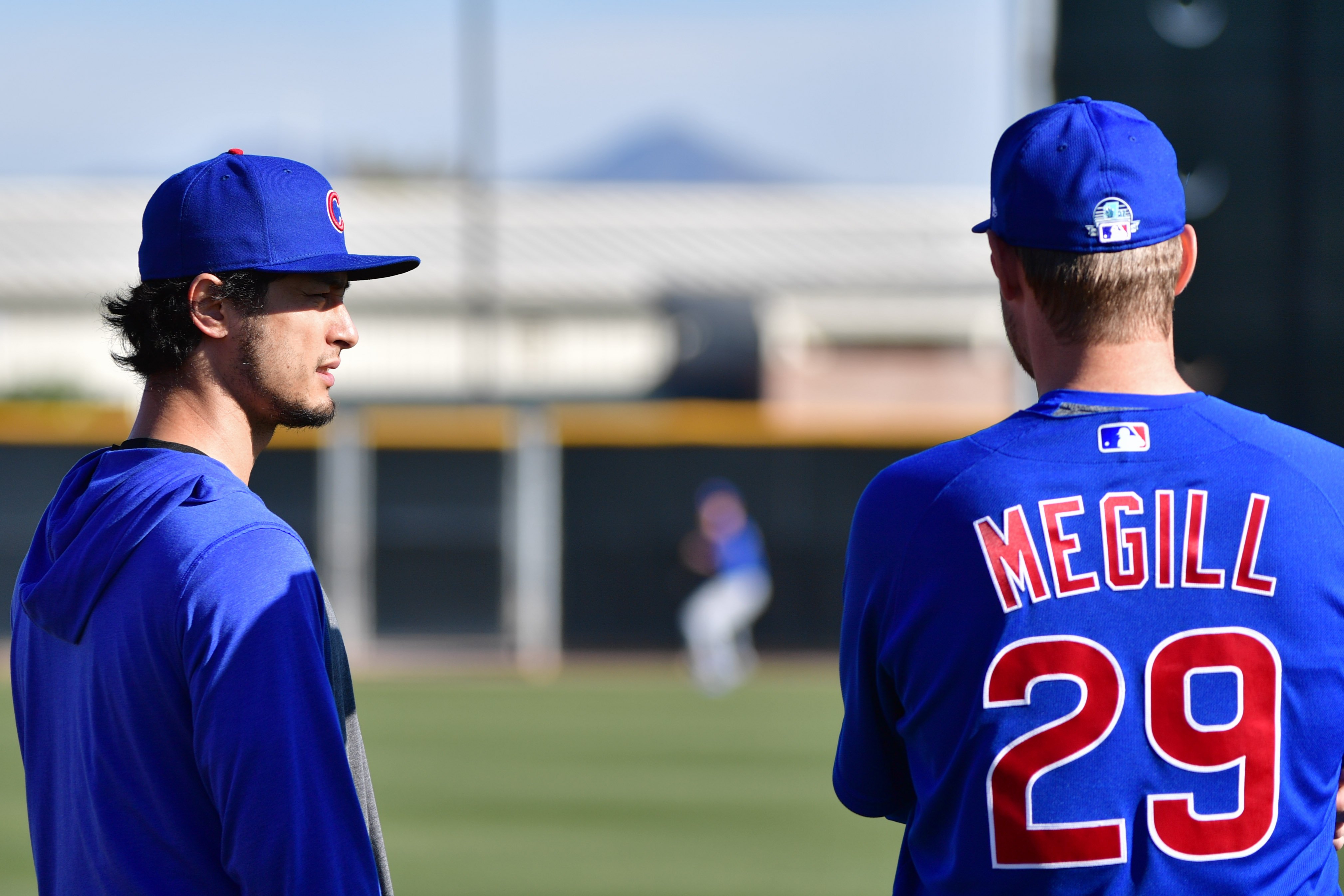 Megill and all 6-foot-8-inches, 250 pounds of him made his major league debut for the Chicago Cubs this past summer, where he appeared in 28 games out of the bullpen. He owns a four-pitch mix, but primarily relies on his four-seam fastball, which can touch 100 mph, and curveball. The fastball has the raw attributes to be an above average pitch, ranking in the 88th percentile in spin rate and possessing good carry; however, big league opponents mashed it for five home runs and three doubles in 71 plate appearances. (It should be noted, though, that Megill likely suffered from a small sample size and a touch of bad luck. The fireballer allowed seven home runs in 23 ⅔ innings, five of which came at Wrigley Field. According to Baseball Savant, had he pitched the majority of his innings at Target Field, he would have only surrendered two. His 24.1% HR/FB ratio at the MLB level was the second largest of his career by far, trailing only the 26.7% rate he posted in 20 innings at Low-A in 2015.) However, the pitch that likely caught the Twins front office’s eye the most is, you guessed it, his slider. Megill threw his slider only 44 times last summer (26 times to right-handed batters and 18 to lefties), but did so with great success. Nine of his 30 strikeouts came via the slider — it had an absurd, and unsustainable, 56.5% Whiff% — with opponents posting an xSLG of .273. Based on previous evidence provided from their approach with other pitchers, it would not be surprising to see the Twins’ pitching staff adjust Megill’s pitch mix by upping the usage of his slider and cutting down on his fastball and curve. (Of note: The pitching staff is allowed to communicate and work with Megill directly as minor league players are not covered by the now-expired CBA. This would not have been the case had they not non-tendered him and kept him on the 40-man roster.) Much like the signing of fellow minor league bullpen arm Jake Faria, the acquisition of Megill is representative of the front office’s approach to filling out their bullpen. Megill has one pitch that could be elite (the slider) and some statistical evidence suggesting that he’s better than what his performance to date suggests. However, what potentially separates Megill from Faria is his high velocity fastball in combination with a positive track record in the minor leagues. (Megill consistently posted K-BB% rates above 22% while in the San Diego Padres and Cubs’ systems.) Megill is unlikely to be the savior of the Twins’ bullpen woes, but he is an intriguing arm that is more than worth a flier, particularly on a minor league deal. MORE FROM TWINS DAILY — Latest Twins coverage from our writers — Recent Twins discussion in our forums — Follow Twins Daily via Twitter, Facebook, or email — Read more from Lucas here
 -
Lucas discussed LHP and Minnesota Twins reliever prospect Jovani Moran before opening a pack of 2021 Panini Chronicles. Videos can be streamed live by following: https://twitch.tv/seehafer_ View full video
-
Lucas discussed LHP and Minnesota Twins reliever prospect Jovani Moran before opening a pack of 2021 Panini Chronicles. Videos can be streamed live by following: https://twitch.tv/seehafer_
-
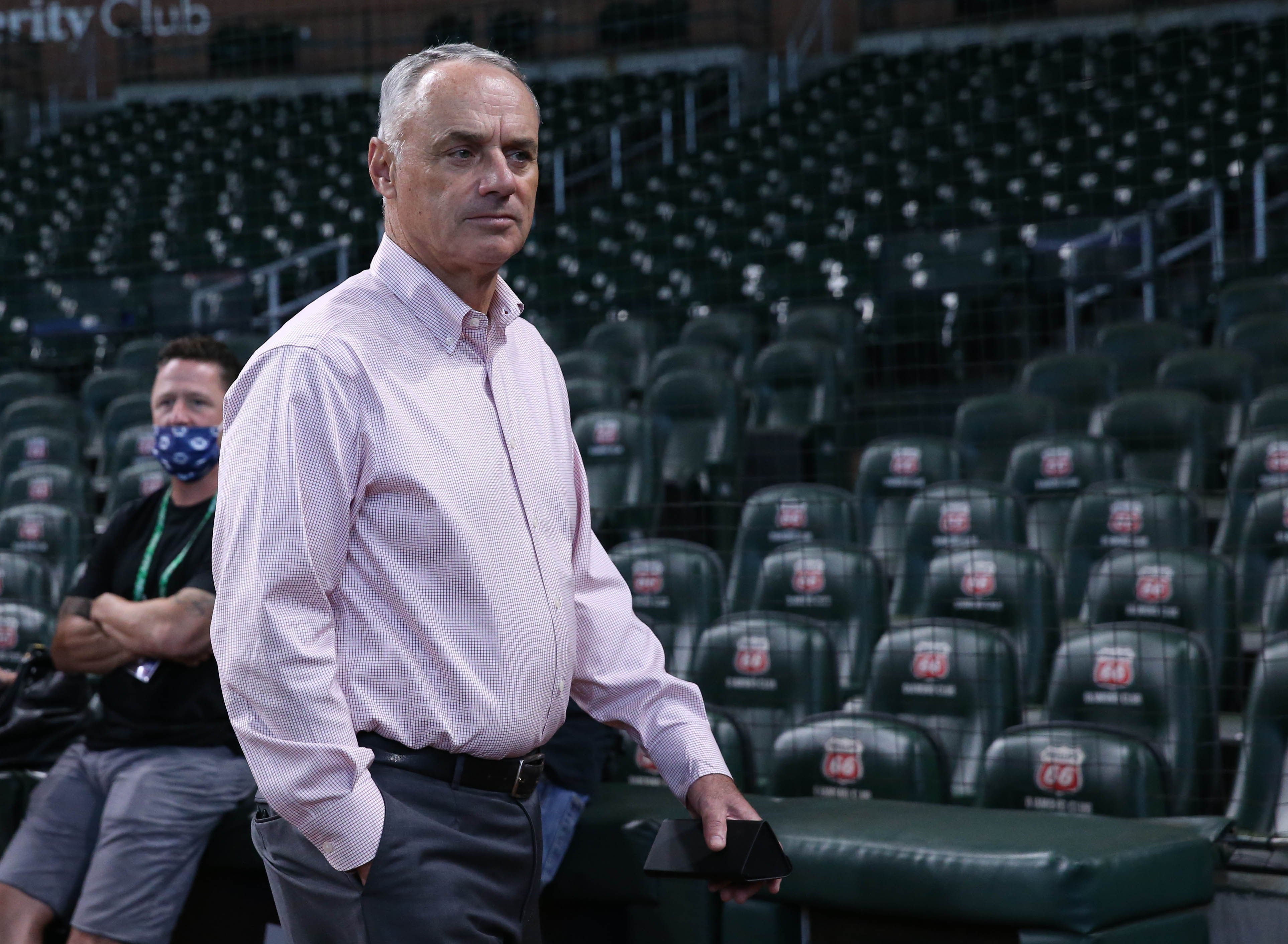 “This defensive lockout was necessary because the Players Association’s vision for Major League Baseball would threaten the ability of most teams to be competitive,” Manfred opined in a letter to fans shortly after the lockout began. “It’s simply not a viable option.” Expounding further during a press conference on Thursday morning, Manfred stated, “Things like a shortened reserve period, a $100 million reduction in revenue sharing, and salary arbitration for the whole two-year class are bad for the sport, bad for the fans, and bad for competitive balance.” The three bargaining chips cited by Manfred are among the most coveted by the Players Association during negotiations, according to The Athletic’s Evan Drellich. (For those curious, ESPN's Jeff Passan outlined "the myriad issues being discussed" between the two sides in a recent column.) Despite his bold claims, the commissioner did not provide concrete evidence to back them up. From an outsider’s perspective, it’s difficult to envision how the Players Association’s proposals would negatively impact the sport, competitive balance, or the fans, in particular. American professional baseball and the fans of MLB would not be impacted directly — and perhaps only indirectly with interventions such as slightly increased ticket and souvenir prices, though the impact would likely be marginal — by a reduction in revenue sharing between the owners. (However, as Passan discusses, decreased revenue sharing would likely negatively impact the owners of small market teams more than those in large markets, but, it should be noted, they're still billionaires.) A change to the arbitration process and a reduction in time before players reach free agency would only end up with them making more money, more quickly while having an opportunity to change teams earlier in their careers, potentially opening up a wider path to regular playing time in the Major Leagues. In reality, the major changes the Players Association is seeking during negotiations would only negatively impact one entity, though it’s important to note that Manfred is technically an employee of said entity: the owners. As such, it shouldn’t be surprising that the commissioner framed the lockout in the way he ultimately did. However, doing so, particularly by saying that the players’ demands are bad for the fans, is misleading at best, insulting at worst, and nonsensical overall. The fans of MLB will only be harmed — and even that is a dramatic way to describe the theoretical effects of the stoppage — if the lockout extends into Spring Training and the regular season, reducing the amount of games to take in. Again, neither party is without fault for the current lockout, but Manfred’s framing of the bargaining chips getting played against the owners as a negative for the fan should not be taken with a grain of salt, but rather thrown away all together. MORE FROM TWINS DAILY — Latest Twins coverage from our writers — Recent Twins discussion in our forums — Follow Twins Daily via Twitter, Facebook, or email — Read more from Lucas here
 -
Just past 11 p.m. central this past Wednesday evening, MLB’s 30 owners initiated the sport’s first lockout in 26 years after failing to come to terms on a new collective bargaining agreement with the MLB Players Association. While the work stoppage ultimately falls on the shoulders of both the owners and the players, commissioner Rob Manfred’s public arguments framing the players as the primary culprits are largely nonsensical. Image courtesy of Troy Taormina, USA Today Just past 11 p.m. central this past Wednesday evening, MLB’s 30 owners initiated the sport’s first lockout in 26 years after failing to come to terms on a new collective bargaining agreement with the MLB Players Association. While the work stoppage ultimately falls on the shoulders of both the owners and the players, commissioner Rob Manfred’s public arguments framing the players as the primary culprits are largely nonsensical. “This defensive lockout was necessary because the Players Association’s vision for Major League Baseball would threaten the ability of most teams to be competitive,” Manfred opined in a letter to fans shortly after the lockout began. “It’s simply not a viable option.” Expounding further during a press conference on Thursday morning, Manfred stated, “Things like a shortened reserve period, a $100 million reduction in revenue sharing, and salary arbitration for the whole two-year class are bad for the sport, bad for the fans, and bad for competitive balance.” The three bargaining chips cited by Manfred are among the most coveted by the Players Association during negotiations, according to The Athletic’s Evan Drellich. (For those curious, ESPN's Jeff Passan outlined "the myriad issues being discussed" between the two sides in a recent column.) Despite his bold claims, the commissioner did not provide concrete evidence to back them up. From an outsider’s perspective, it’s difficult to envision how the Players Association’s proposals would negatively impact the sport, competitive balance, or the fans, in particular. American professional baseball and the fans of MLB would not be impacted directly — and perhaps only indirectly with interventions such as slightly increased ticket and souvenir prices, though the impact would likely be marginal — by a reduction in revenue sharing between the owners. (However, as Passan discusses, decreased revenue sharing would likely negatively impact the owners of small market teams more than those in large markets, but, it should be noted, they're still billionaires.) A change to the arbitration process and a reduction in time before players reach free agency would only end up with them making more money, more quickly while having an opportunity to change teams earlier in their careers, potentially opening up a wider path to regular playing time in the Major Leagues. In reality, the major changes the Players Association is seeking during negotiations would only negatively impact one entity, though it’s important to note that Manfred is technically an employee of said entity: the owners. As such, it shouldn’t be surprising that the commissioner framed the lockout in the way he ultimately did. However, doing so, particularly by saying that the players’ demands are bad for the fans, is misleading at best, insulting at worst, and nonsensical overall. The fans of MLB will only be harmed — and even that is a dramatic way to describe the theoretical effects of the stoppage — if the lockout extends into Spring Training and the regular season, reducing the amount of games to take in. Again, neither party is without fault for the current lockout, but Manfred’s framing of the bargaining chips getting played against the owners as a negative for the fan should not be taken with a grain of salt, but rather thrown away all together. MORE FROM TWINS DAILY — Latest Twins coverage from our writers — Recent Twins discussion in our forums — Follow Twins Daily via Twitter, Facebook, or email — Read more from Lucas here View full article
-
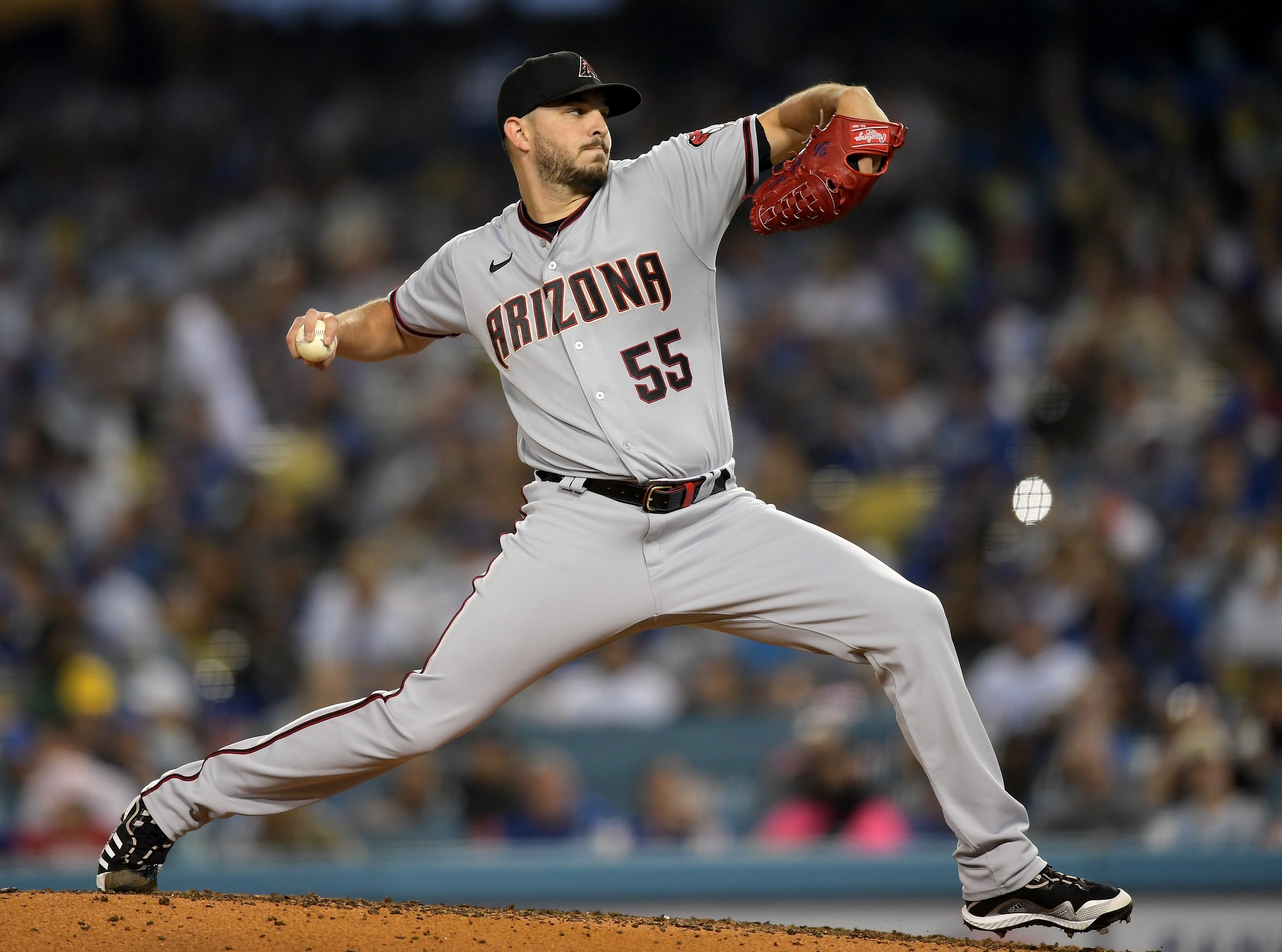 Jake Faria was selected by the Tampa Bay Rays in the 10th round of the 2011 draft and spent the first 40 games of his big league career — spread across the 2017-19 seasons — in St. Petersburg. The Rays shipped him to Milwaukee in exchange for Jesus Aguilar at the 2019 trade deadline, and he proceeded to post an 11.42 ERA for the Brewers in 8 2/3 innings. Milwaukee designated him for assignment in January 2020 and ultimately released him in mid-September after passing through waivers unclaimed. (Faria did not appear in an MLB game during the pandemic-shortened 2020 season.) He signed with Arizona this past June and appeared in 23 games, including three starts, for the hapless Diamondbacks striking out 32 batters in 32 2/3 innings. Faria boasts a four-pitch mix — four-seamer, splitter, curveball, and slider — though he leans heavily on his fastball, which sits around 92 mph. However, while his fastball is nothing to write home about, his splitter is, inarguably, an above average offering. His splitter helped propel him to a promising rookie campaign in 2017 when he produced 1.3 fWAR, an 81 ERA-, and a 3.43 ERA in 16 total games (14 starts). However, his iffy tertiary and quaternary stuff (i.e. his slider and curveball) have tanked an otherwise promising start to his career. Faria has never produced anything near what he did during his age-23 season. However, bringing him in on a minor league deal represents a zero risk, decent reward opportunity for the Twins. In a best-case scenario, he is added to the 40-man roster and functions in a similar role to that of Devin Smeltzer from past seasons; a serviceable long inning relief arm who has the ability to step up into a spot-starter role on occasion. In a worst-case scenario, he sticks around at Triple-A and provides organizational pitching depth, something that is always in dire need. In many respects, the signing of Faria is emblematic of the Twins front office’s approach to finding bullpen arms. They often look for pitchers who can be signed for cheap (i.e. short-term or minor league deals) and possess at least one offering that displays some signs of being elite. Matt Wisler rose to prominence after a middling career due his high-end slider. The Twins will likely hope to accomplish the same feat by relying on Faria’s splitter. MORE FROM TWINS DAILY — Latest Twins coverage from our writers — Recent Twins discussion in our forums — Follow Twins Daily via Twitter, Facebook, or email — Read more from Lucas here
 -
Who is New Twins Pitcher Jake Faria?
Lucas Seehafer PT posted a topic in Twins Daily Front Page News
The Minnesota Twins announced a couple of minor league signings Wednesday evening in addition to the signing of right-handed pitcher Dylan Bundy to a major league deal. Returning will be lefty reliever Danny Coulombe who appeared in 29 games for the Twins last summer and was recently non-tendered. But perhaps the more intriguing of the two is the arrival of right-hander Jake Faria. Image courtesy of Jayne Kamin-Oncea, USA TODAY Sports The Minnesota Twins announced a couple of minor league signings Wednesday evening in addition to the signing of right-handed pitcher Dylan Bundy to a major league deal. Returning will be lefty reliever Danny Coulombe who appeared in 29 games for the Twins last summer and was recently non-tendered. But perhaps the more intriguing of the two is the arrival of right-hander Jake Faria. Jake Faria was selected by the Tampa Bay Rays in the 10th round of the 2011 draft and spent the first 40 games of his big league career — spread across the 2017-19 seasons — in St. Petersburg. The Rays shipped him to Milwaukee in exchange for Jesus Aguilar at the 2019 trade deadline, and he proceeded to post an 11.42 ERA for the Brewers in 8 2/3 innings. Milwaukee designated him for assignment in January 2020 and ultimately released him in mid-September after passing through waivers unclaimed. (Faria did not appear in an MLB game during the pandemic-shortened 2020 season.) He signed with Arizona this past June and appeared in 23 games, including three starts, for the hapless Diamondbacks striking out 32 batters in 32 2/3 innings. Faria boasts a four-pitch mix — four-seamer, splitter, curveball, and slider — though he leans heavily on his fastball, which sits around 92 mph. However, while his fastball is nothing to write home about, his splitter is, inarguably, an above average offering. His splitter helped propel him to a promising rookie campaign in 2017 when he produced 1.3 fWAR, an 81 ERA-, and a 3.43 ERA in 16 total games (14 starts). However, his iffy tertiary and quaternary stuff (i.e. his slider and curveball) have tanked an otherwise promising start to his career. Faria has never produced anything near what he did during his age-23 season. However, bringing him in on a minor league deal represents a zero risk, decent reward opportunity for the Twins. In a best-case scenario, he is added to the 40-man roster and functions in a similar role to that of Devin Smeltzer from past seasons; a serviceable long inning relief arm who has the ability to step up into a spot-starter role on occasion. In a worst-case scenario, he sticks around at Triple-A and provides organizational pitching depth, something that is always in dire need. In many respects, the signing of Faria is emblematic of the Twins front office’s approach to finding bullpen arms. They often look for pitchers who can be signed for cheap (i.e. short-term or minor league deals) and possess at least one offering that displays some signs of being elite. Matt Wisler rose to prominence after a middling career due his high-end slider. The Twins will likely hope to accomplish the same feat by relying on Faria’s splitter. MORE FROM TWINS DAILY — Latest Twins coverage from our writers — Recent Twins discussion in our forums — Follow Twins Daily via Twitter, Facebook, or email — Read more from Lucas here View full article -
Vallimont was among six new additions to the Minnesota Twins' 40-man roster nearly two weeks ago. However, he wasn't as obvious as a choice as his compatriots. This video explains why.
-
Vallimont was among six new additions to the Minnesota Twins' 40-man roster nearly two weeks ago. However, he wasn't as obvious as a choice as his compatriots. This video explains why. View full video
-
Dobnak could easily be a starter and I don't think this past season is representative of his capabilities. But, Ryan and Ober were pretty dominant for rookies. Dobnak started off hot two seasons ago then dropped off precipitously. With Dobnak, if he doesn't have control he's really going to struggle because he doesn't get a ton of swing and misses. I don't think he's a lock like the other two, but he is a candidate.
-
Fair, but the two moves aren't a 1:1 comparison. As time went on, it became pretty obvious that Berrios wasn't going to re-sign with the Twins. In that case, it makes some sense to trade him and at least get something in return. (And they got more of a prospect haul than anyone expected.) In the case of Buxton, it seems as though he's more than willing to re-sign, but the Twins are the ones balking. Giving him an offer well-below his production value only to trade him gives a false sense of trying.