



Andrew Thares
-
Posts
653 -
Joined
-
Last visited
Content Type
Profiles
News
Minnesota Twins Videos
2026 Minnesota Twins Top Prospects Ranking
2022 Minnesota Twins Draft Picks
Minnesota Twins Free Agent & Trade Rumors, Notes, & Tidbits
Guides & Resources
2023 Minnesota Twins Draft Picks
The Minnesota Twins Players Project
2024 Minnesota Twins Draft Picks
2025 Minnesota Twins Draft Pick Tracker
2026 Minnesota Twins Draft Tracker: Picks & Bonuses
Forums
Blogs
Events
Store
Downloads
Gallery
Everything posted by Andrew Thares
-
You could say the Twins dug themselves a little bit of a hole early in this game, but that would be sugarcoating it a bit. The truth of the matter is the Twins dug themselves a hole all the way to China, and then kept on digging. Once the dust settled in St. Petersburg, the Twins had given up 14 runs, and never really mounted any sort of a comeback with the bats. Image courtesy of © Kim Klement-USA TODAY Sports You could say the Twins dug themselves a little bit of a hole early in this game, but that would be sugarcoating it a bit. The truth of the matter is the Twins dug themselves a hole all the way to China, and then kept on digging. Once the dust settled in St. Petersburg, the Twins had given up 14 runs, and never really mounted any sort of a comeback with the bats. Box Score Perez: 2.2 IP, 6 H, 6 ER, 2 BB, 3 K, 63.5% strikes (40 of 63 pitches) Home Runs: No Bomba Multi-Hit Games: Adrianza (2 for 3); Castro (2 for 3) WPA of +0.1: None WPA of -0.1: Perez -.307 (Chart via FanGraphs) After a couple of quick innings from both Charlie Morton and Martin Perez, we looked like we were locked in for the pitchers dual that we were expecting going into the night. That came to a screeching halt in the bottom of the third when Perez was unable to get out of the inning after surrendering six earned runs, highlighted by an Austin Meadows bases-clearing double. Zack Littell was able to come in and stop the bleeding, but that was short-lived as he came out in the bottom of the fourth and gave up five more runs on six hits and a walk. The inning probably would have been much worse if it weren’t for Byron Buxton making this spectacular catch to rob Daniel Robertson of a single to lead off the inning. https://twitter.com/fsnorth/status/1134254727351300096 Littell was able to settle in through the middle innings, and looked pretty sharp until he hit a wall with two outs in the bottom of the seventh where he got lit up with an RBI double followed by a majestic home run off the bat of Ji-Man Choi. However, you could say that Little did his job by saving the bullpen for the rest of the series, as the Twins needed to get just three more outs after he came out of the ballgame. The Twins were able to finally put a run on the board in the 5th when Luis Arraez hit a two-out double, followed by an RBI single from Ehrie Adrianza. They added another in the sixth thanks to a Byron Buxton lead-off triple. He eventually came in to score on an RBI groundout from Max Kepler. In the eighth, the Twins were able to get a third run thanks to a pair of singles to lead off the inning by Adrianza and Jason Castro. Adrianza came in to score that run on an RBI groundout from Byron Buxton. Good news is, that still only counts as one. The Twins will be back at it tomorrow evening with Jose Berrios on the mound trying to tie up the series at a game a piece. Bullpen Usage Here’s a quick look at the number of pitches thrown by the bullpen over the past five days: Next Three Games Fri at TB, 6:10 pm CT (Berrios-TBD) Sat at TB, 12:10 pm CT (Gibson-TBD) Sun at TB, 12:10 pm CT (Odorizzi-TBD) Last Game MIN 5, MIL 3: Smeltzer Shines in Emotional MLB Debut View full article
-
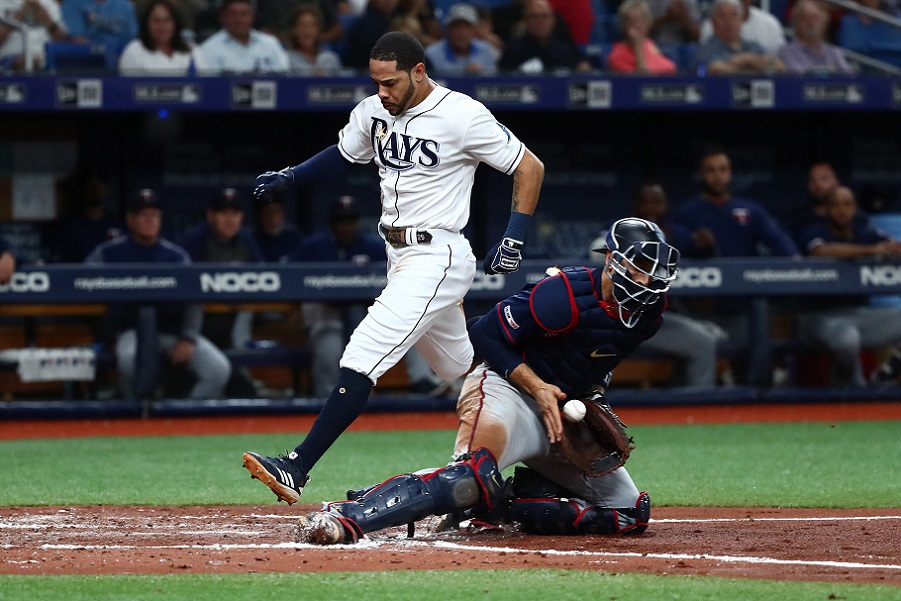 Box Score Perez: 2.2 IP, 6 H, 6 ER, 2 BB, 3 K, 63.5% strikes (40 of 63 pitches) Home Runs: No Bomba Multi-Hit Games: Adrianza (2 for 3); Castro (2 for 3) WPA of +0.1: None WPA of -0.1: Perez -.307 (Chart via FanGraphs) After a couple of quick innings from both Charlie Morton and Martin Perez, we looked like we were locked in for the pitchers dual that we were expecting going into the night. That came to a screeching halt in the bottom of the third when Perez was unable to get out of the inning after surrendering six earned runs, highlighted by an Austin Meadows bases-clearing double. Zack Littell was able to come in and stop the bleeding, but that was short-lived as he came out in the bottom of the fourth and gave up five more runs on six hits and a walk. The inning probably would have been much worse if it weren’t for Byron Buxton making this spectacular catch to rob Daniel Robertson of a single to lead off the inning. https://twitter.com/fsnorth/status/1134254727351300096 Littell was able to settle in through the middle innings, and looked pretty sharp until he hit a wall with two outs in the bottom of the seventh where he got lit up with an RBI double followed by a majestic home run off the bat of Ji-Man Choi. However, you could say that Little did his job by saving the bullpen for the rest of the series, as the Twins needed to get just three more outs after he came out of the ballgame. The Twins were able to finally put a run on the board in the 5th when Luis Arraez hit a two-out double, followed by an RBI single from Ehrie Adrianza. They added another in the sixth thanks to a Byron Buxton lead-off triple. He eventually came in to score on an RBI groundout from Max Kepler. In the eighth, the Twins were able to get a third run thanks to a pair of singles to lead off the inning by Adrianza and Jason Castro. Adrianza came in to score that run on an RBI groundout from Byron Buxton. Good news is, that still only counts as one. The Twins will be back at it tomorrow evening with Jose Berrios on the mound trying to tie up the series at a game a piece. Bullpen Usage Here’s a quick look at the number of pitches thrown by the bullpen over the past five days: Next Three Games Fri at TB, 6:10 pm CT (Berrios-TBD) Sat at TB, 12:10 pm CT (Gibson-TBD) Sun at TB, 12:10 pm CT (Odorizzi-TBD) Last Game MIN 5, MIL 3: Smeltzer Shines in Emotional MLB Debut
 -
 With the 2019 MLB Draft fast approaching, I thought it would be fun to take a look back at the Minnesota Twins 2018 Draft Class and see how they are doing one-year in. Some of the players like 1st round pick Trevor Larnach and 2nd round pick Ryan Jeffers have been closely followed here at Twins Daily, so most of you know what they have been up to, but the draft is a lot more than just a couple picks in the early rounds and players taken all the way through round 40 have a chance to make an impact on the organization. Image courtesy of © Bruce Thorson-USA TODAY Sports With the 2019 MLB Draft fast approaching, I thought it would be fun to take a look back at the Minnesota Twins 2018 Draft Class and see how they are doing one-year in. Some of the players like 1st round pick Trevor Larnach and 2nd round pick Ryan Jeffers have been closely followed here at Twins Daily, so most of you know what they have been up to, but the draft is a lot more than just a couple picks in the early rounds and players taken all the way through round 40 have a chance to make an impact on the organization. Trevor Larnach | Oregon State | OF | 1st Round | Current Level: High A Fort Myers Stats: 89 G; .299 AVG; .380 OBP; .471 SLG; 8 HR; 5 SB; 74 K; 43 BB Trevor Larnach had a strong showing last summer, posting an .890 OPS in 42 games between Elizabethon and Cedar Rapids. As a result, he started 2019 in Fort Myers. After a slow month of April, Larnach has found his groove at the High A level in May, as he has a .348/.442/.573 slash line in May. Ryan Jeffers | UNC Wilmington | C | 2nd Round | Current Level: High A Fort Myers Stats: 103 G; .323 AVG; .410 OBP; .471 SLG; 11 HR; 0 SB; 83 K; 46 BB It has been much the same story for Ryan Jeffers as it has been for Larnach. Jeffers tore it up at Elizabethon and Cedar Rapids last summer, but his numbers have been more in check this spring at Fort Myers, as he has a .770 OPS with just 4 home runs in 39 games. DaShawn Keirsey | Utah | OF | 4th Round | Current Level: A Cedar Rapids Stats: 42 G; .241 AVG; .318 OBP; .323 SLG; 0 HR; 6 SB: 38 K; 19 BB DaShawn Keirsey had a strong debut with Elizabethon last summer and started 2019 in Cedar Rapids. It has been a rough start to the season for Keirsey who has been dealing with some injury issues. Cole Sands | Florida State | RHP | 5th Round | Current Level: A Cedar Rapids Stats: 8 APP; 8 GS; 41.1 IP; 3.05 ERA; 1.26 WHIP; 10.7 K/9; 2.4 BB/9; 0 HR/9 Cole Sands didn’t make his professional debut until 2019, but he did so in Cedar Rapids, skipping rookie ball all together. Sands has been excellent in 8 starts this spring and has been showing everyone why he was the top pitcher taken by the Twins in last year’s draft. Charles Mack | Williamsville East HS | 3B | 6th Round | Current Level: Rookie GCL Twins Stats: 30 G; .216 AVG; .314 OBP; .275 SLG; 0 HR; 1 SB; 23 K; 13 BB It was a bit of a rough start for 6th round pick Charles Mack last summer in the GCL. The talented third baseman hopes he can turn that around this year. (Has not made his 2019 debut). Josh Winder | Virginia Military Institute | RHP | 7th Round | Current Level: A Cedar Rapids Stats: 17 APP; 17 GS; 87 IP; 3.41 ERA; 1.08 WHIP; 8.7 K/9; 2.1 BB/9; 0.4 HR/9 The second pitcher taken by the Twins in the 2018 has also shown he can be effective at the professional level. While Winder doesn’t quite have the strikeout numbers that Sands has, he has been effective none the less by pounding the strike zone. Chris Williams | Clemson | C | 8th Round | Current Level: A Cedar Rapids Stats: 96 G; .240 AVG; .365 OBP; .495 SLG; 23 HR; 2 SB; 87 K; 64 BB So far, Chris Williams has been the power hitting catcher of the two the Twins took in the top 10 rounds. After mashing 15 home runs last summer, he has backed that up with 8 more this spring for the Kernels. Willie Joe Garry Jr. | Pascagoula HS | OF | 9th Round | Current Level: Rookie GCL Twins Stats: 33 G; .160 AVG; .266 OBP; .210 SLG; 0 HR; 5 SB; 28 K; 8 BB Willie Joe Garry struggled at the plate for the GCL Twins last year. He showed very little power as he produced just 4 extra base hits (all doubles) in 33 games. (Has not made his 2019 debut). Regi Grace | Madison Central HS | RHP | 10th Round | Current Level: Rookie GCL Twins Stats: 6 APP; 1 GS; 10.2 IP; 5.06 ERA; 1.59 WHIP; 6.8 K/9; 3.4 BB/9; 0 HR/9 Regi Grace missed some time last summer with an injury, causing him to make only 6 appearances. On the mound he wasn’t all that effective, pitching primarily out of the bullpen. (Has not made his 2019 debut). Michael Helman | Texas A&M | 2B | 11th Round | Current Level: High A Fort Myers Stats: 83 G; .273 AVG; .322 OBP; .383 SLG; 6 HR; 11 SB; 41 K; 20 BB As was the story for Larnach and Jeffers, so to is the same for Michael Helman as he followed them on the express ticket to Fort Myers this year, with excellent stops in both Elizabethon and Cedar Rapids along the way. Unfortunately for Helman, his performance has taken an absolute nosedive as he is still adjusting to High A level pitching. Jon Olsen | UCLA | RHP | 12th Round | Current Level: Rookie GCL Twins Stats: Has not played Trevor Casanova | Cal State Northridge | C | 13th Round | Current Level: Rookie Elizabethton Stats: 38 G; .331 BA; .389 OBP; .490 SLG; 3 HR; 2 SB; 38 K; 13 BB Trevor Casanova was the third college catcher taken by the Twins in the early rounds of the 2018 draft, and much like the other two, Casanova played quite well in his professional debut last summer. (Has not made his 2019 debut). Erick Rivera | Escuela Superior Urbana | OF | 14th Round | Current Level: Rookie GCL Twins Stats: 23 G; .246 AVG; .358 OBP; .304 SLG; 0 HR; 1 SB; 22 K; 11 BB In minimal playing time last summer for the GCL Twins, Erick Rivera showed that he has the ability to get on base, drawing 11 walks in just 82 plate appearances. However, he didn’t really show much in the power department. (Has not made his 2019 debut). Kody Funderburk | Dallas Baptist | LHP | 15th Round | Current Level: Rookie Elizabethon Stats: 11 APP; 9 GS; 38 IP; 4.50 ERA; 1.66 WHIP; 8.1 K/9; 3.8 BB/9; 0.5 HR/9 After what was an okay at best showing in Elizabethon last summer, Kody Funderburk had to wait until May 18th to make his 2019 debut in Fort Myers. Now back in Elizabethon, the Dallas Baptist product hopes to have a better 2019 than he did 2018. Anthony Tuionetoa | Baldwin HS | RHP | 16th Round | Did Not Sign Erik Cha | Cal State Fullerton | LHP | 17th Round | Current Level: Rookie Elizabethon Stats: 15 APP; 0 GS; 26.1 IP; 1.37 ERA; 1.14 WHIP; 9.9 K/9; 2.4 BB/9; 0.3 HR/9 Pitching exclusively out of the bullpen, Erik Cha has shown that he has the strikeout ability that is needed for a relief pitcher to progress through the minors. He has also shown the ability to go multiple innings out of the pen, as he has pitched more than 1 inning in all but 4 of his outings. (Has not made his 2019 debut). Andrew Cabezas | Miami (FL) | RHP | 18th Round | Current Level: A Cedar Rapids Stats: 18 APP; 16 GS; 82.2 IP; 3.16 ERA; 1.08 WHIP; 8.6 K/9; 3.2 BB/9; 0.8 HR/9 Andrew Cabezas had himself a great first summer of professional baseball and was named the Twins Daily Short-Season Pitcher of the Year as a result. He’s taken a little bit of a step back this year in Cedar Rapids, but has been an effective pitcher for the Kernels none the less. Austin Schulfer |Wisconsin-Milwaukee | RHP | 19th Round | Current Level: A Cedar Rapids Stats: 22 APP; 10 GS; 73.2 IP; 1.95 ERA; 1.15 WHIP; 9.9 K/9; 4.4 BB/9; 0.1 HR/9 Despite pitching quite effectively primarily as a starter for Elizabethon last summer, Austin Schulfer has been used mostly as a middle innings long reliever in Cedar Rapids this spring. Despite the change in roles, Schulfer has adapted well to the higher level so far. Seth Pinkerton | Hartford | RHP | 20th Round | Current Level: Rookie Elizabethon Stats: 15 APP; 0 GS; 24.2 IP; 6.57 ERA; 1.82 WHIP; 10.2 K/9; 8.0 BB/9; 1.1 HR/9 After pitching for four years at Hartford, the Ogdensburg, New York native Seth Pinkerton struggled greatly with his control as he made the transition to pro ball. However, Pinkerton did show the ability to strike hitters out, so if he can clean up his mechanics that could go a long way. Gabe Snyder | Wright State | 1B | 21st Round | Current Level: A Cedar Rapids Stats: 82 G; .283 AVG; .378 OBP; .420 SLG; 6 HR; 4 SB; 62 K; 36 BB Gabe Snyder has really come into his own this spring in Cedar Rapids. In 34 games so far in 2019, Snyder has a .878 OPS, and has been one of the best everyday players for the 25-25 Kernels. Jacob Blank | Augustana | RHP | 22nd Round | Current Level: Rookie Elizabethon Stats: 11 APP; 0 GS; 15.2 IP; 2.87 ERA; 1.28 WHIP; 10.9 K/9; 5.2 BB/9; 0 HR/9 Jabob Blank has pitched quite sparingly ever since the Twins drafted him last summer. He has jumped around from EST, to Fort Myers, to Cedar Rapids, and back to EST all this spring. Albee Weiss | Cal State Northridge | 1B | 23rd Round | Current Level: High A Fort Myers Stats: 40 G; .211 AVG; .274 OBP; .368 SLG; 4 HR; 0 SB; 44 K; 10 BB After not making his 2019 debut until May 17th in Cedar Rapids, Albee Weiss hit the ball well over three games there, doubling in all three, and was quickly promoted up to Fort Myers where he has only played in one game since his promotion. Michael Davis | Texas Tech | 2B | 24th Round | Current Level: A Cedar Rapids Stats: 62 G; .298 AVG; .355 OBP; .534 SLG; 10 HR; 2 SB; 64 K; 18 BB Michael Davis has played very well in 59 games in Cedar Rapids combined between 2018 and 2019. Davis has missed most of the month of May with an injury, but returned back to the Kernels lineup last Saturday. Laron Smith | Foothills Composite | 1B | 25th Round | Current Level: Rookie GCL Twins Stats: 13 G; .205 AVG; .326 OBP; .256 SLG; 0 HR; 1 SB; 9 K; 7 BB The high school batter from Canada, Laron Smith, had some struggles in just 13 games with the GCL Twins last summer. We will have to wait and see if he can get himself turned around this year. (Has not made his 2019 debut). Brian Rapp | Boston College | RHP | 26th Round | Current Level: A Cedar Rapids Stats: 21 APP; 7 GS; 63.1 IP; 4.12 ERA; 1.50 WHIP; 8.8 K/9; 3.1 BB/9; 0.6 HR/9 Brian Rapp has seen his walk numbers spike in 2019, as he is walking 4.3 batters per nine innings this spring in Cedar Rapids. That is up from the 2.3 batters per nine innings that he walked last summer in Elizabethon. He will need to fix his control issues if he hopes to progress to higher levels in the Twins farm system. Hunter Lee | High Point | 2B | 27th Round | Current Level: High A Fort Myers Stats: 53 G; .208 AVG; .331 OBP; .309 SLG; 4 HR; 0 SB; 38 K; 24 BB It hasn’t been the best of springs for Hunter Lee, who has a .121/.246/.224 slash line in 20 games for Cedar Rapids. On Saturday Lee was assigned down to Elizabethon, before getting reassigned up to Fort Myers on Tuesday, where he has yet to make his debut for the Miracle. Austin Hale | Stetson | C | 28th Round | Current Level: Retired J.T. Perez | Cincinnati | LHP | 29th Round | Current Level: Rookie Elizabethon Stats: 15 APP; 0 GS; 21.2 IP; 4.57 ERA; 1.75 WHIP; 11.6 K/9; 5.4 BB/9; 0 HR/9 J.T. Perez split his time between the GCL Twins and Elizabethon last summer, making 10 appearances in the Gulf Coast League and 5 more for Elizabethon. Overall, he had much more success pitching in the GCL where he had a 2.31 ERA vs his 7.20 ERA in Elizabethon. (Has not made his 2019 debut). Seth Halverson | Heritage Christian Academy | RHP | 30th Round | Did Not Sign Zach Neff | Mississippi State | LHP | 31st Round | Current Level: A Cedar Rapids Stats: 29 APP; 0 GS; 49.2 IP; 3.62 ERA; 1.23 WHIP; 10.9 K/9; 3.4 BB/9; 0.5 HR/9 It was a bit of a rocky start for Zach Neff last summer in Elizabethon, though his peripheral metrics said he should have faired much better than he did. This spring he has pitched much better for Cedar Rapids, with a 3.28 ERA and striking out 12.4 batters per nine. Ryan Holgate | Davis HS | OF | 32nd Round | Did Not Sign Denny Bentley | Howard College | LHP | 33rd Round | Current Level: Rookie GCL Twins Stats: 13 APP; 0 GS; 17.1 IP; 2.60 ERA; 1.27 WHIP; 10.9 K/9; 3.1 BB/9; 1.0 HR/9 Pitching exclusively out of the bullpen, Denny Bentley showed signs that he could be an effective pitcher at the professional level. He did give up a couple of home runs, but other than that did excellent job. (Has not made his 2019 debut). Dylan Stowell | California Baptist | RHP | 34th Round | Retired Tanner Howell | Dixie State | RHP | 35th Round | Current Level: Rookie Elizabethon Stats: 17 APP; 0 GS; 32.1 IP; 4.18 ERA; 1.27 WHIP; 8.9 K/9; 2.8 BB/9; 0.8 HR/9 Tanner Howell made 8 appearances with the GCL Twins last summer before being re-assigned to Elizabethon. Howell’s results were much more favorable with the GCL Twins as he gave up only 1 earned run over 12 innings with a 7 to 1 strikeout to walk ratio. (Has not made his 2019 debut). Zac Taylor | Illinois | OF | 36th Round | Did Not Sign Luke Ritter | Wichita State | OF | 37th Round | Did Not Sign Dylan Thomas | Hawaii | RHP | 38th Round | Did Not Sign Bryce Collins | Hart HS | RHP | 39th Round | Did Not Sign Tyler Webb | Memphis | OF | 40th Round | Current Level: Rookie GCL Twins Stats: 41 G; .287 AVG; .373 OBP; .336 SLG; 1 HR; 11 SB; 27 K; 14 BB Like Howell, Tyler Webb started off his professional career with the GCL Twins before getting moved to Elizabethon during the summer when they were in need of an outfielder. Webb has excellent speed that helped him steal 11 bases in just 41 games last summer. View full article
- 22 replies
-
- 1
-

-
- trevor larnach
- ryan jeffers
- (and 3 more)
-
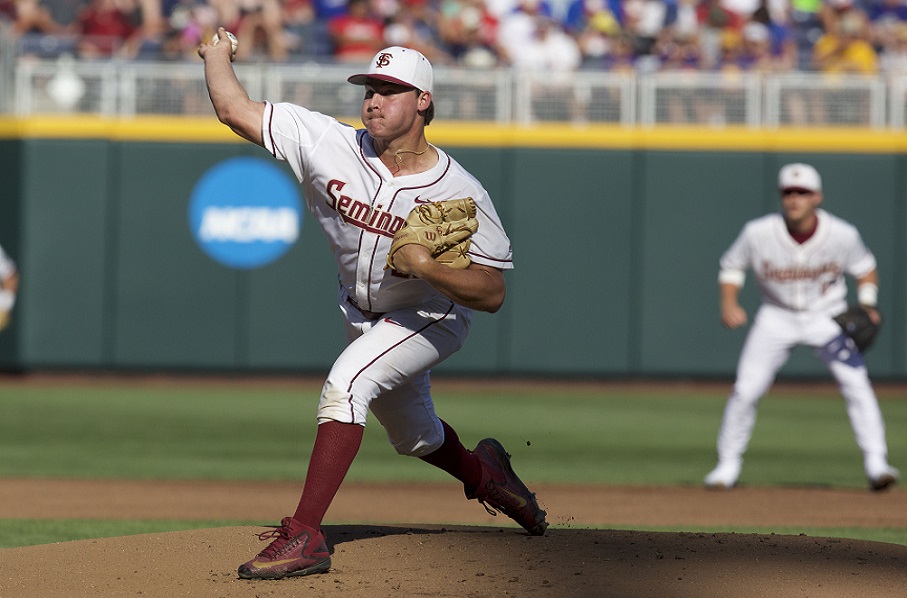 Trevor Larnach | Oregon State | OF | 1st Round | Current Level: High A Fort Myers Stats: 89 G; .299 AVG; .380 OBP; .471 SLG; 8 HR; 5 SB; 74 K; 43 BB Trevor Larnach had a strong showing last summer, posting an .890 OPS in 42 games between Elizabethon and Cedar Rapids. As a result, he started 2019 in Fort Myers. After a slow month of April, Larnach has found his groove at the High A level in May, as he has a .348/.442/.573 slash line in May. Ryan Jeffers | UNC Wilmington | C | 2nd Round | Current Level: High A Fort Myers Stats: 103 G; .323 AVG; .410 OBP; .471 SLG; 11 HR; 0 SB; 83 K; 46 BB It has been much the same story for Ryan Jeffers as it has been for Larnach. Jeffers tore it up at Elizabethon and Cedar Rapids last summer, but his numbers have been more in check this spring at Fort Myers, as he has a .770 OPS with just 4 home runs in 39 games. DaShawn Keirsey | Utah | OF | 4th Round | Current Level: A Cedar Rapids Stats: 42 G; .241 AVG; .318 OBP; .323 SLG; 0 HR; 6 SB: 38 K; 19 BB DaShawn Keirsey had a strong debut with Elizabethon last summer and started 2019 in Cedar Rapids. It has been a rough start to the season for Keirsey who has been dealing with some injury issues. Cole Sands | Florida State | RHP | 5th Round | Current Level: A Cedar Rapids Stats: 8 APP; 8 GS; 41.1 IP; 3.05 ERA; 1.26 WHIP; 10.7 K/9; 2.4 BB/9; 0 HR/9 Cole Sands didn’t make his professional debut until 2019, but he did so in Cedar Rapids, skipping rookie ball all together. Sands has been excellent in 8 starts this spring and has been showing everyone why he was the top pitcher taken by the Twins in last year’s draft. Charles Mack | Williamsville East HS | 3B | 6th Round | Current Level: Rookie GCL Twins Stats: 30 G; .216 AVG; .314 OBP; .275 SLG; 0 HR; 1 SB; 23 K; 13 BB It was a bit of a rough start for 6th round pick Charles Mack last summer in the GCL. The talented third baseman hopes he can turn that around this year. (Has not made his 2019 debut). Josh Winder | Virginia Military Institute | RHP | 7th Round | Current Level: A Cedar Rapids Stats: 17 APP; 17 GS; 87 IP; 3.41 ERA; 1.08 WHIP; 8.7 K/9; 2.1 BB/9; 0.4 HR/9 The second pitcher taken by the Twins in the 2018 has also shown he can be effective at the professional level. While Winder doesn’t quite have the strikeout numbers that Sands has, he has been effective none the less by pounding the strike zone. Chris Williams | Clemson | C | 8th Round | Current Level: A Cedar Rapids Stats: 96 G; .240 AVG; .365 OBP; .495 SLG; 23 HR; 2 SB; 87 K; 64 BB So far, Chris Williams has been the power hitting catcher of the two the Twins took in the top 10 rounds. After mashing 15 home runs last summer, he has backed that up with 8 more this spring for the Kernels. Willie Joe Garry Jr. | Pascagoula HS | OF | 9th Round | Current Level: Rookie GCL Twins Stats: 33 G; .160 AVG; .266 OBP; .210 SLG; 0 HR; 5 SB; 28 K; 8 BB Willie Joe Garry struggled at the plate for the GCL Twins last year. He showed very little power as he produced just 4 extra base hits (all doubles) in 33 games. (Has not made his 2019 debut). Regi Grace | Madison Central HS | RHP | 10th Round | Current Level: Rookie GCL Twins Stats: 6 APP; 1 GS; 10.2 IP; 5.06 ERA; 1.59 WHIP; 6.8 K/9; 3.4 BB/9; 0 HR/9 Regi Grace missed some time last summer with an injury, causing him to make only 6 appearances. On the mound he wasn’t all that effective, pitching primarily out of the bullpen. (Has not made his 2019 debut). Michael Helman | Texas A&M | 2B | 11th Round | Current Level: High A Fort Myers Stats: 83 G; .273 AVG; .322 OBP; .383 SLG; 6 HR; 11 SB; 41 K; 20 BB As was the story for Larnach and Jeffers, so to is the same for Michael Helman as he followed them on the express ticket to Fort Myers this year, with excellent stops in both Elizabethon and Cedar Rapids along the way. Unfortunately for Helman, his performance has taken an absolute nosedive as he is still adjusting to High A level pitching. Jon Olsen | UCLA | RHP | 12th Round | Current Level: Rookie GCL Twins Stats: Has not played Trevor Casanova | Cal State Northridge | C | 13th Round | Current Level: Rookie Elizabethton Stats: 38 G; .331 BA; .389 OBP; .490 SLG; 3 HR; 2 SB; 38 K; 13 BB Trevor Casanova was the third college catcher taken by the Twins in the early rounds of the 2018 draft, and much like the other two, Casanova played quite well in his professional debut last summer. (Has not made his 2019 debut). Erick Rivera | Escuela Superior Urbana | OF | 14th Round | Current Level: Rookie GCL Twins Stats: 23 G; .246 AVG; .358 OBP; .304 SLG; 0 HR; 1 SB; 22 K; 11 BB In minimal playing time last summer for the GCL Twins, Erick Rivera showed that he has the ability to get on base, drawing 11 walks in just 82 plate appearances. However, he didn’t really show much in the power department. (Has not made his 2019 debut). Kody Funderburk | Dallas Baptist | LHP | 15th Round | Current Level: Rookie Elizabethon Stats: 11 APP; 9 GS; 38 IP; 4.50 ERA; 1.66 WHIP; 8.1 K/9; 3.8 BB/9; 0.5 HR/9 After what was an okay at best showing in Elizabethon last summer, Kody Funderburk had to wait until May 18th to make his 2019 debut in Fort Myers. Now back in Elizabethon, the Dallas Baptist product hopes to have a better 2019 than he did 2018. Anthony Tuionetoa | Baldwin HS | RHP | 16th Round | Did Not Sign Erik Cha | Cal State Fullerton | LHP | 17th Round | Current Level: Rookie Elizabethon Stats: 15 APP; 0 GS; 26.1 IP; 1.37 ERA; 1.14 WHIP; 9.9 K/9; 2.4 BB/9; 0.3 HR/9 Pitching exclusively out of the bullpen, Erik Cha has shown that he has the strikeout ability that is needed for a relief pitcher to progress through the minors. He has also shown the ability to go multiple innings out of the pen, as he has pitched more than 1 inning in all but 4 of his outings. (Has not made his 2019 debut). Andrew Cabezas | Miami (FL) | RHP | 18th Round | Current Level: A Cedar Rapids Stats: 18 APP; 16 GS; 82.2 IP; 3.16 ERA; 1.08 WHIP; 8.6 K/9; 3.2 BB/9; 0.8 HR/9 Andrew Cabezas had himself a great first summer of professional baseball and was named the Twins Daily Short-Season Pitcher of the Year as a result. He’s taken a little bit of a step back this year in Cedar Rapids, but has been an effective pitcher for the Kernels none the less. Austin Schulfer |Wisconsin-Milwaukee | RHP | 19th Round | Current Level: A Cedar Rapids Stats: 22 APP; 10 GS; 73.2 IP; 1.95 ERA; 1.15 WHIP; 9.9 K/9; 4.4 BB/9; 0.1 HR/9 Despite pitching quite effectively primarily as a starter for Elizabethon last summer, Austin Schulfer has been used mostly as a middle innings long reliever in Cedar Rapids this spring. Despite the change in roles, Schulfer has adapted well to the higher level so far. Seth Pinkerton | Hartford | RHP | 20th Round | Current Level: Rookie Elizabethon Stats: 15 APP; 0 GS; 24.2 IP; 6.57 ERA; 1.82 WHIP; 10.2 K/9; 8.0 BB/9; 1.1 HR/9 After pitching for four years at Hartford, the Ogdensburg, New York native Seth Pinkerton struggled greatly with his control as he made the transition to pro ball. However, Pinkerton did show the ability to strike hitters out, so if he can clean up his mechanics that could go a long way. Gabe Snyder | Wright State | 1B | 21st Round | Current Level: A Cedar Rapids Stats: 82 G; .283 AVG; .378 OBP; .420 SLG; 6 HR; 4 SB; 62 K; 36 BB Gabe Snyder has really come into his own this spring in Cedar Rapids. In 34 games so far in 2019, Snyder has a .878 OPS, and has been one of the best everyday players for the 25-25 Kernels. Jacob Blank | Augustana | RHP | 22nd Round | Current Level: Rookie Elizabethon Stats: 11 APP; 0 GS; 15.2 IP; 2.87 ERA; 1.28 WHIP; 10.9 K/9; 5.2 BB/9; 0 HR/9 Jabob Blank has pitched quite sparingly ever since the Twins drafted him last summer. He has jumped around from EST, to Fort Myers, to Cedar Rapids, and back to EST all this spring. Albee Weiss | Cal State Northridge | 1B | 23rd Round | Current Level: High A Fort Myers Stats: 40 G; .211 AVG; .274 OBP; .368 SLG; 4 HR; 0 SB; 44 K; 10 BB After not making his 2019 debut until May 17th in Cedar Rapids, Albee Weiss hit the ball well over three games there, doubling in all three, and was quickly promoted up to Fort Myers where he has only played in one game since his promotion. Michael Davis | Texas Tech | 2B | 24th Round | Current Level: A Cedar Rapids Stats: 62 G; .298 AVG; .355 OBP; .534 SLG; 10 HR; 2 SB; 64 K; 18 BB Michael Davis has played very well in 59 games in Cedar Rapids combined between 2018 and 2019. Davis has missed most of the month of May with an injury, but returned back to the Kernels lineup last Saturday. Laron Smith | Foothills Composite | 1B | 25th Round | Current Level: Rookie GCL Twins Stats: 13 G; .205 AVG; .326 OBP; .256 SLG; 0 HR; 1 SB; 9 K; 7 BB The high school batter from Canada, Laron Smith, had some struggles in just 13 games with the GCL Twins last summer. We will have to wait and see if he can get himself turned around this year. (Has not made his 2019 debut). Brian Rapp | Boston College | RHP | 26th Round | Current Level: A Cedar Rapids Stats: 21 APP; 7 GS; 63.1 IP; 4.12 ERA; 1.50 WHIP; 8.8 K/9; 3.1 BB/9; 0.6 HR/9 Brian Rapp has seen his walk numbers spike in 2019, as he is walking 4.3 batters per nine innings this spring in Cedar Rapids. That is up from the 2.3 batters per nine innings that he walked last summer in Elizabethon. He will need to fix his control issues if he hopes to progress to higher levels in the Twins farm system. Hunter Lee | High Point | 2B | 27th Round | Current Level: High A Fort Myers Stats: 53 G; .208 AVG; .331 OBP; .309 SLG; 4 HR; 0 SB; 38 K; 24 BB It hasn’t been the best of springs for Hunter Lee, who has a .121/.246/.224 slash line in 20 games for Cedar Rapids. On Saturday Lee was assigned down to Elizabethon, before getting reassigned up to Fort Myers on Tuesday, where he has yet to make his debut for the Miracle. Austin Hale | Stetson | C | 28th Round | Current Level: Retired J.T. Perez | Cincinnati | LHP | 29th Round | Current Level: Rookie Elizabethon Stats: 15 APP; 0 GS; 21.2 IP; 4.57 ERA; 1.75 WHIP; 11.6 K/9; 5.4 BB/9; 0 HR/9 J.T. Perez split his time between the GCL Twins and Elizabethon last summer, making 10 appearances in the Gulf Coast League and 5 more for Elizabethon. Overall, he had much more success pitching in the GCL where he had a 2.31 ERA vs his 7.20 ERA in Elizabethon. (Has not made his 2019 debut). Seth Halverson | Heritage Christian Academy | RHP | 30th Round | Did Not Sign Zach Neff | Mississippi State | LHP | 31st Round | Current Level: A Cedar Rapids Stats: 29 APP; 0 GS; 49.2 IP; 3.62 ERA; 1.23 WHIP; 10.9 K/9; 3.4 BB/9; 0.5 HR/9 It was a bit of a rocky start for Zach Neff last summer in Elizabethon, though his peripheral metrics said he should have faired much better than he did. This spring he has pitched much better for Cedar Rapids, with a 3.28 ERA and striking out 12.4 batters per nine. Ryan Holgate | Davis HS | OF | 32nd Round | Did Not Sign Denny Bentley | Howard College | LHP | 33rd Round | Current Level: Rookie GCL Twins Stats: 13 APP; 0 GS; 17.1 IP; 2.60 ERA; 1.27 WHIP; 10.9 K/9; 3.1 BB/9; 1.0 HR/9 Pitching exclusively out of the bullpen, Denny Bentley showed signs that he could be an effective pitcher at the professional level. He did give up a couple of home runs, but other than that did excellent job. (Has not made his 2019 debut). Dylan Stowell | California Baptist | RHP | 34th Round | Retired Tanner Howell | Dixie State | RHP | 35th Round | Current Level: Rookie Elizabethon Stats: 17 APP; 0 GS; 32.1 IP; 4.18 ERA; 1.27 WHIP; 8.9 K/9; 2.8 BB/9; 0.8 HR/9 Tanner Howell made 8 appearances with the GCL Twins last summer before being re-assigned to Elizabethon. Howell’s results were much more favorable with the GCL Twins as he gave up only 1 earned run over 12 innings with a 7 to 1 strikeout to walk ratio. (Has not made his 2019 debut). Zac Taylor | Illinois | OF | 36th Round | Did Not Sign Luke Ritter | Wichita State | OF | 37th Round | Did Not Sign Dylan Thomas | Hawaii | RHP | 38th Round | Did Not Sign Bryce Collins | Hart HS | RHP | 39th Round | Did Not Sign Tyler Webb | Memphis | OF | 40th Round | Current Level: Rookie GCL Twins Stats: 41 G; .287 AVG; .373 OBP; .336 SLG; 1 HR; 11 SB; 27 K; 14 BB Like Howell, Tyler Webb started off his professional career with the GCL Twins before getting moved to Elizabethon during the summer when they were in need of an outfielder. Webb has excellent speed that helped him steal 11 bases in just 41 games last summer.
 -
On this Memorial Day, Michael Pineda and the Minnesota Twins were looking to extend their season-long six-game winning streak against Gio Gonzalez and the Milwaukee Brewers, but they came up just a run short. Image courtesy of © David Berding-USA TODAY Sports On this Memorial Day, Michael Pineda and the Minnesota Twins were looking to extend their season-long six-game winning streak against Gio Gonzalez and the Milwaukee Brewers, but they came up just a run short. Box Score Pineda: 6.0 IP, 3 H, 3 ER, 0 BB, 6 K, 68.1% strikes (64 of 94 pitches) Home Runs: Buxton (5) Multi-Hit Games: Kepler (2 for 4) WPA of +0.1: Pineda .132, Buxton .104 WPA of -0.1: Rogers -.359, Sano -.188, Rosario -.183, Polanco -.159, Astudillo -.133 (Chart via FanGraphs) After a rough month of April, Michael Pineda has put together a quality month of May. In all five of his starts Pineda has gone at least five innings and given up exactly three earned runs, including four quality starts in a row. For most of the night Pineda was razor sharp, throwing five 1-2-3 innings. However, he got tripped up in the top of the third when he gave up three straight hits to start the inning, which led to three Brewers runs. The Twins got off to an early 4-0 lead for the second game in a row, this time with all four runs coming in the second. Eddie Rosario started off the inning with a single, but it looked like he was going to be stranded at first until the Twins put together five straight two-outs hits, the big one coming off the bat of Byron Buxton who belted a three-run shot. The Twins had their chance to tack on a couple more insurance runs after Jorge Polanco and Jonathan Schoop both singled, but that ended with a C.J. Cron groundout to third. Not getting those additionally insurance runs, while still early, ended up being pretty costly. https://twitter.com/Twins/status/1133159390008238081 After the Brewers bounced back with their three-run third, the game stayed pretty quiet until the top of the 8th when Orlando Arcia hit a two-run home run off Taylor Rogers to give the Brewers a 5-4 lead. https://twitter.com/Brewers/status/1133192727766732801 The Twins made things interesting off Josh Hader in the bottom of the ninth when Schoop and Cron both reached base with one out. However, that was quickly nullified by Hader when he got Eddie Rosario to fly out on the first pitch and blew three straight fastballs by Miguel Sano to end the game. Postgame with Baldelli https://twitter.com/fsnorth/status/1133208328975208448 Bullpen Usage Here’s a quick look at the number of pitches thrown by the bullpen over the past five days: Next Three Games Tues vs MIL, 7:10 pm CT (Davies-Perez) Thurs at TB, 6:10 pm CT (TBD-TBD) Fri at TB, 6:10 pm CT (TBD-TBD) Last Game MIN 7, CHW 0: Twins, Fans Flex Their Muscles in Weekend Sweep View full article
-
MIL 5, MIN 4: Hader Closes the Door on the Twins Win Streak
Andrew Thares posted an article in Twins
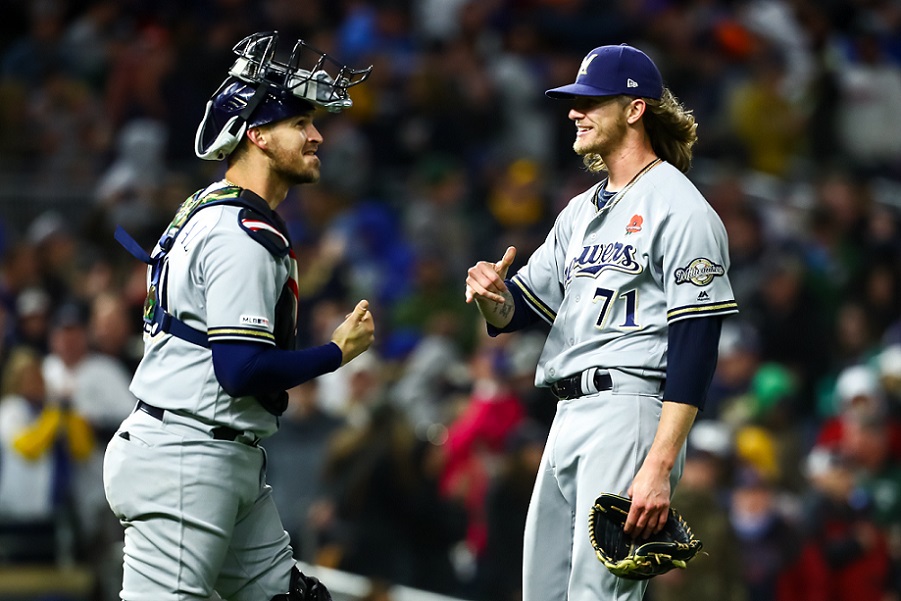 Box Score Pineda: 6.0 IP, 3 H, 3 ER, 0 BB, 6 K, 68.1% strikes (64 of 94 pitches) Home Runs: Buxton (5) Multi-Hit Games: Kepler (2 for 4) WPA of +0.1: Pineda .132, Buxton .104 WPA of -0.1: Rogers -.359, Sano -.188, Rosario -.183, Polanco -.159, Astudillo -.133 (Chart via FanGraphs) After a rough month of April, Michael Pineda has put together a quality month of May. In all five of his starts Pineda has gone at least five innings and given up exactly three earned runs, including four quality starts in a row. For most of the night Pineda was razor sharp, throwing five 1-2-3 innings. However, he got tripped up in the top of the third when he gave up three straight hits to start the inning, which led to three Brewers runs. The Twins got off to an early 4-0 lead for the second game in a row, this time with all four runs coming in the second. Eddie Rosario started off the inning with a single, but it looked like he was going to be stranded at first until the Twins put together five straight two-outs hits, the big one coming off the bat of Byron Buxton who belted a three-run shot. The Twins had their chance to tack on a couple more insurance runs after Jorge Polanco and Jonathan Schoop both singled, but that ended with a C.J. Cron groundout to third. Not getting those additionally insurance runs, while still early, ended up being pretty costly. https://twitter.com/Twins/status/1133159390008238081 After the Brewers bounced back with their three-run third, the game stayed pretty quiet until the top of the 8th when Orlando Arcia hit a two-run home run off Taylor Rogers to give the Brewers a 5-4 lead. https://twitter.com/Brewers/status/1133192727766732801 The Twins made things interesting off Josh Hader in the bottom of the ninth when Schoop and Cron both reached base with one out. However, that was quickly nullified by Hader when he got Eddie Rosario to fly out on the first pitch and blew three straight fastballs by Miguel Sano to end the game. Postgame with Baldelli https://twitter.com/fsnorth/status/1133208328975208448 Bullpen Usage Here’s a quick look at the number of pitches thrown by the bullpen over the past five days: Next Three Games Tues vs MIL, 7:10 pm CT (Davies-Perez) Thurs at TB, 6:10 pm CT (TBD-TBD) Fri at TB, 6:10 pm CT (TBD-TBD) Last Game MIN 7, CHW 0: Twins, Fans Flex Their Muscles in Weekend Sweep
 -
It’s hard to believe that it is already Memorial Day, which means the 2019 MLB Draft is almost here. With so much attention being placed on the 1st place Minnesota Twins, it is easy to forget that they are in an excellent position to add to their organization via the draft. With the 13th pick it is likely that the guy the Twins take is featured in this edition of the Twins Daily Top 50 Draft Prospects list. It’s hard to believe that it is already Memorial Day, which means the 2019 MLB Draft is almost here. With so much attention being placed on the 1st place Minnesota Twins, it is easy to forget that they are in an excellent position to add to their organization via the draft. With the 13th pick it is likely that the guy the Twins take is featured in this edition of the Twins Daily Top 50 Draft Prospects list. 20. Kameron Misner | Missouri | Pos: OF | B/T: L/L | Height: 6’4” | Weight: 215 | Age: 21 Previously Drafted: 33rd Round, 2016 (KC) Scouting Grades Hit: 55 Power: 50 Run: 60 Arm: 55 Field: 60 Overall: 55 For teams interested in a college outfielder who brings the combination of both plus defense and a plus bat, Kameron Misner might be their guy. There are a couple other college outfielders higher up in my rankings (spoilers), but neither of them bring the defensive upside that Misner does. Offensively, Misner is a well-rounded player. He is a career .300 hitter, and has shown some power this year, having hit 10 home runs. Misner is also an excellent base stealer, going 50 for 63 on stolen base attempts in his career. Another asset that Miser has is his excellent eye, as he has walked on more than 16 percent of his plate appearances in his time at Mizzou. Misner is an excellent defender in centerfield at the college level. He has the skillset needed to stay in centerfield as a professional, but he can also serve a Max Kepler like role as a plus defender in right field for a team that already has an excellent defensive centerfielder. 19. Jackson Rutledge | San Jacinto JC | Pos: RHP | Height: 6’8” | Weight: 250 | Age: 20 Previously Drafted: Never Scouting Grades Fastball: 65 Curveball: 60 Slider: 60 Changeup: 50 Control: 45 Overall: 55 Jackson Rutledge is a player that I really struggled to find the right home for on my list. On one hand he has the stuff to be a top ten pick, and a future top of the rotation starter. On the other hand, I am concerned with the high likelihood that he will one day become a reliever. Given that scare, I decided to place him lower on the list that his talent would suggest. Rutledge began his college career in 2018 at Arkansas, but he decided to transfer to San Jacinto JC after not getting much for an opportunity as a freshman. In his year at the JC level, Rutledge has absolutely dominated. His fastball has gained a ton of life, and now sits comfortably in the mid 90’s. He also features both a wipe-out slider and a wipe-out curveball. He rounds out his pitching repertoire with a decent changeup, but it is no where near the level of his other pitches. A big problem that Rutledge has faced in his career has been with control. As is typically the case with young fireballers, Rutledge is more of a thrower than he is a pitcher. He will also need some work on his delivery, as his pitching motion is very short, much like how an infielder or catcher would throw. 18. Brennan Malone | IMG Academy (FL) | Pos: RHP | Height: 6’3” | Weight: 205 | Age: 18 Commitment: UNC Scouting Grades Fastball: 65 Curveball: 50 Slider: 55 Changeup: 50 Control: 50 Overall: 55 Our third and final IMG Academy product featured in the top 50 is right-handed pitcher Brennan Malone. This is Malone’s first season pitching for IMG, after spending his first few high school years pitching in North Carolina. He’s also pitched for Team USA, so he has plenty of experience pitching on a big stage. What makes Malone special is his fastball that will sit 94 to 97 with some good arm side run. Additionally, Malone throws both a slider and a curveball, with the slider being the better pitch of the two. Malone has shown glimpses of a changeup, but it is still a work in progress. Another encouraging factor about Malone is his delivery. He is very solid through his release and does an excellent job of letting his lower half generate most of his power. This is a great thing to look for in young pitchers as it is not only the best way to generate higher velocity, but it is much less stressful on the arm. 17. Shea Langeliers | Baylor | Pos: C | B/T: L/R | Height: 6’0” | Weight: 190 | Age: 21 Previously Drafted: 34th Round, 2016 (TOR) Scouting Grades Hit: 50 Power: 55 Run: 45 Arm: 65 Field: 60 Overall: 55 In an era where defensive catching metrics have become so prevalent, catchers like Shea Langeliers have become a dream get for organizations across Major League Baseball. Langeliers is unquestionably the best defensive catcher available in this year’s draft, and maybe the best we’ve seen in a few years. Langeliers receives pitches in a very fluid matter, helping him become an excellent pitch framer. Though Langeliers best trait behind the dish is not his pitch framing, but rather his arm. Langeliers pop times are routinely measured in the low 1.9s and high 1.8s. For some perspective, there is only one catcher in Major League Baseball with an average pop time below 1.93 this season. Offensively, Langeliers can be productive hitter as well. He struggled some during his sophomore year at the plate but has bounced back pretty well in his junior campaign. He will most likely never be an elite offensive catcher, but he should still hit well enough to become a starting catcher down the road. If he struggles to find success with the bat, Langeliers should still have himself a solid MLB career as a backup catcher. 16. George Kirby | Elon | Pos: RHP | Height: 6’3” | Weight: 205 | Age: 21 Previously Drafted: 32nd Round, 2016 (NYM) Scouting Grades Fastball: 55 Curveball: 55 Slider: 55 Changeup: 55 Control: 60 Overall: 55 While Elon isn’t a big name school in a big name conference, it is hard to ignore the impressive numbers that junior right-hander George Kirby has put up over his last couple seasons for the Elon University Phoenix. Between 2018 and 2019, Kirby has combined to pitch 178 and 2/3 innings across 29 starts, posting a 2.82 ERA with 202 strikeouts to just 33 walks. It could be easy to just write this off as Kirby facing lower level competition, but there is a good track record of dominate small school starters having success at the Major League level, and I don’t see any reason why that can’t be true for Kirby. Kirby has a solid four pitch mix, which starts with is his fastball that lives in the 92-94 MPH range with excellent command. He also throws both a curveball and a slider, which can be plus pitches when he’s on with them. Kirby also has shown that he has a changeup that is more advanced than most pitchers at this stage of their development. 15. Alek Manoah | West Virginia | Pos: RHP | Height: 6’6” | Weight: 260 | Age: 21 Previously Drafted: Never Scouting Grades Fastball: 65 Slider: 60 Changeup: 50 Control: 50 Overall: 55 Manoah first jumped onto my radar last summer while pitching in the Cape Cod League. In 9 starts for the Chatham Anglers, Manoah had a 3.57 ERA and struck out 68 batters to just 14 walks across 45 and 1/3 innings. Back with the Mountaineers this spring, Manoah has built on that impressive Cape Code performance by compiling 135 strikeouts to just 23 walks over 102 1/3 innings. Additionally, there isn’t a single pitcher at the Division 1 level who has both pitched more innings and has a lower ERA than Manoah’s 1.85. Manoah is a physical presence on the mound and uses his body well to pump his fastball in the mid-to-upper 90’s. Manoah also features a good slider that gives him a second plus offering. Manoah has done a great job this spring erasing the notion that he is destined to be a reliever at the next level, and as a result has vaulted all the way up to being an almost sure fire first round pick. 14. Zack Thompson | Kentucky | Pos: LHP | Height: 6’3” | Weight: 225 | Age: 21 Previously Drafted: 11th Round, 2016 (TB) Scouting Grades Fastball: 55 Slider: 60 Curveball: 50 Changeup: 50 Control: 50 Overall: 55 The biggest question mark around Kentucky’s talented southpaw, Zack Thompson, is can he stay healthy. These concerns were what caused him to fall in the draft out of high school, and inevitably sign with Kentucky. Thompson also missed some time in 2018 due to injury, but he showed that he is back and healthy again this year making 14 starts for the Wildcats. Thompson has always been able to strike a lot of hitters out. For his career, he has struck out 12.3 batters per 9 innings, ramping that up to 13 batter per 9 innings this spring. While walks have been an issue for Thompson in the past, he has been much more under control this spring walking 34 in 90 innings. Thompson gives you a respectable 4 pitch mix, highlighted by his low-to-mid 90’s fastball and his sharp breaking slider. If Thompson can maintain the health and command that he has shown this spring, he should be a quick mover through the minors, and could see himself as an MLB number 3 starter soon. 13. Daniel Espino | Georgia Premier Academy (GA) | Pos: RHP | Height: 6’2” | Weight: 190 | Age: 18 Commitment: LSU Scouting Grades Fastball: 75 Slider: 60 Curveball: 60 Changeup: 50 Control: 40 Overall: 55 I think it is fair to say that I am a big believer in Daniel Espino, and it might not be a coincidence that I have him ranked in the 13th spot, where the Minnesota Twins will be making their selection. A year ago, Espino might not have stood out, but with the lack of upside pitchers in this year’s class, Espino has the best stuff of anyone available. We will start with Espino’s fastball which, in my opinion, is the best pitch in the class. Espino will sit 96 to 98 MPH with some serious arm side run and will occasionally reach triple-digits. Espino also has two excellent breaking pitches, that can be devastating for opposing hitters. Espino is still a very raw talent. He has an elongated delivery that can make him a wild pitcher at times, but if he can get in with the right pitching coach (ahem Wes Johnson and company), he could learn to clean up his delivery and one day become a front of the rotation MLB starting pitcher. 12. Josh Jung | Texas Tech | Pos: 3B | B/T: R/R | Height: 6’2” | Weight: 215 | Age: 21 Previously Drafted: Never Scouting Grades Hit: 60 Power: 55 Run: 45 Arm: 55 Field: 50 Overall: 55 From a production standpoint, Josh Jung ranks up there towards the top of the class. In his three years at Texas Tech Jung has a .345/.453/.566 slash line with 29 home runs, 52 doubles and 9 triples. Jung has the ability to hit for both average and power that should translate well to the next level. Perhaps Jung’s best feature offensively is his eye at the plate. Jung does a good job of working his walks, and won’t chase many bad pitches outside of the zone. This has helped Jung draw more walks in his career (124) than times he has struck out (114). Of late, Jung has been seeing time at shortstop for the Red Raiders, but he will most likely move back to his natural position at third base as a pro. Jung has the steady glove and strong arm that are required to play the position, but his lack of high end agility will keep him from ever been an elite defensive thirdbaseman. 11. Nick Lodolo | TCU | Pos: LHP | Height: 6’6” | Weight: 180 | Age: 21 Previously Drafted: 41st Overall, 2016 (PIT) Scouting Grades Fastball: 55 Curveball: 50 Slider: 55 Changeup: 55 Control: 60 Overall: 55 Nick Lodolo has been a highly touted prospect ever since he came out of Damien High School in 2016. Despite being selected in the top 50, Lodolo decided to turn down the Pirates offer and instead try and test his luck at TCU. Three years later that gamble appears to have paid off as Lodolo could very well be the first pitcher off the board in this year’s draft. In terms of pure stuff Lodolo isn’t blowing anybody away. He has a solid fastball that sits in the low-to-mid 90’s. Lodolo also has both a curveball and a slider, but the latter appears to be the better pitch of the two. Finally, Lodolo has an effective changeup giving him a respectable 3 to 4 pitch mix across the board. Lodolo has everything that you would want from a guy to project him as a starter in the long term. He has a big and projectable 6’6” frame, a consistent and repeatable delivery, 3 potentially plus pitches and excellent command of the strike zone. Rest of the 2019 MLB Draft Top 50 Twins Daily 2019 MLB Draft Top 50 Prospect: 21-30 Twins Daily 2019 MLB Draft Top 50 Prospect: 31-40 Twins Daily 2019 MLB Draft Top 50 Prospect: 41-50 View full article
-
 20. Kameron Misner | Missouri | Pos: OF | B/T: L/L | Height: 6’4” | Weight: 215 | Age: 21 Previously Drafted: 33rd Round, 2016 (KC) Scouting Grades Hit: 55 Power: 50 Run: 60 Arm: 55 Field: 60 Overall: 55 For teams interested in a college outfielder who brings the combination of both plus defense and a plus bat, Kameron Misner might be their guy. There are a couple other college outfielders higher up in my rankings (spoilers), but neither of them bring the defensive upside that Misner does. Offensively, Misner is a well-rounded player. He is a career .300 hitter, and has shown some power this year, having hit 10 home runs. Misner is also an excellent base stealer, going 50 for 63 on stolen base attempts in his career. Another asset that Miser has is his excellent eye, as he has walked on more than 16 percent of his plate appearances in his time at Mizzou. Misner is an excellent defender in centerfield at the college level. He has the skillset needed to stay in centerfield as a professional, but he can also serve a Max Kepler like role as a plus defender in right field for a team that already has an excellent defensive centerfielder. 19. Jackson Rutledge | San Jacinto JC | Pos: RHP | Height: 6’8” | Weight: 250 | Age: 20 Previously Drafted: Never Scouting Grades Fastball: 65 Curveball: 60 Slider: 60 Changeup: 50 Control: 45 Overall: 55 Jackson Rutledge is a player that I really struggled to find the right home for on my list. On one hand he has the stuff to be a top ten pick, and a future top of the rotation starter. On the other hand, I am concerned with the high likelihood that he will one day become a reliever. Given that scare, I decided to place him lower on the list that his talent would suggest. Rutledge began his college career in 2018 at Arkansas, but he decided to transfer to San Jacinto JC after not getting much for an opportunity as a freshman. In his year at the JC level, Rutledge has absolutely dominated. His fastball has gained a ton of life, and now sits comfortably in the mid 90’s. He also features both a wipe-out slider and a wipe-out curveball. He rounds out his pitching repertoire with a decent changeup, but it is no where near the level of his other pitches. A big problem that Rutledge has faced in his career has been with control. As is typically the case with young fireballers, Rutledge is more of a thrower than he is a pitcher. He will also need some work on his delivery, as his pitching motion is very short, much like how an infielder or catcher would throw. 18. Brennan Malone | IMG Academy (FL) | Pos: RHP | Height: 6’3” | Weight: 205 | Age: 18 Commitment: UNC Scouting Grades Fastball: 65 Curveball: 50 Slider: 55 Changeup: 50 Control: 50 Overall: 55 Our third and final IMG Academy product featured in the top 50 is right-handed pitcher Brennan Malone. This is Malone’s first season pitching for IMG, after spending his first few high school years pitching in North Carolina. He’s also pitched for Team USA, so he has plenty of experience pitching on a big stage. What makes Malone special is his fastball that will sit 94 to 97 with some good arm side run. Additionally, Malone throws both a slider and a curveball, with the slider being the better pitch of the two. Malone has shown glimpses of a changeup, but it is still a work in progress. Another encouraging factor about Malone is his delivery. He is very solid through his release and does an excellent job of letting his lower half generate most of his power. This is a great thing to look for in young pitchers as it is not only the best way to generate higher velocity, but it is much less stressful on the arm. 17. Shea Langeliers | Baylor | Pos: C | B/T: L/R | Height: 6’0” | Weight: 190 | Age: 21 Previously Drafted: 34th Round, 2016 (TOR) Scouting Grades Hit: 50 Power: 55 Run: 45 Arm: 65 Field: 60 Overall: 55 In an era where defensive catching metrics have become so prevalent, catchers like Shea Langeliers have become a dream get for organizations across Major League Baseball. Langeliers is unquestionably the best defensive catcher available in this year’s draft, and maybe the best we’ve seen in a few years. Langeliers receives pitches in a very fluid matter, helping him become an excellent pitch framer. Though Langeliers best trait behind the dish is not his pitch framing, but rather his arm. Langeliers pop times are routinely measured in the low 1.9s and high 1.8s. For some perspective, there is only one catcher in Major League Baseball with an average pop time below 1.93 this season. Offensively, Langeliers can be productive hitter as well. He struggled some during his sophomore year at the plate but has bounced back pretty well in his junior campaign. He will most likely never be an elite offensive catcher, but he should still hit well enough to become a starting catcher down the road. If he struggles to find success with the bat, Langeliers should still have himself a solid MLB career as a backup catcher. 16. George Kirby | Elon | Pos: RHP | Height: 6’3” | Weight: 205 | Age: 21 Previously Drafted: 32nd Round, 2016 (NYM) Scouting Grades Fastball: 55 Curveball: 55 Slider: 55 Changeup: 55 Control: 60 Overall: 55 While Elon isn’t a big name school in a big name conference, it is hard to ignore the impressive numbers that junior right-hander George Kirby has put up over his last couple seasons for the Elon University Phoenix. Between 2018 and 2019, Kirby has combined to pitch 178 and 2/3 innings across 29 starts, posting a 2.82 ERA with 202 strikeouts to just 33 walks. It could be easy to just write this off as Kirby facing lower level competition, but there is a good track record of dominate small school starters having success at the Major League level, and I don’t see any reason why that can’t be true for Kirby. Kirby has a solid four pitch mix, which starts with is his fastball that lives in the 92-94 MPH range with excellent command. He also throws both a curveball and a slider, which can be plus pitches when he’s on with them. Kirby also has shown that he has a changeup that is more advanced than most pitchers at this stage of their development. 15. Alek Manoah | West Virginia | Pos: RHP | Height: 6’6” | Weight: 260 | Age: 21 Previously Drafted: Never Scouting Grades Fastball: 65 Slider: 60 Changeup: 50 Control: 50 Overall: 55 Manoah first jumped onto my radar last summer while pitching in the Cape Cod League. In 9 starts for the Chatham Anglers, Manoah had a 3.57 ERA and struck out 68 batters to just 14 walks across 45 and 1/3 innings. Back with the Mountaineers this spring, Manoah has built on that impressive Cape Code performance by compiling 135 strikeouts to just 23 walks over 102 1/3 innings. Additionally, there isn’t a single pitcher at the Division 1 level who has both pitched more innings and has a lower ERA than Manoah’s 1.85. Manoah is a physical presence on the mound and uses his body well to pump his fastball in the mid-to-upper 90’s. Manoah also features a good slider that gives him a second plus offering. Manoah has done a great job this spring erasing the notion that he is destined to be a reliever at the next level, and as a result has vaulted all the way up to being an almost sure fire first round pick. 14. Zack Thompson | Kentucky | Pos: LHP | Height: 6’3” | Weight: 225 | Age: 21 Previously Drafted: 11th Round, 2016 (TB) Scouting Grades Fastball: 55 Slider: 60 Curveball: 50 Changeup: 50 Control: 50 Overall: 55 The biggest question mark around Kentucky’s talented southpaw, Zack Thompson, is can he stay healthy. These concerns were what caused him to fall in the draft out of high school, and inevitably sign with Kentucky. Thompson also missed some time in 2018 due to injury, but he showed that he is back and healthy again this year making 14 starts for the Wildcats. Thompson has always been able to strike a lot of hitters out. For his career, he has struck out 12.3 batters per 9 innings, ramping that up to 13 batter per 9 innings this spring. While walks have been an issue for Thompson in the past, he has been much more under control this spring walking 34 in 90 innings. Thompson gives you a respectable 4 pitch mix, highlighted by his low-to-mid 90’s fastball and his sharp breaking slider. If Thompson can maintain the health and command that he has shown this spring, he should be a quick mover through the minors, and could see himself as an MLB number 3 starter soon. 13. Daniel Espino | Georgia Premier Academy (GA) | Pos: RHP | Height: 6’2” | Weight: 190 | Age: 18 Commitment: LSU Scouting Grades Fastball: 75 Slider: 60 Curveball: 60 Changeup: 50 Control: 40 Overall: 55 I think it is fair to say that I am a big believer in Daniel Espino, and it might not be a coincidence that I have him ranked in the 13th spot, where the Minnesota Twins will be making their selection. A year ago, Espino might not have stood out, but with the lack of upside pitchers in this year’s class, Espino has the best stuff of anyone available. We will start with Espino’s fastball which, in my opinion, is the best pitch in the class. Espino will sit 96 to 98 MPH with some serious arm side run and will occasionally reach triple-digits. Espino also has two excellent breaking pitches, that can be devastating for opposing hitters. Espino is still a very raw talent. He has an elongated delivery that can make him a wild pitcher at times, but if he can get in with the right pitching coach (ahem Wes Johnson and company), he could learn to clean up his delivery and one day become a front of the rotation MLB starting pitcher. 12. Josh Jung | Texas Tech | Pos: 3B | B/T: R/R | Height: 6’2” | Weight: 215 | Age: 21 Previously Drafted: Never Scouting Grades Hit: 60 Power: 55 Run: 45 Arm: 55 Field: 50 Overall: 55 From a production standpoint, Josh Jung ranks up there towards the top of the class. In his three years at Texas Tech Jung has a .345/.453/.566 slash line with 29 home runs, 52 doubles and 9 triples. Jung has the ability to hit for both average and power that should translate well to the next level. Perhaps Jung’s best feature offensively is his eye at the plate. Jung does a good job of working his walks, and won’t chase many bad pitches outside of the zone. This has helped Jung draw more walks in his career (124) than times he has struck out (114). Of late, Jung has been seeing time at shortstop for the Red Raiders, but he will most likely move back to his natural position at third base as a pro. Jung has the steady glove and strong arm that are required to play the position, but his lack of high end agility will keep him from ever been an elite defensive thirdbaseman. 11. Nick Lodolo | TCU | Pos: LHP | Height: 6’6” | Weight: 180 | Age: 21 Previously Drafted: 41st Overall, 2016 (PIT) Scouting Grades Fastball: 55 Curveball: 50 Slider: 55 Changeup: 55 Control: 60 Overall: 55 Nick Lodolo has been a highly touted prospect ever since he came out of Damien High School in 2016. Despite being selected in the top 50, Lodolo decided to turn down the Pirates offer and instead try and test his luck at TCU. Three years later that gamble appears to have paid off as Lodolo could very well be the first pitcher off the board in this year’s draft. In terms of pure stuff Lodolo isn’t blowing anybody away. He has a solid fastball that sits in the low-to-mid 90’s. Lodolo also has both a curveball and a slider, but the latter appears to be the better pitch of the two. Finally, Lodolo has an effective changeup giving him a respectable 3 to 4 pitch mix across the board. Lodolo has everything that you would want from a guy to project him as a starter in the long term. He has a big and projectable 6’6” frame, a consistent and repeatable delivery, 3 potentially plus pitches and excellent command of the strike zone. Rest of the 2019 MLB Draft Top 50 Twins Daily 2019 MLB Draft Top 50 Prospect: 21-30 Twins Daily 2019 MLB Draft Top 50 Prospect: 31-40 Twins Daily 2019 MLB Draft Top 50 Prospect: 41-50
 -
It’s time for Part 3 of the Twins Daily Top 50 Draft Prospects list, featuring players we have ranked 21st through 30th. In this edition we will be going over a number of prep pitchers with varying backgrounds, along with a run of solid college hitters who could fall in the same range where the Twins took Trevor Larnach a year ago. It’s time for Part 3 of the Twins Daily Top 50 Draft Prospects list, featuring players we have ranked 21st through 30th. In this edition we will be going over a number of prep pitchers with varying backgrounds, along with a run of solid college hitters who could fall in the same range where the Twins took Trevor Larnach a year ago. 30. Maurice Hampton | Memphis University HS (TN) | Pos: OF | B/T: R/R | Height: 6’0” | Weight: 195 | Age: 17 Commitment: LSU Scouting Grades Hit: 50 Power: 55 Run: 70 Arm: 55 Field: 55 Overall: 50 Maurice Hampton has many of the tools that I admire out of a high school outfielder. He is an elite athlete that has the potential to be a top of the line defensive centerfielder and has shown signs that he could develop a quality bat to go along with it. Many organizations would love to get their hands on a young and raw talent like Hampton to have their coaching staff develop him into the player that they want him to become. Perhaps the main concern for teams when deciding to draft Hampton is signability issues as Hampton is committed to play both football and baseball at LSU. As a four-star cornerback Hampton has NFL potential as well, and by choosing to go to LSU he could leave his options open for both football and baseball for another 3 or 4 years. 29. Jack Leiter | Delbarton HS (NJ) | Pos: RHP | Height: 6’1” | Weight: 195 | Age: 19 Commitment: Vanderbilt Scouting Grades Fastball: 50 Curveball: 60 Slider: 50 Changeup: 50 Control: 60 Overall: 50 If the name rings a bell, it should, because Jack Leiter is the son of former major leaguer Al Leiter. His experience growing up around the game, along with the fact that he is already 19-years-old has helped him develop into a more polished pitcher than most high schoolers. Leiter features a low-90’s fastball, that can occasionally touch 94 or 95. What makes it so effective is the command that he already has with it. Leiter’s best pitch is his put-away curveball. The combination of a well-controlled fastball and a dominant curveball is something that is hard to find from high school pitchers. The real negative for Jack is the lack of upside he brings, which makes it hard to imagine him ever becoming a top of the rotation starting pitcher. However, I do think he has what it take to have a long career as a 3 or 4 starter in an MLB rotation. 28. Braden Shewmake | Texas A&M | Pos: SS | B/T: L/R | Height: 6’4” | Weight: 190 | Age: 21 Previously Drafted: Never Scouting Grades Hit: 60 Power: 50 Run: 55 Arm: 50 Field: 50 Overall: 50 As a three-year starter for one of the top programs in the SEC, Braden Shewmake has had plenty of experience proving himself against some of the best college pitchers the country has to offer. Additionally, Shewmake has served as the Aggies number three hitter in the lineup since day one after stepping on campus as a freshman. His pure hitting ability is the best trait that Shewmake brings to the table. In his college career, Shewmake has a .322/.378/.489 slash line with 22 home runs, 38 doubles, 10 triples and 30 stolen bases across 182 games. He showed more signs of power as a freshman when he hit 11 of his 22 home runs, but if he can keep filling out his body, Shewmake could develop into a 20 home run per year player as a professional. While Shewmake has played the last two seasons at shortstop, he looked a lot more comfortable defensively when he played second base as a freshman. If he does need to move to second, Shewmake has the bat to make it work, but I wouldn’t rule out the possibility of Shewmake playing a Marwin Gonzalez like super-utility role down the road. 27. Seth Johnson | Campbell | Pos: RHP | Height: 6’1” | Weight: 195 | Age: 20 Previously Drafted: Never Scouting Grades Fastball: 65 Slider: 50 Curveball: 40 Changeup: 55 Control: 45 Overall: 50 Don’t let the fact that Seth Johnson is a college pitcher fool you. He is without a question the most raw pitching prospect in the upper end of this year’s draft class. That is due to the fact that Johnson has only been pitching for a little over a year now, after making the switch from shortstop at the end of last season. When it comes to stuff, Johnson is electric, a trait that is very rare in this year’s class. He has a fastball that ranges quite a bit in velocity at times, but can reach the upper 90’s at times. He has also featured both a slider and a curveball this spring, but for the time being the slider seems to be his better pitch. The surprising part about Johnson is how naturally he has learned how to throw a changeup this early in the game. If he continues to develop this pitch, he has the potential to be a number two starter a ways down the road. Johnson will surely be a project for whichever team drafts him, but if they develop him properly, he could be well worth the wait. 26. J.J. Goss | Cypress Ranch HS (TX) | Pos: RHP | Height: 6’3” | Weight: 190 | Age: 18 Commitment: Texas A&M Scouting Grades Fastball: 55 Slider: 55 Changeup: 55 Control: 50 Overall: 50 J.J. Goss comes into this draft as one of the most impressive and productive prep pitchers in the class. He has spent his last few years in the high school pitching factory that is Cypress Ranch High School in Houston, Texas. One of his teammates, Matthew Thompson, is ranked not too far outside my top 50 in this year’s class at 63. Goss has all the features that you look for when drafting a high school pitcher this high in the draft. He has three solid pitches in a fastball, slider and changeup that are all already quite developed as plus pitches. Additionally, he has a body that he will continue to grow into that will help boost his stuff even more. Signability concerns might cause Goss to slip some in the draft, as he is committed to pitch for Texas A&M, which is building itself a strong reputation getting the most out of its pitchers. If the Twins are able to get a guy under slot value with their pick at 13, they might be able to take a flyer on Goss if he were to fall to them for their next pick at 39. 25. Quinn Priester | Cary-Grove HS (Il) | Pos: RHP | Height: 6’3” | Weight: 200 | Age: 19 Commitment: TCU Scouting Grades Fastball: 55 Curveball: 60 Changeup: 50 Control: 50 Overall: 50 While prep right-handers Jack Leiter and J.J. Goss are more well-polished pitchers at this stage, Quinn Priester has far more upside than either one of them, which is why I chose to rank him slightly higher. Priester has the ability to pump his fastball up into the mid-90’s, but will typically sit in the 91-93 mph range, and has pretty good arm-side run on the pitch. He also has a sharp breaking curveball, that is up there near the top of his class. Priester is still lacking a third offering, but with time that is something that can be developed. What makes Priester so appealing is his raw ability and athleticism. As is the case with most prep players from northern states, Priester hasn’t been exposed to as much elite coaching as players from the south have. One could assume, that with high end coaching at the professional level he might be able to hit a whole new gear. 24. Michael Busch | North Carolina | Pos: 1B | B/T: L/R | Height: 6’0” | Weight: 205 | Age: 21 Previously Drafted: Never Scouting Grades Hit: 55 Power: 60 Run: 40 Arm: 50 Field: 50 Overall: 50 Many of you might remember Michael Busch as one of the top Minnesota high school prospects in the 2016 class. While Busch could have been considered to be an early round pick in that year’s draft, he was committed to play at UNC and as a result was skipped over in the draft. Busch is an excellent hitter with a combination of great vision and great power that is needed from a player who is limited defensively. Over the last two seasons for the Tar Heels, Busch has hit 25 home runs and walked 109 times with just 65 strikeouts. Busch also had a lot of success last summer in the Cape Cod League, which gives scouts encouragement that he can hit well with a wood bat. After primarily playing first base in his first two seasons, Busch has made the move to the outfield in 2019. While he hasn’t been bad out there, he hasn’t really flashed speed, an ability needed to play there. While some hold hope in his ability to play the outfield and will probably be given the opportunity to start there in the minor leagues, I see his future as a 1B/DH type. 23. Logan Davidson | Clemson | Pos: SS | B/T: S/R | Height: 6’3” | Weight: 185 | Age: 21 Previously Drafted: 30th Round, 2016 (PHI) Scouting Grades Hit: 45 Power: 60 Run: 55 Arm: 55 Field: 55 Overall: 55 Logan Davidson has been one of the best shortstops in college baseball since his freshman year at Clemson. Davidson brings the unique combination of plus power and high-quality defense at the shortstop position. Davidson has been the model of consistency in his three years at Clemson. In all three seasons he has right around his career average of .292, hit at least 12 home runs, stolen at least 10 bases and walked at least 40 times. What’s holding Davidson back is the swing and miss in his game. He did struggle with defensive consistency as a freshman, leading to 22 errors, but he has cleaned that up and committed just 17 in his last 2 seasons combined. 22. Will Wilson | N.C. State | Pos: SS | B/T: R/R | Height: 5’11” | Weight: 175 | Age: 20 Previously Drafted: Never Scouting Grades Hit: 55 Power: 55 Run: 45 Arm: 55 Field: 55 Overall: 55 To follow along with the theme of ACC hitters we were on, Will Wilson might just be the best prospect of the group. Just like Davidson, Wilson is a refined shortstop defensively and has a plus power tool, though he doesn’t have quite the power potential that Davidson has. What Wilson has that Davidson lacks is his all-around hitting ability. From a production standpoint Wilson has been incredible, especially in his junior year this spring. So far in 50 games, Wilson has a .361/.450/.703 slash line with 16 home runs and 19 doubles. The hangup with Wilson is he lacks the athletic upside of other shortstop prospects. He is no Tre Turner, who also played at N.C. State, and was taken with the 13th pick in the 2014 draft. 21. Brett Baty | Lake Travis HS (TX) | Pos: 3B | B/T: L/R | Height: 6’3” | Weight: 220 | Age: 19 Commitment: Texas Scouting Grades Hit: 60 Power: 65 Run: 45 Arm: 55 Field: 45 Overall: 55 Brett Bety has one of the best all-around bats of any prep player in this year’s draft. Baty is one of the older high schoolers in the draft as he will already turn 20 in November. This will give Baty some leverage when negotiating his signing bonus, as he will be eligible for the draft again in just two years as opposed to three. As I mentioned, the potential with the bat is unreal. He has a solid swing that he generates incredible amounts of exit velocity. He is very well developed physically and uses his frame well in the box. One concern I do have is the fact that given his size, and the fact that he so much older than other prep players, he is literally a man amongst boys right now, so it is hard to know if he will maintain this level of dominance as he starts facing pitchers that are at his level of physical maturity. Rest of the 2019 MLB Draft Top 50 Twins Daily 2019 MLB Draft Top 50 Prospect: 31-40 Twins Daily 2019 MLB Draft Top 50 Prospect: 41-50 View full article
- 1 reply
-
- 1
-
-
 30. Maurice Hampton | Memphis University HS (TN) | Pos: OF | B/T: R/R | Height: 6’0” | Weight: 195 | Age: 17 Commitment: LSU Scouting Grades Hit: 50 Power: 55 Run: 70 Arm: 55 Field: 55 Overall: 50 Maurice Hampton has many of the tools that I admire out of a high school outfielder. He is an elite athlete that has the potential to be a top of the line defensive centerfielder and has shown signs that he could develop a quality bat to go along with it. Many organizations would love to get their hands on a young and raw talent like Hampton to have their coaching staff develop him into the player that they want him to become. Perhaps the main concern for teams when deciding to draft Hampton is signability issues as Hampton is committed to play both football and baseball at LSU. As a four-star cornerback Hampton has NFL potential as well, and by choosing to go to LSU he could leave his options open for both football and baseball for another 3 or 4 years. 29. Jack Leiter | Delbarton HS (NJ) | Pos: RHP | Height: 6’1” | Weight: 195 | Age: 19 Commitment: Vanderbilt Scouting Grades Fastball: 50 Curveball: 60 Slider: 50 Changeup: 50 Control: 60 Overall: 50 If the name rings a bell, it should, because Jack Leiter is the son of former major leaguer Al Leiter. His experience growing up around the game, along with the fact that he is already 19-years-old has helped him develop into a more polished pitcher than most high schoolers. Leiter features a low-90’s fastball, that can occasionally touch 94 or 95. What makes it so effective is the command that he already has with it. Leiter’s best pitch is his put-away curveball. The combination of a well-controlled fastball and a dominant curveball is something that is hard to find from high school pitchers. The real negative for Jack is the lack of upside he brings, which makes it hard to imagine him ever becoming a top of the rotation starting pitcher. However, I do think he has what it take to have a long career as a 3 or 4 starter in an MLB rotation. 28. Braden Shewmake | Texas A&M | Pos: SS | B/T: L/R | Height: 6’4” | Weight: 190 | Age: 21 Previously Drafted: Never Scouting Grades Hit: 60 Power: 50 Run: 55 Arm: 50 Field: 50 Overall: 50 As a three-year starter for one of the top programs in the SEC, Braden Shewmake has had plenty of experience proving himself against some of the best college pitchers the country has to offer. Additionally, Shewmake has served as the Aggies number three hitter in the lineup since day one after stepping on campus as a freshman. His pure hitting ability is the best trait that Shewmake brings to the table. In his college career, Shewmake has a .322/.378/.489 slash line with 22 home runs, 38 doubles, 10 triples and 30 stolen bases across 182 games. He showed more signs of power as a freshman when he hit 11 of his 22 home runs, but if he can keep filling out his body, Shewmake could develop into a 20 home run per year player as a professional. While Shewmake has played the last two seasons at shortstop, he looked a lot more comfortable defensively when he played second base as a freshman. If he does need to move to second, Shewmake has the bat to make it work, but I wouldn’t rule out the possibility of Shewmake playing a Marwin Gonzalez like super-utility role down the road. 27. Seth Johnson | Campbell | Pos: RHP | Height: 6’1” | Weight: 195 | Age: 20 Previously Drafted: Never Scouting Grades Fastball: 65 Slider: 50 Curveball: 40 Changeup: 55 Control: 45 Overall: 50 Don’t let the fact that Seth Johnson is a college pitcher fool you. He is without a question the most raw pitching prospect in the upper end of this year’s draft class. That is due to the fact that Johnson has only been pitching for a little over a year now, after making the switch from shortstop at the end of last season. When it comes to stuff, Johnson is electric, a trait that is very rare in this year’s class. He has a fastball that ranges quite a bit in velocity at times, but can reach the upper 90’s at times. He has also featured both a slider and a curveball this spring, but for the time being the slider seems to be his better pitch. The surprising part about Johnson is how naturally he has learned how to throw a changeup this early in the game. If he continues to develop this pitch, he has the potential to be a number two starter a ways down the road. Johnson will surely be a project for whichever team drafts him, but if they develop him properly, he could be well worth the wait. 26. J.J. Goss | Cypress Ranch HS (TX) | Pos: RHP | Height: 6’3” | Weight: 190 | Age: 18 Commitment: Texas A&M Scouting Grades Fastball: 55 Slider: 55 Changeup: 55 Control: 50 Overall: 50 J.J. Goss comes into this draft as one of the most impressive and productive prep pitchers in the class. He has spent his last few years in the high school pitching factory that is Cypress Ranch High School in Houston, Texas. One of his teammates, Matthew Thompson, is ranked not too far outside my top 50 in this year’s class at 63. Goss has all the features that you look for when drafting a high school pitcher this high in the draft. He has three solid pitches in a fastball, slider and changeup that are all already quite developed as plus pitches. Additionally, he has a body that he will continue to grow into that will help boost his stuff even more. Signability concerns might cause Goss to slip some in the draft, as he is committed to pitch for Texas A&M, which is building itself a strong reputation getting the most out of its pitchers. If the Twins are able to get a guy under slot value with their pick at 13, they might be able to take a flyer on Goss if he were to fall to them for their next pick at 39. 25. Quinn Priester | Cary-Grove HS (Il) | Pos: RHP | Height: 6’3” | Weight: 200 | Age: 19 Commitment: TCU Scouting Grades Fastball: 55 Curveball: 60 Changeup: 50 Control: 50 Overall: 50 While prep right-handers Jack Leiter and J.J. Goss are more well-polished pitchers at this stage, Quinn Priester has far more upside than either one of them, which is why I chose to rank him slightly higher. Priester has the ability to pump his fastball up into the mid-90’s, but will typically sit in the 91-93 mph range, and has pretty good arm-side run on the pitch. He also has a sharp breaking curveball, that is up there near the top of his class. Priester is still lacking a third offering, but with time that is something that can be developed. What makes Priester so appealing is his raw ability and athleticism. As is the case with most prep players from northern states, Priester hasn’t been exposed to as much elite coaching as players from the south have. One could assume, that with high end coaching at the professional level he might be able to hit a whole new gear. 24. Michael Busch | North Carolina | Pos: 1B | B/T: L/R | Height: 6’0” | Weight: 205 | Age: 21 Previously Drafted: Never Scouting Grades Hit: 55 Power: 60 Run: 40 Arm: 50 Field: 50 Overall: 50 Many of you might remember Michael Busch as one of the top Minnesota high school prospects in the 2016 class. While Busch could have been considered to be an early round pick in that year’s draft, he was committed to play at UNC and as a result was skipped over in the draft. Busch is an excellent hitter with a combination of great vision and great power that is needed from a player who is limited defensively. Over the last two seasons for the Tar Heels, Busch has hit 25 home runs and walked 109 times with just 65 strikeouts. Busch also had a lot of success last summer in the Cape Cod League, which gives scouts encouragement that he can hit well with a wood bat. After primarily playing first base in his first two seasons, Busch has made the move to the outfield in 2019. While he hasn’t been bad out there, he hasn’t really flashed speed, an ability needed to play there. While some hold hope in his ability to play the outfield and will probably be given the opportunity to start there in the minor leagues, I see his future as a 1B/DH type. 23. Logan Davidson | Clemson | Pos: SS | B/T: S/R | Height: 6’3” | Weight: 185 | Age: 21 Previously Drafted: 30th Round, 2016 (PHI) Scouting Grades Hit: 45 Power: 60 Run: 55 Arm: 55 Field: 55 Overall: 55 Logan Davidson has been one of the best shortstops in college baseball since his freshman year at Clemson. Davidson brings the unique combination of plus power and high-quality defense at the shortstop position. Davidson has been the model of consistency in his three years at Clemson. In all three seasons he has right around his career average of .292, hit at least 12 home runs, stolen at least 10 bases and walked at least 40 times. What’s holding Davidson back is the swing and miss in his game. He did struggle with defensive consistency as a freshman, leading to 22 errors, but he has cleaned that up and committed just 17 in his last 2 seasons combined. 22. Will Wilson | N.C. State | Pos: SS | B/T: R/R | Height: 5’11” | Weight: 175 | Age: 20 Previously Drafted: Never Scouting Grades Hit: 55 Power: 55 Run: 45 Arm: 55 Field: 55 Overall: 55 To follow along with the theme of ACC hitters we were on, Will Wilson might just be the best prospect of the group. Just like Davidson, Wilson is a refined shortstop defensively and has a plus power tool, though he doesn’t have quite the power potential that Davidson has. What Wilson has that Davidson lacks is his all-around hitting ability. From a production standpoint Wilson has been incredible, especially in his junior year this spring. So far in 50 games, Wilson has a .361/.450/.703 slash line with 16 home runs and 19 doubles. The hangup with Wilson is he lacks the athletic upside of other shortstop prospects. He is no Tre Turner, who also played at N.C. State, and was taken with the 13th pick in the 2014 draft. 21. Brett Baty | Lake Travis HS (TX) | Pos: 3B | B/T: L/R | Height: 6’3” | Weight: 220 | Age: 19 Commitment: Texas Scouting Grades Hit: 60 Power: 65 Run: 45 Arm: 55 Field: 45 Overall: 55 Brett Bety has one of the best all-around bats of any prep player in this year’s draft. Baty is one of the older high schoolers in the draft as he will already turn 20 in November. This will give Baty some leverage when negotiating his signing bonus, as he will be eligible for the draft again in just two years as opposed to three. As I mentioned, the potential with the bat is unreal. He has a solid swing that he generates incredible amounts of exit velocity. He is very well developed physically and uses his frame well in the box. One concern I do have is the fact that given his size, and the fact that he so much older than other prep players, he is literally a man amongst boys right now, so it is hard to know if he will maintain this level of dominance as he starts facing pitchers that are at his level of physical maturity. Rest of the 2019 MLB Draft Top 50 Twins Daily 2019 MLB Draft Top 50 Prospect: 31-40 Twins Daily 2019 MLB Draft Top 50 Prospect: 41-50
 -
If you are looking to read up on some of the high school talent that the Twins might be looking at with their second pick in the draft, at pick 39, this is the post for you as 7 of the 10 players featured are prep players, including 5 prep infielders. We also see a player who has shot up the draft boards this spring after absolutely dominating at the college level. It is very likely that the Twins wind up taking one of these players come draft night. If you are looking to read up on some of the high school talent that the Twins might be looking at with their second pick in the draft, at pick 39, this is the post for you as 7 of the 10 players featured are prep players, including 5 prep infielders. We also see a player who has shot up the draft boards this spring after absolutely dominating at the college level. It is very likely that the Twins wind up taking one of these players come draft night. 40. Chase Strumpf | UCLA | Pos: 2B | B/T: R/R | Height: 6’1” | Weight: 195 | Age: 21 Previously Drafted: Never Scouting Grades Hit: 55 Power: 50 Run: 50 Arm: 45 Field: 50 Overall: 50 If the Twins were to draft Chase Strumpf, they would be reuniting him with his high school teammate Royce Lewis. Strumpf was a year older than Lewis at JSerra Catholic High School and was blocking Lewis from getting reps at shortstop until he graduated in 2016. However, that will no longer be the case as Lewis has come into his own at the shortstop position, and Strumpf has already been moved out to play second base. The best asset Strumpf brings to the table is his bat. Over his last two seasons at U0CLA, Strumpf has a .338/.462/.573 slash line with 35 doubles and 18 home runs across 105 games. Strumpf might not have the potential to stay at shortstop that a lot of teams covet in the early rounds, but he should still be able to provide solid defense at second, with a more than strong enough bat to play the position. 39. Josh Wolf | St. Thomas HS (TX) | Pos: RHP | Height: 6’2” | Weight: 175 | Age: 18 Commitment: Texas A&M Scouting Grades Fastball: 60 Curveball: 55 Changeup: 50 Control: 50 Overall: 50 The next player on our list is a high school right-handed pitcher from Houston, Texas named Josh Wolf. While Wolf doesn’t come with the big 6’4” frame that most 1st round high school righties have, he still brings a lot of projectability due to a body that still has a lot of room for growth, and a fastball that has already touched the upper 90’s. Entering this spring, it was evident that Wolf worked hard over the winter to put on some muscle. This work has paid off for him, as he saw his fastball velocity tick up a few miles per hour. Wolf also features a pretty nasty curveball that gives him a second plus pitch. The big question for Wolf is will he be a starter or a reliver long term. There are a number of concerns like Wolf’s size, his arm slot and lack of an established third pitch, that all still need to resolved before teams will feel comfortable about his long-term future as a starter. 38. Rece Hinds | IMG Academy (FL) | Pos: 3B | B/T: R/R | Height: 6’4” | Weight: 210 | Age: 18 Commitment: LSU Scouting Grades Hit: 45 Power: 70 Run: 45 Arm: 60 Field: 50 Overall: 50 The second of three IMG Academy players in our Top 50, Rece Hinds is another player whose raw potential, rather than his polish, is what gives him his high draft grade. While he isn’t nearly as big as Miguel Sano, Hinds features a very similar tool set where he has tremendous raw power and a strong arm at the hot corner. The big area of concern for Hinds, much like Sano, is his swing and miss frequency. Hinds has a very quick uppercut swing, that allows him to hit mammoth home runs, but also makes him susceptible to breaking pitches. Another concern for Hinds is his throwing accuracy in the infield. There is no question about his arm strength, but his throws are very wild and inconsistent. While he might be able to clean up his mechanical flaws working with professional coaches, there is concern he might have to move to right-field if his accuracy doesn’t improve. 37. Nasim Nunez | Collins Hiss HS (GA) | Pos: SS | B/T: S/R | Height: 5’9” | Weight: 155 | Age: 18 Commitment: Clemson Scouting Grades Hit: 50 Power: 35 Run: 60 Arm: 55 Field: 65 Overall: 50 Nasim Nunez is nearly an identical prospect to Xavier Edwards, who we had ranked 34th in last year’s MLB Draft prospect rankings. Last year Edwards was picked 38th overall by the Padres and decided to forgo his commitment to Vanderbilt. Watching Nunez take groudballs at short is a thing of beauty. Nunez brings a combination of elite athleticism and excellent fundamentals, that makes his defensive abilities potentially the best of any shortstop in this year’s draft. The question from Nunez will always be with his bat. He has a smooth stroke from both sides of the plate that could help him one day be a solid average hitter. However, there is virtually no power potential in his bat. Though with his excellent glove at short, even if Nunez can be just a passable bat he should have what it takes to become an MLB starting shortstop. 36. Matt Canterino | Rice | Pos: RHP | Height: 6’2” | Weight: 208 | Age: 21 Previously Drafted: Never Scouting Grades Fastball: 55 Slider: 60 Curveball: 50 Changeup: 50 Control: 50 Overall: 50 Having pitched as a weekend starter all three years of his college career at Rice, along with time spent on the Team USA roster, Matt Canterino has perhaps as much experience as any top tier pitcher available in this year’s draft. Canterino features a fastball that sits in the low-to-mid 90’s with some downward plane. He also has a sharp breaking slider, and an over the top curveball, which are both potential plus pitches. In his three combined years as a starter for Rice, he has made 45 starts, pitching 276 innings with a 3.36 ERA and a 330/90 K/BB. Canterino’s funky delivery might be something that holds him back as he progresses through the professional ranks. He starts in a crunched over position and is very herky-jerky in his motion. With no fluidity in him motion, he doesn’t create a lot of power from his lower body and requires a lot of torque on his arm to create velocity. 35. Gunnar Henderson | Morgan Academy (AL) | Pos: SS | B/T: L/R | Height: 6’3” | Weight: 195 | Age: 17 Commitment: Auburn Scouting Grades Hit: 55 Power: 55 Run: 50 Arm: 55 Field: 50 Overall: 50 Gunner Henderson is considered to be one of the better hitting shortstop prospects in this year’s draft. Henderson has compact left-handed swing that he uses to generate power to all fields. While Henderson handles the shortstop position well now, I don’t believe his long-term future is at that position. He does have a strong arm, and is quite consistent for someone his age, but he lacks the elite lateral quickness that is required to play shortstop at the Major League level. I personally see him making the move over to third base as he progresses, where he can bring both a plus bat and a plus glove to the mix. If a team believes strongly in his ability to stay at short, Henderson might shoot up the rankings, as shortstops with his hitting ability are a dime a dozen. 34. Keoni Cavaco | Eastlake HS (CA) | Pos: 3B | B/T: R/R | Height: 6’0” | Weight: 185 | Age: 17 Commitment: San Diego State Scouting Grades Hit: 45 Power: 60 Run: 55 Arm: 55 Field: 60 Overall: 50 When you think of Keoni Cavaco, you think of tools, tools, tools and more tools. Cavaco is one of those rare prospects that has the ability to one day become a true five tool player. Cavaco has already put his power on display in the high school prep circuit, and many scouts anticipate that his power abilities will continue to grow as he develops. The concern from Cavaco’s bat, however, is his elongated swing that makes him susceptible to the swing and miss. The team that drafts Cavaco will need to work with him on shortening his swing as he moves his way up through the minor leagues. Even though Cavaco doesn’t bring the upside of playing shortstop that you often look for from high school infielders at this stage of the draft, Cavaco has already proved that he can be a plus defender at the hot corner. 33. Hunter Barco | Bolles HS (FL) | Pos: LHP | Height: 6’4” | Weight: 210 | Age: 18 Commitment: Florida Scouting Grades Fastball: 55 Slider: 50 Changeup: 60 Control: 50 Overall: 50 At 6’4” and 210, Hunter Barco has a big frame that you don’t often see from high school left-handers. This has helped Barco physically dominate opposing hitters at the high school ranks for a couple of years now. Barco features a fastball that sits in the low 90’s with a lot of arm side run. He also has one of the better changeups from a high school pitcher in this year’s class. Barco’s slider is still a work in progress, but when he has the feel for it, the pitch can flash as a potential third plus pitch for the southpaw. While Barco has all the physical tools you would look for in a high school pitching prospect, his inconsistencies with his delivery are a cause for concern for many teams. He will need some work cleaning up his mechanics if he wants to stick as a starting pitcher. 32. Kody Hoese | Tulane | Pos: 3B | B/T: R/R | Height: 6’4” | Weight: 200 | Age: 21 Previously Drafted: 35th Round, 2018 (KC) Scouting Grades Hit: 55 Power: 60 Run: 45 Arm: 50 Field: 50 Overall: 50 While Kody Hoese might not be playing at a Power 5 school, it is hard to ignore the gaudy numbers the Junior from Tulane has put up this season. Among all NCAA hitters this spring, Hoese is tied for first with 23 home runs, 12th in batting average (.403), 22nd in on-base percentage (.496), 2nd in slugging percentage (.820), tied for 4th in runs (67), and tied for 21st in RBIs (60). These numbers come at a bit of surprise, as in his two prior years at Tulane Hoese had combined for just 5 home runs, and a slash line of just .264/.334/.380. So, it remains to be seen if Hoese will be able to keep up his tremendous campaign as he moves into professional ball. Hoese doesn’t have tremendous upside defensively at the hot corner, but he should be able to stay at the position long-term. 31. Tyler Callihan | Providence HS (FL) | Pos: 3B | B/T: L/R | Height: 5’11” | Weight: 210 | Age: 18 Commitment: South Carolina Scouting Grades Hit: 55 Power: 55 Run: 45 Arm: 45 Field: 50 Overall: 50 Given that he will turn 19 in June, Tyler Callihan will be one of the older high school players available in this year’s draft. Additionally, Callihan has the appearance that he has already matured physically beyond that of other high school prospects. Callihan brings to the plate a smooth left-handed swing that gives him the rare combination of hitting for both average and power. For a team drafting Callihan, these will be the traits that they desire when picking a high school bat. Defensively it remains to be seen where he will end up. He currently plays a lot of shortstop, but he probably won’t stick there for long. He could move to third, but he has a long and loopy throwing motion that isn’t ideal for the position. He might be best suited as a second basemen as he progresses. Rest of the 2019 MLB Draft Top 50 Twins Daily 2019 MLB Draft Top 50 Prospect: 41-50 View full article
-
 40. Chase Strumpf | UCLA | Pos: 2B | B/T: R/R | Height: 6’1” | Weight: 195 | Age: 21 Previously Drafted: Never Scouting Grades Hit: 55 Power: 50 Run: 50 Arm: 45 Field: 50 Overall: 50 If the Twins were to draft Chase Strumpf, they would be reuniting him with his high school teammate Royce Lewis. Strumpf was a year older than Lewis at JSerra Catholic High School and was blocking Lewis from getting reps at shortstop until he graduated in 2016. However, that will no longer be the case as Lewis has come into his own at the shortstop position, and Strumpf has already been moved out to play second base. The best asset Strumpf brings to the table is his bat. Over his last two seasons at U0CLA, Strumpf has a .338/.462/.573 slash line with 35 doubles and 18 home runs across 105 games. Strumpf might not have the potential to stay at shortstop that a lot of teams covet in the early rounds, but he should still be able to provide solid defense at second, with a more than strong enough bat to play the position. 39. Josh Wolf | St. Thomas HS (TX) | Pos: RHP | Height: 6’2” | Weight: 175 | Age: 18 Commitment: Texas A&M Scouting Grades Fastball: 60 Curveball: 55 Changeup: 50 Control: 50 Overall: 50 The next player on our list is a high school right-handed pitcher from Houston, Texas named Josh Wolf. While Wolf doesn’t come with the big 6’4” frame that most 1st round high school righties have, he still brings a lot of projectability due to a body that still has a lot of room for growth, and a fastball that has already touched the upper 90’s. Entering this spring, it was evident that Wolf worked hard over the winter to put on some muscle. This work has paid off for him, as he saw his fastball velocity tick up a few miles per hour. Wolf also features a pretty nasty curveball that gives him a second plus pitch. The big question for Wolf is will he be a starter or a reliver long term. There are a number of concerns like Wolf’s size, his arm slot and lack of an established third pitch, that all still need to resolved before teams will feel comfortable about his long-term future as a starter. 38. Rece Hinds | IMG Academy (FL) | Pos: 3B | B/T: R/R | Height: 6’4” | Weight: 210 | Age: 18 Commitment: LSU Scouting Grades Hit: 45 Power: 70 Run: 45 Arm: 60 Field: 50 Overall: 50 The second of three IMG Academy players in our Top 50, Rece Hinds is another player whose raw potential, rather than his polish, is what gives him his high draft grade. While he isn’t nearly as big as Miguel Sano, Hinds features a very similar tool set where he has tremendous raw power and a strong arm at the hot corner. The big area of concern for Hinds, much like Sano, is his swing and miss frequency. Hinds has a very quick uppercut swing, that allows him to hit mammoth home runs, but also makes him susceptible to breaking pitches. Another concern for Hinds is his throwing accuracy in the infield. There is no question about his arm strength, but his throws are very wild and inconsistent. While he might be able to clean up his mechanical flaws working with professional coaches, there is concern he might have to move to right-field if his accuracy doesn’t improve. 37. Nasim Nunez | Collins Hiss HS (GA) | Pos: SS | B/T: S/R | Height: 5’9” | Weight: 155 | Age: 18 Commitment: Clemson Scouting Grades Hit: 50 Power: 35 Run: 60 Arm: 55 Field: 65 Overall: 50 Nasim Nunez is nearly an identical prospect to Xavier Edwards, who we had ranked 34th in last year’s MLB Draft prospect rankings. Last year Edwards was picked 38th overall by the Padres and decided to forgo his commitment to Vanderbilt. Watching Nunez take groudballs at short is a thing of beauty. Nunez brings a combination of elite athleticism and excellent fundamentals, that makes his defensive abilities potentially the best of any shortstop in this year’s draft. The question from Nunez will always be with his bat. He has a smooth stroke from both sides of the plate that could help him one day be a solid average hitter. However, there is virtually no power potential in his bat. Though with his excellent glove at short, even if Nunez can be just a passable bat he should have what it takes to become an MLB starting shortstop. 36. Matt Canterino | Rice | Pos: RHP | Height: 6’2” | Weight: 208 | Age: 21 Previously Drafted: Never Scouting Grades Fastball: 55 Slider: 60 Curveball: 50 Changeup: 50 Control: 50 Overall: 50 Having pitched as a weekend starter all three years of his college career at Rice, along with time spent on the Team USA roster, Matt Canterino has perhaps as much experience as any top tier pitcher available in this year’s draft. Canterino features a fastball that sits in the low-to-mid 90’s with some downward plane. He also has a sharp breaking slider, and an over the top curveball, which are both potential plus pitches. In his three combined years as a starter for Rice, he has made 45 starts, pitching 276 innings with a 3.36 ERA and a 330/90 K/BB. Canterino’s funky delivery might be something that holds him back as he progresses through the professional ranks. He starts in a crunched over position and is very herky-jerky in his motion. With no fluidity in him motion, he doesn’t create a lot of power from his lower body and requires a lot of torque on his arm to create velocity. 35. Gunnar Henderson | Morgan Academy (AL) | Pos: SS | B/T: L/R | Height: 6’3” | Weight: 195 | Age: 17 Commitment: Auburn Scouting Grades Hit: 55 Power: 55 Run: 50 Arm: 55 Field: 50 Overall: 50 Gunner Henderson is considered to be one of the better hitting shortstop prospects in this year’s draft. Henderson has compact left-handed swing that he uses to generate power to all fields. While Henderson handles the shortstop position well now, I don’t believe his long-term future is at that position. He does have a strong arm, and is quite consistent for someone his age, but he lacks the elite lateral quickness that is required to play shortstop at the Major League level. I personally see him making the move over to third base as he progresses, where he can bring both a plus bat and a plus glove to the mix. If a team believes strongly in his ability to stay at short, Henderson might shoot up the rankings, as shortstops with his hitting ability are a dime a dozen. 34. Keoni Cavaco | Eastlake HS (CA) | Pos: 3B | B/T: R/R | Height: 6’0” | Weight: 185 | Age: 17 Commitment: San Diego State Scouting Grades Hit: 45 Power: 60 Run: 55 Arm: 55 Field: 60 Overall: 50 When you think of Keoni Cavaco, you think of tools, tools, tools and more tools. Cavaco is one of those rare prospects that has the ability to one day become a true five tool player. Cavaco has already put his power on display in the high school prep circuit, and many scouts anticipate that his power abilities will continue to grow as he develops. The concern from Cavaco’s bat, however, is his elongated swing that makes him susceptible to the swing and miss. The team that drafts Cavaco will need to work with him on shortening his swing as he moves his way up through the minor leagues. Even though Cavaco doesn’t bring the upside of playing shortstop that you often look for from high school infielders at this stage of the draft, Cavaco has already proved that he can be a plus defender at the hot corner. 33. Hunter Barco | Bolles HS (FL) | Pos: LHP | Height: 6’4” | Weight: 210 | Age: 18 Commitment: Florida Scouting Grades Fastball: 55 Slider: 50 Changeup: 60 Control: 50 Overall: 50 At 6’4” and 210, Hunter Barco has a big frame that you don’t often see from high school left-handers. This has helped Barco physically dominate opposing hitters at the high school ranks for a couple of years now. Barco features a fastball that sits in the low 90’s with a lot of arm side run. He also has one of the better changeups from a high school pitcher in this year’s class. Barco’s slider is still a work in progress, but when he has the feel for it, the pitch can flash as a potential third plus pitch for the southpaw. While Barco has all the physical tools you would look for in a high school pitching prospect, his inconsistencies with his delivery are a cause for concern for many teams. He will need some work cleaning up his mechanics if he wants to stick as a starting pitcher. 32. Kody Hoese | Tulane | Pos: 3B | B/T: R/R | Height: 6’4” | Weight: 200 | Age: 21 Previously Drafted: 35th Round, 2018 (KC) Scouting Grades Hit: 55 Power: 60 Run: 45 Arm: 50 Field: 50 Overall: 50 While Kody Hoese might not be playing at a Power 5 school, it is hard to ignore the gaudy numbers the Junior from Tulane has put up this season. Among all NCAA hitters this spring, Hoese is tied for first with 23 home runs, 12th in batting average (.403), 22nd in on-base percentage (.496), 2nd in slugging percentage (.820), tied for 4th in runs (67), and tied for 21st in RBIs (60). These numbers come at a bit of surprise, as in his two prior years at Tulane Hoese had combined for just 5 home runs, and a slash line of just .264/.334/.380. So, it remains to be seen if Hoese will be able to keep up his tremendous campaign as he moves into professional ball. Hoese doesn’t have tremendous upside defensively at the hot corner, but he should be able to stay at the position long-term. 31. Tyler Callihan | Providence HS (FL) | Pos: 3B | B/T: L/R | Height: 5’11” | Weight: 210 | Age: 18 Commitment: South Carolina Scouting Grades Hit: 55 Power: 55 Run: 45 Arm: 45 Field: 50 Overall: 50 Given that he will turn 19 in June, Tyler Callihan will be one of the older high school players available in this year’s draft. Additionally, Callihan has the appearance that he has already matured physically beyond that of other high school prospects. Callihan brings to the plate a smooth left-handed swing that gives him the rare combination of hitting for both average and power. For a team drafting Callihan, these will be the traits that they desire when picking a high school bat. Defensively it remains to be seen where he will end up. He currently plays a lot of shortstop, but he probably won’t stick there for long. He could move to third, but he has a long and loopy throwing motion that isn’t ideal for the position. He might be best suited as a second basemen as he progresses. Rest of the 2019 MLB Draft Top 50 Twins Daily 2019 MLB Draft Top 50 Prospect: 41-50
 -
As we roll into the middle part of May, it is time to start shifting our focus back on the upcoming MLB First Year Player Draft. Unlike a year ago, where the Twins didn’t have their 3rd pick until pick number 124, this year the Twins will have three picks in the top 54. This means the Twins should have a lot more ammunition to bring some more quality players into the organization. To get ready for the draft, we have compiled a list of who we think are the top 50 prospects in this year’s draft. As we roll into the middle part of May, it is time to start shifting our focus back on the upcoming MLB First Year Player Draft. Unlike a year ago, where the Twins didn’t have their 3rd pick until pick number 124, this year the Twins will have three picks in the top 54. This means the Twins should have a lot more ammunition to bring some more quality players into the organization. To get ready for the draft, we have compiled a list of who we think are the top 50 prospects in this year’s draft. 50. Graeme Stinson | Duke |Pos: LHP | Height: 6’5” | Weight: 250 | Age: 21 Previously Drafted: Never Scouting Grades Fastball: 60 Slider: 65 Changeup: 50 Control: 50 Overall: 50 We start our list with a college pitcher, who isn’t on this list so much for what he has accomplished, but for the potential of what he might accomplish at the professional level. In a class that lacks high end pitching talent, Graeme Stinson posses one of the best two-pitch combos of any pitcher in the draft. Stinson features a hard-sinking fastball that sits in the low-to-mid 90’s that is hard for hitters to elevate with power. This gives Stinson the innate ability to keep the ball in the ball park, as he has allowed just 3 home runs in 110 career innings pitched at the collegiate level. Stinson’s best pitch, however, is his wipeout slider. He has relied heavily on this pitch to help him strikeout nearly 14 batters per 9 innings while at Duke. Many peg Stinson to be a reliever long term as a professional. He made just 5 starts this spring before getting shutdown with a hamstring injury, but the results weren’t that inspiring as he had just a 4.58 ERA. Stinson was much better in his sophomore campaign where he pitched 62 innings, almost exclusively out of the bullpen, with a 1.89 ERA and had 98 strikeouts to just 19 walks. 49. John Doxakis | Texas A&M | Pos: LHP | Height: 6’4” | Weight: 205 | Age: 20 Previously Drafted: Never Scouting Grades Fastball: 55 Slider: 55 Changeup: 50 Control: 60 Overall: 50 The next player on our list is also a college left-handed pitcher, but that about where the similarities between John Doxakis and Graeme Stinson end. While Stinson is more of a wild card with some electric stuff, Doxakis is more of the safer pick who projects as a 3 or 4 starter at the MLB level. While his stuff doesn’t flash, Doxakis’ pitches still play at a high level thanks to some deception. What makes Doxakis so appealing is his ability to throw 3 different pitches, all with excellent command. Doxakis didn’t get the opportunity to start at A&M until this year, but he has taken full advantage of it. In 12 starts for the Aggies, Doxakis has a 1.99 ERA while striking out 81 and walking just 16 in 77 innings. I got a first hand look at Doxakis this spring, when he faced off against LSU. He absolutely shut down the LSU lineup in that game and didn’t really give them a chance to get on the scoreboard while he was pitching. The only run LSU got off of Doxakis in that start was unearned and came off a misplayed ball by the right-fielder and a throwing error that turned a routine flyball into a little league inside the park home run. 48. Matthew Lugo | Carlos Beltran Baseball Academy (P.R.)| Pos: SS | B/T: R/R | Height: 6’1” | Wight: 185 | Age: 18 Commitment: Miami Scouting Grades Hit: 55 Power: 50 Run: 50 Arm: 50 Field: 50 Overall: 50 Puerto Rico has had a knack for producing middle infield talent in recent years. In terms of type of player, Lugo is more of a Carlos Correa type than a Javier Baez type. Though he isn’t nearly the prospect that either one of those two were at this point in their development. Lugo’s main asset that he has going for him at this point is his bat. He has a smooth stroke that allows him to hit the ball all over the field. He is still developing some power, but he just turned 18 on May 9th, so he still has plenty of time to grow into his body. It is still up in the air whether or not Lugo will be able to stay at shortstop long term. Many scouts view his lack of elite lateral quickness as something that will hinder him at the position. The team that feels most strongly about his ability to play short will probably be the team that ends up taking Lugo. 47. Greg Jones | UNC Wilmington | Pos: SS | B/T: R/R | Height: 5’11” | Wight: 170 | Age: 18 Previously Drafted: 17th Round, 2017 (BAL) Scouting Grades Hit: 50 Power: 40 Run: 80 Arm: 55 Field: 50 Overall: 50 The Minnesota Twins probably got a good look at Greg Jones last year when they were scouting his then teammate, and 2018 Twins 2nd round pick Ryan Jeffers. Unlike Jeffers, who was drafted for his potential with the bat, Jones skillset resembles that of Byron Buxton. Jones is perhaps the fastest player in this year’s draft class. While he currently plays shortstop, many view Jones as a better prospect in centerfield, where he can fully utilize his speed. In his short 2-year college career, Jones has stolen 50 bases in 61 attempts. The biggest question around Jones entering this year was with the bat. While Jones doesn’t have much power, he has a knack for getting on-base. So far in 50 games this season, Jones has a .341/.487/.525 slash line, while drawing 25 walks and 10 hit-by-pitches to just 32 strikeouts. Most of Jones’ power this year has been generated by his speed as he has 9 doubles, 6 triples and just 4 home runs. 46. Josh Smith | LSU | Pos: SS | B/T: L/R | Height: 5’10” | Weight: 175 | Age: 21 Previously Drafted: 38th Round, 2016 (DET) Scouting Grades Hit: 55 Power: 50 Run: 55 Arm: 50 Field: 55 Overall: 50 Josh Smith might be one of the players with the highest floors in the entire draft class. Not only has he proven that he can have success at the highest amateur level in the SEC, but he brings a solid all-around game that will help him succeed at the next level. After missing nearly all of 2018 with a back injury, Smith has bounce back nicely in 2019, and has been the best player for LSU. Not only does Smith provide excellent and reliable defense at the shortstop position, but he also does an excellent job of getting on base out of the leadoff spot. For the season, Smith leads all LSU hitters in batting average (.351), on-base percentage (.445), slugging percentage (.524) and stolen bases (15). Given his range, arm strength and reliability, Smith should have a good shot at staying at short in the future, but if he has to make the move to second, he has the bat to do so. 45. Matt Wallner | Southern Miss | Pos: OF | B/T: L/R | Height: 6’5” | Weight: 220 | Age: 21 Previously Drafted: 32nd Round, 2016 (MIN) Scouting Grades Hit: 50 Power: 60 Run: 45 Arm: 70 Field: 50 Overall: 50 The Forest Lake, Minnesota native Matt Wallner checks in at number 45 on our list. The Twins had previously drafted Wallner in the 2016 draft, but instead he opted not to sign with the home town team and decided to try and improve his stock by playing college ball at Southern Miss. What makes Wallner so intriguing as a prospect is his two raw plus tools in his power and arm strength. That combination makes him an ideal candidate to play right-field as a professional. So far in 128 games played at Southern Miss, across three seasons, Wallner has slugged 49 home runs. Additionally, Wallner has touched 97 MPH on the mound, but with that raw power his future looks to be as a hitter. The main concern with Wallner is there appears to be a lot of swing and miss in his game. He has a long left-handed swing that could give him some troubles as he starts to see better pitching at a higher level. 44. Kendall Williams | IMG Academy (FL) | Pos: RHP | Height: 6’6” | Weight: 190 | Age: 18 Commitment: Vanderbilt Scouting Grades Fastball: 55 Curveball: 55 Slider: 45 Changeup: 50 Control: 50 Overall: 50 The first of three players from the IMG Academy to make the Twins Daily top 50, Kendall Williams is the prototypical tall and projectable right-handed pitcher that scouts drool over. At 6’6” and still just 190 pounds, Williams has the frame that should allow him to develop quickly as he grows into his body. Williams currently sits in the low 90’s with his fastball, but that is expected to rise with his age. He also features a sharp breaking curveball that gives fits to hitters at the high school ranks. While Williams is able to dominate at his current level with just those two pitches, he has shown off a decent changeup that leads many to believe he will have a good three pitch mix to stay as a starter long term. The part that might be the most impressive with Williams is his ability to throw his pitches for strikes, despite his long and lanky frame. Often times that isn’t the case with taller pitchers, and further yet shows he has what it take to be a starting pitcher. 43. Ethan Small | Mississippi State | Pos: LHP | Height: 6’3” | Weight: 215 | Age: 22 Previously Drafted: 26th Round, 2018 (ARI) Scouting Grades Fastball: 55 Curveball: 50 Changeup: 55 Control: 55 Overall: 50 If there is one pitcher that has shot up my rankings the most this spring, it is Ethan Small from Mississippi State. After missing all of 2017 because of Tommy John surgery, Small had a strong bounce back season in 2018, striking out 122 batters in 101 1/3 innings. In 2019, Small still had to prove that 2018 wasn’t just a fluke year after Tommy John, and he has done just that. So far, in just 73 innings over 12 starts, Small has already matched his strikeout total from a year ago at 122, which ranks first in the SEC and second in the entire NCAA. What’s keeping Small from being higher on this list is he still lacks a high velocity fastball and hasn’t shown much of a breaking ball. What gives Small his success is his deceptive delivery, which he models after Clayton Kershaw, and his ability to command all parts of the strike zone. 42. Carter Stewart | Eastern Florida State JC | Pos: RHP | Height: 6’6” | Weight: 200 | Age: 19 Previously Drafted: 8th Overall, 2018 (ATL) Scouting Grades Fastball: 60 Curveball: 70 Changeup: 50 Control: 50 Overall: 50 If you follow the draft year-to-year, the name Carter Stewart probably rings a bell. That’s because last year he was taken with the 8th overall pick in the draft. Coincidentally, Stewart was also ranked in last year’s Twins Daily Top 50 Draft Prospect list. Despite getting drafted 8th overall, Stewart and the Braves failed to reach an agreement on his signing bonus due to concerns with a wrist injury. Stewart is eligible again for this year’s draft after opting to going the Junior College route as opposed to holding his commitment to Mississippi State. Stewart hasn’t quite flashed the same stuff he was a year ago at this point, which has caused his stock to fall. His fastball, instead of sitting in the mid-90’s, has been more in the 92-94 range of late. What makes Stewart stick out from other prospects is the spin his is able to generate on his curveball. In the modern way of analyzing pitchers, Stewart's curveball jumps out as one of the best pitches in the draft. I might have Stewart ranked 42nd, but I wouldn’t be surprised if he is off the boards well before this point with some team wanting to take a chance on him. 41. Sammy Siani | Penn Charter HS (PA) | Pos: OF | Height: 5’11” | Weight: 175 | Age: 18 Commitment: Duke Scouting Grades Hit: 55 Power: 50 Run: 55 Arm: 50 Field: 55 Overall: 50 Many might want to compare Sammy Siani to his older brother Mike Siani, who was a 4th round pick by the Cincinnati Reds a year ago. However, I don’t think that comparison is just. While Mike was more of a polished outfielder, with the speed and arm strength to play centerfield at the MLB level, Sammy is more renowned for his hitting ability. It is hard to say whether or not Sammy has the ability to play centerfielder, as many scouts believe he will be a long term left-fielder, as he lacks the arm strength to play right. Sammy has a smooth left-handed swing that allows him to be an excellent hitter to all parts of the field. The big question with Sammy will be, does he have enough power to play a corner outfield position, or the glove to play in center? A team that fills pretty confidently in answering yes to either one of these two questions will probably be the teams that takes Siani on draft night. View full article
- 1 reply
-
- 2
-
-
 50. Graeme Stinson | Duke |Pos: LHP | Height: 6’5” | Weight: 250 | Age: 21 Previously Drafted: Never Scouting Grades Fastball: 60 Slider: 65 Changeup: 50 Control: 50 Overall: 50 We start our list with a college pitcher, who isn’t on this list so much for what he has accomplished, but for the potential of what he might accomplish at the professional level. In a class that lacks high end pitching talent, Graeme Stinson posses one of the best two-pitch combos of any pitcher in the draft. Stinson features a hard-sinking fastball that sits in the low-to-mid 90’s that is hard for hitters to elevate with power. This gives Stinson the innate ability to keep the ball in the ball park, as he has allowed just 3 home runs in 110 career innings pitched at the collegiate level. Stinson’s best pitch, however, is his wipeout slider. He has relied heavily on this pitch to help him strikeout nearly 14 batters per 9 innings while at Duke. Many peg Stinson to be a reliever long term as a professional. He made just 5 starts this spring before getting shutdown with a hamstring injury, but the results weren’t that inspiring as he had just a 4.58 ERA. Stinson was much better in his sophomore campaign where he pitched 62 innings, almost exclusively out of the bullpen, with a 1.89 ERA and had 98 strikeouts to just 19 walks. 49. John Doxakis | Texas A&M | Pos: LHP | Height: 6’4” | Weight: 205 | Age: 20 Previously Drafted: Never Scouting Grades Fastball: 55 Slider: 55 Changeup: 50 Control: 60 Overall: 50 The next player on our list is also a college left-handed pitcher, but that about where the similarities between John Doxakis and Graeme Stinson end. While Stinson is more of a wild card with some electric stuff, Doxakis is more of the safer pick who projects as a 3 or 4 starter at the MLB level. While his stuff doesn’t flash, Doxakis’ pitches still play at a high level thanks to some deception. What makes Doxakis so appealing is his ability to throw 3 different pitches, all with excellent command. Doxakis didn’t get the opportunity to start at A&M until this year, but he has taken full advantage of it. In 12 starts for the Aggies, Doxakis has a 1.99 ERA while striking out 81 and walking just 16 in 77 innings. I got a first hand look at Doxakis this spring, when he faced off against LSU. He absolutely shut down the LSU lineup in that game and didn’t really give them a chance to get on the scoreboard while he was pitching. The only run LSU got off of Doxakis in that start was unearned and came off a misplayed ball by the right-fielder and a throwing error that turned a routine flyball into a little league inside the park home run. 48. Matthew Lugo | Carlos Beltran Baseball Academy (P.R.)| Pos: SS | B/T: R/R | Height: 6’1” | Wight: 185 | Age: 18 Commitment: Miami Scouting Grades Hit: 55 Power: 50 Run: 50 Arm: 50 Field: 50 Overall: 50 Puerto Rico has had a knack for producing middle infield talent in recent years. In terms of type of player, Lugo is more of a Carlos Correa type than a Javier Baez type. Though he isn’t nearly the prospect that either one of those two were at this point in their development. Lugo’s main asset that he has going for him at this point is his bat. He has a smooth stroke that allows him to hit the ball all over the field. He is still developing some power, but he just turned 18 on May 9th, so he still has plenty of time to grow into his body. It is still up in the air whether or not Lugo will be able to stay at shortstop long term. Many scouts view his lack of elite lateral quickness as something that will hinder him at the position. The team that feels most strongly about his ability to play short will probably be the team that ends up taking Lugo. 47. Greg Jones | UNC Wilmington | Pos: SS | B/T: R/R | Height: 5’11” | Wight: 170 | Age: 18 Previously Drafted: 17th Round, 2017 (BAL) Scouting Grades Hit: 50 Power: 40 Run: 80 Arm: 55 Field: 50 Overall: 50 The Minnesota Twins probably got a good look at Greg Jones last year when they were scouting his then teammate, and 2018 Twins 2nd round pick Ryan Jeffers. Unlike Jeffers, who was drafted for his potential with the bat, Jones skillset resembles that of Byron Buxton. Jones is perhaps the fastest player in this year’s draft class. While he currently plays shortstop, many view Jones as a better prospect in centerfield, where he can fully utilize his speed. In his short 2-year college career, Jones has stolen 50 bases in 61 attempts. The biggest question around Jones entering this year was with the bat. While Jones doesn’t have much power, he has a knack for getting on-base. So far in 50 games this season, Jones has a .341/.487/.525 slash line, while drawing 25 walks and 10 hit-by-pitches to just 32 strikeouts. Most of Jones’ power this year has been generated by his speed as he has 9 doubles, 6 triples and just 4 home runs. 46. Josh Smith | LSU | Pos: SS | B/T: L/R | Height: 5’10” | Weight: 175 | Age: 21 Previously Drafted: 38th Round, 2016 (DET) Scouting Grades Hit: 55 Power: 50 Run: 55 Arm: 50 Field: 55 Overall: 50 Josh Smith might be one of the players with the highest floors in the entire draft class. Not only has he proven that he can have success at the highest amateur level in the SEC, but he brings a solid all-around game that will help him succeed at the next level. After missing nearly all of 2018 with a back injury, Smith has bounce back nicely in 2019, and has been the best player for LSU. Not only does Smith provide excellent and reliable defense at the shortstop position, but he also does an excellent job of getting on base out of the leadoff spot. For the season, Smith leads all LSU hitters in batting average (.351), on-base percentage (.445), slugging percentage (.524) and stolen bases (15). Given his range, arm strength and reliability, Smith should have a good shot at staying at short in the future, but if he has to make the move to second, he has the bat to do so. 45. Matt Wallner | Southern Miss | Pos: OF | B/T: L/R | Height: 6’5” | Weight: 220 | Age: 21 Previously Drafted: 32nd Round, 2016 (MIN) Scouting Grades Hit: 50 Power: 60 Run: 45 Arm: 70 Field: 50 Overall: 50 The Forest Lake, Minnesota native Matt Wallner checks in at number 45 on our list. The Twins had previously drafted Wallner in the 2016 draft, but instead he opted not to sign with the home town team and decided to try and improve his stock by playing college ball at Southern Miss. What makes Wallner so intriguing as a prospect is his two raw plus tools in his power and arm strength. That combination makes him an ideal candidate to play right-field as a professional. So far in 128 games played at Southern Miss, across three seasons, Wallner has slugged 49 home runs. Additionally, Wallner has touched 97 MPH on the mound, but with that raw power his future looks to be as a hitter. The main concern with Wallner is there appears to be a lot of swing and miss in his game. He has a long left-handed swing that could give him some troubles as he starts to see better pitching at a higher level. 44. Kendall Williams | IMG Academy (FL) | Pos: RHP | Height: 6’6” | Weight: 190 | Age: 18 Commitment: Vanderbilt Scouting Grades Fastball: 55 Curveball: 55 Slider: 45 Changeup: 50 Control: 50 Overall: 50 The first of three players from the IMG Academy to make the Twins Daily top 50, Kendall Williams is the prototypical tall and projectable right-handed pitcher that scouts drool over. At 6’6” and still just 190 pounds, Williams has the frame that should allow him to develop quickly as he grows into his body. Williams currently sits in the low 90’s with his fastball, but that is expected to rise with his age. He also features a sharp breaking curveball that gives fits to hitters at the high school ranks. While Williams is able to dominate at his current level with just those two pitches, he has shown off a decent changeup that leads many to believe he will have a good three pitch mix to stay as a starter long term. The part that might be the most impressive with Williams is his ability to throw his pitches for strikes, despite his long and lanky frame. Often times that isn’t the case with taller pitchers, and further yet shows he has what it take to be a starting pitcher. 43. Ethan Small | Mississippi State | Pos: LHP | Height: 6’3” | Weight: 215 | Age: 22 Previously Drafted: 26th Round, 2018 (ARI) Scouting Grades Fastball: 55 Curveball: 50 Changeup: 55 Control: 55 Overall: 50 If there is one pitcher that has shot up my rankings the most this spring, it is Ethan Small from Mississippi State. After missing all of 2017 because of Tommy John surgery, Small had a strong bounce back season in 2018, striking out 122 batters in 101 1/3 innings. In 2019, Small still had to prove that 2018 wasn’t just a fluke year after Tommy John, and he has done just that. So far, in just 73 innings over 12 starts, Small has already matched his strikeout total from a year ago at 122, which ranks first in the SEC and second in the entire NCAA. What’s keeping Small from being higher on this list is he still lacks a high velocity fastball and hasn’t shown much of a breaking ball. What gives Small his success is his deceptive delivery, which he models after Clayton Kershaw, and his ability to command all parts of the strike zone. 42. Carter Stewart | Eastern Florida State JC | Pos: RHP | Height: 6’6” | Weight: 200 | Age: 19 Previously Drafted: 8th Overall, 2018 (ATL) Scouting Grades Fastball: 60 Curveball: 70 Changeup: 50 Control: 50 Overall: 50 If you follow the draft year-to-year, the name Carter Stewart probably rings a bell. That’s because last year he was taken with the 8th overall pick in the draft. Coincidentally, Stewart was also ranked in last year’s Twins Daily Top 50 Draft Prospect list. Despite getting drafted 8th overall, Stewart and the Braves failed to reach an agreement on his signing bonus due to concerns with a wrist injury. Stewart is eligible again for this year’s draft after opting to going the Junior College route as opposed to holding his commitment to Mississippi State. Stewart hasn’t quite flashed the same stuff he was a year ago at this point, which has caused his stock to fall. His fastball, instead of sitting in the mid-90’s, has been more in the 92-94 range of late. What makes Stewart stick out from other prospects is the spin his is able to generate on his curveball. In the modern way of analyzing pitchers, Stewart's curveball jumps out as one of the best pitches in the draft. I might have Stewart ranked 42nd, but I wouldn’t be surprised if he is off the boards well before this point with some team wanting to take a chance on him. 41. Sammy Siani | Penn Charter HS (PA) | Pos: OF | Height: 5’11” | Weight: 175 | Age: 18 Commitment: Duke Scouting Grades Hit: 55 Power: 50 Run: 55 Arm: 50 Field: 55 Overall: 50 Many might want to compare Sammy Siani to his older brother Mike Siani, who was a 4th round pick by the Cincinnati Reds a year ago. However, I don’t think that comparison is just. While Mike was more of a polished outfielder, with the speed and arm strength to play centerfield at the MLB level, Sammy is more renowned for his hitting ability. It is hard to say whether or not Sammy has the ability to play centerfielder, as many scouts believe he will be a long term left-fielder, as he lacks the arm strength to play right. Sammy has a smooth left-handed swing that allows him to be an excellent hitter to all parts of the field. The big question with Sammy will be, does he have enough power to play a corner outfield position, or the glove to play in center? A team that fills pretty confidently in answering yes to either one of these two questions will probably be the teams that takes Siani on draft night.
 -
For over a decade the answer to this question is simple, Joe Mauer, next question. But now that no longer seems to be the case. Obviously with Joe Mauer’s retirement, it is time for a new Minnesota Twin to take over that role, but who is it? Image courtesy of © Brad Rempel-USA TODAY Sports For over a decade the answer to this question is simple, Joe Mauer, next question. But now that no longer seems to be the case. Obviously with Joe Mauer’s retirement, it is time for a new Minnesota Twin to take over that role, but who is it? Yesterday, I was trying to answer that question for myself. So I decided to run a poll over on Twitter, and it stirred up a lot of debate among Twins fans. https://twitter.com/AndrewThares/status/1126213276721983489 With that being said, let’s take a look at the case for some of the leading candidates. Jose Berrios In an organization that has been looking for a true ace of the pitching staff ever since Johan Santana was traded to the New York Mets, Jose Berrios is the guy many have turned to to take that role. In his first few years in the big leagues, Jose Berrios hasn’t disappointed. Ever since getting called up for good in 2017, Berrios has pitched nearly 400 innings, with an ERA of 3.68, a K/9 of 9.02 and a BB/9 of just 2.69. The soon to be 25-year old is just now entering the prime of his career and could serve as the Twins ace for many years to come. Eddie Rosario Eddie Rosario has broken out as a star over the past two plus seasons for the Twins. In 2017 he hit 27 home runs and followed that up with a team leading 24 home runs in 2018. So far in 2019, Rosario is leading the American League with 13 home runs. Additionally, Rosario inspires many Twins fans with his hustle and big arm, that have given us their fair share of both highlight reel plays, and moments where you scratch your head wondering what was Rosie thinking. Byron Buxton Speaking of highlight reel plays, is there another Twins player in recent memory that has given us more of those than Byron Buxton? They say that two thirds of the Earth is covered by water, and the other third is covered by Byron Buxton. In every year since Statcast has tracked player sprint speed, Byron Buxton has ranked 1st in all of Major League Baseball. It might seem weird that a hitter with a career wRC+ of 78 might be considered the face of a franchise, but that just shows how special he is in the outfield and on the base paths. Willians Astudillo Ever since his call-up to the bigs last summer, Willians Astudillo has become a bit of a cult hero to not only Minnesota Twins fans, but to baseball fans across America. In just 150 career plate appearances, Astudillo has already collected 49 hits, an fWAR of 1.1, and has played every position on the field except shortstop, including an innings worth of work on the mound. His unique style of never strikeout and never walk has brought a refreshing pace to a game that has seen those two things spike in recent years. La Tortuga, may you keep bringing baseball fans countless amounts of joy for many years to come. Nelson Cruz This might be one that most Twins fans scoff at given that he was just signed to the team this offseason, but when you consider who the face of a franchise is, it is the player most fans from other teams think of when they think of that team, and on a national level, Nelson Cruz is easily the most prominent player on the Minnesota Twins. It might be hard to make a case for Cruz other than that, but if you were to poll non-Twins fans on this question, I think a lot of them might say Nelson Cruz, simply because they don’t know who a lot of the guys on the Twins roster are… yet. Jorge Polanco When talking about the face of the franchise, you can’t leave out the guy who has probably been the best player when he is actually on the field over the past few seasons. The 80-game suspension to start 2018 hurt some of his production, and consequently some of his case for the face of the Twins, but there is no denying how great of a player Polanco has been ever since he broke out in the later half of 2017. Polanco might just be the long-term answer to the ever-revolving door that is the Minnesota Twins shortstop position. Royce Lewis It might seem weird to include a player that is still in the minor leagues on this list, but it wouldn’t be a stretch to make a case. Just look at what’s happened with the Toronto Blue Jays. Ever since Josh Donaldson was traded last summer, you could make a case that Vlad Guerrero Jr. has been the face of their organization, and with Guerrero, Fernando Tatis Jr., Eloy Jimenez, and Nick Senzel all being in the Majors, it won’t be long until Royce Lewis might be considered the consensus top overall prospect in baseball. Additionally, the last guy the Twins took with the 1st overall pick in the draft held this title for quite some time. Could it soon be time for Lewis to take over the throne? Derek Falvey and Thad Levine While neither is a player, one would be remised not to include Chief Baseball Officer Derek Falvey and General Manager Thad Levine on this list. Ever since they were hired after the 2016 season, they have been the focal point of many Twins related discussions. At the time of their hire the Twins were coming off having the worst record in baseball, and had a 407-565 record over the previous six seasons. In their time in charge, the Twins have a 186-173 record, and have helped vault the Twins farm system into one of the Top 10 systems in baseball. Rocco Baldelli Lastly, we need to take a look at the Twins manager who has help revitalize this Twins team. Sure, offseason additions of Nelson Cruz, Jonathan Schoop, Martin Perez, Marwin Gonzalez and Blake Parker have played a role, but we can’t overlook the job Baldelli has done in getting the most out of his young players early on in the season. Baldelli brings an added dimension of youth and openness to change that is a refreshing pace to Twins managers of the past. If the Twins keep playing the way they have been, Baldelli might be in line to be named manager of the year in just his first season as an MLB manager. As we can see, there is a long list of names for potential candidates to be the face of the Minnesota Twins. Arguments can be made for a number of guys, and there doesn’t seem to be a consensus on who it is at the moment. Maybe some will rise from the ranks and establish themselves on the Mount Rushmore of Minnesota Twins. Or maybe we will just continue having a team of solid players who all contribute to the long-term success of the organization. Let us know who you think is the face of the Minnesota Twins in the comment section down below. View full article
-
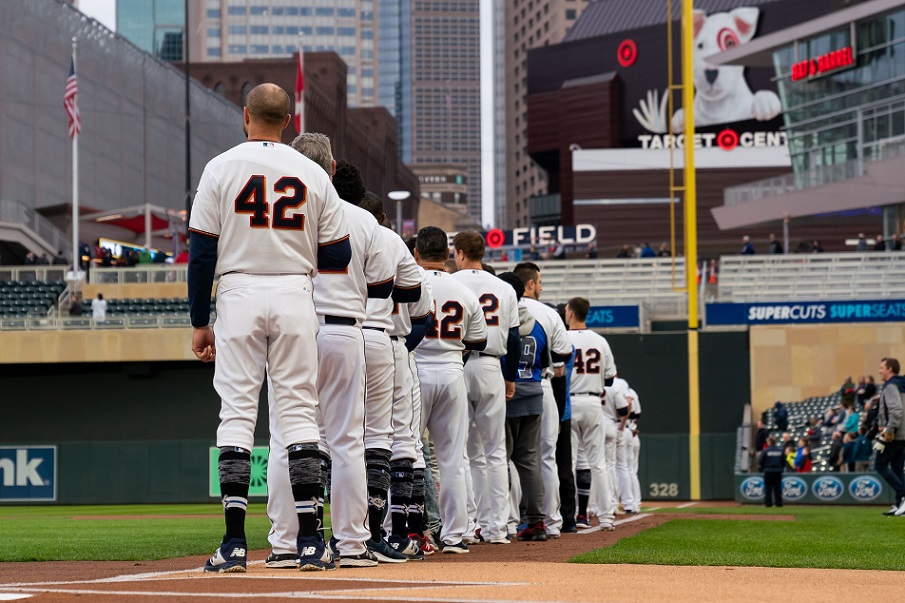 Yesterday, I was trying to answer that question for myself. So I decided to run a poll over on Twitter, and it stirred up a lot of debate among Twins fans. https://twitter.com/AndrewThares/status/1126213276721983489 With that being said, let’s take a look at the case for some of the leading candidates. Jose Berrios In an organization that has been looking for a true ace of the pitching staff ever since Johan Santana was traded to the New York Mets, Jose Berrios is the guy many have turned to to take that role. In his first few years in the big leagues, Jose Berrios hasn’t disappointed. Ever since getting called up for good in 2017, Berrios has pitched nearly 400 innings, with an ERA of 3.68, a K/9 of 9.02 and a BB/9 of just 2.69. The soon to be 25-year old is just now entering the prime of his career and could serve as the Twins ace for many years to come. Eddie Rosario Eddie Rosario has broken out as a star over the past two plus seasons for the Twins. In 2017 he hit 27 home runs and followed that up with a team leading 24 home runs in 2018. So far in 2019, Rosario is leading the American League with 13 home runs. Additionally, Rosario inspires many Twins fans with his hustle and big arm, that have given us their fair share of both highlight reel plays, and moments where you scratch your head wondering what was Rosie thinking. Byron Buxton Speaking of highlight reel plays, is there another Twins player in recent memory that has given us more of those than Byron Buxton? They say that two thirds of the Earth is covered by water, and the other third is covered by Byron Buxton. In every year since Statcast has tracked player sprint speed, Byron Buxton has ranked 1st in all of Major League Baseball. It might seem weird that a hitter with a career wRC+ of 78 might be considered the face of a franchise, but that just shows how special he is in the outfield and on the base paths. Willians Astudillo Ever since his call-up to the bigs last summer, Willians Astudillo has become a bit of a cult hero to not only Minnesota Twins fans, but to baseball fans across America. In just 150 career plate appearances, Astudillo has already collected 49 hits, an fWAR of 1.1, and has played every position on the field except shortstop, including an innings worth of work on the mound. His unique style of never strikeout and never walk has brought a refreshing pace to a game that has seen those two things spike in recent years. La Tortuga, may you keep bringing baseball fans countless amounts of joy for many years to come. Nelson Cruz This might be one that most Twins fans scoff at given that he was just signed to the team this offseason, but when you consider who the face of a franchise is, it is the player most fans from other teams think of when they think of that team, and on a national level, Nelson Cruz is easily the most prominent player on the Minnesota Twins. It might be hard to make a case for Cruz other than that, but if you were to poll non-Twins fans on this question, I think a lot of them might say Nelson Cruz, simply because they don’t know who a lot of the guys on the Twins roster are… yet. Jorge Polanco When talking about the face of the franchise, you can’t leave out the guy who has probably been the best player when he is actually on the field over the past few seasons. The 80-game suspension to start 2018 hurt some of his production, and consequently some of his case for the face of the Twins, but there is no denying how great of a player Polanco has been ever since he broke out in the later half of 2017. Polanco might just be the long-term answer to the ever-revolving door that is the Minnesota Twins shortstop position. Royce Lewis It might seem weird to include a player that is still in the minor leagues on this list, but it wouldn’t be a stretch to make a case. Just look at what’s happened with the Toronto Blue Jays. Ever since Josh Donaldson was traded last summer, you could make a case that Vlad Guerrero Jr. has been the face of their organization, and with Guerrero, Fernando Tatis Jr., Eloy Jimenez, and Nick Senzel all being in the Majors, it won’t be long until Royce Lewis might be considered the consensus top overall prospect in baseball. Additionally, the last guy the Twins took with the 1st overall pick in the draft held this title for quite some time. Could it soon be time for Lewis to take over the throne? Derek Falvey and Thad Levine While neither is a player, one would be remised not to include Chief Baseball Officer Derek Falvey and General Manager Thad Levine on this list. Ever since they were hired after the 2016 season, they have been the focal point of many Twins related discussions. At the time of their hire the Twins were coming off having the worst record in baseball, and had a 407-565 record over the previous six seasons. In their time in charge, the Twins have a 186-173 record, and have helped vault the Twins farm system into one of the Top 10 systems in baseball. Rocco Baldelli Lastly, we need to take a look at the Twins manager who has help revitalize this Twins team. Sure, offseason additions of Nelson Cruz, Jonathan Schoop, Martin Perez, Marwin Gonzalez and Blake Parker have played a role, but we can’t overlook the job Baldelli has done in getting the most out of his young players early on in the season. Baldelli brings an added dimension of youth and openness to change that is a refreshing pace to Twins managers of the past. If the Twins keep playing the way they have been, Baldelli might be in line to be named manager of the year in just his first season as an MLB manager. As we can see, there is a long list of names for potential candidates to be the face of the Minnesota Twins. Arguments can be made for a number of guys, and there doesn’t seem to be a consensus on who it is at the moment. Maybe some will rise from the ranks and establish themselves on the Mount Rushmore of Minnesota Twins. Or maybe we will just continue having a team of solid players who all contribute to the long-term success of the organization. Let us know who you think is the face of the Minnesota Twins in the comment section down below.
 -
For much of the first month of the season, the attention has been placed on the Twins lineup. However, over the past few weeks it has been the pitching staff that has led the Twins to their success. Over the past seven games, the Twins pitching staff as a whole has combined for a 1.98 ERA. Image courtesy of © Dan Hamilton-USA TODAY Sports For much of the first month of the season, the attention has been placed on the Twins lineup. However, over the past few weeks it has been the pitching staff that has led the Twins to their success. Over the past seven games, the Twins pitching staff as a whole has combined for a 1.98 ERA. Box Score Berrios: 7 IP, 4 H, 0 ER, 0 BB, 5 K, 70.6% strikes (65 of 92 pitches) Home Runs: Mitch Garver (7) Multi-Hit Games: Kepler (2-5, 2B), Garver (3-3, HR) WPA of +0.1: Berrios .418, Garver .235 WPA of -0.1: Cruz -.168, Schoop -.114 (Chart via FanGraphs) After a couple of starts in a row where Jose Berrios struggled to command his curveball, he seemed to rediscover his feel for the pitch tonight as he picked up four of his five strikeouts with that pitch. Overall, Blue Jays hitters combined for a 32% whiff rate, and were 1-for-13 against Berrios’ curveball. Berrios' start marked the eighteenth consecutive game where the Twins starting pitcher managed to go at least five innings. The Twins got off to an early lead, when they used two singles and two walks to push a run across in the first, but they failed to take advantage of what could have been a much bigger inning. There wasn’t much action again until the sixth inning, when Eddie Rosario led off the inning with a much needed bloop single, followed by a Mitch Garver blast to the upper deck in left field to give the Twins a 3-0 lead. https://twitter.com/Twins/status/1125924390133272577 The game did get a little interesting in the bottom of the ninth when the Blue Jays got runners on the corners with two outs, bringing the tying run in Billy McKinney to the plate. However, Taylor Rogers was able to get him to ground out to first baseman Marwin Gonzales, and secure his fourth save of the season. During the third inning, the Fox Sports North broadcast has Twins General Manager Thad Levine on to talk about things ranging from Miguel Sano’s comeback, to Nelson Cruz’s leadership, to the success of the Twins starting rotation so far this year. Here is a little tidbit of that conversation. https://twitter.com/fsnorth/status/1125911973147729920 Postgame with Baldelli https://twitter.com/fsnorth/status/1125945970426925056 Bullpen Usage Here’s a quick look at the number of pitches thrown by the bullpen over the past five days: Next Three Games Wed at TOR, 6:07 pm CT (Gibson-Thornton) Fri vs DET, 7:10 pm CT (TBD-Ross) Sat vs DET, 1:10 pm CT (TBD-TBD) Last Game MIN 8, TOR 0: Perez Impresses, Bats Bounce Stroman Early View full article
-
MIN 3, TOR 0: Berrios Hurls Gem, Twins Get Second Straight Shutout
Andrew Thares posted an article in Twins
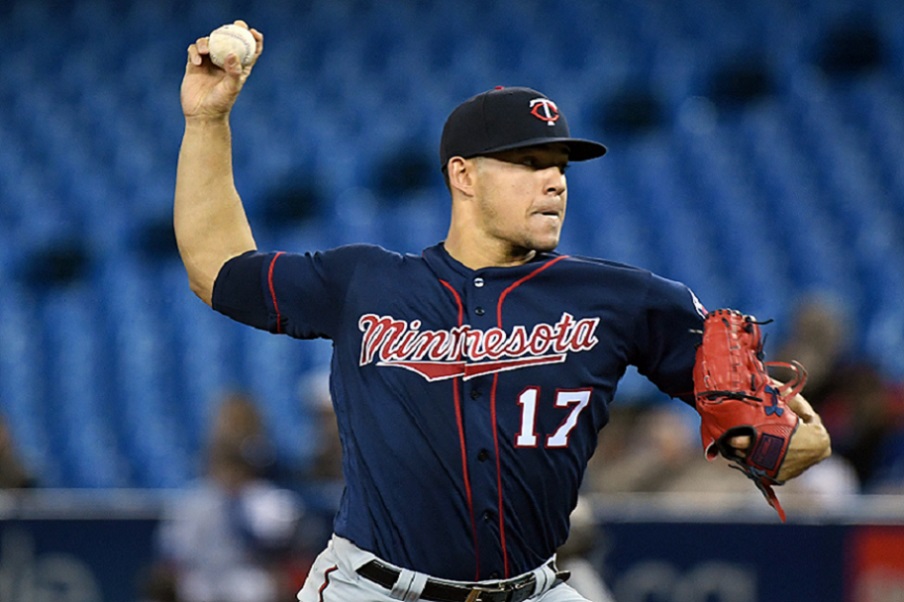 Box Score Berrios: 7 IP, 4 H, 0 ER, 0 BB, 5 K, 70.6% strikes (65 of 92 pitches) Home Runs: Mitch Garver (7) Multi-Hit Games: Kepler (2-5, 2B), Garver (3-3, HR) WPA of +0.1: Berrios .418, Garver .235 WPA of -0.1: Cruz -.168, Schoop -.114 (Chart via FanGraphs) After a couple of starts in a row where Jose Berrios struggled to command his curveball, he seemed to rediscover his feel for the pitch tonight as he picked up four of his five strikeouts with that pitch. Overall, Blue Jays hitters combined for a 32% whiff rate, and were 1-for-13 against Berrios’ curveball. Berrios' start marked the eighteenth consecutive game where the Twins starting pitcher managed to go at least five innings. The Twins got off to an early lead, when they used two singles and two walks to push a run across in the first, but they failed to take advantage of what could have been a much bigger inning. There wasn’t much action again until the sixth inning, when Eddie Rosario led off the inning with a much needed bloop single, followed by a Mitch Garver blast to the upper deck in left field to give the Twins a 3-0 lead. https://twitter.com/Twins/status/1125924390133272577 The game did get a little interesting in the bottom of the ninth when the Blue Jays got runners on the corners with two outs, bringing the tying run in Billy McKinney to the plate. However, Taylor Rogers was able to get him to ground out to first baseman Marwin Gonzales, and secure his fourth save of the season. During the third inning, the Fox Sports North broadcast has Twins General Manager Thad Levine on to talk about things ranging from Miguel Sano’s comeback, to Nelson Cruz’s leadership, to the success of the Twins starting rotation so far this year. Here is a little tidbit of that conversation. https://twitter.com/fsnorth/status/1125911973147729920 Postgame with Baldelli https://twitter.com/fsnorth/status/1125945970426925056 Bullpen Usage Here’s a quick look at the number of pitches thrown by the bullpen over the past five days: Next Three Games Wed at TOR, 6:07 pm CT (Gibson-Thornton) Fri vs DET, 7:10 pm CT (TBD-Ross) Sat vs DET, 1:10 pm CT (TBD-TBD) Last Game MIN 8, TOR 0: Perez Impresses, Bats Bounce Stroman Early
 -
Entering this two-week stretch of four straight series against the Baltimore Orioles and the Houston Astros, many Twins fans might have looked at them as a wash. If the Twins could just take care of the Orioles, there won’t be much pressure on them to do well against the Astros. Well, not only did the Twins take care of the Orioles going 6-0, they also took care of the Astros, finishing off the season series win 4-3! Image courtesy of © Brad Rempel-USA TODAY Sports Entering this two-week stretch of four straight series against the Baltimore Orioles and the Houston Astros, many Twins fans might have looked at them as a wash. If the Twins could just take care of the Orioles, there won’t be much pressure on them to do well against the Astros. Well, not only did the Twins take care of the Orioles going 6-0, they also took care of the Astros, finishing off the season series win 4-3! Box Score Berrios: 7.0 IP, 7 H, 2 ER, 0 BB, 5 K, 77.3% strikes (68 of 88 pitches) Home Runs: Castro (3) Multi-Hit Games: Polanco (2-3, 2B&3B), Gonzalez (2-3), Schoop (2-4), Castro (2-4, 2B&HR) WPA of +0.1: Castro .267, Berrios .136, Schoop .102 WPA of -0.1: None (Chart via FanGraphs) Jose Berrios continued the trend of Minnesota Twins starters giving the team much needed length to help save the bullpen during this stretch of 33 games in 33 days. Since that stretch started back with the double-header in Baltimore, Twins starters have gone at least five innings in all 13 starts. After getting down 1-0 early, Jason Castro answered back in the bottom of the third, hitting a leadoff solo shot to tie the game at 1. (Chart via Baseball Savant) The bottom of the fourth is when all of the fun happened! After Eddie Rosario got robbed of a sure-fire double by Josh Reddick to lead off the inning, C.J. Cron walked, Marwin Gonzalez singled, Jonathan Schoop singled (driving in Cron), Jason Castro doubled (driving in Gonzalez & Schoop), Byron Buxton tripled (driving in Castro), Max Kepler hit a sac-fly (driving in Buxton), *Catches Breath*, Jorge Polanco doubled, Nelson Cruz doubled (driving in Polanco), before Eddie Rosario finally ended the inning with a strikeout. All told, the Twins put up six runs, and took control with a commanding 7 to 1 lead. The Twins were able to add their eighth, and final, run of the game in the bottom of the fifth on an RBI groundout from Jason Castro. This gave Castro his fourth RBI of the day, doubling his season total that he had entering play today. After Berrios completed seven strong innings, the Twins were able to turn to Ryne Harper and Trevor May, who were able to shut the door on yet another Twins win! Hopefully the Twins can build off this 6-1 home stand as they make their yearly dreaded trip to Yankee Stadium. Bullpen Usage Here’s a quick look at the number of pitches thrown by the bullpen over the past five days: (Morin’s pitches were thrown for AAA Rochester) Next Three Games Fri at NYY, 6:05 pm CT (Gibson-Paxton) Sat at NYY, 12:05 pm CT (Odorizzi-Happ) Sun at NYY, 12:05 pm CT (Pineda-German) Last Game MIN 6, HOU 2: MARTIN! MARTIN! MARTIN! View full article
-
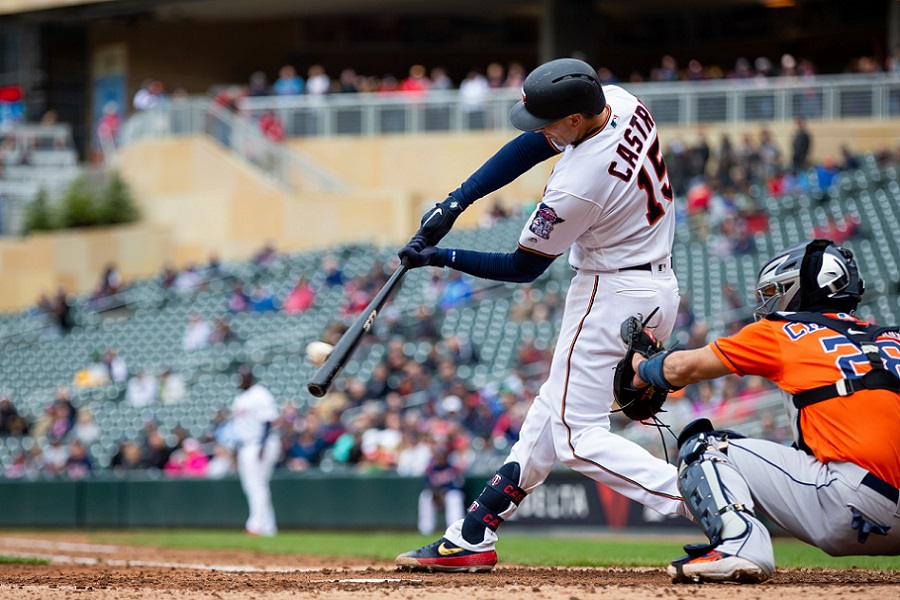 Box Score Berrios: 7.0 IP, 7 H, 2 ER, 0 BB, 5 K, 77.3% strikes (68 of 88 pitches) Home Runs: Castro (3) Multi-Hit Games: Polanco (2-3, 2B&3B), Gonzalez (2-3), Schoop (2-4), Castro (2-4, 2B&HR) WPA of +0.1: Castro .267, Berrios .136, Schoop .102 WPA of -0.1: None (Chart via FanGraphs) Jose Berrios continued the trend of Minnesota Twins starters giving the team much needed length to help save the bullpen during this stretch of 33 games in 33 days. Since that stretch started back with the double-header in Baltimore, Twins starters have gone at least five innings in all 13 starts. After getting down 1-0 early, Jason Castro answered back in the bottom of the third, hitting a leadoff solo shot to tie the game at 1. (Chart via Baseball Savant) The bottom of the fourth is when all of the fun happened! After Eddie Rosario got robbed of a sure-fire double by Josh Reddick to lead off the inning, C.J. Cron walked, Marwin Gonzalez singled, Jonathan Schoop singled (driving in Cron), Jason Castro doubled (driving in Gonzalez & Schoop), Byron Buxton tripled (driving in Castro), Max Kepler hit a sac-fly (driving in Buxton), *Catches Breath*, Jorge Polanco doubled, Nelson Cruz doubled (driving in Polanco), before Eddie Rosario finally ended the inning with a strikeout. All told, the Twins put up six runs, and took control with a commanding 7 to 1 lead. The Twins were able to add their eighth, and final, run of the game in the bottom of the fifth on an RBI groundout from Jason Castro. This gave Castro his fourth RBI of the day, doubling his season total that he had entering play today. After Berrios completed seven strong innings, the Twins were able to turn to Ryne Harper and Trevor May, who were able to shut the door on yet another Twins win! Hopefully the Twins can build off this 6-1 home stand as they make their yearly dreaded trip to Yankee Stadium. Bullpen Usage Here’s a quick look at the number of pitches thrown by the bullpen over the past five days: (Morin’s pitches were thrown for AAA Rochester) Next Three Games Fri at NYY, 6:05 pm CT (Gibson-Paxton) Sat at NYY, 12:05 pm CT (Odorizzi-Happ) Sun at NYY, 12:05 pm CT (Pineda-German) Last Game MIN 6, HOU 2: MARTIN! MARTIN! MARTIN!
 -
Twins 2019 Position Analysis: Second Base
Andrew Thares replied to Nick Nelson's topic in Twins Daily Front Page News
What is with this still ongoing narrative that Robbie Grossman is slow? Yeah he’s an awkward looking defender in the outfield but he isn’t slow. His 27.7 ft/sec ranked 119th out of 287 MLB players with at least 100 runs measured in 2018, and isn’t that far behind Max Kepler who checked in at 27.9 ft/sec.- 27 replies
-
- 6
-
-
- jonathan schoop
- marwin gonzalez
- (and 2 more)
-
On Wednesday the Twins deal with lefty starter Martin Perez became official. The terms of the contract are one-year at $3.5 million with an option for 2020 at $7.5 million ($500,000 buyout). When this signing was first announced nearly two weeks ago it left many Twins fans, myself included, scratching their heads as to what the Twins saw in the 27-year-old coming off a season where he posted a 6.22 ERA over 85 1/3 innings. So, I dug into the data a little bit more, and I think I found the answer. Image courtesy of © Jennifer Buchanan-USA TODAY Sports On Wednesday the Twins deal with lefty starter Martin Perez became official. The terms of the contract are one-year at $3.5 million with an option for 2020 at $7.5 million ($500,000 buyout). When this signing was first announced nearly two weeks ago it left many Twins fans, myself included, scratching their heads as to what the Twins saw in the 27-year-old coming off a season where he posted a 6.22 ERA over 85 1/3 innings. So, I dug into the data a little bit more, and I think I found the answer. Before his awful 2018 season, Perez was a reliable backend of the rotation starter for the Texas Rangers. In both 2016 and 2017, Perez put up consecutive 2.1 fWAR seasons after combining for a 4.60 ERA across 383 2/3 innings. While these numbers don’t exactly jump off the map, anytime you can get those numbers out of your fifth starter in the rotation you are in a better situation than most rotations, especially when compared to those in recent Twins history. Even though Perez had a 6.22 ERA in 2018, many advanced statistics pointed to him being nearly the same pitcher as he was in his two prior seasons. While Perez’s FIP wasn’t that appealing at 5.72, his xFIP was far lower at 4.98. For those that aren’t familiar with the difference between FIP and xFIP, xFIP uses the same baseline as FIP except it also accounts for a pitcher’s HR/FB rate. In 2018, Perez had a HR/FB rate of 18.2%, which far exceeded his career average of 11.7%. It can be expected that for this number to return to his norms in 2019, and thus will have a large impact on Perez’s run prevention. Additionally, many of the Statcast metrics also tell the story of Perez being nearly the same pitcher in 2018 that he was in 2016 & 2017. When a pitcher has a down season it often coincides with a decrease in pitch velocity. This can often be worrisome to MLB teams as it can be an indicator that the pitcher has fallen off physically. However, when looking at Martin Perez, that doesn’t seem to have been the case, as is evident by the chart seen below. Another great way to use Statcast data to help predict a player’s future performance is by looking at their expected stats. When looking into these metrics, it yet again points to the fact that Perez was actually a much better pitcher in 2018 than his 6.22 ERA implies. Last season, Perez had a batting average allowed of .329, but his expected AVG (xAVG) allowed was just .287. This 42-point drop from actual batting average to his xAVG was the largest drop of any pitcher who faced at least 350 batters in 2018. When looking at a far more advanced stat like wOBA, we see the same thing. Last year, Perez had an actual wOBA of .390, but his xwOBA was 37-points lower at .353. This was the 4th largest drop off among the same 166 pitchers who faced at least 350 batters last season. One thing that has kept Perez from ever becoming a top, or even middle, of the rotation starter is his well below average strikeout numbers. For his career, Perez has struck out a mere 13.9% of opposing batters. Of the 148 pitchers who have thrown at least 500 innings since Perez came into the league in 2012, Perez’s strikeout rate ranks 144th. Despite this, Perez has still been a serviceable starter for the majority of his career. In 2018, Perez’s strikeout rate checked in at 13.1%, barely below his career average. At the end of the day, Martin Perez isn’t going to be that breakthrough signing that will put the Twins over the top. However, I think it is fair to assume that the front office had a plan in mind when signing Perez, and he could very well wind up serving a much bigger role on the 2019 Minnesota Twins than just adding depth to the starting rotation. View full article
-
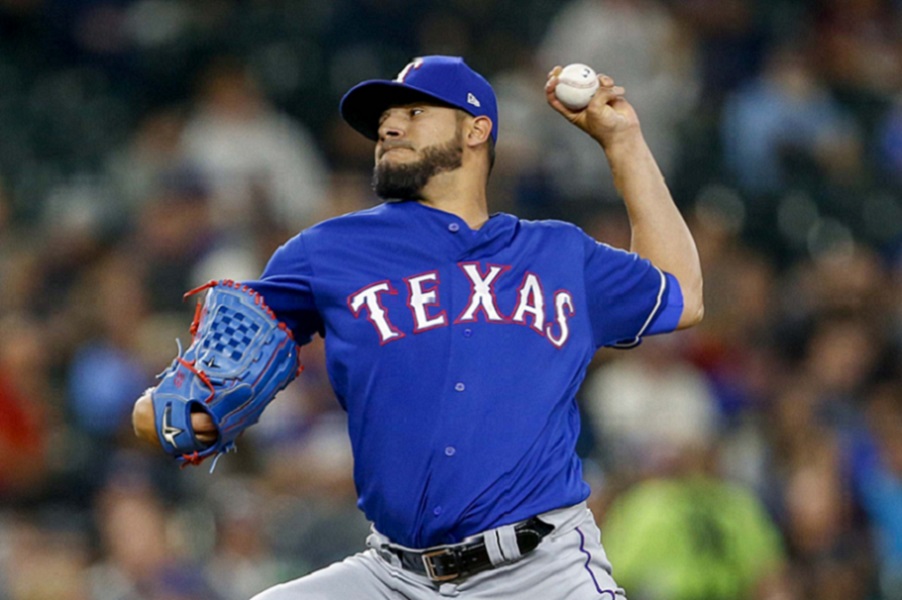 Before his awful 2018 season, Perez was a reliable backend of the rotation starter for the Texas Rangers. In both 2016 and 2017, Perez put up consecutive 2.1 fWAR seasons after combining for a 4.60 ERA across 383 2/3 innings. While these numbers don’t exactly jump off the map, anytime you can get those numbers out of your fifth starter in the rotation you are in a better situation than most rotations, especially when compared to those in recent Twins history. Even though Perez had a 6.22 ERA in 2018, many advanced statistics pointed to him being nearly the same pitcher as he was in his two prior seasons. While Perez’s FIP wasn’t that appealing at 5.72, his xFIP was far lower at 4.98. For those that aren’t familiar with the difference between FIP and xFIP, xFIP uses the same baseline as FIP except it also accounts for a pitcher’s HR/FB rate. In 2018, Perez had a HR/FB rate of 18.2%, which far exceeded his career average of 11.7%. It can be expected that for this number to return to his norms in 2019, and thus will have a large impact on Perez’s run prevention. Additionally, many of the Statcast metrics also tell the story of Perez being nearly the same pitcher in 2018 that he was in 2016 & 2017. When a pitcher has a down season it often coincides with a decrease in pitch velocity. This can often be worrisome to MLB teams as it can be an indicator that the pitcher has fallen off physically. However, when looking at Martin Perez, that doesn’t seem to have been the case, as is evident by the chart seen below. Another great way to use Statcast data to help predict a player’s future performance is by looking at their expected stats. When looking into these metrics, it yet again points to the fact that Perez was actually a much better pitcher in 2018 than his 6.22 ERA implies. Last season, Perez had a batting average allowed of .329, but his expected AVG (xAVG) allowed was just .287. This 42-point drop from actual batting average to his xAVG was the largest drop of any pitcher who faced at least 350 batters in 2018. When looking at a far more advanced stat like wOBA, we see the same thing. Last year, Perez had an actual wOBA of .390, but his xwOBA was 37-points lower at .353. This was the 4th largest drop off among the same 166 pitchers who faced at least 350 batters last season. One thing that has kept Perez from ever becoming a top, or even middle, of the rotation starter is his well below average strikeout numbers. For his career, Perez has struck out a mere 13.9% of opposing batters. Of the 148 pitchers who have thrown at least 500 innings since Perez came into the league in 2012, Perez’s strikeout rate ranks 144th. Despite this, Perez has still been a serviceable starter for the majority of his career. In 2018, Perez’s strikeout rate checked in at 13.1%, barely below his career average. At the end of the day, Martin Perez isn’t going to be that breakthrough signing that will put the Twins over the top. However, I think it is fair to assume that the front office had a plan in mind when signing Perez, and he could very well wind up serving a much bigger role on the 2019 Minnesota Twins than just adding depth to the starting rotation.
 -
Departures Don’t Change Twins Future
Andrew Thares replied to Ted Schwerzler 's topic in Twins Daily Front Page News
It amazes me how many Twins fans are so eager to give up on Byron Buxton and Miguel Sano. Have they had their difficulties with injuries and their swings? Yes. But its not like we are talking about two guys who have been nothing but busts the whole time. Sano just turned 25, has a career OPS of .823, a wRC+ of 119 and a WAR of 5.4. While Buxton is still just 24, has a bat that has shown flashes of high upside potential, and when healthy he is the best defensive centerfielder in the game. Personally, I would think Twins fans would be on the other end of the spectrum when it comes to this topic given what happened when the Twins gave up too early on David Ortiz and Aaron Hicks.- 42 replies
-
- 5
-
-
- minnesota twins
- brian dozier
- (and 2 more)
-
One of the ever evolving story lines for the Minnesota Twins this year has been, what will they do with Brian Dozier come the trade deadline? Obviously, entering the season trading Dozier was never in the Twins’ plans as they hoped to compete for a repeat berth in the postseason. However, in more ways than we can count, the season hasn’t gone according to plan, which led the Twins to officially announce themselves as sellers by trading away Eduardo Escobar and Ryan Pressly last Friday. Image courtesy of © Dan Hamilton-USA TODAY Sports One of the ever evolving story lines for the Minnesota Twins this year has been, what will they do with Brian Dozier come the trade deadline? Obviously, entering the season trading Dozier was never in the Twins’ plans as they hoped to compete for a repeat berth in the postseason. However, in more ways than we can count, the season hasn’t gone according to plan, which led the Twins to officially announce themselves as sellers by trading away Eduardo Escobar and Ryan Pressly last Friday. When we were initially having the discussion on whether or not to trade Dozier, it mostly revolved around if it was better to trade him, or wait and give him a qualifying offer this offseason so the Twins could get the draft pick compensation that would come if Dozier signed elsewhere. However, at this point it is growing ever more unlikely that the Twins would even give Dozier a qualifying offer. While many would argue that bringing back Dozier on a one-year deal wouldn’t be the worst thing in the world, they may very well be able to do so even without the qualifying offer, except on a much cheaper contract, if that is something the Twins wish to do. This points all signs in the direction of the Twins trading Dozier as the obvious move to make right now. However, as the days progress the options for where the Twins could send Dozier seem to be dwindling. From the get-go, the Milwaukee Brewers seemed like the team that was most interested in trading for Brian Dozier. They had obvious needs at both middle-infield positions and were looking to fill them before the trade deadline. However, the Brewers appear to have found their solution for second base by moving Travis Shaw over there after the addition of Mike Moustakas. It will be interesting to see how that works out, as Shaw never even played second base as a minor leaguer. Either way, it appears to be the solution the Brewers are going with, which takes them out of the Brian Dozier sweepstakes. The other team that was favored as a potential landing spot for Dozier was the Boston Red Sox. With Dustin Pedroia shelved nearly all season with an injury, the Red Sox have been trotting out Eduardo Nunez and Brock Holt to play second base. The results have been less than desirable, as they have received a WAR of 0.1 (Fangraphs) from the position this year. With that being the case, Dozier to the Red Sox still makes the most sense. However, with the trade deadline less than 24 hours away, the rumors of the Red Sox interest in Dozier have become almost nonexistent. There have been two other teams that have shown some interest in Brian Dozier of late, and they are the San Francisco Giants and Cleveland Indians. I wrote about why I thought the Giants would be interested in Dozier a couple of weeks ago. However, with Joe Panik currently on a rehab stint and the Giants falling a little further back in the playoff push (6.5 GB in division and 6.0 GB in wild card entering Monday) they might not be as incentivized to trade for Dozier as they previously were. From the Cleveland Indians perspective, I don’t see how much they would have to gain by adding Dozier. I don’t think the inter-division aspect will prevent it from happening as we have already seen teams show they are no longer afraid to make trades with their rivals, especially for rental players. Logically, Dozier isn’t much of an upgrade over a declining Jason Kipnis as they both have a 1.1 WAR (Fangraphs) so far this season. Dozier could potentially bring a platoon split with Kipnis being a lefty and Dozier being a righty, but both players have actually been better against left-handed pitching this season. Another factor at play is how Dozier has continued to struggle, even after it looked like he turned the corner leading into the All-Star break. In the week and a half since the break, Dozier has a slash line of just .175/.227/.225 with just two extra-base hits (20 wRC+). Overall on the season, Dozier has a slash line of .224/.306/.404 and 16 home runs (91 wRC+). I still think that something should get done before 3 PM CST tomorrow, but if they do I wouldn’t expect that great of a return given that the market for Dozier doesn’t appear to be all that bright. View full article

