



Andrew Thares
-
Posts
653 -
Joined
-
Last visited
Content Type
Profiles
News
Minnesota Twins Videos
2026 Minnesota Twins Top Prospects Ranking
2022 Minnesota Twins Draft Picks
Minnesota Twins Free Agent & Trade Rumors, Notes, & Tidbits
Guides & Resources
2023 Minnesota Twins Draft Picks
The Minnesota Twins Players Project
2024 Minnesota Twins Draft Picks
2025 Minnesota Twins Draft Pick Tracker
2026 Minnesota Twins Draft Tracker: Picks & Bonuses
Forums
Blogs
Events
Store
Downloads
Gallery
Everything posted by Andrew Thares
-

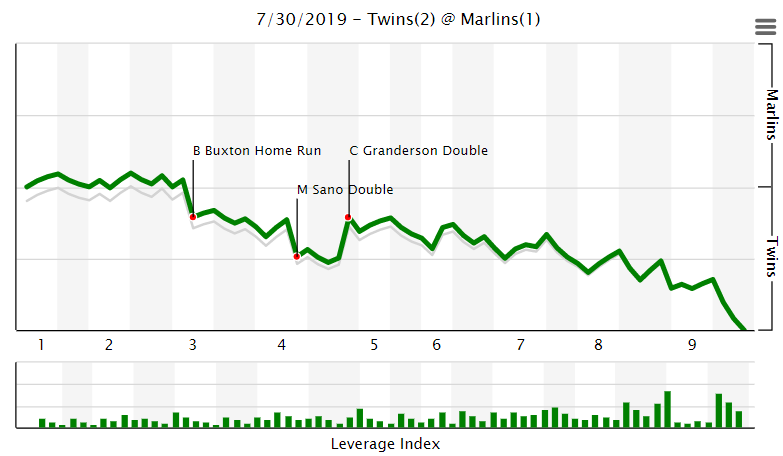 Box Score Odorizzi: 5.2 IP, 4 H, 1 ER, 1 BB, 5 K, 66.0% strikes (68 of 103 pitches) Home Runs: Buxton (10) Multi-Hit Games: None WPA of +0.1: Odorizzi .200, Rogers .176, Duffey .141, Romo .129, Sano .114 WPA of -0.1: None There wasn’t a lot of action through the first couple innings of the game. Neither team was able to reach base during the first inning, and the first baserunner of the game was Miguel Sano who drew a one-out walk. He wouldn’t make it far, however, as he was thrown out on an inning-ending strike him out, thrown him out double play. The bottom of the second was going smoothly for Jake Odorizzi until Curtis Granderson hit a line drive into the left-centerfield gap. It appeared as though Eddie Rosario would have a play throw Granderson out at second, but he inexplicable misplayed the ball, allowing it to get past him and Granderson to advance to third on the error. Odorizzi was able to pick up Rosario by getting Harold Ramirez to fly out to end the inning. Byron Buxton got the scoring going in the top of the third when he hit a towering flyball over the fence in left-centerfield to give the Twins an early 1-0 lead. https://twitter.com/Twins/status/1156352497348468736 The Twins were able to add to their lead in the top of the fourth inning. Jorge Polanco started the inning with a leadoff walk, and looked for a second like the Twins might not be able to turn that walk into a run. Mitch Garver followed Polanco’s walk with a strikeout, and Edie Rosario proceeded to ground into a force out. Then on a 2-1 count, Miguel Sano drilled a double out to centerfield, bringing Rosario around to score from first. The bottom of the fourth was sailing along for Jake Odorizzi, like the rest of the game had up until that point. He got each of the first two hitters to flyout, before Starlin Castro stepped to the plate and roped a two-out single to the opposite field, setting the table for Curtis Granderson who pulled a double down the line that got all the way to the wall. The relay from Kepler to Arraez to Garver was a hair late and a hair offline, allowing Castro to slide in safely, cutting the Twins lead down to one. Jake Odorizzi was cruising along through five innings and into the sixth, and it appeared as though he was going complete six innings for the first time since June 15. However, that wasn’t meant to be, as with two outs in the sixth he walked Neil Walker, ending his night. Tyler Duffey came in and shut the door in the sixth by striking out Starlin Castro. He then followed that up with a 1-2-3 bottom of the seventh inning. Sergio Romo made his Twins debut in the bottom of the eighth against the team that just traded him away. Romo got both Cesar Puello and Miguel Rojas to flyout to begin the inning before he hit Brian Anderson on the first pitch of the plate appearance. Anderson was able to advance to second on a stolen base during the next at-bat but didn’t go any further as Romo ended the inning by getting Martin Prado to strikeout on a check swing that he couldn’t quite hold up on. The often animated Romo showed that he was pumped up to pitch for a competitive ball club again. https://twitter.com/fsnorth/status/1156385700775727104 After a much-needed week off, Taylor Rogers looked fresh in the ninth inning, going 1-2-3 to complete his 16th save of the season. With the Indians losing to Justin Verlander and the Houston Astros tonight, the Twins lead is back up to three games. During the game, it was announced that the Cleveland Indians had traded away Trevor Bauer as part of a three-team trade with the Cincinnati Reds and San Diego Padres. In return they received outfielders Yasiel Puig and Franmil Reyes. If you are unfamiliar with Reyes, he is one of the bright young stars in the game. In 185 career games, Reyes has already hit 43 home runs and has a wRC+ of 122. At just 24 years of age, Reyes might be a nemesis for the Twins in the years to come. Bullpen Usage Here’s a quick look at the number of pitches thrown by the bullpen over the past five days: Next Three Games Wed at MIA, 6:10 pm CT (Berrios-Alcantara) Thu at MIA, 11:10 am CT (Pineda-Yamamoto) Fri vs KC, 7:10 pm CT (Sparkman-Perez) Last Game Twins Game Recap (7/28): Bats Bounce Back Behind Gibson’s Strong Outing
 -
The Twins made their first splash of the trade deadline Saturday night when they acquired veteran reliever Sergio Romo from the Miami Marlins. Romo is probably most well know for his time with the San Francisco Giants during their three World Series runs from 2010 through 2014. The Twins will be hoping their young bullpen can draw on Romo’s postseason experience to guide them through what hopefully is a World Series run of their own. Image courtesy of © Jeff Curry-USA TODAY Sports The Twins made their first splash of the trade deadline Saturday night when they acquired veteran reliever Sergio Romo from the Miami Marlins. Romo is probably most well know for his time with the San Francisco Giants during their three World Series runs from 2010 through 2014. The Twins will be hoping their young bullpen can draw on Romo’s postseason experience to guide them through what hopefully is a World Series run of their own. I wanted to mention Sergio Romo’s postseason experience right away because I think it is an invaluable asset that the Twins are adding to their team. While we can sit here all day breaking down his stats (don’t worry there is plenty of that to come) there is just no substitute for what a calming veteran presence can do for a bunch of young kids who might otherwise be deer in the headlights when they are preparing to get some of the most important outs of their lives. Pair Romo up with Nelson Cruz and Marwin Gonzalez, and all of a sudden, this team has a stable of veteran leaders to take them into Yankee Stadium come October. In addition to the intangible benefits, Sergio Romo is still quite the effective reliever, even at 36 years of age. So far in 2019, Romo is 17 for 18 on save opportunities, and has a 3.58 ERA (3.89 FIP) in 37 and 2/3 innings pitching for the Marlins. However, that ERA is a little deceiving, because with the exception of two bad outings, one of which came in his very first appearance of the year, Romo has a 1.73 ERA in his other 36 appearances this year. While his strikeout numbers are down to 7.9 K/9 this year, Romo put up an impressive 10.0 K/9 just a season ago pitching with the Tampa Bay Rays. So, it is not out of the question that Romo could potentially find that strikeout form from last year and elevate himself to an even better level this year. One thing that many of the critics will point out about Sergio Romo is he doesn’t throw the ball very hard, and this is true. Among the 553 pitchers who have thrown at least 100 fastballs this year, Romo ranks 546th with an average fastball velocity of 86.4 MPH. That’s a velocity that would make Terry Ryan blush. However, don’t get too sucked into this as Romo only throws a fastball just over 26 percent of the time (16.4% sinkers and 9.7% four-seamers). While Sergio Romo doesn’t possess the high velocity fastball that many other backend of the bullpen relievers do this day in age, he does possess a slider that is one of the best in Major League Baseball. One of the more commonly talked about aspects of a pitch, especially a breaking pitch, is its spin rate, and Romo generates a lot of that on his slider. So far in 2019, Romo is averaging a spin rate of 2,852 RPM on his slider, which is the 9th highest among the 252 pitchers who have thrown at least 100 sliders this year. However, we can’t just look at a high spin rate and assume the pitch has a lot of movement, especially with a slider. This is because sliders are often thrown with a lot of gyro spin, or spin that doesn’t create movement. Think of it like the spin of a spiral football, the ball is spinning, but that spin is what is actually keeping the ball from moving, not causing the movement. Gyro spin on a baseball has the same effect. Since we don’t yet have clear, publicly available, metrics separating gyro spin from transverse spin (spin that causes movement) a better metric to look at is the vertical and horizontal movement of the pitch, which like spin rate, is also tracked by TrackMan, and viewable on Baseball Savant. Romo’s slider doesn’t induce much for vertical movement, but it is right up near the top of the charts in horizontal movement across the plate. Here is a graph that shows the vertical and horizontal movement of each pitcher’s slider in 2019. Romo is the one circled in red. As you can see, Romo is quite the outlier in terms of the amount of horizontal movement he generates on his slider. In this case, that is a very good thing. This horizontal movement has helped Romo become so dominate against right-handed hitters over the course of his career. For his career, Romo has held opposing right-handed hitters to a .574 OPS, compared to an MLB average of roughly .750. Here is a clip of Romo’s slider, courtesy of the Pitching Ninja, from 2018. https://twitter.com/PitchingNinja/status/1017179078640709634 So, how does a pitcher with this unique skillset fit into the Twins bullpen? Well for starters, he is an immediate upgrade to the backend of the bullpen, and gives Rocco Baldelli another arm, besides Taylor Rogers, that he can trust to get big outs when they need him to. Hopefully, the Twins are able to add another big arm or two before the trade deadline and allow Baldelli to use Romo in the role he is more suited for, which is as a shut down option against right-handed hitters that the Twins are currently lacking. Picture this, it’s the bottom of the 7th, the Twins are currently holding a 4-2 lead in Game 5 of the ALDS at Yankee stadium. The Yankees have runners on the corners with one out, and Aaron Judge is at the plate with Gary Sanchez on deck, and Giancarlo Stanton in the hole. This season is very much on the line in this moment, and the Twins need to get out of a jam with a few of the game’s best right-handed power hitters coming up. Who do you call on? Oh, I know, how about the guy who has made a reputation for making right-handed hitters look foolish for his entire career and has done it in even bigger spots than that one. That is the kind of impact this move for Sergio Romo could potentially have for this Twins team. At the end of the day, does Sergio Romo solve all of the Twins bullpen issues? No. What he does do, however, is give them a great weapon to turn to out of the bullpen that they didn’t previously have. No one player can make a bullpen great, though Taylor Rogers has given it his best shot this year, it takes a collective of pitchers that can get outs when they are needed to the most. View full article
-
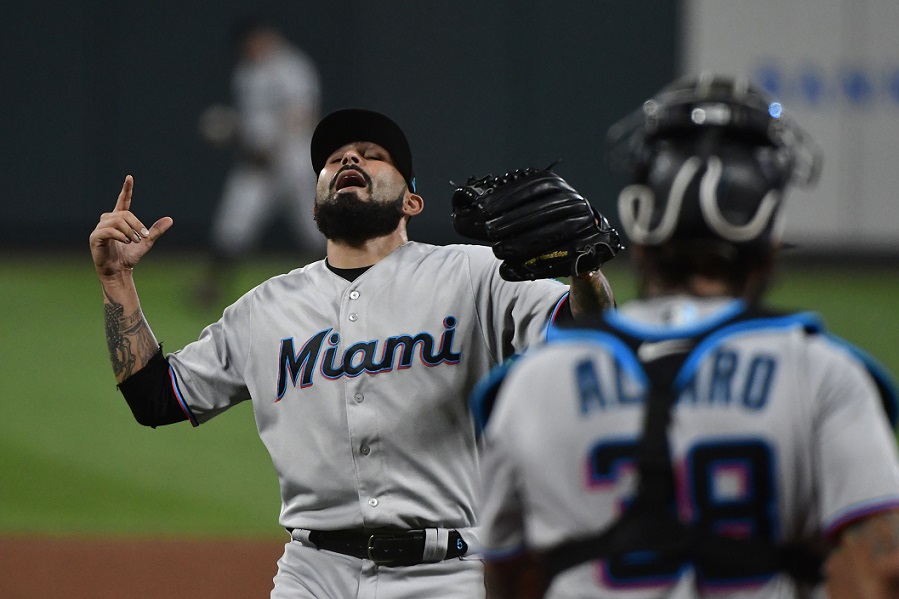 I wanted to mention Sergio Romo’s postseason experience right away because I think it is an invaluable asset that the Twins are adding to their team. While we can sit here all day breaking down his stats (don’t worry there is plenty of that to come) there is just no substitute for what a calming veteran presence can do for a bunch of young kids who might otherwise be deer in the headlights when they are preparing to get some of the most important outs of their lives. Pair Romo up with Nelson Cruz and Marwin Gonzalez, and all of a sudden, this team has a stable of veteran leaders to take them into Yankee Stadium come October. In addition to the intangible benefits, Sergio Romo is still quite the effective reliever, even at 36 years of age. So far in 2019, Romo is 17 for 18 on save opportunities, and has a 3.58 ERA (3.89 FIP) in 37 and 2/3 innings pitching for the Marlins. However, that ERA is a little deceiving, because with the exception of two bad outings, one of which came in his very first appearance of the year, Romo has a 1.73 ERA in his other 36 appearances this year. While his strikeout numbers are down to 7.9 K/9 this year, Romo put up an impressive 10.0 K/9 just a season ago pitching with the Tampa Bay Rays. So, it is not out of the question that Romo could potentially find that strikeout form from last year and elevate himself to an even better level this year. One thing that many of the critics will point out about Sergio Romo is he doesn’t throw the ball very hard, and this is true. Among the 553 pitchers who have thrown at least 100 fastballs this year, Romo ranks 546th with an average fastball velocity of 86.4 MPH. That’s a velocity that would make Terry Ryan blush. However, don’t get too sucked into this as Romo only throws a fastball just over 26 percent of the time (16.4% sinkers and 9.7% four-seamers). While Sergio Romo doesn’t possess the high velocity fastball that many other backend of the bullpen relievers do this day in age, he does possess a slider that is one of the best in Major League Baseball. One of the more commonly talked about aspects of a pitch, especially a breaking pitch, is its spin rate, and Romo generates a lot of that on his slider. So far in 2019, Romo is averaging a spin rate of 2,852 RPM on his slider, which is the 9th highest among the 252 pitchers who have thrown at least 100 sliders this year. However, we can’t just look at a high spin rate and assume the pitch has a lot of movement, especially with a slider. This is because sliders are often thrown with a lot of gyro spin, or spin that doesn’t create movement. Think of it like the spin of a spiral football, the ball is spinning, but that spin is what is actually keeping the ball from moving, not causing the movement. Gyro spin on a baseball has the same effect. Since we don’t yet have clear, publicly available, metrics separating gyro spin from transverse spin (spin that causes movement) a better metric to look at is the vertical and horizontal movement of the pitch, which like spin rate, is also tracked by TrackMan, and viewable on Baseball Savant. Romo’s slider doesn’t induce much for vertical movement, but it is right up near the top of the charts in horizontal movement across the plate. Here is a graph that shows the vertical and horizontal movement of each pitcher’s slider in 2019. Romo is the one circled in red. As you can see, Romo is quite the outlier in terms of the amount of horizontal movement he generates on his slider. In this case, that is a very good thing. This horizontal movement has helped Romo become so dominate against right-handed hitters over the course of his career. For his career, Romo has held opposing right-handed hitters to a .574 OPS, compared to an MLB average of roughly .750. Here is a clip of Romo’s slider, courtesy of the Pitching Ninja, from 2018. https://twitter.com/PitchingNinja/status/1017179078640709634 So, how does a pitcher with this unique skillset fit into the Twins bullpen? Well for starters, he is an immediate upgrade to the backend of the bullpen, and gives Rocco Baldelli another arm, besides Taylor Rogers, that he can trust to get big outs when they need him to. Hopefully, the Twins are able to add another big arm or two before the trade deadline and allow Baldelli to use Romo in the role he is more suited for, which is as a shut down option against right-handed hitters that the Twins are currently lacking. Picture this, it’s the bottom of the 7th, the Twins are currently holding a 4-2 lead in Game 5 of the ALDS at Yankee stadium. The Yankees have runners on the corners with one out, and Aaron Judge is at the plate with Gary Sanchez on deck, and Giancarlo Stanton in the hole. This season is very much on the line in this moment, and the Twins need to get out of a jam with a few of the game’s best right-handed power hitters coming up. Who do you call on? Oh, I know, how about the guy who has made a reputation for making right-handed hitters look foolish for his entire career and has done it in even bigger spots than that one. That is the kind of impact this move for Sergio Romo could potentially have for this Twins team. At the end of the day, does Sergio Romo solve all of the Twins bullpen issues? No. What he does do, however, is give them a great weapon to turn to out of the bullpen that they didn’t previously have. No one player can make a bullpen great, though Taylor Rogers has given it his best shot this year, it takes a collective of pitchers that can get outs when they are needed to the most.
 -
We are now just two days away from the 2019 MLB Trade Deadline. That means the rumor mill is off the charts right now with countless rumors of Team X being interested in Player Y. With the Minnesota Twins right in the tick of a postseason push, and a clear need to upgrade their pitching staff, they find themselves right in the thick of things as far as trade rumors go. It could make it quite difficult to keep up with everything, and everyone the Twins are interested in. Don't worry, we have you covered with all the latest up to date rumors surrounding the Twins. Image courtesy of © Jeff Curry-USA TODAY Sports We are now just two days away from the 2019 MLB Trade Deadline. That means the rumor mill is off the charts right now with countless rumors of Team X being interested in Player Y. With the Minnesota Twins right in the tick of a postseason push, and a clear need to upgrade their pitching staff, they find themselves right in the thick of things as far as trade rumors go. It could make it quite difficult to keep up with everything, and everyone the Twins are interested in. Don't worry, we have you covered with all the latest up to date rumors surrounding the Twins. Sometimes these rumors can seem like they are just that, rumors. It is no surprise that the Twins are doing their due diligence and checking in on each and every player they are interested in potentially trading for. While most of the time these don't end up amounting to anything, it is still important to keep track of, because it can give you a good idea what the Twins are thinking, and who they might be about ready to trade for. Just take Sergio Romo for example. On Saturday morning it was reported that the Twins were interested in Romo, and by the end of the day he was the newest member of the Minnesota Twins. Things can happen that quickly. So, let's take a look at some of the rumors currently circulating around the Twins. Noah Syndergaard The New York Mets have done a fine job stirring the pot of late. They have been linked to being sellers, which would make players like Noah Syndergaard, Zach Wheeler and Edwin Diaz all available. However, on Sunday they then went out and acquired Marcus Stroman. Yet they are still saying they are interested in moving Syndergaard. This one is a real head scratch, and it is anyones guess on what the Mets will do before Wednesday, because quite frankly I don't think they know what they are going to do. LaVelle Neal of the Star Tribune reported that the Mets were interested in a package for Syndergaard that included both Royce Lewis and Alex Kirilloff. It is unlikely that the Twins would even consider moving both of them for Noah Syndergaard, but you can't really blame the Mets for starting the negotiations by asking high. Robbie Ray https://twitter.com/jonmorosi/status/1155159228069187585 Jon Morosi of MLB Network posted this tweet on Saturday, siting that the Twins were among the list of teams who had inquired about Robbie Ray. There hasn't been much follow up to this over the past couple of days, so it could have very well just been the Twins asking about his price. If the Twins were to acquire Ray they would be getting a one of the top strikeout heavy starting pitchers in the game. However, what's different between Ray and other elite strikeout throwers like Max Scherzer or Justin Verlander, is Ray has a terrible time with control. Ray could be a real wildcard for the Twins if they could trade for him and the remaining year and a half left before he hits free agency. Mike Minor https://twitter.com/jonmorosi/status/1155281262564663296 Much like Robbie Ray, the Twins were reported to be one of the teams looking to trade for Mike Minor. With Marcus Stroman off the table, and no real clarity on the Noah Syndergaard front, Minor might very well be the best starting pitcher available on the trade market. It wouldn't surprise me if the Twins are in on the Rangers lefty, especially given Thad Levine's ties to the Rangers organization. Ken Giles & Kirby Yates A few weeks back it was reported that the Twins had checked in on both Ken Giles and Kirby Yates, but there hasn't been much headway on those fronts in the time since. These could be two relievers to keep an eye on in the coming days if the Twins were to pull off a trade for a big name reliever. Jason Vargas https://twitter.com/martinonyc/status/1155942953115774976 Interesting development this afternoon. Still not clear who that the other team is, but could make sense as an acquisition for the Twins, so stay tuned. *Update* Vargas is reportedly heading to the Phillies, so cross his name off the list of potential Twins bullpen acquisitions. View full article
- 59 replies
-
- 3
-

-
- minnesota twins trade
- mlb trade deadline
- (and 2 more)
-
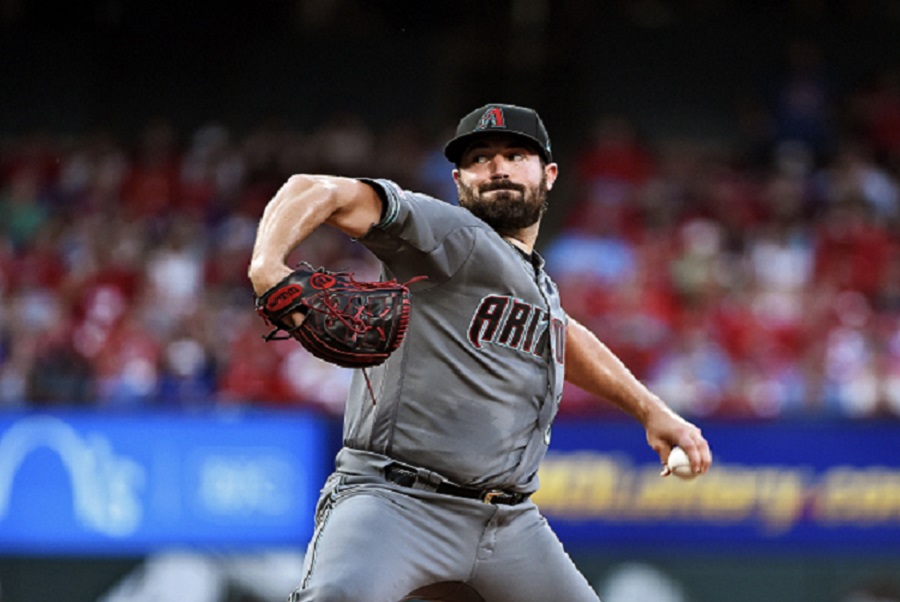 Sometimes these rumors can seem like they are just that, rumors. It is no surprise that the Twins are doing their due diligence and checking in on each and every player they are interested in potentially trading for. While most of the time these don't end up amounting to anything, it is still important to keep track of, because it can give you a good idea what the Twins are thinking, and who they might be about ready to trade for. Just take Sergio Romo for example. On Saturday morning it was reported that the Twins were interested in Romo, and by the end of the day he was the newest member of the Minnesota Twins. Things can happen that quickly. So, let's take a look at some of the rumors currently circulating around the Twins. Noah Syndergaard The New York Mets have done a fine job stirring the pot of late. They have been linked to being sellers, which would make players like Noah Syndergaard, Zach Wheeler and Edwin Diaz all available. However, on Sunday they then went out and acquired Marcus Stroman. Yet they are still saying they are interested in moving Syndergaard. This one is a real head scratch, and it is anyones guess on what the Mets will do before Wednesday, because quite frankly I don't think they know what they are going to do. LaVelle Neal of the Star Tribune reported that the Mets were interested in a package for Syndergaard that included both Royce Lewis and Alex Kirilloff. It is unlikely that the Twins would even consider moving both of them for Noah Syndergaard, but you can't really blame the Mets for starting the negotiations by asking high. Robbie Ray https://twitter.com/jonmorosi/status/1155159228069187585 Jon Morosi of MLB Network posted this tweet on Saturday, siting that the Twins were among the list of teams who had inquired about Robbie Ray. There hasn't been much follow up to this over the past couple of days, so it could have very well just been the Twins asking about his price. If the Twins were to acquire Ray they would be getting a one of the top strikeout heavy starting pitchers in the game. However, what's different between Ray and other elite strikeout throwers like Max Scherzer or Justin Verlander, is Ray has a terrible time with control. Ray could be a real wildcard for the Twins if they could trade for him and the remaining year and a half left before he hits free agency. Mike Minor https://twitter.com/jonmorosi/status/1155281262564663296 Much like Robbie Ray, the Twins were reported to be one of the teams looking to trade for Mike Minor. With Marcus Stroman off the table, and no real clarity on the Noah Syndergaard front, Minor might very well be the best starting pitcher available on the trade market. It wouldn't surprise me if the Twins are in on the Rangers lefty, especially given Thad Levine's ties to the Rangers organization. Ken Giles & Kirby Yates A few weeks back it was reported that the Twins had checked in on both Ken Giles and Kirby Yates, but there hasn't been much headway on those fronts in the time since. These could be two relievers to keep an eye on in the coming days if the Twins were to pull off a trade for a big name reliever. Jason Vargas https://twitter.com/martinonyc/status/1155942953115774976 Interesting development this afternoon. Still not clear who that the other team is, but could make sense as an acquisition for the Twins, so stay tuned. *Update* Vargas is reportedly heading to the Phillies, so cross his name off the list of potential Twins bullpen acquisitions.
 -
The impact of the no trade clause comes down to the individual player's leverage. A 36 year old pitcher making $32 million a year for two more years doesn't have a much for negotiating leverage to improve his deal. He could maybe ask for a couple more million, but in a deal involving this much money already that is pretty negligible. Unless Greinke has some personal reason for not wanting to pitch for the Twins, I don't see that no trade clause being much of a factor.
- 34 replies
-
- 1
-
-
- zack greinke
- arizona diamondbacks
- (and 3 more)
-
We have heard the Minnesota Twins linked to a number of starting pitchers at the trade deadline, including guys like Marcus Stroman, Madison Bumgarner, Noah Syndergaard and Robbie Ray. However, there is another big-name starting pitcher that could be available, and that is Zack Greinke of the Arizona Diamondbacks. The Diamondbacks are reportedly in full sell mode this trade deadline, which would make you think they are interested in dumping the large amount of money they still owe to Greinke through the 2021 season. Image courtesy of © Joe Camporeale-USA TODAY Sports We have heard the Minnesota Twins linked to a number of starting pitchers at the trade deadline, including guys like Marcus Stroman, Madison Bumgarner, Noah Syndergaard and Robbie Ray. However, there is another big-name starting pitcher that could be available, and that is Zack Greinke of the Arizona Diamondbacks. The Diamondbacks are reportedly in full sell mode this trade deadline, which would make you think they are interested in dumping the large amount of money they still owe to Greinke through the 2021 season. Twins fans are probably quite familiar with Zack Greinke, who started his illustrious career with the Kansas City Royals. If you rewind the clock back a decade, Greinke was in the middle of a Cy Young season at the same time Joe Mauer seemed to find his home run stroke on his way to the AL MVP. After the 2010 season, the Royals traded Greinke away to the Milwaukee Brewers for a massive haul that included Lorenzo Cain, Alcides Escobar and Jake Odorizzi. After a solid season and a half for the Brewers, Greinke was again traded, this time to the Los Angeles Angels in exchange for Jean Segura. Once the 2012 season had ended, Greinke inked a six-year $147 million contract to move across town to pitch for the Los Angeles Dodgers. After three great seasons with the Dodgers, where Greinke posted a 2.30 ERA over 602 and 2/3 innings, including a 1.62 ERA in 2015, Greinke was able to opt out of his contract, and in turn signed a six-year $206 million contract with the Arizona Diamondbacks. Despite this large contract, it is hard to say Greinke hasn’t been worth it as he has a 3.40 ERA in 709 and 2/3 innings during the first three and a half years of his deal. Despite being at age 36, Greinke is still one of the premier starting pitchers in the game today. Greinke isn’t a pitcher that relies on unhittable stuff to get hitters out, instead he is an excellent pure pitcher, which has helped him stay successful even this late into his career. Greinke uses an effective six-pitch mix, including an Eephus Curveball that sits in the low 60’s, which he mixes in from time to time to keep opposing hitters off balance. Another thing that Greinke has is excellent command. Among the 70 qualified starting pitchers this year, Greinke’s 3.3 percent walk rate ranks second, behind only Hyun-Jin Ryu. Greinke also racks up his fare share of strikeouts. So far in 2019, Greinke has a 23.6 percent strikeout rate, which is slightly above average for an MLB starter this day in age, and inn comparison to other Minnesota Twins starters, Greinke’s strikeout rate would be the second highest, behind only Jake Odorizzi. All of this has helped Greinke put up a 2.87 ERA (3.15 FIP) in 141 innings pitched this season. From all this, it is clear that Greinke would drastically improve the Twins rotation, as he could slide right in with Jose Berrios to give them a dynamic 1-2 punch. Leading up to the trade deadline, the Twins front office has made it very clear that they are not interested jeopardizing their future by trading away too much draft capital. While no one prospect is off the table, it would be desired to not give up the likes of Royce Lewis or Alex Kirilloff. Additionally, Derek Falvey has been quoted saying owner Jim Pohlad is willing to spend “what we need” to improve the team. With the increase in both attendance and TV ratings that the Twins have had as a result of their success this season, it is reasonable to assume that even the stingy Pohlads would be willing to spend some more money. While the Twins have built up quite the reputation for not wanting to spend under this ownership regime, they did show back in 2009 that they were will to spend once the they felt the team was good, as evidence of the 150 percent increase in payroll after the 2009 season. While most of it came from signing Mauer to his eight-year deal, they still opened up the checkbook for him. Taking on Greinke’s contract would be a move much in the same vein. So, why would the Twins be interested in taking on Zack Greinke’s contract that is due to pay him $32 million over each of the next two seasons? The main reason would be the relatively small amount of prospect capital the Twins would need to give up to acquire Greinke. While other starting pitchers with multiple years of team control, like Marcus Stroman or Noah Syndergaard, would cost a lot in terms of prospects, Greinke wouldn’t because of the amount of money he is owed. Just look at the New York Yankees trade for Gincarlo Stanton couple years ago as an example for this. Despite the fact that Stanton was coming off an MVP season, the best prospect the Yankees needed to give up was Jorge Guzman, who at the time was their ninth ranked prospect (per MLB Pipeline), thanks to the massive amount of money remaining on his deal. Another factor to keep in mind is none of the Twins young core players are due to become free agents until after Greinke’s contact expires, so it wouldn’t hinder their ability to resign them if that is what they would like to do. Additionally, the Twins estimated payrolls for 2020 and 2021 currently sit at just $97 million and $88 million respectively, and that’s if the Twins pick up their team options on both Nelson Cruz and Martin Perez. So, adding on the $32 million from Greinke only puts the Twins roughly where they are right now going into 2020. Additionally, as part of the trade negotiations, the Twins could bargain the Diamondbacks into picking up at least a portion of Greinke’s remaining contract. How much, will depend on what the Twins are willing to give up prospect wise, but it still shouldn’t require much to get the Diamondback to do so. If the Twins could get the Diamondbacks to eat at least a third of Greinke’s remaining salary, without having to give up a big trade package, this could be just the kind of deal the Twins are looking for, based on everything the front office has said so far. What are your thoughts? Would you be interested in a trade for Zack Greinke to bolster the Twins rotation, or would you prefer the Twins keep their sights set on other pitching targets before the trade deadline? View full article
- 34 replies
-
- 3
-
-
- zack greinke
- arizona diamondbacks
- (and 3 more)
-
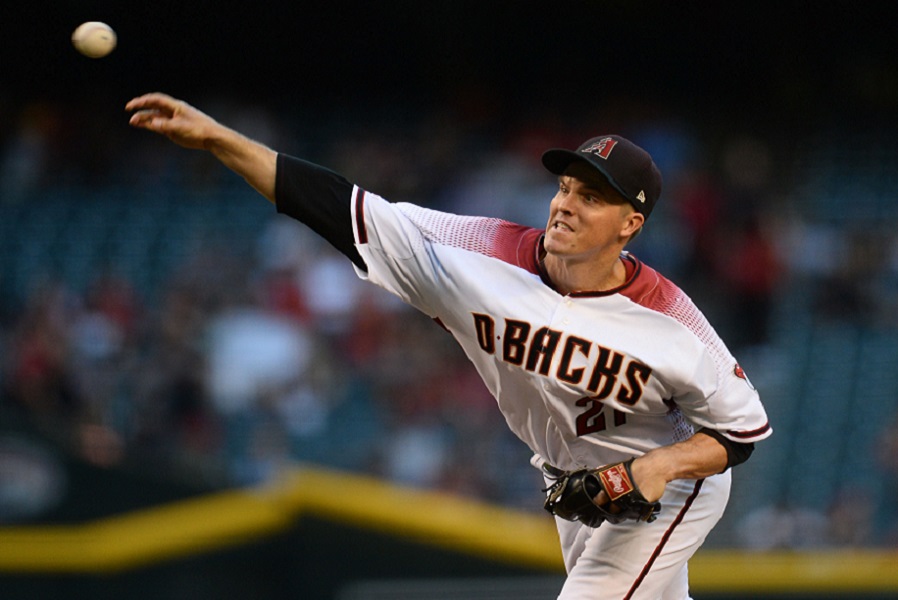 Twins fans are probably quite familiar with Zack Greinke, who started his illustrious career with the Kansas City Royals. If you rewind the clock back a decade, Greinke was in the middle of a Cy Young season at the same time Joe Mauer seemed to find his home run stroke on his way to the AL MVP. After the 2010 season, the Royals traded Greinke away to the Milwaukee Brewers for a massive haul that included Lorenzo Cain, Alcides Escobar and Jake Odorizzi. After a solid season and a half for the Brewers, Greinke was again traded, this time to the Los Angeles Angels in exchange for Jean Segura. Once the 2012 season had ended, Greinke inked a six-year $147 million contract to move across town to pitch for the Los Angeles Dodgers. After three great seasons with the Dodgers, where Greinke posted a 2.30 ERA over 602 and 2/3 innings, including a 1.62 ERA in 2015, Greinke was able to opt out of his contract, and in turn signed a six-year $206 million contract with the Arizona Diamondbacks. Despite this large contract, it is hard to say Greinke hasn’t been worth it as he has a 3.40 ERA in 709 and 2/3 innings during the first three and a half years of his deal. Despite being at age 36, Greinke is still one of the premier starting pitchers in the game today. Greinke isn’t a pitcher that relies on unhittable stuff to get hitters out, instead he is an excellent pure pitcher, which has helped him stay successful even this late into his career. Greinke uses an effective six-pitch mix, including an Eephus Curveball that sits in the low 60’s, which he mixes in from time to time to keep opposing hitters off balance. Another thing that Greinke has is excellent command. Among the 70 qualified starting pitchers this year, Greinke’s 3.3 percent walk rate ranks second, behind only Hyun-Jin Ryu. Greinke also racks up his fare share of strikeouts. So far in 2019, Greinke has a 23.6 percent strikeout rate, which is slightly above average for an MLB starter this day in age, and inn comparison to other Minnesota Twins starters, Greinke’s strikeout rate would be the second highest, behind only Jake Odorizzi. All of this has helped Greinke put up a 2.87 ERA (3.15 FIP) in 141 innings pitched this season. From all this, it is clear that Greinke would drastically improve the Twins rotation, as he could slide right in with Jose Berrios to give them a dynamic 1-2 punch. Leading up to the trade deadline, the Twins front office has made it very clear that they are not interested jeopardizing their future by trading away too much draft capital. While no one prospect is off the table, it would be desired to not give up the likes of Royce Lewis or Alex Kirilloff. Additionally, Derek Falvey has been quoted saying owner Jim Pohlad is willing to spend “what we need” to improve the team. With the increase in both attendance and TV ratings that the Twins have had as a result of their success this season, it is reasonable to assume that even the stingy Pohlads would be willing to spend some more money. While the Twins have built up quite the reputation for not wanting to spend under this ownership regime, they did show back in 2009 that they were will to spend once the they felt the team was good, as evidence of the 150 percent increase in payroll after the 2009 season. While most of it came from signing Mauer to his eight-year deal, they still opened up the checkbook for him. Taking on Greinke’s contract would be a move much in the same vein. So, why would the Twins be interested in taking on Zack Greinke’s contract that is due to pay him $32 million over each of the next two seasons? The main reason would be the relatively small amount of prospect capital the Twins would need to give up to acquire Greinke. While other starting pitchers with multiple years of team control, like Marcus Stroman or Noah Syndergaard, would cost a lot in terms of prospects, Greinke wouldn’t because of the amount of money he is owed. Just look at the New York Yankees trade for Gincarlo Stanton couple years ago as an example for this. Despite the fact that Stanton was coming off an MVP season, the best prospect the Yankees needed to give up was Jorge Guzman, who at the time was their ninth ranked prospect (per MLB Pipeline), thanks to the massive amount of money remaining on his deal. Another factor to keep in mind is none of the Twins young core players are due to become free agents until after Greinke’s contact expires, so it wouldn’t hinder their ability to resign them if that is what they would like to do. Additionally, the Twins estimated payrolls for 2020 and 2021 currently sit at just $97 million and $88 million respectively, and that’s if the Twins pick up their team options on both Nelson Cruz and Martin Perez. So, adding on the $32 million from Greinke only puts the Twins roughly where they are right now going into 2020. Additionally, as part of the trade negotiations, the Twins could bargain the Diamondbacks into picking up at least a portion of Greinke’s remaining contract. How much, will depend on what the Twins are willing to give up prospect wise, but it still shouldn’t require much to get the Diamondback to do so. If the Twins could get the Diamondbacks to eat at least a third of Greinke’s remaining salary, without having to give up a big trade package, this could be just the kind of deal the Twins are looking for, based on everything the front office has said so far. What are your thoughts? Would you be interested in a trade for Zack Greinke to bolster the Twins rotation, or would you prefer the Twins keep their sights set on other pitching targets before the trade deadline?
 -
Why does everyone care so much about Romo being a soft tosser? He has always been a soft tosser and has put together a pretty good career and a pretty solid 2019. Besides who cares how hard Romo throws his fastball when he throws his slider as often as he does, and that slider is really good.
- 218 replies
-
- 14
-
-
- sergio romo
- lewin diaz
- (and 1 more)
-
As we draw near the July 31st trade deadline, which is now under a week away, speculation is starting to heat up about players that may or may not be traded before the deadline. Throughout the month of June, we touched on a number of potential relievers that could be available for the Minnesota Twins to acquire, now it appears that a couple more names have been made available on the trade block, one of whom is Texas Rangers fireballer Jose Leclerc. Image courtesy of © Jerome Miron-USA TODAY Sports As we draw near the July 31st trade deadline, which is now under a week away, speculation is starting to heat up about players that may or may not be traded before the deadline. Throughout the month of June, we touched on a number of potential relievers that could be available for the Minnesota Twins to acquire, now it appears that a couple more names have been made available on the trade block, one of whom is Texas Rangers fireballer Jose Leclerc. Coming off a strong 2018, where he posted a 1.56 ERA (1.90 FIP) with 13.3 K/9 and 3.9 BB/9 in 57 and 2/3 innings for the Rangers, Jose Leclerc was being considered as one of the top young relievers in the game. This led the Rangers to give the 25-year-old righty a contract extension that locked up Leclerc’s salary through his arbitration years and gives them a team option for 2023 and 2024. If the Twins were to acquire Leclerc, they would be receiving this team friendly contract that only has $13.75 million in guaranteed money remaining. Much was made about the awful start that Jose Leclerc had to begin the 2019 season, which led to Leclerc losing his closer role. In 13 appearances i, Leclerc had a 8.44 ERA with 14 strikeouts and 9 walks allowed in 10 and 2/3 innings pitched. However, since the beginning of May, Leclerc has been much better, to the tune of a 2.80 ERA with 56 strikeouts and 13 walks in 35 and 1/3 innings. It is probably safe the assume that the 2018 and post April 2019 versions of Leclerc are a more accurate representation of who his really is as a pitcher, since the sample size is so much larger. The expected stats generated via Statcast back this up as well. In 2018, Leclerc’s expected wOBA sat at .209, which lead all 361 MLB pitchers who faced at least 200 batters. This year, Leclerc’s expected wOBA sits at .258, which still ranks 22nd among the 411 MLB pitchers who have faced at least 100 hitters this year. What makes Leclerc so intriguing is the electric stuff that he brings out of the pen. Leclerc’s four-seam fastball averages 96.6 MPH, which is in the 92nd percentile in Major League Baseball. Additionally, Leclerc throws his four-seamer with tremendous amounts of backspin. At 2,648 RMP, his four-seamer has the third highest average RPM amongst the 420 MLB pitchers who have thrown at least 100 four-seam fastballs in 2019. Leclerc pairs this pitch up with an above-average slider and a decent changeup that he mixes in about 10 percent of the time. The part that might give the Twins some pause in trying to acquire Leclerc would be a high asking price in terms of prospect capital, at least for a reliever. Leclerc certainly wouldn’t cost a king’s ransom that would require the Twins to give up Royce Lewis or Alex Kirilloff, but the Rangers would be well within their rights to ask for another top prospect like Jordan Balazovic or Trevor Larnach in order to get the deal done. The Twins could also look to do some sort of package deal that would include players like Jhoan Duran and Brent Rooker. This might seem like a lot for a reliever, but the Ranger’s aren’t exactly in a position where they have to move him now, since they still have him under team control though 2024. See Also Francisco Liriano, LHP, Pirates Raisel Iglesias, RHP, Reds Jake Diekman, LHP, Royals Ian Kennedy, RHP, Royals Sergio Romo, RHP, Marlins Shane Greene, RHP, Tigers Felipe Vázquez, LHP, Pirates Will Smith, LHP, Giants Liam Hendriks, RHP, Athletics Ty Buttrey, RHP, Angels Ken Giles, RHP, Blue Jays Sam Dyson, RHP, Giants Brad Hand, LHP, Indians Oliver Perez, LHP Cleveland Robert Stephenson, RHP, Reds John Gant, RHP, Cardinals Alex Colome, RHP, White Sox Seth Lugo, RHP, Mets Greg Holland, RHP, Diamondbacks Sean Doolittle, LHP, Nationals Kirby Yates, RHP, Padres 10 Relievers Minnesota Could Target View full article
-
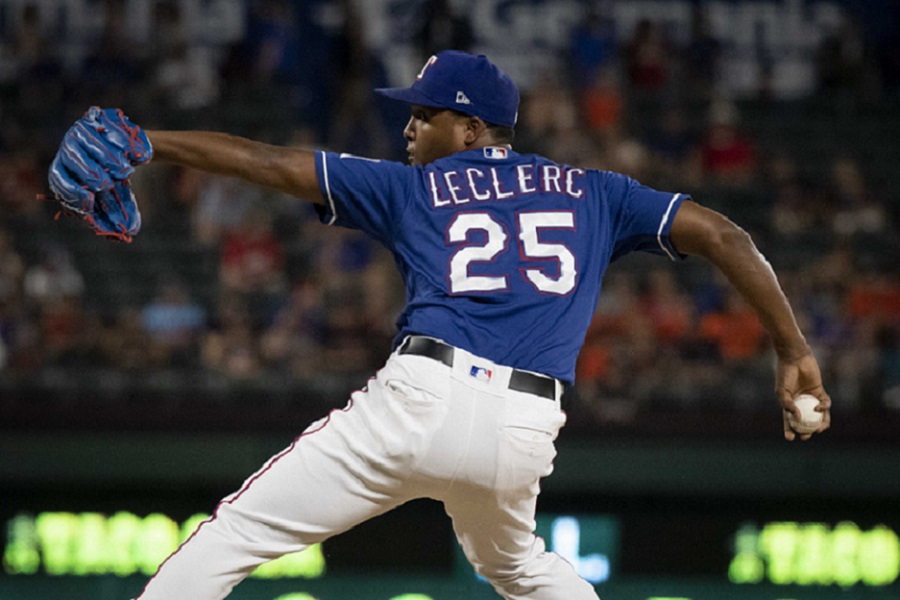 Coming off a strong 2018, where he posted a 1.56 ERA (1.90 FIP) with 13.3 K/9 and 3.9 BB/9 in 57 and 2/3 innings for the Rangers, Jose Leclerc was being considered as one of the top young relievers in the game. This led the Rangers to give the 25-year-old righty a contract extension that locked up Leclerc’s salary through his arbitration years and gives them a team option for 2023 and 2024. If the Twins were to acquire Leclerc, they would be receiving this team friendly contract that only has $13.75 million in guaranteed money remaining. Much was made about the awful start that Jose Leclerc had to begin the 2019 season, which led to Leclerc losing his closer role. In 13 appearances i, Leclerc had a 8.44 ERA with 14 strikeouts and 9 walks allowed in 10 and 2/3 innings pitched. However, since the beginning of May, Leclerc has been much better, to the tune of a 2.80 ERA with 56 strikeouts and 13 walks in 35 and 1/3 innings. It is probably safe the assume that the 2018 and post April 2019 versions of Leclerc are a more accurate representation of who his really is as a pitcher, since the sample size is so much larger. The expected stats generated via Statcast back this up as well. In 2018, Leclerc’s expected wOBA sat at .209, which lead all 361 MLB pitchers who faced at least 200 batters. This year, Leclerc’s expected wOBA sits at .258, which still ranks 22nd among the 411 MLB pitchers who have faced at least 100 hitters this year. What makes Leclerc so intriguing is the electric stuff that he brings out of the pen. Leclerc’s four-seam fastball averages 96.6 MPH, which is in the 92nd percentile in Major League Baseball. Additionally, Leclerc throws his four-seamer with tremendous amounts of backspin. At 2,648 RMP, his four-seamer has the third highest average RPM amongst the 420 MLB pitchers who have thrown at least 100 four-seam fastballs in 2019. Leclerc pairs this pitch up with an above-average slider and a decent changeup that he mixes in about 10 percent of the time. The part that might give the Twins some pause in trying to acquire Leclerc would be a high asking price in terms of prospect capital, at least for a reliever. Leclerc certainly wouldn’t cost a king’s ransom that would require the Twins to give up Royce Lewis or Alex Kirilloff, but the Rangers would be well within their rights to ask for another top prospect like Jordan Balazovic or Trevor Larnach in order to get the deal done. The Twins could also look to do some sort of package deal that would include players like Jhoan Duran and Brent Rooker. This might seem like a lot for a reliever, but the Ranger’s aren’t exactly in a position where they have to move him now, since they still have him under team control though 2024. See Also Francisco Liriano, LHP, Pirates Raisel Iglesias, RHP, Reds Jake Diekman, LHP, Royals Ian Kennedy, RHP, Royals Sergio Romo, RHP, Marlins Shane Greene, RHP, Tigers Felipe Vázquez, LHP, Pirates Will Smith, LHP, Giants Liam Hendriks, RHP, Athletics Ty Buttrey, RHP, Angels Ken Giles, RHP, Blue Jays Sam Dyson, RHP, Giants Brad Hand, LHP, Indians Oliver Perez, LHP Cleveland Robert Stephenson, RHP, Reds John Gant, RHP, Cardinals Alex Colome, RHP, White Sox Seth Lugo, RHP, Mets Greg Holland, RHP, Diamondbacks Sean Doolittle, LHP, Nationals Kirby Yates, RHP, Padres 10 Relievers Minnesota Could Target
 -
Two of the best teams in the American League squared off in Minnesota tonight, and the result was perhaps the most exciting baseball game we have seen in quite some time. Sure, there have been a couple 18 and 17 inning marathons at Target Field of late, along with that series against Oakland over the weekend that we are still coming down from, but tonight’s game takes the cake. Unfortunately, the Twins came up short, but they had to have gained a ton of respect from baseball fans across the nation for the fight they put up tonight. And hey, lost in all this, the Blue Jays walked-off the Indians so the Twins didn’t lose any ground in the standings. Image courtesy of Chart via FanGraphs Two of the best teams in the American League squared off in Minnesota tonight, and the result was perhaps the most exciting baseball game we have seen in quite some time. Sure, there have been a couple 18 and 17 inning marathons at Target Field of late, along with that series against Oakland over the weekend that we are still coming down from, but tonight’s game takes the cake. Unfortunately, the Twins came up short, but they had to have gained a ton of respect from baseball fans across the nation for the fight they put up tonight. And hey, lost in all this, the Blue Jays walked-off the Indians so the Twins didn’t lose any ground in the standings. Box Score Gibson: 5 IP, 7 H, 5 ER, 3 BB, 3 K, 56.4% strikes (57 of 101 pitches) Home Runs: Polanco (15), Cruz (21), Sano 2 (16) Multi-Hit Games: Polanco (3 for 5, HR); Rosario (2 for 6); Sano (2 for 6, 2 HR); Arraez (2 for 5); Castro (2 for 4) WPA of +0.1: Sano .502; Garver .262; Adrianza .176; Arraez .162; Polanco .135; WPA of -0.1: Rogers -.619; Harper -.441; Stewart -.402; Parker -.266 The Yankees got the scoring started in the top of the first, thanks to a two-out, two-RBI, two base-hit off the bat of Didi Gregorius. It appeared as though Kyle Gibson was about to work himself out of the first inning jam by striking out Yankee slugger Luke Voit. However, it wasn’t meant to be, as Gregorius drilled the first pitch of his at-bat deep to the left centerfield gap, giving the Yankees a quick two to nothing lead. The Twins were able to answer back with a run in the bottom of the second when Luis Arraez ripped an RBI single up the middle drive in Eddie Rosario for the Twins first run of the game. After an impressive walk from Ehrie Adrianza loaded the bases, the Twins failed to capitalize on yet another bases loaded situation. Things got a little bit dicey in the top of the third when the Yankees themselves loaded the bases with two outs. However, this time Kyle Gibson was able to get out of the jam by getting Gary Sanchez to pop out to Jorge Polanco to end the inning. The Bombasota Twins came out to play in the third inning when Jorge Polanco and Nelson Cruz went back-to-back for the second game in a row, becoming the first Twins duo to accomplish that feat in the team’s history. Additionally, the Polanco home run was his 15th of the season, which set the Twins record for most players to hit 15 home runs in a season with seven. https://twitter.com/fsnorth/status/1153840657997299713 Ehrie Adrianza got the Twins fourth going with a leadoff double to right field. After a Domingo German wild pitch advanced Adrianza to third, Jason Castro drove him in with an opposite field single. The Twins were able to load the bases up again after a Jorge Polanco single and Nelson Curz was hit by a pitch. Eddie Rosario then bounced into an RBI groundout, brining in the Twins fifth run of the game. The Twins weren’t done in the inning, however, as Miguel Sano came up big with a three-run Sanodoubter into the upper deck in left field. This was Sano’s 15th home run of the year, extending the Twins record to eight. https://twitter.com/Twins/status/1153848304867971073 It didn’t take long for the Yankees to answer right back with a three-run home run of their own off the bat of Didi Gregorius in the top of the fifth. Much like the first inning, Kyle Gibson appeared as though he was on the brink of getting out of a jam, but Gregorius yet again made Gibson pay for filling the bases early in the inning. In the bottom of the fifth the Twins answered right back with yet another run. Jason Castro leadoff the inning with his second opposite field single in as many at-bats. Max Kepler then advanced Castro to second on a chopper to the first basemen before Jorge Polanco drove Castro in with an RBI double, extending the Twins lead to nine to five. Cody Stashak made quite the first impression, giving the Twins two much needed scoreless innings, while striking out three Yankee hitters. They weren’t the smoothest of innings, however, as Stashak did give up four hits. However, when it mattered most, buckled down and got some big outs to keep the Yankees off the board. https://twitter.com/Twins/status/1153861518540312577 The lack of depth in the Twins bullpen reared its ugly head in the top of the 8th, when the Twins had to turn to Blake Parker to protect the lead against the Bronx Bombers. Parker proceeded to walk the leadoff hitter, before allowing doubles to three of the next four Yankee hitters, and before you know it the Twins lead was cut to one. Tyler Duffey then came in to try and get the Twins out of the jam. He came in and struck out Edwin Encarnacion and appeared to strike out Luke Voit, but what should have been ruled strike three was instead ruled ball four keeping the inning alive for, you guessed it, Didi Gregorius who came through yet again with another two-out, two-run, two-bagger to give the Yankees a 10 to 9 lead. In previous years, the Twins would have been deflated by this crushing blow and folded, however, the 2019 Twins are not the Twins of old. After Nelson Curz leadoff the inning with a ground out, Eddie Rosario reached on an infield single, setting the table for yet another Sanodoubter to give the Twins back the lead. https://twitter.com/Twins/status/1153878103627898880 In came Taylor Rogers to close the door on the Yankees in the 9th. After he picked up two quick outs, you thought to yourself, no way this is a repeat of what happened on Saturday, but unfortunately that is exactly what happened. Rogers then walked the Yankees 9th hitter and then proceeded to give up a go ahead two-run home run to Aaron Hicks, giving the Yankees a 12 to 11 lead. Aroldis Chapman then came in to close the door on the Twins, but they still had some fight in them. Ehrie Adrainza, Mitch Garver (who pinch hit for Jason Castro) and Max Kepler drew three straight walks to load the bases with nobody out. Jorge Polanco then put together a great plate appearance that ended with a hard-line drive into the outfield that off the bat appeared would be in the gap. Unfortunately for the Twins, Yankeed left fielder Mike Tauchman tracked it down. Adrianza was able to score on the play, tying the game. The Twins were unable to add any more runs, after a Nelson Cruz flyout and an Eddie Rosario blooper was snared down by Didi Gregorius. In the top of the 10th the Twins had to turn to Kohl Stewart to keep the game tied. After DJ LeMahieu lined a ball off Stewart that deflected right to Luis Arraez for the first out of the inning, Didi Gregorius came to the plate, and you can just about guess what happened. Gregorius lined a base hit to left field and got a Yankee rally of three straight hits to take back the lead going. When all was said and done the Yankees scored two and took a 14 to 12 lead into the bottom of the 10th. The Twins faced another big challenge in the bottom of the 10th, this time trying to come from behind against Adam Ottavino. Miguel Sano began the inning by striking out looking, before Ottavino seemed to lose all sense of control. He proceeded to walk Marwin Gonzalez and Luis Arraez. Ehrie Adrianza then hit a hard ground ball up the middle, but Didi Gregorius made a nifty play to almost turn two and end the game. Then it was Mitch Garver’s turn at the plate, and just like in his pinch-hit plate appearance in the 9th, he drew a big walk. With the bases loaded and two-outs, Aaron Boone turned to Chad Green to face Max Kepler. Kepler worked himself into a 2 and 1 hitters count and got a pitch to drive, and that’s exactly what he did with it, but yet again it was former Twin Aaron Hicks who crushed Twins fans hopes and dreams with this amazing diving catch to end the ballgame. Had that ball gotten down, it would have very likely cleared the bases and been Kepler’s third walk-off hit of the season. https://twitter.com/Yankees/status/1153899048803459072 Rocco Baldelli with some very honest comments following the game. https://twitter.com/fsnorth/status/1153904669975932928 Baldelli also noted that there would be roster moves before tomorrow night's game, but did not give any specifics. Bullpen Usage Here is a quick look at the number of pitches thrown by the bullpen over the past five days Next Three Games Wed vs NYY, 7:10 pm CT (Happ-Odorizzi) Thur at CHW, 7:10 pm CT (Berrios-Giolito) Fri at CHW, 7:10 pm CT (Pineda-Cease) Last Game Twins Game Recap (7/22): Twins Turn Triple Play, Mitch Garver Homers Twice in Win Over Yankees View full article
- 101 replies
-
- 5
-
-
- twins vs yankees
- minnesota twins
- (and 2 more)
-
Twins Game Recap (7/23): Twins Fall Short to Yankees in Game of the Year
Andrew Thares posted an article in Twins
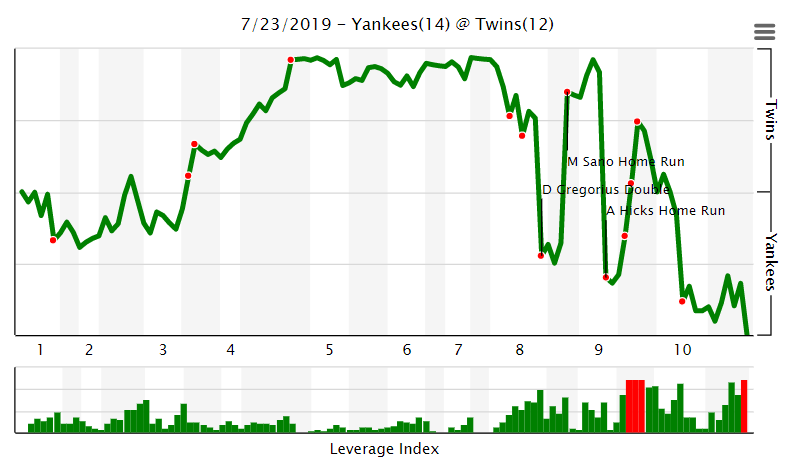 Box Score Gibson: 5 IP, 7 H, 5 ER, 3 BB, 3 K, 56.4% strikes (57 of 101 pitches) Home Runs: Polanco (15), Cruz (21), Sano 2 (16) Multi-Hit Games: Polanco (3 for 5, HR); Rosario (2 for 6); Sano (2 for 6, 2 HR); Arraez (2 for 5); Castro (2 for 4) WPA of +0.1: Sano .502; Garver .262; Adrianza .176; Arraez .162; Polanco .135; WPA of -0.1: Rogers -.619; Harper -.441; Stewart -.402; Parker -.266 The Yankees got the scoring started in the top of the first, thanks to a two-out, two-RBI, two base-hit off the bat of Didi Gregorius. It appeared as though Kyle Gibson was about to work himself out of the first inning jam by striking out Yankee slugger Luke Voit. However, it wasn’t meant to be, as Gregorius drilled the first pitch of his at-bat deep to the left centerfield gap, giving the Yankees a quick two to nothing lead. The Twins were able to answer back with a run in the bottom of the second when Luis Arraez ripped an RBI single up the middle drive in Eddie Rosario for the Twins first run of the game. After an impressive walk from Ehrie Adrianza loaded the bases, the Twins failed to capitalize on yet another bases loaded situation. Things got a little bit dicey in the top of the third when the Yankees themselves loaded the bases with two outs. However, this time Kyle Gibson was able to get out of the jam by getting Gary Sanchez to pop out to Jorge Polanco to end the inning. The Bombasota Twins came out to play in the third inning when Jorge Polanco and Nelson Cruz went back-to-back for the second game in a row, becoming the first Twins duo to accomplish that feat in the team’s history. Additionally, the Polanco home run was his 15th of the season, which set the Twins record for most players to hit 15 home runs in a season with seven. https://twitter.com/fsnorth/status/1153840657997299713 Ehrie Adrianza got the Twins fourth going with a leadoff double to right field. After a Domingo German wild pitch advanced Adrianza to third, Jason Castro drove him in with an opposite field single. The Twins were able to load the bases up again after a Jorge Polanco single and Nelson Curz was hit by a pitch. Eddie Rosario then bounced into an RBI groundout, brining in the Twins fifth run of the game. The Twins weren’t done in the inning, however, as Miguel Sano came up big with a three-run Sanodoubter into the upper deck in left field. This was Sano’s 15th home run of the year, extending the Twins record to eight. https://twitter.com/Twins/status/1153848304867971073 It didn’t take long for the Yankees to answer right back with a three-run home run of their own off the bat of Didi Gregorius in the top of the fifth. Much like the first inning, Kyle Gibson appeared as though he was on the brink of getting out of a jam, but Gregorius yet again made Gibson pay for filling the bases early in the inning. In the bottom of the fifth the Twins answered right back with yet another run. Jason Castro leadoff the inning with his second opposite field single in as many at-bats. Max Kepler then advanced Castro to second on a chopper to the first basemen before Jorge Polanco drove Castro in with an RBI double, extending the Twins lead to nine to five. Cody Stashak made quite the first impression, giving the Twins two much needed scoreless innings, while striking out three Yankee hitters. They weren’t the smoothest of innings, however, as Stashak did give up four hits. However, when it mattered most, buckled down and got some big outs to keep the Yankees off the board. https://twitter.com/Twins/status/1153861518540312577 The lack of depth in the Twins bullpen reared its ugly head in the top of the 8th, when the Twins had to turn to Blake Parker to protect the lead against the Bronx Bombers. Parker proceeded to walk the leadoff hitter, before allowing doubles to three of the next four Yankee hitters, and before you know it the Twins lead was cut to one. Tyler Duffey then came in to try and get the Twins out of the jam. He came in and struck out Edwin Encarnacion and appeared to strike out Luke Voit, but what should have been ruled strike three was instead ruled ball four keeping the inning alive for, you guessed it, Didi Gregorius who came through yet again with another two-out, two-run, two-bagger to give the Yankees a 10 to 9 lead. In previous years, the Twins would have been deflated by this crushing blow and folded, however, the 2019 Twins are not the Twins of old. After Nelson Curz leadoff the inning with a ground out, Eddie Rosario reached on an infield single, setting the table for yet another Sanodoubter to give the Twins back the lead. https://twitter.com/Twins/status/1153878103627898880 In came Taylor Rogers to close the door on the Yankees in the 9th. After he picked up two quick outs, you thought to yourself, no way this is a repeat of what happened on Saturday, but unfortunately that is exactly what happened. Rogers then walked the Yankees 9th hitter and then proceeded to give up a go ahead two-run home run to Aaron Hicks, giving the Yankees a 12 to 11 lead. Aroldis Chapman then came in to close the door on the Twins, but they still had some fight in them. Ehrie Adrainza, Mitch Garver (who pinch hit for Jason Castro) and Max Kepler drew three straight walks to load the bases with nobody out. Jorge Polanco then put together a great plate appearance that ended with a hard-line drive into the outfield that off the bat appeared would be in the gap. Unfortunately for the Twins, Yankeed left fielder Mike Tauchman tracked it down. Adrianza was able to score on the play, tying the game. The Twins were unable to add any more runs, after a Nelson Cruz flyout and an Eddie Rosario blooper was snared down by Didi Gregorius. In the top of the 10th the Twins had to turn to Kohl Stewart to keep the game tied. After DJ LeMahieu lined a ball off Stewart that deflected right to Luis Arraez for the first out of the inning, Didi Gregorius came to the plate, and you can just about guess what happened. Gregorius lined a base hit to left field and got a Yankee rally of three straight hits to take back the lead going. When all was said and done the Yankees scored two and took a 14 to 12 lead into the bottom of the 10th. The Twins faced another big challenge in the bottom of the 10th, this time trying to come from behind against Adam Ottavino. Miguel Sano began the inning by striking out looking, before Ottavino seemed to lose all sense of control. He proceeded to walk Marwin Gonzalez and Luis Arraez. Ehrie Adrianza then hit a hard ground ball up the middle, but Didi Gregorius made a nifty play to almost turn two and end the game. Then it was Mitch Garver’s turn at the plate, and just like in his pinch-hit plate appearance in the 9th, he drew a big walk. With the bases loaded and two-outs, Aaron Boone turned to Chad Green to face Max Kepler. Kepler worked himself into a 2 and 1 hitters count and got a pitch to drive, and that’s exactly what he did with it, but yet again it was former Twin Aaron Hicks who crushed Twins fans hopes and dreams with this amazing diving catch to end the ballgame. Had that ball gotten down, it would have very likely cleared the bases and been Kepler’s third walk-off hit of the season. https://twitter.com/Yankees/status/1153899048803459072 Rocco Baldelli with some very honest comments following the game. https://twitter.com/fsnorth/status/1153904669975932928 Baldelli also noted that there would be roster moves before tomorrow night's game, but did not give any specifics. Bullpen Usage Here is a quick look at the number of pitches thrown by the bullpen over the past five days Next Three Games Wed vs NYY, 7:10 pm CT (Happ-Odorizzi) Thur at CHW, 7:10 pm CT (Berrios-Giolito) Fri at CHW, 7:10 pm CT (Pineda-Cease) Last Game Twins Game Recap (7/22): Twins Turn Triple Play, Mitch Garver Homers Twice in Win Over Yankees
 -
Let's Go! Playing the rest of the series with house money. Let's go cash in some chips the next two nights.
- 79 replies
-
- 3
-
-
- mitch garver
- lewis thorpe
- (and 3 more)
-
What Will It Take to Acquire Marcus Stroman?
Andrew Thares replied to Andrew Thares's topic in Twins Daily Front Page News
It's not a big need, but after Berrios, and maybe Odorizzi, who in the rotation would you trust to give the ball to in a postseason game more than Stroman? Also, adding Stroman could help the bullpen by pushing potentially Martin Perez back there to be an effective pitcher to give you a few innings of relief, similar to the role Mike Montgomery filled for the Cubs during their postseason run in 2016. Also adding a starting pitcher doesn't mean the Twins still can't add a couple high quality arms to the backend of the bullpen. I think people forget that those moves aren't mutually exclusive. -
What Will It Take to Acquire Marcus Stroman?
Andrew Thares replied to Andrew Thares's topic in Twins Daily Front Page News
My thought process for this offer is Stroman isn't quite as valuable as Gray was back when he was traded in 2017, but it is still close, so the trade should be pretty close. Personally, I think Thorpe is a downgrad from Duran, and both Gonsalves and Gordon are both shells of what they once were prospects who the Blue Jays might want to take a chance on. So overall, a slightly less valuable offer, in my opinion.- 91 replies
-
- 1
-
-
- marcus stroman
- minnesota twins
- (and 3 more)
-
As the trade deadline draws near, the Minnesota Twins still haven’t made any substantial moves to support either the bullpen or the starting rotation. There has been a lot of speculation on a number of pitchers the Twins could acquire here at Twins Daily. One of those pitchers is Toronto Blue Jays starter Marcus Stroman. The Blue Jays are said to have a high asking price on Stroman, and would like a deal similar to the one the Tampa Bay Rays received in return for Chris Archer last season. Will the Blue Jays get their wish and bring in a gigantic haul for Stroman, or will they need to settle for a lesser offer? Image courtesy of © Kevin Sousa-USA TODAY Sports As the trade deadline draws near, the Minnesota Twins still haven’t made any substantial moves to support either the bullpen or the starting rotation. There has been a lot of speculation on a number of pitchers the Twins could acquire here at Twins Daily. One of those pitchers is Toronto Blue Jays starter Marcus Stroman. The Blue Jays are said to have a high asking price on Stroman, and would like a deal similar to the one the Tampa Bay Rays received in return for Chris Archer last season. Will the Blue Jays get their wish and bring in a gigantic haul for Stroman, or will they need to settle for a lesser offer? To figure out what it might take to acquire Marcus Stroman, let’s start by looking at what he brings to the table. Stroman is currently 28 years of age and is under team control through the 2020 season. Stroman currently possess a 3.06 ERA (3.62 FIP) in 117 and 2/3 innings for the Blue Jays so far in 2019. For his career, Stroman has a 3.78 ERA (3.62 FIP) through his first six MLB seasons. Stroman isn’t a heavy strikeout pitcher, as his career 19.3% strikeout rate is quite low for today’s standards. From a control perspective, Stroman is solid, as his career 6.7% walk rate is slightly above average for an MLB starting pitcher. What makes Stroman so effective is his extremely high groundball rate. In a era where hitters are trying to hit the ball in the air more than ever, Stroman does an excellent job of preventing them from doing so. Since his debut in 2014, Stroman has a 59.6% groundball rate and a 22.1% flyball rate. Among the 152 starting pitchers with at least 400 innings pitched over that span, those numbers rank as the second highest and third lowest respectively. The next step is to look at the deal the Blue Jays are reportedly asking for. The blockbuster trade of last summer was the deal that sent Chris Archer to the Pittsburgh Pirates in exchange for Tyler Glasnow, Austin Meadows and Shane Baz. At the time Archer was still a highly thought of starting pitcher, with three and a half years of team control remaining. More than double of what is left on Marcus Stroman’s contract. Glasnow and Meadows were both highly touted prospects in the Pirates system who were up with MLB team, but hadn’t shown much at the MLB level quite yet. Still they were prized possessions, who many believed were ready to break out sooner rather than later, which is exactly what happened. Meadows has gotten off to a great start to 2019 and was named to the American League All-Star team. Glasnow was on his way there too with a 1.86 ERA (2.32 FIP) in eight starts before getting shut down with forearm inflammation. In addition to those two, Baz was the Pirates first round pick in 2017, and was ranked as the 95th best prospect in baseball by MLB.com at the time of the trade. Baz currently sits as MLB.com’s 91st best prospect in baseball, right around where they have Trevor Larnach and Jordan Balazovic ranked, for context. If the Twins were to match that offer, they would be looking at giving up a package deal that includes Alex Kirilloff, Brusdar Graterol and Jordan Balazovic. It is probably safe to assume that the Blue Jays won’t be getting any offers for Marcus Stroman that are remotely in the range of that Chris Archer deal that a year later is already considered on of the worst deals in MLB history. Especially given the fact that Stroman has less trade value now than Archer did at this point last summer given the length of control each player has/had. If the Blue Jays don’t get a package that they like for Stroman, they could always hang onto him. However, they have little leverage to use that in a negotiation right now because MLB teams know the Blue Jays won’t be competitive again until after his contract is up, and from this point on, his trade value is only diminishing as the number of starts he can give the team that acquires him goes down. So, if the Blue Jays want to maximize their value for Stroman, they need to make a deal happen before the July 31st trade deadline. If we want to look at a more realistic trade to comparison for a Marcus Stroman deal, a better trade to look at might be the Sonny Gray trade in 2017. At the time of his trade, Gray still had two and 1/2 years of control left before free agency, and like Stroman, was considered a young arm that would slot right into the top of the rotation on a postseason contender. While this is more than Stroman has left on his deal, it is a lot closer comparison than the Chris Archer deal. In that trade the Yankees gave up Dustin Fowler, Jorge Mateo and James Kaprielian, who were their fourth, eighth and twelfth ranked prospects respectively according to MLB.com. However, both Fowler and Kaprielian’s trade values had been significantly diminished at the time of the trade due to injury. Kaprielian was only a few months removed from Tommy John surgery and Fowler had torn his right patellar tendon after crashing into the while during the first inning of his MLB debut. At the time of the deal, the Yankees were considered to have a top farm system, like the Twins do now. So, if the Twins were to offer up their fourth, eighth and twelfth ranked prospects, according to MLB.com, the deal would include Trevor Larnach, Jhoan Duran and Stephen Gonsalves. To me, this seems like a much more realistic trade proposal for the Blue Jays to receive than one that would match the Chris Archer deal. However, since Gray still had an entire extra year of control remaining, it still stands to question that a fair trade for Stroman would be a little less expensive than that. With all those factors laid out, we can start to make a more accurate prediction as to what it should cost to acquire Marcus Stroman. While this isn’t an exact science, because we don’t know exactly how the Twins and Blue Jays value the players in the Twins farm systems, and we don’t know exactly what other teams are willing to offer, we can probably get pretty close to a fair market value for Stroman. Personally, I think both Royce Lewis and Alex Kirilloff should not be on the table in trade discussions for Stroman, as each carries much more value to the organization than acquiring Stroman for one and a half years would. Additionally, I find it hard to believe that the Twins will look to move Brusdar Graterol right now with his value being diminished due to his shoulder injury. This leaves both Trevor Larnach and Jordan Balazovic to injclued as the headliner in the return package back to the Blue Jays. I think it will take at least one of these two, plus one or two other mid-level prospects to get the deal done. My Offer: Trevor Larnach, Lewis Thorpe and Nick Gordon What do you think? Is this package enticing enough to convince the Blue Jays to trade Marcus Stroman to the Twins, or is this offer too much to give up for him? What would you be willing to trade away to get Stroman? Let us know in the comment section down below. View full article
- 91 replies
-
- 1
-
-
- marcus stroman
- minnesota twins
- (and 3 more)
-
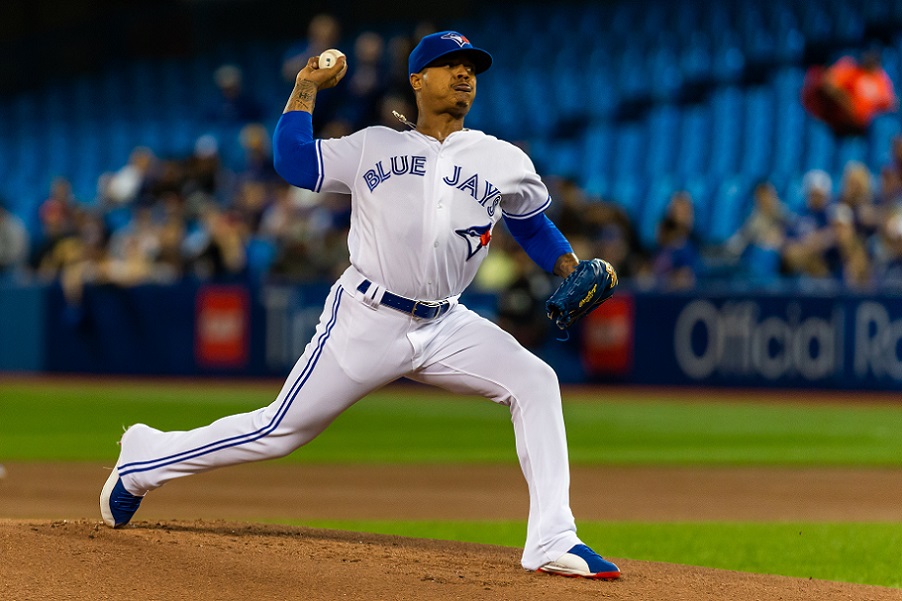 To figure out what it might take to acquire Marcus Stroman, let’s start by looking at what he brings to the table. Stroman is currently 28 years of age and is under team control through the 2020 season. Stroman currently possess a 3.06 ERA (3.62 FIP) in 117 and 2/3 innings for the Blue Jays so far in 2019. For his career, Stroman has a 3.78 ERA (3.62 FIP) through his first six MLB seasons. Stroman isn’t a heavy strikeout pitcher, as his career 19.3% strikeout rate is quite low for today’s standards. From a control perspective, Stroman is solid, as his career 6.7% walk rate is slightly above average for an MLB starting pitcher. What makes Stroman so effective is his extremely high groundball rate. In a era where hitters are trying to hit the ball in the air more than ever, Stroman does an excellent job of preventing them from doing so. Since his debut in 2014, Stroman has a 59.6% groundball rate and a 22.1% flyball rate. Among the 152 starting pitchers with at least 400 innings pitched over that span, those numbers rank as the second highest and third lowest respectively. The next step is to look at the deal the Blue Jays are reportedly asking for. The blockbuster trade of last summer was the deal that sent Chris Archer to the Pittsburgh Pirates in exchange for Tyler Glasnow, Austin Meadows and Shane Baz. At the time Archer was still a highly thought of starting pitcher, with three and a half years of team control remaining. More than double of what is left on Marcus Stroman’s contract. Glasnow and Meadows were both highly touted prospects in the Pirates system who were up with MLB team, but hadn’t shown much at the MLB level quite yet. Still they were prized possessions, who many believed were ready to break out sooner rather than later, which is exactly what happened. Meadows has gotten off to a great start to 2019 and was named to the American League All-Star team. Glasnow was on his way there too with a 1.86 ERA (2.32 FIP) in eight starts before getting shut down with forearm inflammation. In addition to those two, Baz was the Pirates first round pick in 2017, and was ranked as the 95th best prospect in baseball by MLB.com at the time of the trade. Baz currently sits as MLB.com’s 91st best prospect in baseball, right around where they have Trevor Larnach and Jordan Balazovic ranked, for context. If the Twins were to match that offer, they would be looking at giving up a package deal that includes Alex Kirilloff, Brusdar Graterol and Jordan Balazovic. It is probably safe to assume that the Blue Jays won’t be getting any offers for Marcus Stroman that are remotely in the range of that Chris Archer deal that a year later is already considered on of the worst deals in MLB history. Especially given the fact that Stroman has less trade value now than Archer did at this point last summer given the length of control each player has/had. If the Blue Jays don’t get a package that they like for Stroman, they could always hang onto him. However, they have little leverage to use that in a negotiation right now because MLB teams know the Blue Jays won’t be competitive again until after his contract is up, and from this point on, his trade value is only diminishing as the number of starts he can give the team that acquires him goes down. So, if the Blue Jays want to maximize their value for Stroman, they need to make a deal happen before the July 31st trade deadline. If we want to look at a more realistic trade to comparison for a Marcus Stroman deal, a better trade to look at might be the Sonny Gray trade in 2017. At the time of his trade, Gray still had two and 1/2 years of control left before free agency, and like Stroman, was considered a young arm that would slot right into the top of the rotation on a postseason contender. While this is more than Stroman has left on his deal, it is a lot closer comparison than the Chris Archer deal. In that trade the Yankees gave up Dustin Fowler, Jorge Mateo and James Kaprielian, who were their fourth, eighth and twelfth ranked prospects respectively according to MLB.com. However, both Fowler and Kaprielian’s trade values had been significantly diminished at the time of the trade due to injury. Kaprielian was only a few months removed from Tommy John surgery and Fowler had torn his right patellar tendon after crashing into the while during the first inning of his MLB debut. At the time of the deal, the Yankees were considered to have a top farm system, like the Twins do now. So, if the Twins were to offer up their fourth, eighth and twelfth ranked prospects, according to MLB.com, the deal would include Trevor Larnach, Jhoan Duran and Stephen Gonsalves. To me, this seems like a much more realistic trade proposal for the Blue Jays to receive than one that would match the Chris Archer deal. However, since Gray still had an entire extra year of control remaining, it still stands to question that a fair trade for Stroman would be a little less expensive than that. With all those factors laid out, we can start to make a more accurate prediction as to what it should cost to acquire Marcus Stroman. While this isn’t an exact science, because we don’t know exactly how the Twins and Blue Jays value the players in the Twins farm systems, and we don’t know exactly what other teams are willing to offer, we can probably get pretty close to a fair market value for Stroman. Personally, I think both Royce Lewis and Alex Kirilloff should not be on the table in trade discussions for Stroman, as each carries much more value to the organization than acquiring Stroman for one and a half years would. Additionally, I find it hard to believe that the Twins will look to move Brusdar Graterol right now with his value being diminished due to his shoulder injury. This leaves both Trevor Larnach and Jordan Balazovic to injclued as the headliner in the return package back to the Blue Jays. I think it will take at least one of these two, plus one or two other mid-level prospects to get the deal done. My Offer: Trevor Larnach, Lewis Thorpe and Nick Gordon What do you think? Is this package enticing enough to convince the Blue Jays to trade Marcus Stroman to the Twins, or is this offer too much to give up for him? What would you be willing to trade away to get Stroman? Let us know in the comment section down below.
 -
Down in Dallas, Texas, the Rangers have quietly put together a much better season than many might have expected. According to Oddsshark, the Rangers preseason over/under win total sat at just 71 wins. However, we are nearly 100 games into the season and the Rangers are holding water, slightly above .500. While their offense, which ranks seventh in runs scored, has played a big part in that, they have also received contributions from their starting rotation. Former Minnesota Twin Lance Lynn has gotten some press lately for his success so far this year, but one guy who hasn’t been getting much attention is lefty Mike Minor. Despite their success, their GM, Jon Daniels, recently came out and said their approach won’t be swayed much by the standings, which would suggest that Minor should be available on the trade market before the July 31st trade deadline. Image courtesy of © Kevin Jairaj-USA TODAY Sports Down in Dallas, Texas, the Rangers have quietly put together a much better season than many might have expected. According to Oddsshark, the Rangers preseason over/under win total sat at just 71 wins. However, we are nearly 100 games into the season and the Rangers are holding water, slightly above .500. While their offense, which ranks seventh in runs scored, has played a big part in that, they have also received contributions from their starting rotation. Former Minnesota Twin Lance Lynn has gotten some press lately for his success so far this year, but one guy who hasn’t been getting much attention is lefty Mike Minor. Despite their success, their GM, Jon Daniels, recently came out and said their approach won’t be swayed much by the standings, which would suggest that Minor should be available on the trade market before the July 31st trade deadline. Mike Minor was a highly touted prospect out of Vanderbilt entering the 2009 draft. He was taken by the Atlanta Braves with the seventh overall selection in the same draft where Stephen Strasburg went number one overall to the Washington Nationals, Mike Trout was taken 25th overall by the Los Angeles Angels, and Kyle Gibson was taken 22nd overall by the Twins. Minor had a breakout season for the Braves in 2013, posting a 3.21 ERA over 204 and 2/3 innings. However, he struggled in 2014 while dealing with a bad shoulder. Minor wound up needing surgery to repair a torn labrum in 2015 and missed the entire season. At season's end, the Braves decided to non-tender Minor, making him a free agent. He then signed a minor league deal with the Royals late that offseason, and pitched all of 2016 in their minor league system. In 2017, Minor was moved to the Royals bullpen and was an excellent reliever for them during that season. Once the season had ended, Minor again became a free agent, and signed a 3-year, $28 million deal with the Texas Rangers, where they have since moved him back into the starting rotation. After a decent season in 2018, where he posted a 2.5 fWAR in 157 innings, Mike Minor has had a lights out campaign so far this year, and earned himself a spot on the 2019 American League All-Star Team. Entering play on Friday, here is how Minor’s stat line compares to that of Jose Berrios. MIke Minor: 122 IP, 8.93 K/9, 3.25 BB/9, 2.73 ERA, 3.82 FIP, 2.9 fWAR Jose Berrios: 122 IP, 8.11 K/9, 1.92 BB/9, 3.10 ERA, 3.80 FIP, 3.0 fWAR When you look at many of the expected stats that are available via Statcast, it appears as though Minor has actually been slightly better than Berrios this year. Mike Minor: .220 xBA, .357 xSLG, .294 xwOBA Jose Berrios: .245 xBA, .406 xSLG, .303 xwOBA While it is up in the air if an addition like Madison Bumgarner would make much of an upgrade to the Twins projected postseason rotation, it is clear that adding Mike Minor would definitely be an upgrade over the likes of Kyle Gibson, Martin Perez and Michael Pineda. Another thing that makes Mike Minor appealing as a trade deadline addition is his team-friendly contract. Minor is currently in year two of that three year deal I mentioned previously. If the Twins traded for Minor, they would also acquire his services in 2020 for just $9.5 million. This is a bargain price for even an average starting pitcher, let alone an all-star caliber pitcher. This will give the Twins a rotation of Jose Berrios, Mike Minor and potentially Martin Perez (team option) secured for 2020, heading into the offseason. So, what would it take to get a deal done with the Texas Rangers for Mike Minor? While Minor’s trade value has certainly gone up this season, it would most likely not require the Twins to give up either Royce Lewis or Alex Kirilloff to acquire him. Additionally, with Brusdar Graterol still injured, it is unlikely that the Twins move him before the trade deadline. A more realistic trade for Minor would go either one of two ways. The Twins could offer up a prospect like Trevor Larnach or Jordan Balazovic and strike a deal with one of those two and a low-level prospect, or if the Twins don’t feel like giving up either one of those two players, they could offer a package that involves either Brent Rooker or Jhoan Duran along with another mid-level prospect like Nick Gordon or Ryan Jeffers. Personally, the later would be more appealing from the Twins perspective, but it will most likely come down the preference of the Texas Rangers. The Twins have done an excellent job of building a great farm system over the first few seasons of the Falvine regime, and the time has come to leverage that great farm system to acquire players that can help the Twins win right now. While he might not be as flashy of a name as some other trade targets, Mike Minor certainly fits the bill for a trade deadline addition that would be an upgrade to the 2019 Minnesota Twins. Other Stories of Interest Building a Perfect Twins Trade Deadline Twins Trade Rumor Recap: Teams Pondering Selling Five Potential Dual Pitcher Trades the Twins Could Make View full article
-
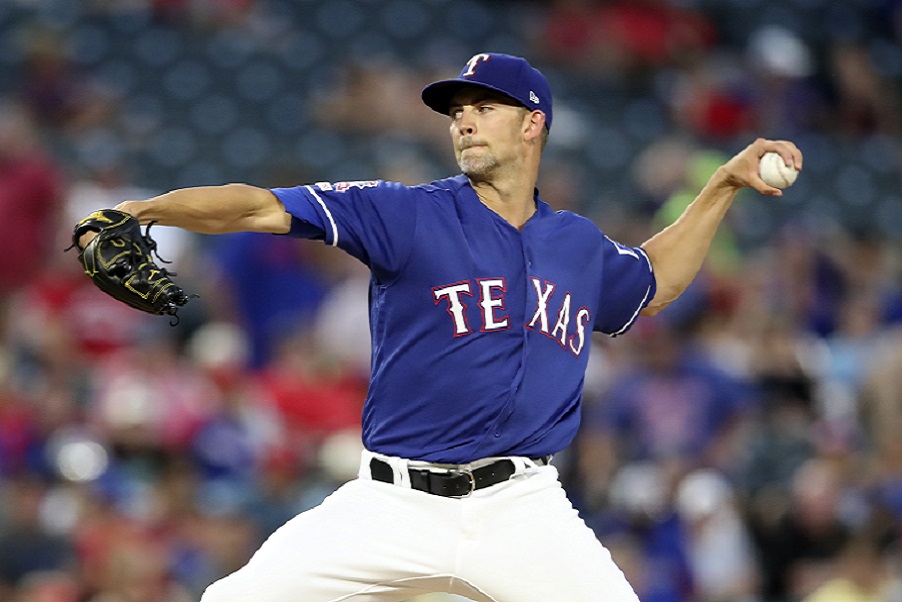 Mike Minor was a highly touted prospect out of Vanderbilt entering the 2009 draft. He was taken by the Atlanta Braves with the seventh overall selection in the same draft where Stephen Strasburg went number one overall to the Washington Nationals, Mike Trout was taken 25th overall by the Los Angeles Angels, and Kyle Gibson was taken 22nd overall by the Twins. Minor had a breakout season for the Braves in 2013, posting a 3.21 ERA over 204 and 2/3 innings. However, he struggled in 2014 while dealing with a bad shoulder. Minor wound up needing surgery to repair a torn labrum in 2015 and missed the entire season. At season's end, the Braves decided to non-tender Minor, making him a free agent. He then signed a minor league deal with the Royals late that offseason, and pitched all of 2016 in their minor league system. In 2017, Minor was moved to the Royals bullpen and was an excellent reliever for them during that season. Once the season had ended, Minor again became a free agent, and signed a 3-year, $28 million deal with the Texas Rangers, where they have since moved him back into the starting rotation. After a decent season in 2018, where he posted a 2.5 fWAR in 157 innings, Mike Minor has had a lights out campaign so far this year, and earned himself a spot on the 2019 American League All-Star Team. Entering play on Friday, here is how Minor’s stat line compares to that of Jose Berrios. MIke Minor: 122 IP, 8.93 K/9, 3.25 BB/9, 2.73 ERA, 3.82 FIP, 2.9 fWAR Jose Berrios: 122 IP, 8.11 K/9, 1.92 BB/9, 3.10 ERA, 3.80 FIP, 3.0 fWAR When you look at many of the expected stats that are available via Statcast, it appears as though Minor has actually been slightly better than Berrios this year. Mike Minor: .220 xBA, .357 xSLG, .294 xwOBA Jose Berrios: .245 xBA, .406 xSLG, .303 xwOBA While it is up in the air if an addition like Madison Bumgarner would make much of an upgrade to the Twins projected postseason rotation, it is clear that adding Mike Minor would definitely be an upgrade over the likes of Kyle Gibson, Martin Perez and Michael Pineda. Another thing that makes Mike Minor appealing as a trade deadline addition is his team-friendly contract. Minor is currently in year two of that three year deal I mentioned previously. If the Twins traded for Minor, they would also acquire his services in 2020 for just $9.5 million. This is a bargain price for even an average starting pitcher, let alone an all-star caliber pitcher. This will give the Twins a rotation of Jose Berrios, Mike Minor and potentially Martin Perez (team option) secured for 2020, heading into the offseason. So, what would it take to get a deal done with the Texas Rangers for Mike Minor? While Minor’s trade value has certainly gone up this season, it would most likely not require the Twins to give up either Royce Lewis or Alex Kirilloff to acquire him. Additionally, with Brusdar Graterol still injured, it is unlikely that the Twins move him before the trade deadline. A more realistic trade for Minor would go either one of two ways. The Twins could offer up a prospect like Trevor Larnach or Jordan Balazovic and strike a deal with one of those two and a low-level prospect, or if the Twins don’t feel like giving up either one of those two players, they could offer a package that involves either Brent Rooker or Jhoan Duran along with another mid-level prospect like Nick Gordon or Ryan Jeffers. Personally, the later would be more appealing from the Twins perspective, but it will most likely come down the preference of the Texas Rangers. The Twins have done an excellent job of building a great farm system over the first few seasons of the Falvine regime, and the time has come to leverage that great farm system to acquire players that can help the Twins win right now. While he might not be as flashy of a name as some other trade targets, Mike Minor certainly fits the bill for a trade deadline addition that would be an upgrade to the 2019 Minnesota Twins. Other Stories of Interest Building a Perfect Twins Trade Deadline Twins Trade Rumor Recap: Teams Pondering Selling Five Potential Dual Pitcher Trades the Twins Could Make
 -
The Minnesota Twins were riding off their series victory over the Cleveland Indians to begin the second half over the weekend. Tonight, they welcomed the New York Mets for a two-game series to begin a nine-game home stand. Despite getting a quality start from Michael Pineda, the Twins came up just short in this hard-fought battle. Image courtesy of © Jesse Johnson-USA TODAY Sports The Minnesota Twins were riding off their series victory over the Cleveland Indians to begin the second half over the weekend. Tonight, they welcomed the New York Mets for a two-game series to begin a nine-game home stand. Despite getting a quality start from Michael Pineda, the Twins came up just short in this hard-fought battle. Box Score Pineda: 6 IP, 6 H, 1 ER, 0 BB, 3 K, 65.8% strikes (50 of 76 pitches) Home Runs: Schoop (15) Multi-Hit Games: Gonzalez (2 for 5); Rosario (2 for 4); Cron (2 for 4, 2 2B) WPA of +0.1: None WPA of -0.1: Cruz -.367; Sano -.175; Polanco -.167; Kepler -.134 (Chart via Fangraphs) The Mets got off to quick start in the top of the first to begin this short two-game series when outfielders Jeff McNeil and Michael Conforto got a couple of singles to lead off the inning. Michael Pineda was able to battle back by striking out Home Run Derby champion Pete Alonso. Then after a wild pitch, Robinson Cano hit a short fly ball to center field setting up Max Kepler for a chance to throw McNeil out at home, but a misfire out of his hand didn’t give the throw a chance. The inning about came to an end with just one run allowed, but Jonathan Schoop booted a groundball off the bat of Wilson Ramos, allowing Conforto to score the second run of the inning. The early innings were filled with a bunch of tough luck outs for the Twins hitters. In the first inning Jorge Polanco had a bid for a leadoff single, but it was snared out of the air by Mets second baseman Robinson Cano. Per Statcast, Polanco’s lineout had an expected batting average of .890. In the second inning, both Eddie Rosario and Max Kepler also had bids for a hit but were denied. The expected batting average on their two lineouts were .640 and .550 respectively. The Twins were final able to get a run on the scoreboard when Jonathan Schoop led off the inning with a solo home run to right-center field. With two-outs in the inning, the Twins put together a good chance to score but came up short when Mets center-fielder Michel Conforto made a great catch at the wall to rob Nelson Cruz of what would have been a game-tying double. Again, some misfortune for a Twins hitter, as the expected batting average on this Cruz flyout was .760. Eddie Rosario and C.J. Cron got a rally started in the fourth when they went single, double to begin the inning. Max Kepler then came through with an RBI-groundout to tie the game, and advance Cron to third with just one out. A Miguel Sano strikeout and Jonathan Schoop intentional-walk put runners on the corners with two outs for Jason Castro. Inexplicably, however, Castro wasn’t given the opportunity to drive in the go-ahead run as a botched double steal attempt ended the inning. The Mets were able to take the lead back in the top of the fifth, when Amed Rosario scored from third on a two-out base-hit from Michael Conforto. Rosario got on base with a one out double, and advanced to third thanks to a wild pitch from Michael Pineda in the next at-bat. It was more tough luck for the Twins in the bottom of the fifth. Robert Gsellman came into the game to replace Steven Matz to begin the inning and immediately walked Jason Castro and hit Jorge Polanco. Marwin Gonzalez then appeared to come up with a big line drive base-hit, but unfortunately it was lined right at Mets first baseman Pete Alonso who immediately doubled-off Jorge Polanco, effectively ending the Twins threat before it even started. Blake Parker worked himself into a bit of a jam in the top of the eighth but got out of it on this conventional 1-5-2-5 double-play to keep it a one run game. https://twitter.com/Twins/status/1151321366689439744 Things got very interesting in the bottom of the ninth inning. Against Mets closer Edwin Diaz, Miguel Sano struck out looking to lead off the inning, but took two strike calls, including strike three, that appeared to be outside the strike zone. Jonathan Schoop then came up and got into a quick 0-2 hole, before leaving with an apparent injury. Luis Arraez then came into a very difficult situation and fought all the way back to draw a one-out walk, fouling off numerous 98 MPH+ fastballs in the process. Mitch Garver, who pinch hit for Jason Castro in the seventh, lined a base hit to left field, giving the Twins first and second with just one out. After Garver it was Jorge Polanco’s turn, but he flew out to center field, and failed to advance the runners. Then Marwin Gonzalez came up and kept the game alive with a weak dribbler up the third baseline, resulting in an infield single, keeping the game alive for Nelson Cruz. Cruz put together a great at-bat against Diaz, bringing the count full, but swung at what would have been ball four and popped up in foul territory to end the ballgame. Bullpen Usage Spreadsheet Click here for a review of the number of pitches thrown by each member of the bullpen over the past five days. Next Three Games Wed vs NYM, 12:10 pm CT (Vargas-Perez) Thu vs OAK, 7:10 pm CT (TBD-TBD) Fri vs OAK, 7:10 pm CT (TBD-TBD) Last Game Twins Game Recap (7/14): Cleveland Prevails, Avoids Sweep View full article
- 44 replies
-
- 1
-
-
- minnesota twins
- new york mets
- (and 1 more)
-
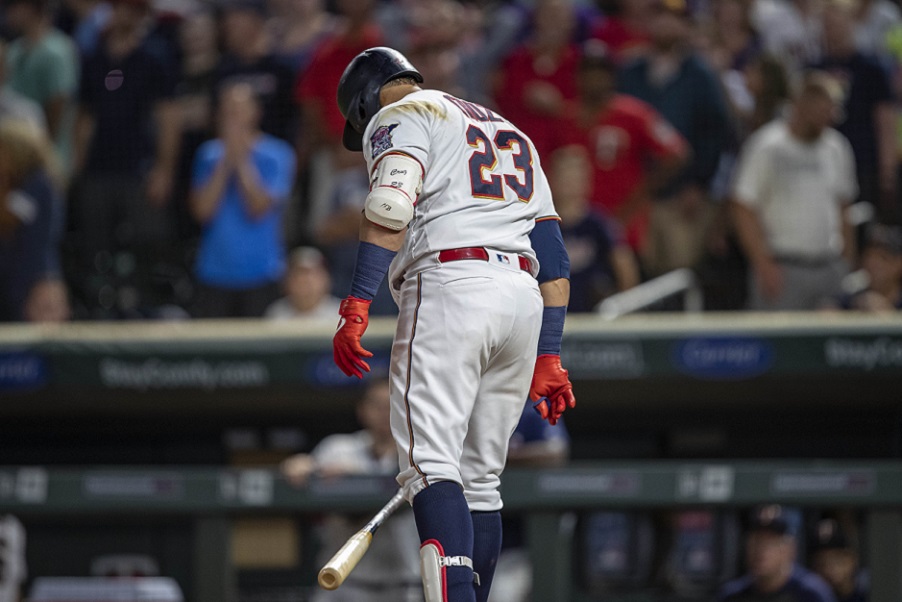 Box Score Pineda: 6 IP, 6 H, 1 ER, 0 BB, 3 K, 65.8% strikes (50 of 76 pitches) Home Runs: Schoop (15) Multi-Hit Games: Gonzalez (2 for 5); Rosario (2 for 4); Cron (2 for 4, 2 2B) WPA of +0.1: None WPA of -0.1: Cruz -.367; Sano -.175; Polanco -.167; Kepler -.134 (Chart via Fangraphs) The Mets got off to quick start in the top of the first to begin this short two-game series when outfielders Jeff McNeil and Michael Conforto got a couple of singles to lead off the inning. Michael Pineda was able to battle back by striking out Home Run Derby champion Pete Alonso. Then after a wild pitch, Robinson Cano hit a short fly ball to center field setting up Max Kepler for a chance to throw McNeil out at home, but a misfire out of his hand didn’t give the throw a chance. The inning about came to an end with just one run allowed, but Jonathan Schoop booted a groundball off the bat of Wilson Ramos, allowing Conforto to score the second run of the inning. The early innings were filled with a bunch of tough luck outs for the Twins hitters. In the first inning Jorge Polanco had a bid for a leadoff single, but it was snared out of the air by Mets second baseman Robinson Cano. Per Statcast, Polanco’s lineout had an expected batting average of .890. In the second inning, both Eddie Rosario and Max Kepler also had bids for a hit but were denied. The expected batting average on their two lineouts were .640 and .550 respectively. The Twins were final able to get a run on the scoreboard when Jonathan Schoop led off the inning with a solo home run to right-center field. With two-outs in the inning, the Twins put together a good chance to score but came up short when Mets center-fielder Michel Conforto made a great catch at the wall to rob Nelson Cruz of what would have been a game-tying double. Again, some misfortune for a Twins hitter, as the expected batting average on this Cruz flyout was .760. Eddie Rosario and C.J. Cron got a rally started in the fourth when they went single, double to begin the inning. Max Kepler then came through with an RBI-groundout to tie the game, and advance Cron to third with just one out. A Miguel Sano strikeout and Jonathan Schoop intentional-walk put runners on the corners with two outs for Jason Castro. Inexplicably, however, Castro wasn’t given the opportunity to drive in the go-ahead run as a botched double steal attempt ended the inning. The Mets were able to take the lead back in the top of the fifth, when Amed Rosario scored from third on a two-out base-hit from Michael Conforto. Rosario got on base with a one out double, and advanced to third thanks to a wild pitch from Michael Pineda in the next at-bat. It was more tough luck for the Twins in the bottom of the fifth. Robert Gsellman came into the game to replace Steven Matz to begin the inning and immediately walked Jason Castro and hit Jorge Polanco. Marwin Gonzalez then appeared to come up with a big line drive base-hit, but unfortunately it was lined right at Mets first baseman Pete Alonso who immediately doubled-off Jorge Polanco, effectively ending the Twins threat before it even started. Blake Parker worked himself into a bit of a jam in the top of the eighth but got out of it on this conventional 1-5-2-5 double-play to keep it a one run game. https://twitter.com/Twins/status/1151321366689439744 Things got very interesting in the bottom of the ninth inning. Against Mets closer Edwin Diaz, Miguel Sano struck out looking to lead off the inning, but took two strike calls, including strike three, that appeared to be outside the strike zone. Jonathan Schoop then came up and got into a quick 0-2 hole, before leaving with an apparent injury. Luis Arraez then came into a very difficult situation and fought all the way back to draw a one-out walk, fouling off numerous 98 MPH+ fastballs in the process. Mitch Garver, who pinch hit for Jason Castro in the seventh, lined a base hit to left field, giving the Twins first and second with just one out. After Garver it was Jorge Polanco’s turn, but he flew out to center field, and failed to advance the runners. Then Marwin Gonzalez came up and kept the game alive with a weak dribbler up the third baseline, resulting in an infield single, keeping the game alive for Nelson Cruz. Cruz put together a great at-bat against Diaz, bringing the count full, but swung at what would have been ball four and popped up in foul territory to end the ballgame. Bullpen Usage Spreadsheet Click here for a review of the number of pitches thrown by each member of the bullpen over the past five days. Next Three Games Wed vs NYM, 12:10 pm CT (Vargas-Perez) Thu vs OAK, 7:10 pm CT (TBD-TBD) Fri vs OAK, 7:10 pm CT (TBD-TBD) Last Game Twins Game Recap (7/14): Cleveland Prevails, Avoids Sweep
 -
As we approach the trade deadline, it has become a widely accepted notion that the Minnesota Twins need to add one or two more pitchers in their bullpen, along with potentially adding another starter to their rotation for the postseason. Here at Twins Daily, we have already touched on more than 20 different reliever options the Twins could target before the trade deadline, but many of these relievers are on teams that have a good starting pitcher that should be available before the trade deadline as well. If the Twins could convince one of these teams to trade them both a starter and a reliever, they could knock out two birds with one stone. Image courtesy of © Troy Babbitt-USA TODAY Sports and © Kim Klement-USA TODAY Sports As we approach the trade deadline, it has become a widely accepted notion that the Minnesota Twins need to add one or two more pitchers in their bullpen, along with potentially adding another starter to their rotation for the postseason. Here at Twins Daily, we have already touched on more than 20 different reliever options the Twins could target before the trade deadline, but many of these relievers are on teams that have a good starting pitcher that should be available before the trade deadline as well. If the Twins could convince one of these teams to trade them both a starter and a reliever, they could knock out two birds with one stone. In this article, I will mostly focus on pitchers that I think could realistically be traded in a dual player deal before the end of July. While some combinations like acquiring Max Scherzer, Jacob deGrom or Noah Syndergaard, along with a backend of the bullpen reliver would make great additions to the Twins, it is starting to look like none of them will be available this summer, let alone as part of a package with another player. I am also leaving out players from teams I am not expecting to be sellers at the deadline, like the Cincinnati Reds who find themselves just 5.5 games out in the very winnable NL Central. With that being said, lets look at some of the options that I think could be available for the Twins. Marcus Stroman & Ken Giles: Toronto Blue Jays We will start with the deal that we already know the Twins have asked about, which is a trade for Toronto Blue Jays starting pitcher Marcus Stroman and closer Ken Giles. These are two pitchers that have been on the radar of Twins fans since their series in Toronto back in early May. Stroman has been an a solid, top of the rotation, starter for the Toronto Blue Jays since he broke onto the scene back in 2014. He had an off-year from an ERA perspective in 2018 (5.54), but his 3.91 FIP suggested he should return to form in 2019, which he has to the tune of a 3.18 ERA in 104 2/3 innings pitched. Stroman isn’t a big strikeout pitcher, just 7.2 K/9 in his career. However, Stroman does an excellent job inducing groundballs, as his 59.6 percent groundball rate since he entered the league in 2014 ranks 2nd among all pitchers who have thrown at least 400 innings over that time. Stroman still has one more year of arbitration left on his current deal, so acquiring him could help fill one of the three or four spots in the Twins rotation that will open up after 2019. Like Stroman, Ken Giles will also enter his third year of arbitration this offseason, meaning he too will be under team control through 2020. Also, like Stroman, Giles entered the league in 2014 and was an immediate success. Since 2014, Giles has accumulated an fWAR of 9.2, which ranks fifth among all MLB relievers over that time. In 2019, Giles is on pace for the best year of his already great career. He has a 1.45 ERA (1.49 FIP) and a career high 15.39 K/9. Among the 237 relievers with at least 20 innings pitched this year, those numbers rank 8th, 2nd and 4th respectively. Madison Bumgarner & Will Smith: San Francisco Giants The other dual pitcher trade that Twins fans have been talking about quite a bit is the San Francisco Giants duo of Madison Bumgarner and Will Smith. Unlike Stroman and Giles, however, both Bumgarner and Smith will be free agents at year's end. This means they will likely be cheaper to acquire, but they won’t help the Twins need for pitchers beyond 2019. Bumgarner in no longer the ace pitcher that he once was, but he could be a serviceable arm in the rotation that could compete with Kyle Gibson to be the Twins third starter in the playoff rotation. Additionally, he could provide some depth in the Twins rotation in case one their top starters goes down with an injury. Will Smith missed the entire 2017 season while recovering from Tommy John surgery. Since his return, Smith has transformed himself into a top-tier reliever. Between 2018 and 2019, Smith has a 2.39 ERA (2.04 FIP), with 12.5 K/9 and 2.5 BB/9 across 90 and 1/3 innings pitched. Smith has done an excellent job of limiting hard contact, as he has allowed only two barrels (per Statcast) all season. Matt Boyd & Shane Greene: Detroit Tigers Matt Boyd has broken onto the scene in 2019, posting a 3.95 ERA (3.47 FIP) with 12 K/9 and just 1.9 BB/9. Home runs have plagued Boyd so far this season, but his high 16.1 percent home run to flyball ratio suggests that he is due for some positive regression in this department. If the Twins were to acquire Boyd, they would have him under team control through the 2022 season, the same season Jose Berrios is set to become a free agent. Acquiring Boyd could give the Twins a strong 1-2 punch at the top of their rotation for the foreseeable future. In addition to Boyd, the Tigers could also be looking to move their closer Shane Greene. Greene currently holds a microscopic 1.09 ERA, but his 3.72 FIP suggests he is due for some regression down the stretch. Even if he does, Greene could still serve as a back end of the bullpen righty to pair with the left-handed throwing Taylor Rogers. Additionally, Greene is under team control through 2020, which gives the Twins some help going into this offseason. Zack Wheeler & Seth Lugo: New York Mets We have talked a lot about Jacob deGrom and Noah Syndergaard as potential trade targets for the Twins, but perhaps the most likely starting pitcher for them to target is Zack Wheeler. While the Mets might be hesitant to completely blow things up by trading deGrom and Syndergaard, who are both under control for a few more seasons, there is no reason why they shouldn’t move Wheeler, who will be a free agent after this year. Wheeler has dealt with his fair share of injuries during the early part of his career but has still be an effective pitcher when he’s on the mound. In 2018, Wheeler put together an excellent season with a 3.31 ERA (3.25 FIP) over 182 and 1/3 innings. In 2019, Wheeler’s ERA has taken a step back, down to 4.69, but many of his underlying metrics say he has been a better pitcher than his ERA suggests. Wheeler’s strikeouts are up a strikeout per inning, up to 9.83, while his walks are down to 2.57 per nine. Like Matt Boyd, Wheeler has been bitten by home runs in 2019. Seth Lugo isn’t the big name that some of these other relievers are, but he is more than effective enough to be another trustworthy arm that Rocco Baledlli can use in big innings down the stretch. Lugo was moved to the bullpen for the 2018 season, which has really helped him improve as a pitcher. Between 2018 and 2019, Lugo has 2.85 ERA (3.25 FIP) with 10 K/9 and 2.5 BB/9, including 11.9 K/9 and 2.7 BB/9 this year. Lugo is also under control through the 2022 season, which could pair him up with Taylor Rogers in the back end of the bullpen for a few seasons to come. Robbie Ray & Greg Holland: Arizona Diamondbacks A couple of pitchers that haven’t gotten as much talk, but could make solid additions to the Twins pitching staff are the Arizona Diamondbacks duo of Robbie Ray and Greg Holland. Ray is one of the premier strikeout starting pitchers in the game today. Since 2016, Ray’s 11.76 K/9 trails only Max Scherzer and Chris Sale for the highest mark among starting pitchers with at least 400 innings pitched. However, walks have plagued Ray over that time, and as a result Ray has a respectable 3.91 ERA (3.92 FIP) over that time. Ray is another starting pitcher that could fill a spot in the Twins rotation next season, as he won’t become a free agent until after the 2020 season. Like Robbie Ray, Greg Holland is a high strikeout, high walk, pitcher. So far in 2019, Holland is striking out 10.74 batter per nine, while walking 5.23 batters per nine. When he’s off, Holland can be quite the headache to watch, but when he’s on, he can come in and close the door on any bad situation he has been put in. With Holland becoming a free agent at year's end, and some control question marks surrounding both him and Ray, this could be high risk-high reward trade for the Twins. View full article
- 25 replies
-
- 2
-
-
- mlb trade deadline
- minnesota twins
- (and 1 more)
-
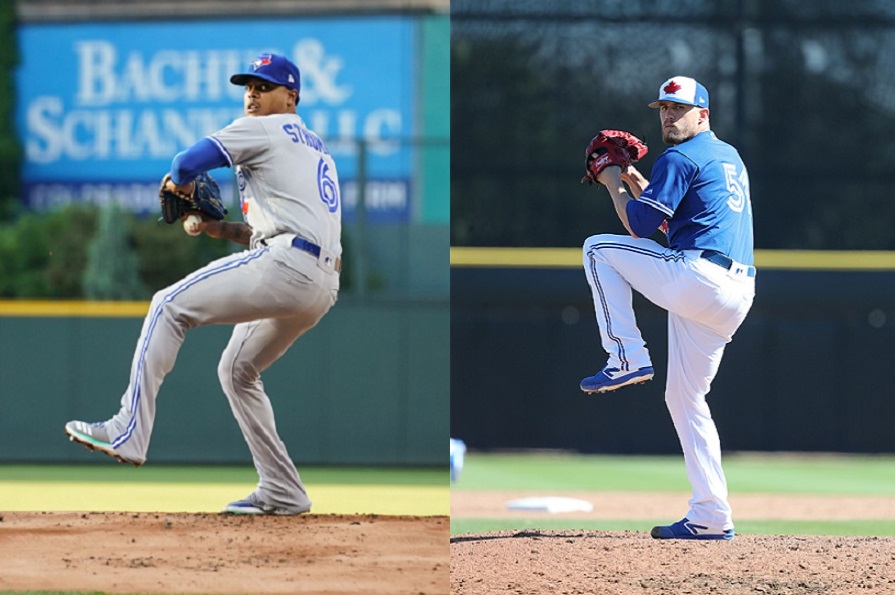 In this article, I will mostly focus on pitchers that I think could realistically be traded in a dual player deal before the end of July. While some combinations like acquiring Max Scherzer, Jacob deGrom or Noah Syndergaard, along with a backend of the bullpen reliver would make great additions to the Twins, it is starting to look like none of them will be available this summer, let alone as part of a package with another player. I am also leaving out players from teams I am not expecting to be sellers at the deadline, like the Cincinnati Reds who find themselves just 5.5 games out in the very winnable NL Central. With that being said, lets look at some of the options that I think could be available for the Twins. Marcus Stroman & Ken Giles: Toronto Blue Jays We will start with the deal that we already know the Twins have asked about, which is a trade for Toronto Blue Jays starting pitcher Marcus Stroman and closer Ken Giles. These are two pitchers that have been on the radar of Twins fans since their series in Toronto back in early May. Stroman has been an a solid, top of the rotation, starter for the Toronto Blue Jays since he broke onto the scene back in 2014. He had an off-year from an ERA perspective in 2018 (5.54), but his 3.91 FIP suggested he should return to form in 2019, which he has to the tune of a 3.18 ERA in 104 2/3 innings pitched. Stroman isn’t a big strikeout pitcher, just 7.2 K/9 in his career. However, Stroman does an excellent job inducing groundballs, as his 59.6 percent groundball rate since he entered the league in 2014 ranks 2nd among all pitchers who have thrown at least 400 innings over that time. Stroman still has one more year of arbitration left on his current deal, so acquiring him could help fill one of the three or four spots in the Twins rotation that will open up after 2019. Like Stroman, Ken Giles will also enter his third year of arbitration this offseason, meaning he too will be under team control through 2020. Also, like Stroman, Giles entered the league in 2014 and was an immediate success. Since 2014, Giles has accumulated an fWAR of 9.2, which ranks fifth among all MLB relievers over that time. In 2019, Giles is on pace for the best year of his already great career. He has a 1.45 ERA (1.49 FIP) and a career high 15.39 K/9. Among the 237 relievers with at least 20 innings pitched this year, those numbers rank 8th, 2nd and 4th respectively. Madison Bumgarner & Will Smith: San Francisco Giants The other dual pitcher trade that Twins fans have been talking about quite a bit is the San Francisco Giants duo of Madison Bumgarner and Will Smith. Unlike Stroman and Giles, however, both Bumgarner and Smith will be free agents at year's end. This means they will likely be cheaper to acquire, but they won’t help the Twins need for pitchers beyond 2019. Bumgarner in no longer the ace pitcher that he once was, but he could be a serviceable arm in the rotation that could compete with Kyle Gibson to be the Twins third starter in the playoff rotation. Additionally, he could provide some depth in the Twins rotation in case one their top starters goes down with an injury. Will Smith missed the entire 2017 season while recovering from Tommy John surgery. Since his return, Smith has transformed himself into a top-tier reliever. Between 2018 and 2019, Smith has a 2.39 ERA (2.04 FIP), with 12.5 K/9 and 2.5 BB/9 across 90 and 1/3 innings pitched. Smith has done an excellent job of limiting hard contact, as he has allowed only two barrels (per Statcast) all season. Matt Boyd & Shane Greene: Detroit Tigers Matt Boyd has broken onto the scene in 2019, posting a 3.95 ERA (3.47 FIP) with 12 K/9 and just 1.9 BB/9. Home runs have plagued Boyd so far this season, but his high 16.1 percent home run to flyball ratio suggests that he is due for some positive regression in this department. If the Twins were to acquire Boyd, they would have him under team control through the 2022 season, the same season Jose Berrios is set to become a free agent. Acquiring Boyd could give the Twins a strong 1-2 punch at the top of their rotation for the foreseeable future. In addition to Boyd, the Tigers could also be looking to move their closer Shane Greene. Greene currently holds a microscopic 1.09 ERA, but his 3.72 FIP suggests he is due for some regression down the stretch. Even if he does, Greene could still serve as a back end of the bullpen righty to pair with the left-handed throwing Taylor Rogers. Additionally, Greene is under team control through 2020, which gives the Twins some help going into this offseason. Zack Wheeler & Seth Lugo: New York Mets We have talked a lot about Jacob deGrom and Noah Syndergaard as potential trade targets for the Twins, but perhaps the most likely starting pitcher for them to target is Zack Wheeler. While the Mets might be hesitant to completely blow things up by trading deGrom and Syndergaard, who are both under control for a few more seasons, there is no reason why they shouldn’t move Wheeler, who will be a free agent after this year. Wheeler has dealt with his fair share of injuries during the early part of his career but has still be an effective pitcher when he’s on the mound. In 2018, Wheeler put together an excellent season with a 3.31 ERA (3.25 FIP) over 182 and 1/3 innings. In 2019, Wheeler’s ERA has taken a step back, down to 4.69, but many of his underlying metrics say he has been a better pitcher than his ERA suggests. Wheeler’s strikeouts are up a strikeout per inning, up to 9.83, while his walks are down to 2.57 per nine. Like Matt Boyd, Wheeler has been bitten by home runs in 2019. Seth Lugo isn’t the big name that some of these other relievers are, but he is more than effective enough to be another trustworthy arm that Rocco Baledlli can use in big innings down the stretch. Lugo was moved to the bullpen for the 2018 season, which has really helped him improve as a pitcher. Between 2018 and 2019, Lugo has 2.85 ERA (3.25 FIP) with 10 K/9 and 2.5 BB/9, including 11.9 K/9 and 2.7 BB/9 this year. Lugo is also under control through the 2022 season, which could pair him up with Taylor Rogers in the back end of the bullpen for a few seasons to come. Robbie Ray & Greg Holland: Arizona Diamondbacks A couple of pitchers that haven’t gotten as much talk, but could make solid additions to the Twins pitching staff are the Arizona Diamondbacks duo of Robbie Ray and Greg Holland. Ray is one of the premier strikeout starting pitchers in the game today. Since 2016, Ray’s 11.76 K/9 trails only Max Scherzer and Chris Sale for the highest mark among starting pitchers with at least 400 innings pitched. However, walks have plagued Ray over that time, and as a result Ray has a respectable 3.91 ERA (3.92 FIP) over that time. Ray is another starting pitcher that could fill a spot in the Twins rotation next season, as he won’t become a free agent until after the 2020 season. Like Robbie Ray, Greg Holland is a high strikeout, high walk, pitcher. So far in 2019, Holland is striking out 10.74 batter per nine, while walking 5.23 batters per nine. When he’s off, Holland can be quite the headache to watch, but when he’s on, he can come in and close the door on any bad situation he has been put in. With Holland becoming a free agent at year's end, and some control question marks surrounding both him and Ray, this could be high risk-high reward trade for the Twins.
 -
 This year the Twins have a bonus pool allotment of $9,905,800 to spread amongst their 11 picks in the top 10 rounds. Any pick after round 10 can sign for a value up to $125,000 without it counting against their bonus pool. There is a reasonable chance that the Twins were able to save some money with their picks in the top 10 rounds, which will allow them the ability to extend some of that money to their picks picks in later rounds. Typically, teams will sign roughly 25 to 30 of their draft picks, though the Twins were able to sign 32 of their 39 draft picks in 2018. Let’s find out how many picks the Twins will sign this year? Bonus Pool Tracker: Top 10 Round Picks Signed: 11 | Bonus Pool Used: $9,905,800 | Bonus Pool Remaining: $0 Pick Signings: Round 1: Keoni Cavaco | SS/3B | Slot Value: $4,197,300 | Signed For: $4,050,000. https://twitter.com/Twins/status/1138561417098010630 Comp Balance Round A: Matt Wallner | OF | Slot Value: $1,906,800 | Signed For: $1,800,000 https://twitter.com/JeffDodson39/status/1140663886305288192 Round 2: Matt Canterino | RHP | Slot Value: $1,338,500 | Signed For: $1,100,000 https://twitter.com/DWolfsonKSTP/status/1139268406090354693 Round 3: Spencer Steer | SS | Slot Value: $657,600 | Signed For: $575,000 https://twitter.com/OregonBaseball/status/1141525154326913024 Round 4: Seth Gray | 3B | Slot Value: $483,000 | Signed For: $483,000 https://twitter.com/GrayJasongray18/status/1139367613337886721 Round 5: Will Holland | SS | Slot Value: $360,800 | Signed For: $575,000 Round 6: Sawyer Gipson | RHP | Slot Value: $274,800 | Signed For: $215,000 https://twitter.com/sawyergipson/status/1139707225520398339 Round 7: Anthony Prato | SS | Slot Value: $214,900 | Signed For: $274,800 Round 8: Casey Legumina | RHP | Slot Value: $173,000 | Signed For: $250,000 Round 9: Brent Headrick | LHP | Slot Value: $154,100 | Signed For: $130,000 https://twitter.com/LaVelleNeal/status/1139982823841030144 Round 10: Ben Gross | RHP | Slot Value: $145,000 | Signed For: $10,000 Round 11: Tanner Brubaker | RHP | Signed For: $200,000 Round 12: Sean Mooney | RHP | Signed For: $125,000 Round 13: Dylan Thomas | RHP | Signed For: $100,000 Round 14: Cody Laweryson | RHP | Signed For: $80,000 Round 15: Louie Varland | RHP | Signed For: $115,000 https://twitter.com/DWolfsonKSTP/status/1139158154892206081https://twitter.com/DWolfsonKSTP/status/1139158154892206081 Round 16: Ryan Shreve | RHP | Signed For: $50,000 Round 17: Antoine Jean | LHP | Signed For: Unsigned Round 18: Edouard Julien | 2B | Signed For: $493,000 https://twitter.com/BMattAU/status/1148683354075742213 Round 19: Niall Windeler | LHP | Signed For: $30,000 https://twitter.com/Windy_16/status/1138884039186759683 Round 20: Owen Griffith | RHP | Signed For: $70,000 Round 21: Bradley Hanner | RHP | Signed For: $10,000 https://twitter.com/1999bradleyh/status/1138897708822011904 Round 22: Rogelio Reyes | RHP | Signed For: $50,000 Round 23: Matthew Swain | RHP | Signed For: $1,000 Round 24: Trevor Jensen | 1B | Signed For: $1,000 https://twitter.com/GreenWaveBSB/status/1138885184244387840 Round 25: Nate Hadley | RHP | Signed For: $1,000 Round 26: Blake Robertson | 3B | Signed For: Unsigned Round 27: Parker Phillips | 1B | Signed For: $5,000 Round 28: Travis Phelps | RHP | Signed For: Unsigned Round 29: Alex Isola | C | Signed For: $70,000 Round 30: Tyler Beck | RHP | Signed For: $1,000 Round 31: Max Smith | OF | Signed For: $1,000 Round 32: Bryson Gandy | OF | Signed For: $25,000 https://twitter.com/_gandy2/status/1138882607343689729 Round 33: Kyle Schmidt | C | Signed For: $1,000 Round 34: Antoine Harris | RHP | Signed For: Unsigned Round 35: Drew Gilbert | LHP | Signed For: Unsigned Round 36: Will Frisch | RHP | Unsigned Round 37: Adrian Colon | OF | Unsigned Round 38: Zack Mathis | C | Unsigned Round 39: Jake Hirabayashi | 3B | Signed For: $1,000 Round 40: Logan Steenstra | SS | Signed For: Unsigned

