



Andrew Thares
-
Posts
653 -
Joined
-
Last visited
Content Type
Profiles
News
Minnesota Twins Videos
2026 Minnesota Twins Top Prospects Ranking
2022 Minnesota Twins Draft Picks
Minnesota Twins Free Agent & Trade Rumors, Notes, & Tidbits
Guides & Resources
2023 Minnesota Twins Draft Picks
The Minnesota Twins Players Project
2024 Minnesota Twins Draft Picks
2025 Minnesota Twins Draft Pick Tracker
2026 Minnesota Twins Draft Tracker: Picks & Bonuses
Forums
Blogs
Events
Store
Downloads
Gallery
Everything posted by Andrew Thares
-
 A player doesn't always need to use the bat to be productive at the plate. You should give this a watch, it is pretty interesting. https://www.sbnation.com/2017/4/11/15264034/barry-bonds-2004-stats-chart-party
 -
Or you could just use a stat like wOBA. It's main goal is the same as OPS, but it is more accurate because it correctly weights the value of each occurrence.
-
Well lets use math to figure this one out. The linear weight value of a walk is .55 runs, while the linear weight value of a home run is 1.65 runs (all relative to making an out). So, if a guy walks 4 times his total value was 2.2 runs, while a guy that just hits 1 home run was worth 1.65 runs. So yeah, give me the guy with 4 walks every day of the week. But to your point, which guy didn't use up any of his teams precious 27 outs? Outs are the games currency, you only get 27 of them to spend and the goal is to score as many runs as possible before you've spent them all.
-
Very much so. Here are a couple articles that prove my point. I also did my own independent research on the topic a couple years ago and found that when you increase a team's OBP by 1 point it increases the teams expected number of runs in a season by 5.2, but when you increase a team's SLUG by 1 point it only increases their expected number of runs in a season by 2.8. https://www.beyondtheboxscore.com/2015/9/18/9329763/separate-but-not-quite-equal-why-ops-is-a-bad-statistic https://pubs.aeaweb.org/doi/pdfplus/10.1257/jep.20.3.173
-
I think your missing the point. It's not that batting average isn't important, it's that on-base percentage is far more important as it is basically the same thing as batting average except it controls for how often you walk and get hit by pitches. What makes Harper's .217 AVG bearable is his .347 OBP. Yeah, its been a subpar season for him, but he's having a slightly above-average season based on a league wide standard. When it comes to offensive production, having a better on-base percentage is mathematically proven to be nearly twice as important as a high slugging percentage because not making outs is the most important part of any plate appearance, and then if you can not make outs with some power that's even better. If offense was solely reliant on power, then guys like Chris Carter would be in the league and not in AAA.
-
This game was pretty much the exact reverse of Sunday's game. On Sunday the Twins had plenty of chances to get to the starter, but only scratched one run across after going 1-for-10 with RISP and leaving 10 on base, on their way to a 4-1 loss. In this game, it was the Red Sox who had plently of chacnes to get to the starter, but only scratched one run across after going 0-for-9 with RISP and leaving 7 on base, on their way to a 4-1 loss.
-
The Twins have played two of their best games of the season to open this series against the Boston Red Sox. Last night it was the Eduardo Escobar show, tonight the Twins were led by excellent performances by both Max Kepler and from the bullpen. The Twins have clinched the series win and will go for what could be their first sweep of a three or four game series all season Thursday afternoon. Image courtesy of © Jordan Johnson-USA TODAY Sports The Twins have played two of their best games of the season to open this series against the Boston Red Sox. Last night it was the Eduardo Escobar show, tonight the Twins were led by excellent performances by both Max Kepler and from the bullpen. The Twins have clinched the series win and will go for what could be their first sweep of a three or four game series all season Thursday afternoon. Snapshot (chart via FanGraphs) Lance Lynn: 53 Game Score, 5.0 IP, 3 H, 1 R, 0 ER, 2 K, 5 BB, 51.5% strikes Bullpen: 4.0 IP, 0 ER, 1 H, 3 K, 0 BB Lineup: 1-for-6 w/RISP, 5 LOB Top three per WPA: Lynn .186, Kepler .167, Hildenberger .080 Joe Mauer got the night off against a tough lefty in David Price, but Robbie Grossman stepped in nicely for him in the leadoff spot, belting a home run to get the Twins on the board after their first batter of the game. It was just Grossman’s third home run of the season and his first as a right-handed hitter. https://twitter.com/Twins/status/1009601105540603904 The Twins base running woes continued tonight as Eddie Rosario was picked off first base with one out in the first. In case you were wondering, here is a little update on how many times the Twins have made outs on the bases this year. https://twitter.com/MNBrianHall/status/1009594749358047233 After giving up a run in the second, the Twins regained the lead in the fourth when Max Kepler blasted a two-out, two-run home run of David Price. This continued Kepler’s improvement against left-handed pitchers this year as Kepler has now doubled his total of extra-base hits against them from a season ago, going from 6 to 12. https://twitter.com/fsnorth/status/1009612355787878401 Kepler then backed that up with a tremendous diving catch, on a fly ball with a 4 percent catch probability, to rob J.D. Martinez of a hit in the eighth inning. The catch was originally ruled a hit but was quickly overturned after going to instant replay. https://twitter.com/fsnorth/status/1009632809026142208 The Twins picked up an insurance run in the eighth when Brian Dozier lined a double off the left-field wall and Eddie Rosario scored from first with some excellent base running. Dozier finished the night going 2-for-4 with two doubles. Lance Lynn was the definition of effectively wild in his start tonight. Lynn needed to work around five more walks but wound up surrendering just one unearned run over five innings. In each of the five innings the Red Sox had a runner in scoring position, but in each instance, they failed to get a hit once someone got there. The only reason the Red Sox ended up scoring against Lynn was because of a botched exchange between Logan Morrison and Lynn after Morrison made a great diving play to nearly get the Twins out of the inning. While Lynn may have had to work to keep the Red Sox off the board, that wasn’t the same story for the Twins bullpen which allowed just one base runner over four innings of work. Taylor Rogers had perhaps his best outing of the season in the sixth, then Addison Reed came in for the seventh and had a get-back-on-track inning. Then it was more of the same from Trevor Hildenberger and Fernando Rodney who each worked a 1-2-3 inning in the eighth and ninth respectively. Postgame with Paul Molitor https://twitter.com/fsnorth/status/1009647744166711296 Bullpen Usage Here’s a quick look at the number of pitches thrown by the bullpen over the past five days: AL Central Standings CLE 40-33 DET 36-39 (5 GB) MIN 33-37 (5.5 GB) CHW 24-49 (15 GB) KC 22-52 (18.5 GB) Next Three Games Thu at BOS, 12:10 pm CT – Rick Porcello vs. Kyle Gibson Fri vs. TEX, 7:10 pm CT – Mike Minor vs. Fernando Romero Sat vs. TEX, 1:10 pm CT – Yovani Gallardo vs. Jake Odorizzi Last Three Games MIN 6, BOS 2: Bats Get to Boston Bullpen CLE 4, MIN 1: Lots of Traffic, Just One Run MIN 9, CLE 3: That’s Our Eddie View full article
-
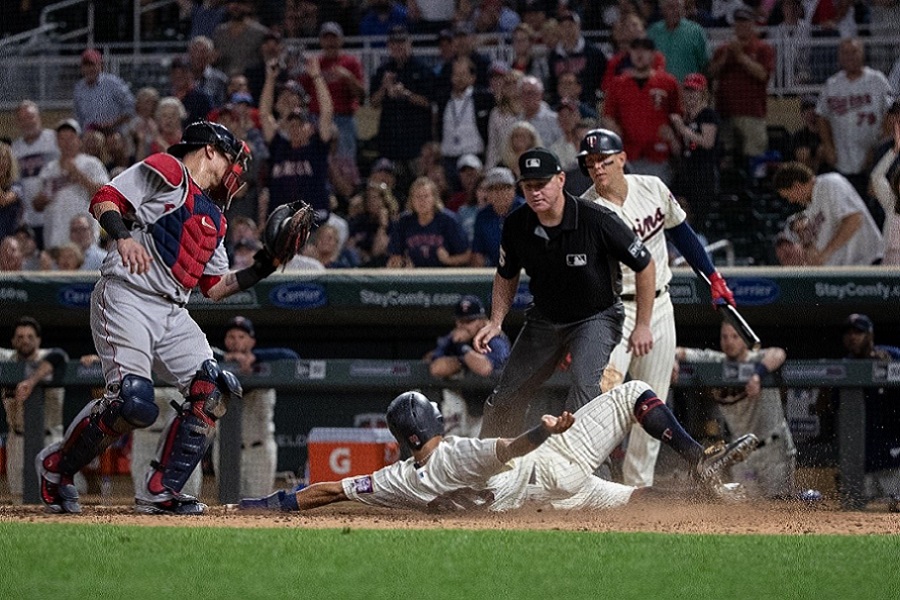 Snapshot (chart via FanGraphs) Lance Lynn: 53 Game Score, 5.0 IP, 3 H, 1 R, 0 ER, 2 K, 5 BB, 51.5% strikes Bullpen: 4.0 IP, 0 ER, 1 H, 3 K, 0 BB Lineup: 1-for-6 w/RISP, 5 LOB Top three per WPA: Lynn .186, Kepler .167, Hildenberger .080 Joe Mauer got the night off against a tough lefty in David Price, but Robbie Grossman stepped in nicely for him in the leadoff spot, belting a home run to get the Twins on the board after their first batter of the game. It was just Grossman’s third home run of the season and his first as a right-handed hitter. https://twitter.com/Twins/status/1009601105540603904 The Twins base running woes continued tonight as Eddie Rosario was picked off first base with one out in the first. In case you were wondering, here is a little update on how many times the Twins have made outs on the bases this year. https://twitter.com/MNBrianHall/status/1009594749358047233 After giving up a run in the second, the Twins regained the lead in the fourth when Max Kepler blasted a two-out, two-run home run of David Price. This continued Kepler’s improvement against left-handed pitchers this year as Kepler has now doubled his total of extra-base hits against them from a season ago, going from 6 to 12. https://twitter.com/fsnorth/status/1009612355787878401 Kepler then backed that up with a tremendous diving catch, on a fly ball with a 4 percent catch probability, to rob J.D. Martinez of a hit in the eighth inning. The catch was originally ruled a hit but was quickly overturned after going to instant replay. https://twitter.com/fsnorth/status/1009632809026142208 The Twins picked up an insurance run in the eighth when Brian Dozier lined a double off the left-field wall and Eddie Rosario scored from first with some excellent base running. Dozier finished the night going 2-for-4 with two doubles. Lance Lynn was the definition of effectively wild in his start tonight. Lynn needed to work around five more walks but wound up surrendering just one unearned run over five innings. In each of the five innings the Red Sox had a runner in scoring position, but in each instance, they failed to get a hit once someone got there. The only reason the Red Sox ended up scoring against Lynn was because of a botched exchange between Logan Morrison and Lynn after Morrison made a great diving play to nearly get the Twins out of the inning. While Lynn may have had to work to keep the Red Sox off the board, that wasn’t the same story for the Twins bullpen which allowed just one base runner over four innings of work. Taylor Rogers had perhaps his best outing of the season in the sixth, then Addison Reed came in for the seventh and had a get-back-on-track inning. Then it was more of the same from Trevor Hildenberger and Fernando Rodney who each worked a 1-2-3 inning in the eighth and ninth respectively. Postgame with Paul Molitor https://twitter.com/fsnorth/status/1009647744166711296 Bullpen Usage Here’s a quick look at the number of pitches thrown by the bullpen over the past five days: AL Central Standings CLE 40-33 DET 36-39 (5 GB) MIN 33-37 (5.5 GB) CHW 24-49 (15 GB) KC 22-52 (18.5 GB) Next Three Games Thu at BOS, 12:10 pm CT – Rick Porcello vs. Kyle Gibson Fri vs. TEX, 7:10 pm CT – Mike Minor vs. Fernando Romero Sat vs. TEX, 1:10 pm CT – Yovani Gallardo vs. Jake Odorizzi Last Three Games MIN 6, BOS 2: Bats Get to Boston Bullpen CLE 4, MIN 1: Lots of Traffic, Just One Run MIN 9, CLE 3: That’s Our Eddie
 -
Lance Lynn Was Worth The Wait
Andrew Thares replied to Andrew Thares's topic in Twins Daily Front Page News
Lynn has had nearly twice as many good starts as bad starts this year, along with a 6 year track record of success. I think the only people jumping the gun are the ones that assumed Lynn was washed up after one bad month. -
It has been an eventful last few months for Lance Lynn to say the least. It all started back in November, when he became a free agent for the first time in his career and was given a qualifying offer by the St. Louis Cardinals. At the time it was unanimously considered that Lynn made the correct decision in turning down the offer, but as the strange offseason progressed Lynn kept going unsigned. It has been an eventful last few months for Lance Lynn to say the least. It all started back in November, when he became a free agent for the first time in his career and was given a qualifying offer by the St. Louis Cardinals. At the time it was unanimously considered that Lynn made the correct decision in turning down the offer, but as the strange offseason progressed Lynn kept going unsigned. Lynn eventually ended up signing with the Minnesota Twins in the middle of March for a 1-year deal that will be worth between $3.4 million and $5.4 million less than the qualifying offer he rejected four months earlier. When Lynn first signed this deal, some wondered if his missing a month of spring training would affect his performance early in the season. At first, I didn’t buy much into this theory, but when you look at the numbers you can’t help but feel that there was something to that. During the month of April, Lynn was a mess, pitching to the tune of an 8.37 ERA with a 6.56 FIP and a walk rate of 8.75 BB/9 over 23 2/3 innings. However, since turning the calendar to May, Lynn has been a whole new pitcher with a 3.20 ERA, a 3.07 FIP and a walk rate down to a more respectable 3.60 BB/9 over 45 innings. So, what has caused this sudden turnaround from Lance Lynn? Well, as I already pointed out, Lynn has had a sharp decline in his walk rate. Over his five starts in April, Lynn walked a combined 23 batters, but in his eight starts since Lynn has walked just 18. There have been two big factors in Lynn’s decreased walk rate. This first has been by simply throwing more pitches in the strike zone. During his five April starts, Lynn had thrown just 32.9 percent of his pitches in the zone. However, since then his rate has increased to 37.8 percent. Lynn still has some work to do to get closer to the roughly 43 percent league average, but it’s a definite step in the right direction. The other thing that is helping Lynn lower his walk rate is opposing batters are swinging at a higher percentage of his pitches outside of the strike zone, as Lynn has seen his chase rate increase from 28.5 percent to 31.3 percent. In addition to finding better control with his pitches, Lynn has seen his fastball velocity tick up as the season has progressed. Here is a look at both Lynn’s four-seam fastball and sinker average velocity on a per start basis. In addition to Lance Lynn increasing his fastball velocity, he has also seen his changeup velocity drop which has helped him create a bigger gap between the two pitches. So, what are some of the benefits that Lance Lynn is getting from his improved control and increased fastball velocity? Perhaps the biggest improvement has been in Lynn’s home run rate. Back in April, Lynn had given up a home run 27.8 percent of the time he gave up a fly ball, which resulted in five home runs in just five starts. However, since then, Lynn has given up just two home runs after decreasing his home run to fly ball rate down to 5.6 percent. As the season continues I would expect that number to settle in somewhere slightly above his career 9.3 percent rate given the current home run environment. Another significant improvement in Lynn’s game has been his stranded runners rate. After allowing 35 percent of runners that reached base to score during April, Lynn has cut that down to just 22 percent of base runners during May and June. For his career Lynn has allowed 24 percent of base runners to eventually score, so it appears that Lynn has returned to form in that regard. Part of the concern around Lance Lynn when the Twins first signed him was his .244 Batting Average on Balls in Play (BABIP) last season, which was the lowest mark of any qualified pitcher in Major League Baseball. This mark was much lower than the .299 career average that Lance Lynn had allowed, and lead some to believe that he would show some regression this year as that number came back to Earth. Well, not only did that number come back to Earth, but it blew way past it and swelled all the way up to .349 during the month of April. This was the 14th highest mark among the 134 pitchers who threw at least 20 innings by the end of April. Since then, Lynn has seen his BABIP reverse course back to Earth and dropped to .323 during May and June. Not only is this a step in the right direction, but it would suggest that Lynn still has a little more room for improvement as that number continues to move back towards his career average. Entering the season, the Twins had high hopes that Lance Lynn would help lead their starting rotation, especially with the loss of Ervin Santana, and so far this year it appears as Lynn goes so does the Twins pitching staff. Through the first month of the season, the Twins ranked 28th in Major League Baseball with a 5.29 ERA. However, since the beginning on May, the Twins pitching staff has improved to 9th place with a 3.49 ERA. View full article
-
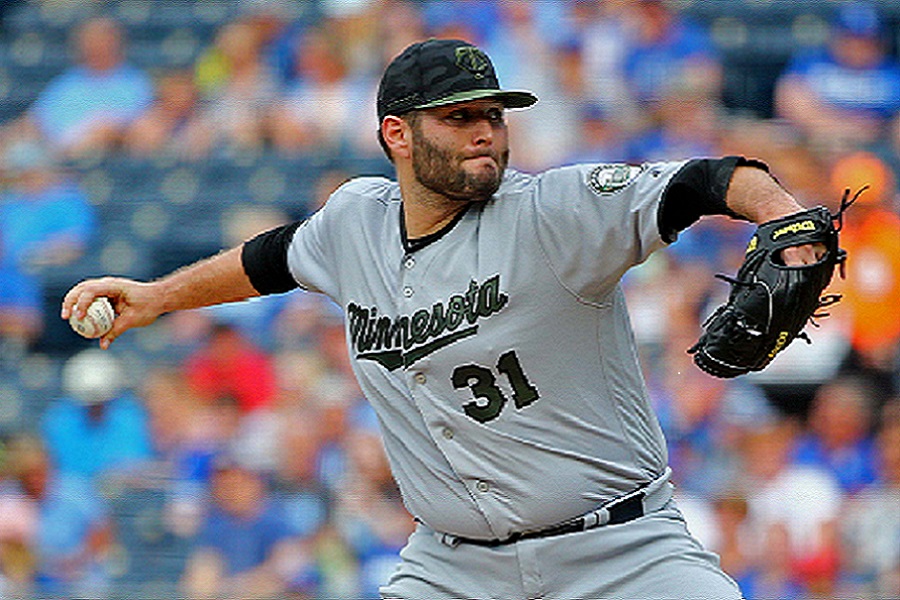 Lynn eventually ended up signing with the Minnesota Twins in the middle of March for a 1-year deal that will be worth between $3.4 million and $5.4 million less than the qualifying offer he rejected four months earlier. When Lynn first signed this deal, some wondered if his missing a month of spring training would affect his performance early in the season. At first, I didn’t buy much into this theory, but when you look at the numbers you can’t help but feel that there was something to that. During the month of April, Lynn was a mess, pitching to the tune of an 8.37 ERA with a 6.56 FIP and a walk rate of 8.75 BB/9 over 23 2/3 innings. However, since turning the calendar to May, Lynn has been a whole new pitcher with a 3.20 ERA, a 3.07 FIP and a walk rate down to a more respectable 3.60 BB/9 over 45 innings. So, what has caused this sudden turnaround from Lance Lynn? Well, as I already pointed out, Lynn has had a sharp decline in his walk rate. Over his five starts in April, Lynn walked a combined 23 batters, but in his eight starts since Lynn has walked just 18. There have been two big factors in Lynn’s decreased walk rate. This first has been by simply throwing more pitches in the strike zone. During his five April starts, Lynn had thrown just 32.9 percent of his pitches in the zone. However, since then his rate has increased to 37.8 percent. Lynn still has some work to do to get closer to the roughly 43 percent league average, but it’s a definite step in the right direction. The other thing that is helping Lynn lower his walk rate is opposing batters are swinging at a higher percentage of his pitches outside of the strike zone, as Lynn has seen his chase rate increase from 28.5 percent to 31.3 percent. In addition to finding better control with his pitches, Lynn has seen his fastball velocity tick up as the season has progressed. Here is a look at both Lynn’s four-seam fastball and sinker average velocity on a per start basis. In addition to Lance Lynn increasing his fastball velocity, he has also seen his changeup velocity drop which has helped him create a bigger gap between the two pitches. So, what are some of the benefits that Lance Lynn is getting from his improved control and increased fastball velocity? Perhaps the biggest improvement has been in Lynn’s home run rate. Back in April, Lynn had given up a home run 27.8 percent of the time he gave up a fly ball, which resulted in five home runs in just five starts. However, since then, Lynn has given up just two home runs after decreasing his home run to fly ball rate down to 5.6 percent. As the season continues I would expect that number to settle in somewhere slightly above his career 9.3 percent rate given the current home run environment. Another significant improvement in Lynn’s game has been his stranded runners rate. After allowing 35 percent of runners that reached base to score during April, Lynn has cut that down to just 22 percent of base runners during May and June. For his career Lynn has allowed 24 percent of base runners to eventually score, so it appears that Lynn has returned to form in that regard. Part of the concern around Lance Lynn when the Twins first signed him was his .244 Batting Average on Balls in Play (BABIP) last season, which was the lowest mark of any qualified pitcher in Major League Baseball. This mark was much lower than the .299 career average that Lance Lynn had allowed, and lead some to believe that he would show some regression this year as that number came back to Earth. Well, not only did that number come back to Earth, but it blew way past it and swelled all the way up to .349 during the month of April. This was the 14th highest mark among the 134 pitchers who threw at least 20 innings by the end of April. Since then, Lynn has seen his BABIP reverse course back to Earth and dropped to .323 during May and June. Not only is this a step in the right direction, but it would suggest that Lynn still has a little more room for improvement as that number continues to move back towards his career average. Entering the season, the Twins had high hopes that Lance Lynn would help lead their starting rotation, especially with the loss of Ervin Santana, and so far this year it appears as Lynn goes so does the Twins pitching staff. Through the first month of the season, the Twins ranked 28th in Major League Baseball with a 5.29 ERA. However, since the beginning on May, the Twins pitching staff has improved to 9th place with a 3.49 ERA.
 -
Minnesota Twins 2018 MLB Draft Signing Tracker
Andrew Thares replied to Andrew Thares's topic in Twins Daily Front Page News
As the Twins currently stand, they have used $2,183,700 of their bonus pool, which is $45,200 under slot value on those picks. Overall, the Twins had a bonus pool of 5,933,000 which leaves $3,749,300 to sign Trevor Larnach, Cole Sands and Charles Mack, along with any other picks outside of the top 10 rounds that they want to sign for more than $125K. -
Minnesota Twins 2018 MLB Draft Signing Tracker
Andrew Thares replied to Andrew Thares's topic in Twins Daily Front Page News
Because Chris Williams has the talent that deserved to be a Top 10 round pick. The reason he signed so much cheaper than the rest of the guys in the first 10 rounds is because he was a college senior so he didn't have any negotiating leverage like the guys who are in high school or are college juniors who could turn down the offer and re-enter the draft at a later point. -
Minnesota Twins 2018 MLB Draft Signing Tracker
Andrew Thares replied to Andrew Thares's topic in Twins Daily Front Page News
I think Chris Williams was picked right around where he was supposed to go based on talent. However, him signing for just $10K isn't that unusual for a college senior, even ones picked in the Top 10 rounds. -
Minnesota Twins 2018 MLB Draft Recap
Andrew Thares replied to Andrew Thares's topic in Twins Daily Front Page News
Rooker didn't just skip Cedar Rapids right out the shoot, he played 22 games in Elizabethton before he got called up to Fort Myers. -
Minnesota Twins 2018 MLB Draft Signing Tracker
Andrew Thares replied to Andrew Thares's topic in Twins Daily Front Page News
The players are just starting to sign now. The post will be updated quite a bit over the next few days are more of the signings are announced. -
Minnesota Twins 2018 MLB Draft Recap
Andrew Thares replied to Andrew Thares's topic in Twins Daily Front Page News
Personally I don't see any of the twins picks being assigned to a level higher than Elizabethton right after they sign. However, I think Larnach will be up to Cedar Rapids before the season ends and could very well be the replacement for Kirilloff when he gets called up depending on when that happens. -
Now that all 40 rounds of the 2018 MLB Draft are in the books, it’s time for us to sit back and see which of the Twins 39 picks end up signing with the team and which decide to pursue other aspirations. We will be updating this post as each of the Twins picks sign along with the amount money that they sign for. Now that all 40 rounds of the 2018 MLB Draft are in the books, it’s time for us to sit back and see which of the Twins 39 picks end up signing with the team and which decide to pursue other aspirations. We will be updating this post as each of the Twins picks sign along with the amount money that they sign for. For this year’s draft the Twins had a total bonus pool of $5.93 million, which can be divvied up among each of their picks in the first ten rounds. Additionally, if any pick after round ten signs for more than $125K the amount of money they exceed it by comes out of the Twins total bonus pool. Below is a list of each of the Twins draft picks, along with that picks slot value and the bonus amount they signed for if the player has already signed. A few of the player, like first round pick Trevor Larnach, are still playing in the NCAA Baseball Playoffs, so they will not be eligible to officially sign a deal until after their season has ended. Round 1: Trevor Larnach | OF | Slot Value: $3,120,000 | Signed For: $2,550,000 Round 2: Ryan Jeffers | C | Slot Value: $1,140,600 | Signed For: $800,000 Round 4: DaShawn Keirsey | OF | Slot Value: $442,600 | Signed For: $600,000 Round 5: Cole Sands | RHP | Slot Value: $330,400 | Signed For: $600,000 Round 6: Charles Mack | 3B | Slot Value: $253,700 | Signed For: $500,000 Round 7: Josh Winder | RHP | Slot Value: $198,700 | Signed For: $198,700 Round 8: Chris Williams | C | Slot Value: $162,100 | Signed For: $10,000 Round 9: Willie Joe Garry Jr. | OF | Slot Value: $146,500 | Signed For $225,000 Round 10: Regi Grace | RHP | Slot Value: $138,400 | Signed For $350,000 Round 11: Michael Helman | 2B | Signed For: $220,000 Round 12: Jon Olsen | RHP | Signed For: $125,000 Round 13: Trevor Casanova | C | Signed For: $100,000 Round 14: Erick Rivera | OF | Signed For: $125,000 Round 15: Kody Funderburk | LHP | Signed For: $100,000 Round 16: Anthony Tuionetoa | RHP | Signed For: $100,000 Round 17: Erik Cha | LHP | Signed For: $75,000 Round 18: Andrew Cabezas | RHP | Signed For: $90,000 Round 19: Austin Schulfer | RHP | Signed For: $1,000 Round 20: Seth Pinkerton | RHP | Signed For: $50,000 Round 21: Gabe Snyder | 1B | Signed For: $1,000 Round 22: Jacob Blank | RHP | Signed For: $1,000 Round 23: Albee Weiss | C | Signed For: $1,000 Round 24: Michael Davis | 3B | Signed For: $1,000 Round 25: Laron Smith | C | Signed For: $125,000 Round 26: Brian Rapp | RHP | Signed For: $1,000 Round 27: Hunter Lee | 2B | Signed For: $1,000 Round 28: Austin Hale | C | Signed For: $1,000 Round 29: J.T. Perez | LHP | Signed For: $1,000 Round 30: Seth Halverson | RHP | Unsigned Round 31: Zach Neff | LHP | Signed For: $1,000 Round 32: Ryan Holgate | OF | Unsigned Round 33: Denny Bentley | LHP | Signed For: $20,000 Round 34: Dylan Stowell | RHP | Signed For: $1,000 Round 35: Tanner Howell | RHP | Signed For: $1,000 Round 36: Zac Taylor | OF | Unsigned Round 37: Luke Ritter | OF | Unsigned Round 38: Dylan Thomas | RHP | Unsigned Round 39: Bryce Collins | RHP | Unsigned Round 40: Tyler Webb | SS | Signed For: $1,000 You can read my scouting reports on all 39 Twins draft picks here: Twins Select Trevor Larnach in the First Round of the 2018 Draft Twins Select Ryan Jeffers in the Second Round of the 2018 Draft 2018 MLB Draft Day 2 Thread 2018 MLB Draft Day 3 Thread View full article
-
Minnesota Twins 2018 MLB Draft Recap
Andrew Thares replied to Andrew Thares's topic in Twins Daily Front Page News
I don't think I ever said it would be a huge under slot draft pick, but the Twins saving $200K plus on the $1.1 million isn't out of the question. But let's just say for example that Jeffers gets paid like the 74th pick in the draft. That slot is still worth a full $300K less than the 59th pick. -
It is safe to say that the excitement level for this year’s draft wasn’t quite the same as it was last year for Twins fans. Last year, the Twins not only had the number one overall pick, but they also had three picks in the first 37 and five in the first 106. This year the Twins didn’t pick until number 20 and they didn’t have their third pick until 124. It is safe to say that the excitement level for this year’s draft wasn’t quite the same as it was last year for Twins fans. Last year, the Twins not only had the number one overall pick, but they also had three picks in the first 37 and five in the first 106. This year the Twins didn’t pick until number 20 and they didn’t have their third pick until 124. Part of this also stems from the fact that the Twins surrendered their third round pick when they signed Lance Lynn, along with trading away their Competitive Balance Round B pick between rounds two and three to the Padres as part of the Phil Hughes deal. Not only did the Twins lose those picks, but they also lost the bonus pool money that came with them. In total the Twins had just $5.93 million to spread across each of their picks in the first ten rounds (26th most in MLB). By comparison, the bonus pool for last year’s first overall pick was worth $7.77 million alone and $14.16 million in total. This gave the Twins next to no flexibility to reach out and draft a high value prospect that were going to be expensive to sign. The front office realized that they would need to take an approach where they could bring in as many guys with some relative upside as possible to give themselves multiple opportunities to hit on a few of their draftees. While most of us expected that to be via the college pitching route, they instead decided to focus on college bats in the early rounds of the draft. With their first overall pick, the Twins took Trevor Larnach a left-handed hitting outfielder from Oregon State. Shortly after the Twins had selected Larnach, news broke that the Twins and Larnach had already agreed upon, in principle, a dollar figure that it would take to sign him. To me this suggests that Larnach was willing to sign for less than the slot value of $3.1 million that the pick was worth. If not, the Twins still got an excellent ball player in the guy that I had ranked as the 23rd best prospect in the draft. College Catchers I mentioned that the Twins seemed to have an eye on college hitters in this draft, but more specifically they had an eye for college catchers, and it makes sense given the lack of depth in the organization at that position. With their second round pick, the Twins surprised people by taking Ryan Jeffers a catcher from UNC Wilmington.Baseball America had Jeffers ranked as their 295th best player in the draft, but from the reports that have come out of the Twins front office, it appears that the Twins had Jeffers ranked much higher than this. One thing that we need to bear in mind with the Jeffers pick is even though the Twins took him in the second round, it doesn’t necessarily mean they thought of him as a second round talent. As I mentioned previously, the Twins entered this draft look for an opportunity to save money on some players so they could disperse their bonus pool and that is exactly what they did with the Jeffers pick. If the Twins would have waited until their next pick at 124, it is likely that Jeffers wouldn’t have been available, and even if he was the savings on the pick would have been much smaller as the slot value for that pick was $700K less than the value at pick 59. In the eighth round of the draft the Twins took Chris Williams, a catcher from Clemson. Much like Jeffers, Williams is known for the power that he provides with the bat. Personally, I think the upside is bigger with Williams because he has a considerable leg up on Jeffers defensively. On Day three, the Twins took three more college catchers. Both Trevor Casanova (13th) and Albee Weiss (23rd) come from the same Cal State Northridge program. Casanova is the most well rounded of the catching prospects that the Twins selected, while Weiss is another catching prospect whose best tool is his power bat. Weiss didn’t spend a lot of time at catcher over the past couple of years, so it will remain to be seen if he can stick there in pro-ball. The other college catcher that the Twins took on day three is Austin Hale (28th) from Stetson. Of the group, Hale is most likely the best defensive catcher but his upside offensively is limited. At Stetson, Hale is the battery mate of Logan Gilbert, the 14th overall pick in the draft. Upside Picks With some of the money that the Twins were presumably able to save with their first two picks, they were able to turn around and select a few players in rounds 4-10 that have some real upside. The draft pick that I am most excited about is Utah outfielder DaShawn Keirsey, whom the Twins selected in the fourth round. Keirsey has been an excellent hitter in all three of his seasons at Utah, while playing in one of the best conferences in college baseball. Keirsey also brings an excellent glove in centerfield and plus speed that should allow him to impact the game in more ways than one. Another upside pick the Twins took was sixth rounder Charles Mack, a high school third baseman from New York. Mack is yet another Twins prospect whose most appealing asset is his power. After playing most of his high school career at short, Mack shouldn’t have much trouble making the transition over to third. Mack does have a strong commitment to Clemson, so the Twins might need to spend more than the $254K assigned to that pick to get him. With their ninth and tenth round picks, the Twins took two more high school kids (both from Mississippi) with some upside in Joe Garry Jr. and Regi Grace. Garry is a toolsy outfield prospect with great athleticism and a body that could develop some power as he matures. Grace is a pitching prospect with a strong fastball-slider combo. The Twins will most likely have him begin as a starter and see if he has what it takes to make it there. Pitching Even though much of the Twins draft was centered on position players, the Twins still did come away with some intriguing pitchers as well. I already touched on Regi Grace a bit, but let’s look as some of the other Twins pitchers in this year’s class. The first pitcher the Twins took in the draft was Cole Sands out of Florida State in the fifth round. Sands has dealt with a few injuries that may have caused his stock to fall a bit of late, but when he’s healthy Sands can be an excellent pitcher. One encouraging thing about Sands is the big improvements he has made during his college career at both striking out more hitters and limiting walks. In the seventh round the Twins took another pitcher, this time it was Virginia Military Institute starter Josh Winder. Winder doesn’t come from a big name college baseball program and his performance there hasn’t exactly been all that inspiring. However, a couple things that Winder does have is an ideal pitchers body and plus stuff from a guy taken in the seventh round. This is exactly the kind of kid you want to bring into your system and see what professional coaching can do for him. On day three the Twins took a good mix of both starting pitchers and relievers to fill out some more of their roster. Some of the names include Jon Olsen (12th), Kody Funderburk (15th), Anthony Tuionetoa (16th) and Andrew Cabezas (18th) among many others. A couple of the more intriguing pitching prospects from day three are Austin Schulfer (19th) and Jacob Blank (22nd). Schulfer was a senior starter at the University of Wisconsin Milwaukee who struck out nearly a batter per inning while walking less than one batter every three innings this past year. Jacob Blank was the lead horse for the Division II National Champion Augustana Vikings. Blank was named the Division II National Pitcher of the Year in 2017, and has a 1.43 ERA over the last two seasons combined. The Twins also took Seth Halverson in the 30th round of the draft. Halverson plays for the Heritage Christian Academy and is one of the top high school prospects in the state of Minnesota. It is highly unlikely, however, that Halverson will sign with the Twins as he is committed to play college baseball at the University of Missouri. Given the circumstances entering the draft, I think the Twins did a good job managing their limitations and brought in some good talent. As is always the case only time will tell how good of a draft class this actually is. So, I would like to here from you. What grade would you give the Twins draft? You can read my scouting reports on all 39 Twins draft picks here: Twins Select Trevor Larnach in the First Round of the 2018 Draft Twins Select Ryan Jeffers in the Second Round of the 2018 Draft 2018 MLB Draft Day 2 Thread 2018 MLB Draft Day 3 Thread View full article
-
 Part of this also stems from the fact that the Twins surrendered their third round pick when they signed Lance Lynn, along with trading away their Competitive Balance Round B pick between rounds two and three to the Padres as part of the Phil Hughes deal. Not only did the Twins lose those picks, but they also lost the bonus pool money that came with them. In total the Twins had just $5.93 million to spread across each of their picks in the first ten rounds (26th most in MLB). By comparison, the bonus pool for last year’s first overall pick was worth $7.77 million alone and $14.16 million in total. This gave the Twins next to no flexibility to reach out and draft a high value prospect that were going to be expensive to sign. The front office realized that they would need to take an approach where they could bring in as many guys with some relative upside as possible to give themselves multiple opportunities to hit on a few of their draftees. While most of us expected that to be via the college pitching route, they instead decided to focus on college bats in the early rounds of the draft. With their first overall pick, the Twins took Trevor Larnach a left-handed hitting outfielder from Oregon State. Shortly after the Twins had selected Larnach, news broke that the Twins and Larnach had already agreed upon, in principle, a dollar figure that it would take to sign him. To me this suggests that Larnach was willing to sign for less than the slot value of $3.1 million that the pick was worth. If not, the Twins still got an excellent ball player in the guy that I had ranked as the 23rd best prospect in the draft. College Catchers I mentioned that the Twins seemed to have an eye on college hitters in this draft, but more specifically they had an eye for college catchers, and it makes sense given the lack of depth in the organization at that position. With their second round pick, the Twins surprised people by taking Ryan Jeffers a catcher from UNC Wilmington.Baseball America had Jeffers ranked as their 295th best player in the draft, but from the reports that have come out of the Twins front office, it appears that the Twins had Jeffers ranked much higher than this. One thing that we need to bear in mind with the Jeffers pick is even though the Twins took him in the second round, it doesn’t necessarily mean they thought of him as a second round talent. As I mentioned previously, the Twins entered this draft look for an opportunity to save money on some players so they could disperse their bonus pool and that is exactly what they did with the Jeffers pick. If the Twins would have waited until their next pick at 124, it is likely that Jeffers wouldn’t have been available, and even if he was the savings on the pick would have been much smaller as the slot value for that pick was $700K less than the value at pick 59. In the eighth round of the draft the Twins took Chris Williams, a catcher from Clemson. Much like Jeffers, Williams is known for the power that he provides with the bat. Personally, I think the upside is bigger with Williams because he has a considerable leg up on Jeffers defensively. On Day three, the Twins took three more college catchers. Both Trevor Casanova (13th) and Albee Weiss (23rd) come from the same Cal State Northridge program. Casanova is the most well rounded of the catching prospects that the Twins selected, while Weiss is another catching prospect whose best tool is his power bat. Weiss didn’t spend a lot of time at catcher over the past couple of years, so it will remain to be seen if he can stick there in pro-ball. The other college catcher that the Twins took on day three is Austin Hale (28th) from Stetson. Of the group, Hale is most likely the best defensive catcher but his upside offensively is limited. At Stetson, Hale is the battery mate of Logan Gilbert, the 14th overall pick in the draft. Upside Picks With some of the money that the Twins were presumably able to save with their first two picks, they were able to turn around and select a few players in rounds 4-10 that have some real upside. The draft pick that I am most excited about is Utah outfielder DaShawn Keirsey, whom the Twins selected in the fourth round. Keirsey has been an excellent hitter in all three of his seasons at Utah, while playing in one of the best conferences in college baseball. Keirsey also brings an excellent glove in centerfield and plus speed that should allow him to impact the game in more ways than one. Another upside pick the Twins took was sixth rounder Charles Mack, a high school third baseman from New York. Mack is yet another Twins prospect whose most appealing asset is his power. After playing most of his high school career at short, Mack shouldn’t have much trouble making the transition over to third. Mack does have a strong commitment to Clemson, so the Twins might need to spend more than the $254K assigned to that pick to get him. With their ninth and tenth round picks, the Twins took two more high school kids (both from Mississippi) with some upside in Joe Garry Jr. and Regi Grace. Garry is a toolsy outfield prospect with great athleticism and a body that could develop some power as he matures. Grace is a pitching prospect with a strong fastball-slider combo. The Twins will most likely have him begin as a starter and see if he has what it takes to make it there. Pitching Even though much of the Twins draft was centered on position players, the Twins still did come away with some intriguing pitchers as well. I already touched on Regi Grace a bit, but let’s look as some of the other Twins pitchers in this year’s class. The first pitcher the Twins took in the draft was Cole Sands out of Florida State in the fifth round. Sands has dealt with a few injuries that may have caused his stock to fall a bit of late, but when he’s healthy Sands can be an excellent pitcher. One encouraging thing about Sands is the big improvements he has made during his college career at both striking out more hitters and limiting walks. In the seventh round the Twins took another pitcher, this time it was Virginia Military Institute starter Josh Winder. Winder doesn’t come from a big name college baseball program and his performance there hasn’t exactly been all that inspiring. However, a couple things that Winder does have is an ideal pitchers body and plus stuff from a guy taken in the seventh round. This is exactly the kind of kid you want to bring into your system and see what professional coaching can do for him. On day three the Twins took a good mix of both starting pitchers and relievers to fill out some more of their roster. Some of the names include Jon Olsen (12th), Kody Funderburk (15th), Anthony Tuionetoa (16th) and Andrew Cabezas (18th) among many others. A couple of the more intriguing pitching prospects from day three are Austin Schulfer (19th) and Jacob Blank (22nd). Schulfer was a senior starter at the University of Wisconsin Milwaukee who struck out nearly a batter per inning while walking less than one batter every three innings this past year. Jacob Blank was the lead horse for the Division II National Champion Augustana Vikings. Blank was named the Division II National Pitcher of the Year in 2017, and has a 1.43 ERA over the last two seasons combined. The Twins also took Seth Halverson in the 30th round of the draft. Halverson plays for the Heritage Christian Academy and is one of the top high school prospects in the state of Minnesota. It is highly unlikely, however, that Halverson will sign with the Twins as he is committed to play college baseball at the University of Missouri. Given the circumstances entering the draft, I think the Twins did a good job managing their limitations and brought in some good talent. As is always the case only time will tell how good of a draft class this actually is. So, I would like to here from you. What grade would you give the Twins draft? You can read my scouting reports on all 39 Twins draft picks here: Twins Select Trevor Larnach in the First Round of the 2018 Draft Twins Select Ryan Jeffers in the Second Round of the 2018 Draft 2018 MLB Draft Day 2 Thread 2018 MLB Draft Day 3 Thread
 -
So far in the 2018 MLB Draft, the Twins have selected four college hitters, two college pitchers, two high school hitters and a high school pitcher. The third and final day of the draft gets underway at 11 am CT. The picks will be coming in fast, as rounds 11-40 will be completed. So far in the 2018 MLB Draft, the Twins have selected four college hitters, two college pitchers, two high school hitters and a high school pitcher. The third and final day of the draft gets underway at 11 am CT. The picks will be coming in fast, as rounds 11-40 will be completed. Some notable recent Twins picks from these later rounds include Jason Kubel (12th round, 2000), Zack Granite (14th round, 2013), Danny Valencia (19th round, 2006) and Trevor Hildenberger (22nd round, 2014). Going back a little further you can find one of the greatest players in Twins history, as Kent Hrbek was drafted in the 17th round of the 1978 draft. Also, Eddie Guardado was a 21st rounder in 1990 and Corey Koskie was a 26th-round pick in 1994. The draft was scaled back to “only” 40 rounds in 2012. Here are the Twins' picks from Day 1: Round 1: Trevor Larnach, OF, Oregon State Round 2: Ryan Jeffers, C, UNC Wilmington Info on the follwing players is included in our Day 2 thread. Round 4: DaShawn Keirsey, CF, Utah Round 5: Cole Sands, RHP, Florida State Round 6: Charles Mack, SS/3B, Williamsville East HS (NY) Round 7: Josh Winder, RHP, Virginia Military Institute (VA) Round 8: Chris Williams, C, Clemson Round 9: Willie Joe Garry Jr., OF, Pascagoula HS Round 10: Regi Grace, RHP, Madison Central HS And here are today's picks. This will be updated as the day progresses. Round 11, 334th overall: Michael Helman, 2B, Texas A&M Michael Helman spent two seasons playing for Hutchinson Community College before transferring to Texas A&M for his Junior season. Helman had a .369/.451/.526 slash line with six home runs and 17 doubles, while going 12 for 14 on stolen base attempts this year for the Aggies. Round 12, 364th overall: Jon Olsen, RHP, UCLA Jon Olsen missed about a month of the 2018 season after suffering a scary injury from taking a line drive off his face. However, he came back and pitched well for UCLA this season. Over the last two years combined at UCLA, Olsen has a 2.69 ERA with 108 strikeouts and 39 walks over 113 2/3 innings pitched. Olsen also earned a spot on the 2017 USA Baseball Collegiate National Team where he pitched well to the tune of a 2.61 ERA over 10 1/3 innings. Round 13, 394th overall: Trevor Casanova, C, Cal State Northridge Trevor Casanova is the third college catcher the Twins have selected in their first 12 picks of the draft. This year was Casanova’s lone year at Cal State Northridge after transferring between two different schools beforehand. This year Casanova had a .345/.405/.480 slash line and threw out 23 of 49 potential base-stealers from behind the dish. Round 14, 424th overall: Erick Rivera, OF, Escuela Superior Urbana The Twins are hoping to continue their luck with Puerto Rican born players by selecting Erick Rivera in the 14th round. As an outfielder, Rivera profiles more as a corner outfielder than he does in center, though with his arm he could have potential to stick in right. Offensively, Rivera projects to add more power as he matures, which will complement his uppercut swing nicely. Round 15, 454th overall: Kody Funderburk, LHP, Dallas Baptist Kody Funderburk is a two-way player for Dallas Baptist. As a hitter, Funderburk had a slash line of .304/.429/.584 with 13 home runs and one stolen base. On the mound Funderburk made 14 starts this season, but had just a 6.84 ERA over 50 innings pitched. Command seems to be the issue with Funderburk on the mound as he did strikeout 53 batters but also walked 31. Round 16, 484th overall: Anthony Tuionetoa, RHS, Baldwin HS Anthony Hoopii-Tuionetoa is a two-way high school player out of Hawaii. This spring Tuionetoa was name the Hawaii All-State position player of the year as well as the state tournament most outstanding player award. However, Tuionetoa’s future is probably on the mound where he features a low-to-mid 90’s fastball along with a splitter and a curveball. Round 17, 514th overall: Erik Cha, LHP, Cal State Fullerton Erik Cha is a left-handed relief pitcher out of Cal State Fullerton. Last year out of the bullpen Cha threw 26 innings over 17 relief appearances and had a 4.85 ERA. This season, Cha only had nine relief outings but had a slightly improved 3.86 ERA. Cha isn’t a guy that will strike out many hitters as he has collected just 16 over 35 1/3 career innings in college. Round 18, 544th overall: Andrew Cabezas, RHP, University of Miami (FL) Andrew Cabezas combines an excellent low 90’s fastball with some arm-side run along with a devastating wipeout slider to give him a strong two-pitch mix. He used this combo well out the Hurricane bullpen in 2017 striking out 80 batters in just 62 2/3 innings all with a low 2.15 ERA. This year Cabezas was thrust into a starting role where his numbers took a dip striking out 79 over 75 innings with a 3.96 ERA, all while seeing his walk rate jump from 8.6 percent to 13.2 percent. Round 19, 574th overall: Austin Schulfer, RHP, University of Wisconsin-Milwaukee After splitting time as both a starter and a reliever during his first two years in college, Austin Schulfer transitioned into a full-time starting role for his junior and senior years at Wisconsin-Milwaukee. After a solid junior campaign, Schulfer took a big step forward the spring with an ERA of 2.96 over 91 1/3 innings pitched. Schulfer’s strikeout and walk numbers looked good as well, as he struck out just shy of nine batters per nine and walked just 2.75 batters per nine. Round 20, 604th overall: Seth Pinkerton, RHP, University of Hartford After taking over the closer role in 2017, Seth Pinkerton thrived there this season with 11 saves and a 2.02 ERA. Pinkerton is a guy that could give you a couple innings if you asked him, as he threw 35 2/3 innings in just 25 relief appearances. After having not so great strikeout and walk numbers in 2017, Pinkerton took a big step forward this year striking out 34 while only walking 13. Round 21, 634th overall: Gabe Snyder, 1B, Wright State University Gabe Snyder is a four-year starter at first base for the Wright State Raiders. Snyder saw his offensive numbers increase steadily throughout his college career, capping it off this year with a .359/.425/.668 slash line and 15 home runs. For a first baseman, Snyder is actually a pretty good athlete. During his four seasons at Wright State Snyder went 45 for 52 in stolen base attempts. Round 22, 664th overall: Jacob Blank, RHP, Augustana (SD) Jacob Blank has dominated the Division II ranks over the last couple of seasons, including leading the Augustana Vikings to the D2 National Championship this year. In 2017, Blank was named the D2 National Pitcher of the Year after he posted a 0.78 ERA with 86 strikeouts and just 15 walks over 69 innings pitched. He followed that up this year with a 1.98 ERA over 81 2/3 innings to go along with 100 strikeouts and 11 walks. Round 23, 694th overall: Albee Weiss, C, Cal State Northridge Albee Weiss is the second catcher that the Twins have taken out of Cal State Northridge today. However, unlike Trevor Casanova, Weiss has spent most of the last two seasons as either a left-fielder or a designated-hitter. What the Twins are drafting with Weiss is his power potential as he finished the regular season tied for fourth in the nation with 20 home runs. If Weiss can stick behind the plate he gives the Twins another power hitting catcher in this class, if not Weiss could still have the potential to make it as a corner outfielder. Round 24, 724th overall: Michael Davis, 3B, Texas Tech Michael Davis has primarily played in the middle-infield over the last couple of years at Texas Tech, but did see some time at third base early on in his college career. At the plate, Davis is more of an on-base percentage guy, though he did start to show some power this year hitting 11 home runs after hitting just 11 combined in his first three seasons at Texas Tech. You will get a good chance to watch Davis in action this weekend as Texas Tech is hosting Duke in one of the eight NCAA Super Regionals. Round 25, 754th overall: Laron Smith, C, Foothills Composite Laron Smith is a catcher that comes to us from the Canadian high school ranks. Smith has been a third baseman throughout much of his high school career, but the Twins like what they see from him behind the plate and took him as a catcher. Smith was also a member of the Canadian Junior National Baseball Team this past year where he played in the Dominican Summer League. Round 26, 784th overall: Brian Rapp, RHP, Boston College After spending his first two seasons at Boston College as a relief pitcher, Brian Rapp took over in a starting role during the 2017 campaign. His first year as a starter wasn’t the best as he had a 4.90 ERA and struck out 56 while walking 33 over 71 2/3 innings. 2018 was a bit of a different story for Rapp as he led all of the Boston College starters with a 3.57 ERA and rose his strikeout total to 74 while throwing 70 2/3 innings. The walks were still a bit of a concern for Rapp, however, as he allowed another 37 free passes. Round 27, 814th overall: Hunter Lee, RHP, High Point University The MLB Draft Tracker has the Twins taking High Point senior Hunter Lee as a pitcher, however, I don’t see any records of him pitching at High Point, so I am just going to assume this was either a mistake, or the Twins have something up their sleeve. Until then, let’s talk about Hunter Lee the second baseman who has put together a pretty good career at High Point. Lee has been a starter for all four years at High Point, and while his freshman season wasn’t anything to write home about, he has been excellent since then. This year Lee has accumulated a .338/.460/.531 slash line. Another great thing about Lee is he has actually drawn more walks in his college career than times he has struck out. Round 28, 844th overall: Austin Hale, C, Stetson University Many thought that the Twins might take Stetson pitcher Logan Gilbert if he fell to them in the first round. While that didn’t come to fruition, the Twins ended up grabbing Gilbert’s battery mate at Stetson in Austin Hale. Unlike most of the other college catchers the Twins have taken during this draft, Hale receives most of his praise for what he does behind the plate and not as much for what he does with the bat. Hale is yet another Twins pick whose college team is still alive in the NCAA Baseball Tournament as Stetson will travel to Chapel Hill to take on UNC this weekend. Round 29, 874th overall: J.T. Perez, LHP, University of Cincinnati After breaking out with a 3.16 ERA in his first year as a starter in 2016, Perez regressed during his junior year with a lackluster 4.42 ERA. However, Perez had a bounce-back season this year putting up a 2.81 ERA across 93 innings. Perez isn’t a guy who will strike out many hitters, having struck out just 202 batters in 283 1/3 career innings at Cincinnati. Control seems to be the strength of Perez as he has walked just 2.76 batters per nine in his career. Round 30, 904th overall: Seth Halverson, RHP, Heritage Christian Academy (MN) With their 30th round pick the Twins took one of the top prep arms in the state of Minnesota in Seth Halverson. Halverson has an electric fastball that can get into the mid 90’s at times along with a decent curveball. It is highly unlikely that Halverson will sign with the Twins, however, as he is committed to play ball at Missouri, and a high schooler with Halverson’s talent should be able to raise his stock before he is able to re-enter the draft in 2021. Round 31, 934th overall: Zach Neff, LHP, Mississippi State University Zach Neff spent his first three-seasons of college baseball pitching for Austin Peay where his performance wasn’t anything special, as he never had an ERA below 5.76. However, after his junior year Neff transferred and is now a relief pitcher for the Mississippi State Bulldogs. This year, in 24 appearances (including 2 starts), Neff has a 3.24 ERA and 35 strikeouts over 41 2/3 innings pitched. Neff is the final of four Twins draft picks whose college team who will be playing this weekend in the NCAA Super Regionals. Round 32, 964th overall: Ryan Holgate, OF, Davis HS (CA) Ryan Holgate is just another name in the extensive line of good hitting prospects produced out of California. As his career continues Holgate will need to keep up his success with the bat as his future as anything more than a first baseman or designated-hitter is questionable. Holgate will mostly likely pass on whatever offer the Twins make him and begin his college career with the University of Arizona. Round 33, 994th overall: Denny Bentley, LHP, Howard College Denny Bentley is a sophomore left-handed pitcher out of Howard College in Texas. Since Howard is a junior college, Bentley is eligible to enter the draft even though he is just a sophomore. The numbers for Bentley this year weren’t great. In 13 starts, Bentley pitched 64 2/3 innings with a 7.24 ERA and struck out just 56. Round 34, 1,024th overall: Dylan Stowell, RHP, California Baptist University Dylan Stowell had himself a terrific college career at California Baptist University. After pitching well in limited innings during his first two seasons, Stowell broke out in 2016 with a 1.52 ERA and 81 strikeouts over 82 2/3 innings on his way to earning the Division II West Region Pitcher of the Year award. Stowell missed all of 2017 with an injury but came back strong again this spring with a 2.47 ERA and 95 strikeouts over 83 2/3 innings. Round 35, 1,054th overall: Tanner Howell, RHP, Dixie State University Tanner Howell took over closer duties out of the Dixie State bullpen this year. Howell is a reliever that can give you a few innings as he pitched 45 innings in just 18 appearances (2 starts). Overall, Howell had six saves and a 4.20 ERA with 39 strikeouts and 13 walks. Round 36, 1,084th overall: Zac Taylor, OF, University of Illinois Zac Taylor began his college career by playing his first two seasons at the University of Houston. After sitting out 2017 due to the NCAA transfer rules, Taylor made his debut for Illinois the year. Taylor’s batting average wasn’t all that pretty at .226, however after drawing his fare share of walks and hitting 10 home runs, Taylor finished the season with a .761 OPS. I wouldn’t be surprised if Taylor decides to return to Illinois for his final year of eligibility. Round 37, 1,114th overall: Luke Ritter, OF, Wichita State University At Wichita State, Luke Ritter was teammates with not one but two of the top offensive prospects in Alec Bohm and Greyson Jenista who were taken 3rd and 49th overall respectively. Despite this it was Ritter who lead the Shockers with a .341 batting average this year. While Ritter isn’t the power threat of Bohm nor the speed threat of Jenista, Ritter did show a little of both hitting 6 home runs and going a perfect 6 for 6 on stolen base attempts this year. Round 38, 1,144th overall: Dylan Thomas, RHP, University of Hawaii Dylan Thomas has pitched just two seasons for the University of Hawaii after redshirting his freshman year. Those two years, however, have been lights out. Thomas was named to the Freshman All-American team after tallying nine saves and a 2.01 ERA in 2017. He followed that up this year with a 14 more saves and a 1.85 ERA. In total, Thomas has struck out 63 and walked just 9 over 61 1/3 innings. Round 39, 1,174th overall: Bryce Collins, RHP, Hart HS (CA) The Twins went back to the California high school well with their 39th round pick Bryce Collins. Collins has electric stuff with a low 90s fastball and two plus breaking pitches. Collins flashed that stuff this spring with a 14-strikeout no-hitter. The Twins don’t have much of a chance to sing Collins here as he will likely go play in college for the University of Arizona. Round 40, 1,204th overall: Tyler Webb, SS, University of Memphis Tyler Webb played his freshman season at Galveston College before transferring to Memphis for the 2017 season. Webb had a strong first year at Memphis but took a bit of a step back this year has he hit just .274/.348/.396 with one home run and seven stolen bases. I would expect Webb to return to Memphis for his senior season to try and raise his stock entering next year’s draft. View full article
-
 Some notable recent Twins picks from these later rounds include Jason Kubel (12th round, 2000), Zack Granite (14th round, 2013), Danny Valencia (19th round, 2006) and Trevor Hildenberger (22nd round, 2014). Going back a little further you can find one of the greatest players in Twins history, as Kent Hrbek was drafted in the 17th round of the 1978 draft. Also, Eddie Guardado was a 21st rounder in 1990 and Corey Koskie was a 26th-round pick in 1994. The draft was scaled back to “only” 40 rounds in 2012. Here are the Twins' picks from Day 1: Round 1: Trevor Larnach, OF, Oregon State Round 2: Ryan Jeffers, C, UNC Wilmington Info on the follwing players is included in our Day 2 thread. Round 4: DaShawn Keirsey, CF, Utah Round 5: Cole Sands, RHP, Florida State Round 6: Charles Mack, SS/3B, Williamsville East HS (NY) Round 7: Josh Winder, RHP, Virginia Military Institute (VA) Round 8: Chris Williams, C, Clemson Round 9: Willie Joe Garry Jr., OF, Pascagoula HS Round 10: Regi Grace, RHP, Madison Central HS And here are today's picks. This will be updated as the day progresses. Round 11, 334th overall: Michael Helman, 2B, Texas A&M Michael Helman spent two seasons playing for Hutchinson Community College before transferring to Texas A&M for his Junior season. Helman had a .369/.451/.526 slash line with six home runs and 17 doubles, while going 12 for 14 on stolen base attempts this year for the Aggies. Round 12, 364th overall: Jon Olsen, RHP, UCLA Jon Olsen missed about a month of the 2018 season after suffering a scary injury from taking a line drive off his face. However, he came back and pitched well for UCLA this season. Over the last two years combined at UCLA, Olsen has a 2.69 ERA with 108 strikeouts and 39 walks over 113 2/3 innings pitched. Olsen also earned a spot on the 2017 USA Baseball Collegiate National Team where he pitched well to the tune of a 2.61 ERA over 10 1/3 innings. Round 13, 394th overall: Trevor Casanova, C, Cal State Northridge Trevor Casanova is the third college catcher the Twins have selected in their first 12 picks of the draft. This year was Casanova’s lone year at Cal State Northridge after transferring between two different schools beforehand. This year Casanova had a .345/.405/.480 slash line and threw out 23 of 49 potential base-stealers from behind the dish. Round 14, 424th overall: Erick Rivera, OF, Escuela Superior Urbana The Twins are hoping to continue their luck with Puerto Rican born players by selecting Erick Rivera in the 14th round. As an outfielder, Rivera profiles more as a corner outfielder than he does in center, though with his arm he could have potential to stick in right. Offensively, Rivera projects to add more power as he matures, which will complement his uppercut swing nicely. Round 15, 454th overall: Kody Funderburk, LHP, Dallas Baptist Kody Funderburk is a two-way player for Dallas Baptist. As a hitter, Funderburk had a slash line of .304/.429/.584 with 13 home runs and one stolen base. On the mound Funderburk made 14 starts this season, but had just a 6.84 ERA over 50 innings pitched. Command seems to be the issue with Funderburk on the mound as he did strikeout 53 batters but also walked 31. Round 16, 484th overall: Anthony Tuionetoa, RHS, Baldwin HS Anthony Hoopii-Tuionetoa is a two-way high school player out of Hawaii. This spring Tuionetoa was name the Hawaii All-State position player of the year as well as the state tournament most outstanding player award. However, Tuionetoa’s future is probably on the mound where he features a low-to-mid 90’s fastball along with a splitter and a curveball. Round 17, 514th overall: Erik Cha, LHP, Cal State Fullerton Erik Cha is a left-handed relief pitcher out of Cal State Fullerton. Last year out of the bullpen Cha threw 26 innings over 17 relief appearances and had a 4.85 ERA. This season, Cha only had nine relief outings but had a slightly improved 3.86 ERA. Cha isn’t a guy that will strike out many hitters as he has collected just 16 over 35 1/3 career innings in college. Round 18, 544th overall: Andrew Cabezas, RHP, University of Miami (FL) Andrew Cabezas combines an excellent low 90’s fastball with some arm-side run along with a devastating wipeout slider to give him a strong two-pitch mix. He used this combo well out the Hurricane bullpen in 2017 striking out 80 batters in just 62 2/3 innings all with a low 2.15 ERA. This year Cabezas was thrust into a starting role where his numbers took a dip striking out 79 over 75 innings with a 3.96 ERA, all while seeing his walk rate jump from 8.6 percent to 13.2 percent. Round 19, 574th overall: Austin Schulfer, RHP, University of Wisconsin-Milwaukee After splitting time as both a starter and a reliever during his first two years in college, Austin Schulfer transitioned into a full-time starting role for his junior and senior years at Wisconsin-Milwaukee. After a solid junior campaign, Schulfer took a big step forward the spring with an ERA of 2.96 over 91 1/3 innings pitched. Schulfer’s strikeout and walk numbers looked good as well, as he struck out just shy of nine batters per nine and walked just 2.75 batters per nine. Round 20, 604th overall: Seth Pinkerton, RHP, University of Hartford After taking over the closer role in 2017, Seth Pinkerton thrived there this season with 11 saves and a 2.02 ERA. Pinkerton is a guy that could give you a couple innings if you asked him, as he threw 35 2/3 innings in just 25 relief appearances. After having not so great strikeout and walk numbers in 2017, Pinkerton took a big step forward this year striking out 34 while only walking 13. Round 21, 634th overall: Gabe Snyder, 1B, Wright State University Gabe Snyder is a four-year starter at first base for the Wright State Raiders. Snyder saw his offensive numbers increase steadily throughout his college career, capping it off this year with a .359/.425/.668 slash line and 15 home runs. For a first baseman, Snyder is actually a pretty good athlete. During his four seasons at Wright State Snyder went 45 for 52 in stolen base attempts. Round 22, 664th overall: Jacob Blank, RHP, Augustana (SD) Jacob Blank has dominated the Division II ranks over the last couple of seasons, including leading the Augustana Vikings to the D2 National Championship this year. In 2017, Blank was named the D2 National Pitcher of the Year after he posted a 0.78 ERA with 86 strikeouts and just 15 walks over 69 innings pitched. He followed that up this year with a 1.98 ERA over 81 2/3 innings to go along with 100 strikeouts and 11 walks. Round 23, 694th overall: Albee Weiss, C, Cal State Northridge Albee Weiss is the second catcher that the Twins have taken out of Cal State Northridge today. However, unlike Trevor Casanova, Weiss has spent most of the last two seasons as either a left-fielder or a designated-hitter. What the Twins are drafting with Weiss is his power potential as he finished the regular season tied for fourth in the nation with 20 home runs. If Weiss can stick behind the plate he gives the Twins another power hitting catcher in this class, if not Weiss could still have the potential to make it as a corner outfielder. Round 24, 724th overall: Michael Davis, 3B, Texas Tech Michael Davis has primarily played in the middle-infield over the last couple of years at Texas Tech, but did see some time at third base early on in his college career. At the plate, Davis is more of an on-base percentage guy, though he did start to show some power this year hitting 11 home runs after hitting just 11 combined in his first three seasons at Texas Tech. You will get a good chance to watch Davis in action this weekend as Texas Tech is hosting Duke in one of the eight NCAA Super Regionals. Round 25, 754th overall: Laron Smith, C, Foothills Composite Laron Smith is a catcher that comes to us from the Canadian high school ranks. Smith has been a third baseman throughout much of his high school career, but the Twins like what they see from him behind the plate and took him as a catcher. Smith was also a member of the Canadian Junior National Baseball Team this past year where he played in the Dominican Summer League. Round 26, 784th overall: Brian Rapp, RHP, Boston College After spending his first two seasons at Boston College as a relief pitcher, Brian Rapp took over in a starting role during the 2017 campaign. His first year as a starter wasn’t the best as he had a 4.90 ERA and struck out 56 while walking 33 over 71 2/3 innings. 2018 was a bit of a different story for Rapp as he led all of the Boston College starters with a 3.57 ERA and rose his strikeout total to 74 while throwing 70 2/3 innings. The walks were still a bit of a concern for Rapp, however, as he allowed another 37 free passes. Round 27, 814th overall: Hunter Lee, RHP, High Point University The MLB Draft Tracker has the Twins taking High Point senior Hunter Lee as a pitcher, however, I don’t see any records of him pitching at High Point, so I am just going to assume this was either a mistake, or the Twins have something up their sleeve. Until then, let’s talk about Hunter Lee the second baseman who has put together a pretty good career at High Point. Lee has been a starter for all four years at High Point, and while his freshman season wasn’t anything to write home about, he has been excellent since then. This year Lee has accumulated a .338/.460/.531 slash line. Another great thing about Lee is he has actually drawn more walks in his college career than times he has struck out. Round 28, 844th overall: Austin Hale, C, Stetson University Many thought that the Twins might take Stetson pitcher Logan Gilbert if he fell to them in the first round. While that didn’t come to fruition, the Twins ended up grabbing Gilbert’s battery mate at Stetson in Austin Hale. Unlike most of the other college catchers the Twins have taken during this draft, Hale receives most of his praise for what he does behind the plate and not as much for what he does with the bat. Hale is yet another Twins pick whose college team is still alive in the NCAA Baseball Tournament as Stetson will travel to Chapel Hill to take on UNC this weekend. Round 29, 874th overall: J.T. Perez, LHP, University of Cincinnati After breaking out with a 3.16 ERA in his first year as a starter in 2016, Perez regressed during his junior year with a lackluster 4.42 ERA. However, Perez had a bounce-back season this year putting up a 2.81 ERA across 93 innings. Perez isn’t a guy who will strike out many hitters, having struck out just 202 batters in 283 1/3 career innings at Cincinnati. Control seems to be the strength of Perez as he has walked just 2.76 batters per nine in his career. Round 30, 904th overall: Seth Halverson, RHP, Heritage Christian Academy (MN) With their 30th round pick the Twins took one of the top prep arms in the state of Minnesota in Seth Halverson. Halverson has an electric fastball that can get into the mid 90’s at times along with a decent curveball. It is highly unlikely that Halverson will sign with the Twins, however, as he is committed to play ball at Missouri, and a high schooler with Halverson’s talent should be able to raise his stock before he is able to re-enter the draft in 2021. Round 31, 934th overall: Zach Neff, LHP, Mississippi State University Zach Neff spent his first three-seasons of college baseball pitching for Austin Peay where his performance wasn’t anything special, as he never had an ERA below 5.76. However, after his junior year Neff transferred and is now a relief pitcher for the Mississippi State Bulldogs. This year, in 24 appearances (including 2 starts), Neff has a 3.24 ERA and 35 strikeouts over 41 2/3 innings pitched. Neff is the final of four Twins draft picks whose college team who will be playing this weekend in the NCAA Super Regionals. Round 32, 964th overall: Ryan Holgate, OF, Davis HS (CA) Ryan Holgate is just another name in the extensive line of good hitting prospects produced out of California. As his career continues Holgate will need to keep up his success with the bat as his future as anything more than a first baseman or designated-hitter is questionable. Holgate will mostly likely pass on whatever offer the Twins make him and begin his college career with the University of Arizona. Round 33, 994th overall: Denny Bentley, LHP, Howard College Denny Bentley is a sophomore left-handed pitcher out of Howard College in Texas. Since Howard is a junior college, Bentley is eligible to enter the draft even though he is just a sophomore. The numbers for Bentley this year weren’t great. In 13 starts, Bentley pitched 64 2/3 innings with a 7.24 ERA and struck out just 56. Round 34, 1,024th overall: Dylan Stowell, RHP, California Baptist University Dylan Stowell had himself a terrific college career at California Baptist University. After pitching well in limited innings during his first two seasons, Stowell broke out in 2016 with a 1.52 ERA and 81 strikeouts over 82 2/3 innings on his way to earning the Division II West Region Pitcher of the Year award. Stowell missed all of 2017 with an injury but came back strong again this spring with a 2.47 ERA and 95 strikeouts over 83 2/3 innings. Round 35, 1,054th overall: Tanner Howell, RHP, Dixie State University Tanner Howell took over closer duties out of the Dixie State bullpen this year. Howell is a reliever that can give you a few innings as he pitched 45 innings in just 18 appearances (2 starts). Overall, Howell had six saves and a 4.20 ERA with 39 strikeouts and 13 walks. Round 36, 1,084th overall: Zac Taylor, OF, University of Illinois Zac Taylor began his college career by playing his first two seasons at the University of Houston. After sitting out 2017 due to the NCAA transfer rules, Taylor made his debut for Illinois the year. Taylor’s batting average wasn’t all that pretty at .226, however after drawing his fare share of walks and hitting 10 home runs, Taylor finished the season with a .761 OPS. I wouldn’t be surprised if Taylor decides to return to Illinois for his final year of eligibility. Round 37, 1,114th overall: Luke Ritter, OF, Wichita State University At Wichita State, Luke Ritter was teammates with not one but two of the top offensive prospects in Alec Bohm and Greyson Jenista who were taken 3rd and 49th overall respectively. Despite this it was Ritter who lead the Shockers with a .341 batting average this year. While Ritter isn’t the power threat of Bohm nor the speed threat of Jenista, Ritter did show a little of both hitting 6 home runs and going a perfect 6 for 6 on stolen base attempts this year. Round 38, 1,144th overall: Dylan Thomas, RHP, University of Hawaii Dylan Thomas has pitched just two seasons for the University of Hawaii after redshirting his freshman year. Those two years, however, have been lights out. Thomas was named to the Freshman All-American team after tallying nine saves and a 2.01 ERA in 2017. He followed that up this year with a 14 more saves and a 1.85 ERA. In total, Thomas has struck out 63 and walked just 9 over 61 1/3 innings. Round 39, 1,174th overall: Bryce Collins, RHP, Hart HS (CA) The Twins went back to the California high school well with their 39th round pick Bryce Collins. Collins has electric stuff with a low 90s fastball and two plus breaking pitches. Collins flashed that stuff this spring with a 14-strikeout no-hitter. The Twins don’t have much of a chance to sing Collins here as he will likely go play in college for the University of Arizona. Round 40, 1,204th overall: Tyler Webb, SS, University of Memphis Tyler Webb played his freshman season at Galveston College before transferring to Memphis for the 2017 season. Webb had a strong first year at Memphis but took a bit of a step back this year has he hit just .274/.348/.396 with one home run and seven stolen bases. I would expect Webb to return to Memphis for his senior season to try and raise his stock entering next year’s draft.
 -
2018 MLB Draft Day 2 Thread
Andrew Thares replied to Andrew Thares's topic in Twins Daily Front Page News
Not really, he already proved that he is back from his injury after a big year this year, and next year he will be a college senior so he probably wouldn't get a better deal anyway. -
The Twins opened the 2018 MLB Draft by selecting a couple of college hitters: outfielder Trevor Larnach of Oregon State and catcher Ryan Jeffers from UNC Wilmington. They’ll make seven more picks as the draft continues to roll along today. The Twins opened the 2018 MLB Draft by selecting a couple of college hitters: outfielder Trevor Larnach of Oregon State and catcher Ryan Jeffers from UNC Wilmington. They’ll make seven more picks as the draft continues to roll along today. MLB.com will be carrying a live stream of the draft that starts with a pre-draft show at 11:30 am CT. It’ll be awhile before the Twins pick again, however, as they had to forfeit their third-round pick when they signed Lance Lynn. From Yesterday Twins Select Trevor Larnach in the First Round of the 2018 Draft Twins Select Ryan Jeffers in the Second Round of the 2018 Draft It'll be some time before we know the amount Larnach and Jeffers sign for, but it’d be a good bet the Twins will have at least carried over some money from those selections to disperse to players who drop on Day 2. Here are the Twins selections for today and the bonus money attached to each pick: 4th Round: 124th Overall - $442,600 5th Round: 154th Overall - $330,400 6th Round: 184th Overall - $253,700 7th Round: 214th Overall - $198,700 8th Round: 244th Overall - $162,100 9th Round: 274th Overall - $146,500 10th Round: 304th Overall - $138,400 What do Scott Erickson, Eddie Rosario, Dave Goltz, Doug Mientkiewicz, Pat Neshek, LaTroy Hawkins, Mark Guthrie, Brad Radke, Brian Dozier, Steve Braun, Jeff Reboulet and Marty Cordova all have in common? The were all taken between rounds four and 10 of the draft. It’ll be exciting to see how things play out today. Please join in on the conversation and keep checking back, as this article will be updated each time the Twins make a selection. Draft Picks 4th Round: 124th Overall: DaShawn Keirsey, CF, Utah The Twins trend of taking college bats continues today as they take University of Utah outfielder DaShawn Keirsey with their first pick of Day Two. Unlike their two Day One picks, Keirsey is a player who has some defensive upside along with an excellent bat. https://twitter.com/TwinsHighlights/status/1004064546716307457 In all three years of his college career Keirsey was selected to both the PAC-12 All-Conference team and the PAC-12 All-Defensive team. Additionally, Keirsey is an outfielder who has almost exclusively played center field with the Utes. Offensively, Keirsey has done two things that you like to see from a college hitter. The first thing is he has always been a good hitter, having hit above .293 in each of his three seasons at Utah. The other thing Keirsey has done is improve each season. In Keirsey’s freshman year he had an OPS of .707, which he followed up with a .849 OPS last year. This year Keirsey has elevated his game even further with a .386/.440/.609 slash line for an OPS of 1.049. Keirsey dislocated his hip after crashing into the wall during his final game of the 2017 season. However, he came back this year and showed that he is healthy again. Hopefully this isn't an injury that has any lingering side effects for Keirsey down the road. 5th Round: 154th Overall: Cole Sands, RHP, Florida State It may have come four rounds later than initially expected, but the Twins finally took a college pitcher with their fifth-round pick in Florida State starter Cole Sands. Sands is a three-year starter at one of the premier college baseball programs in the country. https://twitter.com/TwinsHighlights/status/1004074342374879238 Sands is a right-handed pitcher with a three pitch mix. His fastball will sit in the 90-93 mph range and is a pitch that Sands can control. Sands also features a slider and a changeup as his secondary offerings. Of the two his slider is the better pitch, but both pitches have potential to be at least average pitches at the next level. The numbers at Florida State don’t exactly stand out for Sands. He has just a 4.73 ERA over 228 1/3 career innings pitched, and this year Sands’ ERA stood at 4.54 while pitching 75 1/3 innings. The thing that is encouraging is the improvement Sands has shown in both his strikeout rate and walk rate during each season in college. Since his freshman season, Sands has improved his strikeout rate from 16.1 percent up to 27.7 percent while his walk rate has reduced from 10.7 percent to 7.9 percent. Sands has also had two quality showings in the Cape Cod League. Between his freshman and sophomore seasons Sands had a 1.29 ERA over 14 innings, and he backed that up with a 3.68 ERA over 22 innings last summer. In total Sands had 42 strikeouts and nine walks over 36 innings pitched in the Cod. 6th Round, 184th Overall: Charles Mack, SS/3B, Williamsville East HS (NY) Mack is committed to Clemson, and by the sound of it came away really impressed with their program. He had offers from several other top colleges, including Vanderbilt, Virginia, Maryland, Mississippi State and Pittsburgh. A pick after taking their first college pitcher in the draft, the Twins take their first high school player in third baseman Charles Mack. Mack is a product out of Williamsville, New York which isn’t exactly a hot bed for high school talent. Mack is a strong left-handed hitter with some upside in the power department. This was probably the Twins biggest draw to Mack as he could be a 25-30 homer guy down the road. There have been some questions around Mack’s ability as an all-around hitter, but he has made some nice improvements with his swing that give him some promise. The biggest question with Mack entering the draft was which position will he play in the infield? Mack has mostly played short throughout his high school career but isn’t a guy many people thought would stick there. However, the Twins answered that question when the drafted him as a third baseman. On the mound his velocity was tracked as high as 85 mph a couple of years ago. If Mack has made some more improvements with his arm strength since then, he could very well have the arm to stick at third. 7th Round, 214th Overall: Josh Winder, RHP, Virginia Military Institute (VA) Standing 6-foot-5 and weighing in at 210 pounds, Winder has a build that scouts love for potential at the next level. of him pitching back in April.On the mound, Winder features a low 90’s fastball along with an above average slider. However, both pitches have shown some regression this year as his fastball was up near the mid-90’s last summer and his slider has taken a step back as well. This has caused Winder’s stock to take a drop this year after posting a 5.40 ERA this season. Through their first two pitchers taken in the draft, it appears that the Twins are looking for college arms that have slipped due to either injury or poor performance. This isn’t a bad strategy for them as both Winder and Cole Sands have some relative upside for college pitchers taken at this point in the draft, and neither should be that expensive to sign compared to a high school arm with similar upside. 8th Round, 244th Overall: Chris Williams, C, Clemson Much like Ryan Jeffers, Chris Williams is a power hitting college catcher, however, with Williams being a college senior he should come at a much cheaper price than Jeffers will. Williams also appears to be a better all-around athlete than Jeffers as he was a utility infielder before transitioning to catcher in 2017. Williams played his first year of college baseball in the JUCO ranks at Golden West College where he was named conference MVP before transferring to Clemson between his freshman and sophomore campaigns. In his three years at Clemson, Williams has belted 40 home runs including 18 this spring. Overall Williams had a slash line of .281/.401/.562, and led his team with 72 RBIs in just 63 games this year. Prior to this season, Williams was never a player who was known for having a patient approach at the plate, despite his power potential with the bat. However, this year Williams has shown some improvement in this area with a walk rate of nearly 15 percent. 9th Round, 274th Overall: Willie Joe Garry Jr., OF, Pascagoula HS The Twins went a little off the grid with their ninth-round pick in high school outfielder Willie Joe Garry Jr., as he didn’t even make the Baseball America Top 500 list. Garry is a toolsy outfielder out of the Mississippi high school ranks who really came on strong last year when had some strong performances while playing for his Perfect Game travel ball team the East Coast Sox. Garry’s play was strong enough for him to earn a few all-tournament team awards on the Perfect Game circuit. Garry has a wiry frame that is very projectable going forward with his value coming from his play in the outfield. He has plus speed and gets good reads off the bat. Offensively, Garry has good bat speed and could develop some power as he matures. If he can develop into a solid hitter, Garry has the potential to make it to have a successful big-league career. 10th Round, 304th Overall: Regi Grace, RHP, Madison Central HS With their last pick on day two, the Twins took another high school player out of Mississippi, this time right-handed pitcher Regi Grace. At 6’1” and 215 pounds, Grace is a strong kid who uses his body to generate velocity. Last fall, Grace had his fastball clocked in the low 90’s, but as a kid like this matures it’s entirely possible that he will continue to add more velocity. Grace also features an above-average slider that gives him a strong two-pitch mix. As with most picks at this point, it is all about potential and Grace is a guy with that. If he wants to become a starter he will need to develop a third pitch, but if not he could have to stuff to make a strong bullpen piece. View full article


