Jump to content
Twins Daily
  • Create Account
  • Twins News & Analysis

    What Would a True "Blow It Up" Offseason Look Like for the Minnesota Twins?

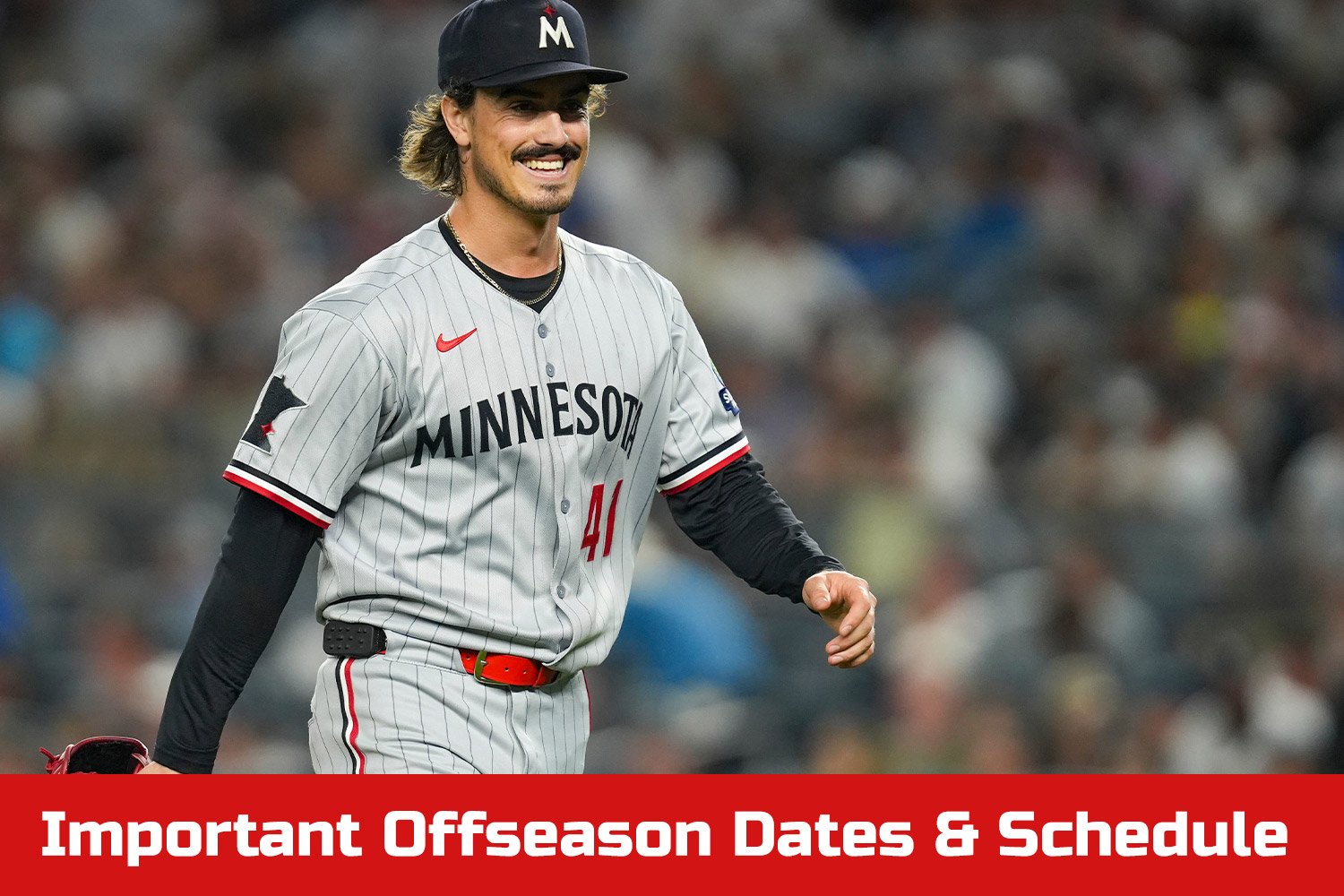
    What if the sell-off we saw at the trade deadline was only beginning? Here's what it might look like if the Twins front office chooses to go full scorched earth in a true reset that ushers out the previous core and clears the books.

    Nick Nelson
    Image courtesy of Jesse Johnson, Matt Krohn, Bill Streicher-Imagn Images

    Twins Video

    Twins leadership has hinted, not so subtly, that fans can expect a non-competitive rebuild season in 2026. The big question is how far they plan to lean into this. The baseline scenario is that the Twins mostly stand pat, holding onto what they've got and maybe spending modestly to try and fill some gaps. 

    That is, I would argue, the best fans can expect. It's not what I'm expecting.

    Based on everything I've seen and heard, in combination with my general lack of faith in ownership's mettle (regardless of "new investors"), I believe the Twins are going to full-on tank next year. They'll dump more of their more even moderately expensive prime-aged players who have value — for the players' sakes as much as theirs — and they'll run out a very low payroll in 2026 under the messaging of a youth-driven rebuild. "Come see the kids play at Target Field!"

    How might this actually play out in practice? To convey an image of what the most extreme version of a conclusive teardown this offseason might look like, I theorized a few trade destinations for players who would be likely to depart. I'm not gonna get into guessing at what the returns might look like — that's a matter for another day, or for the commenters to muse on — but I wanted to put a little more specificity by identifying some logical trade partners.

    Here's a rundown of some moves I could envision, followed by an overview of what would remain.

    Trade Joe Ryan to the Red Sox and Pablo Lopez to the Mets.
    Minnesota and Boston were in (potentially deep) talks over Ryan trade at the deadline. The Red Sox could use a starter like him added to their rotation, which was underscored in a playoff exit against the Yankees. I have little doubt these discussions will pick up again in the offseason so it's just a matter of getting across the finish line. 

    Lopez to the Mets is a bit more of a creative and unfounded guess but makes a lot of sense in my mind. New York just experienced a dramatic midseason collapse, and you just know owner Steve Cohen is looking to make an ambitious statement this winter. Lopez would give them the durable, veteran, front-end starter they need, and they won't blink at adding his salary.

    Trade Byron Buxton to the Braves.
    This pains me to write. It's true that Buxton has declared his intention to remain in a Twins uniform for life, but sometimes people reconsider things. If the front office is up-front with Buxton about what the next two years have in store, it's entirely possible Buxton changes his tune, knowing that Minnesota's next contending window won't likely overlap with his ability to contribute at a high level.

    In the same vein as Carlos Correa and Houston, the idea of Buxton accepting a trade only to one team — his hometown Braves — feels plausible. So does the idea of Atlanta pursuing Buxton's All-Star impact coming off a disappointing season, though they'd have to figure a few things out in the outfield.

    Trade Royce Lewis to the Angels.
    Another boring "trade to hometown" concept that also has merits. I have a hard time envisioning a Lewis trade that makes much sense for the Twins, given how low his stock is at the moment, but maybe a downtrodden Angels team gambles on the change-of-scenery effect and pays a reasonable premium for the upside and three remaining years of service. They did watch Lewis launch a pair of homers in their ballpark near the end of the season.

    It's not really a matter of money, because Lewis's projected salary ($3 million according to MLBTR) isn't substantial. But, fair or not, it's just hard to see any kind of true "reset" taking place on this team with Lewis still a part of it. And he hasn't been talking like a guy who's in lockstep with team leadership in quite a while.

    Trade Ryan Jeffers to the Rays.
    Tampa is known to be looking for catching help coming off a season where they ranked third-to-last in fWAR at the position. Jeffers is slated to make around $6.6 million in his final season before free agency, which is probably not enough to make even the low-budget Rays balk, but perhaps too much for a tanking Twins team — especially if they feel they can extract some real value before he becomes a free agent. 

    The Twins have traded with the Rays plenty of times before, including most recently at the deadline when they dealt Griffin Jax for Taj Bradley.

    Where Does This Leave Us?
    Okay, so in this most extreme vision for wiping the slate clean, the Twins part with roughly $50 million in salary, and basically every veteran player from the previous wave. I left out Bailey Ober, only because the value proposition of trading him is so unfavorable, but he could conceivably be shipped out too. I also left out Trevor Larnach, for similar reasons, and just to keep some small semblance of continuity on the offense. 

    Below I took a spin at concocting a 2026 roster in this aftermath. Spoiler alert: the payroll amounts to under $50 million, with a large portion of it going toward Carlos Correa in Houston. A few decisions I made to lend some realism:

    • Had them re-sign Christian Vazquez for $3 million as a veteran stopgap as they figure out their post-Jeffers future at catcher.
    • Also had the Twins reunite with Isiah Kiner-Falefa, a middling free agent, to fill in at shortstop with Lee shifting over to third in Lewis's stead. The idea here is that Kiner-Falefa is competently keeping the seat warm until Kaelen Culpepper arrives.
    • On that note, the upside of this generally grim scenario is that the Twins will be unimpeded in pushing their top prospects into the spotlight. In fact, to generate some shred of enthusiasm, they may feel compelled to do so. For that reason, I've got Walker Jenkins on the Opening Day roster, playing center field as Buxton's successor.

    cheaproster2026.png

    I mean, yikes. I will say up-front that what I have laid out above is undoubtedly exaggerated. Though I do consider myself pretty pessimistic about the team's intentions at this point, I'm not expecting a sub-$50 million payroll. 

    First of all, they're not going to trade ALL of those guys. (But if they trade even one I wonder why they wouldn't just trade most.) Moreover, they are going to get back talent in these trades. Significant talent in some cases. Probably major-league talent and maybe a few guys already making over the minimum. And yeah, the front office will make a few procedural signings beyond the ones I included, maybe spending a few mil on some relievers, but be assured: they're not throwing any serious money at free agency.

    The bottom line here is that what's presented above is unfortunately not out of the question. If the Twins are serious about clearing the books and starting over as ownership reconfigures and a lockout looms, the exodus that is yet to come could be staggering for what fans remain. Brace yourselves.

    Follow Twins Daily For Minnesota Twins News & Analysis

    Recent Twins Articles

    Recent Twins Videos

    Twins Top Prospects

    Marek Houston

    Cedar Rapids Kernels - A+, SS
    The 22-year-old went 2-for-5 on Thursday night, his third straight multi-hit game. Heading into the week, he was hitting .246/.328/.404 (.732). Three games later, he is hitting .296/.359/.437 (.796).

    User Feedback

    Recommended Comments


    Featured Comments

    5 hours ago, old nurse said:

    The people who created the metric called in indefinite due to the defensive metric component. There is no difference between a 1.4 WAR position player and a 1.5. Calling a prospect a success with a single season of 1.5 war and ignoring everything else is incorrect. You are getting a prospect to build a team, not to plug a hole for a year. A signing of a player for a one year contract you would likely have to determine the success by ROI. A 1.5 WAR for a Ty France is getting what you paid for. Had Conforto even provided 1.5 WAR for the Dodgers, that would have been a poor contracts  Saying a player that is purchased as a DFA is the same as a player with multiple years in the majors but not 1.5 WAR, and a minor league prospect the same thing is not an accurate description.  


    Let’s look at a real-life example as see how the model holds up.  The Brewers not only had the best record of teams in the bottom half of revenue, they had the best record in MLB.  How did they acquire the players to build this roster.

    They had 15 players that produced 1.5 or greater WAR.  4 were drafted and 2 were International signings.  So there were 6 prospects acquired without trades.  They produced 42.8% of their WAR.  
    4 pitchers and 2 position players fall under the category of acquired as prospects.  Peralta was acquired as a minor leaguer as was Chad Patrick.  Quinn Priester had pitched 100 MLB innings and had .1 WAR in the previous season.  I think we can call him a prospect.  The other pitcher that produced 1.5 WAR was Megill who was acquired from the Twins and he certainly was unproven.

    The 2 position players were Collins and Durbin and they were acquired as minor leaguers.  These 6 players contributed 40.7.  So prospects contributed a total of 83.5% of their WAR.  They had no production from free agents and two players are categorized as trades for established players.  There is no doubt Yehlich was and established player.  Contreras however had (1) 2.0 WAR season prior to the trade so he was basically an Eddy Julien Equivalent in terms of being proven.  If you slide him to the acquired as prospects bucked, this brewer team only had one player contribute that was not drafted or acquired as a prospect.  If Contreras is not considered a trade for an established player the percentage produced by prospects goes to 93.5%.  

    This team was built through prospects as are the majority of success stories among teams in the bottom half of revenue.  It's not rocket science.  It's just not feasible to compete with teams that have a $100M or $200M or $300M revenue advantage unless you build through prospects,  It's just not financially feasible which Riverbrian pointed out in the percentage of prearb players on successful teams throughout the season.   

      2025 Brewers (97 wins)   Acquired WAR  
               
      Brice Turang   Drafted 4.4  
      William Contreras   AaP 3.6  
      Sal Frelick   Drafted 3.6  
      Jackson Chourio   Intl 2.9  
      Caleb Durbin   Aap 2.6  
      Isaac Collins   Aap 2.6  
      Christian Yelich   Trade 2.4  
                  
      Freddy Peralta   AaP 3.6  
      Chad Patrick   AaP AaP  
      Quinn Priester   AaP 1.9  
      Brandon Woodruff   Drafted 1.8  
      Abner Uribe   Intl 1.7  
      Trevor Megill   AaP 1.5  
      Aaron Ashby   Drafted 1.2  
                  
    2 hours ago, Major League Ready said:

    Let’s look at a real-life example as see how the model holds up.  The Brewers not only had the best record of teams in the bottom half of revenue, they had the best record in MLB.  How did they acquire the players to build this roster.

    They had 15 players that produced 1.5 or greater WAR.  4 were drafted and 2 were International signings.  So there were 6 prospects acquired without trades.  They produced 42.8% of their WAR.  
    4 pitchers and 2 position players fall under the category of acquired as prospects.  Peralta was acquired as a minor leaguer as was Chad Patrick.  Quinn Priester had pitched 100 MLB innings and had .1 WAR in the previous season.  I think we can call him a prospect.  The other pitcher that produced 1.5 WAR was Megill who was acquired from the Twins and he certainly was unproven.

    The 2 position players were Collins and Durbin and they were acquired as minor leaguers.  These 6 players contributed 40.7.  So prospects contributed a total of 83.5% of their WAR.  They had no production from free agents and two players are categorized as trades for established players.  There is no doubt Yehlich was and established player.  Contreras however had (1) 2.0 WAR season prior to the trade so he was basically an Eddy Julien Equivalent in terms of being proven.  If you slide him to the acquired as prospects bucked, this brewer team only had one player contribute that was not drafted or acquired as a prospect.  If Contreras is not considered a trade for an established player the percentage produced by prospects goes to 93.5%.  

    This team was built through prospects as are the majority of success stories among teams in the bottom half of revenue.  It's not rocket science.  It's just not feasible to compete with teams that have a $100M or $200M or $300M revenue advantage unless you build through prospects,  It's just not financially feasible which Riverbrian pointed out in the percentage of prearb players on successful teams throughout the season.   

      2025 Brewers (97 wins)   Acquired WAR  
               
      Brice Turang   Drafted 4.4  
      William Contreras   AaP 3.6  
      Sal Frelick   Drafted 3.6  
      Jackson Chourio   Intl 2.9  
      Caleb Durbin   Aap 2.6  
      Isaac Collins   Aap 2.6  
      Christian Yelich   Trade 2.4  
                  
      Freddy Peralta   AaP 3.6  
      Chad Patrick   AaP AaP  
      Quinn Priester   AaP 1.9  
      Brandon Woodruff   Drafted 1.8  
      Abner Uribe   Intl 1.7  
      Trevor Megill   AaP 1.5  
      Aaron Ashby   Drafted 1.2  
                  

    You don’t understand. You can’t make the basis on just one year’s performance and call it good. 

    10 hours ago, old nurse said:

    You don’t understand. You can’t make the basis on just one year’s performance and call it good. 

    And you don't understand several things.  One I collected the data from literally every 90 win team in the past 25 years and the numbers I am quoting are the result of all of those teams and provided an example of a given team to illustrate.   Two, the entire premise is to determine how a good team was built.  That is done in a given year.  If you want to understand the impact on all teams you simply average the total of all of those teams or takes the best teams from a given successful organization which I have also done.

    1 hour ago, Major League Ready said:

    And you don't understand several things.  One I collected the data from literally every 90 win team in the past 25 years and the numbers I am quoting are the result of all of those teams and provided an example of a given team to illustrate.   Two, the entire premise is to determine how a good team was built.  That is done in a given year.  If you want to understand the impact on all teams you simply average the total of all of those teams or takes the best teams from a given successful organization which I have also done.

    You are determining what the team has for a single year, not ongoing success.  You are giving equal credit to the bit players as the solid player for success. 

    15 minutes ago, old nurse said:

    You are determining what the team has for a single year, not ongoing success.  You are giving equal credit to the bit players as the solid player for success. 

    Man you just don't get it.  If we want to determine the relative contribution of acquisition methods used to build the 97-win 2025 Milwaukee Brewers you identify the acquisition method for the players that contributed to the 2025 Milwaukee Brewers.  Pretty simple.  If you want to understand sustained success you take the data from the individual years for the teams that have had the most success and average the results to determine which acquisition strategies have contributed to their success.  If Cleveland has (10) 90-win seasons in a 20 year period, how do you determine the relative contribution from each acquisition method for their most successful teams?  You take the data from all of those 90-win seasons, and average it for each acquisition method,  That would illustrate how a team sustained success over a long period of time.   

    1 hour ago, Major League Ready said:

    Man you just don't get it.  If we want to determine the relative contribution of acquisition methods used to build the 97-win 2025 Milwaukee Brewers you identify the acquisition method for the players that contributed to the 2025 Milwaukee Brewers.  Pretty simple.  If you want to understand sustained success you take the data from the individual years for the teams that have had the most success and average the results to determine which acquisition strategies have contributed to their success.  If Cleveland has (10) 90-win seasons in a 20 year period, how do you determine the relative contribution from each acquisition method for their most successful teams?  You take the data from all of those 90-win seasons, and average it for each acquisition method,  That would illustrate how a team sustained success over a long period of time.   

    It tells you nothing as it is all generalities. One could find similar numbers for how teams acquire player. The key is successful players and your analysis does nothing to further the knowledge off how to do that. 

    6 hours ago, old nurse said:

    It tells you nothing as it is all generalities. One could find similar numbers for how teams acquire player. The key is successful players and your analysis does nothing to further the knowledge off how to do that. 

    OK, I will bite.  How does identifying the players that contributed the most to a successful team and how much they contributed (via WAR) "do nothing to further the knowledge off how to do that".  

    22 hours ago, Major League Ready said:

    OK, I will bite.  How does identifying the players that contributed the most to a successful team and how much they contributed (via WAR) "do nothing to further the knowledge off how to do that".  

    Your research does nothing to identify the process. Miami is built the same way as Milwaukee. There is a difference in results 

    50 minutes ago, old nurse said:

    Your research does nothing to identify the process. Miami is built the same way as Milwaukee. There is a difference in results 

    How would I possibly know a team's process with any degree of accuracy and when was that ever the conversation?  We don't have the access and information to determine any team's process. 

    I think it was quite clear we were discussing which acquisition practices were the most likely to produce success.   That we can clearly identify.  As a matter of fact, we can identify the acquisition method (practices) for 100% of every contributing player on every team.  Therefore, we can determine exactly how much each acquisition method has contributed to every successful team.  There is no mystery as to if we can clearly identify how a team was built if you are willing to actually take an objective look and acknowledge what has worked. 

    The fact they every team have varying degrees of success is indicative of the quality of their process but tells us little about the relative merit of acquisition methods.  Would you expect any practice to work universally even when executed very poorly?  That's a ridiculous argument.  Do you want the organization to follow the practices that have produced the best results or should we ignore them if they don't work when applied poorly?  The alternative is to follow practices that have worked to a far lesser degree.   That's not what I would hope for from the Twins.

    12 hours ago, Major League Ready said:

    How would I possibly know a team's process with any degree of accuracy and when was that ever the conversation?  We don't have the access and information to determine any team's process. 

    I think it was quite clear we were discussing which acquisition practices were the most likely to produce success.   That we can clearly identify.  As a matter of fact, we can identify the acquisition method (practices) for 100% of every contributing player on every team.  Therefore, we can determine exactly how much each acquisition method has contributed to every successful team.  There is no mystery as to if we can clearly identify how a team was built if you are willing to actually take an objective look and acknowledge what has worked. 

    The fact they every team have varying degrees of success is indicative of the quality of their process but tells us little about the relative merit of acquisition methods.  Would you expect any practice to work universally even when executed very poorly?  That's a ridiculous argument.  Do you want the organization to follow the practices that have produced the best results or should we ignore them if they don't work when applied poorly?  The alternative is to follow practices that have worked to a far lesser degree.   That's not what I would hope for from the Twins.

    Looking at a one year window and also calling mediocrity a cornerstone to winning is not an accurate way to assess for ongoing success. Sorry the rise and falling of the Twins has not shown you that  

    There are only 2 ways to have  new talent into the organization to build it. One is to sign a free agent who is either a useful player or a discarded one. One costs a lot of money, one doesn’t. Waiver claims, DFAs Rule V would fit in the discard pile. Then there is amateur talent acquisition.  Without having any acumen for that, the team would have nothing to shuffle for trades. Your method of evaluating talent acquisition ignores the cost of acquisition. 

    2 hours ago, old nurse said:

    Looking at a one year window and also calling mediocrity a cornerstone to winning is not an accurate way to assess for ongoing success. Sorry the rise and falling of the Twins has not shown you that  

    There are only 2 ways to have  new talent into the organization to build it. One is to sign a free agent who is either a useful player or a discarded one. One costs a lot of money, one doesn’t. Waiver claims, DFAs Rule V would fit in the discard pile. Then there is amateur talent acquisition.  Without having any acumen for that, the team would have nothing to shuffle for trades. Your method of evaluating talent acquisition ignores the cost of acquisition. 

    I don't know if you still don't understand that the goal is to determine which acquisition methods are the most effective or if you just refuse to accept any information that does not fit your narrative.  The "method" you refer to identifies precisely the percentage of production from each acquisition method.   That's it.  Job done.  We know exactly how much each acquisition method has contributed.  You want to know the relative impact of drafting or any other method, you have it.  Why exactly one method has produced better than another could be debated but the relative amount is quite certain. 

    We might assume free agency only contributes 11% because it's more expensive but I don't need to consider cost to understand it's far less impactful than drafting or trading for prospects.

    The one-year thing has become comical.  The data spans 25 years.  How do you identify a playoff team with looking at a specific year?  Obviously, that's the only context that makes sense.  If you want to understand if an organization has sustained success, you look at their relative success over many years.  Once you identify the most successful organizations, you aggregate all of the years to determine the relative percentage of production from each method over whatever period of time is measured.  In this case, 25 years.  The sample size is literally every team in the bottom half of revenue for 25 years and you somehow think we are talking about 1 year.  You see only what you want to see.


    Create an account or sign in to comment

    You need to be a member in order to leave a comment

    Create an account

    Sign up for a new account in our community. It's easy!

    Register a new account

    Sign in

    Already have an account? Sign in here.

    Sign In Now

×
×
  • Create New...