Jump to content
Twins Daily
  • Create Account
  • Twins News & Analysis

    The Twins’ Homegrown Starting Pitching Has Been Few and Far Between

    The Twins have invested heavily in pitching, but there’s one glaring problem: They haven’t developed enough quality starting pitchers from within.

    Sam Caulder
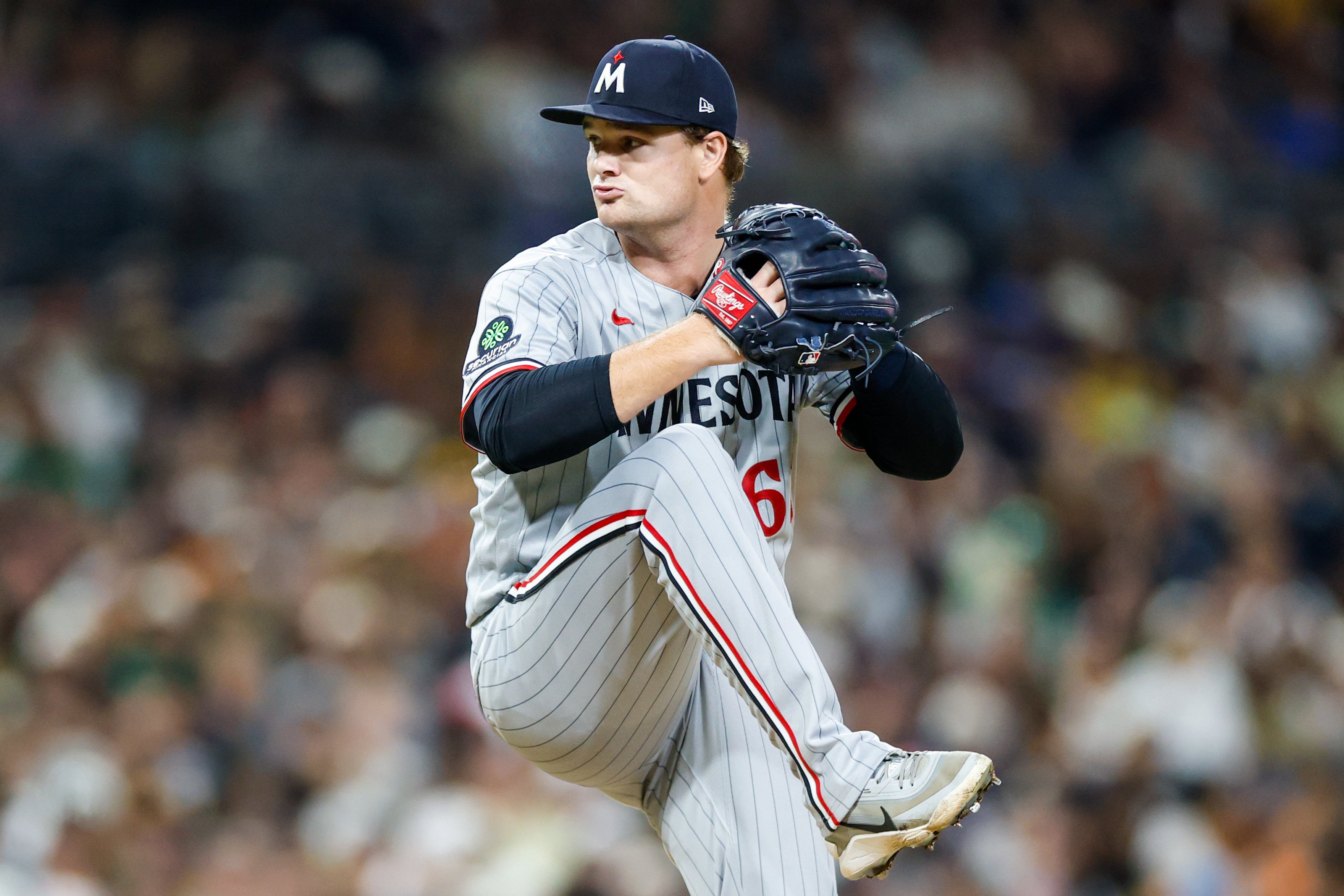
    Image courtesy of David Frerker-Imagn Images

    Twins Video

    There are certain things, or positions, rather, that organizations can never have enough of. Starting pitching is one of those things, and the Twins have experienced firsthand this year just how important pitching depth can be. 

    With injuries to guys like Pablo López, Mick Abel and, more recently, Joe Ryan, Minnesota’s starting rotation has been tested in ways that probably weren’t expected coming into the season. But seeing so much of the organization’s pitching depth has made me wonder something: Do the Twins have an organizational problem when it comes to developing homegrown starting pitchers?

    Obviously, there’s one clear outlier in that conversation. Ryan has spent most of his professional career in Minnesota, and the Twins have turned him into one of the better starting pitchers in the American League. He was acquired from Tampa Bay as part of the Nelson Cruz trade in 2021, developed into a legitimate major league starter and eventually became the kind of pitcher the Twins could confidently build a rotation around. But aside from Ryan — who himself was brought in from another organization — when was the last time the Twins turned a homegrown arm into a legitimate, quality starting pitcher?

    That’s where things get a little murky. I don’t think you can call anybody else currently in the organization a true quality starter. Guys like Zebby Matthews and Bailey Ober have each had flashes of becoming that kind of pitcher, and both were drafted and developed by the Twins. But ultimately, Ober has kind of stabilized as a back-end starter, and on a better team, you could even make the argument that his best role might be in the bullpen. Matthews, meanwhile, is starting to look like a pitcher whose future could eventually take him in that direction as well.

    Both guys have an ERA north of 4.60 this season, and given their respective track records, I’m not sure you can truly classify either one as a quality major league starter right now. That’s not to say either pitcher is a failure; far from it. The Twins have gotten major-league innings out of both, and Ober in particular has been a valuable part of the rotation for several years now. But there’s a difference between developing a serviceable starting pitcher and developing a legitimate impact arm. And that’s the part the Twins have struggled with.

    Connor Prielipp could eventually change that conversation. The 25-year-old left-hander has the kind of arsenal that makes you believe there’s something much bigger in there. A mid-to-upper 90s fastball paired with two filthy breaking balls is the profile of someone who could eventually develop into an ace, or at the very least a really good No. 2 or No. 3 starter. The problem is that we just haven’t seen enough consistency yet. Prielipp is still in his rookie season, and there’s obviously plenty of time for him to figure things out. But the fact that he represents one of the clearest candidates in the organization to become a legitimate frontline starter also says something about where the Twins are currently at from a pitching-development standpoint.

    Even when you look at the kind of pitchers Minnesota has drafted in recent years, there’s a lot of straightening out to do. Dasan Hill was moved at the trade deadline as part of the return for Jeff Hoffman. Riley Quick owns a 15.4% walk rate at Double-A, and Charlee Soto has struggled to stay on the field. It’s way too early to say what any of those guys ultimately will be, but that’s kind of the point. The Twins haven’t really had that future ace, top-100 type of pitching prospect emerge from their system in a long time. And I think a big part of that is because they haven’t been able to develop starting pitchers particularly well.

    Now, I didn’t mention Taj Bradley, Abel or Kendry Rojas. And that’s because all three did a significant amount of their development with their former organizations. Bradley threw 354 innings with Tampa Bay before coming to Minnesota. Abel made his MLB debut with Philadelphia last year, and Rojas only threw five innings beyond Double-A with Toronto before joining the Twins. You could certainly argue that Abel and Rojas (especially) are partially the products of Minnesota’s development system, especially considering how much of their recent development has happened with the Twins. But even still, they aren’t your traditional homegrown players, and in Rojas’ case, his current trajectory looks more like that of a potential relief pitcher than a future rotation anchor.

    That’s not necessarily an indictment of the Twins’ development system by itself. Teams acquire players from other organizations all the time, and the ability to take someone else’s prospect and maximize his talent is an important part of player development. But the Twins have also spent a significant amount of draft capital on pitching. In fact, nine of their top 11 picks in the most recent draft were pitchers. The Twins clearly believe they can figure this out.

    They’re betting heavily on their ability to identify arms, develop them and eventually turn them into major league contributors. Maybe guys like Quick, Prielipp and Abel will make me eat my words. Maybe one of them eventually becomes the kind of pitcher the Twins have been missing. But until that happens, I think the organization’s track record of developing major league starting pitchers is something worth addressing. Because teams can never have enough starting pitching, and right now, the Twins don’t seem to have enough of it coming from within.

    Want more Twins in your Google results? Add us as a preferred source.

    Follow Twins Daily For Minnesota Twins News & Analysis

    Recent Twins Articles

    Recent Twins Videos


    User Feedback

    Recommended Comments


    Featured Comments

    8 hours ago, dxpavelka said:

    The biggest impact of trading Berrios was that a year hence they found themselves in need of a Jose Berrios type of pitcher.  Which lead to the Mahle trade.  Need I say more?

    They needed a pitcher like Berrios was the previous year (2021).  The 2022 version that had an ERA of 5.23 would not necessarily have negated their need for a good SP although Berrios did give them 3 very good innings before being pulled in game 2.

    22 hours ago, Mike Sixel said:

    I really don't get this gripe. If you draft good hitters and trade them for good pitchers, that works. If you trade relief pitchers your developed for SP, that likely works better, because you are trading for more sure things than if you draft them 

    This idea that somehow they've failed at having good starting pitchers just isn't borne out when looking at their standings in pitching. It's average or better. 


    Starting pitching gets by far the most trade value. It's almost impossible make the kinds of trades you're suggesting. 

    Starters. Quality starters are what we're talking about. The players required to advance in the playoffs. Ober is not in the same league as Matthews. Ober was a quality starter for 4 years, and potentially a back-end playoff rotation option.

    Apart from that, the Twins have not developed a single #3 or better arm since Berrios, who Falvey inherited. Falvey did put together a rotation, but it was largely built on scavanging assets he inherited from the previous regime.

    There is a lot of discussion at Twins Daily about following the model of Tampa Bay or Cleveland.  And yet, when they had the opportunity to do just that at this year's trade deadline, most posters railed against trading Ryan and Jeffers because the Twins had a small chance of possibly getting the final wild card spot.  And after that, who knows what could happen.  And now reality is settling in.  As of this morning, the Twins are tied for 6th in the race for the last wildcard spot.  This means the Twins have to outperform 6 other teams over the final 31 games.  Possible? Yes.  Probable?  Not likely.  Trading Ryan and Jeffers was the move that a Tampa Bay or Cleveland (or Detroit or Chicago) would have made.

    6 hours ago, terrydactyls said:

    There is a lot of discussion at Twins Daily about following the model of Tampa Bay or Cleveland.  And yet, when they had the opportunity to do just that at this year's trade deadline, most posters railed against trading Ryan and Jeffers because the Twins had a small chance of possibly getting the final wild card spot.  And after that, who knows what could happen.  And now reality is settling in.  As of this morning, the Twins are tied for 6th in the race for the last wildcard spot.  This means the Twins have to outperform 6 other teams over the final 31 games.  Possible? Yes.  Probable?  Not likely.  Trading Ryan and Jeffers was the move that a Tampa Bay or Cleveland (or Detroit or Chicago) would have made.

    I agree with the decision not to trade Ryan, question the decision not to trade Jeffers, but your point is well taken. If posters here want to follow the Tampa Bay or Cleveland model, we need to be trading guys at their highest value before reaching free agency. That certainly meant trading Jeffers this year. Ryan is a little more debatable, at least to me, because I personally think we will do just as well in the off-season as we would have done at the trade deadline but the point remains. Tampa Bay and Cleveland developed their pitching pipeline by making frequent trades of established MLB players for well scouted prospects, including pitchers. If we want to follow that blueprint, we need to be doing the same by trading guys like Jefferson Ryan for young pitchers to develop. We can't have it both ways.

    This is IMO is a nuanced subject. Mostly around payroll. How many of last year's WS teams current SP, that aren't on the IL, are Homegrown? Zero. Including the players on the IL Two. The best record in the AL. One. The second-best record in the Al. Two. Worst record this season in baseball...Rockies. 3 of 5. Athletics, 3 of 6. technically J.T. Ginn could be called an A's prospect. So, 4 of 6.

    Homegrown. Sure, you hope for 1-2 of them. Trades, same. It's the free agents the Twins don't take advantage of.

    13 hours ago, terrydactyls said:

    There is a lot of discussion at Twins Daily about following the model of Tampa Bay or Cleveland.  And yet, when they had the opportunity to do just that at this year's trade deadline, most posters railed against trading Ryan and Jeffers because the Twins had a small chance of possibly getting the final wild card spot.  And after that, who knows what could happen.  And now reality is settling in.  As of this morning, the Twins are tied for 6th in the race for the last wildcard spot.  This means the Twins have to outperform 6 other teams over the final 31 games.  Possible? Yes.  Probable?  Not likely.  Trading Ryan and Jeffers was the move that a Tampa Bay or Cleveland (or Detroit or Chicago) would have made.

    Milwaukee as well.  It seemed to me to be about 50/50 in terms of TD posters favoring buying or selling but perhaps the majority wanted to "go for it".  I was actually surprised there were many people that wanted to follow a strategy more focused on building a true contender. 

    I guess I am a greedy fan.  I don't care about constructing a team with a 25% chance of getting the last wildcard spot in a year when the AL is really weak.  I want to follow an approach that can build a team that is really good for several years.   We passed on an opportunity to get some impact prospects and we traded away a couple guys with the potential to be high impact players.  Who knows, they all might turn out to never play at the major league level.  We still gave up the potential to make the team a lot better for several years.  We can't buy those players like some other teams.  The opportunity we just passed up is how low revenue teams can create an opportunity.  

    On 8/24/2026 at 7:12 AM, Major League Ready said:

    They did not get anything back.  This has been established but you can't look at it this simplistically.  He had no value to the 2021 team given they were out of contention.  He produced .9 WAR in 2022 which was his last season of control.  That's as far as the trade comparison goes and he had no value.  You can't lump in the rest of his career.

    If you want to look beyond the 1.5 seasons of control they gave up, you have to do that in the context of should they have extended him.  His first year was good.  (2.9 WAR)  The last 3 seasons he has produced a total of 2.4 WAR.   He could bounce back but right now I am very glad they did not extend him. 

    You also can't assume that what happened there is what would have happened here.

    On 8/24/2026 at 7:19 AM, Major League Ready said:

    They needed a pitcher like Berrios was the previous year (2021).  The 2022 version that had an ERA of 5.23 would not necessarily have negated their need for a good SP although Berrios did give them 3 very good innings before being pulled in game 2.

    Again, you can't ASSUME that what he did there is what he would have done here.

    19 minutes ago, dxpavelka said:

    You also can't assume that what happened there is what would have happened here.

    Does it make more sense to assume as you have that he would have been good here?  We should make an assumption not based on what he did but what he would have done.  He has been gone for 5 seasons and produced one good season.  In the other four he produced 3.3 WAR.   Yet, you want to make the case it was a terrible mistake to let him go.  I would bet that had he been good, you would not have been to accepting of the premise we can't assume he would have been good here.

    On 8/26/2026 at 7:39 AM, Major League Ready said:

    Does it make more sense to assume as you have that he would have been good here?  We should make an assumption not based on what he did but what he would have done.  He has been gone for 5 seasons and produced one good season.  In the other four he produced 3.3 WAR.   Yet, you want to make the case it was a terrible mistake to let him go.  I would bet that had he been good, you would not have been to accepting of the premise we can't assume he would have been good here.

    I'll say that both 2023 & 2024 were better than anything SWR did here and hell, two months of 2021 were better than anything Austin Martin has done.


    Create an account or sign in to comment

    You need to be a member in order to leave a comment

    Create an account

    Sign up for a new account in our community. It's easy!

    Register a new account

    Sign in

    Already have an account? Sign in here.

    Sign In Now

×
×
  • Create New...