


Twins Video
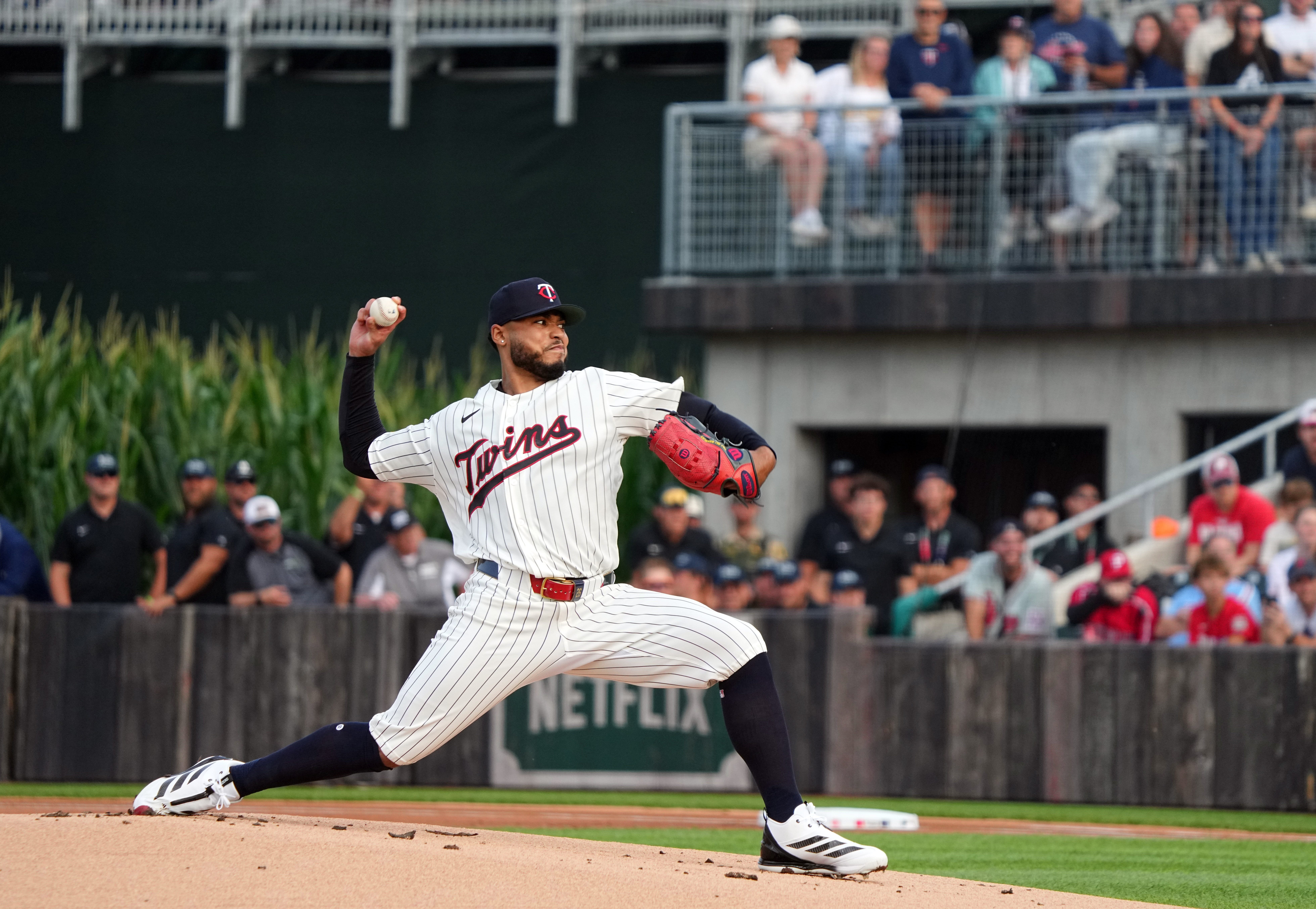
For as much grief as the Twins’ front office gets for the 2025 trade deadline and the firesale that followed, there have been some big wins to come out of it. And right now, none is bigger than Taj Bradley.
Bradley came over from Tampa Bay in a one-for-one swap for Griffin Jax, a move that didn’t look particularly promising during the right-hander’s first few weeks in Minnesota. In his first 31 1/3 innings with Minnesota, he posted a 6.61 ERA and 4.73 FIP. With those numbers in mind, there was some speculation heading into 2026 about whether he was cut out to be a big league starter. As it turns out, it may have been a little premature to ask that question about a 24-year-old pitcher. Bradley exploded out of the gates this season, recording at least seven strikeouts and allowing one or fewer earned runs in three of his first four starts. While there were some inconsistencies scattered throughout the year, which is to be expected from a young pitcher, it was an impressive campaign for the right-hander.
He finished the season with a 3.73 ERA across 178 1/3 innings, establishing himself as one of the more intriguing young arms in baseball. He was also one of just 13 pitchers to record 200 or more strikeouts this season, making it abundantly clear why the Twins wanted him in the first place. The guy’s filthy. Bradley’s 27.4% strikeout rate ranked in the 83rd percentile among big league pitchers, and he has the kind of raw stuff that gives him a chance to become a legitimate frontline starter. While he doesn’t have the deepest arsenal in the league, what he has works, and it can be incredibly difficult for opposing hitters to handle when he’s executing.
Coming from a steep, over-the-top arm angle, Bradley’s four-seam fastball doesn’t feature a ton of horizontal movement, but it gets plenty of rise through the zone. That profile can be difficult for hitters to handle, particularly when the pitch is located properly and arrives at 97 mph. That fastball also provides an excellent foundation for his secondary offerings, allowing Bradley to keep hitters off balance and generate plenty of swings and misses.
All three of his secondaries, the splitter, cutter and curveball, generated whiff rates north of 36% this season. Bradley’s underlying stuff metrics back that up, too. He finished the year with a 110 Stuff+ grade, with 100 representing league average. Among pitchers who threw at least 100 innings, that mark was tied for the 10th-highest in baseball.
There’s a lot to like about that combination, and we saw the results throughout the season. Bradley has the ability to shut down an opposing lineup on any given night, and when his fastball is working alongside his secondaries, he can look every bit like the kind of starter teams want leading their rotations. The foundation for that kind of pitcher is very much there. Now, the next step is finding more consistency and polishing some of the finer details of his game. And that starts with his command.
Over the course of the year, there were far too many times when it felt like Bradley had no idea where the ball was going. Whether it was a splitter that bounced five feet in front of home plate, a fastball to the backstop or a meatball right down the middle, his control was an issue at times. Some of that is reflected in the underlying numbers. Bradley’s hard-hit rate and average exit velocity against both ranked in just the third percentile among big league pitchers, while his walk rate ranked in the 27th percentile. Those numbers suggest there is still plenty of room for improvement, particularly when it comes to limiting damaging contact and putting himself in better counts. If Bradley is going to continue developing into the pitcher we saw flashes of this season, those areas need to improve. Fortunately, there are some relatively clear places for him to start.
For one, Bradley needs to do a better job of consistently elevating his four-seam fastball. Hitters recorded an average exit velocity of 93 mph against that pitch, in large part because he left it over the heart of the plate far too often. Getting the four-seamer up in the zone more frequently, while allowing his secondary offerings to work below it, could make a significant difference. If Bradley can consistently execute that approach, he should be able to get more weak contact and swings and misses without needing to overhaul an arsenal that already works.
It could also help him generate more chases outside the strike zone, an area where there’s room for growth. If Bradley can establish his fastball up in the zone while starting his splitter, cutter and curveball around the heart of the plate before getting them to dive below it, hitters will have a much tougher time distinguishing between pitches. That approach is particularly difficult to handle from Bradley’s over-the-top arm angle, which creates an uncomfortable look for hitters and helps his pitches play off one another. For as many swing-and-misses as he generated this season, opposing hitters didn’t expand the zone against him nearly as much as they could have.
Getting hitters to chase is an important part of pitching at the highest level, and it could be one of the things that takes Bradley’s game to another level. With his stuff, he doesn’t necessarily need to make dramatic changes. He just needs to become more reliable with his execution and take advantage of the weapons he already has.
Overall, it was a really promising year for Bradley. The Twins got to see the upside of what he can become, and with a little more consistency, he has a ton of potential. Considering the jump he made from 2025 to 2026, there’s plenty of reason to believe Bradley can take another meaningful step forward in 2027. He has the raw stuff to be a difference-maker, and another year of development could help him turn those flashes of dominance into something more routine. And if Bradley can take that next step alongside Pablo López and Joe Ryan, assuming both return healthy, the Twins could have a darn good top half of their rotation heading into next season.
For a team that has plenty of questions to answer after another disappointing year, having a young starter like Bradley emerge as a legitimate rotation piece is a pretty significant win. The Jax trade may have drawn plenty of criticism at the time, but Bradley is quickly giving the Twins a reason to feel good about what they got in return.





Recommended Comments
Create an account or sign in to comment
You need to be a member in order to leave a comment
Create an account
Sign up for a new account in our community. It's easy!
Register a new accountSign in
Already have an account? Sign in here.
Sign In Now