Jump to content
Twins Daily
  • Create Account
  • Twins News & Analysis

    Mailbag: Buxton’s Leash, Likely Lineup, Ticket Sales


    Cody Christie

    TwinsFest is done and the Winter Meltdown was a resounding success. Thank you to everyone who was able to attend and make this event a great gathering of fans from throughout Twins Territory.

    Even with the sub-arctic temperatures across the upper Midwest, spring training is quickly approaching. There are plenty of unanswered questions left about the Twins before the season starts.

    Make sure to follow me on Twitter so you can be part of next week's mailbag.

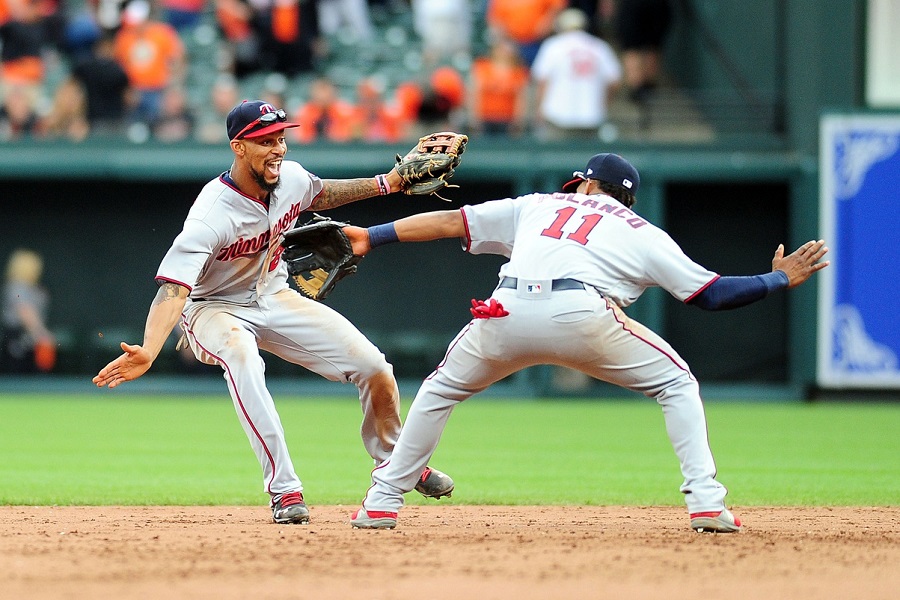
    Image courtesy of Evan Habeeb-USA TODAY Sports

    Twins Video

    https://twitter.com/gary_pecinovsky/status/1089634127882653698

    Ideally, Byron Buxton’s leash won’t have to be tested this season. Last week, I identified Buxton’s emergence as one of the keys to the 2019 club. It’s easy to be discouraged after his 2018 season. Buxton rebuilt his body this off-season by adding 21 pounds of muscle. The extra weight can hopefully increase his durability and keep him on the field when he is bouncing off the outfield grass and crashing into centerfield walls.

    Even if Buxton’s bat struggles again, he continues to provide value through his defense and base running abilities. I believe the team will bat him near the bottom of the order to keep some of the pressure off him. He needs to figure it out at the big-league level, so I think the team is going to sink or swim with Buxton in the line-up this year.

    https://twitter.com/hotts58/status/1088824695116521472

    Minnesota will likely use a few different players at first base this season and the starter could be tied to the player with the hottest bat. Each of the most likely first base options were added to the roster in the last year. C.J. Cron was claimed off waivers this off-season despite a 30-home run campaign in 2018. Tyler Austin saw some action for the Twins last year after being traded from the Yankees. Miguel Sano and Mitch Garver are also possibilities to see time at first. If I’m picking the Opening Day starter now, Cron would be my pick.

    As far as a replacement for Robbie Grossman, Jake Cave seems like he already started to do that last year. Cave played in 91 big league games and racked up over 300 plate appearances. He hit .269/.316/.481 with 32 extra-base hits. The club also used him at all three outfield positions, so it seems likely for him to continue to be used in a fourth outfielder role.

    https://twitter.com/C__Lee/status/1088544039408988161

    If the Twins are done adding players, there seems to be a pretty clear starting situation for the Twins. No one knows how Rocco Baldelli is going to approach lineup construction, but Minnesota has nine players that should be regulars.

    Here’s how I would construct the Opening Day lineup:

    1. Jorge Polanco- SS

    2. Eddie Rosario- LF

    3. Nelson Cruz- DH

    4. Miguel Sano- 3B

    5. CJ Cron- 1B

    6. Jonathan Schoop- 2B

    7. Max Kepler- RF

    8. Jason Castro- C

    9. Byron Buxton- CF

    As I mentioned before, Tyler Austin will probably get some at-bats at first base. The second half of the lineup could be altered depending on who has the hot hand. Buxton might start the year at the bottom of the order, but it will be key for him to be batting near the top by season’s end.

    https://twitter.com/Mike_AnthonyFL/status/1088813118552186880

    This is certainly an intriguing question. In three of the last four seasons, Manny Machado has posted a WAR greater than 6.0. For the Twins, you also need to consider the players he would be replacing. Miguel Sano and Jorge Polanco are currently penciled in to play on Machado’s side of the infield. As Thieres Rabelo wrote about last week, Polanco might be as potent on offense as Machado.

    Polanco could slide over to second base but then he would be taking Jonathan Schoop’s spot in the line-up. Schoop was only worth 0.5 WAR last season and his career high WAR total was 3.8 back in 2017. That being said, Machado is one of the best players in the game. Over the course of 162 games, he could add 2-3 wins to the club. This might all be purely hypothetical because it sounds like the front office isn’t adding Machado or Bryce Harper.

    https://twitter.com/C__Lee/status/1088813937511022594

    Season ticket sales are usually tied to the team’s performance in the previous season. Last year, the Twins were coming off a playoff appearance and their young players seemed poised to take the next step. The club also had veteran stars like Joe Mauer and Brian Dozier that can help to drive sales. Byron Buxton and Miguel Sano were a disappointment in 2018 and Mauer and Dozier are no longer with the club. Also, the team didn’t make the playoffs.

    Nothing drives ticket sales like having a consistently winning product on the field. Season ticket data won’t be released until later in the year. It seems likely that sales will be down, and the demand will be low for the current team. However, winning cures everything.

    https://twitter.com/Hey_Yo_Its_GMan/status/1088830128786980864

    TwinsFest is a wonderful weekend of events and activities for the entire family. Yes, the organization covers the traveling cost for players to attend. While the players are in town, the club usually completes some of the players' physicals so they can save time when players get to Florida.

    Twins President Dave St. Peter has done a good job of building relationships with former players. Luckily, the dates for the event are almost always the last weekend in January. This can make it easy for players to plan their attendance at the event. That being said, a lot of fans want to get autographs from the newer players and the former players aren’t as big of a draw. (Ask Corey Koskie about that.)

    Follow Twins Daily For Minnesota Twins News & Analysis

    Recent Twins Articles

    Recent Twins Videos

    Twins Top Prospects

    Marek Houston

    Cedar Rapids Kernels - A+, SS
    The 22-year-old went 2-for-5 on Friday night, his fourth straight multi-hit game. Heading into the week, he was hitting .246/.328/.404 (.732). Four games later, he is hitting .303/.361/.447 (.808).

    User Feedback

    Recommended Comments


    Featured Comments


    How does the positional adjustment "considerably weaken" cross-positional comparisons with WAR? Cross-positional comparison using WAR is impossible without the positional adjustment.


    The fact that it's impossible without it in no way weakens my point.  The problem is the nature of the adjustment itself.

    When I said the vast majority of people use it more forcefully than it is warranted, I'm speaking about just about every time it's used on Fangraphs.  MVP arguments are rarely made with the very nuances argued in that link.


    For example, rarely when there is a large disparity (say, 6.0 vs. 3.0) is any mention made of how much the defensive component makes up each player's total. Certainly, here on this forum with Byron Buxton, this is true but you also see it on Fangraphs.  I appreciate how they try and caution the use of the stat and they do a nice job laying out the limits of it, I wish they followed those outlines more frequently to set a better example.

    I think context matters. An MVP discussion isn't that important to require all sorts of caveats about using WAR. It's a simple fan ranking, the digital version of bleacher discussions since the game began. WAR has just finally allowed those discussions to gain a little complexity and nuance beyond the previously irrefutable "he looks good" or "he doesn't look good enough". I think using WAR in that context is perfectly appropriate, even if WAR isn't perfect (an impossible standard anyway).


    In the context of recommending or judging transactions, usually a little more nuance is called for, and most often it is provided. Those discussions often use projections, which by definition smooth out some of the rough edges of WAR measurement. Like the Realmuto discussion here the other day -- we were in talking in terms of WAR, but no one was simply taking Realmuto's 2018 WAR as gospel or anything. It was just one data point feeding his 2019 projection, which in turn was balanced by other factors and even presented as a range of possibilities rather than anything certain. And again -- this is a tool for the fan's toolbox. We knew the front office isn't pouring over Realmuto's WAR totals -- there are a million other factors which they are looking at. But those factors are often either off-limits or indecipherable to fans, so we simply use the tools we can -- WAR, projections, comps -- to guide our discussions, often as a "sanity check". Some posters really want Realmuto, but wonder if the prospect cost is too steep, or they wonder if a SP might be a better investment, and they can use WAR and projections to get an idea of parameters to discuss those questions in a way that fans never could before.


    Also, FWIW, it seems to me that Fangraphs isn't shy about noting when defense makes up an abnormally large part of someone's WAR. Maybe not in every list or ranking, but when they specifically discuss Buxton's 2017, or Kiermaier, or even Bryce Harper's 2018, the defensive component of WAR is usually highlighted. Sometimes they stand by their measurement, sometimes not -- but noting it at least allows the reader to factor that into their own opinion.


    How does the positional adjustment "considerably weaken" cross-positional comparisons with WAR? Cross-positional comparison using WAR is impossible without the positional adjustment.

    The positional adjustment asserts that a run scored, or prevented, by a center fielder is worth more than a run scored, or prevented, by a first baseman.


    That's preposterous.

    The positional adjustment asserts that a run scored, or prevented, by a center fielder is worth more than a run scored, or prevented, by a first baseman.


    That's preposterous.

    Given that first base, DH, types barely get paid, and up the middle players get more and aren't out of work as much, I'd hypothesize that teams place more value, and find those players harder too replace....


    Which is the point. How hard are they to replace? It's much harder to replace up the middle defenders than first basemen..... Hence, they get an adjustment in the calculation.

    The fact that it's impossible without it in no way weakens my point. The problem is the nature of the adjustment itself.

    I discussed this upthread. What exactly is the problem that you see? The positional adjustment isn't perfect (again, an impossible standard), but how teams deploy resources across the 9 positions affects the value they receive from those resources. WAR and its related discussions are better off incorporating a calculated estimate of that value rather than ignoring it, or relying solely on an "eye test" to do it.


    I discussed this upthread. What exactly is the problem that you see? The positional adjustment isn't perfect (again, an impossible standard), but how teams deploy resources across the 9 positions affects the value they receive from those resources. WAR and its related discussions are better off incorporating a calculated estimate of that value rather than ignoring it, or relying solely on an "eye test" to do it.


     Seems like you laid out the problems just fine.


    Sure, it makes sense to incorporate it, but remember all those problems when you use the stat too.  Your convictions behind the stat should reflect the flaws in the ingredients.


    If I bake muffins I don't get to frame them as healthy because they have blueberries as I conveniently forgot the tub of sugar i put in it too.

    The positional adjustment asserts that a run scored, or prevented, by a center fielder is worth more than a run scored, or prevented, by a first baseman.


    That's preposterous.

    That's not quite what it says. True, a run is a run is a run on the scoreboard -- but over the long run, it's worth more to a *team* to score or prevent runs at positions where the talent to do so is more scarce. That is what WAR is estimating, to complement what we know from the daily scoreboard.


    The defensive spectrum has been known in some form or other since the game began. The skill of playing as an average defensive CF, SS, or especially catcher is much more rare than the skill of playing as an average defensive 1B (or god forbid, DH!). And with that rarer defensive skill, it also means that, on average, it is slightly harder to find an average MLB bat at those positions too. Historical data bears this out.


    So a team isn't capturing as much value from Ernie Banks at 1B as compared to SS, or Joe Mauer at 1B compared to C. WAR is reflecting that. And baseball teams are bunched close enough together in talent that I guarantee front offices wouldn't shrug it off as "a run is a run is a run" if they can help it -- they are going to want to reallocate those resources to improve their team relative to their competition.


    WAR isn't necessarily an absolute measure of a player's performance. It often can be used that way, because teams generally don't play guys out of position too much or for too long -- but it's important to keep in mind that it is really a measure of a player's value within a team, or their value as deployed by a team. I'll gladly include an asterisk if I have reason to discuss Darin Erstad's WAR at 1B, but that doesn't mean WAR is good for absolutely nothing (say it again).

    Buxton is less valuable at 1B, than in CF......the defensive adjustment shows that. You can easily replace Cron/Austin's defense with the other (or Kepler, or Sano or lots of players), but how do you easily replace the defense Buxton supplies? Certainly not with Cron or Austin........


     Seems like you laid out the problems just fine.


    Sure, it makes sense to incorporate it, but remember all those problems when you use the stat too.  Your convictions behind the stat should reflect the flaws in the ingredients.


    If I bake muffins I don't get to frame them as healthy because they have blueberries as I conveniently forgot the tub of sugar i put in it too.


    To that I'd say: how much are the proponents of WAR actually trying to frame their muffins as "healthy" -- versus how much are skeptics simply seeing that as an excuse to pick it apart? In this very thread, we've seen someone dismiss WAR because "there's no way Billy Hamilton can be equal to Mike Trout" -- nevermind that WAR doesn't say that, and no one said it. And other sentiments that suggest Daniel Palka might be unfairly underrated by WAR -- when his entire profile (traditional stats and scouting) seems to match his 2018 WAR exactly, as a one-dimensional, fringe MLB regular.


    I am not trying to pick on anyone, or be combative -- I genuinely enjoy discussions on this site, I wouldn't be typing these long screeds if I didn't. :) And I think that WAR is a tool that can add depth to those discussions. So I really want to know if and when people perceive that WAR is being used inappropriately, so I can understand their concerns and try to improve my usage of WAR or even just my explanations and interpretations. Perhaps this thread has run its course to that end, but I hope you keep this in mind in future discussions.


    That's not quite what it says. True, a run is a run is a run on the scoreboard -- but over the long run, it's worth more to a *team* to score or prevent runs at positions where the talent to do so is more scarce. That is what WAR is estimating, to complement what we know from the daily scoreboard.

    The defensive spectrum has been known in some form or other since the game began. The skill of playing as an average defensive CF, SS, or especially catcher is much more rare than the skill of playing as an average defensive 1B (or god forbid, DH!). And with that rarer defensive skill, it also means that, on average, it is slightly harder to find an average MLB bat at those positions too. Historical data bears this out.

    So a team isn't capturing as much value from Ernie Banks at 1B as compared to SS, or Joe Mauer at 1B compared to C. WAR is reflecting that. And baseball teams are bunched close enough together in talent that I guarantee front offices wouldn't shrug it off as "a run is a run is a run" if they can help it -- they are going to want to reallocate those resources to improve their team relative to their competition.

    WAR isn't necessarily an absolute measure of a player's performance. It often can be used that way, because teams generally don't play guys out of position too much or for too long -- but it's important to keep in mind that it is really a measure of a player's value within a team, or their value as deployed by a team. I'll gladly include an asterisk if I have reason to discuss Darin Erstad's WAR at 1B, but that doesn't mean WAR is good for absolutely nothing (say it again).


    This. but it's also noting that the defensive impact on run prevention at some positions is larger than others through sheer opportunity as well. there are simply fewer opportunities to make run-saving defensive plays at 1B than at CF. WAR is a useful way of summarizing a players total contributions to the team in a way that's fairly easy to understand, and in doing so it recognizes that certain positions are more valuable than others. That's all the positional adjustment really does.


    (it's also important to note that fWAR and bWAR are very different estimators for pitching; fWAR tells you how good they think a pitcher should have been, attempting to null out luck factors. bWAR tells you what they actually accomplished for the team in that year. fWAR may be better for predicting future success. bWAR is more descriptive of what actually occurred.)


    It's a useful tool, and it's nice to have a stat that tries to bring in everything about a player. It's not the end all be all, but it's a useful starting point for any discussion about a player's value. To my mind, if you have to argue that a player's WAR doesn't mean anything, then you have a weak argument.

    Those familiar with Hammond Stadium know they put up photos up on the stadium above the ticket office.  So, some need to be adjusted.  This year Santana, Mauer and Buxton came down.  Sano was going up.  Just how short is the leash?


    Create an account or sign in to comment

    You need to be a member in order to leave a comment

    Create an account

    Sign up for a new account in our community. It's easy!

    Register a new account

    Sign in

    Already have an account? Sign in here.

    Sign In Now

×
×
  • Create New...