

Jump to content
Twins Daily
  • Create Account
  • Twins News & Analysis

    How The Twins Could Lose Another 100 Games


    Tom Froemming

    Despite the roster looking eerily similar to the one that produced a 100-loss season in 2016, some Twins fans have taken an optimistic view toward this upcoming season. And why not? It's January, when you're this far away from Opening Day hope springs eternal. Anything seems possible.

    With the amount of youth on the team, it's not completely ludicrous to believe in a turnaround. But what I haven't really seen is anyone make the counter argument that the team could be just as bad, maybe even worse, next year. I'm guessing the main reason is because, well, it's not really any fun. But the truth is it's as easy to come up with legit reasons why the Twins could actually regress in 2017.

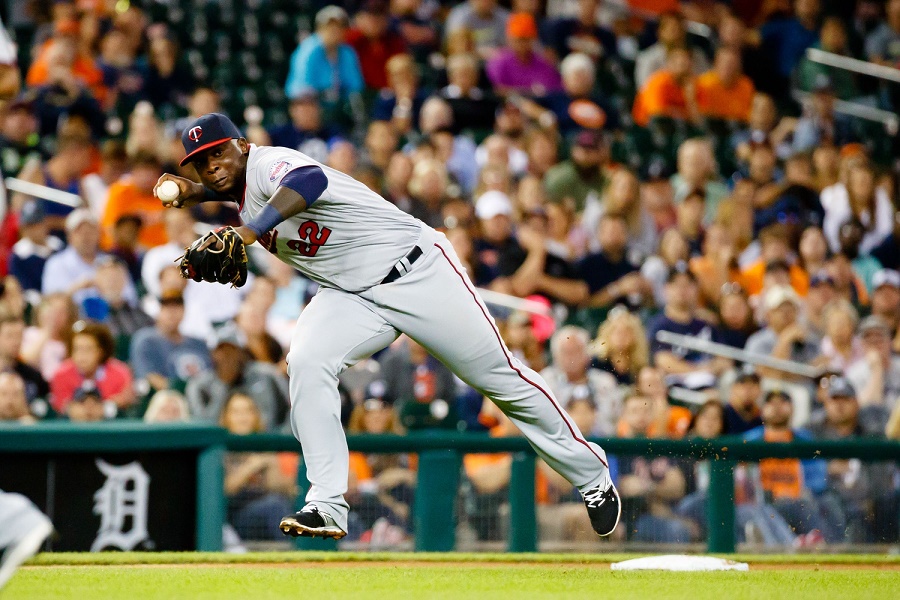
    Image courtesy of Rick Osentoski, USA Today

    Twins Video

    It takes a whole lot bad baseball and bad luck to lose over 100 games. Right now, it's hard to imagine the Twins repeating that feat, but nobody was predicting they'd be that bad last season, either. Here are some things that could lead to another 100-loss season for the Twins.

    Ervin Santana fails to repeat (like he always does)

    When pointing to the unaddressed issue of the pitching staff, most of the Twins hope dealers are quick to point to Santana as if he is some kind of bankable commodity. They'll say things like "well at the top of the rotation we've got Ervin, and we know he'll be solid." Really? Ask Angles fans about the reliability of Santana.

    Santana is coming off a great season, but prior to coming to Minnesota he was terribly inconsistent. He appeared to break out in 2008, his fourth season in the majors, by posting a 3.49 ERA. The next year it was at 5.03. He appeared to have another breakout in 2011, finishing that season with a 3.38 ERA. The next year it was 5.16.

    The yo-yo nature of Ervin's production continued in 2013 when he came back with another strong performance, posting a 3.24 ERA. Then came two mediocre seasons. He was great last year, but if the pattern continues things don't look good for 2017. He has five seasons in which his ERA+ has been over 105, but he's never done it back-to-back.

    Beyond Santana's inconsistent track record, there's also the fact that he turned 34 last month. There are only ten active pitchers who've made more starts than Santana's 343, and that includes free agents Kyle Lohse, Jake Peavy and Bronson Arroyo. Father time will catch up to him eventually.

    Jason Castro is a mere mortal

    Many of the optimists point to Castro, the only major addition this offseason, as the sole reason to believe the Twins' pitching woes will be fixed. As if he is a magic wand that will somehow mend basically the same pitching staff that gave up 128 more runs than any other American League team.

    In my opinion, framing numbers should to be taken with a grain of salt. In order for a catcher to intentionally try to steal strikes, it helps if his pitcher has the command to put a pitch just outside the zone. Does the Houston pitching staff deserve more credit for Castro's impressive framing marks? I think it's certainly possible.

    Also, I suspect there may be umpire backlash against catchers who have reputations as plus framers. I do believe strongly that being a good framer is a skill. Castro has that skill, however, the positive impact he can make greatly depends on the guy he's looking at on the mound and the guy behind him calling strikes.

    And I know he wasn't brought in for his bat, but Castro has hit .173/.240/.257 (.497 OPS) against lefties over the past two seasons. Travis Wood has a better career OPS (.522) than that. He's a pitcher. Just sayin'.

    Miguel Sano and Jorge Polanco both look like they should be DHing

    We've only seen limited samples of both Sano at third base and Polanco at shortstop in the majors, but things haven't exactly looked promising. Of 39 players to have logged 350 innings at third base last year, Sano ranked 22nd in defensive runs above average. That's not horrendous, but also not great. Using that same threshold, Polanco ranked 35th at shortstop, ahead of only Alexei Ramirez. Ick.

    Putting them together could be a complete disaster. Whatever upgrade Castro will be behind the plate may be negated by poor defense on the left side of the infield.

    Phil Hughes and Glen Perkins are finished

    In 214 1/3 innings pitched between 2015 & '16, Phil Hughes had a 4.83 ERA. He gave up 52 doubles and 40 home runs. Opposing hitters had an .822 OPS against him. He only mustered 5.4 K/9. That's real bad.

    After the 2015 All-Star break, Perkins had a 7.32 ERA and gave up seven home runs in just 19 2/3 innings pitched. That's real bad too. Optimists are hoping those ugly numbers came because both were pitching hurt. But the fact remains we haven't seen either Hughes or Perkins healthy or productive for a while now. It's possible we never do.

    Brian Dozier regresses (duh)

    Dozier hit as many home runs in the second half of 2016 (28) as he had in any previous full season. He's as good of a regression candidate as anybody in baseball. It would be hard to envision some kind of complete collapse from Dozier, but even if he fades back to the player he was pre-2016 it'll hurt this team's chances of getting out of the basement.

    If the team lost 100 with Dozier going completely nuts, what could happen if he has a down year?

    Max Kepler falls victim to the sophomore slump

    Lost in the jubilee of the Dozier homer derby was the fact that Kepler struggled down the stretch. After the break, he hit just .233/.304/.391. We've seen our share of Twins struggle to make adjustments in the majors and it's easy to forget Max hasn't even turned 24 yet. There may be some growing pains ahead.

    No, Kepler doesn't have some of the same, obvious contact issues that plagued Danny Santana, Eddie Rosario and Miguel Sano, but he also struggled to drive the ball late in the year. He'll need to react to how pitchers will be attacking him.

    Byron Buxton and Jose Berrios fail to materialize

    That last month of Buxton sure was fun to see, but he didn't do much to solve his biggest issues. He still struck out in over a third of his plate appearances. But at least Buxton had a nice stretch of productive baseball. Of Berrios' 14 starts, there's really not a one that stands out as a strong performance. He was hittable (11.4 H/9) and struggled with control (5.4 BB/9).

    Both Buxton, 23, and Berrios, 22, showed us so much in the minors and have impressive prospect pedigrees, but, like Kepler, it's likely they still have some struggles to endure on the road to establishing themselves. I have little doubt all three of those guys will have fine major league careers, but I'm not so sure they all take off in 2017.

    And there we have it, my reasons why the Twins could have another 100-loss season in 2017. I'm sure I've overlooked a few other things that could also cripple the team. If you're willing to take a stroll down Negativity Lane, post your nightmare scenarios in the comments.

    Follow Twins Daily For Minnesota Twins News & Analysis

    Recent Twins Articles

    Recent Twins Videos

    Twins Top Prospects

    Marek Houston

    Cedar Rapids Kernels - A+, SS
    The 22-year-old went 2-for-5 on Friday night, his fourth straight multi-hit game. Heading into the week, he was hitting .246/.328/.404 (.732). Four games later, he is hitting .303/.361/.447 (.808).

    User Feedback

    Recommended Comments


    Featured Comments


    The numbers are unusual at the individual player-employee level, but the overall labor expense is not that unusual because teams follow annual budgets . . . there is variation year over year, but that's true in other businesses as well.


    The players are paid to provide services. The costs are not like a materials expense - that would be associated with a product-oriented business that deducts inputs as cost of goods sold. Nor is it true that labor is synonymous with product in sports; at least in MLB, guaranteed contracts mean that players are sometimes paid when they aren't even on the team anymore.


    Compare a baseball team to a law firm (with multiple attorneys). In both cases, the biggest expense is compensation, whether in the form of salary or partnership distributions. The law firm provides legal services through the employment of some number of individuals, who each provide part of that overall service.


    Baseball teams provide entertainment, and each of the employees provide some part of that entertainment, directly or indirectly. Dramatic variances in compensation, role, etc. exist in both circumstances.

    Oh, I understand all that, I was just pointing out the massive discrepancies in salary for the same person that exist in sports but few other professions. A top-of-the-class attorney may start out at $150k but it's not like they'll jump to $20m in a few years.


    My example of material cost was a bad one (was on my phone at the time). My general point is that sports don't have to be run exactly like a typical business because of the fluidity of sports. In typical business, there are few examples of a company saying "screw it, let's be really bad at our jobs for awhile!" or "I don't care what it costs, I want to beat the competition, even if we lose money doing it."


    No sports teams can run like that indefinitely but unlike many other businesses, they can take that attitude over the short- or even mid-term.


    If your industry allows you to occasionally be irrational with your allocation of funds, it makes sense to maximize that irrationality to achieve your goal more easily.


    ...In typical business, there are few examples of a company saying "screw it, let's be really bad at our jobs for awhile!" or "I don't care what it costs, I want to beat the competition, even if we lose money doing it."


    No sports teams can run like that indefinitely but unlike many other businesses, they can take that attitude over the short- or even mid-term.


    If your industry allows you to occasionally be irrational with your allocation of funds, it makes sense to maximize that irrationality to achieve your goal more easily.


    My practice group does that all the time, in a manner of speaking - we take a "loss" (by internal firm metric standards, not actual economic reality) on phase I of an engagement so that we can make a ton on phase II. The difference is that the newspapers aren't talking about how the firm is struggling, incompetent, etc. during the phase I stage. 


    So in that sense, it's actually harder to sacrifice in the short-term as a sports franchise, because success or failure is very public. But they still have to do it, because the only thing worse than failing in the short-term is failing in the long-term.


    I agree in theory with your original point though, and a limited amount of front loading naturally occurs with early extensions, because players almost always get a bump in control years x through 6 compared to what they would have received otherwise. The tricky part is if and when to pull the trigger on a deal like that.

    I am usually a glass half full guy.....but I think there is a realistic chance that the Sano Buxton era gets wasted. The Twins simply have poor starting pitching and virtually nothing in the farm system. Considering that they aren't going to outbid teams in free agency and they don't have a surplus to trade (other than Dozier theoretically) I don't see a path where their pitching is above average during Sano Buxton controllable years.


    I am usually a glass half full guy.....but I think there is a realistic chance that the Sano Buxton era gets wasted. The Twins simply have poor starting pitching and virtually nothing in the farm system. Considering that they aren't going to outbid teams in free agency and they don't have a surplus to trade (other than Dozier theoretically) I don't see a path where their pitching is above average during Sano Buxton controllable years.


    There are paths, just not necessarily probable ones. 


    Example - Berrios finds his command and becomes a #2, May moves back to the rotation and stays healthy, two out of Romero/Gonsalves/Jay turn into solid starters, Mejia eats up innings as 5th starter. That would be above average, despite the lack of a clear #1 guy.


    In reality, guys get hurt, prospects fail quite frequently, etc., but it's not hard to see the everything-goes-well path of relative success.

    I'm strangely hopeful about the rotation personally. Berrios still throws 97, has two wipeout offspeed pitches. He'll have a new catcher, he's got the raw material to be an ace. 


    Santiago, Mejia, and Rogers give the Twins a trio of lefties out the gate. Santiago and Rogers are sure-fire big leaguers in my mind. Mejia looks like he could fill out a rotation or be good AAA insurance at worst.


    Gonsalves is one of the more interesting pitchers to come along in a long time. Typically I trash the soft tossers but there's no denying that every so often a guy dominates with 88 and guile. Weaver, Buehrle, etc. The minor league numbers are definitely encouraging.


    Then in 2018 you're looking at Romero and Jay, who might have more upside than anyone.


    I am usually a glass half full guy.....but I think there is a realistic chance that the Sano Buxton era gets wasted. The Twins simply have poor starting pitching and virtually nothing in the farm system. Considering that they aren't going to outbid teams in free agency and they don't have a surplus to trade (other than Dozier theoretically) I don't see a path where their pitching is above average during Sano Buxton controllable years.

    It's certainly a risk. Sano is entering his third season.


    But there are arms on the way: Stewart, Jay, Romero, Thorpe, Gonsalves. The problem is that most of them aren't terribly exciting arms.


    I think you missed one more thing.  The Twins don't really have a clubhouse leader - that Michael Cuddyer/Tori Hunter kind of player that keeps it loose in the dugout but at the same time plays with intensity.  That is needed for a team to be successful.  Without that, you lose 100+games.  Unless Castro is that guy, we still don't really have a clubhouse leader.


    I nominate gocgo to be clubhouse leader.

    I think the Twins need to see more of Buxton before they throw 50, 80, 100 million at him. The last month was great, but he has looked completely lost in about 90 percent of his MLB stint thus far.


    I say that and I am usually in the sign the young guys early camp.

    It's certainly a risk. Sano is entering his third season.


    But there are arms on the way: Stewart, Jay, Romero, Thorpe, Gonsalves. The problem is that most of them aren't terribly exciting arms.

    Certainly it's possible that it turns out OK I just don't see where it's probable. We have a few prospects none with ace potential and all have to realize their potential for the rotation to be average. I don't like those odds.


    Create an account or sign in to comment

    You need to be a member in order to leave a comment

    Create an account

    Sign up for a new account in our community. It's easy!

    Register a new account

    Sign in

    Already have an account? Sign in here.

    Sign In Now

×
×
  • Create New...
