Jump to content
Twins Daily
  • Create Account
  • Twins News & Analysis

    Have The Twins Fixed Their Velocity Problem?


    Matt Braun

    Bad habits are tough to get rid of in any scenario. It’s incredibly easy to get addicted to something and then continuously rely on that one thing for an extended period of time. For the Twins, that thing used to be a mentality of pitching to contact and ignoring the velocity trends in MLB in favor of Brad Radke clones. Years later, have they finally distanced themselves from the sins of Rick Anderson?

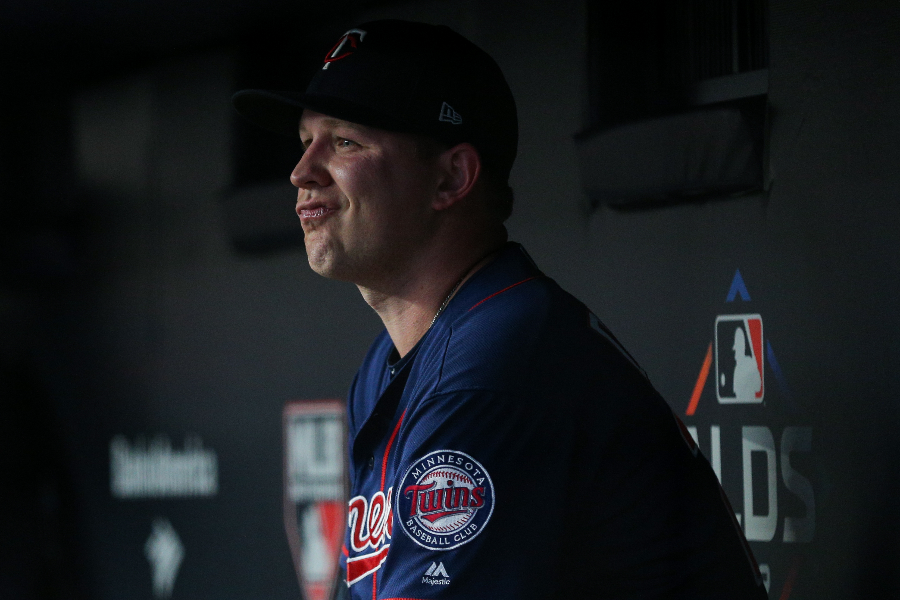
    Image courtesy of © Brad Penner-USA TODAY Sports

    Twins Video

    Fastball velocity has almost always been the sought after skill in a pitcher. Dads across the country who watched Greg Maddux dominate for decades, may scoff at this idea but the reality nowadays is that teams value speed more than ever. Relievers who throw 96 with no idea where it’s going are given chance after chance, as pitching coaches like to believe that they can finally “fix” that pitcher and create a weapon of mass destruction. Perhaps this is like searching for the lost city of gold, but this current trend will remain until someone breaks the mold.

    When Wes Johnson was hired as the pitching coach before last season, he brought with him an extensive history of coaxing extra velocity out of his pitchers. This combined with his embracing of modern pitching technologies, made him an ideal pick to lead a major league pitching staff despite his lack of experience in professional baseball. Taylor Rogers, Trevor May, and Tyler Duffey all notably saw a bump in their velocity in 2019 thanks to Johnson. Were they outliers, or did the 2019 Twins take a step forward in throwing heat?

    Enough beating around the bush. The Twins were 16th in MLB in fastball velocity with a heater that averaged 93.1 MPH. To break it down even further, Twins’ relievers were 21st in MLB with an average fastball velocity of 93.3 MPH while Twins’ starters were 12th at 92.9 MPH. You can all leave now, as the ad revenue has already been collected.

    But it would be boring to just leave the analysis at that. Where were they in prior years? Here’s a quick breakdown:

    Table

    Compared to the previous five years, the 2019 Twins were quite the outlier. They reached a higher velocity average than any other team in recent history and climbed up from the depths of league rankings to reach an average rank.

    It’s hard to conclude that their velocity problems have been “fixed” but it definitely has seen improvement. The team is much more focused on adding velocity in the minors when pitchers are younger and more able to do so. In return the team will continue to compound velocity at the major league level, as these pitchers make their way up the system. Even after dealing Brusdar Graterol, the Twins still have Jhoan Duran who can occasionally hit triple digits, and Jordan Balazovic who can comfortably sit in the mid-90’s.

    What is intriguing, however, is that the Twins’ pitching moves this offseason do not reflect this velo-addicted mentality. Sergo Romo, much like Madonna, has been incredibly successful making money in the 80’s. Tyler Clippard averaged just 90 MPH on his fastball last season, while Rich Hill sat just a smidge above that. Kenta Maeda hovers around 92 MPH, while Homer Bailey’s 93 MPH heater makes him look like a flamethrower in comparison.

    It seems that the Twins are comfortable with their velocity and understand that there are other things that are important in order to get hitters out. Whether this works is yet to be seen (for more reasons than one), but the team is finally on track with another modern baseball trend.

    MORE FROM TWINS DAILY

    — Latest Twins coverage from our writers

    — Recent Twins discussion in our forums

    — Follow Twins Daily via Twitter, Facebook, or email

    — Follow Matt Braun on Twitter here

    Follow Twins Daily For Minnesota Twins News & Analysis

    Recent Twins Articles

    Recent Twins Videos

    Twins Top Prospects

    Marek Houston

    Cedar Rapids Kernels - A+, SS
    Friday night, Marek Houston's first homer came in a 6-run 7th inning. His second home run gave his team an 8-2 lead an inning later. He's 3-for-5, 2 HR (5) and a stolen base, his 15th.

    User Feedback

    Recommended Comments

    Featured Comments

    The Marlins have the highest average velocity fastball, the Twins one of the lowest. They have nearly the same swinging strike percentage. They do have a very different team ERA Must be a little more something something than velocity to pitching.

    "Pitch to Contact" got a bad rap because of the pitchers involved, in my opinion, not because of the philosophy. The philosophy was about getting ahead and throwing strikes, not about throwing it right down the middle of handing curveballs right over the middle of the plate. 


    I also look at the Twins starting rotation: 


    Berrios: Sits 93-95, touches 96... 

    Maeda is low-90s.

    Hill may not be any more than 90.

    Pineda is low 90s. 

    Odorizzi is low 90s but touches 94, sometimes 95. 

    Dobnak is low 90s.

    Smeltzer may touch 90. 

    Thorpe is low 90s. 


    My point is that I think that the Twins do throw a little harder, though that really just comes from Berrios and a little bit from Odorizzi. It's just that these guys are better pitchers now than some of the guys that Anderson worked with after Radke (who was 89-90) and Johan (who was mostly low-90s, but touched 94, maybe 95) and such. 


    I think it's as much just about having good pitchers with good pitchers. 


    Now the bullpen, it is about guys with velocity much more now than ever... But it's also about throwing strikes like Stashak. 

    The change in velocity is also taking place at the milb level and has been for some time, IMO.


    Even going back to the last year or two of the TR regime SO numbers were increasing in the system. I'm not real savvy when it comes to including links and the such, but I'd reference anyone to look at my post in the MINORS section from a week or so ago. I found the 2019 Twins milb results to be very interesting.

    "Pitch to Contact" got a bad rap because of the pitchers involved, in my opinion, not because of the philosophy. The philosophy was about getting ahead and throwing strikes, not about throwing it right down the middle of handing curveballs right over the middle of the plate.


    I also look at the Twins starting rotation:


    Berrios: Sits 93-95, touches 96...

    Maeda is low-90s.

    Hill may not be any more than 90.

    Pineda is low 90s.

    Odorizzi is low 90s but touches 94, sometimes 95.

    Dobnak is low 90s.

    Smeltzer may touch 90.

    Thorpe is low 90s.


    My point is that I think that the Twins do throw a little harder, though that really just comes from Berrios and a little bit from Odorizzi. It's just that these guys are better pitchers now than some of the guys that Anderson worked with after Radke (who was 89-90) and Johan (who was mostly low-90s, but touched 94, maybe 95) and such.


    I think it's as much just about having good pitchers with good pitchers.


    Now the bullpen, it is about guys with velocity much more now than ever... But it's also about throwing strikes like Stashak.

    Thanks Seth. The mocking of pitch to contact gets old. The philosophy is much better described as get ahead in the count and don’t walk people. I’d say both of those things still apply.


    Create an account or sign in to comment

    You need to be a member in order to leave a comment

    Create an account

    Sign up for a new account in our community. It's easy!

    Register a new account

    Sign in

    Already have an account? Sign in here.

    Sign In Now

×
×
  • Create New...