


Twins Video
Joe Mauer is in his first year of eligibility for the National Baseball Hall of Fame, and Twins fans have monitored the votes as the writers have slowly revealed them. He has a strong chance to be selected on the first ballot. However, even if he falls short during the current voting cycle, he will almost assuredly be elected next year. Mauer would join a strong contingent of former Twins players in the Hall of Fame, including Harmon Killebrew, Tony Oliva, Jim Kaat, Bert Blyleven, and Kirby Puckett. So, who will be the next Twins Hall of Fame electee following Mauer?
MLB.com’s Mike Petriello attempted to identify how many potential Hall of Famers fans will see play in 2024. For the piece, he identified 40 names, which is a nice round number, but it leaves some room at the edges for other candidates. In his piece, he tiers the players into different categories, including no-doubters; veterans who are well on their way; Shohei Ohtani; and young players on the way. No Twins player cracked his top 40, with the most obvious omission being Carlos Correa.
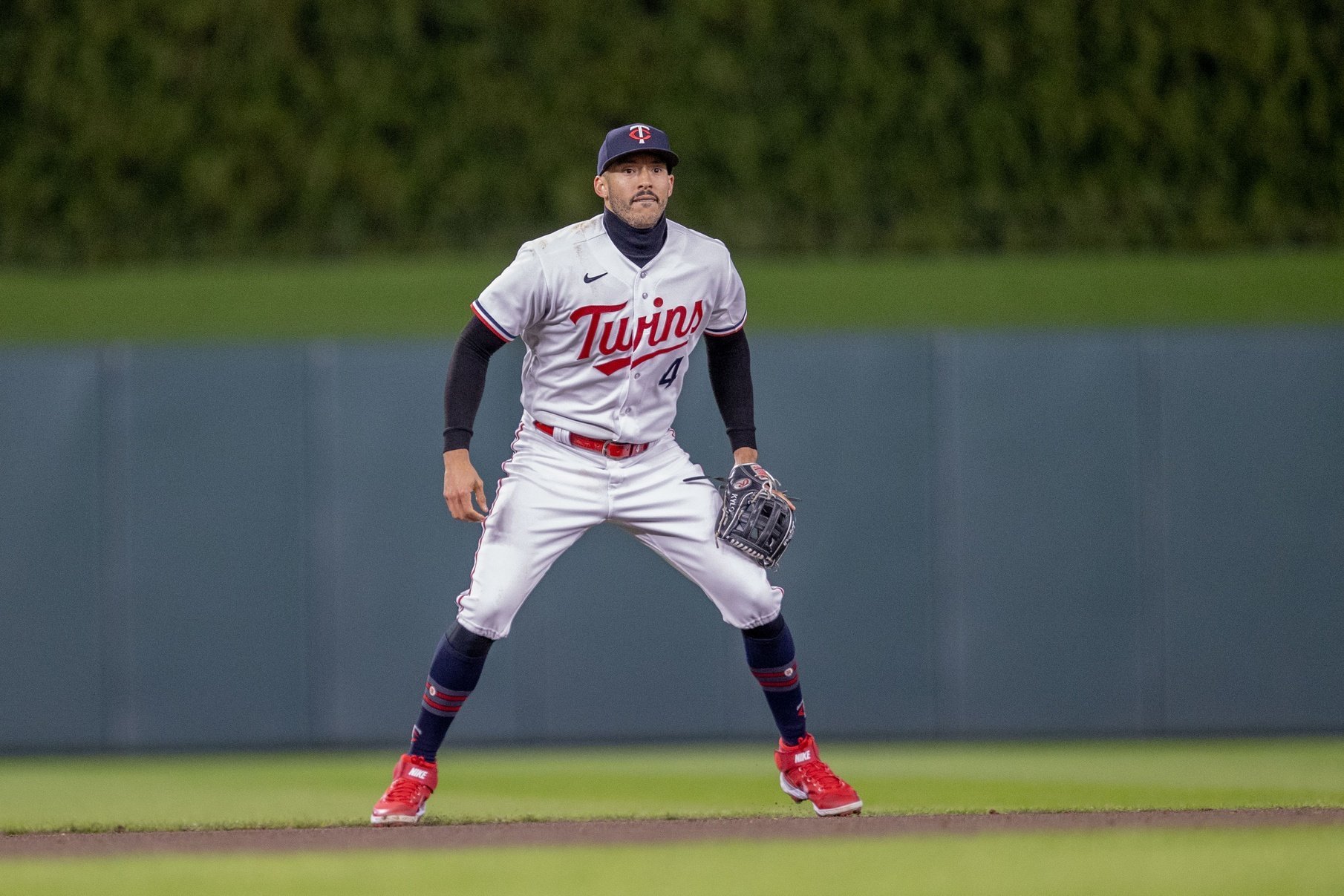
Correa won’t turn 30 until next September, and has already accumulated more than 40 WAR for his career. This total puts him ahead of other players on the top-40 list who are older than him, including Trea Turner and Alex Bregman. Obviously, 2023 was tough, and his 1.4 WAR was lower than in any other season, even the shortened 2020 campaign. Correa is still in the prime of his career, and Twins fans certainly hope he has some big seasons left in the tank.
Correa’s résumé already includes many items voters prefer when checking a player’s name on the ballot. He was the first overall pick in the 2012 MLB Draft, won the AL Rookie of the Year award in 2015, was selected to multiple All-Star teams, won the 2021 Platinum Glove, and has enjoyed extensive playoff success. It’s certainly the start of a Hall of Fame career, but he will need to continue to produce on both sides of the ball.
Jay Jaffe created the JAWS system to measure a player’s worthiness for the Hall of Fame. He averages a player's total WAR with their seven-year peak WAR to get a score that balances longevity with peak greatness. JAWS allows fans to compare players from different eras, while also establishing a quantitative baseline for Hall induction. Correa enters the 2024 season with the 36th-highest JAWS total among shortstops (39.4). There have been 23 Hall of Famers elected at shortstop, and their average JAWS is 55.4, but there are some outliers on the high end (Honus Wagner, 98.2 JAWS) and low end, with some players elected from the Negro Leagues.
Jimmy Rollins is an interesting comp for Correa at this point in his career. According to JAWS, Rollins ranks only two spots ahead of Correa and is currently on the Hall of Fame ballot. He is in his third year of eligibility and has slowly gained support, going from 9.4% in 2022 to 12.9% in 2023. Currently, he sits above 14% on the ballots that have been revealed. That’s a long way from the 75% needed for induction, but it shows the level Correa has already achieved, with all of his 30s left for him to continue adding to his résumé.
Historically, there are milestones a player can reach to make his Hall of Fame candidacy an almost automatic success. Some of those markers are 3,000 hits, 500 home runs, or a .300+ batting average. Correa passed 1,000 hits for his career last season, and finished the campaign with 1,051. He has averaged 135 hits per season with the Twins, so it's out of the question that he'll reach 3,000 hits, but 2,000 might be plausible. Home runs and a high batting average (at least by broad historical standards) also aren’t part of Correa’s repertoire. He enters next season with 173 home runs and a .272 batting average. Voters will likely need to consider Correa’s defensive numbers to paint a complete picture of his Cooperstown case.
Players see a natural decline in the WAR total through aging in the second half of their careers. There will also be a time when Correa can no longer handle the rigors of shortstop, and will be forced to move to a different defensive position. Other Hall of Fame players have shifted from shortstop to third base to continue providing value while moving down the defensive spectrum. It will also be interesting to see how voters treat players associated with the Astros' cheating scandal. Carlos Beltrán, a player on that team, seemed like a lock for Cooperstown, but he finished last year's balloting at 46.5%. Correa will be able to watch how voters treat players like Beltrán and José Altuve before he gets to the ballot.
Correa wouldn’t be a Hall of Famer if his career ended today, but his résumé certainly ranks among the top 40 players currently playing. Do you think Correa will have a strong Hall of Fame case at the conclusion of his career? Leave a COMMENT and start the discussion.
Which team do you dislike the most in the AL Central?
Follow Twins Daily For Minnesota Twins News & Analysis



- Oldgoat_MN, Doctor Gast, nclahammer and 1 other
-
 4
4


Recommended Comments
Create an account or sign in to comment
You need to be a member in order to leave a comment
Create an account
Sign up for a new account in our community. It's easy!
Register a new accountSign in
Already have an account? Sign in here.
Sign In Now