


Twins Video
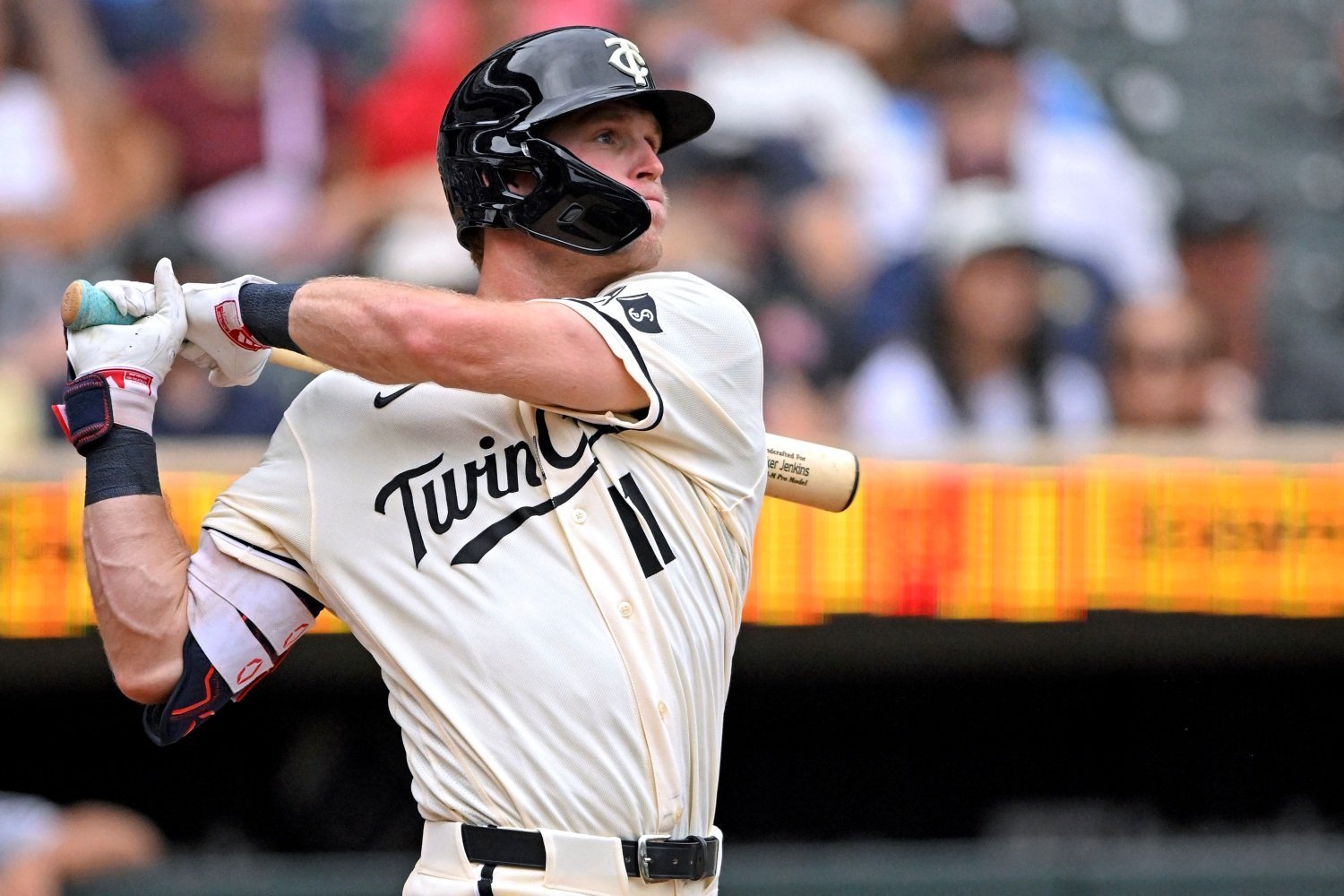
Walker Jenkins' first trip to the big leagues was never going to answer every question about his future. The former No. 5 overall pick arrived in Minnesota with enormous expectations, and his first 26 games offered a little bit of everything. There were stretches where Jenkins looked overwhelmed by the speed and quality of major-league pitching. There were also stretches where the talent that made him one of baseball's top prospects started to shine through.
For a young player who has dealt with injuries throughout his professional career, simply getting to the majors and finishing the season healthy enough to contribute was important. His final 10 games were especially encouraging, while some of his underlying numbers point toward areas where he will need to improve.
Here are three positives and three negatives from Jenkins' first taste of the big leagues.
Up 1: A Strong Finish
Jenkins' start to his big-league career was rough. In his first 16 games, he went just 4-for-45, good for a .085 batting average. He struck out 16 times while drawing six walks. Then something started to click. Over his final 10 games, Jenkins hit .385/.400/.615 for a 1.015 OPS. He added three home runs while striking out only three times and drawing one walk.
That is a dramatic change in production and plate discipline in a very small sample, but it's exactly the kind of finish the Twins needed to see from him. Major-league baseball is faster. The breaking pitches are sharper. Mistakes are much thinner on the ground. Jenkins's early struggles can be viewed as part of the adjustment process, especially for a 21-year-old getting his first extended look against the best pitchers in the world. The hope is that the player who showed up late in the season is a better representation of what Jenkins can become.
Up 2: Meteoric Rise
Injuries have been a recurring obstacle for Jenkins throughout his professional career. He missed significant time again this season after hurting his shoulder while running into an outfield wall, and he has yet to play more than 100 games in a professional season. What makes this season encouraging is what Jenkins did once he returned. He did not allow another difficult stretch to derail his development. He got back on the field, worked his way into the lineup and eventually reached the major leagues.
More importantly, Jenkins appeared to adjust quickly once he got there. His first 16 games were a major learning experience, but his final 10 games looked like a completely different hitter. That kind of improvement over such a short period is encouraging for a player seeing major-league pitching for the first time. Jenkins is still working toward the consistency and durability needed for a full major-league season, but his ability to make adjustments on the fly may ultimately prove to be one of his biggest strengths.
Up 3: Fastball Power
Jenkins showed a clear ability to do damage against fastballs. He posted a .289 batting average and a .500 slugging percentage against fastballs, accounting for nearly all of his damage at the plate. That's encouraging, because fastballs are the foundation of major-league pitching. If a hitter can consistently punish velocity, there's a path toward becoming a dangerous offensive player.
Jenkins's swing has always had the potential to produce power, and seeing that power translate against major-league fastballs is an important piece of his development. The next step will be proving he can force pitchers away from their fastballs by handling everything else they throw at him.
Down 1: The Walk Rate Dropped
Patience was supposed to be one of Jenkins' calling cards. At Triple-A St. Paul this season, he posted a 13.7% walk rate. That number dropped to 7.5% in the majors. Some of that is understandable. Major-league pitchers are better equipped to attack hitters and are less likely to give away easy opportunities. Still, Jenkins' approach will be an important part of his development.
When pitchers were ahead in the count, Jenkins went just 4-for-26, a .154 batting average, while striking out 10 times. That is an area where better pitch recognition and a more consistent approach could make a major difference. The Twins do not need Jenkins to walk at an elite rate every season, but they do need the disciplined hitter who appeared in the minors to carry over to the majors.
Down 2: The Strikeout Rate Jumped
Jenkins had a 15.6% strikeout rate with St. Paul. That climbed to 20.4% in the majors. Again, some increase should be expected when a young hitter takes the biggest jump in competition possible. But the increase is still worth monitoring. His 23.9% whiff rate also suggests there was more swing-and-miss in his game than many expected coming into the season.
Jenkins' prospect profile was built in part around his ability to combine power with a quality approach. There will be growing pains, but limiting the strikeouts will be critical if he is going to become the middle-of-the-order hitter the Twins envision. The encouraging part is that his final 10 games featured only three strikeouts. That late-season improvement could be a sign that he was beginning to adjust.
Down 3: Trouble With the Curve
Breaking pitches gave Jenkins the most trouble during his time in the majors. He hit just .148 against breaking pitches while slugging .259. That is a significant weakness for any young hitter because opposing pitchers will continue to test him with sliders, curveballs and other breaking offerings if they discover he cannot consistently handle them.
His success against fastballs makes the contrast even more noticeable. Pitchers may eventually try to exploit that difference by getting ahead with velocity before finishing at-bats with breaking stuff. Jenkins will need to show he can recognize and drive those pitches before they become a predictable part of the game plan against him.
Jenkins' first taste of the big leagues was exactly that: a taste. There were plenty of questions left unanswered, but there were also signs of why the Twins remain so excited about his future. His hot finish, ability to handle fastballs and continued progress through another injury setback all provide reasons for optimism.
At the same time, his walk rate fell, his strikeout rate climbed and breaking pitches gave him significant problems. That is a reasonable collection of strengths and weaknesses for a young player getting his first exposure to the majors. Jenkins does not need to have everything figured out yet.
What matters most is whether he can take what he learned in these 26 games and carry it into 2027. If the player who finished the season is the player the Twins get next year, there could be some very exciting baseball ahead.
What stood out about Jenkins in his first taste of the big leagues? Leave a comment and start the discussion.






Recommended Comments
Create an account or sign in to comment
You need to be a member in order to leave a comment
Create an account
Sign up for a new account in our community. It's easy!
Register a new accountSign in
Already have an account? Sign in here.
Sign In Now