



Matthew Trueblood
-
Posts
1,033 -
Joined
-
Last visited
Content Type
Profiles
News
Minnesota Twins Videos
2026 Minnesota Twins Top Prospects Ranking
2022 Minnesota Twins Draft Picks
Minnesota Twins Free Agent & Trade Rumors, Notes, & Tidbits
Guides & Resources
2023 Minnesota Twins Draft Picks
The Minnesota Twins Players Project
2024 Minnesota Twins Draft Picks
2025 Minnesota Twins Draft Pick Tracker
2026 Minnesota Twins Draft Tracker: Picks & Bonuses
Forums
Blogs
Events
Store
Downloads
Gallery
Everything posted by Matthew Trueblood
-
What do you get when you defuse a bomba squad? As it turns out, they bomb in a different way, and hardly feel like a squad. Image courtesy of © Jesse Johnson-Imagn Images Last week, I wrote about the troubling signs around plate discipline for the weary, young, injury-depleted Twins. Too many players, especially some of the youngsters who felt the heavy burden of trying to carry an offense that had lost its dynamic leaders, started expanding their strike zones and flailing away at pitches they couldn't handle. That was especially concerning, because it fits so nicely with the best narrative we have to explain this team's crumbling play: they're tired. Studies prove the impact of fatigue on plate discipline, and the guys who aren't playing hurt on this team are playing dead tired. The silver lining, though, is that plate discipline was never this team's identity, per se. Even when they're going well, the Twins aren't the most disciplined team in baseball. The Yankees and Brewers excel in that department. The Cubs emphasize it. The Twins aren't about that, to the same extent. They're about pull power, which means taking a certain measure of aggressiveness to the plate. Now, though, comes the crushing news: It turns out that the silver lining was just another cloud, maybe darker and more dangerous than the first one, gathering on the horizon. The Twins live or die by pulling the ball hard in the air. It's how they set the single-season team record for home runs in 2019. It's why they were dubbed the Bomba Squad that year, and why I created what I called Bomba Rate in late 2022: the frequency with which a player lifts the ball to their pull field. At their best, the Twins hit the ball hard in the air to their pull field considerably more often than an average team. Even if they strike out often in the process, they can get to plenty of offense, because they create the most chances for quick scoring of any team in the league. Batted balls at an exit velocity of 95 miles per hour or greater and with a launch angle higher than 10 degrees hit to the pull field result in extra-base hits almost half the time. The league slugs 1.952 when they make that kind of contact. Here's a chart showing the frequency with which teams produce exit velocities of 100 MPH or greater (to any field, at any trajectory) and that with which they produce hard-hit air balls to the pull field, each on a per-plate appearance basis, by month. I've highlighted the Twins, and added arrows to show the passage of time, so the first Twins logo is for April and the one with the final arrow pointing to it is September. That's very stark. We all knew the team was struggling to hit the ball hard in April, but even then, they were above the league average in pulling the ball hard, in the air. In May and June, they were hammering the ball, although not creating potential bombas as often as they sometimes do. In July, they ran into trouble generating raw exit velocities, but the hard, pulled flies only ticked up. August saw it all come together: the air raid was on. They generated plenty of hard contact in general, and they specifically hit a lot of those long, promising flies--even though they didn't enjoy quite the level of results they deserved. September, by contrast, is a disaster for this team. Their dip from just under 10% of plate appearances ending in hard-hit, pulled flies to 6.6% means that, in the 650 trips to the plate they've accrued so far this month, they've hit 21 fewer potential bombas than they would have if they sustained their August pace. That's worth anywhere from 15 to 30 runs, based on situations, spread over 18 games. The Twins' September record would almost certainly be .500, and might be better than that, if they were still driving the ball to the pull field the way they did just one month earlier. In June and July, Royce Lewis pulled a hard fly ball in just over 14% of his plate appearances. In September, that number is 3.4%. José Miranda's season mark was 10.4% before the month began; it's down to 4.1% in September. Since coming back up from St. Paul in early July, Matt Wallner had run a rate of nearly 15.8%, hitting a ball with an even chance to be an extra-base hit about every sixth plate appearance. Since Sept. 1, he's done so 4.9% of the time. This is worse news than eroding plate discipline, although perhaps it's also easier to act on. If the Twins are healthy enough to execute something close their best swings, maybe a collective approach change--not to grind at-bats harder or be more patient, but to simply be more opportunistic and in touch with their best selves--could get them back to their slugging ways. Byron Buxton and Carlos Correa are back, and while no one is pretending they're as fresh and rested as in spring training, the team did handle them carefully. As a result, they've each made meaningful, positive contributions at the plate already. They can bring back an injection of this offensive identity, just by keeping up what they've shown they can do over the last week. It needs to happen fast, though. For the month, the Twins are slugging .356. Some teams can win, at least enough to avail themselves of the cushion the team gave itself throughout the summer, with a .356 slugging average. The Twins aren't such a team. They're not built for this. They will live or die based on whether they can drive the ball in the air to their pull fields, because that's how they score runs and their pitching staff is too thin to win a string of 2-1 and 3-2 games. The missing drives have already hurt them badly. To stop the collapse from becoming fatal, they have to erase that deficit and get back to hitting bombas. View full article
-
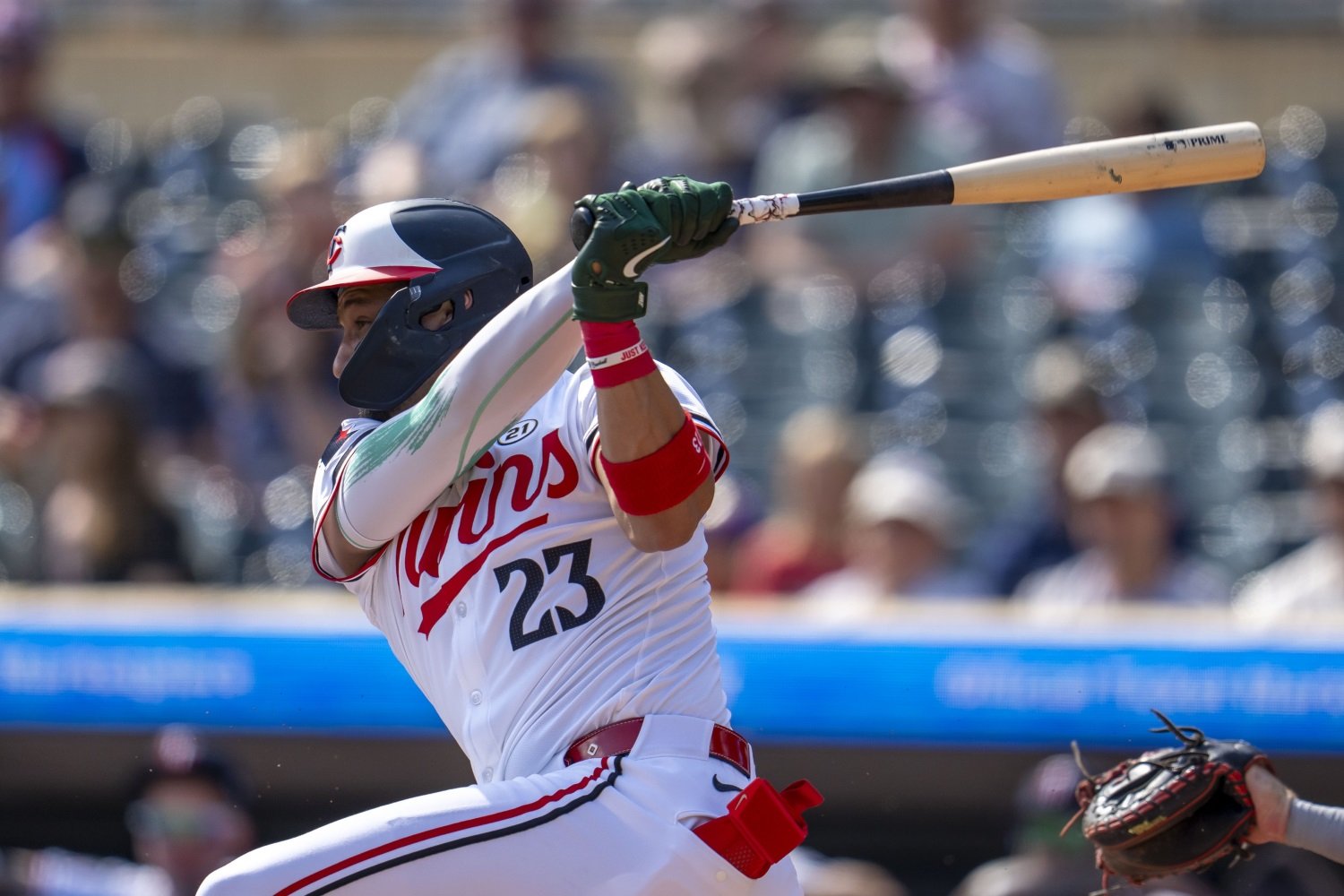 Last week, I wrote about the troubling signs around plate discipline for the weary, young, injury-depleted Twins. Too many players, especially some of the youngsters who felt the heavy burden of trying to carry an offense that had lost its dynamic leaders, started expanding their strike zones and flailing away at pitches they couldn't handle. That was especially concerning, because it fits so nicely with the best narrative we have to explain this team's crumbling play: they're tired. Studies prove the impact of fatigue on plate discipline, and the guys who aren't playing hurt on this team are playing dead tired. The silver lining, though, is that plate discipline was never this team's identity, per se. Even when they're going well, the Twins aren't the most disciplined team in baseball. The Yankees and Brewers excel in that department. The Cubs emphasize it. The Twins aren't about that, to the same extent. They're about pull power, which means taking a certain measure of aggressiveness to the plate. Now, though, comes the crushing news: It turns out that the silver lining was just another cloud, maybe darker and more dangerous than the first one, gathering on the horizon. The Twins live or die by pulling the ball hard in the air. It's how they set the single-season team record for home runs in 2019. It's why they were dubbed the Bomba Squad that year, and why I created what I called Bomba Rate in late 2022: the frequency with which a player lifts the ball to their pull field. At their best, the Twins hit the ball hard in the air to their pull field considerably more often than an average team. Even if they strike out often in the process, they can get to plenty of offense, because they create the most chances for quick scoring of any team in the league. Batted balls at an exit velocity of 95 miles per hour or greater and with a launch angle higher than 10 degrees hit to the pull field result in extra-base hits almost half the time. The league slugs 1.952 when they make that kind of contact. Here's a chart showing the frequency with which teams produce exit velocities of 100 MPH or greater (to any field, at any trajectory) and that with which they produce hard-hit air balls to the pull field, each on a per-plate appearance basis, by month. I've highlighted the Twins, and added arrows to show the passage of time, so the first Twins logo is for April and the one with the final arrow pointing to it is September. That's very stark. We all knew the team was struggling to hit the ball hard in April, but even then, they were above the league average in pulling the ball hard, in the air. In May and June, they were hammering the ball, although not creating potential bombas as often as they sometimes do. In July, they ran into trouble generating raw exit velocities, but the hard, pulled flies only ticked up. August saw it all come together: the air raid was on. They generated plenty of hard contact in general, and they specifically hit a lot of those long, promising flies--even though they didn't enjoy quite the level of results they deserved. September, by contrast, is a disaster for this team. Their dip from just under 10% of plate appearances ending in hard-hit, pulled flies to 6.6% means that, in the 650 trips to the plate they've accrued so far this month, they've hit 21 fewer potential bombas than they would have if they sustained their August pace. That's worth anywhere from 15 to 30 runs, based on situations, spread over 18 games. The Twins' September record would almost certainly be .500, and might be better than that, if they were still driving the ball to the pull field the way they did just one month earlier. In June and July, Royce Lewis pulled a hard fly ball in just over 14% of his plate appearances. In September, that number is 3.4%. José Miranda's season mark was 10.4% before the month began; it's down to 4.1% in September. Since coming back up from St. Paul in early July, Matt Wallner had run a rate of nearly 15.8%, hitting a ball with an even chance to be an extra-base hit about every sixth plate appearance. Since Sept. 1, he's done so 4.9% of the time. This is worse news than eroding plate discipline, although perhaps it's also easier to act on. If the Twins are healthy enough to execute something close their best swings, maybe a collective approach change--not to grind at-bats harder or be more patient, but to simply be more opportunistic and in touch with their best selves--could get them back to their slugging ways. Byron Buxton and Carlos Correa are back, and while no one is pretending they're as fresh and rested as in spring training, the team did handle them carefully. As a result, they've each made meaningful, positive contributions at the plate already. They can bring back an injection of this offensive identity, just by keeping up what they've shown they can do over the last week. It needs to happen fast, though. For the month, the Twins are slugging .356. Some teams can win, at least enough to avail themselves of the cushion the team gave itself throughout the summer, with a .356 slugging average. The Twins aren't such a team. They're not built for this. They will live or die based on whether they can drive the ball in the air to their pull fields, because that's how they score runs and their pitching staff is too thin to win a string of 2-1 and 3-2 games. The missing drives have already hurt them badly. To stop the collapse from becoming fatal, they have to erase that deficit and get back to hitting bombas.
- 37 comments
-
- 3
-

-

-
- jose miranda
- matt wallner
- (and 1 more)
-
He's been a break-glass-in-case-of-emergency guy for the Twins, at most. Well, the glass is broken, and it turns out the hurler behind it might be better than a lot of us thought. Image courtesy of © Matt Krohn-Imagn Images I'm not a betting man, but I want to make a bet. Honor system; no cheating. I will bet that, when you think "elite fastball characteristics", you don't think about Twins reliever Ronny Henriquez. And since this medium is really a one-way communicative forum, I'm going to go ahead and assume I just won my bet. In fact, you probably hardly ever think about Henriquez at all. I can't blame you for that. I don't, either. I don't think even the Twins have thought that much about Henriquez over the last two seasons. The thing is, though, we're all thinking about him now. In the Twins' last two wins, Henriquez has turned in 2 1/3 innings pitched, without allowing a run. He's pitched in high leverage in each contest, and added 0.217 in win probability for the team across the two outings. Brock Stewart and Chris Paddack are hurt. Jorge Alcalá is in St. Paul. Louie Varland isn't adjusting as smoothly to the whole reliever thing this time around, albeit in an extremely limited set of observations to date. Don't look now, but Ronny Henriquez might be part of the 'A' bullpen for Rocco Baldelli, with fewer than a dozen games left in the season and a playoff berth in the balance. No one asked for this set of circumstances, but as scary as the above might sound, Henriquez might just be up for the job. Out of nowhere, or nearly so, he's blossomed into an awfully interesting arm--maybe even one with upside akin to what Paddack, Stewart, and Varland offered the team at the tail end of 2023. That's an extraordinary-sounding claim, but give me a minute. I bet I can sell you, at least a little, on it. View full article
-
.png.f79905961d0d730ee5ba321b280a9534.png) I'm not a betting man, but I want to make a bet. Honor system; no cheating. I will bet that, when you think "elite fastball characteristics", you don't think about Twins reliever Ronny Henriquez. And since this medium is really a one-way communicative forum, I'm going to go ahead and assume I just won my bet. In fact, you probably hardly ever think about Henriquez at all. I can't blame you for that. I don't, either. I don't think even the Twins have thought that much about Henriquez over the last two seasons. The thing is, though, we're all thinking about him now. In the Twins' last two wins, Henriquez has turned in 2 1/3 innings pitched, without allowing a run. He's pitched in high leverage in each contest, and added 0.217 in win probability for the team across the two outings. Brock Stewart and Chris Paddack are hurt. Jorge Alcalá is in St. Paul. Louie Varland isn't adjusting as smoothly to the whole reliever thing this time around, albeit in an extremely limited set of observations to date. Don't look now, but Ronny Henriquez might be part of the 'A' bullpen for Rocco Baldelli, with fewer than a dozen games left in the season and a playoff berth in the balance. No one asked for this set of circumstances, but as scary as the above might sound, Henriquez might just be up for the job. Out of nowhere, or nearly so, he's blossomed into an awfully interesting arm--maybe even one with upside akin to what Paddack, Stewart, and Varland offered the team at the tail end of 2023. That's an extraordinary-sounding claim, but give me a minute. I bet I can sell you, at least a little, on it.
I'm not a betting man, but I want to make a bet. Honor system; no cheating. I will bet that, when you think "elite fastball characteristics", you don't think about Twins reliever Ronny Henriquez. And since this medium is really a one-way communicative forum, I'm going to go ahead and assume I just won my bet. In fact, you probably hardly ever think about Henriquez at all. I can't blame you for that. I don't, either. I don't think even the Twins have thought that much about Henriquez over the last two seasons. The thing is, though, we're all thinking about him now. In the Twins' last two wins, Henriquez has turned in 2 1/3 innings pitched, without allowing a run. He's pitched in high leverage in each contest, and added 0.217 in win probability for the team across the two outings. Brock Stewart and Chris Paddack are hurt. Jorge Alcalá is in St. Paul. Louie Varland isn't adjusting as smoothly to the whole reliever thing this time around, albeit in an extremely limited set of observations to date. Don't look now, but Ronny Henriquez might be part of the 'A' bullpen for Rocco Baldelli, with fewer than a dozen games left in the season and a playoff berth in the balance. No one asked for this set of circumstances, but as scary as the above might sound, Henriquez might just be up for the job. Out of nowhere, or nearly so, he's blossomed into an awfully interesting arm--maybe even one with upside akin to what Paddack, Stewart, and Varland offered the team at the tail end of 2023. That's an extraordinary-sounding claim, but give me a minute. I bet I can sell you, at least a little, on it. -
The stretched-out southpaw has some upside, but had lost his place in the Orioles' pitching hierarchy. Now, he'll try to help the Twins work around the sputters and struggles of their young back-end starters. Image courtesy of © Gary A. Vasquez-Imagn Images With Zebby Matthews, David Festa, and Simeon Woods Richardson all appearing to hit a wall near the end of their longest professional campaigns to date, the Twins went outside the organization for a last-minute reinforcement to their pitching staff Monday afternoon. In Cole Irvin, 30, they scooped up a pitcher who has pitched all the way to the ends of MLB seasons before, and who was an important cog for the Orioles as recently as early this season. Irvin was a late-bloomer with the A's a few years ago and an upside play when Baltimore dealt for him prior to 2023, but now, he's just a stopgap in a rotation that has shown too much wear and weariness lately. Irvin has a legitimate six-pitch mix, with all three flavors of fastball (four-seam, cutter, and sinker), a slider, a curveball, and a changeup. His cutter is a bit more of a true bridge than it is for most pitchers, behaving neither as a true heater nor as a de facto breaking pitch. He's had a very hard time finding the utility of that pitch, or of his change, despite being a lefty starter and seeing a lot of right-handed batters. His best offerings have been the four-seamer, sinker, and curveball, this season. Were this more of a long-term acquisition or made earlier in the season, you could envision the Twins making some substantial tweaks here. Instead, it's likely that they'll mostly allow Irvin to do what he's been doing, albeit with a slightly greater emphasis on the gyro slider that has played up since his recent move to the bullpen for Baltimore. That's the pitch that best suits what the Twins like to do in terms of pitch types and shapes, and it's the one with which he can be an effective flipper of the lineup card. Irvin 1.mp4 Irvin won't be eligible to pitch for the Twins in the playoffs. This move is purely about ensuring that they get that far, by making up for the walls into which their younger starters all seem to have run recently. They'll try to get everyone the rest to which they've been accustomed--the Twins have sent 111 starters out on at least five days' rest this year, fourth-most in MLB--even as they put the pedal down to get across the finish line of the regular season ahead of the Tigers, Mariners, and Red Sox. Irvin can round out their rotation mix, and/or act as a long reliever to patch a bullpen short on healthy, live arms. He doesn't throw hard, and won't rack up strikeouts. In his most recent outing against the Red Sox, he gave up two homers in an inning of work. However, Irvin has just enough in his tank to make him appealing to a team chockablock with right-handed starters who appear not to have much in theirs. To make room for him on the 40-man roster, the team designated Randy Dobnak for assignment, and they'll wait until Tuesday to create an open space on their 28-man active roster. At that point, Irvin could come in for immediate use, as he last pitched on Sept. 9. It's a low-wattage addition, but when a team is scrambling to secure a playoff spot, all additions are welcome. If things pan out especially nicely, despite not being able to pitch for them this October, Irvin could be under team control for two more seasons. View full article
-
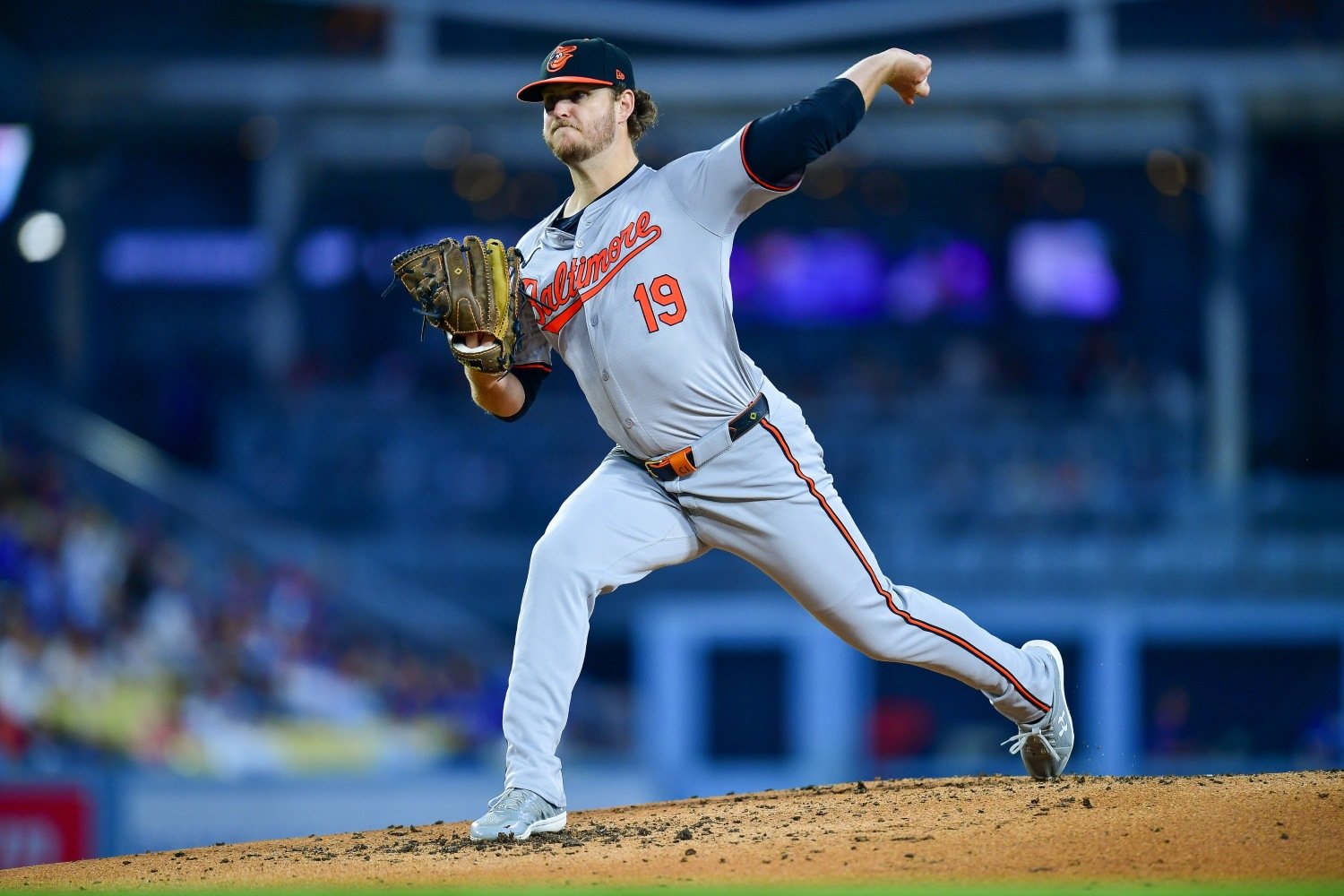 With Zebby Matthews, David Festa, and Simeon Woods Richardson all appearing to hit a wall near the end of their longest professional campaigns to date, the Twins went outside the organization for a last-minute reinforcement to their pitching staff Monday afternoon. In Cole Irvin, 30, they scooped up a pitcher who has pitched all the way to the ends of MLB seasons before, and who was an important cog for the Orioles as recently as early this season. Irvin was a late-bloomer with the A's a few years ago and an upside play when Baltimore dealt for him prior to 2023, but now, he's just a stopgap in a rotation that has shown too much wear and weariness lately. Irvin has a legitimate six-pitch mix, with all three flavors of fastball (four-seam, cutter, and sinker), a slider, a curveball, and a changeup. His cutter is a bit more of a true bridge than it is for most pitchers, behaving neither as a true heater nor as a de facto breaking pitch. He's had a very hard time finding the utility of that pitch, or of his change, despite being a lefty starter and seeing a lot of right-handed batters. His best offerings have been the four-seamer, sinker, and curveball, this season. Were this more of a long-term acquisition or made earlier in the season, you could envision the Twins making some substantial tweaks here. Instead, it's likely that they'll mostly allow Irvin to do what he's been doing, albeit with a slightly greater emphasis on the gyro slider that has played up since his recent move to the bullpen for Baltimore. That's the pitch that best suits what the Twins like to do in terms of pitch types and shapes, and it's the one with which he can be an effective flipper of the lineup card. Irvin 1.mp4 Irvin won't be eligible to pitch for the Twins in the playoffs. This move is purely about ensuring that they get that far, by making up for the walls into which their younger starters all seem to have run recently. They'll try to get everyone the rest to which they've been accustomed--the Twins have sent 111 starters out on at least five days' rest this year, fourth-most in MLB--even as they put the pedal down to get across the finish line of the regular season ahead of the Tigers, Mariners, and Red Sox. Irvin can round out their rotation mix, and/or act as a long reliever to patch a bullpen short on healthy, live arms. He doesn't throw hard, and won't rack up strikeouts. In his most recent outing against the Red Sox, he gave up two homers in an inning of work. However, Irvin has just enough in his tank to make him appealing to a team chockablock with right-handed starters who appear not to have much in theirs. To make room for him on the 40-man roster, the team designated Randy Dobnak for assignment, and they'll wait until Tuesday to create an open space on their 28-man active roster. At that point, Irvin could come in for immediate use, as he last pitched on Sept. 9. It's a low-wattage addition, but when a team is scrambling to secure a playoff spot, all additions are welcome. If things pan out especially nicely, despite not being able to pitch for them this October, Irvin could be under team control for two more seasons.
 -
Strictly speaking, the Twins come back to win games in which they once trailed at an above-average rate. Speaking a bit more broadly, they've been persistently unable to come back after falling behind by multiple runs, even in the middle of games. Why? Image courtesy of © Bruce Kluckhohn-Imagn Images A raging Rocco Baldelli was supposed to wake the Twins up, and make them remember who they are. That was last Sunday; they lost Monday night to the hapless Halos. They won the next two days, though, and then a returning Byron Buxton was supposed to give the team a semblance of its real identity back. That was Friday night; they got thwacked by the Reds. The next big red button in the line was to reactivate Carlos Correa, which the team did Saturday; they got well and truly shellacked by the Reds. Things just aren't working, right now. That's not news. The most troubling trend, though, isn't that the team's grand gestures seem to keep coming to nothing. It's that they keep losing, and losing in dispirited, dispiriting, helpless-looking, hopeless-looking ways. It doesn't feel like this team has a big comeback in it, and so every time they fall behind, it might as well be a loss, even when there are plenty of outs left in the game, in theory. Some of that is an illusion, of course. That's how baseball works. We can feel a certain way, watching a team play over a few weeks or even a couple of months, but reality is not obligated to conform to our feelings. The Twins are 36-70 in games in which, at some point, they trailed. That .340 winning percentage is actually above the league average in such games. They haven't come back from a deficit greater than four runs all season, which is interesting, but it's not exactly shocking. The Brewers, to grab another random good team, have not come back from down by more than three all year. Having a good pitching staff means rarely falling behind by such a wide margin at all. Some teams, too, choose not to chase wins from behind, which means a lot of low-leverage relievers parading in when the team is behind in the middle innings--even by just a run or two. Baldelli is a big believer in that managerial paradigm. Then, too, there's the fact that the Minnesota bullpen hasn't turned out to be as deep as we all hoped. If a team has seven or eight reliable relievers, even the least of them can keep them in the game and facilitate the occasional comeback. This year's relief corps has not been that kind of group. When Baldelli sighs and flips his mental switch from the 'A' bullpen to the 'B' bullpen, the guys upon whom he calls more often turn the game into a blowout than freeze the opponent where they are. The Twins have lost 32 games by at least four runs this year, including the last two. Unless the Red Sox storm past them to claim a playoff spot, no team will qualify for the postseason with more such defeats on their record. The Brewers have only lost by that much 16 times. The Guardians have only lost that way 23 times. It's been an unfortunate habit of this team not only to fall behind, but to let things get out of hand once they do. In 37 games this year, the Twins have trailed by at least three runs after six innings. Only six teams--none of them any good at all--have been in such a lousy position going into the final innings more often. Minnesota is 1-36 in those games. All season, in 47 games in which they trailed by at least two tallies after seven frames, the Twins have no wins. The only other teams not to win a game in which they were more than a run behind with two innings to play are the White Sox, Nationals, and Blue Jays. The funny thing is, from the seventh inning to the end of a game, only the Diamondbacks average more runs per game than the Twins. Removing extra innings, the Twins score 1.59 runs per game from the seventh onward, joining Arizona, the Royals, the Yankees, and the Padres as the only teams putting up more than 1.5 runs per contest during that phase. Why can't a team who scores that much come back from down even a couple of runs, even once or twice? Why can't they finish off close wins? Some of it is managerial choices, although they're sound ones. Some of it is roster construction, constrained by bad ownership choices. Some of it is, surely, dumb luck. The frustrating feeling that another part of it is some shortfall in terms of heart or offensive intensity is probably another illusion, like the idea that they don't come back at all when they fall behind. That one, though, is harder to shake. Sometimes feelings carry a reality of their own, and sometimes there's a reality that numbers don't capture neatly. The Twins aren't good at making comebacks. They'd better change that reality, though, because they need some gut-check wins down the stretch, and the deficits keep coming. View full article
-
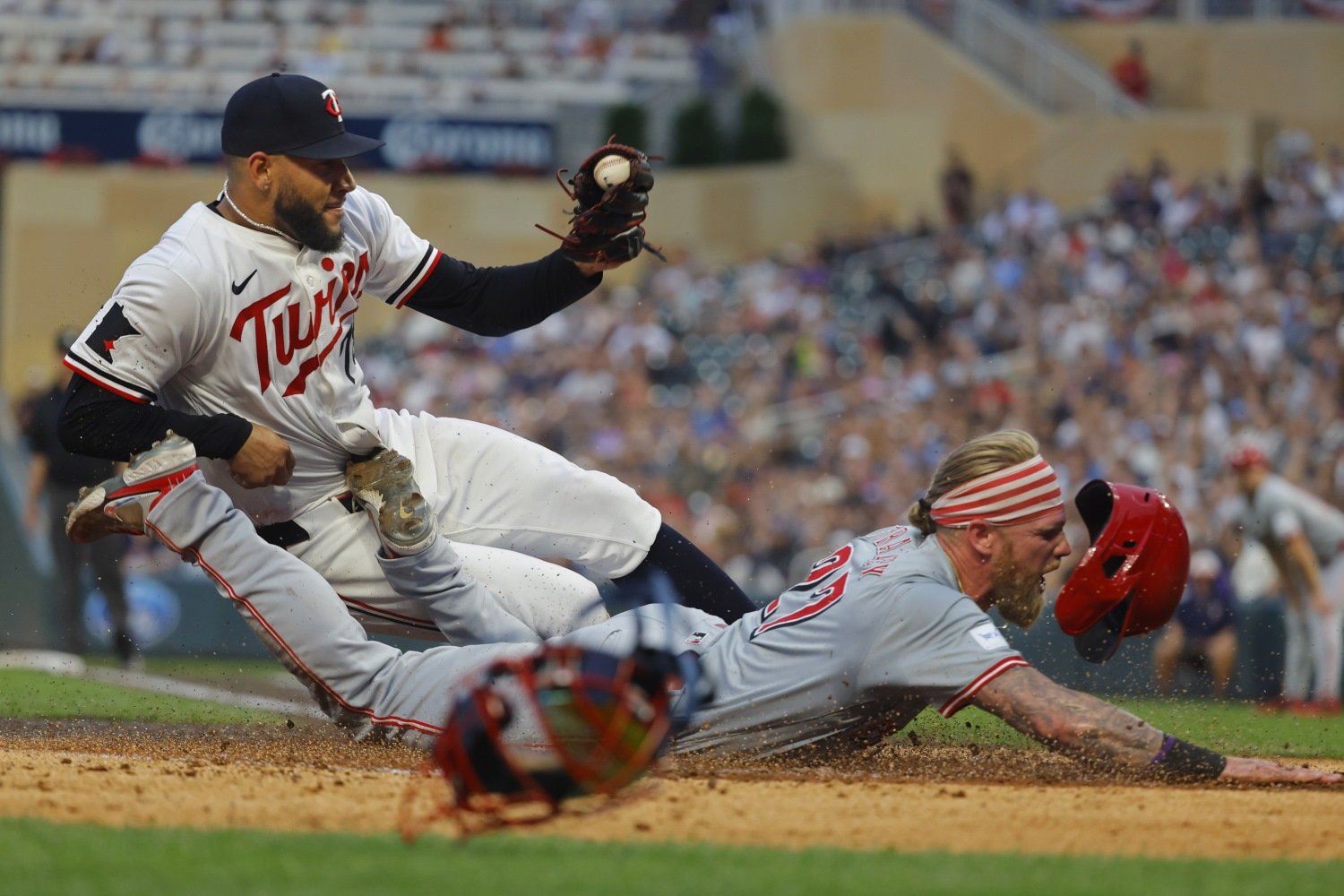 A raging Rocco Baldelli was supposed to wake the Twins up, and make them remember who they are. That was last Sunday; they lost Monday night to the hapless Halos. They won the next two days, though, and then a returning Byron Buxton was supposed to give the team a semblance of its real identity back. That was Friday night; they got thwacked by the Reds. The next big red button in the line was to reactivate Carlos Correa, which the team did Saturday; they got well and truly shellacked by the Reds. Things just aren't working, right now. That's not news. The most troubling trend, though, isn't that the team's grand gestures seem to keep coming to nothing. It's that they keep losing, and losing in dispirited, dispiriting, helpless-looking, hopeless-looking ways. It doesn't feel like this team has a big comeback in it, and so every time they fall behind, it might as well be a loss, even when there are plenty of outs left in the game, in theory. Some of that is an illusion, of course. That's how baseball works. We can feel a certain way, watching a team play over a few weeks or even a couple of months, but reality is not obligated to conform to our feelings. The Twins are 36-70 in games in which, at some point, they trailed. That .340 winning percentage is actually above the league average in such games. They haven't come back from a deficit greater than four runs all season, which is interesting, but it's not exactly shocking. The Brewers, to grab another random good team, have not come back from down by more than three all year. Having a good pitching staff means rarely falling behind by such a wide margin at all. Some teams, too, choose not to chase wins from behind, which means a lot of low-leverage relievers parading in when the team is behind in the middle innings--even by just a run or two. Baldelli is a big believer in that managerial paradigm. Then, too, there's the fact that the Minnesota bullpen hasn't turned out to be as deep as we all hoped. If a team has seven or eight reliable relievers, even the least of them can keep them in the game and facilitate the occasional comeback. This year's relief corps has not been that kind of group. When Baldelli sighs and flips his mental switch from the 'A' bullpen to the 'B' bullpen, the guys upon whom he calls more often turn the game into a blowout than freeze the opponent where they are. The Twins have lost 32 games by at least four runs this year, including the last two. Unless the Red Sox storm past them to claim a playoff spot, no team will qualify for the postseason with more such defeats on their record. The Brewers have only lost by that much 16 times. The Guardians have only lost that way 23 times. It's been an unfortunate habit of this team not only to fall behind, but to let things get out of hand once they do. In 37 games this year, the Twins have trailed by at least three runs after six innings. Only six teams--none of them any good at all--have been in such a lousy position going into the final innings more often. Minnesota is 1-36 in those games. All season, in 47 games in which they trailed by at least two tallies after seven frames, the Twins have no wins. The only other teams not to win a game in which they were more than a run behind with two innings to play are the White Sox, Nationals, and Blue Jays. The funny thing is, from the seventh inning to the end of a game, only the Diamondbacks average more runs per game than the Twins. Removing extra innings, the Twins score 1.59 runs per game from the seventh onward, joining Arizona, the Royals, the Yankees, and the Padres as the only teams putting up more than 1.5 runs per contest during that phase. Why can't a team who scores that much come back from down even a couple of runs, even once or twice? Why can't they finish off close wins? Some of it is managerial choices, although they're sound ones. Some of it is roster construction, constrained by bad ownership choices. Some of it is, surely, dumb luck. The frustrating feeling that another part of it is some shortfall in terms of heart or offensive intensity is probably another illusion, like the idea that they don't come back at all when they fall behind. That one, though, is harder to shake. Sometimes feelings carry a reality of their own, and sometimes there's a reality that numbers don't capture neatly. The Twins aren't good at making comebacks. They'd better change that reality, though, because they need some gut-check wins down the stretch, and the deficits keep coming.
 -
 By no means did Rocco Baldelli do anything wrong when he excoriated his struggling club after a weekend sweep in Kansas City. In fact, he timed his philippic perfectly. You don't want that negative energy in your home clubhouse. You don't even want your team stewing in it for the remainder of a series. You do it at the end of a road trip, to make sure everyone understands that what just happened isn't acceptable, but also that it's over. You give them every chance to come to the park the next day and get things right. Good managers don't push that big red button until they're left with no real choice, though. It's not about being performative or saying anything one doesn't mean; it's about managing carefully how much you let yourself emote, and how outwardly, and then choosing only the moment when urgency and a dwindling set of alternatives make it appropriate to release more of that withheld emotion. Thus, when Baldelli elected to cut loose on his team Sunday afternoon, he was sending a message: I'm running out of ways to convey the seriousness of this to you. I know you're tired. I know this is hard. You have to do better, anyway. You're not meeting the standard. That's not an unfair set of things to say, even to a team fighting its annual injury apocalypse right now. It's the kind of sharp-edged, dangerous thing that ought to ensure maximal concentration, maximal effort, and maximal preparation from everyone involved the rest of the way. It was a reasonable time to take those relatively drastic measures. Here's the problem: that doesn't guarantee that it will work. In fact, in the first game of the Twins' should-be get-right series at home against the Angels Monday night, they looked as bad as ever--as flat, as tired, as weak. That's not an indictment of Baldelli; you don't evaluate a managerial tirade on its instantaneous aftereffects, any more than you evaluate a rookie based on their debut. However, it was a stern reminder that the team has shown a bit of habitual give-up this year, not necessarily from a lack of character or toughness or culture or even talent, but perhaps as an unfortunate characteristic. The Angels jumped out to a 4-0 lead Monday night. The Twins have only come back from four runs down twice all season, and not since June. They're a strong offense, but they don't seem to have it in them to rush back when they fall behind early. Baldelli's outburst was meant to give them the kind of fearless fire required for that kind of fight, but they still didn't show it Monday night. When a skipper does demand more of a team this way, everything comes under a microscope. Again, unless you accidentally hired some old-fashioned hothead loser, this is a move reserved for moments of great need. When it happens, the manager is acknowledging that they're in a corner. If the team doesn't respond, the implication is serious: the boss has lost the ability to direct and motivate his people adequately. Right now, the Twins are only three games up on the Red Sox, Tigers, and Mariners. When your three-game lead is over three different teams, it's not really a three-game lead. One of those teams getting hot would be enough to cause the Twins a lot of trouble, unless they can pull out of this tailspin in short order. If they blow the lead and miss the playoffs, Baldelli has put himself in position to be fired. As far as we know, he's under contract only through next season, and when a skipper is a year from free agency, teams usually move either to extend them or to dismiss them. Baldelli and the team might have worked out an extension already; we wouldn't know. But he went forward with this gambit knowing the perception if it failed would be that he is incapable of drawing more out of his team down the stretch. For some, this fade--a second one in three years, whether it ends as badly as 2022 did or not--is confirmation that Baldelli is not a good manager. I disagree, vehemently. However, this tendency to struggle late in seasons--to go along with the grind and let it wear them to a nub, which we saw even to some extent in 2019 and 2020--does seem to be a pattern for his teams. That might be because, given the shape of the team they're trying to build, the organization has chosen the wrong model for the manager role. Baldelli is not hands-off; no MLB manager is. He is, however, very much a middle manager, delegating to coaches with whom he vests most positional specialist powers and implementing front-office plans based on his own conversations with Derek Falvey and Thad Levine. Though a former player, he's more like an executive than an instructor. He might not be as well-suited to the task of keeping together a young team with a lot of players still in need of pointers, still looking for experience and advice about handling the big leagues, as managers who take a more detail-oriented approach to the job. Right now, the main problem for the Twins is the players. They're exhausted, and the best of them are missing from the lineup altogether. Baldelli did a crucial part of his job, by both sending them a wakeup call and putting himself in the harsh spotlight instead of them. In the version of his job the team has carved out for him, though, he can't do much more to push his team across the finish line, and if they don't get there, this could be the final season in the Twin Cities for one or more key member of Twins leadership.
 -
The Twins' long-time manager didn't take lightly the decision to tear into his team and make his displeasure with their effort public. Now, we all understand each other. The stakes are high, and so are the seas. Image courtesy of © Nathan Ray Seebeck-Imagn Images By no means did Rocco Baldelli do anything wrong when he excoriated his struggling club after a weekend sweep in Kansas City. In fact, he timed his philippic perfectly. You don't want that negative energy in your home clubhouse. You don't even want your team stewing in it for the remainder of a series. You do it at the end of a road trip, to make sure everyone understands that what just happened isn't acceptable, but also that it's over. You give them every chance to come to the park the next day and get things right. Good managers don't push that big red button until they're left with no real choice, though. It's not about being performative or saying anything one doesn't mean; it's about managing carefully how much you let yourself emote, and how outwardly, and then choosing only the moment when urgency and a dwindling set of alternatives make it appropriate to release more of that withheld emotion. Thus, when Baldelli elected to cut loose on his team Sunday afternoon, he was sending a message: I'm running out of ways to convey the seriousness of this to you. I know you're tired. I know this is hard. You have to do better, anyway. You're not meeting the standard. That's not an unfair set of things to say, even to a team fighting its annual injury apocalypse right now. It's the kind of sharp-edged, dangerous thing that ought to ensure maximal concentration, maximal effort, and maximal preparation from everyone involved the rest of the way. It was a reasonable time to take those relatively drastic measures. Here's the problem: that doesn't guarantee that it will work. In fact, in the first game of the Twins' should-be get-right series at home against the Angels Monday night, they looked as bad as ever--as flat, as tired, as weak. That's not an indictment of Baldelli; you don't evaluate a managerial tirade on its instantaneous aftereffects, any more than you evaluate a rookie based on their debut. However, it was a stern reminder that the team has shown a bit of habitual give-up this year, not necessarily from a lack of character or toughness or culture or even talent, but perhaps as an unfortunate characteristic. The Angels jumped out to a 4-0 lead Monday night. The Twins have only come back from four runs down twice all season, and not since June. They're a strong offense, but they don't seem to have it in them to rush back when they fall behind early. Baldelli's outburst was meant to give them the kind of fearless fire required for that kind of fight, but they still didn't show it Monday night. When a skipper does demand more of a team this way, everything comes under a microscope. Again, unless you accidentally hired some old-fashioned hothead loser, this is a move reserved for moments of great need. When it happens, the manager is acknowledging that they're in a corner. If the team doesn't respond, the implication is serious: the boss has lost the ability to direct and motivate his people adequately. Right now, the Twins are only three games up on the Red Sox, Tigers, and Mariners. When your three-game lead is over three different teams, it's not really a three-game lead. One of those teams getting hot would be enough to cause the Twins a lot of trouble, unless they can pull out of this tailspin in short order. If they blow the lead and miss the playoffs, Baldelli has put himself in position to be fired. As far as we know, he's under contract only through next season, and when a skipper is a year from free agency, teams usually move either to extend them or to dismiss them. Baldelli and the team might have worked out an extension already; we wouldn't know. But he went forward with this gambit knowing the perception if it failed would be that he is incapable of drawing more out of his team down the stretch. For some, this fade--a second one in three years, whether it ends as badly as 2022 did or not--is confirmation that Baldelli is not a good manager. I disagree, vehemently. However, this tendency to struggle late in seasons--to go along with the grind and let it wear them to a nub, which we saw even to some extent in 2019 and 2020--does seem to be a pattern for his teams. That might be because, given the shape of the team they're trying to build, the organization has chosen the wrong model for the manager role. Baldelli is not hands-off; no MLB manager is. He is, however, very much a middle manager, delegating to coaches with whom he vests most positional specialist powers and implementing front-office plans based on his own conversations with Derek Falvey and Thad Levine. Though a former player, he's more like an executive than an instructor. He might not be as well-suited to the task of keeping together a young team with a lot of players still in need of pointers, still looking for experience and advice about handling the big leagues, as managers who take a more detail-oriented approach to the job. Right now, the main problem for the Twins is the players. They're exhausted, and the best of them are missing from the lineup altogether. Baldelli did a crucial part of his job, by both sending them a wakeup call and putting himself in the harsh spotlight instead of them. In the version of his job the team has carved out for him, though, he can't do much more to push his team across the finish line, and if they don't get there, this could be the final season in the Twin Cities for one or more key member of Twins leadership. View full article
-
.png.b03d2c50e00366695cce0becb8d00941.png) Rocco Baldelli didn't just call his team's performance over the weekend in Kansas City disappointing or weak. He chose the word 'unprofessional'. To a hard-nosed New England baseball man, the cardinal sin in the game is not a failure to be good enough, but a failure to show adequate intensity, purpose, or intelligence. A series in which his team scored only two runs was just the latest example of their growing ineptitude at the plate, and it wasn't the product of fly balls dying on the warning track or close calls going the wrong way. No, the Twins swung early, and often, and they made lousy contact. Give the stellar Royals pitching staff some credit for that, but be sure not to apportion the responsibility for it all to them. The Twins are on a woeful jag in this regard. So far this month, as a team, the Twins are chasing just over 36% of pitches outside the strike zone. That's the worst showing for any team in any month all year. Obviously, that's very misleading, because we're only eight days into this month, so outliers are bound to be more common, but the truth of it can't be easily erased. The difference between their in-zone swing rate and their chase rate is also the lowest any team has posted in any month of the season, by a comfortable margin. They're swinging indiscriminately, and it's killing any chances they might otherwise have of producing consistent offense. On this chart, you can see April and May in a cluster on the left, where the Twins were too passive and struggled out to an uneven start. On the right, clustered just as nicely, are June, July, and August, when the team was healthier and more aggressive and consistently producing superb offensive numbers, even if it came with a little more chase. But right now, as that top data point so clearly tells us, they're a mess. That's not entirely their fault, of course. They're nearing the end of a long season. Almost 10 years ago, Russell Carleton of Baseball Prospectus did a landmark study about the management of the difficult grind that is an MLB campaign. In it, he found that players show worse plate discipline as they wear down, and that without days off to shield them from the effects of the grind, those effects pile up and materially damage an offense's production.
Rocco Baldelli didn't just call his team's performance over the weekend in Kansas City disappointing or weak. He chose the word 'unprofessional'. To a hard-nosed New England baseball man, the cardinal sin in the game is not a failure to be good enough, but a failure to show adequate intensity, purpose, or intelligence. A series in which his team scored only two runs was just the latest example of their growing ineptitude at the plate, and it wasn't the product of fly balls dying on the warning track or close calls going the wrong way. No, the Twins swung early, and often, and they made lousy contact. Give the stellar Royals pitching staff some credit for that, but be sure not to apportion the responsibility for it all to them. The Twins are on a woeful jag in this regard. So far this month, as a team, the Twins are chasing just over 36% of pitches outside the strike zone. That's the worst showing for any team in any month all year. Obviously, that's very misleading, because we're only eight days into this month, so outliers are bound to be more common, but the truth of it can't be easily erased. The difference between their in-zone swing rate and their chase rate is also the lowest any team has posted in any month of the season, by a comfortable margin. They're swinging indiscriminately, and it's killing any chances they might otherwise have of producing consistent offense. On this chart, you can see April and May in a cluster on the left, where the Twins were too passive and struggled out to an uneven start. On the right, clustered just as nicely, are June, July, and August, when the team was healthier and more aggressive and consistently producing superb offensive numbers, even if it came with a little more chase. But right now, as that top data point so clearly tells us, they're a mess. That's not entirely their fault, of course. They're nearing the end of a long season. Almost 10 years ago, Russell Carleton of Baseball Prospectus did a landmark study about the management of the difficult grind that is an MLB campaign. In it, he found that players show worse plate discipline as they wear down, and that without days off to shield them from the effects of the grind, those effects pile up and materially damage an offense's production.- 13 comments
-
- 5
-
-

-
- ryan jeffers
- royce lewis
- (and 2 more)
-
It's hard to blame Rocco Baldelli for disliking the approach he's seen from his team lately. Unfortunately, it's also hard to tell how they'll get right in the short term. Image courtesy of © Peter Aiken-Imagn Images Rocco Baldelli didn't just call his team's performance over the weekend in Kansas City disappointing or weak. He chose the word 'unprofessional'. To a hard-nosed New England baseball man, the cardinal sin in the game is not a failure to be good enough, but a failure to show adequate intensity, purpose, or intelligence. A series in which his team scored only two runs was just the latest example of their growing ineptitude at the plate, and it wasn't the product of fly balls dying on the warning track or close calls going the wrong way. No, the Twins swung early, and often, and they made lousy contact. Give the stellar Royals pitching staff some credit for that, but be sure not to apportion the responsibility for it all to them. The Twins are on a woeful jag in this regard. So far this month, as a team, the Twins are chasing just over 36% of pitches outside the strike zone. That's the worst showing for any team in any month all year. Obviously, that's very misleading, because we're only eight days into this month, so outliers are bound to be more common, but the truth of it can't be easily erased. The difference between their in-zone swing rate and their chase rate is also the lowest any team has posted in any month of the season, by a comfortable margin. They're swinging indiscriminately, and it's killing any chances they might otherwise have of producing consistent offense. On this chart, you can see April and May in a cluster on the left, where the Twins were too passive and struggled out to an uneven start. On the right, clustered just as nicely, are June, July, and August, when the team was healthier and more aggressive and consistently producing superb offensive numbers, even if it came with a little more chase. But right now, as that top data point so clearly tells us, they're a mess. That's not entirely their fault, of course. They're nearing the end of a long season. Almost 10 years ago, Russell Carleton of Baseball Prospectus did a landmark study about the management of the difficult grind that is an MLB campaign. In it, he found that players show worse plate discipline as they wear down, and that without days off to shield them from the effects of the grind, those effects pile up and materially damage an offense's production. View full article
-
Even the Twins Don't Seem to Know What Matters Most to Max Kepler
Matthew Trueblood posted an article in Twins
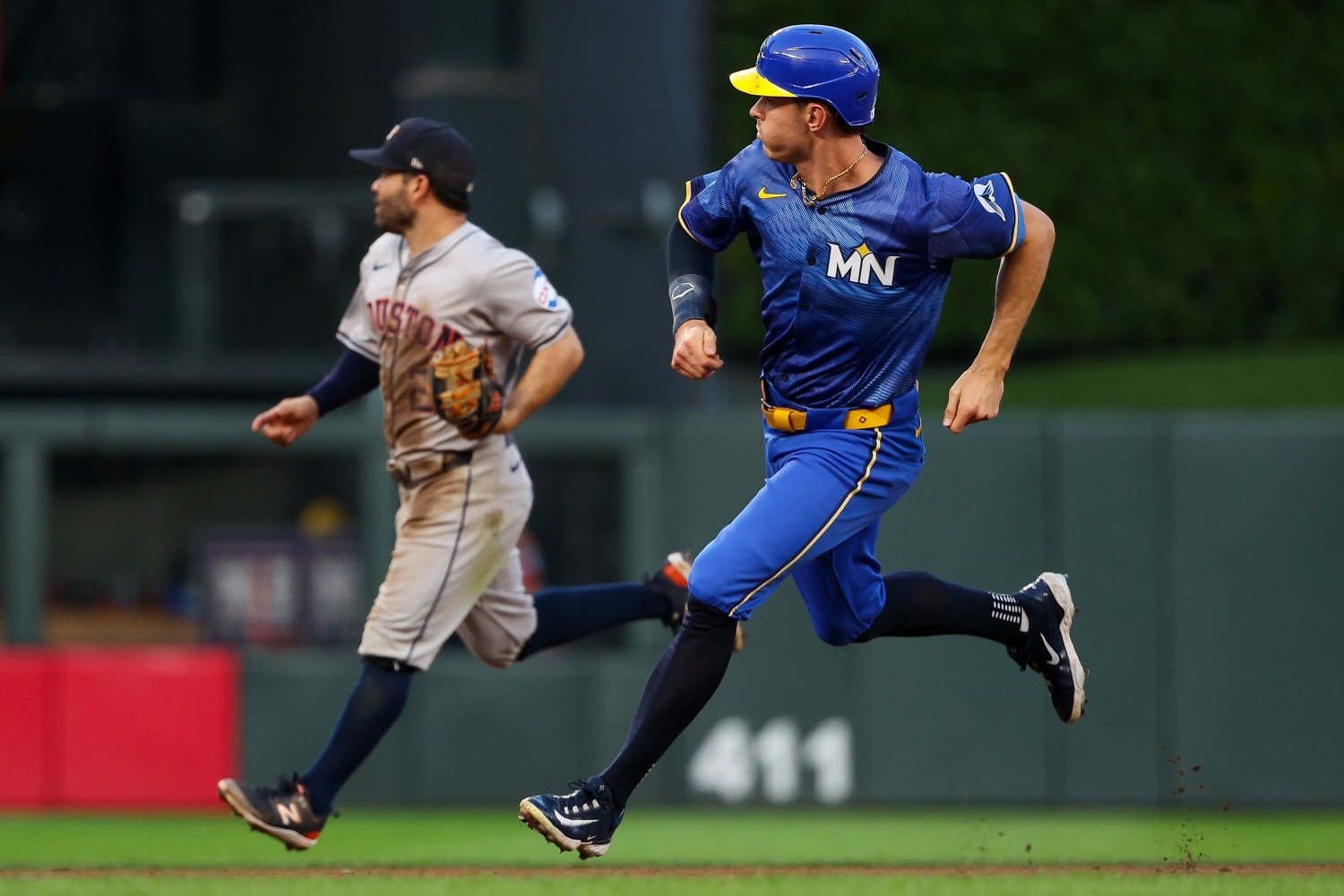 There are still managers left in MLB who will throw their players under the bus. Some do it when they sense that it's the only (or simply the most appropriate) way to motivate a player who responds only to certain styles of confrontation or accountability. Some do it when they simply lose composure and can't hold onto their own turbid frustrations any longer. For some, of course, it's a mix of the two. The salient fact, here, is that Rocco Baldelli is not that type of old-school. Like the majority of managers coming into the game over the last decade or so, he maintains a code of professionalism that doesn't permit making an example of anyone, or pointing fingers. When he feels it's fair, he will sometimes call out the overall effort or focus of his team, but even that is reserved only for time when he truly feels there's been a collective sag that requires a collective rededication. He doesn't ever lay one of his own players bare for media or fan criticism. He came about as close as he ever will, though, in response to a question after Tuesday night's loss about a play on which outfielder Max Kepler should have attempted to score, but stopped at third. The choice probably cost the Twins a run, and it was a bad, bad look. The mention of Kepler's lingering knee soreness isn't to be ignored. Kepler is, undoubtedly, playing at a bit less than 100%, something he doesn't do especially well, and it's only fair to account for that issue when evaluating choices or moves he makes on the field. When Baldelli says there was more to a conversation that he'll keep private, though, he's speaking in the code he's gradually developed with Twins media and fans. He was upset with Kepler, and outside the public limelight, he let his player know it. bkdSMnlfVjBZQUhRPT1fVkZJQ0FGZFNYbFFBVzFJRVVRQUFVbE1DQUZrQ0JsUUFWbFVNQ0ZkVFVsQUhDQVZR.mp4 Well he should have, too. That was an inexcusable failure of effort, from a player who has shown too strong a tendency toward self-preservation before. It was a tricky play, with the ball behind him in the right-field corner, and given the pace with which it was hit, much about the go/stay decision for a runner depends on the prior positioning of the defense and the cleanness of their collection and relay process. Kepler had to count on Tommy Watkins, his third-base coach, for that, and it looked like Watkins was a bit indecisive. He gave his player the wave, but it did come slightly later than might be typical. The problem is clear, when you see Kepler approaching third base as the camera cuts to him: he was breaking it down even as he approached the bag. A right fielder himself, he knows that corner better than anyone else alive, and he knew that Carlos Santana had hit it so hard into the corner that he would get there very quickly most of the time. He made an independent decision not to extend himself and test his knee. If he had adequately assessed Atlanta's positioning before the play, though, he would have seen that Jorge Soler was playing well off the line before the pitch. Soler also isn't as fast as even this aged version of Kepler. He does have a strong arm, but he wasn't in a position to use it. Kepler should have scored on the play. If he had kept running, he almost certainly would have been safe. In any scenario in which he was out, the Atlanta defenders would have made such a good play that you just shrug and move on. Instead, Kepler seemed to shrink from the potential damage of turning on the afterburners with his knee still balking; the danger of a possible collision at the plate; and the difficulty of changing gears after starting to decelerate a bit. He can see free agency from here, and he didn't want to hit the market as damaged goods. Unfortunately, that's as good an explanation for his willingness to play through this issue (when he's so often gone on the shelf with similar ones) as the fact that his star teammates Byron Buxton and Carlos Correa are already out. At this point, Kepler is a marginal contributor. Giving him playing time instead of any of Matt Wallner, Trevor Larnach, or José Miranda feels like a losing proposition for the Twins, though it occasionally happens, just for the maintenance of all four players' health and out of deference to Kepler's veteran status. It's fair for him to want to protect his own health, but he has to have the situational awareness and baseline hustle to be in position to score on a play like that. With one out, stopping at third could have been harmless; the Twins were a bit unlucky not to score for the balance of the inning. That factor might also have been in Kepler's mind; he's generally been a smart player. On balance, though, this was an egregious failure of effort, at a juncture of the season when the Twins can't afford it. This is a rough stretch of the schedule, going very badly for the team, and they need to seek out and occasionally force good moments, rather than sit and wait and hope things come round right. It's a stretch that tests what you really want, and how badly. Modern baseball analysis leans hard toward the mechanical, the strategic, and the antiseptic. There is, however, still a significant role for emotion, intensity, and desire in the game, especially as August tilts toward September and the stakes of every game steadily rise. Great teams need talent and data-driven feedback, but they also need energy, selflessness, and leadership. Kepler is a deeply respected player, and a tone-setter, even if he's not often a vocal leader. On Tuesday night, his energy and his selflessness--and, by extension, his leadership--was insufficient.
 -
He's been a solid contributor over a long tenure in the organization. He's on the doorstep of free agency, but he's already gotten his biggest payday. Tuesday night, he seemed to make a business decision, at a moment that demanded less business and more carefree #want. Image courtesy of © Matt Krohn-USA TODAY Sports There are still managers left in MLB who will throw their players under the bus. Some do it when they sense that it's the only (or simply the most appropriate) way to motivate a player who responds only to certain styles of confrontation or accountability. Some do it when they simply lose composure and can't hold onto their own turbid frustrations any longer. For some, of course, it's a mix of the two. The salient fact, here, is that Rocco Baldelli is not that type of old-school. Like the majority of managers coming into the game over the last decade or so, he maintains a code of professionalism that doesn't permit making an example of anyone, or pointing fingers. When he feels it's fair, he will sometimes call out the overall effort or focus of his team, but even that is reserved only for time when he truly feels there's been a collective sag that requires a collective rededication. He doesn't ever lay one of his own players bare for media or fan criticism. He came about as close as he ever will, though, in response to a question after Tuesday night's loss about a play on which outfielder Max Kepler should have attempted to score, but stopped at third. The choice probably cost the Twins a run, and it was a bad, bad look. The mention of Kepler's lingering knee soreness isn't to be ignored. Kepler is, undoubtedly, playing at a bit less than 100%, something he doesn't do especially well, and it's only fair to account for that issue when evaluating choices or moves he makes on the field. When Baldelli says there was more to a conversation that he'll keep private, though, he's speaking in the code he's gradually developed with Twins media and fans. He was upset with Kepler, and outside the public limelight, he let his player know it. bkdSMnlfVjBZQUhRPT1fVkZJQ0FGZFNYbFFBVzFJRVVRQUFVbE1DQUZrQ0JsUUFWbFVNQ0ZkVFVsQUhDQVZR.mp4 Well he should have, too. That was an inexcusable failure of effort, from a player who has shown too strong a tendency toward self-preservation before. It was a tricky play, with the ball behind him in the right-field corner, and given the pace with which it was hit, much about the go/stay decision for a runner depends on the prior positioning of the defense and the cleanness of their collection and relay process. Kepler had to count on Tommy Watkins, his third-base coach, for that, and it looked like Watkins was a bit indecisive. He gave his player the wave, but it did come slightly later than might be typical. The problem is clear, when you see Kepler approaching third base as the camera cuts to him: he was breaking it down even as he approached the bag. A right fielder himself, he knows that corner better than anyone else alive, and he knew that Carlos Santana had hit it so hard into the corner that he would get there very quickly most of the time. He made an independent decision not to extend himself and test his knee. If he had adequately assessed Atlanta's positioning before the play, though, he would have seen that Jorge Soler was playing well off the line before the pitch. Soler also isn't as fast as even this aged version of Kepler. He does have a strong arm, but he wasn't in a position to use it. Kepler should have scored on the play. If he had kept running, he almost certainly would have been safe. In any scenario in which he was out, the Atlanta defenders would have made such a good play that you just shrug and move on. Instead, Kepler seemed to shrink from the potential damage of turning on the afterburners with his knee still balking; the danger of a possible collision at the plate; and the difficulty of changing gears after starting to decelerate a bit. He can see free agency from here, and he didn't want to hit the market as damaged goods. Unfortunately, that's as good an explanation for his willingness to play through this issue (when he's so often gone on the shelf with similar ones) as the fact that his star teammates Byron Buxton and Carlos Correa are already out. At this point, Kepler is a marginal contributor. Giving him playing time instead of any of Matt Wallner, Trevor Larnach, or José Miranda feels like a losing proposition for the Twins, though it occasionally happens, just for the maintenance of all four players' health and out of deference to Kepler's veteran status. It's fair for him to want to protect his own health, but he has to have the situational awareness and baseline hustle to be in position to score on a play like that. With one out, stopping at third could have been harmless; the Twins were a bit unlucky not to score for the balance of the inning. That factor might also have been in Kepler's mind; he's generally been a smart player. On balance, though, this was an egregious failure of effort, at a juncture of the season when the Twins can't afford it. This is a rough stretch of the schedule, going very badly for the team, and they need to seek out and occasionally force good moments, rather than sit and wait and hope things come round right. It's a stretch that tests what you really want, and how badly. Modern baseball analysis leans hard toward the mechanical, the strategic, and the antiseptic. There is, however, still a significant role for emotion, intensity, and desire in the game, especially as August tilts toward September and the stakes of every game steadily rise. Great teams need talent and data-driven feedback, but they also need energy, selflessness, and leadership. Kepler is a deeply respected player, and a tone-setter, even if he's not often a vocal leader. On Tuesday night, his energy and his selflessness--and, by extension, his leadership--was insufficient. View full article
-
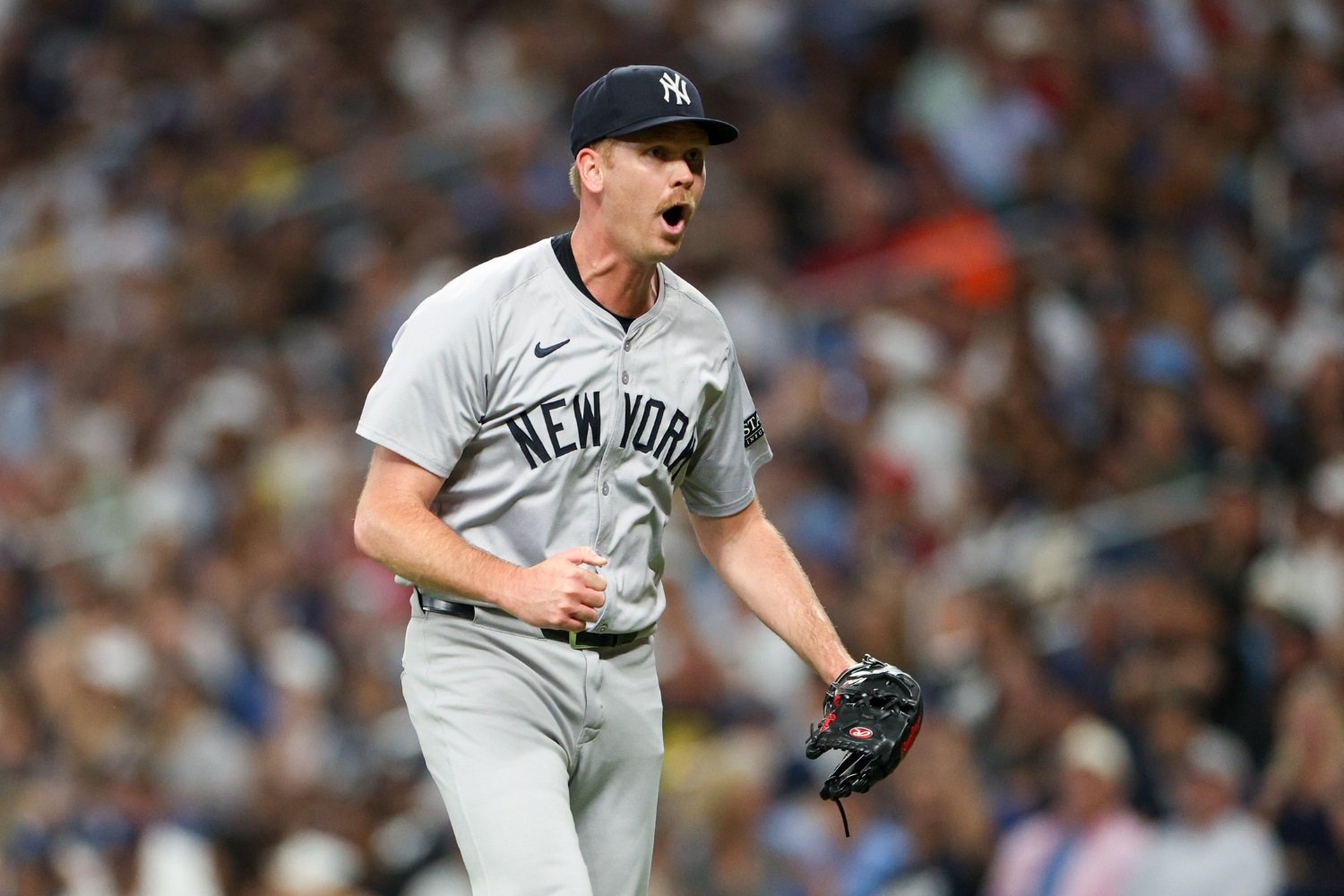 His first stint with the 2024 Twins could hardly have been a less fulfilling homecoming for Michael Tonkin, whom the team drafted in the now-defunct 30th round back in 2008 and who pitched his first five big-league seasons in Minnesota. This time, he comes back with a real chance to make the playoff roster and contribute substantial, medium-leverage relief innings. After being let go by the Mets early this season, Tonkin landed with the Twins only for a couple of days, making one forgettable appearance. After that, he was designated for assignment again, and the Yankees scooped him up--whereupon he found a new way to succeed against big-league hitters, at age 34. Now, he's back with Minnesota, after being a victim of the perpetual roster crunch faced by big-market teams who invest in redundancy. While he called the Bronx home, though, Tonkin did a lot of good work. He piled up 56 innings with a 3.38 ERA, largely supported by peripheral indicators. He struck out 24.6% of opposing batters and walked 9.1%, thanks in part (albeit indirectly) to an increased reliance on his sinker. The Twins were never going to be the place where Tonkin discovered the utility of that pitch; almost no team in baseball throws fewer sinkers. They don't teach it often, or especially well. However, the Yankees do, and Tonkin discovered that he could play off the naturally significant arm-side run of his four-seamer to make the heavy sinker a highly effective alternative look. Having two flavors of slider only made that play up more nicely. None of his four offerings misses bats the way you want a relief pitcher's out pitch to do so, and both versions of his fastball are a little underheated, sitting 91-94 and touching only a tick higher. As a four-pitch mix, though, it plays like a small-town symphony--less grand than the big-city version, a bit less technically brilliant, but more accessible. Tonkin can slot right into the middle of Rocco Baldelli's bullpen depth chart, and as long as his new, old team doesn't mess with what he's been doing lately, it should be a fruitful new, old partnership. This is the kind of pickup the team has been craving: a bit of newfound versatility and stability in the bridge from their young starters to their fireballing relief aces.
 -
In bringing back the journeyman righthander for a third stint with the team (and second this year), the team is hoping to regain some reliability in a unit ravaged by injuries. Image courtesy of © Nathan Ray Seebeck-USA TODAY Sports His first stint with the 2024 Twins could hardly have been a less fulfilling homecoming for Michael Tonkin, whom the team drafted in the now-defunct 30th round back in 2008 and who pitched his first five big-league seasons in Minnesota. This time, he comes back with a real chance to make the playoff roster and contribute substantial, medium-leverage relief innings. After being let go by the Mets early this season, Tonkin landed with the Twins only for a couple of days, making one forgettable appearance. After that, he was designated for assignment again, and the Yankees scooped him up--whereupon he found a new way to succeed against big-league hitters, at age 34. Now, he's back with Minnesota, after being a victim of the perpetual roster crunch faced by big-market teams who invest in redundancy. While he called the Bronx home, though, Tonkin did a lot of good work. He piled up 56 innings with a 3.38 ERA, largely supported by peripheral indicators. He struck out 24.6% of opposing batters and walked 9.1%, thanks in part (albeit indirectly) to an increased reliance on his sinker. The Twins were never going to be the place where Tonkin discovered the utility of that pitch; almost no team in baseball throws fewer sinkers. They don't teach it often, or especially well. However, the Yankees do, and Tonkin discovered that he could play off the naturally significant arm-side run of his four-seamer to make the heavy sinker a highly effective alternative look. Having two flavors of slider only made that play up more nicely. None of his four offerings misses bats the way you want a relief pitcher's out pitch to do so, and both versions of his fastball are a little underheated, sitting 91-94 and touching only a tick higher. As a four-pitch mix, though, it plays like a small-town symphony--less grand than the big-city version, a bit less technically brilliant, but more accessible. Tonkin can slot right into the middle of Rocco Baldelli's bullpen depth chart, and as long as his new, old team doesn't mess with what he's been doing lately, it should be a fruitful new, old partnership. This is the kind of pickup the team has been craving: a bit of newfound versatility and stability in the bridge from their young starters to their fireballing relief aces. View full article
-
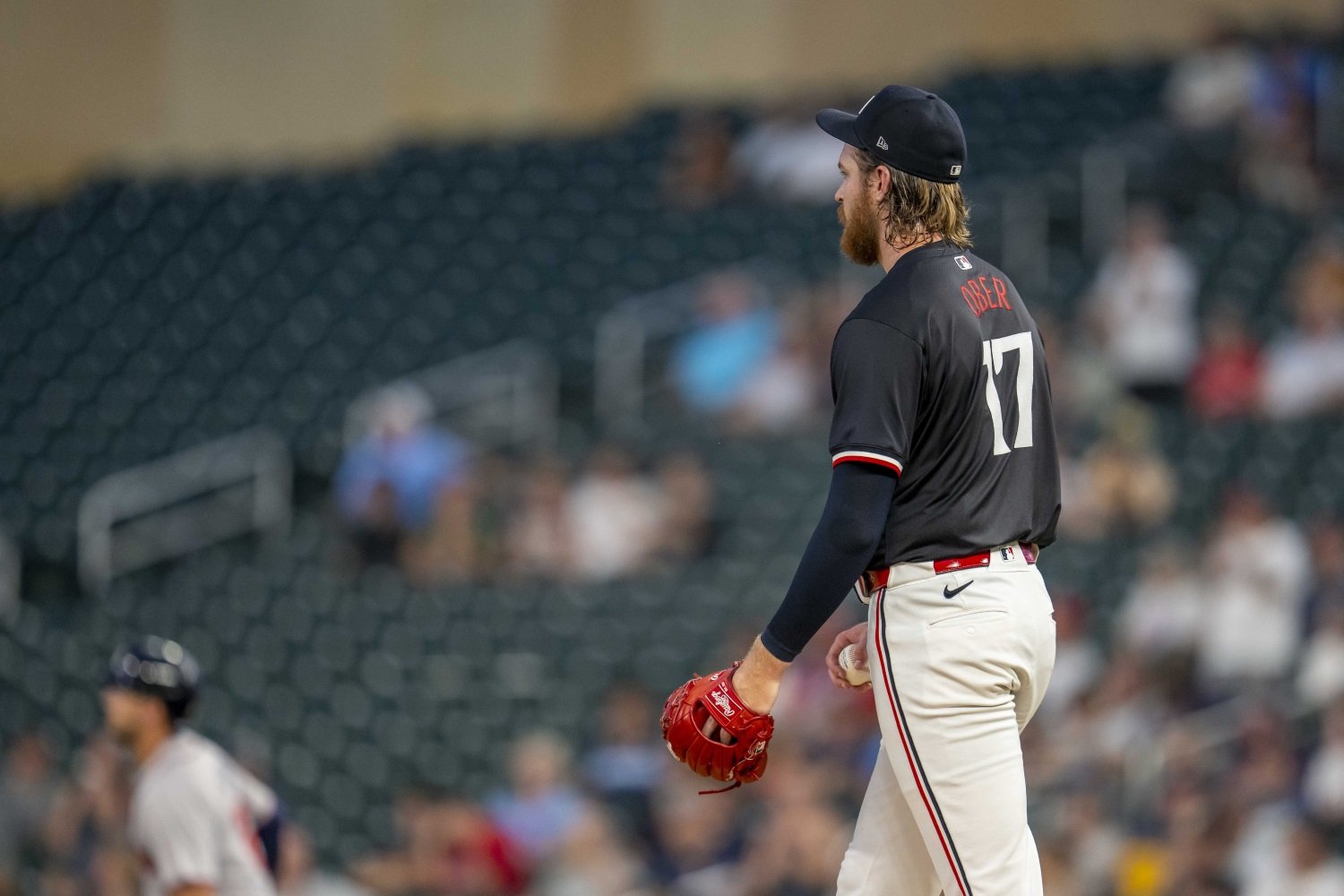 The visitors from an unincorporated community in the northern suburbs of Atlanta put a hurting on Bailey Ober Monday night. Mother Nature provided plenty of fireworks and loud noises, but before those even arrived, Atlanta batters did their share of the same. The Twins' starter might not have pitched past the second inning even if the weather were perfect; he gave up a whopping nine runs in those two frames. When games like these have happened to Ober, you can pretty readily find Twins fans philosophizing about them, by saying that he's a bit prone to them. The Royals seemed to gain a tell on Ober and lit him up twice early this season. He's generally a very steady starting pitcher, but nearly by consensus, close observers of the Twins believe that he's unusually vulnerable to the blowup start, given how good he is on the whole. Here's the thing: No, he isn't. While Ober's blowups might be a hair more ugly than others', it's important to realize that the difference between giving up nine runs in two innings and six runs in three is functionally nil. If you give up five or more runs within the first 12 outs, as a starting pitcher, you're putting your team behind the 8-ball for that contest. Ober's especially visible hiccups are no fun to watch, but they're not more costly than other, less glaring outings. So, I created two statistical categories: Strong Starts: Unlike Quality Starts, a slightly old-fashioned metric that counts as "quality" any outing with at least six innings pitched and no more than three earned runs allowed, Strong Starts reflect the shifting priorities of teams playing in MLB in the 2020s. A Strong Start is any outing in which a pitcher works at least into the sixth and allows no more than two runs--earned or otherwise. Blowups: The opposite of a Strong Start, and considerably more rare, a Blowup is any start in which a pitcher allows at least five runs in the first four innings. Teams who score at least that many times in those innings win 86,3% of their games, so as a starter, giving up that much in such a short time is as good as giving up the game. Ober is, as you would guess, excellent at compiling Strong Starts. Among the 77 pitchers with at least 60 regular-season starts in MLB since the start of the 2022 season, he ranks 12th in Strong Start Rate, at 59.7%. This cohort of oft-used starters comes up with a Strong Start 51.9 percent of the time, on average. Meanwhile, the same group averages a blowup in 17.6 percent of their outings. Ober, though, comes in at 13.9%, 13th-lowest in the group. In other words, he's right in line with where you would expect him to be, given his overall quality and tendency to turn in Strong Starts. Here's a scatterplot showing all 77 of those pitchers' Strong Start and Blowup rates, with the Twins-tied qualifying hurlers highlighted. While Ober might be more likely to give up eight runs than Joe Ryan or Pablo López, he's no more likely to put his team in an overwhelmingly unfavorable position. In fact, he's less so. Meanwhile, he's more likely than either to set them up with an especially good chance to win. The only pitchers in this group of 77 who best Ober in both Strong Start rate and Blowup rate are Blake Snell, Michael Wacha, and Max Fried. In other words, don't sweat Ober's bizarre stumbles. Unless and until he has more than an isolated instance of ineffectiveness every few months, he should be regarded as a legitimate top-of-the-rotation starter, albeit without quite the ceiling of some true aces. He's as consistently solid as almost any starter in baseball, and the goriness of his worst defeats don't make them more actually damaging than other hurlers' less dramatic failures.
- 12 comments
-
- 7
-
-
-
- bailey ober
- pablo lopez
- (and 1 more)
-
It's the one apparent knock on a pitcher emerging as the unlikely ace of a team headed for a second straight playoff appearance. And it might not even be real. Image courtesy of © Jesse Johnson-USA TODAY Sports The visitors from an unincorporated community in the northern suburbs of Atlanta put a hurting on Bailey Ober Monday night. Mother Nature provided plenty of fireworks and loud noises, but before those even arrived, Atlanta batters did their share of the same. The Twins' starter might not have pitched past the second inning even if the weather were perfect; he gave up a whopping nine runs in those two frames. When games like these have happened to Ober, you can pretty readily find Twins fans philosophizing about them, by saying that he's a bit prone to them. The Royals seemed to gain a tell on Ober and lit him up twice early this season. He's generally a very steady starting pitcher, but nearly by consensus, close observers of the Twins believe that he's unusually vulnerable to the blowup start, given how good he is on the whole. Here's the thing: No, he isn't. While Ober's blowups might be a hair more ugly than others', it's important to realize that the difference between giving up nine runs in two innings and six runs in three is functionally nil. If you give up five or more runs within the first 12 outs, as a starting pitcher, you're putting your team behind the 8-ball for that contest. Ober's especially visible hiccups are no fun to watch, but they're not more costly than other, less glaring outings. So, I created two statistical categories: Strong Starts: Unlike Quality Starts, a slightly old-fashioned metric that counts as "quality" any outing with at least six innings pitched and no more than three earned runs allowed, Strong Starts reflect the shifting priorities of teams playing in MLB in the 2020s. A Strong Start is any outing in which a pitcher works at least into the sixth and allows no more than two runs--earned or otherwise. Blowups: The opposite of a Strong Start, and considerably more rare, a Blowup is any start in which a pitcher allows at least five runs in the first four innings. Teams who score at least that many times in those innings win 86,3% of their games, so as a starter, giving up that much in such a short time is as good as giving up the game. Ober is, as you would guess, excellent at compiling Strong Starts. Among the 77 pitchers with at least 60 regular-season starts in MLB since the start of the 2022 season, he ranks 12th in Strong Start Rate, at 59.7%. This cohort of oft-used starters comes up with a Strong Start 51.9 percent of the time, on average. Meanwhile, the same group averages a blowup in 17.6 percent of their outings. Ober, though, comes in at 13.9%, 13th-lowest in the group. In other words, he's right in line with where you would expect him to be, given his overall quality and tendency to turn in Strong Starts. Here's a scatterplot showing all 77 of those pitchers' Strong Start and Blowup rates, with the Twins-tied qualifying hurlers highlighted. While Ober might be more likely to give up eight runs than Joe Ryan or Pablo López, he's no more likely to put his team in an overwhelmingly unfavorable position. In fact, he's less so. Meanwhile, he's more likely than either to set them up with an especially good chance to win. The only pitchers in this group of 77 who best Ober in both Strong Start rate and Blowup rate are Blake Snell, Michael Wacha, and Max Fried. In other words, don't sweat Ober's bizarre stumbles. Unless and until he has more than an isolated instance of ineffectiveness every few months, he should be regarded as a legitimate top-of-the-rotation starter, albeit without quite the ceiling of some true aces. He's as consistently solid as almost any starter in baseball, and the goriness of his worst defeats don't make them more actually damaging than other hurlers' less dramatic failures. View full article
-
Saw that; considered removing the link!; decided to roll with it. No one--not even you!--can *prove* you're not the same person, reincarnated. Famously, reincarnated people switch handedness. That's just science.
-
If a hitter can have the yips, this one did. Now, thankfully, it looks like he's returning to himself. Image courtesy of © Nick Wosika-USA TODAY Sports Some players shy away from the word "yips". Some call the hideous, mortifying, often career-ending disease of mind and body that robs a pitcher of their control and makes them a laughingstock at whom no one can even bring themselves to laugh "the thing," instead. "Yips" is too cute. The reality of being one of the best athletes alive and suddenly losing contact with that talent isn't cute. It's eviscerating, emasculating, and excruciating. It also only really happens to pitchers, and to fielders. There's a lot of time, when you're out there on the mound or when you pick up a routine ground ball and just need to throw out a plodding runner. There's too much time. Sometimes, things from far beyond the diamond creep into the mind of a player holding the ball. Sometimes, they feel calm and focused, but their body refuses to accept that message. In either case, though, when a player utterly loses the ability to hit (or even approximate) a target, it quickly becomes a problem of thinking too much. Throwing is a complex physical movement, especially in the ways it has to be done on a baseball diamond. Our bodies learn to do it, and then we code it into an unconscious set of instructions and try to compartmentalize it. When the conscious mind comes back into the throwing motion, it sometimes begets a spasm--a fit. That can't happen to hitters. A hitter can be thinking too much at the plate. In fact, that happens often. We don't call it the yips, though, because a hitter who's thinking too much rarely takes huge, uncoordinated, lunging and tumbling swings. No, when a hitter is thinking too much at the plate, it looks like this. Yip.mp4 And even more often, it looks like this: Yip 1.mp4 Edouard Julien had to go down to St. Paul earlier this season because his sophomore campaign came completely off the rails. Why? He was thinking too much. This is not a chime-in with the old-school ex-players and retirees who lament that the game is too obsessed with analytics, now. It's just the reality, for this one player. Julien got badly confused in his approach this season, as he tried to adapt to the complexity of the interactions between himself and big-league pitchers in the wake of their latest round of adjustments to him. When he came back up briefly last month, it looked worse than ever. Yip 2.mp4 There were a few occasions during July, as in the first video above, in which Julien did guess at pitch type and location and take a hack, but he didn't come especially close to the ball, because he wasn't really seeing and reacting to it. He was trying to think in concert with the pitcher, forgetting that the pitcher's whole objective would be to subvert that attempt to harmonize. Yip 3.mp4 Very often, the effect was something like watching a boxer without any serious training in the sport. Julien still had his physical tools, but he looked like no one ever taught him to defend himself--to keep those hands up and watch for the hook. The clips above all came amid a stretch, from Jul. 13-30, in which Julien had 34 plate appearances divided between Triple-A and the majors. In those trips to the plate, he struck out 18 times. He swung at under a third of the pitches he saw, yet whiffed on 40% of his swings. Almost two months after being sent down in the hopes of being fixed, he was more broken than ever. He's back. Unyippee.mp4 If you can take the anxiety of another potential strikeout out of it, two-strike hitting is the surest cure for hitters' yips. You're never more reactive, never more natural and intuitive, than when you're simply trying to see the ball and meet it. Julien got himself far off track early this year by trying not to make that adjustment in those counts, and instead continuing to seek maximal damage. Then, the anxiety came. The hit above is symbolic of the journey back to himself that has taken place over the last few weeks. Since Jul. 31, Julien has had 70 plate appearances between Triple-A and MLB. He's batting .271/.386/.475. His swing rate is up to 42.9%, and his contact rate on those swings is up to 72.4%. He's still striking out at a relatively high rate, but it's nowhere near what it was before that, and it's come with more walks, more authoritative contact, and an ability to defend himself. Last night, Julien had an early hit, and two hard-hit outs early in counts. Then, in the top of the ninth, with the Twins down to their last out, he worked a full count against triple-digit strike thrower Robert Suarez. It was precisely the kind of moment in which he'd have crumpled in defenseless fashion at this time last month. Instead: Unyip.mp4 That pitch wasn't quite where Suarez would have wanted it, but it's just the kind of offering that would have frozen Julien before. And then on the next pitch: Unyip 1.mp4 It looks like nothing. It's just a foul ball. But Julien fought off two straight 100-mile-per-hour pitches, when failing to do so would have meant the end of the game. The walk he drew on the next pitch, just the 10th one Suarez has issued all year, was almost a formality. At the end of a great night of at-bats, after a weekend of some encouraging signs, this battle served notice: Julien's gotten back out of his head, and into the saddle. That doesn't mean he should start every day for the next fortnight. it doesn't mean he won't continue to strike out at problematic rates. It doesn't have to mean any of that, right now. Julien has seen The Thing, and he's survived his encounter with it. Whatever struggles are ahead, the Twins' young hitter has put a little bit of existential terror behind him. That's a big deal, and even though it didn't quite lead to a comeback Monday night, it made a difference in the game. Suarez might not be as available for the rest of the series as he would have been if Julien had gone down feebly. The Twins found a bit of consolation at the end of a tough night. And the yips no longer waft through their clubhouse. View full article
-
Welcome Back, Edouard Julien. Thank Goodness You're Alright.
Matthew Trueblood posted an article in Twins
 Some players shy away from the word "yips". Some call the hideous, mortifying, often career-ending disease of mind and body that robs a pitcher of their control and makes them a laughingstock at whom no one can even bring themselves to laugh "the thing," instead. "Yips" is too cute. The reality of being one of the best athletes alive and suddenly losing contact with that talent isn't cute. It's eviscerating, emasculating, and excruciating. It also only really happens to pitchers, and to fielders. There's a lot of time, when you're out there on the mound or when you pick up a routine ground ball and just need to throw out a plodding runner. There's too much time. Sometimes, things from far beyond the diamond creep into the mind of a player holding the ball. Sometimes, they feel calm and focused, but their body refuses to accept that message. In either case, though, when a player utterly loses the ability to hit (or even approximate) a target, it quickly becomes a problem of thinking too much. Throwing is a complex physical movement, especially in the ways it has to be done on a baseball diamond. Our bodies learn to do it, and then we code it into an unconscious set of instructions and try to compartmentalize it. When the conscious mind comes back into the throwing motion, it sometimes begets a spasm--a fit. That can't happen to hitters. A hitter can be thinking too much at the plate. In fact, that happens often. We don't call it the yips, though, because a hitter who's thinking too much rarely takes huge, uncoordinated, lunging and tumbling swings. No, when a hitter is thinking too much at the plate, it looks like this. Yip.mp4 And even more often, it looks like this: Yip 1.mp4 Edouard Julien had to go down to St. Paul earlier this season because his sophomore campaign came completely off the rails. Why? He was thinking too much. This is not a chime-in with the old-school ex-players and retirees who lament that the game is too obsessed with analytics, now. It's just the reality, for this one player. Julien got badly confused in his approach this season, as he tried to adapt to the complexity of the interactions between himself and big-league pitchers in the wake of their latest round of adjustments to him. When he came back up briefly last month, it looked worse than ever. Yip 2.mp4 There were a few occasions during July, as in the first video above, in which Julien did guess at pitch type and location and take a hack, but he didn't come especially close to the ball, because he wasn't really seeing and reacting to it. He was trying to think in concert with the pitcher, forgetting that the pitcher's whole objective would be to subvert that attempt to harmonize. Yip 3.mp4 Very often, the effect was something like watching a boxer without any serious training in the sport. Julien still had his physical tools, but he looked like no one ever taught him to defend himself--to keep those hands up and watch for the hook. The clips above all came amid a stretch, from Jul. 13-30, in which Julien had 34 plate appearances divided between Triple-A and the majors. In those trips to the plate, he struck out 18 times. He swung at under a third of the pitches he saw, yet whiffed on 40% of his swings. Almost two months after being sent down in the hopes of being fixed, he was more broken than ever. He's back. Unyippee.mp4 If you can take the anxiety of another potential strikeout out of it, two-strike hitting is the surest cure for hitters' yips. You're never more reactive, never more natural and intuitive, than when you're simply trying to see the ball and meet it. Julien got himself far off track early this year by trying not to make that adjustment in those counts, and instead continuing to seek maximal damage. Then, the anxiety came. The hit above is symbolic of the journey back to himself that has taken place over the last few weeks. Since Jul. 31, Julien has had 70 plate appearances between Triple-A and MLB. He's batting .271/.386/.475. His swing rate is up to 42.9%, and his contact rate on those swings is up to 72.4%. He's still striking out at a relatively high rate, but it's nowhere near what it was before that, and it's come with more walks, more authoritative contact, and an ability to defend himself. Last night, Julien had an early hit, and two hard-hit outs early in counts. Then, in the top of the ninth, with the Twins down to their last out, he worked a full count against triple-digit strike thrower Robert Suarez. It was precisely the kind of moment in which he'd have crumpled in defenseless fashion at this time last month. Instead: Unyip.mp4 That pitch wasn't quite where Suarez would have wanted it, but it's just the kind of offering that would have frozen Julien before. And then on the next pitch: Unyip 1.mp4 It looks like nothing. It's just a foul ball. But Julien fought off two straight 100-mile-per-hour pitches, when failing to do so would have meant the end of the game. The walk he drew on the next pitch, just the 10th one Suarez has issued all year, was almost a formality. At the end of a great night of at-bats, after a weekend of some encouraging signs, this battle served notice: Julien's gotten back out of his head, and into the saddle. That doesn't mean he should start every day for the next fortnight. it doesn't mean he won't continue to strike out at problematic rates. It doesn't have to mean any of that, right now. Julien has seen The Thing, and he's survived his encounter with it. Whatever struggles are ahead, the Twins' young hitter has put a little bit of existential terror behind him. That's a big deal, and even though it didn't quite lead to a comeback Monday night, it made a difference in the game. Suarez might not be as available for the rest of the series as he would have been if Julien had gone down feebly. The Twins found a bit of consolation at the end of a tough night. And the yips no longer waft through their clubhouse.
 -
.png.abb9dcdacb16fdcab5c60741c8964f1b.png) Chris Paddack (you know, probably) isn't walking through that bullpen door. Louie Varland isn't walking through that door, except before games begin, because the team needs him as starting pitching depth. Brock Stewart isn't walking through that door, unless someone holds it for him, because it's a pain to open a bullpen door with your arm in a sling. The Twins are one high-leverage relief arm short of a quorum, for a team hoping to make a deep run in October--unless this Cole Sands is the real deal. The thing is, he probably is. He could always break, the same way Paddack, Stewart, and Joe Ryan have broken, but Sands collected a save this weekend in Texas, and it wasn't like his three saves from early in the season--two of which were glorified mop-up work, and one of which was an April emergency. This one was certainly a factor of the availability of more famous, decorated relief teammates, but it was also a concrete acknowledgment: Cole Sands is a dude now. He's not headed for regression, because he's not the same pitcher as last year, with different numbers. He's a whole new pitcher. The Twins have a clear-cut approach to their pitching development. It's not one-size-fits-all, but it follows certain patterns. They know a pitcher's fastball shape is "like a fingerprint," to quote one front office member who plays a key role in pitching development, so they don't target pitchers with the idea of changing that or try to force a change in the guys they already have. Rather, they dedicate themselves to tinkering with pitch mix and breaking ball shape, which is much more manipulable, and the cherry on top is when mechanical changes can beget velocity gains. Most of the recent publicity has gone to the exciting cases in which they've done this with players brought in as amateurs, who are then flung quickly up the organizational ladder. David Festa and Zebby Matthews are the notables of the moment, but before them, Simeon Woods Richardson came to camp this spring with much better velocity than in previous seasons. There are other hurlers showing the same signs of progress throughout the farm system. Before them, though, there were Griffin Jax, whose stuff took off in a way not fully explicable by his switch to a relief role; Joe Ryan, who went from an underpowered arm to one who occasionally touches 96 miles per hour; and even Pablo López, who was already an established big-league starter when the Twins got ahold of him and added a couple ticks of velocity for him. Partly through their ties to Driveline, but partly also through their own proprietary infrastructure, the Twins specialize in boosting pitchers' raw stuff--and it doesn't stop when they reach MLB. Now, Sands is the new exemplar. In 2022, he sat 91 and touched 93 only very rarely. Last season, he trended upward as the year went on, and ended up sitting 94, while touching 95 and scraping 96. All of that was just a warmup. This season, he's sitting 96, with plenty of 97s mixed in. His 90th-percentile velocity by month tells the tale. This summer, he's not just brushing the mid-90s. He's a full-fledged flamethrower.
Chris Paddack (you know, probably) isn't walking through that bullpen door. Louie Varland isn't walking through that door, except before games begin, because the team needs him as starting pitching depth. Brock Stewart isn't walking through that door, unless someone holds it for him, because it's a pain to open a bullpen door with your arm in a sling. The Twins are one high-leverage relief arm short of a quorum, for a team hoping to make a deep run in October--unless this Cole Sands is the real deal. The thing is, he probably is. He could always break, the same way Paddack, Stewart, and Joe Ryan have broken, but Sands collected a save this weekend in Texas, and it wasn't like his three saves from early in the season--two of which were glorified mop-up work, and one of which was an April emergency. This one was certainly a factor of the availability of more famous, decorated relief teammates, but it was also a concrete acknowledgment: Cole Sands is a dude now. He's not headed for regression, because he's not the same pitcher as last year, with different numbers. He's a whole new pitcher. The Twins have a clear-cut approach to their pitching development. It's not one-size-fits-all, but it follows certain patterns. They know a pitcher's fastball shape is "like a fingerprint," to quote one front office member who plays a key role in pitching development, so they don't target pitchers with the idea of changing that or try to force a change in the guys they already have. Rather, they dedicate themselves to tinkering with pitch mix and breaking ball shape, which is much more manipulable, and the cherry on top is when mechanical changes can beget velocity gains. Most of the recent publicity has gone to the exciting cases in which they've done this with players brought in as amateurs, who are then flung quickly up the organizational ladder. David Festa and Zebby Matthews are the notables of the moment, but before them, Simeon Woods Richardson came to camp this spring with much better velocity than in previous seasons. There are other hurlers showing the same signs of progress throughout the farm system. Before them, though, there were Griffin Jax, whose stuff took off in a way not fully explicable by his switch to a relief role; Joe Ryan, who went from an underpowered arm to one who occasionally touches 96 miles per hour; and even Pablo López, who was already an established big-league starter when the Twins got ahold of him and added a couple ticks of velocity for him. Partly through their ties to Driveline, but partly also through their own proprietary infrastructure, the Twins specialize in boosting pitchers' raw stuff--and it doesn't stop when they reach MLB. Now, Sands is the new exemplar. In 2022, he sat 91 and touched 93 only very rarely. Last season, he trended upward as the year went on, and ended up sitting 94, while touching 95 and scraping 96. All of that was just a warmup. This season, he's sitting 96, with plenty of 97s mixed in. His 90th-percentile velocity by month tells the tale. This summer, he's not just brushing the mid-90s. He's a full-fledged flamethrower. -
It might just be the least sexy of the Twins' recent developmental pitching wins. Not even the team was hoping it would be an important one. But yes, this is happening. Image courtesy of © Kevin Jairaj-USA TODAY Sports Chris Paddack (you know, probably) isn't walking through that bullpen door. Louie Varland isn't walking through that door, except before games begin, because the team needs him as starting pitching depth. Brock Stewart isn't walking through that door, unless someone holds it for him, because it's a pain to open a bullpen door with your arm in a sling. The Twins are one high-leverage relief arm short of a quorum, for a team hoping to make a deep run in October--unless this Cole Sands is the real deal. The thing is, he probably is. He could always break, the same way Paddack, Stewart, and Joe Ryan have broken, but Sands collected a save this weekend in Texas, and it wasn't like his three saves from early in the season--two of which were glorified mop-up work, and one of which was an April emergency. This one was certainly a factor of the availability of more famous, decorated relief teammates, but it was also a concrete acknowledgment: Cole Sands is a dude now. He's not headed for regression, because he's not the same pitcher as last year, with different numbers. He's a whole new pitcher. The Twins have a clear-cut approach to their pitching development. It's not one-size-fits-all, but it follows certain patterns. They know a pitcher's fastball shape is "like a fingerprint," to quote one front office member who plays a key role in pitching development, so they don't target pitchers with the idea of changing that or try to force a change in the guys they already have. Rather, they dedicate themselves to tinkering with pitch mix and breaking ball shape, which is much more manipulable, and the cherry on top is when mechanical changes can beget velocity gains. Most of the recent publicity has gone to the exciting cases in which they've done this with players brought in as amateurs, who are then flung quickly up the organizational ladder. David Festa and Zebby Matthews are the notables of the moment, but before them, Simeon Woods Richardson came to camp this spring with much better velocity than in previous seasons. There are other hurlers showing the same signs of progress throughout the farm system. Before them, though, there were Griffin Jax, whose stuff took off in a way not fully explicable by his switch to a relief role; Joe Ryan, who went from an underpowered arm to one who occasionally touches 96 miles per hour; and even Pablo López, who was already an established big-league starter when the Twins got ahold of him and added a couple ticks of velocity for him. Partly through their ties to Driveline, but partly also through their own proprietary infrastructure, the Twins specialize in boosting pitchers' raw stuff--and it doesn't stop when they reach MLB. Now, Sands is the new exemplar. In 2022, he sat 91 and touched 93 only very rarely. Last season, he trended upward as the year went on, and ended up sitting 94, while touching 95 and scraping 96. All of that was just a warmup. This season, he's sitting 96, with plenty of 97s mixed in. His 90th-percentile velocity by month tells the tale. This summer, he's not just brushing the mid-90s. He's a full-fledged flamethrower. View full article
-
Saw several comments saying a version of this, and I get it! But: 1. In baseball, especially when it comes to a catcher on the long-toothed side of 30, you can't just assume that what happened last is what will happen next. This tandem has worked quite well for two years, but I wouldn't bet very big on it working for a third straight time. And 2. To whatever extent you DO project it to work, this arrangement is a luxury. When you're tightening your belt and trimming your budget, you cut back on luxuries. I hope I'm firmly on record saying the Twins doing that tightening and trimming is stupid! But if it's happening, paying more than $15 million for the catcher spot is a luxury they will not be able to indulge. Either Jeffers will be dealt for a quality prospect, Vázquez will be dealt for a minimal return (though I strongly disagree with those who think they would have to attach a prospect TO him), or they will unexpectedly increase their payroll by a significant amount next season. One of those three things HAS to happen.
-
.png.a706d8c8e19d5e167647550593dd70cf.png) As I've assiduously documented over the last year or so, the Twins alternate Ryan Jeffers and Christian Vázquez in composing their daily starting lineups. They don't kind-of, sort-of alternate them, or play matchups or pair each with a subset of the starting rotation. The Twins believe so strongly in keeping their catchers on a one-on, one-off schedule that they've only deviated from a perfect alternating pattern between them six times all season--and all of those were because injuries forced the issue. In half those instances, though, the injuries compelling a change to the pattern weren't even to the catchers. Hurt players elsewhere on the roster forced the team to start Vázquez at third base once and to slot Jeffers in as the DH a bit more often than they actually wanted to, earlier this year. With 41 games to play, Vázquez needs 16 games at catcher and 62 plate appearances to reach 80 and 300, respectively. Jeffers needs 18 turns behind the dish, and has already exceeded 300 trips to the plate. If each player gets to each of those figures, it will be the second straight season in which they've done so. Should that happen, they'll become just the third pair of teammates ever to catch 80 or more games and come to bat 300 or more times in consecutive years. The first was Joe Azcue and Duke Sims, of the 1967-68 Cleveland club. The second was Buster Posey and Nick Hundley, of the 2017-18 Giants. All of the other 32 instances of two catchers sharing work that evenly in baseball history have been one-year things, either because one of the backstops got hurt in the surrounding seasons; because one of the two seized a more regular job and consigned the other to backup duty; or because the team lucky enough to be in possession of two solid backstops cashed one in via trade. If Vázquez slides up in the order a bit the rest of the way (which wouldn't be out of line, given that he's hitting .288/.325/.523 since Jun. 1), he could even get to 325 plate appearances for the season. If he does so, he and Jeffers will become the first pair of teammates ever to have that many PAs and 80-plus games behind the dish in two straight years. There are only 12 such seasons in history as things stand, and last year's version of Jeffers and Vázquez is already the only one since 1996, when Ed Taubensee and Joe Oliver did it for the Reds. The organization's fierce belief in the value of resting catchers between appearances has paid off to an extent even they probably couldn't have predicted. This arrangement won't last another year. The team needs to clear some money this winter to accommodate other needed moves, so they'll trade one of Vázquez and Jeffers. For two seasons, though, these two have been a great yin and yang, kept constantly in balance, bringing different but equally valuable things to the team on a daily basis. Keeping catchers healthy and fresh is almost as hard as doing the same with pitchers, but the Twins are doing it, just by making sure neither of their receivers ever takes his position in a state of greater fatigue than necessary.
As I've assiduously documented over the last year or so, the Twins alternate Ryan Jeffers and Christian Vázquez in composing their daily starting lineups. They don't kind-of, sort-of alternate them, or play matchups or pair each with a subset of the starting rotation. The Twins believe so strongly in keeping their catchers on a one-on, one-off schedule that they've only deviated from a perfect alternating pattern between them six times all season--and all of those were because injuries forced the issue. In half those instances, though, the injuries compelling a change to the pattern weren't even to the catchers. Hurt players elsewhere on the roster forced the team to start Vázquez at third base once and to slot Jeffers in as the DH a bit more often than they actually wanted to, earlier this year. With 41 games to play, Vázquez needs 16 games at catcher and 62 plate appearances to reach 80 and 300, respectively. Jeffers needs 18 turns behind the dish, and has already exceeded 300 trips to the plate. If each player gets to each of those figures, it will be the second straight season in which they've done so. Should that happen, they'll become just the third pair of teammates ever to catch 80 or more games and come to bat 300 or more times in consecutive years. The first was Joe Azcue and Duke Sims, of the 1967-68 Cleveland club. The second was Buster Posey and Nick Hundley, of the 2017-18 Giants. All of the other 32 instances of two catchers sharing work that evenly in baseball history have been one-year things, either because one of the backstops got hurt in the surrounding seasons; because one of the two seized a more regular job and consigned the other to backup duty; or because the team lucky enough to be in possession of two solid backstops cashed one in via trade. If Vázquez slides up in the order a bit the rest of the way (which wouldn't be out of line, given that he's hitting .288/.325/.523 since Jun. 1), he could even get to 325 plate appearances for the season. If he does so, he and Jeffers will become the first pair of teammates ever to have that many PAs and 80-plus games behind the dish in two straight years. There are only 12 such seasons in history as things stand, and last year's version of Jeffers and Vázquez is already the only one since 1996, when Ed Taubensee and Joe Oliver did it for the Reds. The organization's fierce belief in the value of resting catchers between appearances has paid off to an extent even they probably couldn't have predicted. This arrangement won't last another year. The team needs to clear some money this winter to accommodate other needed moves, so they'll trade one of Vázquez and Jeffers. For two seasons, though, these two have been a great yin and yang, kept constantly in balance, bringing different but equally valuable things to the team on a daily basis. Keeping catchers healthy and fresh is almost as hard as doing the same with pitchers, but the Twins are doing it, just by making sure neither of their receivers ever takes his position in a state of greater fatigue than necessary.
.png.f79905961d0d730ee5ba321b280a9534.png)

.png.b03d2c50e00366695cce0becb8d00941.png)

.png.abb9dcdacb16fdcab5c60741c8964f1b.png)
.png.a706d8c8e19d5e167647550593dd70cf.png)