



Tom Froemming
-
Posts
5,260 -
Joined
-
Last visited
-
Days Won
22
Content Type
Profiles
News
Minnesota Twins Videos
2026 Minnesota Twins Top Prospects Ranking
2022 Minnesota Twins Draft Picks
Minnesota Twins Free Agent & Trade Rumors, Notes, & Tidbits
Guides & Resources
2023 Minnesota Twins Draft Picks
The Minnesota Twins Players Project
2024 Minnesota Twins Draft Picks
2025 Minnesota Twins Draft Pick Tracker
2026 Minnesota Twins Draft Tracker: Picks & Bonuses
Forums
Blogs
Events
Store
Downloads
Gallery
Everything posted by Tom Froemming
-
 Agreed. I would expect any outside evaluator would take one look at Mauer and say he's a platoon guy now. He hit .224/.291/.319 against lefties last season. You cannot live with that at 1B. Mauer's probably a lock to be on the roster all year, but that doesn't mean he has to play everyday. He can be valuable even if only against RHP (.272/.383/.410 last year) and maybe the extra rest will keep him stay fresh.
- 139 replies
-
- 2
-

-
- derek falvey
- thad levine
- (and 3 more)
-
It seems to me the quickest way to solve the most issues would be to add a reliable major league shortstop. Maybe you sign Erick Aybar or trade for a guy like Zack Cozart or Adeiny Hechavarria. That's not going to make a lot of waves or help the offense, but it would go a long way to solidifying the defense. Sure, you'd then have the "problem" of what to do with Polanco. I see him as very similar to Jose Ramirez. He's an MLB 2B, he can kinda play SS but you don't really want him there. With Dozier blocking him, he's going to have to stick at either 3B or LF. But that one move would not only solve SS, but also give you enough 3B options (Polanco/Escobar) to not only non-tender Plouffe but also do it without having to totally commit to Sano as the everyday 3B. Just my two cents.
-
These moves definitely look better or worse based on team performance. But a couple things to remember about Schwarber are that he played some OF in college, so it isn't a completely new position for him, and it's not like using him out there has worked out for the Cubs. Plus, if they had a DH I'm pretty sure they'd just stick him there and let him rake.
- 139 replies
-
- 3
-
-
- derek falvey
- thad levine
- (and 3 more)
-
Among the challenges that puzzled the 2016 Twins was putting the optimal defensive lineup on the field. Derek Falvey and company likely will be facing similar challenges next season. Is there any reason to be confident those issues will be resolved in 2017? Based on how we've seen the Cleveland Indians lineup evolve the past few seasons, I think so. The Twins ranked 12th in baseball in home runs, 13th in OPS, scored the 16th most runs. So while there's always room for improvement, hitting is far from the team's biggest concern. The defense, on the other hand, desperately needs to improve after the Twins ranked 29th in Defensive Runs Above Average. Improving the team may not require a complete overhaul, but rather just shifting a few pieces.But Twins fans know all too well that can be a dangerous game to play. Miguel Sano to the outfield was a disaster. Luckily, Falvey knows how dangerous that can be, as well. Falvey's first-hand experience with Carlos Santana should be particularly valuable in concern to trying to resolve some of the Twins' issues. For the first four years of his career, Santana was primarily a catcher. Then Cleveland asked him to do some strange things in 2014, having him learn third base in spring training while still catching sparingly. Santana got off to a terrible start and suffered a concussion in June. That led Cleveland to use Santana strictly as a 1B/DH from there forward. It also took a few seasons for Cleveland to find defensive homes for Jose Ramirez and Lonnie Chisenhall. Both players have filled unexpected needs this season. Had Juan Uribe panned out at third base and Michael Brantley been healthy who knows what would have happened with Ramirez and Chisenhall. But even when those two appeared to just be spare parts, Cleveland wisely held on to both of them. It was reported by La Velle E. Neal III this week Texas Assistant General Manager Thad Levine was expected to be the Twins next GM. Evan Grant of the Dallas Morning News confirmed that report. While nothing will be made official until after the World Series, there hasn't been a shred of news from either team denying those reports. The Rangers also have an encouraging recent track record of finding creative ways to put together a lineup. They took a big gamble on Ian Desmond last offseason, converting him from shortstop to outfield, and were rewarded with a solid season. They also had to solve the puzzle of how to use Jurickson Profar. He ended up playing 10 or more games at each of 3B, 2B, 1B, LF and SS. When you win your division, like Cleveland and Texas did, all those moves look really smart and inventive. One could argue that each of those decisions were made with the same intention as most of the Twins' tinkering. But the difference in the results is undeniable. Of course, Falvey and Levine aren't going to try to do the exact same things they did with their previous organizations. They're going to be flexible based on the team's personnel. But how might those lessons learned be applied to the Twins? In the case of Santana, Cleveland opted to put their best hitter in the best possible position to succeed, regardless of other positional needs. Then they filled holes with secondary players like Ramirez and Chisenhall. What might that look like on the Twins? Putting Miguel Sano at DH full-time and letting the other chips fall where they may. That may make Kennys Vargas and Byungho Park appear to be redundant, but you never know. Desmond was a case of the Rangers eyeing a player who they believed could be a difference maker, but they didn't have an obvious defensive position to plug him into. What might that look like on the Twins? Well, we're not sure if Jorge Polanco can be a big league shortstop, but his bat looks legit. If Brian Dozier sticks around and Falvey/Levine don't trust Polanco at short everyday, they may have to get creative to keep his bat in the lineup. Could Polanco be a Plan B in left field if Eddie Rosario can't improve? Seems as plausible as Ian Desmond signing as a center fielder a year ago at this time: Crazy. That's just me spit-balling a few ideas that could be considered. Without knowing how the roster will shake out it's tough to even speculate what kinds of changes may be bandied about. But with new evaluators coming in, new ideas will surely be presented and I'm sure no stone will be left unturned. After so many years of the Twins having such a predictable approach under Terry Ryan, it's anyone's guess the direction the new front office may take. It should be a fascinating offseason. Click here to view the article
- 139 replies
-
- 1
-
-
- derek falvey
- thad levine
- (and 3 more)
-
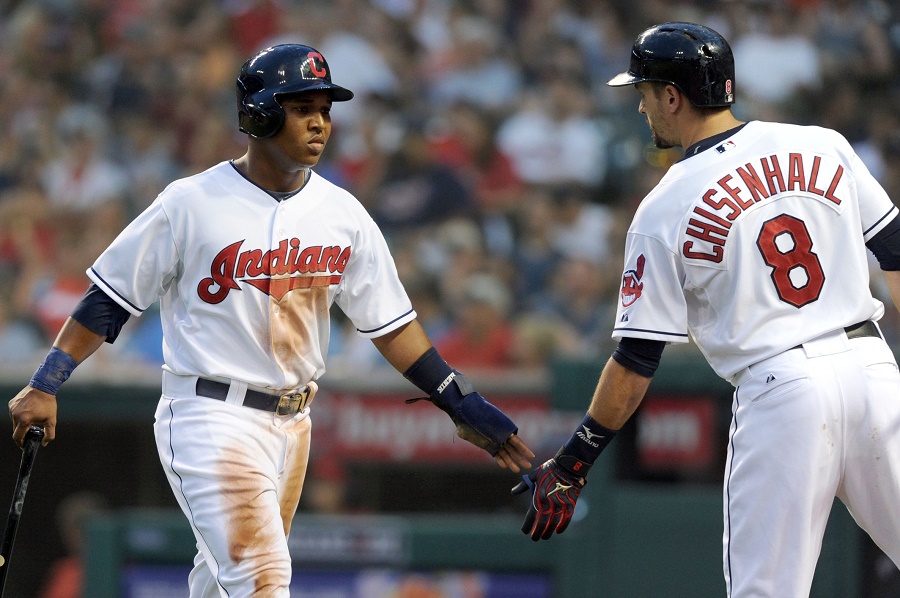 But Twins fans know all too well that can be a dangerous game to play. Miguel Sano to the outfield was a disaster. Luckily, Falvey knows how dangerous that can be, as well. Falvey's first-hand experience with Carlos Santana should be particularly valuable in concern to trying to resolve some of the Twins' issues. For the first four years of his career, Santana was primarily a catcher. Then Cleveland asked him to do some strange things in 2014, having him learn third base in spring training while still catching sparingly. Santana got off to a terrible start and suffered a concussion in June. That led Cleveland to use Santana strictly as a 1B/DH from there forward. It also took a few seasons for Cleveland to find defensive homes for Jose Ramirez and Lonnie Chisenhall. Both players have filled unexpected needs this season. Had Juan Uribe panned out at third base and Michael Brantley been healthy who knows what would have happened with Ramirez and Chisenhall. But even when those two appeared to just be spare parts, Cleveland wisely held on to both of them. It was reported by La Velle E. Neal III this week Texas Assistant General Manager Thad Levine was expected to be the Twins next GM. Evan Grant of the Dallas Morning News confirmed that report. While nothing will be made official until after the World Series, there hasn't been a shred of news from either team denying those reports. The Rangers also have an encouraging recent track record of finding creative ways to put together a lineup. They took a big gamble on Ian Desmond last offseason, converting him from shortstop to outfield, and were rewarded with a solid season. They also had to solve the puzzle of how to use Jurickson Profar. He ended up playing 10 or more games at each of 3B, 2B, 1B, LF and SS. When you win your division, like Cleveland and Texas did, all those moves look really smart and inventive. One could argue that each of those decisions were made with the same intention as most of the Twins' tinkering. But the difference in the results is undeniable. Of course, Falvey and Levine aren't going to try to do the exact same things they did with their previous organizations. They're going to be flexible based on the team's personnel. But how might those lessons learned be applied to the Twins? In the case of Santana, Cleveland opted to put their best hitter in the best possible position to succeed, regardless of other positional needs. Then they filled holes with secondary players like Ramirez and Chisenhall. What might that look like on the Twins? Putting Miguel Sano at DH full-time and letting the other chips fall where they may. That may make Kennys Vargas and Byungho Park appear to be redundant, but you never know. Desmond was a case of the Rangers eyeing a player who they believed could be a difference maker, but they didn't have an obvious defensive position to plug him into. What might that look like on the Twins? Well, we're not sure if Jorge Polanco can be a big league shortstop, but his bat looks legit. If Brian Dozier sticks around and Falvey/Levine don't trust Polanco at short everyday, they may have to get creative to keep his bat in the lineup. Could Polanco be a Plan B in left field if Eddie Rosario can't improve? Seems as plausible as Ian Desmond signing as a center fielder a year ago at this time: Crazy. That's just me spit-balling a few ideas that could be considered. Without knowing how the roster will shake out it's tough to even speculate what kinds of changes may be bandied about. But with new evaluators coming in, new ideas will surely be presented and I'm sure no stone will be left unturned. After so many years of the Twins having such a predictable approach under Terry Ryan, it's anyone's guess the direction the new front office may take. It should be a fascinating offseason.
 -
Article: Big Splash? More Like Big Slash
Tom Froemming replied to Tom Froemming's topic in Twins Daily Front Page News
Great stuff, thanks for sharing. It surprises me KC is so high, although I'm sure coming off the World Series victory had a lot to do with that. -
Article: Big Splash? More Like Big Slash
Tom Froemming posted a topic in Twins Daily Front Page News
The Cleveland Indians are in the World Series, marking the third-straight season and fourth out of the last five years the American League Champion has come from the Central. So the Twins are doomed to toil in last place in this juggernaut division, right? Maybe not. Yes, things are looking up in Believeland, but the rest of the division appears to be very much up in the air. And if you read some of the season review/offseason preview content, there are a lot of things to like if you're a Twins fan.After back-to-back World Series appearances culminating with a title, the Royals appeared poised for an extended stay atop the division. After all, they had very few changes to their championship roster. But Kansas City finished right at .500 this season, and it sounds like general manager Dayton Moore will be very limited financially. Sam Mellinger of the Kansas City Star took a look at the organization's future in an excellent piece. In that article, Mellinger reports the Royals are likely to lower their payroll from last season. He speculates that accomplishing that task would require not only declining the options on both Edinson Volquez and Kendrys Morales, but the team would also have to trade someone like Wade Davis. Could Detroit also be positioned to trade away established players? The Tigers actually finished second in the division, bouncing back from a last-place finish the year prior to fall just 2.5 games out of the playoffs. Sounds like a team on the rise, right? Not so much when you listen to quotes from general manager Al Avila. "We certainly want to stay competitive," Avila told MLB.com reporter Jason Beck. "We certainly want to be able to try to get back in the playoffs. But at the same time, this organization has been working way above its means for many, many years." It's not like Miguel Cabrera or Justin Verlander are going anywhere, but it also doesn't sound likely the Tigers will be making their annual big splash either. If anything, it sounds like they'll be trying to shed payroll. The White Sox made some splashy moves of their own last offseason and posted a surprising 17-8 record in April. They collapsed from there, finishing with 78 wins. It was an odd season that started with Adam LaRoche's sudden retirement, had Chris Sale cutting up throwback jerseys somewhere in the middle and has ended with manager Robin Ventura stepping down after five seasons. ESPN's Buster Olney said the handling of Ventura's final days, "provided perfect insight into the organization's dysfunction and why the team is doomed to mediocrity for years to come unless something changes in the way it operates." And quotes from their GM aren't exactly going to get Sox fans rushing out to renew their season tickets. “Everyone in that front office is looking for the best path to get us on an extended period of success even if that involves a short-term step-back,” Rick Hahn toldDaryl Van Schouwen of the Chicago Sun Times. If you ask me, that sounds like GM speak for "we're going to rebuild." Hahn also said "by the time we make our first or second transaction, publicly it will be fairly clear as to our direction." Or, GM speak for "we're gonna be super obvious about rebuilding." Swinging back to Cleveland, yes, they will have most of their core returning next season. All except their secret weapon ... Derek Falvey (insert evil laugh). But seriously, with their pitching staff back healthy (presumably), Cleveland will likely be the favorite to repeat as division champs. Good teams never have problems attracting players, but don't expect Cleveland to blow the bank on free agent additions. Revenue has been tough to come by, Cleveland ranked 28th in attendance this season and the last time the they were even inside the top 20 in attendance was 2002. Their bottom line will get a nice boost from all these postseason games, but it's not like they'll be singing any superstars. As for the Twins, we don't have any doom and gloom quotes from our GM, no sir. Then again, we don't have one of those yet. And our President of Baseball Operations is working for another team at the moment. But when you're coming off the worst season in team history, sometimes no news is good news. Click here to view the article -
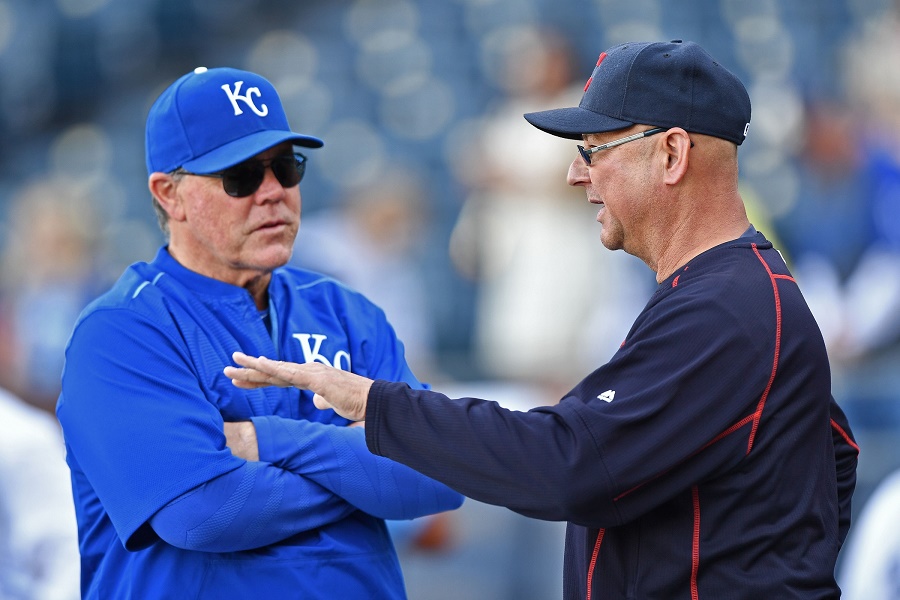 After back-to-back World Series appearances culminating with a title, the Royals appeared poised for an extended stay atop the division. After all, they had very few changes to their championship roster. But Kansas City finished right at .500 this season, and it sounds like general manager Dayton Moore will be very limited financially. Sam Mellinger of the Kansas City Star took a look at the organization's future in an excellent piece. In that article, Mellinger reports the Royals are likely to lower their payroll from last season. He speculates that accomplishing that task would require not only declining the options on both Edinson Volquez and Kendrys Morales, but the team would also have to trade someone like Wade Davis. Could Detroit also be positioned to trade away established players? The Tigers actually finished second in the division, bouncing back from a last-place finish the year prior to fall just 2.5 games out of the playoffs. Sounds like a team on the rise, right? Not so much when you listen to quotes from general manager Al Avila. "We certainly want to stay competitive," Avila told MLB.com reporter Jason Beck. "We certainly want to be able to try to get back in the playoffs. But at the same time, this organization has been working way above its means for many, many years." It's not like Miguel Cabrera or Justin Verlander are going anywhere, but it also doesn't sound likely the Tigers will be making their annual big splash either. If anything, it sounds like they'll be trying to shed payroll. The White Sox made some splashy moves of their own last offseason and posted a surprising 17-8 record in April. They collapsed from there, finishing with 78 wins. It was an odd season that started with Adam LaRoche's sudden retirement, had Chris Sale cutting up throwback jerseys somewhere in the middle and has ended with manager Robin Ventura stepping down after five seasons. ESPN's Buster Olney said the handling of Ventura's final days, "provided perfect insight into the organization's dysfunction and why the team is doomed to mediocrity for years to come unless something changes in the way it operates." And quotes from their GM aren't exactly going to get Sox fans rushing out to renew their season tickets. “Everyone in that front office is looking for the best path to get us on an extended period of success even if that involves a short-term step-back,” Rick Hahn told Daryl Van Schouwen of the Chicago Sun Times. If you ask me, that sounds like GM speak for "we're going to rebuild." Hahn also said "by the time we make our first or second transaction, publicly it will be fairly clear as to our direction." Or, GM speak for "we're gonna be super obvious about rebuilding." Swinging back to Cleveland, yes, they will have most of their core returning next season. All except their secret weapon ... Derek Falvey (insert evil laugh). But seriously, with their pitching staff back healthy (presumably), Cleveland will likely be the favorite to repeat as division champs. Good teams never have problems attracting players, but don't expect Cleveland to blow the bank on free agent additions. Revenue has been tough to come by, Cleveland ranked 28th in attendance this season and the last time the they were even inside the top 20 in attendance was 2002. Their bottom line will get a nice boost from all these postseason games, but it's not like they'll be singing any superstars. As for the Twins, we don't have any doom and gloom quotes from our GM, no sir. Then again, we don't have one of those yet. And our President of Baseball Operations is working for another team at the moment. But when you're coming off the worst season in team history, sometimes no news is good news.
 -
The 2016 season mercifully came to an end, and Twins fans hope to someday be rewarded for suffering through the worst season in team history. Because in baseball, sometimes in the long run it pays to lose. Thanks to their impressive ability to rack up losses, the Twins "won" the first overall pick in the 2017 Draft. Yes, it will be several years before we'll see the team's top pick play at Target Field, but that doesn't change how exciting it is that the team will have the opportunity to add a franchise-changing talent to the organization.Who the Twins may take with the first selection will probably be speculated about right down to draft day. Last week, Jeremy Nygaard did a great job of outlining a handful of players the Twins are likely looking into as potential No. 1 picks. Draft day (June 12, 2017) is still a long way away, but it appears at the moment that Hunter Greene has broken out as the guy with the highest ceiling in the class. The question is should that be what the Twins target, or should they look for more certainty and lower risk? If the Twins are searching for a player to make a more immediate impact, they'll likely pass on Greene, who will be just 17-years-old on draft day. A standout pitcher and shortstop for Notre Dame High School in Sherman Oaks, Calif, Greene can flirt with 100 mph on the mound and has a home run derby crown to his credit, hitting moonshots out of Wrigley Field at the Perfect Game All-American Classic. And he appears to be a bright kid, as he was recently boasting about getting a 31 (out of a possible 36) on the ACT. For more on Greene's backstory, look no further than Hudson Belisky of Baseball America's excellent and thorough profile. Time will tell if he can maintain the 1-1 buzz, but below are quotes from some credible sources with first-hand knowledge of Greene. Each of these was pulled from articles with more information on Greene and some have reports on other players in the mix to be the No. 1 overall pick, so I would encourage you to check them out. Also, with Greene being such a high-profile player already, there's tons of video of him on YouTube to drool over. "Greene was 96-98 mph in his inning of work with a super loose arm and little effort. His delivery is too quick, so while he stays online, and threw strikes on Saturday, to remain a starter he's probably going to have to slow it down and get a consistent rhythm. But this kind of arm -- present plus velocity without substantial effort -- is rare." -Keith Law, ESPN.com, on Greene's performance at the Under Armor All-American Game [link] "Likely at the top of most boards right now. A shortstop and a pitcher, there is some debate over where he has more potential. Keep in mind a high school right-handed pitcher has never been taken No. 1 overall." -Jonathan Mayo, MLB.com [link] "His fastball is absolutely electric, sitting in the mid-90s and touching as high as 98 with good extension and movement that plays in the zone. I think Greene’s heater would be effective in the big leagues right now and, though the rest of his repertoire is middling, his body and athleticism make the entire package worthy of top-of-the-draft consideration." -Eric Longenhagen, Fangraphs [link] "Greene’s delivery starts with an athletic, well-coordinated leg lift. He folds his front leg and brings his knee to the height of his sternum, and then his hands break just as his leg comes down and his lower half begins to generate torque. He has an easy arm action, with a slight wrap in the back and explosive arm speed as he fires through his three-quarters slot. Greene lands online and spins off his front toes as his back side comes through. He gets his torso extended over his front side, giving him additional extension towards home plate. His arm decelerates well, finishing across his body without recoil or violence, and his head stays still throughout the process." -Hudson Belinksy, Baseball America [link] "Greene has an athletic-yet-sturdy build at 6-foot-3, 195 pounds to go along with his emerging three-pitch repertoire and clean delivery. He ran his fastball up to 98 mph more than once this summer, settling into the mid-90s in short stints. His low-80s slider isn’t consistent yet but flashes plus potential, and he’s also shown an advanced change-up." -Jesse Burkhart, Today's Knuckleball [link] "He has shown two potential plus pitches and another bonus is that he will still be 17 on draft day. On upside alone, there is not a better player in this class." -Jeff Ellis, Scout.com [link] "He sat at 94-96 mph with his fastball with considerable movement and touched 98. His slider was inconsistent at best during the Under Armour All-American Game the previous month, but it flashed plus here, and he was able to locate the pitch for strikes for the most part. He also showed a change in the mid-80s that he buried down with good arm speed, and although he didn't have great feel for it, you can see the makings of a quality third offering." -Christopher Crawford, ESPN.com, on Greene's performance at the Area Code Games [link] Of course, Greene's status as a potential top pick isn't written in stone. It's more like written in sand at high tide. There's another dozen or so players who have the opportunity between now and the draft to establish themselves as the top pick between now and June. Whoever ends up with that honor will hopefully one day help Twins fans make this 103-loss season worth all the suffering. Click here to view the article
- 43 replies
-
- 2
-
-
- hunter greene
- keith law
- (and 2 more)
-
What Experts Are Saying About Potential Top Pick Hunter Greene
Tom Froemming posted an article in Minor Leagues
 Who the Twins may take with the first selection will probably be speculated about right down to draft day. Last week, Jeremy Nygaard did a great job of outlining a handful of players the Twins are likely looking into as potential No. 1 picks. Draft day (June 12, 2017) is still a long way away, but it appears at the moment that Hunter Greene has broken out as the guy with the highest ceiling in the class. The question is should that be what the Twins target, or should they look for more certainty and lower risk? If the Twins are searching for a player to make a more immediate impact, they'll likely pass on Greene, who will be just 17-years-old on draft day. A standout pitcher and shortstop for Notre Dame High School in Sherman Oaks, Calif, Greene can flirt with 100 mph on the mound and has a home run derby crown to his credit, hitting moonshots out of Wrigley Field at the Perfect Game All-American Classic. And he appears to be a bright kid, as he was recently boasting about getting a 31 (out of a possible 36) on the ACT. For more on Greene's backstory, look no further than Hudson Belisky of Baseball America's excellent and thorough profile. Time will tell if he can maintain the 1-1 buzz, but below are quotes from some credible sources with first-hand knowledge of Greene. Each of these was pulled from articles with more information on Greene and some have reports on other players in the mix to be the No. 1 overall pick, so I would encourage you to check them out. Also, with Greene being such a high-profile player already, there's tons of video of him on YouTube to drool over. "Greene was 96-98 mph in his inning of work with a super loose arm and little effort. His delivery is too quick, so while he stays online, and threw strikes on Saturday, to remain a starter he's probably going to have to slow it down and get a consistent rhythm. But this kind of arm -- present plus velocity without substantial effort -- is rare." -Keith Law, ESPN.com, on Greene's performance at the Under Armor All-American Game [link] "Likely at the top of most boards right now. A shortstop and a pitcher, there is some debate over where he has more potential. Keep in mind a high school right-handed pitcher has never been taken No. 1 overall." -Jonathan Mayo, MLB.com [link] "His fastball is absolutely electric, sitting in the mid-90s and touching as high as 98 with good extension and movement that plays in the zone. I think Greene’s heater would be effective in the big leagues right now and, though the rest of his repertoire is middling, his body and athleticism make the entire package worthy of top-of-the-draft consideration." -Eric Longenhagen, Fangraphs [link] "Greene’s delivery starts with an athletic, well-coordinated leg lift. He folds his front leg and brings his knee to the height of his sternum, and then his hands break just as his leg comes down and his lower half begins to generate torque. He has an easy arm action, with a slight wrap in the back and explosive arm speed as he fires through his three-quarters slot. Greene lands online and spins off his front toes as his back side comes through. He gets his torso extended over his front side, giving him additional extension towards home plate. His arm decelerates well, finishing across his body without recoil or violence, and his head stays still throughout the process." -Hudson Belinksy, Baseball America [link] "Greene has an athletic-yet-sturdy build at 6-foot-3, 195 pounds to go along with his emerging three-pitch repertoire and clean delivery. He ran his fastball up to 98 mph more than once this summer, settling into the mid-90s in short stints. His low-80s slider isn’t consistent yet but flashes plus potential, and he’s also shown an advanced change-up." -Jesse Burkhart, Today's Knuckleball [link] "He has shown two potential plus pitches and another bonus is that he will still be 17 on draft day. On upside alone, there is not a better player in this class." -Jeff Ellis, Scout.com [link] "He sat at 94-96 mph with his fastball with considerable movement and touched 98. His slider was inconsistent at best during the Under Armour All-American Game the previous month, but it flashed plus here, and he was able to locate the pitch for strikes for the most part. He also showed a change in the mid-80s that he buried down with good arm speed, and although he didn't have great feel for it, you can see the makings of a quality third offering." -Christopher Crawford, ESPN.com, on Greene's performance at the Area Code Games [link] Of course, Greene's status as a potential top pick isn't written in stone. It's more like written in sand at high tide. There's another dozen or so players who have the opportunity between now and the draft to establish themselves as the top pick between now and June. Whoever ends up with that honor will hopefully one day help Twins fans make this 103-loss season worth all the suffering.
 -
Article: Early 2017 Draft Prospects
Tom Froemming replied to Jeremy Nygaard's topic in Twins Daily Front Page News
I'm with ya on this one. There may not appear to be a clear-cut, surefire No. 1 pick at this moment, but I think by the time draft day rolls around Greene will have established himself as the guy. Dude just turned 17 and Perfect Game has him listed at 6-4, 205 lbs. He's already throwing 98 mph. Exactly the kind of guy you dream about at 1-1.- 69 replies
-
- 7
-
-
- hunter greene
- alex faedo
- (and 2 more)
-
You can check out Nick's piece, What Do We Know About Derek Falvey? or Gleeman's piece at Baseball Prospectus, or La Velle's write up or Berardino's for more on Falvey/Cleveland. The tough thing about analyzing anything in concern to the Indians is we're not sure what can be attributed to Falvey and what should be credited to Mark Shapiro/Chris Antonetti/Mike Chernoff/etc, you know, the guys who were actually running the Indians.
-
With the Twins expected to officially announce the hiring of Derek Falvey as President of Baseball Opportunities any day now, I thought it would be worthwhile to take a look back at how the Cubs' rebuild got started. Now the envy of the baseball world, the Cubs had fallen on hard times prior to hiring their current PBO, Theo Epstein. Epstein took over in October 2011 and his first move was to hire Jed Hoyer, his former right-hand man in Boston, to serve as his general manager. And it was all butterflies and rainbows in Wrigleyville from there, right? Well ... not so much.The first major league signing under the new regime was, drum roll please, David DeJesus! Not exactly a big splash, franchise-defining move. Their first trade didn't work out so well, either. They sent future All-Star, Gold Glover and possible 2016 NL batting champ D.J. LaMahieu to Colorado with Tyler Colvin for Ian Stewart (who hit .210/.292/.335 in one season for the Cubs) and Casey Weathers (who never made it out of the minors). Ooops. Luckily for the Cubbie faithful, they didn't misfire on another big trade they made that winter. On Jan. 6, 2012, the new-look Cubs front office, just a few months on the job, made a franchise-altering trade, though it didn't appear to be that impactful at the time. Despite the old adage that pitching wins championships, the Cubs sent young fireballer Andrew Cashner, the organization's first-round pick in '08, to the Padres for Anthony Rizzo. It was essentially a challenge trade, swapping two young players, one of whom (Cashner) Epstein and Hoyer couldn't have known too well, for one whom they were extremely familiar with. Epstein was the general manager of the Red Sox when they drafted Rizzo and Hoyer was the GM of the Padres when they traded for him. He was their guy. It wasn't exactly a popular trade at the time, seeing as Rizzo had just hit .141/.281/.242 in 49 games with San Diego, but it has turned out to be one of the better trades of the past 20 years. Over the past three seasons, only Mike Trout and Josh Donaldson have accumulated more fWAR than Rizzo's 16.3. Cashner never lived up to his lofty expectations. But it's not like it was all smooth sailing even after the Rizzo trade. The next offseason, Epstein handed out his first big money free agent contract with the Cubs. In Jan. '13, the Cubs signed Edwin Jackson to a four-year, $52 million deal and he rewarded them with a 5.37 ERA. To Twins fans, that deal looks eerily similar to the Ricky Nolasco contract. The Epstein-run front office had also struggled to find a manager. Only a couple of weeks after the new regime took over they fired Mike Quade (current Rochester Red Wings skipper) despite the fact he was under contract for the 2012 season. They brought in Dale Sveum as their hand-picked replacement, but his .392 winning percentage over two seasons didn't cut it. In 2014 they replaced Sveum with Rick Renteria, who served only one year on the job after some odd circumstances led Joe Maddon to take the reins. Chicago's love affair with Maddon started on Day 1, as he famously offered to buy everyone shots at his hiring press conference. The .619 winning percentage the team has posted since doesn't hurt either. To summarize, thing's didn't just turn over for the Epstein-led Cubs at the flip of (GM) switch, and their record was indicative of that. In the first season under the new regime, the Cubs actually lost 101 games. They didn't post a winning record until just last season, which was the fourth under Epstein's leadership. But ask any Cubs fan and they'll tell you it doesn't matter how long it took to get here. It was well worth the wait. Along with making improvements to Wrigley Field to ensure it will be a viable ballpark for the future, the Cubs have built both an elite roster and farm system. And best of all, this team appears to have a window of contention about as large as the windows that open up on the Vikings' new stadium. The Cubs have baseball's best record, but even if they can't break their 107-year World Series drought this season, when the bleacher bums say "there's always next year" instead of it being a sheepish rallying cry, they can really mean it this time. They appear to be well equipped for an extended stay atop the NL. For their efforts, the Cubs just gave extensions to Epstein, Hoyer and player development guru Jason McLeod. Looking at the Cubs' turnaround, the first thing that stands out to me is how little it mattered that the new regime was able to hire their own manager. They didn't really get their guy (Maddon) until the team was ready for contention. Many have argued that Jim Pohlad's insistence that Paul Molitor remain as manager is a cataclysmic mistake. It probably isn't the wisest move, but at the same time it probably won't really matter. It seems there's a very good chance Falvey will able to hire his manager for the 2018 season, at the latest. Of course, every team and every front office is different, and Twins fans shouldn't expect Falvey to take the Cubs rebuild as a blueprint. It is, however, worthwhile to note that what may eventually go down as one of the greatest turnarounds and front office tenures in baseball history took three years to get off the ground. Given the year we've suffered through, it may be painful to accept the fact the Twins may have a few more lean years ahead. But, if Falvey and company (whoever that may be) can deliver an extended run of championship-caliber teams it will be well worth the wait, however long it may be. That should be the ultimate goal, regardless of what it means for the 2017 season. Click here to view the article
- 42 replies
-
- 3
-
-
- theo epstein
- derek falvey
- (and 3 more)
-
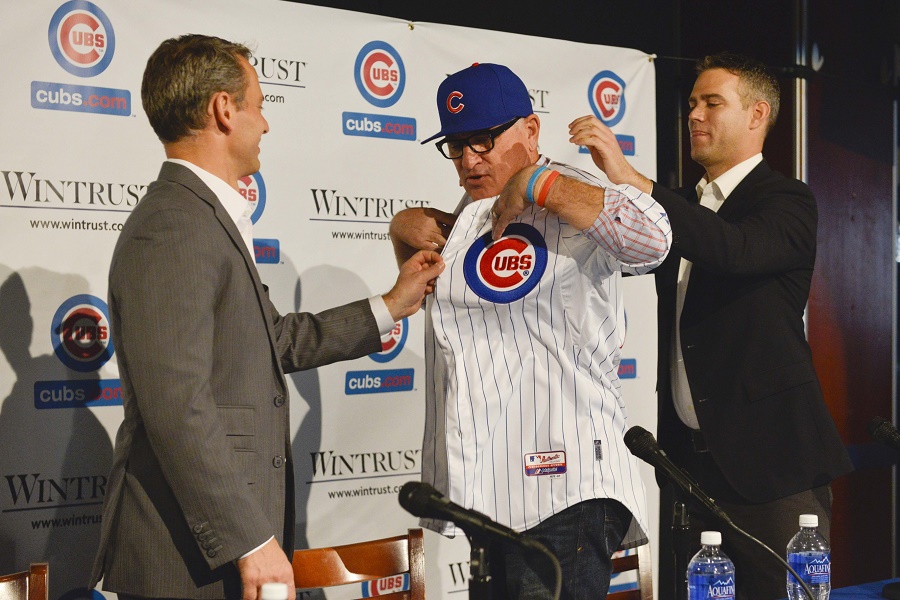 The first major league signing under the new regime was, drum roll please, David DeJesus! Not exactly a big splash, franchise-defining move. Their first trade didn't work out so well, either. They sent future All-Star, Gold Glover and possible 2016 NL batting champ D.J. LaMahieu to Colorado with Tyler Colvin for Ian Stewart (who hit .210/.292/.335 in one season for the Cubs) and Casey Weathers (who never made it out of the minors). Ooops. Luckily for the Cubbie faithful, they didn't misfire on another big trade they made that winter. On Jan. 6, 2012, the new-look Cubs front office, just a few months on the job, made a franchise-altering trade, though it didn't appear to be that impactful at the time. Despite the old adage that pitching wins championships, the Cubs sent young fireballer Andrew Cashner, the organization's first-round pick in '08, to the Padres for Anthony Rizzo. It was essentially a challenge trade, swapping two young players, one of whom (Cashner) Epstein and Hoyer couldn't have known too well, for one whom they were extremely familiar with. Epstein was the general manager of the Red Sox when they drafted Rizzo and Hoyer was the GM of the Padres when they traded for him. He was their guy. It wasn't exactly a popular trade at the time, seeing as Rizzo had just hit .141/.281/.242 in 49 games with San Diego, but it has turned out to be one of the better trades of the past 20 years. Over the past three seasons, only Mike Trout and Josh Donaldson have accumulated more fWAR than Rizzo's 16.3. Cashner never lived up to his lofty expectations. But it's not like it was all smooth sailing even after the Rizzo trade. The next offseason, Epstein handed out his first big money free agent contract with the Cubs. In Jan. '13, the Cubs signed Edwin Jackson to a four-year, $52 million deal and he rewarded them with a 5.37 ERA. To Twins fans, that deal looks eerily similar to the Ricky Nolasco contract. The Epstein-run front office had also struggled to find a manager. Only a couple of weeks after the new regime took over they fired Mike Quade (current Rochester Red Wings skipper) despite the fact he was under contract for the 2012 season. They brought in Dale Sveum as their hand-picked replacement, but his .392 winning percentage over two seasons didn't cut it. In 2014 they replaced Sveum with Rick Renteria, who served only one year on the job after some odd circumstances led Joe Maddon to take the reins. Chicago's love affair with Maddon started on Day 1, as he famously offered to buy everyone shots at his hiring press conference. The .619 winning percentage the team has posted since doesn't hurt either. To summarize, thing's didn't just turn over for the Epstein-led Cubs at the flip of (GM) switch, and their record was indicative of that. In the first season under the new regime, the Cubs actually lost 101 games. They didn't post a winning record until just last season, which was the fourth under Epstein's leadership. But ask any Cubs fan and they'll tell you it doesn't matter how long it took to get here. It was well worth the wait. Along with making improvements to Wrigley Field to ensure it will be a viable ballpark for the future, the Cubs have built both an elite roster and farm system. And best of all, this team appears to have a window of contention about as large as the windows that open up on the Vikings' new stadium. The Cubs have baseball's best record, but even if they can't break their 107-year World Series drought this season, when the bleacher bums say "there's always next year" instead of it being a sheepish rallying cry, they can really mean it this time. They appear to be well equipped for an extended stay atop the NL. For their efforts, the Cubs just gave extensions to Epstein, Hoyer and player development guru Jason McLeod. Looking at the Cubs' turnaround, the first thing that stands out to me is how little it mattered that the new regime was able to hire their own manager. They didn't really get their guy (Maddon) until the team was ready for contention. Many have argued that Jim Pohlad's insistence that Paul Molitor remain as manager is a cataclysmic mistake. It probably isn't the wisest move, but at the same time it probably won't really matter. It seems there's a very good chance Falvey will able to hire his manager for the 2018 season, at the latest. Of course, every team and every front office is different, and Twins fans shouldn't expect Falvey to take the Cubs rebuild as a blueprint. It is, however, worthwhile to note that what may eventually go down as one of the greatest turnarounds and front office tenures in baseball history took three years to get off the ground. Given the year we've suffered through, it may be painful to accept the fact the Twins may have a few more lean years ahead. But, if Falvey and company (whoever that may be) can deliver an extended run of championship-caliber teams it will be well worth the wait, however long it may be. That should be the ultimate goal, regardless of what it means for the 2017 season.
 -
Article: What To Do With Michael Tonkin
Tom Froemming replied to Tom Froemming's topic in Twins Daily Front Page News
You did a great job outlining the odd usage of Tonkin a month ago in your Planning To Fail article. Right or wrong, after re-reading Seth's Penciling A 2017 Bullpen piece I'm pretty confident Tonkin doesn't make next year's team out of Spring Training. Along with all the current in-house options, I'm sure the new front office will bring in at least a couple more guys who'll compete for spots in the pen. Hopefully if Tonkin is DFA'd he goes unclaimed and can go back to Rochester and work on some things. -
Article: What To Do With Michael Tonkin
Tom Froemming replied to Tom Froemming's topic in Twins Daily Front Page News
One last Michael Tonkin fun fact: Out of the 140 qualified relievers heading into today, only 16 have both a better K/9 and a better BB/9 than Tonkin. Of those 16 guys, half have an ERA under 2.00 and only one has an ERA over 4.00 (Justin Wilson of Detroit at 4.28). -
This spring, Michael Tonkin essentially had a golden ticket. Being out of options, the Twins had to either break camp with Tonkin on the 25-man roster or lose him to waivers. Being young, cheap and having been effective in brief cameos with the Twins the prior three seasons, it was an easy choice. Tonkin has stuck on the big club all year, but one has to wonder how much longer he'll remain in the organization. The 6-foot-7 righty didn't exactly earn his way onto the Opening Day roster, as he gave up seven earned runs in eight innings pitched in the Grapefruit League, and he hasn't done much to impress since. It's not likely that Tonkin would have stuck on the major league roster the entire season if he still had an option year to burn. After all, this is a guy the club optioned to Rochester ten different times over the last three seasons. But is there any reason to be optimistic about Tonkin's future?On the down side, Tonkin has a 5.17 ERA and has been unusable against lefties, as they are hitting .292/.380/.642 off him going into Thursday's game (Victor Martinez added a three-run homer to Tonkin's lefty woes).You'd think a changeup guru would help Tonkin develop that pitch to better neutralize southpaws (looking at you, Neil Allen). Tonkin can rack up strikeouts, but bad things happen when he allows contact. This season he's inducing fewer grounders (48.8% coming into 2016 vs. 34% this season), giving up more line drives (18.9% vs. 26.4%) and more of his fly balls are leaving the park (11.3 HR/FB vs. 15.4). If you want to shut the book on Tonkin based just on those numbers, I can't blame you. But, looking deeper into the numbers and taking into account how he's been used, there may be some reason for hope. On the plus side, Tonkin is improving in some crucial areas. He's boosted his strikeout rate (7.55 entering the season to 9.91 in 2016) while lowering his walk rate (3.02 vs. 2.87). Also, both his contact percentage (76.3) and swinging strike rate (11.1) are career highs by a large margin. One thing that hasn't been in Tonkin's favor that's out of his control is the way he's been used. He's recorded at least four outs in 23 appearances and pitched two full innings or more nine times. He's appeared in every inning but the first and his 1,233 pitches thrown ranks 7th among 140 qualified relievers. He's Paul Molitor's mop-up man, and the role has not suited him well. Through his first 25 pitches of an outing, Tonkin has limited opponents to a .786 OPS, but once he has eclipsed the 25-pitch mark, it spikes to a 1.128 OPS. He's also giving up a .957 OPS when pitching in games where there is at least a four-run margin (which was the case when he allowed the V-Mart homer on Thursday afternoon). Obviously, one way to get out of that mop-up role would be to perform well enough that you get promoted to late-inning work, but Tonkin hasn't inspired confidence to rationalize that kind of jump. But he continues to be used in a role that doesn't appear to suit him and, surprise, he continues to underperform. It's not too different from the lose-lose situation Trevor May has been in the last season and a half. With a new set of evaluators set to take over the front office, maybe Tonkin's role will be adjusted in 2017. Or maybe he'll be jettisoned off the roster and be evaluated in an entirely new organization. Things haven't gone the way I'm sure Michael Tonkin had hoped in 2016, but I wouldn't be surprised with a new, more specialized role and a different pitch mix he could find success next season. Click here to view the article
-
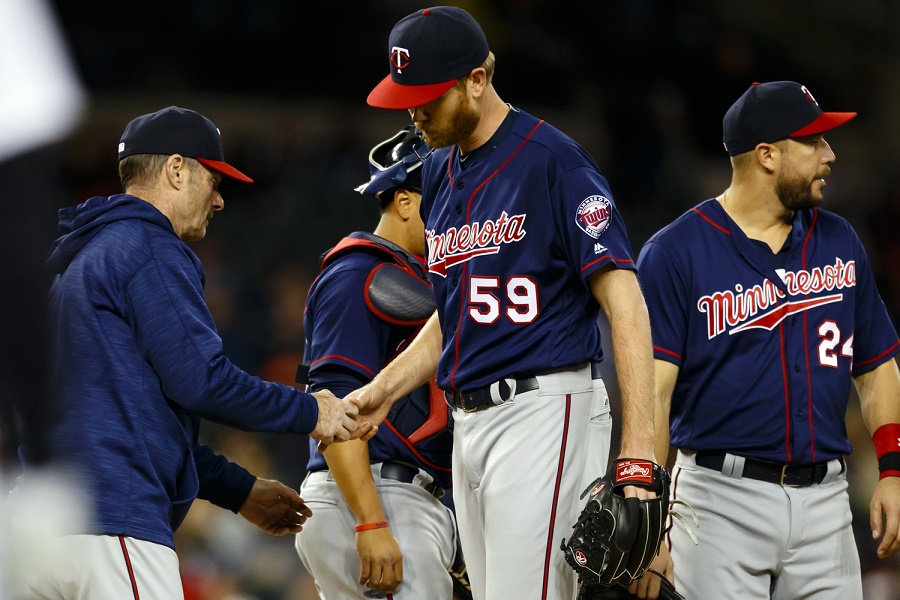 On the down side, Tonkin has a 5.17 ERA and has been unusable against lefties, as they are hitting .292/.380/.642 off him going into Thursday's game (Victor Martinez added a three-run homer to Tonkin's lefty woes).You'd think a changeup guru would help Tonkin develop that pitch to better neutralize southpaws (looking at you, Neil Allen). Tonkin can rack up strikeouts, but bad things happen when he allows contact. This season he's inducing fewer grounders (48.8% coming into 2016 vs. 34% this season), giving up more line drives (18.9% vs. 26.4%) and more of his fly balls are leaving the park (11.3 HR/FB vs. 15.4). If you want to shut the book on Tonkin based just on those numbers, I can't blame you. But, looking deeper into the numbers and taking into account how he's been used, there may be some reason for hope. On the plus side, Tonkin is improving in some crucial areas. He's boosted his strikeout rate (7.55 entering the season to 9.91 in 2016) while lowering his walk rate (3.02 vs. 2.87). Also, both his contact percentage (76.3) and swinging strike rate (11.1) are career highs by a large margin. One thing that hasn't been in Tonkin's favor that's out of his control is the way he's been used. He's recorded at least four outs in 23 appearances and pitched two full innings or more nine times. He's appeared in every inning but the first and his 1,233 pitches thrown ranks 7th among 140 qualified relievers. He's Paul Molitor's mop-up man, and the role has not suited him well. Through his first 25 pitches of an outing, Tonkin has limited opponents to a .786 OPS, but once he has eclipsed the 25-pitch mark, it spikes to a 1.128 OPS. He's also giving up a .957 OPS when pitching in games where there is at least a four-run margin (which was the case when he allowed the V-Mart homer on Thursday afternoon). Obviously, one way to get out of that mop-up role would be to perform well enough that you get promoted to late-inning work, but Tonkin hasn't inspired confidence to rationalize that kind of jump. But he continues to be used in a role that doesn't appear to suit him and, surprise, he continues to underperform. It's not too different from the lose-lose situation Trevor May has been in the last season and a half. With a new set of evaluators set to take over the front office, maybe Tonkin's role will be adjusted in 2017. Or maybe he'll be jettisoned off the roster and be evaluated in an entirely new organization. Things haven't gone the way I'm sure Michael Tonkin had hoped in 2016, but I wouldn't be surprised with a new, more specialized role and a different pitch mix he could find success next season.
 -
Article: Take Note Of Zander Wiel
Tom Froemming replied to Parker Hageman's topic in Twins Daily Front Page News
FWIW Wiel was also a monster postseason. In five games we went 7-for-17 with five walks. And he's not just some hulking slugger, either. Including the playoffs, he hit 10 triples and was 7-for-8 in stolen base attempts. The guy is really athletic. -
Article: The Recent History Of 100-Loss Teams
Tom Froemming replied to Tom Froemming's topic in Twins Daily Front Page News
New for 2017: Plenty of leg room and no lines! -
Article: The Recent History Of 100-Loss Teams
Tom Froemming replied to Tom Froemming's topic in Twins Daily Front Page News
Thanks for the comment, you got my wheels turning on this some more. I wondered if it was maybe more realistic to hope the Twins can bounce back since they had a winning season the year prior to losing 100 (assuming that happens this year). I took a look, and only one team in the stretch we're looking at went from winners, to 100 losses and back to winners again. Mariners 2007: 88 W 2008: 101 L 2009: 85 W Of course, Seattle then lost 101 again in 2010. So they were all over the place. There were three other teams to lose 100 after posting a winning record the year prior, but they all failed to bounce back. Marlins 1997: 92 W 1998: 108 L 1999: 98 L Royals 2003: 83 W 2004: 104 L 2005: 106 L D-Backs 2003: 84 W 2004: 111 L 2005: 85 L So you are correct, just getting back to .500 would be a pretty impressive accomplishment. -
Watching a team slump its way through a summer and flirt with 100 losses is like watching a quicksand scene. It's a slow, gruelling situation to watch and every move that's made seems to make the character sink deeper and deeper. Quicksand became a cliche in action/adventure movies of the 50s and 60s, and it's easy to see why. Quicksand adds a lot of potential for suspense and drama, making the viewer feel helpless. You wish there was a way you could jump through the screen and offer a helping hand to the doomed hero or damsel in distress.But unlike in the movies, watching a baseball team seemingly trapped in quicksand doesn't last a few scenes. It can often stretch over several years. Of course, there is a chance the Twins avoid 100 losses. As of Thursday evening the team has 92 losses with 15 games remaining. And 100 is sort of an arbitrary number, but there is certainly a stigma against reaching triple-digit losses. It's a rare feat to accomplish, if you can call it that, and really sticks out in the standings. It doesn't happen every season, and the Twins have only hit the century mark in losses once, losing 102 in 1982. Here's a rundown of every 100-loss team since the strike: 15: None 14: None 13: Astros 111, Marlins 100 12: Astros 107, Cubs 101 11: Astros 106 10: Pirates 105, Mariners 101 09: Nationals 103 08: Nationals 102, Mariners 101 07: None 06: Rays 101, Royals 100 05: Royals 106 04: Diamondbacks 111, Royals 104 03: Tigers 119 02: Tigers 106, Rays 106, Brewers 106, Royals 100 01: Pirates 100, Rays 100 00: None 99: None 98: Marlins 108 97: None 96: Tigers 109 95: None (144-game season) That's 24 times it's happened, but only to 11 different franchises. So once you've lost 100, you're at high risk of doing it again. In fact, on seven different occasions in that span a team has followed a 100-loss season with another one. The Astros and Royals even managed to lose 100 in three-straight years. In the movies, there's usually a quick fix that gets someone out of quicksand. Eventually somebody shows up with a branch, lasso or whip. Unfortunately, that's not how it works in baseball. Here's the average record of those 100-loss teams year-by-year after reaching the milestone: First season: 67-95 Two years later: 72-90 Three years later: 77-85 Four years later: 80-82 Just two of those 24 100-loss teams managed to bounce back and have a winning record the next season. The 2003 Royals won 83 games and the 2009 Mariners won 85, but both teams finished third in their divisions. Of course, there are success stories. Four of those 11 franchises have World Series appearances at some point since losing 100. And there's a good chance either the Nationals or Cubs will join that group this year. The quickest turnaround to the World Series belongs to the Rays, who lost 101 in 2006 and were in the Fall Classic just two seasons later. And it only took the Tigers three seasons to go from 119 losses in 2003 to American League champs in '06. Staying on the positive side, here's a list of some standout draft picks those 100-loss teams selected the following June: Kris Bryant, Carlos Correa, Gerrit Cole, Bryce Harper, Stephen Strasburg, David Price, Alex Gordon, Justin Upton, Justin Verlander and Josh Beckett. The Twins boast a couple of the most remarkable turnarounds in baseball history, but falling all the way to 100 losses is like being neck deep in quicksand. Hopefully the new President of Baseball Operations brings a lasso. Click here to view the article
- 14 replies
-
- 5
-
-
- paul molitor
- brian dozier
- (and 1 more)
-
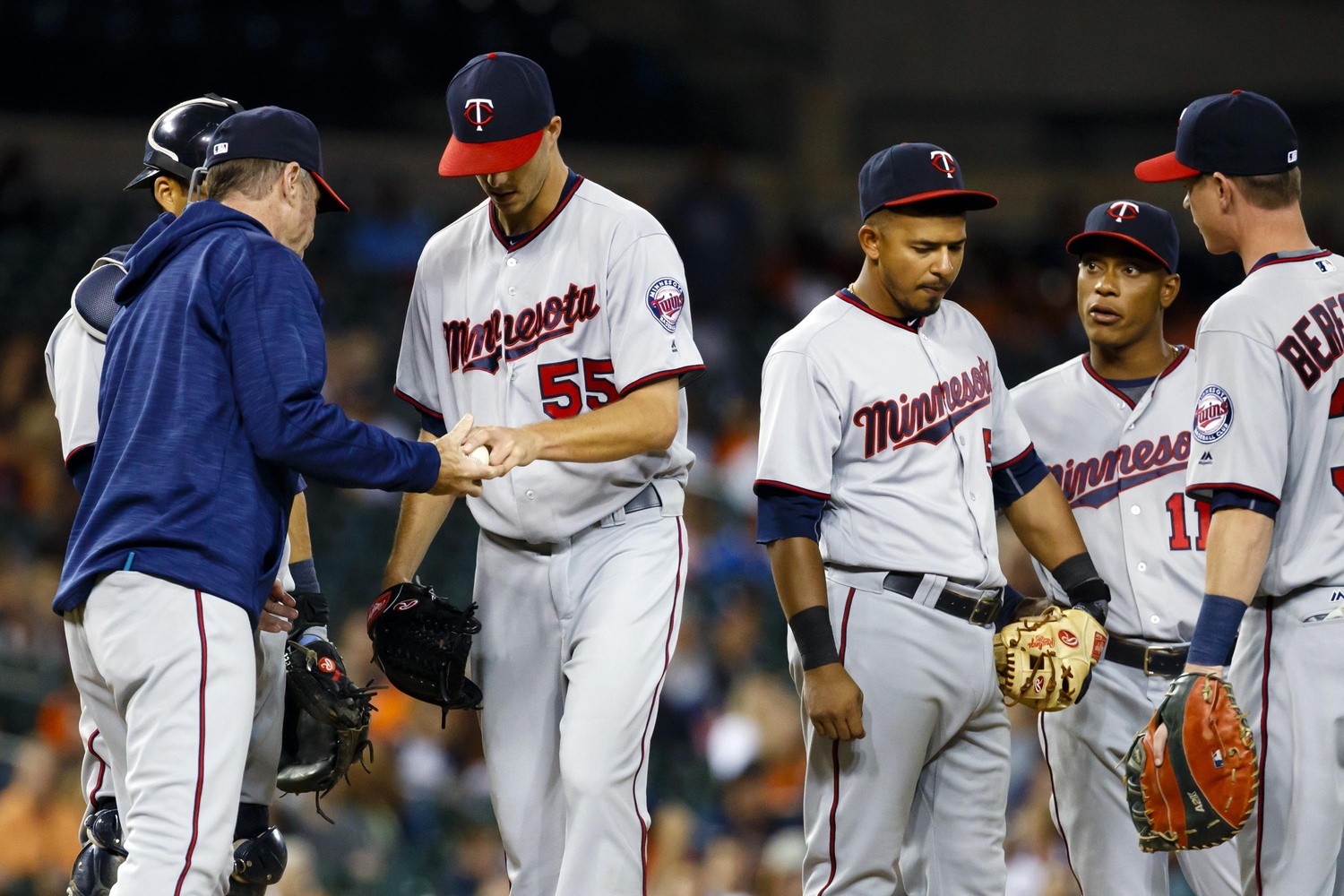 But unlike in the movies, watching a baseball team seemingly trapped in quicksand doesn't last a few scenes. It can often stretch over several years. Of course, there is a chance the Twins avoid 100 losses. As of Thursday evening the team has 92 losses with 15 games remaining. And 100 is sort of an arbitrary number, but there is certainly a stigma against reaching triple-digit losses. It's a rare feat to accomplish, if you can call it that, and really sticks out in the standings. It doesn't happen every season, and the Twins have only hit the century mark in losses once, losing 102 in 1982. Here's a rundown of every 100-loss team since the strike: 15: None 14: None 13: Astros 111, Marlins 100 12: Astros 107, Cubs 101 11: Astros 106 10: Pirates 105, Mariners 101 09: Nationals 103 08: Nationals 102, Mariners 101 07: None 06: Rays 101, Royals 100 05: Royals 106 04: Diamondbacks 111, Royals 104 03: Tigers 119 02: Tigers 106, Rays 106, Brewers 106, Royals 100 01: Pirates 100, Rays 100 00: None 99: None 98: Marlins 108 97: None 96: Tigers 109 95: None (144-game season) That's 24 times it's happened, but only to 11 different franchises. So once you've lost 100, you're at high risk of doing it again. In fact, on seven different occasions in that span a team has followed a 100-loss season with another one. The Astros and Royals even managed to lose 100 in three-straight years. In the movies, there's usually a quick fix that gets someone out of quicksand. Eventually somebody shows up with a branch, lasso or whip. Unfortunately, that's not how it works in baseball. Here's the average record of those 100-loss teams year-by-year after reaching the milestone: First season: 67-95 Two years later: 72-90 Three years later: 77-85 Four years later: 80-82 Just two of those 24 100-loss teams managed to bounce back and have a winning record the next season. The 2003 Royals won 83 games and the 2009 Mariners won 85, but both teams finished third in their divisions. Of course, there are success stories. Four of those 11 franchises have World Series appearances at some point since losing 100. And there's a good chance either the Nationals or Cubs will join that group this year. The quickest turnaround to the World Series belongs to the Rays, who lost 101 in 2006 and were in the Fall Classic just two seasons later. And it only took the Tigers three seasons to go from 119 losses in 2003 to American League champs in '06. Staying on the positive side, here's a list of some standout draft picks those 100-loss teams selected the following June: Kris Bryant, Carlos Correa, Gerrit Cole, Bryce Harper, Stephen Strasburg, David Price, Alex Gordon, Justin Upton, Justin Verlander and Josh Beckett. The Twins boast a couple of the most remarkable turnarounds in baseball history, but falling all the way to 100 losses is like being neck deep in quicksand. Hopefully the new President of Baseball Operations brings a lasso.
 -
What a game for Andrew Vasquez. That dude is huge (listed as 6'6", 228 lbs on MiLB) Nickname idea: Vasquatch.
- 2 replies
-
- 3
-
-
- travis blankenhorn
- chris ibarra
- (and 2 more)
-
I can understand not calling up Walker or Palka if you say there's not anywhere for them to play. But Logan Shafer in LF and Kurt Suzuki DH? Really? Really?
