



Tom Froemming
-
Posts
5,260 -
Joined
-
Last visited
-
Days Won
22
Content Type
Profiles
News
Minnesota Twins Videos
2026 Minnesota Twins Top Prospects Ranking
2022 Minnesota Twins Draft Picks
Minnesota Twins Free Agent & Trade Rumors, Notes, & Tidbits
Guides & Resources
2023 Minnesota Twins Draft Picks
The Minnesota Twins Players Project
2024 Minnesota Twins Draft Picks
2025 Minnesota Twins Draft Pick Tracker
2026 Minnesota Twins Draft Tracker: Picks & Bonuses
Forums
Blogs
Events
Store
Downloads
Gallery
Everything posted by Tom Froemming
-
Article: Don't Sleep On Phil Hughes
Tom Froemming replied to Nick Nelson's topic in Twins Daily Front Page News
This is true, but you could say the same thing about Danny Santana and I don't see anybody predicting him to return to his 2014 form. Maybe that's an apples to oranges situation, but it's tough to look past Hughes' 2015/16 numbers. Over 214 1/3 IP, batters hit .296/.320/.502 off him and he only averaged 5.4 K/9. But you do make some really great points about Tyson Ross' market. Plus, it wouldn't take much for Hughes to represent improvement. Last season, the rotation combined for a 5.39 ERA so even if Hughes posts an ERA of 4.50 he would at least be helping the team go in the right direction. -
2017 Twins Off-Season top 60 Prospect List: 51-55
Tom Froemming commented on Thrylos's blog entry in Thrylos' Blog - select Tenth Inning Stretch posts
Great stuff, really enjoying these. I wonder if Zander Wiel may be able boost his versatility by playing some corner outfield. He hit eight triples and was 7-for-8 in stolen base attempts last season, so it would appear he has more athleticism than your average first baseman. -
I really enjoyed this. He seems to have a really good grasp on the ballplayer he needs to be. Probably won't ever climb up the prospect lists too high, but I could see him having a nice, long career as a major league fourth/fifth outfielder.
-
Rogers also had trouble limiting damage to righties in Triple-A. They hit .326/.374/.457 off him in 2015. So I think they want to protect him from facing opposite-side hitters as much as possible. Nothin' wrong with that, he should be a valuable bullpen lefty for awhile.
- 20 replies
-
- 2
-

-
- max kepler
- byron buxton
- (and 3 more)
-
Was more so looking for guys who I feel made their arrival a little earlier than expected. Rogers spent all of 2015 in Triple-A, so I initially didn't really consider him. But now that you mention it, it's a bit surprising he didn't get more seasoning in the minors adjusting to the relief role, so in that sense he certainly fits in. I think if I suggested Chargois was called up early the first comment on this would've been Seth saying how far off base that opinion is, which would have been fun But to be fair, he did have only 33 IP at Double-A entering the year and started '16 back in 'Nooga, so maybe the shoe fits.
-
Seems like we could see a similar leap frogging of Zach Granite over Daniel Palka this season,
- 20 replies
-
- 2
-
-
- max kepler
- byron buxton
- (and 3 more)
-
That's a good dark horse pick. Niko's defensive versatility certainly makes him attractive as an insurance option for multiple positions. I would toss Engelb Vielma's name into that infield mix as well. He has the advantage of already being on the 40-man roster.
- 20 replies
-
- 1
-
-
- max kepler
- byron buxton
- (and 3 more)
-
Sickels had him fifth on his end of 2016 list in Sept.
-
Each offseason, baseball's front offices put forth a painstakingly detailed effort to build an organization of hundreds of players across a number of levels. Each element of the organization is agonized over. Every possible weakness is intimately inspected. Like a painter expertly applying each brushstroke, front offices attempt to create their own masterpieces. Sometimes they'll make one broad stroke, then take a step back and measure up their next move. Other times, they'll make a series of smaller strokes with a fine brush all in one flurry of action, obsessing over some minute detail until it's just so.In the middle of the offseason that painting appears fairly clear. Some things may be able to be altered here or there, but there's also a lot of paint that has already dried. Then the games start. Soon enough, the masterpiece starts to look more like a toddler's finger painting. One element of the team appears to be clear, then slap! A hastily applied random color hits it out of nowhere. An injury or severe under-performance from a player who was being depended upon completely changes your outlook. The results can be catastrophic and make you wish you could just get an empty canvas. But sometimes these deviations from the plan can be happy accidents that improve the painting or at least give it new life. Twins fans have seen a lot of roster construction on the fly the past few seasons. A lot of prospects who appeared to be out of the picture in terms of the big league roster made the splash and arrived to Target Field earlier than expected. Here's a brief look at some of the surprise early call ups from the past three seasons. 2014: Danny Santana & Kennys Vargas Santana spent the prior year at Double A, and had logged just 24 games in Rochester before his May 5 call up. He had very little experience in the outfield, so no one could have predicted he would be the Twins primary center fielder that season. Vargas entered that season even farther from the Majors, having played his entire 2013 season at High-A. He was called up straight from Double-A on Aug. 1 (his 24th birthday), and ended up leading the team in DH appearances. 2015: Eddie Rosario, Byron Buxton, Miguel Sano & Tyler Duffey What a fun year full of surprise call ups. Rosario was a highly-regarded prospect, but his ascension to Target Field that summer was a surprise. He was coming off a 2014 season that started with a 50-game suspension and ended with a .672 OPS in Double-A. When he was called up on May 6, he had just a .659 OPS for Rochester. Buxton had played just 31 games total in 2014 and entered the year with a grand total of three plate appearances above High-A. Center field continued to be a trouble spot for the Twins, who turned to the 21-year-old Buxton for help on June 14. He had just 59 games at Double-A under his belt at the time. At least Rosario and Buxton played in 2014. Sano missed that entire season due to injury, so it seemed far-fetched to think he could make an impact in the majors in 2015. But Sano didn't miss a beat, posting a .918 OPS over 66 games in Double-A before being called up on July 2. The Twins have been more conservative with pitchers, but Tyler Duffey came out of nowhere to contribute late in 2015. Never a very highly-rated prospect, Duffey climbed all the way up from High-A to Triple-A in 2014 but he actually opened up '15 back in Double-A. The Opening Day rotation was full of veterans, Trevor May was waiting in the wings, Ervin Santana was coming back from suspension in the second half ... Duffey was a dark horse to make his debut, let alone get ten starts. 2016: Max Kepler Kepler was coming off a season in which he was named the Southern League MVP. He also made his major league debut, a three-game cameo at the end of 2015. But Kepler had also never played in Triple A, and the Twins opened the season with an outfield of Rosario, Buxton and Sano (they were very committed to that experiment at the time, remember?), so it seemed unlikely he'd be called upon until late in the year. Kepler was called up to replace an injured Danny Santana on April 10, and mostly sat on the bench for a couple of weeks before returning to Rochester. On June 1, the Sano outfield experience was over and Kepler was called back up. He played just 30 games for the Red Wings. What's to come in 2017? Well, Ted Schwerzler has a great article in the Prospect handbook that highlights the eight players most likely to make their debut this season, and even offers an ETA for each prospect. I highly recommend giving that a read. Who do you think could make an early arrival to Target Field in 2017? Click here to view the article
-
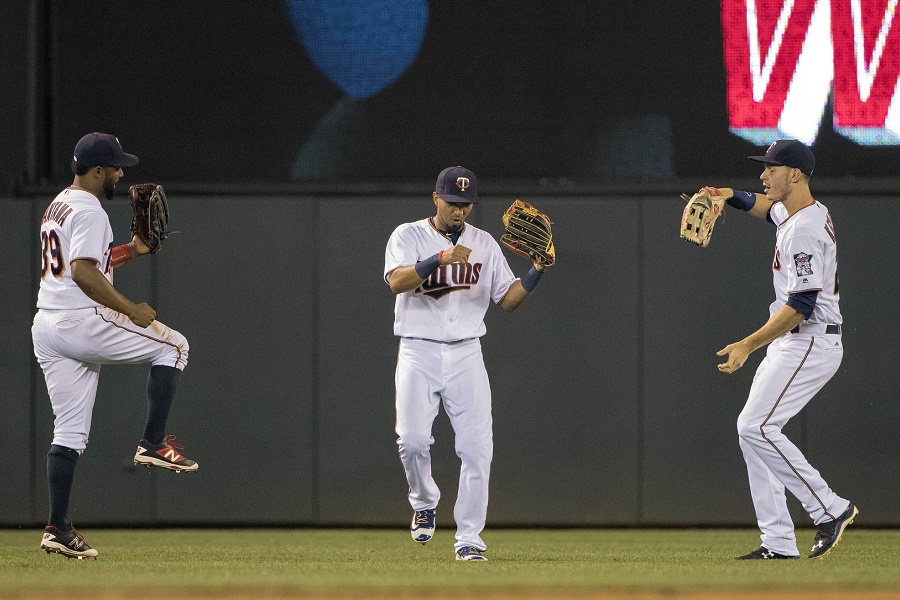 In the middle of the offseason that painting appears fairly clear. Some things may be able to be altered here or there, but there's also a lot of paint that has already dried. Then the games start. Soon enough, the masterpiece starts to look more like a toddler's finger painting. One element of the team appears to be clear, then slap! A hastily applied random color hits it out of nowhere. An injury or severe under-performance from a player who was being depended upon completely changes your outlook. The results can be catastrophic and make you wish you could just get an empty canvas. But sometimes these deviations from the plan can be happy accidents that improve the painting or at least give it new life. Twins fans have seen a lot of roster construction on the fly the past few seasons. A lot of prospects who appeared to be out of the picture in terms of the big league roster made the splash and arrived to Target Field earlier than expected. Here's a brief look at some of the surprise early call ups from the past three seasons. 2014: Danny Santana & Kennys Vargas Santana spent the prior year at Double A, and had logged just 24 games in Rochester before his May 5 call up. He had very little experience in the outfield, so no one could have predicted he would be the Twins primary center fielder that season. Vargas entered that season even farther from the Majors, having played his entire 2013 season at High-A. He was called up straight from Double-A on Aug. 1 (his 24th birthday), and ended up leading the team in DH appearances. 2015: Eddie Rosario, Byron Buxton, Miguel Sano & Tyler Duffey What a fun year full of surprise call ups. Rosario was a highly-regarded prospect, but his ascension to Target Field that summer was a surprise. He was coming off a 2014 season that started with a 50-game suspension and ended with a .672 OPS in Double-A. When he was called up on May 6, he had just a .659 OPS for Rochester. Buxton had played just 31 games total in 2014 and entered the year with a grand total of three plate appearances above High-A. Center field continued to be a trouble spot for the Twins, who turned to the 21-year-old Buxton for help on June 14. He had just 59 games at Double-A under his belt at the time. At least Rosario and Buxton played in 2014. Sano missed that entire season due to injury, so it seemed far-fetched to think he could make an impact in the majors in 2015. But Sano didn't miss a beat, posting a .918 OPS over 66 games in Double-A before being called up on July 2. The Twins have been more conservative with pitchers, but Tyler Duffey came out of nowhere to contribute late in 2015. Never a very highly-rated prospect, Duffey climbed all the way up from High-A to Triple-A in 2014 but he actually opened up '15 back in Double-A. The Opening Day rotation was full of veterans, Trevor May was waiting in the wings, Ervin Santana was coming back from suspension in the second half ... Duffey was a dark horse to make his debut, let alone get ten starts. 2016: Max Kepler Kepler was coming off a season in which he was named the Southern League MVP. He also made his major league debut, a three-game cameo at the end of 2015. But Kepler had also never played in Triple A, and the Twins opened the season with an outfield of Rosario, Buxton and Sano (they were very committed to that experiment at the time, remember?), so it seemed unlikely he'd be called upon until late in the year. Kepler was called up to replace an injured Danny Santana on April 10, and mostly sat on the bench for a couple of weeks before returning to Rochester. On June 1, the Sano outfield experience was over and Kepler was called back up. He played just 30 games for the Red Wings. What's to come in 2017? Well, Ted Schwerzler has a great article in the Prospect handbook that highlights the eight players most likely to make their debut this season, and even offers an ETA for each prospect. I highly recommend giving that a read. Who do you think could make an early arrival to Target Field in 2017?
 -
2017 Twins Off-Season top 60 Prospect List: 56-60
Tom Froemming commented on Thrylos's blog entry in Thrylos' Blog - select Tenth Inning Stretch posts
I'll take the glass half full view on English, though things could certainly work out as you've laid them out here as he faces better pitching. He draws rave reviews for his center field defense and can get on base. Hopefully the strikeout issues were more of a product of the concussion. -
Article: Minnesota's Mounting Defensive Woes
Tom Froemming replied to Cody Christie's topic in Twins Daily Front Page News
One of the things about that Def rating (which is Fangraphs' Defensive Runs Above Average) that really sticks out to me is how much it hated Max Kepler's D last year. Nice to see SDI views him in a more positive light. I agree that we should be able to expect a better performance from him in '17. He played more innings in RF last season with the Twins than he had his entire minor league career. -
Article: What's Holding Up The Dozier Trade?
Tom Froemming replied to Nick Nelson's topic in Twins Daily Front Page News
I don't feel like this has any impact on their interest in Dozier. I believe Fernandez is a lefty hitter, so he wouldn't be a solution to their biggest weakness. They're not just out to win a division title this year, they want to win it all. -
I don't have a problem with them keeping Dozier, but I do have a huge problem with them staying pat. If Dozier stays, the goal needs to be to field a highly competitive roster in 2018.
- 49 replies
-
- 5
-
-
- brian dozier
- miguel sano
- (and 3 more)
-
Article: What's Holding Up The Dozier Trade?
Tom Froemming replied to Nick Nelson's topic in Twins Daily Front Page News
Soooo ... it's somehow Dozier's fault the team has had rotten pitching his entire tenure? If he gets traded to the Dodgers and they win a World Series, then he'll be elite? -
You wouldn't improve the 2017 roster. The hope would be that the outlook for 2019 and beyond would be greatly improved with additional young talent.
- 49 replies
-
- 4
-
-
- brian dozier
- miguel sano
- (and 3 more)
-
Haha! Gotcha! Just kidding, will do. Hopefully this was still worth your time.
- 49 replies
-
- 3
-
-
- brian dozier
- miguel sano
- (and 3 more)
-
You are correct, excuse my ignorance. I remembered that scenario incorrectly and didn't bother to look it up. Polanco had to be added to the 40-man in Nov. 2013 in order to protect him from the Rule 5 draft, so they would have burned an option year regardless of whether or not he got a call up.
-
Nope. Other organizations move veterans to make room for their young players. I don't think there's another team in baseball that would have both kept a player like Plouffe and signed Park to obstruct Sano prior to last year. Also, other teams don't unnecessarily burn their prospect's option years. Absolutely no reason Polanco needed to be called up in '14 & '15 to play a combined nine games. If he still had options it would be perfectly acceptable to send him back to Triple-A to start this season. Polanco's still only 23, I think Dozier hadn't even made it to Double-A by that age (obviously college guys and international guys are different, but still).
- 49 replies
-
- 4
-
-
- brian dozier
- miguel sano
- (and 3 more)
-
The most recent rumors suggest the Brian Dozier trade watch will be mercifully coming to an end sometime within the week, one way or another. While there's been plenty of great analysis around potential trades, the fallout of Dozier staying with the Twins could be equally interesting. From just a roster construction standpoint, the immediate question would be what do you do with Jorge Polanco? He's best suited to play second base, and while he wasn't a train wreck at shortstop last season, putting him next to Miguel Sano everyday would give the Twins an infield defense that would give the pitching staff nightmares. Neither player has appropriate range for his position. Putting them on the same side of the infield is difficult to watch at times. I've been a proponent of just letting Sano DH full time, but it doesn't sound like that's the plan, which is understandable. Sano certainly has the arm for third, showed some surprising agility last season and is still just 23-years-old. So we'll assume now that Trevor Plouffe is out of the picture Sano is locked in at the hot corner. Eduardo Escobar is still around as an option at shortstop, but putting him there would make Polanco a backup/utility player. That's not an ideal role for the 23-year-old's development. Polanco is out of options, so sending him to the minors for further seasoning/everyday reps is not, unfortunately, on the table.So it appears Dozier staying would create a situation that somewhat resembles the roster crunch of 2016 that resulted in Sano being sent to the outfield. One way or another, somebody would have to play out of their ideal position. Unlike Sano with right field, I suppose at least Polanco is familiar with playing shortstop. If Dozier stays the next question becomes what exactly are the Twins trying to do? If Dozier is traded, it would signal the Twins are rebuilding. If he stays, where does that put the organization? Just kinda trying to hang in there, I guess? Who wants that? What's the point? From a philosophical standpoint, Dozier staying puts the Twins in this weird limbo where they're not rebuilding but also not trying to complete. If they were rebuilding, both Dozier and Ervin Santana would be traded for prospects. If they were contending, the front office would make an effort to beef up the pitching staff and maybe add one more veteran bat. From strictly a short-term perspective, of course I want to see Dozier play for the Twins in 2017. His development is the biggest success story of the organization over the past five years, and he just continues to get better. But from the long-term view, I'd really love to feel like there is light at the end of the tunnel. The last six seasons have been rough. Watching the Cubs and Astros turn things around over the same span pours salt on the wound. How many more teams are we going to see do successful tear downs before the Twins are good again? There can be no more standing at the crossroads trying to decide which way to go. The Twins need to either commit to a rebuild and set their sights toward 2020 or try to dial things up for a championship run in 2018. I'm okay with Brian Dozier staying, but his presence on the team would need to also signal a shift in philosophy. Click here to view the article
- 49 replies
-
- 4
-
-
- brian dozier
- miguel sano
- (and 3 more)
-
Dozier Staying With Twins Will Create More Questions Than Answers
Tom Froemming posted an article in Twins
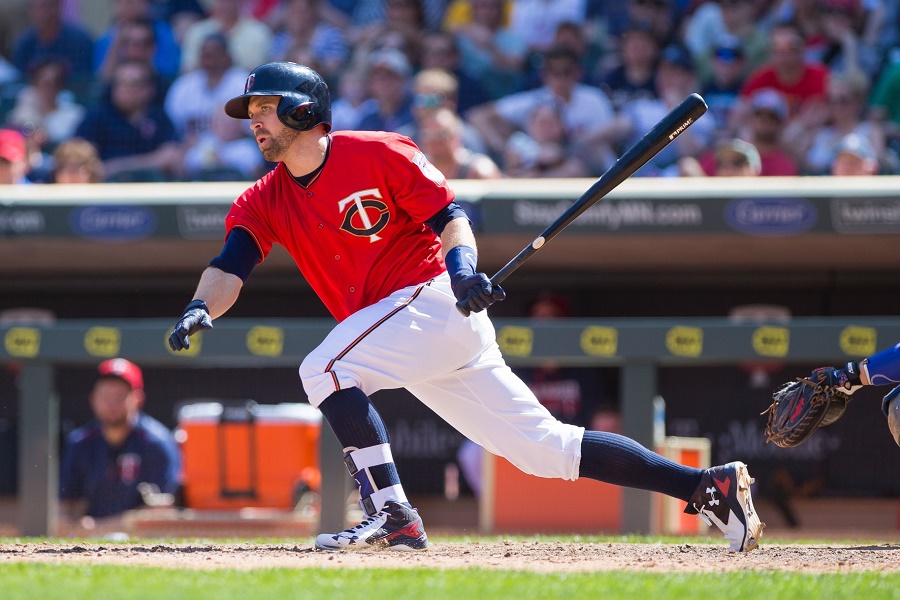 So it appears Dozier staying would create a situation that somewhat resembles the roster crunch of 2016 that resulted in Sano being sent to the outfield. One way or another, somebody would have to play out of their ideal position. Unlike Sano with right field, I suppose at least Polanco is familiar with playing shortstop. If Dozier stays the next question becomes what exactly are the Twins trying to do? If Dozier is traded, it would signal the Twins are rebuilding. If he stays, where does that put the organization? Just kinda trying to hang in there, I guess? Who wants that? What's the point? From a philosophical standpoint, Dozier staying puts the Twins in this weird limbo where they're not rebuilding but also not trying to complete. If they were rebuilding, both Dozier and Ervin Santana would be traded for prospects. If they were contending, the front office would make an effort to beef up the pitching staff and maybe add one more veteran bat. From strictly a short-term perspective, of course I want to see Dozier play for the Twins in 2017. His development is the biggest success story of the organization over the past five years, and he just continues to get better. But from the long-term view, I'd really love to feel like there is light at the end of the tunnel. The last six seasons have been rough. Watching the Cubs and Astros turn things around over the same span pours salt on the wound. How many more teams are we going to see do successful tear downs before the Twins are good again? There can be no more standing at the crossroads trying to decide which way to go. The Twins need to either commit to a rebuild and set their sights toward 2020 or try to dial things up for a championship run in 2018. I'm okay with Brian Dozier staying, but his presence on the team would need to also signal a shift in philosophy.
 -
Article: Catching Up With LHP Lachlan Wells
Tom Froemming replied to Seth Stohs's topic in Twins Daily Front Page News
Good stuff. I was excited to see Lachlan crack your preliminary Top-20 back in early October. He was amazing last season. -
Article: The Waiting Is The Hardest Part
Tom Froemming replied to Tom Froemming's topic in Twins Daily Front Page News
This is the best ever!- 40 replies
-
- 1
-
-
- brian dozier
- derek falvey
- (and 1 more)
-
Article: The Waiting Is The Hardest Part
Tom Froemming posted a topic in Twins Daily Front Page News
Tom Petty wrote that the waiting is the hardest part. You can count me among the Twins fans who can relate to that sentiment this offseason. All the excitement about new faces in the front office and speculation around the direction they may point the organization has resulted in very little action thus far. That's not to say there's reason to be critical of the Twins' offseason to this point. Heck it's too early to pass any kind of judgement either way. There is plenty of time for Derek Falvey and Thad Levine to transform the roster if they see fit. But, there's no denying the hot stove has been characteristically cold for the Twins despite new leadership. Don't expect things to heat up anytime soon.It's not very common for trades to happen this time of year, as it seems like front offices take it a little easy during the holidays. Last season, the Reds traded Aroldis Chapman to the Yankees on Dec. 28 but there wasn't another trade for almost two weeks after. Typically if a trade is going to happen early in the offseason it's completed at the Winter Meetings. Jon Heyman's reports that talks with the Dodgers about a potential Brian Dozier swap do not appear to be progressing. At what point do the Twins (or Dodgers, for that matter) just walk away from trade talks? I'm not in the camp that is demanding Dozier to be traded this winter, but I am starting to feel a weird anxiety about his status being up in the air (can't even begin to imagine how he feels). I just want to know if Dozier is going to be a part of the 2017 Twins or not. So many other things around the infield depend on what happens with Dozier. In my offseason blueprint I decided it would be better to hold Dozier and see if maybe at the deadline there would be more teams interested at that time. It's always nice to have a bidding war to drive up the asking price. But I'm starting to doubt if there will be another package that comes around with a better upper-level pitching prospect than Jose De Leon. Dave Cameron's of Fangraphs believes the Twins should make a deal for De Leon while he's on the table. And after reading Nick's thorough breakdown of De Leon it's tough to disagree with Cameron's stance. De Leon is certainly a risky investment, but what young pitcher isn't? While my own patience runs thin, it's probably a good thing for Twins fans I'm not running the team. That's true for lots of reasons, but chief among them right now is that I wouldn't have the endurance to be engaged in a negotiation for this long. Falvey and Levine may be running the risk of the Dodgers looking elsewhere to find a second baseman, but all the negotiating power lies with the Twins at this point. If a deal doesn't get done, the Twins keep the best and most popular player in the organization who just hit 42 home runs, is in his prime and on an affordable contract. And taking a look at Seth's recent roster projection, there aren't any glaring holes on the team now that Jason Castro has filled the void at catcher. The Dodgers, on the other hand, currently project to have Enrique Hernandez as their Opening Day second baseman. There are also rumors they're interested in a reunion with Chase Utley, who just turned 38-years-old. Sure, they could trade for another player such as Logan Forsythe of the Rays, but he's not on Dozier's level and he would still cost LA an impressive package of prospects. By no means do the Twins need to trade Brian Dozier. Falvey and Levine know this. I think one could argue the Dodgers need Dozier if they expect to contend for the World Series. The National League should be extremely competitive. Good things come to those who wait. Hopefully the Dodgers eventually give in and let go of whoever the Twins are holding out for. They have every reason to do so. Click here to view the article- 40 replies
-
- 2
-
-
- brian dozier
- derek falvey
- (and 1 more)
