



Tom Froemming
-
Posts
5,260 -
Joined
-
Last visited
-
Days Won
22
Content Type
Profiles
News
Minnesota Twins Videos
2026 Minnesota Twins Top Prospects Ranking
2022 Minnesota Twins Draft Picks
Minnesota Twins Free Agent & Trade Rumors, Notes, & Tidbits
Guides & Resources
2023 Minnesota Twins Draft Picks
The Minnesota Twins Players Project
2024 Minnesota Twins Draft Picks
2025 Minnesota Twins Draft Pick Tracker
2026 Minnesota Twins Draft Tracker: Picks & Bonuses
Forums
Blogs
Events
Store
Downloads
Gallery
Everything posted by Tom Froemming
-
I'd be happy if the Twins traded Baxendale to the Marlins for Kinley. It would be a win-win in my eyes. The Twins would then be able to send Kinley down to the minors and D.J. would have a great opportunity to break into the big leagues. He seems like a great dude and has pitched well in the minors, I'd love to see him get a shot. He'd have a much better chance on a rebuilding club and could be valuable to them as a long reliever/swing man.
-
 Lol, no. The thing about any data is that it's based on past performance. These sprint speed numbers say what was measured. What comes next is anybody's best guess. The theory I offered up at the end of the article was that Rosario may have been hampered by minor injuries the past two seasons, enough to slow him down but not enough to keep him out of the lineup. If I was to make a prediction, I'd bet his 2018 sprint speed will go up. But again, that's just my guess.
 -
Sprint speed is measuring speed in terms of feet per second in a player's fastest one-second window. From a Mike Petriello article: "Of course, there are so many plays where a runner is merely jogging to first after having popped up, or trots home easily from third base when a teammate doubles, and those non-competitive plays don't exactly tell us anything about speed, so we had to find a way to exclude those plays and include only plays where maximum effort could be expected. To account for that, we took all batted balls (excluding over-the-fence home runs), and looked at plays where a runner or hitter attempted to advance two or more bases (excluding runners who started on second base and the batted ball was an extra-base hit, as they can often jog home). Of the remaining runs, we'll sort them from slowest to fastest, and take the average of the fastest half. If that sounds complicated, it needs to be, but the results are extremely satisfying." Let's just forget the numbers for a second. In terms of your own evaluation/eye test, would you say Eddie's defense and base running has gotten worse the past two seasons? I would, and given his age, that doesn't make a lot of sense to me. So that's why I threw out the theory that he may have struggled through some injuries we were never made aware of. There were multiple times in the game recaps where I'd point out Rosie taking a really inefficient route to a ball. Could that be because he was missing that top gear and didn't properly account for it when he initially broke to the ball? I think it's possible.
-
2017 sprint speed 28.2 Kepler 28.1 Grossman 27.7 Rosario 2017 UZR/150 (all outfield positions combined) 0.8 Kepler -0.1 Rosario -9.3 Grossamn 2017 BsR 3.1 Kepler 0.1 Grossman -0.6 Rosario
-
Eddie Rosario had a huge breakout year in 2017, posting career highs in virtually every offensive category, but he also saw his defensive and base running metrics take a dip for the second-straight season. Is it possible we’re already seeing the decline of Rosario’s athleticism, or could there be something else going on?When Rosario came up to the big leagues in 2015, he was raw as a hitter but both his speed and defense stood out. Fast forward two years, and it appears Rosario has turned a complete 180. Here is Rosario’s three-year trend in sprint speed, UZR/150 and BsR. Everything is trending the wrong direction. Download attachment: RosarioTrend.JPG In terms of sprint speed, Rosario has gone from the 32nd-fastest player in baseball in 2015 to 150th last season. That’s a drop from comfortably inside the top 10 percent to outside the upper third of all players. He’s lost exactly one foot per second on average over the past two seasons, which can be a huge difference when you’re tracking down fly balls in the outfield. Below is a look at Rosario’s sprint speed the past three seasons compared to some of his teammates. He went from easily being the second-fastest player in this group to slipping down to fourth. Download attachment: TwinsGraph.JPG And here’s a look at Rosario’s numbers in relation to a handful of other players around his same age. Download attachment: MLBSpeed.JPG So what do we make of all of this? Well, the pessimistic approach would be to conclude that Rosario’s athleticism is already eroding. But he’s still only 26-years-old, so I find that a little hard to believe. Is it possible that Rosario has played big parts of the past two seasons with undisclosed minor leg injuries that have sapped him of some of that speed? The only time Rosario has been on the DL was when he fractured his thumb in late 2016, but he’s surely played through a few scratches and strains. What do you make of Rosario’s defensive and base running declines? Related: Minnesota’s Base Running Resurgence Eddie Rosario And The Battle For Plate Discipline Click here to view the article
-
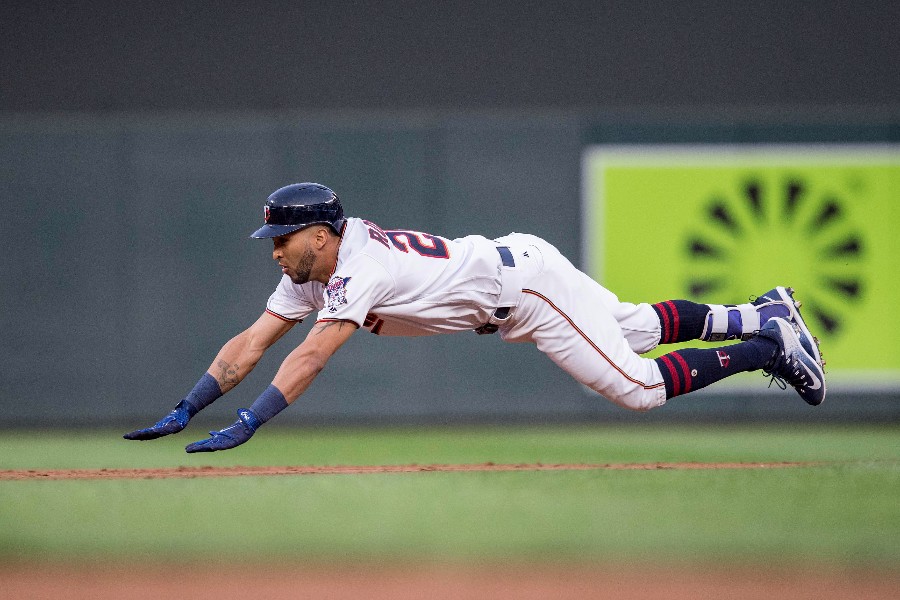 When Rosario came up to the big leagues in 2015, he was raw as a hitter but both his speed and defense stood out. Fast forward two years, and it appears Rosario has turned a complete 180. Here is Rosario’s three-year trend in sprint speed, UZR/150 and BsR. Everything is trending the wrong direction. In terms of sprint speed, Rosario has gone from the 32nd-fastest player in baseball in 2015 to 150th last season. That’s a drop from comfortably inside the top 10 percent to outside the upper third of all players. He’s lost exactly one foot per second on average over the past two seasons, which can be a huge difference when you’re tracking down fly balls in the outfield. Below is a look at Rosario’s sprint speed the past three seasons compared to some of his teammates. He went from easily being the second-fastest player in this group to slipping down to fourth. And here’s a look at Rosario’s numbers in relation to a handful of other players around his same age. So what do we make of all of this? Well, the pessimistic approach would be to conclude that Rosario’s athleticism is already eroding. But he’s still only 26-years-old, so I find that a little hard to believe. Is it possible that Rosario has played big parts of the past two seasons with undisclosed minor leg injuries that have sapped him of some of that speed? The only time Rosario has been on the DL was when he fractured his thumb in late 2016, but he’s surely played through a few scratches and strains. What do you make of Rosario’s defensive and base running declines? Related: Minnesota’s Base Running Resurgence Eddie Rosario And The Battle For Plate Discipline
 -
Why Yu Darvish Will Be Cheaper Than Everyone Thinks
Tom Froemming commented on Andrew Thares's blog entry in Rounding Third
Is there any reason why he shouldn't expect to beat Zack Greinke's 6y/$206.5 or David Price's 7y/$217m?- 14 comments
-
- 1
-

-
- rounding third
- yu darvish
- (and 1 more)
-
Why Yu Darvish Will Be Cheaper Than Everyone Thinks
Tom Froemming commented on Andrew Thares's blog entry in Rounding Third
I enjoyed reading this. I don't have any more/better information that you would, but ... If Darvish can't get more than $135 million, the MLBPA may want to consider filing a grievance. The game is in as good a place financially as it's ever been. If contracts for the top free agents suddenly start going down, I think there should be a real concern from the player's perspective. Again, I'm not saying there's no way Darvish signs in your predicted range, just that if he did it would be a pretty big red flag.- 14 comments
-
- 1
-
-
- rounding third
- yu darvish
- (and 1 more)
-
2018 Breakout Candidate: Stephen Gonsalves
Tom Froemming commented on Matthew Lenz's blog entry in Musings from Twins Territory
This is awesome! It's so hard to know how a guy is gonna handle his first cup of coffee, but I could see Gonsalves as the type who could successfully battle through some struggles even if he doesn't hit the ground running. It seems like he likes to be challenged and wouldn't shy away from trying to make adjustments on the fly if any deficiencies are spotted. If the Twins make a big addition to the rotation, things are going to look pretty packed, especially with May coming back. But there are always injuries and other things that open up doors.- 6 comments
-
- 2
-
-
- stephen gonsalves
- 2018 breakout candidate
- (and 1 more)
-
Yeah, this looks like a pretty incredible deal. Reed is three years younger than Davis, and here are their numbers the past three years combined: Davis 169.1 IP 4.3 WAR 1.65 ERA 1.00 WHIP 3.19 K:BB 3.05 SIERA Reed 209.2 IP 4.5 WAR 2.66 ERA 1.10 WHIP 4.64 K:BB 3.14 SIERA I think their performance is a lot closer than a lot of people would've guessed, and I love that huge advantage Reed has in K:BB ratio. Straight up, of course you'd take Davis over Reed, but on the deals they signed Reed is the much better value in my eyes.
-
Most of the attention this offseason has been dedicated to the Twins' pursuit of top starting pitching options, but it appears they just made a significant upgrade to the bullpen. According to Ken Rosenthal of The Athletic, the Twins have agreed to a contract with Addison Reed, who was the third-ranked relief pitcher on the market per MLB Trade Rumors.According to Rosenthal's report, which has since been confirmed by several other reputable sources on Twitter, the two sides have agreed to a two-year pact. Reed is from California, but spent the first three seasons of his career with the Chicago White Sox. Here's a look at his numbers from Baseball-Reference: Download attachment: Reed Numbers.png Reed is the third relief pitcher the Twins have signed to a major league deal this offseason, joining Fernando Rodney and Zach Duke. Once the deal has been made official, the Twins will need to make room for Reed on their 40-man roster. It appeared in mid-December that Reed was Philadelphia bound, but a deal never was finalized and the Phillies signed Tommy Hunter instead. There have been three relievers signed to three-year deals, all by the Colorado Rockies (Davis at $52 million, Bryan Shaw at $27 million and Jake McGee at $27 million), but it appears the Twins have been rewarded for waiting out the market. Reed's deal comes in just over what Pat Neshek got from the Phillies (two-years, $16.25 million) and just behind what Juan Nicasio got from the Mariners (two-years, $17 million). Why were the Twins able to sign Reed to such a modest deal? That's a great question. Taking a look at his velocity numbers over at Brooks Baseball, there doesn't seem to be any cause for concern. Download attachment: Reedmph.png Here's Reed's average fastball velocity the past four seasons: 93.33, 93.27, 93.22 and 92.93. So he has lost 0.4 mph over that span, but his swinging strike rate of 13.7 percent in 2017 was the highest he's posted since his rookie year. What do you think about this signing and the overall upgrades made to the bullpen? Click here to view the article
-
 According to Rosenthal's report, which has since been confirmed by several other reputable sources on Twitter, the two sides have agreed to a two-year pact. https://twitter.com/Ken_Rosenthal/status/952241316288643073?ref_src=twcamp%5Eshare%7Ctwsrc%5Em5%7Ctwgr%5Eemail%7Ctwcon%5E7046%7Ctwterm%5E1 UPDATE: Jon Heyman of FanRag Sports reported the deal at two-years, $16.75 million on Twitter. MLB Trade Rumors predicted Reed would fetch a four-year, $36 million deal. In that same piece, the site ranked Reed 16th among its top 50 free agents, third among relievers, trailing only Wade Davis and Greg Holland. According to Jeff Passan of Yahoo Sports, Reed turned down longer-term deals in order to come to Minnesota. https://twitter.com/JeffPassan/status/952245893226516480?ref_src=twcamp%5Eshare%7Ctwsrc%5Em5%7Ctwgr%5Eemail%7Ctwcon%5E7046%7Ctwterm%5E1 Reed is from California, but spent the first three seasons of his career with the Chicago White Sox. Here's a look at his numbers from Baseball-Reference: Reed is the third relief pitcher the Twins have signed to a major league deal this offseason, joining Fernando Rodney and Zach Duke. Once the deal has been made official, the Twins will need to make room for Reed on their 40-man roster. It appeared in mid-December that Reed was Philadelphia bound, but a deal never was finalized and the Phillies signed Tommy Hunter instead. There have been three relievers signed to three-year deals, all by the Colorado Rockies (Davis at $52 million, Bryan Shaw at $27 million and Jake McGee at $27 million), but it appears the Twins have been rewarded for waiting out the market. Reed's deal comes in just over what Pat Neshek got from the Phillies (two-years, $16.25 million) and just behind what Juan Nicasio got from the Mariners (two-years, $17 million). Why were the Twins able to sign Reed to such a modest deal? That's a great question. Taking a look at his velocity numbers over at Brooks Baseball, there doesn't seem to be any cause for concern. Here's Reed's average fastball velocity the past four seasons: 93.33, 93.27, 93.22 and 92.93. So he has lost 0.4 mph over that span, but his swinging strike rate of 13.7 percent in 2017 was the highest he's posted since his rookie year. What do you think about this signing and the overall upgrades made to the bullpen?
 -
New Approach on Signing Yu Darvish
Tom Froemming commented on jharaldson's blog entry in Back Office Twins Baseball Blog
I'd guess Darvish says no, but he'd certainly have to think about it. Looks like he's already made $56m in the states, so maybe that means security would be less of a concern. -
Welcome to Twins Weekly. This feature intends to help readers discover anything they may have missed, encourage prospective writers to get active and provide readers an opportunity to offer up requests for content. The big news at the site this week was Seth’s return to podcasting, which featured a star-studded lineup of guests.Let’s take a quick look back at all the articles from the front page in the order they were published. This edition of Twins Weekly covers Friday, Jan. 5-Thursday, Jan. 11. The Twins Almanac for January 7–13 - Matt Johnson Projecting The 2021 Twins Line-Up - Cody Christie Gleeman & The Geek: Ep 350 Mega Mailbag - John Bonnes The Return of Seth Speaks (The Podcast) - Seth Stohs The guest list included Gopher baseball player Luke Petterson, LaMonte Wade, Stephen Gonsalves, Tyler Wells and Jonathan Mayo of MLB Pipeline. Why I Believe The Twins Are Going To Sign Yu Darvish - Nick Nelson Justin Morneau To Retire, Join Twins Front Office- Cody Christie Winter Meltdown And Diamond Award Tickets Available Now! - John Bonnes Projecting the 2021 Twins Pitching Staff - Tom Froemming Hey Joe, What's Next? - Ted Schwerzler 2018 Minnesota Twins Roster Projections - The Catchers - Seth Stohs Minnesota’s Base Running Resurgence - Cody Christie Did Nick Gordon’s Second Half Turn Him From Prospect to Suspect? - Tom Froemming Hard Work Jorge Pays Off - Ted Schwerzler Twins Daily Blogs Below are some additional items of note from both the blog area. I've pulled excerpts from each piece in attempt to hook you in. On acquiring Yu Darvish or Gerrit Cole By Hosken Bombo Disco “Now compare Cole to Darvish. Fangraphs projects Cole for 3.8 fWAR in 2018, while Darvish is projected only for 3.6 fWAR in 2018. Consider that Darvish’s contract will fetch more than $20 million per season for each of the next five or six seasons; Cole will not earn $20 million over the next two seasons together. Moreover, Cole might be motivated to pitch his best in order to increase his value in free agency following 2019.” HildenWho? By Jamie Cameron “Hildenberger had good MiLB numbers, but I had no idea how dominant he was. In any MiLB stint in which Hildenberger pitched at least 20 innings, he never had a K/9 of under 9.6, and never had a GB% lower than 53%. He topped out at 11.8 K/9 at low A. His GB% peaked at 67%. To put that into some major league perspective, only 4 guys who threw at least 40 innings in 2017 had a GB% higher than 67% (one of whom, Scott Alexander, the Dodgers saw fit to trade for as a replacement for Tony Watson in their bullpen). Granted, Hildenberger was at high A, but the signs were promising. Hildenberger had consistently shown an ability to do two things which in combination can make a reliever elite; get lots of strikeouts and induce a ton of ground balls.” Minnesota Jumeaux – Eh! By mikelink45 “With Justin Morneau returning to Minnesota it just seems to fulfill destiny. The Canadians have only two teams – Toronto (officially) and that offshoot of Ontario called Minnesota with the Twins (Jumeaux). Canada should celebrate both and we should take pride in straddling the border with both temperature and hockey to welcome our northern kin. Morneau was a natural and Colorado was just a blip on his resume. Now he is coming back home. Welcome Justin – you can let your o’s get longer and slip in an Eh! Or two.” Understanding the "Quality of Pitch" (QOP/QOPA/QOPV) Statistics By Lenzy2108 “I've spent a lot of time over the last few days reading about a relatively new statistic called "quality of pitch" (QOP), which assigns a numerical value to each pitch a pitcher throws. The values can then averaged together to come up with a pitchers average quality of pitch (QOPA) or you can look at a quality of pitch set of values (QOPV) as another tool to measure the performance of a pitcher. The purpose of this post is to provide a simple overview of this data as it may be referenced in future articles.” Additional Links Minnesota Twins: Paul Molitor’s New Year’s Resolutions By Benjamin Chase of Puckett’s Pond “The most obvious example of this was lefty Taylor Rogers. He made 69 appearances on the season, 19 of them on back-to-back days. However, early in the season, Molitor drastically overused his left arm, using him for three days in a row 3 times and five days in a row once all before the All-Star break. Predictably, Rogers had a rough time coming out of the All Star break, making 6 appearances between July 22nd and August 5th, throwing 4 innings, with a 22.50 ERA, 3.00 WHIP, and allowing 3 home runs (he allowed only 6 on the ENTIRE season).” Twins had planned to call up ByungHo Park in 2017 By Maija Varda of Twinkie Town “Though news came out awhile ago that ByungHo Park would be returning to South Korea to play baseball in 2018, he actually only arrived back in his home country yesterday. Since it was his first time back, Park held a press conference about his return with his new/old team, the Nexen Heroes. He didn’t really say that much new about the Twins or his time in the US, but one small comment stuck out to me: apparently, at the end of spring training in 2017, the Twins told Park they wanted him to start the season in the minors, but that they planned to call him up later that April.” Podcasts Minnesota Sports Weekly Episode 52 By Travis Aune/Chad Smith I had the pleasure of chatting with the guys from Minnesota Sports Weekly. We talked about everything from the prospect handbook/rankings to Yu Darvish. I believe I'm welcomed on to the show at around the hour mark. They led off the show with Josh Whetzel, who is the radio guy for Triple-A Rochester. Baseball is Good Episode 30 By Cory Engelhardt “Shea McGinnity is a big time baseball fan who lives in Kansas City, MO. We will talk baseball, Minnesota Twins, and anything else that comes our way.” The Show About the Show Episode 2 (airs Friday night at 7 pm) By Devlin Clark Before we close out the podcast segment, I just wanted to give a heads up that Devlin will be recording his first full-length episode with special guest and former Twins pitcher Cole De Vries later this evening. Calling All Bloggers!!! One of the biggest obstacles to overcome when writing is figuring out just what the heck to write about. Well, here’s a topic to consider … TwinsFest stories and tips. This idea was offered up in the comments last week by TD member IndianaTwin. Anybody have good stories to tell about TwinsFest? What’s your most memorable moment or favorite person you’ve met at the event? Do you have any pro tips to pass along for first-time TwinsFesters? Just to be clear, this simply an idea I'm throwing out there to consider. Just a reminder, anyone can start a blog at Twins Daily. If you're interested in being a regular writer for the site, the blog section is how you get your foot in the door. The only reason you're reading my words right now is because I started my own blog at Twins Daily. Calling All Readers!!! I don’t want to leave you out, either. If there's anything you'd love to read about next week, please let us know in the comments. Twins Weekly will continue to be posted every Friday morning at the site. Have a wonderful weekend everyone. Click here to view the article
- 1 reply
-
- 1
-
-
- twins weekly
- yu darvish
- (and 3 more)
-
 Let’s take a quick look back at all the articles from the front page in the order they were published. This edition of Twins Weekly covers Friday, Jan. 5-Thursday, Jan. 11. The Twins Almanac for January 7–13 - Matt Johnson Projecting The 2021 Twins Line-Up - Cody Christie Gleeman & The Geek: Ep 350 Mega Mailbag - John Bonnes The Return of Seth Speaks (The Podcast) - Seth Stohs The guest list included Gopher baseball player Luke Petterson, LaMonte Wade, Stephen Gonsalves, Tyler Wells and Jonathan Mayo of MLB Pipeline. Why I Believe The Twins Are Going To Sign Yu Darvish - Nick Nelson Justin Morneau To Retire, Join Twins Front Office - Cody Christie Winter Meltdown And Diamond Award Tickets Available Now! - John Bonnes Projecting the 2021 Twins Pitching Staff - Tom Froemming Hey Joe, What's Next? - Ted Schwerzler 2018 Minnesota Twins Roster Projections - The Catchers - Seth Stohs Minnesota’s Base Running Resurgence - Cody Christie Did Nick Gordon’s Second Half Turn Him From Prospect to Suspect? - Tom Froemming Hard Work Jorge Pays Off - Ted Schwerzler Twins Daily Blogs Below are some additional items of note from both the blog area. I've pulled excerpts from each piece in attempt to hook you in. On acquiring Yu Darvish or Gerrit Cole By Hosken Bombo Disco “Now compare Cole to Darvish. Fangraphs projects Cole for 3.8 fWAR in 2018, while Darvish is projected only for 3.6 fWAR in 2018. Consider that Darvish’s contract will fetch more than $20 million per season for each of the next five or six seasons; Cole will not earn $20 million over the next two seasons together. Moreover, Cole might be motivated to pitch his best in order to increase his value in free agency following 2019.” HildenWho? By Jamie Cameron “Hildenberger had good MiLB numbers, but I had no idea how dominant he was. In any MiLB stint in which Hildenberger pitched at least 20 innings, he never had a K/9 of under 9.6, and never had a GB% lower than 53%. He topped out at 11.8 K/9 at low A. His GB% peaked at 67%. To put that into some major league perspective, only 4 guys who threw at least 40 innings in 2017 had a GB% higher than 67% (one of whom, Scott Alexander, the Dodgers saw fit to trade for as a replacement for Tony Watson in their bullpen). Granted, Hildenberger was at high A, but the signs were promising. Hildenberger had consistently shown an ability to do two things which in combination can make a reliever elite; get lots of strikeouts and induce a ton of ground balls.” Minnesota Jumeaux – Eh! By mikelink45 “With Justin Morneau returning to Minnesota it just seems to fulfill destiny. The Canadians have only two teams – Toronto (officially) and that offshoot of Ontario called Minnesota with the Twins (Jumeaux). Canada should celebrate both and we should take pride in straddling the border with both temperature and hockey to welcome our northern kin. Morneau was a natural and Colorado was just a blip on his resume. Now he is coming back home. Welcome Justin – you can let your o’s get longer and slip in an Eh! Or two.” Understanding the "Quality of Pitch" (QOP/QOPA/QOPV) Statistics By Lenzy2108 “I've spent a lot of time over the last few days reading about a relatively new statistic called "quality of pitch" (QOP), which assigns a numerical value to each pitch a pitcher throws. The values can then averaged together to come up with a pitchers average quality of pitch (QOPA) or you can look at a quality of pitch set of values (QOPV) as another tool to measure the performance of a pitcher. The purpose of this post is to provide a simple overview of this data as it may be referenced in future articles.” Additional Links Minnesota Twins: Paul Molitor’s New Year’s Resolutions By Benjamin Chase of Puckett’s Pond “The most obvious example of this was lefty Taylor Rogers. He made 69 appearances on the season, 19 of them on back-to-back days. However, early in the season, Molitor drastically overused his left arm, using him for three days in a row 3 times and five days in a row once all before the All-Star break. Predictably, Rogers had a rough time coming out of the All Star break, making 6 appearances between July 22nd and August 5th, throwing 4 innings, with a 22.50 ERA, 3.00 WHIP, and allowing 3 home runs (he allowed only 6 on the ENTIRE season).” Twins had planned to call up ByungHo Park in 2017 By Maija Varda of Twinkie Town “Though news came out awhile ago that ByungHo Park would be returning to South Korea to play baseball in 2018, he actually only arrived back in his home country yesterday. Since it was his first time back, Park held a press conference about his return with his new/old team, the Nexen Heroes. He didn’t really say that much new about the Twins or his time in the US, but one small comment stuck out to me: apparently, at the end of spring training in 2017, the Twins told Park they wanted him to start the season in the minors, but that they planned to call him up later that April.” Podcasts Minnesota Sports Weekly Episode 52 By Travis Aune/Chad Smith I had the pleasure of chatting with the guys from Minnesota Sports Weekly. We talked about everything from the prospect handbook/rankings to Yu Darvish. I believe I'm welcomed on to the show at around the hour mark. They led off the show with Josh Whetzel, who is the radio guy for Triple-A Rochester. Baseball is Good Episode 30 By Cory Engelhardt “Shea McGinnity is a big time baseball fan who lives in Kansas City, MO. We will talk baseball, Minnesota Twins, and anything else that comes our way.” The Show About the Show Episode 2 (airs Friday night at 7 pm) By Devlin Clark Before we close out the podcast segment, I just wanted to give a heads up that Devlin will be recording his first full-length episode with special guest and former Twins pitcher Cole De Vries later this evening. Calling All Bloggers!!! One of the biggest obstacles to overcome when writing is figuring out just what the heck to write about. Well, here’s a topic to consider … TwinsFest stories and tips. This idea was offered up in the comments last week by TD member IndianaTwin. Anybody have good stories to tell about TwinsFest? What’s your most memorable moment or favorite person you’ve met at the event? Do you have any pro tips to pass along for first-time TwinsFesters? Just to be clear, this simply an idea I'm throwing out there to consider. Just a reminder, anyone can start a blog at Twins Daily. If you're interested in being a regular writer for the site, the blog section is how you get your foot in the door. The only reason you're reading my words right now is because I started my own blog at Twins Daily. Calling All Readers!!! I don’t want to leave you out, either. If there's anything you'd love to read about next week, please let us know in the comments. Twins Weekly will continue to be posted every Friday morning at the site. Have a wonderful weekend everyone.
 -
Just for reference, here's the full list of pitchers who made more than five MLB starts in their age 22 or younger season in 2017: German Marquez, COL, 29 starts Antonio Senzatela, COL, 20 starts Lucas Giolito, CWS, 7 starts I wouldn't be shocked if Enlow/Graterol/Leach reach the majors in 2021, but I doubt they'd be up for anything more than an emergency spot start/September callup.
-
I would respectfully disagree. I thought he's done a great job chronicling Buxton's swing adjustments and Jose Berrios adjusting between the major and minor league ball. He was the first reporter I remember who covered the Twins' investment in better nutrition for the minor leaguers. He also is the only beat writer who had the nerve to actually press Molitor on all the bunting and wrote a great article on it, though it came after the season was already over. He said in the chat that the list is not his evaluation of the players, but more his conclusions based on information he gathered from sources both inside and outside the organization. Is that the best methodology? I'm not sure, since those sources might have ulterior motives. By now, I'm sure Mike has a very strong BS indicator and can tell when someone is trying to use the media as a tool for their own good.
- 49 replies
-
- 11
-
-
I love Javier, I believe I had him highest of anyone in the Twins Prospect Handbook, but he did have a 27.2 K% and committed 16 errors (.893 fielding percentage). In comparison, Nick Gordon had a 17.7 K% and .964 fielding percentage when he was in the Appy League. Javier has definitely shown a lot more power potential and errors/fielding percentage should be taken with a grain of salt. He has the tools to be a good defensive shortstop. He could be a five-tool player, but his warts aren't going to really appear until he starts facing some more advanced pitching. What if that K rate keeps increasing? What if he can't smooth things out in the field? What if he gets bigger and is forced off shortstop?
-
Baseball America released its Top 10 Minnesota Twins Prospects for 2018, and there was a familiar face who slid down the rankings. One year after being named by the publication as the team’s top prospect, Nick Gordon slotted in at No. 8. Did his poor second half cause Gordon’s prospect stock to slip?Here’s a link to the Baseball America’s article on the list and the chat that Mike Berardino participated in. Just a heads up, most of this content is behind a paywall, but BA is outstanding and you should consider signing up for a subscription. The list itself is available to anyone. If you haven’t seen it yet, here it is: Royce LewisWander JavierAlex KirilloffStephen GonsalvesBrusdar GraterolFernando RomeroBrent RookerNick GordonBlayne EnlowTyler JayThis is a fun list, and I’m sure Berardino put a ton of thought and legwork into putting it together. There are a few surprises, but Gordon was certainly the biggest. Berardino was quick to point out in the chat that he did not compile last year’s list, so it's not really his job to rationalize the big dip from last year. Still, it’s a bit jarring to see Gordon so low, especially after he had his best offensive season. Gordon was also just 21-years-old throughout the entire season, three years younger than the average player in the Southern League. To put that into some perspective, when Brian Dozier was that age, he was still only a junior in college. Then again, Jorge Polanco made his major league debut at 20. Apples to oranges, I guess, but the point is Gordon is still quite young. Let's check out some of the numbers ... The Good -Gordon got off to an amazing start, hitting .315/.376/.504 (.880 OPS) in the first half. -He hit a career-high nine home runs in 122 games played. Coming into 2017, Gordon had just five homers in 293 career games. -He also posted a career best 9.2 BB%. Prior to 2017, Gordon had a career walk rate of 5.7 percent. -He hit the most line drives in the Southern League, registering a 28.0 LD%. -He stayed healthy, racking up 578 plate appearances. That was tied for the third most among all Double-A hitters. -He was ranked 19th on Baseball America’s Midseason Top 100 and 33rd on Baseball Prospectus’ Midesason Top 50. -Gordon also represented the Twins at the Futures Game, serving as the leadoff hitter and shortstop for the U.S. team. The Bad -Gordon had a terrible second half at the plate, hitting .221/.304/.305 (.609 OPS). -He was helpless against lefties, posting a .174/.273/.240 line (.513 OPS) -He had the worst strikeout rate of his career, 23.2 percent. Coming into the year, he had a 17.1 K%. -He was still only successful in 65 percent of his stolen base attempts (13-for-20), which is also roughly his career rate. -He committed 22 errors in the field, 19 at shortstop and three at second base (to be fair, Polanco made 30 errors in his age 21 season). Unfortunately, advanced defensive stats aren’t really a thing in the minor leagues yet. My Take Gordon probably isn’t as good as his crazy first half, but he’s definitely not as bad as his terrible second half. There are questions about his ability to stick at shortstop, but at this time a year ago I was basically having a panic attack thinking about Polanco being the Twins everyday guy there. Coaching can go a long way toward helping an infielder refine his defense. I have Gordon as my No. 3 prospect in the system, one spot ahead of Wander Javier, due in large part to the advances he made as a hitter. His power doesn’t stand out, but he took a huge step forward. He makes a lot of hard contact and is learning to draw more walks. With all that in mind, I didn’t see any reason to drop him in my rankings (though he slid down a spot from 2017 thanks to the arrival of Royce Lewis). It’s a lot easier to pin dreams on guys who haven’t even made it to full-season ball than it is on someone who’s played an entire season in Double-A. The closer a prospect gets to the majors, the more likely his flaws are going to be exposed. Gordon has some red flags, and I can see why someone would drop him down to the eighth spot. I don’t look at Berardino’s list and interpret it as a slam on Gordon, I see it as him being really high on the other six guys who follow Lewis. And there are plenty of good reasons to get excited about those players. What do you think? Is Nick Gordon’s glass half full, or half empty? The Twins Prospect Handbook has more prospect lists than you can shake a stick at, including every one of Seth Stohs’ rankings going back to 2006. Here is a link to the paperback, which is $15.99, and here is a link to the PDF, which is $10.99. Click here to view the article
-
Did Nick Gordon’s Second Half Turn Him From Prospect to Suspect?
Tom Froemming posted an article in Minor Leagues
 Here’s a link to the Baseball America’s article on the list and the chat that Mike Berardino participated in. Just a heads up, most of this content is behind a paywall, but BA is outstanding and you should consider signing up for a subscription. The list itself is available to anyone. If you haven’t seen it yet, here it is: Royce Lewis Wander Javier Alex Kirilloff Stephen Gonsalves Brusdar Graterol Fernando Romero Brent Rooker Nick Gordon Blayne Enlow Tyler Jay This is a fun list, and I’m sure Berardino put a ton of thought and legwork into putting it together. There are a few surprises, but Gordon was certainly the biggest. Berardino was quick to point out in the chat that he did not compile last year’s list, so it's not really his job to rationalize the big dip from last year. Still, it’s a bit jarring to see Gordon so low, especially after he had his best offensive season. Gordon was also just 21-years-old throughout the entire season, three years younger than the average player in the Southern League. To put that into some perspective, when Brian Dozier was that age, he was still only a junior in college. Then again, Jorge Polanco made his major league debut at 20. Apples to oranges, I guess, but the point is Gordon is still quite young. Let's check out some of the numbers ... The Good -Gordon got off to an amazing start, hitting .315/.376/.504 (.880 OPS) in the first half. -He hit a career-high nine home runs in 122 games played. Coming into 2017, Gordon had just five homers in 293 career games. -He also posted a career best 9.2 BB%. Prior to 2017, Gordon had a career walk rate of 5.7 percent. -He hit the most line drives in the Southern League, registering a 28.0 LD%. -He stayed healthy, racking up 578 plate appearances. That was tied for the third most among all Double-A hitters. -He was ranked 19th on Baseball America’s Midseason Top 100 and 33rd on Baseball Prospectus’ Midesason Top 50. -Gordon also represented the Twins at the Futures Game, serving as the leadoff hitter and shortstop for the U.S. team. The Bad -Gordon had a terrible second half at the plate, hitting .221/.304/.305 (.609 OPS). -He was helpless against lefties, posting a .174/.273/.240 line (.513 OPS) -He had the worst strikeout rate of his career, 23.2 percent. Coming into the year, he had a 17.1 K%. -He was still only successful in 65 percent of his stolen base attempts (13-for-20), which is also roughly his career rate. -He committed 22 errors in the field, 19 at shortstop and three at second base (to be fair, Polanco made 30 errors in his age 21 season). Unfortunately, advanced defensive stats aren’t really a thing in the minor leagues yet. My Take Gordon probably isn’t as good as his crazy first half, but he’s definitely not as bad as his terrible second half. There are questions about his ability to stick at shortstop, but at this time a year ago I was basically having a panic attack thinking about Polanco being the Twins everyday guy there. Coaching can go a long way toward helping an infielder refine his defense. I have Gordon as my No. 3 prospect in the system, one spot ahead of Wander Javier, due in large part to the advances he made as a hitter. His power doesn’t stand out, but he took a huge step forward. He makes a lot of hard contact and is learning to draw more walks. With all that in mind, I didn’t see any reason to drop him in my rankings (though he slid down a spot from 2017 thanks to the arrival of Royce Lewis). It’s a lot easier to pin dreams on guys who haven’t even made it to full-season ball than it is on someone who’s played an entire season in Double-A. The closer a prospect gets to the majors, the more likely his flaws are going to be exposed. Gordon has some red flags, and I can see why someone would drop him down to the eighth spot. I don’t look at Berardino’s list and interpret it as a slam on Gordon, I see it as him being really high on the other six guys who follow Lewis. And there are plenty of good reasons to get excited about those players. What do you think? Is Nick Gordon’s glass half full, or half empty? The Twins Prospect Handbook has more prospect lists than you can shake a stick at, including every one of Seth Stohs’ rankings going back to 2006. Here is a link to the paperback, which is $15.99, and here is a link to the PDF, which is $10.99.
 -
I would have included him in the pen, but in this fantasy scenario of no signings or extensions he would have already left via free agency by 2021.
-
One of the best parts of putting together the Twins Prospect Handbook is taking a deep dive into the players who will populate Target Field in the years to come. Cody Christie took a look ahead at the 2021 Minnesota Twins line-up earlier this week. Today, I’ll do my best to forecast the pitching staff.This projection does not factor in any kind of free agent additions or extensions. All the guys added this offseason will be gone by then. Ervin Santana, Kyle Gibson and Ryan Pressly will all be free agents in 2020 at the latest. Trevor May will be a free agent in 2021. Bartolo Colon will be 48 by then, so … With that in mind, here is what I came up with for the 2021 Minnesota Twins projected pitching staff. I included each player’s “baseball age” (defined by Baseball-Reference as a player’s age on July 1) for 2021. I cheated on the rotation. I had a difficult time cutting it down to five starting pitchers, so I distorted my crystal ball to show that there would be six-man rotations by 2012. Is that a cop out? Yup, sure is. Jose Berrios (27) Here's the only question I have about Berrios: How many Cy Young Awards will he have won by 2021? OK, maybe that’s going a little overboard, but it’s pretty impressive how far he’s already come. In 2017, he was one of only three pitchers to make at least 25 starts in his age 23 season or younger. The other two were Colorado’s German Marquez and Luis Severino of the Yankees. Berrios was one of only 40 American League pitchers to eclipse 145 innings last season, and his 3.89 ERA ranked in the top half of that group. Fernando Romero (26) Romero is the most likely of the current crop of Twins pitching prospects to develop into a top of the rotation pitcher. At the same time, he’s also probably the most likely to end up in the bullpen. Romero’s 2017 totals are solid, but a terrible finish overshadowed the fact that he showed flashes of greatness. He had a 13-start stretch in which he went 9-1 with a 1.40 ERA, 1.10 WHIP and 9.9 K/9. That hot streak coincided with the exact same time frame Romero was teammates with the next guy on this list … Stephen Gonsalves (26) At first glance, Gonsalves’ 2017 numbers make it look like he took a step back from previous seasons. Look a little deeper and you discover a career-high 3.81 strikeout-to-walk ratio that stands out as a big indicator of progress. After three-straight seasons of an escalating walk rate, he managed to trim that mark down to 2.5 BB/9. His overall numbers with Rochester aren’t great, but those are marred by an ugly performance out of the bullpen. Three of his four other outings were quality starts. Adalberto Mejia (28) We got to see some of Mejia’s warts at the Major League level in 2017, but he still has plenty of time to smooth things out. Paul Molitor was very cautious with the Dominican lefty, limiting him to less than five innings per start on average. Mejia only surpassed the 100-pitch mark three times and completed six or more innings in just four of his 21 starts. But he ended his rookie season with numbers that are comparable to the AL averages for starting pitchers. Here’s hoping he only goes up from there. Zack Littell (25) Littell is still a new face to the organization, and based off all the prospect lists people are still trying to get a feel for where he fits into the big picture. For me, he’s kind of like a right-handed version of Stephen Gonsalves: Doesn’t have the greatest stuff out there, but he really knows how to pitch, prepare and compete. It is a bit of a red flag that he’s already been traded twice, but I suspect the Yankees were willing to let him loose because they envisioned Littell being selected in the Rule 5 Draft. Lewis Thorpe (25) Just like everyone else I’ve mentioned, Thorpe is already on the 40-man roster. I’d be shocked if he debuts in 2018, but the team has every incentive to get him moving up now that he’ll be burning through options. After two years off due to injuries and illness, Thorpe bounced back nicely in 2017. He’s only had one appearance above High-A, so there’s still a long way to go, but he’s also got a chance to have three legit Major League pitches. How could I not include this guy? On to the bullpen. The crazy part of the group I ended up with is the majority of these guys figure to be contributors in 2018. In fact, all but one has already made his Major League debut. Along with starting rotations growing, my crystal ball is also indicating that the closer role will have evolved by the time 2021 rolls around. But if you force me to pick the guy who I think best fits as a traditional closer, how about J.T. Chargois? He throws the hardest of this group and (given his injury history) might be the guy best suited for a rigidly-defined role. Trevor Hildenberger (30) Gets strikeouts, induces groundballs and doesn’t walk anybody. What’s not to like? Hildenberger has also been very healthy, especially when compared to some of the other names in this group, so I feel very comfortable writing him in as the top arm in my projected pen. He was drafted as a fifth-year senior, so there was little incentive to bring him along slowly. He only made 53 appearances between Double-A and Triple-A combined, so it’s possible he may get even better as he adjusts to facing more advanced hitters. Tyler Jay (27) His arsenal has the depth of a starter, the stuff of a closer and he’s left-handed. It’s easy to see why the Andrew Miller comps get thrown around. While I think it’s not what the Twins envisioned when they picked him No. 6 overall, I can still see Jay reaching that potential if he manages to stay on the field. I don’t think there are many conclusions we can draw from his 2017 season, but it was great to see him finish out the year healthy in the Arizona Fall League. J.T. Chargois (29) Chargois is another guy who has all the tools, he just needs to stay healthy. Given his short track record in the majors and extensive injury history, at some point it may have made sense for the Twins to DFA him and hope he slid through waivers. I think the fact that they’ve hung on to Chaggy over guys like Nick Burdi and Luke Bard says a lot about how they view his future. After finishing out 2016 with a 0.79 ERA, 0.71 WHIP and 10 strikeouts over his final 11.1 innings with the Twins, he appeared poised to make a big impact. It’s too bad he got hurt again. John Curtiss (28) What a year this guy had. Twins fans may remember him taking some lumps on the big club at the end of the season, but he also struck out 10 batters while issuing just two walks over 8.2 innings. In his minor league career, Curtiss has averaged 11.3 K/9 and struck out 30.0 percent of the batters he faced. Just nasty. He could probably benefit from some more time in the upper minors, as he’s only logged 39 appearances above High-A. Taylor Rogers (30) Yep, Rogers will still be around. In fact, he’s not set to reach free agency until 2023. Over his first two years in the bullpen, Rogers has pitched to a 3.54 ERA, 1.30 WHIP, 8.7 K/9 and 2.8 BB/9. At this point, it looks like he’ll be best used as a lefty specialist (right-handed hitters have a .289/.355/.435 line against him), but that’s still a role that every team needs filled. Much like with Mejia, we’ve seen some of Rogers’ warts, but I’m still inclined to include him in the 2021 bullpen. Alan Busenitz (30) A former 25th-round pick who was considered a throw in to the Ricky Nolasco/Hector Santiago/Alex Meyer trade, Busenitz is looking a lot more intriguing after a breakout 2017. He was called up from Triple-A on three separate occasions last season, but put up nice numbers at both levels. His strikeouts took a dip against more advanced hitters, dropping from 9.9 K/9 in Triple-A to 6.5 with the Twins, but he still posted a 1.99 ERA and 0.98 WHIP in the majors. Felix Jorge (27) Lots of starters end up in the bullpen. Jorge has a cool personality, smooth delivery and five-pitch mix, so I assume he’ll continue to start for as long as possible. But, much like Rogers, I could see him eventually finding a home in the bullpen. He’s never missed many bats in the minors, but he's got the velo. He topped out at 95 mph over his two appearances with the Twins last season per Brooks Baseball. As a reliever, maybe Jorge could add a few more ticks and be even more effective by eliminating a couple pitches. Just missed the cut: Tyler Duffey (30), Gabriel Moya (26), Lachlan Wells (24), Kohl Stewart (26), Aaron Slegers (28), Tom Hackimer (27), Jake Reed (28) among many others. Regarding this group, it’s important to keep in mind that a year ago a lot of people wouldn’t have been penciling in Hildenberger as a huge part of the team’s long-term future plans. The Twins Daily 2017 Minor League Primer listed Chargois, Reed and Burdi all above Hildy among the top relief prospects, and that was only about 11 months ago. These things can change really fast. It was tough to leave off a guy like Duffey who’s already established himself. His 2017 left a lot to be desired, but it was his first year back in the bullpen. Moya and Slegers have both also made it to the majors already and I still think pretty highly of Stewart’s potential. I also like Hackimer and Andrew Vasquez … and Lachlan Wells … and Tyler Wells … and Tyler Watson (among many others). On the verge: Blayne Enlow (22), Brusdar Graterol (22) and Landon Leach (21) among others. Is it possible one of these guys could make it to the majors by then? Absolutely. Would I predict one of them will be established in 2021? No. Berrios had about the best minor league career you could hope for, both in terms of performance and health, and even he didn’t establish himself until his age 23 season. So I’m going to take a conservative outlook on these kids and project them to still be in the minors, but knocking on the door. What do you think? I’m sure the 2021 Twins won’t be completely homegrown, but it’s pretty interesting to see what’s already in the pipeline. That projected rotation I came up with would still be really young. Same with the bullpen, but all those guys I penciled in as relievers figure to have plenty of opportunity to gain Major League experience between now and then. For more on the pitching pipeline, check out he Twins Prospect Handbook. Here is a link to the paperback, which is $15.99, and here is a link to the PDF, which is $10.99. Click here to view the article
-
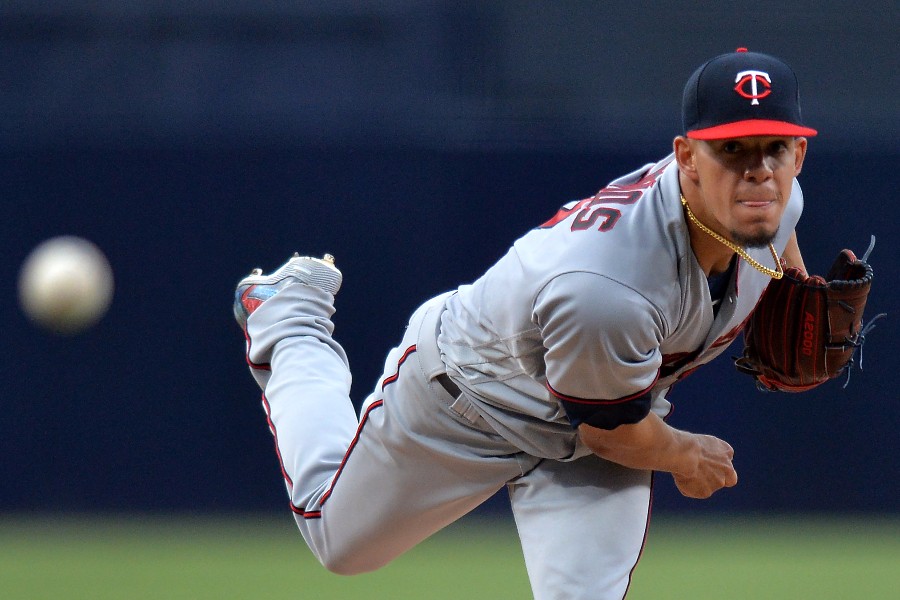 This projection does not factor in any kind of free agent additions or extensions. All the guys added this offseason will be gone by then. Ervin Santana, Kyle Gibson and Ryan Pressly will all be free agents in 2020 at the latest. Trevor May will be a free agent in 2021. Bartolo Colon will be 48 by then, so … With that in mind, here is what I came up with for the 2021 Minnesota Twins projected pitching staff. I included each player’s “baseball age” (defined by Baseball-Reference as a player’s age on July 1) for 2021. I cheated on the rotation. I had a difficult time cutting it down to five starting pitchers, so I distorted my crystal ball to show that there would be six-man rotations by 2012. Is that a cop out? Yup, sure is. Jose Berrios (27) Here's the only question I have about Berrios: How many Cy Young Awards will he have won by 2021? OK, maybe that’s going a little overboard, but it’s pretty impressive how far he’s already come. In 2017, he was one of only three pitchers to make at least 25 starts in his age 23 season or younger. The other two were Colorado’s German Marquez and Luis Severino of the Yankees. Berrios was one of only 40 American League pitchers to eclipse 145 innings last season, and his 3.89 ERA ranked in the top half of that group. Fernando Romero (26) Romero is the most likely of the current crop of Twins pitching prospects to develop into a top of the rotation pitcher. At the same time, he’s also probably the most likely to end up in the bullpen. Romero’s 2017 totals are solid, but a terrible finish overshadowed the fact that he showed flashes of greatness. He had a 13-start stretch in which he went 9-1 with a 1.40 ERA, 1.10 WHIP and 9.9 K/9. That hot streak coincided with the exact same time frame Romero was teammates with the next guy on this list … Stephen Gonsalves (26) At first glance, Gonsalves’ 2017 numbers make it look like he took a step back from previous seasons. Look a little deeper and you discover a career-high 3.81 strikeout-to-walk ratio that stands out as a big indicator of progress. After three-straight seasons of an escalating walk rate, he managed to trim that mark down to 2.5 BB/9. His overall numbers with Rochester aren’t great, but those are marred by an ugly performance out of the bullpen. Three of his four other outings were quality starts. Adalberto Mejia (28) We got to see some of Mejia’s warts at the Major League level in 2017, but he still has plenty of time to smooth things out. Paul Molitor was very cautious with the Dominican lefty, limiting him to less than five innings per start on average. Mejia only surpassed the 100-pitch mark three times and completed six or more innings in just four of his 21 starts. But he ended his rookie season with numbers that are comparable to the AL averages for starting pitchers. Here’s hoping he only goes up from there. Zack Littell (25) Littell is still a new face to the organization, and based off all the prospect lists people are still trying to get a feel for where he fits into the big picture. For me, he’s kind of like a right-handed version of Stephen Gonsalves: Doesn’t have the greatest stuff out there, but he really knows how to pitch, prepare and compete. It is a bit of a red flag that he’s already been traded twice, but I suspect the Yankees were willing to let him loose because they envisioned Littell being selected in the Rule 5 Draft. Lewis Thorpe (25) Just like everyone else I’ve mentioned, Thorpe is already on the 40-man roster. I’d be shocked if he debuts in 2018, but the team has every incentive to get him moving up now that he’ll be burning through options. After two years off due to injuries and illness, Thorpe bounced back nicely in 2017. He’s only had one appearance above High-A, so there’s still a long way to go, but he’s also got a chance to have three legit Major League pitches. How could I not include this guy? On to the bullpen. The crazy part of the group I ended up with is the majority of these guys figure to be contributors in 2018. In fact, all but one has already made his Major League debut. Along with starting rotations growing, my crystal ball is also indicating that the closer role will have evolved by the time 2021 rolls around. But if you force me to pick the guy who I think best fits as a traditional closer, how about J.T. Chargois? He throws the hardest of this group and (given his injury history) might be the guy best suited for a rigidly-defined role. Trevor Hildenberger (30) Gets strikeouts, induces groundballs and doesn’t walk anybody. What’s not to like? Hildenberger has also been very healthy, especially when compared to some of the other names in this group, so I feel very comfortable writing him in as the top arm in my projected pen. He was drafted as a fifth-year senior, so there was little incentive to bring him along slowly. He only made 53 appearances between Double-A and Triple-A combined, so it’s possible he may get even better as he adjusts to facing more advanced hitters. Tyler Jay (27) His arsenal has the depth of a starter, the stuff of a closer and he’s left-handed. It’s easy to see why the Andrew Miller comps get thrown around. While I think it’s not what the Twins envisioned when they picked him No. 6 overall, I can still see Jay reaching that potential if he manages to stay on the field. I don’t think there are many conclusions we can draw from his 2017 season, but it was great to see him finish out the year healthy in the Arizona Fall League. J.T. Chargois (29) Chargois is another guy who has all the tools, he just needs to stay healthy. Given his short track record in the majors and extensive injury history, at some point it may have made sense for the Twins to DFA him and hope he slid through waivers. I think the fact that they’ve hung on to Chaggy over guys like Nick Burdi and Luke Bard says a lot about how they view his future. After finishing out 2016 with a 0.79 ERA, 0.71 WHIP and 10 strikeouts over his final 11.1 innings with the Twins, he appeared poised to make a big impact. It’s too bad he got hurt again. John Curtiss (28) What a year this guy had. Twins fans may remember him taking some lumps on the big club at the end of the season, but he also struck out 10 batters while issuing just two walks over 8.2 innings. In his minor league career, Curtiss has averaged 11.3 K/9 and struck out 30.0 percent of the batters he faced. Just nasty. He could probably benefit from some more time in the upper minors, as he’s only logged 39 appearances above High-A. Taylor Rogers (30) Yep, Rogers will still be around. In fact, he’s not set to reach free agency until 2023. Over his first two years in the bullpen, Rogers has pitched to a 3.54 ERA, 1.30 WHIP, 8.7 K/9 and 2.8 BB/9. At this point, it looks like he’ll be best used as a lefty specialist (right-handed hitters have a .289/.355/.435 line against him), but that’s still a role that every team needs filled. Much like with Mejia, we’ve seen some of Rogers’ warts, but I’m still inclined to include him in the 2021 bullpen. Alan Busenitz (30) A former 25th-round pick who was considered a throw in to the Ricky Nolasco/Hector Santiago/Alex Meyer trade, Busenitz is looking a lot more intriguing after a breakout 2017. He was called up from Triple-A on three separate occasions last season, but put up nice numbers at both levels. His strikeouts took a dip against more advanced hitters, dropping from 9.9 K/9 in Triple-A to 6.5 with the Twins, but he still posted a 1.99 ERA and 0.98 WHIP in the majors. Felix Jorge (27) Lots of starters end up in the bullpen. Jorge has a cool personality, smooth delivery and five-pitch mix, so I assume he’ll continue to start for as long as possible. But, much like Rogers, I could see him eventually finding a home in the bullpen. He’s never missed many bats in the minors, but he's got the velo. He topped out at 95 mph over his two appearances with the Twins last season per Brooks Baseball. As a reliever, maybe Jorge could add a few more ticks and be even more effective by eliminating a couple pitches. Just missed the cut: Tyler Duffey (30), Gabriel Moya (26), Lachlan Wells (24), Kohl Stewart (26), Aaron Slegers (28), Tom Hackimer (27), Jake Reed (28) among many others. Regarding this group, it’s important to keep in mind that a year ago a lot of people wouldn’t have been penciling in Hildenberger as a huge part of the team’s long-term future plans. The Twins Daily 2017 Minor League Primer listed Chargois, Reed and Burdi all above Hildy among the top relief prospects, and that was only about 11 months ago. These things can change really fast. It was tough to leave off a guy like Duffey who’s already established himself. His 2017 left a lot to be desired, but it was his first year back in the bullpen. Moya and Slegers have both also made it to the majors already and I still think pretty highly of Stewart’s potential. I also like Hackimer and Andrew Vasquez … and Lachlan Wells … and Tyler Wells … and Tyler Watson (among many others). On the verge: Blayne Enlow (22), Brusdar Graterol (22) and Landon Leach (21) among others. Is it possible one of these guys could make it to the majors by then? Absolutely. Would I predict one of them will be established in 2021? No. Berrios had about the best minor league career you could hope for, both in terms of performance and health, and even he didn’t establish himself until his age 23 season. So I’m going to take a conservative outlook on these kids and project them to still be in the minors, but knocking on the door. What do you think? I’m sure the 2021 Twins won’t be completely homegrown, but it’s pretty interesting to see what’s already in the pipeline. That projected rotation I came up with would still be really young. Same with the bullpen, but all those guys I penciled in as relievers figure to have plenty of opportunity to gain Major League experience between now and then. For more on the pitching pipeline, check out he Twins Prospect Handbook. Here is a link to the paperback, which is $15.99, and here is a link to the PDF, which is $10.99.
 -
Article: The Return of Seth Speaks (The Podcast)
Tom Froemming replied to Seth Stohs's topic in Twins Daily Front Page News
Tommy Watkins! -
Understanding the "Quality of Pitch" (QOP/QOPA/QOPV) Statistics
Tom Froemming commented on Matthew Lenz's blog entry in Musings from Twins Territory
I enjoyed this, thank you. I've been looking at this stuff some, but I'm not certain how to best apply it. For example, it makes me awfully suspicious that Kyle Gibson ranks ahead of Clayton Kershaw in QOPA. I always like to have another data point, but I just don't know how valuable it is.

