



Tom Froemming
-
Posts
5,260 -
Joined
-
Last visited
-
Days Won
22
Content Type
Profiles
News
Minnesota Twins Videos
2026 Minnesota Twins Top Prospects Ranking
2022 Minnesota Twins Draft Picks
Minnesota Twins Free Agent & Trade Rumors, Notes, & Tidbits
Guides & Resources
2023 Minnesota Twins Draft Picks
The Minnesota Twins Players Project
2024 Minnesota Twins Draft Picks
2025 Minnesota Twins Draft Pick Tracker
2026 Minnesota Twins Draft Tracker: Picks & Bonuses
Forums
Blogs
Events
Store
Downloads
Gallery
Everything posted by Tom Froemming
-
 Let’s take a quick look back at all the articles from the front page in the order they were published. This edition of Twins Weekly covers Friday, Jan. 19 to Thursday, Jan. 25. Diamond Awards A Big Success | John Bonnes Players’ Union Rejects Pace Of Play Proposals | Cody Christie Johan Santana Elected To Twins Hall of Fame | Seth Stohs The Twins Almanac for January 21–27 | Matt Johnson Gleeman & The Geek, Ep 352: Winter Meltdown 2018 | John Bonnes Can Addison Reed Become Minnesota's Bullpen Ace? | Nick Nelson Twins On Deck With Seth Podcast (Episode 3) | Seth Stohs Top Ten Twins Players Under 25 (6-10) | Cody Christie Overheard at TwinsFest: Granite Wants to Kick Yankee @!# | Tom Froemming Fernando Romero Is Healthy, Ready To Compete | Seth Stohs Glen Perkins: Tribute To A Twins Daily Hall Of Famer | Nick Nelson Would You Rather: Darvish or a Cobb/Lynn Combo? | Tom Froemming 5 Challenges The Twins Should Be Prepared To Face In 2018 | Nick Nelson Report: Darvish Decision Expected This Week, Twins In Consideration | Cody Christie Video: Slowing Things Down To See Jason Castro’s Silent Skill | Tom Froemming Get To Know Rule 5 Pick Tyler Kinley | Seth Stohs The Minnesota Twins Said No To Jim Thome | Parker Hageman Dollars Make Sense for 2018 Twins | Ted Schwerzler Twins Daily Blogs Below are some additional items of note from the blog area. I've pulled excerpts from each piece in an attempt to hook you in. The Sport of Immigrants By mikelink45 From the start the Minnesota Twins had an international connection. In the 1960’s before the recent surge in Foreign born players, the Twins had a Cuban connection that brought us Camilo Pascual, Tony Oliva, Zoilo Versalles, Sandy Valdespino, and Luis Tiant. And from Venezuela – Cesar Tovar who took us to the 1965 World Series. In their first years, when I was an usher, I always tried to get near the first base bag as the game moved on and the seats were full so I could watch my favorite player – Vic Power from Puerto Rico. I loved Pedro Ramos who complimented Pascual on the mound and does anyone remember Elmer Valo from Slovakia? Or Reno Bertoia from Italy who lived in Canada and is in the Canadian Baseball Hall of Fame? There were 9 foreign born players on our first Minnesota Twins team.Twins Analytics Infrastructure By jharaldson This Twins have had a bit of a tortured history with analytics. In 2010 Rob Antony did an interview with TwinsDaily’s own Parker Hageman and revealed some interesting facts about the Twins and Sabermetrics. Antony stated this about their analytics department, “we're probably one of the last, if not the last, team to address it with a person dedicated solely to that.”. He went on further to fail to understand some fairly basic concepts about Sabermetrics. He thought FIP was “first strike in inning pitched” and was unable to guess about BABIP. He then revealed they had just hired their analytics guy and stated he would be “Gathering information and creating databases. This will be his first year. The guy that we brought in will start creating systems to build a foundation of our own that we can look at.” This is what I primarily want to get into as I have a background in IT.WAR on Twins Hall of Fame By sethmoko The announcement of Johan Santana's well-deserved selection to the Minnesota Twins Hall of Fame as well as the round-and-round Twitter and blog conversation about MLB Hall of Fame selections got me thinking: Who is in the Twins Hall of Fame that might surprise and who are other deserving candidates.Twins Showing Interest in Wade Miley By Andrew Thares Wade Miley isn’t the sexiest name out there on the starting pitcher market, but he could be a value grab for the Twins as they look to add depth to their rotation. One thing the Twins will be able to count on in Miley is his durability, as he has averaged 186 innings per season over the last six years. Miley has a respectable 4.38 ERA, and 3.95 xFIP, over his career, though he has been suspect of late with a 5.48 ERA over the past two seasons. This will make Miley a cheap signing, that the Twins could take a flyer on.Bullish - The Upside of the 2018 Bullpen By Jamie Cameron Looking at the most effective bullpens of 2017, an even more integral stat is K/9. This makes a ton of sense, not much can go wrong if you’re striking hitters out on a consistent basis. In 2017, there were 9 teams with a bullpen K/9 of at least 9.5. Between them, these clubs averaged a WAR of 6.5 for their bullpen. The Twins bullpen WAR in 2017 was 2.2, not a disaster, good for 22nd in MLB. By K/9, the Twins ranked 29th, with just 7.66 strikeouts per nine innings. Hardly surprising, when you are cycling through nearly 30 relievers over the course of the season. So how do the Twins new additions stack up in generating more strikeouts?What does one of the newest predictive measurements tell about the Twins' bats in 2018? By Thrylos As indicated only Joe Mauer, and in a lesser degree, Jason Castro are projected to improve, as far as the 2018 startling 9 of the Twins go. Pretty much everyone else is projected to decline. If one looks at several projections about what the 2018 will do, which are based on xwOBA, expect them to show an overall decline in wins.Video of the Week New Hall of Famer Jim Thome was only with the Twins for two seasons, but he sure gave us some tall tales during his time here. eBay Item of the Week It’s too bad Glen Perkins’ prime coincided with a down period for the Twins, but Perk closing out the All-Star Game at Target Field was one of the highlights of that period. Check out this sweet program from that game with the hometown boy on the cover: This isn’t on eBay, but if you’re looking to score some other sweet Twins memorabilia and support a good cause, check out the listings at the Darrell and Merry’s Cancer Fund charity auction. There are 14 items up for grabs from Twins legends like Tony Oliva to prospects like Royce Lewis and everybody in between. Additional Links Baseball: Twins' Curtiss saves the day in relief By the Duluth News Tribune John Curtiss took the call on Monday in Dallas asking if he could fill in for fellow Minnesota Twins pitcher Jose Berrios on the team's annual Winter Caravan after Berrios returned home to Puerto Rico to attend to a family matter. Curtiss sprang into action, but his flight to Minneapolis on Monday was delayed due to the blizzard that hit the Twin Cities. He even offered to fly to Omaha, Neb., and then drive the rest of the way, but he instead ended up flying out Tuesday morning, where he joined the Winter Caravan later that day.Target Field renovations for 2018 unveiled By Maija Varda of Twinkie Town The biggest change happening is that the Metropolitan Club — the big glass area in right field reserved exclusively for season ticket holders — will be no more. Instead, it will be replaced by a new club called Bat & Barrel, and will be open to all ticket holders. It’ll have bar, table, and lounge seating, a bunch of TVs, alcohol, new food, and all the other things you’d expect the Twins to put in there. More unexpectedly, the club will also be the home for various team awards, including both World Series Championship trophies! Woo! Unfortunately, the team didn’t say whether these would be the real World Series trophies, or replicas like the ones they already display in the Champions Club behind home plate (the real trophies are kept in the team offices).Torres, Tatis Jr. lead Top 10 SS Prospects list (includes Royce Lewis and Nick Gordon) By Jonathan Mayo of MLB.com Keep an eye on - Wander Javier, Twins By the end of the year, it's possible that Javier will be getting more of the attention among Twins shortstops. Signed for $4 million in 2015, he had a strong United States debut in the Rookie-level Appalachian League in 2017 and could really break out with a move to the Midwest League this season.Minnesota Twins Spring Training Countdown: 22, Brad Radke By Benjamin Chase of Puckett’s Pond The Minnesota Twins are preparing for a 2018 season with expectations after making the playoffs in 2017 as a Wild Card. We will have bring out numbers from team history that represent the number of days until spring training from now until pitchers and catchers report on February 13th. Some pitchers put up incredible ERA numbers, some pitchers put up incredible strikeout numbers, and some pitchers simply put up consistent numbers year-after-year to create their value over time. One of the best examples of that model is Twins Hall of Fame starter Brad Radke, who wore #22.Baseball is Good By Cory Engelhardt I had my 32nd episode last night. I was my own guest. It was really interesting/unusual doing a show all on my own, and I felt at times like I was rambling on a bit. Outside of that, I enjoyed doing the show and asking myself some of the questions that I have asked other people in previous podcast. I touched on how I grew to love the sport, why I enjoy still talking about baseball, what I see as the future of Baseball is Good, and lastly I ended the show going over some memories I had from TwinsFest this past weekend. Please give it a listen!Calling All Bloggers!!! Reminder: Anyone can start a blog at Twins Daily. If you're interested in being a regular writer for the site, the blog section is how you get your foot in the door. The only reason you're reading my words right now is because I started my own blog at Twins Daily. Calling All Readers!!! I don’t want to leave you out, either. If there's anything you'd love to read about next week, please let us know in the comments. That does it for this edition of Twins Weekly, have a great weekend everyone.
 -
 Agreed. I did take a look at some video of James McCann, who is rated as one of the worst, but of course it's the same deal with Castro where the only highlights you can find are of called third strikes. I thought about maybe re-watching a game with both Castro and McCann, but I don't know how I'd pull the video on those. Both my technology and ability to use it only goes so far, lol.
- 30 replies
-
- 1
-

-
- jason castro
- trevor hildenberger
- (and 2 more)
-
That is in the top 30 percent of all the catchers BP has data on, but I agree with your main point. I'm not sure how much to put into the metrics either. That's why I originally didn't go too deep, but here goes nothin' ... Just for reference, in 2016 Kurt Suzuki ranked 63rd among 104 catchers in CSAA (just outside of the top 60 percent). Also, Castro had more than 6,400 chances. There were 14 guys ahead of him in CSAA who had fewer chances than Chris Gimenez. I'm not sure when that stat stabilizes, but among catchers with at least 5,000 chances (basically the guys who served as the primary catchers for their team) he ranked 11th. So the numbers would say he was a dramatic improvement over Suzuki and that he's above average, but not elite.
- 30 replies
-
- 2
-
-
- jason castro
- trevor hildenberger
- (and 2 more)
-
You can see it. Take a look at how Castro is setting up before the pitch is delivered and how, as Rogers points out, he's trying to make sure to catch the ball square on his body. If his body is positioned differently and he's reaching, it makes it appear to the umpire that the pitcher missed his spot. So it's still up to the pitcher to hit the mark, or at least come close, all the catcher is trying to do is put that on display, making it look like a perfect pitch.
- 30 replies
-
- 1
-
-
- jason castro
- trevor hildenberger
- (and 2 more)
-
Exactly, well said. If the catcher can help make it look like the pitch went exactly where they wanted, the ump is more likely to call a strike even if it may be slightly off the plate. A lot of these look more exaggerated because of how the video is edited. In real time, those pulls are much less noticeable. Based on this quote from a Rhett Bollinger piece last February, Castro is more focused on keeping strikes for his pitchers than stealing them. "The goal at the end of the day is to try to help your pitcher keep as many strikes as possible," Castro said. "And to not do anything to take away from presenting pitches that are in the strike zone to the umpires that would lead them to believe that any given pitch is not a strike." I think the thing that's really sparked all the discussion is people trying to put a number on the value of pitch framing. But you're right, anybody who has caught at any level has some concept of this. I may not have known the best ways to present pitches to any given umpire, especially since they're all a little different, but I sure could tell if I was getting more or fewer calls, and had some sense that part of that was due to things I was doing. I had a chuckle at your line about Dazzle. I wanted to point out that he's a believer mainly because he's somebody who's pretty resistant to new stats/trying to quantify things.
- 30 replies
-
- 3
-
-
- jason castro
- trevor hildenberger
- (and 2 more)
-
Jason Castro being the Twins’ biggest offseason addition last year sparked a lot of great discussion locally about catcher framing. But watching him in games, it was difficult to identify how he was working his magic behind the plate. And that’s exactly the point.As I noted in an article earlier this week, Twins rookie reliever Trevor Hildenberger had high praise for the help Castro provided him behind the plate. Dan Gladden, who was one of the interviewers, admitted that he initially questioned the value of framing, but that quickly changed after Castro’s arrival. “I’m not kidding you, after about two months of watching him, yes, I can see it,” Gladden said. That interview is available as a podcast at WCCO. How about we take a closer look at the man in action? Below is some video I slowed down, zoomed in and froze at around the moment Castro caught the ball. Many of these aren’t stolen strikes, they’re just good pitches, but what I’d like to convey here just how little Castro is actually doing. Look at how quiet Castro’s body is. Notice how in a lot of these he gets himself into such a tiny crouch that he’s nearly into the fetal position. Even just look at how and where he sets up before the pitch. Most of what he’s doing is simply making sure the umpire gets a good, clean look at the ball. Even when he calls for a ball up in the zone, Castro makes an effort to not get in his own way. You’ll notice he typically catches the ball with his hand about neck level at the highest. At around the 1:10 mark, he catches the pitch basically right in front of his face. If he had gotten up even taller instead, that may have blocked the umpires window ever so slightly. When there is extra movement, it’s usually productive. On the video of Bartolo Colon included (around the 1:41 mark), you see Castro make an ever so subtle lean back toward the batter, the same direction the pitch is breaking, to further enhance the appearance that the ball had spun back into the zone. There were numerous excellent articles written about Castro and framing, but one of the ones I learned the most from was this piece by Mike Berardino from late May. Here’s an excerpt of Taylor Rogers explaining how the little things make a big difference: “When Kintzler is throwing and Castro sets up outside to a righty, he angles himself back into the plate,” Rogers said. “Not a lot, but just enough. I think that frees him up to bring that two-seamer back. It’s a good visual for the umpire.” Meaning? “That way he’s catching it square on his body,” Rogers said. “It might not be on the plate, but to the umpire it looks like he caught it right on his chest.” Old-school fans like to mock pitch-framing, but to the guys that throw baseballs for a living, it’s a very real thing. “Over time and throughout a game, the impact that has is huge,” Rogers said. “It’s one of those things that go unseen that are big, and I like that kind of stuff. It just allows you to have comfort and confidence out there that he can steal one every now and then.” Per Baseball Prospectus, Castro ranked 32nd among the 110 catchers in Called Strikes Above Average last season. A lot of the statistical side of framing has more to do with the guy in front of and the guy behind the catcher than it does the receiver himself. Pitchers have to at least come close to hitting their spots and the umpires have to fall for the presentation. But either way, it’s great to see Castro still post an above-average mark in that metric. There are a couple things I’d like to point out before we finish up. First, all the pitches included in the video compilation were called third strikes. I’d imagine a lot of Castro’s best work is not included in that sample, but those are the easiest pitches to find highlights for. And second, in digging through stuff I found a number of really great frame jobs by Chris Gimenez. I’d imagine every catcher in baseball is working very hard at framing these days. Click here to view the article
- 30 replies
-
- 2
-
-
- jason castro
- trevor hildenberger
- (and 2 more)
-
Video: Slowing Things Down To See Jason Castro’s Silent Skill
Tom Froemming posted an article in Twins
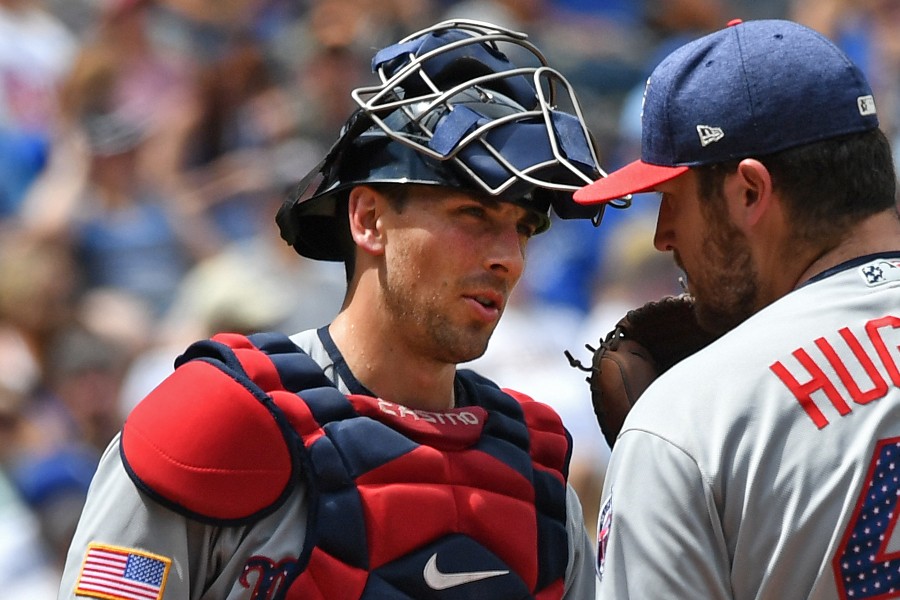 As I noted in an article earlier this week, Twins rookie reliever Trevor Hildenberger had high praise for the help Castro provided him behind the plate. Dan Gladden, who was one of the interviewers, admitted that he initially questioned the value of framing, but that quickly changed after Castro’s arrival. “I’m not kidding you, after about two months of watching him, yes, I can see it,” Gladden said. That interview is available as a podcast at WCCO. How about we take a closer look at the man in action? Below is some video I slowed down, zoomed in and froze at around the moment Castro caught the ball. Many of these aren’t stolen strikes, they’re just good pitches, but what I’d like to convey here just how little Castro is actually doing. https://twitter.com/TwinsHighlights/status/956374405965385728?ref_src=twcamp%5Eshare%7Ctwsrc%5Em5%7Ctwgr%5Eemail%7Ctwcon%5E7046%7Ctwterm%5E1 Look at how quiet Castro’s body is. Notice how in a lot of these he gets himself into such a tiny crouch that he’s nearly into the fetal position. Even just look at how and where he sets up before the pitch. Most of what he’s doing is simply making sure the umpire gets a good, clean look at the ball. Even when he calls for a ball up in the zone, Castro makes an effort to not get in his own way. You’ll notice he typically catches the ball with his hand about neck level at the highest. At around the 1:10 mark, he catches the pitch basically right in front of his face. If he had gotten up even taller instead, that may have blocked the umpires window ever so slightly. When there is extra movement, it’s usually productive. On the video of Bartolo Colon included (around the 1:41 mark), you see Castro make an ever so subtle lean back toward the batter, the same direction the pitch is breaking, to further enhance the appearance that the ball had spun back into the zone. There were numerous excellent articles written about Castro and framing, but one of the ones I learned the most from was this piece by Mike Berardino from late May. Here’s an excerpt of Taylor Rogers explaining how the little things make a big difference: “When Kintzler is throwing and Castro sets up outside to a righty, he angles himself back into the plate,” Rogers said. “Not a lot, but just enough. I think that frees him up to bring that two-seamer back. It’s a good visual for the umpire.” Meaning? “That way he’s catching it square on his body,” Rogers said. “It might not be on the plate, but to the umpire it looks like he caught it right on his chest.” Old-school fans like to mock pitch-framing, but to the guys that throw baseballs for a living, it’s a very real thing. “Over time and throughout a game, the impact that has is huge,” Rogers said. “It’s one of those things that go unseen that are big, and I like that kind of stuff. It just allows you to have comfort and confidence out there that he can steal one every now and then.” Per Baseball Prospectus, Castro ranked 32nd among the 110 catchers in Called Strikes Above Average last season. A lot of the statistical side of framing has more to do with the guy in front of and the guy behind the catcher than it does the receiver himself. Pitchers have to at least come close to hitting their spots and the umpires have to fall for the presentation. But either way, it’s great to see Castro still post an above-average mark in that metric. There are a couple things I’d like to point out before we finish up. First, all the pitches included in the video compilation were called third strikes. I’d imagine a lot of Castro’s best work is not included in that sample, but those are the easiest pitches to find highlights for. And second, in digging through stuff I found a number of really great frame jobs by Chris Gimenez. I’d imagine every catcher in baseball is working very hard at framing these days.
 -
I don't believe that $50 million mark has anything to do with the team signing the player, but this system is brand new and I could be wrong. I think that mark comes into play in regard to what the team the player is departing from receives. If Cobb/Lynn sign for more than $50 million, the Rays and Cards will get a better compensation pick.
- 87 replies
-
- 1
-
-
- yu darvish
- alex cobb
- (and 3 more)
-
That's definitely part of the factor, but under the new system the Twins would lose their third and fourth picks. In the 2018 Draft, that would be their "Competitive Balance Round B" pick (No. 75 overall) and their third-round pick (No 94). There will certainly be talented players available in those spots, but the Twins have a very deep system right now, and are in a good position to lose picks for the right players. Not saying Cobb and Lynn are those guys, just saying.
- 87 replies
-
- 3
-
-
- yu darvish
- alex cobb
- (and 3 more)
-
LaVelle has reported on it now, but only adds that "a source close to Perkins confirmed late Tuesday that he would be interested in working with the club in that (front office) capacity." Odd way for things to end, even if it was somewhat expected. I can't imagine he's too pleased that Levine spilled the beans. Would've been nice to announce at TwinsFest or something like that so fans had an opportunity to show him some love, but what is done is done, I guess.
-
It’s possible both Alex Cobb and Lance Lynn end up costing roughly the same amount combined as Yu Darvish all on his own. Add to the top or aim for depth? Which of those strategies would you prefer the Twins take when it comes to upgrading their rotation?I threw this idea out on Twitter last Friday. I figured it was possible a total investment of $120 million may be able to net a team Darvish alone or the combination of both Cobb and Lynn. ... and it doesn't sound like they'll go nuts for either of those two. MLB Trade Rumors noted that Cobb has already lowered his asking price from $100 million down to $70 million. This was just me spitballing some numbers, so it’s entirely possible that none of those three pitchers sign for anything close to the deals I threw out there, but just play along and let me know which of those two options you’d prefer. Click here to view the article
- 87 replies
-
- 4
-
-
- yu darvish
- alex cobb
- (and 3 more)
-
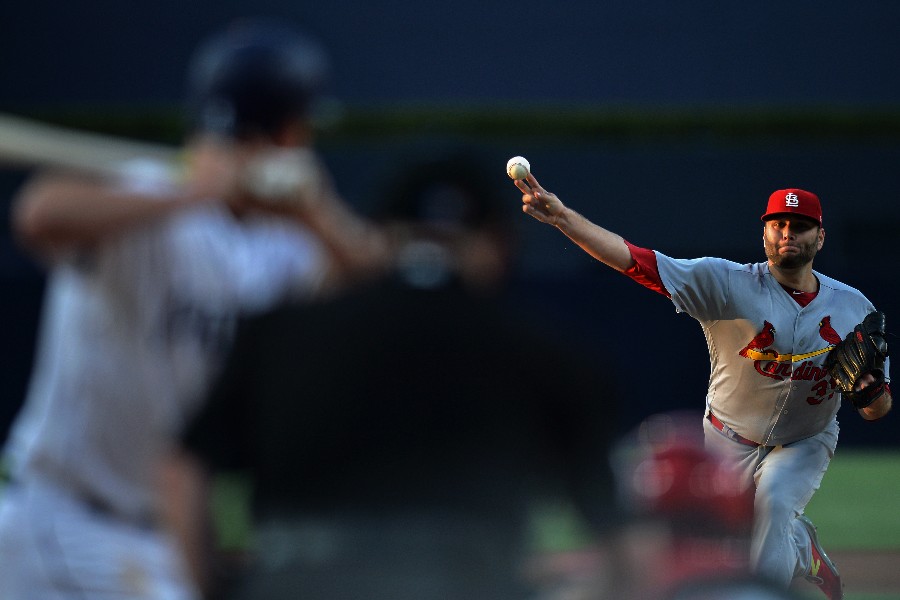 I threw this idea out on Twitter last Friday. I figured it was possible a total investment of $120 million may be able to net a team Darvish alone or the combination of both Cobb and Lynn. https://twitter.com/BaseballByTom/status/954443473373007872?ref_src=twcamp%5Eshare%7Ctwsrc%5Em5%7Ctwgr%5Eemail%7Ctwcon%5E7046%7Ctwterm%5E1 The poll got 432 votes and ended up as a 50/50 split, so I thought it was worth revisiting here. I'll let you all break the tie. It's worth noting that since the length of the deals being different, the annual average values didn’t match perfectly. Darvish at five years, $120 million would cost $24 million per season. Cobb and Lynn both at four years, $60 million works out to a total of $30 million a year. There were people on Twitter shocked with the results on both sides. Some thought it was obvious the Cobb/Lynn duo was best because of insurance. They were a little worried about putting all their eggs in one basket. Another argument from that side was extra depth made it more likely the Twins could win the AL Central, as opposed to competing for the Wild Card again. This crowd also seemed less trusting of Kyle Gibson and Adalberto Mejia. The pro Darvish crowd was mainly preaching the importance of adding a true top of the rotation starter. But there were a few people who also made the case that adding two middle of the rotation guys would be unnecessary due to Trevor May’s return and the emergence of guys like Stephen Gonsalves, Fernando Romero and Zack Littell. Personally, going all in for Darvish is the option I'd prefer for that exact reason. For what it’s worth, Mike Berardino of the Pioneer Press sent out a couple Tweets earlier today relevant to this discussion: https://twitter.com/MikeBerardino/status/955846806235205633?ref_src=twcamp%5Eshare%7Ctwsrc%5Em5%7Ctwgr%5Eemail%7Ctwcon%5E7046%7Ctwterm%5E1 So it seems like the Twins aren't willing to go much beyond the $120 million I threw out there for Darvish ... https://twitter.com/MikeBerardino/status/955847872683048961?ref_src=twcamp%5Eshare%7Ctwsrc%5Em5%7Ctwgr%5Eemail%7Ctwcon%5E7046%7Ctwterm%5E1 ... and it doesn't sound like they'll go nuts for either of those two. MLB Trade Rumors noted that Cobb has already lowered his asking price from $100 million down to $70 million. This was just me spitballing some numbers, so it’s entirely possible that none of those three pitchers sign for anything close to the deals I threw out there, but just play along and let me know which of those two options you’d prefer.
 -
Both Torii Hunter and LaTroy Hawkins said similar things about their own kids during TwinsFest; that they'll listen to anybody but dad. I believe Royce Lewis said something along those same lines during his interview with Sid and Co., so it's possible maybe those really young and talented guys haven't really had to go deeper than that yet.
- 32 replies
-
- 1
-
-
- zack granite
- kyle gibson
- (and 3 more)
-
From the original report, the news that's out there is nothing close to an official retirement announcement. This was a radio station relaying something Thad Levine said. Or maybe said. They don't even sound that confident ... I would feel a lot better about this if something came out from Glen or at least one of the main beat writers, but what do I know?
-
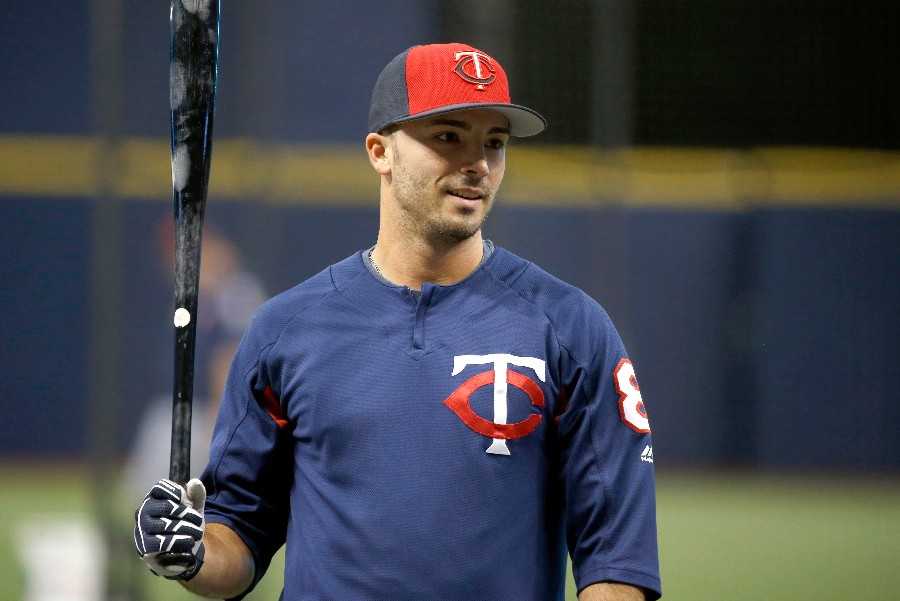
TwinsFest is a great destination for fans to gather, meet the players and maybe score a few autographs, but it’s also the source of a lot of great information. WCCO did an amazing job providing coverage from the event, and made tons of interviews available online. Here’s some of the quotes I found to be most interesting ...I encourage you to check out the full interviews for yourself, there are hours of audio available online. All of the Friday content is available on the Sports to the Max page, Saturday’s interviews are on Steve Thompson and Eric Nelson’s page and the Sunday talks are on Sports Huddle with Sid and Dave. Naturally, there were a lot of common themes that came up, one of which was getting to the playoffs and the team’s goals for next season. Let’s start off with my favorite quote from the entire weekend … Zack Granite on playing the Yankees in the Wild Card game: “It was a really cool moment for me, I had a lot of family there, but I’m tired of them now. I want to kick their ass next year.” Jose Berrios on goals for 2018: “When you taste a game like that – playoffs – you want to be there for the rest of your career. So now, we go to Spring Training with that expectation. We’re going to prepare our bodies and our minds for October.” It was also really interesting to hear some of the pitchers touch on their past struggles, lessons they’ve learned and ways they approach the game Kyle Gibson on his second-half surge: “I really found my fastball. I found some trust in my fastball. I always had trust in the sinker, but I don’t know that I knew exactly what that meant. But then I found some trust in my four seamer as well. I think what that allowed me to do is use four seamers early, just throw the tar out of it all the time, and get ahead of guys with that. Everything played off of that a lot better.” Ryan Pressley on routines: “A lot of big league players will tell you it’s all about setting a routine. I didn’t even know how to set a routine until two years ago and I’ve been up here for a while. It’s finally starting to click and I was finally able to get stuff done. Last year when (Matt) Belisle came in, watching him go about his day was impressive. It was really fun to watch, and that’s why he’s got 12 years in the big leagues. He goes about his business and does it the right way. That’s what I want to learn from these guys (the new free agents) coming in here.” Trevor Hildenberger on adjusting to the majors: “You hear so much about the strike zone and how small it is and how small it can be for rookies. But ( Jason) Castro really made a huge impact stealing strikes for me, framing pitches. He was getting me calls that I thought I had no business getting. So the ability to frame pitches I didn’t realize was such a huge factor until I got to the big leagues.” Trevor May on Tommy John surgery: “(Ryan) Vogelsong, he gave me a really, really detailed rundown of the first couple months … He was like here’s some things you really need to focus on, things that worked for me and are the reason why I’m still going strong.” And May on rejoining the Twins: “If you’re doing your job. and where you need to be, it all shakes out in the end. It doesn't matter how quickly for me it happens, I just want to make sure when I’m here it’s go time and it’s not like ‘you’re rehabbing from Tommy John,’ it’s ’you’re part of the team Tommy John’s behind you.’” J.T. Chargois on his health: “I’m feeling good right now. I think that through spring training last year I developed a little mechanical glitch in my follow through and through a lot of video analysis I’ve broken that done and figured it out. So my arm’s doing well and I’m ready for spring.” Zach Duke on his strengths: “My strength is randomness. I throw from a couple different arm angles, I’ve got about eight different pitches and when I’m on I feel like I can throw any of them at any time” It was also interesting to hear some of the hitters talk about adjustments and their approach at the plate. Byron Buxton on adjustments: “Not really being able to fail back in high school and in little league, it was very tough for me once I got up here. All the negative thoughts start coming, and that was a first for me. That’s what it took for me to realize I’ve got to make adjustments in this game and you’ve got to make some changes. Finally I got strong enough mentally to realize I can handle this and change my swing.” Max Kepler on the mental side of the game: “The mind is powerful, and it can get in the way of baseball, for sure.” Brent Rooker on Brian Dozier: “The whole thing about hitting to me is just trying to make your body work as efficiently as you can to get everything out of your ability and everything out of your strengths. So you look at a guy like Brian who’s maybe not the biggest guy, but who hit 40 something home runs a few years ago, who continually hits 25-plus home runs, he’s got to be doing something right. He’s learned how to use his body and use his swing and his mechanics to get the most out of his athleticism, most out of his strength, most out of his talents, which is something I really respect.” Alex Kirilloff on the type of hitter he is: “I try to be as well-rounded as I can. I’m not a real big mechanical guy. I focus a lot on timing and vision. That’s taken me a long way, I’ve worked on that from a very young age and that’s brought me a lot of success so far.” And, of course, there was some great stuff from the coaching staff. Manager Paul Molitor on dealing with personalities: “We try to make these guys better, but whatever you want to call it — new generations, millennials — you have to try to find what clicks for them and what gets them going. I’ve done more millennial studying than you’d want to know about, to be honest with you, but you try to get in there and certainly the relationships are as important part of today’s game.” Hitting coach James Rowson on the young hitters: “They just need more at bats. The more experience they get, the better they get. So I think last year was a chance to give them a chance to fail, give them a chance to go out there and be themselves and not worry about what they do wrong but try to stay positive with them and let them do what they do right.” And Rowson specifically talking about Buxton: “It was never really about the leg kick in our discussions ... I always say ‘you can’t fire a cannon from a canoe’… If you’re not strong in your lower half, you’re not going to be able to execute that swing consistently. So what we talked about with him was just getting to a point where he was stronger on his legs. He could feel his legs and he could feel like he was grounded when he was going to take a swing. He started to feel that by eliminating the leg kick a little bit at first. It gave him the feeling that he needed … once he got that feeling, I told him ‘go out there and be an athlete and do the best you can. Don’t think about it, just go out there and react.’” Outfield instructor Jeff Pickler on helping players improve: “The neat thing about our outfield group is that it’s not so much what I’m telling them, it’s things they’re coming to us saying they want to do better.” Pitching coach Garvin Alston on how he got into the business: “I wasn’t sure if this was the direction I wanted to go in, or if I wanted to go back into teaching and doing things of that nature. So what ended up happening was a player, Andrew Bailey ... at that time (2008) was struggling through some things and we worked. And we worked hard. And in doing so, I saw him turn a corner and get better. And I said ‘you know what? This is fun, being able to help.’” Third base coach Gene Glynn on Alson: “He’s an up-beat, real positive high-energy guy. Really smart, very intelligent and organized.” Glynn also pointed out that he was Alston's very first professional manager. He as at the helm of the Bend Rockies back in 1992, which also happened to be where Alston made his debut after being drafted in the 10th round earlier that year. There was also some interesting talk of payroll and potential transactions, as you’d expect for this time of year. Brian Dozier, responding to a question from Sid Hartman regarding a potential extension: “I knew you were going to ask me that. I do want to stay here. That stuff takes care of itself. I’m sure we’ll talk in spring training just to see where both sides are at.” Owner Jim Pohlad on the budget: “We set an overall budget, we don’t sit down and just spend all the time just on player payroll … There’s just a number put in there and it’s not like ‘ok this is the number you guys have to spend, go spend it or not.’ We build in I would think a not conservative number for sure, a more aggressive number.” Mike Berardino of the Pioneer Press wrote in length about Pohlad and CEO Dave St. Peter's comments regarding Yu Darvish over the weekend. If you went to TwinsFest, please share anything interesting you overheard, or your experiences from the event in the comments. Click here to view the article
- 32 replies
-
- 7
-
-
- zack granite
- kyle gibson
- (and 3 more)
-
 I encourage you to check out the full interviews for yourself, there are hours of audio available online. All of the Friday content is available on the Sports to the Max page, Saturday’s interviews are on Steve Thompson and Eric Nelson’s page and the Sunday talks are on Sports Huddle with Sid and Dave. Naturally, there were a lot of common themes that came up, one of which was getting to the playoffs and the team’s goals for next season. Let’s start off with my favorite quote from the entire weekend … Zack Granite on playing the Yankees in the Wild Card game: “It was a really cool moment for me, I had a lot of family there, but I’m tired of them now. I want to kick their ass next year.” Jose Berrios on goals for 2018: “When you taste a game like that – playoffs – you want to be there for the rest of your career. So now, we go to Spring Training with that expectation. We’re going to prepare our bodies and our minds for October.” It was also really interesting to hear some of the pitchers touch on their past struggles, lessons they’ve learned and ways they approach the game Kyle Gibson on his second-half surge: “I really found my fastball. I found some trust in my fastball. I always had trust in the sinker, but I don’t know that I knew exactly what that meant. But then I found some trust in my four seamer as well. I think what that allowed me to do is use four seamers early, just throw the tar out of it all the time, and get ahead of guys with that. Everything played off of that a lot better.” Ryan Pressley on routines: “A lot of big league players will tell you it’s all about setting a routine. I didn’t even know how to set a routine until two years ago and I’ve been up here for a while. It’s finally starting to click and I was finally able to get stuff done. Last year when (Matt) Belisle came in, watching him go about his day was impressive. It was really fun to watch, and that’s why he’s got 12 years in the big leagues. He goes about his business and does it the right way. That’s what I want to learn from these guys (the new free agents) coming in here.” Trevor Hildenberger on adjusting to the majors: “You hear so much about the strike zone and how small it is and how small it can be for rookies. But ( Jason) Castro really made a huge impact stealing strikes for me, framing pitches. He was getting me calls that I thought I had no business getting. So the ability to frame pitches I didn’t realize was such a huge factor until I got to the big leagues.” Trevor May on Tommy John surgery: “(Ryan) Vogelsong, he gave me a really, really detailed rundown of the first couple months … He was like here’s some things you really need to focus on, things that worked for me and are the reason why I’m still going strong.” And May on rejoining the Twins: “If you’re doing your job. and where you need to be, it all shakes out in the end. It doesn't matter how quickly for me it happens, I just want to make sure when I’m here it’s go time and it’s not like ‘you’re rehabbing from Tommy John,’ it’s ’you’re part of the team Tommy John’s behind you.’” J.T. Chargois on his health: “I’m feeling good right now. I think that through spring training last year I developed a little mechanical glitch in my follow through and through a lot of video analysis I’ve broken that done and figured it out. So my arm’s doing well and I’m ready for spring.” Zach Duke on his strengths: “My strength is randomness. I throw from a couple different arm angles, I’ve got about eight different pitches and when I’m on I feel like I can throw any of them at any time” It was also interesting to hear some of the hitters talk about adjustments and their approach at the plate. Byron Buxton on adjustments: “Not really being able to fail back in high school and in little league, it was very tough for me once I got up here. All the negative thoughts start coming, and that was a first for me. That’s what it took for me to realize I’ve got to make adjustments in this game and you’ve got to make some changes. Finally I got strong enough mentally to realize I can handle this and change my swing.” Max Kepler on the mental side of the game: “The mind is powerful, and it can get in the way of baseball, for sure.” Brent Rooker on Brian Dozier: “The whole thing about hitting to me is just trying to make your body work as efficiently as you can to get everything out of your ability and everything out of your strengths. So you look at a guy like Brian who’s maybe not the biggest guy, but who hit 40 something home runs a few years ago, who continually hits 25-plus home runs, he’s got to be doing something right. He’s learned how to use his body and use his swing and his mechanics to get the most out of his athleticism, most out of his strength, most out of his talents, which is something I really respect.” Alex Kirilloff on the type of hitter he is: “I try to be as well-rounded as I can. I’m not a real big mechanical guy. I focus a lot on timing and vision. That’s taken me a long way, I’ve worked on that from a very young age and that’s brought me a lot of success so far.” And, of course, there was some great stuff from the coaching staff. Manager Paul Molitor on dealing with personalities: “We try to make these guys better, but whatever you want to call it — new generations, millennials — you have to try to find what clicks for them and what gets them going. I’ve done more millennial studying than you’d want to know about, to be honest with you, but you try to get in there and certainly the relationships are as important part of today’s game.” Hitting coach James Rowson on the young hitters: “They just need more at bats. The more experience they get, the better they get. So I think last year was a chance to give them a chance to fail, give them a chance to go out there and be themselves and not worry about what they do wrong but try to stay positive with them and let them do what they do right.” And Rowson specifically talking about Buxton: “It was never really about the leg kick in our discussions ... I always say ‘you can’t fire a cannon from a canoe’… If you’re not strong in your lower half, you’re not going to be able to execute that swing consistently. So what we talked about with him was just getting to a point where he was stronger on his legs. He could feel his legs and he could feel like he was grounded when he was going to take a swing. He started to feel that by eliminating the leg kick a little bit at first. It gave him the feeling that he needed … once he got that feeling, I told him ‘go out there and be an athlete and do the best you can. Don’t think about it, just go out there and react.’” Outfield instructor Jeff Pickler on helping players improve: “The neat thing about our outfield group is that it’s not so much what I’m telling them, it’s things they’re coming to us saying they want to do better.” Pitching coach Garvin Alston on how he got into the business: “I wasn’t sure if this was the direction I wanted to go in, or if I wanted to go back into teaching and doing things of that nature. So what ended up happening was a player, Andrew Bailey ... at that time (2008) was struggling through some things and we worked. And we worked hard. And in doing so, I saw him turn a corner and get better. And I said ‘you know what? This is fun, being able to help.’” Third base coach Gene Glynn on Alson: “He’s an up-beat, real positive high-energy guy. Really smart, very intelligent and organized.” Glynn also pointed out that he was Alston's very first professional manager. He as at the helm of the Bend Rockies back in 1992, which also happened to be where Alston made his debut after being drafted in the 10th round earlier that year. There was also some interesting talk of payroll and potential transactions, as you’d expect for this time of year. Brian Dozier, responding to a question from Sid Hartman regarding a potential extension: “I knew you were going to ask me that. I do want to stay here. That stuff takes care of itself. I’m sure we’ll talk in spring training just to see where both sides are at.” Owner Jim Pohlad on the budget: “We set an overall budget, we don’t sit down and just spend all the time just on player payroll … There’s just a number put in there and it’s not like ‘ok this is the number you guys have to spend, go spend it or not.’ We build in I would think a not conservative number for sure, a more aggressive number.” Mike Berardino of the Pioneer Press wrote in length about Pohlad and CEO Dave St. Peter's comments regarding Yu Darvish over the weekend. If you went to TwinsFest, please share anything interesting you overheard, or your experiences from the event in the comments.
 -
I was too. I didn't realize how bad things have gotten the past five or so years. Last year's quickest team (St. Louis at 22.7) would've ranked 20th back in 2011. Last season 11 teams exceeded 24 seconds on average compared to just one team in 2011.
-
Sorry to poor salt on your wound, but I just saw another one at the "Buy It Now" price of $200.
-
I'm not sure what the league average is, but here are some more numbers: Twins Avg. pace: 24.8 seconds (eight slowest in baseball) Avg. pitches/game: 145 Cleveland Avg. pace: 24.0 Avg. pitches/game: 142 So a 20-second pitch clock in theory would've saved about 21 minutes from the average Twins-Cleveland game last season. I suspect players will find other ways to slow things down, but a pitch clock could make a huge difference. To find the pitcher pace numbers at Fangraphs, go to the Pitch Info tab and click Plate Discipline. Pace should be listed at the far right.
- 103 replies
-
- 1
-
-
- rob manfred
- pace of play
- (and 2 more)
-
This might be a bigger deal than I first imagined. FanGraphs has pitcher pace info. Not a single qualified starter had a pace under 20 seconds last year. The two slowest were Sonny Gray (28.3) and Alex Cobb (27.3). In a game where those two squared off and each threw 100 pitches, the 20-second pitch clock would save 26 minutes. That's even before we apply that same idea to the bullpens, who are even slower. Pedro Baez, Bud Norris and Joaquin Benoit all averaged more than 30 seconds between pitches last year.
- 103 replies
-
- 5
-
-
- rob manfred
- pace of play
- (and 2 more)
-
From the sound of Rosenthal's initial article, the players are somewhat concerned about fan backlash. "But some players, believing the new rules will be unpopular with fans and damaging to the game, want to absolve themselves of responsibility while putting the onus on Manfred to deal with any public fallout and unintended consequences, sources said." It's nice to hear the players are taking the fans into consideration, but they also need to realize that we like to watch baseball. Not guys fidgeting with their caps on the mound or adjusting their batting gloves in the box. We don't need to see you and your catcher discuss every single pitch or a guy who's been warming up in the bullpen for 15 minutes go toss another eight pitches on the mound before play resumes.
- 103 replies
-
- 4
-
-
- rob manfred
- pace of play
- (and 2 more)
-
Isn't it 2:25 right now? If they're going to make a stink about it, might as well slice it down more than that. I appreciate the fact that Commissioner Manfred is open to tinkering with some things in hopes of making improvements, but if he pisses off the MLBPA over a bunch of petty changes that's really going to be a drag.
-
I wouldn't have a problem with a pitch clock and restricted visits but, 1) I'll be pretty upset if this dispute causes some kind of labor issues, and 2) there are better ways to speed up the game. How about cutting the time between half innings? Also, for me the main frustration when a game takes longer is that it ends later. There comes a certain point on a weeknight where I've just gotta pull the plug and head home/go to bed so I'm not a wreck at work the next day. Why not start the games at 6, or at least 6:30, instead of 7:10?
- 103 replies
-
- 5
-
-
- rob manfred
- pace of play
- (and 2 more)
-
Welcome to Twins Weekly. This feature intends to help readers discover anything they may have missed, encourage prospective writers to get active and provide readers an opportunity to offer up requests for content. We finally had another move to talk about this week, as the Twins signed reliever Addison Reed.Let’s take a quick look back at all the articles from the front page in the order they were published. This edition of Twins Weekly covers Friday, Jan. 12-Thursday, Jan. 18. The Time For A Buxton Extension Is Now - Nick Nelson Looking Back: Twins Draft Kirby Puckett - Seth Stohs Twins Arbitration Notes - Seth Stohs Rosenthal: Twins Agree to Deal With Addison Reed - Tom Froemming Exploring The Back-End Of The 40-Man Roster - Cody Christie The Twins Almanac for January 14–20 - Matt Johnson Still A Few Dozen Tickets Left To See Joe Nathan At The Winter Meltdown! - John Bonnes Gleeman & The Geek: Ep 351: Addison Reed! - John Bonnes Joe Nathan, Fernando Rodney, And History - Nick Nelson SethSpeaks Podcast (Episode 2) Features 1st-Rounders Lewis, Rooker, Kirilloff - Seth Stohs Twelve's A Crowd: Twins Are Rolling In Relief - Nick Nelson Each Minnesota Team’s Greatest Finish - Cody Christie Not So Fast: Is Eddie Rosario Already Losing a Step? - Tom Froemming Get To Know Twins Third Base Prospect Andrew Bechtold - Seth Stohs Three Twins Breakout Candidates For 2018 - Cody Christie Twins Daily Blogs Below are some additional items of note from the blog area. I've pulled excerpts from each piece in an attempt to hook you in. Why Yu Darvish Will Be Cheaper Than Everyone Thinks By Andrew Thares In years past, the available marquee free agents were almost exclusively signed by the richest teams in baseball. In fact, 9 of the 20 richest contracts in MLB history were signed by either the Yankees, Dodgers or Red Sox. However, as MLB front offices are starting to get smarter, they are starting to learn that these big time free agent contracts are almost never worth it in the long run. As a result, teams are starting to shift their focus toward lower tier free agents they can sign to short term, and more reasonably priced contracts, like relievers. New Approach on Signing Yu Darvish By jharaldson My idea is for the Twins to offer Darvish a massively over-market contract for 1 year. Here are the details: -1 year/$40 million -Vesting team option for a second year at $15 million if Darvish does not pitch at least 100 innings. -Majority of the $40 million is in the form of a signing bonus so as to allow a tax favorable payment to Darvish with his current residency being in Texas, a state with no income tax. The Reed Option By Jamie Cameron Reed joins a Twins bullpen shaping up to be vastly different, and potentially much improved over its 2017 iteration. In addition to returning standout Trevor Hildenberger, the Twins have added Fernando Rodney, presumably filling the vacant ninth inning role, and Zach Duke, returning from an injury-plagued 2017 season. In the former trio, the Twins seem to have established a model for the traits they are pursuing in improving their bullpen; inducing ground balls and a lot of strikeouts, hardly a pioneering recipe for success. In Reed however, they have added a pitcher who generates more fly balls, so what about Reed has made him such a consistent a reliable late inning reliever? Mitch Garver & Zack Granite back in CR for Winter Caravan By SD Buhr Garver played in 120 games for the 2014 version of the Kernels and hit for a .298 average. His career has steadily progressed each year since. Granite's time in Cedar Rapids was cut short by injury in 2014, but he returned in 2015 and immediately hit so well that he earned a quick promotion to Class A Advanced Fort Myers. Wanting to make the most of what time I had with each player, I asked them both the same question to kick off the interviews. If you could go back in time, knowing what you know now, and give the Cedar Rapids Kernels version of yourself one piece of advice, what would it be? 2018 Breakout Candidate: Stephen Gonsalves By Lenzy2108 Gonsalves' batted ball data in minors suggests that he is a flyball pitcher, which isn't a huge deal as Target Field is a pitchers park and...well...you know...Buxton/Rosario/Kepler. But what impressed me even a little more is that hitters don't hit him well. At levels where he made 15+ starts his LD% are as follows: 17.2% (2015 High A), 13% (2016 High A), 18.1% (2016 AA), and 19.2% (2016 AA) which are all below the MLB average of 21%. Admittedly, I know this is a little bit of apples and oranges using a MLB average to analyze minor league numbers, but I do think it gives you a gauge for where he's at. Again, Target Field tends to treat fly ball pitchers well especially with our defense...another positive sign that this could be his year. Prospects for 2018 By Physics Guy The 2018 Twins have significantly fewer holes than the 2013 squad. It was a challenge to come up with ten players who have a chance to debut and rank them according to their potential to help this year's team. All players on this list would be making their big league debut. Video of the Week Check out this sweet, sweet tater mashed by Twins pitcher Mudcat Grant in Game 6 of the 1965 World Series. Here's the Baseball-Reference box score for that game. eBay Item of the Week Speaking of the 1965 World Series, take a look at this beaut. This is a Red Wing Pottery commemorative ashtray. The current bid at the time of posting was $51, but that's sure to rise now that it's "as seen on on Twins Weekly." Quite the way to remember a great season ... I guess. Download attachment: TwinsAshtray.png Additional Links Prospect Retrospective: The Career Of Justin Morneau By John Sickels of Minor League Ball I also had a very enthusiastic report from a scout who called Morneau “a young Larry Walker.” I made sure to put him in the book, writing that “Morneau probably won’t stay at catcher because his mobility is limited, but he definitely has enough power to handle first base. He’s a long-term prospect and his grade (C+) reflects that, but I have a good gut feeling about him.” Twins front office brings in the brainpower By Patrick Reusse of the Star Tribune The Twins have added 40-plus positions to the baseball department since Falvey took over and “several million dollars’’ to the staff payroll. They will be adding more jobs over the course of 2018. Should the Twins be worried about Fernando Rodney? By Mike Berardino of the Pioneer Press Wednesday marked Rodney’s fourth outing for Escogido in the round-robin playoffs. Just one of those appearances has been scoreless, leaving Rodney with a 15.00 earned run average, six walks and four hits allowed through three innings. Highlights from the 2018 TwinsFest schedule By Maija Varda of Twinkie Town Twins top prospect Royce Lewis will kick off his first TwinsFest experience by being paired with Joe Mauer at an autograph table on Friday from 4:15 pm to 5:15 pm. Will Joe carry on Harmon Killebrew’s legacy by directly chastising Royce for illegible autographs, or will he just passively aggressively comment on how fast Royce signs his name? We all know it will be the latter. Minnesota Twins: 5 best middle infield duos in team history By Nate Palmer of Puckett’s Pond Unfortunately for the past decade or so of Twins baseball, we have often observed some less than stellar middle infields. Several of those middle infields we have experienced have been downright frustrating. A lot of the reason for that frustration begins and ends with the revolving door at shortstop. In fact, 2018 may mark the second time since 2005 that the Twins will have the same Opening Day shortstop as they did the previous year. (Please, please baseball gods don’t turn this into a jinx!) More Podcasts Baseball is Good Episode #31 Ryan Turnquist By Cory Englehardt Ryan is a huge MN sports fan and we will talk baseball, sports, growing up a sports fan and anything else that comes our way. Please give it a listen! MWS: Mike Berardino Reveals His Hall of Fame Ballot By Brandon Warne of Zone Coverage In this episode of Midwest Swing, Brandon catches up with Mike Berardino (@MikeBerardino) of the St. Paul Pioneer Press to reveal his Hall of Fame ballot. T&L Supershow ep. 53 By Twins and Losses This week Dan and Panda cover all of the recent MLB free agency moves, along with what the Twins have been up to. Then they take a trip to the local retirement home and break out #OldFriend Barry Campbell to talk about the Minnesota Wild, and answer a thousand fan questions that you sent in! Calling All Bloggers!!! One of the biggest obstacles to overcome when writing is figuring out just what the heck to write about. Well, here’s a topic to consider … What was your favorite Twins team? Not necessarily who you think was the best team ever, but which year do you have the fondest memories of or the strongest bond to? Just to be clear, this simply an idea I'm throwing out there to consider. Reminder: Anyone can start a blog at Twins Daily. If you're interested in being a regular writer for the site, the blog section is how you get your foot in the door. The only reason you're reading my words right now is because I started my own blog at Twins Daily. Calling All Readers!!! I don’t want to leave you out, either. If there's anything you'd love to read about next week, please let us know in the comments. OK, that does it. Enjoy TwinsFest and the Winter Meltdown if you're attending. Twins Weekly will continue to be posted every Friday morning at the site. Have a wonderful weekend everyone. Click here to view the article
-
 Let’s take a quick look back at all the articles from the front page in the order they were published. This edition of Twins Weekly covers Friday, Jan. 12-Thursday, Jan. 18. The Time For A Buxton Extension Is Now - Nick Nelson Looking Back: Twins Draft Kirby Puckett - Seth Stohs Twins Arbitration Notes - Seth Stohs Rosenthal: Twins Agree to Deal With Addison Reed - Tom Froemming Exploring The Back-End Of The 40-Man Roster - Cody Christie The Twins Almanac for January 14–20 - Matt Johnson Still A Few Dozen Tickets Left To See Joe Nathan At The Winter Meltdown! - John Bonnes Gleeman & The Geek: Ep 351: Addison Reed! - John Bonnes Joe Nathan, Fernando Rodney, And History - Nick Nelson SethSpeaks Podcast (Episode 2) Features 1st-Rounders Lewis, Rooker, Kirilloff - Seth Stohs Twelve's A Crowd: Twins Are Rolling In Relief - Nick Nelson Each Minnesota Team’s Greatest Finish - Cody Christie Not So Fast: Is Eddie Rosario Already Losing a Step? - Tom Froemming Get To Know Twins Third Base Prospect Andrew Bechtold - Seth Stohs Three Twins Breakout Candidates For 2018 - Cody Christie Twins Daily Blogs Below are some additional items of note from the blog area. I've pulled excerpts from each piece in an attempt to hook you in. Why Yu Darvish Will Be Cheaper Than Everyone Thinks By Andrew Thares In years past, the available marquee free agents were almost exclusively signed by the richest teams in baseball. In fact, 9 of the 20 richest contracts in MLB history were signed by either the Yankees, Dodgers or Red Sox. However, as MLB front offices are starting to get smarter, they are starting to learn that these big time free agent contracts are almost never worth it in the long run. As a result, teams are starting to shift their focus toward lower tier free agents they can sign to short term, and more reasonably priced contracts, like relievers. New Approach on Signing Yu Darvish By jharaldson My idea is for the Twins to offer Darvish a massively over-market contract for 1 year. Here are the details: -1 year/$40 million -Vesting team option for a second year at $15 million if Darvish does not pitch at least 100 innings. -Majority of the $40 million is in the form of a signing bonus so as to allow a tax favorable payment to Darvish with his current residency being in Texas, a state with no income tax. The Reed Option By Jamie Cameron Reed joins a Twins bullpen shaping up to be vastly different, and potentially much improved over its 2017 iteration. In addition to returning standout Trevor Hildenberger, the Twins have added Fernando Rodney, presumably filling the vacant ninth inning role, and Zach Duke, returning from an injury-plagued 2017 season. In the former trio, the Twins seem to have established a model for the traits they are pursuing in improving their bullpen; inducing ground balls and a lot of strikeouts, hardly a pioneering recipe for success. In Reed however, they have added a pitcher who generates more fly balls, so what about Reed has made him such a consistent a reliable late inning reliever? Mitch Garver & Zack Granite back in CR for Winter Caravan By SD Buhr Garver played in 120 games for the 2014 version of the Kernels and hit for a .298 average. His career has steadily progressed each year since. Granite's time in Cedar Rapids was cut short by injury in 2014, but he returned in 2015 and immediately hit so well that he earned a quick promotion to Class A Advanced Fort Myers. Wanting to make the most of what time I had with each player, I asked them both the same question to kick off the interviews. If you could go back in time, knowing what you know now, and give the Cedar Rapids Kernels version of yourself one piece of advice, what would it be? 2018 Breakout Candidate: Stephen Gonsalves By Lenzy2108 Gonsalves' batted ball data in minors suggests that he is a flyball pitcher, which isn't a huge deal as Target Field is a pitchers park and...well...you know...Buxton/Rosario/Kepler. But what impressed me even a little more is that hitters don't hit him well. At levels where he made 15+ starts his LD% are as follows: 17.2% (2015 High A), 13% (2016 High A), 18.1% (2016 AA), and 19.2% (2016 AA) which are all below the MLB average of 21%. Admittedly, I know this is a little bit of apples and oranges using a MLB average to analyze minor league numbers, but I do think it gives you a gauge for where he's at. Again, Target Field tends to treat fly ball pitchers well especially with our defense...another positive sign that this could be his year. Prospects for 2018 By Physics Guy The 2018 Twins have significantly fewer holes than the 2013 squad. It was a challenge to come up with ten players who have a chance to debut and rank them according to their potential to help this year's team. All players on this list would be making their big league debut. Video of the Week Check out this sweet, sweet tater mashed by Twins pitcher Mudcat Grant in Game 6 of the 1965 World Series. Here's the Baseball-Reference box score for that game. eBay Item of the Week Speaking of the 1965 World Series, take a look at this beaut. This is a Red Wing Pottery commemorative ashtray. The current bid at the time of posting was $51, but that's sure to rise now that it's "as seen on on Twins Weekly." Quite the way to remember a great season ... I guess. Additional Links Prospect Retrospective: The Career Of Justin Morneau By John Sickels of Minor League Ball I also had a very enthusiastic report from a scout who called Morneau “a young Larry Walker.” I made sure to put him in the book, writing that “Morneau probably won’t stay at catcher because his mobility is limited, but he definitely has enough power to handle first base. He’s a long-term prospect and his grade (C+) reflects that, but I have a good gut feeling about him.” Twins front office brings in the brainpower By Patrick Reusse of the Star Tribune The Twins have added 40-plus positions to the baseball department since Falvey took over and “several million dollars’’ to the staff payroll. They will be adding more jobs over the course of 2018. Should the Twins be worried about Fernando Rodney? By Mike Berardino of the Pioneer Press Wednesday marked Rodney’s fourth outing for Escogido in the round-robin playoffs. Just one of those appearances has been scoreless, leaving Rodney with a 15.00 earned run average, six walks and four hits allowed through three innings. Highlights from the 2018 TwinsFest schedule By Maija Varda of Twinkie Town Twins top prospect Royce Lewis will kick off his first TwinsFest experience by being paired with Joe Mauer at an autograph table on Friday from 4:15 pm to 5:15 pm. Will Joe carry on Harmon Killebrew’s legacy by directly chastising Royce for illegible autographs, or will he just passively aggressively comment on how fast Royce signs his name? We all know it will be the latter. Minnesota Twins: 5 best middle infield duos in team history By Nate Palmer of Puckett’s Pond Unfortunately for the past decade or so of Twins baseball, we have often observed some less than stellar middle infields. Several of those middle infields we have experienced have been downright frustrating. A lot of the reason for that frustration begins and ends with the revolving door at shortstop. In fact, 2018 may mark the second time since 2005 that the Twins will have the same Opening Day shortstop as they did the previous year. (Please, please baseball gods don’t turn this into a jinx!) More Podcasts Baseball is Good Episode #31 Ryan Turnquist By Cory Englehardt Ryan is a huge MN sports fan and we will talk baseball, sports, growing up a sports fan and anything else that comes our way. Please give it a listen! MWS: Mike Berardino Reveals His Hall of Fame Ballot By Brandon Warne of Zone Coverage In this episode of Midwest Swing, Brandon catches up with Mike Berardino (@MikeBerardino) of the St. Paul Pioneer Press to reveal his Hall of Fame ballot. T&L Supershow ep. 53 By Twins and Losses This week Dan and Panda cover all of the recent MLB free agency moves, along with what the Twins have been up to. Then they take a trip to the local retirement home and break out #OldFriend Barry Campbell to talk about the Minnesota Wild, and answer a thousand fan questions that you sent in! Calling All Bloggers!!! One of the biggest obstacles to overcome when writing is figuring out just what the heck to write about. Well, here’s a topic to consider … What was your favorite Twins team? Not necessarily who you think was the best team ever, but which year do you have the fondest memories of or the strongest bond to? Just to be clear, this simply an idea I'm throwing out there to consider. Reminder: Anyone can start a blog at Twins Daily. If you're interested in being a regular writer for the site, the blog section is how you get your foot in the door. The only reason you're reading my words right now is because I started my own blog at Twins Daily. Calling All Readers!!! I don’t want to leave you out, either. If there's anything you'd love to read about next week, please let us know in the comments. OK, that does it. Enjoy TwinsFest and the Winter Meltdown if you're attending. Twins Weekly will continue to be posted every Friday morning at the site. Have a wonderful weekend everyone.
