



Tom Froemming
-
Posts
5,260 -
Joined
-
Last visited
-
Days Won
22
Content Type
Profiles
News
Minnesota Twins Videos
2026 Minnesota Twins Top Prospects Ranking
2022 Minnesota Twins Draft Picks
Minnesota Twins Free Agent & Trade Rumors, Notes, & Tidbits
Guides & Resources
2023 Minnesota Twins Draft Picks
The Minnesota Twins Players Project
2024 Minnesota Twins Draft Picks
2025 Minnesota Twins Draft Pick Tracker
2026 Minnesota Twins Draft Tracker: Picks & Bonuses
Forums
Blogs
Events
Store
Downloads
Gallery
Everything posted by Tom Froemming
-
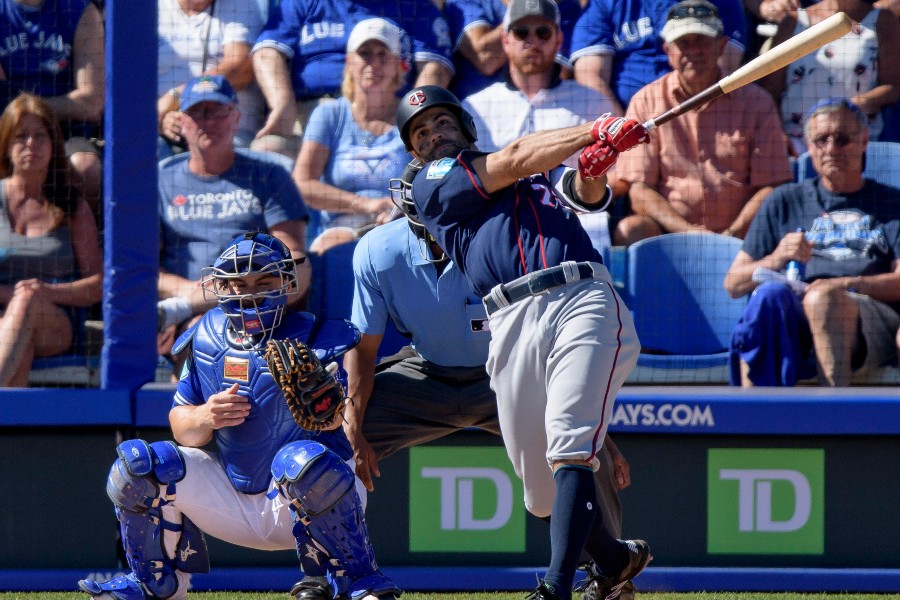 It’s great to see the Twins back on the field, but let’s face it, these games are meaningless. Well, at least for the guys who are already established major leaguers. There are very few spots up for grabs on the 25-man roster, but there are still guys who have a lot to gain from having strong showings down in Fort Myers. This is their chance to be seen by top members of the Twins coaching staff and front office. For the non-roster invitees who are in their mid to late 20s, this also represents an opportunity to showcase their skills to the other 29 MLB teams, not to mention overseas and independent leagues. So who is eligible to be named Sire of Fort Myers? Anybody who’s not on the 40-man roster, even guys with several years of MLB service time, and anyone on the 40-man roster who hasn’t made their MLB debut also qualifies. If you don’t think that crop of players is worth monitoring, I’d beg to differ. But, just to be clear, these guys' chances of breaking camp with the Twins are anywhere from remote to downright unthinkable. This isn't about identifying the player most likely to make the team, it's simply honoring the player who had the most impressive spring training performance. Without further adieu, here are five pitchers and five hitters who have emerged as the early favorites for the title of Sire of Fort Myers: Fernando Romero Romero has gotta be the early frontrunner for the title. He’s pitched five no-hit innings, walked just one batter and has six strikeouts. In his first appearance of the spring, “El Toro” retired Caleb Joseph, Tim Beckham, Jonathan Schoop, Manny Machado, Adam Jones and Trey Mancini in order, all of whom figure to be regulars in the Orioles lineup. Zack Littell Littell is giving Romero a good run for his money so far. In five innings, Littell has given up a run on a pair of hits, but he’s also struck out eight batters and hasn’t issued a walk. He’s gotten the majority of his work late in games, once the MLB regulars have been replaced, but he’s been impressive nonetheless. Stephen Gonsalves Gonsalves started against the Astros in his first official appearance of spring training (the exhibition against the Gophers doesn’t count), and faced a very recognizable lineup from the defending World Series champs. He gave up one run on four hits over 2.2 innings of work. In his other game, Gonsalves managed to pitch around a leadoff double to record a scoreless inning. Jake Reed Reed went unprotected and then unselected in the Rule 5 Draft, but he’s off to a strong start down in Fort Myers. He’s racked up four strikeouts over three scoreless innings. Reed has primarily been working the later innings, so he hasn’t faced many hitters projected to be in the big leagues. Tyler Kinley Being a Rule 5 pick, Kinley is easily the most likely guy on this list to break camp with the Twins. His overall numbers aren’t great, but he’s had to put in some extra work thanks to his defense misplaying a few balls. He’s struck out four batters in four innings while flirting with triple digits on the radar gun, but he’s also surrendered five hits and three walks. LaMonte Wade Wade had his Arizona Fall League experience end with a scary outfield collision that resulted in him suffering a concussion. Just seeing him in camp and healthy is a great thing, but he’s also having no trouble tracking pitches so far this spring. Wade is 6-for-16 with four walks, a .500 on-base percentage. Ryan LaMarre This 29-year-old former outfielder for the Reds, Red Sox and A’s has made quite an early impression. LaMarre is 7-for-15 with a triple and a home run. There’s virtually zero chance he breaks camp with the Twins, even if he maintains his 1.342 OPS through the rest of spring, but it’s guys like him that make the late innings fun to watch. He’ll be playing his guts out. Taylor Featherston Featherston, 28, has also played in the majors for three different clubs: the Angels, Phillies and Rays. He’s 6-for-17 with a pair of doubles and a homer. He fits into the same category as LaMarre, except he’s an infielder. Wyston Sawyer One interesting battle to watch this spring is the one for third catcher. Bobby Wilson is the favorite, as he has more than 300 major league games under his belt, but Sawyer is an interesting name in the mix. At the plate, the 26-year-old is 2-for-5 with a walk and he also threw out the only base runner who attempted to steal on him. Other contenders for the third catcher spot include Jordan Pacheco, Willians Astudillo and Brian Navarreto. Nick Gordon Gordon has had a few miscues in the field, but he’s flashed his extra-base power at the plate. Most of the remarks I’ve seen on Twitter from people seeing “G Cinco” play for the first time are about how skinny he is or how high he wears his socks, but in just nine plate appearances, he already has a double and a triple. There are another dozen or so guys who are contenders for the title of Sire of Fort Myers, but this group of 10 has hit the ground running. If you’ve been following along with the early action, or better yet have already visited Fort Myers, please share your thoughts on anyone who has caught your eye.
 -
Article: Report From The Fort: A Market Squeezed
Tom Froemming replied to John Bonnes's topic in Twins Daily Front Page News
I think they assumed the big market teams would continue to spend over those thresholds despite the penalties. And, to be fair, that's how it's worked up to this point. I think if anybody is hurting the free agent market this year, I think it's these major market teams who are insisting to stay under the threshold. I'd be willing to bet the Dodgers and the Yankees will be investing a smaller percentage of their revenue into payroll than most of the other teams in the league. Yet the union has filed a grievance against some of the smaller market teams for not properly spending their revenue sharing money. Well, you've put caps on draft and international spending, and those teams are never going to convince top free agents to sign, so what are they supposed to do? Sign a bunch of the second-tier free agents to terrible contracts? I guess they could try to funnel that money into extending their young players, but a lot of players and their agents want to get to free agency. -
The Finance Desk: a look at 2018 attendance
Tom Froemming commented on Bryan Borchardt's blog entry in The Circleback Blog
It looked to me like single-game ticket prices increased a bit for this upcoming season, but it's difficult to track that kind of stuff now that they have the demand-based pricing system. -
It was Polanco's grandfather who passed away on June 6. Here's a breakdown of his numbers: Up to that point: .251/.299/.358 (.657 OPS) There through July: .146/.205/.214 (.419 OPS) Aug. to the end of the year: .316/.377/.553 (.931 OPS) That's certainly a legit answer as to why he played so poorly in June and July, but he wasn't exactly on fire before then. Those last two months he was hitting like Seattle-era A-Rod (he hit .309/.374/.561, an OPS of .934, for the Mariners).
-
John Bonnes has led off this year’s Report From The Fort season with a bang, passing along information about new signing Logan Morrison, Brian Dozier’s future and much, much more. As always, there’s been a ton of other great content at the site over the past week. Come check out anything you may have missed.It’s Twins Geek week! Let’s lead things off with all the “Report From The Fort” articles via John from the past week: Spring Training Update: Waiting For The Big Story Report From The Fort: Logan Morrison Is Nice, But BULLPEN CARS Report From The Fort: Mound Visits Brian Dozier: I'll Be A Free Agent Report From The Fort: Logan Morrison Is Staying Quiet (For Once) Report From The Fort: Jake Odorizzi Is Better Than You Think In addition to writing articles, John’s also been recording a quick-hit, free-flowing podcast episode each night. These range between 8-20 minutes, and are chock full off interesting little nuggets and observations from spring training. Here are links to where you can find those: Twins Daily Nightly Wrap - 2/25 Twins Daily Nightly Wrap 2/26 Twins Daily Nightly Wrap - 2/27 Twins Daily Nightly Wrap - Pieces Are In Place Nightly Wrap - Jake Odorizzi, Next Offseason & Jorge Polanco And here are all the other articles that were published at Twins Daily between Friday, Feb. 23 and Thursday, March 1: Twins To Sign Erick Aybar | Seth Stohs Lance Lynn to the Twins? | Andrew Thares Arms Race: Will the Twins Front Office Regret Losing High-Impact Arms? | Jamie Cameron Twins Almanac for February 25–March 3 | Matt Johnson Does the Logan Morrison Signing Make Sense for the Twins? | Tom Froemming Examining Logan Morrison’s Breakout 2017 Season | Cody Christie Twins To Sign DH Logan Morrison | Seth Stohs Gleeman & The Geek: Logan Morrison | John Bonnes On Rushing Pitchers And Taking Lumps | Nick Nelson Missing Pieces? Lost Minor League Players | Cody Christie 2018 Minnesota Twins Roster Projections (1.0) | Seth Stohs Seth Twins On Deck Podcast (Episode 8) | Seth Stohs What's Next For Kennys Vargas? | Seth Stohs Twins Fans Should Be Excited About Jorge Polanco | Tom Froemming An Offense Poised To Do Damage | Ted Schwezler Three-Bagger: DH, Dozier And Destiny| Nick Nelson From the Twins Daily Blogs Below are some additional items of note from the blog area. I've pulled excerpts from each piece in an attempt to hook you in. Building an Ideal Twins Lineup By Andrew Thares After the addition of Logan Morrison over the weekend, it left many in Twins Territory wondering how would he fit into the lineup … This question drew a number of different responses from Twins fans, so I decided to dive into the numbers and construct what I believe to be the ideal Twins lineup. Just as it is worded in the tweet, I took this approach from the perspective that Sano will be able to play third base this season. I also see the lineup being constructed very differently depending on if the Twins are facing a righty or a lefty, so I created a lineup for both. So, let’s get into it. LoMo in SloMo: What Happened to Logan Morrison in 2017? By Jamie Cameron Morrison is a fascinating player. His power surge made him the Statcast poster boy for the 2017 season. Before 2017 Morrison’s career high for HR was 23, in his first full season with the Marlins in 2011. Adjustments in Morrison’s approach at the plate led to an increase in HR from 14 to 38 (albeit with considerably more plate appearances), an increase in OBP from .319 in 2016 to .353 in 2017, and a huge climb in BB%, from 9.3% in 2016, to 13.5% in 2017, (good for 14th in the league among hitters who made at least 500 PA). Per Statcast, Morrison increased his launch angle from 12.1 degrees to 17.4 degrees in 2017 in an attempt to hit more balls in the air. Boy, did that ever work. Along with his adjusted launch angle, how did Morrison’s approach at the plate differ in 2017? Is his 2017 season a sign of things to come, or a statistical anomaly? Nick Gordon and the Tea Leaves By Ted Schwerzler As of this writing, Minnesota will have played five games in Grapefruit League action, and Gordon has competed in three of them. He's started twice, manning the middle of the diamond with Jorge Polanco flanking him at shortstop. Playing second base in all of his action, Dee's brother and Tom's son has provided some interesting messages to read into. The Missing Pieces: Building a Championship Team in Twins Territory By JohnOlson The missing pieces the Twins have left to fill in this puzzle to assemble a championship team are always going to be the most difficult. As a hopeful bystander during the courting of Yu Darvish, the Twins need a true ace. A stopper every fifth day, someone to right the ship when the dog days hit or the bats disappear. A guy who can win a 1-0 game when the team is in a rut. Johan Santana was the last, true ace in Minnesota, and that was over a decade ago. The Astros had not only Keuchel, their homegrown number 1, but also brought in Justin Verlander as a 1A in 2017. The Cubs in 2016 had their three headed monster of Jake Arrieta, Jon Lester and Kyle Hendricks - none of whom had an ERA over 3.10 in the regular season. Even the upstart Royals in 2015 brought in Johnny Cueto to flank their extremely talented and exciting young Yordano Ventura, who before his untimely death, showed promise to be a front line starter for years to come. 2018 Twins Off-Season top 60 Prospect List: Summary 1-60 and Organizational Overview By Thrylos The Twins system is its stronger and more balanced that it has been in years. The years when Sano, Polanco and Buxton were the top prospects, the quality of position players prospects was probably higher than now, but with Lewis, Javier and Rooker on the top 5, this might be challenged as well. The quality of pitching and the potential of pitching prospect is much higher than previous years. Calling All Bloggers!!! Twins Daily readers may have noticed a few new names appearing on the main page of the site. Well, you could be next! If you’ve ever been interested in writing for Twins Daily, there’s no better time than now to get started in the blog section. There is more attention being directed to the blog area than ever before and there will be a strong push for the site to “break camp” with a few new contributors for the 2018 season. I got my start at Twins Daily in the blog section, and would be happy to answer any questions anyone has about the process. Feel free to leave questions in the comments on this article, send me a personal message here on the site or a direct message on Twitter (@BaseballByTom), whatever works best for you. That does it, have a wonderful weekend everyone. Click here to view the article
- 1 reply
-
- 1
-

-
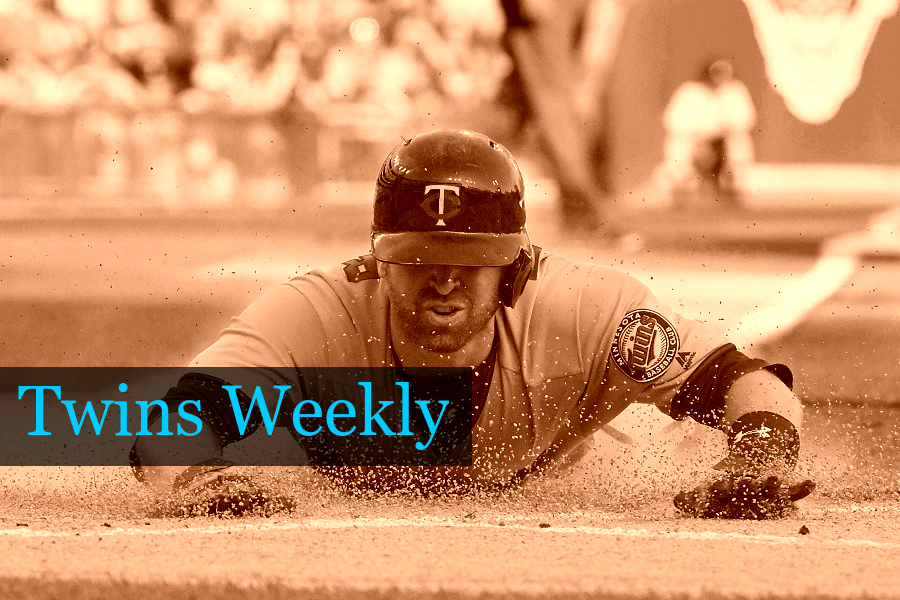 It’s Twins Geek week! Let’s lead things off with all the “Report From The Fort” articles via John from the past week: Spring Training Update: Waiting For The Big Story Report From The Fort: Logan Morrison Is Nice, But BULLPEN CARS Report From The Fort: Mound Visits Brian Dozier: I'll Be A Free Agent Report From The Fort: Logan Morrison Is Staying Quiet (For Once) Report From The Fort: Jake Odorizzi Is Better Than You Think In addition to writing articles, John’s also been recording a quick-hit, free-flowing podcast episode each night. These range between 8-20 minutes, and are chock full off interesting little nuggets and observations from spring training. Here are links to where you can find those: Twins Daily Nightly Wrap - 2/25 Twins Daily Nightly Wrap 2/26 Twins Daily Nightly Wrap - 2/27 Twins Daily Nightly Wrap - Pieces Are In Place Nightly Wrap - Jake Odorizzi, Next Offseason & Jorge Polanco And here are all the other articles that were published at Twins Daily between Friday, Feb. 23 and Thursday, March 1: Twins To Sign Erick Aybar | Seth Stohs Lance Lynn to the Twins? | Andrew Thares Arms Race: Will the Twins Front Office Regret Losing High-Impact Arms? | Jamie Cameron Twins Almanac for February 25–March 3 | Matt Johnson Does the Logan Morrison Signing Make Sense for the Twins? | Tom Froemming Examining Logan Morrison’s Breakout 2017 Season | Cody Christie Twins To Sign DH Logan Morrison | Seth Stohs Gleeman & The Geek: Logan Morrison | John Bonnes On Rushing Pitchers And Taking Lumps | Nick Nelson Missing Pieces? Lost Minor League Players | Cody Christie 2018 Minnesota Twins Roster Projections (1.0) | Seth Stohs Seth Twins On Deck Podcast (Episode 8) | Seth Stohs What's Next For Kennys Vargas? | Seth Stohs Twins Fans Should Be Excited About Jorge Polanco | Tom Froemming An Offense Poised To Do Damage | Ted Schwezler Three-Bagger: DH, Dozier And Destiny | Nick Nelson From the Twins Daily Blogs Below are some additional items of note from the blog area. I've pulled excerpts from each piece in an attempt to hook you in. Building an Ideal Twins Lineup By Andrew Thares After the addition of Logan Morrison over the weekend, it left many in Twins Territory wondering how would he fit into the lineup … This question drew a number of different responses from Twins fans, so I decided to dive into the numbers and construct what I believe to be the ideal Twins lineup. Just as it is worded in the tweet, I took this approach from the perspective that Sano will be able to play third base this season. I also see the lineup being constructed very differently depending on if the Twins are facing a righty or a lefty, so I created a lineup for both. So, let’s get into it. LoMo in SloMo: What Happened to Logan Morrison in 2017? By Jamie Cameron Morrison is a fascinating player. His power surge made him the Statcast poster boy for the 2017 season. Before 2017 Morrison’s career high for HR was 23, in his first full season with the Marlins in 2011. Adjustments in Morrison’s approach at the plate led to an increase in HR from 14 to 38 (albeit with considerably more plate appearances), an increase in OBP from .319 in 2016 to .353 in 2017, and a huge climb in BB%, from 9.3% in 2016, to 13.5% in 2017, (good for 14th in the league among hitters who made at least 500 PA). Per Statcast, Morrison increased his launch angle from 12.1 degrees to 17.4 degrees in 2017 in an attempt to hit more balls in the air. Boy, did that ever work. Along with his adjusted launch angle, how did Morrison’s approach at the plate differ in 2017? Is his 2017 season a sign of things to come, or a statistical anomaly? Nick Gordon and the Tea Leaves By Ted Schwerzler As of this writing, Minnesota will have played five games in Grapefruit League action, and Gordon has competed in three of them. He's started twice, manning the middle of the diamond with Jorge Polanco flanking him at shortstop. Playing second base in all of his action, Dee's brother and Tom's son has provided some interesting messages to read into. The Missing Pieces: Building a Championship Team in Twins Territory By JohnOlson The missing pieces the Twins have left to fill in this puzzle to assemble a championship team are always going to be the most difficult. As a hopeful bystander during the courting of Yu Darvish, the Twins need a true ace. A stopper every fifth day, someone to right the ship when the dog days hit or the bats disappear. A guy who can win a 1-0 game when the team is in a rut. Johan Santana was the last, true ace in Minnesota, and that was over a decade ago. The Astros had not only Keuchel, their homegrown number 1, but also brought in Justin Verlander as a 1A in 2017. The Cubs in 2016 had their three headed monster of Jake Arrieta, Jon Lester and Kyle Hendricks - none of whom had an ERA over 3.10 in the regular season. Even the upstart Royals in 2015 brought in Johnny Cueto to flank their extremely talented and exciting young Yordano Ventura, who before his untimely death, showed promise to be a front line starter for years to come. 2018 Twins Off-Season top 60 Prospect List: Summary 1-60 and Organizational Overview By Thrylos The Twins system is its stronger and more balanced that it has been in years. The years when Sano, Polanco and Buxton were the top prospects, the quality of position players prospects was probably higher than now, but with Lewis, Javier and Rooker on the top 5, this might be challenged as well. The quality of pitching and the potential of pitching prospect is much higher than previous years. Calling All Bloggers!!! Twins Daily readers may have noticed a few new names appearing on the main page of the site. Well, you could be next! If you’ve ever been interested in writing for Twins Daily, there’s no better time than now to get started in the blog section. There is more attention being directed to the blog area than ever before and there will be a strong push for the site to “break camp” with a few new contributors for the 2018 season. I got my start at Twins Daily in the blog section, and would be happy to answer any questions anyone has about the process. Feel free to leave questions in the comments on this article, send me a personal message here on the site or a direct message on Twitter (@BaseballByTom), whatever works best for you. That does it, have a wonderful weekend everyone.
 -
Eddie Rosario had an outstanding season ... and still "only" had an .836 OPS. Expecting Polanco to repeat those Aug./Sept. numbers is asking him to clear an incredibly high bar.
-
Jorge Polanco’s late-season surge was a huge reason why the Twins finished strong and outlasted the other contenders for the final AL Wild Card in 2017. But where did that sudden and impressive outburst come from and is there any hope of it continuing in 2018?From August on, Polanco hit .316/.377/.553 (.931 OPS), but we know he’s not that good. Few hitters are. His emergence helped the Twins finish out the season on a 35-24 run. That would be a 96-win pace over the course of a full season. A good Polanco makes this Twins lineup terrifying. Polanco can really handle a bat. He ranked 13th among qualified hitters with a contact percentage of 86.5. He also made an adjustment as the year went on to swing at fewer pitches. Below is a graph that shows Polanco’s month-by-month swing percentage. Also included is the Twins swing rate as a team for reference. Download attachment: PolancoSwing.png As you can see, that excellent season-end stretch for Polanco also coincided with a greatly-reduced swing rate. He also kept his contact rate well above average over that span. Here’s a similar graph that shows month-by-month contact percentages. Download attachment: PolancoContact.png Hitters have very little control in the grand scheme of things. You can try to look for a certain pitch or a certain location, but there’s no guarantee the pitcher’s going to throw anything you’re hunting. And even when you hit one on the screws, it could be right at a fielder. Polanco appears to have plus bat-handling skills and is already making adjustments to his approach. Those are two things he can control. But is the breakout really real? A lot of data out there suggests Polanco’s success was on the fluky side. From August on, he had one of the lowest marks in xwOBA-wOBA at -.088 (.300-.388). A big reason behind that is his average exit velocity was 84.4 mph, which ranked 190th of the 212-hitter sample I pulled up over that span. That’s a long and fancy way of saying that it appears several of his hits over than hot streak would typically have been outs under normal circumstances. Plus, if Polanco maintains his lower swing rate, we can expect pitchers will adjust to him adjusting … and then he’s going to need to adjust to them adjusting to his adjustment. Here’s the fun part … Polanco maintained a swing rate under 41 percent while keeping his contact rate over 84 percent during the final two months of the season and still slugged over .550. Do you know how many hitters managed to do that over the course of the season? Zero. There were six guys who had the swing/contact rates covered: Mookie Betts, Zack Cozart, Brett Gardner, Nick Markakis, Anthony Rendon and, you guessed it, Joe Mauer. Cozart came the closest to replicating the power, slugging .548. Rendon wasn’t too far behind at .533. But slugging .550 is insane. Only 12 qualified hitters managed to do that last year. So, circling back to where we started, Polanco’s not going to be that good. How good will Polanco be? That’s anybody’s guess, but his skills multiplied by his ability to adjust plus the presence James Rowson and “Paulie3K” Molitor equals a lot of reasons for Twins fans to be excited about Jorge Polanco heading into 2018. RELATED: Hard Work Jorge Pays Off Click here to view the article
-
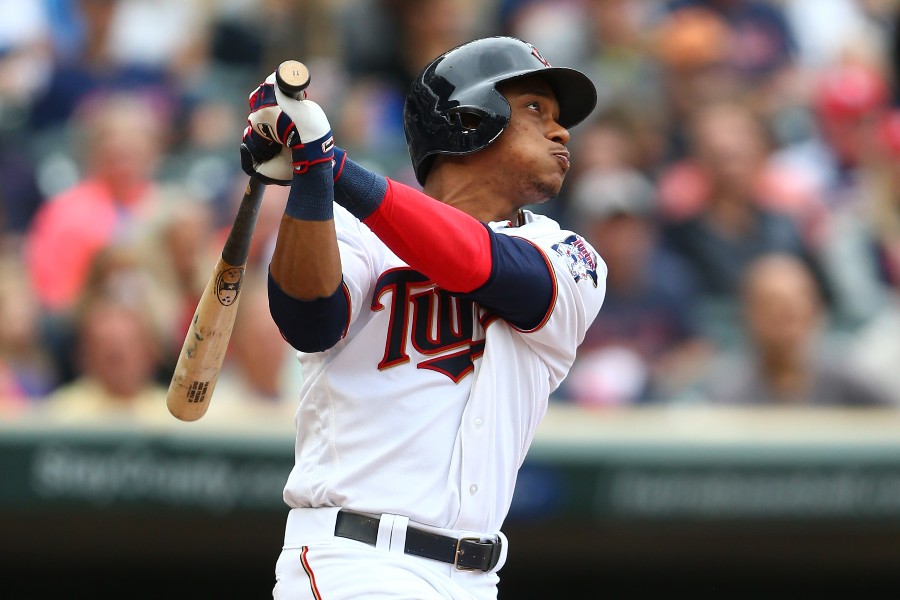 From August on, Polanco hit .316/.377/.553 (.931 OPS), but we know he’s not that good. Few hitters are. His emergence helped the Twins finish out the season on a 35-24 run. That would be a 96-win pace over the course of a full season. A good Polanco makes this Twins lineup terrifying. Polanco can really handle a bat. He ranked 13th among qualified hitters with a contact percentage of 86.5. He also made an adjustment as the year went on to swing at fewer pitches. Below is a graph that shows Polanco’s month-by-month swing percentage. Also included is the Twins swing rate as a team for reference. As you can see, that excellent season-end stretch for Polanco also coincided with a greatly-reduced swing rate. He also kept his contact rate well above average over that span. Here’s a similar graph that shows month-by-month contact percentages. Hitters have very little control in the grand scheme of things. You can try to look for a certain pitch or a certain location, but there’s no guarantee the pitcher’s going to throw anything you’re hunting. And even when you hit one on the screws, it could be right at a fielder. Polanco appears to have plus bat-handling skills and is already making adjustments to his approach. Those are two things he can control. But is the breakout really real? A lot of data out there suggests Polanco’s success was on the fluky side. From August on, he had one of the lowest marks in xwOBA-wOBA at -.088 (.300-.388). A big reason behind that is his average exit velocity was 84.4 mph, which ranked 190th of the 212-hitter sample I pulled up over that span. That’s a long and fancy way of saying that it appears several of his hits over than hot streak would typically have been outs under normal circumstances. Plus, if Polanco maintains his lower swing rate, we can expect pitchers will adjust to him adjusting … and then he’s going to need to adjust to them adjusting to his adjustment. Here’s the fun part … Polanco maintained a swing rate under 41 percent while keeping his contact rate over 84 percent during the final two months of the season and still slugged over .550. Do you know how many hitters managed to do that over the course of the season? Zero. There were six guys who had the swing/contact rates covered: Mookie Betts, Zack Cozart, Brett Gardner, Nick Markakis, Anthony Rendon and, you guessed it, Joe Mauer. Cozart came the closest to replicating the power, slugging .548. Rendon wasn’t too far behind at .533. But slugging .550 is insane. Only 12 qualified hitters managed to do that last year. So, circling back to where we started, Polanco’s not going to be that good. How good will Polanco be? That’s anybody’s guess, but his skills multiplied by his ability to adjust plus the presence James Rowson and “Paulie3K” Molitor equals a lot of reasons for Twins fans to be excited about Jorge Polanco heading into 2018. RELATED: Hard Work Jorge Pays Off
 -
Article: What's Next For Kennys Vargas?
Tom Froemming replied to Seth Stohs's topic in Twins Daily Front Page News
Just for context, last season DHs had a 101 wRC+ against left-handed pitchers. I'm a big Vargas supporter, but when you have the opportunity to add Morrison on a modest deal, you do it. Kennys is in his prime and making the minimum, so I suspect there will be a few teams interested. If he gets placed on waivers, I'd think both the White Sox and Royals would give him a look, which makes me wonder if it might make sense for the Twins to reach out to a team like Oakland/Seattle/Tampa/Texas to see if they can work out a deal for a player to be named later. Given his roster status, I don't think the Twins could get much in return for Vargas, but at least they have the opportunity to control where Vargas ends up playing.- 65 replies
-
- 5
-
-
- kennys vargas
- robbie grossman
- (and 3 more)
-
Article: Brian Dozier: I'll Be A Free Agent
Tom Froemming replied to John Bonnes's topic in Twins Daily Front Page News
It feels like a good time to remind everyone that it is possible to ignore other user's posts. Just click on your profile and go to Manage Ignore Prefs. ... just sayin' -
Article: Twins Daily Nightly Wrap - 2/25
Tom Froemming replied to John Bonnes's topic in Twins Daily Front Page News
I also heard Dazzle call him Lamar once, but yes, it's "Lamont" -
Article: Twins Daily Nightly Wrap - 2/25
Tom Froemming replied to John Bonnes's topic in Twins Daily Front Page News
I just wanted to add that this was a super dope plate appearance by LaMonte Wade:- 7 replies
-
- 2
-
-
- ervin santana
- logan morrison
- (and 3 more)
-
Real quick just wanted to add my reaction to the actual signing. At the price, I think it was a no brainer. I still have concerns about Sano now really being required to play third, but you can't turn your back on a guy like Morrison on such a low-cost/low-risk deal. The more the Twins add and the more these prices seem to come down, the more it makes sense to keep signing guys. I think right now the realistic target is still a wild card, but if they could reel in one of those top three starting pitchers, the AL Central title would become a much more realistic goal. Also, some of the FAs who may have been turning up their noses at the Twins earlier could view the Odorizzi and Morrison adds as indication this team is legit, and a desirable destination. Good stuff all around.
- 66 replies
-
- 17
-
-
- logan morrison
- miguel sano
- (and 3 more)
-
There are still a number of the top free agents still looking for work, and even after a busy offseason it appears the Twins are still shopping. One of the names the Twins have shown interest in is Logan Morrison, but would a left-handed hitting first baseman be a fit in the organization right now? ***UPDATE*** The Twins have reportedly signed Morrison!Mike Berardino of the Pioneer Press was first to report the Twins had interest in Morrison, and that new acquisition Jake Odorizzi has put in a good word on the team’s behalf. ***UPDATE*** The DH spot is the only real apparent opportunity for an upgrade in terms of the starting lineup at the moment, but wouldn’t a right-handed, lefty killer make more sense? Maybe not. The Twins were much better against right-handed pitching than they were against lefties last year, but it’s not like they were hopeless against southpaws. As a team, they had a .744 OPS vs. lefties, which ranked 14th in all of baseball. Also, let’s take a look at Cleveland’s projected rotation: Corey Kluber, Carlos Carrasco, Trevor Bauer, Josh Tomlin and Danny Salazar. Mike Clevinger would be the sixth guy. What do they all have in common? They’re all right-handers. That squad has dominant lefty Andrew Miller in the bullpen, but you can always play matchups late. The best left-handed starting pitcher in the AL Central right now is Kansas City's Danny Duffy. After him it's guys like Carlos Rodon of the White Sox and Matt Boyd of the Tigers. But Target Field is a terrible place for left-handed power bats, right? Well, not really. Last season, the platoon splits were pretty much dead even. Right-handed hitters had a .802 OPS and homered in 3.68 percent of their plate appearances while lefties combined for a .794 OPS and 3.62 home run percentage. It also doesn’t hurt that LoMo has been a beast at Target Field. In just nine career games, he has six home runs and a .387/.472/1.065 line. That’s right, a 1.537 OPS. It’s only a small sample of 36 plate appearances, but it certainly doesn’t hurt his case. Plus, Morrison held his own against same-sided pitchers last season, posting an OPS of .761. But the 30-year-old’s strength is definitely hammering right-handers. He had a .905 OPS and hit 32 of his 38 home runs against right-handers in 2017. If signed, Morrison would slot in as the DH, but could definitely fill in at first when Joe Mauer needs a rest. There’s an open spot on the 40-man roster at the moment, but LoMo’s arrival would probably mark the eventual end of either Kennys Vargas or Robbie Grossman’s tenure on the Twins. Or maybe both, depending how things work out. To me, it seems like the biggest factor to take into account would be Miguel Sano’s health. If he’s looking less mobile after having a titanium rod inserted into his leg over the offseason, it would make a lot of sense for the club to leave the DH spot flexible. What do you think of the Morrison signing? Click here to view the article
- 66 replies
-
- 3
-
-
- logan morrison
- miguel sano
- (and 3 more)
-
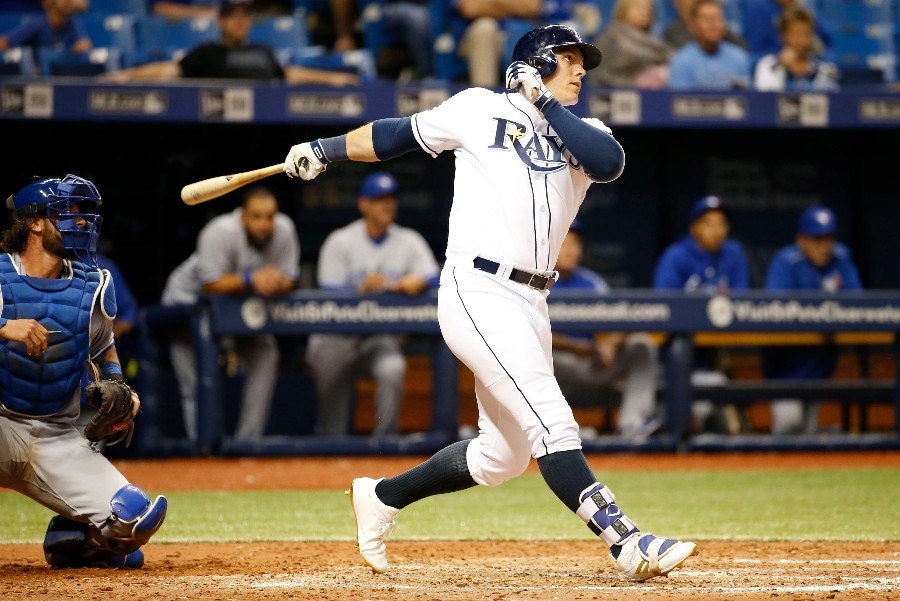 Mike Berardino of the Pioneer Press was first to report the Twins had interest in Morrison, and that new acquisition Jake Odorizzi has put in a good word on the team’s behalf. ***UPDATE*** https://twitter.com/jonmorosi/status/967834834788732928 The DH spot is the only real apparent opportunity for an upgrade in terms of the starting lineup at the moment, but wouldn’t a right-handed, lefty killer make more sense? Maybe not. The Twins were much better against right-handed pitching than they were against lefties last year, but it’s not like they were hopeless against southpaws. As a team, they had a .744 OPS vs. lefties, which ranked 14th in all of baseball. Also, let’s take a look at Cleveland’s projected rotation: Corey Kluber, Carlos Carrasco, Trevor Bauer, Josh Tomlin and Danny Salazar. Mike Clevinger would be the sixth guy. What do they all have in common? They’re all right-handers. That squad has dominant lefty Andrew Miller in the bullpen, but you can always play matchups late. The best left-handed starting pitcher in the AL Central right now is Kansas City's Danny Duffy. After him it's guys like Carlos Rodon of the White Sox and Matt Boyd of the Tigers. But Target Field is a terrible place for left-handed power bats, right? Well, not really. Last season, the platoon splits were pretty much dead even. Right-handed hitters had a .802 OPS and homered in 3.68 percent of their plate appearances while lefties combined for a .794 OPS and 3.62 home run percentage. It also doesn’t hurt that LoMo has been a beast at Target Field. In just nine career games, he has six home runs and a .387/.472/1.065 line. That’s right, a 1.537 OPS. It’s only a small sample of 36 plate appearances, but it certainly doesn’t hurt his case. Plus, Morrison held his own against same-sided pitchers last season, posting an OPS of .761. But the 30-year-old’s strength is definitely hammering right-handers. He had a .905 OPS and hit 32 of his 38 home runs against right-handers in 2017. If signed, Morrison would slot in as the DH, but could definitely fill in at first when Joe Mauer needs a rest. There’s an open spot on the 40-man roster at the moment, but LoMo’s arrival would probably mark the eventual end of either Kennys Vargas or Robbie Grossman’s tenure on the Twins. Or maybe both, depending how things work out. To me, it seems like the biggest factor to take into account would be Miguel Sano’s health. If he’s looking less mobile after having a titanium rod inserted into his leg over the offseason, it would make a lot of sense for the club to leave the DH spot flexible. What do you think of the Morrison signing?
 -
Article: Lance Lynn to the Twins?
Tom Froemming replied to Andrew Thares's topic in Twins Daily Front Page News
The Twins aren't "in" quite to the degree I was hoping, but they've certainly made significant improvements this offseason. I think it makes sense to take another step forward. They have rotation depth, yes, but Lynn (or Arrieta, or Cobb) would represent an upgrade. If it takes less than four years, $56 million, then I say go for it.- 110 replies
-
- 1
-
-
- lance lynn
- alex cobb
- (and 1 more)
-
It was another big week here at Twins Daily. The Twins (finally) added some starting pitchers, we wrapped up our top prospects list and there was an actual Twins baseball game played. So come check out this edition of Twins Weekly to catch up on what you may have missed, including some great pictures from media day.Let’s take a quick look back at all the articles from the front page in the order they were published. This edition of Twins Weekly covers Friday, Feb. 16 to Thursday, Feb. 22. Twins Sign RHP Anibal Sanchez... No, Really | Seth Stohs Twins Acquire Jake Odorizzi From Rays For Jermaine Palacios | Seth Stohs The Twins Almanac for February 18–24 | Matt Johnson Gleeman & The Geek: Ep 356: Jake Odorizzi & Anibal Sanchez | John Bonnes Twins Daily Top Prospects: #3 Nick Gordon | Cody Christie Is This Front Office Truly Enlightened About Pitching? | Nick Nelson Seth's Twins On Deck Podcast (Episode 7) | Seth Stohs Getting Rid Of The Bad Odor Might Be Izzi | Cody Christie Twins Daily 2018 Top Prospects: #2 Fernando Romero | Tom Froemming Sano Going To Let It Eat | Ted Schwerzler Twins Daily 2018 Top Prospects: #1 Royce Lewis | Nick Nelson Who Are These Guys? (Twins Non-Roster Invites) | Seth Stohs Gameday: Twins Versus Gophers (Exhibition) | Seth Stohs Backstop Battery Becoming an Asset | Ted Schwerzler TD 2018 Minnesota Twins Top Prospects Recap | Nick Nelson From the Twins Daily Blogs Below are some additional items of note from the blog area. I've pulled excerpts from each piece in an attempt to hook you in. A Potential Upgrade for Kennys Vargas By Andrew Thares The Twins do still have 4 years of team control of Vargas, but now might be the time for the Twins to look to move on from him. A few teams that I could see drawing interest in Vargas would be the Colorado Rockies, St. Louis Cardinals and Kansas City Royals. Now where would the Twins go to get this potential upgrade for Kennys Vargas. For that, we can look at our neighbors to the East, in the Milwaukee Brewers’ right-handed hitting first basemen Jesus Aguilar. Will the Real Kyle Gibson Please Stand Up? By Jamie Cameron Gibson’s fastball command and usage had a significant impact on hitters. Opposing hitters O-Swing % (the amount opposing hitters swing at a pitch outside the strike zone) increased from 18% to over 25%. Additionally, Gibson was able to generate more swings inside the zone with his fastball increasing that number 18% to 61%, a career high. In other words, if your stuff isn’t outstanding, you better to be able to keep hitters off balance by moving it around in the zone, or command the strike zone, as Alston would call it. It will be fascinating to see if Alston can further leverage this improvement Gibson made in the second half of 2017 for a successful 2018. Breaking down Jake Odorizzi By JohnOlson Who is Jake Odorizzi? Depending on who you ask and under what context, you'll get a different answer to this question. Around Twins social media, I've seen such differing opinions - from "Should he be the Opening Day starter? He may be our best pitcher" to "He's, at best, a number 4 starter". I would contend that he is likely the middle ground between these two, very different statements. The Yu Paradox By Matthew Lenz So yes, I am frustrated. I'm disappointed. I'm sad. I'm [enter whatever adjective you want] that the Twins weren't able to sign yet another superstar to bring them to the next level. But I love the Twins and will continue to cheer them on. I will continue to follow them once this crop of talent is gone. I'm not only here when things are good, but I'm also here when things are bad. I may not be happy with every decision made, but that doesn't make me (or you) a bad fan. Current batters and their historical positions going into 2018 2018 Baseball Stats – current pitchers all time rankings Both these pieces by mikelink45 take a look at which players are approaching noteworthy career milestones as we enter the 2018 season. Say Cheese! I'd like to share a few of my favorite pictures from media day. We'll leadoff with new Twin Anibal Sanchez, who looks like he's not quite sure what he's supposed to do with his hands. Download attachment: Sanchez.jpg Next up is fellow offseason addition Fernando Rodney. Yes, he always wears his hat like this. Let your eyes adjust, let it sink in. He does this in tribute to his late father. Hopefully all of Twins Territory can get up to speed and not dog on him for wearing his hat funny. Download attachment: Rodney.jpg Speaking of accessories, here's Ervin Santana. He seems to be in good spirits, but at the very bottom of the photo you can get a glimpse at the cast on his hand. Download attachment: Ervin.jpg Here's Tyler Duffey doing his best impression of Wilson from Home Improvement. Download attachment: Duffey.jpg Next up is another new Twin, Michael Pineda. He's not going to be able to pitch for quite some time, so making him participate in picture day seems a little cruel. And the look on is face is all like "c'mon man, do I really have to do this?" Download attachment: Pineda.jpg But you know what? Trevor May has got that exact same look. Must be those Tommy John surgery blues. Download attachment: May.jpg (All images credited to Jasen Vinlove-USA TODAY Sports) Video of the Week Baseball! There was a Twins baseball game last night, and it ended in dramatic fashion. Bottom of the ninth. One out. Tie game. Bases loaded ... More From Me I've been playing around some with live streaming of late. Here's a link to a stream I did immediately after the Odorizzi trade was announced. I was also fortunate enough to be a guest on the latest edition of Minnesota Sports Weekly with Travis Aune and Chad Smith. Here's a link to the episode. Cory Provus, the radio voice of the Twins, was on at around the 36-minute mark. I closed out the show, making my entrance about an hour and a half into the program. Alright, that does it for this edition of Twins Weekly. Thanks for reading and have a great weekend everyone. Click here to view the article
- 1 reply
-
- 1
-
-
 Let’s take a quick look back at all the articles from the front page in the order they were published. This edition of Twins Weekly covers Friday, Feb. 16 to Thursday, Feb. 22. Twins Sign RHP Anibal Sanchez... No, Really | Seth Stohs Twins Acquire Jake Odorizzi From Rays For Jermaine Palacios | Seth Stohs The Twins Almanac for February 18–24 | Matt Johnson Gleeman & The Geek: Ep 356: Jake Odorizzi & Anibal Sanchez | John Bonnes Twins Daily Top Prospects: #3 Nick Gordon | Cody Christie Is This Front Office Truly Enlightened About Pitching? | Nick Nelson Seth's Twins On Deck Podcast (Episode 7) | Seth Stohs Getting Rid Of The Bad Odor Might Be Izzi | Cody Christie Twins Daily 2018 Top Prospects: #2 Fernando Romero | Tom Froemming Sano Going To Let It Eat | Ted Schwerzler Twins Daily 2018 Top Prospects: #1 Royce Lewis | Nick Nelson Who Are These Guys? (Twins Non-Roster Invites) | Seth Stohs Gameday: Twins Versus Gophers (Exhibition) | Seth Stohs Backstop Battery Becoming an Asset | Ted Schwerzler TD 2018 Minnesota Twins Top Prospects Recap | Nick Nelson From the Twins Daily Blogs Below are some additional items of note from the blog area. I've pulled excerpts from each piece in an attempt to hook you in. A Potential Upgrade for Kennys Vargas By Andrew Thares The Twins do still have 4 years of team control of Vargas, but now might be the time for the Twins to look to move on from him. A few teams that I could see drawing interest in Vargas would be the Colorado Rockies, St. Louis Cardinals and Kansas City Royals. Now where would the Twins go to get this potential upgrade for Kennys Vargas. For that, we can look at our neighbors to the East, in the Milwaukee Brewers’ right-handed hitting first basemen Jesus Aguilar. Will the Real Kyle Gibson Please Stand Up? By Jamie Cameron Gibson’s fastball command and usage had a significant impact on hitters. Opposing hitters O-Swing % (the amount opposing hitters swing at a pitch outside the strike zone) increased from 18% to over 25%. Additionally, Gibson was able to generate more swings inside the zone with his fastball increasing that number 18% to 61%, a career high. In other words, if your stuff isn’t outstanding, you better to be able to keep hitters off balance by moving it around in the zone, or command the strike zone, as Alston would call it. It will be fascinating to see if Alston can further leverage this improvement Gibson made in the second half of 2017 for a successful 2018. Breaking down Jake Odorizzi By JohnOlson Who is Jake Odorizzi? Depending on who you ask and under what context, you'll get a different answer to this question. Around Twins social media, I've seen such differing opinions - from "Should he be the Opening Day starter? He may be our best pitcher" to "He's, at best, a number 4 starter". I would contend that he is likely the middle ground between these two, very different statements. The Yu Paradox By Matthew Lenz So yes, I am frustrated. I'm disappointed. I'm sad. I'm [enter whatever adjective you want] that the Twins weren't able to sign yet another superstar to bring them to the next level. But I love the Twins and will continue to cheer them on. I will continue to follow them once this crop of talent is gone. I'm not only here when things are good, but I'm also here when things are bad. I may not be happy with every decision made, but that doesn't make me (or you) a bad fan. Current batters and their historical positions going into 2018 2018 Baseball Stats – current pitchers all time rankings Both these pieces by mikelink45 take a look at which players are approaching noteworthy career milestones as we enter the 2018 season. Say Cheese! I'd like to share a few of my favorite pictures from media day. We'll leadoff with new Twin Anibal Sanchez, who looks like he's not quite sure what he's supposed to do with his hands. Next up is fellow offseason addition Fernando Rodney. Yes, he always wears his hat like this. Let your eyes adjust, let it sink in. He does this in tribute to his late father. Hopefully all of Twins Territory can get up to speed and not dog on him for wearing his hat funny. Speaking of accessories, here's Ervin Santana. He seems to be in good spirits, but at the very bottom of the photo you can get a glimpse at the cast on his hand. Here's Tyler Duffey doing his best impression of Wilson from Home Improvement. Next up is another new Twin, Michael Pineda. He's not going to be able to pitch for quite some time, so making him participate in picture day seems a little cruel. And the look on is face is all like "c'mon man, do I really have to do this?" But you know what? Trevor May has got that exact same look. Must be those Tommy John surgery blues. (All images credited to Jasen Vinlove-USA TODAY Sports) Video of the Week Baseball! There was a Twins baseball game last night, and it ended in dramatic fashion. Bottom of the ninth. One out. Tie game. Bases loaded ... https://twitter.com/fsnorth/status/966851802556645378?ref_src=twcamp%5Eshare%7Ctwsrc%5Em5%7Ctwgr%5Eemail%7Ctwcon%5E7046%7Ctwterm%5E1 OK, so maybe it wasn’t all that dramatic, but it was pretty great to be watching baseball again. The Twins will be on Fox Sports North Sunday at noon CT. Item of the Week Speaking of spring training, check out this sneak peak at the Twins spring program. So simple, subtle and clean. https://twitter.com/ZimGlish/status/966711051592130561?ref_src=twcamp%5Eshare%7Ctwsrc%5Em5%7Ctwgr%5Eemail%7Ctwcon%5E7046%7Ctwterm%5E1 More From Me I've been playing around some with live streaming of late. Here's a link to a stream I did immediately after the Odorizzi trade was announced. I was also fortunate enough to be a guest on the latest edition of Minnesota Sports Weekly with Travis Aune and Chad Smith. Here's a link to the episode. Cory Provus, the radio voice of the Twins, was on at around the 36-minute mark. I closed out the show, making my entrance about an hour and a half into the program. Alright, that does it for this edition of Twins Weekly. Thanks for reading and have a great weekend everyone.
 -
Leach is tough to put your finger on because of how raw he is. He hadn't even been pitching all that long before the Twins drafted him. Unlike Enlow, who has a plus curve, Leach's only really good pitch at the moment is his fastball. He has plenty of time to develop those other offerings, but that mid-90s fastball is certainly a great place to start. And at 6-4, 220 pounds, you don't have to wonder much about whether or not he'll fill out. If we were to try and predict the one player currently outside of our top 20 who has the best chance at being inside the top 10 next season, Leach would definitely be in the conversation.
- 21 replies
-
- 4
-
-
- royce lewis
- fernando romero
- (and 3 more)
-
If the main thing he's working on is the changeup, in my opinion it doesn't make a huge difference where he starts. But this is how the opening day assignments could work out: Twins: Berrios, Odorizzi, Gibson, Sanchez AAA: Mejia, Slegers, Jorge, Duffey, Gonsalvez, Myles Jaye? Enns? Stewart? It also may make some sense to try and keep Romero in the Southern League out of the gates instead of sending him further north. So it's not to say that Romero isn't ready for Triple-A, or anything like that. Plus, it's not like you can't call him up from Chattanooga if necessary. I believe the Twins did that with Jorge last season.
-
Speeding up the Game of Baseball
Tom Froemming commented on rogrulz30's blog entry in "And we'll see ya' ... tomorrow night."
Could there be a more indirect way to extend relief appearances? I don't really think we need to eliminate specialists, but it would be great to limit the number of relief pitcher changes. So how about we take a page out of hockey's roster rules? If I understand correctly, hockey teams have a roster of 23 players, but only 20 can be "dressed" and eligible to play in any particular game. What if for baseball we limit managers to using a maximum of five pitchers in a game (including the starter)? This would allow managers to play matchups if they felt the need, but would also give them incentive to get some more outs from their starters and/or carry a long man. It looks like the Twins averaged 4.17 pitchers used per game last season, so I think this rule change would have some impact. I think managers would view that fifth and final pitcher similar to how they currently view backup catchers. They only put those guys into a game when it's absolutely necessary in fear of being left with nobody to catch. So putting the cap at five would probably mean you're really only going to see managers use four pitchers tops each game. Just an idea I've had rattling around in my head for a couple months, what do you think? -
Fernando Romero was Twins Daily’s top prospect last season, but it was easy to predict that he’d be unseated. Even a year ago at this time, it would have been a pretty safe bet to pencil in the future No. 1 overall pick of the 2017 MLB Draft in this season’s top spot. Still, Romero faced plenty of competition for the second spot. What set Romero apart from the other contenders?Age: 23 (DOB:12/24/1994) 2017 Stats (AA): 125 IP, 3.53 ERA, 120 K, 45 BB, 1.35 WHIP ETA: Late 2018 2017 Ranking: 1 National Top 100 Rankings BA: NR | MLB: 68 | ESPN: 47 | BP: 97 What’s To Like? Romero has a plus fastball that tops out at 98, paired with a plus slider in the upper 80s and his changeup is average. He showed his true potential over a 13-start stretch that spanned from May 24 to Aug. 2. Over that stretch, Romero was 9-1 with a 1.40 ERA, 1.10 WHIP and 9.9 K/9 over 70.2 innings pitched. Excuse me while I wipe the sweat off my brow. Romero was excellent at limiting damage, holding opposing batters to a .256/.330/.351 (.681) line despite giving up a .331 BABIP. He’s surrendered just six home runs over 303.1 innings in the minor leagues. Among the 54 pitchers to log at least 120 innings in Double-A last season, Romero was second in FIP (2.93), third in swinging strike rate (12.0), fifth in K/9 (8.64) and sixth in GB/FB (2.00). The Twins will certainly give Romero every opportunity to develop as a starter, but per Baseball America’s Prospect Handbook “some see him eventually turning into a Francisco Rodriguez-type late-inning piece.” That’s one hell of a backup plan. What’s Left To Work On? Romero limped into the offseason, pitching to a 10.67 ERA and 2.09 WHIP over his final three starts. He had been limited to five innings per outing over the final two months of the season due to concerns over his innings, and ended the year on the DL due to a shoulder impingement. Thanks to Seth, we know Romero is entering 2018 healthy. Then what’s left to work on? Hear it straight from the horse’s mouth. Here’s what Romero said to Seth in the piece that’s linked above: ”I’ve been working on development of my changeup. But I’ll be better this year. I’ve been working on it. I’m going to keep it up.” The development of that changeup may be the determining factor on whether or not Romero remains in the rotation. Lefties had an OPS of more than 100 points higher than right-handed batters against him last year (.740 OPS vs. .631 OPS). The other pivotal element in determining Romero’s future role may be his walk rate. After issuing free passes to just 4.3 percent of the hitters he faced in 2016, that rate jumped to 8.3 last year. That’s not alarming, but it’s higher than teammates and fellow top-20 prospects Stephen Gonsalvez (6.5), Zack Littell (7.5) and Felix Jorge (6.6) all had in Double-A last season. What’s Next? It appears likely that Romero will open 2018 back in Chattanooga, but assuming all goes well he’ll be Rochester bound before long. It also seems like a good bet that he’ll make his major league debut at some point this season, as well. Having thrown 125 innings last year, however, it’s safe to assume the Twins will be keeping a close eye on his workload again in 2018. TD Top Prospects: 16-20 TD Top Prospects: 11-15 TD Top Prospect: #10 Akil Baddoo TD Top Prospect: #9 Brusdar Graterol TD Top Prospects: #8 Blayne Enlow TD Top Prospects: #7 Brent Rooker TD Top Prospects: #6 Wander Javier TD Top Prospects: #5 Alex Kirilloff TD Top Prospects: #4 Stephen Gonsalves TD Top Prospects: #3 Nick Gordon TD Top Prospects: #2 Fernando Romero TD Top Prospects: #1 (Coming Soon) Get to know more about Fernando Romero and much more in the 2018 Minnesota Twins Prospect Handbook. ORDER NOW: 2018 Minnesota Twins Prospect Handbook (paperback, $15.99) ORDER NOW: 2018 Minnesota Twins Prospect Handbook (eBook, $10.99) The 2018 Minnesota Twins Prospect Handbook goes in-depth and provides player bios, scouting reports, statistics and much more on almost 160 Twins minor leaguers. Click here to view the article
-
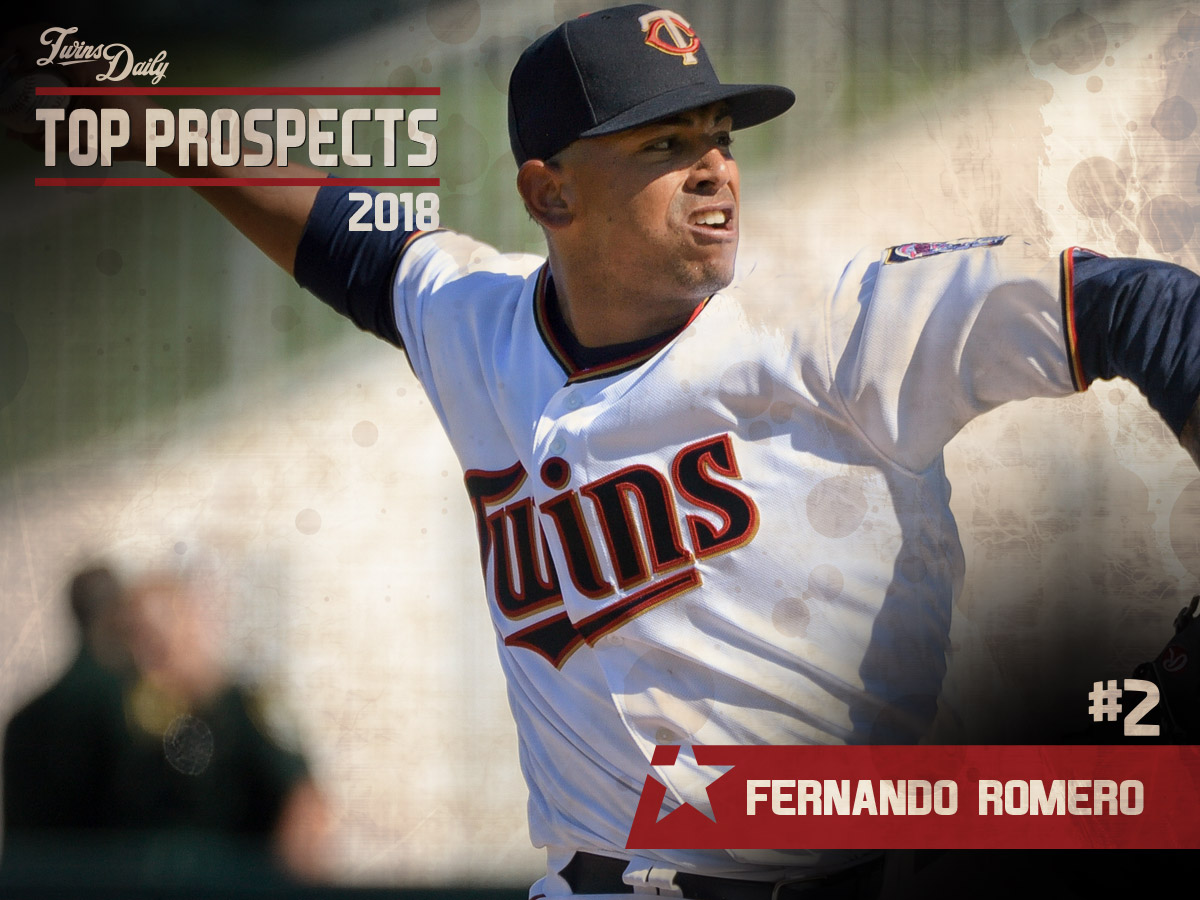 Age: 23 (DOB:12/24/1994) 2017 Stats (AA): 125 IP, 3.53 ERA, 120 K, 45 BB, 1.35 WHIP ETA: Late 2018 2017 Ranking: 1 National Top 100 Rankings BA: NR | MLB: 68 | ESPN: 47 | BP: 97 What’s To Like? Romero has a plus fastball that tops out at 98, paired with a plus slider in the upper 80s and his changeup is average. He showed his true potential over a 13-start stretch that spanned from May 24 to Aug. 2. Over that stretch, Romero was 9-1 with a 1.40 ERA, 1.10 WHIP and 9.9 K/9 over 70.2 innings pitched. Excuse me while I wipe the sweat off my brow. Romero was excellent at limiting damage, holding opposing batters to a .256/.330/.351 (.681) line despite giving up a .331 BABIP. He’s surrendered just six home runs over 303.1 innings in the minor leagues. Among the 54 pitchers to log at least 120 innings in Double-A last season, Romero was second in FIP (2.93), third in swinging strike rate (12.0), fifth in K/9 (8.64) and sixth in GB/FB (2.00). The Twins will certainly give Romero every opportunity to develop as a starter, but per Baseball America’s Prospect Handbook “some see him eventually turning into a Francisco Rodriguez-type late-inning piece.” That’s one hell of a backup plan. What’s Left To Work On? Romero limped into the offseason, pitching to a 10.67 ERA and 2.09 WHIP over his final three starts. He had been limited to five innings per outing over the final two months of the season due to concerns over his innings, and ended the year on the DL due to a shoulder impingement. Thanks to Seth, we know Romero is entering 2018 healthy. Then what’s left to work on? Hear it straight from the horse’s mouth. Here’s what Romero said to Seth in the piece that’s linked above: ”I’ve been working on development of my changeup. But I’ll be better this year. I’ve been working on it. I’m going to keep it up.” The development of that changeup may be the determining factor on whether or not Romero remains in the rotation. Lefties had an OPS of more than 100 points higher than right-handed batters against him last year (.740 OPS vs. .631 OPS). The other pivotal element in determining Romero’s future role may be his walk rate. After issuing free passes to just 4.3 percent of the hitters he faced in 2016, that rate jumped to 8.3 last year. That’s not alarming, but it’s higher than teammates and fellow top-20 prospects Stephen Gonsalvez (6.5), Zack Littell (7.5) and Felix Jorge (6.6) all had in Double-A last season. What’s Next? It appears likely that Romero will open 2018 back in Chattanooga, but assuming all goes well he’ll be Rochester bound before long. It also seems like a good bet that he’ll make his major league debut at some point this season, as well. Having thrown 125 innings last year, however, it’s safe to assume the Twins will be keeping a close eye on his workload again in 2018. TD Top Prospects: 16-20 TD Top Prospects: 11-15 TD Top Prospect: #10 Akil Baddoo TD Top Prospect: #9 Brusdar Graterol TD Top Prospects: #8 Blayne Enlow TD Top Prospects: #7 Brent Rooker TD Top Prospects: #6 Wander Javier TD Top Prospects: #5 Alex Kirilloff TD Top Prospects: #4 Stephen Gonsalves TD Top Prospects: #3 Nick Gordon TD Top Prospects: #2 Fernando Romero TD Top Prospects: #1 (Coming Soon) Get to know more about Fernando Romero and much more in the 2018 Minnesota Twins Prospect Handbook. ORDER NOW: 2018 Minnesota Twins Prospect Handbook (paperback, $15.99) ORDER NOW: 2018 Minnesota Twins Prospect Handbook (eBook, $10.99) The 2018 Minnesota Twins Prospect Handbook goes in-depth and provides player bios, scouting reports, statistics and much more on almost 160 Twins minor leaguers.
