



Tom Froemming
-
Posts
5,260 -
Joined
-
Last visited
-
Days Won
22
Content Type
Profiles
News
Minnesota Twins Videos
2026 Minnesota Twins Top Prospects Ranking
2022 Minnesota Twins Draft Picks
Minnesota Twins Free Agent & Trade Rumors, Notes, & Tidbits
Guides & Resources
2023 Minnesota Twins Draft Picks
The Minnesota Twins Players Project
2024 Minnesota Twins Draft Picks
2025 Minnesota Twins Draft Pick Tracker
2026 Minnesota Twins Draft Tracker: Picks & Bonuses
Forums
Blogs
Events
Store
Downloads
Gallery
Everything posted by Tom Froemming
-
 As a way to look back at a great minor league season and look ahead toward the release of the 2018 Twins Prospect Handbook, I am writing a series of features on prospects I seem to be especially high on. Next to receive the spotlight treatment is right-handed relief pitcher Tom Hackimer.Ranking prospects is a difficult task and everyone has a bit of a different methodology. This series isn’t meant to be critical of any of the other lists out there, it’s all about presenting a positive case for the featured player. We’re starting at the bottom of my list and working up from there. Here’s a look at what’s on deck: Range 41-50 spotlight: Zander Wiel, No. 48 Range 31-40 spotlight: Tom Hackimer, No. 36 Range 21-30 spotlight: Coming Dec. 5 Range 11-20 spotlight: Coming Dec. 12 Range 1-10 spotlight: Coming Dec. 19 “Billy, this is Chad Bradford. He's a relief pitcher. He is one of the most undervalued players in baseball. His defect is that he throws funny. Nobody in the big leagues cares about him, because he looks funny. This guy could be not just the best pitcher in our bullpen, but one of the most effective relief pitchers in all of baseball.” -Moneyball (the movie) The days of sidearm pitchers being overlooked are probably behind us now. There have been so many good ones over the past few years: Pat Neshek, Darren O’Day, Brad Ziegler, Steve Cishek and Joe Smith, just to name a few. Tom Hackimer is one of those guys who throws funny. Having been a fourth-round pick in 2016, however, the Twins clearly viewed him as much more than just a novelty act. I’m sure you can already guess where this is going. Yes, I’m going to compare Hackimer to Trevor Hildenberger. It’s irresistible. Not all guys who throw sidearm are created equal, but it’s pretty striking how similar Hackimer’s 2017 season was to Hildy’s 2015. Hackimer 2017 24.0 IP with CR, 37.1 IP with FM 1.76 ERA, 0.85 WHIP, 10.4 K/9, 3.2 BB/9 Opponents: .142/.256/.171 (.427 OPS) vs. LHB: .184/.291/.241 (.533 OPS) Hildenberger 2015 45.0 IP with CR, 19.0 IP with FM 1.55 ERA, 0.72 WHIP, 11.3 K/9, 1.0 BB/9 Opponents: .176/.206/.194 (.400 OPS) vs. LHB: .247/.267/.278 (.546 OPS) The edge goes to ‘15 Hildenberger, but it’s worth noting that he spent a larger percentage of his time in Low-A and was in his age 24 season while Hackimer just turned 23 in June. The big concern with sidearm hurlers is how they’ll fare against opposite-sided hitters. As you can see, Hackimer actually allowed less damage to lefties than Hildenberger. But the area where you notice the biggest difference between those two is definitely a cause for concern. Whereas Hildenberger was amazing at limiting free passes in the minors, Hackimer has had a bit of trouble with his control. He seemed to have tamed his wildness during his time with the Kernels at the beginning of last season. In 24.0 innings pitched, he’d only walked three batters (3.3 BB%). After his promotion, however, Hackimer lost some of that feel and walked 19 batters in 37.1 innings with the Miracle (12.3 BB%). An ugly performance on Aug. 13 really took its toll, as Hackimer walked four batters while failing to record an out. He entered the ninth inning of an 11-2 game and was left out on the mound for a while. Hackimer walked in three runs before manager Doug Mientkiewicz finally brought out the hook. It’s possible Doug saw it as an opportunity for Hackimer to work through some things and grow from the experience, or it could have just been that he was trying to save the rest of his pen. Either way, that performance ended up really damaging Hackimer’s overall numbers. Full season: 1.76 ERA, 3.2 BB/9, 3.23 K:BB ratio Minus Aug. 13: 1.03 ERA, 2.7 BB/9, 3.94 K:BB ratio I know a lot of people don’t like to fudge with the numbers like this. That bad outing happened, and it was real ugly, but I’m willing to give a free pass. There are valid reasons why a player may have a bad game, and I’m inclined to look at that bottom line of numbers as sort of the “real” Tom Hackimer. He also hit 11 batters, however, so the concerns over his control are definitely legit. Hackimer also got to pitch in the Arizona Fall League, where he had a 2.31 ERA and 1.29 WHIP over 11.2 innings. While it was nice to see him hold his own against some stiff competition in an environment that’s typically tough on pitchers, the control concerns remained. He walked seven batters and hit three more in the AFL. We learned in Seth’s “Get To Know” interview with Hackimer this February that he was a physics major in college. It seems there’s a good chance he’d be interested in things like spin rates or pitch tunnels and may even have a leg up on other players in terms of his ability to interpret and apply some of that information. Plus, in the grand scheme of things, he’s really still figuring things out on the mound. Hackimer walked on at St. John’s (where he had an academic scholarship) and converted to the mound from shortstop. He didn't pitch at all in high school, so 2013 was really the first time he pitched regularly. His changeup is still a work in progress, so if he can harness that pitch the concerns against lefties will really be eased. He’s a bit of a mad scientist on the mound (sorry, I couldn’t help myself), so I wouldn’t bet against him harnessing his control. Sir Isaac Newton said “what goes up must come down” but Hackimer pitches more to the theory of “what goes down cannot come up.” He had an insane ground ball rate of 65.2 percent, which was the 10th highest among pitchers who logged at least 60 innings in affiliated ball last season. Thanks to that remarkable ability to keep the ball on the ground, Hackimer was excellent at limiting damage. He faced 246 batters and gave up only four doubles and a triple while not surrendering a single home run. Nobody seems to be able to square up the ball against Hackimer. Trying to rank relief prospects is especially difficult. Starting pitchers are more valuable, but so many of them end up transitioning to the bullpen anyway. Plus, even six-inning starts are becoming rare and eight-men bullpens are the new normal, so relievers are becoming much more valuable. Hackimer’s prospect stock is hurt because he’s a reliever, but the fact that he throws funny and doesn’t exactly light up the radar gun doesn't help his case, either. He’s also been a bit older than the average player for his level so far, but these are all the same things that could have been said about Hildenberger and plenty of other guys who’ve made it. The numbers have been impressive, he just needs to keep moving onwards and upwards. For more on Tom Hackimer and about 170 other Twins minor leaguers, be sure to pick up a copy of the 2018 Twins Prospect Handbook, which will be available later this winter. Click here to view the article
 -
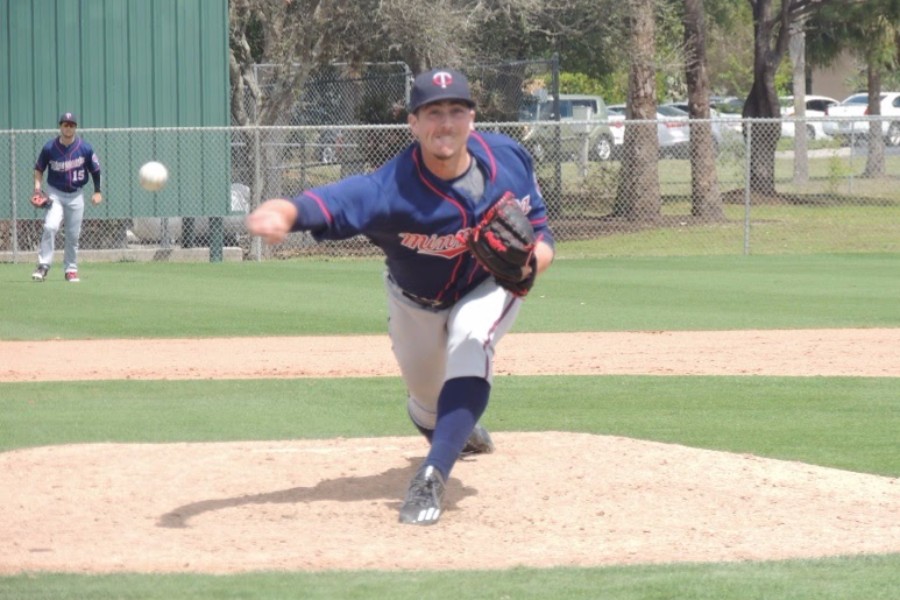 Ranking prospects is a difficult task and everyone has a bit of a different methodology. This series isn’t meant to be critical of any of the other lists out there, it’s all about presenting a positive case for the featured player. We’re starting at the bottom of my list and working up from there. Here’s a look at what’s on deck: Range 41-50 spotlight: Zander Wiel, No. 48 Range 31-40 spotlight: Tom Hackimer, No. 36 Range 21-30 spotlight: Coming Dec. 5 Range 11-20 spotlight: Coming Dec. 12 Range 1-10 spotlight: Coming Dec. 19 “Billy, this is Chad Bradford. He's a relief pitcher. He is one of the most undervalued players in baseball. His defect is that he throws funny. Nobody in the big leagues cares about him, because he looks funny. This guy could be not just the best pitcher in our bullpen, but one of the most effective relief pitchers in all of baseball.” -Moneyball (the movie) The days of sidearm pitchers being overlooked are probably behind us now. There have been so many good ones over the past few years: Pat Neshek, Darren O’Day, Brad Ziegler, Steve Cishek and Joe Smith, just to name a few. Tom Hackimer is one of those guys who throws funny. Having been a fourth-round pick in 2016, however, the Twins clearly viewed him as much more than just a novelty act. I’m sure you can already guess where this is going. Yes, I’m going to compare Hackimer to Trevor Hildenberger. It’s irresistible. Not all guys who throw sidearm are created equal, but it’s pretty striking how similar Hackimer’s 2017 season was to Hildy’s 2015. Hackimer 2017 24.0 IP with CR, 37.1 IP with FM 1.76 ERA, 0.85 WHIP, 10.4 K/9, 3.2 BB/9 Opponents: .142/.256/.171 (.427 OPS) vs. LHB: .184/.291/.241 (.533 OPS) Hildenberger 2015 45.0 IP with CR, 19.0 IP with FM 1.55 ERA, 0.72 WHIP, 11.3 K/9, 1.0 BB/9 Opponents: .176/.206/.194 (.400 OPS) vs. LHB: .247/.267/.278 (.546 OPS) The edge goes to ‘15 Hildenberger, but it’s worth noting that he spent a larger percentage of his time in Low-A and was in his age 24 season while Hackimer just turned 23 in June. The big concern with sidearm hurlers is how they’ll fare against opposite-sided hitters. As you can see, Hackimer actually allowed less damage to lefties than Hildenberger. But the area where you notice the biggest difference between those two is definitely a cause for concern. Whereas Hildenberger was amazing at limiting free passes in the minors, Hackimer has had a bit of trouble with his control. He seemed to have tamed his wildness during his time with the Kernels at the beginning of last season. In 24.0 innings pitched, he’d only walked three batters (3.3 BB%). After his promotion, however, Hackimer lost some of that feel and walked 19 batters in 37.1 innings with the Miracle (12.3 BB%). An ugly performance on Aug. 13 really took its toll, as Hackimer walked four batters while failing to record an out. He entered the ninth inning of an 11-2 game and was left out on the mound for a while. Hackimer walked in three runs before manager Doug Mientkiewicz finally brought out the hook. It’s possible Doug saw it as an opportunity for Hackimer to work through some things and grow from the experience, or it could have just been that he was trying to save the rest of his pen. Either way, that performance ended up really damaging Hackimer’s overall numbers. Full season: 1.76 ERA, 3.2 BB/9, 3.23 K:BB ratio Minus Aug. 13: 1.03 ERA, 2.7 BB/9, 3.94 K:BB ratio I know a lot of people don’t like to fudge with the numbers like this. That bad outing happened, and it was real ugly, but I’m willing to give a free pass. There are valid reasons why a player may have a bad game, and I’m inclined to look at that bottom line of numbers as sort of the “real” Tom Hackimer. He also hit 11 batters, however, so the concerns over his control are definitely legit. Hackimer also got to pitch in the Arizona Fall League, where he had a 2.31 ERA and 1.29 WHIP over 11.2 innings. While it was nice to see him hold his own against some stiff competition in an environment that’s typically tough on pitchers, the control concerns remained. He walked seven batters and hit three more in the AFL. We learned in Seth’s “Get To Know” interview with Hackimer this February that he was a physics major in college. It seems there’s a good chance he’d be interested in things like spin rates or pitch tunnels and may even have a leg up on other players in terms of his ability to interpret and apply some of that information. Plus, in the grand scheme of things, he’s really still figuring things out on the mound. Hackimer walked on at St. John’s (where he had an academic scholarship) and converted to the mound from shortstop. He didn't pitch at all in high school, so 2013 was really the first time he pitched regularly. His changeup is still a work in progress, so if he can harness that pitch the concerns against lefties will really be eased. He’s a bit of a mad scientist on the mound (sorry, I couldn’t help myself), so I wouldn’t bet against him harnessing his control. Sir Isaac Newton said “what goes up must come down” but Hackimer pitches more to the theory of “what goes down cannot come up.” He had an insane ground ball rate of 65.2 percent, which was the 10th highest among pitchers who logged at least 60 innings in affiliated ball last season. Thanks to that remarkable ability to keep the ball on the ground, Hackimer was excellent at limiting damage. He faced 246 batters and gave up only four doubles and a triple while not surrendering a single home run. Nobody seems to be able to square up the ball against Hackimer. Trying to rank relief prospects is especially difficult. Starting pitchers are more valuable, but so many of them end up transitioning to the bullpen anyway. Plus, even six-inning starts are becoming rare and eight-men bullpens are the new normal, so relievers are becoming much more valuable. Hackimer’s prospect stock is hurt because he’s a reliever, but the fact that he throws funny and doesn’t exactly light up the radar gun doesn't help his case, either. He’s also been a bit older than the average player for his level so far, but these are all the same things that could have been said about Hildenberger and plenty of other guys who’ve made it. The numbers have been impressive, he just needs to keep moving onwards and upwards. For more on Tom Hackimer and about 170 other Twins minor leaguers, be sure to pick up a copy of the 2018 Twins Prospect Handbook, which will be available later this winter.
 -
I get it, but I'd rather wait to see him not hit before I rank him too low (though I don't have him as high as Seth). But the injury to Kirilloff shouldn't really hurt his prospect stock much, right? A lost year of playing time is unfortunate, but I'm sure he's developed physically over that time. He'll be 20 and I suspect in Cedar Rapids, just like Blankenhorn and Diaz were this past season, so it's not like he's fallen way behind or anything like that. I just don't see that injury as having much impact on his overall ceiling or floor.
-
I find it interesting there's been so much support for Lewis Thorpe in the comments of this series, yet at the same time a lot of concern over players who were recently or are currently injured. And nobody seems to disagree with Fernando Romero being in the top 5 despite his injury history and the fact he ended the season clearly not himself. I'm not saying I disagree with the rankings or those concerns, but it's just funny how some guys seem to get the benefit of the doubt while a guy like Kirilloff gets the misfortune of the doubt.
- 59 replies
-
- 6
-

-
- brent rooker
- brusdar graterol
- (and 3 more)
-
My favorite Park moment was him being one of the only reasons to watch the dumpster fire that was the first month and a half of 2016. Through May 15, he was hitting .257/.342/.581 (.923 OPS) with 9 homers, but the Twins were 10-26 over that stretch.
-
I wouldn't be too worried about that. T.J. White is primarily a third baseman and he's turning 26 in January. I'd imagine he'd be ticketed for Rochester to start the year. As far as Rooker goes, that's anybody's best guess. His development will certainly take precedent over guys like Wiel, but they co-existed on the Miracle just fine for 40 games.
-
One of the things I find fun is that a lot of the new stats still hold the players from previous eras in high esteem. Cy Young and Walter Johnson are still the all-time leaders in pitcher WAR. The all-time greatest pitchers in terms of FIP all played around the turn of the century: Ed Walsh, Rube Waddell, Addie Joss, Smoky Joe Wood, Christy Mathewson and Chief Bender. For pitcher's WPA, the top 10 includes Warren Spahn, Tom Seaver, Lefty Grove and Jim Palmer. But still, I can appreciate the idea that these players are more than just a stat line. No matter how many convoluted numbers we come up with that help us provide context, there's really no substitute for having experienced their careers in the moment.
-
Yes, the step up to Double-A is huge. That seems to be where college hitters really start to be taken seriously if they strive. I'm really excited to see how he does. I had forgotten about this article, thanks for linking to it. Great stuff. I see in the comments that my man crush on Wiel dates back awhile And I get these guys are never ranked higher because they're less likely to be super duper stars, but I take a look at Garver and Granite and see a couple guys who have the chance to have nice long MLB careers as role players. If Wiel can just be a good defensive first baseman, at least usable in a corner outfield spot and mash lefties ... heck, that sounds like a guy the Twins could use on their bench today. Obviously I'm getting way ahead of myself and he has to keep getting better, but I can see a scenario in which Wiel becomes that player down the road.
-
As a way to look back at a great minor league season and look ahead toward the release of the 2018 Twins Prospect Handbook, I’ll be writing a series of features on prospects I seem to be especially high on. First up to step into the spotlight is Fort Myers Miracle first baseman Zander Wiel.Ranking prospects is a difficult task and everyone has a bit of a different methodology. This series isn’t meant to be critical of any of the other lists out there, it’s all about presenting a positive case for the featured player. We’re starting at the bottom of my list and working up. Here’s a look at what’s on deck: Range 41-50 spotlight: Zander Wiel, No. 48 Range 31-40 spotlight: Coming Nov. 28 Range 21-30 spotlight: Coming Dec. 5 Range 11-20 spotlight: Coming Dec. 12 Range 1-10 spotlight: Coming Dec. 19 Zander Wiel has put up strong numbers in each of his first two full seasons in the Twins system, so what’s keeping him off of most prospect lists? Well, he’s just not a guy you can pin super lofty dreams on. Drafted in the 12th round out of Vanderbilt in 2015, Wiel has been old for his level at each stop of his minor league career thus far. The fact that he’s also a first baseman certainly doesn’t help his prospect stock, either. Wiel remained in Fort Myers for the entire 2017 season, and will enter this coming year as a 25-year-old with no experience above High-A. But, that exact same thing could’ve been said about Mitch Garver as he entered the 2016 season. While you can’t simply compare two guys and assume similar progressions, it is pretty interesting to look at Wiel’s 2017 results versus Garver’s 2015 numbers. Wiel 2017 (528 PAs with Fort Myers) .250/.344/.429 (.773 OPS) 13 HR, 11.8 BB%, 19.9 K% Garver 2015 (520 PAs with Fort Myers) .245/.356/.333 (.668 OPS) 4 HR, 13.3 BB%, 15.8 K% Garver’s sterling walk-to-strikeout rate stands out, but Wiel’s power numbers are far superior. Obviously, Garver played the much more demanding defensive position, but I still see reasons to be intrigued by Wiel. While 13 home runs may not seem like a ton on the surface, Wiel was tied for third in the Florida State League with that mark and only six other players in the Twins minor league system went deep more often in 2017. It was also the first time a Miracle hitter cracked double-digit homers since Adam Brett Walker slugged 25 in 2014. Wiel was tied for third in the FSL with 62 walks, which was also the third-highest total in the system, trailing only Jonathan Rodriguez (81) and LaMonte Wade (76). Who doesn’t love a guy who can hit for power and draw walks? The .250 batting average looks like a red flag, but that was due in large part to a .293 BABIP, the fifth-lowest in the FSL among 47 qualified hitters in the league. You may be thinking “yeah, but he was just beating up on a bunch of kids.” There may be some truth to that, but a deeper dive suggests to me that he won’t crumble against more advanced pitching. Yes, Wiel faced younger pitchers 78.8 percent of the time, but he thrived against competition more up to par with his level of experience. He was actually much better against older pitchers, hitting .266/.366/.468 (.834 OPS) in 112 plate appearances, posting nearly as many walks (16) as strikeouts (17). He also had strong numbers against some of the best pitchers in the FSL. Against the top five qualified pitchers in the league per FIP, Wiel hit .375/.474/.750 (1.224 OPS) over 19 plate appearances. Tiny sample size, I know, but it’s another shred of positive evidence in Wiel’s favor. Wiel also finished the year strong, hitting .291/.383/.488 (.871 OPS) over his final 36 games, showing he was prepared to take the next step. It’s too bad he didn’t get a shot in Double-A, but it’s not his fault Rodriguez was putting together an MVP-like campaign for the Lookouts. A big guy at 6-3 and 232 lbs, Wiel is more well-built than beefy. His athleticism shows up on the field, as he’s legged out 14 triples the past two seasons and is 15-for-18 in stolen base attempts (83.3 percent success rate) in his career. He even got some work in the outfield for the first time as a pro last year, logging 17 games in left field for the Miracle. Sometimes prospect rankings can be harsh on guys drafted out of college. I completely understand why, but players like Garver and Zack Granite are perfect examples of how prospect rankings, or perceived ceilings, only matter to a certain point. Potential only gets you so far and most players never reach their perceived ceilings. At the end of the day, it’s all about performance and continued improvement. So is Zander Wiel the heir apparent to Joe Mauer at first base? No, probably not. If you’ve made it this far, you can probably tell I have a bit of a thing for this guy, but he’s still down at No. 48 even on my list. We’re going to learn a lot about Wiel in 2018, however, and a big year against stiffer competition could really catapult his status. Wiel still has a long road ahead, but at the very least he’s a player worth familiarizing yourself with as he prepares to step up to the high minors in 2018. For more on Wiel and about 170 other Twins minor leaguers, be sure to pick up a copy of the 2018 Twins Prospect Handbook, which will be available later this winter. Click here to view the article
-
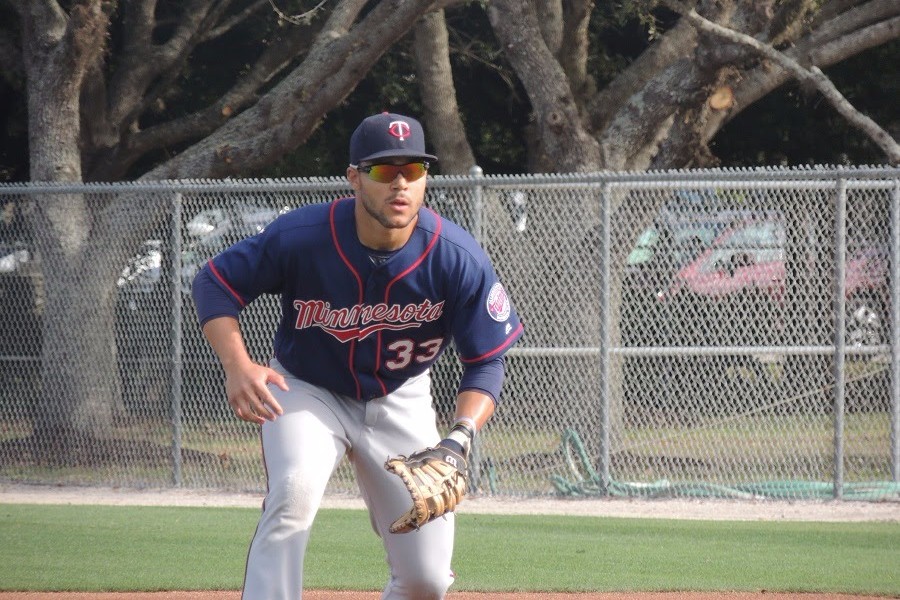 Ranking prospects is a difficult task and everyone has a bit of a different methodology. This series isn’t meant to be critical of any of the other lists out there, it’s all about presenting a positive case for the featured player. We’re starting at the bottom of my list and working up. Here’s a look at what’s on deck: Range 41-50 spotlight: Zander Wiel, No. 48 Range 31-40 spotlight: Coming Nov. 28 Range 21-30 spotlight: Coming Dec. 5 Range 11-20 spotlight: Coming Dec. 12 Range 1-10 spotlight: Coming Dec. 19 Zander Wiel has put up strong numbers in each of his first two full seasons in the Twins system, so what’s keeping him off of most prospect lists? Well, he’s just not a guy you can pin super lofty dreams on. Drafted in the 12th round out of Vanderbilt in 2015, Wiel has been old for his level at each stop of his minor league career thus far. The fact that he’s also a first baseman certainly doesn’t help his prospect stock, either. Wiel remained in Fort Myers for the entire 2017 season, and will enter this coming year as a 25-year-old with no experience above High-A. But, that exact same thing could’ve been said about Mitch Garver as he entered the 2016 season. While you can’t simply compare two guys and assume similar progressions, it is pretty interesting to look at Wiel’s 2017 results versus Garver’s 2015 numbers. Wiel 2017 (528 PAs with Fort Myers) .250/.344/.429 (.773 OPS) 13 HR, 11.8 BB%, 19.9 K% Garver 2015 (520 PAs with Fort Myers) .245/.356/.333 (.668 OPS) 4 HR, 13.3 BB%, 15.8 K% Garver’s sterling walk-to-strikeout rate stands out, but Wiel’s power numbers are far superior. Obviously, Garver played the much more demanding defensive position, but I still see reasons to be intrigued by Wiel. While 13 home runs may not seem like a ton on the surface, Wiel was tied for third in the Florida State League with that mark and only six other players in the Twins minor league system went deep more often in 2017. It was also the first time a Miracle hitter cracked double-digit homers since Adam Brett Walker slugged 25 in 2014. Wiel was tied for third in the FSL with 62 walks, which was also the third-highest total in the system, trailing only Jonathan Rodriguez (81) and LaMonte Wade (76). Who doesn’t love a guy who can hit for power and draw walks? The .250 batting average looks like a red flag, but that was due in large part to a .293 BABIP, the fifth-lowest in the FSL among 47 qualified hitters in the league. You may be thinking “yeah, but he was just beating up on a bunch of kids.” There may be some truth to that, but a deeper dive suggests to me that he won’t crumble against more advanced pitching. Yes, Wiel faced younger pitchers 78.8 percent of the time, but he thrived against competition more up to par with his level of experience. He was actually much better against older pitchers, hitting .266/.366/.468 (.834 OPS) in 112 plate appearances, posting nearly as many walks (16) as strikeouts (17). He also had strong numbers against some of the best pitchers in the FSL. Against the top five qualified pitchers in the league per FIP, Wiel hit .375/.474/.750 (1.224 OPS) over 19 plate appearances. Tiny sample size, I know, but it’s another shred of positive evidence in Wiel’s favor. Wiel also finished the year strong, hitting .291/.383/.488 (.871 OPS) over his final 36 games, showing he was prepared to take the next step. It’s too bad he didn’t get a shot in Double-A, but it’s not his fault Rodriguez was putting together an MVP-like campaign for the Lookouts. A big guy at 6-3 and 232 lbs, Wiel is more well-built than beefy. His athleticism shows up on the field, as he’s legged out 14 triples the past two seasons and is 15-for-18 in stolen base attempts (83.3 percent success rate) in his career. He even got some work in the outfield for the first time as a pro last year, logging 17 games in left field for the Miracle. Sometimes prospect rankings can be harsh on guys drafted out of college. I completely understand why, but players like Garver and Zack Granite are perfect examples of how prospect rankings, or perceived ceilings, only matter to a certain point. Potential only gets you so far and most players never reach their perceived ceilings. At the end of the day, it’s all about performance and continued improvement. So is Zander Wiel the heir apparent to Joe Mauer at first base? No, probably not. If you’ve made it this far, you can probably tell I have a bit of a thing for this guy, but he’s still down at No. 48 even on my list. We’re going to learn a lot about Wiel in 2018, however, and a big year against stiffer competition could really catapult his status. Wiel still has a long road ahead, but at the very least he’s a player worth familiarizing yourself with as he prepares to step up to the high minors in 2018. For more on Wiel and about 170 other Twins minor leaguers, be sure to pick up a copy of the 2018 Twins Prospect Handbook, which will be available later this winter.
 -
Article: Twins Add Three Players To 40 Man Roster
Tom Froemming replied to Seth Stohs's topic in Twins Daily Front Page News
That was nuts. I thought for sure he was going to come back to us once Mesoraco got healthy. The crazy thing is Cincy already has maybe the best defensive catcher in baseball in Tucker Barnhart signed through 2022, so why did they basically move mountains to keep Turner? Very strange. Entirely possible somebody does that with Diaz. -
Thome obviously had an incredible career, but how often was he truly among the absolute best few players in baseball? His MVP shares is shockingly low at 1.22. He topped out with a fourth-place finish in 2003. You may think that's a poor point of focus, but a lot of the same people who vote for the MVP also vote for the Hall of Fame. Jose Bautista has more MVP shares. So does Paul Goldschmidt. So does Nolan Arenado, who's only played five seasons. Thome was also only an All-Star five times.That's one fewer than Will Clark, Prince Fielder, Paul Konerko and Don Mattingly and the same as Andres Galarraga, Todd Helton and Fred McGriff. Again, not the greatest point of reference, but I think it's worth pointing out. Thome will get into the Hall of Fame, but if guys like Mike Piazza and Jeff Bagwell couldn't get in right away I think it'll take Thome a few years. Hell, guys like Edgar Martinez and Larry Walker are probably never getting in.
- 17 replies
-
- 2
-
-
- jim thome
- johan santana
- (and 2 more)
-
These are great, thanks Steve. Encouraging to see Paul, Vasquez and Hackimer all hold their own despite having never reached Double-A yet.
- 1 reply
-
- 2
-
-
- lamonte wade
- chris paul
- (and 2 more)
-
Article: Twins Add Three Players To 40 Man Roster
Tom Froemming replied to Seth Stohs's topic in Twins Daily Front Page News
I think Diaz gets picked, but ends up being returned. I'm curious if maybe the pitching moves suggest the team is more likely to beef up the bullpen via free agency than the rotation. One thing I'm confident about is this means the Twins will be active on the free agent market. Four spots open. Ohtani+Darvish+Wade Davis+Carols Santana = four baseball players. Coincidence? Well, yeah ... probably- 127 replies
-
- 10
-
-
- stephen gonsalves
- jake reed
- (and 3 more)
-
Really sucked? That's a bit harsh, no? Curtiss' K:BB numbers over that small sample certainly pass the sniff test (10 Ks, 2 BBs in 8.2 IP). He's also is actually younger than Burdi and averaged 95.6 mph on his fastball during his cup of coffee while Moya was at just 91.2 mph. I'm not saying Curtiss is in another class above those three other guys or anything like that, but you make him out to be trash. Seems to me he has a high ceiling, low floor, great results and we're certainly not going to nitpick his health when we're throwing Burdi or Jay into the same conversation, lol. What am I missing here? You must be forecasting more trouble with the longball/too much hard contact.
- 29 replies
-
- 2
-
-
- john curtiss
- felix jorge
- (and 3 more)
-
Article: What's Next For Kennys Vargas?
Tom Froemming replied to Tom Froemming's topic in Twins Daily Front Page News
Ha! Got me on that one. What would be the proper language to use here? His home territory? Home commonwealth? I guess I'll just go with homeland next time -
Congrats to Molitor. I don't think he's the best game manager, but I was very impressed with how his club finished out the year despite facing quite a bit of adversity, some of which was self inflicted by the front office. It would've been really easy for the team to just have quit in the second half. That was certainly a huge issue in Gardy's last four years. His clubs had a .444 winning percentage in the 1st half and just .365 in the 2nd half over that run. Anyway, here's hoping Molly can continue to set that tone of professionalism and consistent effort while also picking up some tricks from the new faces in the org.
- 37 replies
-
- 4
-
-
- paul molitor
- aj hinch
- (and 1 more)
-
Article: What's Next For Kennys Vargas?
Tom Froemming replied to Tom Froemming's topic in Twins Daily Front Page News
Thanks for the comments. There's a lot more support for Kennys than I had expected. It seemed like most of the offseason blueprints I was seeing had him left off the roster. Anyway, let's say Sano opens the year at something like 85-90% health. You feel comfortable DHing him, but not putting him at 3B. What do you do? Have him start the season on the DL until he was healthy? Or would you DH him and hope that doesn't hinder his recovery at all? -
Article: What's Next For Kennys Vargas?
Tom Froemming replied to Tom Froemming's topic in Twins Daily Front Page News
Very fair synopsis. I'd like to see him get another look, but with Sano's uncertainty it seems like that may be very difficult. Is there evidence he's had issues with that? True. He has the potential to be a star over there and make some good money for a few years, so if that's how it ends up I'll be happy for him. 2016/17 HR% (HR/PA) Dozier 5.46% Vargas 4.76% Put in other terms, if you gave both of them 600 plate appearances, based off their performances the past two seasons Dozier only out-homers Vargas by roughly four. Also, while we're comparing the two, Dozier's breakout came in his age 27 season, after he'd compiled 963 PAs. Vargas is entering his age 27 season and has 859 PAs. I think it's entirely possible Vargas is on the verge of taking the next step, but with his lack of any defensive value it's going to be pretty difficult to shoehorn him into the 25-man roster for the entire season, unless something unforeseen happens -
The Twins have already been busy trimming down their 40-man roster, but the shuffling has only just begun. As we approach a couple of important dates on the MLB transaction calendar, we should begin to get some clarity in regard to the future of one player in particular: Kennys Vargas.There's a legit argument to be made that Vargas has the most power in the Twins organization, and entering his age 27 season it's possible he's just now reaching his peak. He hit some of the most impressive homers of any Twins hitter last season. Here’s a look back at the five longest home runs hit by the Twins in 2017: It should come as no surprise that Vargas led the Twins in average home run distance, but his mark of 423 feet also led all of baseball among hitters with at least 10 homers. Only four players hit a ball farther than that 483-foot mammoth he destroyed. Vargas will be out of options in 2018, so he'll have to stick on the 25-man roster all season, but he'll still be incredibly cheap. He's not even eligible for arbitration yet. And when you take a look at his numbers, it appears he could the solution if the Twins are looking for an everyday DH. Vargas 2016-17 .244/.322/.466 (.788 OPS), HR/18.7 ABs AL DH Averages 2017 .243/.317/.418 (.735 OPS), HR/23.2 ABs It would be tough to lose a guy like that on waivers and get nothing in return. Still, Vargas’ future is heavily dependent on how the Twins think Sano will recover from his surgery and whether or not they bring back Robbie Grossman, among other things out of his control. The deadline to add players to the 40-man roster in order to protect them from the Rule 5 Draft is this coming Monday (Nov. 20). If Kennys makes the cut, the next big date becomes Dec. 1, the deadline to tender arbitration-eligible players, like Grossman, contracts for 2018. With his place on the roster tenuous at best, it doesn't seem likely Vargas would fetch much of a return via trade, but the Twins could always explore selling his rights to a team overseas. Earlier this offseason, Mike Berardino of the Pioneer Press wrote a piece that indicated Vargas has some interest in playing abroad if the opportunity presents itself. Still, I'm sure Vargas would love to stick with the Twins in particular because they'll be playing two games this April in San Juan, Puerto Rico, his home country. It'll be interesting to see where he ends up. Fun With Numbers Here are some more offensive numbers I found interesting while digging around at Baseball Savant: Twins Avg HR distance in feet (min. 10) 423-Vargas 413-Sano 405-Jason Castro 404-Eduardo Escobar 403-Byron Buxton 398-Max Kepler 397-Eddie Rosario 394-Brian Dozier 392-Jorge Polanco Twins Top 5 Avg. Exit Velocity (MPH) 92.4-Sano (fourth in MLB) 90.2-Joe Mauer 88.3-Kepler 87.5-Dozier 86.9-Castro Twins Top 5 Avg. Exit Velo on Fly Balls in MPH (min. 30 results) 97.7-Sano 95.0-Dozier 93.3-Buxton 92.7-Rosario 91.5-Vargas That's some particularly interesting stuff on Dozier. Is it possible to say that a guy doesn't necessarily have plus power, but at the same time say he's excellent at hitting home runs? That may sound like a backhanded compliment, but if anything it speaks to Dozier’s skill in capitalizing on the pitches he can hit out. He led the team in homers, but Dozier's most prodigious shot (435 feet) was just the 18th-longest on the team. But he also led the team with three in balls hit at least 400 feet that stayed in the yard. As a team, the Twins had 15 balls hit 400 feet or more that weren’t homers. The longest was a 428-foot blast by Sano on April 11 that went for a double. On Aug. 6, Jason Castro hit the longest ball for an out, it traveled 411 feet. Eddie Rosario hit the shortest homer of the year for the Twins, a 349-footer on June 16, but that wasn’t even a cheap one, comparatively speaking. The shortest homer in baseball last year was a 302-foot oppo taco Lorenzo Cain wrapped around Pesky’s Pole in Boston. Click here to view the article
-
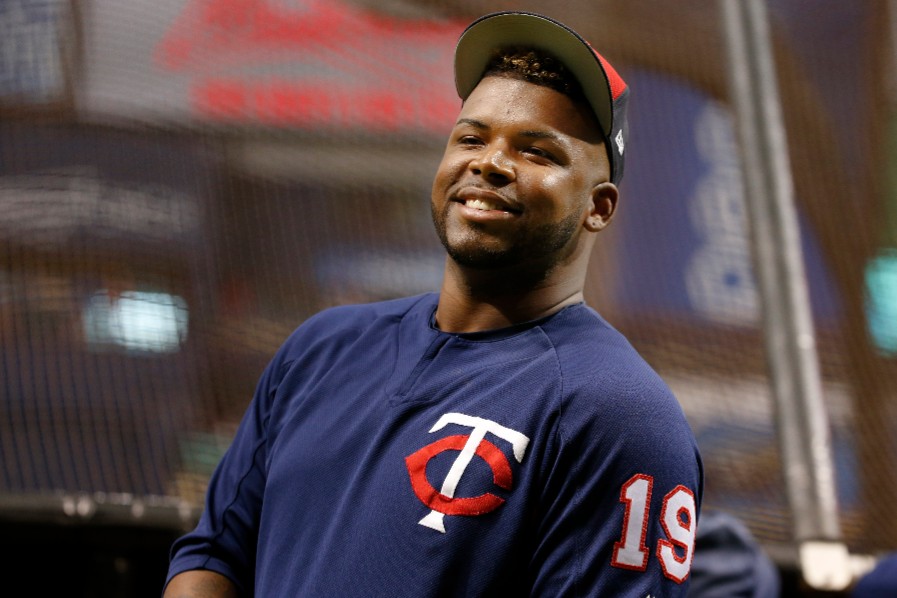 There's a legit argument to be made that Vargas has the most power in the Twins organization, and entering his age 27 season it's possible he's just now reaching his peak. He hit some of the most impressive homers of any Twins hitter last season. Here’s a look back at the five longest home runs hit by the Twins in 2017: https://twitter.com/TwinsHighlights/status/930248575560364032?s=17 https://twitter.com/TwinsHighlights/status/930249024812265472?s=17 https://twitter.com/TwinsHighlights/status/930249331306827776?s=17 https://twitter.com/TwinsHighlights/status/930249621095493635?s=17 https://twitter.com/TwinsHighlights/status/930249939480870912?s=17 It should come as no surprise that Vargas led the Twins in average home run distance, but his mark of 423 feet also led all of baseball among hitters with at least 10 homers. Only four players hit a ball farther than that 483-foot mammoth he destroyed. Vargas will be out of options in 2018, so he'll have to stick on the 25-man roster all season, but he'll still be incredibly cheap. He's not even eligible for arbitration yet. And when you take a look at his numbers, it appears he could the solution if the Twins are looking for an everyday DH. Vargas 2016-17 .244/.322/.466 (.788 OPS), HR/18.7 ABs AL DH Averages 2017 .243/.317/.418 (.735 OPS), HR/23.2 ABs It would be tough to lose a guy like that on waivers and get nothing in return. Still, Vargas’ future is heavily dependent on how the Twins think Sano will recover from his surgery and whether or not they bring back Robbie Grossman, among other things out of his control. The deadline to add players to the 40-man roster in order to protect them from the Rule 5 Draft is this coming Monday (Nov. 20). If Kennys makes the cut, the next big date becomes Dec. 1, the deadline to tender arbitration-eligible players, like Grossman, contracts for 2018. With his place on the roster tenuous at best, it doesn't seem likely Vargas would fetch much of a return via trade, but the Twins could always explore selling his rights to a team overseas. Earlier this offseason, Mike Berardino of the Pioneer Press wrote a piece that indicated Vargas has some interest in playing abroad if the opportunity presents itself. Still, I'm sure Vargas would love to stick with the Twins in particular because they'll be playing two games this April in San Juan, Puerto Rico, his home country. It'll be interesting to see where he ends up. Fun With Numbers Here are some more offensive numbers I found interesting while digging around at Baseball Savant: Twins Avg HR distance in feet (min. 10) 423-Vargas 413-Sano 405-Jason Castro 404-Eduardo Escobar 403-Byron Buxton 398-Max Kepler 397-Eddie Rosario 394-Brian Dozier 392-Jorge Polanco Twins Top 5 Avg. Exit Velocity (MPH) 92.4-Sano (fourth in MLB) 90.2-Joe Mauer 88.3-Kepler 87.5-Dozier 86.9-Castro Twins Top 5 Avg. Exit Velo on Fly Balls in MPH (min. 30 results) 97.7-Sano 95.0-Dozier 93.3-Buxton 92.7-Rosario 91.5-Vargas That's some particularly interesting stuff on Dozier. Is it possible to say that a guy doesn't necessarily have plus power, but at the same time say he's excellent at hitting home runs? That may sound like a backhanded compliment, but if anything it speaks to Dozier’s skill in capitalizing on the pitches he can hit out. He led the team in homers, but Dozier's most prodigious shot (435 feet) was just the 18th-longest on the team. But he also led the team with three in balls hit at least 400 feet that stayed in the yard. As a team, the Twins had 15 balls hit 400 feet or more that weren’t homers. The longest was a 428-foot blast by Sano on April 11 that went for a double. On Aug. 6, Jason Castro hit the longest ball for an out, it traveled 411 feet. Eddie Rosario hit the shortest homer of the year for the Twins, a 349-footer on June 16, but that wasn’t even a cheap one, comparatively speaking. The shortest homer in baseball last year was a 302-foot oppo taco Lorenzo Cain wrapped around Pesky’s Pole in Boston.
 -
Article: Minnesota’s Best Defensive Seasons
Tom Froemming replied to Cody Christie's topic in Twins Daily Front Page News
Hmm, you seem to have left out Joe Mauer's 2017 season Man, those Twins teams of the early 2000s were so fun to watch in the field. I'm interested if anybody in TD land has any recollections to share about catcher Butch Wynegar's 1979 season. He led the league in caught stealing at 53%, was behind the plate for 146 games and only had six errors and five passed balls. He was before my time, so I never saw him play. Obviously, evaluation of catcher defense has evolved quite a bit in recent years, but did he have a pretty strong reputation at the time? -
Man, these are five super talented guys to be outside the top 20. Would you say the depth across the system is above average compared to the last 10-15 years?
- 25 replies
-
- 3
-
-
- luis arraez
- kohl stewart
- (and 3 more)
-
This is an idea I've seen presented a few times now and it makes a ton of sense. Nothing against Polanco, he showed a massive improvement defensively, but it is fun to think about what could be with another stud defender at short.
-
Surprise Saguaros game, Thursday Nov 9
Tom Froemming commented on ashbury's blog entry in Left Coast Bias
I'm gonna to have to get down there one of these years. As someone who doesn't always really love the crowds and rarely sits in his assigned seat, this sounds great. Also, my go-to beverage at Target Field is the 24 oz PBR can. Not my favorite beer, but it's the best bang for your buck at the stadium.
