



Jamie Cameron
-
Posts
1,341 -
Joined
-
Last visited
-
Days Won
4
Content Type
Profiles
News
Minnesota Twins Videos
2026 Minnesota Twins Top Prospects Ranking
2022 Minnesota Twins Draft Picks
Minnesota Twins Free Agent & Trade Rumors, Notes, & Tidbits
Guides & Resources
2023 Minnesota Twins Draft Picks
The Minnesota Twins Players Project
2024 Minnesota Twins Draft Picks
2025 Minnesota Twins Draft Pick Tracker
2026 Minnesota Twins Draft Tracker: Picks & Bonuses
Forums
Blogs
Events
Store
Downloads
Gallery
Everything posted by Jamie Cameron
-
It’s easy, with the 2019 Minnesota Twins, for their excellence to get in the way of reason and rationality. On Monday night, I found myself screaming at the team after a magical performance by Jose Berrios was squandered by poor offensive execution. It was a totally unreasonable reaction to a team that had won 47 of its first 71 games. When considering the moves Derrick Falvey and Thad Levine made this offseason, it’s fair to say that most have worked out superbly for the Twins.When examining the performance of individual players, it’s important that context is factored in. What was their 2018 season like? What developments has the organization catalyzed in helping to maximize their production? Martin Perez should be viewed with such a contextual lens. The Twins signed Perez for $3.5 million with a team option year for 2020 (which they should pick up if he maintains his current level of performance). To put that another way, contract-wise, Perez was a lottery ticket reclamation project, who the Twins impressively turned around. He’s already been worth around $13 million to them based on his 2019 fWAR. Before we dig into Perez’s ups and downs, let’s set some historical precedent. Despite being a top prospect, it’s easy to overlook just how bad Perez has been throughout his career as a starting pitcher. In 2018, Perez put up a 6.22 ERA, his wOBA was .390 (bottom 1% of the league), xSLG was .471 (bottom 7% of the league) and his K% was 13% (bottom 1% of the league). Perez was, at best, a replacement level pitcher who gave up a ton of hard contact often. The addition of Perez’s cutter has completely transformed his outcomes as a pitcher. In 68.2 IP as a starter (he has 8.1 horrible innings in relief at the beginning of the season), he’s managed a 3.67 ERA, a .292 wOBA, and a K% of 22. Perez is in the top 5% of the league in Exit Velocity and Hard Hit%. To put it simply, he’s gone from giving up lots of hard contact, to less contact which is mostly soft. Perez really started to put things together in May. From the end of April to the end of May, he racked up 37.2 IP in six starts and gave up just 7 ER. Mechanical similarities and same-handedness had Twins fans ready to anoint the second coming of Johan Santana, then June happened. There’s been a ton of great work already published on Perez’s cutter. If you’re looking for a deeper dive on the pitch specifically, I’d suggest a great piece from Dan Hayes of the Athletic, or Twins Daily’s own Codie Christie, or a Baseball Prospectus piece from Aaron Gleeman. For me, pictures speak a thousand words, so I’ll just leave this beauty here (courtesy of Mike Petriello). One of the keys to Perez’s cutter has been his ability to locate the pitch, specifically down and in to right-handed hitters (more on that later). Perez has struggled more in recent outings, giving up 16 ER in his last 4 starts, so has he fallen off a cliff? What can we expect moving forward? Looking at Perez’s peripheral numbers is a good starting point when looking at small sample sizes, as they tell their own story. Download attachment: Perez1.png Perez had one clunker at the end of May in which he gave up 6 ER in 2.2 IP. Outside of this start, his May and June have been similar process, with slightly different results. There are however, a couple of notable differences about Perez’s setup over the last month. Perez’s vertical release point has dropped slightly.. Additionally, his horizontal release point has shifted towards the first base side of the rubber. It’s natural for pitchers release points to vary significantly throughout the course of the season, but in Perez’s case, it’s been accompanied by less pinpoint command. Download attachment: Perez2.png Download attachment: Perez3.png Perez is throwing a similar percentage of strikes from May to June. (63% in May VS 64% in June). What’s been significantly different between the two months is his LOB% (79% in May VS 44% in June - his career average is 68%). The side by side pitch heat maps show the location of Perez’s cutter and fastball. The left hand image in each pair shows Perez’s incredible stretch from late April to late May, the right hand image shows late May to mid-June. What’s noticeable about each pair is the consistency of Perez’s command when he’s in a groove. Perez consistently buried his cutter down and in to right handed hitter in May and has struggled to find the plate with it with consistency in June. Perez’s fastball tells a similar story. In May, the clustering is middle-in to right handed hitters. In June, his consistency is gone and he is leaving more fastballs middle up and inside to left-handed hitters. It’s not certain that Perez’s move across the rubber and a drop in his vertical release are causing these less consistent offerings, but his consistency in managing the plate has diminished significantly in his last 5-6 starts. Download attachment: Perez4.png Download attachment: Perez5.png It’s time we view Perez for what he is. He’s not consistently going to be the pitcher who threw eight shutout innings against the Astros on May 1st. Conversely, he’s not going to be the pitcher who gave up six earned in 2.2 IP against Tampa Bay on May 30th. In Perez, the Twins have created a viable mid-rotation starter whose performance has already paid for his 2019 salary four times over. If Perez continues his level of performance throughout the 2019 season, he’s a no-brainer to return to the Twins in 2020 and to a rotation with very little certainty surrounding it. Click here to view the article
-
What's Wrong With Martin Perez? A Deep Dive into Ups and Downs
Jamie Cameron posted an article in Twins
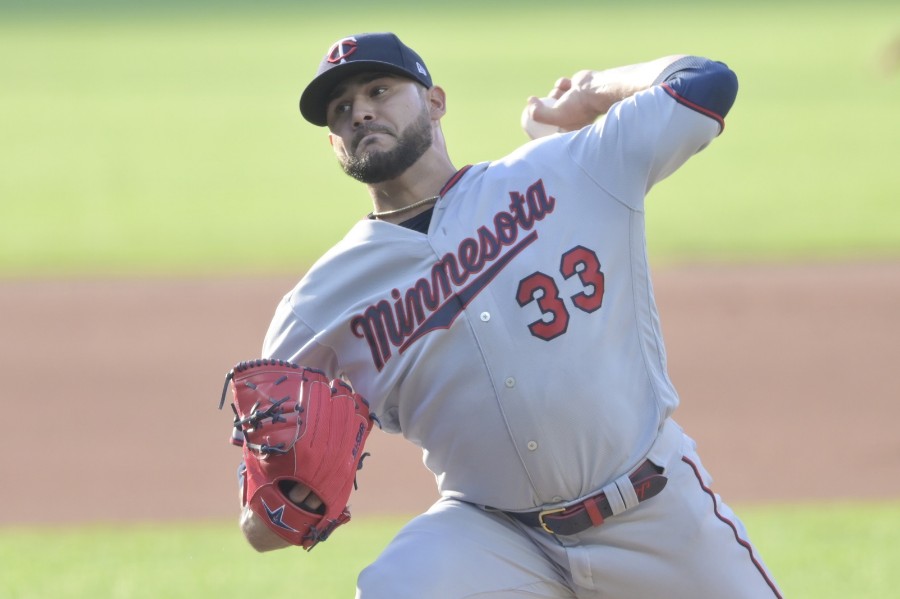 When examining the performance of individual players, it’s important that context is factored in. What was their 2018 season like? What developments has the organization catalyzed in helping to maximize their production? Martin Perez should be viewed with such a contextual lens. The Twins signed Perez for $3.5 million with a team option year for 2020 (which they should pick up if he maintains his current level of performance). To put that another way, contract-wise, Perez was a lottery ticket reclamation project, who the Twins impressively turned around. He’s already been worth around $13 million to them based on his 2019 fWAR. Before we dig into Perez’s ups and downs, let’s set some historical precedent. Despite being a top prospect, it’s easy to overlook just how bad Perez has been throughout his career as a starting pitcher. In 2018, Perez put up a 6.22 ERA, his wOBA was .390 (bottom 1% of the league), xSLG was .471 (bottom 7% of the league) and his K% was 13% (bottom 1% of the league). Perez was, at best, a replacement level pitcher who gave up a ton of hard contact often. The addition of Perez’s cutter has completely transformed his outcomes as a pitcher. In 68.2 IP as a starter (he has 8.1 horrible innings in relief at the beginning of the season), he’s managed a 3.67 ERA, a .292 wOBA, and a K% of 22. Perez is in the top 5% of the league in Exit Velocity and Hard Hit%. To put it simply, he’s gone from giving up lots of hard contact, to less contact which is mostly soft. Perez really started to put things together in May. From the end of April to the end of May, he racked up 37.2 IP in six starts and gave up just 7 ER. Mechanical similarities and same-handedness had Twins fans ready to anoint the second coming of Johan Santana, then June happened. There’s been a ton of great work already published on Perez’s cutter. If you’re looking for a deeper dive on the pitch specifically, I’d suggest a great piece from Dan Hayes of the Athletic, or Twins Daily’s own Codie Christie, or a Baseball Prospectus piece from Aaron Gleeman. For me, pictures speak a thousand words, so I’ll just leave this beauty here (courtesy of Mike Petriello). One of the keys to Perez’s cutter has been his ability to locate the pitch, specifically down and in to right-handed hitters (more on that later). https://twitter.com/mike_petriello/status/1121942309573144577 Perez has struggled more in recent outings, giving up 16 ER in his last 4 starts, so has he fallen off a cliff? What can we expect moving forward? Looking at Perez’s peripheral numbers is a good starting point when looking at small sample sizes, as they tell their own story. Perez had one clunker at the end of May in which he gave up 6 ER in 2.2 IP. Outside of this start, his May and June have been similar process, with slightly different results. There are however, a couple of notable differences about Perez’s setup over the last month. Perez’s vertical release point has dropped slightly.. Additionally, his horizontal release point has shifted towards the first base side of the rubber. It’s natural for pitchers release points to vary significantly throughout the course of the season, but in Perez’s case, it’s been accompanied by less pinpoint command. Perez is throwing a similar percentage of strikes from May to June. (63% in May VS 64% in June). What’s been significantly different between the two months is his LOB% (79% in May VS 44% in June - his career average is 68%). The side by side pitch heat maps show the location of Perez’s cutter and fastball. The left hand image in each pair shows Perez’s incredible stretch from late April to late May, the right hand image shows late May to mid-June. What’s noticeable about each pair is the consistency of Perez’s command when he’s in a groove. Perez consistently buried his cutter down and in to right handed hitter in May and has struggled to find the plate with it with consistency in June. Perez’s fastball tells a similar story. In May, the clustering is middle-in to right handed hitters. In June, his consistency is gone and he is leaving more fastballs middle up and inside to left-handed hitters. It’s not certain that Perez’s move across the rubber and a drop in his vertical release are causing these less consistent offerings, but his consistency in managing the plate has diminished significantly in his last 5-6 starts. It’s time we view Perez for what he is. He’s not consistently going to be the pitcher who threw eight shutout innings against the Astros on May 1st. Conversely, he’s not going to be the pitcher who gave up six earned in 2.2 IP against Tampa Bay on May 30th. In Perez, the Twins have created a viable mid-rotation starter whose performance has already paid for his 2019 salary four times over. If Perez continues his level of performance throughout the 2019 season, he’s a no-brainer to return to the Twins in 2020 and to a rotation with very little certainty surrounding it.
 -
It's no secret, the Twins will be seeking bullpen help as the trade deadline approaches. The current group of relievers has helped get the Twins where they are, but let's face it, there is plenty of evidence that suggests upgrades are required. Who may be available? Today, we'll take a look at White Sox closer Alex Colome.Alex Colome, RHP, 30-years-old Chicago White Sox (31-34, 3rd in NL West) Under team control via arbitration through 2020. 2019: 2.39 ERA, 0.72 WHIP, 8.20 K/9, 2.73 BB/9 in 26.1 IP 2018: 3.04 ERA, 1.18 WHIP, 9.53 K/9, 2.78 BB/9 in 68.0 IP Since his full-time switch into the Rays bullpen in 2016, Alex Colome has been a model of consistency at the backend of games for Tampa Bay and Seattle. In Colome, the Twins would be trading for an established closer. The White Sox acquired Colome from Seattle in exchange for Omar Narvaez in November of 2018, a very reasonable price for a high-end bullpen arm (although It should be noted that Narvaez is having a career year at the plate thus far in 2019, having amassed a 1.4 fWAR through his first 58 games played). Colome is earning around $7.3 million in 2019, and is under team control for one more full season in 2020 through arbitration (his age 31 season). What’s to Like? Colome has continued to put up excellent numbers for the White Sox in 2019. He is essentially a two pitch pitcher, featuring a four seam fastball and a cutter he throws at approximately a 40-60 ratio. Colome’s fastball tops out at around 94-95 mph range. Over the last 3 years only Edwin Diaz, Craig Kimbrel, Kenley Jansen, and Wade Davis have saved more games. This is in spite of Colome occupying a setup role to Edwin Diaz for Seattle for part of the 2018 season. Concerns There are a ton of indicators that Colome may be due for a regression in the near future. His fastball is down over one mph on average in 2019 (that’s an especially big deal if you only throw two pitches). Additionally, Colome has benefited from a .117 BABIP (compared to a career figure of .279). Colome’s K/9 has dropped sharply, although this figure has varied widely in his strong 4 year run between 7.8-11.2 K/9. Colome has also seen about a 10% drop in GB%, a sharp uptick in HR/9, and his FIP (4.22) and xFIP (4.59) belie his sparkling 2.39 ERA. Perhaps most alarmingly, Colome has gone from allowing approximately 4% of the pitchers opposing hitters contact to be barreled, to 14.1% in 2019, which is a figure in the bottom 2% of the league. Colome might be a solid add for a contending team in 2019, but the Twins should stay well away. See Also Seth Lugo, RHP, Mets Greg Holland, RHP, Diamondbacks Sean Doolittle, LHP, Nationals Kirby Yates, RHP, Padres 10 Relievers Minnesota Could Target Click here to view the article
-
Potential Twins Bullpen Target: Alex Colome, RHP, White Sox
Jamie Cameron posted an article in Twins
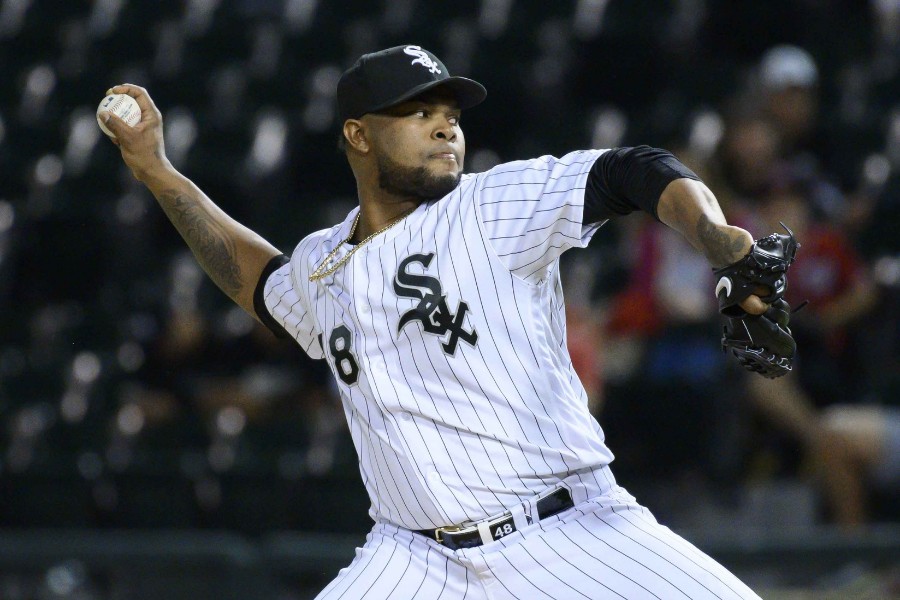 Alex Colome, RHP, 30-years-old Chicago White Sox (31-34, 3rd in NL West) Under team control via arbitration through 2020. 2019: 2.39 ERA, 0.72 WHIP, 8.20 K/9, 2.73 BB/9 in 26.1 IP 2018: 3.04 ERA, 1.18 WHIP, 9.53 K/9, 2.78 BB/9 in 68.0 IP Since his full-time switch into the Rays bullpen in 2016, Alex Colome has been a model of consistency at the backend of games for Tampa Bay and Seattle. In Colome, the Twins would be trading for an established closer. The White Sox acquired Colome from Seattle in exchange for Omar Narvaez in November of 2018, a very reasonable price for a high-end bullpen arm (although It should be noted that Narvaez is having a career year at the plate thus far in 2019, having amassed a 1.4 fWAR through his first 58 games played). Colome is earning around $7.3 million in 2019, and is under team control for one more full season in 2020 through arbitration (his age 31 season). What’s to Like? Colome has continued to put up excellent numbers for the White Sox in 2019. He is essentially a two pitch pitcher, featuring a four seam fastball and a cutter he throws at approximately a 40-60 ratio. Colome’s fastball tops out at around 94-95 mph range. Over the last 3 years only Edwin Diaz, Craig Kimbrel, Kenley Jansen, and Wade Davis have saved more games. This is in spite of Colome occupying a setup role to Edwin Diaz for Seattle for part of the 2018 season. Concerns There are a ton of indicators that Colome may be due for a regression in the near future. His fastball is down over one mph on average in 2019 (that’s an especially big deal if you only throw two pitches). Additionally, Colome has benefited from a .117 BABIP (compared to a career figure of .279). Colome’s K/9 has dropped sharply, although this figure has varied widely in his strong 4 year run between 7.8-11.2 K/9. Colome has also seen about a 10% drop in GB%, a sharp uptick in HR/9, and his FIP (4.22) and xFIP (4.59) belie his sparkling 2.39 ERA. Perhaps most alarmingly, Colome has gone from allowing approximately 4% of the pitchers opposing hitters contact to be barreled, to 14.1% in 2019, which is a figure in the bottom 2% of the league. Colome might be a solid add for a contending team in 2019, but the Twins should stay well away. See Also Seth Lugo, RHP, Mets Greg Holland, RHP, Diamondbacks Sean Doolittle, LHP, Nationals Kirby Yates, RHP, Padres 10 Relievers Minnesota Could Target
 -
Thanks, I appreciate you reading!
-
Definitely a great candidate for a bounce back year. Low risk, high reward potentially
-
LOL. You should write a more comprehensive blog post outlining the rest and what they might bring to the table. Just chose 4 I liked. Didn't claim a comprehensive list.
- 43 replies
-
- 3
-

-
- nick vincent
- bud norris
- (and 2 more)
-
This is an interesting thought. I'd respectfully disagree. I think it's more nuanced than that. I agree that most of the guys that can take the pen ceiling to the next level are gone, but I think there are guys who can still raise the floor. If they were punting the season, I'd agree with you. If they had given their internal guys more innings on the back end of a lost season last year, then it maybe wouldn't be a question that needs answering.
-
LOL! Thanks for reading! I only started writing for the site last season, plus two kids, school to run, I'll get my rate up when spring gets going!
- 43 replies
-
- 1
-
-
- nick vincent
- bud norris
- (and 2 more)
-
Great noticing. Very Gordon-esque tale of two halves.
-
Agree, definitely a ton of other names to look out for. I specifically looked at RHP but LHP would have included Alex Wilson and Xavier Cedeno.
-
Twins fans became apoplectic on Friday evening when Cody Allen, coming off a horrendous 2018, signed a one-year pact with the Angels. Allen represented the last big-name, big-rep free agent reliever available besides Craig Kimbrel. Twins Twitter instantly descended into a level of chaos usually reserved for dystopian Jimmy Butler practice sessions or Vikings kickers. I’m not here to talk about the payroll (too low, and I have a right to complain about eight years of pretty garbage baseball). I’m mostly interested in answering the question who are some free agent relievers who could help the Twins in 2019?As we know from the Addison Reed signing, or the Rockies bullpen in general, relief pitching free agency is a fickle mistress. With all that said, there are a fair few intriguing arms left. Here are a few I think could help the 2019 team while they’re … getting the nucleus right. Nick Vincent ERA 3.99, K/9 8.95, BB/9 2.40, FIP 3.75, xwOBA .279, avg. exit velo 85.0 Vincent is one of my favorite under the radar FA relievers. He had a really solid 2018 with the Mariners, albeit in a ballpark which suits his game. He made his MLB debut in 2012 with the Padres. At 6’0, 185lb, Vincent does not overpower, with a four-seem fastball, cutter, slider, and changeup combination. His fastball averaged just 90.1 mph in 2018. Due to a combination of arm side run and rise, it generates a good amount of swings and misses for a pitch with poor velocity. Vincent finished 2018 17th (out of 310 qualified pitchers) in average exit velocity. His ability to induce weak contact, in addition to what should be a good Twins outfield defense, could set him up well in 2018. He made $2.8 million in 2018. Bud Norris ERA 3.59, K/9 10.46, BB/9 3.28, FIP 3.99, xwOBA .321, Avg. exit velo 86.6 In recent years, Norris has made the transition from OK starter to pretty good reliever, most recently for the St. Louis Cardinals. At 6'0", 215 pounds, Norris has a more stocky, thick body, and it’s reflected in the type of reliever he has become. Norris offers a hard, flat fastball the averages 95 mph which he combines with a cutter, his best pitch. Norris generated an outstanding 58 percent groundball rate on his cutter. Opposing hitters managed just a .117 ISO against this pitch and a wRC+ 64. Norris has retained an encouraging level of consistency in his two seasons of relief work, putting up almost identical K/9, BB/9, FIP, and xFIP between 2017 and 2018. He could slot into the back end of the Twins bullpen as a setup option, or even close games in a pinch. Norris earned $3 million with the Cardinals last season. Brad Brach ERA 3.59, K/9 8.62, BB/9 4.02, FIP 3.67, xwOBA .284, Avg. exit velo 86.8 Brach is an interesting name. He’s been one of the most consistent mid-tier relievers in recent seasons, amassing 4.3 fWAR over his last four seasons (Taylor Rogers was the only Twins reliever to amass over 1.0 in 2018). Brach is a large human, at 6’6" 215 pounds. He has a track record of excellent consistency in his last five seasons, pitching at least 60 innings in each with an ERA never surpassing 3.59. Brach offers a hard fastball which averages 94.5 mph, a slider, and a changeup. Brach’s fastball took a step back last year, losing some velocity and effectiveness. He also has some of the most worrying peripherals, his K/9 decreasing from 10.48 to 8.62 in the last two seasons, while his BB/9 has climbed from 2.85 to 4.02. He made $5.2 million with Atlanta in 2018. Adam Warren ERA 3.14, K/9 9.06, BB/9 3.48, xwOBA .344, avg. exit velo 86.8 The 31-year-old Warren is another solid option for the Twins. Warren has a track record of success, similar to Brach, amassing 4.8 fWAR in 3 excellent seasons with the Yankees. Warren has good, not great velocity to go with a good not great fastball. He generates most of his value from his slider, which, uniquely, he throws slightly more than his fastball, around 32 percent of the time. This is interesting considering the Astros success leveraging the breaking pitches of their staff to increase effectiveness. Warren made $3.3 million with the Mariners in 2018. Despite the Twins failing to land a bigger name FA reliever, there is still plenty of talent available on the FA market. Who would you like to see the Twins sign or trade for in the coming weeks? Click here to view the article
-
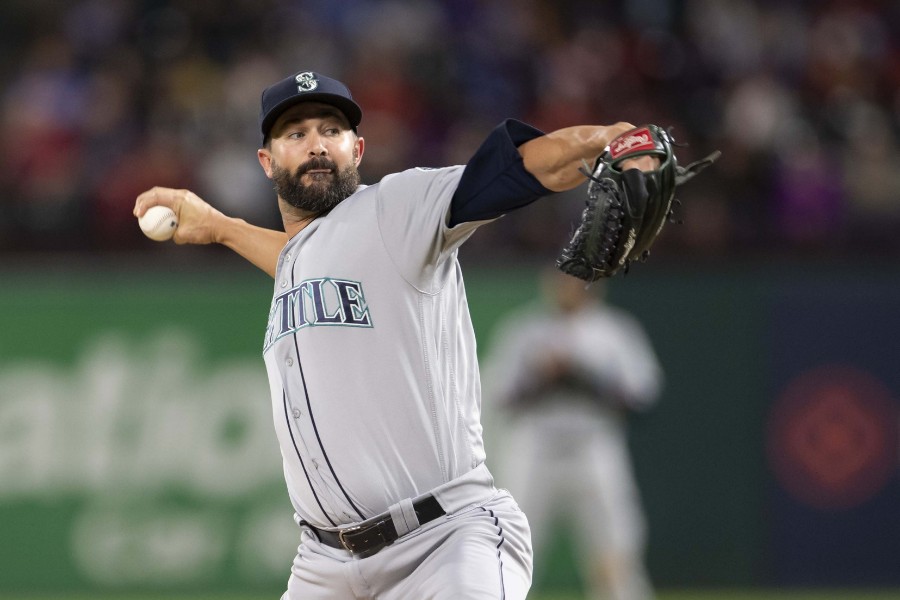 As we know from the Addison Reed signing, or the Rockies bullpen in general, relief pitching free agency is a fickle mistress. With all that said, there are a fair few intriguing arms left. Here are a few I think could help the 2019 team while they’re … getting the nucleus right. Nick Vincent ERA 3.99, K/9 8.95, BB/9 2.40, FIP 3.75, xwOBA .279, avg. exit velo 85.0 https://gfycat.com/earnestselfassuredguineapig Vincent is one of my favorite under the radar FA relievers. He had a really solid 2018 with the Mariners, albeit in a ballpark which suits his game. He made his MLB debut in 2012 with the Padres. At 6’0, 185lb, Vincent does not overpower, with a four-seem fastball, cutter, slider, and changeup combination. His fastball averaged just 90.1 mph in 2018. Due to a combination of arm side run and rise, it generates a good amount of swings and misses for a pitch with poor velocity. Vincent finished 2018 17th (out of 310 qualified pitchers) in average exit velocity. His ability to induce weak contact, in addition to what should be a good Twins outfield defense, could set him up well in 2018. He made $2.8 million in 2018. Bud Norris ERA 3.59, K/9 10.46, BB/9 3.28, FIP 3.99, xwOBA .321, Avg. exit velo 86.6 https://gfycat.com/idealcomposedanchovy In recent years, Norris has made the transition from OK starter to pretty good reliever, most recently for the St. Louis Cardinals. At 6'0", 215 pounds, Norris has a more stocky, thick body, and it’s reflected in the type of reliever he has become. Norris offers a hard, flat fastball the averages 95 mph which he combines with a cutter, his best pitch. Norris generated an outstanding 58 percent groundball rate on his cutter. Opposing hitters managed just a .117 ISO against this pitch and a wRC+ 64. Norris has retained an encouraging level of consistency in his two seasons of relief work, putting up almost identical K/9, BB/9, FIP, and xFIP between 2017 and 2018. He could slot into the back end of the Twins bullpen as a setup option, or even close games in a pinch. Norris earned $3 million with the Cardinals last season. Brad Brach ERA 3.59, K/9 8.62, BB/9 4.02, FIP 3.67, xwOBA .284, Avg. exit velo 86.8 https://gfycat.com/jaggedunfinishedcob Brach is an interesting name. He’s been one of the most consistent mid-tier relievers in recent seasons, amassing 4.3 fWAR over his last four seasons (Taylor Rogers was the only Twins reliever to amass over 1.0 in 2018). Brach is a large human, at 6’6" 215 pounds. He has a track record of excellent consistency in his last five seasons, pitching at least 60 innings in each with an ERA never surpassing 3.59. Brach offers a hard fastball which averages 94.5 mph, a slider, and a changeup. Brach’s fastball took a step back last year, losing some velocity and effectiveness. He also has some of the most worrying peripherals, his K/9 decreasing from 10.48 to 8.62 in the last two seasons, while his BB/9 has climbed from 2.85 to 4.02. He made $5.2 million with Atlanta in 2018. Adam Warren ERA 3.14, K/9 9.06, BB/9 3.48, xwOBA .344, avg. exit velo 86.8 https://gfycat.com/soupyanxiousbrant The 31-year-old Warren is another solid option for the Twins. Warren has a track record of success, similar to Brach, amassing 4.8 fWAR in 3 excellent seasons with the Yankees. Warren has good, not great velocity to go with a good not great fastball. He generates most of his value from his slider, which, uniquely, he throws slightly more than his fastball, around 32 percent of the time. This is interesting considering the Astros success leveraging the breaking pitches of their staff to increase effectiveness. Warren made $3.3 million with the Mariners in 2018. Despite the Twins failing to land a bigger name FA reliever, there is still plenty of talent available on the FA market. Who would you like to see the Twins sign or trade for in the coming weeks?
 -
The hot stove is officially burning. With the trade of James Paxton to the Yankees on Monday, the offseason began in earnest. Over the coming weeks, Twins fans will be able to move from reckless speculation to analyzing the moves of their bold front office in addressing their pressing off-season needs. What’s evident in the work of the front office, is that they are not risk averse. With needs in the middle infield, bullpen, corner infield, and the rotation, Falvey and Levine seem intent on addressing them via as many angles as possible, including trades and player development. If there’s a personnel area that lends itself to free agency, it’s another strong relief pitching free agent class.Before adding, it’s important to examine what the organization already has. Last week, I took a look at some encouraging signs from Trevor May and his 2018 breakout. The Twins other primary bullpen asset is Taylor Rogers, an organizational success story who took strides to becoming a borderline top 10 reliever in 2018. If he can build upon his progress in 2019, its possible he can be a top 5 reliever. Bold claim? Let’s dig in. Rogers, a 2012 11th round pick, had occupied a typical LHP role in the Twins bullpen in his first two seasons. He was highly effective against LHH and struggled much more against RHH. There’s nothing unusual about that. In 2018 he took extraordinary strides that led to some truly impressive outcomes: 2018 (MLB rank among qualified relievers) BB% 6.25% (25th) xFIP 2.94 (14th) WAR 1.9 (11th) WPA 2.65 (9th) Rogers provided a set of qualities which, when spiraled together, make for a huge value add; left-handed, excellent control, and a high degree of success in high leverage situations. Similarly to previous seasons however, it was a tale of two halves for Rogers, which hinged around him adding a slider midway through the season. Before digging into Rogers’ new pitch mix, it’s worthwhile to examine his historical performance, particularly with regard to his lefty/righty splits, which usually separate elite left-handed relief pitchers from situational left-handed relievers. Here’s a breakdown of Rogers’ splits against LHH and RHH in his three MLB seasons with the Twins. Download attachment: RogersTable1.png These data are a testament to Rogers development over time. Rogers has gone from being completely ineffective vs. RHH to above average in 2018, posting career best avg., K%, and xFIP against opposite handed hitters. He has always been a highly effective pitcher against LHH. Nevertheless, his K% against LHH spiked dramatically in 2018 (36% K rate overall would put him eighth among MLB relievers, right ahead of Adam Ottavino). That Rogers is building on his strengths in addition to improving his deficiencies is a huge positive for the Twins. Rogers ability to pitch to right handed hitters makes him an extremely valuable commodity. He amassed an fWAR of 1.9 in 2018, good for fifth among left-handed relievers (for anyone who doesn’t appreciate WAR for relievers, read this). Dan Hayes beautifully detailed how Rogers added his slider midway through the 2018 season. Unsurprisingly, this significantly altered Rogers’ pitch mix – detailed below: Download attachment: RogersTable2.png These numbers have to be taken with a grain of salt given that Rogers only began throwing his slider in May, and in earnest approaching and after the All-Star break. Rogers add of a third pitch had a variety of positive impacts on his outputs throughout the season. Most obviously, Rogers slider reduced the load on his fastball, which is a good, if not great pitch. Despite mixing his slider into his repertoire cautiously at first, Rogers, per Hayes, is unyielding in his claim that he only gave up one hit on the pitch all year, a remarkable accomplishment for a new pitch folded in mid-season. The most dramatic impact Rogers made in 2018 was the improvement of his curveball, which went from a below average pitch in 2017, to a pitch worth about eight runs in 2018. Rogers made a variety of mechanical alterations to his curveball in 2018, under the tutelage of then bullpen coach Eddie Guardado. Guardado encouraged Rogers to increase his arm extension upon releasing the pitch, making his mechanics more repeatable. This is born out in Rogers improved command of the pitch in 2018. Download attachment: RogersImage1.png Rogers was consistently able to work his curveball down in the zone with his improved delivery. Rogers was so consistent with his curveball command that he significantly limited opposing hitters’ ability to contact the pitch. O-Contact% measures the frequency with which opposing hitters contact pitches thrown outside the strike zone. In the second half of 2018, Rogers ranked fifth in this metric among all relievers at 40.6% (league average is around 65%). Statcast offers visuals which illustrate Rogers’ command of his breaking pitches. Below are images of all the pitches Rogers threw in two separate outings. On the left, a 2017 outing against the Rangers. On the right, a 2018 outing against Pittsburgh. The blue graphics represent Rogers’ curveball, the yellow, his slider. Notice the tight clustering at the bottom of the zone is his 2018 appearance, compared to more of a spread from his breaking pitches in 2017. Download attachment: RogersImage2.png Rogers' improved command, combined with more horizontal and vertical movement on the pitch in 2018, resulted in an offering with a soul-crushing level of dominance. In 2018 Rogers gave up a .330 OPS, .015 ISO, and .152 wOBA via his curveball, with a 51.5 K%, a truly dominant pitch. As Rogers confidence in his new pitch mix improved, so did his results. After July 28th, he didn’t give up another earned run all season, an incredible run spanning 28 appearances, during which Rogers gave up a .119 avg., .147 wOBA, and a K/BB of 9.7. Extrapolating Rogers second half numbers to a full season is a mouthwatering, if foolish prospect. After the 2018 All-Star break, Rogers was the second most valuable reliever in baseball and raised his K/9 to 11.00. Parsing those numbers out over a full season and Rogers is the fifth most valuable reliever in MLB. While this may be an unrealistic expectation for 2019, Rogers is an incredible success story in player development and a high leverage relief pitching option the Twins should build their bullpen around for the foreseeable future. Click here to view the article
-
Rogers’ Curveball Sparks Rise to Upper-Echelon of MLB Relievers
Jamie Cameron posted an article in Twins
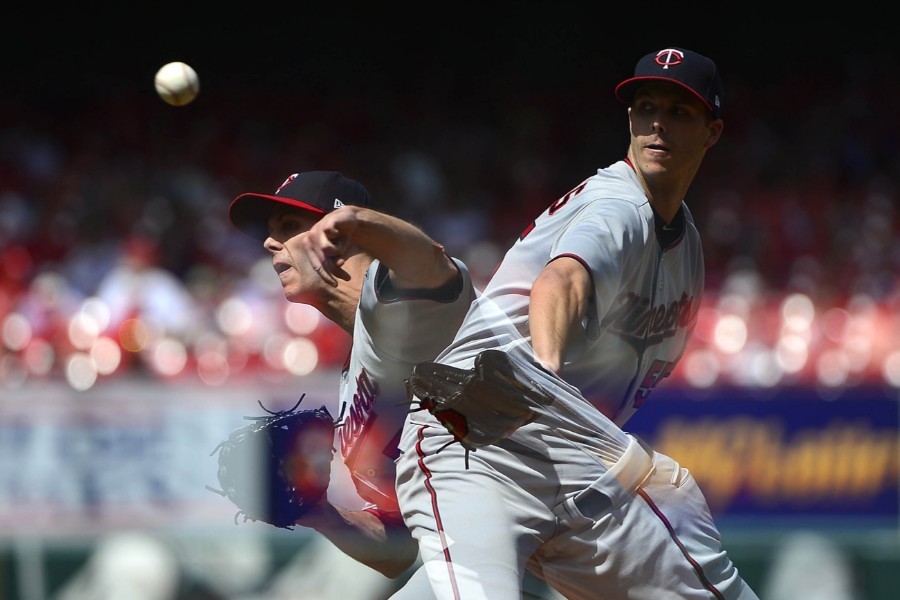 Before adding, it’s important to examine what the organization already has. Last week, I took a look at some encouraging signs from Trevor May and his 2018 breakout. The Twins other primary bullpen asset is Taylor Rogers, an organizational success story who took strides to becoming a borderline top 10 reliever in 2018. If he can build upon his progress in 2019, its possible he can be a top 5 reliever. Bold claim? Let’s dig in. Rogers, a 2012 11th round pick, had occupied a typical LHP role in the Twins bullpen in his first two seasons. He was highly effective against LHH and struggled much more against RHH. There’s nothing unusual about that. In 2018 he took extraordinary strides that led to some truly impressive outcomes: 2018 (MLB rank among qualified relievers) BB% 6.25% (25th) xFIP 2.94 (14th) WAR 1.9 (11th) WPA 2.65 (9th) Rogers provided a set of qualities which, when spiraled together, make for a huge value add; left-handed, excellent control, and a high degree of success in high leverage situations. Similarly to previous seasons however, it was a tale of two halves for Rogers, which hinged around him adding a slider midway through the season. Before digging into Rogers’ new pitch mix, it’s worthwhile to examine his historical performance, particularly with regard to his lefty/righty splits, which usually separate elite left-handed relief pitchers from situational left-handed relievers. Here’s a breakdown of Rogers’ splits against LHH and RHH in his three MLB seasons with the Twins. These data are a testament to Rogers development over time. Rogers has gone from being completely ineffective vs. RHH to above average in 2018, posting career best avg., K%, and xFIP against opposite handed hitters. He has always been a highly effective pitcher against LHH. Nevertheless, his K% against LHH spiked dramatically in 2018 (36% K rate overall would put him eighth among MLB relievers, right ahead of Adam Ottavino). That Rogers is building on his strengths in addition to improving his deficiencies is a huge positive for the Twins. Rogers ability to pitch to right handed hitters makes him an extremely valuable commodity. He amassed an fWAR of 1.9 in 2018, good for fifth among left-handed relievers (for anyone who doesn’t appreciate WAR for relievers, read this). Dan Hayes beautifully detailed how Rogers added his slider midway through the 2018 season. Unsurprisingly, this significantly altered Rogers’ pitch mix – detailed below: These numbers have to be taken with a grain of salt given that Rogers only began throwing his slider in May, and in earnest approaching and after the All-Star break. Rogers add of a third pitch had a variety of positive impacts on his outputs throughout the season. Most obviously, Rogers slider reduced the load on his fastball, which is a good, if not great pitch. Despite mixing his slider into his repertoire cautiously at first, Rogers, per Hayes, is unyielding in his claim that he only gave up one hit on the pitch all year, a remarkable accomplishment for a new pitch folded in mid-season. The most dramatic impact Rogers made in 2018 was the improvement of his curveball, which went from a below average pitch in 2017, to a pitch worth about eight runs in 2018. Rogers made a variety of mechanical alterations to his curveball in 2018, under the tutelage of then bullpen coach Eddie Guardado. Guardado encouraged Rogers to increase his arm extension upon releasing the pitch, making his mechanics more repeatable. This is born out in Rogers improved command of the pitch in 2018. Rogers was consistently able to work his curveball down in the zone with his improved delivery. Rogers was so consistent with his curveball command that he significantly limited opposing hitters’ ability to contact the pitch. O-Contact% measures the frequency with which opposing hitters contact pitches thrown outside the strike zone. In the second half of 2018, Rogers ranked fifth in this metric among all relievers at 40.6% (league average is around 65%). Statcast offers visuals which illustrate Rogers’ command of his breaking pitches. Below are images of all the pitches Rogers threw in two separate outings. On the left, a 2017 outing against the Rangers. On the right, a 2018 outing against Pittsburgh. The blue graphics represent Rogers’ curveball, the yellow, his slider. Notice the tight clustering at the bottom of the zone is his 2018 appearance, compared to more of a spread from his breaking pitches in 2017. Rogers' improved command, combined with more horizontal and vertical movement on the pitch in 2018, resulted in an offering with a soul-crushing level of dominance. In 2018 Rogers gave up a .330 OPS, .015 ISO, and .152 wOBA via his curveball, with a 51.5 K%, a truly dominant pitch. As Rogers confidence in his new pitch mix improved, so did his results. After July 28th, he didn’t give up another earned run all season, an incredible run spanning 28 appearances, during which Rogers gave up a .119 avg., .147 wOBA, and a K/BB of 9.7. Extrapolating Rogers second half numbers to a full season is a mouthwatering, if foolish prospect. After the 2018 All-Star break, Rogers was the second most valuable reliever in baseball and raised his K/9 to 11.00. Parsing those numbers out over a full season and Rogers is the fifth most valuable reliever in MLB. While this may be an unrealistic expectation for 2019, Rogers is an incredible success story in player development and a high leverage relief pitching option the Twins should build their bullpen around for the foreseeable future.
 -
This sounds like a great counter argument you should put in a blog post @TwinsDaily
-
I distinctly remember watching Trevor May pitch in the spring of 2017 for the Twins vs. Team USA, tuning up for the WBC. May was looking smooth early against a loaded Team USA lineup before being removed with arm discomfort. A torn UCL and 16 months of recovery and rehab later, and May made his return to the Twins major league club in July, after a rehab stint primarily at AAA Rochester. Fast forward a few short months and May has established himself as a high leverage reliever in a Twins bullpen surrounded by uncertainty headed into the offseason.History May is a relative late bloomer and has been around for a long time. The 29-year-old was drafted in the fourth round of the 2008 June amateur draft. May found himself with the Twins after being traded for light-hitting center fielder Ben Revere. May made his big-league debut in 2014, showing solid stuff, but struggling consistently with command and control. Since his debut, there has been a constant question around whether he would feature as a starter or relief pitcher in a franchise particularly starved for the former. Prior to his 2017 injury, May logged around 200 innings for the Twins, typically showing signs of promise with peripheral numbers out-performing more mainstream stats. There were a number of indicators that show that 2018 was the year May made a significant leap forwards. 2018 numbers Here are some numbers which frame May’s 2018 excellence: Download attachment: Screenshot 2018-11-11 at 8.07.51 PM.png Pitch mix and values May offers a four-pitch mix which includes a four-seam fastball (94mph), curve (78mph), slider (87mph), and changeup (86mph). May’s fastball is relatively flat, with slightly above average velocity. He has good downward movement on his curveball and a changeup which generates a large number of ground balls. All this is fairly typical and would not lead one to the conclusion that May would produce the kind of results he did in 2018 (albeit with a limited sample size). This begs the question - how is May getting such outstanding results without truly mind-blowing reliever stuff? May’s July return did not herald any great difference in his pitch mix, save for throwing fewer sliders than previously. May threw his fastball around 60% of the time, his changeup around 10% of the time, and his breaking pitches the remaining 30%, with two thirds of those being his curveball. May’s greatest challenge (there weren’t many) was combatting the longball. In 2018, he had a HR/FB of 18.2% and a HR/9 of 1.42. Neither of these figures are disastrous, but he gave up four homeruns in limited work. In a season in which he had pitched 60 innings, we would have been on pace to give up 12 HR, good for a bottom 15 ranking among qualified relievers. The Twins already have a reliever for whom home runs are an Achilles heel (Trevor Hildenberger), so limiting the long ball will have to be a focus for May in 2019. Looking at May’s heat map of SLG% against his fastball highlights the challenge. He leaves a number of fastballs up and in to LHH and down and in to RHH. May had excellent control in 2018 (1.78 BB/9) but needs to establish better fastball command, as a lack of movement makes it a hittable pitch. Download attachment: Screenshot 2018-11-11 at 8.09.31 PM.png By contrast, a similar heat map of opposing SLG% against May’s curveball shows his ability to cluster location more tightly and the impact resulting from impressive command of a pitch. Download attachment: Screenshot 2018-11-11 at 8.09.43 PM.png Digging into opposing hitters’ outcomes against May’s pitch arsenal help to highlight the leap he took from 2016 to his MLB return in 2018. Download attachment: Screenshot 2018-11-11 at 8.09.52 PM.png May has shown impressive improvement throughout his pitch arsenal, including his fastball, but the primary reason for his breakout in 2018 was developing a high quality breaking and off-speed pitch, both of which have been outrageously effective, albeit in a limited sample. May is an unusual MLB success story, starting to put his considerable talent together in his age 29 season. Examining the tweaks that led to his improved secondary arsenal is key in determining what the Twins might expect from May in 2019. Download attachment: Screenshot 2018-11-11 at 8.10.06 PM.png The chart above shows May’s vertical release points for his primary pitches between 2016 and 2018. There is a noticeable drop in his release point on all three of his primary pitches. May’s release point drop has had a fascinating impact on all three of his primary pitches in 2018. Let’s consider his fastball and changeup first: Download attachment: Screenshot 2018-11-11 at 8.10.21 PM.png May has seen an increase in his GB% on his fastball, leading to less contact and a higher swinging strike percentage. The impact on his changeup was dramatic, with an increase in GB% of almost 45%. May’s changeup is not a newly dominant strikeout pitch, it just consistently generates weak groundball contact. May’s curveball actually resulted in a significant increase in fly balls in 2018. The biggest difference was May’s ability to command it down in the zone, resulting in a huge hike in strikeout percentage from 31% in 2016, to 47.1% in 2018. In short, the curveball became May’s go to strikeout pitch. Whether May can take another step forward in 2019 remains to be seen. It will depend on his ability to maintain incredibly strong 2018 numbers and build on a vastly improved arsenal of secondary pitches, in addition to keeping his fastball inside the yard. What seems to be clear however, is in a bullpen full of question marks, the Twins have found themselves a high leverage reliever to plug in alongside Taylor Rogers. Click here to view the article
-
Improved Secondary Offerings Key to Trevor May’s Bullpen Breakout
Jamie Cameron posted an article in Twins
 History May is a relative late bloomer and has been around for a long time. The 29-year-old was drafted in the fourth round of the 2008 June amateur draft. May found himself with the Twins after being traded for light-hitting center fielder Ben Revere. May made his big-league debut in 2014, showing solid stuff, but struggling consistently with command and control. Since his debut, there has been a constant question around whether he would feature as a starter or relief pitcher in a franchise particularly starved for the former. Prior to his 2017 injury, May logged around 200 innings for the Twins, typically showing signs of promise with peripheral numbers out-performing more mainstream stats. There were a number of indicators that show that 2018 was the year May made a significant leap forwards. 2018 numbers Here are some numbers which frame May’s 2018 excellence: Pitch mix and values May offers a four-pitch mix which includes a four-seam fastball (94mph), curve (78mph), slider (87mph), and changeup (86mph). May’s fastball is relatively flat, with slightly above average velocity. He has good downward movement on his curveball and a changeup which generates a large number of ground balls. All this is fairly typical and would not lead one to the conclusion that May would produce the kind of results he did in 2018 (albeit with a limited sample size). This begs the question - how is May getting such outstanding results without truly mind-blowing reliever stuff? May’s July return did not herald any great difference in his pitch mix, save for throwing fewer sliders than previously. May threw his fastball around 60% of the time, his changeup around 10% of the time, and his breaking pitches the remaining 30%, with two thirds of those being his curveball. May’s greatest challenge (there weren’t many) was combatting the longball. In 2018, he had a HR/FB of 18.2% and a HR/9 of 1.42. Neither of these figures are disastrous, but he gave up four homeruns in limited work. In a season in which he had pitched 60 innings, we would have been on pace to give up 12 HR, good for a bottom 15 ranking among qualified relievers. The Twins already have a reliever for whom home runs are an Achilles heel (Trevor Hildenberger), so limiting the long ball will have to be a focus for May in 2019. Looking at May’s heat map of SLG% against his fastball highlights the challenge. He leaves a number of fastballs up and in to LHH and down and in to RHH. May had excellent control in 2018 (1.78 BB/9) but needs to establish better fastball command, as a lack of movement makes it a hittable pitch. By contrast, a similar heat map of opposing SLG% against May’s curveball shows his ability to cluster location more tightly and the impact resulting from impressive command of a pitch. Digging into opposing hitters’ outcomes against May’s pitch arsenal help to highlight the leap he took from 2016 to his MLB return in 2018. May has shown impressive improvement throughout his pitch arsenal, including his fastball, but the primary reason for his breakout in 2018 was developing a high quality breaking and off-speed pitch, both of which have been outrageously effective, albeit in a limited sample. May is an unusual MLB success story, starting to put his considerable talent together in his age 29 season. Examining the tweaks that led to his improved secondary arsenal is key in determining what the Twins might expect from May in 2019. The chart above shows May’s vertical release points for his primary pitches between 2016 and 2018. There is a noticeable drop in his release point on all three of his primary pitches. May’s release point drop has had a fascinating impact on all three of his primary pitches in 2018. Let’s consider his fastball and changeup first: May has seen an increase in his GB% on his fastball, leading to less contact and a higher swinging strike percentage. The impact on his changeup was dramatic, with an increase in GB% of almost 45%. May’s changeup is not a newly dominant strikeout pitch, it just consistently generates weak groundball contact. May’s curveball actually resulted in a significant increase in fly balls in 2018. The biggest difference was May’s ability to command it down in the zone, resulting in a huge hike in strikeout percentage from 31% in 2016, to 47.1% in 2018. In short, the curveball became May’s go to strikeout pitch. Whether May can take another step forward in 2019 remains to be seen. It will depend on his ability to maintain incredibly strong 2018 numbers and build on a vastly improved arsenal of secondary pitches, in addition to keeping his fastball inside the yard. What seems to be clear however, is in a bullpen full of question marks, the Twins have found themselves a high leverage reliever to plug in alongside Taylor Rogers.
 -
From the Kansas City Royals bullpenning their way to the World Series to the Tampa Bay Rays breaking out the opener, reliever usage has become the most revolutionized element of baseball over the past five years. No matter how a manager decides to deploy his relief corps, one thing is certain: You need a good bullpen to win. Earlier, Nick Nelson took stock of the Twins relievers and detailed the importance of building a badass bullpen. Today, we’re going to take a deeper look into the numbers and try to identify some potential upgrades.Where Were They Last Year and Previously? It would behoove the Minnesota Twins to focus on improving their bullpen significantly in advance of 2019. By fWAR, the Twins 2018 bullpen was their best unit (3.0) since the 2013 iteration (5.1). Surprising? Not really. In recent seasons, the Twins have been a perpetual 2-3 fWAR bullpen team. Their off-season acquisitions performed fairly well before they were traded away. The Twins 2018 pen made some significant shifts in cumulative performance reflecting the organizational pitching direction (more velocity, more strikeouts). Consider the following: Download attachment: Bullpen1.png Despite achieving similar overall value, the pen went from almost last to almost top ten in strikeouts. While the Twins bullpen wasn’t a strength in 2018, it was improved. Significantly, if the Twins hadn’t been so remarkably out of contention by the trade deadline and had benefited from a full season of Trevor May, they would have ended up with four top 50 relievers (Taylor Rogers, Ryan Pressly, Trevor May, and Zach Duke). A Note on Elite Bullpens A cumulative fWAR of 4.3 or higher will land you a top 10 bullpen, pretty much every year, pretty much without fail. While the super elite bullpens (Yankees, Astros) typically net an fWAR of 8+ the Twins aren’t far from having a top third pen. Two Elite Options The Twins have two elite options at the end of their pen. For the purposes of this hypothetical, let’s assume two things; Trevor May pitches an entire season, and both he and Taylor Rogers replicate their 2018 performance in 2019. Rogers turned himself into an exceptional bullpen arm in the second half with a tweak to his pitch mix that resulted in the third best FIP in MLB (2.33) and tied him for 10th in MLB in fWAR (1.9 – tied with one Aroldis Chapman). Rogers has outstanding control (2.11 BB/9 – good for 16th in MLB), a solid 9.88 K/9, respectable numbers against RHH, sporting a .220/.267/.377 line against opposite-handed hitters. In short, Rogers is an ideal candidate for all high leverage situations in which the Twins need a LHP. May was another spectacular surprise. After returning from TJ surgery, May initially struggled at AAA. When he finally made it back to the Twins, May put up 0.6 fWAR in just 24.1 IP. May had a ridiculous K/9 (13.32 – good for 11th in MLB among relievers who threw at least 20 innings). May also had the 11th best swinging strike rate (16.4%). Over a full season of work, he gives the Twins pen another 1.5 fWAR pitcher, a right handed, high leverage bullpen option (who should not be solely tied down to a ninth inning role). What They Need While the Twins have two great options at the back end of the pen, they have little else. Trevor Hildenberger regressed to a replacement level pitcher in 2018 (although there was a one run differential between his ERA and FIP, and a 1.6 run differential between his ERA and xFIP). All the aforementioned top 10 bullpens from the last few years of MLB play have one thing in common: nine to 10 guys who put up some positive value (I’m using a fWAR of 0.2 or higher as my proxy here), in other words, depth. The Twins had only seven such pitchers last year, including Duke, Pressly, Fernando Rodney, Oliver Drake, and Kohl Stewart (who amassed some of his value in a unique bullpen role). After those seven, the Twins essentially had a slew of replacement level guys (Andrew Vasquez in limited work, Hildy, John Curtiss), or guys who amassed negative value (Addison Reed, Matt Magill, Tyler Duffey, Alan Busenitz), almost all of who suffered from problematic home run rates (a pain point for the Twins pen in general). The Twins could use one more excellent bullpen piece, but mostly, they need some solid depth (part of the reason not looking at Nick Anderson or Jake Reed at the end of last season was so criminal). Some Free Agent Options Whom might the Twins target? As you might expect in a particularly juicy free agent year, the relief pitching market is resplendent with options. To highlight some of these, I filtered through FA relief pitchers who are right-handed, assuming that between the elite Rogers, and the replacement level Moya, the Twins are about set with left-handed relievers. For the purposes of outlining some options, I also left out pitchers who have options remaining, like Nate Jones, Pedro Strop, Brandon Kintzler, in addition to pitchers I felt were way out of the Twins reach, like Craig Kimbrel (probably should have left Ottavino off too). Download attachment: Bullpen2.png The Twins have a ton of options for upgrading their pen, including internal options, trade, or targeting upgrades through free agency. What are your thoughts on the bullpen heading into 2019? Who would you pursue in free agency if you were running the front office? Click here to view the article
-
 Where Were They Last Year and Previously? It would behoove the Minnesota Twins to focus on improving their bullpen significantly in advance of 2019. By fWAR, the Twins 2018 bullpen was their best unit (3.0) since the 2013 iteration (5.1). Surprising? Not really. In recent seasons, the Twins have been a perpetual 2-3 fWAR bullpen team. Their off-season acquisitions performed fairly well before they were traded away. The Twins 2018 pen made some significant shifts in cumulative performance reflecting the organizational pitching direction (more velocity, more strikeouts). Consider the following: Despite achieving similar overall value, the pen went from almost last to almost top ten in strikeouts. While the Twins bullpen wasn’t a strength in 2018, it was improved. Significantly, if the Twins hadn’t been so remarkably out of contention by the trade deadline and had benefited from a full season of Trevor May, they would have ended up with four top 50 relievers (Taylor Rogers, Ryan Pressly, Trevor May, and Zach Duke). A Note on Elite Bullpens A cumulative fWAR of 4.3 or higher will land you a top 10 bullpen, pretty much every year, pretty much without fail. While the super elite bullpens (Yankees, Astros) typically net an fWAR of 8+ the Twins aren’t far from having a top third pen. Two Elite Options The Twins have two elite options at the end of their pen. For the purposes of this hypothetical, let’s assume two things; Trevor May pitches an entire season, and both he and Taylor Rogers replicate their 2018 performance in 2019. Rogers turned himself into an exceptional bullpen arm in the second half with a tweak to his pitch mix that resulted in the third best FIP in MLB (2.33) and tied him for 10th in MLB in fWAR (1.9 – tied with one Aroldis Chapman). Rogers has outstanding control (2.11 BB/9 – good for 16th in MLB), a solid 9.88 K/9, respectable numbers against RHH, sporting a .220/.267/.377 line against opposite-handed hitters. In short, Rogers is an ideal candidate for all high leverage situations in which the Twins need a LHP. May was another spectacular surprise. After returning from TJ surgery, May initially struggled at AAA. When he finally made it back to the Twins, May put up 0.6 fWAR in just 24.1 IP. May had a ridiculous K/9 (13.32 – good for 11th in MLB among relievers who threw at least 20 innings). May also had the 11th best swinging strike rate (16.4%). Over a full season of work, he gives the Twins pen another 1.5 fWAR pitcher, a right handed, high leverage bullpen option (who should not be solely tied down to a ninth inning role). What They Need While the Twins have two great options at the back end of the pen, they have little else. Trevor Hildenberger regressed to a replacement level pitcher in 2018 (although there was a one run differential between his ERA and FIP, and a 1.6 run differential between his ERA and xFIP). All the aforementioned top 10 bullpens from the last few years of MLB play have one thing in common: nine to 10 guys who put up some positive value (I’m using a fWAR of 0.2 or higher as my proxy here), in other words, depth. The Twins had only seven such pitchers last year, including Duke, Pressly, Fernando Rodney, Oliver Drake, and Kohl Stewart (who amassed some of his value in a unique bullpen role). After those seven, the Twins essentially had a slew of replacement level guys (Andrew Vasquez in limited work, Hildy, John Curtiss), or guys who amassed negative value (Addison Reed, Matt Magill, Tyler Duffey, Alan Busenitz), almost all of who suffered from problematic home run rates (a pain point for the Twins pen in general). The Twins could use one more excellent bullpen piece, but mostly, they need some solid depth (part of the reason not looking at Nick Anderson or Jake Reed at the end of last season was so criminal). Some Free Agent Options Whom might the Twins target? As you might expect in a particularly juicy free agent year, the relief pitching market is resplendent with options. To highlight some of these, I filtered through FA relief pitchers who are right-handed, assuming that between the elite Rogers, and the replacement level Moya, the Twins are about set with left-handed relievers. For the purposes of outlining some options, I also left out pitchers who have options remaining, like Nate Jones, Pedro Strop, Brandon Kintzler, in addition to pitchers I felt were way out of the Twins reach, like Craig Kimbrel (probably should have left Ottavino off too). The Twins have a ton of options for upgrading their pen, including internal options, trade, or targeting upgrades through free agency. What are your thoughts on the bullpen heading into 2019? Who would you pursue in free agency if you were running the front office?
 -
Oct. 3, 2016 is a significant date in Minnesota Twins history. The date that Derek Falvey was chosen to lead the Twins into a new organizational era was 22 years after Terry Ryan succeeded Andy MacPhail when the former GM departed for the Chicago Cubs. Ryan had enjoyed an outstanding run as GM between 2002-07, before stepping down temporarily to be replaced by Bill Smith. After his return in 2011, Ryan’s Twins never managed to reestablish their success, falling to 90-loss season after 90-loss season. The Twins had been left behind. The defense-first, pitch-to-contact, strike-throwing paradigm of the early 2000s team had transformed from an organizational calling card, to another example of how outmoded their approach had become.Arrival and reputations Falvey was hired away from the Cleveland organization. He came up as an international scout before occupying a variety of roles in baseball operations. In his time in Cleveland, Falvey developed a reputation as a keen baseball mind with an eye for pitching in an organization featuring Carlos Carrasco and Corey Kluber, two of the top 15 starting pitchers in baseball. When Cleveland acquired Kluber from the Padres, he was not among the organizations top 30 prospects. Kluber transformed from a Double-A pitcher to a Cy Young winner in four years, and has continued to dominate to the tune of 28.9 fWAR since the beginning of the 2014 season. Thad Levine came to the Twins from the Texas Rangers, part of a formidable front office duo with GM Jon Daniels for 11 seasons. Levine, similarly to Falvey, oversaw Texas’ international scouting department, assembling one of the stronger systems in the majors (until the Rangers dismantled it in a variety of trades in their window of contention). The duo’s arrival came with a wave of excitement. They were young, modern, analytical. A welcome change of pace for a Twins organization badly in need of a facelift. Dream start and June draft Falvey and Lavine stumbled into a dream scenario for any new front office: incredibly low expectations and a No. 1 overall pick. They took over an organization coming off a 103-loss season with a promising core of young players breaking into the majors. Approaching the June draft, there was no consensus No. 1, although Hunter Greene was heavily favored. High school lefty MacKenzie Gore, two-way college star Brendan McKay, and Vanderbilt ace Kyle Wright were also in the mix. Instead, the new front office duo selected Royce Lewis, a wiry high school SS out of California, with endless tools and a makeup which drew rave reviews. Lewis agreed to sign under slot, Falvey and Levine spent their savings on Blayne Enlow, a HS pitcher committed to LSU, sporting one of the best curveballs in the draft. Lewis, to date, has looked every part the No. 1 overall pick. In his second professional season, he already made it to High-A Fort Myers, and appears to be on track to becoming a superstar. The addition of Enlow followed a recent trend of teams signing their top picks under slot to add higher-level talent at the top of their draft boards. While Enlow’s performance has been slightly underwhelming so far, he’s still just 19. More important, it’s indicative of a new direction and approach by the front office, one predicated on buying as many proverbial lottery tickets as possible, an approach that foreshadowed the trade deadline fire-sale the Twins hoped they would not have to engage in at the 2018 trade deadline. The Twins also added college bat Brent Rooker in the 2017 draft. The former college slugger bashed 22 home runs and sported a wRC+ of 124 at Double A, and looks set to make his big-league debut in the near future. Smart hires Upon taking the reigns at Target Field, Falvey began the task of beefing up the Twins front office and analytics department, adding heavy hitter after heavy hitter to the Twins front office. New hires included Daniel Adler (Director of Baseball Operations), Josh Kalk (Senior Analyst, Baseball Research and Development), former editor in chief of Baseball America John Manuel, and supreme techno-nerd Hans Van Slooten (most famous previously for his work in developing the Baseball Reference interface). It’s a fascinating list of well-known sporting experts, and while it’s impossible to know the impact and synergy their work brings to the organization, it made another prong of Falvey’s plan crystal clear: Attract as many of the smartest minds as possible to the organization to build institutional knowledge and innovation. Offseason of opportunity After a surprise 2017 postseason berth in which the Yankees (as they are wont to do) pulled the Twins playoff ejector seat button, Minnesota had the type of active offseason that rendered even the most curmudgeonly fan unable to complain about the ‘cheap Pohlads’ any longer. In the winter prior to the 2018 season, the Twins added Addison Reed, Zach Duke, Fernando Rodney, Logan Morrison, and Lance Lynn to the club. For a Twins team in need of bullpen stability, extra pop, and a reliable mid-rotation starter, fans were understandably excited, and rightly so. It appeared the front office had capitalized on a slow moving free agent market by signing a number of high quality additions to short-term commitments. This premise of course, was predicated on their free agent acquisitions replicating (or coming close to) their 2017 performances. Rodney and Duke provided solid value, while Lynn, Morrison and Reed struggled in 2018, with the latter two combining for a -1.0 fWAR. With the benefit of hindsight, the Twins had a high-quality offseason, making additions that should have boosted the performance of the club more significantly. The willingness of the front office to be opportunistic in a slow market was a refreshing change of pace for Twins fans used to tuning out of free agent signing during the winter months. Roster management Boy, has this conversation become more interesting over the last week. Through the 2018 season, the front office has appeared to have an approach to the management of the big-league roster that does not mirror the progressiveness with which they operate the rest of the organization. They have often favored playing time and roster spots for veterans with little value (Matt Belisle) over evaluating existing organizational talent in the higher levels of the Twins minor league affiliates. This has been underscored in September. Nick Anderson has pitched 60 innings for AAA Rochester this season, in that time, he has accrued 88 Ks and an xFIP of 2.49. No September callup. Jake Reed put together a 9.44 K/9 and 2.96 FIP in 47.2 innings for Rochester this season. No September callup. The point here is not that Anderson or Reed are slam dunk big league options for the Twins, more that it seems preferable to determine (or begin to determine) their big-league ceiling in a lost season, as opposed to a new one in 2019. Why sacrifice an initial opportunity for experience at the major league level for veterans like Belisle who don’t figure to be in the Twins plans in 2019 and beyond? The news that Byron Buxton was not to be among the Twins September callups was in stark contrast to the previous actions of a front office grounded in a strong organizational direction and attempting to foster its core of talented young players. While it’s true that in Sano and Buxton, the Twins still have unproven quantities between injuries and poor performance, the front office took advantage of Buxton’s injury-plagued 2018 to manipulate an extra year of service time from their young center fielder. Thad Levine essentially admitted the front office play in a later interview, in which he described a need to ‘make amends’ to Buxton. If such a need exists, there’s a strong chance you screwed someone over. That’s a tremendous risk to take with Buxton himself, and given the fact that exactly none of the Twins young players are signed to long term extensions. Draft part two The Twins found themselves in a different position entering the 2018 draft. After a surprise playoff berth, Minnesota owned the 20th pick. The Twins elected to select another powerful college bat, adding recent College World Series champ Trevor Larnach of Oregon State. Minnesota followed that selection up with college catcher Ryan Jeffers, a player many analysts felt was over-drafted at 59 overall by the Twins. Both hitters have thrived at two professional levels in 2018. Larnach has managed a .303/.390/.500 line with five HR and 14 more XBH in his first 42 professional games. Jeffers has also thrived, with a .344/.444/.502 line with seven HR in his first 64 professional games. Both selections seem to be promising hitters moving through the Twins MiLB system at pace. Trade deadline With the Twins out of contention approaching the trade deadline, the front office wisely began to sell off impending free agents to acquire more talent in an already deep farm system. Falvey and Levine traded away Eduardo Escobar, Ryan Pressly, Brian Dozier, Lance Lynn, Zach Duke, and later, Fernando Rodney. While certain trades (like Dozier) resulted in a predictably unexciting return, the Twins netted some genuinely exciting prospects, particularly Jhoan Duran from the Diamondbacks, and Jorge Alcala from the Astros. Both are high velocity arms, Duran struck out 115 in 100 2/3 MiLB innings in 2018, while Alcala struck out 104 in 99 1/3 IP. The Twins didn’t have a huge amount of trade deadline leverage, so adding five prospects to their top 30 (MLB.com) seems like a solid return Extensions and organizational direction While the front office has worked hard to amass significant depth of talent throughout the minor leagues, they will undoubtedly be evaluated by their ability (or not) to lock up some of their outstanding young players. Throughout the winter, it was reported they offered extensions to some combination of Rosario, Buxton, Kepler, and Berrios. While their failure to sign any of them thus far is not a disaster, one wonders whether the Buxton fiasco will adversely impact their ability to do so. It’s worth remembering that not all front office decisions are created equal. Few, for example, have more significance for the future of the organization than their number one overall pick in 2017. In terms of simple talent acquisition, the front office has done an outstanding job through the draft, trade deadline, and even leveraging their international spending money creatively. The front office also appears to have a clearer organizational direction, acquiring lots of high velocity arm talent and high-power upside college bats. While Twins fans can be excited by these developments, their clumsy handling of Byron Buxton casts some doubt on their ability to lock up a core central to the Twins maintaining an extended window of contention. Click here to view the article
- 62 replies
-
- 2
-
-
- derek falvey
- thad levine
- (and 2 more)
-
Looking Back at How Derek Falvey & Co. Have Transformed the Twins
Jamie Cameron posted an article in Twins
 Arrival and reputations Falvey was hired away from the Cleveland organization. He came up as an international scout before occupying a variety of roles in baseball operations. In his time in Cleveland, Falvey developed a reputation as a keen baseball mind with an eye for pitching in an organization featuring Carlos Carrasco and Corey Kluber, two of the top 15 starting pitchers in baseball. When Cleveland acquired Kluber from the Padres, he was not among the organizations top 30 prospects. Kluber transformed from a Double-A pitcher to a Cy Young winner in four years, and has continued to dominate to the tune of 28.9 fWAR since the beginning of the 2014 season. Thad Levine came to the Twins from the Texas Rangers, part of a formidable front office duo with GM Jon Daniels for 11 seasons. Levine, similarly to Falvey, oversaw Texas’ international scouting department, assembling one of the stronger systems in the majors (until the Rangers dismantled it in a variety of trades in their window of contention). The duo’s arrival came with a wave of excitement. They were young, modern, analytical. A welcome change of pace for a Twins organization badly in need of a facelift. Dream start and June draft Falvey and Lavine stumbled into a dream scenario for any new front office: incredibly low expectations and a No. 1 overall pick. They took over an organization coming off a 103-loss season with a promising core of young players breaking into the majors. Approaching the June draft, there was no consensus No. 1, although Hunter Greene was heavily favored. High school lefty MacKenzie Gore, two-way college star Brendan McKay, and Vanderbilt ace Kyle Wright were also in the mix. Instead, the new front office duo selected Royce Lewis, a wiry high school SS out of California, with endless tools and a makeup which drew rave reviews. Lewis agreed to sign under slot, Falvey and Levine spent their savings on Blayne Enlow, a HS pitcher committed to LSU, sporting one of the best curveballs in the draft. Lewis, to date, has looked every part the No. 1 overall pick. In his second professional season, he already made it to High-A Fort Myers, and appears to be on track to becoming a superstar. The addition of Enlow followed a recent trend of teams signing their top picks under slot to add higher-level talent at the top of their draft boards. While Enlow’s performance has been slightly underwhelming so far, he’s still just 19. More important, it’s indicative of a new direction and approach by the front office, one predicated on buying as many proverbial lottery tickets as possible, an approach that foreshadowed the trade deadline fire-sale the Twins hoped they would not have to engage in at the 2018 trade deadline. The Twins also added college bat Brent Rooker in the 2017 draft. The former college slugger bashed 22 home runs and sported a wRC+ of 124 at Double A, and looks set to make his big-league debut in the near future. Smart hires Upon taking the reigns at Target Field, Falvey began the task of beefing up the Twins front office and analytics department, adding heavy hitter after heavy hitter to the Twins front office. New hires included Daniel Adler (Director of Baseball Operations), Josh Kalk (Senior Analyst, Baseball Research and Development), former editor in chief of Baseball America John Manuel, and supreme techno-nerd Hans Van Slooten (most famous previously for his work in developing the Baseball Reference interface). It’s a fascinating list of well-known sporting experts, and while it’s impossible to know the impact and synergy their work brings to the organization, it made another prong of Falvey’s plan crystal clear: Attract as many of the smartest minds as possible to the organization to build institutional knowledge and innovation. Offseason of opportunity After a surprise 2017 postseason berth in which the Yankees (as they are wont to do) pulled the Twins playoff ejector seat button, Minnesota had the type of active offseason that rendered even the most curmudgeonly fan unable to complain about the ‘cheap Pohlads’ any longer. In the winter prior to the 2018 season, the Twins added Addison Reed, Zach Duke, Fernando Rodney, Logan Morrison, and Lance Lynn to the club. For a Twins team in need of bullpen stability, extra pop, and a reliable mid-rotation starter, fans were understandably excited, and rightly so. It appeared the front office had capitalized on a slow moving free agent market by signing a number of high quality additions to short-term commitments. This premise of course, was predicated on their free agent acquisitions replicating (or coming close to) their 2017 performances. Rodney and Duke provided solid value, while Lynn, Morrison and Reed struggled in 2018, with the latter two combining for a -1.0 fWAR. With the benefit of hindsight, the Twins had a high-quality offseason, making additions that should have boosted the performance of the club more significantly. The willingness of the front office to be opportunistic in a slow market was a refreshing change of pace for Twins fans used to tuning out of free agent signing during the winter months. Roster management Boy, has this conversation become more interesting over the last week. Through the 2018 season, the front office has appeared to have an approach to the management of the big-league roster that does not mirror the progressiveness with which they operate the rest of the organization. They have often favored playing time and roster spots for veterans with little value (Matt Belisle) over evaluating existing organizational talent in the higher levels of the Twins minor league affiliates. This has been underscored in September. Nick Anderson has pitched 60 innings for AAA Rochester this season, in that time, he has accrued 88 Ks and an xFIP of 2.49. No September callup. Jake Reed put together a 9.44 K/9 and 2.96 FIP in 47.2 innings for Rochester this season. No September callup. The point here is not that Anderson or Reed are slam dunk big league options for the Twins, more that it seems preferable to determine (or begin to determine) their big-league ceiling in a lost season, as opposed to a new one in 2019. Why sacrifice an initial opportunity for experience at the major league level for veterans like Belisle who don’t figure to be in the Twins plans in 2019 and beyond? The news that Byron Buxton was not to be among the Twins September callups was in stark contrast to the previous actions of a front office grounded in a strong organizational direction and attempting to foster its core of talented young players. While it’s true that in Sano and Buxton, the Twins still have unproven quantities between injuries and poor performance, the front office took advantage of Buxton’s injury-plagued 2018 to manipulate an extra year of service time from their young center fielder. Thad Levine essentially admitted the front office play in a later interview, in which he described a need to ‘make amends’ to Buxton. If such a need exists, there’s a strong chance you screwed someone over. That’s a tremendous risk to take with Buxton himself, and given the fact that exactly none of the Twins young players are signed to long term extensions. Draft part two The Twins found themselves in a different position entering the 2018 draft. After a surprise playoff berth, Minnesota owned the 20th pick. The Twins elected to select another powerful college bat, adding recent College World Series champ Trevor Larnach of Oregon State. Minnesota followed that selection up with college catcher Ryan Jeffers, a player many analysts felt was over-drafted at 59 overall by the Twins. Both hitters have thrived at two professional levels in 2018. Larnach has managed a .303/.390/.500 line with five HR and 14 more XBH in his first 42 professional games. Jeffers has also thrived, with a .344/.444/.502 line with seven HR in his first 64 professional games. Both selections seem to be promising hitters moving through the Twins MiLB system at pace. Trade deadline With the Twins out of contention approaching the trade deadline, the front office wisely began to sell off impending free agents to acquire more talent in an already deep farm system. Falvey and Levine traded away Eduardo Escobar, Ryan Pressly, Brian Dozier, Lance Lynn, Zach Duke, and later, Fernando Rodney. While certain trades (like Dozier) resulted in a predictably unexciting return, the Twins netted some genuinely exciting prospects, particularly Jhoan Duran from the Diamondbacks, and Jorge Alcala from the Astros. Both are high velocity arms, Duran struck out 115 in 100 2/3 MiLB innings in 2018, while Alcala struck out 104 in 99 1/3 IP. The Twins didn’t have a huge amount of trade deadline leverage, so adding five prospects to their top 30 (MLB.com) seems like a solid return Extensions and organizational direction While the front office has worked hard to amass significant depth of talent throughout the minor leagues, they will undoubtedly be evaluated by their ability (or not) to lock up some of their outstanding young players. Throughout the winter, it was reported they offered extensions to some combination of Rosario, Buxton, Kepler, and Berrios. While their failure to sign any of them thus far is not a disaster, one wonders whether the Buxton fiasco will adversely impact their ability to do so. It’s worth remembering that not all front office decisions are created equal. Few, for example, have more significance for the future of the organization than their number one overall pick in 2017. In terms of simple talent acquisition, the front office has done an outstanding job through the draft, trade deadline, and even leveraging their international spending money creatively. The front office also appears to have a clearer organizational direction, acquiring lots of high velocity arm talent and high-power upside college bats. While Twins fans can be excited by these developments, their clumsy handling of Byron Buxton casts some doubt on their ability to lock up a core central to the Twins maintaining an extended window of contention.
 -
It’s been a much more enjoyable homestand for the Twins heading into the All-Star break. A 9-2 record against the inept Royals and Orioles and the solid Rays have muddied the waters surrounding the Twins inevitable sell-off ever so slightly. It’s still highly unlikely the Twins make significant noise in the second half, mostly because their margin for error is now so small. Barring a herculean effort in head-to-head games against Cleveland, Twins fans won’t be looking back on 2018 with the same sepia toned glasses of 2017.I argued in my notes on a hypothetical plan for the Twins’ second half that they need to look inward at their talent pool to assess what they have and what they need going forwards. There are three prime examples of the necessity of this practice; Niko Goodrum, Randy Rosario, and Dereck Rodriguez. Niko Goodrum was the Twins second-round pick in 2010. After grinding for seven plus seasons in MiLB, he finally broke into the majors last season with the Twins at age 25. Goodrum received only 18 PA for Minnesota before finding his way onto the Tigers roster in 2018. While it seemed Goodrum was blocked in Minnesota as a middle infielder by Brian Dozier, Jorge Polanco and Ehire Adrianza, he has performed admirably with Detroit, putting together a solid .250/.319/.456 line with a .206 ISO. Goodrum’s isolated power would put him fourth on the Twins, behind only Jake Cave, Eddie Rosario and Eduardo Escobar. Crucially, he’s a RH bat in a very LH dominant lineup, and might have found significant ABs at DH this year with Miguel Sano in Single A, and Logan Morrison a non-contributor. Goodrum is currently a one-win player with Detroit (fWAR) and on his way to a solid first season in the majors. Randy Rosario pitched just 2 1/3 innings with the Twins, struggling mightily in doing so. Rosario was picked up by the Cubs and has logged close to 30 innings for them this year, putting together an impressive 1.95 ERA and stranding an improbable 94 percent of base runners. I will say that Rosario’s peripheral numbers look far less impressive. It seems that early in 2018 he has been extremely lucky. It would appear that he is due for a fairly significant regression with the Cubs in the second half, but with lefty pitchers in such short supply, would it not have served the Twins to take a longer look? Dereck Rodriguez (son of Pudge) put together strong numbers as a starting pitcher throughout his time in the Twins minor league system. He was simply blocked from an opportunity with the Twins and found his way into the Giants organization. In seven starts and some relief work with the Giants, Rodriguez has pitched close to 50 innings to the tune of a 2.89 ERA (3.42 FIP) is striking out a solid 7.14 K/9 and is worth 1.0 fWAR in his limited time. Clearly the Giants see something in Rodriguez the Twins did not, it’s just unfortunate that there are so many players who have left the Twins organization without getting a big league opportunity, who seem to be seizing it elsewhere. There’re plenty of players who would also have made good examples for this article. Aaron Hicks is not a good example. He’s actually a great example of the Twins being patient with a young hitter and giving him ample opportunities at the plate. He just figured it out after the Twins moved on. The Twins gave Hicks 928 plate appearances in Minnesota, in which he put together a 2.5 fWAR. In 361 2018 plate appearances with the Yankees, he already has a 3.3 fWAR. Sometimes things just don’t work out in your favor. With regard to Goodrum, Rosario and Rodriguez, I’m not saying they should have kept one, two, or all of them. Teams don’t always have the luxury of being able to give marginal hitters a few hundred plate appearances, marginal relievers forty major league innings, or marginal starters a five start stretch to prove their worth (particularly in a playoff race in 2017). My point is simply when you do have the opportunity, you should seize it. It seems highly likely the Twins will have that opportunity in the second half of 2018. Moving into 2019. The Twins will likely have core starting pitching arms of Berrios, Gibson, Romero and Odorizzi. They should establish if Aaron Slegers, Zach Littell, Adalberto Mejia, Stephen Gonsalves, or even Trevor May is well positioned to occupy a back end role in 2019. Additionally, they should establish their pecking order for sixth, seventh,and eighth starters (form and health aside) who will inevitably be called on over the course of a long season. Similarly, with their bullpen. Luke Bard, John Curtiss, Gabriel Moya, Jake Reed and Alan Busenitz should all receive some consistent innings, over a period of time without interruption. If even two of this group can be reliable bullpen arms, the front office can focus on other areas this coming winter. It might feel like a long second half, so let’s see what we have, and what we need. Click here to view the article
-
Twins Owe it to Themselves to Look at Existing Talent in Second Half
Jamie Cameron posted an article in Twins
 I argued in my notes on a hypothetical plan for the Twins’ second half that they need to look inward at their talent pool to assess what they have and what they need going forwards. There are three prime examples of the necessity of this practice; Niko Goodrum, Randy Rosario, and Dereck Rodriguez. Niko Goodrum was the Twins second-round pick in 2010. After grinding for seven plus seasons in MiLB, he finally broke into the majors last season with the Twins at age 25. Goodrum received only 18 PA for Minnesota before finding his way onto the Tigers roster in 2018. While it seemed Goodrum was blocked in Minnesota as a middle infielder by Brian Dozier, Jorge Polanco and Ehire Adrianza, he has performed admirably with Detroit, putting together a solid .250/.319/.456 line with a .206 ISO. Goodrum’s isolated power would put him fourth on the Twins, behind only Jake Cave, Eddie Rosario and Eduardo Escobar. Crucially, he’s a RH bat in a very LH dominant lineup, and might have found significant ABs at DH this year with Miguel Sano in Single A, and Logan Morrison a non-contributor. Goodrum is currently a one-win player with Detroit (fWAR) and on his way to a solid first season in the majors. Randy Rosario pitched just 2 1/3 innings with the Twins, struggling mightily in doing so. Rosario was picked up by the Cubs and has logged close to 30 innings for them this year, putting together an impressive 1.95 ERA and stranding an improbable 94 percent of base runners. I will say that Rosario’s peripheral numbers look far less impressive. It seems that early in 2018 he has been extremely lucky. It would appear that he is due for a fairly significant regression with the Cubs in the second half, but with lefty pitchers in such short supply, would it not have served the Twins to take a longer look? Dereck Rodriguez (son of Pudge) put together strong numbers as a starting pitcher throughout his time in the Twins minor league system. He was simply blocked from an opportunity with the Twins and found his way into the Giants organization. In seven starts and some relief work with the Giants, Rodriguez has pitched close to 50 innings to the tune of a 2.89 ERA (3.42 FIP) is striking out a solid 7.14 K/9 and is worth 1.0 fWAR in his limited time. Clearly the Giants see something in Rodriguez the Twins did not, it’s just unfortunate that there are so many players who have left the Twins organization without getting a big league opportunity, who seem to be seizing it elsewhere. There’re plenty of players who would also have made good examples for this article. Aaron Hicks is not a good example. He’s actually a great example of the Twins being patient with a young hitter and giving him ample opportunities at the plate. He just figured it out after the Twins moved on. The Twins gave Hicks 928 plate appearances in Minnesota, in which he put together a 2.5 fWAR. In 361 2018 plate appearances with the Yankees, he already has a 3.3 fWAR. Sometimes things just don’t work out in your favor. With regard to Goodrum, Rosario and Rodriguez, I’m not saying they should have kept one, two, or all of them. Teams don’t always have the luxury of being able to give marginal hitters a few hundred plate appearances, marginal relievers forty major league innings, or marginal starters a five start stretch to prove their worth (particularly in a playoff race in 2017). My point is simply when you do have the opportunity, you should seize it. It seems highly likely the Twins will have that opportunity in the second half of 2018. Moving into 2019. The Twins will likely have core starting pitching arms of Berrios, Gibson, Romero and Odorizzi. They should establish if Aaron Slegers, Zach Littell, Adalberto Mejia, Stephen Gonsalves, or even Trevor May is well positioned to occupy a back end role in 2019. Additionally, they should establish their pecking order for sixth, seventh,and eighth starters (form and health aside) who will inevitably be called on over the course of a long season. Similarly, with their bullpen. Luke Bard, John Curtiss, Gabriel Moya, Jake Reed and Alan Busenitz should all receive some consistent innings, over a period of time without interruption. If even two of this group can be reliable bullpen arms, the front office can focus on other areas this coming winter. It might feel like a long second half, so let’s see what we have, and what we need.
 -
Twins twitter imploded this week. Finally transitioning from the mantra of all we need is the offense to click, to the season is over. It is. The Twins are 11.5 games back of an improving Cleveland team which will win what is shaping up to be the worst division since realignment in 1994. Cleveland could conceivably win the AL Central by 25 games. The Twins are 18 games back of the second wild card and look set for their sixth 90-loss season in the last eight. The Twins should enter the second half of the season with a single, pointed, and uniform organizational goal: To answer the questions: What do we have? and What do we need?Seth Stohs posed an interesting question on Twitter this week, asking Twins fans how to proportionally assign blame for the current state of the team between injuries/suspensions, player performance, front office, and managing. A stock practice of Twins fans and writers has been to build the term ‘young, talented core’ into recent Twins lexicon. Young and talented they still are, but between injuries (Buxton, Sano), suspensions (Polanco), and under performance (Kepler) it’s hard for fans to be confident that the young troupe that formed the backbone of the epic stretch run in 2018 can replicate the same level of success with consistency, whether due to performance or an inability to stay on the field. With that in mind, here are some moves the Twins might make to find out what they have and what they need, heading into 2019. Trade Deadline There has been ample speculation on what the Twins should do at the deadline. I would be open to moving the following players: Lance Lynn – one year signing. Has been pretty ineffective, will net a minimal return Logan Morrison – see above. Fernando Rodney/Zach Duke – One year bullpen signings who can help contenders. They should both be moved. Eduardo Escobar – I love Escobar, if the price is right, I would move him, unless the Twins are confident of signing him to an extension or plan to give him a qualifying offer. Brian Dozier – Expiring contract. Major disappointment who typically surges in the second half. Sell low option. Catcher Immediately DFA Brian Wilson, he is currently serving no purpose on the team. The organizational strategy at catcher currently is bizarre. Garver has hit well over the last month but is still on a 60-40 time share with Wilson. Is there reticence for Garver to catch over concerns about his defense? Possibly. The only way the Twins will figure out if Garver can be a mainstay at catcher is to play him. Since Willians Astudillo has been promoted he’s played almost every position except catcher. This suggests that despite his legend growing from his no-look pick off in spring training, the Twins don’t see him as a viable option at catcher. If that’s true, find an alternative backup for Garver who plays every third night. Alternatively, keep Wilson if you want a higher draft pick. Infield The infield seems one of the murkiest positional groups with not a ton of big league-ready prospects for the second half of 2018. Jorge Polanco is back after an 80 game PED suspension. His second half performance will be worth watching closely to see if he can replicate his team-sparking heroics from the second half of 2017, in which he put together a .293/.359/.511 line with a 128 wRC+. Miguel Sano should be back with the Twins as soon as he figures his swing out, however long that takes. The Twins need to ensure that Sano is a viable long-term part of their big league plans moving into 2019. After a wretched start, Ehire Adrianza has put up decent production at the plate and assuming his relatively swift return from a hamstring injury, is showing himself to be a consistent SS for the Twins (1 fWAR 2017, 0.5 fWAR 2018). If Escobar and Dozier are moved, Adrianza will likely play every day in the second half. He’s a solid utility infielder for the Twins moving forward. A decent number of people have been calling for Nick Gordon from AAA Rochester. While Gordon still seems on track to be a solid every-day contributor, he’s struggled at AAA, managing a .233/.254/.331 line with a decreasing walk rate, increasing strikeout rate, and wRC+ of 59. None of this is incredibly surprising or unusual for a minor league hitter moving up a rung. If he turns it around and looks ready, the Twins should give him a shot. If not, there is no need to rush him. He has historically struggled in the minors in the second half of the season after getting off to torrid starts. Outfield Eddie Rosario has been an All-Star for the Twins in the first half of the season, nothing much to add here. As soon as Byron Buxton begins hitting with consistency at Rochester, he should be back with the Twins. Buxton’s young career has been marred by injuries thus far. It’s much too early to give up on a player with his ability. The Twins will want him to get as many at-bats as possible in the second half. Jake Cave has shown flashes of power and some solid play in CF since he has been given the nod over Pirates of the Caribbean extra Ryan LaMarre. Cave should see an extended run in the second half as he has the skill set to function as a backup outfielder for the Twins in 2019 and beyond. Max Kepler is an interesting conundrum for the Twins. Having been up with the team full time since 2016, he has put up a wRC+ of 93 (2016), 92 (2017), and 86 (2018). Kepler is still young at 25, but there’s a decent chance he turns out to be a slightly less than average MLB hitter at this point. He’s still valuable, given his above-average play in right field and typically solidly base-running (with the exception of 2018, in which every Twin has forgotten how to run the bases). Kepler once seemed like a lock for an extension, now, I’m not so sure. LaMonte Wade and Zack Granite are both worth consideration for major league playing time. Granite has struggled significantly this season. Wade has a very intriguing skill set, carrying an outstanding BB% throughout his minor league career. Currently at AAA Rochester, Wade has a .269/.404/.447 batting line with a wRC+ 145. His AAA OBP, SLG, and wRC+ are extremely consistent with his numbers throughout his minor league career. The Twins rank 23rd in MLB in OBP (.308), so giving Wade a chance to see if he can get on base at the highest level seems worthwhile. Starters Fernando Romero should be back with the Twins in the second half, albeit with an innings limit. Anyone concerned with Romero’s recent big-league mediocrity should be reminded of the 58 innings Jose Berrios threw in 2016 to the tune of an 8.02 ERA, 6.20 FIP, and 5.40 BB/9. Romero has looked good overall with the Twins this year. The team should do whatever it can to get him more major league experience. Ervin Santana may return to the team in the second half of the season. Whether he does or does not, he will not be a Twin in 2019. Assuming Lance Lynn is traded (and possibly Kyle Gibson), the Twins will have an open rotation spot for portions of the second half of the season. The Twins should give Zack Littell, Adalberto Mejia, Stephen Gonsalves, and Aaron Slegers whatever unfilled starts remain in the second half and see who rises to the occasion. You’d like to think the Twins have two back end starters in this group to compeiment Berrios, Romero and Odorizzi in 2019. Bullpen DFA Matt Belisle immediately. He will not contribute to the Twins in 2019 and does not help you assess your current talent or future needs. Assuming the Twins trade Fernando Rodney and Zach Duke, they will have at least 2-3 bullpen spots to play with in the second half. I’d move Pressley into the closer role. Despite a recent rocky stretch, he has a FIP of 3.08, a K/9 of 13.28, and until recently, looked to be in contention for an All-Star spot. Continue to use Hildenberger and Reed in higher leverage situations (when Reed is back on track). In 2014, the Twins drafted a bullpen between rounds 2-5. The organization has a slew of AAA arms they need to assess to determine if they can help the big league pen moving forwards. John Curtiss, Jake Reed, Luke Bard, Alan Busenitz, and Gabriel Moya should all see significant big league time in the second half of the season. All of these names have at least some upside, and have either been blocked from the majors, or given 4-5 innings with the Twins at a time, which is no way to establish what they are capable of at the big league level. September Call-Ups The Twins should use September call-ups to give some of their prospects some major league experience. Potentially, Nick Gordon and Brent Rooker are names which stand out here. After a slow start, Rooker is heating up. He’s now hit 14 HR, and slugged .503 at AA Chattanooga, with a 127 wRC+. If he keeps mashing in the second half, the Twins should get a look at their future LF/1B/DH. Anyone who has a chance to make the big league club in 2019 should get a shot this fall with the Twins, hopefully decreasing their need to adjust when they are called up permanently. Extensions The final implication for the Twins 2018 second half is extensions. Prior to the 2018 season, it could have been argued that Rosario, Kepler, Buxton, Sano and Berrios were all extension candidates. Where would you focus your attention now? I would attempt to lock up Rosario and Berrios, who have both excelled this season, in addition to Buxton as a ‘buy low’ option on an extension. It remains to be seen where the Twins will end up this season. After an incredibly disappointing first half of 2018, it’s time to put this year behind us, and look toward 2019 and beyond. What are the moves you think the Twins should make at the deadline? Who are players in the minors you would most like to see in the second half of 2018? Who are the players in the Twins young core you’d like to see the organization extend? Click here to view the article
