



Cody Christie
-
Posts
7,805 -
Joined
-
Last visited
-
Days Won
5
Content Type
Profiles
News
Minnesota Twins Videos
2026 Minnesota Twins Top Prospects Ranking
2022 Minnesota Twins Draft Picks
Minnesota Twins Free Agent & Trade Rumors, Notes, & Tidbits
Guides & Resources
2023 Minnesota Twins Draft Picks
The Minnesota Twins Players Project
2024 Minnesota Twins Draft Picks
2025 Minnesota Twins Draft Pick Tracker
2026 Minnesota Twins Draft Tracker: Picks & Bonuses
Forums
Blogs
Events
Store
Downloads
Gallery
Everything posted by Cody Christie
-

Predicting the Twins’ Top 5 Prospects On New Year’s Day 2027
Cody Christie posted an article in Minor Leagues
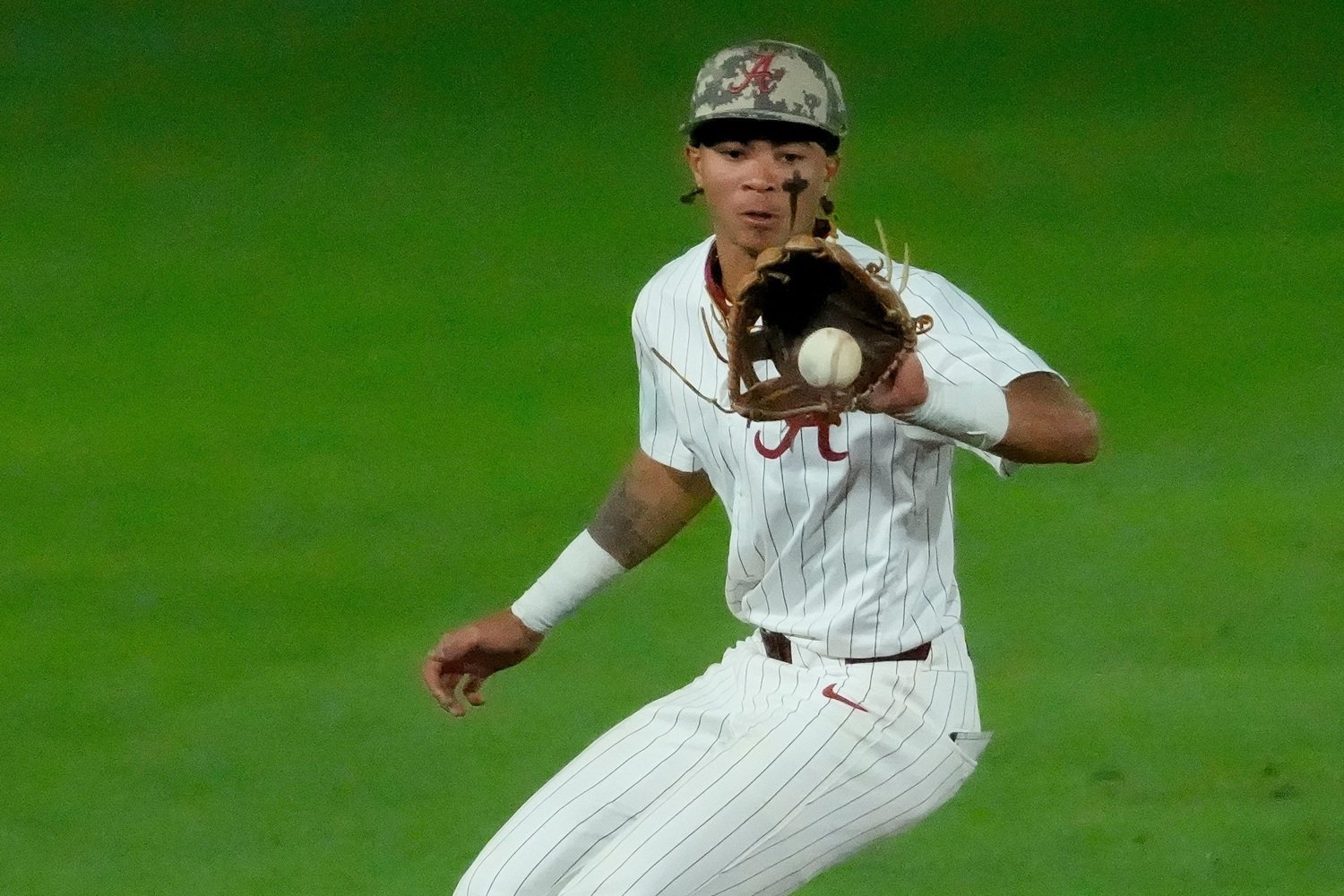 Prospect lists are snapshots in time, and for the Twins, the picture is already starting to blur. The current Twins Daily top five of Walker Jenkins, Kaelen Culpepper, Eduardo Tait, Emmanuel Rodriguez, and Mick Abel represents a system that is very close to turning the page. Jenkins, Culpepper, Rodriguez, and Abel all finished last season at Double-A or higher, and Connor Prielipp, Kendry Rojas, and Gabriel Gonzalez are right there with them. Only Dasan Hill and Tait remain below that level. With that many players knocking on the big-league door, it feels inevitable that next winter’s list will look very different. A year ago, my New Year’s Day projection included Jenkins and Culpepper at the top, followed by Charlee Soto, Brandon Winokur, and Marco Raya. In hindsight, the exercise was always going to be unfair. Few could have predicted the fire sale at last year’s trade deadline, which reshaped the system overnight. Tait and Abel were not even in the organization at that point. Soto likely would have been closer to a Top 5 spot if not for injuries, while Winokur still has upside but needs to regain momentum after a disappointing stint in the Arizona Fall League. Raya struggled at Triple A and now looks more likely to impact the club out of the bullpen in 2026. With that context in mind, here is an early look at what the Twins' Top 5 prospects could look like on New Year’s Day 2027. 5. Marek Houston, SS Houston, Minnesota’s 2025 first-round pick, sneaks onto the list thanks to his defensive foundation and hope for steady offensive growth. He will never be a middle-of-the-order bat, but the Twins value shortstops who can stay at the position, and Houston has the instincts and arm to do just that. If the bat continues to progress, he becomes a very safe everyday projection. He could quickly rise through the system in 2026 and finish the year in the upper minors. 2026 Prediction: Houston makes his big-league debut in September. 4. Charlee Soto, RHP Soto gets a second chance here after an injury interrupted his rise. He was limited to three starts last season, but there is a reason the Twins targeted him with the 34th overall pick in the 2024 MLB Draft. When healthy, he shows the type of fastball and breaking ball combination that can anchor a rotation. Durability remains the question, but the upside is still very real, and the Twins will give him every opportunity to start. 2026 Prediction: Soto gets back on track in 2026 and pitches over 100 innings between High- and Double-A. 3. Riley Quick, RHP Minnesota took Quick with the 36th overall pick in the 2025 MLB Draft and could have been a higher pick if not for missing his entire sophomore season following Tommy John surgery. Quick represents the modern pitching prospect with power stuff and some remaining refinement needed. In his junior season, he posted a 3.92 ERA with a 3.49 FIP and a 25.9 K%. His velocity and ability to miss bats could push him quickly through the upper minors. 2026 Prediction: Quick will be the organization’s minor league pitcher of the year as he jumps from the low minors to Triple-A. 2. Eduardo Tait, C Catchers with offensive upside can be tough to fit on prospect lists because they have to hit and provide defensive value. Tait’s bat is the carrying tool, and if he continues to hit as he climbs the ladder, his defensive questions will matter less. In 2025, he posted a 103 wRC+ across two levels while facing older pitchers in every plate appearance. By 2027, he could be viewed as the Twins catcher of the future. 2026 Prediction: Tait’s defense and game calling will make significant strides as he gets accustomed to the Twins system. 1. Justin Lebron, SS There are many different directions the Twins could go with the number three pick in July. College shortstop Roch Cholowsky is the consensus number one pick, with prep shortstop Grady Emerson as the likely second pick. Minnesota could take Lebron if they want to go the college route, or Jacob Lombard, a prep shortstop with a baseball bloodline. LeBron is the favorite at this point, and the Alabama shortstop earns 60 grades across four of his five tools. If he lands in the Twins system, he becomes the obvious choice at the top. 2026 Prediction: Lebron solidifies himself at the top of the draft as the clear third pick for the Twins. Predicting prospect lists is always risky, but the direction is clear. The Twins are on the verge of graduating a wave of talent, and the next era will be defined by a new group of high upside players stepping into the spotlight. Who will make the Twins top prospect list in one year? What direction will the Twins go with the third pick next July? Leave a comment and start the discussion.
- 49 comments
-
- 9
-

-

-
- marek houston
- charlee soto
- (and 3 more)
-
Waiting on the Window: Byron Buxton and Twins’ Complicated Timeline
Cody Christie posted an article in Twins
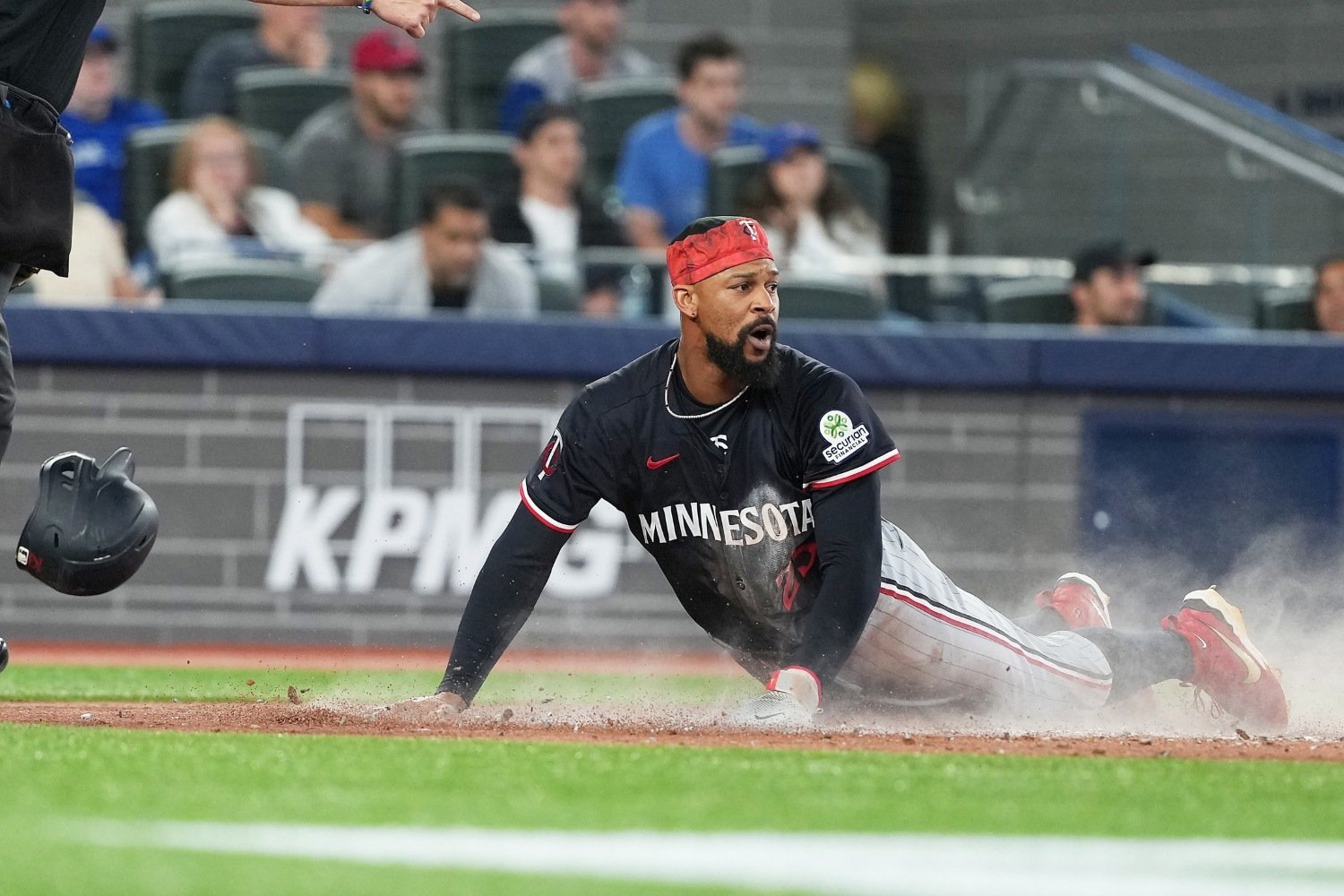 The Minnesota Twins’ competitive window has felt perpetually cracked open for the better part of a decade. That is, it's rarely slammed shut, but never fully open, either. At the center of that uneasy balance sits Byron Buxton, the face of the franchise and its most complicated variable. Buxton has three years remaining on his team-friendly extension, and as things stand today, there is no clear indication that Minnesota will be a true World Series contender at any point during that stretch. That reality makes the next few seasons feel more like an evaluation period than an opportunity. Baseball has a way of humbling certainty. Teams that look mediocre in March can find themselves dogpiling in October. Rosters that feel one move away can collapse overnight. Buxton’s presence alone keeps the Twins relevant, and his ceiling remains higher than almost any player in the organization. The question is whether the timing ever aligns. Rumors are already unavoidable. If the Twins fall out of contention again and pivot further toward selling veteran pieces, Buxton’s name will surface in trade conversations. He holds a no-trade clause, but that protection does not mean immovability. Buxton is now 31, with a lengthy injury history and a dwindling number of games left in his career. The chance to play meaningful October baseball elsewhere could be tempting, especially if Minnesota’s direction becomes clearer by midseason. Here’s a look at the next three seasons, what it could mean for the Twins, and how the Byron Buxton winning window is shrinking. 2026: Running It Back and Hoping The most likely outcome for 2026 is familiarity. The Twins appear poised to run back much of last year’s roster and hope for organic improvement from their young core. FanGraphs’s initial projection of an 82-80 record paints the picture perfectly. Competitive, relevant, but far from secure. Top prospects are waiting in the wings, and many are expected to debut during the season. Walker Jenkins, Emmanuel Rodriguez, and Gabriel Gonzalez all finished at Triple-A St. Paul last season. That said, rookies are supplements, not saviors. Expecting them to replace established production is rarely realistic. For Buxton, 2026 looks like another season of carrying disproportionate weight, both on the field and in how the franchise is perceived nationally. 2027: Chaos Creates Opportunity The 2027 season may never resemble a normal year. A looming labor dispute means a strong chance of a lockout that could delay the start of the season. If negotiations drag on, MLB may shorten the schedule and expand the postseason to preserve revenue. That kind of chaos can flatten the playing field. More playoff teams mean more paths into October. For a club like Minnesota, that matters. The Twins saw this happen in 2020, during the COVID-shortened season. A hot month or two could be enough. By then, the young pitchers, like Mick Abel and Kendry Rojas may be ready for the spotlight. Arms that currently feel far from ready to carry a team could become the backbone of a playoff run. In October, structure matters less than momentum, and weird things tend to happen. 2028: Swan Song or Turning Point The 2028 season could be Buxton’s swan song in a Twins uniform. He has been clear about wanting to be a Twin for life, but the next three years will test that commitment on both sides. If his performance continues to resemble his 2025 campaign, extensions could remain on the table. If not, the cold reality of aging curves will loom. Coming out of a potential lockout, this is the ideal time for Minnesota to push more aggressively. A young core featuring Jenkins, Rodriguez, Luke Keaschall, and Kaelen Culpepper could be ready to emerge. Supporting that group properly might finally align Buxton’s timeline with a legitimate window of opportunity. The Twins do not need to choose between rebuilding and contending just yet, but they are running out of time to avoid that decision. Buxton’s contract provides flexibility, leverage, and pressure. Whether Minnesota capitalizes on that window or watches it quietly close will define the next era of Twins baseball. Do you believe the Twins can build a true contender before Buxton’s contract runs out, or is a difficult decision inevitable? Leave a comment and start the discussion.
 -
Image courtesy of © Nick Turchiaro-Imagn Images The Minnesota Twins’ competitive window has felt perpetually cracked open for the better part of a decade. Rarely slammed shut, never fully open. At the center of that uneasy balance sits Byron Buxton, the face of the franchise and its most complicated variable. Buxton has three years remaining on his team-friendly extension, and as things stand today, there is no clear indication that Minnesota will be a true World Series contender at any point during that stretch. That reality makes the next few seasons feel more like an evaluation period than an opportunity. Still, baseball has a way of humbling certainty. Teams that look mediocre in March can find themselves dogpiling in October. Rosters that feel one move away can collapse overnight. Buxton’s presence alone keeps the Twins relevant, and his ceiling remains higher than almost any player in the organization. The question is whether the timing ever aligns. Rumors are already unavoidable. If the Twins fall out of contention again and pivot further toward selling veteran pieces, Buxton’s name will surface in trade conversations. He holds a no-trade clause, but that protection does not mean immovability. Buxton is now in his early 30s, with a lengthy injury history and a finite number of games left in his career. The chance to play meaningful October baseball elsewhere could be tempting, especially if Minnesota’s direction becomes clearer by midseason. Here’s a look at the next three seasons, what it could mean for the Twins, and how the Byron Buxton winning window is shrinking. 2026: Running It Back and Hoping The most likely outcome for 2026 is familiarity. The Twins appear poised to run back much of last year’s roster and hope for organic improvement from their young core. FanGraphs’ initial projection of an 82-80 record paints the picture perfectly. Competitive, relevant, but far from secure. Top prospects are waiting in the wings, and many are expected to debut during the season. Walker Jenkins, Emmanuel Rodriguez, and Gabriel Gonzalez all finished at Triple-A last season. That said, rookies are supplements, not saviors. Expecting them to replace established production is rarely realistic. For Buxton, 2026 represents another season of carrying disproportionate weight, both on the field and in how the franchise is perceived nationally. 2027: Chaos Creates Opportunity The 2027 season may never resemble a normal year. A looming labor dispute brings a strong chance of a lockout that could delay the start of the season. If negotiations drag on, MLB may shorten the schedule and expand the postseason to preserve revenue. That kind of chaos can flatten the playing field. More playoff teams mean more paths into October. For a club like Minnesota, that matters. The Twins saw this happen in 2020 during the COVID-shortened season. A hot month or two could be enough. By then, the young pitchers, like Mick Abel and Kendry Rojas, acquired in recent years, may be ready for the spotlight. Arms that currently feel theoretical could become the backbone of a playoff run. In October, structure matters less than momentum, and weird things tend to happen. 2028: Swan Song or Turning Point The 2028 season could represent Buxton’s swan song in a Twins uniform. He has been clear about wanting to be a Twin for life, but the next three years will test that commitment on both sides. If his performance continues to resemble his 2025 campaign, extensions could remain on the table. If not, the cold reality of aging curves will loom. Coming out of a potential lockout, this is the ideal time for Minnesota to push more aggressively. A young core featuring Jenkins, Rodriguez, Luke Keaschall, and Kaelen Culpepper could be ready to emerge. Supporting that group properly might finally align Buxton’s timeline with a legitimate window of opportunity. The Twins do not need to choose between rebuilding and contending just yet, but they are running out of time to avoid that decision. Buxton’s contract provides flexibility, leverage, and pressure all at once. Whether Minnesota capitalizes on that window or watches it quietly close will define the next era of Twins baseball. Do you believe the Twins can build a true contender before Buxton’s contract runs out, or is a difficult decision inevitable? Leave a comment and start the discussion. View full article
-
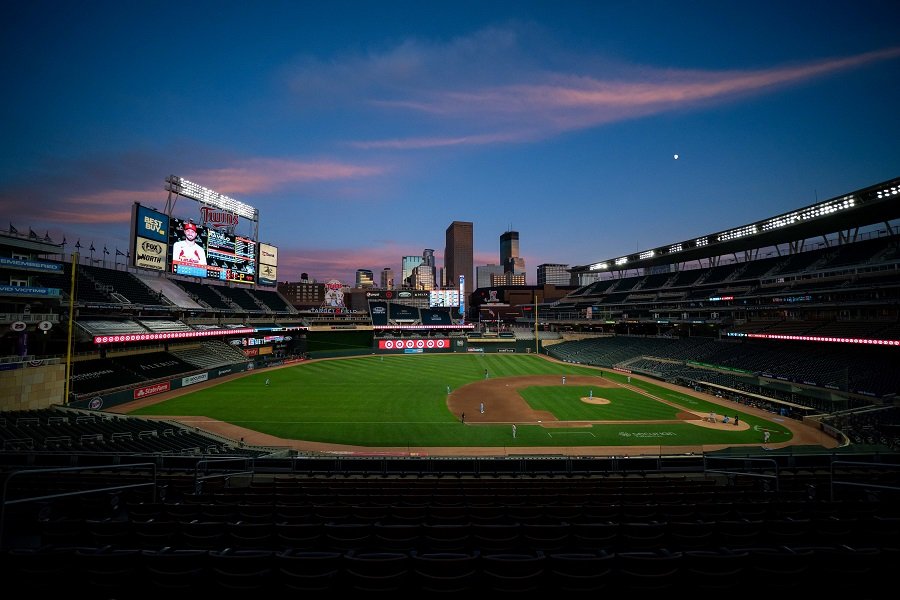 The camera opens on a quiet conference room overlooking Target Field. It is pristine. It is calm. It is absolutely not calm. This is Succession, Minnesota style. There is coffee. There are spreadsheets. There is a faint sense that someone is about to be told they are still family but no longer in charge. Tom Pohlad stands at the head of the table. He does not raise his voice. He does not need to. He has the tone of a man who has already won the argument fourteen months ago. Tom: Don’t get me wrong. We are still in control. Joe Pohlad sits across from him. He has been here for 19 years. He looks like someone who just realized the word "stewardship" can be used as a weapon. Joe: So… this is happening. Tom: This is happening in the best interest of the organization. Joe: The organization being the Minnesota Twins or the Pohlad family. From the corner, a silent PowerPoint flickers to life. It reads New Partners. Majority Ownership. Best Interest. There are no numbers. There do not need to be numbers. Joe Ryan is there for some reason. No one invited him. Pitchers just wander into these things. Joe Ryan: Sorry, I thought this was a rotation meeting. Tom: It is. Just not yours. (Ryan exits) Derek Falvey leans forward like a corporate cousin who knows exactly when to speak and when to let chaos cook. Falvey: We are aligned. That is the message. Derek Shelton nods slowly from the end of the table. He has the calm expression of someone who has seen how this ends and knows it is never clean. Shelton: We believe in the process. Whatever the process is now. Joe Pohlad stares at Tom. Joe: I was not on board with this. Tom: At first. Joe (raising his voice slightly): I was supposed to bring us back to the promised land. Tom sighs. This is the part where the conversation become personal. Tom: This is hard. On the family. On us. This is not what we envisioned when we talked about generations and stewardship and winning a world championship. Joe: And yet here we are. You take the chair. I take understanding. Tom: You understand now. Joe pauses. He nods. Succession teaches us that understanding is often just acceptance with better branding. Joe (reluctantly): I understand. A beat. Outside, the stadium is empty. Control has been retained. Majority ownership remains. The family business continues. From the hallway, a new limited partner peeks in, whispers something about significant financial cleanup, and disappears. Tom straightens his jacket. Tom: This is for the fan base. Joe: Of course it is. The camera pulls back. The Twins will still be run by the Pohlads. The chair has changed. The power has not. Somewhere, Logan Roy smiles politely and says something about control. Fade to black.
- 1 comment
-
- 2
-
-

-
- tom pohlad
- joe pohlad
- (and 2 more)
-
Image courtesy of Rob Thompson, St. Paul Saints (photo of Gabriel Gonzalez) For much of the past several seasons, the Twins have leaned heavily on left-handed power at the big league level, particularly in the outfield corners. That trend is not slowing down anytime soon. Minnesota’s current roster includes bats like Matt Wallner, Trevor Larnach, and James Outman, all of whom must produce next season after mixed results in 2025. Waiting in the wings is Emmanuel Rodriguez, one of the top prospects in baseball, and even the organization’s crown jewel, Walker Jenkins, swings it left-handed. There is nothing inherently wrong with that profile, especially when the power plays from the strong side of the platoon. Still, roster balance matters. Late-inning matchups, division rivals stacking left-handed relievers, and simple lineup construction all become trickier when the offense leans too far in one direction. In an offseason where payroll flexibility could be limited, the Twins may need to look inward rather than shopping for an external right-handed bat. Fortunately, the farm system does offer a few intriguing options. None is a sure thing, but each brings some level of right-side power that could help reshape the lineup as soon as next season. Gabriel Gonzalez (Twins Daily No. 9 Ranked Prospect) Gonzalez is already on the 40-man roster, and that alone puts him squarely in the conversation. After a breakout season, he finished the year at Triple-A and forced the organization to take a long look at how close he really is. The 21-year-old hit .329/.395/.513 (.908) with a 148 wRC+ with a 14.5 K%. Gonzalez brings a compact swing with surprising pop and has shown the ability to drive the ball to all fields with 38 doubles and 15 homers in 123 games last season. While he is not a pure slugger in the traditional sense, the power is real enough to matter, especially when paired with his improving approach. The question with Gonzalez has always been defensive home and ultimate ceiling. Last season, he split time between left and right field. Even so, a right-handed bat who can hold his own in the corners and punish mistakes is valuable, particularly when he is already positioned to contribute without additional roster maneuvering. He will start the year at Triple-A but should make his MLB debut in the first half. Kala'i Rosario If the Twins are looking for raw power, Rosario might be the loudest answer. He landed back on the radar in a big way this season, and the power is hard to ignore. Rosario crushed 11 home runs in August alone and finished with 25 on the year to lead the Double-A Texas League. In 130 games, he hit .256/.358/.487 (.844) with a 131 wRC+ and a 12.6 BB%. Even with those totals, Minnesota left him unprotected from the Rule 5 Draft, and 29 other teams passed him over. There is swing and miss in his game (27.5 K% in 2025), and it will always be part of the package. Still, Rosario balances that with a willingness to take walks and a clear understanding of his damage zones. He will play most of 2026 at age 23, which is a crucial context point. He faced older pitchers in 84.5% of his plate appearances last season. He is young for his level, still learning, and already producing elite power numbers. If the contact rate improves even marginally, the upside is significant. Kyler Fedko (Twins Daily No. 18 Prospect) Fedko is not always mentioned alongside the louder names in the system, but he remains an interesting sleeper. He reached Triple-A last season as a 25-year-old and combined for 28 homers, a 130 wRC+, and a 21.2 K%. He brings athleticism, sneaky pop, and the kind of versatility the Twins tend to value. Last season, he played all three outfield positions and spent some time at first base. What Fedko offers is balance. He is a right-handed hitter who can impact the ball without being a one-dimensional slugger. Many wouldn’t consider him a top prospect because of his age. However, player development is rarely linear, and Fedko can provide big-league value. If the Twins are prioritizing lineup flexibility and defensive versatility, Fedko could carve out a role faster than expected. Ricardo Olivar Olivar is the furthest away of the group, but the upside is intriguing enough to mention. Last season, he played the entire season at Double-A, posting a 114 wRC+ and a 12.0 BB%. He flashes power potential and has shown the ability to control the strike zone as he climbs the organizational ladder. Minnesota also continues to use him as a catcher, a position with few long-term prospects in the organization. For an organization that may need internal solutions, Olivar represents the longer-term bet. The other names on this list will likely reach the big leagues before him, but a hot start to the 2026 campaign could force him back into the team’s long-term plans. He is not likely to impact the major league roster immediately, but his right-side power potential is something to keep an eye on as the system evolves. The Twins may not solve their lineup imbalance overnight, but the answers do not have to come from outside the organization. With a system that quietly features multiple right-handed power bats at different stages, Minnesota has options. The next step is figuring out which one is ready to seize the opportunity. Which name stands out as an impact right-handed bat? Who has the highest upside? Leave a comment and start the discussion. View full article
-
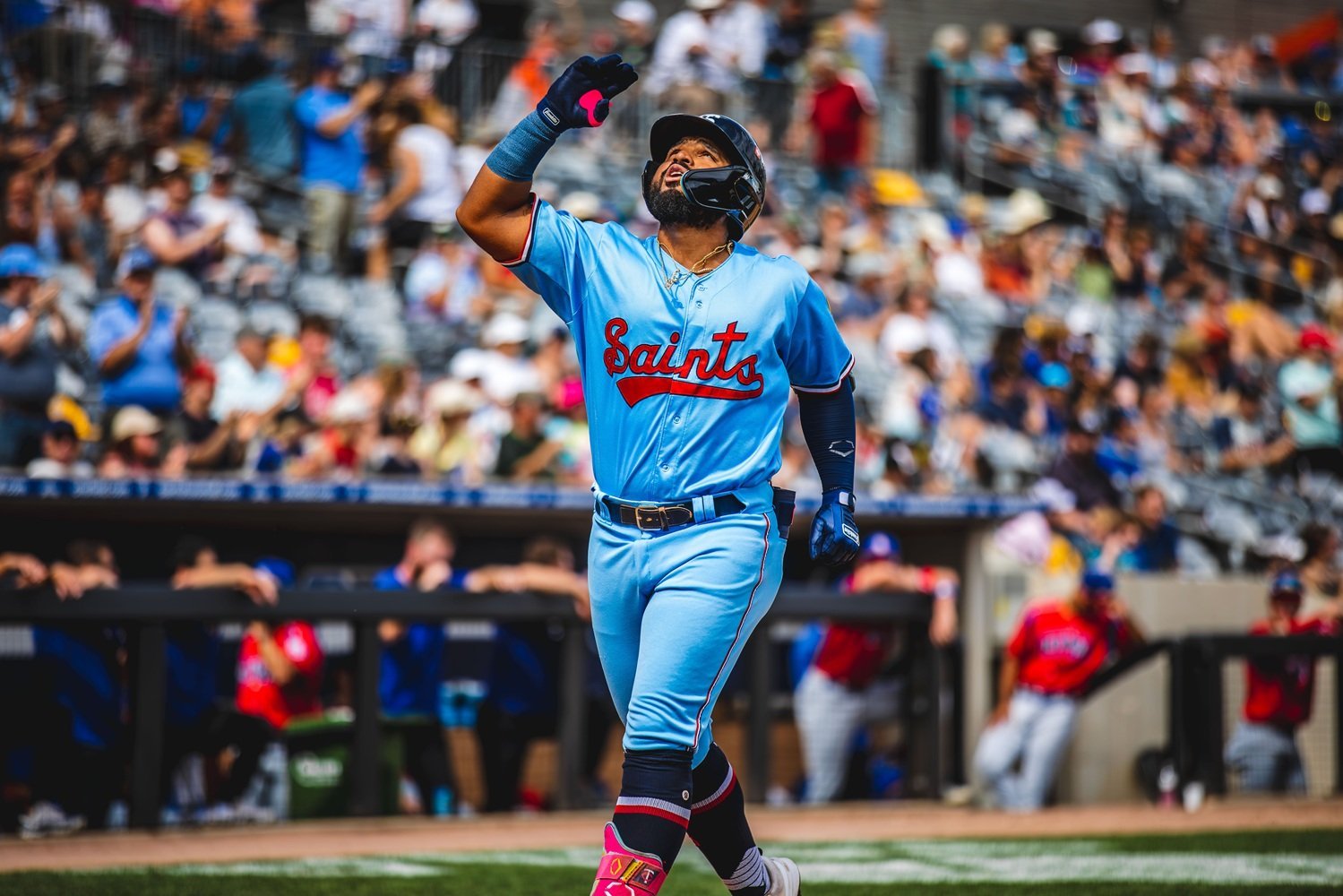 For much of the past several seasons, the Twins have leaned heavily on left-handed power at the big league level, particularly in the outfield corners. That trend is not slowing down anytime soon. Minnesota’s current roster includes bats like Matt Wallner, Trevor Larnach, and James Outman, all of whom must produce next season after mixed results in 2025. Waiting in the wings is Emmanuel Rodriguez, one of the top prospects in baseball, and even the organization’s crown jewel, Walker Jenkins, swings it left-handed. There is nothing inherently wrong with that profile, especially when the power plays from the strong side of the platoon. Still, roster balance matters. Late-inning matchups, division rivals stacking left-handed relievers, and simple lineup construction all become trickier when the offense leans too far in one direction. In an offseason where payroll flexibility could be limited, the Twins may need to look inward rather than shopping for an external right-handed bat. Fortunately, the farm system does offer a few intriguing options. None is a sure thing, but each brings some level of right-side power that could help reshape the lineup as soon as next season. Gabriel Gonzalez (Twins Daily No. 9 Ranked Prospect) Gonzalez is already on the 40-man roster, and that alone puts him squarely in the conversation. After a breakout season, he finished the year at Triple-A and forced the organization to take a long look at how close he really is. The 21-year-old hit .329/.395/.513 (.908) with a 148 wRC+ with a 14.5 K%. Gonzalez brings a compact swing with surprising pop and has shown the ability to drive the ball to all fields with 38 doubles and 15 homers in 123 games last season. While he is not a pure slugger in the traditional sense, the power is real enough to matter, especially when paired with his improving approach. The question with Gonzalez has always been defensive home and ultimate ceiling. Last season, he split time between left and right field. Even so, a right-handed bat who can hold his own in the corners and punish mistakes is valuable, particularly when he is already positioned to contribute without additional roster maneuvering. He will start the year at Triple-A but should make his MLB debut in the first half. Kala'i Rosario If the Twins are looking for raw power, Rosario might be the loudest answer. He landed back on the radar in a big way this season, and the power is hard to ignore. Rosario crushed 11 home runs in August alone and finished with 25 on the year to lead the Double-A Texas League. In 130 games, he hit .256/.358/.487 (.844) with a 131 wRC+ and a 12.6 BB%. Even with those totals, Minnesota left him unprotected from the Rule 5 Draft, and 29 other teams passed him over. There is swing and miss in his game (27.5 K% in 2025), and it will always be part of the package. Still, Rosario balances that with a willingness to take walks and a clear understanding of his damage zones. He will play most of 2026 at age 23, which is a crucial context point. He faced older pitchers in 84.5% of his plate appearances last season. He is young for his level, still learning, and already producing elite power numbers. If the contact rate improves even marginally, the upside is significant. Kyler Fedko (Twins Daily No. 18 Prospect) Fedko is not always mentioned alongside the louder names in the system, but he remains an interesting sleeper. He reached Triple-A last season as a 25-year-old and combined for 28 homers, a 130 wRC+, and a 21.2 K%. He brings athleticism, sneaky pop, and the kind of versatility the Twins tend to value. Last season, he played all three outfield positions and spent some time at first base. What Fedko offers is balance. He is a right-handed hitter who can impact the ball without being a one-dimensional slugger. Many wouldn’t consider him a top prospect because of his age. However, player development is rarely linear, and Fedko can provide big-league value. If the Twins are prioritizing lineup flexibility and defensive versatility, Fedko could carve out a role faster than expected. Ricardo Olivar Olivar is the furthest away of the group, but the upside is intriguing enough to mention. Last season, he played the entire season at Double-A, posting a 114 wRC+ and a 12.0 BB%. He flashes power potential and has shown the ability to control the strike zone as he climbs the organizational ladder. Minnesota also continues to use him as a catcher, a position with few long-term prospects in the organization. For an organization that may need internal solutions, Olivar represents the longer-term bet. The other names on this list will likely reach the big leagues before him, but a hot start to the 2026 campaign could force him back into the team’s long-term plans. He is not likely to impact the major league roster immediately, but his right-side power potential is something to keep an eye on as the system evolves. The Twins may not solve their lineup imbalance overnight, but the answers do not have to come from outside the organization. With a system that quietly features multiple right-handed power bats at different stages, Minnesota has options. The next step is figuring out which one is ready to seize the opportunity. Which name stands out as an impact right-handed bat? Who has the highest upside? Leave a comment and start the discussion.
- 55 comments
-
- 10
-
-
- gabriel gonzalez
- kalai rosario
- (and 2 more)
-
Ranking the Top 10 Free Agent Signings in Twins History: 1-5
Cody Christie posted an article in History
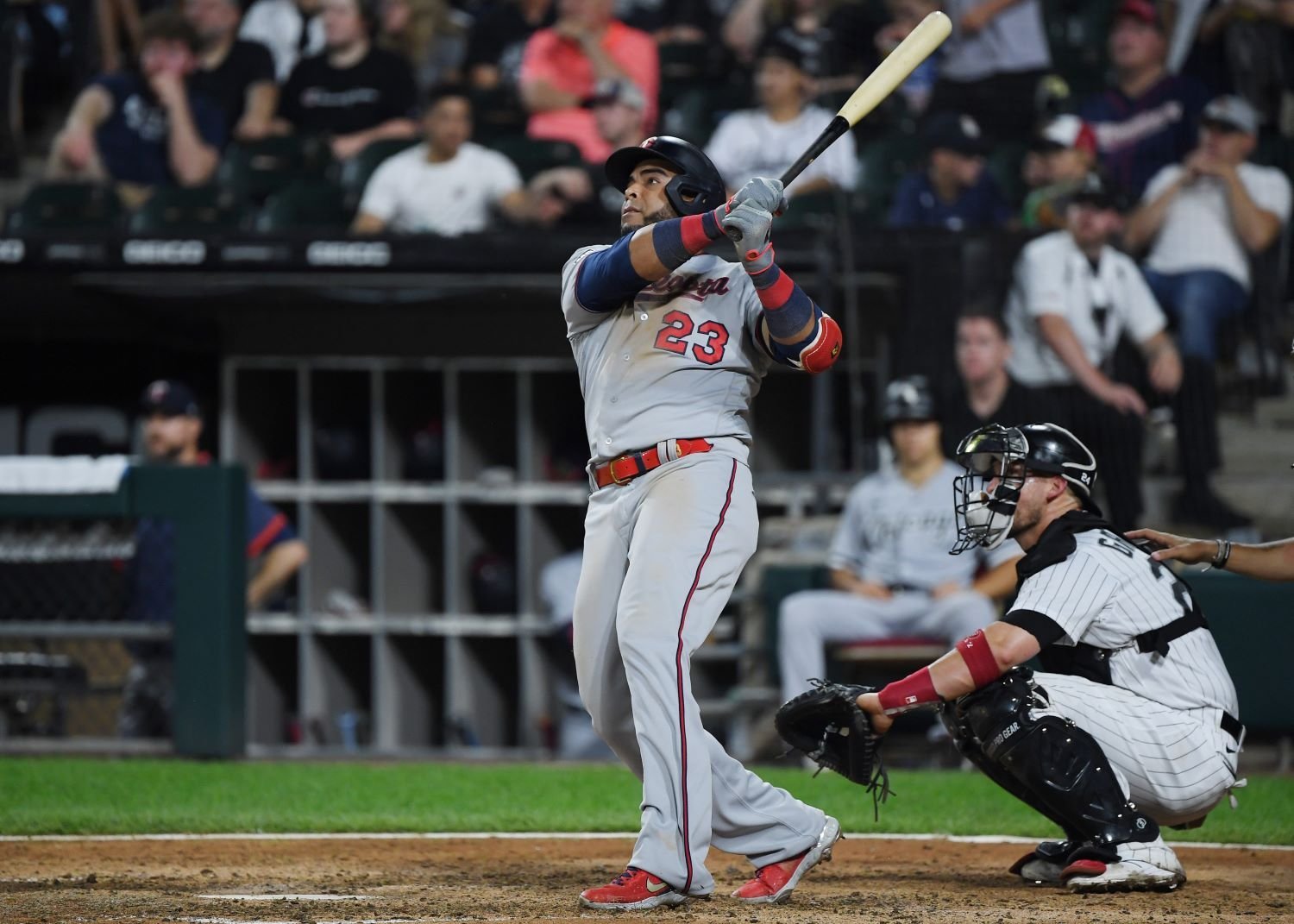 In the first half of this countdown, the lower half of the list highlighted how rarely the Minnesota Twins have dipped into free agency and come away with long-term value. Even the players ranked ten through six carried some combination of brevity risk or narrow roles. That is simply the reality for a franchise that has historically relied far more on development and trades than open checkbooks. The top five tell a different story. These are not just valuable contributors or pleasant surprises. These signings shaped seasons, changed expectations, and in some cases altered the direction of the franchise itself. Each arrived with a clear purpose and delivered at a level that justified the investment, even if the contract length was short or the window was brief. What separates this group is not just production but timing. These were players signed when the Twins were ready to win or desperate to matter again. Free agency did not merely supplement the roster here. It defined it. 5. Jim Thome, DH Contract(s): 2-years, $4.5 million 2010-2011 Seasons: 4.5 rWAR, .266/.387/.562 (.949) 158 OPS+ The Twins signed Thome late in his career and got exactly what they needed. He brought massive power, instant credibility, and a historic milestone when he hit his 600th home run while wearing a Twins uniform. He was a linchpin in the team’s 2010 AL Central title and provided some of the most memorable moments in Target Field history. 4. Brian Harper, C/1B Contract(s): 6-years, $6.26 million 1988-1993 Seasons: 13.4 rWAR, .306/.342/.431 (.773), 110 OPS+ Harper was never flashy, but he was productive and dependable. He provided offense from the catching position and played a meaningful role on competitive teams, including the 1991 championship club. In that epic World Series, he slashed .381/.435/.476 (.911) with two doubles. Harper might be one of the most underrated players from the Twins teams of the early 1990s. 3. Chili Davis, DH/OF Contract(s): 2-years, $4.5 million 1991-1992 Seasons: 5.2 rWAR, .282/.385/.476 (.862), 136 OPS+ Davis was a vital piece of the 1991 World Series team. He got on base, drove in runs, and delivered in the postseason. In the 1991 ALCS, he went 5-for-17 (.294 BA) with two doubles and five walks. In the epic World Series, he hit two key home runs and posted a .556 SLG. For a short-term signing, his value could hardly have been higher. 2. Jack Morris, SP Contract(s): 1-year, $3.7 million 1991 Season: 4.3 rWAR, 3.43 ERA, 1.29 WHIP, 125 ERA+ One season was enough. Morris signed before 1991 and anchored a championship rotation. His ten-inning shutout in Game 7 of the World Series remains one of the most iconic performances the sport has ever seen. In that 1991 World Series, he posted a 1.17 ERA and a 1.17 WHIP in 23 innings. He was an All-Star and finished fourth in the AL Cy Young voting during his lone Twins season. 1. Nelson Cruz, DH Contract(s): 3-years, $39 million 2019-2021 Seasons: 8.3 rWAR, .304/.386/.598 (.984), 162 ERA+ There may be debate over who gets the top spot, but Cruz is a deserving candidate. His arrival before the 2019 season transformed the Twins' lineup overnight, and his 41 homers helped power the team to a record-breaking home run season. He provided veteran leadership and mentorship on a team that won over 100 games. Few free agent signings have delivered that level of impact so quickly in Minnesota. It also helps that the Twins were able to flip his expiring contract to the Rays for Joe Ryan. The Top 5 free agent signings in Twins history represent the rare moments when Minnesota fully extracted value from the open market. None of these players were perfect fits forever, and most did not stay long. That is not the point. Their impact was concentrated, meaningful, and often unforgettable. From championship-defining performances to offensive transformations, these signings show what free agency can look like when conviction meets opportunity. The Twins may never be a franchise that lives at the top of the market, but history suggests they do not need to be. They just need to be right. Do you agree with the Top 5 rankings? Leave a comment and start the discussion.
- 27 comments
-
- 4
-
-

-
- jim thome
- nelson cruz
- (and 3 more)
-
Image courtesy of © Quinn Harris-USA TODAY Sports In the first half of this countdown, the lower half of the list highlighted how rarely the Minnesota Twins have dipped into free agency and come away with long-term value. Even the players ranked ten through six carried some combination of brevity risk or narrow roles. That is simply the reality for a franchise that has historically relied far more on development and trades than open checkbooks. The top five tell a different story. These are not just valuable contributors or pleasant surprises. These signings shaped seasons, changed expectations, and in some cases altered the direction of the franchise itself. Each arrived with a clear purpose and delivered at a level that justified the investment, even if the contract length was short or the window was brief. What separates this group is not just production but timing. These were players signed when the Twins were ready to win or desperate to matter again. Free agency did not merely supplement the roster here. It defined it. 5. Jim Thome, DH Contract(s): 2-years, $4.5 million 2010-2011 Seasons: 4.5 rWAR, .266/.387/.562 (.949) 158 OPS+ The Twins signed Thome late in his career and got exactly what they needed. He brought massive power, instant credibility, and a historic milestone when he hit his 600th home run while wearing a Twins uniform. He was a linchpin in the team’s 2010 AL Central title and provided some of the most memorable moments in Target Field history. 4. Brian Harper, C/1B Contract(s): 6-years, $6.26 million 1988-1993 Seasons: 13.4 rWAR, .306/.342/.431 (.773), 110 OPS+ Harper was never flashy, but he was productive and dependable. He provided offense from the catching position and played a meaningful role on competitive teams, including the 1991 championship club. In that epic World Series, he slashed .381/.435/.476 (.911) with two doubles. Harper might be one of the most underrated players from the Twins teams of the early 1990s. 3. Chili Davis, DH/OF Contract(s): 2-years, $4.5 million 1991-1992 Seasons: 5.2 rWAR, .282/.385/.476 (.862), 136 OPS+ Davis was a vital piece of the 1991 World Series team. He got on base, drove in runs, and delivered in the postseason. In the 1991 ALCS, he went 5-for-17 (.294 BA) with two doubles and five walks. In the epic World Series, he hit two key home runs and posted a .556 SLG. For a short-term signing, his value could hardly have been higher. 2. Jack Morris, SP Contract(s): 1-year, $3.7 million 1991 Season: 4.3 rWAR, 3.43 ERA, 1.29 WHIP, 125 ERA+ One season was enough. Morris signed before 1991 and anchored a championship rotation. His ten-inning shutout in Game 7 of the World Series remains one of the most iconic performances the sport has ever seen. In that 1991 World Series, he posted a 1.17 ERA and a 1.17 WHIP in 23 innings. He was an All-Star and finished fourth in the AL Cy Young voting during his lone Twins season. 1. Nelson Cruz, DH Contract(s): 3-years, $39 million 2019-2021 Seasons: 8.3 rWAR, .304/.386/.598 (.984), 162 ERA+ There may be debate over who gets the top spot, but Cruz is a deserving candidate. His arrival before the 2019 season transformed the Twins' lineup overnight, and his 41 homers helped power the team to a record-breaking home run season. He provided veteran leadership and mentorship on a team that won over 100 games. Few free agent signings have delivered that level of impact so quickly in Minnesota. It also helps that the Twins were able to flip his expiring contract to the Rays for Joe Ryan. The Top 5 free agent signings in Twins history represent the rare moments when Minnesota fully extracted value from the open market. None of these players were perfect fits forever, and most did not stay long. That is not the point. Their impact was concentrated, meaningful, and often unforgettable. From championship-defining performances to offensive transformations, these signings show what free agency can look like when conviction meets opportunity. The Twins may never be a franchise that lives at the top of the market, but history suggests they do not need to be. They just need to be right. Do you agree with the Top 5 rankings? Leave a comment and start the discussion. View full article
-
Ranking the Top 10 Free Agent Signings in Twins History: 6-10
Cody Christie posted an article in History
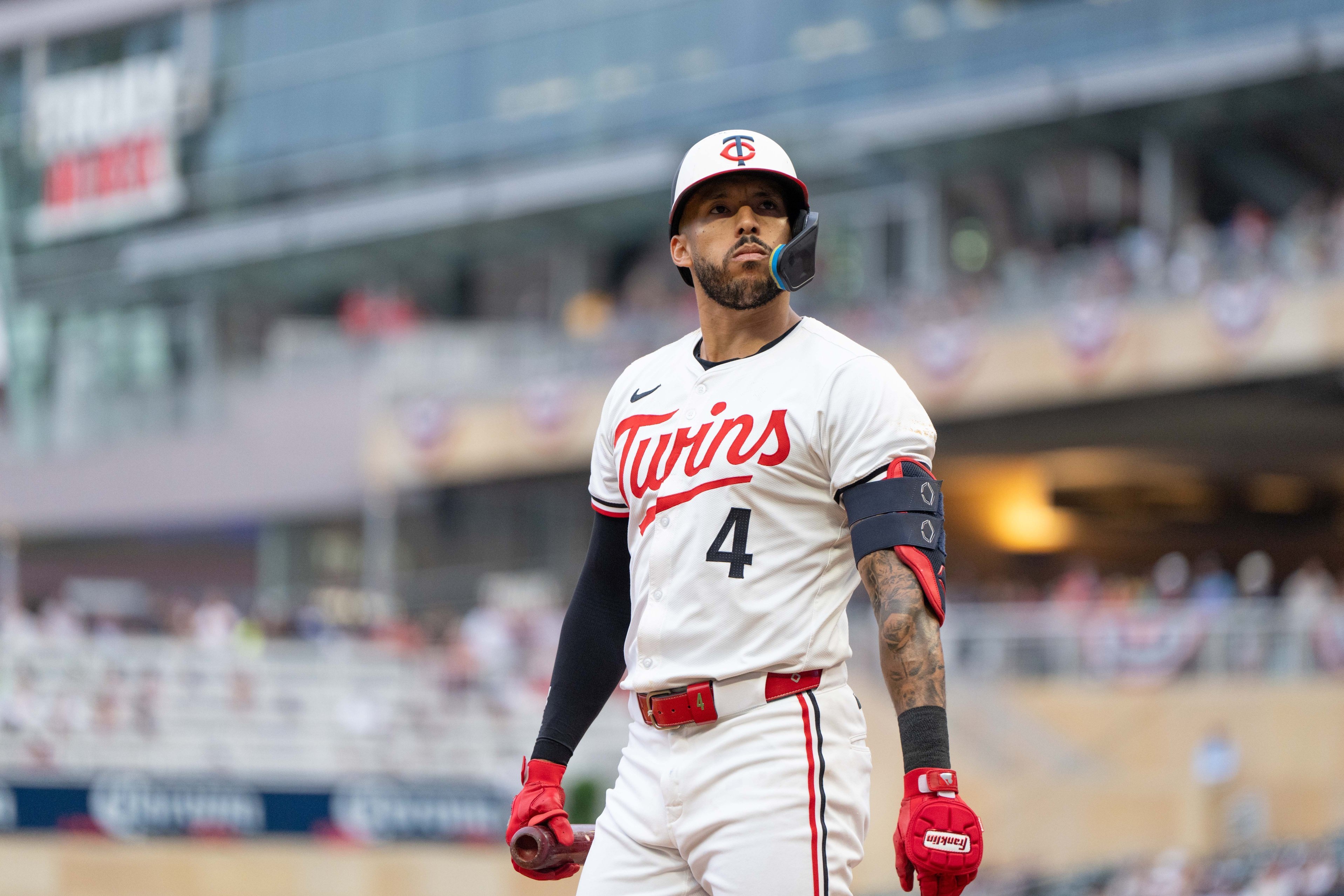 The half-century history of MLB free agency has produced plenty of excess but also moments where a single signing reshaped a franchise. The Minnesota Twins have rarely been a team that chased the most prominent names or set the market. Instead, their relationship with free agency has been deliberate, cautious, and occasionally brilliant. Modern free agency traces back to a turning point in the winter of 1975 when arbitrator Peter Seitz ruled in favor of pitchers Andy Messersmith and Dave McNally. By playing a full season without signed contracts, the two exposed the weakness of the reserve clause and cracked open a system that had bound players to teams indefinitely. The decision completed the work long championed by Marvin Miller and Curt Flood and forever changed the balance of power in Major League Baseball. Owners warned of chaos and competitive ruin, but what followed was simply a new path for roster building. Teams willing to spend wisely could supplement their cores without waiting years for internal development. For a market like Minnesota, that opportunity mattered even if it was rarely pursued aggressively. Working backward here is a countdown of the best free agent signings in Twins history, judged solely on what those players did after arriving in Minnesota. 10. Shannon Stewart, OF Contract(s): 3-years, $18 million 2004-2006 Seasons: 2.3 WAR, .287/.347/.405 (.752), 97 OPS+ Stewart came to the Twins at the 2003 trade deadline as a pending free agent. He was a catalyst for that club’s division title, so Minnesota re-signed him as a free agent and became one of the most reliable hitters of the early 2000s. He hit for average and set the table at the top of the lineup, and provided steady outfield play across multiple seasons. 9. Carlos Correa, SS Contract: 1-year, $35.1 million (3 years, $105.3 million with opt-outs after Year 1 and Year 2) 2022 Season: 5.3 rWAR, .291/.366/.467 (.834), 138 OPS+ The first Correa contract lands in the Top 10 largely because of its brevity. Even so, his lone season in Minnesota featured elite defense at shortstop and middle-of-the-order production when healthy. It was arguably his most productive season in a Twins uniform. The opt-out capped the long-term value, but the short-term impact was undeniable. 8. Phil Hughes, SP Contract(s): 6-years, $66 million 2014-2018 Seasons: 5.7 rWAR, 4.53 ERA, 1.32 WHIP, 95 ERA+ The Minnesota Twins signed Hughes in December 2013, hoping to revive his career in a pitcher-friendly park. After a record-setting 2014 season (16-10, 3.52 ERA, MLB-best K/BB ratio), they extended him in December 2014 for five years and $42 million, totaling $66 million over six years, though injuries later hampered his performance. The first deal was good, but the extension aged poorly. 7. Juan Berenguer, RP Contract(s): 4-years, $2.03 million 1987-1990 Seasons: 6.4 rWAR, 3.70 ERA, 1.36 WHIP, 115 ERA+ Berenguer gave the Twins durability and effectiveness out of the bullpen for years. Relievers rarely draw much attention, but his consistency and workload made him a quiet asset during an era when stability mattered. He became a cult hero during the team’s 1987 World Series run, and the Twins continued to invest in him for multiple seasons. 6. Paul Molitor, DH/3B/1B Contract(s): 3-years, $9.775 million 1996-1998 Seasons: 5.2 rWAR, .312/.362/.432 (.794), 104 OPS+ Molitor arrived at age 39 and immediately authored one of the greatest late-career seasons in franchise history. In 1996, he hit .341/.390/.468 (.858), led the AL in hits, and reached 3,000 hits. The hometown Hall of Famer helped revitalize the Twins in the late 1990s and eventually returned to coach in the organization after his retirement. The Twins have never built their identity around free agency. Still, these signings show that when timing and opportunity align, the open market can deliver franchise-defining moments. Even in a cold-weather market, sometimes the right bat or arm can change everything. Do you agree with the rankings above? Which names do you expect to be in the top five? Leave a comment and start the discussion.
- 14 comments
-
- 1
-
-
- shannon stewart
- carlos correa
- (and 3 more)
-
Image courtesy of © Matt Blewett-Imagn Images The half-century history of MLB free agency has produced plenty of excess but also moments where a single signing reshaped a franchise. The Minnesota Twins have rarely been a team that chased the most prominent names or set the market. Instead, their relationship with free agency has been deliberate, cautious, and occasionally brilliant. Modern free agency traces back to a turning point in the winter of 1975 when arbitrator Peter Seitz ruled in favor of pitchers Andy Messersmith and Dave McNally. By playing a full season without signed contracts, the two exposed the weakness of the reserve clause and cracked open a system that had bound players to teams indefinitely. The decision completed the work long championed by Marvin Miller and Curt Flood and forever changed the balance of power in Major League Baseball. Owners warned of chaos and competitive ruin, but what followed was simply a new path for roster building. Teams willing to spend wisely could supplement their cores without waiting years for internal development. For a market like Minnesota, that opportunity mattered even if it was rarely pursued aggressively. Working backward here is a countdown of the best free agent signings in Twins history, judged solely on what those players did after arriving in Minnesota. 10. Shannon Stewart, OF Contract(s): 3-years, $18 million 2004-2006 Seasons: 2.3 WAR, .287/.347/.405 (.752), 97 OPS+ Stewart came to the Twins at the 2003 trade deadline as a pending free agent. He was a catalyst for that club’s division title, so Minnesota re-signed him as a free agent and became one of the most reliable hitters of the early 2000s. He hit for average and set the table at the top of the lineup, and provided steady outfield play across multiple seasons. 9. Carlos Correa, SS Contract: 1-year, $35.1 million 2022 Season: 5.3 rWAR, .291/.366/.467 (.834), 138 OPS+ The first Correa contract lands in the top-10 largely because of its brevity. Even so, his lone season in Minnesota featured elite defense at shortstop and middle-of-the-order production when healthy. It was arguably his most productive season in a Twins uniform. The opt-out capped the long-term value, but the short-term impact was undeniable. 8. Phil Hughes, SP Contract(s): 6-years, $66 million 2014-2018 Seasons: 5.7 rWAR, 4.53 ERA, 1.32 WHIP, 95 ERA+ The Minnesota Twins signed Hughes in December 2013, hoping to revive his career in a pitcher-friendly park. After a record-setting 2014 season (16-10, 3.52 ERA, MLB-best K/BB ratio), they extended him in December 2014 for five years and $42 million, totaling $66 million over six years, though injuries later hampered his performance. The first deal was good, but the extension aged poorly. 7. Juan Berenguer, RP Contract(s): 4-years, $2.03 million 1987-1990 Seasons: 6.4 rWAR, 3.70 ERA, 1.36 WHIP, 115 ERA+ Berenguer gave the Twins durability and effectiveness out of the bullpen for years. Relievers rarely draw much attention, but his consistency and workload made him a quiet asset during an era when stability mattered. He became a cult hero during the team’s 1987 World Series run, and the Twins continued to invest in him for multiple seasons. 6. Paul Molitor, DH/3B/1B Contract(s): 3-years, $9.775 million 1996-1998 Seasons: 5.2 rWAR, .312/.362/.432 (.794), 104 OPS+ Molitor arrived at age 39 and immediately authored one of the greatest late-career seasons in franchise history. In 1996, he hit .341/.390/.468 (.858), led the AL in hits, and reached 3,000 hits. The hometown Hall of Famer helped revitalize the Twins in the late 1990s and eventually returned to coach in the organization after his retirement. The Twins have never built their identity around free agency. Still, these signings show that when timing and opportunity align, the open market can deliver franchise-defining moments. Even in a cold-weather market, sometimes the right bat or arm can change everything. Do you agree with the rankings above? Which names do you expect to be in the top five? Leave a comment and start the discussion. View full article
-
The Minnesota Twins entered the offseason surrounded by questions about direction and intent after a trade deadline that saw nearly 40 percent of their major league roster moved to cut payroll and restock the farm system. That kind of sell-off usually signals more changes to come, but the early indications suggest Minnesota is drawing a clear line. The Twins appear committed to keeping their veteran core intact, including Pablo Lopez, Byron Buxton, and Joe Ryan, rather than continuing down a full teardown path. That commitment has become increasingly apparent as rival teams continue to check in on Ryan. Interest around the league has not slowed, but the Twins’ response has. According to The Athletic's Ken Rosenthal, Minnesota is no longer engaging in meaningful trade conversations involving the right-hander. “Teams continue to ask the Minnesota Twins about right-hander Joe Ryan, who is under club control for two more seasons. The Twins, though, continue to say they are not shopping Ryan, and one person briefed on their talks said they haven’t even discussed him with other clubs since before the GM meetings in early November.” This is the second time this winter that Rosenthal reinforced the idea that Ryan is expected to remain in the organization for next season. The message has been consistent, and perhaps most telling is the detail that the Twins have not even discussed Ryan internally with other clubs since early November. This is not posturing or leverage building. It sounds like a firm stance. From the outside, the interest makes complete sense. Ryan is under club control for two more seasons, has proven he can miss bats at a high level, and fits neatly into the rotation of almost any contender. For a team that already showed a willingness to move significant pieces in July, trading Ryan would be an easy way to continue shedding payroll while bringing back a meaningful prospect haul. But context matters, and this is where the Twins drawing a line feels justified. The American League Central remains wide open. Minnesota has endured two straight disappointing seasons, yet a powerhouse rival does not stand in the way of a return to relevance. If Ryan and Pablo Lopez stay healthy, the bullpen finds its footing again, and the young hitters take even modest steps forward, the Twins can absolutely contend for a postseason spot. That is a lot of ifs, and nobody should pretend otherwise. Still, there is a difference between acknowledging risk and surrendering before the season begins. Trading Ryan now would be a clear signal that the Twins are not interested in finding out what this roster can be. There is also no urgency. If the team finds itself buried again next summer, the trade deadline will still be there. Ryan will still have value. For now, fans deserve to see whether this group can put the pieces together and chase another playoff birth. View full rumor
-
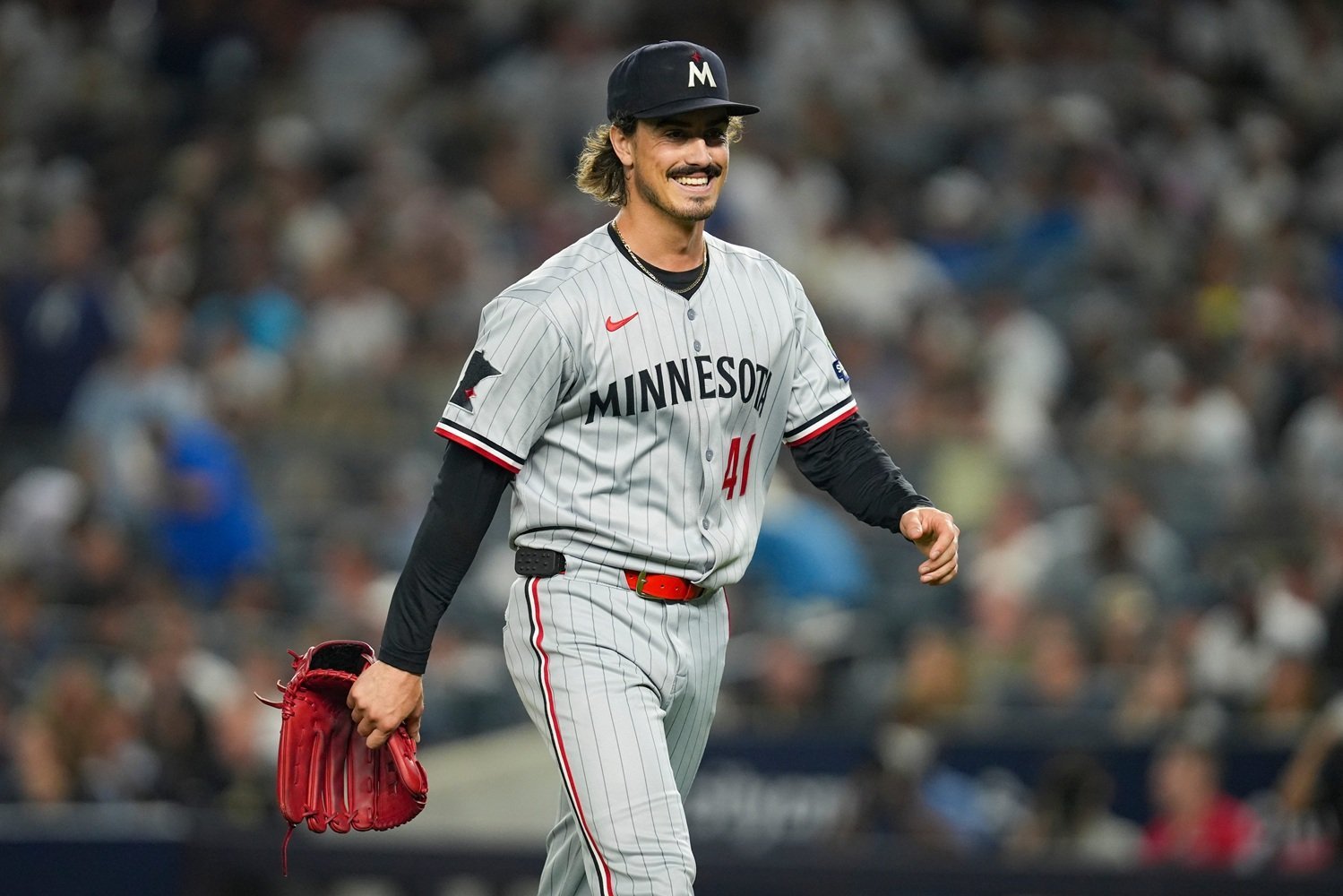 The Minnesota Twins entered the offseason surrounded by questions about direction and intent after a trade deadline that saw nearly 40 percent of their major league roster moved to cut payroll and restock the farm system. That kind of sell-off usually signals more changes to come, but the early indications suggest Minnesota is drawing a clear line. The Twins appear committed to keeping their veteran core intact, including Pablo Lopez, Byron Buxton, and Joe Ryan, rather than continuing down a full teardown path. That commitment has become increasingly apparent as rival teams continue to check in on Ryan. Interest around the league has not slowed, but the Twins’ response has. According to The Athletic's Ken Rosenthal, Minnesota is no longer engaging in meaningful trade conversations involving the right-hander. “Teams continue to ask the Minnesota Twins about right-hander Joe Ryan, who is under club control for two more seasons. The Twins, though, continue to say they are not shopping Ryan, and one person briefed on their talks said they haven’t even discussed him with other clubs since before the GM meetings in early November.” This is the second time this winter that Rosenthal reinforced the idea that Ryan is expected to remain in the organization for next season. The message has been consistent, and perhaps most telling is the detail that the Twins have not even discussed Ryan internally with other clubs since early November. This is not posturing or leverage building. It sounds like a firm stance. From the outside, the interest makes complete sense. Ryan is under club control for two more seasons, has proven he can miss bats at a high level, and fits neatly into the rotation of almost any contender. For a team that already showed a willingness to move significant pieces in July, trading Ryan would be an easy way to continue shedding payroll while bringing back a meaningful prospect haul. But context matters, and this is where the Twins drawing a line feels justified. The American League Central remains wide open. Minnesota has endured two straight disappointing seasons, yet a powerhouse rival does not stand in the way of a return to relevance. If Ryan and Pablo Lopez stay healthy, the bullpen finds its footing again, and the young hitters take even modest steps forward, the Twins can absolutely contend for a postseason spot. That is a lot of ifs, and nobody should pretend otherwise. Still, there is a difference between acknowledging risk and surrendering before the season begins. Trading Ryan now would be a clear signal that the Twins are not interested in finding out what this roster can be. There is also no urgency. If the team finds itself buried again next summer, the trade deadline will still be there. Ryan will still have value. For now, fans deserve to see whether this group can put the pieces together and chase another playoff birth.
 -
Image courtesy of Rob Thompson, St. Paul Saints (Photo of Walker Jenkins) The Twins’ 2025 season will not be remembered fondly at the major league level. For the second straight year, Minnesota faded badly in the second half, and the trade deadline only deepened the frustration. Fan favorites with multiple years of team control, like Jhoan Duran, Griffin Jax, and Louis Varland, were shipped out, moves that signaled another organizational reset rather than a push forward. Those decisions understandably strained the relationship between the front office and the fanbase. Still, the offseason remains unfinished, and perspective matters. When you zoom out beyond Target Field and look across the organization, there was legitimate progress made in 2025. The Twins’ farm system provided some of the brightest moments of the year and offered a reminder of why patience still exists in the Twin Cities. Here are five ways to remember 2025 through the lens of Twins minor leaguers. Big Years from Gabriel Gonzalez and Dasan Hill If there was one clear takeaway from the farm system this season, it was the emergence of legitimate impact talent. Gabriel Gonzalez was named Twins Daily’s Minor League Hitter of the Year after putting together his most complete professional season. In 123 games, he hit .329/.395/.513 (.908) with a 148 wRC+ while reaching Triple-A as a 21-year-old. He showed improved plate discipline, consistent power to all fields, and the kind of offensive profile that now projects comfortably into a corner outfield role at the major league level. Plus, he’s a right-handed hitter, something the Twins have lacked on the big-league roster in recent seasons. On the mound, Dasan Hill earned Twins Daily’s Minor League Pitcher of the Year honors, and his rise felt just as meaningful. In 19 starts (62 IP), he posted a 3.19 ERA, a 3.35 FIP, a 31.1 K%, and a 15.0 BB%. The 19-year-old took noticeable steps forward with his command and secondary offerings, turning raw arm strength into sustainable production. If he continues to make strides next season, he could enter the picture as a top-100 prospect. In an organization that continues to prioritize pitching development, Hill’s progress stood out as a significant win. Top Prospects on the Brink in Walker Jenkins and Emmanuel Rodriguez The Twins still possess two of the most intriguing offensive prospects in baseball. Walker Jenkins continued to validate the hype surrounding him, showing why he is viewed as a potential franchise cornerstone. He reached Triple-A in his age-20 season, a rare feat, and posted a 135 wRC+ across three levels. Many national outlets will have him ranked among baseball’s top-10 prospects entering 2026. His combination of physicality, athleticism, and advanced approach at the plate keeps his ceiling among the highest in the system. Emmanuel Rodriguez remains a fascinating case study. When healthy, he is one of the most dangerous hitters in the minors, pairing elite on-base skills with game-changing power. While durability remains part of his story, 2025 reinforced that Rodriguez is not a fringe prospect. In 65 games, he posted a 135 wRC+ with an .839 OPS and a 20.6 BB%. Minnesota allowed him to play in the Dominican Winter League and posted a .292 batting average with a .417 OBP and a .646 slugging percentage for a robust 1.063 OPS over 18 games. He is a potential middle-of-the-order bat knocking on the door of Minnesota. Cedar Rapids Wins the Midwest League West Division Title Team success at the minor league level does not always translate directly to future wins in the majors, but it still matters. The Kernels had to win back-to-back games in the best-of-three series to clinch the Midwest League West Division title. Cedar Rapids’ run to a runner-up finish in the Midwest League Championship showcased a group that played meaningful games late into the season. It was the team’s third Midwest League Championship series in five years, showcasing that the organization is finding ways to win in the low minors. That experience is valuable. Prospects learning how to handle pressure, adjust during playoff series, and perform in high-leverage situations adds an element that development plans cannot fully replicate. Cedar Rapids finished the season with a 74-63 record. The Kernels’ success was a reminder that the system is not just producing individual standouts but also competitive teams. Breakout Seasons from Connor Prielipp and Kaelen Culpepper Few prospects needed a strong year more than Connor Prielipp, and he delivered. After injuries slowed his early professional career, Prielipp finally enjoyed extended time on the mound and looked the part of a polished left-handed arm. In 24 games (82 2/3 IP), he posted a 4.03 ERA, a 3.54 FIP, a 27.0 K%, and an 8.5 BB%. Earlier this winter, Derek Falvey mentioned him as a potential arm that could shift to a bullpen role for 2026. His ability to miss bats and attack hitters reestablished him as a meaningful piece of the pitching pipeline. Kaelen Culpepper also made noise in 2025, emerging as one of the system’s most pleasant surprises. The former first-round pick slashed .289/.375/.469 (.844) with a 138 wRC+ and 25 steals. His blend of athleticism, defensive versatility, and improving offensive output put him firmly on the radar. Culpepper’s development added depth to a system that increasingly values flexibility and up-the-middle talent. A Restocked Farm System from the Trade Deadline The trade deadline hurt, but it served a purpose. By moving established big league relievers and expiring veterans, the Twins replenished a farm system that had thinned out in recent years. Minnesota acquired multiple prospects ranked in Twins Daily’s top-20 prospects, including C Eduardo Tait, RHP Mick Abel, and LHP Kendry Rojas. Other prospects acquired include RHP Ryan Gallagher, OF Hendry Mendez, RHP Geremy Villoria, C Enrique Jimenez, RHP Sam Armstrong, and LHP Garrett Horn. Not every prospect turns out to be a star, but the Twins need viable options for the long term. The incoming talent may not all become household names, but the organization added volume, upside, and developmental options across multiple levels. That matters for a front office that continues to operate under owner-imposed payroll constraints. Minnesota’s farm system is now ranked among baseball’s best, and the team will add to that depth with the third overall pick in the 2026 MLB Draft. A deeper farm system creates options, whether that means internal promotions or future trades that better align with competitive windows. The 2025 Twins will be remembered for another collapse and difficult decisions. The 2025 farm system, however, tells a different story. One of growth, opportunity, and a reminder that the next core of Twins baseball is still very much under construction. What stands out from the past year in the Twins farm system? Leave a comment and start the discussion. View full article
-
Image courtesy of Rob Thompson, St. Paul Saints (Photo of Walker Jenkins) The Twins’ 2025 season will not be remembered fondly, at the major-league level. For the second straight year, Minnesota faded badly in the second half, and the trade deadline only deepened the frustration. Fan favorites with multiple years of team control, like Jhoan Duran, Griffin Jax, and Louis Varland, were shipped out—moves that signaled another organizational reset, rather than a push forward. Those decisions understandably strained the relationship between the front office and the fanbase. Still, the offseason remains unfinished, and perspective matters. When you zoom out beyond Target Field and look across the organization, there was legitimate progress made in 2025. The Twins’ farm system provided some of the brightest moments of the year and offered a reminder of why patience still matters in the Twin Cities. Here are five ways to remember 2025, through the lens of Twins minor leaguers. Big Years from Gabriel Gonzalez and Dasan Hill If there was one clear takeaway from the farm system this season, it was the emergence of legitimate impact talent. Gabriel Gonzalez was named Twins Daily’s Minor League Hitter of the Year after putting together his most complete professional season. In 123 games, he hit .329/.395/.513 with a 148 wRC+, while reaching Triple-A as a 21-year-old. He showed improved plate discipline, consistent power to all fields, and the kind of offensive profile that now projects comfortably into a corner outfield role at the major-league level. Plus, he’s a right-handed hitter, something the Twins have lacked for that very role in recent seasons. On the mound, Dasan Hill earned Twins Daily’s Minor League Pitcher of the Year honors, and his rise felt just as meaningful. In 19 starts (62 IP), he posted a 3.19 ERA, a 3.35 FIP, a 31.1% strikeout rate, and a 15.0% walk rate. The 19-year-old took noticeable steps forward with his command and secondary offerings, turning raw arm strength into sustainable production. If he continues to make strides next season, he could enter the picture as a top-100 prospect. In an organization that continues to prioritize pitching development, Hill’s progress stood out as a significant win. Top Prospects on the Brink: Walker Jenkins and Emmanuel Rodriguez The Twins still possess two of the most intriguing offensive prospects in baseball. Walker Jenkins continued to validate the hype surrounding him, showing why he is viewed as a potential franchise cornerstone. He reached Triple A in his age-20 season, a rare feat, and posted a 135 wRC+ across three levels. Many national outlets will have him ranked among baseball’s top 10 prospects entering 2026. His combination of physicality, athleticism, and advanced approach at the plate keeps his ceiling among the highest in the system. Emmanuel Rodriguez remains a fascinating case study. When healthy, he is one of the most dangerous hitters in the minors, pairing elite on-base skills with game-changing power. While durability remains i doubt, however, 2025 reinforced that Rodriguez is not a fringe prospect. In 65 games, he posted a 135 wRC+ with an .839 OPS and a 20.6% walk rate. Minnesota allowed him to play in the Dominican Winter League, and he's posted a .292 batting average with a .417 OBP and a .646 slugging percentage for a robust 1.063 OPS over 18 games. He is a potential middle-of-the-order bat knocking on the door of Target Field. Cedar Rapids Wins the Midwest League West Division Title Team success at the minor-league level does not always translate directly to future wins in the majors, but it still matters. The Kernels had to win back-to-back games in the best-of-three series to clinch the Midwest League West Division title. Their run to a runner-up finish in the Midwest League Championship showcased a group that played meaningful games late into the season. It was the team’s third Midwest League Championship series in five years, showcasing that the organization is finding ways to win in the low minors. That experience is valuable. Prospects learning how to handle pressure, adjust during playoff series, and perform in high-leverage situations adds an element that development plans cannot fully replicate. Cedar Rapids finished the season with a 74-63 record. The Kernels’ success was a reminder that the system is not just producing individual standouts, but also competitive teams. Breakout Seasons from Connor Prielipp and Kaelen Culpepper Few prospects needed a strong year more than Connor Prielipp, and he delivered. After injuries slowed his early professional career, Prielipp finally enjoyed extended time on the mound and looked the part of a polished left-handed arm. In 24 games (82 2/3 IP), he posted a 4.03 ERA, a 3.54 FIP, a 27.0% strikeout rate, and an 8.5% walk rate. Earlier this winter, Derek Falvey mentioned him as a potential arm that could shift to a bullpen role for 2026. His ability to miss bats and attack hitters reestablished him as a meaningful piece of the pitching pipeline. Kaelen Culpepper also made noise in 2025, emerging as one of the system’s most pleasant surprises. The former first-round pick slashed .289/.375/.469 with a 138 wRC+ and 25 steals. His blend of athleticism, defensive versatility, and improving offensive output raised his stock, to something befitting a player taken higher than 21st in his draft class. Culpepper’s development added depth to a system that increasingly values flexibility and up-the-middle talent. A Restocked Farm System from the Trade Deadline The trade deadline hurt, but it served a purpose. By moving established big-league relievers and veterans on expiring deals, the Twins replenished a farm system that had thinned out in recent years. Minnesota acquired multiple prospects ranked in Twins Daily’s top-20 prospects, including catcher Eduardo Tait, right-handed pitcher Mick Abel, and lefty Kendry Rojas. Other prospects acquired include righty Ryan Gallagher, outfielder Hendry Mendez, righty Geremy Villoria, catcher Enrique Jimenez, righthander Sam Armstrong, and southpaw Garrett Horn. Not every prospect turns out to be a star, but the Twins need viable options for the long term. The incoming talent may not all become household names, but the organization added volume, upside, and developmental options across multiple levels. That matters for a front office that continues to operate under owner-imposed payroll constraints. Minnesota’s farm system is now ranked among baseball’s best, and the team will add to that depth with the third overall pick in the 2026 MLB Draft. A deeper farm system creates options, whether that means internal promotions or future trades that better align with competitive windows. The 2025 Twins will be remembered for another collapse and difficult decisions from the dugout to the owners' suite. The 2025 farm system, however, tells a different story—one of growth, opportunity, and a reminder that the next core of Twins baseball is still very much under construction. What stands out from the past year in the Twins farm system? Leave a comment and start the discussion. View full article
-
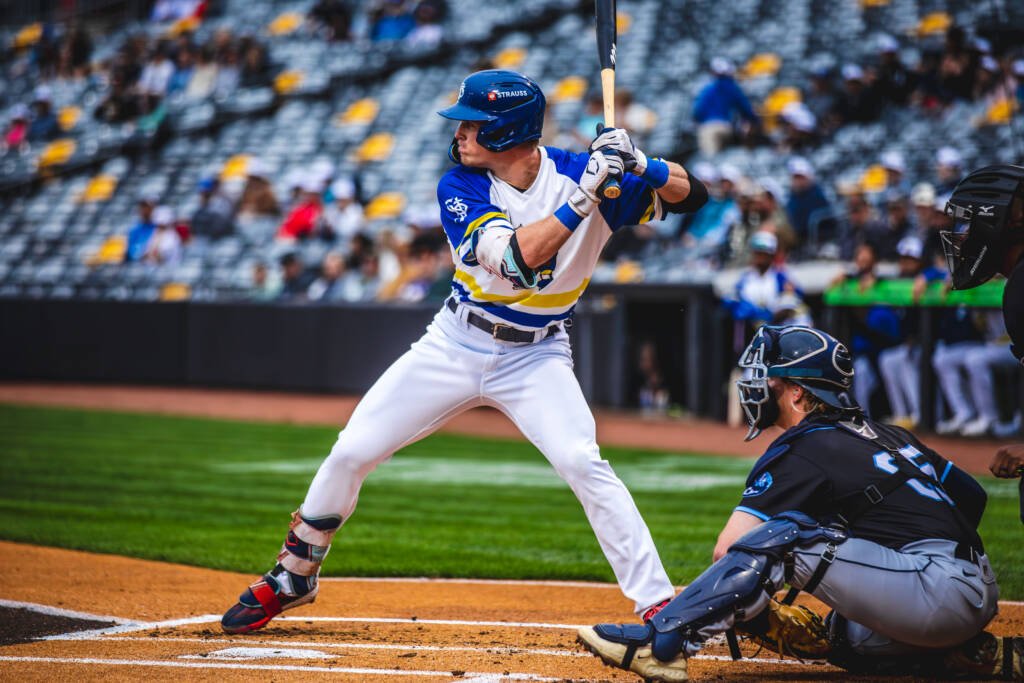 The Twins’ 2025 season will not be remembered fondly, at the major-league level. For the second straight year, Minnesota faded badly in the second half, and the trade deadline only deepened the frustration. Fan favorites with multiple years of team control, like Jhoan Duran, Griffin Jax, and Louis Varland, were shipped out—moves that signaled another organizational reset, rather than a push forward. Those decisions understandably strained the relationship between the front office and the fanbase. Still, the offseason remains unfinished, and perspective matters. When you zoom out beyond Target Field and look across the organization, there was legitimate progress made in 2025. The Twins’ farm system provided some of the brightest moments of the year and offered a reminder of why patience still matters in the Twin Cities. Here are five ways to remember 2025, through the lens of Twins minor leaguers. Big Years from Gabriel Gonzalez and Dasan Hill If there was one clear takeaway from the farm system this season, it was the emergence of legitimate impact talent. Gabriel Gonzalez was named Twins Daily’s Minor League Hitter of the Year after putting together his most complete professional season. In 123 games, he hit .329/.395/.513 with a 148 wRC+, while reaching Triple-A as a 21-year-old. He showed improved plate discipline, consistent power to all fields, and the kind of offensive profile that now projects comfortably into a corner outfield role at the major-league level. Plus, he’s a right-handed hitter, something the Twins have lacked for that very role in recent seasons. On the mound, Dasan Hill earned Twins Daily’s Minor League Pitcher of the Year honors, and his rise felt just as meaningful. In 19 starts (62 IP), he posted a 3.19 ERA, a 3.35 FIP, a 31.1% strikeout rate, and a 15.0% walk rate. The 19-year-old took noticeable steps forward with his command and secondary offerings, turning raw arm strength into sustainable production. If he continues to make strides next season, he could enter the picture as a top-100 prospect. In an organization that continues to prioritize pitching development, Hill’s progress stood out as a significant win. Top Prospects on the Brink: Walker Jenkins and Emmanuel Rodriguez The Twins still possess two of the most intriguing offensive prospects in baseball. Walker Jenkins continued to validate the hype surrounding him, showing why he is viewed as a potential franchise cornerstone. He reached Triple A in his age-20 season, a rare feat, and posted a 135 wRC+ across three levels. Many national outlets will have him ranked among baseball’s top 10 prospects entering 2026. His combination of physicality, athleticism, and advanced approach at the plate keeps his ceiling among the highest in the system. Emmanuel Rodriguez remains a fascinating case study. When healthy, he is one of the most dangerous hitters in the minors, pairing elite on-base skills with game-changing power. While durability remains i doubt, however, 2025 reinforced that Rodriguez is not a fringe prospect. In 65 games, he posted a 135 wRC+ with an .839 OPS and a 20.6% walk rate. Minnesota allowed him to play in the Dominican Winter League, and he's posted a .292 batting average with a .417 OBP and a .646 slugging percentage for a robust 1.063 OPS over 18 games. He is a potential middle-of-the-order bat knocking on the door of Target Field. Cedar Rapids Wins the Midwest League West Division Title Team success at the minor-league level does not always translate directly to future wins in the majors, but it still matters. The Kernels had to win back-to-back games in the best-of-three series to clinch the Midwest League West Division title. Their run to a runner-up finish in the Midwest League Championship showcased a group that played meaningful games late into the season. It was the team’s third Midwest League Championship series in five years, showcasing that the organization is finding ways to win in the low minors. That experience is valuable. Prospects learning how to handle pressure, adjust during playoff series, and perform in high-leverage situations adds an element that development plans cannot fully replicate. Cedar Rapids finished the season with a 74-63 record. The Kernels’ success was a reminder that the system is not just producing individual standouts, but also competitive teams. Breakout Seasons from Connor Prielipp and Kaelen Culpepper Few prospects needed a strong year more than Connor Prielipp, and he delivered. After injuries slowed his early professional career, Prielipp finally enjoyed extended time on the mound and looked the part of a polished left-handed arm. In 24 games (82 2/3 IP), he posted a 4.03 ERA, a 3.54 FIP, a 27.0% strikeout rate, and an 8.5% walk rate. Earlier this winter, Derek Falvey mentioned him as a potential arm that could shift to a bullpen role for 2026. His ability to miss bats and attack hitters reestablished him as a meaningful piece of the pitching pipeline. Kaelen Culpepper also made noise in 2025, emerging as one of the system’s most pleasant surprises. The former first-round pick slashed .289/.375/.469 with a 138 wRC+ and 25 steals. His blend of athleticism, defensive versatility, and improving offensive output raised his stock, to something befitting a player taken higher than 21st in his draft class. Culpepper’s development added depth to a system that increasingly values flexibility and up-the-middle talent. A Restocked Farm System from the Trade Deadline The trade deadline hurt, but it served a purpose. By moving established big-league relievers and veterans on expiring deals, the Twins replenished a farm system that had thinned out in recent years. Minnesota acquired multiple prospects ranked in Twins Daily’s top-20 prospects, including catcher Eduardo Tait, right-handed pitcher Mick Abel, and lefty Kendry Rojas. Other prospects acquired include righty Ryan Gallagher, outfielder Hendry Mendez, righty Geremy Villoria, catcher Enrique Jimenez, righthander Sam Armstrong, and southpaw Garrett Horn. Not every prospect turns out to be a star, but the Twins need viable options for the long term. The incoming talent may not all become household names, but the organization added volume, upside, and developmental options across multiple levels. That matters for a front office that continues to operate under owner-imposed payroll constraints. Minnesota’s farm system is now ranked among baseball’s best, and the team will add to that depth with the third overall pick in the 2026 MLB Draft. A deeper farm system creates options, whether that means internal promotions or future trades that better align with competitive windows. The 2025 Twins will be remembered for another collapse and difficult decisions from the dugout to the owners' suite. The 2025 farm system, however, tells a different story—one of growth, opportunity, and a reminder that the next core of Twins baseball is still very much under construction. What stands out from the past year in the Twins farm system? Leave a comment and start the discussion.
- 28 comments
-
- 8
-
-
-
- kaelen culpepper
- connor prielipp
- (and 2 more)
-
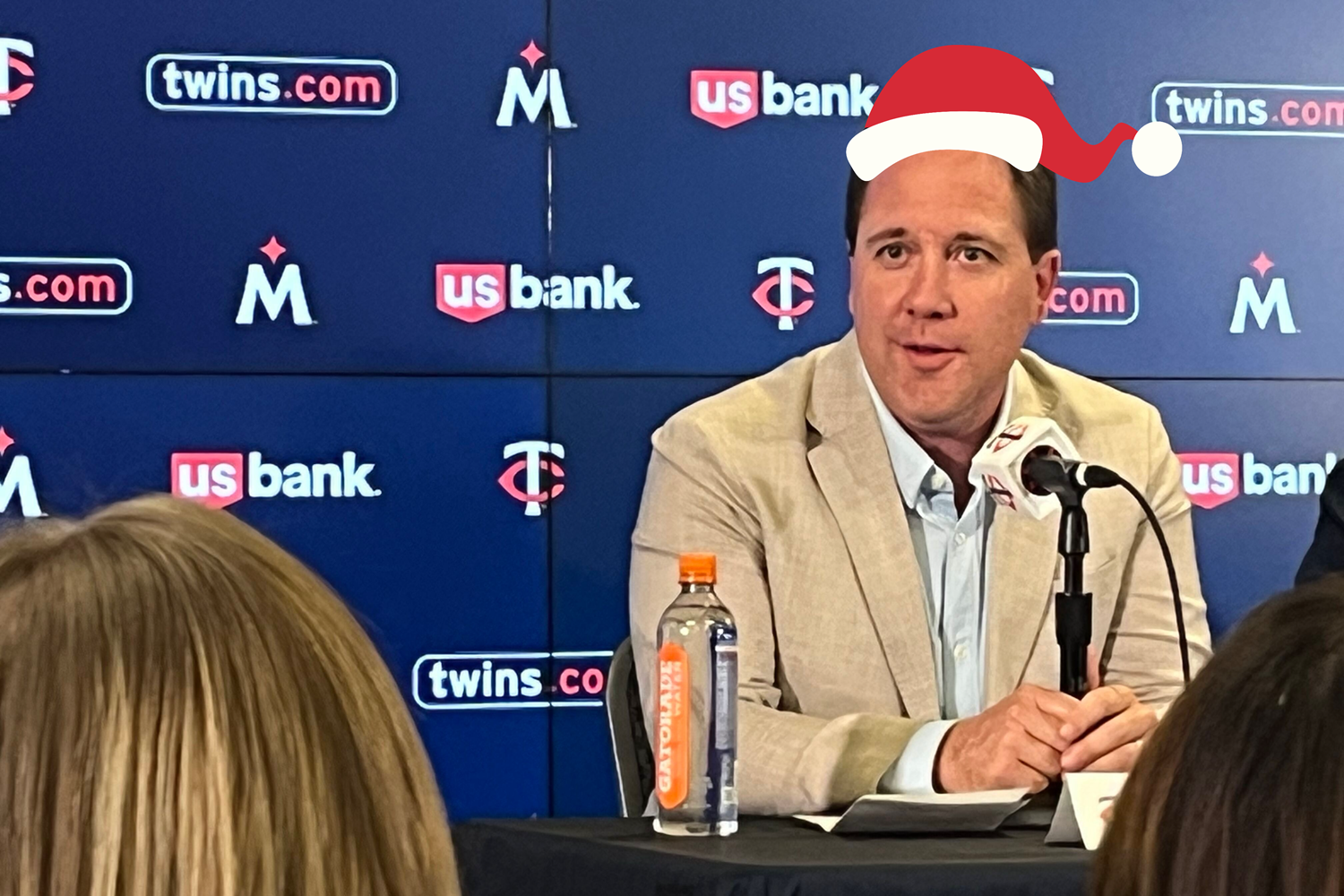 If there is one tradition Derek Falvey truly embraces, it is waiting until the absolute last possible moment. Roster decisions, offseason direction, and now Christmas shopping all follow the same internal clock. With Christmas lights already boxed back up at Target Field, the Twins front office is once again sprinting through the metaphorical mall, hoping nobody notices the receipts. This year, Falvey reportedly made one strategic adjustment. The biggest gifts are being reserved for the staff members in charge of season ticket renewals. These employees have spent the last two seasons absorbing daily phone calls that begin with a long sigh and end with a threat to follow the Wild instead. After payroll slashing and with an on-field product that collapsed two years in a row, Falvey decided a fruit basket was no longer enough. Sources say the gifts include noise-cancelling headphones, premium stress balls, and a handwritten note that simply reads 'Thank you for your service'. The Twins briefly explored giving, raises but pivoted to something more flexible and cost-controlled. Not everyone on the list is still with the organization. Louis Varland reportedly received a Canadian-themed gift package to celebrate his first Christmas as a member of the Toronto Blue Jays. Inside was a collection of maple syrup, a toque, and possibly the contractual rights to Edouard Julien. Falvey framed it as a gesture of goodwill, and not at all a way to clean out the filing cabinet before the new year. The most elaborate gift may belong to Dave St. Peter. Falvey is said to be presenting the former Twins president with a 'travel the world' package, designed to keep him as far away from Target Field as possible during the upcoming season. The itinerary includes extended stays in places with no cellular service and absolutely no access to Minnesota sports radio. It is being billed as a wellness retreat for everyone involved. Other gifts are more symbolic. Derek Shelton is rumored to be receiving a laminated lineup card that never changes and a candle labeled 'patience'. Joe Pohlad is expected to get Commercial Real Estate for Dummies; no word on whether Tom will also get A Complete Idiot's Guide to Baseball. Twins fans are believed to be receiving an email promising clarity soon; it should arrive sometime after the snow melts. Falvey himself plans to keep things simple. He reportedly bought a mirror, wrapped it carefully, and labeled it 'culture'. In a season defined by austerity, it feels fitting. The Twins may not be giving fans what they want this Christmas, but at least everyone in the building knows the front office is thinking about them—even if it is at the last minute, and even if the receipt is definitely being kept just in case,
- 11 comments
-
- 2
-
-
- derek falvey
- louis varland
- (and 1 more)
-
Image courtesy of Twins Daily If there is one tradition Derek Falvey truly embraces, it is waiting until the absolute last possible moment. Roster decisions, offseason direction, and now Christmas shopping all follow the same internal clock. With Christmas lights already boxed back up at Target Field, the Twins front office is once again sprinting through the metaphorical mall hoping nobody notices the receipts. This year, Falvey reportedly made one strategic adjustment. The biggest gifts are being reserved for the staff members in charge of season ticket renewals. These employees have spent the last two seasons absorbing daily phone calls that begin with a long sigh and end with a threat to follow the Wild instead. After payroll slashing and an on field product that collapsed two years in a row, Falvey decided a fruit basket was no longer enough. Sources say the gifts include noise canceling headphones, premium stress balls, and a handwritten note that simply reads thank you for your service. The Twins briefly explored gifting raises but pivoted to something more flexible and cost controlled. Not everyone on the list is still with the organization. Louis Varland reportedly received a Canadian themed gift package to celebrate his first Christmas as a member of the Toronto Blue Jays. Inside was a collection of maple syrup, a toque, and possibly the contractual rights to Edouard Julien. Falvey framed it as a gesture of goodwill and not at all a way to clean out the filing cabinet before the new year. The most elaborate gift may belong to Dave St. Peter. Favley is said to be presenting the former Twins president with a travel the world package designed to keep him as far away from Target Field as possible during the upcoming season. The itinerary includes extended stays in places with no cellular service and absolutely no access to Minnesota sports radio. It is being billed as a wellness retreat for everyone involved. Other gifts are more symbolic. Derek Shelton is rumored to be receiving a laminated lineup card that never changes and a candle labeled patience. Joe Pohlad is expected to get a hardcover copy of Budgeting for Beginners with several chapters mysteriously torn out. Twins fans are believed to be receiving an email promising clarity soon which should arrive sometime after the snow melts. Falvey himself plans to keep things simple. He reportedly bought a mirror, wrapped it carefully, and labeled it culture. In a season defined by austerity, it feels fitting. The Twins may not be giving fans what they want this Christmas, but at least everyone in the building knows the front office is thinking about them. Even if it is at the last minute, and even if the receipt is definitely being kept just in case, View full article
-
Image courtesy of © Brad Rempel-Imagn Images The camera opens on a quiet conference room overlooking Target Field. It is pristine. It is calm. It is absolutely not calm. This is Succession, Minnesota style. There is coffee. There are spreadsheets. There is a faint sense that someone is about to be told they are still family but no longer in charge. Tom Pohlad stands at the head of the table. He does not raise his voice. He does not need to. He has the tone of a man who has already won the argument fourteen months ago. Tom: Don’t get me wrong. We are still in control. Joe Pohlad sits across from him. He has been here for nineteen years. He looks like someone who just realized the word stewardship can be used as a weapon. Joe: So… this is happening. Tom: This is happening in the best interest of the organization. Joe: The organization being the Minnesota Twins or the Pohlad family. From the corner, a silent PowerPoint flickers to life. It reads New Partners. Majority Ownership. Best Interest. There are no numbers. There do not need to be numbers. Joe Ryan is there for some reason. No one invited him. Pitchers just wander into these things. Joe Ryan: Sorry, I thought this was a rotation meeting. Tom: It is. Just not yours. (Ryan exits) Derek Falvey leans forward like a corporate cousin who knows exactly when to speak and when to let chaos cook. Falvey: We are aligned. That is the message. Derek Shelton nods slowly from the end of the table. He has the calm expression of someone who has seen how this ends and knows it is never clean. Shelton: We believe in the process. Whatever the process is now. Joe Pohlad stares at Tom. Joe: I was not on board with this. Tom: At first. Joe (raising his voice slightly): I was supposed to bring us back to the promised land. Tom sighs. This is the part where the conversation become personal. Tom: This is hard. On the family. On us. This is not what we envisioned when we talked about generations and stewardship and winning a world championship. Joe: And yet here we are. You take the chair. I take understanding. Tom: You understand now. Joe pauses. He nods. Succession teaches us that understanding is often just acceptance with better branding. Joe (reluctantly): I understand. A beat. Outside, the stadium is empty. Control has been retained. Majority ownership remains. The family business continues. From the hallway, a new limited partner peeks in, whispers something about significant financial cleanup, and disappears. Tom straightens his jacket. Tom: This is for the fan base. Joe: Of course it is. The camera pulls back. The Twins will still be run by the Pohlads. The chair has changed. The power has not. Somewhere, Logan Roy smiles politely and says something about control. Fade to black. View full article
-
 Coming out of the Winter Meetings, the Twins find themselves circling back to a familiar need. The team's offense struggled down the stretch and remains the most obvious place to upgrade a roster that is trying to stay afloat while reshaping its long-term direction. Last week, the Twins signed Josh Bell to a one-year, $7 million deal that comes with ramifications for the current roster. Minnesota could let him be the team's everyday first baseman, but he has been a poor defender for most of his career. To field the best lineup, Bell might be better suited for a DH role with a different player taking over at first base. That brings us back to Houston and to a decision that still hangs over the organization. The Twins shocked their fan base and much of the baseball world when they sent Carlos Correa back to the Astros last July. The deal felt like a final acknowledgement that the previous competitive window had closed. The return only sharpened that feeling. Minnesota received a 26-year-old low-minors pitcher in Matt Mikulski, who the team already released, and agreed to cover $33 million of Correa’s remaining contract. At the time, it looked like the Twins took the best offer available. Now, we know the talks may have been more complicated. According to Bob Nightengale of USA Today, Minnesota initially pushed for veteran first baseman Christian Walker as part of those negotiations. Houston declined. Walker had just signed a free agent deal the previous winter and still had two years and $40 million remaining. The ask suggested the Twins were not simply dumping salary but actively searching for a way to remain respectable in the short term without Correa. Fast forward to this offseason, and Walker’s name is back in circulation. Reports indicate the Astros are attempting to clear a logjam at first base and designated hitter. Chandler Rome of The Athletic has noted that interest around the league has been limited. Walker’s 2025 numbers explain some of that hesitation. Over 154 games, he slashed .238/.297/.421 (.718) with a 99 wRC+ and produced 1.1 fWAR. There are reasons to think there is still something left. Walker was far better in the second half, launching 15 home runs and posting a 120 wRC+. He will be 35 years old in 2026 but remains a strong defender at first base (2 OAA in 2025), which carries real value for a pitching staff that will include young infielders across the diamond. This is where the Correa trade could be partially salvaged. Minnesota is already sending $10 million per season to Houston as part of Correa’s deal. A creative solution could see the Astros send Walker to the Twins while covering roughly half of his remaining salary ($16-20 million of the $40 million owed). Minnesota would likely need to include a lower-level prospect to make it work, but the cost would be manageable. It would not erase the sting of trading Correa for such a light return. However, landing a steady first baseman who can provide average offense and above-average defense would help stabilize the roster and provide a more transparent bridge between rebuilding and competing. Sometimes saving a trade does not mean winning it outright. Sometimes it means finding a way to make the aftermath hurt a little less. Does Walker make sense for the Twins? How much of his salary could the front office expect to acquire? Leave a comment and start the discussion.
- 37 comments
-
- 1
-
-
- carlos correa
- christian walker
- (and 1 more)
-
Image courtesy of © Gregory Fisher-Imagn Images The MLB Draft Lottery delivered an early holiday gift to the Twins at last week’s Winter Meetings when the club secured the third overall pick. It is the organization’s highest draft position since 2017 and one that should offer the chance to add an impact talent to a farm system already trending upward. Still, ending up in the third spot comes with a history that is anything but straightforward. Depending on the year, the third pick has produced Hall of Famers, perennial All-Stars, fringe big leaguers, and players who never quite lived up to the expectations placed on them. That is the challenge the Twins now face. The third overall pick can transform a franchise, but its legacy also provides a reminder that even the most carefully managed scouting departments can miss. Minnesota has reaped both ends of that spectrum over its history with the pick and now finds itself hoping that this year’s draft can tie the story together in a much more satisfying way. Some of the best selections ever made from the third spot came long before the modern scouting and analytics era. The Brewers struck gold twice in the 1970s by drafting Robin Yount and Paul Molitor. Both players carved out Hall of Fame careers while accumulating more than 75 rWAR apiece, setting standards that have towered over every other third overall pick for nearly five decades. The 2000s produced more star talent with Evan Longoria in 2006 and Manny Machado in 2010. Machado’s 61.7 rWAR already puts him among the elite at the position, and he still has time to climb higher before his career closes. More recently, the third overall pick has been attached to high ceilings and heavy risk. Detroit selected prep outfielder Max Clark in 2023, a player many evaluators believe could be a fast mover once he gets deeper into pro ball. He is already a consensus top-50 prospect and could debut as early as 2026. The Rangers went in a very different direction with Kumar Rocker in 2022 after his winding path from Vanderbilt to independent ball to the first round. It was a surprise pick at number three that changed the rest of that first round. Rocker still flashed top 50 potential entering last season, but has struggled to find sustained success in the majors. Last season, he had a 4.88 FIP and a 19.5 K%. Miami hoped Max Meyer, a Minnesota Golden Gopher legend, would become a rotation anchor after taking him third overall in 2020. Injuries and inconsistency have slowed his ascent, leaving his long-term role in MLB unsettled. In 2025, he posted a 4.47 FIP with a 23.9 K%. The Twins have their own complicated history with the third overall pick, and both of their selections arrived with expectations that were never fulfilled. Minnesota believed Willie Banks could become a fixture in the rotation after grabbing him in 1987. Instead, he bounced around the league and contributed only 1.0 rWAR in 85 career appearances. Dave McCarty followed in 1991 and brought an enticing college power bat, with evaluators projecting a quick rise. He reached the majors but never developed into the middle-of-the-order presence the Twins hoped for, producing negative value during his time in Minnesota (-3.2 rWAR) despite playing parts of 11 seasons in the majors. As Jamie Cameron wrote, the Twins have some intriguing options that will be available with the third overall pick next July. College shortstop Justin Lebron is the frontrunner for the third pick. Last season, he posted a 127 wRC+ for Alabama. Other college options include Georgia Tech outfielder Drew Burress, Virginia outfielder A.J. Gracia, and Coastal Carolina right-handed pitcher Cameron Flukey . However, it’s important to note that a lot can happen during the spring season for college and high school players. There is at least one comforting trend. In both years, when the Twins held the third overall pick, the franchise went on to win the World Series. It may be a coincidence, but with a premium draft selection now secured and a front office that has seen some recent draft success stories, Minnesota has a chance to reshape the story around the third pick. History may be complicated, but the Twins will gladly accept the opportunity to add the next great chapter. What stands out about the history of the third overall pick? Leave a comment and start the discussion. View full article
-
A Complicated Legacy Awaits the Twins with the Third Overall Pick
Cody Christie posted an article in History
 The MLB Draft Lottery delivered an early holiday gift to the Twins at last week’s Winter Meetings when the club secured the third overall pick. It is the organization’s highest draft position since 2017 and one that should offer the chance to add an impact talent to a farm system already trending upward. Still, ending up in the third spot comes with a history that is anything but straightforward. Depending on the year, the third pick has produced Hall of Famers, perennial All-Stars, fringe big leaguers, and players who never quite lived up to the expectations placed on them. That is the challenge the Twins now face. The third overall pick can transform a franchise, but its legacy also provides a reminder that even the most carefully managed scouting departments can miss. Minnesota has reaped both ends of that spectrum over its history with the pick and now finds itself hoping that this year’s draft can tie the story together in a much more satisfying way. Some of the best selections ever made from the third spot came long before the modern scouting and analytics era. The Brewers struck gold twice in the 1970s by drafting Robin Yount and Paul Molitor. Both players carved out Hall of Fame careers while accumulating more than 75 rWAR apiece, setting standards that have towered over every other third overall pick for nearly five decades. The 2000s produced more star talent with Evan Longoria in 2006 and Manny Machado in 2010. Machado’s 61.7 rWAR already puts him among the elite at the position, and he still has time to climb higher before his career closes. More recently, the third overall pick has been attached to high ceilings and heavy risk. Detroit selected prep outfielder Max Clark in 2023, a player many evaluators believe could be a fast mover once he gets deeper into pro ball. He is already a consensus top-50 prospect and could debut as early as 2026. The Rangers went in a very different direction with Kumar Rocker in 2022 after his winding path from Vanderbilt to independent ball to the first round. It was a surprise pick at number three that changed the rest of that first round. Rocker still flashed top 50 potential entering last season, but has struggled to find sustained success in the majors. Last season, he had a 4.88 FIP and a 19.5 K%. Miami hoped Max Meyer, a Minnesota Golden Gopher legend, would become a rotation anchor after taking him third overall in 2020. Injuries and inconsistency have slowed his ascent, leaving his long-term role in MLB unsettled. In 2025, he posted a 4.47 FIP with a 23.9 K%. The Twins have their own complicated history with the third overall pick, and both of their selections arrived with expectations that were never fulfilled. Minnesota believed Willie Banks could become a fixture in the rotation after grabbing him in 1987. Instead, he bounced around the league and contributed only 1.0 rWAR in 85 career appearances. Dave McCarty followed in 1991 and brought an enticing college power bat, with evaluators projecting a quick rise. He reached the majors but never developed into the middle-of-the-order presence the Twins hoped for, producing negative value during his time in Minnesota (-3.2 rWAR) despite playing parts of 11 seasons in the majors. As Jamie Cameron wrote, the Twins have some intriguing options that will be available with the third overall pick next July. College shortstop Justin Lebron is the frontrunner for the third pick. Last season, he posted a 127 wRC+ for Alabama. Other college options include Georgia Tech outfielder Drew Burress, Virginia outfielder A.J. Gracia, and Coastal Carolina right-handed pitcher Cameron Flukey . However, it’s important to note that a lot can happen during the spring season for college and high school players. There is at least one comforting trend. In both years, when the Twins held the third overall pick, the franchise went on to win the World Series. It may be a coincidence, but with a premium draft selection now secured and a front office that has seen some recent draft success stories, Minnesota has a chance to reshape the story around the third pick. History may be complicated, but the Twins will gladly accept the opportunity to add the next great chapter. What stands out about the history of the third overall pick? Leave a comment and start the discussion.
- 42 comments
-
- 7
-
-
- paul molitor
- robin yount
- (and 5 more)
-
 According to Just Baseball and Aram Leighton, the San Diego Padres have signed Jose Miranda to a minor league contract that includes an invitation to spring training. For the Padres, it is a low-risk upside play on a hitter who not long ago looked like a reliable middle-of-the-order presence. For Miranda, it is another opportunity to prove that his best baseball is not already behind him at age 27. For a moment, it felt like the Twins had uncovered yet another homegrown bat. Miranda arrived in 2022 as a former second-round pick and top-100 prospect and eventually settled in after a rocky introduction to the majors. He finished his rookie season hitting .268/.325/.426 (.751) with a 116 wRC+, popping 15 home runs and 25 doubles in 483 plate appearances. A shoulder injury derailed Miranda’s 2023 season almost immediately. Installed as the Opening Day third baseman, he struggled badly before undergoing surgery, finishing the year with a .211/.263/.303 (.566) line. While the injury offered some explanation, it also introduced real questions about whether Miranda’s bat would ever fully bounce back. In 2024, he appeared to answer some of those concerns. Miranda rebounded with a .284/.322/.441 (.763) slash line and a 112 OPS+ across 121 games. The production returned, but so did the physical issues. Repeated back injuries shortened his season and prevented him from building any real momentum heading into the following year. Then came 2025, when everything unraveled. Miranda made the Opening Day roster but quickly looked overwhelmed. Through 12 games, he hit just .167 with 13 strikeouts in 36 plate appearances. His timing was off, the quality of contact evaporated, and the Twins sent him back to St. Paul. Things only worsened there. After a freak accident while carrying bottled water, Miranda struggled throughout the year, slashing .195/.272/.296 (.569) in 90 games with the Saints. His once reliable bat to ball skills disappeared as he chased pitches and failed to drive mistakes. It was a shocking fall for a player who had looked like one of the Twins most dependable hitters just a year earlier. Miranda’s four year run in Minnesota ended with a .263 average, 28 home runs, and a 101 OPS+. He remains a bat first corner player with limited defensive value and pronounced reverse splits, but the talent has not vanished entirely. For the Padres, this is a simple gamble. If Miranda can rediscover even a portion of his former self, the reward could be meaningful. If not, the cost is minimal.
 -
According to Just Baseball and Aram Leighton, the San Diego Padres have signed Jose Miranda to a minor league contract that includes an invitation to spring training. For the Padres, it is a low-risk upside play on a hitter who not long ago looked like a reliable middle-of-the-order presence. For Miranda, it is another opportunity to prove that his best baseball is not already behind him at age 27. For a moment, it felt like the Twins had uncovered yet another homegrown bat. Miranda arrived in 2022 as a former second-round pick and top-100 prospect and eventually settled in after a rocky introduction to the majors. He finished his rookie season hitting .268/.325/.426 (.751) with a 116 wRC+, popping 15 home runs and 25 doubles in 483 plate appearances. A shoulder injury derailed Miranda’s 2023 season almost immediately. Installed as the Opening Day third baseman, he struggled badly before undergoing surgery, finishing the year with a .211/.263/.303 (.566) line. While the injury offered some explanation, it also introduced real questions about whether Miranda’s bat would ever fully bounce back. In 2024, he appeared to answer some of those concerns. Miranda rebounded with a .284/.322/.441 (.763) slash line and a 112 OPS+ across 121 games. The production returned, but so did the physical issues. Repeated back injuries shortened his season and prevented him from building any real momentum heading into the following year. Then came 2025, when everything unraveled. Miranda made the Opening Day roster but quickly looked overwhelmed. Through 12 games, he hit just .167 with 13 strikeouts in 36 plate appearances. His timing was off, the quality of contact evaporated, and the Twins sent him back to St. Paul. Things only worsened there. After a freak accident while carrying bottled water, Miranda struggled throughout the year, slashing .195/.272/.296 (.569) in 90 games with the Saints. His once reliable bat to ball skills disappeared as he chased pitches and failed to drive mistakes. It was a shocking fall for a player who had looked like one of the Twins most dependable hitters just a year earlier. Miranda’s four year run in Minnesota ended with a .263 average, 28 home runs, and a 101 OPS+. He remains a bat first corner player with limited defensive value and pronounced reverse splits, but the talent has not vanished entirely. For the Padres, this is a simple gamble. If Miranda can rediscover even a portion of his former self, the reward could be meaningful. If not, the cost is minimal. View full rumor
-
Image courtesy of © Daniel Kucin Jr.-Imagn Images One message from the Twins front office came through clearly at the Winter Meetings. Minnesota wants to hold on to its three stars (Byron Buxton, Pablo Lopez, and Joe Ryan) with an opportunity to trade established talent in return for productive big-leaguers who fit their needs better. The Twins have done this in recent years, when trading for Lopez or when trading away Jorge Polanco. That shift aligns with what is happening in Baltimore. The Orioles surprised much of the league by signing Pete Alonso to a five-year contract. Before the deal, they already had multiple in-house corner infield options, including Coby Mayo. The Alonso signing pushes Mayo further off his defensive home, and Baltimore’s loaded infield creates an opportunity for clubs looking to upgrade at first base. Few teams match up better with Baltimore’s needs than the Twins, who have starting pitchers and young arms they may be willing to move, and who still need help at offense-first positions even after signing Josh Bell. Mayo remains an intriguing target, despite a challenging 2025 season. Right-handed power has long been his calling card. Scouts and analysts loved the explosiveness in his bat and the potential for middle-of-the-order production. Last season, he posted a 103 wRC+ in Triple A, but was limited to a 95 wRC+ in his big-league time. He remains just 24 years old, with the kind of offensive ceiling that doesn't come around often. A team willing to bet on upside could still dream on a future where Mayo anchors a lineup for several seasons. Let's consider three realistic trade concepts that could spark a conversation between Minnesota and Baltimore. Trade Option 1 Twins Receive: 1B Coby Mayo Orioles Receive: RHP Bailey Ober Both Ober and Mayo are coming off rough 2025 seasons. Ober ran into uncharacteristic command issues while fighting a hip issue, leading to more hard contact than he had allowed in previous years. However, his track record from 2022 through 2024 still carries weight with clubs. Over that span, he recorded a 115 ERA+ and a 3.74 FIP while showing reliability and strong strike-throwing. With two years of team control remaining, he matches what the Orioles need as they continue to search for durable mid-rotation pitching. For Minnesota, this deal represents a swap that fits their stated direction. Trade Option 2 Twins Receive: 1B Coby Mayo Orioles Receive: RHP Mick Abel Minnesota acquired Abel at last year’s trade deadline in the Jhoan Duran deal, and they have shown optimism about helping him refine his delivery and command. That makes it complicated for the Twins to move him this quickly, but circumstances have shifted for both teams. Mayo and Abel are remarkably similar assets. Both are pre-arbitration players with prospect pedigrees who have taken early lumps in the big leagues. Sometimes a reset is beneficial. This kind of challenge trade allows each organization to take a new developmental approach with a talented young player. Trade Option 3 Twins Receive: 1B Coby Mayo Orioles Receive: RHP David Festa, RHP Andrew Morris This offer gives Baltimore two pitchers who can cover innings in the near future. Festa has flashed a fastball with carry and strikeout ability (32.0% strikeout rate at Triple-A St. Paul last season), and he is big league-ready, so he could slot into their rotation almost immediately. Morris is a step behind, but earned a 40-man spot this winter because of his strong command profile and the likelihood that he can contribute in the next few seasons. Last season, he posted a 4.14 FIP and a 22.4% strikeout rate for the Saints. For a team looking to build long-term pitching depth, this package may be more appealing than a single arm with risk. Each scenario highlights a different angle for balancing value between the clubs. Baltimore must decide whether it prefers established innings, developmental upside, or a mix of both. The Twins, meanwhile, have to decide whether Mayo is the right risk, as they look for ways to shake up their core and bolster their offense. Which deal gets the job done from Baltimore’s perspective? Leave a comment and start the discussion. View full article
-
What Would it Cost Minnesota Twins to Trade for Baltimore’s Coby Mayo?
Cody Christie posted an article in Twins
 One message from the Twins front office came through clearly at the Winter Meetings. Minnesota wants to hold on to its three stars (Byron Buxton, Pablo Lopez, and Joe Ryan) with an opportunity to trade established talent in return for productive big-leaguers who fit their needs better. The Twins have done this in recent years, when trading for Lopez or when trading away Jorge Polanco. That shift aligns with what is happening in Baltimore. The Orioles surprised much of the league by signing Pete Alonso to a five-year contract. Before the deal, they already had multiple in-house corner infield options, including Coby Mayo. The Alonso signing pushes Mayo further off his defensive home, and Baltimore’s loaded infield creates an opportunity for clubs looking to upgrade at first base. Few teams match up better with Baltimore’s needs than the Twins, who have starting pitchers and young arms they may be willing to move, and who still need help at offense-first positions even after signing Josh Bell. Mayo remains an intriguing target, despite a challenging 2025 season. Right-handed power has long been his calling card. Scouts and analysts loved the explosiveness in his bat and the potential for middle-of-the-order production. Last season, he posted a 103 wRC+ in Triple A, but was limited to a 95 wRC+ in his big-league time. He remains just 24 years old, with the kind of offensive ceiling that doesn't come around often. A team willing to bet on upside could still dream on a future where Mayo anchors a lineup for several seasons. Let's consider three realistic trade concepts that could spark a conversation between Minnesota and Baltimore. Trade Option 1 Twins Receive: 1B Coby Mayo Orioles Receive: RHP Bailey Ober Both Ober and Mayo are coming off rough 2025 seasons. Ober ran into uncharacteristic command issues while fighting a hip issue, leading to more hard contact than he had allowed in previous years. However, his track record from 2022 through 2024 still carries weight with clubs. Over that span, he recorded a 115 ERA+ and a 3.74 FIP while showing reliability and strong strike-throwing. With two years of team control remaining, he matches what the Orioles need as they continue to search for durable mid-rotation pitching. For Minnesota, this deal represents a swap that fits their stated direction. Trade Option 2 Twins Receive: 1B Coby Mayo Orioles Receive: RHP Mick Abel Minnesota acquired Abel at last year’s trade deadline in the Jhoan Duran deal, and they have shown optimism about helping him refine his delivery and command. That makes it complicated for the Twins to move him this quickly, but circumstances have shifted for both teams. Mayo and Abel are remarkably similar assets. Both are pre-arbitration players with prospect pedigrees who have taken early lumps in the big leagues. Sometimes a reset is beneficial. This kind of challenge trade allows each organization to take a new developmental approach with a talented young player. Trade Option 3 Twins Receive: 1B Coby Mayo Orioles Receive: RHP David Festa, RHP Andrew Morris This offer gives Baltimore two pitchers who can cover innings in the near future. Festa has flashed a fastball with carry and strikeout ability (32.0% strikeout rate at Triple-A St. Paul last season), and he is big league-ready, so he could slot into their rotation almost immediately. Morris is a step behind, but earned a 40-man spot this winter because of his strong command profile and the likelihood that he can contribute in the next few seasons. Last season, he posted a 4.14 FIP and a 22.4% strikeout rate for the Saints. For a team looking to build long-term pitching depth, this package may be more appealing than a single arm with risk. Each scenario highlights a different angle for balancing value between the clubs. Baltimore must decide whether it prefers established innings, developmental upside, or a mix of both. The Twins, meanwhile, have to decide whether Mayo is the right risk, as they look for ways to shake up their core and bolster their offense. Which deal gets the job done from Baltimore’s perspective? Leave a comment and start the discussion.
- 57 comments
-
- 3
-
-
- coby mayo
- bailey ober
- (and 3 more)

