



Parker Hageman
-
Posts
4,152 -
Joined
-
Last visited
-
Days Won
6
Content Type
Profiles
News
Minnesota Twins Videos
2026 Minnesota Twins Top Prospects Ranking
2022 Minnesota Twins Draft Picks
Minnesota Twins Free Agent & Trade Rumors, Notes, & Tidbits
Guides & Resources
2023 Minnesota Twins Draft Picks
The Minnesota Twins Players Project
2024 Minnesota Twins Draft Picks
2025 Minnesota Twins Draft Pick Tracker
2026 Minnesota Twins Draft Tracker: Picks & Bonuses
Forums
Blogs
Events
Store
Downloads
Gallery
Everything posted by Parker Hageman
-
 By listening to this week’s episode of the No Juice Podcast, you will subject yourself to a variety of baseball topics including, but not limited to, the Minnesota Twins and September, the Houston Astros and EXTREME MONEYBALL, Jesus Montero and the Ice Cream Sandwich Incident, Bill Murray and ticket-taking and thoughts on Midway Stadium in general.But wait! That’s not all! If you act now, you will also receive non-baseball talk which includes Parker Hageman’s Health Issues, Dan Anderson’s State Fair Visit, the Minnesota Vikings and much, much more! Listen below, on iTunes or on Stitcher: THE NO JUICE PODCAST, EPISODE #19: AUGUST AND EVERYTHING AFTER Click here to view the article
 -
The No Juice Podcast, Episode #19: August And Everything After
Parker Hageman posted an article in Twins
 But wait! That’s not all! If you act now, you will also receive non-baseball talk which includes Parker Hageman’s Health Issues, Dan Anderson’s State Fair Visit, the Minnesota Vikings and much, much more! Listen below, on iTunes or on Stitcher: THE NO JUICE PODCAST, EPISODE #19: AUGUST AND EVERYTHING AFTER
 -
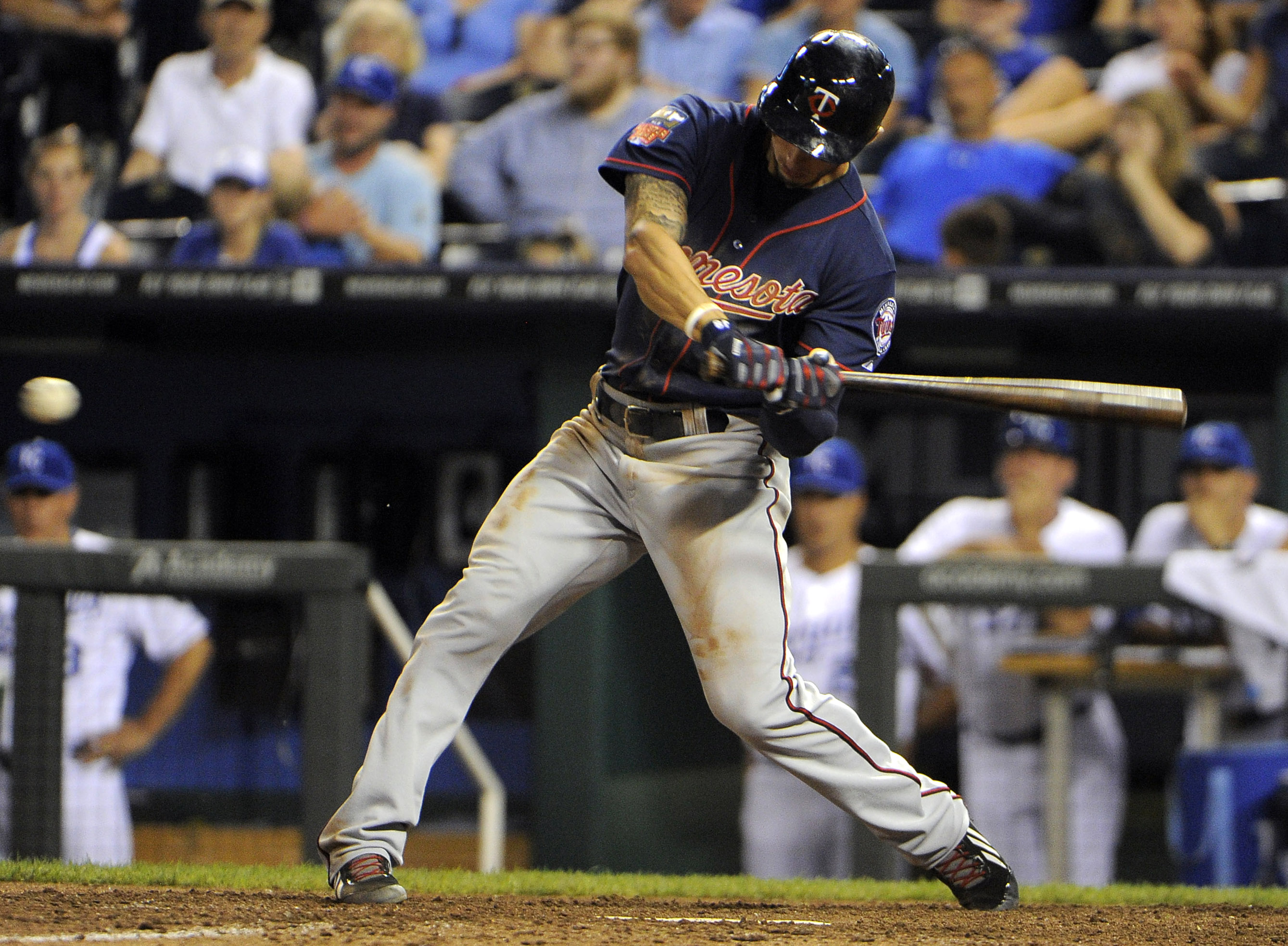 There are plenty of scouts in the Braves, Astros and Twins organizations who would say they knew he was capable of this type of production. Once upon a time, Schafer was a top-50 prospect in the Braves system but that promise never came to fruition in two stints in Atlanta which sandwiched time in Houston as well. A vicious cycle of injuries and subsequent ineffectiveness contributed to the struggles over his big league career. In all, from 2009 until he was claimed by the Twins this season, Schafer put up a sad trombone line of .222/.307/.304 over 1,251 plate appearances. At 27, to begin the 2014 season, Schafer was back with his original organization and was hard-pressed to find a consistent role. He started just 14 of the 63 games he played in for the Braves. Offensively, his career hit a jagged rock bottom when he could not hit anything. Perhaps it was pressing to do too much in order to gain more playing time but Schafer’s swing rate increased exponentially as he offered at every other pitch regardless of where it may have been located. Is this stretch a breakout or a blip? With the sample size as miniscule as it is, it is easy to consider this streak one of those sample size flukes. There certainly is an element of that, no question. However, with the regular playing time Schafer has seemingly tightened up his wild swing --reducing his chase rate from 33% to 25%-- and increased his connectivity, dropping his swing-and-miss rate from 31% to 22%. What’s more, the contact is far better, as his line drive rate has jumped from 16% to 28%, as has his hard-hit average from .084 to .162. These marks show solid progress. When the Braves re-obtained the outfielder in 2013, Schafer confessed to falling into bad habits at the plate that dragged down his numbers. He was trying to pull the ball far too often and lost the ability to drive the ball up the middle and to the opposite field. Turning over when being pitched away resulted in ground-outs instead of base hits where he could showcase his blazing speed. He reached out to Braves’ hitting coach Greg Walker to help fix this. While he did show more ability to go the other way in 2013, a foul ball off his ankle led to a stress fracture that sidelined him for 31 days that year. Schafer did not return the same and it seemed the sound approach at the plate he had displayed before the injury had disappeared. Opposing teams in the National League exploited Schafer’s overzealous approach and targeted the outer half of the zone: According to ESPN/TruMedia, when being pitched on the outer-half (middle and away), Schafer pounded a vast majority of those into the ground, yanking almost 50% of those balls in play and predictably performed poorly, going 6-for-52, .115. Maybe it was because of regularly scheduled at-bats or a sweet nothing that Twins hitting coach Tom Brunansky whispered in his ear, but after the Twins got their hooks into him, Schafer turned things around, particularly in this area. On pitches on the outer-half, Schafer has driven 60% of those to the middle of the field which has yielded plenty of hits (14-for-39, .359). As an example, here is a clip of Schafer versus Joba Chamberlain in which Schafer -- rather than turning over on the pitch -- stays behind the ball to intentionally drive the pitch to the spacious 5.5 hole where the third baseman is drawn in and the shortstop is playing at double-play depth. http://i.imgur.com/pBEpDSa.gif What does the future hold for Schafer and the Twins? After his performance against the Royals, manager Ron Gardenhire said that the organization is going to continue to feed him playing time for the rest of the year and see how he responds. “That’s what we’re trying to figure out here. We’re letting him play and giving him plenty of at bats and he’s responding and he’s doing well,” Gardenhire told reporters after the game, “You see him running the bases, he can fly -- he scored on that ball late in the game there. He was absolutely flying, I thought he had no chance to score. He has a lot of talent and we’re going to see how he does here the rest of the way for us. And we’ll to kind of figure out how he fits in this organization. We like the young man, he’s come over here and he’s shown some of his skills.” So we will see more of Schafer in September and the Twins will make an evaluation on what to do with him heading into 2015. He might not be a starter but he could be a very good contributor both defensively and offensively. The Minnesota Twins stomped on the Kansas City Royals, so Friday you can get 50% off a L or XL pizza at PapaJohns.com. Enjoy!
 -
On this week's episode of The No Juice Podcast, Dan Anderson and Parker Hageman wake up super early after spending the day helping everyone enjoy the Twins Daily's Touch 'Em All Pub Crawl.Joining the pair was a live studio audience of Tim Rollwagon and Jordan Johnson who helped piece together the previous day's events. Other non-pub crawl related topics included the latest with the Minnesota Twins, the preseason happenings of the Minnesota Vikings and going to Kid Rock concerts at the State Fair. Download attachment: TD Masons.jpg (BONUS LINK! Here is a GIF of Dan Anderson falling really hard while rounding second base during a recent softball game.) Listen below, on iTunes or on Stitcher: THE NO JUICE PODCAST, EPISODE #18: TOUCH 'EM ALL PUB CRAWL Click here to view the article
-
The No Juice Podcast, Episode #18: Touch 'Em All Crawl Recap
Parker Hageman posted an article in Twins
 Joining the pair was a live studio audience of Tim Rollwagon and Jordan Johnson who helped piece together the previous day's events. Other non-pub crawl related topics included the latest with the Minnesota Twins, the preseason happenings of the Minnesota Vikings and going to Kid Rock concerts at the State Fair. (BONUS LINK! Here is a GIF of Dan Anderson falling really hard while rounding second base during a recent softball game.) Listen below, on iTunes or on Stitcher: THE NO JUICE PODCAST, EPISODE #18: TOUCH 'EM ALL PUB CRAWL
 -
Article: Oswaldo Arcia And Crushing In August
Parker Hageman replied to Parker Hageman's topic in Twins Daily Front Page News
This is definitely an area of his game that has improved these past two and a half weeks. On "soft" pitches (breaking balls and changeups), he has gone 9-for-25 (.360) with three home runs when he has gone just 20-for-105 and one home run prior to August 1. Staying back and staying in helps a lot on those offspeed offerings. -
Article: Oswaldo Arcia And Crushing In August
Parker Hageman replied to Parker Hageman's topic in Twins Daily Front Page News
And that goes back to the low hand point that hurts him in getting to those higher fastballs. He's a work in progress, no doubt but seeing some good signs. -
Since the beginning of August, Minnesota Twins outfielder Oswaldo Arcia has been one of the crushiest crushers who ever crushed. Within the small sample universe, Arcia has been murdering baseballs all over the field. Baseballs. Murdered. Dead. In that time, Arcia has jacked six home runs -- the second most in the American League, behind only Houston’s Chris Carter, who has suddenly become Casey from Mudville (pre-poem) since the beginning of July. But it is not just wind-aided fly balls that have drifted beyond the outfield wall that has propelled Arcia’s August. According to ESPN/trumedia his hard-hit average is .241, the ninth-best in the league over the last 21 days. He is crushing it to the core.Oh, and one of those home runs? Yeah, that hit Target Field’s flag pole just like former Twins bruiser Jim Thome. It has been his ability to drive the ball with total disregard for human life that has made his plate appearances “must see” events, as far as “must see” events go this season, anyway. At the same time, it has been his inability to make contact with the ball for the bulk of the season that has come at a heavy price to his overall numbers. While he has deposited a ball in the seats in every 20 at-bats, he’s whiffed once in just under every three at-bats. Arcia’s strength has been prevalent throughout his professional career. In the minors he displayed a more balanced approached at the plate with less of a leg-lift stride that allowed him to use all fields. Of course, Arcia has eschewed this style for his prefered all-or-nothing pull approach at the major league level that has paid off well as of late. Take a look at his follow through earlier this season: Download attachment: Arcia_Opens Up.png His front side opens far too much -- particularly on a pitch that was middle-in in the example above. This pitch was an off-speed that Arcia did not stay back on and flew open in a failed attempt to yank it on to Nicollet Mall. If he continued to do this, he would see a reduced coverage on the outer-half of the plate (which he did) and this is something that can been seen throughout his at-bats early in the season. As I pointed out in June, because Arcia drops his hands, he has already shown a weakness to fastballs up in the zone and the Twins were trying to fix that issue as well. By the end of July, he was hitting a paltry .219/.299/.383. Needless to say, here was a lot to work on for the talented young slugger and, if his August numbers have anything to say about it, he appears to have turned a corner. While Arcia’s focus may be on pulling the ball with ferocity, manager Ron Gardenhire has said he would like the outfielder to temper his swing instead of trying to hit the ball “8,000 miles”. Though some may interpret that as an attempt to convert Arcia from a power hitter into a punch-and-judy slapper, the reality is the Twins were looking for him to stay in on the pitch in order to drive the ball. Since August 1, this message apparently has resonated with Arcia and he has remained closed instead of flying open: Download attachment: Arcia_Closed.png This practice should be enable him to handle left-handed pitchers, who up to this point have been the bane of his existence. The 23-year-old Arcia is making progress at the plate and it could spell more offense for the Twins in 2015. Twins beat Cleveland on Thursday afternoon, so Friday you can get 50% off a L or XL pizza at PapaJohns.com. Click here to view the article
-
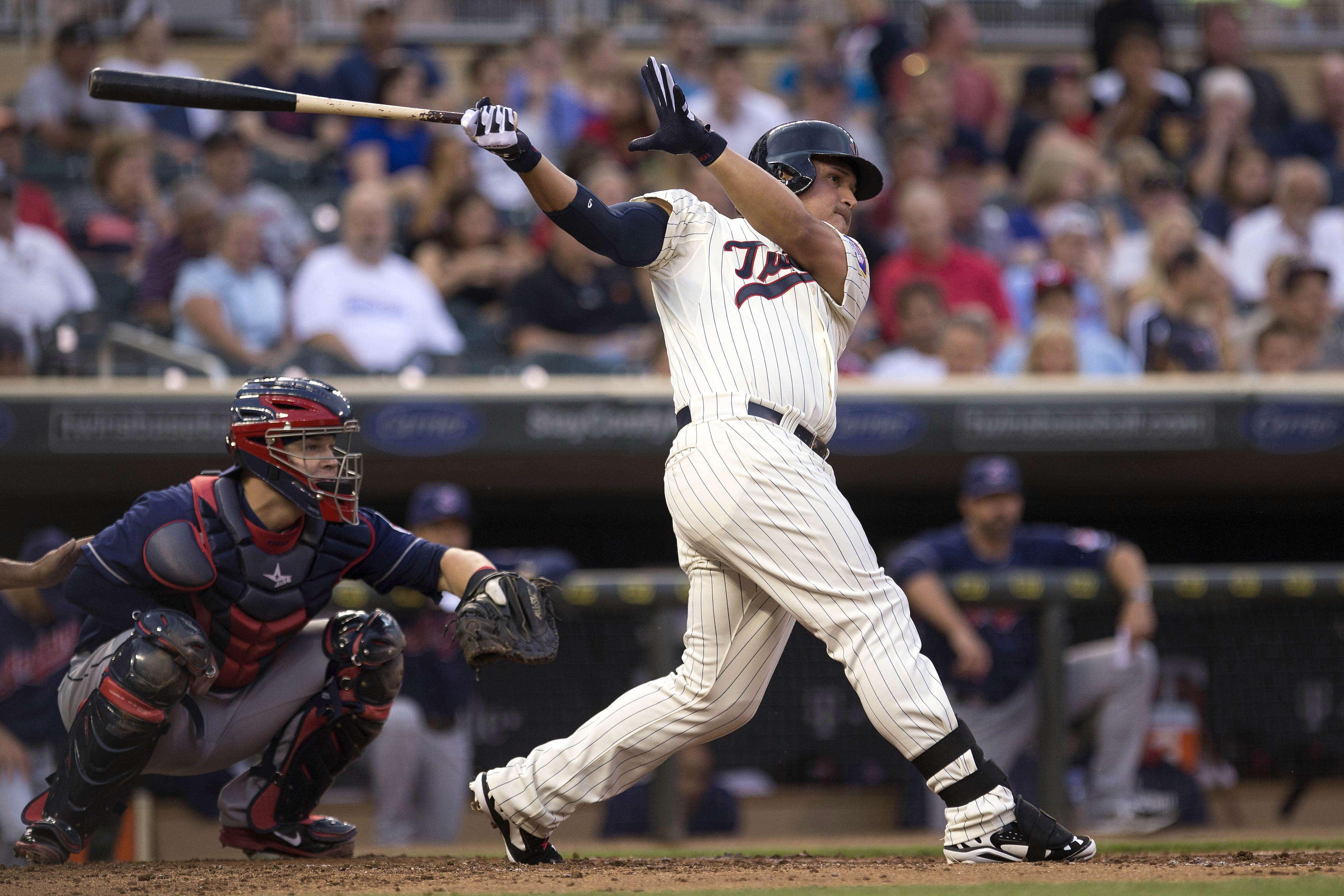 Oh, and one of those home runs? Yeah, that hit Target Field’s flag pole just like former Twins bruiser Jim Thome. It has been his ability to drive the ball with total disregard for human life that has made his plate appearances “must see” events, as far as “must see” events go this season, anyway. At the same time, it has been his inability to make contact with the ball for the bulk of the season that has come at a heavy price to his overall numbers. While he has deposited a ball in the seats in every 20 at-bats, he’s whiffed once in just under every three at-bats. Arcia’s strength has been prevalent throughout his professional career. In the minors he displayed a more balanced approached at the plate with less of a leg-lift stride that allowed him to use all fields. Of course, Arcia has eschewed this style for his prefered all-or-nothing pull approach at the major league level that has paid off well as of late. Take a look at his follow through earlier this season: His front side opens far too much -- particularly on a pitch that was middle-in in the example above. This pitch was an off-speed that Arcia did not stay back on and flew open in a failed attempt to yank it on to Nicollet Mall. If he continued to do this, he would see a reduced coverage on the outer-half of the plate (which he did) and this is something that can been seen throughout his at-bats early in the season. As I pointed out in June, because Arcia drops his hands, he has already shown a weakness to fastballs up in the zone and the Twins were trying to fix that issue as well. By the end of July, he was hitting a paltry .219/.299/.383. Needless to say, here was a lot to work on for the talented young slugger and, if his August numbers have anything to say about it, he appears to have turned a corner. While Arcia’s focus may be on pulling the ball with ferocity, manager Ron Gardenhire has said he would like the outfielder to temper his swing instead of trying to hit the ball “8,000 miles”. Though some may interpret that as an attempt to convert Arcia from a power hitter into a punch-and-judy slapper, the reality is the Twins were looking for him to stay in on the pitch in order to drive the ball. Since August 1, this message apparently has resonated with Arcia and he has remained closed instead of flying open: This practice should be enable him to handle left-handed pitchers, who up to this point have been the bane of his existence. The 23-year-old Arcia is making progress at the plate and it could spell more offense for the Twins in 2015. Twins beat Cleveland on Thursday afternoon, so Friday you can get 50% off a L or XL pizza at PapaJohns.com.
 -
Article: Arcia, Vargas and Rebellion
Parker Hageman replied to Nick Nelson's topic in Twins Daily Front Page News
I wrote about this the other week but someone has already gotten to Vargas to alter his swing: http://twinsdaily.com/_/minnesota-twins-news/minnesota-twins/kennys-vargas-is-one-reason-to-keep-watching-r2950 I'm hoping one of the beat writers will address this. -
With The Geek gallivanting around the country, Twins Daily's Parker Hageman subbed in for John Bonnes and joined Aaron Gleeman in a rousing discussion over the latest from the Minnesota Twins. Topics include the recent trade of Josh Willingham to the Royals, Byron Buxton’s incredibly scary injury, what to expect from Ricky Nolasco, where Danny Santana should be playing in the field, what to make of Oswaldo Arcia through one full season, appreciating Phil Hughes’ excellence, the launch of Vikings Journal, and whether or not to freak out about hair in your food.You can listen by downloading us from iTunes, Stitcher or find it at GleemanAndTheGeek.com. Or just click below. GLEEMAN & THE GEEK, EPISODE 158: JUST A CONCUSSION AND THE PURGE Click here to view the article
-
Gleeman & The Geek, Ep 158: Just A Concussion and The Purge
Parker Hageman posted an article in Twins
 You can listen by downloading us from iTunes, Stitcher or find it at GleemanAndTheGeek.com. Or just click below. GLEEMAN & THE GEEK, EPISODE 158: JUST A CONCUSSION AND THE PURGE
 -
On this week’s episode of the No Juice Podcast, Dan Anderson and Parker Hageman return to Minneapolis after their field trip to Mankato and discuss the recent Kevin Correia trade, what other roster moves to anticipate the Twins making as well as the debut of pitcher Trevor May.They also talk about status of the Minnesota Vikings quarterback situation after one practice and one meaningless preseason game and drinking the world’s worst alcoholic beverage, . BONUS: Dan took his Mom to the recent Paul McCartney concert. They sang the na-na-na-na portion of "Hey Jude" together. Dan's Mom video'd it. Spoiler: Dan is not blessed with a good singing voice. . Listen below, on iTunes or on Stitcher: THE NO JUICE PODCAST, EPISODE #17: TWINS ROSTER MOVES Thanks to the Twins first win against the Oakland A’s in nearly two years on Sunday, on Monday you can get 50% off a Large or Extra Large pizza for the fourth straight day (on Monday) when you use the “TWINSWIN” promotion code at PapaJohns.com. Click here to view the article
-
 They also talk about status of the Minnesota Vikings quarterback situation after one practice and one meaningless preseason game and drinking the world’s worst alcoholic beverage, .BONUS: Dan took his Mom to the recent Paul McCartney concert. They sang the na-na-na-na portion of "Hey Jude" together. Dan's Mom video'd it. Spoiler: Dan is not blessed with a good singing voice. . Listen below, on iTunes or on Stitcher: THE NO JUICE PODCAST, EPISODE #17: TWINS ROSTER MOVES Thanks to the Twins first win against the Oakland A’s in nearly two years on Sunday, on Monday you can get 50% off a Large or Extra Large pizza for the fourth straight day (on Monday) when you use the “TWINSWIN” promotion code at PapaJohns.com.
 -
Following Saturday night's game, the Minnesota Twins announced that they have traded starting pitcher Kevin Correia to the Los Angeles Dodgers for a player to be named later or cash considerations. The Twins signed Correia to a two-year, $10 million contract heading into the 2013 season and, while his numbers were mediocre overall, the right-hander was able to provide innings where a significant share of the staff could not.In 54 starts, Correia finishes his Twins career with a 14-26 record and a 4.49 ERA which was a product of his high-contact/low-bat miss abilities. According to Fangraphs.com, over the past two years Correia had the highest contact rate (80%) and the lowest swinging strike percentage (5.7%). "I enjoyed every minute of it," Correia told reporters in the clubhouse after the game and being told the news. "The guys on the team, the coaching staff, everything was great. I wish we would have won more games, obviously. Besides that, I couldn't have enjoyed the time any more in Minnesota and this organization." To fill Correia's roster spot, the Twins recall left-handed pitcher, Tommy Milone, who they received in the Sam Fuld trade with Oakland. Milone will start on Monday. Click here to view the article
-
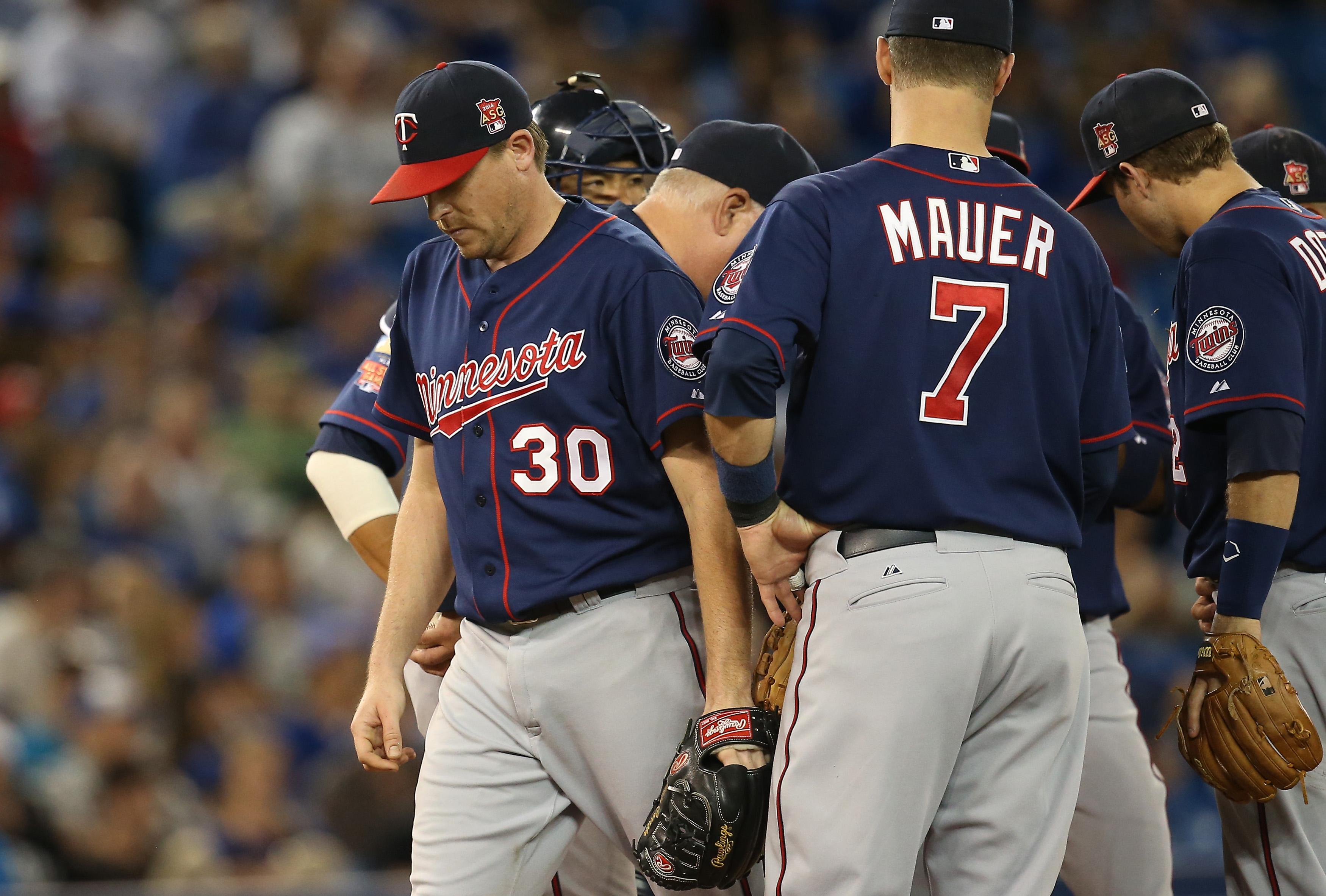 In 54 starts, Correia finishes his Twins career with a 14-26 record and a 4.49 ERA which was a product of his high-contact/low-bat miss abilities. According to Fangraphs.com, over the past two years Correia had the highest contact rate (80%) and the lowest swinging strike percentage (5.7%). "I enjoyed every minute of it," Correia told reporters in the clubhouse after the game and being told the news. "The guys on the team, the coaching staff, everything was great. I wish we would have won more games, obviously. Besides that, I couldn't have enjoyed the time any more in Minnesota and this organization." To fill Correia's roster spot, the Twins recall left-handed pitcher, Tommy Milone, who they received in the Sam Fuld trade with Oakland. Milone will start on Monday.
 -
Why does everyone think Nick wrote this? Obviously, AJ, you have seen more of Vargas than anyone besides...well...Vargas, probably. That home run came on a 1-1 count but he was also displaying this stride/swing every count in the last two games in the Padres series, making it seem less of an in-game/in-plate appearance adjustment. I tried finding any examples of that in the MiLB.com highlights from the left side but there were not any (not to say he didn't do this, it just has more limited database). I am hoping that one of the beat writers with #access will ask Brunansky or someone about this to see if it is something that he decided to do or if the coaching staff encouraged it.
-
What makes this time of year somewhat tolerable for watching Minnesota Twins baseball is getting the opportunity to see players like 24-year-old Kennys Vargas develop at the major league level. Vargas's imposing stature grabs your attention right away. A hulking human, the Puerto Rican had tipped the scales at 280 at one point during the seasons, making him almost better suited for a defensive lineman position. Because of that, analysts have thrown around comparisons to other large hitters in history like David Ortiz and Mo Vaughn.Ortiz is the most frequently recited comp based upon the pair's relationship that blossomed in Fort Myers and Vargas's admission that he based his left-handed swing Ortiz's. From this example -- his Futures Game double last month at Target Field -- you see the big leg-kick and hands-drop, a la Big Papi, from the left-side: http://i.imgur.com/C0O2M6U.gif In New Britain, Vargas displayed power from both sides of the plate but hit 11 of his 17 home runs from the left side with this swing: http://i.imgur.com/ebKMw5c.gif When he joined the team in Chicago, his swing was changed slightly. Though the big hand-drop before the swing was still prevalent -- as was the large leg-kick -- he had closed his stance. Most noteworthy is that the White Sox pitching staff did not let him see very many fastballs. According to ESPN/trumedia, Vargas saw 47 pitches and just 14 of those were fastballs. The vast majority were changeups and an assortment of breaking pitches: http://i.imgur.com/t8oO9qR.gif While the results were not bad for Vargas, his swings often produced bloops to the opposite field as the plethora of off-speed pitches disrupted his timing. As the team returned from Chicago for a series at home against the Padres, Twins Daily reader Willihammer astutely pointed out that Vargas had altered his swing. Instead of the leg-kick and hand movement, he was keeping himself still and his weight back: http://i.imgur.com/Xe2J7Ia.gif In at least the example above, Vargas kept his weight back effectively on the hanging breaking ball and was able to send that ball effortlessly into the stadium’s overhang. The Padres, for their part, sent more fastballs Vargas’s direction than the White Sox did. For those older fans who remembers the Twins teams at the turn of the century, this all should sound familiar. In 2001, David Ortiz was struggling to stay healthy and the Twins had him go through a series of adjustments at the plate to improve his overall approach. This from The Sporting News of that year: After Ortiz was released, he joined the Red Sox and continued to implement his big leg-kick swing and generated plenty of power and the ability to drive the ball to all fields, like the Twins had wanted him to do. This is not an attempt to open up old wounds from the past or berate the organization for a decision that probably still haunts them to this day, but the comparison is uncanny. To be sure, Vargas, a player who came straight from Double-A, is coming from a league whose pitching landscape is often filled with talented power arms but are still learning to locate their secondary pitches. Many analysts will tell you that if you succeed in Double-A, you should be able to succeed at the highest level. While that may be true in some cases, developing hitters miss out on the experience gained at Triple-A where pitchers do not have the same sexy velocity as their Double-A counterparts but are able to locate breaking balls and changeups. Players like Oswaldo Arcia and Aaron Hicks both have seen what can happen when pitchers can deploy secondary pitches with precision. What Vargas learned in his weekend in Chicago is that pitchers at this level can spot a change down and away with regularity. Hitting is an evolution and Vargas’s tweak may just be a temporary adjustment until he feels more comfortable with the mix of pitches he is now facing rather than a long-term change to his swing. Either way, Vargas represents a reason to watch the Twins even as the team wallows at the bottom of the division yet again. Click here to view the article
-
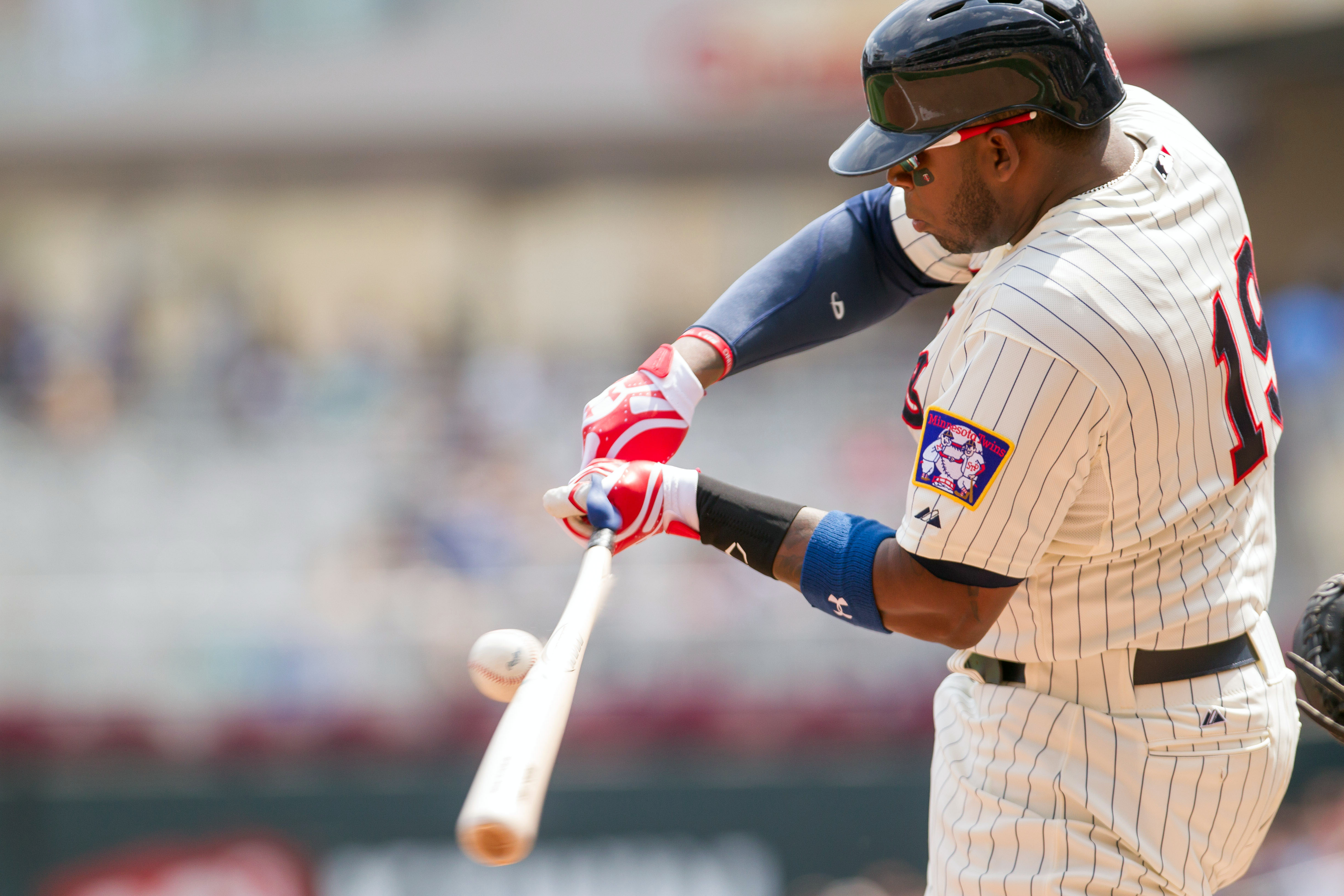 Ortiz is the most frequently recited comp based upon the pair's relationship that blossomed in Fort Myers and Vargas's admission that he based his left-handed swing Ortiz's. From this example -- his Futures Game double last month at Target Field -- you see the big leg-kick and hands-drop, a la Big Papi, from the left-side: http://i.imgur.com/C0O2M6U.gif In New Britain, Vargas displayed power from both sides of the plate but hit 11 of his 17 home runs from the left side with this swing: http://i.imgur.com/ebKMw5c.gif When he joined the team in Chicago, his swing was changed slightly. Though the big hand-drop before the swing was still prevalent -- as was the large leg-kick -- he had closed his stance. Most noteworthy is that the White Sox pitching staff did not let him see very many fastballs. According to ESPN/trumedia, Vargas saw 47 pitches and just 14 of those were fastballs. The vast majority were changeups and an assortment of breaking pitches: http://i.imgur.com/t8oO9qR.gif While the results were not bad for Vargas, his swings often produced bloops to the opposite field as the plethora of off-speed pitches disrupted his timing. As the team returned from Chicago for a series at home against the Padres, Twins Daily reader Willihammer astutely pointed out that Vargas had altered his swing. Instead of the leg-kick and hand movement, he was keeping himself still and his weight back: http://i.imgur.com/Xe2J7Ia.gif In at least the example above, Vargas kept his weight back effectively on the hanging breaking ball and was able to send that ball effortlessly into the stadium’s overhang. The Padres, for their part, sent more fastballs Vargas’s direction than the White Sox did. For those older fans who remembers the Twins teams at the turn of the century, this all should sound familiar. In 2001, David Ortiz was struggling to stay healthy and the Twins had him go through a series of adjustments at the plate to improve his overall approach. This from The Sporting News of that year: After Ortiz was released, he joined the Red Sox and continued to implement his big leg-kick swing and generated plenty of power and the ability to drive the ball to all fields, like the Twins had wanted him to do. This is not an attempt to open up old wounds from the past or berate the organization for a decision that probably still haunts them to this day, but the comparison is uncanny. To be sure, Vargas, a player who came straight from Double-A, is coming from a league whose pitching landscape is often filled with talented power arms but are still learning to locate their secondary pitches. Many analysts will tell you that if you succeed in Double-A, you should be able to succeed at the highest level. While that may be true in some cases, developing hitters miss out on the experience gained at Triple-A where pitchers do not have the same sexy velocity as their Double-A counterparts but are able to locate breaking balls and changeups. Players like Oswaldo Arcia and Aaron Hicks both have seen what can happen when pitchers can deploy secondary pitches with precision. What Vargas learned in his weekend in Chicago is that pitchers at this level can spot a change down and away with regularity. Hitting is an evolution and Vargas’s tweak may just be a temporary adjustment until he feels more comfortable with the mix of pitches he is now facing rather than a long-term change to his swing. Either way, Vargas represents a reason to watch the Twins even as the team wallows at the bottom of the division yet again.
 -
Article: Center of Attention
Parker Hageman replied to Nick Nelson's topic in Twins Daily Front Page News
I don't know if I would agree with the latter part of that statement. We've seen plenty of off-line throws to the plate and an distinct inability to not get behind the ball before making a throw -- something seasoned outfielders do. More experience, reps, etc should improve this but, so far, I've seen a shortstop throwing the ball from the outfield. In all, I'm excited about his tools but, as Nick said, he's still raw.- 44 replies
-
- 1
-

-
- danny santana
- aaron hicks
- (and 1 more)
-
Download attachment: Deduno Pulled.jpg With the possible exception of the popularity of “Call Me Maybe”, nothing has spun more out of control in 2012 than the Minnesota Twins starting pitching. Categorically the Twins rotation has produced some of the least desirable stats in the American League. For starters, their misshapen 5.50 ERA tops the charts. Performances like Nick Blackburn (7.39 ERA in 19 starts), Brian Duensing (6.92 in 11 starts) and Liam Hendriks (6.13 ERA in 15 starts) shows where that number can be quickly inflated. Adding insult to injury, their expected Fielding Independent Pitching (4.60 xFIP) is the highest in all of baseball and offers no reprieve that would suggest perhaps, just maybe, the local staff was unfairly fastened to that ugly ERA. Not surprising either is the fact that the rotation is currently averaging just 5.4 innings per starts - the lowest average in the American League. If you happened to have attended a Jason Marquis start and stopped for popcorn on your way to the seat, chances are with him getting the hook before the fifth inning (4.9), you would have missed your opportunity to see him pitch. Same scenario could be applied for a Duensing start as well (4.7). It is probably easy to deduce judging from the bloated ERA and the early showers that the rotation’s Quality Start percentage would also be adversely affected. And you would be punctilious in assuming that. In just 38% of their contests (60 of 152 games), the Twins have managed to get through six innings with allowing three runs or less. The biggest culprit, which has resulted in the sideways statistics listed above, is the battle of the first inning – a battle in which the Twins are losing in spectacular fashion. In the first inning, the Twins starters have issued 69 walks and allowed 32 home runs. Like politics and family dinners or crack and Charlie Sheen, putting runners on base and then surrendering moon shots is a volatile combination. Only Baltimore and Kansas City encroach on that home run mark (30 each), as we all know, the O’s are playing this season protected by a bubble of pixie dust and unicorn farts from Pythagoras and his nerdy theories. It is a year in which no matter how many runs they allow, the Orioles still wind up winning more games than they lose. The Twins and Royals, meanwhile, play in the real world where giving up runs in bunches has legitimate consequences. Right now, the Twins lead the American League in runs allowed in the first inning with 124. That’s a remarkable deficit to put one’s team into. Compare that to what may be a less talent Oakland A’s team on paper. With their brood of starters all under the age of 30, the A’s have allowed just 56 runs in the first inning. With a 68-runs allowed differential between the A’s and the Twins, if you subscribe to the notion that 10 runs equals one win, then Oakland is, in theory, 7-wins better than Minnesota in the first inning alone. Obviously, the original plan was not to head into the year with Scott Diamond, Cole De Vries, Sam Deduno or Brian Duensing taking up a large portion of the starts. Then again, the original plan was not all that solid, either. The Twins rolled the dice heading into 2012 and plowed forward with a starting rotation that was held together by a wing and a prayer. Scott Baker had always struggled with injuries. Nick Blackburn had not only been battling injuries but had been highly ineffective overall. Carl Pavano was showing signs of aging, with a strikeout rate and velocity that dropped in 2011. Francisco Liriano had a clunker of a 2011 and was nothing more than a coin-flip with a high upside if everything landed correctly. So much had to break in the team’s favor in order for this group to succeed, instead it all fell apart early on. As Terry Ryan spoke to in his conference call last night with season ticket holders, the highest priority will be to acquire starting pitching – whether it be through trades, free agency or exploring the international market. There is plenty of room for improvement and if the Twins are looking to raise their win total in 2013, giving their lineup a fighting chance in the battle of the first inning is a good place to start. Click here to view the article
-
Article: Will Kurt Suzuki's Offense Continue?
Parker Hageman replied to Parker Hageman's topic in Twins Daily Front Page News
It is consistent. Keep an eye on it when watching the games. -
Article: Will Kurt Suzuki's Offense Continue?
Parker Hageman replied to Parker Hageman's topic in Twins Daily Front Page News
That's a fair point and I was actually wondering when someone was going to bring some of those up. That said, the changes are not created equal and do depend on the foundation of the hitter. In Parmelee's case, this gave him more power but his swing had plenty of holes in it to begin with. Plouffe's changes resulted in more up the middle/opposite field batted balls but cost him some power numbers. In both cases, I noted that the changes left them susceptible to adjustments from pitchers. In Parmelee's case, they pitched him up while Plouffe them pitched him down and away more. Suzuki did not have the same hole in his swing as either of these two. -
Article: Will Kurt Suzuki's Offense Continue?
Parker Hageman replied to Parker Hageman's topic in Twins Daily Front Page News
So, in spite of the mechanical changes, the increase in contact and different batted ball distribution, you still think it is simply "luck"? Interesting. -
What happened to all that offense that showed up for the Cleveland series? Or pitching for that matter? After scoring 24 runs, averaging six per game against the Indians, Will Smith and the Royals stopped the Twins bats cold and Kansas City would, as Ron Gardenhire would say after the game, hit the fire out of the ball. The Twins offense was far from the productive group it has shown against Cleveland, and gave the Royals pitchers very little to sweat about. In the bottom of the fifth, down by four runs, the Twins mounted what would end up being their best assault on the Royals. With no one out, Darin Mastroianni and Eduardo Escobar drew back-to-back walks and put pressure on the rookie lefty Will Myers. Myers, to his credit, battled through the two free passes and struck out Pedro Florimon on a slider in the dirt. And then the Twins ran themselves out of opportunities. In the next at bat, Mastroianni broke for third only to be gunned down by Salvador Perez. Up until that point, Mastroianni had been successful in 19 of 21 attempts including eight-for-eight when swiping third – basically money in the bank. Perez, however, has a cannon of an arm behind the plate and had erased 10-of-28 would-be base stealers heading into Tuesday’s game. “You gotta make sure in those situations; you can’t get thrown out in those situations,” Gardenhire said after the game. The Twins manager would go on to rave about Perez’s handling of baserunners, noting the quick feet, quick release and sidearm style in which Perez throw out Mastroianni. Josh Willingham, who went 1-for-4 in Tuesday’s game, summarized what made the rookie Will Smith effective against the Twins lineup. “He didn’t walk too many, pitched ahead in the count, pitched to the corners and did all the good things a pitcher needs to do.” Meanwhile, Scott Diamond, who has now thrown a career high 148.1 innings, was roughed up a bit, leaving some pitches up and walking a season-high three batters. “He was OK,” Gardenhire remarked. “Got a lot of pitches up and didn’t bury the pitches like he normally does.” Diamond was dinged by some early defensive misplays by Josh Willingham in the second inning. Willingham, who took left field for the first time since September 1, tentatively charged a looping fliner off the bat of Eric Hosmer which fell in for a single. One batter later, Lorenzo Cain got under one of Diamond’s change-ups and lifted it high above the stadium’s light towers. Willingham immediately threw his hands up, acknowledging he did not see the fly ball. The ball landed ten feet behind him and allowed the two runners on to score and Cain to trot into third with a gimme triple. The Twins left fielder would shrug it off as a bad day at the office. “It’s frustrating when you can’t see the ball. I would like for that stuff not to happen.” Of course, the Royals would not need to assistance of a befuddled Twins defense all night. After all, the racked up another six extra base hits and would give the Target Field grounds crew the night off after they raked everywhere on the field. It would be the fifth time this year the Twins pitchers would allow 16 or more hits in a game – and the second time in the season the Royals would put up that many. Diamond would not blame the outing on the added time off between starts thanks to the expanded rotation. “I feel a little inconsistent right now,” Diamond said following his six inning, ten-hit, four-run outing. “I feel like my stuff is getting to where it needs to be but my fastball’s location is a little off; my command is just a little off. It’s something that you have to battle with.” Click here to view the article
