



Parker Hageman
-
Posts
4,152 -
Joined
-
Last visited
-
Days Won
6
Content Type
Profiles
News
Minnesota Twins Videos
2026 Minnesota Twins Top Prospects Ranking
2022 Minnesota Twins Draft Picks
Minnesota Twins Free Agent & Trade Rumors, Notes, & Tidbits
Guides & Resources
2023 Minnesota Twins Draft Picks
The Minnesota Twins Players Project
2024 Minnesota Twins Draft Picks
2025 Minnesota Twins Draft Pick Tracker
2026 Minnesota Twins Draft Tracker: Picks & Bonuses
Forums
Blogs
Events
Store
Downloads
Gallery
Everything posted by Parker Hageman
-
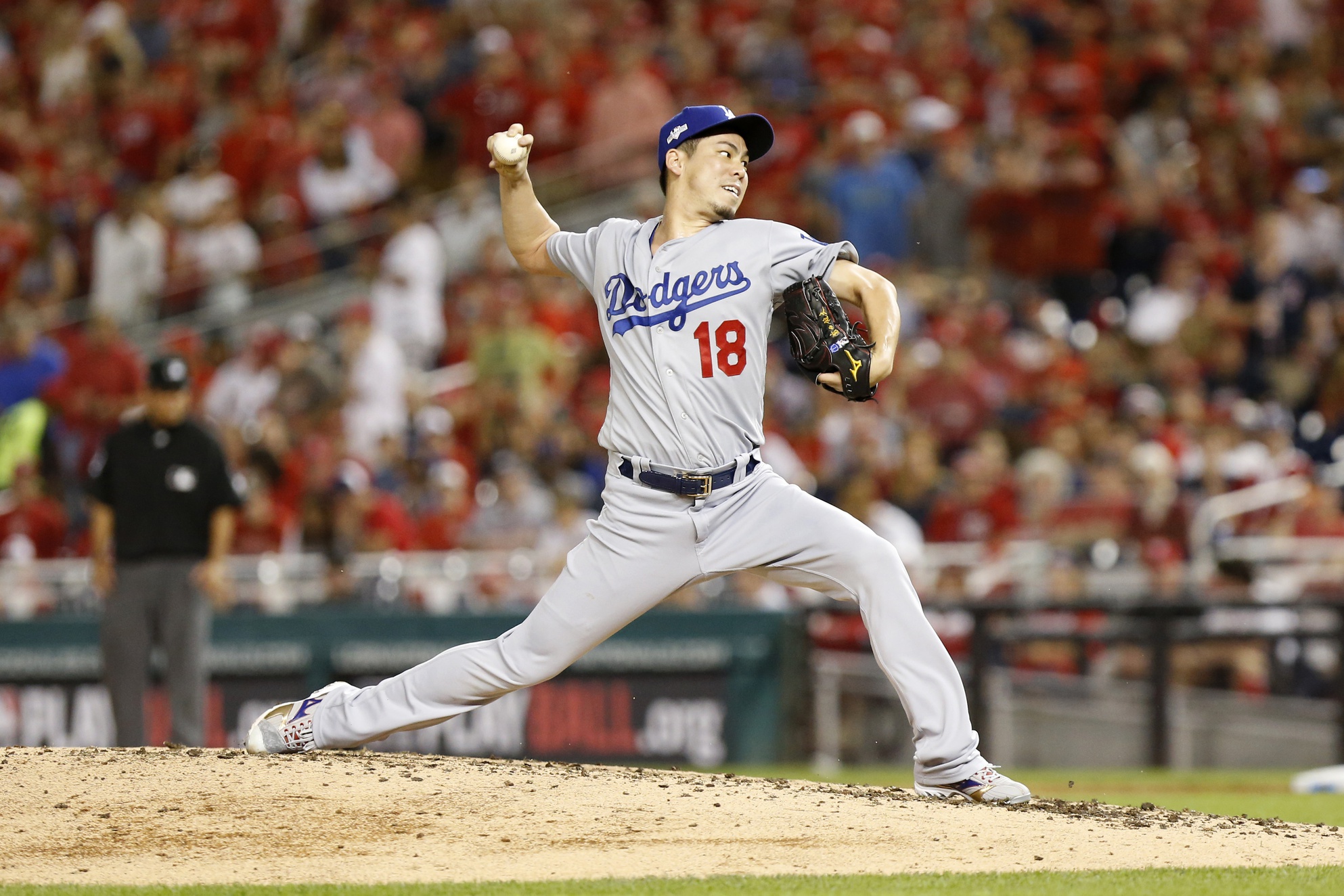 He can be methodical but Maeda is far from a plodder. For instance, in the third inning during Sunday’s game at JetBlue, after the Twins went down quickly in order, where other pitchers might slow foot it to the mound, Maeda raced out, beating his entire team, and tossed the rosin bag until his catcher was ready. It is his time to pitch. His delivery is fascinating to observe. His style doesn’t have fluidity nor would his slow-mo be glamorized on PitchingNinja’s twitter feed -- but Maeda’s mechanics feel deliberate by design. Maeda presets his split-change grip, digging deep before engaging the rubber and looking for his sign. When ready, he will draw his left foot back and wait for a moment. Then he will raise his leg, pause for another beat and pump his hands multiple times at the peak of his balance point. Only then will he kick his front foot and initiate the most electric portion of his mechanics. The lower half just whips at hitters and the arm unfurls in kind. Slow, slow, slow and explode. Rocco Baldelli doesn’t want to outright say it but he believes there is some portion of Maeda’s delivery that interferes with a hitter’s timing. “There are certain aspects of deliveries from some of the players that have come from Japan, some of the hesitations and some of the timing mechanisms and things like that,” Baldelli said. “Do I know if all of them lead to some sort of deception? I can’t tell you that for a fact but I bet there’s something to it.” There may be a psychological benefit from this approach. Whereas most pitchers flow through their delivery, giving hitters a reliable timing mechanism, Maeda’s sputtering technique encourages opponents to second guess themselves even before the pitch is delivered. It’s hard not to. His fastballs’ velocities -- a four-seamer, two-seam and cutter -- fluctuate like the weather in Minnesota in March. He will show 90 and run it up to 93. He’ll back some off to 89. The two-seamer will run, the four-seam will carry and the cutter will cut. No two fastballs are alike. “I’m not a pitcher who can throw 100 mile per hour heaters so I try to use all of my pitches to get strikeouts,” Maeda said through his translator. “That’s who I am as a pitcher.” It was almost a nod to Brusdar Graterol, the player whom the Twins sent to Los Angeles and has been lighting up spring training scoreboards with his triple digits. Maeda knows he doesn’t have the raw stuff that Graterol has and needs to employ other tactics to get swinging strikes. “All his pitches” includes a darting slider and his falling split-change. It was the latter pitch that Maeda ramped his usage of, which he perfected in 2018 after discovering the new grip. His previous changeup had tunneled well off of his fastball but the split grip effectively killed 300 RPMs of spin and gave him six inches of vertical drop. It now looked like a fastball out of his hand that fell off the face of the earth. The results were a spike in swinging strikes. The swinging strikes were on display on Sunday for Maeda and how he operated impressed his new manager. On this afternoon against the Red Sox, he was both economical and surgical. In four innings, he needed just 44 pitches to render the Boston lineup scoreless and threw 77 percent for strikes. Red Sox hitters swung wildly at his split-changes and sliders. Any contact would be classified as weak. “You really get to see a tremendous version of Kenta out there,” said Baldelli following his outing. “You watch how he attacked all hitters but you watch how he attacks some of these really good right-handed hitters and he can really compete against those guys pretty well.” Maeda was satisfied with his spring performance too. He considered his delivery -- the timing mechanism-messing pauses -- in sync. It was, according to him, the best so far and the fact that he didn’t give up a home run he said with a smile, made it even better.
 -

Introducing Twinternationals!
Parker Hageman commented on Twinternationals's blog entry in Twinternationals
Great idea and I am really looking forward to seeing how this grows! -
This is a really good profile on slider usage. The one thing I would add is that in my cursory research, Chacin did stop commanding his slider in 2019. When you look at the pitch on BrooksBaseball, you'll see a slightly different spin axis and less vertical and horizontal movement. It did not flatten out, but it wasn't as sharp as the previous two seasons. Mechanics were a big issue for him and when you go look at video of his sliders on Baseball Savant, you'll see him back up a lot of sliders and general misfire. When you look at his release points, you will see that it was a little more haphazard in 2019, a product of not being able to find consistency in his mechanics. https://twitter.com/ParkerHageman/status/1224078079422877702 The other interesting thing about Chacin is that while he did throw his slider more, it was used more in hitters and even counts. This may have been because he lost faith in his fastballs (which he had good reason), either way, he really ramped his use early in the count. Typically when you see some increases in a secondary pitch it happens when pitchers are ahead and are trying to put a hitter away. In those early parts of the count, hitters took or fouled off the slider at a high percentage. I think Chacin had a good sounding board in Derek Johnson his first year with the Brewers and lost that when he went to Cincinnati. It's possible that Wes Johnson will be able to help him regain that consistency. One of the things I expect Wes and the Twins might address is shortening Chacin's stride length.
-
Oh, and Frawley just posted these graphics of Polanco:
-
These are some really good thoughts on Polanco and I'm very interested in seeing how the Twins coaching staff attacks this. We had Billy Boyer in for our inaugural MN BAT Summit a couple weekends ago and we took the speakers out to dinner the night before. Boyer had some incredible insight into how the organization is attacking infield development and trying to expand the use of analytics into that sector of the game. The number one goal, he said, was get to as many balls as possible and get outs. They put a lot less stress on errors so long as a player is getting to more balls and trying to make plays (obviously reoccurring routine errors are addressed but if a player is doing everything they can to make the play, it's less important). One thing I found interesting is that we were discussing if an infield should keep from forcing plays, just pocket the ball on a play that has little likelihood for success. Sort of a discussion on Joe Maddon's Respect 90 bit. It seemed to me that Sano had a few errors trying to make plays that had little chance of getting an out and then gave the runner second base. Turns out, the Twins are training their infielders to fire the ball in almost all circumstances -- do everything you can to try to make the play. Another aspect of Polanco's arm slot change was to match his posture better. The Twins felt he would force the over-the-top action when his posture was better suited for a lower more natural slot. https://twitter.com/ParkerHageman/status/1117961354953089024 The Twins recently hired Tucker Frawley out of Yale (Boyer was a huge advocate for his addition) and Frawley has a lot of interesting charts on what the optimal release point should be based on the player's posture after fielding: https://twitter.com/INFchatter/status/1216712814808698881/photo/1 In reality, infielders shouldn't have one slot but should be able to make throws from all angles based on how they fielded the ball. I didn't ask Boyer specifically about Polanco but I am assuming the Twins will want to get Polanco better at using all the tools in the tool belt, so to speak. In general, Boyer talked about exchange time for middle infielders which can be better than velocity. He cited David Eckstein (calling it the Eckstein factor) as a player who had sub-optimal arm strength but was so good at getting the ball off that it made him that much better. The Twins have some smart, smart people in their organization and it can only help improve player development.
-
I like Kent Hrbek.
-
I like vodka.
-
I like whiskey.
-
Spin rate can't necessarily be taught but it can be enhanced. I wrote about developing fastballs with our high school program this past summer (you can read about it here). There's a consensus among the industry that you can't really teach it, you have it or you don't. Driveline says if you want a significant jump in spin rate, you add tack (rosin, bullfrog, pine tar, etc). This is another thing that the Astros have been accused of practicing, by the way. Legally, let's say you have a guy who is throwing a sub-optimal four-seam fastball -- he's cutting or turning his hand at release and reducing the spin. You can train that player to release the ball better and gain some spin (but more spin efficiency, which won't change the spin rate but a better spin efficiency will result in more carry, which keeps the pitch on that high plane like Odorizzi, rather than cutting or diving). This is where Rapsodo and Edgertronic cameras become so valuable to teams.
- 4 comments
-
- 2
-

-
- high spin rate
- graterol
- (and 1 more)
-
This was absolutely emphasized by the coaching staff last year. Part of it is to keep from breaking their wrists early (like Buxton below). Part of it is to drive middle of the field and reduce hook on the ball. If you hit the ball square rather than clipping and adding backspin, you get better results. https://twitter.com/ParkerHageman/status/1130450194393370625
-
The output changed because he made physical changes to his set-up/swing. In 2018 his profile was that he would hit balls in that 95+ exit velo and 10-30 degree launch angle into the opposite field gap, so a lot of those were tracked down. He made some modifications to his posture and didn't stride to the plate as much with his front leg, thereby closing himself off, in 2019 and that resulted in driving the ball better to the pull side. The increase in pulling the ball more was by design and it has worked well for him.
-
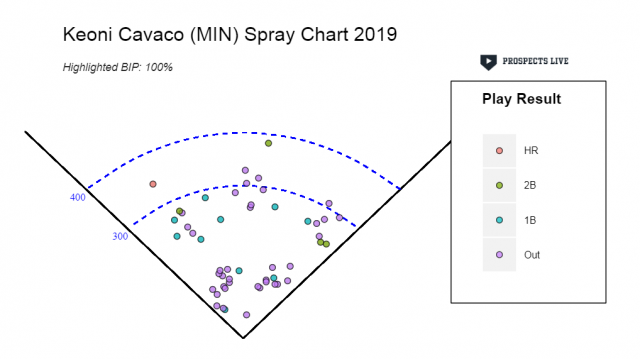
I have yet to see a clip of Cavaco demonstrating a lot of head movement in his swing, like this in-game swing: And, at least when he made contact, he showed that he wasn't a pure pull hitter: Moreover, he went to work this fall to improve elements of his swing: Sure, the contact rate is troublesome but he's 18. You'd love to see him jump in and do damage right away. But players struggle. He doesn't have any massive mechanical flaws at this point. He can certainly develop better pitch recognition and smooth over other issues. I don't think anyone needs to hit the panic button yet.
-
I would argue that the Twins put him (and many others) into a swing that gave him the ability to have success at those levels -- high contact, ball on the ground, etc. As the competition improved, he wasn't able to adjust, wasn't able to get the ball in the air and eaten alive by breaking balls. Part of what you hear internally is that the Twins believe they failed in that they *didn't* let Buxton fail early.
-
No, this is not currently being worked on (or at least wasn't a part of his development last year).
-
Here's what I'll say: I disagree with Fangraph's assessment of Lewis' swing (and maybe Law's take but he didn't elaborate other than mentioning the leg kick). FG says he's "often late" on fastballs yet he's pulling the vast majority of pitches seen. The hand movement comment is vastly overblown. I take umbrage toward national prospect guys making specific statements about someone's swing when there is a high probability that they didn't study his swing that closely (there's thousands of players to cover). What's more, this note from the FG write-up is just silly fluff: "Seem to". Yikes. The real issue is that, as a young prospect, he struggled for the first time in his career for a full season. It's a lot of movement, to be sure, but you don't coach the athlete out of the hitter. That was the old regime's problem and one reason why Byron Buxton struggled to find himself in the system. Lewis's leg kick isn't a problem and the organization doesn't see it as such (multiple Twins coaches told me that). There are timing issues, to be sure, but the Twins are allowing him the space to tighten things up on his own rather than going down the road of mandating changes like they did with Buxton. He might shorten the stride and stay in the back leg longer or make other changes along the way. While Lewis didn't make any mechanical changes for the Arizona Fall League, one thing he did was reach out to coaches in the org to help develop a better plan to prepare for games. He really didn't have one previously. I think we saw production based on just being better prepared for the competition.
-
Front Page: Let's Talk About Willians Astudillo
Parker Hageman replied to Matt Braun's topic in Twins Daily Front Page News
Here's the thing that you have to account for in Willians Astudillo: He has played non-stop baseball games basically since 2014. His cycle goes spring training --> regular season ---> winter ball --> spring training without a real off-season recovery break like a lot of the regulars have had. As a 26-27 year old, he played 108 games between ROC/MIN, another 23 in Venezuela (where he caught less), another 17 games in March and another 16 games in April for the Twins. He hit in all those stretches. He demolished winter ball, hit well in the Grapefruit and then started the season hot. I honestly believe that when May came along he was burnt out and the strained oblique muscle may have been no surprise (given his propensity to play, I'm sure he hid it for a while too). I'm confident he's better than the stat line he produced in May that dragged his overall 2019 numbers down but not as good as his April numbers were. It's nice to see him taking a winter off (his first since he was 22 years old). -
Front Page: Alex Avila and the Frame Game
Parker Hageman replied to Parker Hageman's topic in Twins Daily Front Page News
Yet framing is a much more valuable skill to a team's success than blocking/throwing right now. The best framing catcher in 2019, Austin Hedges, was worth over 2 wins to a really bad Padres team. Comparatively, the best blocker and the best thrower gave their teams just under one win for blocking and under a half a win for throwing. And, really, it's not FRAMING. Framing is just the term that is being used. It's receiving the ball in the way that keeps you from losing strikes on the edges of the zone (and gaining a few as well). Watch Hedges work the low pitch, which he does exquisitely. He gets underneath it and works back into the zone in one motion. Until MLB goes away from a human calling balls/strikes, teams like the Twins are going to target/train catchers to gain that advantage. I will say that, in terms of Avila's other skills, again, it's interesting to see how it's ranked among the different defensive metrics. BP says his Fielding Runs Above Average (FRAA) was 2.1 (32nd among catchers), which is partly because their metrics hate his framing skills. ESPN/TruMedia's FRAA says he was 3.6 (5th highest among catchers) because they really liked his framing skills. Fangraphs FRAA equivalent says he's middle of the road (13th) because he had really good numbers for controlling the run game. I completely understand how looking at all of this can make someone's head spin. Overall, Avila has demonstrated to have a much better blocking skill than either Castro or Garver last year and he did a much better job at controlling the run game as well. So there's hope he can provide above average results in all three categories in 2020. -
Front Page: Alex Avila and the Frame Game
Parker Hageman replied to Parker Hageman's topic in Twins Daily Front Page News
you will hear it for at least one more year, potentially more. -
If you or someone you know is a robot umpire, you might not want to read this. The automated strike zone may be on the horizon but the Minnesota Twins are still very interested in stealing strikes from human umpires -- and the newly signed Alex Avila figures to play a key role in the larceny. Sure, Avila is also going to hit, run, throw and do other things but the Twins have invested heavily in infrastructure to maximize their catchers' framing abilities. Like it or not, Alex Avila is going to participate in the ruse. But how good are his receiving skills?Depending on which statistical warehouse you consult, Avila’s skills in 2019 floated somewhere between good and average. According to ESPN/TruMedia’s Framing Runs Above Average metric, Avila was 6.3 runs above average, equating to about half a win to the team’s ledger. This was two runs better than either Mitch Garver or Jason Castro’s season. Likewise, Baseball Savant suggests that Avila was better than the Twins’ duo at stealing strikes in the shadow area just outside of the rule book strike zone. However, Baseball Prospectus’ framing metric, a proprietary data point engineered to include all considerations (including which hitter, umpire, and pitcher) in their calculations, says that Avila’s 2019 was slightly worse than Garver and Castro. StatCorner’s framing rankings echoes the same as BP. Meanwhile Fangraphs had Castro as the trio’s top framer, with Avila following closely and Garver far behind. Clear as mud, right? What we can say for sure is that Avila’s defense is trending in the right direction (after all, almost all of those statistical framing models said he was a downright atrocious backstop before landing in Arizona) so presumably he can only get better from here. And better is something the Twins have been capable of providing. This past season we learned that under the right guidance catchers can transform from below average to above average receivers, as Mitch Garver showed going from frying pans to soft hands. The catcher whisperer who provided that guidance, Tanner Swanson, is no longer with the organization but the Twins have confidence they still have multiple catching coaches who can implement the same teachings. Alex Aliva has softened his stance a bit on the framing discussion. For instance, heading into his first spring training with Arizona prior to the 2018 season Avila said he doesn’t like the word “framing” and when asked about the data he replied, “To be honest with you, I can't care less what the numbers say.” Thankfully for the Twins, Avila’s experience in the Diamondbacks’ organization may have helped convert him into a believer in the gospel of framing. He still might hate the word but he has embraced the concepts. Unlike the teams Avila previously played with, including the Detroit Tigers and Chicago White Sox, the Diamondbacks decided to put a premium on framing metrics. After spending time tweaking his style with Dbacks catching coach Robby Hammock, Avila, who had a very traditional mindset to the position, even started dropping to a one-knee set-up when no one was on base beginning in 2018. With the success of that addition, Avila could be receptive to undergoing the Twins’ graduate program. Under Swanson’s tutelage, the Twins’ catching instructors found that most catchers who at least tried the new technique will tell you that they actually like it over the traditional method. So much so that they used it in all situations -- runners or not. “I think if you ask our guys, most, if not all, would tell you this is how they would prefer to do it,” Swanson said last spring about the one-leg set-up. “We’re also learning that we can still block and throw effectively from these positions too and, although it’s different and hasn’t necessarily been explored in the past, that’s not scaring us from seeing what we can learn.” The Twins are no strangers when it comes to the value of receiving. This past weekend, Josh Kalk, the organization’s director of pitching, was extolling the virtues of stealing strikes during his presentation at a coaches conference in Texas. A good receiving catcher is worth about 0.3 runs per game, Kalk told the audience. It is clear that the Twins place a high value on the receiving game and Avila’s signing is an indication they believe he can produce in that regard. Where Avila thrived in 2019 was flipping counts in his pitchers’ favor. This past spring Twins’ catching prospect Ben Rortvedt explained that flipping counts was a critical emphasis for the org’s backstops. “Flip counts and flip innings,” he said, a motto amongst the system’s minor leaguers that referred to getting the even counts to swing to favorable counts. Simply, the more you are in pitcher’s counts, the more outs you can typically get: the difference in results between a 1-2 count and a 2-1 count was .565 OPS points. In 2019, Avila had the 11th-best strike looking above average rate in even counts. In layman’s terms, he was fairly strong at keeping strikes, strikes, and making others off the plate look good too. By comparison, Garver was 20th and Castro was 35th in those situations. While Avila succeeded in even counts, his weakness was gaining strikes in the vital two-strike situations. His performance with two strikes fell to 50th, while both Garver and Castro finished in the top 20, helping the Twins have one of the league’s better receiver corps in punch-out counts. The value of which skill is better -- getting to two-strikes or closing the deal -- is debatable but the correct answer is both. And that’s the direction the Twins would like their backstops to trend. If you can add Garver’s two-strike receiving strength to Avila’s repertoire, he becomes that much more valuable of a defender. Even if Alex Avila comes to the Twins and tells them he’s not interested in any of this newfangled receiving styles, he is still capable of being a strong complement to Mitch Garver as a defensive platoon nevertheless. Starting with Avila’s weakness -- breaking balls -- we see that he and Garver are near polar opposites. Download attachment: Avila-Garver BB.png Garver’s new receiving technique, working under the pitch and moving back into the zone while catching it, has paid dividends on breaking balls. On pitches that are moving down and to the side Garver has captured these much better than in the past. This has enhanced the bottom of the zone. On the other hand, Avila, who starts on top of the pitch and works down, loses more breaking balls at the bottom of the zone. But you will also notice that Avila is better than average at getting/keeping elevated breaking balls as strikes. One reason for this is that Avila, in a one-leg set-up, will let a high breaking ball travel rather than trying to get it near a spot, giving the optics of a breaking ball that may have dropped in the zone. Elevated breaking balls are typically mistakes yet they happen so infrequently that it catches hitters by surprise. They rarely swing at a curveball that starts over the zone only to clip the upper reaches of the strike zone. Last year, hitters swung at just 18 percent of curveballs that landed in the upper third of the zone while swinging at 44 percent of curves in the lower third. It may help save a few oops pitches but this chart might also be Exhibit A to show Avila where he needs to improve his game. At the same time, with his current technique, Avila proved to be able to handle fastballs better than Garver and gained strikes all around the zone, particularly with elevated fastballs. Download attachment: Avila-Garver FB.png Pitchers like Jake Odorizzi, who live in the upper third of the zone, may find throwing to Avila beneficial under those circumstances. Similarly, free agent target Hyun-Jin Ryu also utilizes that air space regularly. It is conceivable that the Twins could sell Ryu on the ability to throw to Avila who can strengthen his approach. Another potentially positive element about Avila’s fastball receiving would be for Jose Berrios, who locates a two-seam fastball on his arm-side corner of the plate -- a zone that is red for Avila but bluer than blue for Garver. Last season Castro aided in getting Berrios a 10% called strike rate on fastballs off the plate in that area whereas Garver held a 4% rate. Avila’s handling of that pitch may give Berrios an advantage. What makes Avila good at receiving that pitch is his set-up. Unlike Garver, who typically aligns himself at the edge of the zone, Avila will situate off the plate and angle back over, almost creating a new lane for pitchers to exploit. Download attachment: Avila.PNG As mentioned, Avila could benefit Jose Berrios’ two-seam and changeup movement which fades in that direction and, since we’re in the middle of the hot stove season, another free agent pitcher that could be helped by gaining strikes in that area: Madison Bumgarner. That’s right where Bumgarner locates his fastball and cutters. Regardless if Avila embraces the Twins’ catching methodologies or remains with his current receiving set-up, he has the ability to add marginal gains to the team’s bottom line and, at the very least, replace some of Jason Castro’s defensive output. MORE FROM TWINS DAILY — Latest Twins coverage from our writers — Recent Twins discussion in our forums — Follow Twins Daily via Twitter, Facebook or email Click here to view the article
- 7 replies
-
- 1
-
-
- alex avilatanner swanson
- mitch garver
- (and 1 more)
-
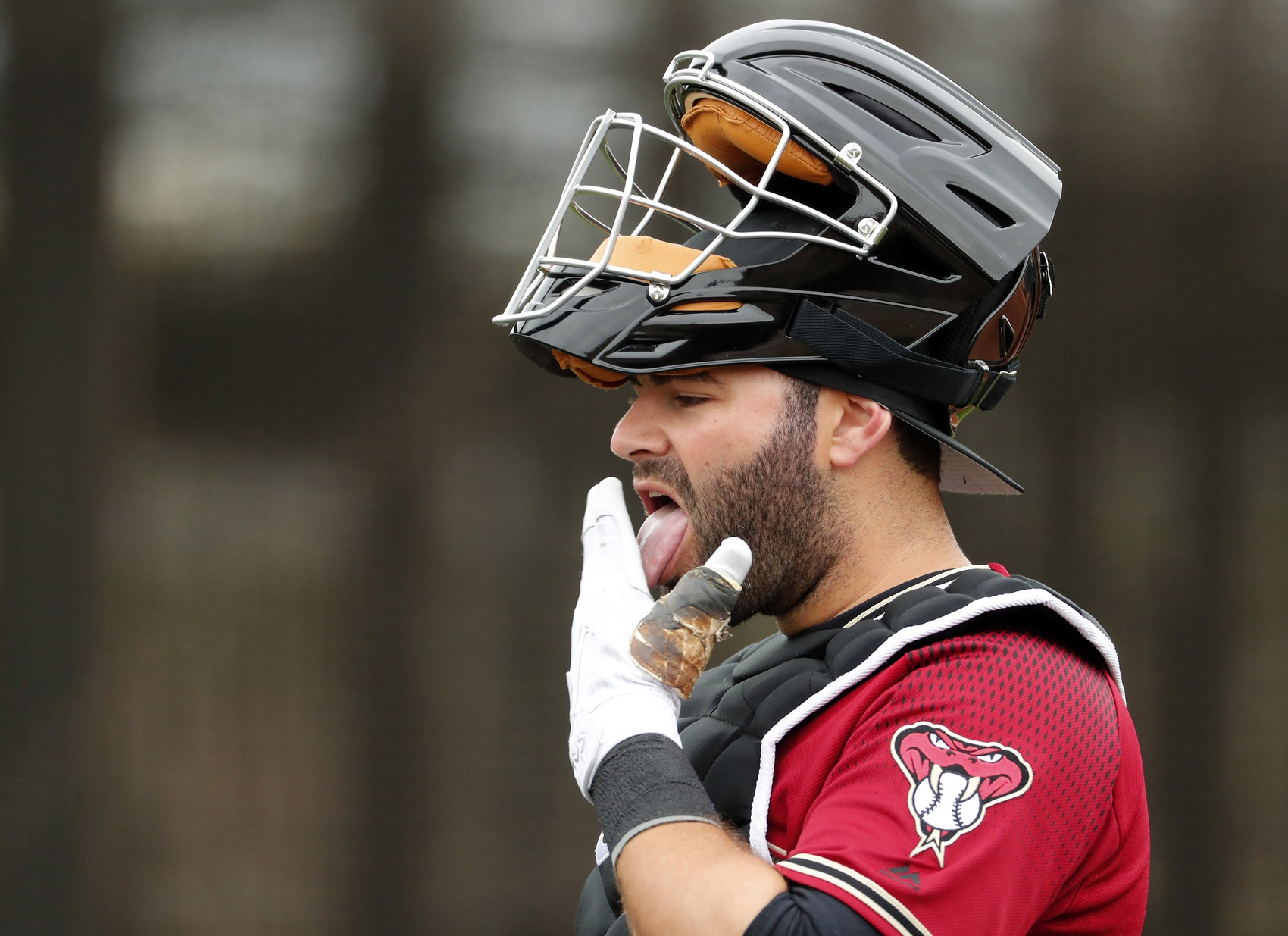 Depending on which statistical warehouse you consult, Avila’s skills in 2019 floated somewhere between good and average. According to ESPN/TruMedia’s Framing Runs Above Average metric, Avila was 6.3 runs above average, equating to about half a win to the team’s ledger. This was two runs better than either Mitch Garver or Jason Castro’s season. Likewise, Baseball Savant suggests that Avila was better than the Twins’ duo at stealing strikes in the shadow area just outside of the rule book strike zone. However, Baseball Prospectus’ framing metric, a proprietary data point engineered to include all considerations (including which hitter, umpire, and pitcher) in their calculations, says that Avila’s 2019 was slightly worse than Garver and Castro. StatCorner’s framing rankings echoes the same as BP. Meanwhile Fangraphs had Castro as the trio’s top framer, with Avila following closely and Garver far behind. Clear as mud, right? What we can say for sure is that Avila’s defense is trending in the right direction (after all, almost all of those statistical framing models said he was a downright atrocious backstop before landing in Arizona) so presumably he can only get better from here. And better is something the Twins have been capable of providing. This past season we learned that under the right guidance catchers can transform from below average to above average receivers, as Mitch Garver showed going from frying pans to soft hands. The catcher whisperer who provided that guidance, Tanner Swanson, is no longer with the organization but the Twins have confidence they still have multiple catching coaches who can implement the same teachings. Alex Aliva has softened his stance a bit on the framing discussion. For instance, heading into his first spring training with Arizona prior to the 2018 season Avila said he doesn’t like the word “framing” and when asked about the data he replied, “To be honest with you, I can't care less what the numbers say.” Thankfully for the Twins, Avila’s experience in the Diamondbacks’ organization may have helped convert him into a believer in the gospel of framing. He still might hate the word but he has embraced the concepts. Unlike the teams Avila previously played with, including the Detroit Tigers and Chicago White Sox, the Diamondbacks decided to put a premium on framing metrics. After spending time tweaking his style with Dbacks catching coach Robby Hammock, Avila, who had a very traditional mindset to the position, even started dropping to a one-knee set-up when no one was on base beginning in 2018. With the success of that addition, Avila could be receptive to undergoing the Twins’ graduate program. Under Swanson’s tutelage, the Twins’ catching instructors found that most catchers who at least tried the new technique will tell you that they actually like it over the traditional method. So much so that they used it in all situations -- runners or not. “I think if you ask our guys, most, if not all, would tell you this is how they would prefer to do it,” Swanson said last spring about the one-leg set-up. “We’re also learning that we can still block and throw effectively from these positions too and, although it’s different and hasn’t necessarily been explored in the past, that’s not scaring us from seeing what we can learn.” The Twins are no strangers when it comes to the value of receiving. This past weekend, Josh Kalk, the organization’s director of pitching, was extolling the virtues of stealing strikes during his presentation at a coaches conference in Texas. A good receiving catcher is worth about 0.3 runs per game, Kalk told the audience. It is clear that the Twins place a high value on the receiving game and Avila’s signing is an indication they believe he can produce in that regard. Where Avila thrived in 2019 was flipping counts in his pitchers’ favor. This past spring Twins’ catching prospect Ben Rortvedt explained that flipping counts was a critical emphasis for the org’s backstops. “Flip counts and flip innings,” he said, a motto amongst the system’s minor leaguers that referred to getting the even counts to swing to favorable counts. Simply, the more you are in pitcher’s counts, the more outs you can typically get: the difference in results between a 1-2 count and a 2-1 count was .565 OPS points. In 2019, Avila had the 11th-best strike looking above average rate in even counts. In layman’s terms, he was fairly strong at keeping strikes, strikes, and making others off the plate look good too. By comparison, Garver was 20th and Castro was 35th in those situations. While Avila succeeded in even counts, his weakness was gaining strikes in the vital two-strike situations. His performance with two strikes fell to 50th, while both Garver and Castro finished in the top 20, helping the Twins have one of the league’s better receiver corps in punch-out counts. The value of which skill is better -- getting to two-strikes or closing the deal -- is debatable but the correct answer is both. And that’s the direction the Twins would like their backstops to trend. If you can add Garver’s two-strike receiving strength to Avila’s repertoire, he becomes that much more valuable of a defender. Even if Alex Avila comes to the Twins and tells them he’s not interested in any of this newfangled receiving styles, he is still capable of being a strong complement to Mitch Garver as a defensive platoon nevertheless. Starting with Avila’s weakness -- breaking balls -- we see that he and Garver are near polar opposites. Garver’s new receiving technique, working under the pitch and moving back into the zone while catching it, has paid dividends on breaking balls. On pitches that are moving down and to the side Garver has captured these much better than in the past. This has enhanced the bottom of the zone. On the other hand, Avila, who starts on top of the pitch and works down, loses more breaking balls at the bottom of the zone. But you will also notice that Avila is better than average at getting/keeping elevated breaking balls as strikes. One reason for this is that Avila, in a one-leg set-up, will let a high breaking ball travel rather than trying to get it near a spot, giving the optics of a breaking ball that may have dropped in the zone. Elevated breaking balls are typically mistakes yet they happen so infrequently that it catches hitters by surprise. They rarely swing at a curveball that starts over the zone only to clip the upper reaches of the strike zone. Last year, hitters swung at just 18 percent of curveballs that landed in the upper third of the zone while swinging at 44 percent of curves in the lower third. It may help save a few oops pitches but this chart might also be Exhibit A to show Avila where he needs to improve his game. At the same time, with his current technique, Avila proved to be able to handle fastballs better than Garver and gained strikes all around the zone, particularly with elevated fastballs. Pitchers like Jake Odorizzi, who live in the upper third of the zone, may find throwing to Avila beneficial under those circumstances. Similarly, free agent target Hyun-Jin Ryu also utilizes that air space regularly. It is conceivable that the Twins could sell Ryu on the ability to throw to Avila who can strengthen his approach. Another potentially positive element about Avila’s fastball receiving would be for Jose Berrios, who locates a two-seam fastball on his arm-side corner of the plate -- a zone that is red for Avila but bluer than blue for Garver. Last season Castro aided in getting Berrios a 10% called strike rate on fastballs off the plate in that area whereas Garver held a 4% rate. Avila’s handling of that pitch may give Berrios an advantage. What makes Avila good at receiving that pitch is his set-up. Unlike Garver, who typically aligns himself at the edge of the zone, Avila will situate off the plate and angle back over, almost creating a new lane for pitchers to exploit. As mentioned, Avila could benefit Jose Berrios’ two-seam and changeup movement which fades in that direction and, since we’re in the middle of the hot stove season, another free agent pitcher that could be helped by gaining strikes in that area: Madison Bumgarner. That’s right where Bumgarner locates his fastball and cutters. Regardless if Avila embraces the Twins’ catching methodologies or remains with his current receiving set-up, he has the ability to add marginal gains to the team’s bottom line and, at the very least, replace some of Jason Castro’s defensive output. MORE FROM TWINS DAILY — Latest Twins coverage from our writers — Recent Twins discussion in our forums — Follow Twins Daily via Twitter, Facebook or email
 -
Just to echo what John said, it's that the coaches themselves want flexibility as they try to climb the ladder. For the Twins, as long as they can maintain a cohesive culture through the turnover, this is a good thing. Aspiring coaches will want to join this organization when they see they can use it as a pivotal point in their career path. I think it should be highlighted that all of the coaches who have left this offseason have done so for higher positions. It's not that they just wanted out for more money or a better work environment. Most coaches and instructors I've talked to this season have raved about the culture. At some point, there's just no more room to elevate someone and other opportunities open up.
- 9 replies
-
- 1
-
-
- jeremy hefner
- pitching coach
- (and 1 more)
-
This time they are coming for Jeremy Hefner. According to Marc Carig of The Athletic, the New York Mets are set to interview the Twins' bullpen coach. Hefner has had a meteoric rise in the pitching ranks, first as a middle man between the organization's analytics team and the players and then into a uniformed role in the bullpen in 2019. Hefner's presence has been cited as one of the reasons several Twins' pitchers saw improvements during the season.While a lot of the attention this spring was on the hiring of Wes Johnson, numerous pitchers and coaches lauded Hefner's contributions, deeming the pair a two-headed monster of pitching development. "When you look up and see Jeremy Hefner next to [Johnson] and they speak the same languages but also with different experiences, I think it’s a great combination," Rocco Baldelli told reporters this spring regarding the handling of the pitchers. Eno Sarris recently posted a list of potential pitching coaches and Hefner's name was one of the top candidates. Hefner has an excellent ability to break down mechanics on video and explain deficiencies to players so that they understand and can quickly make adjustments, one pitcher told me earlier this year. With the increase in technology and video, it is almost vital to have a pitching coach that can bridge the gap. The Twins' major league coaching staff has already lost James Rowson and had the possibility of losing bench coach Derek Shelton as well. They have also lost catching coordinator Tanner Swanson to the Yankees and hitting coordinator Peter Fatse to the Red Sox. Click here to view the article
- 9 replies
-
- 2
-
-
- jeremy hefner
- pitching coach
- (and 1 more)
-
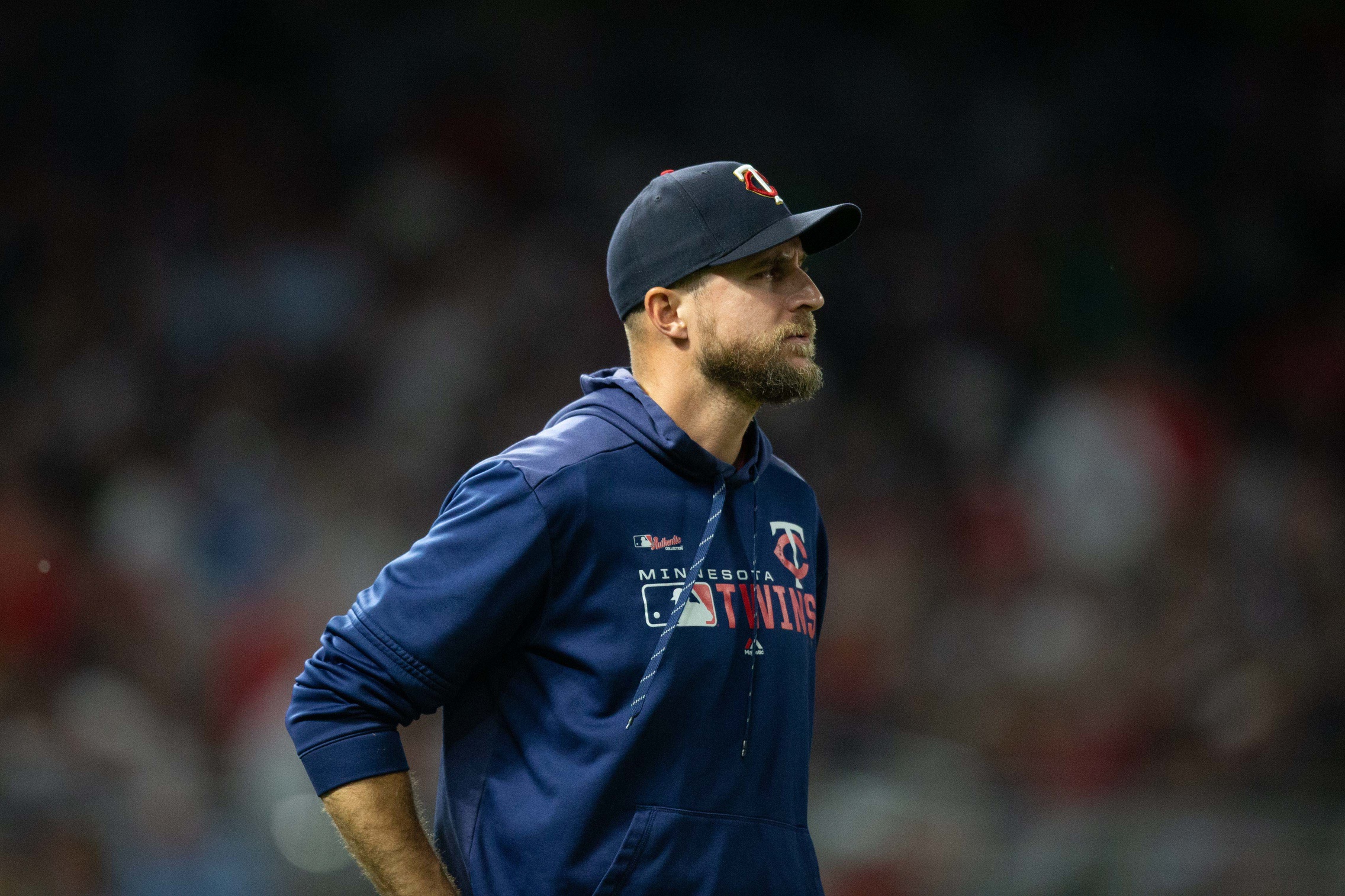 While a lot of the attention this spring was on the hiring of Wes Johnson, numerous pitchers and coaches lauded Hefner's contributions, deeming the pair a two-headed monster of pitching development. "When you look up and see Jeremy Hefner next to [Johnson] and they speak the same languages but also with different experiences, I think it’s a great combination," Rocco Baldelli told reporters this spring regarding the handling of the pitchers. Eno Sarris recently posted a list of potential pitching coaches and Hefner's name was one of the top candidates. Hefner has an excellent ability to break down mechanics on video and explain deficiencies to players so that they understand and can quickly make adjustments, one pitcher told me earlier this year. With the increase in technology and video, it is almost vital to have a pitching coach that can bridge the gap. The Twins' major league coaching staff has already lost James Rowson and had the possibility of losing bench coach Derek Shelton as well. They have also lost catching coordinator Tanner Swanson to the Yankees and hitting coordinator Peter Fatse to the Red Sox.


