



Seth Stohs
-
Posts
25,912 -
Joined
-
Last visited
-
Days Won
109
Content Type
Profiles
News
Minnesota Twins Videos
2026 Minnesota Twins Top Prospects Ranking
2022 Minnesota Twins Draft Picks
Minnesota Twins Free Agent & Trade Rumors, Notes, & Tidbits
Guides & Resources
2023 Minnesota Twins Draft Picks
The Minnesota Twins Players Project
2024 Minnesota Twins Draft Picks
2025 Minnesota Twins Draft Pick Tracker
2026 Minnesota Twins Draft Tracker: Picks & Bonuses
Forums
Blogs
Events
Store
Downloads
Gallery
Everything posted by Seth Stohs
-
 Steele in FM. Stashak in EST. He didn't pitch much until late in minor league spring training, though he probably wasn't going to start the season in CR either way.
 -
We needed a long-term answer at shortstop?
-
Threw a lot of innings for E-Town last year too. They didn't have starters go too long, so he would come out of the bullpen and eat up some innings. He's solid. Watched him twice when I was down there.
- 22 replies
-
- 1
-

-
- jermaine palacios
- lamonte wade
- (and 1 more)
-
2016 Rochester Red Wings Opening Day Roster Revealed
Seth Stohs replied to Seth Stohs's topic in Twins Daily Front Page News
Understandable. I saw him throw a couple of bullpens, but not in a game... Reports last fall were him throwing really hard. -
2016 Rochester Red Wings Opening Day Roster Revealed
Seth Stohs replied to Seth Stohs's topic in Twins Daily Front Page News
Re Polanco, they've already said that he'll be playing around the infield and Tovar will likely play the most at shortstop. The list I gave is just the list of the five starters... David Martinez may also start, or could be in long relief. Doesn't really matter what order they start in. Also, weren't they just walking around the clubhouse. There was no other rhyme or reason to the order of the announcements. I know Runzler was a BIG part of those Giants World Series teams... They're both lefty relievers on the AAA Red Wings roster... seem like a couple of guys who could wind up in the same sentence often. I'd be shocked if Strong is on the AAA roster. Same with Walden. Both are bullpen arms, probably in Chattanooga. -
2016 Rochester Red Wings Opening Day Roster Revealed
Seth Stohs replied to Seth Stohs's topic in Twins Daily Front Page News
Nope... they will have to put one guy on the DL before Thursday. -
2016 Rochester Red Wings Opening Day Roster Revealed
Seth Stohs replied to Seth Stohs's topic in Twins Daily Front Page News
I don't see much need for a traditional closers in the minors. This group should be guys used in various roles because those are the roles they'll have in the big leagues. The Twins don't need a closer. They have Perkins and Jepsen, and May and Pressly both have the stuff to be closers too. -
Today on Periscope, the Rochester Red Wings announced their 2016 Opening Day roster. In 2015, the Red Wings put together a record of 77-67 for the third straight year (which is really quite remarkable, isn’t it?). They look to improve upon that record in 2016 and bring the International League playoffs back to Frontier Field. Image courtesy of Kelsie Redburn, Rochester Red Wings Today on Periscope, the Rochester Red Wings announced their 2016 Opening Day roster. In 2015, the Red Wings put together a record of 77-67 for the third straight year (which is really quite remarkable, isn’t it?). They look to improve upon that record in 2016 and bring the International League playoffs back to Frontier Field. Several of the Minnesota Twins’ top prospects will begin the season with the Red Wings. Many of them are likely to spend time attempting to help the Minnesota Twins to their first playoff berth since 2010. As you look at this roster, it does help illustrate the type of depth that this organization has. That is something you will see through each of the four affiliates. THE COACHING STAFF Mike Quade returns for his second season as the Red Wings manager. The 59-year-old began coaching over 30 years ago and was the manager of the Chicago Cubs in 2010 and 2011. He will be joined on his staff by a couple of new coaches. Hitting Coach Chad Allen continues to work his way up the system. The former Twins outfielder was the Twins AA hitting coach the last three seasons. He has worked with several of the players on this roster. The pitching coach is Stu Cliburn. It is his 25th year in the Twins organization. He has been in the organization for well over a decade, the last several seasons in AA. He returns to Rochester where he was the pitching coach from 2006 to 2008. THE ROSTER The Rochester Red Wings roster is comprised of a good mix of young, high-ceiling prospects, some minor league veterans and everywhere in between. They are likely to be led by 2015 All Stars James Beresford and Taylor Rogers, but this is a nice, complete roster. (names in bold are on the 40 man roster) PROJECTED STARTING PITCHERS Tyler Duffey Jose Berrios Logan Darnell Pat Dean Alex Meyer Duffey’s name was written in pencil for a spot in the Twins rotation, but he struggled immensely with all of his pitchers this spring and will begin the season with the Red Wings.It is likely he won’t need to be there long. That said, it could be a race to the big leagues now between Duffey and Jose Berrios, one of baseball’s best pitching prospects. Berrios struggled with command this spring, but that hasn’t been an issue for him in the past. Expect him to put up strong numbers early again and to be up in the season’s first half.Let’s hope he’s not starting the 2016 Futures Game. Lefty Pat Dean was had a rough 2014 season in AA, but he was still pushed to Rochester last year. He had a terrific season and would up being added to the 40-man roster. The lefty will be joined in the rotation by fellow southpaw Logan Darnell. He began last year in the bullpen but moved back to the rotation and had an incredible month. In fact, some onlookers said that it was the best he had pitched as a pro. He was called up to the Twins but pneumonia meant that the Kentucky product didn’t pitch. He came off the 40 man but when he cleared, he went to big league camp and was among the final cuts. Finally, after being one of the best International League starters in 2014, Alex Meyer had a frustrating 2015 that found him in the bullpen. He debuted with the Twins, but it lasted just two outings. He gets another shot to start in 2016, though it may be just as an attempt to build arm strength, work on pitches and work out of more situations. PROJECTED RELIEF PITCHERS Right-Handers: JR Graham, Brandon Kintzler, Loek Van Mil, David Martinez Left-Handers: Buddy Boshers, Ryan O’Rourke, Taylor Rogers, Dan Runzler The Twins certainly went out and acquired lots of left-handers in the offseason, and most of them pitched well and will stick as the season starts. But there are good right-handed arms too. Let’s start with the guys on the 40-man roster. JR Graham and the Twins have been freed of the Rule 5 restrictions that caused him to need to stay in the big leagues throughout 2015. Hopefully Graham will be able to respond as well as Ryan Pressly did in the same scenario a few seasons ago. Ryan O’Rourke was called up midway through last season. He performed admirably against left-handers as he has throughout his career. He had a great camp. Rogers has been a quality starting pitching prospect since being drafted, but he went to big league camp with an opportunity to pitch out of the bullpen. After a slow start, he pitched well later. It is likely all three will surface with the Twins in 2016. Veteran Brandon Kintzler was among the final cuts. After missing most of last season, he signed a minor league deal with the Twins. If needed, he could be called up early in the season. Van Mil was with the Twins a half-decade ago until he was traded to the Angels for Brian Fuentes. He became a journeyman at that point but returned to the Twins late last year. 28-year-old David Martinez came to the Twins this year on a minor league deal. He pitched in a combined nine games for the Astros in 2013 and 2014. Buddy Boshers and Dan Runzler were both signed out of independent leagues, and both impressed in spring training. They throw hard and each have good breaking balls. If they get to the big leagues, it will mark a great story. PROJECTED LINEUP James Beresford 2B (expect that Beresford will play all around the infield) Jorge Polanco 3B (Polanco will likely play 3B, 2B, SS, and even some OF) Max Kepler LF (Kepler will play all three outfield positions) Kennys Vargas 1B (will also be able to DH) Reynaldo Rodriguez RF (can play both corners and first base) Darin Mastroianni CF (will play all three OF positions) Adam Brett Walker DH (will eventually get some time in LF, maybe 1B) John Hicks C (We’ll see Juan Centeno’s name in the lineup quite a bit too) Wilfredo Tovar (primary SS, but will play 2B and 3B as well) BENCH - Heiker Meneses, Stephen Wickens, Buck Britton, Juan Centeno This lineup has a good mixture of guys with plenty of AAA experience. A year ago, Beresford played in the AAA All Star game in 2015 and was named to the International Leagues’ Postseason All Star team. Reynaldo Rodriguez joined him on the Postseason All Star team. This spring, he helped the Colombian WBC team qualify for next year’s competition. Darin Mastroianni had a terrific spring training this year, hitting over .400 while playing all around the outfield. Wilfredo Tovar has big league time with the Mets in recent years. Known for his defense, he’ll bat lower in the lineup. There are also a couple of highly ranked prospects in this lineup. After a breakout season last year in Chattanooga, he was the Southern League MVP, Max Kepler is now a consensus Top 60 prospect in baseball. Jorge Polanco’s bat is MLB ready, but he needs to find a position he can play regularly. Adam Brett Walker has been discussed frequently in the Twins Daily forums because of his immense power and propensity to swing and miss. THE PROSPECTS Even with Tyler Duffey, Miguel Sano, Trevor May and Eddie Rosario all having graduated from prospect status, but the system is still strong. This Rochester roster has a couple of elite prospects and several players with tremendous upside. Here is a quick look at which Red Wings found their names in a variety of Twins Prospect Rankings and then which rank in the national rankings. Twins Prospect Rankings Twins Daily Top 10: Berrios (2), Kepler (3), Polanco (7), Meyer (8) Seth Stohs Top 30: Berrios (2), Kepler (3), Polanco (8), Walker (10), Meyer (14), Rogers (17), Jeremy Nygaard Top 30: Berrios (2), Kepler (3), Polanco (5), Walker (12), Meyer (14), Rogers (15), Cody Christie Top 30: Berrios (2), Kepler (3), Polanco (6), Walker (11), Meyer (15), Rogers (17) Nick Nelson Top 10: Berrios (2), Kepler (3), Polanco (8), Meyer (9) Steve Buhr Top 15: Berrios (2), Kepler (3), Polanco (8), Rogers (10) Baseball America Top 31: Berrios (2), Kepler (3), Polanco (6), Meyer (12), Rogers (14), Walker (17) FanGraphs Top 25: Berrios (2), Kepler (4), Polanco (5), Meyer (8), Rogers (16), Walker (25) Keith Law Top 20: Berrios (2), Kepler (3), Polanco (6), Meyer (10) John Sickels Top 20: Berrios (2), Kepler (3), Polanco (6), Walker (8), Meyer (11) Aaron Gleeman Top 40: Berrios (2), Kepler (3), Polanco (6), Walker (13), Meyer (14), Rogers (22), O’Rourke (38), Dean (40) Ted Schwerzler Top 15: Berrios (2), Kepler (5), Rogers (8), Walker (11), Meyer (12) MLB.com Top 30: Berrios (2), Kepler (3), Polanco (6), Walker (11), Meyer (12), Rogers (14) Baseball Essentials Top 20: Berrios (3), Kepler (5), Polanco (6), Walker (10), Meyer (11) Twins in National Prospect Rankings Baseball America: Berrios (28), Kepler (30), Polanco (99) MLB.com: Berrios (19), Kepler (44), Polanco (97) Baseball Prospectus: Berrios (17), Kepler (60), KATOH (FanGraphs): Kepler (1), Berrios (18), Gordon (82), Polanco (89) PREDICTIONS First Hitter Promoted to Twins: 1.) Jorge Polanco, 2.) Max Kepler First Starting Pitcher Promoted to Twins: 1.) Tyler Duffey, 2.) JO Berrios First Relief Pitcher Promoted to Twins: 1.) Brandon Kintzler, 2.) Ryan O’Rourke TWITTER FOLLOWS Rochester Red Wings: @RocRedWings Radio Voice: @JoshWhetzel Red Wings Radio Show: @RWRadioShow Beat Writer - Democrat & Chronicle: @KevinoDandC Also: @njrowan, @MorrieSilver8, @CJFee View full article
-
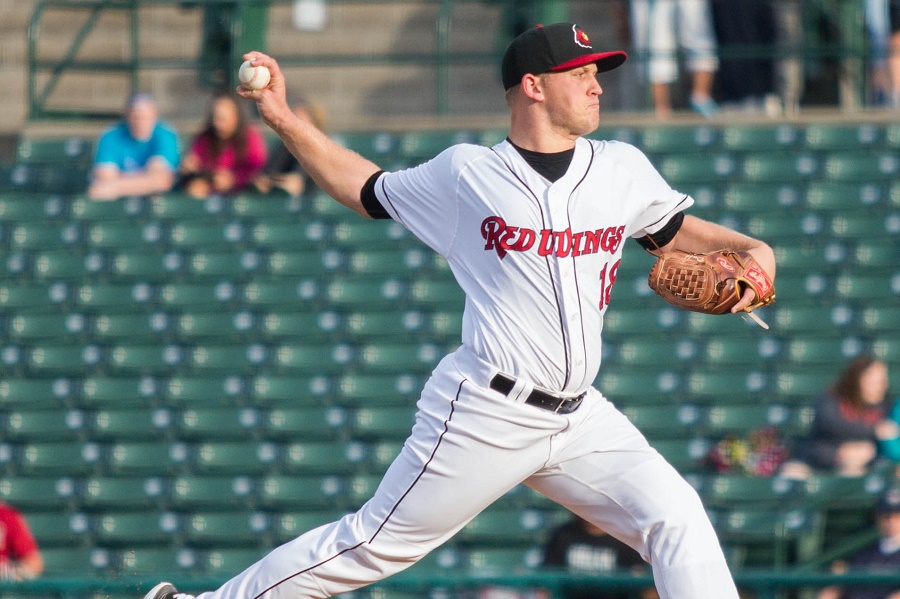 Several of the Minnesota Twins’ top prospects will begin the season with the Red Wings. Many of them are likely to spend time attempting to help the Minnesota Twins to their first playoff berth since 2010. As you look at this roster, it does help illustrate the type of depth that this organization has. That is something you will see through each of the four affiliates. THE COACHING STAFF Mike Quade returns for his second season as the Red Wings manager. The 59-year-old began coaching over 30 years ago and was the manager of the Chicago Cubs in 2010 and 2011. He will be joined on his staff by a couple of new coaches. Hitting Coach Chad Allen continues to work his way up the system. The former Twins outfielder was the Twins AA hitting coach the last three seasons. He has worked with several of the players on this roster. The pitching coach is Stu Cliburn. It is his 25th year in the Twins organization. He has been in the organization for well over a decade, the last several seasons in AA. He returns to Rochester where he was the pitching coach from 2006 to 2008. THE ROSTER The Rochester Red Wings roster is comprised of a good mix of young, high-ceiling prospects, some minor league veterans and everywhere in between. They are likely to be led by 2015 All Stars James Beresford and Taylor Rogers, but this is a nice, complete roster. (names in bold are on the 40 man roster) PROJECTED STARTING PITCHERS Tyler Duffey Jose Berrios Logan Darnell Pat Dean Alex Meyer Duffey’s name was written in pencil for a spot in the Twins rotation, but he struggled immensely with all of his pitchers this spring and will begin the season with the Red Wings.It is likely he won’t need to be there long. That said, it could be a race to the big leagues now between Duffey and Jose Berrios, one of baseball’s best pitching prospects. Berrios struggled with command this spring, but that hasn’t been an issue for him in the past. Expect him to put up strong numbers early again and to be up in the season’s first half.Let’s hope he’s not starting the 2016 Futures Game. Lefty Pat Dean was had a rough 2014 season in AA, but he was still pushed to Rochester last year. He had a terrific season and would up being added to the 40-man roster. The lefty will be joined in the rotation by fellow southpaw Logan Darnell. He began last year in the bullpen but moved back to the rotation and had an incredible month. In fact, some onlookers said that it was the best he had pitched as a pro. He was called up to the Twins but pneumonia meant that the Kentucky product didn’t pitch. He came off the 40 man but when he cleared, he went to big league camp and was among the final cuts. Finally, after being one of the best International League starters in 2014, Alex Meyer had a frustrating 2015 that found him in the bullpen. He debuted with the Twins, but it lasted just two outings. He gets another shot to start in 2016, though it may be just as an attempt to build arm strength, work on pitches and work out of more situations. PROJECTED RELIEF PITCHERS Right-Handers: JR Graham, Brandon Kintzler, Loek Van Mil, David Martinez Left-Handers: Buddy Boshers, Ryan O’Rourke, Taylor Rogers, Dan Runzler The Twins certainly went out and acquired lots of left-handers in the offseason, and most of them pitched well and will stick as the season starts. But there are good right-handed arms too. Let’s start with the guys on the 40-man roster. JR Graham and the Twins have been freed of the Rule 5 restrictions that caused him to need to stay in the big leagues throughout 2015. Hopefully Graham will be able to respond as well as Ryan Pressly did in the same scenario a few seasons ago. Ryan O’Rourke was called up midway through last season. He performed admirably against left-handers as he has throughout his career. He had a great camp. Rogers has been a quality starting pitching prospect since being drafted, but he went to big league camp with an opportunity to pitch out of the bullpen. After a slow start, he pitched well later. It is likely all three will surface with the Twins in 2016. Veteran Brandon Kintzler was among the final cuts. After missing most of last season, he signed a minor league deal with the Twins. If needed, he could be called up early in the season. Van Mil was with the Twins a half-decade ago until he was traded to the Angels for Brian Fuentes. He became a journeyman at that point but returned to the Twins late last year. 28-year-old David Martinez came to the Twins this year on a minor league deal. He pitched in a combined nine games for the Astros in 2013 and 2014. Buddy Boshers and Dan Runzler were both signed out of independent leagues, and both impressed in spring training. They throw hard and each have good breaking balls. If they get to the big leagues, it will mark a great story. PROJECTED LINEUP James Beresford 2B (expect that Beresford will play all around the infield) Jorge Polanco 3B (Polanco will likely play 3B, 2B, SS, and even some OF) Max Kepler LF (Kepler will play all three outfield positions) Kennys Vargas 1B (will also be able to DH) Reynaldo Rodriguez RF (can play both corners and first base) Darin Mastroianni CF (will play all three OF positions) Adam Brett Walker DH (will eventually get some time in LF, maybe 1B) John Hicks C (We’ll see Juan Centeno’s name in the lineup quite a bit too) Wilfredo Tovar (primary SS, but will play 2B and 3B as well) BENCH - Heiker Meneses, Stephen Wickens, Buck Britton, Juan Centeno This lineup has a good mixture of guys with plenty of AAA experience. A year ago, Beresford played in the AAA All Star game in 2015 and was named to the International Leagues’ Postseason All Star team. Reynaldo Rodriguez joined him on the Postseason All Star team. This spring, he helped the Colombian WBC team qualify for next year’s competition. Darin Mastroianni had a terrific spring training this year, hitting over .400 while playing all around the outfield. Wilfredo Tovar has big league time with the Mets in recent years. Known for his defense, he’ll bat lower in the lineup. There are also a couple of highly ranked prospects in this lineup. After a breakout season last year in Chattanooga, he was the Southern League MVP, Max Kepler is now a consensus Top 60 prospect in baseball. Jorge Polanco’s bat is MLB ready, but he needs to find a position he can play regularly. Adam Brett Walker has been discussed frequently in the Twins Daily forums because of his immense power and propensity to swing and miss. THE PROSPECTS Even with Tyler Duffey, Miguel Sano, Trevor May and Eddie Rosario all having graduated from prospect status, but the system is still strong. This Rochester roster has a couple of elite prospects and several players with tremendous upside. Here is a quick look at which Red Wings found their names in a variety of Twins Prospect Rankings and then which rank in the national rankings. Twins Prospect Rankings Twins Daily Top 10: Berrios (2), Kepler (3), Polanco (7), Meyer (8) Seth Stohs Top 30: Berrios (2), Kepler (3), Polanco (8), Walker (10), Meyer (14), Rogers (17), Jeremy Nygaard Top 30: Berrios (2), Kepler (3), Polanco (5), Walker (12), Meyer (14), Rogers (15), Cody Christie Top 30: Berrios (2), Kepler (3), Polanco (6), Walker (11), Meyer (15), Rogers (17) Nick Nelson Top 10: Berrios (2), Kepler (3), Polanco (8), Meyer (9) Steve Buhr Top 15: Berrios (2), Kepler (3), Polanco (8), Rogers (10) Baseball America Top 31: Berrios (2), Kepler (3), Polanco (6), Meyer (12), Rogers (14), Walker (17) FanGraphs Top 25: Berrios (2), Kepler (4), Polanco (5), Meyer (8), Rogers (16), Walker (25) Keith Law Top 20: Berrios (2), Kepler (3), Polanco (6), Meyer (10) John Sickels Top 20: Berrios (2), Kepler (3), Polanco (6), Walker (8), Meyer (11) Aaron Gleeman Top 40: Berrios (2), Kepler (3), Polanco (6), Walker (13), Meyer (14), Rogers (22), O’Rourke (38), Dean (40) Ted Schwerzler Top 15: Berrios (2), Kepler (5), Rogers (8), Walker (11), Meyer (12) MLB.com Top 30: Berrios (2), Kepler (3), Polanco (6), Walker (11), Meyer (12), Rogers (14) Baseball Essentials Top 20: Berrios (3), Kepler (5), Polanco (6), Walker (10), Meyer (11) Twins in National Prospect Rankings Baseball America: Berrios (28), Kepler (30), Polanco (99) MLB.com: Berrios (19), Kepler (44), Polanco (97) Baseball Prospectus: Berrios (17), Kepler (60), KATOH (FanGraphs): Kepler (1), Berrios (18), Gordon (82), Polanco (89) PREDICTIONS First Hitter Promoted to Twins: 1.) Jorge Polanco, 2.) Max Kepler First Starting Pitcher Promoted to Twins: 1.) Tyler Duffey, 2.) JO Berrios First Relief Pitcher Promoted to Twins: 1.) Brandon Kintzler, 2.) Ryan O’Rourke TWITTER FOLLOWS Rochester Red Wings: @RocRedWings Radio Voice: @JoshWhetzel Red Wings Radio Show: @RWRadioShow Beat Writer - Democrat & Chronicle: @KevinoDandC Also: @njrowan, @MorrieSilver8, @CJFee
 -
This week in Minnesota Twins history includes several opening week memories, and of course, one TV analyst's birthday. However, Bert Blyleven isn't the only TV personality in this week's almanac. Lots of interesting home runs, a trade and a big milestone. Check out what happened this week in Twins history! This week in Minnesota Twins history includes several opening week memories, and of course, one TV analyst's birthday. However, Bert Blyleven isn't the only TV personality in this week's almanac. Lots of interesting home runs, a trade and a big milestone. Check out what happened this week in Twins history! 4/3/82: The Twins beat the Phillies 5-0 in an exhibition game, the first major league game played at the Metrodome. Pete Rose collected the new stadium’s first hit, and Bloomington-native Kent Hrbek hit the Dome’s first two home runs. 4/4/90: The Twins traded future-KARE 11 anchor, Mike Pomeranz, to Pittsburgh in exchange for Junior Ortiz and a minor league pitcher. Ortiz, who wore #0, is best-remembered as Scott Erickson’s personal catcher during the Twins’ 1991 World Championship season. 4/5/14: The Twins beat the Indians 7-3 in Cleveland for Ron Gardenire’s 1,000th managerial win. Leadoff hitter Brian Dozier homered on the second pitch of the game. Leading 7-1 in the 9th, 2001 Stillwater Area High School graduate and former Golden Gopher, Glen Perkins, gave up 2 runs before securing the Kyle Gibson victory. 4/6 is the birthday of Rik Aalbert “Bert” Blyleven, born in Zeist, Holland (1951). Blyleven grew up in Garden Grove, CA and was drafted by Minnesota out of high school in the third round in 1969. After only 21 minor league starts, Bert made his major league debut on June 2nd, 1970 at age 19. Blyleven went on to pitch for 22 seasons, 11 in Minnesota (‘70-’76, ‘85-’88). He is a two-time World Series champion, winning his first in 1979 as a Pittsburgh Pirate, and his second as a member of the ‘87 Twins. Blyleven won 149 games as a Twin, second only to Jim Kaat (190). His 3,701 career strikeouts rank fifth in major league history. Bert Blyleven was elected to the baseball Hall of Fame in 2011, his 14th year on the ballot. His number 28 is retired by the Minnesota Twins. 4/6/66: The Twins traded Nimrod, MN native and 1954 Sebeka High School grad, Dick Stigman and a player to named later to the Boston Red Sox for backup catcher Russ Nixon and second baseman Chuck Schilling who never appeared in a major league game for Minnesota and retired rather than accept a minor league assignment. Schilling became a math teacher in Long Island, NY. 4/6/73: Tony Oliva hit the first home run by a designated hitter in major league history off Oakland’s Catfish Hunter in the top of the 1st, driving in Rod Carew. Bert Blyleven pitched the first of his season’s 25 complete games in the Twins’ 8-3 victory. 4/7/70: Outfielder Brant Alyea drove in 7 runs to back winning pitcher Jim Perry in the season-opener. Alyea went on to collect 21 RBI in the Twins’ first 12 games, 19 of which came in Perry’s first four starts of the season. 4/8/88: The Twins beat the Blue Jays 6-3. Dan Gladden went 4-for-5 with 3 runs scored, 4 RBI and 2 home runs. He homered in the 1st and 8th and, and stole home off of David Wells in the 7th with Kent Hrbek batting. Gladden stole home three times in his career, twice in ‘88 and once in ‘89. He was caught attempting to steal home five times. Rod Carew stole home 17 times, and Paul Molitor 10 times. 4/9/00: The Twins hit back-to-back-to-back home runs in a 13-7 win in Kansas City. Already leading 6-0 entering the top of the 6th, Corey Koskie led off the inning with a base hit. Ron Coomer, Jacque Jonesand Matt LeCroy then proceeded to hit three consecutive home runs on four total pitches, Coomer and Jones hitting first-pitch homers, and LeCroy taking an 0-1 pitch out of the park. Coomer homered again in the 7th, again with Koskie on base. Eric Milton had retired the first 20 batters in order and had a two-hit shutout going into the 8th. After retiring the first two batters, including former Twin David McCarty, Milton allowed two hits and was relieved by Eddie Guardado. Guardado gave up an RBI single and then back-to-back home runs to Carlos Beltran and Jermaine Dye. He was relieved by Hector Carrasco who surrendered the Royals’ third consecutive home run to Mike Sweeney. It was the first game in major league history in which each team hit back-to-back-to-back home runs. The Twins are one of seven teams to have hit four consecutive home runs, doing so on May 2, 1964 in Kansas City versus the Athletics. With the score tied 3-3 entering the top of the 11th, Tony Oliva hit a leadoff home run, followed by Bob Allison, Jimmie Hall and Harmon Killebrew, giving the Twins a 7-3 victory. The Twins set the American League record by hitting five home runs in a single inning on June 9, 1966, also against the KC Athletics, but this time in Bloomington at the Met. The Athletics erupted for four runs in the first off Camilo Pascual, who only lasted ⅔ of an inning. Facing 1987 Hall of Fame inductee, Catfish Hunter, the Twins pulled within 4-3 on a Bob Allison RBI double in the 5th and a two-run Killebrew homer in the 6th. Then, in the bottom of the 7th, Rich Rollins and Zoilo Versalles connected for back-to-back homers off of Hunter to take the lead. Reliever Paul Lindblad retired Sandy Valdespino before allowing back-to-back homers to Tony Oliva and Don Mincher. The Athletics then turned to John Wyatt who allowed the Twins’ third consecutive home run, and the fifth of the inning, to Harmon Killebrew, his second of the game. Four National League teams have hit five home runs in an inning. The first time was in 1939 and the most recent in 2006. All four were against the Cincinnati Reds. For the history of the Minnesota Twins told one day at a time, follow @TwinsAlmanac on Twitter. For the stories of the Major Leaguers who grew up in Minnesota, like Major Minnesotans on Facebook and follow @MajorMinnesota on Twitter. View full article
- 5 replies
-
- 1
-
-
- ron gardenhire
- bert blyleven
- (and 3 more)
-
Yes, they're at least going to start him there (in the bullpen)... He was in camp until late so wouldn't have been stretched out to start early in the season. A.) I agree. B.) I agree. Additionally, he gets to work in more situations as a starter than as a reliever. Runners on 2nd and 3rd, one out... As a starter, he'll see that situation much more as a starter than as a reliever.
-
I saw him down on the minor league side the day after he was sent to minor league camp. It was shocking to see him without the beard! He still had the hair but no beard.
-
Neal: Burdi to start season on DL
Seth Stohs replied to Seth Stohs's topic in Twins Minor League Talk
Yes, I realize that. The injury is the bigger issue. I was just giving Mike a hard time since he said the Twins should have called him up a long time ago because at some point he was going to get hurt. Obviously there is no real way to know when that is going to happen, so teams don't intentionally wait to add players to a 40-man roster or to the big leagues because of injury. -
Clearing out the Rochester LHP situation a little bit, the Twins released Aaron Thompson on Friday.
-
Neshek is another who was a bullpen guy all the way up.
-
Bullpen.
-
I'm looking at their current roster/work group... I don't see a typical closer in the group. Could be Graham, or even Van Mil... but any of the lefties could do it too. I'm sure they'll mix it up. Note - Between Jeremy and I, we are putting together season previews for Rochester, Chattanooga, Ft. Myers and Cedar Rapids. I'm told the rosters are not yet set and probably won't be for a couple more days. But they're close. We will post our previews as quickly as possible after the affiliate announces it. It will include rosters, information on prospects, projected lineups, predicting the first guys promoted to the next level. and some more. So, if you can wait until probably Monday or Tuesday (depending upon the affiliate), we'll get them out there.
-
Neal: Burdi to start season on DL
Seth Stohs replied to Seth Stohs's topic in Twins Minor League Talk
... so that they can get a little service time pitching in MLB and then use up 1-2 years of MLB service time on the DL? Obviously there's no way to know when a surgery might be needed, and I think the Twins are pushing players faster than they have in recent years... Also, we need to try to be more positive... It might be nothing. Hope! -
Neal: Burdi to start season on DL
Seth Stohs replied to Seth Stohs's topic in Twins Minor League Talk
Tweet from Darren Wolfson: https://twitter.com/DWolfsonKSTP/status/715892302703624192 -
Neal: Burdi to start season on DL
Seth Stohs replied to Seth Stohs's topic in Twins Minor League Talk
Nope. -
Neal: Burdi to start season on DL
Seth Stohs replied to Seth Stohs's topic in Twins Minor League Talk
I'm just guessing that we hear more about the forearm injuries that turn into Tommy John. However, I'm sure there are many cases where it was just a sore, tight forearm and needs a little rest. It sounds bad, and maybe it's naive to think this way... but until we know more, there's no reason to assume the worst. It's fine to understand and fear the worst, but until it's something it's just information. (or whatever that means) -
Neal: Burdi to start season on DL
Seth Stohs replied to Seth Stohs's topic in Twins Minor League Talk
I would think so though I don't know the plan at this point. Resting it for a bit is really all they can do at this point. But I think we all are on the same page in terms of wishing for the best for him not only because of what he can be on the mound, but just as a person. -
I included that, plus a couple of more releases today in the most recent Minor League release forum thread here: http://twinsdaily.com/topic/21804-five-more-minor-leaguers-released/ Tanner is a great kid. Had the chance to talk to him a few times, spent time yapping with him a bit in Ft. Myers a couple of weeks ago... chatted with him a little this morning about this. He said he is definitely planning on continuing to play. The Twins did assign him to one of hte affiliates, but he declined and after discussion requested his release. He'll get some offers whether it is with another affiliate or possibly an independent league team. I know that there have already been some discussions already... I'll try to keep people appropriately updated here... though I won't share anything that he would not be OK with...
-
Per LaVelle, Nick Burdi will start the season on the Disabled List due to right forearm tightness. As we've seen, forearm issues can eventually lead to elbow issues, so shutting him down for a bit is wise. Now... we just hope!
-
Five More Minor Leaguers Released
Seth Stohs replied to Seth Stohs's topic in Twins Minor League Talk
A few more.. As Rosterman noted above, Joe Benson was released. So were RHP Jose Abreu and LHP Brandon Easton. (Both were rookie ball guys)
