



Seth Stohs
-
Posts
25,870 -
Joined
-
Last visited
-
Days Won
109
Content Type
Profiles
News
Minnesota Twins Videos
2026 Minnesota Twins Top Prospects Ranking
2022 Minnesota Twins Draft Picks
Minnesota Twins Free Agent & Trade Rumors, Notes, & Tidbits
Guides & Resources
2023 Minnesota Twins Draft Picks
The Minnesota Twins Players Project
2024 Minnesota Twins Draft Picks
2025 Minnesota Twins Draft Pick Tracker
2026 Minnesota Twins Draft Tracker: Picks & Bonuses
Forums
Blogs
Events
Store
Downloads
Gallery
Everything posted by Seth Stohs
-

Article: Arbitration: Who Stays, Who Goes?
Seth Stohs replied to Nick Nelson's topic in Twins Daily Front Page News
The more I think about it, the more I think all six remaining are tendered. The only one I am not pretty sure about is Nunez. Plouffe, Fien and Schafer would appear to be givens. I think Duensing is a given. His salary, even in his final year of arbitration is nothing to worry about at all. He's a guy who has done the job for quite awhile now. Not great, but very solid. No need to just give a guy like that away for nothing. Worst case in offering him arbitration, you can still get something for a 31 year old lefty. Nunez is the only one I'm on the fence on. Not that he's good defensively, but he can play 5 positions. Having a guy like that as a 2nd utility guy has value. And again, he won't make more than $1 million. Milone is more of a question for me than Duensing. He'll likely be more expensive than Duensing and there are more question marks about his potential role. He's a SP and I don't think he has the stuff to be a one-inning or LOOGY type. He has an option left, but his spot in the rotation is a question mark. He could be a non-tender option too. Those three are far from easy choices, though I think Duensing is a pretty easy choice to tender. The other two are much more difficult.- 59 replies
-
- 3
-

-
- eduardo nunez
- trevor plouffe
- (and 3 more)
-
Article: Who Says No? Trevor Plouffe Edition
Seth Stohs replied to Seth Stohs's topic in Twins Daily Front Page News
This is my general thought on Free Agent signings when they are over 31... those contracts are typically on teh downside of their career at a pay rate for what they were capable of before they turned 31. The play lasts many times until about 33 which is why I do like the years that I have for both Plouffe and Dozier. -
We’re back for another round of Who Would Say No? After considering a potential long-term deal for 2B Brian Dozier yesterday, we’ll now consider the merits of a long-term contract for Twins third baseman Trevor Plouffe. Look at his numbers and consider what you would do. Leave your comments in the forum.As Thanksgiving approaches, Twins third baseman Trevor Plouffe has to be quite thankful. In the last week, two third baseman have signed contracts for at least $95 million. Kyle Seager got $100 million to buy out all three arbitration years and four years of free agency. Pablo Sandoval left the Giants for Beantown, and $95 million. Seager was coming off of a season in which he played in his first All-Star game. He is arbitration-eligible for the first time this year. Sandoval was a free agent, having won three World Series rings in San Francisco and playing terrifically in this Fall Classic. Plouffe is in his second of four arbitration seasons and had a very solid season, his best yet. Below are two ways to look at and compare the numbers of the three third basemen, 2014 stats and a three-year (2012-14) glimpse. 2014 Statistical Comparison Trevor Plouffe (age 28) - .258/.328/.423 (.751), 110 OPS+, 40-2B, 14-HR, 80 RBIKyle Seager (age 26) - .268/.334/.454 (.788), 127 OPS+, 27-2B, 25-HR, 96 RBIPablo Sandoval (age 27) - .279/.324/.415 (.739), 111 OPS+, 26-2B, 16-HR, 73 RBISeager clearly had the best year, and Sandoval and Plouffe basically had the same year. Now let’s look at the three-year numbers for the three players:Trevor Plouffe – .249/.314/.422 (.736), 103 OPS+, 81-2B, 52-HR, 187 RBIKyle Seager – .262/.329/.434 (.764), 118 OPS+, 94-2B, 67-HR, 251 RBIPablo Sandoval – .280/.335/.424 (.759), 116 OPS+, 78-2B, 42-HR, 215 RBIAgain, the Kyle Seager contract isn’t looking so bad anymore, is it? Although he might be lesser-known in Seattle, he has been good for three years and was very good as a 26-year-old in 2014. Sandoval and Plouffe were very similar in 2014, but Sandoval certainly has more of a track record and more consistency in recent years. So, before anyone puts (or thinks I am putting) Trevor Plouffe in the same category as Sandoval and Seager, just don’t. He’s not that, though he’s not far behind. Third base is no longer the power position that it was five years ago. In fact, second base is more of an offensive position in the league now than third base, or at least it has more star-caliber players. However, the two third baseman being signed certainly makes relevant the question of whether the Twins should lock up Plouffe for an extended period. Of course, the proverbial elephant in the proverbial room comes in the form of Miguel Sano. One of baseball’s top prospects, the third baseman missed all of 2014 following Tommy John surgery. Sano will be up at some point, whether it’s in 2015 or early in 2016. I have little doubt that he can play third base. He has the quickness and has a very strong arm (even after Tommy John). The question is, would Trevor Plouffe or Miguel Sano switch positions? Which one would be better in left field at that time? Those are all questions for later, but when it comes to an extension for Plouffe, it does factor into the equation. So does the fact that statistically Trevor Plouffe turned into a very good defensive third baseman in 2014. So, if Trevor Plouffe were to put up just his 2014 numbers for the next few years, what could he make? Here are some estimates: 2015 (age 29): 2nd year arbitration-eligible, Plouffe would likely jump to about $4-5 million.2016 (age 30): 3rd year arbitration-eligible, Plouffe would likely jump to $8-10 million.2017 (age 31): 4th year arbitration-eligible, Plouffe would likely jump to $12-13 million.2018 (age 32): Free AgentThose estimates are again assuming that he just puts up similar numbers to what he did in 2014. Of course, if he continues to improve, those numbers could go up some. The other side is if he gets hurt or declines, he could be a trade or non-tender candidate. What happens if he moves to left field? Would that affect these numbers? That’s what makes these long-term contracts risky for both sides. This paragraph is the same as yesterday and obviously would go into every decision: I included the season and age just because those are likely part of the discussion and part of the equation and thought-process for such decisions as well. Other factors that come into play include the character of the player, some intangibles, and how will that player handle the security? That’s a big one. Will he sit back and quit working after signing the guaranteed contract, or will he use the security to really push himself to greatness? There’s no way to know, but those thoughts have to run through the collective mind of a front office. WHO WOULD SAY NO? So, what I’ve done is put together a contract offer for the Twins front office and for Trevor Plouffe and his agent to consider (hypothetically). My question today for the Twins Daily audience is, Who Says No? 2015: $5 million.2016: $8 million2017: $10 million2018: $12 million2019: $13 million option with a $1 million buyout.4 year, $36 million contract with a $13 million option to get through his age 33 season.So, the question is there for discussion… Who says No? Or do they both say Yes? Click here to view the article
-
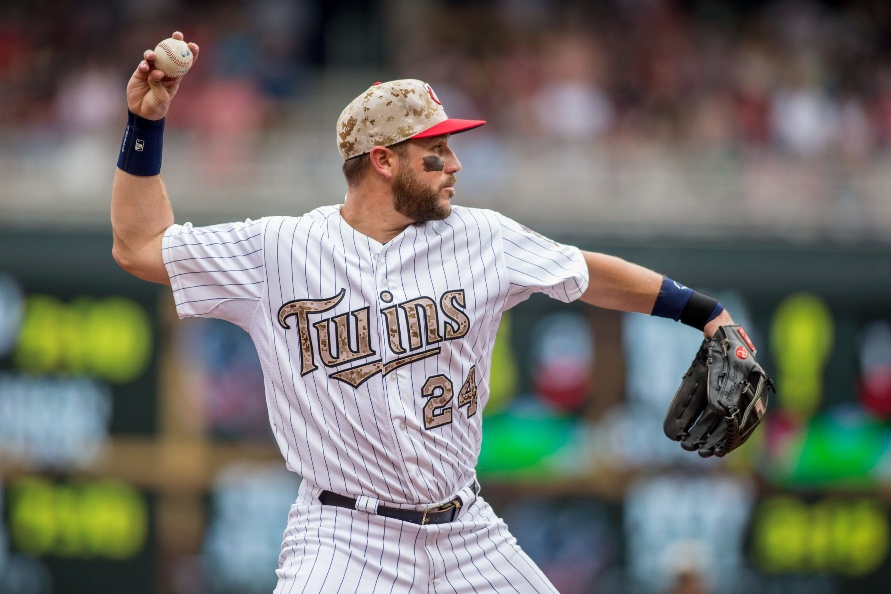 As Thanksgiving approaches, Twins third baseman Trevor Plouffe has to be quite thankful. In the last week, two third baseman have signed contracts for at least $95 million. Kyle Seager got $100 million to buy out all three arbitration years and four years of free agency. Pablo Sandoval left the Giants for Beantown, and $95 million. Seager was coming off of a season in which he played in his first All-Star game. He is arbitration-eligible for the first time this year. Sandoval was a free agent, having won three World Series rings in San Francisco and playing terrifically in this Fall Classic. Plouffe is in his second of four arbitration seasons and had a very solid season, his best yet. Below are two ways to look at and compare the numbers of the three third basemen, 2014 stats and a three-year (2012-14) glimpse. 2014 Statistical Comparison Trevor Plouffe (age 28) - .258/.328/.423 (.751), 110 OPS+, 40-2B, 14-HR, 80 RBI Kyle Seager (age 26) - .268/.334/.454 (.788), 127 OPS+, 27-2B, 25-HR, 96 RBI Pablo Sandoval (age 27) - .279/.324/.415 (.739), 111 OPS+, 26-2B, 16-HR, 73 RBI Seager clearly had the best year, and Sandoval and Plouffe basically had the same year. Now let’s look at the three-year numbers for the three players: Trevor Plouffe – .249/.314/.422 (.736), 103 OPS+, 81-2B, 52-HR, 187 RBI Kyle Seager – .262/.329/.434 (.764), 118 OPS+, 94-2B, 67-HR, 251 RBI Pablo Sandoval – .280/.335/.424 (.759), 116 OPS+, 78-2B, 42-HR, 215 RBI Again, the Kyle Seager contract isn’t looking so bad anymore, is it? Although he might be lesser-known in Seattle, he has been good for three years and was very good as a 26-year-old in 2014. Sandoval and Plouffe were very similar in 2014, but Sandoval certainly has more of a track record and more consistency in recent years. So, before anyone puts (or thinks I am putting) Trevor Plouffe in the same category as Sandoval and Seager, just don’t. He’s not that, though he’s not far behind. Third base is no longer the power position that it was five years ago. In fact, second base is more of an offensive position in the league now than third base, or at least it has more star-caliber players. However, the two third baseman being signed certainly makes relevant the question of whether the Twins should lock up Plouffe for an extended period. Of course, the proverbial elephant in the proverbial room comes in the form of Miguel Sano. One of baseball’s top prospects, the third baseman missed all of 2014 following Tommy John surgery. Sano will be up at some point, whether it’s in 2015 or early in 2016. I have little doubt that he can play third base. He has the quickness and has a very strong arm (even after Tommy John). The question is, would Trevor Plouffe or Miguel Sano switch positions? Which one would be better in left field at that time? Those are all questions for later, but when it comes to an extension for Plouffe, it does factor into the equation. So does the fact that statistically Trevor Plouffe turned into a very good defensive third baseman in 2014. So, if Trevor Plouffe were to put up just his 2014 numbers for the next few years, what could he make? Here are some estimates: 2015 (age 29): 2nd year arbitration-eligible, Plouffe would likely jump to about $4-5 million. 2016 (age 30): 3rd year arbitration-eligible, Plouffe would likely jump to $8-10 million. 2017 (age 31): 4th year arbitration-eligible, Plouffe would likely jump to $12-13 million. 2018 (age 32): Free Agent Those estimates are again assuming that he just puts up similar numbers to what he did in 2014. Of course, if he continues to improve, those numbers could go up some. The other side is if he gets hurt or declines, he could be a trade or non-tender candidate. What happens if he moves to left field? Would that affect these numbers? That’s what makes these long-term contracts risky for both sides. This paragraph is the same as yesterday and obviously would go into every decision: I included the season and age just because those are likely part of the discussion and part of the equation and thought-process for such decisions as well. Other factors that come into play include the character of the player, some intangibles, and how will that player handle the security? That’s a big one. Will he sit back and quit working after signing the guaranteed contract, or will he use the security to really push himself to greatness? There’s no way to know, but those thoughts have to run through the collective mind of a front office. WHO WOULD SAY NO? So, what I’ve done is put together a contract offer for the Twins front office and for Trevor Plouffe and his agent to consider (hypothetically). My question today for the Twins Daily audience is, Who Says No? 2015: $5 million. 2016: $8 million 2017: $10 million 2018: $12 million 2019: $13 million option with a $1 million buyout. 4 year, $36 million contract with a $13 million option to get through his age 33 season. So, the question is there for discussion… Who says No? Or do they both say Yes?
 -
Article: Who Says No? Brian Dozier Edition
Seth Stohs replied to Seth Stohs's topic in Twins Daily Front Page News
This discussion is great! Thank you! And, the two "sides" of the discussion are likely both right and expressing that concerns that each side would have. "Security" and "Cost Certainty" are the positives for both sides. "Maximize value" and "Overpay" are on the other side of the equation. I do have to wonder, when we heard rumors last spring training about a contract extension with Dozier, what those terms might have looked like. I'm guessing lower than what my proposal above is. If they wait another year and he has another similar year, he could be looking more at a Seager deal. The risk goes both ways, and I feel pretty good about where I put the numbers, but I'm loving this conversation. -
Big money is being spent around baseball. Players are signing long-term deals before free agency. There are are a couple of Twins players who would/could be looking to gain some financial security. In this series, I’ll review a Twins player, his numbers, his contract status and his earnings potential. I’ll put out a contract that I would consider fair and ask Twins Daily’s readers, “Who Says No?” We’ll start with Brian Dozier.Clearly there is some money to spend in baseball right now. National TV revenues are crazy, so the players should cash in. That said, teams still need to make sound business decisions. The Kyle Seager 7-year, $100 million contract got me thinking. He is arbitration eligible for the first time this year after making $540,000 in his final year of serfdom. So the Mariners are buying out the 2014 All-Star for three years of arbitration, plus four years of free agency. There is money to be spent, so should the Twins spend it? Brian Dozier had a very good 2014 season, his age-27 season. He hit .242/.345/.416 (.742) with 33 doubles, a triple, 23 home runs, 71 RBI and 112 runs scored. He also stole 21 bases. He also played very good defense at second base. If he is able to continue posting those types of numbers, he is going to start making a lot of money in 2016 when he is playing under his first year of arbitration. Understandably, he would want to work under some sort of guarantee, so a long-term contract might make a lot of sense for him. The Twins would certainly like to lock up a guy who they consider a quality player and a leader in the clubhouse. Of course, such a contract would have to make sense for both sides. So, if Dozier were to put up just the same numbers for the next four or five years, what would he make? Here are some estimates: 2015 (age 28): Not yet arbitration-eligible, Dozier will make between $550,000 and $600,000.2016 (age 29): 1st year arbitration-eligible, Dozier would likely jump up to about $5 million.2017 (age 30): 2nd year arbitration-eligible, Dozier would likely jump to about $8-10 million.2018 (age 31): 3rd year arbitration-eligible, Dozier would likely jump to $10-12 million.2019 (age 32): He would be a free agent.Those estimates are again assuming that he just puts up similar numbers to what he did in 2014. Of course, if he continues to improve, those numbers could go up a little. The other side that is if he gets hurt or declines, he could be a non-tender candidate in a couple of years. That’s what makes these long-term contracts risky for both sides. I included the season and age just because those are likely part of the discussion and part of the equation and thought process for such decisions as well. Other factors that come into play include the character of the player, some intangibles, and how will that player handle the security? That’s a big one. Will he sit back and quit working after signing the guaranteed contract, or will he use the security to really push himself to greatness? There’s no way to know, but those thoughts have to run through the collective mind of a front office. WHO WOULD SAY NO? So, what I’ve done is put together a contract offer for the Twins front office and for Brian Dozier and his agent to consider (hypothetically). My question today for the Twins Daily audience is, Who Says No? 2015: $1 million.2016: $5 million2017: $7 million2018: $9 million2019: $11 million2020: $12 million6 year, $45 million contract through his age 33 season.So, the question is there for discussion… Who says No? Or do they both say Yes? Click here to view the article
-
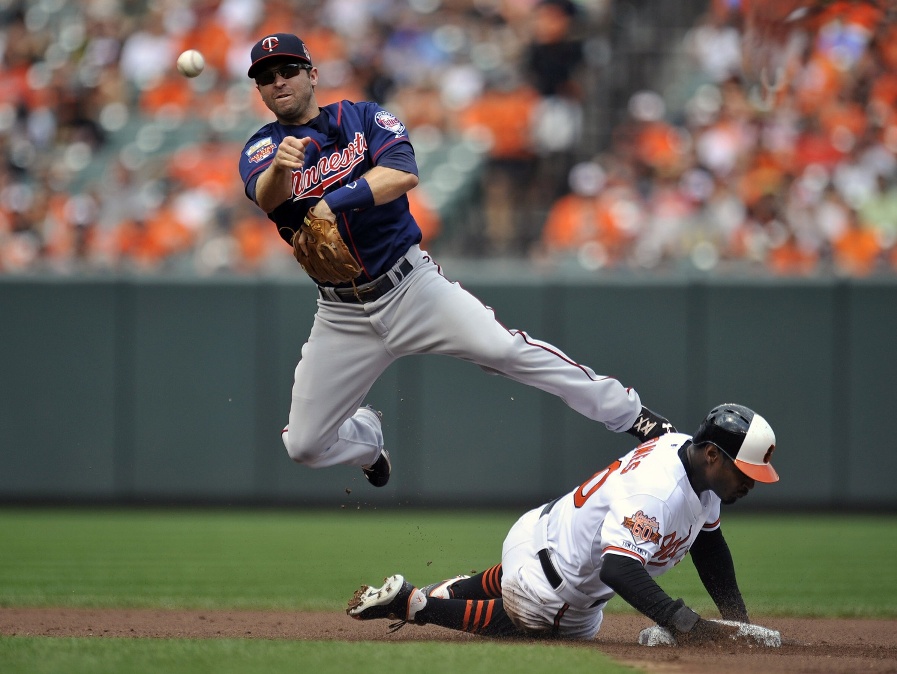 Clearly there is some money to spend in baseball right now. National TV revenues are crazy, so the players should cash in. That said, teams still need to make sound business decisions. The Kyle Seager 7-year, $100 million contract got me thinking. He is arbitration eligible for the first time this year after making $540,000 in his final year of serfdom. So the Mariners are buying out the 2014 All-Star for three years of arbitration, plus four years of free agency. There is money to be spent, so should the Twins spend it? Brian Dozier had a very good 2014 season, his age-27 season. He hit .242/.345/.416 (.742) with 33 doubles, a triple, 23 home runs, 71 RBI and 112 runs scored. He also stole 21 bases. He also played very good defense at second base. If he is able to continue posting those types of numbers, he is going to start making a lot of money in 2016 when he is playing under his first year of arbitration. Understandably, he would want to work under some sort of guarantee, so a long-term contract might make a lot of sense for him. The Twins would certainly like to lock up a guy who they consider a quality player and a leader in the clubhouse. Of course, such a contract would have to make sense for both sides. So, if Dozier were to put up just the same numbers for the next four or five years, what would he make? Here are some estimates: 2015 (age 28): Not yet arbitration-eligible, Dozier will make between $550,000 and $600,000. 2016 (age 29): 1st year arbitration-eligible, Dozier would likely jump up to about $5 million. 2017 (age 30): 2nd year arbitration-eligible, Dozier would likely jump to about $8-10 million. 2018 (age 31): 3rd year arbitration-eligible, Dozier would likely jump to $10-12 million. 2019 (age 32): He would be a free agent. Those estimates are again assuming that he just puts up similar numbers to what he did in 2014. Of course, if he continues to improve, those numbers could go up a little. The other side that is if he gets hurt or declines, he could be a non-tender candidate in a couple of years. That’s what makes these long-term contracts risky for both sides. I included the season and age just because those are likely part of the discussion and part of the equation and thought process for such decisions as well. Other factors that come into play include the character of the player, some intangibles, and how will that player handle the security? That’s a big one. Will he sit back and quit working after signing the guaranteed contract, or will he use the security to really push himself to greatness? There’s no way to know, but those thoughts have to run through the collective mind of a front office. WHO WOULD SAY NO? So, what I’ve done is put together a contract offer for the Twins front office and for Brian Dozier and his agent to consider (hypothetically). My question today for the Twins Daily audience is, Who Says No? 2015: $1 million. 2016: $5 million 2017: $7 million 2018: $9 million 2019: $11 million 2020: $12 million 6 year, $45 million contract through his age 33 season. So, the question is there for discussion… Who says No? Or do they both say Yes?
 -
So we'll likely never know who "won" the bid and what the bid was... Oh well, it was a fun story for a Saturday!!!
-
Article: The Case for Tony O
Seth Stohs replied to Seth Stohs's topic in Twins Daily Front Page News
For what it's worth, I agree with this sentence. Researching Oliva made me realize that he was one of the top 3-4 players in the American League for an 8-season run. I also always remembered hearing about his declining play after returning from the missed season. Well, he was still pretty good for three more years. -
Article: The Case for Tony O
Seth Stohs replied to Seth Stohs's topic in Twins Daily Front Page News
You make a great point. People worry so much about age for MLB Debut forgetting there are a lot of guys who don't get to the big leagues until they're 25 and still have really, really good careers. So the next time someone tells you that Brian Dozier was "old" when he was called up, remind them that 1.) he went to four years of college, 2.) he debuted less than 2 years after being drafted, 3.) he was 24 (turned 25 a couple weeks later), and 4.) Tony Oliva turned out just fine. -
Recently, the Baseball Hall of Fame announced the ten finalists who are on the Veteran’s Committee’s Golden Era Ballot. Three former Twins players are on the ballot, Luis Tiant, Jim Kaat and Tony Oliva. Today, I’m going to post several of the reasons that Oliva should be considered a Hall of Famer. At the end, I’ll let you know how you can help Oliva’s case.On December 8, the 16-person Veteran's Committii will vote on which of the ten players from the Golden Era should be elected. Like the Baseball Writer’s vote, to gain enshrinement in Cooperstown, a player will need 75% of the vote (or, 12 votes). Tony Oliva is a Twins legend. He is a member of the Minnesota Twins Hall of Fame and is one of the five best players in team history. However, he was not voted into the Hall of Fame after 15 years on the Baseball Writers’ ballot. In fact, he never accumulated more than 47.3% of the vote. However, thanks to the Hall of Fame’s addition of this Golden Era vote, Oliva has another chance. As Twins fans, we can certainly support one of ours being awarded the greatest honor a baseball player can receive. The Case For Oliva Players are to be considered or judged based on several criteria including record, ability, integrity, character, sportsmanship and contributions to the team. However, it all starts with record as a player since there are a lot of people of high character and integrity in the game. So, let’s start with his playing career. Oliva had cups of coffee with the Twins in 1962 and 1963. In 1964, he was the American League Rookie of the Year and won the league batting title when he hit .323. In 1965, he hit .321, becoming the only player in team history to win back-to-back batting titles. In 1966, he led the league in hits for the third straight year but his .307 batting average was second behind Frank Robinson. In 1971, he hit a career-high .337 for his third and final batting title. He led the league in hits five times, and four times he led the league in doubles. Three times he finished in the top five in MVP voting. Five times he finished in the top ten. All-Star appearances mean different things to different people these days, but the reason it was called The Golden Era is because so many of baseball’s elite players came from that era. To have been selected for eight straight All-Star games, from 1964 through 1971, tells us how great he was in the era. The Twins actually released Oliva in 1961 because he was so bad defensively in the outfield. However, he turned around his defense in right field enough to earn a Gold Glove Award in 1966. He was known to have had one of the strongest arms in baseball. Oliva’s peak was from 1964 through 1971 (ages 25-32). Unfortunately, he was able to play just ten games in 1972 because of his knees. I wanted to see where Oliva ranked during that eight year stretch compared to his contemporaries. His triple slash line for that time frame was .313/.360/.507 (.867). That is an adjusted-OPS+ of 140. In other words, he was 40% better than the average player for that stretch.His .313 batting average was tied with Pete Rose for fourth in MLB, behind Roberto Clemente (.334), Rico Carty (.322), and Matty Alou (.314). It was best in the American League, ahead of teammate and roommate Rod Carew’s .306 average.Because he was such an aggressive hitter, his on-base percentage ranks 31st from that time frame, but it is 13th in the American League.That said, he was third in the American League with 90 intentional walks. Only sluggers Harmon Killebrew and Frank Howard were intentionally walked more often in the AL. That is a sign of the respect opponents had for him.His slugging percentage is tied for 10th in MLB for that time frame. However, in the American League, only Frank Robinson, Harmon Killebrew and Frank Howard rank ahead of him.His OPS was 14th in baseball, sixth in the American League (top five – Frank Robinson, Harmon Killebrew, Carl Yastrzemski, Frank Howard and Mickey Mantle).His 1,455 hits was behind only Rose (1,554), Lou Brock (1,552), Billy Williams (1,516) and Clemente (1,460). In the AL, Brooks Robinson’s 1,313 hits was second to Oliva.His 278 doubles was best in MLB from 1964-1971.His 46 triples ranked 12th in MLB and fourth in the American League.His 177 home runs ranked 15th in all of baseball and eighth in the AL.His 719 RBI was 13th overall behind 11 Hall of Famers (and just ahead of three more). That RBI total ranked fourth in the American League (leader was Harmon Killebrew).He was 10th in MLB with 711 runs scored, which ranked second in the American League.Many think that the knee injuries completely derailed his career. Sure, it slowed him down, but he was still pretty good. After playing in just ten games in 1972, Oliva became the Twins DH in 1973 and played in 374 games over the next three seasons. In those three years, he hit a combined .283/.338/.401 (.740). That may sound somewhat pedestrian, especially in comparison to those first eight full seasons. However, with an adjusted OPS+ of 109, he was still nine percent better than the average player. So, did he fade after the injuries, and after he turned 32? Sure, a little. He was still a very good player. Despite hobbling when he walked. Despite Rod Carew’s stories of Oliva crying himself to sleep at night in pain, or limping to get ice, he still continued to play at a very high level. That said, there will always be the question of What If... with Tony Oliva’s career. His career hitting line, from 1962-1975, is .304/.353/.476 (.830) which equates to an adjusted-OPS+ of 131. He accumulated 329 doubles, 48 triples, 220 home runs and 947 RBI. Post-Playing Career Oliva came to the United States from Cuba for an opportunity to play baseball and earn a living. However, he got married in South Dakota and has made Bloomington his home for 50 years. He has remained active in the organization. In fact, many may forget that he was that Twins first base coach in 1985 and their hitting coach from 1986 through 1991. I think most Twins fans would agree that was a pretty good stretch for the Twins. Since then, he has been a special adviser for the Twins. He has spent time in Ft. Myers as an instructor as well as going around to the minor league affiliates to do much of the same. He is very active in the community, often representing the Twins at events. Currently, he is an Analyst on the Twins Spanish Radio network and a minor league instructor. Seemingly all Twins fans have a good Oliva story. For me, the first one was in 2001 while in Cooperstown for Kirby Puckett and Dave Winfield’s Hall of Fame Induction weekend. Just walking through the streets of Cooperstown, Oliva was chatting with fans and taking pictures. I happened to be in a store when my brother got his picture taken with him. In the last fifteen years, Oliva has had many honors bestowed on him. His #6 was retired by the Twins. He was part of the inaugural Twins Hall of Fame class. He was also named to the Latino Baseball Hall of Fame. In 2011, the bronze statue of Oliva was dedicated outside of Gate 6 at Target Field. In short, he has been an ambassador of the game of baseball in the Upper Midwest for half of a century. His joy permeates a room when he is at the front sharing stories of his playing days, his Twins Caravan trips and more. He exudes integrity and character. What Can I Do? As we mentioned at the start, YOU can help Tony Oliva get votes. You can mail a letter to the Golden Era Veterans Committee about why you think Tony Oliva should be in the Hall of Fame. The best way to influence the voting committee is by sending letters in support of Tony. VoteTonyO is working to send over 13,000 pieces of mail from fans, but more is needed. There are two things you can do to help the effort: 1. Mail pre-stamped VoteTonyO postcards VoteTonyO has designed and printed 8,000 custom postcards that are pre-stamped and pre-addressed. All you have to do is write a short message on the back and mail them in. These postcards are available for fans at no cost. To request postcards, email , providing your mailing address and desired quantity (in increments of 25). 2. Mail your own letter If you have more to say to the Hall of Fame voters about why Tony should be inducted, mail a letter to: Baseball Hall of Fame Attn: Golden Era Committee 25 Main Street Cooperstown, NY 13326 Don’t forget to write “VoteTonyO” on the front and back of the envelope. The vote is on December 8th, so you will need to get your letter or postcard as soon as possible. Click here to view the article
-
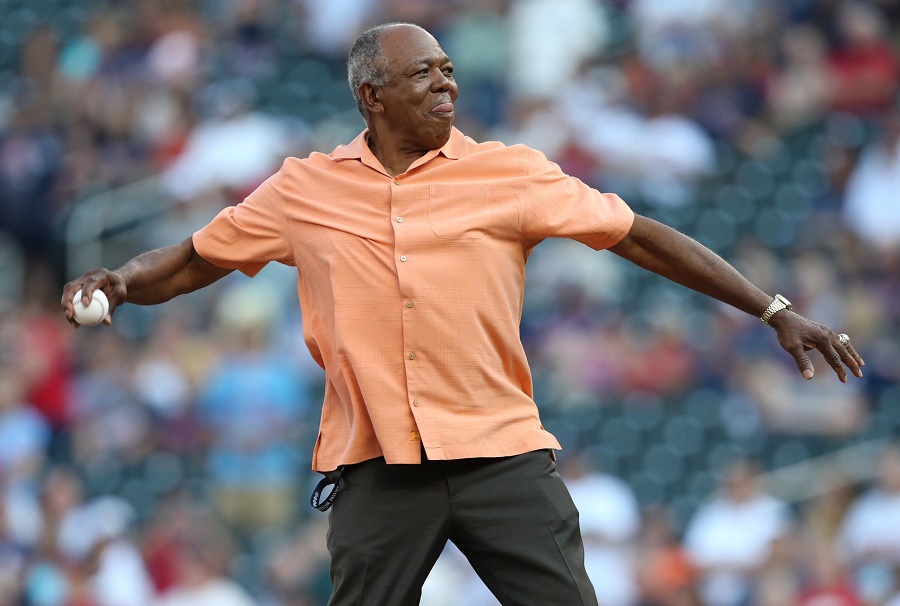 On December 8, the 16-person Veteran's Committii will vote on which of the ten players from the Golden Era should be elected. Like the Baseball Writer’s vote, to gain enshrinement in Cooperstown, a player will need 75% of the vote (or, 12 votes). Tony Oliva is a Twins legend. He is a member of the Minnesota Twins Hall of Fame and is one of the five best players in team history. However, he was not voted into the Hall of Fame after 15 years on the Baseball Writers’ ballot. In fact, he never accumulated more than 47.3% of the vote. However, thanks to the Hall of Fame’s addition of this Golden Era vote, Oliva has another chance. As Twins fans, we can certainly support one of ours being awarded the greatest honor a baseball player can receive. The Case For Oliva Players are to be considered or judged based on several criteria including record, ability, integrity, character, sportsmanship and contributions to the team. However, it all starts with record as a player since there are a lot of people of high character and integrity in the game. So, let’s start with his playing career. Oliva had cups of coffee with the Twins in 1962 and 1963. In 1964, he was the American League Rookie of the Year and won the league batting title when he hit .323. In 1965, he hit .321, becoming the only player in team history to win back-to-back batting titles. In 1966, he led the league in hits for the third straight year but his .307 batting average was second behind Frank Robinson. In 1971, he hit a career-high .337 for his third and final batting title. He led the league in hits five times, and four times he led the league in doubles. Three times he finished in the top five in MVP voting. Five times he finished in the top ten. All-Star appearances mean different things to different people these days, but the reason it was called The Golden Era is because so many of baseball’s elite players came from that era. To have been selected for eight straight All-Star games, from 1964 through 1971, tells us how great he was in the era. The Twins actually released Oliva in 1961 because he was so bad defensively in the outfield. However, he turned around his defense in right field enough to earn a Gold Glove Award in 1966. He was known to have had one of the strongest arms in baseball. Oliva’s peak was from 1964 through 1971 (ages 25-32). Unfortunately, he was able to play just ten games in 1972 because of his knees. I wanted to see where Oliva ranked during that eight year stretch compared to his contemporaries. His triple slash line for that time frame was .313/.360/.507 (.867). That is an adjusted-OPS+ of 140. In other words, he was 40% better than the average player for that stretch. His .313 batting average was tied with Pete Rose for fourth in MLB, behind Roberto Clemente (.334), Rico Carty (.322), and Matty Alou (.314). It was best in the American League, ahead of teammate and roommate Rod Carew’s .306 average. Because he was such an aggressive hitter, his on-base percentage ranks 31st from that time frame, but it is 13th in the American League. That said, he was third in the American League with 90 intentional walks. Only sluggers Harmon Killebrew and Frank Howard were intentionally walked more often in the AL. That is a sign of the respect opponents had for him. His slugging percentage is tied for 10th in MLB for that time frame. However, in the American League, only Frank Robinson, Harmon Killebrew and Frank Howard rank ahead of him. His OPS was 14th in baseball, sixth in the American League (top five – Frank Robinson, Harmon Killebrew, Carl Yastrzemski, Frank Howard and Mickey Mantle). His 1,455 hits was behind only Rose (1,554), Lou Brock (1,552), Billy Williams (1,516) and Clemente (1,460). In the AL, Brooks Robinson’s 1,313 hits was second to Oliva. His 278 doubles was best in MLB from 1964-1971. His 46 triples ranked 12th in MLB and fourth in the American League. His 177 home runs ranked 15th in all of baseball and eighth in the AL. His 719 RBI was 13th overall behind 11 Hall of Famers (and just ahead of three more). That RBI total ranked fourth in the American League (leader was Harmon Killebrew). He was 10th in MLB with 711 runs scored, which ranked second in the American League. Many think that the knee injuries completely derailed his career. Sure, it slowed him down, but he was still pretty good. After playing in just ten games in 1972, Oliva became the Twins DH in 1973 and played in 374 games over the next three seasons. In those three years, he hit a combined .283/.338/.401 (.740). That may sound somewhat pedestrian, especially in comparison to those first eight full seasons. However, with an adjusted OPS+ of 109, he was still nine percent better than the average player. So, did he fade after the injuries, and after he turned 32? Sure, a little. He was still a very good player. Despite hobbling when he walked. Despite Rod Carew’s stories of Oliva crying himself to sleep at night in pain, or limping to get ice, he still continued to play at a very high level. That said, there will always be the question of What If... with Tony Oliva’s career. His career hitting line, from 1962-1975, is .304/.353/.476 (.830) which equates to an adjusted-OPS+ of 131. He accumulated 329 doubles, 48 triples, 220 home runs and 947 RBI. Post-Playing Career Oliva came to the United States from Cuba for an opportunity to play baseball and earn a living. However, he got married in South Dakota and has made Bloomington his home for 50 years. He has remained active in the organization. In fact, many may forget that he was that Twins first base coach in 1985 and their hitting coach from 1986 through 1991. I think most Twins fans would agree that was a pretty good stretch for the Twins. Since then, he has been a special adviser for the Twins. He has spent time in Ft. Myers as an instructor as well as going around to the minor league affiliates to do much of the same. He is very active in the community, often representing the Twins at events. Currently, he is an Analyst on the Twins Spanish Radio network and a minor league instructor. Seemingly all Twins fans have a good Oliva story. For me, the first one was in 2001 while in Cooperstown for Kirby Puckett and Dave Winfield’s Hall of Fame Induction weekend. Just walking through the streets of Cooperstown, Oliva was chatting with fans and taking pictures. I happened to be in a store when my brother got his picture taken with him. In the last fifteen years, Oliva has had many honors bestowed on him. His #6 was retired by the Twins. He was part of the inaugural Twins Hall of Fame class. He was also named to the Latino Baseball Hall of Fame. In 2011, the bronze statue of Oliva was dedicated outside of Gate 6 at Target Field. In short, he has been an ambassador of the game of baseball in the Upper Midwest for half of a century. His joy permeates a room when he is at the front sharing stories of his playing days, his Twins Caravan trips and more. He exudes integrity and character. What Can I Do? As we mentioned at the start, YOU can help Tony Oliva get votes. You can mail a letter to the Golden Era Veterans Committee about why you think Tony Oliva should be in the Hall of Fame. The best way to influence the voting committee is by sending letters in support of Tony. VoteTonyO is working to send over 13,000 pieces of mail from fans, but more is needed. There are two things you can do to help the effort: 1. Mail pre-stamped VoteTonyO postcards VoteTonyO has designed and printed 8,000 custom postcards that are pre-stamped and pre-addressed. All you have to do is write a short message on the back and mail them in. These postcards are available for fans at no cost. To request postcards, email , providing your mailing address and desired quantity (in increments of 25). 2. Mail your own letter If you have more to say to the Hall of Fame voters about why Tony should be inducted, mail a letter to: Baseball Hall of Fame Attn: Golden Era Committee 25 Main Street Cooperstown, NY 13326 Don’t forget to write “VoteTonyO” on the front and back of the envelope. The vote is on December 8th, so you will need to get your letter or postcard as soon as possible.
 -
Article: No Experience Necessary?
Seth Stohs replied to Nick Nelson's topic in Twins Daily Front Page News
I'm with you... It's like with the Torey Lovullo thing... was he a strong choice? Certainly, but is he better than Molitor for the Twins right now? I don't know. None of us does. I do know that Molitor is a strong choice too. As for the other coaches, I have zero problem with any of them. Were there other candidates? Of course. Is there some guy somewhere who might have been better? Probably, somewhere. But, these are all good choices.- 26 replies
-
- 1
-
-
- paul molitor
- gene glynn
- (and 1 more)
-
We only had about 15 minutes with him (and still took 20), so we didn't get too in-depth. You can listen to it too, to hear (even if the sound quality wasn't very good) for yourself.
-
Article: No Experience Necessary?
Seth Stohs replied to Nick Nelson's topic in Twins Daily Front Page News
Not sure... when they let Al Newman go, he went to somewhere (DBacks?) for a bit, I believe. Hard to really say that. When they let guys go 2-3 years ago, they were pretty much all ready to retire. Also, coaching is such a fraternity, so you will see guys picked for relationships as opposed to history. -
I don't know. It's been four years... I'm 100% OK with them looking to win more in 2015... I'm not saying Pena or Yang (if that were to happen) would turn things around... those are just international signings which I'm in favor of. Bring players in from all over the place is a good thing. Create competition, make everyone better... and start winning some games.
-
Article: No Experience Necessary?
Seth Stohs replied to Nick Nelson's topic in Twins Daily Front Page News
I agree. I'm encouraged by this staff. It's exciting. Two more roles to fill, assuming the reports are true on Guardado and Allen, and I'm very curious how those two go. I definitely like the mix. Brunansky has earned the right to stick around. Allen has put in his time elsewhere. Hernandez has definitely put in his time. Glynn's background is so intriguing. Bullpen coach isn't one that I'm worried about any sort of history, so I like what Guardado can bring. First base coach is similar for me. Bench Coach is just going to be an assistant. I don't see any real background criteria for either of those two jobs. That said, it would be good to have someone who knows how to work with catchers. It may also be good to have an "infield" coach or an "outfield" coach. I don't know who they would be... It makes the return of Steinbach make a lot of sense. -
According to Darren Wolfson (via Twitter), as of this morning, the Twins had still not been notified that they had own the bid. Tonight, Jeremy Nygaard tweeted that he's hearing (not sure where) that the Rangers may have won the bid at $1.5 million.
-
Allen has been a pitching coach for most of the last 20-25 years. I think it's fair to say he's "run a staff before." Pitching coach in the minors isn't (or shouldn't be) any different than at any other level.
-
To be fair, I've used "Sources close to..." before too, and it's because the Twins aren't ready or just haven't said anything. It's nerve-wracking after you put yourself out there until the team confirms. But, speaking only for myself, I've never "broken" any news without being really, really confident in my source. And frankly, if you tell anyone publicly who your sources are, you'll lose those sources in a hurry. Reputation matters. That said, when I wrote up this article, I was sure to credit the Strib for being the ones to break it. 1.) They deserve the credit in this case (Berardino in 96% of other cases), and 2.) if it turns out untrue, people know where it came from.
-
When did the Twins have guys that finished guys off consistently? Santana (who was a Rule 5) and Liriano (who was a throw-in in a trade). Pretty sure Anderson loved having them pitching in his staff. Pitching coaches, simply, need to work with what they've got.
-
I don't think anyone is coaching people to give up 0-2 hits.. Throwing strikes is the most important thing a pitcher can do. I'll never disagree with that. Strikeouts are great, but big league hitters are good.
-
The Star Tribune is reporting that the Minnesota Twins will select Neil Allen as their next pitching coach. Last week, we learned that the Twins search for a pitching coach had narrowed to just two: Carl Willis and Neil Allen. On Saturday night, the Star Tribune beat writers reported that the team had selected Neil Allen as Paul Molitor's pitching coach.The 56-year-old Allen played for five big league teams from 1979 to 1989. He went a combined 58-70 with 75 saves in the big leagues. Following his career, he quickly became a pitching coach in independent leagues. He coached in the Blue Jays system starting in 1996. In 2000, he moved to the Yankees where he was a pitching coach through 2006, with the exception of 2005, when he was the big league bullpen coach with the Yankees. Since 2007, he has been a pitching coach with the Rays AAA team where he has worked with many of the young hurlers who proved ready for the Rays. Though he has never been a big league pitching coach, he has been a coach for over two decades. Many thought that the Twins would select a pitching coach with big league experience, though it certainly wasn't necessary. One thing many fans were looking for was an outside voice, someone from outside the organization. Allen has no association with the Twins, and really little interaction with Molitor. Gene Glynn was a scout for several seasons with the Rays, so maybe that's a connection? Molitor's coaching staff is nearly complete. Tom Brunansky was quickly named the hitting coach. Soon after, they announced that Gene Glynn (3B coach) and Rudy Hernandez (assistant hitting coach) were named. Last week, a report surfaced that Eddie Guardado would be named the bullpen coach, though at this time that has not been confirmed. With the reported addition of Allen as pitching coach, the open coaching spots appear to be bench coach and first base coach. What are your thoughts? Click here to view the article
-
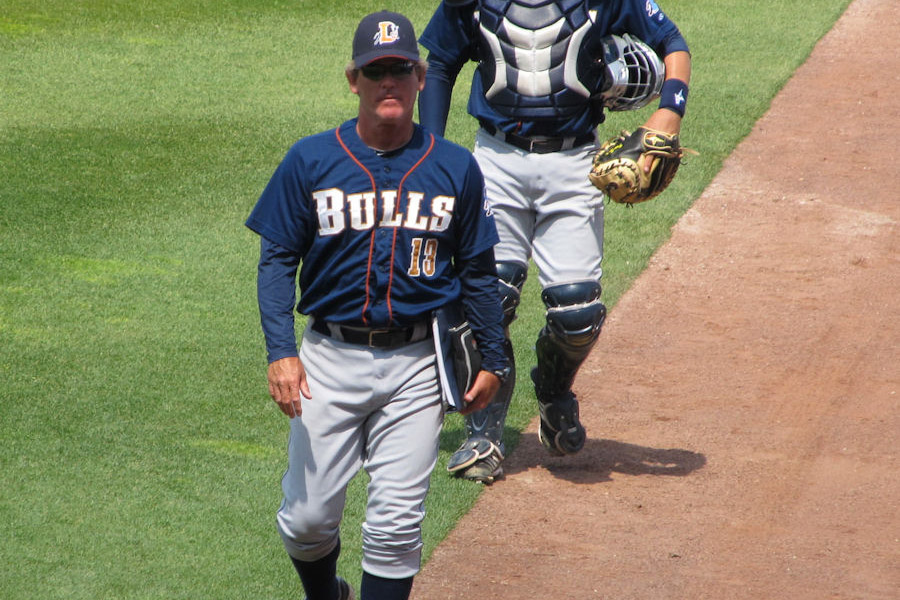 The 56-year-old Allen played for five big league teams from 1979 to 1989. He went a combined 58-70 with 75 saves in the big leagues. Following his career, he quickly became a pitching coach in independent leagues. He coached in the Blue Jays system starting in 1996. In 2000, he moved to the Yankees where he was a pitching coach through 2006, with the exception of 2005, when he was the big league bullpen coach with the Yankees. Since 2007, he has been a pitching coach with the Rays AAA team where he has worked with many of the young hurlers who proved ready for the Rays. Though he has never been a big league pitching coach, he has been a coach for over two decades. Many thought that the Twins would select a pitching coach with big league experience, though it certainly wasn't necessary. One thing many fans were looking for was an outside voice, someone from outside the organization. Allen has no association with the Twins, and really little interaction with Molitor. Gene Glynn was a scout for several seasons with the Rays, so maybe that's a connection? Molitor's coaching staff is nearly complete. Tom Brunansky was quickly named the hitting coach. Soon after, they announced that Gene Glynn (3B coach) and Rudy Hernandez (assistant hitting coach) were named. Last week, a report surfaced that Eddie Guardado would be named the bullpen coach, though at this time that has not been confirmed. With the reported addition of Allen as pitching coach, the open coaching spots appear to be bench coach and first base coach. What are your thoughts?
 -
Article: Twins Minor League Report: AFL Week 6
Seth Stohs replied to Steve Lein's topic in Twins Daily Front Page News
I agree. Definitely appreciate Steve doing these each week.
