



Seth Stohs
-
Posts
25,912 -
Joined
-
Last visited
-
Days Won
109
Content Type
Profiles
News
Minnesota Twins Videos
2026 Minnesota Twins Top Prospects Ranking
2022 Minnesota Twins Draft Picks
Minnesota Twins Free Agent & Trade Rumors, Notes, & Tidbits
Guides & Resources
2023 Minnesota Twins Draft Picks
The Minnesota Twins Players Project
2024 Minnesota Twins Draft Picks
2025 Minnesota Twins Draft Pick Tracker
2026 Minnesota Twins Draft Tracker: Picks & Bonuses
Forums
Blogs
Events
Store
Downloads
Gallery
Everything posted by Seth Stohs
-
Trending (4/7): Too Early To Trend
Seth Stohs replied to Jeremy Nygaard's topic in Twins Daily Front Page News
Who said we can't question Molitor or couldn't question him last year? -
Trending (4/7): Too Early To Trend
Seth Stohs replied to Jeremy Nygaard's topic in Twins Daily Front Page News
Which one is the better hitter, and by how much? -
Trending (4/7): Too Early To Trend
Seth Stohs replied to Jeremy Nygaard's topic in Twins Daily Front Page News
Did we hear that it was a called sacrifice? My assumption is that Molitor wouldn't call for a bunt there. I"m certain Dozier bunted for a hit on his own. If that's the case, I won't complain about that at all. -
To be the backup at 3B, SS and 2B.
-
One of the fascinating aspects of ranking farm systems of every organization across baseball is that, to some level, it's kind of subjective. There's a general understanding on the level of Cubs-good-Padres-bad, but what's the real difference between each team? How do you mark the difference in system quality between, for example, Minnesota and Cleveland? Part of the challenge in finding that differentiation is that there is no single consensus on how prospects themselves are evaluated. Jonathan Mayo and Keith Law and John Sickels and Chris Mitchell will all rate prospects differently, which impacts how the system as a whole is ranked. The best part is that all of the experts understand that prospect ranking isn't an exact science, which is why we see a vast majority of any team's top prospects weigh heavily towards the 45 to 50 range on the 20-80 scale regardless of who's doing the ranking. There's a real desire to separate those few gems at the top of the pile. Image courtesy of David Kohl, USA Today One of the fascinating aspects of ranking farm systems of every organization across baseball is that, to some level, it's kind of subjective. There's a general understanding on the level of Cubs-good-Padres-bad, but what's the real difference between each team? How do you mark the difference in system quality between, for example, Minnesota and Cleveland? Part of the challenge in finding that differentiation is that there is no single consensus on how prospects themselves are evaluated. Jonathan Mayo and Keith Law and John Sickels and Chris Mitchell will all rate prospects differently, which impacts how the system as a whole is ranked. The best part is that all of the experts understand that prospect ranking isn't an exact science, which is why we see a vast majority of any team's top prospects weigh heavily towards the 45 to 50 range on the 20-80 scale regardless of who's doing the ranking. There's a real desire to separate those few gems at the top of the pile. Have a look at the distribution of the ratings of every club's Top 30 prospects, according to current lists at MLB.com. For the uninitiated, keep in mind that 50 is considered average. Every step down is a step below average, and every step up is another mark above. If that chart's results look heavily skewed, it's because they are. Out of 900 prospects, 590 of them (66%) were rated as a 45. 184 (20%) were given a rating of 50. Only three out of every 20 prospects end up on either side of that range. Separating the good and elite (or otherwise) players is not only an exercise in minimizing risk in evaluation - can you imagine a world where there were 50 prospects rated as a 70, for example - but because the middle is so overwhelming it impacts those subtle separations between organizations as a whole. Moving on to how this can help us to determine the individual strengths of any organization's minor league system, it's pretty clear that we're running into a couple of issues: We're only looking at a club's top 30 prospects, those ratings are only sourced from one outlet, and there's no standardized way to, for example, award or penalize a club based on how their top 30 prospects were graded. Whatever we end up with here, there's no result that's going to resolutely identify exactly how well or poorly an organization's farm system is doing at any given time on an objective scale. What a study like this can do, however, is give us an idea of the differences are between a grouping of teams. Even though we're looking at the results of subjective data, it can be useful in helping us understand just how an organization that rates as a top five system differs from one that's middle of the pack. For anyone who's curious: no, the Twins' Top 30 does not include Byron Buxton. He's officially expired his rookie status, thereby eliminating his status as a prospect, so everybody slides up a spot and our friend Lewin Diaz joins the list at number 30. I've kept it simple. Each prospect is awarded a number of points equal to his overall rating. Corey Seager is worth 70. Exactly ten - yes, ten - Angels' prospects were awarded 40. Totals are divided by 30 to get an average, which is a nice reference to show how teams rank on a scale that no doubt moves by increments every few weeks. There are other ways to award value - 7 points for a 70, 5 points for a 60, -2 for a 40, whatever you like - but I wanted to stay away from arbitrary values. The strongest system here belongs to the Los Angeles Dodgers, whose 1,475 total points give them an average of 49.2. The weakest system is, of course, the Angels, whose 1,315 points give them an average of 43.8. What we find is that the difference between a top five team, like the Rockies, and a club in the middle, like the Yankees, is actually fairly significant. They differ by just 35 points overall, but that's asking the Bombers' system to slide seven of their top 30 prospects up a level. Maybe it's tempting to think it would be easy to slide seven of those 45-rated players up to a 50, but that would give the Yankees 15 prospects with a 50 grade. It's not realistic considering the distribution of players with that mark across the league. Instead, the Yankees would have to turn one 45-rated player into a 65 and another into a 60. Considering there are only 20 of 900 prospects (2.2%) right now who are rated 60 or higher, magically finding two of them to drop into a system is highly unlikely. Turning three 45s into 55s might sound more doable, but that would be asking the Yankees to double the number of prospects already at that level. When a front office is challenged to turn around a system, I think looking at information like this helps us to see how big of a task that can be. There are a couple of next steps available that I'll try to take up in coming weeks. I'd like to incorporate more information from other systems, and I'd also be curious to look at the age and level of prospects to give a larger cross-section. View full article
- 23 replies
-
- 1
-

-
- byron buxton
- lewin diaz
- (and 3 more)
-
Twins Extended Spring Training Roster
Seth Stohs replied to Seth Stohs's topic in Twins Minor League Talk
Can't help but wonder if he's a guy that could be used anywhere. Maybe he makes 2-3 starts for Cedar Rapids since Cederoth is on the DL and when Fernando Romero is ready, they can switch him out. And if there is a short-term need in FM or Chattanooga, he could go there too. Definitely, he's not the 'normal' EST player. -
2016 Chattanooga Lookouts Roster Revealed
Seth Stohs replied to Jeremy Nygaard's topic in Twins Daily Front Page News
Chatted briefly with Shannon Wilkerson yesterday. He is starting the season on the Disabled List with a quad strain. Likely out the first couple of weeks. -
2016 Rochester Red Wings Opening Day Roster Revealed
Seth Stohs replied to Seth Stohs's topic in Twins Daily Front Page News
I think that's generally still the case... The Twins are finally past that a little bit because they have youngsters at AAA, but they filled with some others. -
Last weekend, the Twins minor league affiliate's Opening Day rosters: Rochester Red Wings Chattanooga Lookouts Ft. Myers Miracle Cedar Rapids Kernels There were also a couple of rounds of releases. Below you will find the Extended Spring Training rosters: Starting Pitchers: Omar Bencomo, Eddie Del Rosario, Jovani Moran, Williams Ramirez, Fernando Romero, Lachlan Wells, Huascar Ynoa Relief Pitchers: Rich Condeelis, Taylor Clemensia, Max Cordy, Miguel DeJesus, Onas Fargan, Nate Gercken, Moises Gomez, Luis Hernandez, Hector Lujan, Jose Martinez, Anthony McIver, Miles Nordgren, Callan Pearce, Johan Quezada, Alex Robinson, Matz Schutte, Cody Stashak, Andrew Vasquez. DL: Carlos Aponte, Vadim Balan, Brusdar Graterol Catchers: Jhon Alvarez, Kerby Camacho, Kevin Garcia, Robert Molina, Brian Olson, Jose Ortiz, Rainis Silva First Base: Lewin Diaz, Kolton Kendrick, Amaurys Minier Middle Infielders: Jorge Andrade, Manuel Guzman, Nelson Molina, Ariel Montesino, Jorge Munoz, Alex Perez Third Base: Travis Blankenhorn, Trey Cabbage, Ruar Verkerk Outfielders: JC Arias, Jaylin Davis, Tyree Davis, Rowan Ebersohn, Roberto Gonzalez, Brad Hartong, Daniel Kihle, Lean Marrero, Luis Martinez, Roni Tapia, Aaron Whitefield, DL: Emmanuel Morel Notice that Wander Javier is not coming to the States for Extended Spring Training. In talking to a couple of people in the organization it is very possible, even likely, that he will spend the year in the Dominican Summer League, though it is also possible that he comes to the States in time for the GCL season.
-
I love Opening Day! I believe that Opening Day should be a Monday and that it should be a national holiday. However, for me, I get significantly more excited about Minor League Opening Day. Instead of just following one game and one box score, I get to follow five teams and their games and their box scores. Instead of following one 25-man roster, we can follow five, 24-or-25-man rosters. We know what Opening Day means to big leaguers. Does it mean anything different to minor leaguers? Image courtesy of Seth Stohs I love Opening Day! I believe that Opening Day should be a Monday and that it should be a national holiday. However, for me, I get significantly more excited about Minor League Opening Day. Instead of just following one game and one box score, I get to follow five teams and their games and their box scores. Instead of following one 25-man roster, we can follow five, 24-or-25-man rosters. We know what Opening Day means to big leaguers. Does it mean anything different to minor leaguers? Over the weekend, the Twins affiliates announced their preliminary Opening Day rosters. Moments after each was released, Twins Daily posted our preview for that team. They are here: Rochester Red Wings Chattanooga Lookouts Ft. Myers Miracle Cedar Rapids Kernels NEW-Extended Spring Training One thing is apparently from perusing the rosters. The Twins system is strong and deep but with so much of that young talent already at or near the big league level, it becomes more difficult for players to move up. Sure, the top prospects are going to be moved and pushed at the rate at which they are deemed ready for the next level. They are not going to be blocked. But, as Steve Buhr wrote last night, others are just going to have to go back and earn their promotions again. As is true in the big leagues, minor league Opening Day rosters are just that, the rosters for the teams for the first game. They are certainly subject to change. There will be injuries. There will be great performers who will get promoted. There will be players who don’t perform who could move down a level. That’s part of the excitement for me as a fan and as someone who has now followed this organization and its minor league system for over a dozen years. You just never know what will happen. A player who starts the season in AA could theoretically end the season in High-A, AA, AAA, the big leagues, in another organization or out of baseball. There will likely be a few examples of each at the various levels in 2016. Opening Day is about a fresh start, a new season and all of the possibilities that come with it. There are always several minor leaguers who go from relative unknown at this time a year ago to highly-regarded prospect today. Who will those guys be? It’s hard to know but we can all post our guesses. For now, here is the Twins minor league affiliate’s schedule for Opening Day with the starters listed: Rochester @ Scranton/Wilkes Barre - 6:05 p.m. - RHP Tyler Duffey Chattanooga @ Biloxi - 6:40 p.m. - LHP Jason Wheeler Bradenton @ Ft. Myers - 6:05 p.m. - LHP Stephen Gonsalves Quad Cities @ Cedar Rapids - 6:35 p.m. - RHP Randy LeBlancOn Wednesday, Miracle manager Jeff Smith announced his rotation. Following Gonsalves will be Kohl Stewart, Tyler Jay, Keaton Steele, Felix Jorge, and Randy Rosario. I spent nine days in Ft. Myers and spent a lot of that time watching the minor league action. While there were unfortunately several minor leaguers released, there were a lot of players who really stood out. I’ll save those thoughts for another article. Here at Twins Daily, we take a lot of pride in the minor league coverage that we provide. Each and every day throughout the minor league season, we will again post our Minor League Report. Jeremy Nygaard, Cody Christie, Eric Pleiss, Steve Lien and I will write those highlighting pitching performances, hitters with multi-hit games, home runs and game stories. Along with that, we’ll present monthly awards for top hitters, starting pitchers and relief pitchers. These players deserve to be recognized. The get paid almost literally nothing. When I wrote my first Minnesota Twins Prospect Handbook seven or eight years ago, I wrote the below, and I have included it in every book since because it is important to know. “Minor League baseball players are doing all the same work that the big leaguers do. They are just doing it with far less fanfare, smaller per diems, less luxurious travel and hotel arrangements, and noticeably lighter wallets due to pay thanks with fewer zeroes.”So what does Minor League Opening Day mean to you? If you played, what do you think it would be like for you? I asked several Twins minor leaguers what Opening Day means to them. Their responses are below. Edgar Corcino, OF, Ft. Myers Miracle: I'm really thanking God for another season and other fresh start!!! Opening day means a lot to me because a couple of years ago, I was completely out of baseball, and having this great opportunity it means a lot! I know I had a good summer last year, but that is the past!! Now I’m focused to have a good season even better than last year!!Travis Harrison, OF, Chattanooga Lookouts: Opening Day is always an exciting time. It's the start of a hunt for another championship. For me, I'm excited to finally see all the hard work this offseason start to pay off.Dalton Hicks, 1B, Chattanooga Lookouts: Opening Day is always fun! Jitters are always at an all-time high, plus everyone arrives a few hours earlier than normal! Best part is always putting on the new jersey and cleats!Sean Miller, Infielder, Cedar Rapids Kernels: Opening Day, to me, is the start of something you have been working your butt off for. Obviously you work for the whole season but Opening Day is one day like no other.Logan Darnell, LHP, Rochester Red Wings: Well, Opening Day is just one game. It doesn't count for anything more than any other game, but it is exciting in a lot of ways! You get to see how your team matches up with the other. It's the start of a long season with new goals, ups and downs, and surprises!Trey Vavra, 1B, Ft. Myers Miracle: Opening Day is one of the greatest atmospheres to play in. A ton of fans, everyone is into the game. It's awesome.Adam Brett Walker, OF/DH, Rochester Red Wings: Opening Day means it's another opportunity to go make more memories with my friends. I get excited to go out and win some ball games and play in front of some awesome fans. Really looking forward to a new experience in Rochester this year!David Hurlbut, LHP, Chattanooga Lookouts: Opening Day means a new start, fresh opportunities to work towards another successful season, and no more spring training. Haha! Returning to Biloxi on our Opening Day also brings back good memories of winning the championship last year, especially with the 19 guys who returned back to AA.Keaton Steele, RHP, Ft. Myers Miracle: Just a reminder to be thankful for what you have. To be able to wake up and go to the ballpark everyday is a privilege.Bryant Hayman, C, Cedar Rapids Kernels: Opening Day, to me, is obviously one of the best days of the year. This will be my first Opening Day in professional baseball, and I couldn't be more excited. I feel like it's a time when you can put the year before away (whether it was really good or really bad) and try to do something special. I'm extremely thankful to be here for Opening Day and can't wait to see what's in store for us.Trevor Hildenberger, RH RP, Ft. Myers Miracle: Opening Day just means the wait is over. The barren six-month winter is done, and it's time to prove whether last year was a mistake or the truth.LaMonte Wade, OF, Cedar Rapids Kernels: Opening Day, to me, means that it is time to put all of the hard work that was done over the offseason on display and Day 1 of a long season that will be filled with lots of ups and downs, nevertheless, Day 1 of getting to play the game that I love.Austin Diemer, OF, Ft. Myers Miracle: Nothing better than Opening Day jitters. The excitement of putting on your jersey and getting out on field with your boys for the first time after months of hard work is amazing.Zack Tillery, RHP, Cedar Rapids Kernels: Opening Day, to me, is about the fans. For us and for them, it marks the beginning of a new journey and a season full of good times with good people.Ryan Walker, Infielder, Ft. Myers Miracle: This'll actually be my first Opening Day since I've been hurt the past two years, but I'm excited nonetheless! It's always fun kicking off the season, getting some fans in the stands, and having a good time.Aaron Slegers, RHP, Chattanooga Lookouts: Opening Day, for me, as a kid meant the beginning of summer and the end of the school year was around the corner. As a professional baseball player, it brings the excitement of starting the journey of the season with a new team full of unique personalities and the possibility that anything and any goal is possible.Ryan Eades, RHP, Chattanooga Lookouts: Opening day is something that every player looks forward to after putting in their work all offseason and going through spring training. It marks the start of a new season and new teammates to share the experience with along the way.Niko Goodrum, Infielder, Chattanooga Lookouts: Opening Day, to me, means it's time to let your game speak for itself and chase that ring again! Going to "war" with your brothers/teammates!Todd Van Steensel, RHP, Ft. Myers Miracle: I signed as a 17-year-old and never experienced an Opening Day until I was 24-years-old. So to be able to enjoy that after so many years, it was something special. Putting on the uniform and running out in front of the home crowd for the first time makes you feel like a kid on their first day of school.Zach Granite, OF, Chattanooga Lookouts: Opening Day means I get to put the uniform on again and do what I love to do every single day. There is no better feeling than that!Brandon Peterson, RHP, Chattanooga Lookouts: This is what opening day means to me. The time when there's no more "I'll do it tomorrow." Time to showcase the work you put in the offseason. And, for some of us that feels like Christmas morning.Ryan O'Rourke, LHP, Rochester Red Wings Opening day is a special time for me. It is the beginning of all of the hard work that I and others have put in. The preparation is done with, now it is time to compete and win.Jason Adam, RHP, Chattanooga Lookouts Opening day is the most exciting time of the year for a player. We spend our whole offseason doing what we can to make ourselves the best player possible and once opening day comes around, we finally get to start enjoying the fruits of our labor as a team. There's nothing like it.And we get to watch all of it from afar. That said, if you’re in the Twin Cities, I have to point out that you can watch it from the seats at Perfect Game Field at Veteran’s Memorial Stadium in Cedar Rapids. Count on a drive that’ll take four to five hours, depending on where you’re located. The Kernels staff does a great job and makes the game fun. In addition, you get to watch young players on their way up. Someday, you may see them again on Fox Sports North. Click here for the Kernels schedule and here to order tickets. And be sure to stop by Twins Daily every day throughout the season to keep up with everything going on in the system. View full article
- 8 replies
-
- 2
-
-
- tyler duffey
- stephen gonsalves
- (and 2 more)
-
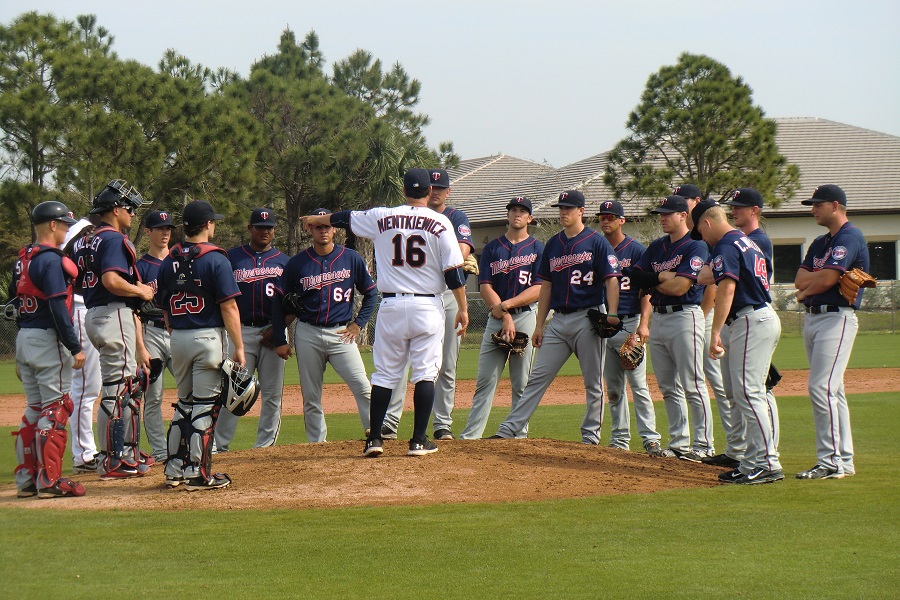 Over the weekend, the Twins affiliates announced their preliminary Opening Day rosters. Moments after each was released, Twins Daily posted our preview for that team. They are here: Rochester Red Wings Chattanooga Lookouts Ft. Myers Miracle Cedar Rapids Kernels NEW-Extended Spring Training One thing is apparently from perusing the rosters. The Twins system is strong and deep but with so much of that young talent already at or near the big league level, it becomes more difficult for players to move up. Sure, the top prospects are going to be moved and pushed at the rate at which they are deemed ready for the next level. They are not going to be blocked. But, as Steve Buhr wrote last night, others are just going to have to go back and earn their promotions again. As is true in the big leagues, minor league Opening Day rosters are just that, the rosters for the teams for the first game. They are certainly subject to change. There will be injuries. There will be great performers who will get promoted. There will be players who don’t perform who could move down a level. That’s part of the excitement for me as a fan and as someone who has now followed this organization and its minor league system for over a dozen years. You just never know what will happen. A player who starts the season in AA could theoretically end the season in High-A, AA, AAA, the big leagues, in another organization or out of baseball. There will likely be a few examples of each at the various levels in 2016. Opening Day is about a fresh start, a new season and all of the possibilities that come with it. There are always several minor leaguers who go from relative unknown at this time a year ago to highly-regarded prospect today. Who will those guys be? It’s hard to know but we can all post our guesses. For now, here is the Twins minor league affiliate’s schedule for Opening Day with the starters listed: Rochester @ Scranton/Wilkes Barre - 6:05 p.m. - RHP Tyler Duffey Chattanooga @ Biloxi - 6:40 p.m. - LHP Jason Wheeler Bradenton @ Ft. Myers - 6:05 p.m. - LHP Stephen Gonsalves Quad Cities @ Cedar Rapids - 6:35 p.m. - RHP Randy LeBlanc On Wednesday, Miracle manager Jeff Smith announced his rotation. Following Gonsalves will be Kohl Stewart, Tyler Jay, Keaton Steele, Felix Jorge, and Randy Rosario. I spent nine days in Ft. Myers and spent a lot of that time watching the minor league action. While there were unfortunately several minor leaguers released, there were a lot of players who really stood out. I’ll save those thoughts for another article. Here at Twins Daily, we take a lot of pride in the minor league coverage that we provide. Each and every day throughout the minor league season, we will again post our Minor League Report. Jeremy Nygaard, Cody Christie, Eric Pleiss, Steve Lien and I will write those highlighting pitching performances, hitters with multi-hit games, home runs and game stories. Along with that, we’ll present monthly awards for top hitters, starting pitchers and relief pitchers. These players deserve to be recognized. The get paid almost literally nothing. When I wrote my first Minnesota Twins Prospect Handbook seven or eight years ago, I wrote the below, and I have included it in every book since because it is important to know. “Minor League baseball players are doing all the same work that the big leaguers do. They are just doing it with far less fanfare, smaller per diems, less luxurious travel and hotel arrangements, and noticeably lighter wallets due to pay thanks with fewer zeroes.” So what does Minor League Opening Day mean to you? If you played, what do you think it would be like for you? I asked several Twins minor leaguers what Opening Day means to them. Their responses are below. Edgar Corcino, OF, Ft. Myers Miracle: I'm really thanking God for another season and other fresh start!!! Opening day means a lot to me because a couple of years ago, I was completely out of baseball, and having this great opportunity it means a lot! I know I had a good summer last year, but that is the past!! Now I’m focused to have a good season even better than last year!! Travis Harrison, OF, Chattanooga Lookouts: Opening Day is always an exciting time. It's the start of a hunt for another championship. For me, I'm excited to finally see all the hard work this offseason start to pay off. Dalton Hicks, 1B, Chattanooga Lookouts: Opening Day is always fun! Jitters are always at an all-time high, plus everyone arrives a few hours earlier than normal! Best part is always putting on the new jersey and cleats! Sean Miller, Infielder, Cedar Rapids Kernels: Opening Day, to me, is the start of something you have been working your butt off for. Obviously you work for the whole season but Opening Day is one day like no other. Logan Darnell, LHP, Rochester Red Wings: Well, Opening Day is just one game. It doesn't count for anything more than any other game, but it is exciting in a lot of ways! You get to see how your team matches up with the other. It's the start of a long season with new goals, ups and downs, and surprises! Trey Vavra, 1B, Ft. Myers Miracle: Opening Day is one of the greatest atmospheres to play in. A ton of fans, everyone is into the game. It's awesome. Adam Brett Walker, OF/DH, Rochester Red Wings: Opening Day means it's another opportunity to go make more memories with my friends. I get excited to go out and win some ball games and play in front of some awesome fans. Really looking forward to a new experience in Rochester this year! David Hurlbut, LHP, Chattanooga Lookouts: Opening Day means a new start, fresh opportunities to work towards another successful season, and no more spring training. Haha! Returning to Biloxi on our Opening Day also brings back good memories of winning the championship last year, especially with the 19 guys who returned back to AA. Keaton Steele, RHP, Ft. Myers Miracle: Just a reminder to be thankful for what you have. To be able to wake up and go to the ballpark everyday is a privilege. Bryant Hayman, C, Cedar Rapids Kernels: Opening Day, to me, is obviously one of the best days of the year. This will be my first Opening Day in professional baseball, and I couldn't be more excited. I feel like it's a time when you can put the year before away (whether it was really good or really bad) and try to do something special. I'm extremely thankful to be here for Opening Day and can't wait to see what's in store for us. Trevor Hildenberger, RH RP, Ft. Myers Miracle: Opening Day just means the wait is over. The barren six-month winter is done, and it's time to prove whether last year was a mistake or the truth. LaMonte Wade, OF, Cedar Rapids Kernels: Opening Day, to me, means that it is time to put all of the hard work that was done over the offseason on display and Day 1 of a long season that will be filled with lots of ups and downs, nevertheless, Day 1 of getting to play the game that I love. Austin Diemer, OF, Ft. Myers Miracle: Nothing better than Opening Day jitters. The excitement of putting on your jersey and getting out on field with your boys for the first time after months of hard work is amazing. Zack Tillery, RHP, Cedar Rapids Kernels: Opening Day, to me, is about the fans. For us and for them, it marks the beginning of a new journey and a season full of good times with good people. Ryan Walker, Infielder, Ft. Myers Miracle: This'll actually be my first Opening Day since I've been hurt the past two years, but I'm excited nonetheless! It's always fun kicking off the season, getting some fans in the stands, and having a good time. Aaron Slegers, RHP, Chattanooga Lookouts: Opening Day, for me, as a kid meant the beginning of summer and the end of the school year was around the corner. As a professional baseball player, it brings the excitement of starting the journey of the season with a new team full of unique personalities and the possibility that anything and any goal is possible. Ryan Eades, RHP, Chattanooga Lookouts: Opening day is something that every player looks forward to after putting in their work all offseason and going through spring training. It marks the start of a new season and new teammates to share the experience with along the way. Niko Goodrum, Infielder, Chattanooga Lookouts: Opening Day, to me, means it's time to let your game speak for itself and chase that ring again! Going to "war" with your brothers/teammates! Todd Van Steensel, RHP, Ft. Myers Miracle: I signed as a 17-year-old and never experienced an Opening Day until I was 24-years-old. So to be able to enjoy that after so many years, it was something special. Putting on the uniform and running out in front of the home crowd for the first time makes you feel like a kid on their first day of school. Zach Granite, OF, Chattanooga Lookouts: Opening Day means I get to put the uniform on again and do what I love to do every single day. There is no better feeling than that! Brandon Peterson, RHP, Chattanooga Lookouts: This is what opening day means to me. The time when there's no more "I'll do it tomorrow." Time to showcase the work you put in the offseason. And, for some of us that feels like Christmas morning. Ryan O'Rourke, LHP, Rochester Red Wings Opening day is a special time for me. It is the beginning of all of the hard work that I and others have put in. The preparation is done with, now it is time to compete and win. Jason Adam, RHP, Chattanooga Lookouts Opening day is the most exciting time of the year for a player. We spend our whole offseason doing what we can to make ourselves the best player possible and once opening day comes around, we finally get to start enjoying the fruits of our labor as a team. There's nothing like it. And we get to watch all of it from afar. That said, if you’re in the Twin Cities, I have to point out that you can watch it from the seats at Perfect Game Field at Veteran’s Memorial Stadium in Cedar Rapids. Count on a drive that’ll take four to five hours, depending on where you’re located. The Kernels staff does a great job and makes the game fun. In addition, you get to watch young players on their way up. Someday, you may see them again on Fox Sports North. Click here for the Kernels schedule and here to order tickets. And be sure to stop by Twins Daily every day throughout the season to keep up with everything going on in the system.
 -
2016 Ft. Myers Miracle Roster Revealed
Seth Stohs replied to Seth Stohs's topic in Twins Daily Front Page News
Manager Jeff Smith announced the Miracle rotation to start the season: Stephen Gonsalves Kohl Stewart Tyler Jay Keaton Steele Felix Jorge Randy Rosario -
They might be.
- 14 replies
-
- 2
-
-
- bryce harper
- mike trout
- (and 3 more)
-
Opening Day. It’s the most wonderful time of the year. Baseball games that matter. Statistics that will show up on the back of baseball cards. Green grass on the field. Anything can happen! Play Ball! Most teams have now played at least one game, so it’s time to get you official MLB predictions in. You have seen what oddsmakers are saying about the Twins and the AL Central, but let’s make some of our own picks here at Twins Daily. Be sure to make your own in the comment section below. " The best thing about Opening Day is that anything can happen. Experts can make their predictions based on a ton of things, including things like payroll. However the game is always played on the field, not on paper. Image courtesy of Jerome Miron, USA Today Opening Day. It’s the most wonderful time of the year. Baseball games that matter. Statistics that will show up on the back of baseball cards. Green grass on the field. Anything can happen! Play Ball! Most teams have now played at least one game, so it’s time to get you official MLB predictions in. You have seen what oddsmakers are saying about the Twins and the AL Central, but let’s make some of our own picks here at Twins Daily. Be sure to make your own in the comment section below. " The best thing about Opening Day is that anything can happen. Experts can make their predictions based on a ton of things, including things like payroll. However the game is always played on the field, not on paper. So, let’s start our prediction segment with my predictions for the AL Central: American League Central Kansas City Royals Minnesota Twins Cleveland Detroit Tigers Chicago White Sox The Royals are now the two-time defending AL champs and now the reigning World Series champs. They return with a very similar team. The Twins and Cleveland will compete with the Royals atop the division as well as for a Wild Card spot. The Tigers continue to do two things, spend crazy money and get older. The White Sox remain a mess and it’s likely Robin Ventura is the first manager let go in 2016, though Brad Ausmus may not be far behind. American League East Toronto Blue Jays Boston Red Sox New York Yankees Tampa Bay Rays Baltimore Orioles The Blue Jays may not have the best pitching, but their lineup will flat-out outscore teams in the regular season. The rest of the division appears weak. The Red Sox should be improved with the acquisition of David Price and a defense with Mookie Betts and Jackie Bradley Jr. will help. The Yankees didn’t spend in the offseason and they’re going with a few youngsters in their rotation. The Rays have Chris Archer which gives them a chance every fifth game. The Orioles do have some offense. I mean, Pedro Alvarez, and his 35 home run power, is hitting seventh. American League West Houston Astros Texas Rangers Los Angeles Angels of Anaheim Seattle Mariners Oakland A’s Houston surprised many last year as their youth started paying dividends. Carlos Correa is a star in the making. But it will be another shootout in the West. In Texas. The Rangers will again be solid and Cole Hamels will be there a full year. The Angels have Mike Trout. The Mariners have Robinson Cano. The A’s are going to have to battle to compete. National League Central Chicago Cubs Pittsburgh Pirates St. Louis Cardinals Cincinnati Reds Milwaukee Brewers Last year, the top three teams from this division each won at least 97 games and made the playoffs. I wouldn’t be surprised if that happens again. The Cubs youth is in place with some veteran additions. The Pirates outfield is spectacular and they have Liriano and Cole at the top fo their rotation. The Cardinals hope to have a full season of Adam Wainwright atop their rotation. The Reds and Brewers will compete for last, as they fully intend. National League East Washington Nationals New York Mets Miami Marlins Philadelphia Phillies Atlanta The Nationals were a disappointing team last year yet still finished over .500. With Bryce Harper and a strong pitching staff, they could take over in 2016. The Mets have the arms to compete with anyone, but we’ll see if they have enough bats. The bottom three teams are in rebuild mode, hoping for a high draft pick. National League West San Francisco Giants Los Angeles Dodgers Arizona Diamondbacks San Diego Padres Colorado Rockies The Giants-Dodgers series should again be huge in 2016. The Giants added Johnny Cueto and Jeff Samardzija, as well as Denard Span. The Dodgers have a new manager, Dave Roberts, and Kenta Maeda hopes for a clean transition from Japan. The Dodgers lost Zach Greinke to the Diamondbacks. He will team with arguably the best hitter in the National League, Paul Goldschmidt, and help fight for a playoff spot under former Twins pinch hitter Chip Hale. The Padres and Rockies will fight for last. THE PLAYOFFS American League Wild Card - Minnesota over Texas National League Wild Card - Pittsburgh over the Mets ALDS - Toronto over Minnesota, and Houston over Kansas City NLDS - Pittsburgh over Chicago, and San Francisco over the Mets ALCS - Toronto over Houston, and San Fransciso over Pittsburgh. World Series - San Francisco over Toronto The Giants continue their every-other-year World Series championship run. Next, let’s get to the individual awards for 2016. Others have made their predictions, but here are mine. American League MVP Carlos Correa, Houston Mike Trout, Los Angeles Josh Donaldson, Toronto Miguel Sano, Minnesota Mookie Betts, Boston American League Cy Young Carlos Carrasco, Cleveland Marcus Stroman, Toronto Chris Archer, Tampa Bay American League Rookie of the Year Byron Buxton, Minnesota Blake Snell, Tampa Bay Byung Ho Park, Minnesota National League MVP Bryce Harper, Washington Paul Goldschmidt, Arizona Anthony Rizzo, Chicago Starling Marte, Pittsburgh Kris Bryant, Chicago National League Cy Young Clayton Kershaw, Los Angeles Gerrit Cole, Pittsburgh Max Scherzer, Washington National League Rookie of the Year Trevor Story, Colorado Kenta Maeda, Arizona Corey Seager, Los Angeles Your Turn… how will the division playoffs and the individual awards go down in 2016. Make your picks now. View full article
-
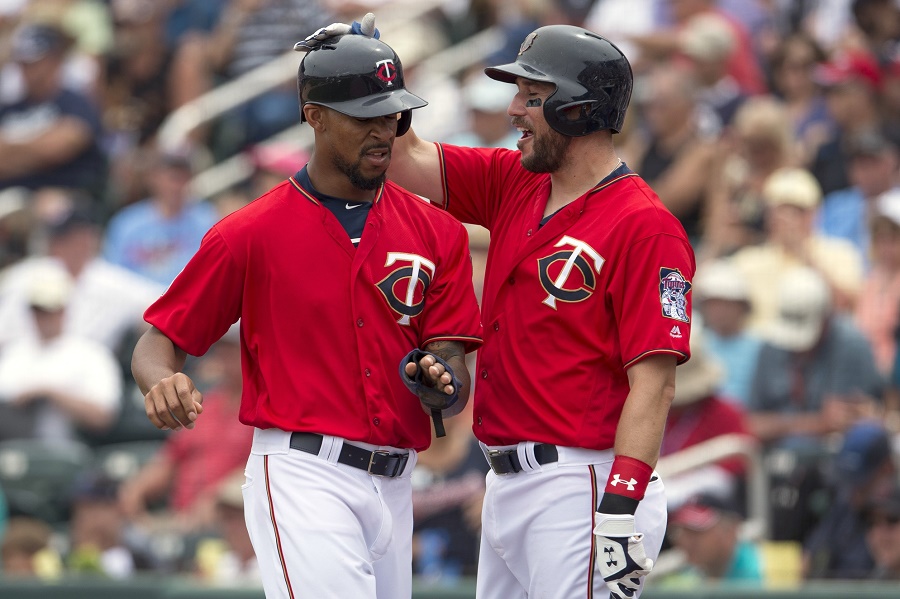 So, let’s start our prediction segment with my predictions for the AL Central: American League Central Kansas City Royals Minnesota Twins Cleveland Detroit Tigers Chicago White Sox The Royals are now the two-time defending AL champs and now the reigning World Series champs. They return with a very similar team. The Twins and Cleveland will compete with the Royals atop the division as well as for a Wild Card spot. The Tigers continue to do two things, spend crazy money and get older. The White Sox remain a mess and it’s likely Robin Ventura is the first manager let go in 2016, though Brad Ausmus may not be far behind. American League East Toronto Blue Jays Boston Red Sox New York Yankees Tampa Bay Rays Baltimore Orioles The Blue Jays may not have the best pitching, but their lineup will flat-out outscore teams in the regular season. The rest of the division appears weak. The Red Sox should be improved with the acquisition of David Price and a defense with Mookie Betts and Jackie Bradley Jr. will help. The Yankees didn’t spend in the offseason and they’re going with a few youngsters in their rotation. The Rays have Chris Archer which gives them a chance every fifth game. The Orioles do have some offense. I mean, Pedro Alvarez, and his 35 home run power, is hitting seventh. American League West Houston Astros Texas Rangers Los Angeles Angels of Anaheim Seattle Mariners Oakland A’s Houston surprised many last year as their youth started paying dividends. Carlos Correa is a star in the making. But it will be another shootout in the West. In Texas. The Rangers will again be solid and Cole Hamels will be there a full year. The Angels have Mike Trout. The Mariners have Robinson Cano. The A’s are going to have to battle to compete. National League Central Chicago Cubs Pittsburgh Pirates St. Louis Cardinals Cincinnati Reds Milwaukee Brewers Last year, the top three teams from this division each won at least 97 games and made the playoffs. I wouldn’t be surprised if that happens again. The Cubs youth is in place with some veteran additions. The Pirates outfield is spectacular and they have Liriano and Cole at the top fo their rotation. The Cardinals hope to have a full season of Adam Wainwright atop their rotation. The Reds and Brewers will compete for last, as they fully intend. National League East Washington Nationals New York Mets Miami Marlins Philadelphia Phillies Atlanta The Nationals were a disappointing team last year yet still finished over .500. With Bryce Harper and a strong pitching staff, they could take over in 2016. The Mets have the arms to compete with anyone, but we’ll see if they have enough bats. The bottom three teams are in rebuild mode, hoping for a high draft pick. National League West San Francisco Giants Los Angeles Dodgers Arizona Diamondbacks San Diego Padres Colorado Rockies The Giants-Dodgers series should again be huge in 2016. The Giants added Johnny Cueto and Jeff Samardzija, as well as Denard Span. The Dodgers have a new manager, Dave Roberts, and Kenta Maeda hopes for a clean transition from Japan. The Dodgers lost Zach Greinke to the Diamondbacks. He will team with arguably the best hitter in the National League, Paul Goldschmidt, and help fight for a playoff spot under former Twins pinch hitter Chip Hale. The Padres and Rockies will fight for last. THE PLAYOFFS American League Wild Card - Minnesota over Texas National League Wild Card - Pittsburgh over the Mets ALDS - Toronto over Minnesota, and Houston over Kansas City NLDS - Pittsburgh over Chicago, and San Francisco over the Mets ALCS - Toronto over Houston, and San Fransciso over Pittsburgh. World Series - San Francisco over Toronto The Giants continue their every-other-year World Series championship run. Next, let’s get to the individual awards for 2016. Others have made their predictions, but here are mine. American League MVP Carlos Correa, Houston Mike Trout, Los Angeles Josh Donaldson, Toronto Miguel Sano, Minnesota Mookie Betts, Boston American League Cy Young Carlos Carrasco, Cleveland Marcus Stroman, Toronto Chris Archer, Tampa Bay American League Rookie of the Year Byron Buxton, Minnesota Blake Snell, Tampa Bay Byung Ho Park, Minnesota National League MVP Bryce Harper, Washington Paul Goldschmidt, Arizona Anthony Rizzo, Chicago Starling Marte, Pittsburgh Kris Bryant, Chicago National League Cy Young Clayton Kershaw, Los Angeles Gerrit Cole, Pittsburgh Max Scherzer, Washington National League Rookie of the Year Trevor Story, Colorado Kenta Maeda, Arizona Corey Seager, Los Angeles Your Turn… how will the division playoffs and the individual awards go down in 2016. Make your picks now.
 -
Well, sure, I would want Mauer up there instead, but he wasn't an option...A hit would have been wonderful but at a minimum you HAD to get at least one run in there, and Suzuki didn't strike out. We don't know, but the odds of Arcia, Murphy, Nunez and Santana striking out there were much higher. Then you have nothing and you're still down a run.
-
I would say that if the Twins thought that Walker could put up the offensive numbers that he has put up in the minor leagues, they would be very high on him.I like Walker as a player but more as a person, but it's fair to say that he just isn't as good of a overall hitter as Sano. Different kinds of hitters. Sano hasn't struck out as much as WAlker, different swings. Just different. Also, without putting words in their mouth, they have much, much, much more confidence in Miguel Sano's ability to play RF in MLB than Walker.
-
I definitely want Sano hitting third with Dozier and Mauer in front of him. Dozier (obviously more 2014) and Mauer are your top two on-base guys. I want guys on in front of Sano and those two do that. I also personally like him hitting in the 1st inning.
- 50 replies
-
- 3
-
-
- miguel sano
- brian dozier
- (and 3 more)
-
maybe, but Ben Zobrist and Jason Heyward getting at bats, presumably from some strike out guys could drop this number a bit.
-
And, that certainly is encouraging, bu le's see how he does with the full season affiliates before feeling any real strong feelings on it. It was impressive last year though!
- 22 replies
-
- 1
-
-
- jermaine palacios
- lamonte wade
- (and 1 more)
-
Agreed... he gave them exactly what they needed in that situation and was the right guy for the job there. Doing what needs to be done with a runner on 3rd and less than two outs is sadly lost at this point.
-
Minor League Breakout Pitcher Candidates
Seth Stohs replied to Cody Christie's topic in Twins Daily Front Page News
Yes. Per Jeff Johnson in Cedar Rapids, Jake Mauer said that Romero won't be likely returning to Cedar Rapids until May. -
Orioles 3, Twins 2: The Good, The Bad, The Rest
Seth Stohs replied to John Bonnes's topic in Twins Daily Front Page News
Good point on May... if that Davis ball gets out, his outing looks less positive, but he certainly looked the part. As did Pressly. I stand by my note from a week or two ago that Pressly will be their top relief piticher in 2016.- 14 replies
-
- 1
-
-
- eduardo escobar
- trevor may
- (and 3 more)
-
Orioles 3, Twins 2: The Good, The Bad, The Rest
Seth Stohs replied to John Bonnes's topic in Twins Daily Front Page News
I don't think anyone, anywhere in the article said that a loss is good for a team. I guess I should have separated that line from the "More Good" section with a line or something... All I was saying was that it was a close game despite some really strange conditions hence there is nothing really worrisome about the loss.- 14 replies
-
- 2
-
-
- eduardo escobar
- trevor may
- (and 3 more)
-
2016 Rochester Red Wings Opening Day Roster Revealed
Seth Stohs replied to Seth Stohs's topic in Twins Daily Front Page News
Throwing strikes, mechanics were a mess last year, release point and everything. But other than that...- 23 replies
-
- 1
-
-
- jorge polanco
- max kepler
- (and 3 more)
