



Seth Stohs
-
Posts
25,870 -
Joined
-
Last visited
-
Days Won
109
Content Type
Profiles
News
Minnesota Twins Videos
2026 Minnesota Twins Top Prospects Ranking
2022 Minnesota Twins Draft Picks
Minnesota Twins Free Agent & Trade Rumors, Notes, & Tidbits
Guides & Resources
2023 Minnesota Twins Draft Picks
The Minnesota Twins Players Project
2024 Minnesota Twins Draft Picks
2025 Minnesota Twins Draft Pick Tracker
2026 Minnesota Twins Draft Tracker: Picks & Bonuses
Forums
Blogs
Events
Store
Downloads
Gallery
Everything posted by Seth Stohs
-
Article: Get to Know: OF Max Murphy
Seth Stohs replied to Seth Stohs's topic in Twins Daily Front Page News
Really looking foward to seeing him play in spring training this year. Should start the season back in Cedar Rapids, but possible promotion to Ft. Myers mid-year. -
Article: Twins Bite-Sized History: A Rocky Start
Seth Stohs replied to John Bonnes's topic in Twins Daily Front Page News
Great baseball name... there aren't great names/nicknames in baseball anymore... It's fun reading these comments from those who remember this era of Twins baseball. Keep 'em coming! -
But, since this is a Twins site.... AJ Pierzynski for Boof Bonser, Francisco Liriano and Joe Nathan...
-
Article: Catching Up With Nick Gordon
Seth Stohs replied to Seth Stohs's topic in Twins Daily Front Page News
Jake and Tommy are tremendous and will really help Gordon. there are plenty other prospects in Cedar Rapids this year as well. I think Gordon spends the whole year there, but I said the same thing about Buxton. -
Article: Center Of Attention
Seth Stohs replied to Seth Stohs's topic in Twins Daily Front Page News
I've brought up the fact that Kepler's AFL OPS was better than Rosario's several times. I think Rosario is closer to big league ready than Kepler. Both have plenty to prove yet before they really are ready. And yes, we want Rosario to be better than he was last year. He's not going to walk, so he'll have to hit for average. I think he's natural-enough of a hitter to be able to do that. I'll give him some benefit of the doubt for the missed time and some of the stuff that he was doing to himself. 2015 can be a do-over, at least for me, and I think he can move up and succeed. Kepler's problems have been injury-related. He also was a lot more raw when he signed, so patience was more important with him. I definitely believe in his bat. He can (and has) played centerfield, but I don't think he'd cover nearly the ground that Rosario could. -
Article: Center Of Attention
Seth Stohs replied to Seth Stohs's topic in Twins Daily Front Page News
I believe more and more that Plan A is the preferred way by the front office, and I think Hicks will be given every opportunity to earn the gig. That said, the past struggles will mean that if they see something that isn't right, they won't be afraid to or hesitate to go with Plan B or even C. Rosario keeps getting mentioned. As I wrote, I think that things would totally have to break just "right" for him to get a shot. -
At the beginning of this month, I projected the Twins Opening Day roster. When spring training begins, I’ll update that list. There are few questions marks in the roster. The fifth starter job will be up for grabs as well as a couple of bullpen spots. However, the centerfield job will certainly be one to watch.We know that Torii Hunter will be starting in right field. Oswaldo Arcia will make the move over to left field, but centerfield remains a question. The Twins did not address the position in the offseason, at least not in a big, obvious way. This leads me to what I believe to be Plan A. Plan A: Third Time’s The Charm I am of the belief that the Twins brass wants Aaron Hicks to have a strong spring training and take the reins on the starting job. That’s what he did in 2013. In 2014, he beat out Alex Presley for the starting centerfield job. In fact, the Twins DFA'd Presley near the end of spring training, meaning that there really wasn’t a backup plan for 2014. In fact, when Hicks was sent back to the minor leagues, the Twins tried Eduardo Escobar in centerfield for a game before the job was given to Danny Santana, who ran with it. Hicks will be just 25 years old throughout the 2014 season. That isn’t necessarily young, but I wonder if some think he might be older after being given the opportunity the last two seasons. He has never been a great hitter in the minor leagues, but in a good year, he can fill a stat sheet. He has all the tools to be good. Even in a poor 2014 season, he posted a .341 on-base percentage. It’s possible, so the team does have to have a Plan B, too. Plan B: Fourth Outfielder Platoon Jordan Schafer is going to be on the roster. If Aaron Hicks is the starter, Schafer is the fourth outfielder. If Aaron Hicks is sent to the minor leagues, Schafer gets a lot more playing time. The 28 year old was DFA'd last year after hitting just .163 in 80 at bats over 63 games for Atlanta. The Twins swooped in and claimed him. He was given regular playing time and showed what he could do. He hit .285/.345/.362 (.707) with seven extra base hits. The speedster combined to steal 30 bases over the course of the season. Schafer would be the primary starter. As a left-handed hitter, there would likely be a right-hand hitting option to play centerfield against southpaws. This offseason, the Twins signed 30-year-old outfielder Shane Robinson to a minor league contract. In parts of five seasons with the St. Louis Cardinals, he hit .231/.303/.308 in 452 plate appearances. The biggest tool that Schafer and Robinson have is their speed. Both play very good defense which will be important because of the perceived lack of range in the corners. There may not be much offense, but these two could play very solid defense in the outfield. Plan C: The Long-Shot 2014 was a rough season for Eddie Rosario. It began late due to a 50-game suspension for a second positive test for a drug of abuse. After eight games with the Miracle, he was quickly moved up to New Britain. He hit just .243/.286/.387 (.674) with 20 doubles, three homers and eight RBI with the Rock Cats. However, he was sent back to the Arizona Fall League and was one of the league’s best hitters. He hit .330 with four doubles and two triples. He had four hits including a home run in the AFL championship game. He played left field most of the season, but he is fully capable of playing center field. If Hicks struggles in spring training, and Rosario tears it up and looks and acts ready, this could happen. As mentioned in this section's header, it would be a long shot, but it is worth watching. Plan D: The Fall Back Plan If the Twins coaches, manager and front office feel that what is best for Aaron Hicks (and Eddie Rosario) is to go back to the minor leagues, and the Twins aren’t comfortable with giving regular at bats to Jordan Schafer, there is one other plan. If the team wants to start the season with their best lineup (and they don’t feel that Hicks gives them that right away), we could see Danny Santana return to centerfield with Eduardo Escobar remaining the primary shortstop. Although he had played very little outfield in the minor leagues, Danny Santana came up with the Twins and ended up playing doing an adequate job in the outfield and hit far better than his minor league track record indicated that he should have. At the same time, Eduardo Escobar put together a very solid season. In 133 total games, he hit .275/.315/.406 (.721) with 37 doubles, a triple and a home run. He played very good defense as well, something that isn’t certain with Santana. Escobar has been basically pigeon-holed into the idea that he is “just” a utility infielder. Obviously that role is very important to a team, and yet we forget that he just turned 26 years old. He could possibly be a legit starting shortstop in the big leagues. Center field will be a center of attention throughout spring training. It is an important position defensively, and any offense will be a bonus from the position. Byron Buxton needs more time to shake off the rust from last season and perform in the upper levels of the minor leagues. He could be up by July, or it could be in 2016. So the questions for you are: 1.) What do you think should happen at the position? 2.) What do you think will happen at the position? Click here to view the article
-
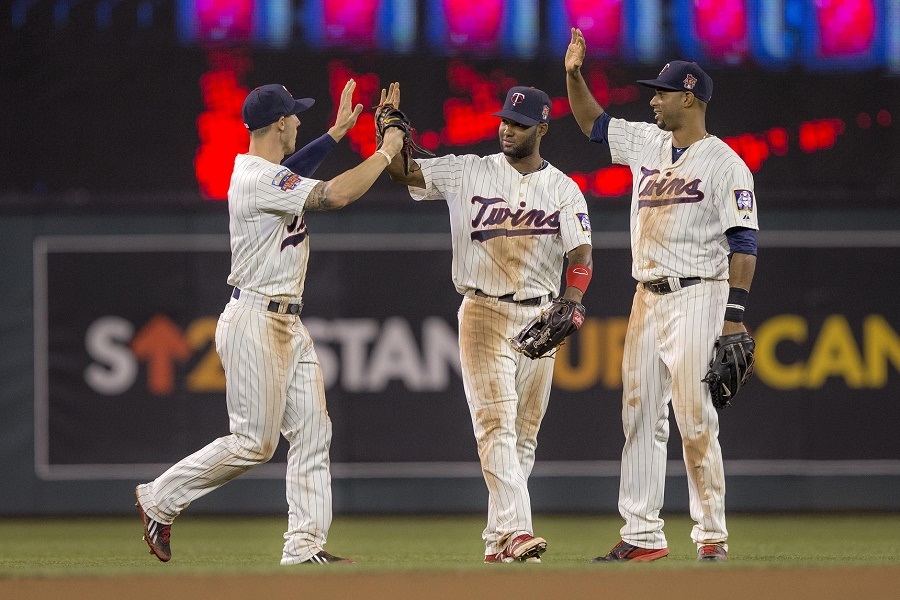 We know that Torii Hunter will be starting in right field. Oswaldo Arcia will make the move over to left field, but centerfield remains a question. The Twins did not address the position in the offseason, at least not in a big, obvious way. This leads me to what I believe to be Plan A. Plan A: Third Time’s The Charm I am of the belief that the Twins brass wants Aaron Hicks to have a strong spring training and take the reins on the starting job. That’s what he did in 2013. In 2014, he beat out Alex Presley for the starting centerfield job. In fact, the Twins DFA'd Presley near the end of spring training, meaning that there really wasn’t a backup plan for 2014. In fact, when Hicks was sent back to the minor leagues, the Twins tried Eduardo Escobar in centerfield for a game before the job was given to Danny Santana, who ran with it. Hicks will be just 25 years old throughout the 2014 season. That isn’t necessarily young, but I wonder if some think he might be older after being given the opportunity the last two seasons. He has never been a great hitter in the minor leagues, but in a good year, he can fill a stat sheet. He has all the tools to be good. Even in a poor 2014 season, he posted a .341 on-base percentage. It’s possible, so the team does have to have a Plan B, too. Plan B: Fourth Outfielder Platoon Jordan Schafer is going to be on the roster. If Aaron Hicks is the starter, Schafer is the fourth outfielder. If Aaron Hicks is sent to the minor leagues, Schafer gets a lot more playing time. The 28 year old was DFA'd last year after hitting just .163 in 80 at bats over 63 games for Atlanta. The Twins swooped in and claimed him. He was given regular playing time and showed what he could do. He hit .285/.345/.362 (.707) with seven extra base hits. The speedster combined to steal 30 bases over the course of the season. Schafer would be the primary starter. As a left-handed hitter, there would likely be a right-hand hitting option to play centerfield against southpaws. This offseason, the Twins signed 30-year-old outfielder Shane Robinson to a minor league contract. In parts of five seasons with the St. Louis Cardinals, he hit .231/.303/.308 in 452 plate appearances. The biggest tool that Schafer and Robinson have is their speed. Both play very good defense which will be important because of the perceived lack of range in the corners. There may not be much offense, but these two could play very solid defense in the outfield. Plan C: The Long-Shot 2014 was a rough season for Eddie Rosario. It began late due to a 50-game suspension for a second positive test for a drug of abuse. After eight games with the Miracle, he was quickly moved up to New Britain. He hit just .243/.286/.387 (.674) with 20 doubles, three homers and eight RBI with the Rock Cats. However, he was sent back to the Arizona Fall League and was one of the league’s best hitters. He hit .330 with four doubles and two triples. He had four hits including a home run in the AFL championship game. He played left field most of the season, but he is fully capable of playing center field. If Hicks struggles in spring training, and Rosario tears it up and looks and acts ready, this could happen. As mentioned in this section's header, it would be a long shot, but it is worth watching. Plan D: The Fall Back Plan If the Twins coaches, manager and front office feel that what is best for Aaron Hicks (and Eddie Rosario) is to go back to the minor leagues, and the Twins aren’t comfortable with giving regular at bats to Jordan Schafer, there is one other plan. If the team wants to start the season with their best lineup (and they don’t feel that Hicks gives them that right away), we could see Danny Santana return to centerfield with Eduardo Escobar remaining the primary shortstop. Although he had played very little outfield in the minor leagues, Danny Santana came up with the Twins and ended up playing doing an adequate job in the outfield and hit far better than his minor league track record indicated that he should have. At the same time, Eduardo Escobar put together a very solid season. In 133 total games, he hit .275/.315/.406 (.721) with 37 doubles, a triple and a home run. He played very good defense as well, something that isn’t certain with Santana. Escobar has been basically pigeon-holed into the idea that he is “just” a utility infielder. Obviously that role is very important to a team, and yet we forget that he just turned 26 years old. He could possibly be a legit starting shortstop in the big leagues. Center field will be a center of attention throughout spring training. It is an important position defensively, and any offense will be a bonus from the position. Byron Buxton needs more time to shake off the rust from last season and perform in the upper levels of the minor leagues. He could be up by July, or it could be in 2016. So the questions for you are: 1.) What do you think should happen at the position? 2.) What do you think will happen at the position?
 -
Article: First Round Busts?
Seth Stohs replied to Parker Hageman's topic in Twins Daily Front Page News
I'm pretty sure that isn't the case. Not in the first several rounds. Of course "Best Player Available" means different things to different organizations when you're talking about a bunch of high school and college players. Scout A - who saw Alex Wimmers throughout high school and college in Ohio said that he may top out at 91, but he's polished, has good control, has great work ethic and has a changeup that is nearly big league ready. Scout B - who saw him just once in person and once on TV saw two average performances. Evaluator C - sees that he only hits 91 and says no thank you. Evaluator D - sees the stats and thinks he's worth the risk. And that can all be inside of one organization. It's not a science, that's for sure. -
Article: First Round Busts?
Seth Stohs replied to Parker Hageman's topic in Twins Daily Front Page News
Twins Fans would have been IRATE at the Twins Scouting staff for drafting yet another toolsy outfielder... ha! -
Article: First Round Busts?
Seth Stohs replied to Parker Hageman's topic in Twins Daily Front Page News
Part of that "luck" does involve injury too. Who knows what Kyle Gibson's WAR may be if he hadn't needed Tommy John surgery in late 2011 and missed the 2012 season. He would have been up by about July of 2011 if he was healthy. Instead, he wasn't up until later in the 2013 season. Matt Bashore was throwing left-handed and 97 at Indiana before the draft. That's a guy you'd want, right? He just couldn't get healthy. That doesn't alter the results. The results are what they are... but the other half of the analysis would have to be some reasoning. And again, blog articles on that topic would be very interesting for any of you interested in researching and publishing your thoughts/results. -
Article: First Round Busts?
Seth Stohs replied to Parker Hageman's topic in Twins Daily Front Page News
I think this is a great analysis. As has been mentioned above, this is just looking at first round picks, and it doesn't differentiate between a #4 pick, a #14 pick or a #30 pick (like Levi Michael was). But for this analysis, it doesn't have to. A guy like Hudson Boyd being selected at #55, at least in my mind, isn't the same as a Top 5 pick in terms of whether they would be a bust or not. But if we want to say that Levi Michael can't be considered a bust because he was drafted at 30, we also need to give the team credit for JO Berrios at 32. The draft is a strange thing. Scouts can watch players over and over again, and get to know the player and their families and be as comprehensive as they can possibly be. They can look at whatever stats factor in as well. And, there is still no way to know how it's going to turn out. It's impossible. It's easy to say that they need to be better than other teams... the reality is that they need to be luckier than the other teams. Like Parker said, if anyone wants to dig deeper into this and put together a blog entry, that would be awesome!! -
Article: Catching Up With Nick Gordon
Seth Stohs replied to Seth Stohs's topic in Twins Daily Front Page News
It's a challenge for anyone, but especially for someone that young. I think he'll do just fine. I'm excited for the minor league seasons to start so we can see how all these guys do. Every level up presents a different challenge. Who will step up this year? Those types of things.- 8 replies
-
- 1
-

-
- nick gordon
- tom gordon
- (and 3 more)
-
Article: Catching Up With Nick Gordon
Seth Stohs replied to Seth Stohs's topic in Twins Daily Front Page News
As I said above, Buxton was a rarity. A player that young moving up from the Midwest league to the Florida State League doesn't happen often. It's possible, sure, but I wouldn't be at all disappointed if he didn't. If he puts up the numbers, then sure, they'll move him up.- 8 replies
-
- 1
-
-
- nick gordon
- tom gordon
- (and 3 more)
-
Article: Catching Up With Nick Gordon
Seth Stohs replied to Seth Stohs's topic in Twins Daily Front Page News
Wouldn't that be great! That's so rare, but I wouldn't put it past him! -
Notes from Terry Ryan - CF, Meyer, etc.
Seth Stohs commented on tobi0040's blog entry in tobi0040's Blog
Eddie Rosario could be a very good defensive centerfielder, and he could play there until Buxton is ready and do well. I'd be shocked if Aaron Hicks isn't the opening day centerfielder, but I think Rosario will get some opportunity. I think if Hicks is really bad in spring, then they would most likely go with Schafer and Robinson. -
19-year-old Nick Gordon, the Twins first-round draft pick last June out of high school in Orlando, Florida, made the trek north to Minneapolis last weekend for Twins Fest. The talented, young shortstop debuted at Elizabethton in 2014 and played well. Coupling immense talent with his poise and maturity make him one to watch in 2015!Of course, it takes more than maturity to be drafted as high as Gordon was (5th overall) as a high school kid. It takes a ton of talent. Gordon is currently a four-tool talent though many believe that over time he will also add the ability to hit for power and become a five-tool player. Twins Minor League Director Brad Steil pointed out in the Minnesota Twins Prospect Handbook 2015 why the Twins brass decided to have him skip the Gulf Coast League completely and spend his entire season at Elizabethton. “With the maturity and skill level we saw from him in high school, we thought he’d be able to compete at that level and handle any adversity. He was probably more prepared for pro ball than most high school players, having been around it most of his life because of his dad and brother.” The Twins have not had a high school player jump straight to Elizabethton after the draft since 2004 when Trevor Plouffe did that. Before him, Joe Mauer hit .400 in Elizabethton after signing with the Twins after being the first overall pick in 2001. Asked this weekend how having a father (Tom) and a brother (Dee) with big league experience has helped him out, Nick responded by saying he’s learned a lot from each of them. “It’s always great. You know, my dad played for 21 seasons. He knows the game. He’s been around it. My brother as well. Going to them, they know all the ropes. They know everything I’m going through because they’ve been through it all already. They’re always there for me.” Gordon held his own against many players significantly older than he is. Many players in the Appalachian League have three or four years of college under their belt, or they have been in pro ball for one to three years already. In 57 games, he hit .294/.333/.364 (.699) with six doubles, four triples and a home run. He stole 11 bases. In 49 games at shortstop, he had just eight errors and posted a .964 fielding percentage. These numbers don’t jump out, but they are impressive when put in the context of his age and experience relative to the league. Unfortunately, in the season’s final game, he was jammed by a pitch and broke a finger. Asked how his finger is now, Gordon said, “Finger was OK after a couple weeks. I got back after it. It kind of bothered me a little bit, but now it’s just baseball.” So what was the biggest adjustment for him to professional baseball? One might think that adjusting to wood bats, especially coming out of high school could be difficult, but Gordon said that wasn’t the biggest adjustment for him. “In the summer, all we used was wood bats in Florida. We played baseball all year around, so that’s the great thing about playing in Florida, we were constantly using wood bats.” He continued, “It’s just mainly playing every day. Coming from high school, you played every other day. That was the biggest adjustment for me. Once I got it, after about a month or two, it felt good. It felt like I was in the swing of things.” He now has his first pro experience under his belt and says that his offseason has been very good. “I’ve just been working out, trying to put on some weight, and stay fast. Stay to my game. I’m loving the process.” His goal for 2015 is pretty simple and yet his offseason work is an attempt to help him achieve his goal, to “stay healthy. That (added) weight is important. You have to be physically ready. Playing close to 100 games a year, you’ve got to be ready to go. I’m ready to get out there and I’ve been working on conditioning.” In an interview with 1500 ESPN over the weekend, Gordon said that one of his favorite players (non-relative category) growing up was Derek Jeter. It wasn’t just for his great talent, but he admired his leadership. Gordon hopes that he can be a similar type of player. “I know I can go out there, and I know I can play. It’s just about competing and making myself and my teammates better.” The Twins selected Gordon in the first round. They did not draft another high school player until the 15th round when they drafted an outfielder named Roberto Gonzalez, another Orlando native. Gordon went to Olympia high school in Orlando while Gonzalez went to University high school. “Yeah, I played against him in high school. We always played against each other. Mostly in the summer though.” Gordon was asked to describe Gonzalez and said, “He’s a really good athlete.” When I asked if Gonzalez could be a five-tool talent, without hesitation, Gordon said, “Oh yeah! Oh yeah!” Twins Fest was not Gordon’s first trip to Target Field. After being drafted last summer, he came to Target Field to sign his contract. His thoughts on the stadium? “It’s beautiful. Even with the snow on the field.” He certainly seemed to enjoy his Twins Fest experience. “It’s amazing. It’s nice meeting the people. It’s nice coming out here where people are so excited about baseball. It’s great to get out here and meet the fans and have fun with the kids and interact.” Asked if there were any players he was excited to meet last weekend, Gordon said, “I look up to pretty much all these guys. I talk to (Byron) Buxton a lot, and he’s a really good guy. I kind of look to him a lot. And Torii Hunter, I watched him when I was growing up.” Next up for Gordon, he’ll head to Ft. Myers in early March to go to his first spring training. “I’m ready for it. I can’t wait to get there.” After seeing all the fans at Twins Fest and the atmosphere there, I think it’s fair to say that we all can’t wait. Nick Gordon is one player that fans will be watching and monitoring over the next several years. He’s got a world of talent and the potential to be an impact player for a long time. Those who spoke with him continue to speak of his great maturity, attitude and poise. It’s no wonder that the Twins scouts, and scouts from every team, liked him so much. Click here to view the article
-
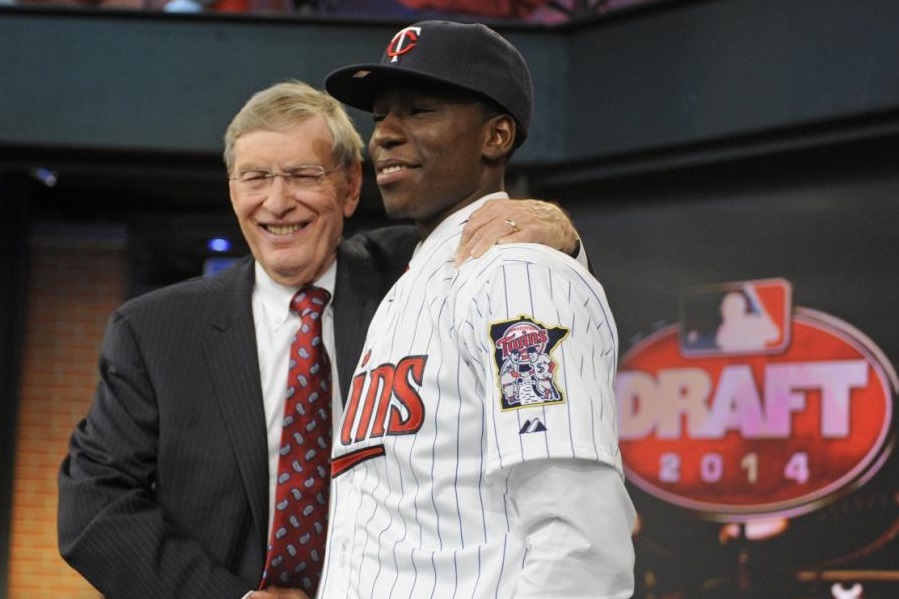 Of course, it takes more than maturity to be drafted as high as Gordon was (5th overall) as a high school kid. It takes a ton of talent. Gordon is currently a four-tool talent though many believe that over time he will also add the ability to hit for power and become a five-tool player. Twins Minor League Director Brad Steil pointed out in the Minnesota Twins Prospect Handbook 2015 why the Twins brass decided to have him skip the Gulf Coast League completely and spend his entire season at Elizabethton. “With the maturity and skill level we saw from him in high school, we thought he’d be able to compete at that level and handle any adversity. He was probably more prepared for pro ball than most high school players, having been around it most of his life because of his dad and brother.” The Twins have not had a high school player jump straight to Elizabethton after the draft since 2004 when Trevor Plouffe did that. Before him, Joe Mauer hit .400 in Elizabethton after signing with the Twins after being the first overall pick in 2001. Asked this weekend how having a father (Tom) and a brother (Dee) with big league experience has helped him out, Nick responded by saying he’s learned a lot from each of them. “It’s always great. You know, my dad played for 21 seasons. He knows the game. He’s been around it. My brother as well. Going to them, they know all the ropes. They know everything I’m going through because they’ve been through it all already. They’re always there for me.” Gordon held his own against many players significantly older than he is. Many players in the Appalachian League have three or four years of college under their belt, or they have been in pro ball for one to three years already. In 57 games, he hit .294/.333/.364 (.699) with six doubles, four triples and a home run. He stole 11 bases. In 49 games at shortstop, he had just eight errors and posted a .964 fielding percentage. These numbers don’t jump out, but they are impressive when put in the context of his age and experience relative to the league. Unfortunately, in the season’s final game, he was jammed by a pitch and broke a finger. Asked how his finger is now, Gordon said, “Finger was OK after a couple weeks. I got back after it. It kind of bothered me a little bit, but now it’s just baseball.” So what was the biggest adjustment for him to professional baseball? One might think that adjusting to wood bats, especially coming out of high school could be difficult, but Gordon said that wasn’t the biggest adjustment for him. “In the summer, all we used was wood bats in Florida. We played baseball all year around, so that’s the great thing about playing in Florida, we were constantly using wood bats.” He continued, “It’s just mainly playing every day. Coming from high school, you played every other day. That was the biggest adjustment for me. Once I got it, after about a month or two, it felt good. It felt like I was in the swing of things.” He now has his first pro experience under his belt and says that his offseason has been very good. “I’ve just been working out, trying to put on some weight, and stay fast. Stay to my game. I’m loving the process.” His goal for 2015 is pretty simple and yet his offseason work is an attempt to help him achieve his goal, to “stay healthy. That (added) weight is important. You have to be physically ready. Playing close to 100 games a year, you’ve got to be ready to go. I’m ready to get out there and I’ve been working on conditioning.” In an interview with 1500 ESPN over the weekend, Gordon said that one of his favorite players (non-relative category) growing up was Derek Jeter. It wasn’t just for his great talent, but he admired his leadership. Gordon hopes that he can be a similar type of player. “I know I can go out there, and I know I can play. It’s just about competing and making myself and my teammates better.” The Twins selected Gordon in the first round. They did not draft another high school player until the 15th round when they drafted an outfielder named Roberto Gonzalez, another Orlando native. Gordon went to Olympia high school in Orlando while Gonzalez went to University high school. “Yeah, I played against him in high school. We always played against each other. Mostly in the summer though.” Gordon was asked to describe Gonzalez and said, “He’s a really good athlete.” When I asked if Gonzalez could be a five-tool talent, without hesitation, Gordon said, “Oh yeah! Oh yeah!” Twins Fest was not Gordon’s first trip to Target Field. After being drafted last summer, he came to Target Field to sign his contract. His thoughts on the stadium? “It’s beautiful. Even with the snow on the field.” He certainly seemed to enjoy his Twins Fest experience. “It’s amazing. It’s nice meeting the people. It’s nice coming out here where people are so excited about baseball. It’s great to get out here and meet the fans and have fun with the kids and interact.” Asked if there were any players he was excited to meet last weekend, Gordon said, “I look up to pretty much all these guys. I talk to (Byron) Buxton a lot, and he’s a really good guy. I kind of look to him a lot. And Torii Hunter, I watched him when I was growing up.” Next up for Gordon, he’ll head to Ft. Myers in early March to go to his first spring training. “I’m ready for it. I can’t wait to get there.” After seeing all the fans at Twins Fest and the atmosphere there, I think it’s fair to say that we all can’t wait. Nick Gordon is one player that fans will be watching and monitoring over the next several years. He’s got a world of talent and the potential to be an impact player for a long time. Those who spoke with him continue to speak of his great maturity, attitude and poise. It’s no wonder that the Twins scouts, and scouts from every team, liked him so much.
 -
Article: Get to Know: OF Max Murphy
Seth Stohs replied to Seth Stohs's topic in Twins Daily Front Page News
I think that's pretty accurate. As much as he has all the tools, the performance hasn't always been consistent and met the tools that he has... That said, he's 22 and has 1/2 season of pro ball under his belt. There's plenty of time for things to come together for him. -
We have read so much about Nick Gordon, Nick Burdi and Jake Reed, but there is another Twins pick from 2014 who put together a very impressive professional debut. In fact, Max Murphy’s professional debut resulted in a league’s Most Valuable Player award. I had a chance to catch up with the talented outfielder at Twins Fest.In early March, Minnesota native Max Murphy will make the trip from Minneapolis to Ft. Myers for his first spring training. Murphy has never been to Twins spring training, even as a fan. With his local ties, he was invited to participate and sign autographs at Twins Fest this weekend. It marked the first time that he had been to the fantastic, fan-friendly event. Murphy graduated from Robbinsdale Cooper High School in 2011. The school is located in New Hope, a suburb northwest of Minneapolis. In fact, the school is located just over 10 miles from Target Field. After a strong high school baseball career, he was not drafted. Murphy chose to attend Bradley University. Bradley is a private university in Peoria, Illinois. Some Twins fans may recall that Hall of Famer Kirby Puckett began his unlikely climb by spending a year at Bradley. Murphy did have some options out of high school but was very happy with his decision to go to Bradley. “I could have gone to some of the D-1’s in the Midwest. I went on a visit to Bradley and I just really liked it. It was smaller, and that’s what I wanted. I’m happy with my choice.” He also had the opportunity to play right away. And he put up big numbers. In his three seasons at Bradley, he hit .293/.383/.518 with 27 home runs. His work led to being drafted in the ninth round in the 2014 draft. It was about where he thought and was hearing that he would be drafted. It was more surprising that it was the Twins who drafted him. Like most potential draft picks, Murphy was at his home, watching the draft take place online. “I thought somewhere in the top 10, so about there.” He continued, “I did talk to them, but it was a surprise. I was talking to some other teams more. I thought I was going to go to a different team. But it was a good surprise.” He signed quickly for a reported $130,000 and quickly made a name for himself in the organization with a very strong start to his career in Elizabethton. Often, there is an assumption that hitters struggle to adjust to using a wood bat since aluminum or composite bats are used in high school and college. For Murphy, he didn’t feel it was a big adjustment. He said, “I always hated the metal bat.” He played in wood-bat leagues during his summers in college. He spent time with the Rochester Honkers in the Northwoods League. He was also the MVP of the Great Lakes League one summer. If there was an adjustment, Murphy was able to make the change very quickly. Of professional baseball, Murphy noted, “I think it was just baseball how I always wanted it to be. It wasn’t different than college. You just go out and play. In college, it was a little different than that. I was just feeling good.” He felt good, to the tune of a .378/.483/.723 (1.206) in 35 games for the E-Twins. He added seven doubles, two triples, ten home runs and 26 RBI. “It is a lot about not having to go to school. Summer ball is always something I’ve been good at just because I can just focus on baseball. It’s just a different atmosphere, and you’re playing every day which I think it a lot better. When you’re hot, you’re hot. In college, it’s every weekend and one game during the week.” He was promoted to Cedar Rapids, which is very unusual for hitters sent initially to the Appalachian League. He struggled a little more in his 32 games in the Midwest League. He posted a line of .242/.314/.395 (.709), but he did hit seven doubles and four home runs. “There was a little bit (of an adjustment to the Midwest League). It wasn’t that much different as far as velocity and stuff, but I think pitchers knew how to pitch a lot better. You have a lot of guys in rookie ball that aren’t throwing good offspeed stuff. I think it was just adjusting to that environment. It was so much different than Elizabethton.” Defensively, he has the ability to play all three outfield positions. He played left field in Elizabethton. At Cedar Rapids, he replaced centerfielder Jason Kanzler (who was promoted to Ft. Myers). He isn’t considered a speedster, but he can cover some ground in centerfield. Despite spending only half of the season in Elizabethton before his promotion to Cedar Rapids, Murphy was named the MVP of the Appalachian League for his tremendous offensive performance. He said his first offseason as a professional baseball player has been “awesome.” Of the workouts and preparation, he said, “It’s basically just go, and you know what to do. You just get it done.” In early March, he will head down to Ft. Myers where he will participate in his first spring training. He is eagerly anticipating the start of a new season and where it will take him. “(I’m) excited to get there. I’ve never really had a preseason where you get to go and play games to get ready for the actual season. I think a lot of times early in the season, I’ve just not felt like I’m ready to play especially being in the Midwest. You hit in the cage and you just go right out and play. I think it will be good to get a nice three weeks of playing before we get to play real games.” Usually when asking players about the weather at Twins Fest in Minnesota, you get some great responses, especially from players from southern areas. For Murphy, and most of the Minnesotans in attendance at Twins Fest this year, the 40 degree temperatures were a pleasant and unexpected surprise. Murphy was a ninth-round pick in 2014. As you recall, 2013 ninth-round pick Mitch Garver was my choice for 2014 Twins minor league hitter of the year. Murphy has all of the tools. He can hit. He should hit for power. He has good speed. He can play defense. He has a strong arm. He has good strike zone judgment. Now a professional, he will have the opportunity to work full-time on those tools. He could be a sleeper and work his way up the system quickly. Murphy looks forward to hopefully surprising people again as he begins his first full season in the Twins organization. He turned 22 in November and should start his season where he ended the 2014 season, in Cedar Rapids. But a strong start and he should earn a midseason promotion to the Ft. Myers Miracle. Click here to view the article
-
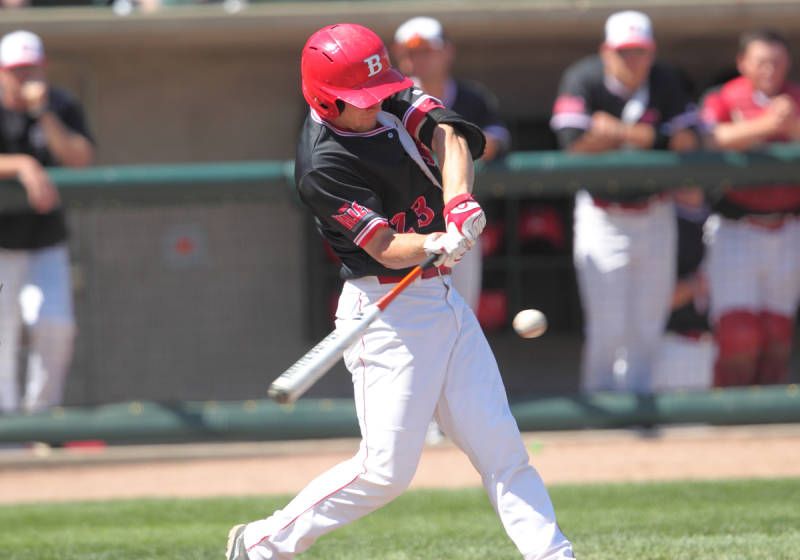 In early March, Minnesota native Max Murphy will make the trip from Minneapolis to Ft. Myers for his first spring training. Murphy has never been to Twins spring training, even as a fan. With his local ties, he was invited to participate and sign autographs at Twins Fest this weekend. It marked the first time that he had been to the fantastic, fan-friendly event. Murphy graduated from Robbinsdale Cooper High School in 2011. The school is located in New Hope, a suburb northwest of Minneapolis. In fact, the school is located just over 10 miles from Target Field. After a strong high school baseball career, he was not drafted. Murphy chose to attend Bradley University. Bradley is a private university in Peoria, Illinois. Some Twins fans may recall that Hall of Famer Kirby Puckett began his unlikely climb by spending a year at Bradley. Murphy did have some options out of high school but was very happy with his decision to go to Bradley. “I could have gone to some of the D-1’s in the Midwest. I went on a visit to Bradley and I just really liked it. It was smaller, and that’s what I wanted. I’m happy with my choice.” He also had the opportunity to play right away. And he put up big numbers. In his three seasons at Bradley, he hit .293/.383/.518 with 27 home runs. His work led to being drafted in the ninth round in the 2014 draft. It was about where he thought and was hearing that he would be drafted. It was more surprising that it was the Twins who drafted him. Like most potential draft picks, Murphy was at his home, watching the draft take place online. “I thought somewhere in the top 10, so about there.” He continued, “I did talk to them, but it was a surprise. I was talking to some other teams more. I thought I was going to go to a different team. But it was a good surprise.” He signed quickly for a reported $130,000 and quickly made a name for himself in the organization with a very strong start to his career in Elizabethton. Often, there is an assumption that hitters struggle to adjust to using a wood bat since aluminum or composite bats are used in high school and college. For Murphy, he didn’t feel it was a big adjustment. He said, “I always hated the metal bat.” He played in wood-bat leagues during his summers in college. He spent time with the Rochester Honkers in the Northwoods League. He was also the MVP of the Great Lakes League one summer. If there was an adjustment, Murphy was able to make the change very quickly. Of professional baseball, Murphy noted, “I think it was just baseball how I always wanted it to be. It wasn’t different than college. You just go out and play. In college, it was a little different than that. I was just feeling good.” He felt good, to the tune of a .378/.483/.723 (1.206) in 35 games for the E-Twins. He added seven doubles, two triples, ten home runs and 26 RBI. “It is a lot about not having to go to school. Summer ball is always something I’ve been good at just because I can just focus on baseball. It’s just a different atmosphere, and you’re playing every day which I think it a lot better. When you’re hot, you’re hot. In college, it’s every weekend and one game during the week.” He was promoted to Cedar Rapids, which is very unusual for hitters sent initially to the Appalachian League. He struggled a little more in his 32 games in the Midwest League. He posted a line of .242/.314/.395 (.709), but he did hit seven doubles and four home runs. “There was a little bit (of an adjustment to the Midwest League). It wasn’t that much different as far as velocity and stuff, but I think pitchers knew how to pitch a lot better. You have a lot of guys in rookie ball that aren’t throwing good offspeed stuff. I think it was just adjusting to that environment. It was so much different than Elizabethton.” Defensively, he has the ability to play all three outfield positions. He played left field in Elizabethton. At Cedar Rapids, he replaced centerfielder Jason Kanzler (who was promoted to Ft. Myers). He isn’t considered a speedster, but he can cover some ground in centerfield. Despite spending only half of the season in Elizabethton before his promotion to Cedar Rapids, Murphy was named the MVP of the Appalachian League for his tremendous offensive performance. He said his first offseason as a professional baseball player has been “awesome.” Of the workouts and preparation, he said, “It’s basically just go, and you know what to do. You just get it done.” In early March, he will head down to Ft. Myers where he will participate in his first spring training. He is eagerly anticipating the start of a new season and where it will take him. “(I’m) excited to get there. I’ve never really had a preseason where you get to go and play games to get ready for the actual season. I think a lot of times early in the season, I’ve just not felt like I’m ready to play especially being in the Midwest. You hit in the cage and you just go right out and play. I think it will be good to get a nice three weeks of playing before we get to play real games.” Usually when asking players about the weather at Twins Fest in Minnesota, you get some great responses, especially from players from southern areas. For Murphy, and most of the Minnesotans in attendance at Twins Fest this year, the 40 degree temperatures were a pleasant and unexpected surprise. Murphy was a ninth-round pick in 2014. As you recall, 2013 ninth-round pick Mitch Garver was my choice for 2014 Twins minor league hitter of the year. Murphy has all of the tools. He can hit. He should hit for power. He has good speed. He can play defense. He has a strong arm. He has good strike zone judgment. Now a professional, he will have the opportunity to work full-time on those tools. He could be a sleeper and work his way up the system quickly. Murphy looks forward to hopefully surprising people again as he begins his first full season in the Twins organization. He turned 22 in November and should start his season where he ended the 2014 season, in Cedar Rapids. But a strong start and he should earn a midseason promotion to the Ft. Myers Miracle.
 -
Article: One Man's Opinion: Tovar Snubbed Again
Seth Stohs replied to Seth Stohs's topic in Twins Daily Front Page News
I agree that I think they're both deserving... I definitely do NOT think that Tovar should be in because he played 9 positions in one game. I think he's deserving because of the value and role he brought to very strong Twins teams for 6-7 years and because of how he was viewed nationally and locally at the time. He had some years where he didn't hit a lot, but he had some very good year and was such a valuable piece. But yes, I think that Mack should be in too. His offensive numbers for those 5 years were as good as almost every other outfielder in the AL at that time. IT was on part with Puckett. The only one better was probably Griffey. The point is that there are candidates who are deserving. -
Article: Ricky Nolasco: Back to the Future
Seth Stohs replied to Secondary User's topic in Twins Daily Front Page News
Yeah, when I saw that tweet, it annoyed me, and yet, he doesn't pitch here in the Winter. He'll wear a jacket and it's not like he'll be outside. It's also 50 degrees warmer than it was a year ago at this time. Ervin Santana embraced it, saying he'd love to pitch in the cold. At the Diamond Awards last night, he acted like he was excited to be here. Nolasco at least year's Diamond Award made it look like he was told he needed to be there. That said, none of that will matter if he pitches better this year. -
On Friday, Twins President Dave St. Peter announced that no players will be inducted into the Twins Hall of Fame in 2015. It is the first time since they started doing this in 2000. He said that no player reached 60% of the vote. Though he was said to be close, Cesar Tovar was again snubbed.A case could be made that Tovar is the most underrated player in Minnesota Twins history, something this announcement confirms, at least in my mind. Always referred to as a utility player, Tovar played in 1,090 games for the Minnesota Twins between 1965 and 1972. Though he did play all over the field, literally every position in one game in 1968, he was an everyday player for much of his career. In fact, in 1967, he led the league by playing in 164 games. He had over 4,000 at-bats in a Twins uniform and hit a combined .281/.337/.377 (.714). He hit 193 doubles, 45 triples and 38 home runs. He also stole 186 bases. He received MVP votes each year from 1967 through 1971, including a top 10 finish in 1967 when he received one first-place vote, from a Minneapolis writer, of course. I would argue that his best season in a Twins uniform came in 1970 when he hit .300/.356/.442 (.798) with 36 doubles, 13 triples, 10 home runs and 54 RBI. He also stole 30 bases. The native of Caracas, Venezuela, signed with the Cincinnati Reds in 1959. He never reached the big leagues with the Reds. In December of 1964, the Twins acquired him in a trade for Gerry Arrigo. Tovar remained with the organization until after the 1972 season when he was traded to the Philadelphia Phillies in exchange for three players. He spent time with the Rangers, A’s and Yankees before retiring following the 1976 season. He actually continued to play (and coach some) in the Venezuelan Winter League until 1985 at the age of 45. He passed away in 1994 from pancreatic cancer at the age of 54. His overall stats don’t jump out, but his role on some great Twins teams (’65, ’67, ’69, ’70) cannot be disputed. He was highly respected in his time. Honestly,it is time for the Twins to honor him with induction into their Hall of Fame. Dan Gladden and Mudcat Grant were also said to be close, but Tovar needs to be next. Click here to view the article
-
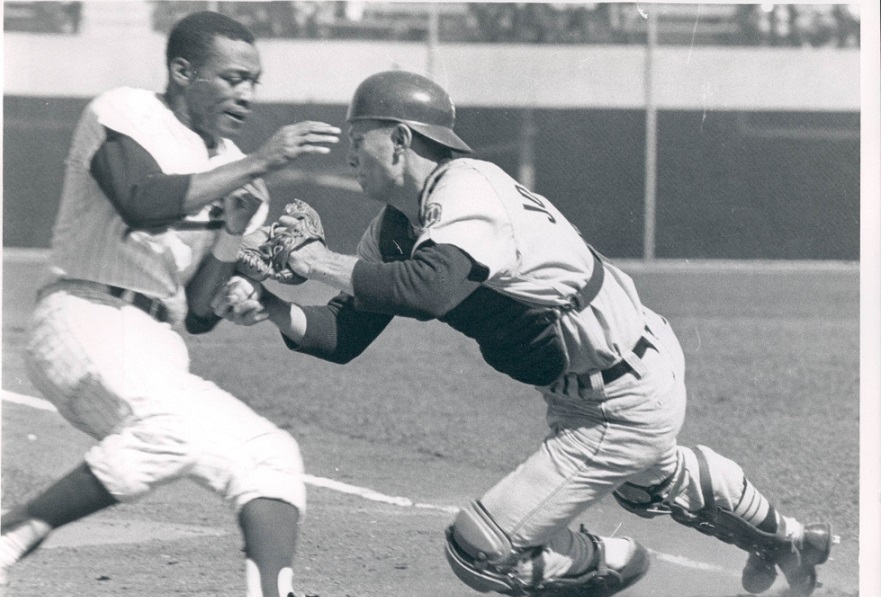 A case could be made that Tovar is the most underrated player in Minnesota Twins history, something this announcement confirms, at least in my mind. Always referred to as a utility player, Tovar played in 1,090 games for the Minnesota Twins between 1965 and 1972. Though he did play all over the field, literally every position in one game in 1968, he was an everyday player for much of his career. In fact, in 1967, he led the league by playing in 164 games. He had over 4,000 at-bats in a Twins uniform and hit a combined .281/.337/.377 (.714). He hit 193 doubles, 45 triples and 38 home runs. He also stole 186 bases. He received MVP votes each year from 1967 through 1971, including a top 10 finish in 1967 when he received one first-place vote, from a Minneapolis writer, of course. I would argue that his best season in a Twins uniform came in 1970 when he hit .300/.356/.442 (.798) with 36 doubles, 13 triples, 10 home runs and 54 RBI. He also stole 30 bases. The native of Caracas, Venezuela, signed with the Cincinnati Reds in 1959. He never reached the big leagues with the Reds. In December of 1964, the Twins acquired him in a trade for Gerry Arrigo. Tovar remained with the organization until after the 1972 season when he was traded to the Philadelphia Phillies in exchange for three players. He spent time with the Rangers, A’s and Yankees before retiring following the 1976 season. He actually continued to play (and coach some) in the Venezuelan Winter League until 1985 at the age of 45. He passed away in 1994 from pancreatic cancer at the age of 54. His overall stats don’t jump out, but his role on some great Twins teams (’65, ’67, ’69, ’70) cannot be disputed. He was highly respected in his time. Honestly,it is time for the Twins to honor him with induction into their Hall of Fame. Dan Gladden and Mudcat Grant were also said to be close, but Tovar needs to be next.
