



Seth Stohs
-
Posts
25,870 -
Joined
-
Last visited
-
Days Won
109
Content Type
Profiles
News
Minnesota Twins Videos
2026 Minnesota Twins Top Prospects Ranking
2022 Minnesota Twins Draft Picks
Minnesota Twins Free Agent & Trade Rumors, Notes, & Tidbits
Guides & Resources
2023 Minnesota Twins Draft Picks
The Minnesota Twins Players Project
2024 Minnesota Twins Draft Picks
2025 Minnesota Twins Draft Pick Tracker
2026 Minnesota Twins Draft Tracker: Picks & Bonuses
Forums
Blogs
Events
Store
Downloads
Gallery
Everything posted by Seth Stohs
-
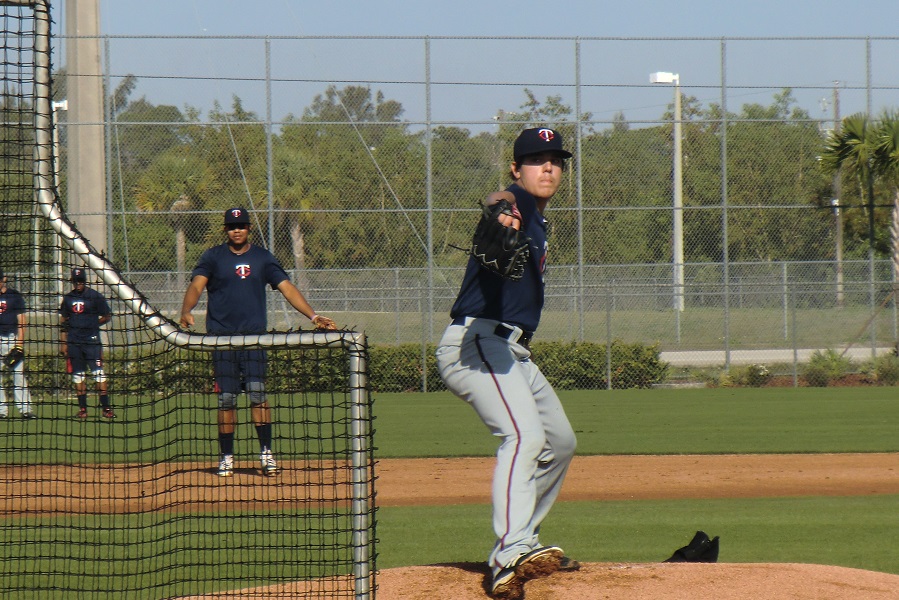 It’s starting to get warm in southwest Florida. Some of the guys who live in Ft. Myers pointed out that it is pretty much 75 degrees every day through the offseason, but this week, the highs are in the mid-to-upper 80s. If you are going to Ft. Myers, be sure to bring the sunscreen, and a hat! If you missed it, I wrote a story earlier today about JO Berrios. I talked to him as he was going through Fan Mail and signing a lot of cards. Before diving deeper into some minor league stories, here are some quick observations from big league camp: Chris Herrmann was working with Doug Mientkiewicz over at first base this morning during PFPs (Pitchers Fielding Pactice). Obviously he has the athleticism and the ability to play all over the diamond. He has caught, played both corner outfield positions, some first base, and he played a lot of third base in college. However, when I talked to him he was pretty clear, “I want them to know that I am a catcher. That’s where I want to do the majority of my work.” To that point, he has only caught (and DH'd) in Twins games to this point. Josmil Pinto has been sidelined due to a strained quad. He is yet to play in a game. On Monday, he caught a couple of bullpens and took some batting practice. On Tuesday, he was doing full workout and catching activities as well as taking a round of batting practice. When I saw him launching baseballs well beyond the left-field fence, it appeared to me that he is getting very close to making his spring debut. Brian Dozier was taking some ground balls at third base this morning on Tom Kelly Field. Before you get alarmed, let me explain. They were working on various activities on the field. Sam Perlozzo was working on backhands with Dozier, Miguel Sano and Trevor Plouffe who were standing at third base. So no, we aren’t likely to see Brian Dozier at third base this season. For me, it's always so much fun when I see people from Twins history working with people from the Twins future. On Tuesday, Tom Kelly took time to work with Miguel Sano on some positioning at third base. Sano took it all in. O’ROURKE’S TWINS DEBUT The first person I talked to in the locker room was lefty Ryan O’Rourke. The southpaw received a non-roster invitation to big league camp following a strong season in 2014, all but one game with the New Britain Rock Cats. He is a native of Worcester, Massachusetts, which is just under an hour from Boston. Last Thursday, he made his first Twins appearance of the spring against the Boston Red Sox. O’Rourke, who held lefties to a ridiculous slash line of .114/.162/.129 (.291) came into the game with the bases loaded and Dustin Pedroia up to bat. As you recall, the Red Sox All-Star hit a grand slam. However, Paul Molitor talked to O’Rourke a day later about the outing. He acknowledged it wasn’t an ideal situation, but that he did a nice job of shaking that off and getting the next hitters out. They were also right-handed, big league hitters (including Mike Napoli). O’Rourke has been in Ft. Myers for about three weeks. He spent a little over a month in his hometown this winter. He spent over a month pitching in Venezuela. When he returned to Massachusetts, he taught pitching lessons to kids in the area. It was the first offseason as a pro that he didn’t work a 40+ hour work at a financial firm. He said, “Believe it or not, I did miss that job.” While O’Rourke knows he is a long-shot to make the Twins opening day roster, he is thrilled to have been given this opportunity to work with the Twins coaches and learn from some veterans. That said, he is very competitive and is competing for a job, if not now, then if needed during the year. JASON KANZLER AND THE MUSTACHE It’s funny. You never know what is going to grab people’s attention. Jason Kanzler’s mustache is one of those things. People ask me all the time about it. Yesterday, I wrote that he had the mustache, but it included some beard too. He said that he was planning to clean it up last night for the opening of the minor league practices. This morning, when he was between fields, he came over and I was able to get the first picture of his 2015 mustache. You have to enjoy the twists at the end of it. The Mustache gets a lot of attention, but Jason Kanzler is certainly worth getting to know. Mitch Garver, Kanzler’s teammate when he was with Cedar Rapids last year, was the choice for Minor League Hitter of the Year in 2014. Kanzler came in fourth. Between Cedar Rapids and Ft. Myers, he hit .282/.344/.444 (.788) with 11 doubles, nine triples and 12 home runs. He also stole 27 bases. He has played all three outfield positions, but he is best in centerfield. He was a two-time Gold Glove outfielder in college. He spent the offseason in Houston working out and feels really good going into the season. He said, “Getting here early and getting to hit against live pitching before the official minor league workouts really feels good.” LEWIS THORPE THROWS LIVE BATTING PRACTICE As you know, Lewis Thorpe’s offseason ended near the close of the regular season last year because of a “slight tear of his UCL.” Obviously that news created a lot of concern among the Twins and their fans. He has rehabbed in Ft. Myers for much of the offseason. On Tuesday, he warmed up in the bullpen. Moments later, he was on the mound. He said, “It was my first time facing hitters since my last outing last season.” Obviously it was a big step for him. He threw about 40 total pitches. He didn’t quite have his control all of the time, but obviously that isn’t the concern. That will come. He was happy with the outing. He said afterwards, “I felt good. Just control was a bit of a problem. Fastball was coming out real well, and my breaking ball and change-up need some touch up.” COREY WILLIAMS IN A BULLPEN Left-hander Corey Williams was the Twins third round pick in 2011 out of Vanderbilt. Last year at this time, he started feeling some elbow pain when he pitched. On April 1st, he had Tommy John surgery and missed the entire season. He has spent most of the offseason in Ft. Myers, though he was able to get away for a few weeks to get married and go on a honeymoon. He has been working out and building up that arm strength. As an observer of his bullpen session, he really only threw fastballs, but they had good life, some good velocity. After his bullpen session, he said his elbow felt really good and continues to get stronger. He said that he is scheduled to face live pitching for the first time on Friday. As for whether he’ll be ready for opening day, he isn’t really thinking about it. He said he’s still got some things to get through before worrying about that. However, he thinks it is a real possibility to break with a club. The best scenario might be for him to stay in Ft. Myers with the Miracle so he can be monitored by the staff here. NICK GORDON The Twins top pick in 2014, Nick Gordon, is listed at 6-0 and 160 pounds. He may not be much heavier than that, but considering his size, he really has some pop in his bat. I’ve seen him hit quite a bit the last couple of days. He has a very smooth, fluid left-handed swing. He uses the entire field very well. He has good confidence at the plate. However, when he gets a good pitch, and he’s swinging hard, he can hit the ball well beyond the outfield fence. He has done that several times. One person with the Twins told me, “He has a chance to be really good.” Again, lots of photos of Day 2 have been uploaded to the Twins Daily Facebook Page and also the Twins Daily Twitter account. Be sure to “Like” and “Follow” those sites, respectively. Continue to keep story ideas coming from both the major league and minor league sides. Minor leaguers reported on Tuesday. On Wednesday, they have physicals and photos. Thursday is their first official workout.
 -
Article: This Time It's Different
Seth Stohs replied to Seth Stohs's topic in Twins Daily Front Page News
He's not on the 40-man roster, so they're not as worried about the injury concern with him as they would be with Sano (who is on the 40 man roster). That said, I think he'll go down fairly early because they'll want to stretch him (and Taylor Rogers, Tyler Duffey and Jason Wheeler) out so they're ready to start when the minor league seasons start. I'd be surprised if he's up by July, but nothing he does will totally shock me. -
Article: This Time It's Different
Seth Stohs replied to Seth Stohs's topic in Twins Daily Front Page News
Rosario is the one of that group with the best chance of starting at Rochester. The other two will definitely start in Chattanooga. -
I don't know if Miracle players aren't eligible to live in the dorm, but a lot of them are moving out toward the end of the week. It can be difficult because some guy who think they'll start with the Miracle may start in Chattanooga or Cedar Rapids.
-
I walked into the Twins clubhouse at Hammond Stadium this morning. There were a couple of games of cards being played. Some players were on their phones at their locker. 20-year-old Jose (JO) Berrios sat at his desk quietly. He had a stack of envelopes in his locker and one on the floor next to his chair. He had a Sharpie in his hand and was carefully writing his name on the baseball cards with his picture on them.As I approached him, he extended his hand and said, “Hi Seth. How are you doing?” After exchanging pleasantries, I said to the young pitching prospect, “Wow! That is a lot of envelopes! Is that normal?” He nodded and said, “Every day! It is this many almost every day.” Such is life for the Twins prospect, but he seems to enjoy it. Letters from all over the country and from his native Puerto Rico. Each starts with “Hi Mr. Berrios. You are a very good pitcher.” Or at least something to that effect. Some letters are long, and some are short. He takes the time to read them and sign. This isn’t JO Berrios’s first trip to big league spring training. Two years ago, Berrios was able to work out with the Twins during major league spring training because he had been named to Puerto Rico’s World Baseball Classic roster. He pitched out of the team’s bullpen as an 18-year-old that year. This year, his experience has already been different. He said, “That year, I was just here because I was training for the World Baseball Classic. This time, I am here competing for a spot.” The Twins supplemental first-round draft choice in 2012 took a big step forward in his career in 2014. He was named the Minor League Pitcher of the Year by the Minnesota Twins, as well as the Twins Daily Minor League Starting Pitcher of the Year. He began the season in Ft. Myers and finished his season with a start on the final weekend for the Triple-A Rochester Red Wings. He started the Florida State League All-Star game as well as MLB’s Futures Game at Target Field. Overall, he went 12-8 with a 2.77 ERA and a 1.05 WHIP. In 139.2 innings, he struck out 140 batters while walking just 38. This spring, he has pitched twice, both two-inning stints. Asked how he was feeling, Berrios said, “Everything is good. Arm feels really good.” He is also happy that his wife and their daughter are in Ft. Myers with him during spring training. They attend the home Twins games, and he enjoys being able to go home to them at the end of each day. Most likely, Berrios will begin his 2015 season at Double-A Chattanooga, but he is focused. That doesn’t surprise anyone who has seen the videos of his workout and the drive that he has. At this point, who are we to put it past him? Click here to view the article
-
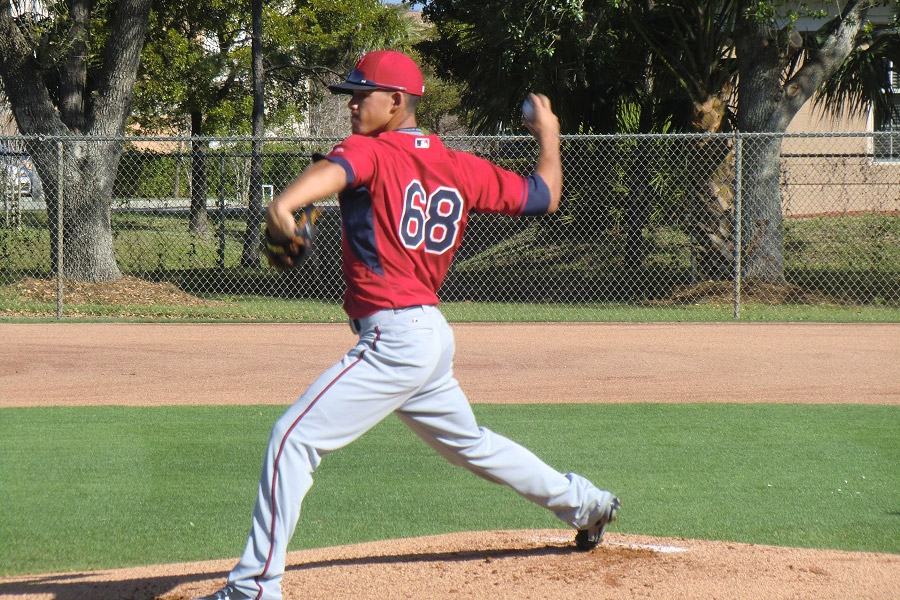 As I approached him, he extended his hand and said, “Hi Seth. How are you doing?” After exchanging pleasantries, I said to the young pitching prospect, “Wow! That is a lot of envelopes! Is that normal?” He nodded and said, “Every day! It is this many almost every day.” Such is life for the Twins prospect, but he seems to enjoy it. Letters from all over the country and from his native Puerto Rico. Each starts with “Hi Mr. Berrios. You are a very good pitcher.” Or at least something to that effect. Some letters are long, and some are short. He takes the time to read them and sign. This isn’t JO Berrios’s first trip to big league spring training. Two years ago, Berrios was able to work out with the Twins during major league spring training because he had been named to Puerto Rico’s World Baseball Classic roster. He pitched out of the team’s bullpen as an 18-year-old that year. This year, his experience has already been different. He said, “That year, I was just here because I was training for the World Baseball Classic. This time, I am here competing for a spot.” The Twins supplemental first-round draft choice in 2012 took a big step forward in his career in 2014. He was named the Minor League Pitcher of the Year by the Minnesota Twins, as well as the Twins Daily Minor League Starting Pitcher of the Year. He began the season in Ft. Myers and finished his season with a start on the final weekend for the Triple-A Rochester Red Wings. He started the Florida State League All-Star game as well as MLB’s Futures Game at Target Field. Overall, he went 12-8 with a 2.77 ERA and a 1.05 WHIP. In 139.2 innings, he struck out 140 batters while walking just 38. This spring, he has pitched twice, both two-inning stints. Asked how he was feeling, Berrios said, “Everything is good. Arm feels really good.” He is also happy that his wife and their daughter are in Ft. Myers with him during spring training. They attend the home Twins games, and he enjoys being able to go home to them at the end of each day. Most likely, Berrios will begin his 2015 season at Double-A Chattanooga, but he is focused. That doesn’t surprise anyone who has seen the videos of his workout and the drive that he has. At this point, who are we to put it past him?
 -
 TWO TEAMS ON THE ROAD The Twins played two games in Bradenton on Monday. The regularly-scheduled game ended in a 1-1 tie, the Twins lone run coming on a long home run off the bat of Miguel Sano. The teams also played a “B” game earlier in the day and the Twins won that game 2-1. That game was for some of the guys in camp who don’t play as much, or needed to get innings. Taylor Rogers, Tyler Duffey and Jason Wheeler each pitched. They are in big league camp, but they need to be stretched out so that they can be ready to start when the minor league games start next month. The players who headed north left early, so I got there just after the bus left. So, it was a little quieter around Hammond Stadium. However, Torii Hunter and Joe Mauer remained back and worked. There were a lot of pitchers who stayed back as well. Phil Hughes and Mike Pelfrey threw bullpens. Glen Perkins was going to throw a bullpen, but he continued to experience pain in his right side. According to the Star-Tribune, he is going to see the Twins physicians on Tuesday. Other pitchers worked on Tom Kelly Field, with Tom Kelly and Doug Mientkiewicz, on more pitcher fielding ractice. Mauer fed them ground balls from first base. When the pitchers were done, they went to the bullpen and worked on bunting with Rod Carew. It was kind of interesting to see relievers working on bunting, but it doesn’t hurt to be prepared for anything. HANSON HELPS THE BIG LEAGUE CLUB Because of the lack of numbers for the big league workout today, Nate Hanson was called over to Hammond Stadium to help out. Hanson was the Twins 28th round pick in 2008 out of the University of Minnesota. He became a minor league free agent for the first time this last offseason, but after weighing his options, he chose to return to the Twins. During PFP’s, he played at 3B and caught the throws from the pitchers after the bunts. After the first “bunt” thrown by Tom Kelly, the pitcher threw to Hanson. It was a perfect throw, chest high, and Hanson caught it. He tossed it back to the pitcher and readied himself for the next throw. Before that happened, Kelly yelled “Great play, Nate!” He chuckled, and after most throws from the pitchers throughout the rest of the drills, they would say, “Great play, Nate!” as he tossed them back the ball. He took batting practice, and at one point, he hit two, long home runs over the left field wall that were hit further than others on the day. It will be an interesting year for Hanson. He has spent time in Rochester each of the last two seasons, though most of those seasons were spent in New Britain. In his professional career, he has played first base, second base, third base, left field and right field. He is usually the third hitter on his team and teammates describe him as “professional.” The former Gopher told me he was at the Gophers/Twins game last Wednesday night. He is still friends with some of the Gophers players, coaches and other personnel. MINOR LEAGUE CAMP Tuesday marks the official report day for Twins minor leaguers. However, in talking with Tommy Watkins, he said that there were 93 minor leaguers there on Monday to work out. When their first full workout takes place on Thursday, there will be as many as 145 on the four back fields. I had to ask if he thought that having the new Twins academy so conveniently close was the reason. He nodded and said that it definitely helps. The players are able to get three meals and live there for very little. The players there are fed three meals a day. There are nutritionists as well, so they do not have options that are not healthy. There are not “bad” options such as pop for the players. Understandably, the Twins invest money in these players and in their development. Nutrition is a part that had not been a focus. It was talked about, but having the academy allows them to push it even further. After spending time stretching and running, hitters took batting practice. Several pitchers threw live batting practice to the hitters. Pat Dean, Stephen Gonsalves, Ethan Mildren and Aaron Slegers were among pitchers who threw to hitters from the mound. HARRISON HOPES FOR A BIG YEAR 2011 Twins supplemental first-round pick Travis Harrison came over and spent a few minutes with me after the day’s workout. He spent the 2014 season in Ft. Myers where he hit .269/.361/.365 (.726) with 33 doubles, a triple and three home runs. He was also playing the outfield for the first time as a professional. Asked how he felt about his progression in the field went, he said, “It wasn’t bad at all. I played outfield in high school, including centerfield, so it wasn’t a problem.” He said that he is expecting to have a big year. He said, “I learned a lot about hitting last year from Doug (Mientkiewicz).” Despite the lack of home runs, he has no question that he can hit a lot of home runs. He has always had tremendous strength, but he said that he is stronger than he has ever been. For the first time, he spent the offseason in Ft. Myers. He worked out with Kyle Gibson and Twins Minor League Strength and Conditioning Coordinator Erik Beiser. He says he can’t control where he starts the season but really believes that he’ll start in Chattanooga. THE RETURN OF DINKELMAN The Twins have several new coaches in the minor leagues in 2015. JP Martinez and Virgil Vazquez will be pitching coaches for the GCL Twins. Javier Valentin will be a coach in the GCL. Twins fans will also be interested to know that Brian Dinkelman will be a hitting coach in the GCL. I had a chance to talk to him at the end of the workouts on Monday. He arrived in Ft. Myers last Tuesday and has been working with the players who are there. Asked if he was always planning on coaching, he said, “It has always been something I knew I’d want to do. I spent last year coaching high school baseball, and then this opportunity came up.” THE RETURN OF THE MUSTACHE One of the most interesting stories of the 2014 season was the mustache of Jason Kanzler. It was one of those things that needed updated pictures throughout the season. The mustache is back, though on Monday, there was some beard that went along with it. After posting the above picture of the current mustache situation, Kanzler assures his fans (or the fans of his mustache) that he will “clean it up tonight. Me and the 'stache are coming out hot tomorrow.” Twins Daily is making an effort to get the first photo of the 2015 Mustache. If you like the six photos in this article, be sure to “Like” Twins Daily on Facebook and follow Twins Daily on Twitter. You can also follow Seth on Twitter as he will be tweeting from the stadium often. There were over 75 photos posted to the Facebook page, and more will be there throughout the week. There is so much going on between the seven fields that it is impossible to catch it all. However, my goal will be to see as much as I can and report it here again tomorrow.
 -
Today is report day, so many minor leagues are just flying in today. Tomorrow is photo day and they get their physicals. They'll still do workouts, but it won't be the full squad, full practice stuff. I think that you can tell if a player has grown (physically or just as a ballplayer). It may not always show up in the stats, but I think a person could tell. Obviously the closer you are to that person, the more you'd notice for sure.
-
Good thing I put that toward the end!!
- 19 replies
-
- 2
-

-
- nate hanson
- glen perkins
- (and 4 more)
-
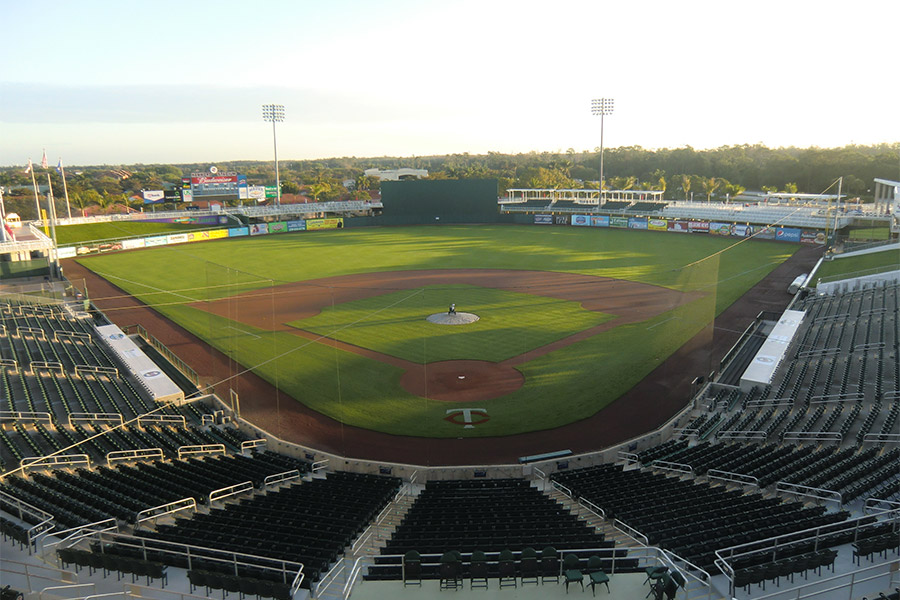
For the next month, Twins Daily will be in Ft. Myers, filing daily reports from The Fort. Seth made the trek to southwest Florida. On Monday, he arrived at Hammond Stadium. Despite few players being at the stadium, we were able to see a lot of baseball action and talk to a few players. Below you will find a quick report from Day 1. Image courtesy of Seth Stohs TWO TEAMS ON THE ROAD The Twins played two games in Bradenton on Monday. The regularly-scheduled game ended in a 1-1 tie, the Twins lone run coming on a long home run off the bat of Miguel Sano. The teams also played a “B” game earlier in the day and the Twins won that game 2-1. That game was for some of the guys in camp who don’t play as much, or needed to get innings. Taylor Rogers, Tyler Duffey and Jason Wheeler each pitched. They are in big league camp, but they need to be stretched out so that they can be ready to start when the minor league games start next month. The players who headed north left early, so I got there just after the bus left. So, it was a little quieter around Hammond Stadium. However, Torii Hunter and Joe Mauer remained back and worked. There were a lot of pitchers who stayed back as well. Phil Hughes and Mike Pelfrey threw bullpens. Glen Perkins was going to throw a bullpen, but he continued to experience pain in his right side. According to the Star-Tribune, he is going to see the Twins physicians on Tuesday. Other pitchers worked on Tom Kelly Field, with Tom Kelly and Doug Mientkiewicz, on more pitcher fielding ractice. Mauer fed them ground balls from first base. When the pitchers were done, they went to the bullpen and worked on bunting with Rod Carew. It was kind of interesting to see relievers working on bunting, but it doesn’t hurt to be prepared for anything. HANSON HELPS THE BIG LEAGUE CLUB Because of the lack of numbers for the big league workout today, Nate Hanson was called over to Hammond Stadium to help out. Hanson was the Twins 28th round pick in 2008 out of the University of Minnesota. He became a minor league free agent for the first time this last offseason, but after weighing his options, he chose to return to the Twins. During PFP’s, he played at 3B and caught the throws from the pitchers after the bunts. After the first “bunt” thrown by Tom Kelly, the pitcher threw to Hanson. It was a perfect throw, chest high, and Hanson caught it. He tossed it back to the pitcher and readied himself for the next throw. Before that happened, Kelly yelled “Great play, Nate!” He chuckled, and after most throws from the pitchers throughout the rest of the drills, they would say, “Great play, Nate!” as he tossed them back the ball. He took batting practice, and at one point, he hit two, long home runs over the left field wall that were hit further than others on the day. It will be an interesting year for Hanson. He has spent time in Rochester each of the last two seasons, though most of those seasons were spent in New Britain. In his professional career, he has played first base, second base, third base, left field and right field. He is usually the third hitter on his team and teammates describe him as “professional.” The former Gopher told me he was at the Gophers/Twins game last Wednesday night. He is still friends with some of the Gophers players, coaches and other personnel. MINOR LEAGUE CAMP Tuesday marks the official report day for Twins minor leaguers. However, in talking with Tommy Watkins, he said that there were 93 minor leaguers there on Monday to work out. When their first full workout takes place on Thursday, there will be as many as 145 on the four back fields. I had to ask if he thought that having the new Twins academy so conveniently close was the reason. He nodded and said that it definitely helps. The players are able to get three meals and live there for very little. The players there are fed three meals a day. There are nutritionists as well, so they do not have options that are not healthy. There are not “bad” options such as pop for the players. Understandably, the Twins invest money in these players and in their development. Nutrition is a part that had not been a focus. It was talked about, but having the academy allows them to push it even further. After spending time stretching and running, hitters took batting practice. Several pitchers threw live batting practice to the hitters. Pat Dean, Stephen Gonsalves, Ethan Mildren and Aaron Slegers were among pitchers who threw to hitters from the mound. HARRISON HOPES FOR A BIG YEAR 2011 Twins supplemental first-round pick Travis Harrison came over and spent a few minutes with me after the day’s workout. He spent the 2014 season in Ft. Myers where he hit .269/.361/.365 (.726) with 33 doubles, a triple and three home runs. He was also playing the outfield for the first time as a professional. Asked how he felt about his progression in the field went, he said, “It wasn’t bad at all. I played outfield in high school, including centerfield, so it wasn’t a problem.” He said that he is expecting to have a big year. He said, “I learned a lot about hitting last year from Doug (Mientkiewicz).” Despite the lack of home runs, he has no question that he can hit a lot of home runs. He has always had tremendous strength, but he said that he is stronger than he has ever been. For the first time, he spent the offseason in Ft. Myers. He worked out with Kyle Gibson and Twins Minor League Strength and Conditioning Coordinator Erik Beiser. He says he can’t control where he starts the season but really believes that he’ll start in Chattanooga. THE RETURN OF DINKELMAN The Twins have several new coaches in the minor leagues in 2015. JP Martinez and Virgil Vazquez will be pitching coaches for the GCL Twins. Javier Valentin will be a coach in the GCL. Twins fans will also be interested to know that Brian Dinkelman will be a hitting coach in the GCL. I had a chance to talk to him at the end of the workouts on Monday. He arrived in Ft. Myers last Tuesday and has been working with the players who are there. Asked if he was always planning on coaching, he said, “It has always been something I knew I’d want to do. I spent last year coaching high school baseball, and then this opportunity came up.” THE RETURN OF THE MUSTACHE One of the most interesting stories of the 2014 season was the mustache of Jason Kanzler. It was one of those things that needed updated pictures throughout the season. The mustache is back, though on Monday, there was some beard that went along with it. After posting the above picture of the current mustache situation, Kanzler assures his fans (or the fans of his mustache) that he will “clean it up tonight. Me and the 'stache are coming out hot tomorrow.” Twins Daily is making an effort to get the first photo of the 2015 Mustache. If you like the six photos in this article, be sure to “Like” Twins Daily on Facebook and follow Twins Daily on Twitter. You can also follow Seth on Twitter as he will be tweeting from the stadium often. There were over 75 photos posted to the Facebook page, and more will be there throughout the week. There is so much going on between the seven fields that it is impossible to catch it all. However, my goal will be to see as much as I can and report it here again tomorrow. View full article
- 19 replies
-
- 1
-
-
- nate hanson
- glen perkins
- (and 4 more)
-
Note that these are my projects as spring training games start. They won't make any final decisions on the roster for 3+ weeks yet. This is very much subject to change, and I don't have Milone's name in Red. I think May, Meyer and Pelfrey have a chance. I just think that Milone is the favorite (slight as it may be) heading into camp. I also think that if Pelfrey can hit 94-95, as he has in the past, he has the kind of stuff that could play very well out of the bullpen.
-
What's wrong with Santana? I assume nothing. I mean, Hunter and Dozier and Mauer and Plouffe and Arcia weren't in the lineup against the Gophers either. From all we've heard, he's participating fully at shortstop so far this spring.
- 43 replies
-
- 1
-
-
- joe mauer
- brian dozier
- (and 3 more)
-
Article: Where Will Miguel Sano Play?
Seth Stohs replied to Nick Nelson's topic in Twins Daily Front Page News
I'm just saying that they may want to keep both of them and determine that what is best for the Twins is to keep Plouffe at 3B and maybe Sano elsewhere. .Just that we don't know what situation is going to present itself. -
When the calendar turned to 2015, I posted my first Minnesota Twins Roster Projection for 2015. It’s been two months since then, so it’s time today for Roster Projection, version 2.0. Spring training is less than two weeks old, but the Twins played their first exhibition game last night against the Gophers. Tonight, their Grapefruit League schedule begins with a game against the Red Sox. There are still a few jobs available and there will be plenty of competition. Twins Daily will again be in Ft. Myers starting Monday and through the rest of spring training.When a player becomes a “given” for the roster (in my opinion), I will highlight the player’s name in red. Trades and signings can happen at any time between now and opening day, but that just means that even “givens” can change. We will also be able to learn, over time, what it is that Paul Molitor will look for from his roster. Feel free to discuss below. Catchers (2): Kurt Suzuki, Josmil Pinto Kurt Suzuki is the clear-cut starter and deservedly so after last year. Josmil Pinto goes into camp as the favorite to be the team’s backup catcher, but it will be a competition. Pinto certainly has the ability to hit and hit for power. The defense remains the question mark. Chris Herrmann is also on the 40-man roster. He has the ability to play the corner outfield positions, and the corner infield positions, in a pinch. He’s a very athletic catcher with a strong arm. Offensively, he has been unable to hit much in his stints with the Twins. Eric Fryer remains in the organization, and Dan Rohlfing was again a non-roster invite to big league camp. Infielders (7): Kennys Vargas, Joe Mauer, Brian Dozier, Trevor Plouffe, Danny Santana, Eduardo Escobar, Eduardo Nunez We will likely hear that there may be competition for a utility infield spot, but I did change Eduardo Nunez to a given. Things can happen, of course. There could be injuries, or a shortstop could be pushed back to centerfield. Those things could alter the opening day roster. Mauer, Dozier and Plouffe will man the bases. There will be some competition for the shortstop position, but Santana and Escobar will both be on the roster to start the season. Nunez is the one question mark, but he does have the ability to play at least five positions on the field. He may not be great at any of them, but his versatility is valuable. His competition for the job comes in the form of non-roster invites. Fair or not, guys like Eric Farris, James Beresford and Doug Bernier would have to play significantly better than Nunez to take the job. That’s not to say that it couldn’t happen, but it is a long shot at this point of the spring. Obviously guys like Jorge Polanco and Miguel Sano could factor into the infield situation by the end of the year. Outfielders (4): Oswaldo Arcia, Torii Hunter, Jordan Schafer, Aaron Hicks Torii Hunter will be the right fielder. Oswaldo Arcia will play left field. Center field will likely remain a question mark through much of spring training. I still believe that the number one option is likely for Aaron Hicks to take charge of the position and show the Twins brass that he is ready this time. Fans, of course and understandably, won’t care what kind of numbers he puts up this spring or how ready he looks, they won’t believe it until he’s had a solid month in the big leagues. Jordan Schafer will be on the roster, but will he be the starting centerfielder or the fourth outfielder? If Hicks starts the season in Rochester, I think Shane Robinson has a good chance to be the fourth outfield or a platoon partner in center field with Schafer. If Byron Buxton has two doubles every time he plays this spring, he enters into the equation already, though it’s much more likely he will arrive late in the season or even in 2016. Eddie Rosario will also be given an opportunity to compete for the center field job, and he might be the first guy called up during the season if there were an injury. Starting Pitchers (5): Phil Hughes, Ervin Santana, Ricky Nolasco, Kyle Gibson, Tommy Milone As we know, Phil Hughes, Ervin Santana, Ricky Nolasco and Kyle Gibson have the first four rotation spots. There are four or five candidates for the fifth starter position. Last month, I looked at five5th starter candidates (Trevor May, Mike Pelfrey, Alex Meyer, Tommy Milone and Tim Stauffer). My personal opinion right now is that Tommy Milone has a slight edge over Trevor May in that competition while Meyer and Pelfrey will also be given long looks. Stauffer will likely go to the bullpen. However, it will be a real competition and may not be decided until April. Bullpen (7): Glen Perkins, Casey Fien, Brian Duensing, Tim Stauffer, Caleb Thielbar, Mike Pelfrey, JR Graham. The first five on the above list are givens. After that, there are a lot of arms who will compete for just two more jobs. Paul Molitor indicated earlier this week that he intends to start the season with 12 pitchers. Of course, the “losers” of the fifthstarter battle play a large role in this decision. Mike Pelfrey, depending upon his velocity, could be a good option for the bullpen. Alex Meyer and Trevor May have the stuff to be very good out of the bullpen at some point, but I would think the Twins would want them to keep starting at this point. JR Graham was the Rule 5 pick, so he will need to be kept on the active roster or offered back to the Braves. Michael Tonkin is at the point in his career where the Twins need to find out what they have. He throws hard, but will he ever take the next step and be a reliable late-inning option? Pressly was the Rule 5 guy two years ago. The Twins were able to keep him all year and then use his first option last year. Lester Oliveros throws hard and recorded a lot of strikeouts in his first year back after Tommy John surgery. AJ Achter has been one of the most reliable bullpen arms in the Twins farm system the last three years. Mark Hamburger is not only one of the most intriguing stories of the spring, but he throws very hard and has a good mix of pitches thanks to all the time he has spent as a starter. What are your thoughts? What does your roster look like one month from Opening Day? Click here to view the article
- 43 replies
-
- 4
-
-
- joe mauer
- brian dozier
- (and 3 more)
-
 When a player becomes a “given” for the roster (in my opinion), I will highlight the player’s name in red. Trades and signings can happen at any time between now and opening day, but that just means that even “givens” can change. We will also be able to learn, over time, what it is that Paul Molitor will look for from his roster. Feel free to discuss below. Catchers (2): Kurt Suzuki, Josmil Pinto Kurt Suzuki is the clear-cut starter and deservedly so after last year. Josmil Pinto goes into camp as the favorite to be the team’s backup catcher, but it will be a competition. Pinto certainly has the ability to hit and hit for power. The defense remains the question mark. Chris Herrmann is also on the 40-man roster. He has the ability to play the corner outfield positions, and the corner infield positions, in a pinch. He’s a very athletic catcher with a strong arm. Offensively, he has been unable to hit much in his stints with the Twins. Eric Fryer remains in the organization, and Dan Rohlfing was again a non-roster invite to big league camp. Infielders (7): Kennys Vargas, Joe Mauer, Brian Dozier, Trevor Plouffe, Danny Santana, Eduardo Escobar, Eduardo Nunez We will likely hear that there may be competition for a utility infield spot, but I did change Eduardo Nunez to a given. Things can happen, of course. There could be injuries, or a shortstop could be pushed back to centerfield. Those things could alter the opening day roster. Mauer, Dozier and Plouffe will man the bases. There will be some competition for the shortstop position, but Santana and Escobar will both be on the roster to start the season. Nunez is the one question mark, but he does have the ability to play at least five positions on the field. He may not be great at any of them, but his versatility is valuable. His competition for the job comes in the form of non-roster invites. Fair or not, guys like Eric Farris, James Beresford and Doug Bernier would have to play significantly better than Nunez to take the job. That’s not to say that it couldn’t happen, but it is a long shot at this point of the spring. Obviously guys like Jorge Polanco and Miguel Sano could factor into the infield situation by the end of the year. Outfielders (4): Oswaldo Arcia, Torii Hunter, Jordan Schafer, Aaron Hicks Torii Hunter will be the right fielder. Oswaldo Arcia will play left field. Center field will likely remain a question mark through much of spring training. I still believe that the number one option is likely for Aaron Hicks to take charge of the position and show the Twins brass that he is ready this time. Fans, of course and understandably, won’t care what kind of numbers he puts up this spring or how ready he looks, they won’t believe it until he’s had a solid month in the big leagues. Jordan Schafer will be on the roster, but will he be the starting centerfielder or the fourth outfielder? If Hicks starts the season in Rochester, I think Shane Robinson has a good chance to be the fourth outfield or a platoon partner in center field with Schafer. If Byron Buxton has two doubles every time he plays this spring, he enters into the equation already, though it’s much more likely he will arrive late in the season or even in 2016. Eddie Rosario will also be given an opportunity to compete for the center field job, and he might be the first guy called up during the season if there were an injury. Starting Pitchers (5): Phil Hughes, Ervin Santana, Ricky Nolasco, Kyle Gibson, Tommy Milone As we know, Phil Hughes, Ervin Santana, Ricky Nolasco and Kyle Gibson have the first four rotation spots. There are four or five candidates for the fifth starter position. Last month, I looked at five5th starter candidates (Trevor May, Mike Pelfrey, Alex Meyer, Tommy Milone and Tim Stauffer). My personal opinion right now is that Tommy Milone has a slight edge over Trevor May in that competition while Meyer and Pelfrey will also be given long looks. Stauffer will likely go to the bullpen. However, it will be a real competition and may not be decided until April. Bullpen (7): Glen Perkins, Casey Fien, Brian Duensing, Tim Stauffer, Caleb Thielbar, Mike Pelfrey, JR Graham. The first five on the above list are givens. After that, there are a lot of arms who will compete for just two more jobs. Paul Molitor indicated earlier this week that he intends to start the season with 12 pitchers. Of course, the “losers” of the fifthstarter battle play a large role in this decision. Mike Pelfrey, depending upon his velocity, could be a good option for the bullpen. Alex Meyer and Trevor May have the stuff to be very good out of the bullpen at some point, but I would think the Twins would want them to keep starting at this point. JR Graham was the Rule 5 pick, so he will need to be kept on the active roster or offered back to the Braves. Michael Tonkin is at the point in his career where the Twins need to find out what they have. He throws hard, but will he ever take the next step and be a reliable late-inning option? Pressly was the Rule 5 guy two years ago. The Twins were able to keep him all year and then use his first option last year. Lester Oliveros throws hard and recorded a lot of strikeouts in his first year back after Tommy John surgery. AJ Achter has been one of the most reliable bullpen arms in the Twins farm system the last three years. Mark Hamburger is not only one of the most intriguing stories of the spring, but he throws very hard and has a good mix of pitches thanks to all the time he has spent as a starter. What are your thoughts? What does your roster look like one month from Opening Day?
 -
Article: 2015 Twins Daily Top Prospect Summary
Seth Stohs replied to Seth Stohs's topic in Twins Daily Front Page News
Interesting question. I was asked where I would rank Wandy Javier. For me, I would rank him #11 initially, but I think he's the type that after a year of short-season ball, he could be a Top 5 guy. The other interesting question is, if the Twins were to draft Brady Aiken, where would he rank in this list? For me, probably #3 (after Sano, before the pitchers). What do you think? -
Article: Where Will Miguel Sano Play?
Seth Stohs replied to Nick Nelson's topic in Twins Daily Front Page News
Of those three, Sano is the fastest, and probably by quite a bit. -
Article: Where Will Miguel Sano Play?
Seth Stohs replied to Nick Nelson's topic in Twins Daily Front Page News
In my opinion, Plouffe being at 3B is a bigger reason that he won't come up as a 3B than his weight is. He weighed in at 262 a year ago at Spring Training. He said he typically loses 5-8 pounds during spring training and played between 250 and 255. He said that's about what he played the 2013 season at and people talked about his defense being solid. No one is saying he's going to be a Gold Glove third baseman, but I have little concern that he can play the position. Long term? I'm less sure. -
Article: 2015 Twins Daily Top Prospect Summary
Seth Stohs replied to Seth Stohs's topic in Twins Daily Front Page News
I like the breakdown... My saying the last 2-3 years has been that the importance of a strong and deep minor league system is that it gives a better percentage of one or two of them becoming pretty good. I'd never put someone in the Hall of Fame category. I just don't think that's fair to anyone. I'd like to see 1 guy become a perennial All Star, get to 5-6 of them (or more) in his career. I'd like to see 3-5 of them become solid everyday regulars, the kind that may get to 1-2 All Star games but always be a reliable player. And then if 3-5 of them become part-timers, bullpen options, that would be great. It's fun to look at these lists 5-8 years later and just see how they look.- 14 replies
-
- 1
-
-
- byron buxton
- miguel sano
- (and 3 more)
-
Last month, Twins Daily posted its Top 20 Prospects. In previous years, we had just done the Top 10, but the Twins system is so strong that we felt that we should highlight twice as many prospects this year. In reviewing the prospect list, there are several very interesting topics that came up.The first thing that became apparent were that there were a few clear groupings that create some interesting discussion. THE ELITE PROSPECTS 2014 was a rough year for Byron Buxton and Miguel Sano. Buxton suffered from several injuries and never was able to get into any sort of rhythm. Miguel Sano missed the entire season with Tommy John surgery. However, elite tools are elite tools. Byron Buxton not only remained the #1 prospect in the Twins farm system, but he ranked #1 or #2 in all of the major national prospect rankings as well. Why? His elite tools, his speed, his defense and his arm. Meanwhile, most believe in his hit tool and believe he will be able to hit some home runs too. Miguel Sano has as much power as anyone in minor league baseball, including Cubs’ 3B prospect Kris Bryant. His missed season does not change that. Sure, it may make some question his ability to throw as hard, but he had an ‘80’ arm before, so if he lost a little zip, he’s probably still got ‘70’ arm strength. Questions regarding his ability to play 3B are no more or less than a year ago. Sano remained a top 20 prospect in baseball. The hope for both of these guys is that they can be organization-changing talents. They are both still just 21 years old and have plenty of time. THE THREE TOP PITCHERS Twins Daily’s final ranking had Jose Berrios at #3, Kohl Stewart at #4, and Alex Meyer at #5. However, we all acknowledge that there could be compelling arguments to ranking each ahead and behind each other. All three of these guys were Top 10 prospects one year ago. Berrios was the choice for Twins pitcher of the year in 2014 after pitching at three levels, pitching in the Florida State League All -Star Game and the Futures Game. Stewart fought injuries again and a lack of strikeouts, but he’s still just 20 years old and has as much potential as anyone if he can be healthy. Meyer is clearly the closest to the big leagues and has a chance to be a top of the rotation starter soonest, possibly by late 2015. All have a chance to be good MLB pitchers. THE MIDDLE INFIELDERS Jorge Polanco became the youngest player to debut with the Twins since Joe Mauer in 2004 when he was called up as a 20 year old in May. Nick Gordon was the Twins top draft pick in 2015, a shortstop out of high school with great baseball genetics. He clearly has the higher upside, but also presents a larger risk because he has a long way to go. CLOSE TO THE BIG LEAGUES The Twins have struggled over the past four years. There’s no questioning that. They have had a top-five draft pick each of the last three seasons. All three of those players rank in the Twins Daily top-six prospects. Twins fans, understandably, want to start seeing the fruits of the Twins strong farm system and player development in recent years. For each of the Top 10 prospects, we added an ETA in their profile. Two of the Top 10 prospects debuted in 2014 (Polanco and May). The year 2015 was shown as the ETA for seven of the Top 10 prospects, and in reality, it is possible that as many as eight of the Top 10 could debut with the Twins in 2015. The only two that really have little opportunity to debut in 2015 would be Kohl Stewart and Nick Gordon, the last two first-round draft picks out of high school. MORE TOP 10 TIDBITS In the Top 10, we had five hitters and five pitchers.All five pitchers are right-handed. Should that be a concern? Probably not. Lefties Lewis Thorpe (#11), Stephen Gonsalves (#13) and Taylor Rogers (#15) are all found among prospects 11 through 15.Two relief pitchers made the Top 20. Nick Burdi (#10) and Jake Reed (#18) were both 2014 Twins' draft picks. Burdi was the team’s second round pick out of Louisville, and Reed was their fifth round pick out of Oregon.The oldest player among the Top 20 is Trevor May (#9). He was the only one on the list not to be born in the 90s. The 25-year-old was born in September of 1989. Alex Meyer was close, born January 3, 1990.The youngest player among the Top 20 is Amaurys Minier (#20) turned 19 just over a month ago. Thorpe turned 19 in late November. Nick Gordon turned 19 in late October.Who is on the Twins 40-man roster? Miguel Sano (2), Alex Meyer (5), Jorge Polanco (7), Eddie Rosario (8), Trevor May (9) and Max Kepler (12).Who were non-roster invitees to Minnesota Twins' spring training? Byron Buxton (1), Jose Berrios (3), Taylor Rogers (15), Tyler Duffey (16) and Stuart Turner (17).Who was next? In our rankings and discussion, Chih-Wei Hu would have been Prospect #21 had we chosen to extend the list beyond 20. Others who were strongly considered included (alphabetically) C Mitch Garver, RHP JR Graham, RHP Zack Jones and RHP Aaron Slegers.TD Top Prospects 16-20TD Top Prospects 11-15 TD Top Prospect #10: Nick Burdi TD Top Prospect #9: Trevor May TD Top Prospect #8: Eddie Rosario TD Top Prospect #7: Jorge Polanco TD Top Prospect #6: Nick Gordon TD Top Prospect #5: Alex Meyer TD Top Prospect #4: Kohl Stewart TD Top Prospect #3: Jose Berrios TD Top Prospect #2: Miguel Sano TD Top Prospect #1: Byron Buxton Click here to view the article
-
 The first thing that became apparent were that there were a few clear groupings that create some interesting discussion. THE ELITE PROSPECTS 2014 was a rough year for Byron Buxton and Miguel Sano. Buxton suffered from several injuries and never was able to get into any sort of rhythm. Miguel Sano missed the entire season with Tommy John surgery. However, elite tools are elite tools. Byron Buxton not only remained the #1 prospect in the Twins farm system, but he ranked #1 or #2 in all of the major national prospect rankings as well. Why? His elite tools, his speed, his defense and his arm. Meanwhile, most believe in his hit tool and believe he will be able to hit some home runs too. Miguel Sano has as much power as anyone in minor league baseball, including Cubs’ 3B prospect Kris Bryant. His missed season does not change that. Sure, it may make some question his ability to throw as hard, but he had an ‘80’ arm before, so if he lost a little zip, he’s probably still got ‘70’ arm strength. Questions regarding his ability to play 3B are no more or less than a year ago. Sano remained a top 20 prospect in baseball. The hope for both of these guys is that they can be organization-changing talents. They are both still just 21 years old and have plenty of time. THE THREE TOP PITCHERS Twins Daily’s final ranking had Jose Berrios at #3, Kohl Stewart at #4, and Alex Meyer at #5. However, we all acknowledge that there could be compelling arguments to ranking each ahead and behind each other. All three of these guys were Top 10 prospects one year ago. Berrios was the choice for Twins pitcher of the year in 2014 after pitching at three levels, pitching in the Florida State League All -Star Game and the Futures Game. Stewart fought injuries again and a lack of strikeouts, but he’s still just 20 years old and has as much potential as anyone if he can be healthy. Meyer is clearly the closest to the big leagues and has a chance to be a top of the rotation starter soonest, possibly by late 2015. All have a chance to be good MLB pitchers. THE MIDDLE INFIELDERS Jorge Polanco became the youngest player to debut with the Twins since Joe Mauer in 2004 when he was called up as a 20 year old in May. Nick Gordon was the Twins top draft pick in 2015, a shortstop out of high school with great baseball genetics. He clearly has the higher upside, but also presents a larger risk because he has a long way to go. CLOSE TO THE BIG LEAGUES The Twins have struggled over the past four years. There’s no questioning that. They have had a top-five draft pick each of the last three seasons. All three of those players rank in the Twins Daily top-six prospects. Twins fans, understandably, want to start seeing the fruits of the Twins strong farm system and player development in recent years. For each of the Top 10 prospects, we added an ETA in their profile. Two of the Top 10 prospects debuted in 2014 (Polanco and May). The year 2015 was shown as the ETA for seven of the Top 10 prospects, and in reality, it is possible that as many as eight of the Top 10 could debut with the Twins in 2015. The only two that really have little opportunity to debut in 2015 would be Kohl Stewart and Nick Gordon, the last two first-round draft picks out of high school. MORE TOP 10 TIDBITS In the Top 10, we had five hitters and five pitchers. All five pitchers are right-handed. Should that be a concern? Probably not. Lefties Lewis Thorpe (#11), Stephen Gonsalves (#13) and Taylor Rogers (#15) are all found among prospects 11 through 15. Two relief pitchers made the Top 20. Nick Burdi (#10) and Jake Reed (#18) were both 2014 Twins' draft picks. Burdi was the team’s second round pick out of Louisville, and Reed was their fifth round pick out of Oregon. The oldest player among the Top 20 is Trevor May (#9). He was the only one on the list not to be born in the 90s. The 25-year-old was born in September of 1989. Alex Meyer was close, born January 3, 1990. The youngest player among the Top 20 is Amaurys Minier (#20) turned 19 just over a month ago. Thorpe turned 19 in late November. Nick Gordon turned 19 in late October. Who is on the Twins 40-man roster? Miguel Sano (2), Alex Meyer (5), Jorge Polanco (7), Eddie Rosario (8), Trevor May (9) and Max Kepler (12). Who were non-roster invitees to Minnesota Twins' spring training? Byron Buxton (1), Jose Berrios (3), Taylor Rogers (15), Tyler Duffey (16) and Stuart Turner (17). Who was next? In our rankings and discussion, Chih-Wei Hu would have been Prospect #21 had we chosen to extend the list beyond 20. Others who were strongly considered included (alphabetically) C Mitch Garver, RHP JR Graham, RHP Zack Jones and RHP Aaron Slegers. TD Top Prospects 16-20 TD Top Prospects 11-15 TD Top Prospect #10: Nick Burdi TD Top Prospect #9: Trevor May TD Top Prospect #8: Eddie Rosario TD Top Prospect #7: Jorge Polanco TD Top Prospect #6: Nick Gordon TD Top Prospect #5: Alex Meyer TD Top Prospect #4: Kohl Stewart TD Top Prospect #3: Jose Berrios TD Top Prospect #2: Miguel Sano TD Top Prospect #1: Byron Buxton
 -
Article: TD Top Prospects: #2 Miguel Sano
Seth Stohs replied to Seth Stohs's topic in Twins Daily Front Page News
i think, personally, that he can play the position adequately and maybe even pretty well for a while. At some point, hopefully in his late 20s or early 30s, he probably won't, but worry about that when we/they get there. He's a good athlete. -
Article: Can Rule 5 Pick J.R. Graham Stick?
Seth Stohs replied to Nick Nelson's topic in Twins Daily Front Page News
I tend to agree with this. -
Article: How Many Home Runs Can The Twins Hit?
Seth Stohs replied to Nick Nelson's topic in Twins Daily Front Page News
I think the Dozier is kind of the "given" for HR power, if there is one. I definitely think that Arcia and Vargas are the two guys that have the chance to be 30 HR guys, or at least 25 HR guys if they can take a little step forward this year. Hunter will be fine. Like you said, there's no reason to think he'll hit 17 or more in 2015, but I think 12-15 would be reasonable. That decline should be nullified by an increase from Mauer. The bench does have Pinto, but other than him, there really isn't a power-hitter off of the bench. Finally, it'll be interesting to see if Sano gets an opportunity, and if so, how much. -
Article: Push Candidate: Brian Navarreto
Seth Stohs replied to Shane Wahl's topic in Twins Daily Front Page News
Ray Smith and Jeff Reed are very good coaches at Elizabethton too.
