



Seth Stohs
-
Posts
25,870 -
Joined
-
Last visited
-
Days Won
109
Content Type
Profiles
News
Minnesota Twins Videos
2026 Minnesota Twins Top Prospects Ranking
2022 Minnesota Twins Draft Picks
Minnesota Twins Free Agent & Trade Rumors, Notes, & Tidbits
Guides & Resources
2023 Minnesota Twins Draft Picks
The Minnesota Twins Players Project
2024 Minnesota Twins Draft Picks
2025 Minnesota Twins Draft Pick Tracker
2026 Minnesota Twins Draft Tracker: Picks & Bonuses
Forums
Blogs
Events
Store
Downloads
Gallery
Everything posted by Seth Stohs
-

Article: TD Top Prospects: #6 Nick Gordon
Seth Stohs replied to Parker Hageman's topic in Twins Daily Front Page News
We determined our rankings for Twins Daily's Top 20 prospects before any of the national shows/sites posted theirs. I mention that because all of them have Gordon as a Top 100 prospect and neither Polanco or Rosario. We obviously like our 7 and 8 prospects as well, but I think Gordon's talent, upside, pedigree, intelligence, poise, and as you said, his likelihood to stay at shortstop all factor in. -
Article: TD Top Prospects: #6 Nick Gordon
Seth Stohs replied to Parker Hageman's topic in Twins Daily Front Page News
On my list, I had Gordon at #4, but he's #6 on this consolidated list. It's been interesting to see where he ranks among Twins prospects in all of the various national or local top 10s. He is so talented and poised too. I think he's got a chance to be really good. Obviously there's a long ways to go, but he's pretty exciting!! As gil4 said above, the fact that there are five more prospects to come is very exciting! -
Article: Push Candidate: Adam Brett Walker III
Seth Stohs replied to Shane Wahl's topic in Twins Daily Front Page News
Pretty sure I don't agree with most of this. I don't think holding guys back and letting them get another half-season at a level is 'babying.' They did that with Jason Wheeler last year and it proved very beneficial. There are many such examples. I just don't think they're being coddled. The organization is making decisions based on what they feel will make the player better in the long-run. And, frankly, isn't that their job? Isn't that what they should be doing for every player? And, I don't think it's stubbornness on Walker's side. I feel like, from listening to many of the Miracle games last year, he was taking a lot more pitches. It may have meant more strikeouts last year, but maybe in the long-term, it'll be beneficial. I just don't think it's as easy as you may think it is to change, or to be something different. It's going to take time and patience. So, at the end, if I read this right, I think we'd be on the same page that if they do keep him in FM a bit longer, it wouldn't be terrible. -
Article: Push Candidate: Adam Brett Walker III
Seth Stohs replied to Shane Wahl's topic in Twins Daily Front Page News
I'll never understand this thinking... Push guys when they're ready. I honestly think I'd move him up to AA to start 2015, but if they decide to keep him in Ft. Myers for a month or two, I don't think there would be any harm in it. Comparing a guy to some other guy just doesn't make any sense to me. -
So far, we have considered three of the Twins' fifth starter candidates, Mike Pelfrey, Alex Meyer and Tim Stauffer. Today, we will take a look at the one left-handed option for the rotation, Tommy Milone. As always, we welcome your thoughts and comments in the forum.The Background The Twins acquired Tommy Milone at the July 31 trade deadline from the Oakland A’s in exchange for outfielder Sam Fuld. Despite another good season and a strong track record of success with the A’s, he was pitching at the Triple-A level because of the team’s additions of pitchers Jeff Samardizja, Jason Hammel and Jon Lester. Milone made one start in Rochester before getting called up to the Twins where he spent the remainder of the season. Unfortunately, he was hurt and experienced neck pain. He ended up having surgery in the offseason to remove a benign tumor in his neck. Milone was the 10th round pick of the Washington Nationals in the June 2008 draft out of the University of Southern California. He moved quickly and debuted with the Nationals in September of 2011. Following the season, he was dealt to the A’s as part of a package in the Gio Gonzalez trade. Over the next two-and-a-half seasons with the A’s, he went 31-22 with a 3.84 ERA and a 1.26 WHIP. What is he? Milone is what he is, and he is a rarity in major league baseball. Few pitchers throw with as little velocity as Milone does. His average fastball clocked in at just 86.6 mph in 2014, the third straight season that it has dropped. He combines that with a cutter that is about one mph slower than the fastball, but it moves just enough to stay off the bat’s barrel. His changeup sat at 80 mph in 2014, just 6.5 mph slower than his fastball. Earlier in his career, the differential between fastball and changeup was almost nine mph. He also throws a mid-70s curveball from time to time. With that little speed, Milone clearly is not going to rack up a lot of strikeouts. He is going to give up hits, and he will need to rely on his defense. He is primarily a fly ball pitcher, though it isn’t as extreme as you would think. The secret to Milone’s success is throwing strikes and trying to minimize solid contact, keeping the ball in the park. He had a good track record for multiple years. Some wonder whether the huge foul territory at O.co Coliseum helped him out. Balls that are easily foul outs in Oakland might land 15 rows into the seating at Target Field giving the hitter another opportunity to get a hittable pitch. Milone Percentage Milone was offered arbitration during the offseason. He and the Twins came to an agreement last month at about $2.8 million. Will the business of baseball, and dollars and cents, play a role in whether Milone is in the opening day starting rotation? It’s likely a piece of the puzzle. If his performance is as good as the other competitors, he will likely be given the first opportunity. However, his track record and the fact that he likely will go into spring training healthy should be a larger part of the discussion. For what it’s worth, MIlone also has one option remaining, so he could be sent back to Rochester to start the season as well. With that, my estimation for the odds of Tommy Milone winning the Twins fifth starter competition is at 35% Previous 5th starter candidate stories: Mike Pelfrey Alex Meyer Tim Stauffer Click here to view the article
-
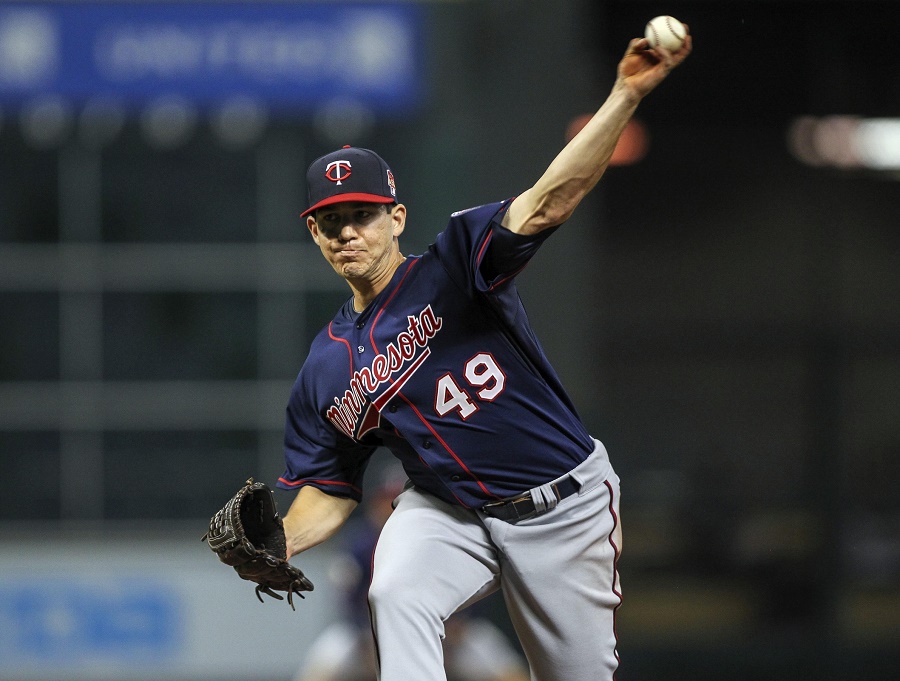 The Background The Twins acquired Tommy Milone at the July 31 trade deadline from the Oakland A’s in exchange for outfielder Sam Fuld. Despite another good season and a strong track record of success with the A’s, he was pitching at the Triple-A level because of the team’s additions of pitchers Jeff Samardizja, Jason Hammel and Jon Lester. Milone made one start in Rochester before getting called up to the Twins where he spent the remainder of the season. Unfortunately, he was hurt and experienced neck pain. He ended up having surgery in the offseason to remove a benign tumor in his neck. Milone was the 10th round pick of the Washington Nationals in the June 2008 draft out of the University of Southern California. He moved quickly and debuted with the Nationals in September of 2011. Following the season, he was dealt to the A’s as part of a package in the Gio Gonzalez trade. Over the next two-and-a-half seasons with the A’s, he went 31-22 with a 3.84 ERA and a 1.26 WHIP. What is he? Milone is what he is, and he is a rarity in major league baseball. Few pitchers throw with as little velocity as Milone does. His average fastball clocked in at just 86.6 mph in 2014, the third straight season that it has dropped. He combines that with a cutter that is about one mph slower than the fastball, but it moves just enough to stay off the bat’s barrel. His changeup sat at 80 mph in 2014, just 6.5 mph slower than his fastball. Earlier in his career, the differential between fastball and changeup was almost nine mph. He also throws a mid-70s curveball from time to time. With that little speed, Milone clearly is not going to rack up a lot of strikeouts. He is going to give up hits, and he will need to rely on his defense. He is primarily a fly ball pitcher, though it isn’t as extreme as you would think. The secret to Milone’s success is throwing strikes and trying to minimize solid contact, keeping the ball in the park. He had a good track record for multiple years. Some wonder whether the huge foul territory at O.co Coliseum helped him out. Balls that are easily foul outs in Oakland might land 15 rows into the seating at Target Field giving the hitter another opportunity to get a hittable pitch. Milone Percentage Milone was offered arbitration during the offseason. He and the Twins came to an agreement last month at about $2.8 million. Will the business of baseball, and dollars and cents, play a role in whether Milone is in the opening day starting rotation? It’s likely a piece of the puzzle. If his performance is as good as the other competitors, he will likely be given the first opportunity. However, his track record and the fact that he likely will go into spring training healthy should be a larger part of the discussion. For what it’s worth, MIlone also has one option remaining, so he could be sent back to Rochester to start the season as well. With that, my estimation for the odds of Tommy Milone winning the Twins fifth starter competition is at 35% Previous 5th starter candidate stories: Mike Pelfrey Alex Meyer Tim Stauffer
 -
Article: TD Top Prospects: #9 Trevor May
Seth Stohs replied to Jeremy Nygaard's topic in Twins Daily Front Page News
May is on our list (And most lists) because he still is a rookie in 2015 ( -
Article: TD Top Prospects: #7 Jorge Polanco
Seth Stohs posted a topic in Twins Daily Front Page News
In 2009, the Miguel Sano signing got most of the headlines, but earlier that summer the Twins signed shortstop Jorge Polanco from the Dominican Republic for $750,000. At the time, he was 5-10 and maybe 150 pounds. Maybe. He was known primarily for his terrific middle infield defense. The last couple of seasons, he has figured things out with the bat. He became the youngest player promoted to the Twins since Joe Mauer in 2004 when he was called up in June, directly from Ft. Myers.Age: 21 (DOB: 7/5/93) 2014 Stats (Ft. Myers/New Britain): .288/.353/.395 (.748) with 23-2B, 6-3B, 7-HR ETA: early 2016 2014 Ranking: #8 What’s To Like Patience was a necessity as he grew and developed. It took him two years of struggles in the Gulf Coast League before advancing to the Appalachian League. He hit .318/.388/.514 (.903) with 22 extra base hits in 51 games at Elizabethton. In the talent-laden 2013 lineup, Polanco batted third and hit .308/.362/.452 with 47 extra base hits in 115 games. Who would have guessed that Polanco would be the first player from that Cedar Rapids roster to get to the big leagues? The reason that the Twins called him up for two short stints in 2014 was primarily because of 40-man roster issues. However, the Twins brass would not put a guy in a situation that they don’t believe he could handle. People frequently talk about his intelligence, maturity and poise. What’s Left To Work On Though he was originally signed as defensive-minded shortstop, he had spent most of his career starts at second base. However, in 2014, he made the move to over to shortstop. He struggled early in the year and ended with 35 errors in 119 games at the position. He’ll need to clean that up some, but he has the tools to be a quality shortstop, though many feel his best position may be second base. After hitting .291/.364/.415 (.780) with 29 extra base hits in 94 games with the Miracle, Polanco hit .281/.323/.342 (.665) with seven extra base hits in 37 games with the Rock Cats. He will have to show some more plate discipline in Chattanooga in 2015. He has never been one to walk a lot, but to be successful, I believe he will need his IsoD (Isolated Discipline = On Base Percentage minus Batting Average) to be at least 0.060, particularly if he is going to hit near the top of the order. What’s Next Polanco has the tools. He can play defense and has a good arm. He can hit, takes quality at-bats and runs well. He will never be a 20+ home run hitter, but he can hit a lot of doubles. He has the tools, though none of them are in the elite category. He has a pretty high floor meaning that he should be an everyday player somewhere in the middle infield. He has the chance to be a long-time major league starter. He should spend the majority of the 2015 season at Chattanooga where he will most likely again play primarily at shortstop. He should continue to get time at second base. And, should the Twins need a middle infielder, he will again be just a phone call away. TD Top Prospect #10: Nick Burdi TD Top Prospect #9: Trevor May TD Top Prospect #8: Eddie Rosario TD Top Prospect #7: Jorge Polanco TD Top Prospect #6: TD Top Prospect #5: TD Top Prospect #4: TD Top Prospect #3: TD Top Prospect #2: TD Top Prospect #1: Click here to view the article -
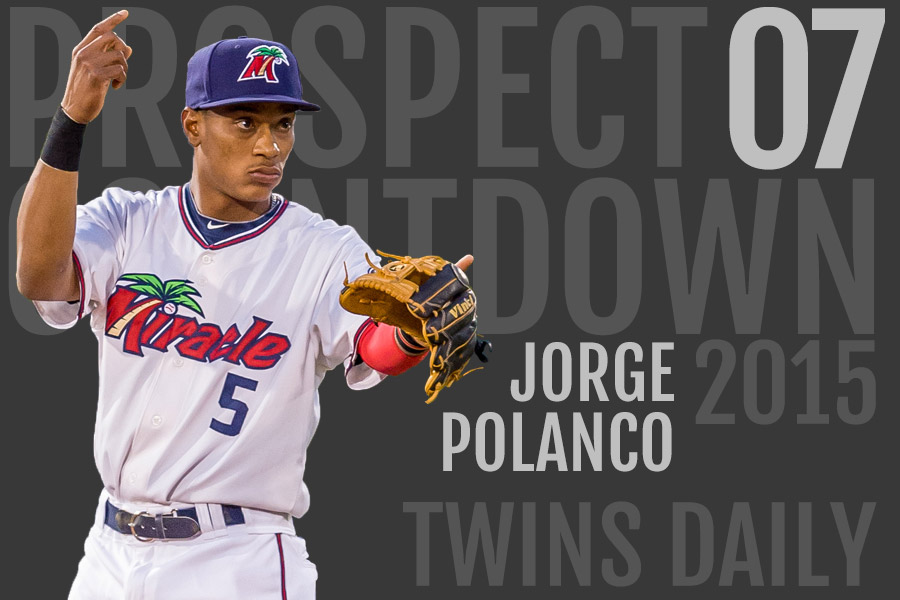 Age: 21 (DOB: 7/5/93) 2014 Stats (Ft. Myers/New Britain): .288/.353/.395 (.748) with 23-2B, 6-3B, 7-HR ETA: early 2016 2014 Ranking: #8 What’s To Like Patience was a necessity as he grew and developed. It took him two years of struggles in the Gulf Coast League before advancing to the Appalachian League. He hit .318/.388/.514 (.903) with 22 extra base hits in 51 games at Elizabethton. In the talent-laden 2013 lineup, Polanco batted third and hit .308/.362/.452 with 47 extra base hits in 115 games. Who would have guessed that Polanco would be the first player from that Cedar Rapids roster to get to the big leagues? The reason that the Twins called him up for two short stints in 2014 was primarily because of 40-man roster issues. However, the Twins brass would not put a guy in a situation that they don’t believe he could handle. People frequently talk about his intelligence, maturity and poise. What’s Left To Work On Though he was originally signed as defensive-minded shortstop, he had spent most of his career starts at second base. However, in 2014, he made the move to over to shortstop. He struggled early in the year and ended with 35 errors in 119 games at the position. He’ll need to clean that up some, but he has the tools to be a quality shortstop, though many feel his best position may be second base. After hitting .291/.364/.415 (.780) with 29 extra base hits in 94 games with the Miracle, Polanco hit .281/.323/.342 (.665) with seven extra base hits in 37 games with the Rock Cats. He will have to show some more plate discipline in Chattanooga in 2015. He has never been one to walk a lot, but to be successful, I believe he will need his IsoD (Isolated Discipline = On Base Percentage minus Batting Average) to be at least 0.060, particularly if he is going to hit near the top of the order. What’s Next Polanco has the tools. He can play defense and has a good arm. He can hit, takes quality at-bats and runs well. He will never be a 20+ home run hitter, but he can hit a lot of doubles. He has the tools, though none of them are in the elite category. He has a pretty high floor meaning that he should be an everyday player somewhere in the middle infield. He has the chance to be a long-time major league starter. He should spend the majority of the 2015 season at Chattanooga where he will most likely again play primarily at shortstop. He should continue to get time at second base. And, should the Twins need a middle infielder, he will again be just a phone call away. TD Top Prospect #10: Nick Burdi TD Top Prospect #9: Trevor May TD Top Prospect #8: Eddie Rosario TD Top Prospect #7: Jorge Polanco TD Top Prospect #6: TD Top Prospect #5: TD Top Prospect #4: TD Top Prospect #3: TD Top Prospect #2: TD Top Prospect #1:
 -
Article: TD Top Prospects: #8 Eddie Rosario
Seth Stohs replied to Cody Christie's topic in Twins Daily Front Page News
I missed the first segment of tonight's Twins Hot Stove show and the interview with Paul Molitor. But on twitter (Twins Radio), they posted: -
Article: TD Top Prospects: #8 Eddie Rosario
Seth Stohs replied to Cody Christie's topic in Twins Daily Front Page News
Agreed... the power-by-position thing is pretty old-school, but it's wise that Cody brought it up because it is a topic that comes up here a lot. Some still think corner infielders and corner outfielders have to have big home run power. It's obviously nice, but it shouldn't be a deal breaker by any means. Rosario's definitely not perfect, but he can be what Danny Santana was last year, with more power. He's also a very good defender. With Santana, we see the lack of walks, but at least in 2014, he showed a very good strike zone knowledge. With Rosario, we see the lack of walks in the minor leagues too, but it'd be interesting to see over several big league games if he can control the strike zone in the same way. That'll be important. -
Article: TD Top Prospects: #9 Trevor May
Seth Stohs replied to Jeremy Nygaard's topic in Twins Daily Front Page News
Yeah, May can hit 95 at times, but he'll sit 91-93 most of the time... That he's 6-5 has little to do with it. Every arm is different. I keep bringing it up, but his walk/K/IP splits from his first 3 MLB starts to his final 7 starts tell the whole story for me... night and day. And, Rick Anderson deserves a ton of credit for the change. May gave him a lot of credit when I talked to him at Twins Fest, mechanically and mentally -
Article: 5th Starter Candidate: Tim Stauffer
Seth Stohs replied to Seth Stohs's topic in Twins Daily Front Page News
I would agree with that completely. However, the Twins continue to say that he is going to be given an opportunity. I think the tone of the article indicates how little I believe that it really could happen. -
Article: 5th Starter Candidate: Tim Stauffer
Seth Stohs replied to Seth Stohs's topic in Twins Daily Front Page News
Terry Ryan and Rob Antony are as straight-forward as it gets. My guess is that they said that he'd be given an opportunity, but I'm sure they also made it clear that they had Milone and Pelfrey and May and Meyer as well. That said, the Twins gave him 2.2 million good reasons to come in as well... -
Article: 5th Starter Candidate: Tim Stauffer
Seth Stohs replied to Seth Stohs's topic in Twins Daily Front Page News
Because he'll be given an opportunity and you never know what will/could happen. Weird things happen. -
Last week, we looked at a couple of the Twins fifth starter candidates, Mike Pelfrey and Alex Meyer. This week we will continue to look at the Twins fifth starter candidates. Today, we will take a look at one of the newest pitchers in the Twins organization, Tim Stauffer.The Background Just before the holidays, the Twins signed 32-year-old, right-handed pitcher Tim Stauffer to a one-year contract worth $2.2 million. Though he has worked out of the San Diego Padres’ bullpen the past two seasons, he was told that he would be given an opportunity to start. Was that just something he was told by the Twins to get him to sign with them, or will he really be given a shot to leave Ft. Myers as the team’s fifth starter? Well, fortunately pitchers and catchers report in less than two weeks, so we’ll find out what kind of opportunity he really gets. Stauffer was the first-round pick of the Padres in 2003. He was the fourth overall pick out of the University of Richmond. During his first professional season (2004), he started in High-A and pitched at three levels. By mid-May of 2005, he had made his major league debut with San Diego. He pitched mostly in AAA in 2006 and 2007. Unfortunately, he had shoulder surgery and missed the entire 2008 season and almost half of the 2009 season. He returned to the Padres and made 14 starts that year. In 2010, he posted a 1.85 ERA, mostly out of the Padres bullpen. That led to his best seasons, 2011, when he made 31 starts. He went 9-12 with a 3.73 ERA in 185.2 innings. He was set to be the 2012 Opening Day starter, but instead he had surgery on his flexor tendon and made just one appearance all year. And that brings us to the 2013 season and he’s been a pretty solid bullpen performer the last two years. He combined to go 9-3 with a 3.63 ERA and a 1.26 WHIP. He’s also struck out 131 batters in 134 innings. What is he? Stauffer is a typical, standard, middle-of-the-road, back-of-a-rotation starting pitcher in terms of his stuff. He has a good mix of pitches. His average fastball sits between 90 and 91 mph, and he throws it a little over half the time. He has added a cutter in the mid-80s which helps him get a lot of ground balls. His change-up sits around 80 mph, so it’s a good velocity difference from the fastball. He also has a slow curveball in the low-70s that he doesn’t throw a ton. Parker went into great details on what Stauffer is and what he throws in December. Be sure to read that here. He needs to have very good control, and his career walks per nine average is at 3.0, which is really average. His career strikeout rate is 6.8 per nine, which again, is very average. In other words, if he were to be the Twins 5th starter, and last the whole year, he would probably be... OK. Stauffer Percentage The hope, if Stauffer were named fifth starter, would be that he could work 185 innings like he did in 2011. Well, that may not actually be the goal. Stauffer, or others mentioned in this fifth starter debate, would presumably be just a stop gap. The bigger goal may be to have Trevor May or Alex Meyer fully ready for the role before midseason. Stauffer would then fall back into the Anthony Swarzak role. He’d be capable of pitching in long relief or 7th inning situations. If I were to guess the odds that Tim Stauffer begins the season as the Twins fifth starter, I would probably put the odds at less than 1%. Previous 5th starter candidate stories: Mike Pelfrey Alex Meyer Click here to view the article
-
 The Background Just before the holidays, the Twins signed 32-year-old, right-handed pitcher Tim Stauffer to a one-year contract worth $2.2 million. Though he has worked out of the San Diego Padres’ bullpen the past two seasons, he was told that he would be given an opportunity to start. Was that just something he was told by the Twins to get him to sign with them, or will he really be given a shot to leave Ft. Myers as the team’s fifth starter? Well, fortunately pitchers and catchers report in less than two weeks, so we’ll find out what kind of opportunity he really gets. Stauffer was the first-round pick of the Padres in 2003. He was the fourth overall pick out of the University of Richmond. During his first professional season (2004), he started in High-A and pitched at three levels. By mid-May of 2005, he had made his major league debut with San Diego. He pitched mostly in AAA in 2006 and 2007. Unfortunately, he had shoulder surgery and missed the entire 2008 season and almost half of the 2009 season. He returned to the Padres and made 14 starts that year. In 2010, he posted a 1.85 ERA, mostly out of the Padres bullpen. That led to his best seasons, 2011, when he made 31 starts. He went 9-12 with a 3.73 ERA in 185.2 innings. He was set to be the 2012 Opening Day starter, but instead he had surgery on his flexor tendon and made just one appearance all year. And that brings us to the 2013 season and he’s been a pretty solid bullpen performer the last two years. He combined to go 9-3 with a 3.63 ERA and a 1.26 WHIP. He’s also struck out 131 batters in 134 innings. What is he? Stauffer is a typical, standard, middle-of-the-road, back-of-a-rotation starting pitcher in terms of his stuff. He has a good mix of pitches. His average fastball sits between 90 and 91 mph, and he throws it a little over half the time. He has added a cutter in the mid-80s which helps him get a lot of ground balls. His change-up sits around 80 mph, so it’s a good velocity difference from the fastball. He also has a slow curveball in the low-70s that he doesn’t throw a ton. Parker went into great details on what Stauffer is and what he throws in December. Be sure to read that here. He needs to have very good control, and his career walks per nine average is at 3.0, which is really average. His career strikeout rate is 6.8 per nine, which again, is very average. In other words, if he were to be the Twins 5th starter, and last the whole year, he would probably be... OK. Stauffer Percentage The hope, if Stauffer were named fifth starter, would be that he could work 185 innings like he did in 2011. Well, that may not actually be the goal. Stauffer, or others mentioned in this fifth starter debate, would presumably be just a stop gap. The bigger goal may be to have Trevor May or Alex Meyer fully ready for the role before midseason. Stauffer would then fall back into the Anthony Swarzak role. He’d be capable of pitching in long relief or 7th inning situations. If I were to guess the odds that Tim Stauffer begins the season as the Twins fifth starter, I would probably put the odds at less than 1%. Previous 5th starter candidate stories: Mike Pelfrey Alex Meyer
 -
Article: TD Top Prospects: #10 Nick Burdi
Seth Stohs replied to Nick Nelson's topic in Twins Daily Front Page News
There are plenty of potential real reasons that it won't happen, but I personally think he'll be up. -
Article: TD Top Prospects: #10 Nick Burdi
Seth Stohs replied to Nick Nelson's topic in Twins Daily Front Page News
I don't think Shooter Hunt is a good example just because Steve Blass Disease isn't even really about control, it's about so much more. Bullock is a good example. I always figure you can count on a pitcher's walk rate going up 15-20% as he moves up each level just because hitters are smarter about the strike zone. Just a rough number, but something. -
Article: TD Top Prospects: #10 Nick Burdi
Seth Stohs replied to Nick Nelson's topic in Twins Daily Front Page News
I'm assuming the Hoey stuff is a joke... it's weird to bring up, but some like bringing up negatives a lot. The two aren't really comparable in any way. Hoey threw 97. Burdi is consistently above that and has secondary pitches. This guy has some elite talent. -
Article: TD Top Prospects: #10 Nick Burdi
Seth Stohs replied to Nick Nelson's topic in Twins Daily Front Page News
His slider between 89-91 is pretty devastating. -
I don't know. If I lived semi-close to the Twin Cities, I'd be all over this. It isn't just for casual fans, but real Twins fans can get the same price. And then hang out at Target Field watching Major League baseball every Sunday afternoon! Well, when there was a home game, of course.
-
Article: 5th Starter Candidate: Alex Meyer
Seth Stohs replied to Seth Stohs's topic in Twins Daily Front Page News
Yup, that is pretty cynical. What is the value at this point in delaying anything with Meyer? And, then why isn't Arcia still in the minor leagues? There are things that he needs to work on. There's no question about that. That has nothing to do with service time or costs or anything. -
Article: 5th Starter Candidate: Alex Meyer
Seth Stohs replied to Seth Stohs's topic in Twins Daily Front Page News
Nolasco has many years of a solid track record and a large contract. Gibson did enough to be in the rotation on OPening Day. Of course, that's still subject to change after a couple of months. I think the article (and I may be biased since I wrote it and read all box scores throughout the year) pretty clearly gives plenty of reason to give Meyer a month or so in AAA to work through some things. It won't hurt him at all. Meyer is going to get up to the Twins in 2015. There's no doubt, unless he's hurt. But he's going to make it. One or two months is not going to make a huge difference. Talking to him a little bit, he will handle whatever decision they make very well and be better for it. -
Some of us older individuals who remember watching a certain "big-boned" centerfielder might disagree... at least for the time being.
- 103 replies
-
- 2
-

-
- adam walker
- stephen gonsalves
- (and 3 more)
