



Seth Stohs
-
Posts
25,909 -
Joined
-
Last visited
-
Days Won
109
Content Type
Profiles
News
Minnesota Twins Videos
2026 Minnesota Twins Top Prospects Ranking
2022 Minnesota Twins Draft Picks
Minnesota Twins Free Agent & Trade Rumors, Notes, & Tidbits
Guides & Resources
2023 Minnesota Twins Draft Picks
The Minnesota Twins Players Project
2024 Minnesota Twins Draft Picks
2025 Minnesota Twins Draft Pick Tracker
2026 Minnesota Twins Draft Tracker: Picks & Bonuses
Forums
Blogs
Events
Store
Downloads
Gallery
Everything posted by Seth Stohs
-
 The Minnesota Twins have traded catcher Bobby Wilson to the Chicago Cubs in exchange for catcher (and relief pitcher?), and Old Friend Chris Gimenez and a potential Player To Be Named Later.The Twins want to give the veterans that they have traded an opportunity to play in the playoffs and win a World Series title. Now Bobby Wilson has that opportunity. Wilson is currently on the disabled list and touted for his tremendous defense and veteran leadership for the catchers and pitchers. Chris Gimenez? Well, the same thing, plus he can pitch in blowouts instead of Mitch Garver or Willians Astudillo, right? Share your thoughts. Click here to view the article
 -
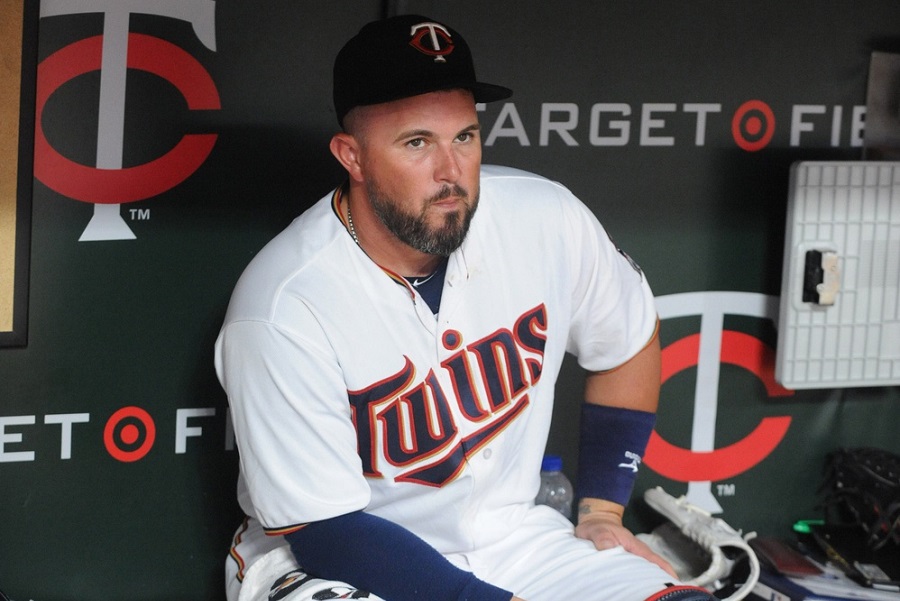 The Twins want to give the veterans that they have traded an opportunity to play in the playoffs and win a World Series title. Now Bobby Wilson has that opportunity. Wilson is currently on the disabled list and touted for his tremendous defense and veteran leadership for the catchers and pitchers. Chris Gimenez? Well, the same thing, plus he can pitch in blowouts instead of Mitch Garver or Willians Astudillo, right? Share your thoughts.
 -
Totally guesswork. But it won't be $13-23 million and it won't be $1-2 million. So, I can broaden it to $3-12 million.
-
20 games in September of a non-playoff season or a full season of Buxton at age 28. All else being equal, it's an easy choice. But in reality, it's not. The front office is going to have its work cut out for themselves in explaining why Buxton wasn't called up, especially now that he's performing (even in a small sample). As for Mauer, I fully admit I want him back. At the same time, to keep him as a viable/valuable player, his playing time does need to continue to be cut back. In the first half, He can platoon to some degree with Tyler Austin at 1B, and Austin can DH against righties (might as well take advantage of Mauer's defense). In the second half, Brent Rooker may be in the picture. Also, we need to remember that Mauer will make like $5-8 million next year (if he chooses to come back). I can't help but agree with Judd Zulgad on this idea... that as Jim Pohlad made it known that whoever the GM was would have to keep Molitor around for a year, Pohlad may reach out to "Falvine" and say, if Mauer wants to come back, Mauer can come back. But I do think the key is having a frank discussion with Mauer about role and playing time expectations. I think he should maybe be limited to the 100 games started range (and some pinch-hitting/late-inning defense) time.
-
Article: Matt Magill Making His Improbable Case
Seth Stohs replied to Seth Stohs's topic in Twins Daily Front Page News
So... lets' take it out on a 28-year-old journeyman who overcame the odds of a minor league free agent offseason, ,has become a serviceable bullpen guy (with a mid-to-upper-90s fastball) who deserves the opportunity hes getting and deserves to be recognized... Makes sense to me. -
Id guess that would be the case. Zero reason to rush them anywhere, but Kirilloff appears ready for AA.
- 28 replies
-
- 1
-

-
- fernando romero
- michael davis
- (and 3 more)
-
That is the exact comment I heard from Jonathan Mayo this spring training when he was in Ft. Myers. He definitely is a good athlete and not just a Palka type. Austin is a pretty good athlete too.
- 28 replies
-
- 1
-
-
- fernando romero
- michael davis
- (and 3 more)
-
In all of baseball? I would think he'd be in the conversation, for sure.
-
Yeah, I know last year Beeker moved up for one start and then pitched in the playoffs for Cedar Rapids... Rosters certainly subject to change.
-
Article: Matt Magill Making His Improbable Case
Seth Stohs replied to Seth Stohs's topic in Twins Daily Front Page News
Note to Self: Avoid reading comments... Avoid reading comments... Secondary Note to Self: Avoid responding to comments... Avoid Responding to comments... -
Article: Matt Magill Making His Improbable Case
Seth Stohs replied to Seth Stohs's topic in Twins Daily Front Page News
The intent wasn't' to make you feel good. It was an acknowledgement that it was better than 10 homers in 46 2/3 innings. -
Article: Matt Magill Making His Improbable Case
Seth Stohs replied to Seth Stohs's topic in Twins Daily Front Page News
Reality, Magill is getting a well-deserved opportunity. He is still young enough. He has plenty of fastball. He has OK secondary, ,and he's deserving of getting this time to find out what he can be given more high-leverage opportunities. I wrote in the final paragraph that it is a feel good story, but he's also got a mid-90s fastball and has more than held his own. He's also been in the big leagues for 5 months. This idea that he "can't be on a championship caliber team" is always one that annoys me. Even championship level teams have role players. Is Magill likely to be a guy that the team turns to in the playoffs? No. Even now he's probably #5 or 6 on an 8-pitcher bullpen. I just think making assumptions on guys in their 20 who are changing organizations or changing roles would be fool-hardy. Im glad the organization (and all organizations) continue to give opportunities to these kinds of guys. Do I think he's a core cog in the future? Probably not, but he deserves and has earned the opportunity. -
Coming into the Twins afternoon game on Sunday, relief pitcher Matt Magill had been pitching well out of the Twins bullpen. He had an ERA of 3.55 and had earned more opportunities in higher-leverage situations. In 45 2/3 innings, he had allowed just seven homers. On Sunday, he worked an inning against the A’s and gave up three homeruns in one inning of work. Baseball guys are superstitious, right? I'll blame myself. Before the game, I spent some time talking with the 28-year-old reliever about his decision to sign with the Twins during the offseason, transitioning to the bullpen and more. It's really been quite the story that Magill has written for himself in 2018.During the offseason, the Twins were quite active in the free agent market. They signed Fernando Rodney, Zach Duke, Addison Reed, Lance Lynn and Logan Morrison to major league deals. In addition, they signed the likes of Ryan LaMarre, Gregorio Petit, Bobby Wilson, Jordan Pacheco, Myles Jaye, Nick Buss and Erick Aybar to minor league contracts with spring training invitations. And then they also signed several minor leaguers to minor league contracts without an official MLB spring training invitation. That group included LHP Casey Crosby, RHPs Omar Bencomo and Ryne Harper, OF James Ramsey, IF Jermaine Curtis, and catcher Wynston Sawyer (who was later given an official invite). Such is the nature of free agency, and as you can see, it is impossible to guarantee which move will be deemed successful as the season progresses. As you can assume from the first paragraphs and this article’s title, we’ll spend a little time talking about another free agent the Twins signed this past offseason, RHP Matt Magill. Matt Magill was drafted out of high school in the 31st round of the 2008 MLB draft by the Los Angeles Dodgers. In late April of 2013, Magill made his MLB debut for the Dodgers and recorded a quality start. He made six starts for Los Angeles and went 0-2 with a 6.51 ERA before being sent to the minor leagues. He made a return to the big leagues for five games in 2016 with the Cincinnati Reds. He spent the entire 2017 season in the San Diego Padres minor leagues. Magill was again a free agent, and he decided that signing with the Twins was the right thing for him to do. When Magill was asked about what went into the decision for him to sign with the Twins, he provided a couple of good reasons before acknowledging the biggest reason. “I knew that they had a good foundation intact, and I knew they really liked bringing guys up from within their organization. They really like to bring those guys up. I felt like they were going to be contending this year for sure too, and honestly, this was my only option this year too.” Magill continued, “This offseason, they were the only team that called me. So this was my option. That was the main reason. It made it more easy going into the situation knowing that they were contending for a playoff spot going into it. Also, I’ve heard only good things about this organization.” Magill is a great example of a lot of journeymen players who love the game and want to play until the uniform gets ripped off of their back, or until all options have been exhausted. Magill notes, “Honestly, they offered me the minor league spring training. I told them I would love to go just because I wanted a job. I wanted to pitch. I wanted to play. So when they gave me that opportunity, I was just excited. I wasn’t really worried about getting a big league camp invite. I just wanted to pitch. I wanted to play baseball, wherever that meant I was going to go play. They told me I would have some opportunities to go over and pitch on the big league side, so I was very excited for that. I just tried to make the most of the opportunity I was given.” The Twins kept their word. He pitched five innings over six games for the Twins in spring training. He gave up just one earned run. Most of his spring work came on the back fields of the Twins spring facilities. However, he was impressive, flashing a big fastball to go with a sharp slider. He began the 2018 season in Rochester, but he quickly impressed. Reports indicated that he was consistently hitting 96 and touched 98 at times. As we all recall, the Twins bullpen struggled early this season and with weather affecting so many games, the Twins had to make several moves. After just five outings (and 8 2/3 innings) in Rochester, Matt Magill was added to the 40-man roster and called up to the Twins in late April. Even he admits to being surprised. “I was very, very, very surprised. Honestly. Knowing that I wasn’t on the roster, I kind of came out of nowhere. I knew that it was going to be hard for me to get up to the big leagues. I would have to do everything I could. Not saying I don’t believe in my ability, but I know the business side of baseball sometimes prevents some guys who are really good at playing baseball to get to the big leagues.” In addition, he looked around during spring training and it added to his thoughts that it would be difficult for him to get a shot in the big leagues. “When I went to spring training, I saw the arms we had in our bullpen in Rochester. I thought it was going to be triple as hard because we have so many talented guys down there still. The future of the Twins, I just, it’s only going to look up because the arms they have down there are unbelievable.” Tyler Duffey, Alan Busenitz, Gabriel Moya, and John Curtiss have had some time in the big leagues this year. Nick Anderson and Jake Reed still have not had a big league opportunity (but should after Labor Day). Through the majority of his career, Magill has been a starter. He feels that experience has helped him in his time in the bullpen. “It helped me when I was doing the long role. It helped me set up hitters and feel like I could go length. I was very comfortable throwing multiple innings. I also was very comfortable coming in early in the game. That made it easier for me. I think it also helped me appreciate both sides of the game and both sides of the pitching aspect of it.” However, he has become much more comfortable coming out of the bullpen and gained confidence along the way. “Out of the bullpen is nice. You just go in and attack hitters. There is game plan, but you’re going in to get that one guy out at a time. Starting is a whole different mindset for me. I thought it was trying to build up to getting as many innings as you can for your team. (In the bullpen), it’s just about getting outs.” And for the most part, Matt Magill has done a real nice job of getting outs for the Twins. (Again, I’m accepting the blame for Sunday!) The Twins will certainly continue to evaluate Magill, along with those Rochester pitchers, over the final month to see determine potential roles for 2019 But when you consider that Magill didn’t have offers from other organizations and didn’t even get an invitation to big league camp, it has been a great story. And not just a feel-good story, but a story about a journeyman who throws 95-97 mph and has helped the Twins bullpen. Still just 28, he has a chance to stick around for a while. Click here to view the article
-
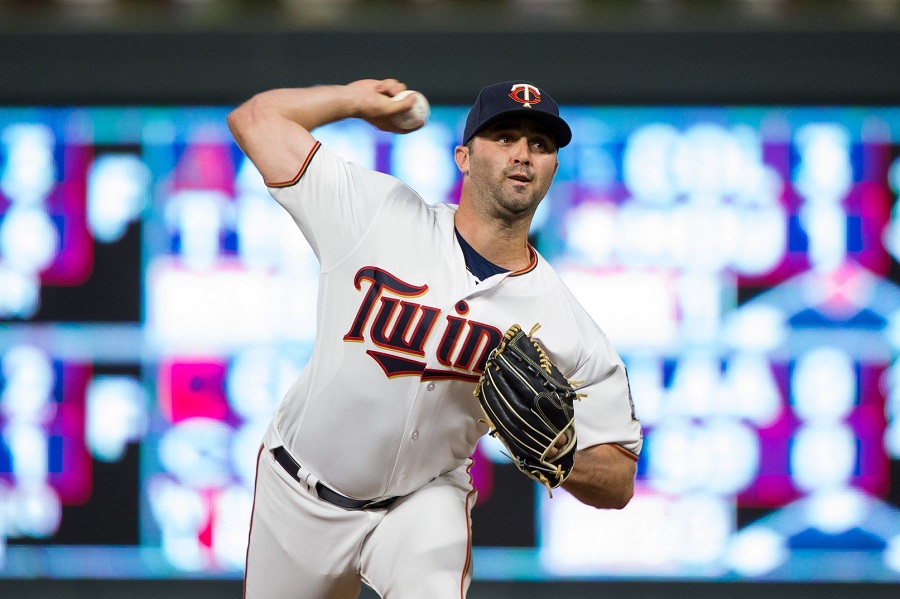 During the offseason, the Twins were quite active in the free agent market. They signed Fernando Rodney, Zach Duke, Addison Reed, Lance Lynn and Logan Morrison to major league deals. In addition, they signed the likes of Ryan LaMarre, Gregorio Petit, Bobby Wilson, Jordan Pacheco, Myles Jaye, Nick Buss and Erick Aybar to minor league contracts with spring training invitations. And then they also signed several minor leaguers to minor league contracts without an official MLB spring training invitation. That group included LHP Casey Crosby, RHPs Omar Bencomo and Ryne Harper, OF James Ramsey, IF Jermaine Curtis, and catcher Wynston Sawyer (who was later given an official invite). Such is the nature of free agency, and as you can see, it is impossible to guarantee which move will be deemed successful as the season progresses. As you can assume from the first paragraphs and this article’s title, we’ll spend a little time talking about another free agent the Twins signed this past offseason, RHP Matt Magill. Matt Magill was drafted out of high school in the 31st round of the 2008 MLB draft by the Los Angeles Dodgers. In late April of 2013, Magill made his MLB debut for the Dodgers and recorded a quality start. He made six starts for Los Angeles and went 0-2 with a 6.51 ERA before being sent to the minor leagues. He made a return to the big leagues for five games in 2016 with the Cincinnati Reds. He spent the entire 2017 season in the San Diego Padres minor leagues. Magill was again a free agent, and he decided that signing with the Twins was the right thing for him to do. When Magill was asked about what went into the decision for him to sign with the Twins, he provided a couple of good reasons before acknowledging the biggest reason. “I knew that they had a good foundation intact, and I knew they really liked bringing guys up from within their organization. They really like to bring those guys up. I felt like they were going to be contending this year for sure too, and honestly, this was my only option this year too.” Magill continued, “This offseason, they were the only team that called me. So this was my option. That was the main reason. It made it more easy going into the situation knowing that they were contending for a playoff spot going into it. Also, I’ve heard only good things about this organization.” Magill is a great example of a lot of journeymen players who love the game and want to play until the uniform gets ripped off of their back, or until all options have been exhausted. Magill notes, “Honestly, they offered me the minor league spring training. I told them I would love to go just because I wanted a job. I wanted to pitch. I wanted to play. So when they gave me that opportunity, I was just excited. I wasn’t really worried about getting a big league camp invite. I just wanted to pitch. I wanted to play baseball, wherever that meant I was going to go play. They told me I would have some opportunities to go over and pitch on the big league side, so I was very excited for that. I just tried to make the most of the opportunity I was given.” The Twins kept their word. He pitched five innings over six games for the Twins in spring training. He gave up just one earned run. Most of his spring work came on the back fields of the Twins spring facilities. However, he was impressive, flashing a big fastball to go with a sharp slider. He began the 2018 season in Rochester, but he quickly impressed. Reports indicated that he was consistently hitting 96 and touched 98 at times. As we all recall, the Twins bullpen struggled early this season and with weather affecting so many games, the Twins had to make several moves. After just five outings (and 8 2/3 innings) in Rochester, Matt Magill was added to the 40-man roster and called up to the Twins in late April. Even he admits to being surprised. “I was very, very, very surprised. Honestly. Knowing that I wasn’t on the roster, I kind of came out of nowhere. I knew that it was going to be hard for me to get up to the big leagues. I would have to do everything I could. Not saying I don’t believe in my ability, but I know the business side of baseball sometimes prevents some guys who are really good at playing baseball to get to the big leagues.” In addition, he looked around during spring training and it added to his thoughts that it would be difficult for him to get a shot in the big leagues. “When I went to spring training, I saw the arms we had in our bullpen in Rochester. I thought it was going to be triple as hard because we have so many talented guys down there still. The future of the Twins, I just, it’s only going to look up because the arms they have down there are unbelievable.” Tyler Duffey, Alan Busenitz, Gabriel Moya, and John Curtiss have had some time in the big leagues this year. Nick Anderson and Jake Reed still have not had a big league opportunity (but should after Labor Day). Through the majority of his career, Magill has been a starter. He feels that experience has helped him in his time in the bullpen. “It helped me when I was doing the long role. It helped me set up hitters and feel like I could go length. I was very comfortable throwing multiple innings. I also was very comfortable coming in early in the game. That made it easier for me. I think it also helped me appreciate both sides of the game and both sides of the pitching aspect of it.” However, he has become much more comfortable coming out of the bullpen and gained confidence along the way. “Out of the bullpen is nice. You just go in and attack hitters. There is game plan, but you’re going in to get that one guy out at a time. Starting is a whole different mindset for me. I thought it was trying to build up to getting as many innings as you can for your team. (In the bullpen), it’s just about getting outs.” And for the most part, Matt Magill has done a real nice job of getting outs for the Twins. (Again, I’m accepting the blame for Sunday!) The Twins will certainly continue to evaluate Magill, along with those Rochester pitchers, over the final month to see determine potential roles for 2019 But when you consider that Magill didn’t have offers from other organizations and didn’t even get an invitation to big league camp, it has been a great story. And not just a feel-good story, but a story about a journeyman who throws 95-97 mph and has helped the Twins bullpen. Still just 28, he has a chance to stick around for a while.
 -
Absolutely nothing. He's in a slump in the late season of his first full professional season. Happens to them all... well, apparently except Alex Kirilloff...
- 28 replies
-
- 6
-
-
- fernando romero
- michael davis
- (and 3 more)
-
Following the 2012 season, the Minnesota Twins made the decision to end their time in Beloit. They worked out a Player Development Agreement with the Cedar Rapids Kernels starting in the 2013 season. On Monday night, the Kernels clinched a 2018 playoff berth with a win. It marks the sixth straight season (all six with the Twins) that the Kernels will be in the playoffs. Jake Mauer managed the first four teams. Tommy Watkins was there in 2017. Congratulations to Toby Gardenhire and his coaching staff on another strong, successful season in Iowa!Keep reading to find out more on the night in the Twins minor league system on Mondays, please feel free to discuss and ask questions. TRANSACTIONS RHP Omar Bencomo was activated from the Lookouts DL. Clark Beeker was returned to the Miracle.RED WINGS REPORTRochester 3, Syracuse 6 Box Score When Fernando Romero left the mound with two outs in the bottom of the sixth inning, the Red Wings held a 3-1 lead. Ryne Harper came on and allowed both inherited runners to score. Harper went another two innings after getting the third out of the sixth inning.He gave up five hits, walked one and struck out four in his 2 1/3 innings. Romero ended up giving up three runs on eight hits over his 5 2/3 innings. He struck out six without issuing a walk. Byron Buxton had a single and his ninth double in the game. He was the lone Red Wings batter with more than one hit. Johnny Field, Kennys Vargas and Juan Graterol each added a double. CHATTANOOGA CHATTER Chattanooga 4, Jacksonville 1 Box Score Casey Crosby was the team’s “opener” on Monday. The left-hander gave up two hits and walked two over two shutout innings. He struck out three. Omar Bencomo went the next five innings to win for the eighth time this season. He gave up five hits without allowing a run. He walked none and struck out four. Devin Smeltzer pitched a scoreless eighth inning. He was charged with a run in the ninth inning and recorded one out. Cody Stashak got the final two outs to record his fourth save. Andy Wilkins had another strong game. He went 1-for-2 with two walks and his 10th home run. Brent Rooker drove in a run with his 32nd double. Jimmy Kerrigan’s sixth double drove in a run as well. MIRACLE MATTERS Ft. Myers 3, Bradenton 2 Box Score Brusdar Graterol turned 20 years old on Sunday. On Monday, he made his first start as an non-teenager. He threw 5 2/3 scoreless innings. He gave up four hits, walked on and struck out six. Colton Davis came on and struck out three over the next 2 1/3 innings. He gave up no runs on no hits and no walks. He did hit one batter. Kevin Marnon recorded the save despite giving up two runs on three hits in the ninth inning for the save. Alex Kirilloff led the offense. He went 3-for-4 with two RBIs. He had RBI singles in his final two at-bats. Caleb Hamilton’s 18th double drove in the team’s first run. Aaron Whitefield was back in the leadoff spot and responded by going 2-for-4 with his sixth double. Royce Lewis was moved to the #3 spot in the lineup for this game. He went 0-4 and is now 5-for-48 (.104) in his last 12 games. Just a reminder, slumps can happen to anyone. KERNELS NUGGETS Cedar Rapids 5, Kane County 1 Box Score The Cedar Rapids Kernels will head to the Midwest League playoffs for the sixth straight season (also their sixth straight season as a Twins affiliate). Randy Dobnak has been a key starter for the Kernels throughout the season. With seven innings of one-run ball on Monday night, he earned his tenth win of the year. He gave up three hits, walked two and struck out four. Jared Finkel worked the final two innings without allowing a run. He gave up one hit, walked two, hit one and struck one out. Michael Davis continued his impressive professional debut. On this night, the shortstop went 2-for-3 with his eighth home run and three runs driven in. In 36 games with the Kernels (he played three games for Elizabethton), the 24th round pick from Texas Tech has nine doubles and eight home runs. He is now hitting .292 as well. Victor Tademo, making his Midwest League debut, hit his first home run of the season. He had spent the majority of this season in extended spring training and in the GCL (though he also played a few games with the Miracle). E-TWINS E-TALK Elizabethton 6, Pulaski 2 Box Score The E-Twins are approaching the playoffs and got a strong all-around game on Monday night. Luis Rijo started and went just two innings, but he was perfect and struck out four. Brian Rapp worked the next three innings. He gave up two runs on five hits and two walks while striking out three. Blair Lakso struck out four, and walked two, over three no-hit innings. Tanner Howell worked a scoreless ninth inning, striking out one. Jean Carlos Arias led the offense. He went 2-for-4 with a walk, his third triple, and his third stolen base. Jared Akins had two hits in three at bats. Trevor Casanova knocked his 14th double, and he had a walk. Ricky De La Torre doubled for the 10th time. GCL TWINS TALK The GCL Twins season came to an end on Saturday. They finished with a 32-24 record which was 1 1/2 games behind the GCL South Division champion GCL Red Sox. STARS OF THE DAY Twins Daily Hitter of the Day: Michael Davis, Cedar Rapids Kernels (2-3, HR(8), 3 RBI). Twins Daily Pitcher of the Day: Brusdar Graterol, Ft. Myers Miracle (5.2 IP, 4 H, 0 ER, 1 IBB, 6 K) PROSPECT SUMMARY Here’s a look at how the Twins Daily Midseason Top 20 Twins Prospects performed. #1 - Royce Lewis (Ft. Myers) - 0-4, K #2 - Alex Kirilloff (Ft. Myers) - 3-4, 2 RBI #3 - Brusdar Graterol (Ft. Myers) - 5.2 IP, 4 H, 0 R, 1 BB, 6 K (88 pitches, 59 strikes) #4 - Nick Gordon (Rochester) - 1-4, K #5 - Stephen Gonsalves (Minnesota) - No game scheduled #6 - Trevor Larnach (Cedar Rapids) - 0-4 #7 - Brent Rooker (Chattanooga) - 1-4, 2B(32), RBI, R, K #8 - Akil Baddoo (Cedar Rapids) - 0-4, K #9 -Wander Javier - out of for the season #10 - Zack Littell (Rochester) - Did not pitch #11 - Blayne Enlow (Cedar Rapids) - Did not pitch #12 - LaMonte Wade (Rochester) - 1-4, R, RBI #13 - Travis Blankenhorn (Ft. Myers) - 0-3 #14 - Lewis Thorpe (Rochester) - Did not pitch #15 - Ben Rortvedt (Ft. Myers) - Did not play #16 - Yunior Severino (Elizabethton) - Did not play #17 - Lewin Diaz (Ft. Myers) - Out for the season (wrist) #18 - Ryan Jeffers (Cedar Rapids) - 1-4 #19 - Jacob Pearson (Cedar Rapids) - 1-2, BB, R, RBI, K #20 - Luis Arraez (Chattanooga) - Did not play #21 - Jose Miranda (Ft. Myers) - 0-4 *Since Wander Javier is out, I’d add #21 to the list. TUESDAY’S PROBABLE STARTERS Buffalo @ Rochester (DH 4:05 CST) - RHP Zack Littell (5-6, 3.42 ERA), TBD Jacksonville @ Chattanooga (6:15 CST) - RHP Sean Poppen (5-6, 3.44 ERA) Bradenton @ Ft. Myers (5:30 CST) - RHP Andro Cutura (4-6, 3.88 ERA) Cedar Rapids - No game scheduled Pulaski @ Elizabethton (6:00 CST) - TBD GCL Twins - Season Completed Please feel free to ask any questions about Monday’s games, or ask any questions you may have. Click here to view the article
- 28 replies
-
- 1
-
-
- fernando romero
- michael davis
- (and 3 more)
-
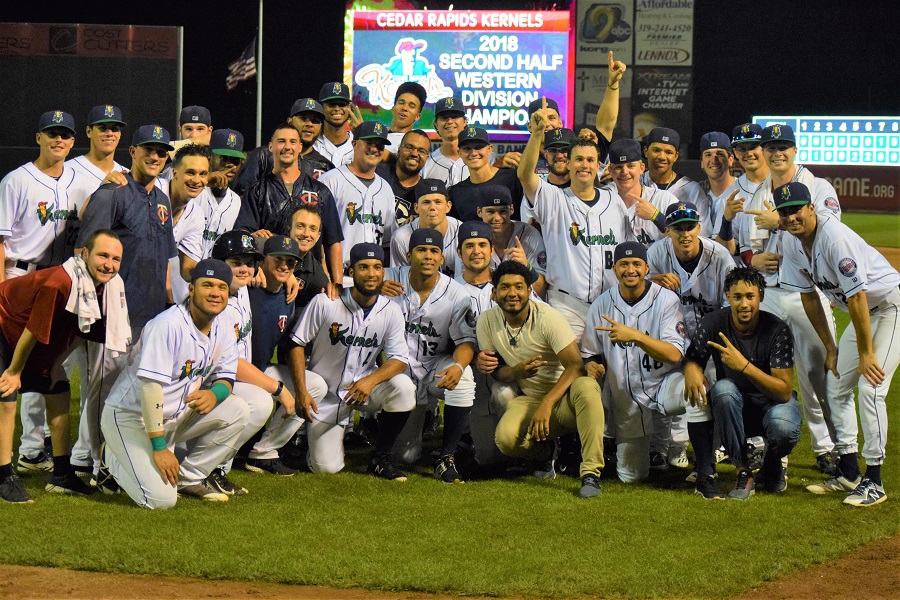 Keep reading to find out more on the night in the Twins minor league system on Mondays, please feel free to discuss and ask questions. TRANSACTIONS RHP Omar Bencomo was activated from the Lookouts DL. Clark Beeker was returned to the Miracle. RED WINGS REPORT Rochester 3, Syracuse 6 Box Score When Fernando Romero left the mound with two outs in the bottom of the sixth inning, the Red Wings held a 3-1 lead. Ryne Harper came on and allowed both inherited runners to score. Harper went another two innings after getting the third out of the sixth inning.He gave up five hits, walked one and struck out four in his 2 1/3 innings. Romero ended up giving up three runs on eight hits over his 5 2/3 innings. He struck out six without issuing a walk. Byron Buxton had a single and his ninth double in the game. He was the lone Red Wings batter with more than one hit. Johnny Field, Kennys Vargas and Juan Graterol each added a double. CHATTANOOGA CHATTER Chattanooga 4, Jacksonville 1 Box Score Casey Crosby was the team’s “opener” on Monday. The left-hander gave up two hits and walked two over two shutout innings. He struck out three. Omar Bencomo went the next five innings to win for the eighth time this season. He gave up five hits without allowing a run. He walked none and struck out four. Devin Smeltzer pitched a scoreless eighth inning. He was charged with a run in the ninth inning and recorded one out. Cody Stashak got the final two outs to record his fourth save. Andy Wilkins had another strong game. He went 1-for-2 with two walks and his 10th home run. Brent Rooker drove in a run with his 32nd double. Jimmy Kerrigan’s sixth double drove in a run as well. MIRACLE MATTERS Ft. Myers 3, Bradenton 2 Box Score Brusdar Graterol turned 20 years old on Sunday. On Monday, he made his first start as an non-teenager. He threw 5 2/3 scoreless innings. He gave up four hits, walked on and struck out six. Colton Davis came on and struck out three over the next 2 1/3 innings. He gave up no runs on no hits and no walks. He did hit one batter. Kevin Marnon recorded the save despite giving up two runs on three hits in the ninth inning for the save. Alex Kirilloff led the offense. He went 3-for-4 with two RBIs. He had RBI singles in his final two at-bats. Caleb Hamilton’s 18th double drove in the team’s first run. Aaron Whitefield was back in the leadoff spot and responded by going 2-for-4 with his sixth double. Royce Lewis was moved to the #3 spot in the lineup for this game. He went 0-4 and is now 5-for-48 (.104) in his last 12 games. Just a reminder, slumps can happen to anyone. KERNELS NUGGETS Cedar Rapids 5, Kane County 1 Box Score The Cedar Rapids Kernels will head to the Midwest League playoffs for the sixth straight season (also their sixth straight season as a Twins affiliate). https://www.youtube.com/watch?v=2vtVpSiAYXg&feature=youtu.be Randy Dobnak has been a key starter for the Kernels throughout the season. With seven innings of one-run ball on Monday night, he earned his tenth win of the year. He gave up three hits, walked two and struck out four. Jared Finkel worked the final two innings without allowing a run. He gave up one hit, walked two, hit one and struck one out. Michael Davis continued his impressive professional debut. On this night, the shortstop went 2-for-3 with his eighth home run and three runs driven in. In 36 games with the Kernels (he played three games for Elizabethton), the 24th round pick from Texas Tech has nine doubles and eight home runs. He is now hitting .292 as well. Victor Tademo, making his Midwest League debut, hit his first home run of the season. He had spent the majority of this season in extended spring training and in the GCL (though he also played a few games with the Miracle). E-TWINS E-TALK Elizabethton 6, Pulaski 2 Box Score The E-Twins are approaching the playoffs and got a strong all-around game on Monday night. Luis Rijo started and went just two innings, but he was perfect and struck out four. Brian Rapp worked the next three innings. He gave up two runs on five hits and two walks while striking out three. Blair Lakso struck out four, and walked two, over three no-hit innings. Tanner Howell worked a scoreless ninth inning, striking out one. Jean Carlos Arias led the offense. He went 2-for-4 with a walk, his third triple, and his third stolen base. Jared Akins had two hits in three at bats. Trevor Casanova knocked his 14th double, and he had a walk. Ricky De La Torre doubled for the 10th time. https://twitter.com/Mike_Gally21/status/1034268746037243905 GCL TWINS TALK The GCL Twins season came to an end on Saturday. They finished with a 32-24 record which was 1 1/2 games behind the GCL South Division champion GCL Red Sox. STARS OF THE DAY Twins Daily Hitter of the Day: Michael Davis, Cedar Rapids Kernels (2-3, HR(8), 3 RBI). Twins Daily Pitcher of the Day: Brusdar Graterol, Ft. Myers Miracle (5.2 IP, 4 H, 0 ER, 1 IBB, 6 K) PROSPECT SUMMARY Here’s a look at how the Twins Daily Midseason Top 20 Twins Prospects performed. #1 - Royce Lewis (Ft. Myers) - 0-4, K #2 - Alex Kirilloff (Ft. Myers) - 3-4, 2 RBI #3 - Brusdar Graterol (Ft. Myers) - 5.2 IP, 4 H, 0 R, 1 BB, 6 K (88 pitches, 59 strikes) #4 - Nick Gordon (Rochester) - 1-4, K #5 - Stephen Gonsalves (Minnesota) - No game scheduled #6 - Trevor Larnach (Cedar Rapids) - 0-4 #7 - Brent Rooker (Chattanooga) - 1-4, 2B(32), RBI, R, K #8 - Akil Baddoo (Cedar Rapids) - 0-4, K #9 -Wander Javier - out of for the season #10 - Zack Littell (Rochester) - Did not pitch #11 - Blayne Enlow (Cedar Rapids) - Did not pitch #12 - LaMonte Wade (Rochester) - 1-4, R, RBI #13 - Travis Blankenhorn (Ft. Myers) - 0-3 #14 - Lewis Thorpe (Rochester) - Did not pitch #15 - Ben Rortvedt (Ft. Myers) - Did not play #16 - Yunior Severino (Elizabethton) - Did not play #17 - Lewin Diaz (Ft. Myers) - Out for the season (wrist) #18 - Ryan Jeffers (Cedar Rapids) - 1-4 #19 - Jacob Pearson (Cedar Rapids) - 1-2, BB, R, RBI, K #20 - Luis Arraez (Chattanooga) - Did not play #21 - Jose Miranda (Ft. Myers) - 0-4 *Since Wander Javier is out, I’d add #21 to the list. TUESDAY’S PROBABLE STARTERS Buffalo @ Rochester (DH 4:05 CST) - RHP Zack Littell (5-6, 3.42 ERA), TBD Jacksonville @ Chattanooga (6:15 CST) - RHP Sean Poppen (5-6, 3.44 ERA) Bradenton @ Ft. Myers (5:30 CST) - RHP Andro Cutura (4-6, 3.88 ERA) Cedar Rapids - No game scheduled Pulaski @ Elizabethton (6:00 CST) - TBD GCL Twins - Season Completed Please feel free to ask any questions about Monday’s games, or ask any questions you may have.
 -
I mean, I think a guy with 15 extra base hits in 34 games in a full season leagues less than two months after being drafted is worthy of discussion and conversation. Even if it doesn't make him a Top 50 guy.
- 28 replies
-
- 1
-
-
- tyler wells
- gilberto celestino
- (and 3 more)
-
I think that the Top 30 mentioned in these articles is the Twins Daily Top 30 Midseason Prospect rankings... Those guys weren't in the organization yet, so yup, they're not in it.
-
Ratings also don't have a ton to do with statistics and performance, but instead about upside... so rankings are always just for fun and for discussion... it's a projection. I don't think anyone says it's "reality."
-
Tyler Wells is a top 20 for me. Was at the midseason. Dude's got a chance.
-
He's been in pro ball for 2 months... And, I never said anything about changing his prospect status... And, I've quit caring about age to level of competition. It' silly for four-year college guys, especially in their first year of ball.
-
I feel like we should be talking more about Michael Davis. Later round pick in June, but quickly moved up to Cedar Rapids and has shown power, despite a low-ish batting average, while playing a solid shortstop.
- 28 replies
-
- 5
-
-
- tyler wells
- gilberto celestino
- (and 3 more)
-
Molitor said that he thought ht did just fine behind the plate, though he was also watching his young pitcher, the defense, etc. But in saying that, he said that he didn't have to watch Astudillo because he was just fine. there aren't balls to the backstop, etc. He said before the game that Astudillo can catch, but his value for the Twins will be more in a utility role and for his bat. So, I think it makes sense for him to move around in AAA. He's got a very strong arm.
-
In his pre-game scrum with media on Saturday afternoon, Paul Molitor mentioned that RHP Michael Pineda is traveling to Minneapolis to get his knee checked out. His rehab is being placed "on hold". He experienced some irritation in his knee during a bullpen session in Rochester. They decided to be cautious and have him get it checked out in Mpls, probably do an MRI, etc. The Red Wings have about 10 games left in their season and they anticipate him making one or maybe even two more starts for the Red Wings before coming up to the big leagues for September, assuming that nothing serious is wrong with the knee.
-
- 1
-
