



Seth Stohs
-
Posts
25,909 -
Joined
-
Last visited
-
Days Won
109
Content Type
Profiles
News
Minnesota Twins Videos
2026 Minnesota Twins Top Prospects Ranking
2022 Minnesota Twins Draft Picks
Minnesota Twins Free Agent & Trade Rumors, Notes, & Tidbits
Guides & Resources
2023 Minnesota Twins Draft Picks
The Minnesota Twins Players Project
2024 Minnesota Twins Draft Picks
2025 Minnesota Twins Draft Pick Tracker
2026 Minnesota Twins Draft Tracker: Picks & Bonuses
Forums
Blogs
Events
Store
Downloads
Gallery
Everything posted by Seth Stohs
-
 A couple of Twins minor league notes from this morning... First, from Darren Wolfson, Todd Van Steensel has been released. https://twitter.com/DWolfsonKSTP/status/1026839335956557830 Second, from Mariana Guzman, Lewin Diaz has had successful thumb surgery. https://twitter.com/MarianaGuzzy/status/1026859824561061893
 -
The other side of that is that Morrison is a mini-hot streak away from a 25-home run season. His option for next year is only at like $6 million or so. Maybe they are evaluating that too. I don't claim to know what they're' thinking.
- 25 replies
-
- 1
-

-
- royce lewis
- casey mize
- (and 3 more)
-
Why not? A 26-year-old outfielder who showed a little pop in his 60ish games with the Rays this year. Maybe he's like Cave and a late developer? Maybe he's a really good defender, capable of playing three outfield positions. Maybe he's a legit 4th or 5th outfielder candidate for 2019? Also, with Grossman out, Field probably made a little more sense than Austin from a defensive standpoint... especially since the Twins would likely love to trade Logan Morrison, so they're going to want to get him as many at bats as possible, hoping to be able to get anything for him. Austin will likely be up about the minute that Morrison is dealt.
- 25 replies
-
- 4
-
-
- royce lewis
- casey mize
- (and 3 more)
-
He had a bad game, but he's occasionally flashed the stuff that got people excited before the draft. He can still be a successful big league reliever. It's just taken longer because of the various arm injuries.
- 25 replies
-
- 1
-
-
- royce lewis
- casey mize
- (and 3 more)
-
Added a tweet from Rhett Bollinger that answers that question.
- 25 replies
-
- 1
-
-
- royce lewis
- casey mize
- (and 3 more)
-
On Monday night, 2017 #1 overall pick Royce Lewis faced 2018 #1 overall pick Casey Mize in Lakeland, Florida. It was the Florida State League debut for Mize. It was Lewis’s 21st game with the Miracle. On this night, Lewis went 2-for-2 with a home run against Mize, and 4-for-6 with two home runs overall as the Miracle topped the Flying Tigers 13-0. Obviously it was a fun matchup, but it is a matchup that fans of the Minnesota Twins and Detroit Tigers hope to see a lot of over the next decade, or more. As a hard-throwing right-hander, Mize is likely to fly through the Tigers system and could debut as early as midseason 2019. But it gets me wondering just when we might see that match up at Comerica Park or Target Field.One question I get often on Twins Daily and on Twitter: "When could we expect to see Royce Lewis in the big leagues with the Twins?" To answer that question, I thought it might make some sense to look at two recently drafted shortstops selected high in their particular drafts who have gone on to big league successes, Cleveland’s Francisco Lindor and Houston’s Carlos Correa. Maybe a glimpse at their timelines might help us better understand a possible timeline for Royce Lewis. Let’s start also by saying that anything below this point likely assumes health. That’s never a guarantee, and it certainly can effect a timeline. Secondly, Correa and Lindor are proven All-Stars already. They are players that Lewis often gets compared to, and that’s not necessarily fair either. Royce Lewis gets comps to Derek Jeter, not to Lenny Faedo. But as Lewis has said frequently, while he enjoys watching those players and their games, he is not trying to be the next Player X. Instead, he insisted in a podcast interview this past offseason, “Being comped with players is pretty cool, but at the end of the day, I want to be Royce Lewis. I don’t want to be Carlos Correa or Francisco Lindor, as amazing as those people are. I just want to be Royce Lewis, and I want to be my own type of person and bring something new to the game that others may have already brought but in my own special way.” THE DRAFT Royce Lewis: As we know, Lewis was the Twins top pick and the #1 overall pick in the 2018 MLB Draft. He had turned 18 years old just a week before being selected. Carlos Correa: Houston surprised many people in and around the game of baseball when they selected Correa with the first overall pick out of the Puerto Rico Baseball Academy. He didn’t turn 18 until a few weeks after his draft season (September). Francisco Lindor: Lindor grew up in Puerto Rico, but he went to high school in Florida. Cleveland made him the #8 overall pick in the 2011 draft. He turned 18 five months after he was drafted (November). DRAFT SEASON Royce Lewis (2017): Lewis signed quickly and the Twins sent him to Ft. Myers where he began his professional career in the GCL. He homered in his first at-bat. He played 36 games there and hit .271/.390/.414 (.803). We were then surprised that he was sent to Low-A Cedar Rapids (Midwest League) where he played in 18 games and hit .296/.363/.394 (.757). Carlos Correa (2012): After signing, the Astros sent Correa to the GCL. He played in 39 games and hit .232/.270/.355 (.625) before ending that season with 11 games in the Appalachian League. Francisco Lindor (2011): Lindor signed a bit later and his pro career began with just five games in the New York/Penn League. FIRST FULL SEASON Royce Lewis (2018): Lewis returned to Cedar Rapids to start the season. He played in 75 games for the Kernels and hit .315/.368/.485 (.853). About a month ago, he was promoted to High-A Ft. Myers where he has now hit .329/.418/.506 (.924) after his big game last night. Combined, he has 29 doubles and 12 home runs. Lewis turned 19 in early June. Carlos Correa (2013): The Astros had Correa begin his first full professional season in the Midwest League with Quad Cities. He spent the full season with the Bandits where he hit .320/.405/.467 (.872) in 117 games. He hit 33 doubles, three triples and nine homers. Correa played the whole season at age 18. Francisco Lindor (2012): Cleveland had Lindor start his first season in the Midwest League as well with Lake County. He played 122 games for the Captains and hit .257/.352/.355 (.707). He hit 24 doubles, three triples and six home runs. He spent the full season at age 18. SECOND FULL SEASON Royce Lewis (2019): To be determined. Lewis will turn 20 in early June. Carlos Correa (2014): Correa was 19 years old throughout his second full season. Unfortunately, it wasn’t a full season. In mid-June, Correa’s season came to an end when he broke his fibula and missed the rest of the year. He played well to that point, hitting .325/.416/.510 (.926) in just 62 games at High-A Lancaster in the California League. He hit 16 doubles, six triples and six home runs in his partial season. He turned 19 after the season. Francisco Lindor (2013): Lindor began his second full season at High-A Carolina of the Carolina League. In 83 games, he hit .306/.373/.410 (.783). He moved up to AA Akron for his final 21 games of the season. Smaller sample, but he hit .289/.407/.395 (.801). Combined, Lindor hit 22 doubles, seven triples and two home runs. He turned 19 after the season. THIRD FULL SEASON Royce Lewis (2020): To be determined. He will turn 21 years old in early June. Carlos Correa (2015): Correa successfully rehabbed his broken leg and was invited to big league spring training. He began the season at AA where he hit .385/.459/.726 (1.185) in 29 games before being pushed forward to AAA. He spent less time in AAA, just 24 games, and hit .276/.345/.449 (.794). Between AA and AAA, he hit 21 doubles, three triples and ten homers. He was called up to the Astros and made his MLB debut on June 8, 2015 (age 20 years, 259 days). Despite playing just 99 games with the Astros, he won the American League Rookie of the Year after hitting .279 with 21 doubles, a triple and 22 home runs. He turned 21 late in the MLB season. Francisco Lindor (2014): Lindor began the 2014 season where he ended the 2013 season, at AA. In 88 games, he hit .278/.352/.389 (.741). He ended the season with 38 games at AAA Columbus and hit .273/.307/.388 (.695). Combined, he hit 16 doubles, four triples and 11 home runs. He turned 21 a month after the season completed. FOURTH FULL SEASON Royce Lewis (2021): To be determined. He will turn 22 years old in early June. Carlos Correa (2016): Correa’s first full season with the Astros. As a 21-year-old, he played in 153 games and hit .274 with 36 doubles, 20 homers and 96 RBI. Francisco Lindor (2015): Lindor began his 2015 at AAA. He played 59 games there and hit .284/.350/.402 (.752) with 11 doubles, five triples and two home runs. Six days after Correa, he was called up and made his MLB debut on June 14, 2015 (age 21 years, 212 days). In 99 games for Cleveland, Lindor hit .313/.353/.482 (.835) with 22 doubles, four triples and 12 home runs. He finished runner up to Correa for Rookie of the Year. Correa and Lindor have had terrific starts to their careers. They are both in their fourth season in the big leagues now and have established themselves as stars. Correa won that 2015 Rookie of the Year award. He was an All-Star in 2017 and then helped lead the Astros to a World Series title. Lindor has been a three-time All-Star, and won both a Gold Glove and Silver Slugger Awards. He led Cleveland to the World Series in 2016 when they fell in a tough Game 7 to the Cubs. WHAT DOES IT MEAN? Carlos Correa made his MLB debut three years after being drafted, almost to the date. It was in his third full season as a professional. It was especially aggressive considering he missed half of a season with a broken leg. Francisco Lindor debuted almost exactly four years after her was drafted out of high school. It was halfway through his fourth full season. Obviously Royce Lewis’s debut will not be based on Correa and Lindor’s timeline. It will be based on his progress at each level and the Twins front office’s plan for his arrival, and what they want him to accomplish at least stop along the way. However, here are some scenarios: Correa debuted three months before his 21st birthday. For Lewis, that would be Opening Day 2020.Correa debuted approximately three years after his draft day. For Lewis, that would mean mid-June 2020.Lindor debuted about four months before he turned 22 years old. For Lewis, that would mean Opening Day 2021.Lindor debuted almost exactly four years after he was drafted. For Lewis, that would mean mid-June 2021.That’s a pretty big range for when we could see Royce Lewis debut in the big leagues. And again, I have to reiterate that prospect and player development is not necessarily linear. Players develop at different rates. That’s important to remember and remind yourself before you get to this next paragraph. Lewis is in his first full professional season. I’m guessing you noticed that both Lindor and Correa spent their entire first full season in the Midwest League. By season’s end, Lewis will have about 50 games in the Florida State League. We could say the Lewis is about a half-season ahead of Correa and Lindor were at the same stage. Additionally, I’m sure you noticed that the power numbers that Lewis has displayed surpass the power numbers shown by Correa and Lindor. Those two didn’t show much power until they got to the big leagues. There is reason for excitement. But you’ll notice that Cleveland was a lot more patient with Lindor than Houston was with Correa, especially when you consider that he missed about half a year. If you want my opinion, I think there is an outside chance, but a chance nonetheless, that Twins fans could see Royce Lewis at Target Field late in the 2019 season. I fully expect the Twins to invite Lewis to big league spring training next year, and I expect that he will make an impression on the coaches. In addition to Lewis’s development offensively and defensively, a call up in 2019 may depend as much on the Twins season and playoff competitiveness. AGGRESSIVE: July 2019 is very aggressive. Lewis will have just turned 20 and could help the Twins down the stretch. REALISTIC: June 2020 is probably the most realistic timeline for Lewis. PATIENT: June 2021 is a patient approach, especially considering how quickly the Twins have moved Lewis to this point, but Francisco Lindor has turned out quite good despite a slower approach. It is a question I get often. I try to answer in a realistic manner, but I did want to dig into the development timeline of two great young shortstops, Francisco Lindor and Carlos Correa. While they are just two data points, it gives us something to compare to, something that could be achievable. So now it’s your turn? When do you think Royce Lewis will be able to make his MLB debut? What do you think the determining factors should be for his promotion? Click here to view the article
- 41 replies
-
- 2
-
-
- royce lewis
- carlos correa
- (and 2 more)
-
 One question I get often on Twins Daily and on Twitter: "When could we expect to see Royce Lewis in the big leagues with the Twins?" To answer that question, I thought it might make some sense to look at two recently drafted shortstops selected high in their particular drafts who have gone on to big league successes, Cleveland’s Francisco Lindor and Houston’s Carlos Correa. Maybe a glimpse at their timelines might help us better understand a possible timeline for Royce Lewis. Let’s start also by saying that anything below this point likely assumes health. That’s never a guarantee, and it certainly can effect a timeline. Secondly, Correa and Lindor are proven All-Stars already. They are players that Lewis often gets compared to, and that’s not necessarily fair either. Royce Lewis gets comps to Derek Jeter, not to Lenny Faedo. But as Lewis has said frequently, while he enjoys watching those players and their games, he is not trying to be the next Player X. Instead, he insisted in a podcast interview this past offseason, “Being comped with players is pretty cool, but at the end of the day, I want to be Royce Lewis. I don’t want to be Carlos Correa or Francisco Lindor, as amazing as those people are. I just want to be Royce Lewis, and I want to be my own type of person and bring something new to the game that others may have already brought but in my own special way.” THE DRAFT Royce Lewis: As we know, Lewis was the Twins top pick and the #1 overall pick in the 2018 MLB Draft. He had turned 18 years old just a week before being selected. Carlos Correa: Houston surprised many people in and around the game of baseball when they selected Correa with the first overall pick out of the Puerto Rico Baseball Academy. He didn’t turn 18 until a few weeks after his draft season (September). Francisco Lindor: Lindor grew up in Puerto Rico, but he went to high school in Florida. Cleveland made him the #8 overall pick in the 2011 draft. He turned 18 five months after he was drafted (November). DRAFT SEASON Royce Lewis (2017): Lewis signed quickly and the Twins sent him to Ft. Myers where he began his professional career in the GCL. He homered in his first at-bat. He played 36 games there and hit .271/.390/.414 (.803). We were then surprised that he was sent to Low-A Cedar Rapids (Midwest League) where he played in 18 games and hit .296/.363/.394 (.757). Carlos Correa (2012): After signing, the Astros sent Correa to the GCL. He played in 39 games and hit .232/.270/.355 (.625) before ending that season with 11 games in the Appalachian League. Francisco Lindor (2011): Lindor signed a bit later and his pro career began with just five games in the New York/Penn League. FIRST FULL SEASON Royce Lewis (2018): Lewis returned to Cedar Rapids to start the season. He played in 75 games for the Kernels and hit .315/.368/.485 (.853). About a month ago, he was promoted to High-A Ft. Myers where he has now hit .329/.418/.506 (.924) after his big game last night. Combined, he has 29 doubles and 12 home runs. Lewis turned 19 in early June. Carlos Correa (2013): The Astros had Correa begin his first full professional season in the Midwest League with Quad Cities. He spent the full season with the Bandits where he hit .320/.405/.467 (.872) in 117 games. He hit 33 doubles, three triples and nine homers. Correa played the whole season at age 18. Francisco Lindor (2012): Cleveland had Lindor start his first season in the Midwest League as well with Lake County. He played 122 games for the Captains and hit .257/.352/.355 (.707). He hit 24 doubles, three triples and six home runs. He spent the full season at age 18. SECOND FULL SEASON Royce Lewis (2019): To be determined. Lewis will turn 20 in early June. Carlos Correa (2014): Correa was 19 years old throughout his second full season. Unfortunately, it wasn’t a full season. In mid-June, Correa’s season came to an end when he broke his fibula and missed the rest of the year. He played well to that point, hitting .325/.416/.510 (.926) in just 62 games at High-A Lancaster in the California League. He hit 16 doubles, six triples and six home runs in his partial season. He turned 19 after the season. Francisco Lindor (2013): Lindor began his second full season at High-A Carolina of the Carolina League. In 83 games, he hit .306/.373/.410 (.783). He moved up to AA Akron for his final 21 games of the season. Smaller sample, but he hit .289/.407/.395 (.801). Combined, Lindor hit 22 doubles, seven triples and two home runs. He turned 19 after the season. THIRD FULL SEASON Royce Lewis (2020): To be determined. He will turn 21 years old in early June. Carlos Correa (2015): Correa successfully rehabbed his broken leg and was invited to big league spring training. He began the season at AA where he hit .385/.459/.726 (1.185) in 29 games before being pushed forward to AAA. He spent less time in AAA, just 24 games, and hit .276/.345/.449 (.794). Between AA and AAA, he hit 21 doubles, three triples and ten homers. He was called up to the Astros and made his MLB debut on June 8, 2015 (age 20 years, 259 days). Despite playing just 99 games with the Astros, he won the American League Rookie of the Year after hitting .279 with 21 doubles, a triple and 22 home runs. He turned 21 late in the MLB season. Francisco Lindor (2014): Lindor began the 2014 season where he ended the 2013 season, at AA. In 88 games, he hit .278/.352/.389 (.741). He ended the season with 38 games at AAA Columbus and hit .273/.307/.388 (.695). Combined, he hit 16 doubles, four triples and 11 home runs. He turned 21 a month after the season completed. FOURTH FULL SEASON Royce Lewis (2021): To be determined. He will turn 22 years old in early June. Carlos Correa (2016): Correa’s first full season with the Astros. As a 21-year-old, he played in 153 games and hit .274 with 36 doubles, 20 homers and 96 RBI. Francisco Lindor (2015): Lindor began his 2015 at AAA. He played 59 games there and hit .284/.350/.402 (.752) with 11 doubles, five triples and two home runs. Six days after Correa, he was called up and made his MLB debut on June 14, 2015 (age 21 years, 212 days). In 99 games for Cleveland, Lindor hit .313/.353/.482 (.835) with 22 doubles, four triples and 12 home runs. He finished runner up to Correa for Rookie of the Year. Correa and Lindor have had terrific starts to their careers. They are both in their fourth season in the big leagues now and have established themselves as stars. Correa won that 2015 Rookie of the Year award. He was an All-Star in 2017 and then helped lead the Astros to a World Series title. Lindor has been a three-time All-Star, and won both a Gold Glove and Silver Slugger Awards. He led Cleveland to the World Series in 2016 when they fell in a tough Game 7 to the Cubs. WHAT DOES IT MEAN? Carlos Correa made his MLB debut three years after being drafted, almost to the date. It was in his third full season as a professional. It was especially aggressive considering he missed half of a season with a broken leg. Francisco Lindor debuted almost exactly four years after her was drafted out of high school. It was halfway through his fourth full season. Obviously Royce Lewis’s debut will not be based on Correa and Lindor’s timeline. It will be based on his progress at each level and the Twins front office’s plan for his arrival, and what they want him to accomplish at least stop along the way. However, here are some scenarios: Correa debuted three months before his 21st birthday. For Lewis, that would be Opening Day 2020. Correa debuted approximately three years after his draft day. For Lewis, that would mean mid-June 2020. Lindor debuted about four months before he turned 22 years old. For Lewis, that would mean Opening Day 2021. Lindor debuted almost exactly four years after he was drafted. For Lewis, that would mean mid-June 2021. That’s a pretty big range for when we could see Royce Lewis debut in the big leagues. And again, I have to reiterate that prospect and player development is not necessarily linear. Players develop at different rates. That’s important to remember and remind yourself before you get to this next paragraph. Lewis is in his first full professional season. I’m guessing you noticed that both Lindor and Correa spent their entire first full season in the Midwest League. By season’s end, Lewis will have about 50 games in the Florida State League. We could say the Lewis is about a half-season ahead of Correa and Lindor were at the same stage. Additionally, I’m sure you noticed that the power numbers that Lewis has displayed surpass the power numbers shown by Correa and Lindor. Those two didn’t show much power until they got to the big leagues. There is reason for excitement. But you’ll notice that Cleveland was a lot more patient with Lindor than Houston was with Correa, especially when you consider that he missed about half a year. If you want my opinion, I think there is an outside chance, but a chance nonetheless, that Twins fans could see Royce Lewis at Target Field late in the 2019 season. I fully expect the Twins to invite Lewis to big league spring training next year, and I expect that he will make an impression on the coaches. In addition to Lewis’s development offensively and defensively, a call up in 2019 may depend as much on the Twins season and playoff competitiveness. AGGRESSIVE: July 2019 is very aggressive. Lewis will have just turned 20 and could help the Twins down the stretch. REALISTIC: June 2020 is probably the most realistic timeline for Lewis. PATIENT: June 2021 is a patient approach, especially considering how quickly the Twins have moved Lewis to this point, but Francisco Lindor has turned out quite good despite a slower approach. It is a question I get often. I try to answer in a realistic manner, but I did want to dig into the development timeline of two great young shortstops, Francisco Lindor and Carlos Correa. While they are just two data points, it gives us something to compare to, something that could be achievable. So now it’s your turn? When do you think Royce Lewis will be able to make his MLB debut? What do you think the determining factors should be for his promotion?
 -
It’s safe to say that the first Battle of #1 Picks went in favor of Royce Lewis. The Miracle were in Lakeland, the Florida State League affiliate of Detroit Tigers.On the mound to face the Miracle was 2018 #1 overall pick Casey Mize, a right-hander from Auburn. Lewis led off with a single, and in his second at-bat, he drilled a two-run homer. Mize went just three innings, and Lewis and the Miracle went on to a big win. Hopefully we'll be following Casey Mize/Royce Lewis at-bats for many years.Keep reading to find out more on the night in the Twins minor league system on Wednesday. As always, please feel free to discuss and ask questions. TRANSACTIONS The Twins officially placed OF/DH Robbie Grossman on the disabled list. They recalled OF Johnny Field who they claimed last week from Cleveland. He had spent much of the first half with the Tampa Bay Rays.The Lookouts announced that RHP Jorge Alcala was activated from the DL. LHP Anthony Marzi was sent back to Ft. Myers.In moves that we mentioned here yesterday, the Cedar Rapids Kernels announced that infielder Jose Miranda had been promoted to Ft. Myers. Infielder and 2018 draft pick Michael Helman was promoted to the Kernels from Elizabethton.Ft. Myers announced the RHP Dylan Stowell was returned to the GCL Twins.Brandon Lopez was released by the Twins organization. The former 10th-round pick out of Miami was playing with the Miracle.Following the Elizabethton games, Dan Hayes reported on Twitter that OF Trevor Larnach has been promoted to Cedar Rapids. Andriu Marin came on and threw scoreless innings up in the third and fourth frames. In the fifth, he was charged with six runs. Osiris German got the final two outs of that inning but not before giving up two more runs. German did work a scoreless sixth inning. Erik Cha came on and gave up two runs on four hits over two innings. He struck out three. Petru Balan gave up one run on two hits in his inning. He struck out two. Gabe Snyder led the offense. He hit his seventh double and third home run and drove in four runs. Janigson Vallalobos went 2-for-4 with his second triple. Victor Tademo was 2-for-4 with his fifth double. Hunter Lee had two hits, including his third double. STARS OF THE DAY Twins Daily Hitter of the Day: Royce Lewis, Ft. Myers Miracle (4-6, 2 HR, 3 R, 5 RBI). Twins Daily Pitcher of the Day: Hector Lujan, Ft. Myers Miracle (3.2 IP, 1 H, 0 R, 0 BB, 4 K) PROSPECT SUMMARY Here’s a look at how the Twins Daily Top 20 Twins Prospects performed. Please note that this Prospect Summary has been updated. #1 - Royce Lewis (Ft. Myers) - 4-6, 2 HR(3), 3 R, 5 RBI, K #2 - Alex Kirilloff (Ft. Myers) - 2-5, R, 2 RBI, K #3 - Brusdar Graterol (Ft. Myers) - Did not pitch #4 - Nick Gordon (Rochester) - Did not play #5 - Stephen Gonsalves (Rochester) - Did not pitch #6 - Trevor Larnach (Elizabethton) - 1-3, 2B(4), K | 1-2, HBP, R #7 - Brent Rooker (Chattanooga) - 0-4, 2 K #8 - Akil Baddoo (Cedar Rapids) - 1-2, 2 BB, K, 3B(9) #9 -Wander Javier - out of for the season #10 - Zack Littell (Rochester) - Did not play #11 - Blayne Enlow (Cedar Rapids) - Did not pitch #12 - LaMonte Wade (Rochester) - Disabled List #13 - Travis Blankenhorn (Ft. Myers) - 1-4, BB, HR(11), R, 2 K #14 - Lewis Thorpe (Chattanooga) - Rained out. #15 - Ben Rortvedt (Ft. Myers) - Did not play #16 - Yunior Severino (Elizabethton) - 1-4, 2B(6),K | 1-3, K #17 - Lewin Diaz (Ft. Myers) - will have surgery on his wrist soon. Out for season. #18 - Ryan Jeffers (Cedar Rapids) - 0-4, 2 K #19 - Jacob Pearson (Cedar Rapids) - Did not play #20 - Luis Arraez (Chattanooga) - 1-4, 2 RBI, R #21 - Jose Miranda (Ft. Myers) - 0-4, BB, R, K *Since Wander Javier is out, I’d add #21 to the list. TUESDAY’S PROBABLE STARTERS Toledo @ Rochester (6:05 CST) - RHP Zack Littell (3-4, 3.58 ERA) Chattanooga - No Game Scheduled Ft. Myers @ Lakeland (5:30 CST) - RHP Griffin Jax (2-1, 3.41 ERA) Cedar Rapids - No Game Scheduled Kingsport @ Elizabethton (6:00 CST) - TBD GCL Twins @ GCL Rays (11:00 am CST) - No Game Scheduled Please feel free to ask any questions about Monday’s games, or ask any questions you may have. Click here to view the article
- 25 replies
-
- 1
-
-
- royce lewis
- casey mize
- (and 3 more)
-
Minor League Report (8/6): Battle Of Top Picks, Round 1 To Lewis
Seth Stohs posted an article in Minor Leagues
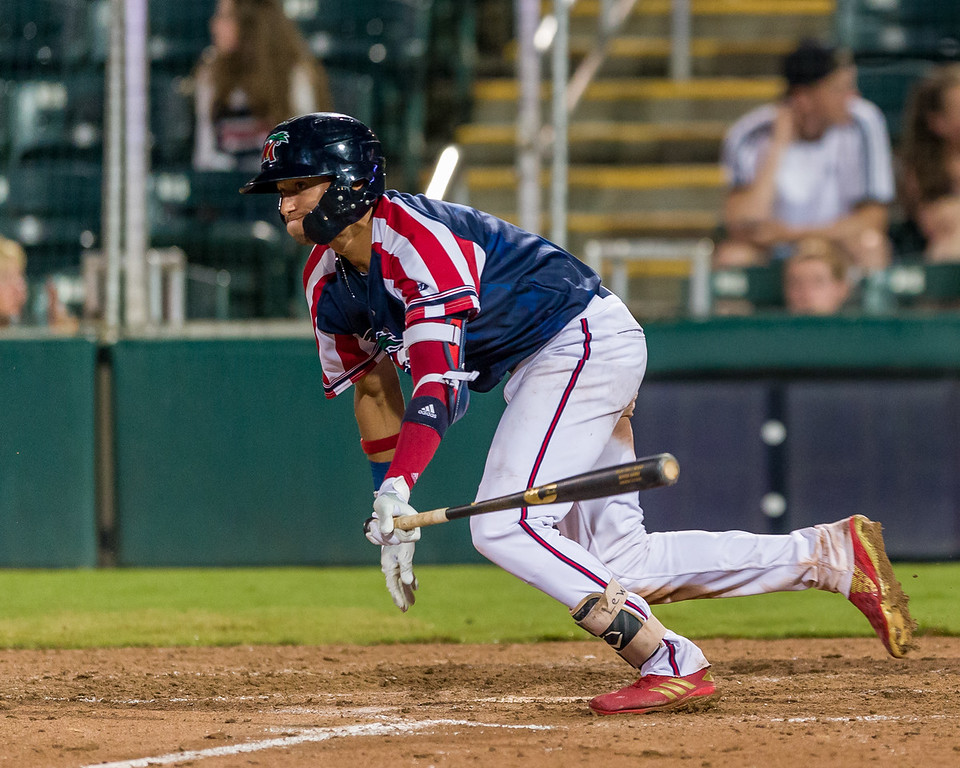 Keep reading to find out more on the night in the Twins minor league system on Wednesday. As always, please feel free to discuss and ask questions. TRANSACTIONS The Twins officially placed OF/DH Robbie Grossman on the disabled list. They recalled OF Johnny Field who they claimed last week from Cleveland. He had spent much of the first half with the Tampa Bay Rays. The Lookouts announced that RHP Jorge Alcala was activated from the DL. LHP Anthony Marzi was sent back to Ft. Myers. In moves that we mentioned here yesterday, the Cedar Rapids Kernels announced that infielder Jose Miranda had been promoted to Ft. Myers. Infielder and 2018 draft pick Michael Helman was promoted to the Kernels from Elizabethton. Ft. Myers announced the RHP Dylan Stowell was returned to the GCL Twins. Brandon Lopez was released by the Twins organization. The former 10th-round pick out of Miami was playing with the Miracle. Following the Elizabethton games, Dan Hayes reported on Twitter that OF Trevor Larnach has been promoted to Cedar Rapids. RED WINGS REPORT Rochester Box Score The Red Wings had a day off before beginning a series at home against Toledo. CHATTANOOGA CHATTER Chattanooga, Mississippi Box Score Jorge Alcala was one of two quality prospects acquired by the Twins from the Houston Astros in the July trade. Upon being added to the Lookouts roster, he was placed on the 7-day DL with a right trapezius strain. Seven days later, he came off of the DL to start on Monday night. Likely limited to 60 pitches, he reached that number with two outs in the third inning. The hard-throwing right-hander gave up three runs on two hits, but both hits went over the outfield wall for home runs. He also walked three and struck out two. Here is a tweet-sized scouting report from Chris Blessing who was on hand. https://twitter.com/C_Blessing/status/1026619915053277184 Tyler Jay came on next. He got the final out of the third inning, but he gave up four runs on six hits over 1 2/3 innings. He struck out two. Williams Ramirez gave up one run on three hits over 2 1/3 innings. He walked one and struck out three. Ryan Eades got four outs, two on strikeouts. Devin Smeltzer gave up a run on a hit and a walk in his inning. The Lookouts had just five hits in the game. Luis Arraez drove in two runs. Jaylin Davis went 1-for-3 with a walk, his 11th double and an RBI. MIRACLE MATTERS Ft. Myers 13, Lakeland 0 Box Score In the first of what will hopefully be many, many meetings, Royce Lewis won Round 1 of the Battle of #1 PIcks tonight against Tigers 2018 top pick Casey Mize. In his first at-bat against Mize, Lewis hit a solid single to left field. In the next at bat, Lewis launched a two-run homer. Mize went just three innings on this night, his Florida State League debut, and gave up three runs on five hits. Taylor Grzelakowski followed Lewis’s homer with one of his own. Lewis kept hitting. He went 4-for-6 with two home runs (he added a two-run homer in the ninth inning as well). https://twitter.com/JasonAtTheGame/status/1026658445246844933 Grzelakowski went 2-for-5 with his seventh homer. Alex Kirilloff went 2-for-5 and drove in two runs. Caleb Hamilton went 2-for-4 with a walk. Travis Blankenhorn added his 11th homer of the season. Charlie Barnes started and threw 4 1/3 scoreless innings. He gave up six hits, walked one and struck out three batters, but he was at 81 pitches when he came out. Hector Lujan came on and kept the shutout intact for the next 3 2/3 innings.He gave up one hit and struck out four. He has not allowed a run since July 8, a run of 19 scoreless innings. Ryan Mason struck out one in a scoreless ninth inning. KERNELS NUGGETS Cedar Rapids 3, Beloit 2 Box Score Edwar Colina had a tremendous start on Monday afternoon in Cedar Rapids. The right-hander threw eight innings and was charged with two unearned runs. He gave up four hits, walked none and struck out eight. He needed just 87 pitches as well. Kevin Marnon came on and struck out two in a perfect ninth to record his third Kernels save. Colina improved to 6-3. Michael Davis led off the bottom of the third with his third home run of his Kernels career. Ariel Montesino followed with a double. He later scored on a fielder’s choice. Michael Helman, making his first Kernels start, singled in his first two at-bats and ended the day 2-for-4. Montesino went 2-for-3 with his fourth double and first triple. Akil Baddoo added his ninth triple of the year. E-TWINS E-TALK Game 1 - Elizabethton 1, Kingsport 5 Box Score Kody Funderburk got the nod for the E-Twins in Game 1. The southpaw gave up three runs (two earned) on six hits in four innings. He struck out six and didn’t issue a walk. Blair Lakso went the final three innings. He gave up two runs (one earned) on two hits. He walked three and struck out three. Alex Robles provided most of the Twins offense. He went 3-for-3 with his second home run of the season. Yunior Severino added his sixth double, while Trevor Larnach doubled for the fourth time. Game 2 - Elizabethton 2, Kingsport 7 Box Score In the second game, the E-Twins went hitless until Yunior Severino dropped a single to right field with two outs in the sixth inning. Brian Rapp made the start and gave up two runs on seven hits and a walk in five innings. He struck out four. Seth Pinkerton gave up three runs on two hits and a walk in 1 2/3 innings.. He struck out four batters. Jacob Blank got the final out but not before allowing two runs on two hits and a walk. Down 7-0, the E-Twins tried to mount a comeback in the seventh inning but fell short. Trevor Larnach led off with a single which was followed by a walk by Chris Williams. Gilberto Celestino singled in a run, their first. Trevor Casanova followed with a sacrifice fly. But that is where the rally ended. GCL TWINS TALK GCL Twins 4, GCL Rays 11 Box Score The big story in this game was the return of Michael Pineda. The tall, burly right-hander signed a two-year, $10 million deal with the Twins in the offseason despite having Tommy John surgery last summer. On Monday, he made his first rehab appearance in the Gulf Coast League game. In two scoreless innings, he gave up one hit, ,walked one and struck out three batters. https://twitter.com/RhettBollinger/status/1026575896675799040 Andriu Marin came on and threw scoreless innings up in the third and fourth frames. In the fifth, he was charged with six runs. Osiris German got the final two outs of that inning but not before giving up two more runs. German did work a scoreless sixth inning. Erik Cha came on and gave up two runs on four hits over two innings. He struck out three. Petru Balan gave up one run on two hits in his inning. He struck out two. Gabe Snyder led the offense. He hit his seventh double and third home run and drove in four runs. Janigson Vallalobos went 2-for-4 with his second triple. Victor Tademo was 2-for-4 with his fifth double. Hunter Lee had two hits, including his third double. STARS OF THE DAY Twins Daily Hitter of the Day: Royce Lewis, Ft. Myers Miracle (4-6, 2 HR, 3 R, 5 RBI). Twins Daily Pitcher of the Day: Hector Lujan, Ft. Myers Miracle (3.2 IP, 1 H, 0 R, 0 BB, 4 K) PROSPECT SUMMARY Here’s a look at how the Twins Daily Top 20 Twins Prospects performed. Please note that this Prospect Summary has been updated. #1 - Royce Lewis (Ft. Myers) - 4-6, 2 HR(3), 3 R, 5 RBI, K #2 - Alex Kirilloff (Ft. Myers) - 2-5, R, 2 RBI, K #3 - Brusdar Graterol (Ft. Myers) - Did not pitch #4 - Nick Gordon (Rochester) - Did not play #5 - Stephen Gonsalves (Rochester) - Did not pitch #6 - Trevor Larnach (Elizabethton) - 1-3, 2B(4), K | 1-2, HBP, R #7 - Brent Rooker (Chattanooga) - 0-4, 2 K #8 - Akil Baddoo (Cedar Rapids) - 1-2, 2 BB, K, 3B(9) #9 -Wander Javier - out of for the season #10 - Zack Littell (Rochester) - Did not play #11 - Blayne Enlow (Cedar Rapids) - Did not pitch #12 - LaMonte Wade (Rochester) - Disabled List #13 - Travis Blankenhorn (Ft. Myers) - 1-4, BB, HR(11), R, 2 K #14 - Lewis Thorpe (Chattanooga) - Rained out. #15 - Ben Rortvedt (Ft. Myers) - Did not play #16 - Yunior Severino (Elizabethton) - 1-4, 2B(6),K | 1-3, K #17 - Lewin Diaz (Ft. Myers) - will have surgery on his wrist soon. Out for season. #18 - Ryan Jeffers (Cedar Rapids) - 0-4, 2 K #19 - Jacob Pearson (Cedar Rapids) - Did not play #20 - Luis Arraez (Chattanooga) - 1-4, 2 RBI, R #21 - Jose Miranda (Ft. Myers) - 0-4, BB, R, K *Since Wander Javier is out, I’d add #21 to the list. TUESDAY’S PROBABLE STARTERS Toledo @ Rochester (6:05 CST) - RHP Zack Littell (3-4, 3.58 ERA) Chattanooga - No Game Scheduled Ft. Myers @ Lakeland (5:30 CST) - RHP Griffin Jax (2-1, 3.41 ERA) Cedar Rapids - No Game Scheduled Kingsport @ Elizabethton (6:00 CST) - TBD GCL Twins @ GCL Rays (11:00 am CST) - No Game Scheduled Please feel free to ask any questions about Monday’s games, or ask any questions you may have.
 -
Jose Miranda was promoted to Ft. Myers. Michael Helman from E-Town to Cedar Rapids.
- 19 replies
-
- 13
-
-
- gabriel maciel
- fernando romero
- (and 3 more)
-
Jeffers is off to a fantastic start. Hard to compare him with Rooker at this point since Rooker moved up to Ft. Myers instead of Cedar Rapids, and they are different types of hitters. Also, just naturally a catcher who needs to work on defense should be moved along a little more slowly than a 1B/LF. But it's great to see him off to such a good start. Jaylin Davis has taken a big step forward this year, in my mind. He's slowed the strikeouts and taken more walks. Obviously both of those things are important. He's got 9 homers on the season, but just four in Chattanooga after last night's two-homer night. Now if he can maintain the K rate and bring back the power again, he's another OF with a chance. Cutura just hasn't pitched much since being drafted. He has been hurts o much. He's had a couple of strong starts this year so far, but this is probably the best. I mean, it's hard to get much better.
- 11 replies
-
- 2
-
-
- jaylin davis
- mark contreras
- (and 1 more)
-
Carrier's on the DL, to make room for De La Trinidad. I've said before the De La Trinidad profiles a lot like Mark Contreras, in my opinion. Both small, undersized guys and both just have gotten the job done all year. Cedar Rapids outfield includes Akil Baddoo, Gabriel Maciel, Jean Carlos Arias, Jacob Pearson and Trey Cabbage, who has been playing more 1B since the trade. Celestino shouldn't move up to Ft. Myers yet, so now he just keeps playing in E-Town. Granted, he was there last year too and did OK, nothing wrong with a 19-year-old being in the Appy League. Doesn't hurt him at all.
-
How they rank for what? Season stats? Age?
-
I don't know if Reed wold be taken. It's hard to know. I don't think his stuff as been as good this year (from some reports) but maybe as he's picked up the numbers it's been because of the return of the stuff. And, the Rule 5 can be difficult to figure out at times. It was hard not to put Stashak in that #1 spot. He was really good.
-
It was hard not to put Andrew Vasquez into the Top 5 with that 29 to 1 strikeout to walk ratio...
-
Reed has been pretty good since early June, but he struggled before that. Busenitz, Anderson, Duffey and Curtiss were all really good the first 2-3 months, but they all struggled in July. all five are deserving.
- 9 replies
-
- 2
-
-
- jovani moran
- jakereed
- (and 3 more)
-
Article: Get to Know: 1B Jack Barrie
Seth Stohs replied to Seth Stohs's topic in Twins Daily Front Page News
Correct... he can play at NAIA schools after playing in rookie leagues. Can't play NCAA since he obviously got paid a big signing bonus. -
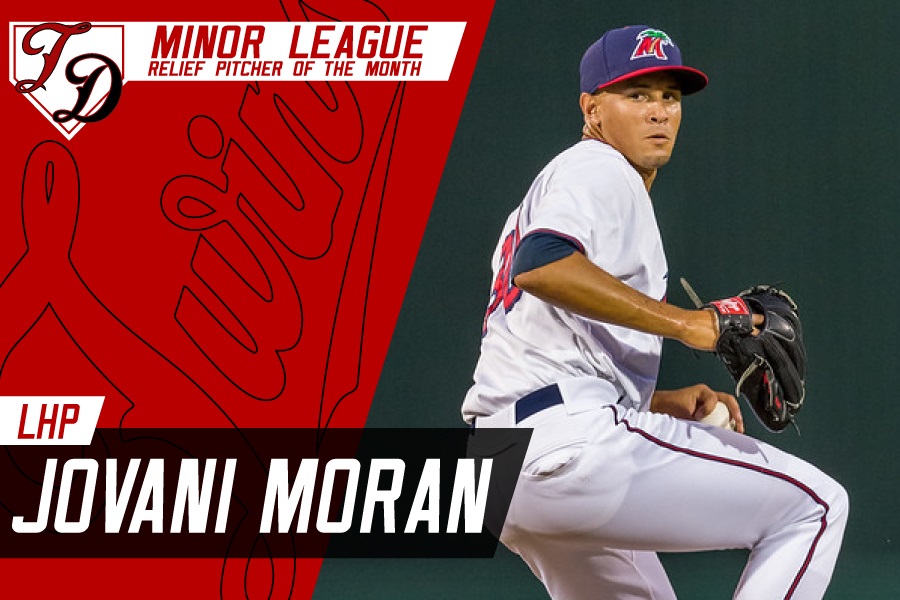
Earlier this week, we announced the Twins Daily Minor League Hitter (Ryan Jeffers) and Starting Pitcher (Bailey Ober) of the Month.Tonight we will write about several Twins minor league relief pitchers, culminating with this month’s choice for Relief Pitcher of the Month. For the first time, we have a repeat winner. Previous Relief Pitchers of the Month for 2018: April 2018: Nick Anderson, Rochester Red Wings May 2018: Todd Van Steensel, Chattanooga Lookouts June 2018: Jovani Moran, Cedar Rapids Kernels July 2018: Well, just keep reading (if you happened to not look at the graphic that you clicked on to read this story.)Before we share our choices for the Twins Minor League Top Five Relievers for July, here are some terrific bullpen performances that just missed the cut. HONORABLE MENTION Erik Cha- GCL Twins, 7 G, 1.64 ERA, 0.82 WHIP, 11.0 IP, 8 H, 1 BB, 8 KRyan Eades - Chattanooga Lookouts, 6 G, 2.19 ERA, 0.73 WHIP, 12.1 IP, 9 H, 0 BB, 12 KRegi Grace - GCL Twins, 3 G, 0.00 ERA, 0.96 WHIP, 8.1 IP, 6 H, 2 BB, 7 KRyne Harper - Chattanooga Lookouts/Rochester Red Wings, 8 G, 1.42 ERA, 1.03 WHIP, 12.2 IP, 11 H, 2 BB, 15 KZach Neff - Elizabethton Twins, 9 G, 2.70 ERA, 1.20 WHIP, 13.1 IP, 11 H, 5 BB, 18 KDerek Molina - Elizabethton Twins/Cedar Rapids Kernels, 7 G, 1.42 ERA, 1.18 WHIP, 12.2 IP, 3 H, 12 BB, 22 KAndrew Vasquez - Chattanooga Lookouts, 9 G, 2.16 ERA, 1.02 WHIP, 16 H, 1 BB, 29 KTHE TOP FIVE RELIEF PITCHERS #5 - Jose Martinez - Cedar Rapids Kernels - 8 G, 1.20 ERA, 0.87 WHIP, 15.0 IP, 9 H, 4 BB, 16 K You may not have heard of Jose Martinez, but this is his sixth season in the Twins organization. Signed in 2013 out of Venezuela by Jose Leon, Martinez spent the 2014 and 2015 seasons in the Dominican Summer League. He spent the last two seasons in Elizabethton. He has spent this entire season with the Kernels in Cedar Rapids.In 28 total games, he has worked 53 2/3 innings. He’s got a 4.53 ERA. He has 50 strikeouts and 21 walks. He was very good in July and ended the month with six scoreless outings covering 11 1/3 innings. He recorded a save in three of his final four outings during the month. #4 - Jake Reed - Rochester Red Wings - 8 G, 2.03 ERA, 0.68 WHIP, 13.1 IP, 4 H, 5 BB, 11 K Reed was the Twins fifth-round draft pick in 2014 out of the University of Oregon. He flew up the system, pitching in the Arizona Fall League that year and starting the 2015 season in Chattanooga. However, he has fought some injuries and still has yet to receive the call up. However, if his past two months are any indication, just maybe it will come this year. In July, opponents hit just .095/.224/.143 (.367) against him. Reed has a fastball in the mid-90s that runs in on a right-hander, and he compements it with a mid-80s slider that darts away from a right-hander. #3 - Adam Bray - Ft. Myers Miracle - 9 G, 0.98 ERA, 0.71 WHIP, 18.1 IP, 8 H, 5 BB, 19 K Adam Bray had a fantastic baseball career if he had just quit playing after a high school state championship and a national championship with his American Legion team. He went to South Dakota State and then was drafted by the Dodgers. This March, he was acquired by the Twins in a trade. He didn’t join the Miracle until the end of June. As you can see from his numbers, he pitched a lot, and he pitched quite well. Opponents hit just .136/.212/.220 (.432) off of him during the month, and he struck out more than a batter per inning. Get to know a little more about Adam Bray from this story. #2 - Cody Stashak - Chattanooga Lookouts - 9 G, 0.00 ERA, 0.82 WHIP, 13.1 IP, 7 H, 2 BB, 16 K Stashak was drafted as a starting pitcher out of St. Johns in the 13th round of the 2015 draft. He was a pretty solid, underrated starter. In 2016, he posted a 2.80 ERA between Cedar Rapids and Ft. Myers. Last year, he posted a 3.60 ERA between Ft. Myers and Chattanooga. This year, the move was made to the bullpen and it has been successful. In 43 2/3 innings so far this year for the Lookouts, he has a 3.09 ERA and 60 strikeouts to go with just 13 walks. In July, he didn’t give up a run, earned or unearned. Opponents hit just .179/.220/.256 (.476) against him during the month. At 6-2 and thin, Stashak throws in the low 90s with a good pitch mix. He’s got good control and command. And the Twins Minor League Relief Pitcher of the Month is: Ft. Myers Miracle – LHP Jovani Moran - 8 G, 1.13 ERA, 0.56 WHIP, 16.0 IP, 8 H, 1 BB, 22 K Moran is the choice for Minor League Relief Pitcher of the Month for the second straight month. The difference, of course, is that he was a member of the Cedar Rapids Kernels throughout the month of June. At the end of the month, Moran was promoted to Ft. Myers and hasn’t missed a beat. The 2015 seventh-round pick from Puerto Rico has pitched in different roles in his short time with the Miracle, averaging two innings per outing. In July, opponents hit just .148/.164/.204 (.367) against him. In large part, the 22:1 strikeout to walk ratio helps with that. The 21-year-old missed the 2016 season after having surgery to remove bone spurs from his elbow. He returned strong in 2017, and he was the Twins Daily short-season Minor League Pitcher of the Year. For Elizabethton, he gave up just one run in 24 2/3 innings (0.36 ERA), and had just six walks to go with 45 strikeouts. Moran is not a big guy .He stands 6-foot-1 and weighs in at about 170 pounds. He’s got a good whip action and some deception in his delivery. His fastball reaches into the low-90s, and he’s got a good slider and changeup. He really just needs to keep working and developing, and gaining strength could help him add a little more velocity. He’s a really good athlete who fields the position well. There were several strong relief pitcher performances in July throughout the Twins minor league system. It was a good month for each of these pitchers mentioned today, but for the second straight month, Congratulations to Jovani Moran. He is the Twins Daily Minor League Relief Pitcher of the Month for July 2018. Click here to view the article
-
Twins Minor League Relief Pitcher Of The Month - July 2018
Seth Stohs posted an article in Minor Leagues
 Before we share our choices for the Twins Minor League Top Five Relievers for July, here are some terrific bullpen performances that just missed the cut. HONORABLE MENTION Erik Cha- GCL Twins, 7 G, 1.64 ERA, 0.82 WHIP, 11.0 IP, 8 H, 1 BB, 8 K Ryan Eades - Chattanooga Lookouts, 6 G, 2.19 ERA, 0.73 WHIP, 12.1 IP, 9 H, 0 BB, 12 K Regi Grace - GCL Twins, 3 G, 0.00 ERA, 0.96 WHIP, 8.1 IP, 6 H, 2 BB, 7 K Ryne Harper - Chattanooga Lookouts/Rochester Red Wings, 8 G, 1.42 ERA, 1.03 WHIP, 12.2 IP, 11 H, 2 BB, 15 K Zach Neff - Elizabethton Twins, 9 G, 2.70 ERA, 1.20 WHIP, 13.1 IP, 11 H, 5 BB, 18 K Derek Molina - Elizabethton Twins/Cedar Rapids Kernels, 7 G, 1.42 ERA, 1.18 WHIP, 12.2 IP, 3 H, 12 BB, 22 K Andrew Vasquez - Chattanooga Lookouts, 9 G, 2.16 ERA, 1.02 WHIP, 16 H, 1 BB, 29 K THE TOP FIVE RELIEF PITCHERS #5 - Jose Martinez - Cedar Rapids Kernels - 8 G, 1.20 ERA, 0.87 WHIP, 15.0 IP, 9 H, 4 BB, 16 K You may not have heard of Jose Martinez, but this is his sixth season in the Twins organization. Signed in 2013 out of Venezuela by Jose Leon, Martinez spent the 2014 and 2015 seasons in the Dominican Summer League. He spent the last two seasons in Elizabethton. He has spent this entire season with the Kernels in Cedar Rapids.In 28 total games, he has worked 53 2/3 innings. He’s got a 4.53 ERA. He has 50 strikeouts and 21 walks. He was very good in July and ended the month with six scoreless outings covering 11 1/3 innings. He recorded a save in three of his final four outings during the month. #4 - Jake Reed - Rochester Red Wings - 8 G, 2.03 ERA, 0.68 WHIP, 13.1 IP, 4 H, 5 BB, 11 K Reed was the Twins fifth-round draft pick in 2014 out of the University of Oregon. He flew up the system, pitching in the Arizona Fall League that year and starting the 2015 season in Chattanooga. However, he has fought some injuries and still has yet to receive the call up. However, if his past two months are any indication, just maybe it will come this year. In July, opponents hit just .095/.224/.143 (.367) against him. Reed has a fastball in the mid-90s that runs in on a right-hander, and he compements it with a mid-80s slider that darts away from a right-hander. #3 - Adam Bray - Ft. Myers Miracle - 9 G, 0.98 ERA, 0.71 WHIP, 18.1 IP, 8 H, 5 BB, 19 K Adam Bray had a fantastic baseball career if he had just quit playing after a high school state championship and a national championship with his American Legion team. He went to South Dakota State and then was drafted by the Dodgers. This March, he was acquired by the Twins in a trade. He didn’t join the Miracle until the end of June. As you can see from his numbers, he pitched a lot, and he pitched quite well. Opponents hit just .136/.212/.220 (.432) off of him during the month, and he struck out more than a batter per inning. Get to know a little more about Adam Bray from this story. #2 - Cody Stashak - Chattanooga Lookouts - 9 G, 0.00 ERA, 0.82 WHIP, 13.1 IP, 7 H, 2 BB, 16 K Stashak was drafted as a starting pitcher out of St. Johns in the 13th round of the 2015 draft. He was a pretty solid, underrated starter. In 2016, he posted a 2.80 ERA between Cedar Rapids and Ft. Myers. Last year, he posted a 3.60 ERA between Ft. Myers and Chattanooga. This year, the move was made to the bullpen and it has been successful. In 43 2/3 innings so far this year for the Lookouts, he has a 3.09 ERA and 60 strikeouts to go with just 13 walks. In July, he didn’t give up a run, earned or unearned. Opponents hit just .179/.220/.256 (.476) against him during the month. At 6-2 and thin, Stashak throws in the low 90s with a good pitch mix. He’s got good control and command. And the Twins Minor League Relief Pitcher of the Month is: Ft. Myers Miracle – LHP Jovani Moran - 8 G, 1.13 ERA, 0.56 WHIP, 16.0 IP, 8 H, 1 BB, 22 K Moran is the choice for Minor League Relief Pitcher of the Month for the second straight month. The difference, of course, is that he was a member of the Cedar Rapids Kernels throughout the month of June. At the end of the month, Moran was promoted to Ft. Myers and hasn’t missed a beat. The 2015 seventh-round pick from Puerto Rico has pitched in different roles in his short time with the Miracle, averaging two innings per outing. In July, opponents hit just .148/.164/.204 (.367) against him. In large part, the 22:1 strikeout to walk ratio helps with that. The 21-year-old missed the 2016 season after having surgery to remove bone spurs from his elbow. He returned strong in 2017, and he was the Twins Daily short-season Minor League Pitcher of the Year. For Elizabethton, he gave up just one run in 24 2/3 innings (0.36 ERA), and had just six walks to go with 45 strikeouts. Moran is not a big guy .He stands 6-foot-1 and weighs in at about 170 pounds. He’s got a good whip action and some deception in his delivery. His fastball reaches into the low-90s, and he’s got a good slider and changeup. He really just needs to keep working and developing, and gaining strength could help him add a little more velocity. He’s a really good athlete who fields the position well. There were several strong relief pitcher performances in July throughout the Twins minor league system. It was a good month for each of these pitchers mentioned today, but for the second straight month, Congratulations to Jovani Moran. He is the Twins Daily Minor League Relief Pitcher of the Month for July 2018.
 -
They've had so much rain (and rain outs) the last few days. I'm sure they were just piggybacking them intentionally.
-
1,000th career win at E-Town for Ray Smith...
-
Twins Claim Oliver Drake, Johnny Field
Seth Stohs replied to Seth Stohs's topic in Minnesota Twins Talk
Even more, they may try to get them through waivers soon and into the organization. Drake's minor league strikeout rate this year are crazy, as a starter. So, ,I feel for the Twins/Red Wings guys, but I cant' completely hate this. -
The Twins announced this afternoon that they have claimed RHP Oliver Drake from the Blue Jays and IF Johnny Field from the Rays. Drake will join the team tomorrow (Saturday). Field will report to Rochester. Official Press Release: Minneapolis/St. Paul, MN – The Minnesota Twins announced today that they have claimed two players off waivers, right-handed pitcher Oliver Drake from Toronto and infielder Johnny Field from Tampa Bay. Drake will join the Twins tomorrow and wear uniform number 32 and Field will report to Triple-A Rochester. Drake, 31, pitched in 14 games this season between Milwaukee, Cleveland, Los Angeles-AL and Toronto, combining to go 0-1 with an 8.59 ERA (14.2 IP, 14 ER), two walks and 14 strikeouts. In parts of four major league seasons, he has gone 5-6 with a 5.00 ERA (117.0 IP, 65 ER), 51 walks and 129 strikeouts. Field, 26, played in 63 games for the Rays this season, hitting .213 (36-for-169) with nine doubles, six home runs, 14 RBI, 20 runs scored and four stolen bases. He was drafted by Tampa Bay in the fifth round of the 2013 First-Year Player Draft and appeared in 538 minor league games over six seasons in the Rays minor league system, hitting .272 (567-for-2084) with 162 doubles and 53 home runs.
-
Post Trade Deadline Twins Prospect Rankings
Seth Stohs replied to Seth Stohs's topic in Twins Minor League Talk
Leach is 32 for me. I saw him this spring and he is impressive. Throws really hard, ,just really raw. He could be one to watch in 2019! -
Early on Day 3 of the 2018 MLB Draft, Trevor Casanova was at home with his family when he was selected by the Minnesota Twins. Their 13th-round draft pick out of Cal State-Northridge, Casanova quickly signed in Ft. Myers and make the trek north to Elizabethton. He has been given consistent playing time. He has caught about one-third of the E-Twins games and often been the DH when he isn’t behind the plate. Recently, Twins Daily was able to catch up with Trevor Casanova. Continue reading to get to know him a little bit.On Thursday night, Casanova went 1-for-3 with a home run. Through his first 24 games as a professional baseball player, he has hit .313/.383/.469 (.852) with nine doubles and two home runs. We would like to thank Trevor for taking time to answer our questions. Please feel free to ask questions and congratulate Trevor in the Comments below. Seth Stohs (SS): Growing up in southern California, who was your favorite team to follow? Who were some of your favorite players? Trevor Casanova (TC): My favorite team growing up would be the Angels, my mom and my step dad are huge Angel fans so I decided to jump on board with them. Some of my favorite players growing up were Ken Griffey Jr, Pudge Rodriguez, Mike Piazza SS: What were some of the better memories of your high school baseball career? Did you play other sports or were you involved in other activities? TC: Honestly, I only played one year of high school baseball but I would have to say showing up every day with your close friends and the life long relationships I have because of it is the best memory to me. I did not play any other sports, only baseball. SS: What was the recruitment process like for you out of high school, and what was it about El Camino College that made it the right choice for you?? TC: Out of high school I did not have high enough grades to get recruited anywhere so there was no recruiting process for me. I ended going to three different junior colleges before I found the right fit for me at El Camino. The coaches at El Camino believed in me and my abilities as a human being and gave me an opportunity to pursue my dreams even considering my background as a student. That’s how I knew it was right fit. SS: And then the recruitment at El Camino. What was it about Cal State Northridge that made it stand out to you, especially considering you had been drafted by the Mariners in 2017? TC: Again, The coaches at Cal State Northridge believed in me and wanted the best for me and my future even though they knew I had a rough past. They were the only Division 1 team to reach out to me prior to my season at El Camino and offered me a scholarship based on me as an individual and not because of me as a player. I knew after that, that was the best place for me. SS: What were a couple of your highlights from your college years? TC: At El Camino my favorite highlight is making to the state championship with some of my closest friends I still have today and the life-long relationships I made while being at that school. At Northridge I would also say just showing up everyday to be a better individual on and off the baseball field. And also the life- long relationships I made while being there. SS: Did you have the chance to speak with many scouts before the draft? What was your interaction with the Twins scout? TC: I spoke with a few scouts prior to the draft. Seth Moir which who was my area scout, invited me to a pre-draft workout prior to the draft where we got to meet in person. SS: The Twins took you in the 13th round. Was that about where you were expecting to be selected? How did you find out that you had been drafted? How busy was your phone at that moment? TC: I did not have any expectations coming into this draft. I was and am just blessed I got an opportunity to put on a Twins uniform. I was at home with my family while I got selected and celebrated with them all. My phone starting blowing up with friends and family congratulating me. SS: What has the adjustment been like for you so far, from the college game to the professional game, both on and off the field? TC: The adjustment for me has been very smooth and better than I had thought it was going to be. For me, going from college to professional it is just understanding you are going to go through good and bad times and keeping a positive attitude and outlook day in and day out is the most important thing for me right now. SS: You have put up some very solid numbers in Elizabethton. Are you at all surprised to have experienced such success already, and what do you think has been the biggest reason for the success? TC: I am blessed and grateful for the success I have had so far. The biggest reason for me is just keeping a positive attitude every day, showing up to the field every day the same and being myself while having fun at the same time. SS: At this very early stage in your career, what would you say are your biggest strengths? TC: My biggest strengths for me I would say is my mental toughness. Not letting negative things or bad days on the field affect me mentally. Showing up to the field everyday and being the same person every day. SS: What are the areas of your game that you would like to spend time working to improve? TC: : I would love to work on everything about my game. Every aspect of being a better hitter at the plate. Learn as much as I can at other positions while I can to keep myself versatile. SS: What do you have planned for the offseason? What was your major in school? TC: For the offseason, I don’t have anything planned yet. I don’t like to think to far ahead and just take it day by day. Right now I’m just focused on this season and doing anything and everything I can to help this team win. SS: Who are some of the people who have helped you get to this point in your career? TC: A lot of people have helped me get to this point in my career. From the coaches at El Camino, Cal State Northridge, and most importantly my family pushing me every day to pursue my dreams and believing in me. SS: Favorite Baseball movie? TC: All-time favorite baseball movie, I would have to go with Moneyball. Again, a huge Thank You to Elizabethton catcher Trevor Casanova for taking time to answer our questions. We wish him well the remainder of the season. Feel free to ask questions in the comments below. Click here to view the article
