



Seth Stohs
-
Posts
25,909 -
Joined
-
Last visited
-
Days Won
109
Content Type
Profiles
News
Minnesota Twins Videos
2026 Minnesota Twins Top Prospects Ranking
2022 Minnesota Twins Draft Picks
Minnesota Twins Free Agent & Trade Rumors, Notes, & Tidbits
Guides & Resources
2023 Minnesota Twins Draft Picks
The Minnesota Twins Players Project
2024 Minnesota Twins Draft Picks
2025 Minnesota Twins Draft Pick Tracker
2026 Minnesota Twins Draft Tracker: Picks & Bonuses
Forums
Blogs
Events
Store
Downloads
Gallery
Everything posted by Seth Stohs
-

DET 7, MIN 5: Stewart Bombs Second Audition
Seth Stohs replied to Tom Froemming's topic in Twins Daily Front Page News
Correct... Now, no one is going to put Stewart and his stuff into the same category as Berrios... but I would say it could be similar to Gibson, and thankfully they've remained patient with him too. Of course, the hope is that they can compete in 2019 (or certainly 2020) and there are lots of possible options, so he'll spend more time in AAA too. -
DET 7, MIN 5: Stewart Bombs Second Audition
Seth Stohs replied to Tom Froemming's topic in Twins Daily Front Page News
Clearly they haven't been great picks. I also think that it's fair to say that patience can be good. I think giving a guy more than 2 starts is fair. I guess that's not right. But we also have to remember that the business side of the game does matter to the front office, and it should. -
this monring, Twins announced: Ervin Santana to the DL. Robbie Grossman activated from the DL. Johnny Field optioned. Alan Busenitz recalled. Also, Stephen Gonsalves will start for the Twins on Monday.
- 16 replies
-
- 4
-

-
- jhoan duran
- luis arraez
- (and 3 more)
-
DET 7, MIN 5: Stewart Bombs Second Audition
Seth Stohs replied to Tom Froemming's topic in Twins Daily Front Page News
Maybe, but it's clear he's got some good stuff, and he's still just 23. He's got velocity. He's got movement. He's got 4 pitches. He should get more opportunities. If starting doesn't work, maybe he cuts down to 2 pitches (or 3) and moves to the bullpen. He's already well ahead of Appel. -
DET 7, MIN 5: Stewart Bombs Second Audition
Seth Stohs replied to Tom Froemming's topic in Twins Daily Front Page News
You mean like every other organization? I don't think they're doing anything different than other organizations do. And remember this is Jeremy Zoll's first year as the minor league director, so it's difficult to know what his process is or will be. And, we're in year 2 of Falvine, but the first year of them being sellers at this point in August. Gonsalves is already on the 40-man roster, and arguably doesn't have as much "stuff" as Stewart. Wade isn't on the 40-man roster, has only been off the DL for 10 days or so. And he's left-handed and Field is right-handed and Grossman is a switch-hitter. Wade also is a prospect, so he should play every day. -
I'm not 100% sure on Alcala starting on Sunday. He was listed for today, but they went with the bullpen game, probably in part because of the Poppen performance.
- 16 replies
-
- 1
-
-
- jhoan duran
- luis arraez
- (and 3 more)
-
Kohl Stewart: An idea very few will like
Seth Stohs replied to Riverbrian's topic in Minnesota Twins Talk
I'd absolutely keep him on the 40. He's got good stuff... Maybe it'll play better out of the bullpen for now, but I'd keep him starting. The stuff: man, he's got some really good movement on that 2-seamer (or 1-seam sinker)... Tonight, he just had no command or control of it. He's also got the velocity, sitting 92-96 with the 4-seamer. The curveball and changeup can be good too. He just needs more consistency. It's too early to give up on a young guy with that kind of stuff... He doesn't have Gibson's pedigree, but the movement he gets is similar to what Gibson's two-seamer was his first few years in the big leagues. And to those who have said it... no question that Stewart would have been taken in the Rule 5 if left off the 40-man again. -
It was a very busy Saturday. The Vikings played. The Twins honored Jack Morris pre-game and played the Tigers. All six Twins stateside affiliates played, including two games for Chattanooga and the GCL Twins. Jhoan Duran and Austin Schulfer put together strong starts. Chase De Jong and Sean Poppen were also very good. Byron Buxton hit well. Luis Arraez and Brian Navarreto hit well for Chattanooga. So much happening. Check in on everything that happened in the Twins minor league system. Image courtesy of Steve Buhr (photo of Jhoan Duran) It was a very busy Saturday. The Vikings played. The Twins honored Jack Morris pre-game and played the Tigers. All six Twins stateside affiliates played, including two games for Chattanooga and the GCL Twins. Jhoan Duran and Austin Schulfer put together strong starts. Chase De Jong and Sean Poppen were also very good. Byron Buxton hit well. Luis Arraez and Brian Navarreto hit well for Chattanooga. So much happening. Check in on everything that happened in the Twins minor league system. Keep reading to find out more on the night in the Twins minor league system on Saturday. As always, please feel free to discuss and ask questions. TRANSACTIONS On Friday night, the Kernels announced that right-hander Calvin Faucher had been placed on the DL with elbow tendinitis. On Saturday afternoon, they announced that right-hander Johan Quezada has been promoted from Elizabethton to the Kernels. Following the Twins game, Paul Molitor announced that Johnny Field would be sent back to Rochester. He will be optioned with, most likely, Robbie Grossman returning from the Disabled List. RED WINGS REPORT Rochester 3, Toledo 2 Box Score The Red Wings got some strong pitching and enough offense to get the win in this game. In the first inning, Byron Buxton doubled and scored on a double by Robbie Grossman. Buxton went 2-for-5 in with his sixth and seventh doubles. Grossman went 2-for-4 and is expected to return to Minneapolis on Sunday. Kennys Vargas went 2-for-4 including his 18th home run. Jake Reed was the “opener” for the Red Wings. He gave up one run on two hits and a walk in the first inning. He struck out one. Chase De Jong came on and gave up one run on five hits over seven innings. He walked one and struck out four. DJ Baxendale worked a scoreless ninth inning to secure De Jong’s first win in the Twins organization and his first save of the season for the Red Wings. CHATTANOOGA CHATTER Game 1: Chattanooga 0, Mississippi 1 Box Score Sean Poppen gave the Lookouts exactly what they needed in the first game on Saturday, a complete game. The right-hander from Harvard gave up just one run over six innings. The lone run came on the 16th home run of the season for Mississippi’s cleanup hitter Travis Demeritte. Unfortunately, he only needed to go six innings because the Lookouts were shut out. The team had just five hits. Luis Arraez and Brian Navarreto each had two singles. Game 2: Chattanooga 7, Mississippi 10 Box Score The Lookouts went with an all-lefty bullpen game in Game 2. Andrew Vasquez started and gave up nothing over the first two innings. He struck out three. Sam Clay came on and got just two outs. He gave up four runs on four hits and a walk. Devin Smeltzer came on and got the next four outs, three on strikeouts. However, he was also charged with an unearned run on three hits. Tyler Jay got the final two innings. He gave up five runs (three earned) on five hits and two walks. Jaylin Davis led the offense. He went 1-for-3, but he hit his fifth home run, a three-run shot and added a fourth RBI. Brent Rooker was 2-for-5 with his 31st double. Luis Arraez went 3-for-4. It was his third straight multi-hit game. Brian Navarreto was 2-for-3 with a walk. Luke Raley went 1-for-1 with two walks and was also hit by a pitch. Zander Wiel had a single and two walks. MIRACLE MATTERS Ft. Myers 0, Clearwater 4 Box Score The Miracle bats just were not able to figure out Clearwater’s Mauricio Llovera. Well, except for Taylor Grzelakowski. “Gelly” had three of the team’s four hits. Royce Lewis had a single for the other. Charlie Barnes started and gave up four runs on six hits and two walks over 3 1/3 innings. He struck out two. Colton Davis got the next five outs, three of them on strikeouts. He walked two. Alex Robinson threw two scoreless innings. Adam Bray threw two zeroes on the board as well. Alex Kirilloff went 0-for-3 with a walk. It was his second straight game without a hit. He hadn’t gone back-to-back games without a hit since July 7th and 8th. KERNELS NUGGETS Cedar Rapids 1, Wisconsin 2 Box Score This was quite the pitcher’s duel. Jhoan Duran threw seven innings and gave up just one run on five hits. He struck out a career-high nine batters while not issuing a walk. Unfortunately, the TimberRattlers’ starter, Dylan File, also threw seven innings of one-run ball. Starter Randy Dobnak, whose most recent appearance lasted just one inning before the rains came, worked a scoreless eighth inning. However, an error to lead off the ninth was followed by two strikeouts. Unfortunately, they were followed by two singles which ended the game. Strikeouts were a big part of this game. Kernels pitchers combined to strike out 11. Meanwhile, Kernels batters struck out 13 times. Michael Helman led the way by going 3-for-4 including his first triple with the Kernels. E-TWINS E-TALK Elizabethton 3, Bluefield 4 Box Score Big runs in the ninth, but unfortunately Bluefield ended their ninth with one more run and the win. Austin Schulfer started for the Twins and worked five shutout innings. He gave up two hits, walked three and struck out four. Jacob Blank came on and gave up two runs on four hits over his two innings. He also struck out four. But then came the rain and there was a delay. When the game returned, Zach Neff worked a scoreless eighth inning. Yunior Severino went 2-for-4 with his eighth double. Alex Robles hit his ninth double. But the score was tied 2-2 going into the ninth. Chris Williams, who had a sacrifice fly earlier in the game, blasted his 15th home run to give the E-Twins a 3-2 lead in the top of the ninth. https://twitter.com/Mike_Gally21/status/1031006558258262016 However, Neff returned for the ninth inning. He gave up a solo homer to lead off the inning to re-tie the game, this time at three. He gave up a single, and then on a sacrifice bunt, Neff had an error. He was able to coax a double play, but a two-out single ended the game. GCL TWINS TALK Game 1 - GCL Twins 2, GCL Red Sox 4 Box Score This game started on Friday and went four innings before the rains came and the game was suspended. Donny Breek had started and went the first 3 1/3 innings. He gave up four runs (three earned) on six hits and two walks. He struck out five. Denny Bentley came on and got the next two outs, one on a strikeout. When play resumed on Saturday morning, Landon Leach took the mound. He worked two scoreless, hitless innings. He walked one, hit one and struck out two batters. Petru Balan pitched the final inning. He gave up a hit and a walk, but no runs. Rehabbing Shane Carrier went 2-for-3 with both of the Twins RBIs. Tyler Webb added a double. Austin Hale had a walk and his second double. Game 2 - GCL Twins 2, GCL Red Sox 4 Box Score Kai-Wei Teng gave up three runs in the first inning, but the right-hander from Taiwan went four innings and gave up four total runs on seven hits. He walked two and struck out four batters. Osiris German struck out the side in the fifth inning, and Junior Navas worked a scoreless inning as well. Victor Tademo led the offense with a 3-for-3 game. Agustin Marte went 2-for-4. Alberoni Nunez hit his first triple. Tyler Webb added his third double. STARS OF THE DAY Twins Daily Hitter of the Day: Luis Arraez, Chattanooga Lookouts (5-7). Twins Daily Pitcher of the Day: Jhoan Duran, Cedar Rapids Kernels (7 IP, 5 H, 1 ER, 0 BB, 9 K) PROSPECT SUMMARY Here’s a look at how the Twins Daily Midseason Top 20 Twins Prospects performed. #1 - Royce Lewis (Ft. Myers) - 1-4 #2 - Alex Kirilloff (Ft. Myers) - 0-3, BB #3 - Brusdar Graterol (Ft. Myers) - Did not pitch #4 - Nick Gordon (Rochester) - 1-5, RBI, 3K, SB(10) #5 - Stephen Gonsalves (Rochester) - Did not pitch #6 - Trevor Larnach (Cedar Rapids) - 1-4, RBI, 2 K #7 - Brent Rooker (Chattanooga) - 0-3, K | 2-5, 2B(31), 2 R, K #8 - Akil Baddoo (Cedar Rapids) - 0-4, 3K #9 -Wander Javier - out of for the season #10 - Zack Littell (Rochester) - Did not pitch #11 - Blayne Enlow (Cedar Rapids) - Did not pitch #12 - LaMonte Wade (Rochester) - 0-4, K #13 - Travis Blankenhorn (Ft. Myers) - 0-4, 2 K #14 - Lewis Thorpe (Rochester) - Did not pitch #15 - Ben Rortvedt (Ft. Myers) - 0-4 #16 - Yunior Severino (Elizabethton) - 2-4, 2B(8), R, K #17 - Lewin Diaz (Ft. Myers) - Out for the season (wrist) #18 - Ryan Jeffers (Cedar Rapids) - 0-4, 2K #19 - Jacob Pearson (Cedar Rapids) - 1-3 #20 - Luis Arraez (Chattanooga) - 2-3 | 3-4 #21 - Jose Miranda (Ft. Myers) - 0-3, BB *Since Wander Javier is out, I’d add #21 to the list. SUNDAY’S PROBABLE STARTERS Rochester @ Toledo (5:05 CST) - LHP Stephen Gonsalves (9-3, 2.96 ERA) Chattanooga @ Montgomery (5:05 CST) - RHP Jorge Alcala (2-5, 3.99 ERA) Clearwater @ Ft. Myers (1:00 CST) - RHP Griffin Jax (3-1, 3.16 ERA) Cedar Rapids @ Wisconsin (1:05 CST) - RHP Edwar Colina (6-4, 2.55 ERA) Johnson City @ Elizabethton (DH @ 5:00 CST) - TBD, TBD GCL Twins - No Games Scheduled on Sundays Please feel free to ask any questions about Saturday’s games, or ask any questions you may have. View full article
- 16 replies
-
- 2
-
-
- jhoan duran
- luis arraez
- (and 3 more)
-
Twins Minor League Report (8/18): Saturday In The Minor League Parks
Seth Stohs posted an article in Minor Leagues
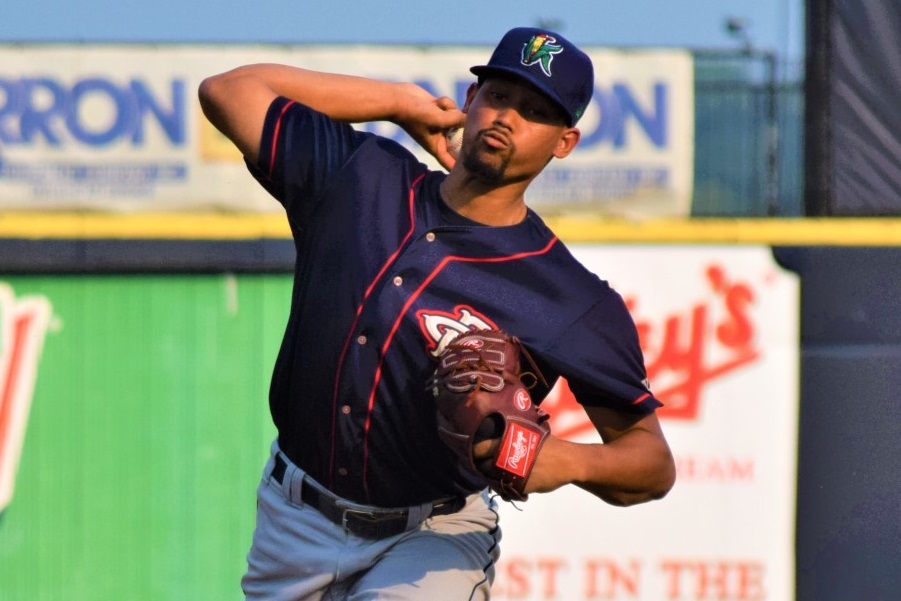 Keep reading to find out more on the night in the Twins minor league system on Saturday. As always, please feel free to discuss and ask questions. TRANSACTIONS On Friday night, the Kernels announced that right-hander Calvin Faucher had been placed on the DL with elbow tendinitis. On Saturday afternoon, they announced that right-hander Johan Quezada has been promoted from Elizabethton to the Kernels. Following the Twins game, Paul Molitor announced that Johnny Field would be sent back to Rochester. He will be optioned with, most likely, Robbie Grossman returning from the Disabled List. RED WINGS REPORT Rochester 3, Toledo 2 Box Score The Red Wings got some strong pitching and enough offense to get the win in this game. In the first inning, Byron Buxton doubled and scored on a double by Robbie Grossman. Buxton went 2-for-5 in with his sixth and seventh doubles. Grossman went 2-for-4 and is expected to return to Minneapolis on Sunday. Kennys Vargas went 2-for-4 including his 18th home run. Jake Reed was the “opener” for the Red Wings. He gave up one run on two hits and a walk in the first inning. He struck out one. Chase De Jong came on and gave up one run on five hits over seven innings. He walked one and struck out four. DJ Baxendale worked a scoreless ninth inning to secure De Jong’s first win in the Twins organization and his first save of the season for the Red Wings. CHATTANOOGA CHATTER Game 1: Chattanooga 0, Mississippi 1 Box Score Sean Poppen gave the Lookouts exactly what they needed in the first game on Saturday, a complete game. The right-hander from Harvard gave up just one run over six innings. The lone run came on the 16th home run of the season for Mississippi’s cleanup hitter Travis Demeritte. Unfortunately, he only needed to go six innings because the Lookouts were shut out. The team had just five hits. Luis Arraez and Brian Navarreto each had two singles. Game 2: Chattanooga 7, Mississippi 10 Box Score The Lookouts went with an all-lefty bullpen game in Game 2. Andrew Vasquez started and gave up nothing over the first two innings. He struck out three. Sam Clay came on and got just two outs. He gave up four runs on four hits and a walk. Devin Smeltzer came on and got the next four outs, three on strikeouts. However, he was also charged with an unearned run on three hits. Tyler Jay got the final two innings. He gave up five runs (three earned) on five hits and two walks. Jaylin Davis led the offense. He went 1-for-3, but he hit his fifth home run, a three-run shot and added a fourth RBI. Brent Rooker was 2-for-5 with his 31st double. Luis Arraez went 3-for-4. It was his third straight multi-hit game. Brian Navarreto was 2-for-3 with a walk. Luke Raley went 1-for-1 with two walks and was also hit by a pitch. Zander Wiel had a single and two walks. MIRACLE MATTERS Ft. Myers 0, Clearwater 4 Box Score The Miracle bats just were not able to figure out Clearwater’s Mauricio Llovera. Well, except for Taylor Grzelakowski. “Gelly” had three of the team’s four hits. Royce Lewis had a single for the other. Charlie Barnes started and gave up four runs on six hits and two walks over 3 1/3 innings. He struck out two. Colton Davis got the next five outs, three of them on strikeouts. He walked two. Alex Robinson threw two scoreless innings. Adam Bray threw two zeroes on the board as well. Alex Kirilloff went 0-for-3 with a walk. It was his second straight game without a hit. He hadn’t gone back-to-back games without a hit since July 7th and 8th. KERNELS NUGGETS Cedar Rapids 1, Wisconsin 2 Box Score This was quite the pitcher’s duel. Jhoan Duran threw seven innings and gave up just one run on five hits. He struck out a career-high nine batters while not issuing a walk. Unfortunately, the TimberRattlers’ starter, Dylan File, also threw seven innings of one-run ball. Starter Randy Dobnak, whose most recent appearance lasted just one inning before the rains came, worked a scoreless eighth inning. However, an error to lead off the ninth was followed by two strikeouts. Unfortunately, they were followed by two singles which ended the game. Strikeouts were a big part of this game. Kernels pitchers combined to strike out 11. Meanwhile, Kernels batters struck out 13 times. Michael Helman led the way by going 3-for-4 including his first triple with the Kernels. E-TWINS E-TALK Elizabethton 3, Bluefield 4 Box Score Big runs in the ninth, but unfortunately Bluefield ended their ninth with one more run and the win. Austin Schulfer started for the Twins and worked five shutout innings. He gave up two hits, walked three and struck out four. Jacob Blank came on and gave up two runs on four hits over his two innings. He also struck out four. But then came the rain and there was a delay. When the game returned, Zach Neff worked a scoreless eighth inning. Yunior Severino went 2-for-4 with his eighth double. Alex Robles hit his ninth double. But the score was tied 2-2 going into the ninth. Chris Williams, who had a sacrifice fly earlier in the game, blasted his 15th home run to give the E-Twins a 3-2 lead in the top of the ninth. https://twitter.com/Mike_Gally21/status/1031006558258262016 However, Neff returned for the ninth inning. He gave up a solo homer to lead off the inning to re-tie the game, this time at three. He gave up a single, and then on a sacrifice bunt, Neff had an error. He was able to coax a double play, but a two-out single ended the game. GCL TWINS TALK Game 1 - GCL Twins 2, GCL Red Sox 4 Box Score This game started on Friday and went four innings before the rains came and the game was suspended. Donny Breek had started and went the first 3 1/3 innings. He gave up four runs (three earned) on six hits and two walks. He struck out five. Denny Bentley came on and got the next two outs, one on a strikeout. When play resumed on Saturday morning, Landon Leach took the mound. He worked two scoreless, hitless innings. He walked one, hit one and struck out two batters. Petru Balan pitched the final inning. He gave up a hit and a walk, but no runs. Rehabbing Shane Carrier went 2-for-3 with both of the Twins RBIs. Tyler Webb added a double. Austin Hale had a walk and his second double. Game 2 - GCL Twins 2, GCL Red Sox 4 Box Score Kai-Wei Teng gave up three runs in the first inning, but the right-hander from Taiwan went four innings and gave up four total runs on seven hits. He walked two and struck out four batters. Osiris German struck out the side in the fifth inning, and Junior Navas worked a scoreless inning as well. Victor Tademo led the offense with a 3-for-3 game. Agustin Marte went 2-for-4. Alberoni Nunez hit his first triple. Tyler Webb added his third double. STARS OF THE DAY Twins Daily Hitter of the Day: Luis Arraez, Chattanooga Lookouts (5-7). Twins Daily Pitcher of the Day: Jhoan Duran, Cedar Rapids Kernels (7 IP, 5 H, 1 ER, 0 BB, 9 K) PROSPECT SUMMARY Here’s a look at how the Twins Daily Midseason Top 20 Twins Prospects performed. #1 - Royce Lewis (Ft. Myers) - 1-4 #2 - Alex Kirilloff (Ft. Myers) - 0-3, BB #3 - Brusdar Graterol (Ft. Myers) - Did not pitch #4 - Nick Gordon (Rochester) - 1-5, RBI, 3K, SB(10) #5 - Stephen Gonsalves (Rochester) - Did not pitch #6 - Trevor Larnach (Cedar Rapids) - 1-4, RBI, 2 K #7 - Brent Rooker (Chattanooga) - 0-3, K | 2-5, 2B(31), 2 R, K #8 - Akil Baddoo (Cedar Rapids) - 0-4, 3K #9 -Wander Javier - out of for the season #10 - Zack Littell (Rochester) - Did not pitch #11 - Blayne Enlow (Cedar Rapids) - Did not pitch #12 - LaMonte Wade (Rochester) - 0-4, K #13 - Travis Blankenhorn (Ft. Myers) - 0-4, 2 K #14 - Lewis Thorpe (Rochester) - Did not pitch #15 - Ben Rortvedt (Ft. Myers) - 0-4 #16 - Yunior Severino (Elizabethton) - 2-4, 2B(8), R, K #17 - Lewin Diaz (Ft. Myers) - Out for the season (wrist) #18 - Ryan Jeffers (Cedar Rapids) - 0-4, 2K #19 - Jacob Pearson (Cedar Rapids) - 1-3 #20 - Luis Arraez (Chattanooga) - 2-3 | 3-4 #21 - Jose Miranda (Ft. Myers) - 0-3, BB *Since Wander Javier is out, I’d add #21 to the list. SUNDAY’S PROBABLE STARTERS Rochester @ Toledo (5:05 CST) - LHP Stephen Gonsalves (9-3, 2.96 ERA) Chattanooga @ Montgomery (5:05 CST) - RHP Jorge Alcala (2-5, 3.99 ERA) Clearwater @ Ft. Myers (1:00 CST) - RHP Griffin Jax (3-1, 3.16 ERA) Cedar Rapids @ Wisconsin (1:05 CST) - RHP Edwar Colina (6-4, 2.55 ERA) Johnson City @ Elizabethton (DH @ 5:00 CST) - TBD, TBD GCL Twins - No Games Scheduled on Sundays Please feel free to ask any questions about Saturday’s games, or ask any questions you may have.
 -
That's fair, and he's flown up my rankings even in his "textbook development." But he came up and dominated right away, and then the numbers didn't match that for a few starts. That's not at all unusual, especially for a 20-year-old. He's doing just fine.
- 14 replies
-
- 1
-
-
- royce lewis
- trey cabbage
- (and 3 more)
-
Like I wrote a week or two ago, Lewis is well ahead of both Correa and Lindor in their timeline. He's ahead of where Mauer was at this time. They haven't been and won't be slow with Lewis... Or Kirilloff. Lewis is young for his draft class, so he could be a 19 year old in the big leagues. But again, they're going to do what they feel is best for them. I've tweeted a few times that I wanted Lewis to be promoted from Cedar Rapids to Ft. Myers 6 weeks earlier... However, it was during those six weeks that Lewis added the doubles and home runs, and now he's carried that up to Ft. Myers with him. So, there certainly is a plan. Had Lewis been promoted to the Miracle when I thought he should be, maybe he's not taken the huge step forward that he has.
- 14 replies
-
- 5
-
-
- royce lewis
- trey cabbage
- (and 3 more)
-
I don't know what the AGO is, but I have no doubt both will start 2019 in AA. The Twins have never been slow in promoting top bats.
- 14 replies
-
- 4
-
-
- royce lewis
- trey cabbage
- (and 3 more)
-
The minor league seasons are reaching into their final two weeks. A couple of teams have a shot at making the playoffs with a strong end to their season. While development is the most important thing in the minor leagues, learning how to win and being in that environment can be a positive thing for the players' development too. It should be a fun couple of weeks following the Twins and their minor league system. Image courtesy of Steve Buhr (photo of Gabriel Maciel) The minor league seasons are reaching into their final two weeks. A couple of teams have a shot at making the playoffs with a strong end to their season. While development is the most important thing in the minor leagues, learning how to win and being in that environment can be a positive thing for the players' development too. It should be a fun couple of weeks following the Twins and their minor league system. Keep reading to find out more on the night in the Twins minor league system on Friday. As always, please feel free to discuss and ask questions. TRANSACTIONS There were no transactions in the Twins minor leagues before their Friday games. However, after their game, Cedar Rapids announced that RHP Calvin Faucher has been placed on the disabled list with right elbow tendinitis. But, the Midwest League named its postseason All-Star team. Both Royce Lewis and Alex Kirilloff were named to that team. Lewis was named the league’s top prospect. RED WINGS REPORT Rochester 1, Toledo 4 Box Score Things were going well for Red Wings starter Zack Littell through the first five innings. He had yet to give up a run, but he got just two outs in the sixth inning and was charged with four runs (three earned). Nick Anderson gave up just one hit over the final 2 1/3 innings. He struck out three batters. The Red Wings offense wasn’t able to do much. Robbie Grossman, in his second rehab game, went 2-for-3 with a walk. Taylor Motter had a walk and his ninth double. Jeremy Hazelbaker hit his second triple. As per the plan, Byron Buxton is playing every other game as he returns to the Red Wings lineup. He played on Tuesday and Thursday, and he didn’t play on Wednesday and again on Friday night. CHATTANOOGA CHATTER Chattanooga , Mississippi Box Score Game postponed by rain. MIRACLE MATTERS Ft. Myers 3, Clearwater 2 Box Score In another battle of #1 overall picks, Royce Lewis came up big again. The top pick in 2016 was Mickey Moniak by the Phillies. He hit his fifth home run In this game, his 104th FSL game. Lewis the top pick in the 2017 draft went 2-3 with a walk and his fifth High A home run in just 32 games (14th in 107 total games in 2018). Both young players are likely to be future MLB stars, and they are both kids who played with and against each other in southern California. https://www.youtube.com/watch?time_continue=1&v=sLEHdD57qvs For the Miracle, the big story was the performance of lefty Bryan Sammons. After pitching very well in Cedar Rapids, Sammons has had some struggles since joining the Miracle. In four appearances (three starts), he had given up 18 runs (16 ER) in 12 2/3 innings. On this night, he was fantastic. He gave up just one run on three hits and a walk over six innings. He struck out six. Following the game, Sammons told Twins Daily, “It definitely felt good to get back in a groove. I was able to get through the order using mostly fastball and change-up the first time through the order, and then mixed in more spin the second and third time through the order. Mostly just trying to get ahead early and make them earn it. The biggest thing that has hurt me here is the walks.” In those 12 2/3 innings before this start, Sammons had walked 11 batters. That is uncharacteristic for him. In his 85 1/3 innings in Cedar Rapids, he had just 22 walks (2.3 BB/9). Jovani Moran came on and picked up his fourth save in his time with the Miracle. He worked the final three innings and gave up just one run on two hits. The run came on Moniak’s home run late in the game. Moran hit a batter and struck out three. Also of note, Alex Kirilloff had played in 14 games in August and had at least one hit in each game. However, on this night, he went 0-for-2. He has now hit in 27 of his last 29 games. KERNELS NUGGETS Cedar Rapids 7, Peoria 1 Box Score A four-run sixth inning broke things open for the Kernels in this game. Trey Cabbage hit a three-run homer for the game’s biggest hit. Cabbage went 2-for-4 with four RBIs, as he added another run with an RBI single in the eighth inning. His homer was his eighth of the season. Gabriel Maciel went 3-for-4 with his first triple. Trevor Larnach added his first professional triple. Jordan Balazovic has had some struggles of late, but he was good on this night. The Canadian right-hander gave up one run on two hits. He walked two and hit two, but he also struck out five. Derek Molina got the sixth inning. He walked two, but he also struck out three batters. Jose Martinez racked up his seventh save by throwing three scoreless innings to end the game. He gave up one hit, walked one and struck out six. E-TWINS E-TALK Elizabethton 1, Bluefield 2 Box Score Andrew Cabezas continues to pitch well. In this game, he provided the Twins with a quality start. In six innings, he gave up one run on four hits. He struck out just three, but he didn’t walk anyone. Tanner Howell came out and pitched the final two innings. He was charged with an unearned run on one hit and an intentional walk. He struck out three. Colton Burns continued to show power. In his 24th game, he had two hits including his sixth home run of the E-Twins season. It was his fourth in his past eight games played. DaShawn Keirsey went 2-for-4 with his seventh double. Yunior Severino also notched his seventh double. GCL TWINS TALK Game 1 - GCL Twins 2, GCL Red Sox 0 Box Score This game started last Saturday, but after three innings, there was no score and the game was tied 0-0. Donny Breek had thrown three scoreless innings for the Twins. Then the rains came and the game was suspended. When it was resumed on Friday, Frandy Torres was on the mound. He struck out five batters over three scoreless, hitless innings. He walked one. Casey Crosby continued his rehab and threw two scoreless innings despite giving up a hit, walking one and hitting one). Steven Cruz earned his second save by striking out two in a perfect ninth. Tyler Webb led the offense. He went 2-for-4 with both RBI. He also stole his seventh and eighth bases for the GCL Twins. Shane Carrier continued his rehab. He entered the game as a pinch runner and scored. Later he had a single, stole a base and came around to score the second run. Game 2 - GCL Twins , GCL Red Sox (Suspended in 4th due to rain) Box Score I guess you could say that Donny Breek started both games that the GCL Twins played on Friday. Of course, he started “Game 1” six days earlier and made the regularly scheduled start in this game. On this day, he gave up four runs (three earned) on six hits and two walks over 3 1/3 innings. He struck out five. Denny Bentley came on and got two outs. He walked one and struck out one. The Twins had just two hits through the four innings. Tyler Webb had a double. The game will be resumed at a later date. STARS OF THE DAY Twins Daily Hitter of the Day: Trey Cabbage, Cedar Rapids Kernels (2-4, HR(8), 4 RBI). Twins Daily Pitcher of the Day: Bryan Sammons, Ft. Myers Miracle (6 IP, 3 H, 1 ER, 1 BB, 6 K) PROSPECT SUMMARY Here’s a look at how the Twins Daily Midseason Top 20 Twins Prospects performed. #1 - Royce Lewis (Ft. Myers) - 2-3, BB, HR(5), R, RBI #2 - Alex Kirilloff (Ft. Myers) - 0-2, BB #3 - Brusdar Graterol (Ft. Myers) - Did not pitch. #4 - Nick Gordon (Rochester) - 0-3, BB #5 - Stephen Gonsalves (Rochester) - Did not pitch #6 - Trevor Larnach (Cedar Rapids) - 1-4, 3B(1) #7 - Brent Rooker (Chattanooga) - Rained out #8 - Akil Baddoo (Cedar Rapids) - Did not play #9 -Wander Javier - out of for the season #10 - Zack Littell (Rochester) - 5.2 IP, 7 H, 4 R, 3 ER, 0 BB, 7 K #11 - Blayne Enlow (Cedar Rapids) - Did not pitch #12 - LaMonte Wade (Rochester) - 1-4, K #13 - Travis Blankenhorn (Ft. Myers) - 1-3 #14 - Lewis Thorpe (Rochester) - Did not pitch #15 - Ben Rortvedt (Ft. Myers) - 1-2, BB, K #16 - Yunior Severino (Elizabethton) - 1-4, 2B(7), 2 K #17 - Lewin Diaz (Ft. Myers) - Out for the season (wrist) #18 - Ryan Jeffers (Cedar Rapids) - 1-4, 2B(9), 2 R #19 - Jacob Pearson (Cedar Rapids) - 0-2, BB #20 - Luis Arraez (Chattanooga) - No Game Scheduled. #21 - Jose Miranda (Ft. Myers) - 0-4 *Since Wander Javier is out, I’d add #21 to the list. ATURDAY’S PROBABLE STARTERS Rochester @ Toledo (6:05 CST) - RHP Chase De Jong (0-2, 4.80 ERA) Chattanooga @ Mississippi (DH at 4:00 CST) - RHP Sean Poppen (5-5, 3.72 ERA), Jorge Alcala (2-5, 3.99 ERA) Clearwater @ Ft. Myers (5:00 CST) - LHP Charlie Barnes (5-5, 2.73 ERA) Cedar Rapids @ Wisconsin - RHP Jhoan Duran (6-5, 4.45 ERA) Elizabethton @ Bluefield (6:05 CST) - RHP Austin Schulfer (2-0, 2.17 ERA) GCL Twins @ GCL Red Sox (9:00 am CST) - TBD Please feel free to ask any questions about Friday’s games, or ask any questions you may have. View full article
- 14 replies
-
- 1
-
-
- royce lewis
- trey cabbage
- (and 3 more)
-
Twins Minor League Report (8/17): Pitchers Deliver Strong Starts
Seth Stohs posted an article in Minor Leagues
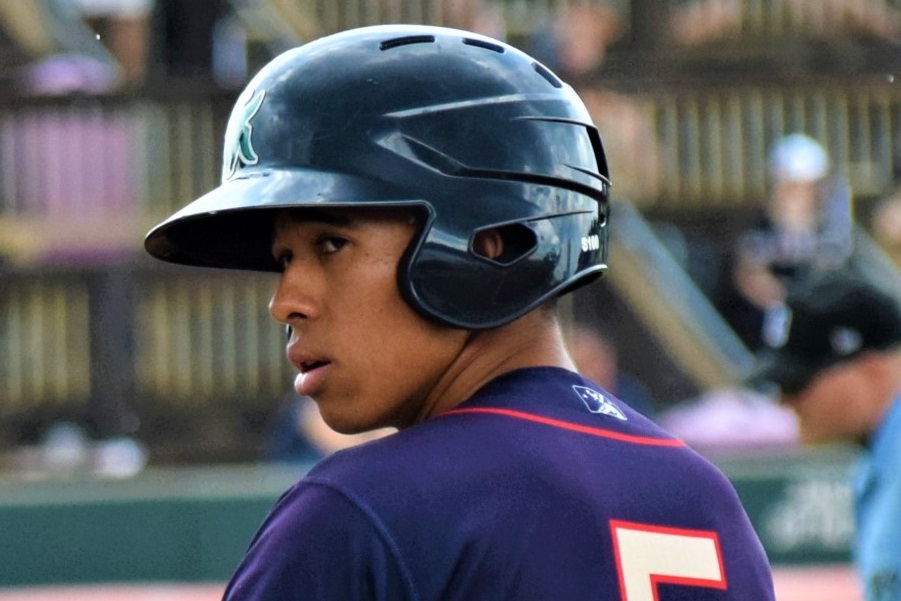 Keep reading to find out more on the night in the Twins minor league system on Friday. As always, please feel free to discuss and ask questions. TRANSACTIONS There were no transactions in the Twins minor leagues before their Friday games. However, after their game, Cedar Rapids announced that RHP Calvin Faucher has been placed on the disabled list with right elbow tendinitis. But, the Midwest League named its postseason All-Star team. Both Royce Lewis and Alex Kirilloff were named to that team. Lewis was named the league’s top prospect. RED WINGS REPORT Rochester 1, Toledo 4 Box Score Things were going well for Red Wings starter Zack Littell through the first five innings. He had yet to give up a run, but he got just two outs in the sixth inning and was charged with four runs (three earned). Nick Anderson gave up just one hit over the final 2 1/3 innings. He struck out three batters. The Red Wings offense wasn’t able to do much. Robbie Grossman, in his second rehab game, went 2-for-3 with a walk. Taylor Motter had a walk and his ninth double. Jeremy Hazelbaker hit his second triple. As per the plan, Byron Buxton is playing every other game as he returns to the Red Wings lineup. He played on Tuesday and Thursday, and he didn’t play on Wednesday and again on Friday night. CHATTANOOGA CHATTER Chattanooga , Mississippi Box Score Game postponed by rain. MIRACLE MATTERS Ft. Myers 3, Clearwater 2 Box Score In another battle of #1 overall picks, Royce Lewis came up big again. The top pick in 2016 was Mickey Moniak by the Phillies. He hit his fifth home run In this game, his 104th FSL game. Lewis the top pick in the 2017 draft went 2-3 with a walk and his fifth High A home run in just 32 games (14th in 107 total games in 2018). Both young players are likely to be future MLB stars, and they are both kids who played with and against each other in southern California. https://www.youtube.com/watch?time_continue=1&v=sLEHdD57qvs For the Miracle, the big story was the performance of lefty Bryan Sammons. After pitching very well in Cedar Rapids, Sammons has had some struggles since joining the Miracle. In four appearances (three starts), he had given up 18 runs (16 ER) in 12 2/3 innings. On this night, he was fantastic. He gave up just one run on three hits and a walk over six innings. He struck out six. Following the game, Sammons told Twins Daily, “It definitely felt good to get back in a groove. I was able to get through the order using mostly fastball and change-up the first time through the order, and then mixed in more spin the second and third time through the order. Mostly just trying to get ahead early and make them earn it. The biggest thing that has hurt me here is the walks.” In those 12 2/3 innings before this start, Sammons had walked 11 batters. That is uncharacteristic for him. In his 85 1/3 innings in Cedar Rapids, he had just 22 walks (2.3 BB/9). Jovani Moran came on and picked up his fourth save in his time with the Miracle. He worked the final three innings and gave up just one run on two hits. The run came on Moniak’s home run late in the game. Moran hit a batter and struck out three. Also of note, Alex Kirilloff had played in 14 games in August and had at least one hit in each game. However, on this night, he went 0-for-2. He has now hit in 27 of his last 29 games. KERNELS NUGGETS Cedar Rapids 7, Peoria 1 Box Score A four-run sixth inning broke things open for the Kernels in this game. Trey Cabbage hit a three-run homer for the game’s biggest hit. Cabbage went 2-for-4 with four RBIs, as he added another run with an RBI single in the eighth inning. His homer was his eighth of the season. Gabriel Maciel went 3-for-4 with his first triple. Trevor Larnach added his first professional triple. Jordan Balazovic has had some struggles of late, but he was good on this night. The Canadian right-hander gave up one run on two hits. He walked two and hit two, but he also struck out five. Derek Molina got the sixth inning. He walked two, but he also struck out three batters. Jose Martinez racked up his seventh save by throwing three scoreless innings to end the game. He gave up one hit, walked one and struck out six. E-TWINS E-TALK Elizabethton 1, Bluefield 2 Box Score Andrew Cabezas continues to pitch well. In this game, he provided the Twins with a quality start. In six innings, he gave up one run on four hits. He struck out just three, but he didn’t walk anyone. Tanner Howell came out and pitched the final two innings. He was charged with an unearned run on one hit and an intentional walk. He struck out three. Colton Burns continued to show power. In his 24th game, he had two hits including his sixth home run of the E-Twins season. It was his fourth in his past eight games played. DaShawn Keirsey went 2-for-4 with his seventh double. Yunior Severino also notched his seventh double. GCL TWINS TALK Game 1 - GCL Twins 2, GCL Red Sox 0 Box Score This game started last Saturday, but after three innings, there was no score and the game was tied 0-0. Donny Breek had thrown three scoreless innings for the Twins. Then the rains came and the game was suspended. When it was resumed on Friday, Frandy Torres was on the mound. He struck out five batters over three scoreless, hitless innings. He walked one. Casey Crosby continued his rehab and threw two scoreless innings despite giving up a hit, walking one and hitting one). Steven Cruz earned his second save by striking out two in a perfect ninth. Tyler Webb led the offense. He went 2-for-4 with both RBI. He also stole his seventh and eighth bases for the GCL Twins. Shane Carrier continued his rehab. He entered the game as a pinch runner and scored. Later he had a single, stole a base and came around to score the second run. Game 2 - GCL Twins , GCL Red Sox (Suspended in 4th due to rain) Box Score I guess you could say that Donny Breek started both games that the GCL Twins played on Friday. Of course, he started “Game 1” six days earlier and made the regularly scheduled start in this game. On this day, he gave up four runs (three earned) on six hits and two walks over 3 1/3 innings. He struck out five. Denny Bentley came on and got two outs. He walked one and struck out one. The Twins had just two hits through the four innings. Tyler Webb had a double. The game will be resumed at a later date. STARS OF THE DAY Twins Daily Hitter of the Day: Trey Cabbage, Cedar Rapids Kernels (2-4, HR(8), 4 RBI). Twins Daily Pitcher of the Day: Bryan Sammons, Ft. Myers Miracle (6 IP, 3 H, 1 ER, 1 BB, 6 K) PROSPECT SUMMARY Here’s a look at how the Twins Daily Midseason Top 20 Twins Prospects performed. #1 - Royce Lewis (Ft. Myers) - 2-3, BB, HR(5), R, RBI #2 - Alex Kirilloff (Ft. Myers) - 0-2, BB #3 - Brusdar Graterol (Ft. Myers) - Did not pitch. #4 - Nick Gordon (Rochester) - 0-3, BB #5 - Stephen Gonsalves (Rochester) - Did not pitch #6 - Trevor Larnach (Cedar Rapids) - 1-4, 3B(1) #7 - Brent Rooker (Chattanooga) - Rained out #8 - Akil Baddoo (Cedar Rapids) - Did not play #9 -Wander Javier - out of for the season #10 - Zack Littell (Rochester) - 5.2 IP, 7 H, 4 R, 3 ER, 0 BB, 7 K #11 - Blayne Enlow (Cedar Rapids) - Did not pitch #12 - LaMonte Wade (Rochester) - 1-4, K #13 - Travis Blankenhorn (Ft. Myers) - 1-3 #14 - Lewis Thorpe (Rochester) - Did not pitch #15 - Ben Rortvedt (Ft. Myers) - 1-2, BB, K #16 - Yunior Severino (Elizabethton) - 1-4, 2B(7), 2 K #17 - Lewin Diaz (Ft. Myers) - Out for the season (wrist) #18 - Ryan Jeffers (Cedar Rapids) - 1-4, 2B(9), 2 R #19 - Jacob Pearson (Cedar Rapids) - 0-2, BB #20 - Luis Arraez (Chattanooga) - No Game Scheduled. #21 - Jose Miranda (Ft. Myers) - 0-4 *Since Wander Javier is out, I’d add #21 to the list. ATURDAY’S PROBABLE STARTERS Rochester @ Toledo (6:05 CST) - RHP Chase De Jong (0-2, 4.80 ERA) Chattanooga @ Mississippi (DH at 4:00 CST) - RHP Sean Poppen (5-5, 3.72 ERA), Jorge Alcala (2-5, 3.99 ERA) Clearwater @ Ft. Myers (5:00 CST) - LHP Charlie Barnes (5-5, 2.73 ERA) Cedar Rapids @ Wisconsin - RHP Jhoan Duran (6-5, 4.45 ERA) Elizabethton @ Bluefield (6:05 CST) - RHP Austin Schulfer (2-0, 2.17 ERA) GCL Twins @ GCL Red Sox (9:00 am CST) - TBD Please feel free to ask any questions about Friday’s games, or ask any questions you may have.
 -
On July 31, the Twins traded popular second baseman Brian Dozier to the Los Angeles Dodgers in a deal that had been in the works for roughly 20 months. In return, the Twins acquired Double-A prospects Luke Raley and Devin Smeltzer. The Dodgers were willing to make the deal but insisted on the Twins taking back second baseman Logan Forsythe, and more important, his salary. Brian Dozier has been a big add for the Dodgers, but Forsythe has returned to his American League form with the Twins. Image courtesy of Jordan Johnson, USA Today On July 31, the Twins traded popular second baseman Brian Dozier to the Los Angeles Dodgers in a deal that had been in the works for roughly 20 months. In return, the Twins acquired Double-A prospects Luke Raley and Devin Smeltzer. The Dodgers were willing to make the deal but insisted on the Twins taking back second baseman Logan Forsythe, and more important, his salary. Brian Dozier has been a big add for the Dodgers, but Forsythe has returned to his American League form with the Twins. With a 5-for-5 night on Thursday night at Target Field, Logan Forsythe is now 22-for-49, hitting .449/.500/.531 (1.031) with four doubles in his 14 games since joining the Twins. Obviously that is a very small sample. In his 70 games with the Dodgers this year, he had hit just .207/.270/.290 (.560) with ten doubles and two home runs. It appears this will be a trade that could be beneficial to both teams. Brian Dozier has also played in 14 games since joining the Dodgers. He is hitting .255/.400/.532 (.932) with four doubles, three homers and 12 RBI (including a walkoff sacrifice fly in extra innings on Wednesday night in LA. So what should the Twins do as it relates to Logan Forsythe? There really may be three options. Should The Twins Try to Capitalize on Forsythe’s Hot Start by Looking to Trade Him? There is just under two weeks before the August trade deadline. The Twins should try to trade him for something. While they aren’t going to find a GM in baseball willing to overlook his past two seasons because of two really good weeks, the Twins clearly want to continue accumulating talent for the future. They won’t get anything resembling a blue-chip prospect for five weeks of Forsythe, but they might find a suitor remaining for the versatile infielder. Should The Twins Try to Sign Forsythe Right Now to a Contract for 2018? The Twins could decide that Nick Gordon needs more time in AAA next year to continue his development. They may determine that they would like to have a one year stop gap, like Forsythe, to play second base until Gordon is deemed ready. Again, based on his struggles over the last couple of seasons in Los Angeles, and his injuries the last couple of years, he likely is a guy who would get a one-year deal in the neighborhood of $2 million. Derek Falvey and Thad Levine could reach out to Forsythe right now and make him that offer. There would appear to be little reason for Forsythe to accept it, though he could just as easily struggle over the next two or three weeks. Should The Twins Sit Back and Let It Play Out? Or they could just let it play out. Let Forsythe work to continue gain value the rest of the season as he looks to become a free agent at season’s end. From the Twins perspective, they certainly can see his value, especially on a one year, stop gap type of deal. No matter how strong Forsythe finishes the season, his next contract likely will remain a one-year deal at less than $3-4 million. The financial risk of waiting isn’t huge. The risk of him going to one of the other 29 teams if he becomes a free agent might be a little bigger. Truthfully, there isn’t a wrong (or bad) answer in that group. Signing him to a one-year, low-cost deal makes a lot of sense. Forsythe is and has always been a very professional hitter. It’s great to see him playing like he did during much of his time in Tampa. So if the Twins can add another prospect with a chance, that’s not a bad deal for a three week rental. Or the Twins can just let him keep playing and see what happens. Following the game, in an interview with FSN's Audra Martin, Forsythe said (regarding his 5-for-5 night), "Sometimes you get lucky." Maybe in this case, the Twins got a little bit lucky. https://twitter.com/fsnorth/status/1030302942870401025 Is there a best option in your opinion? Share your thoughts below. View full article
- 100 replies
-
- 3
-
-
- logan forsythe
- brian dozier
- (and 1 more)
-
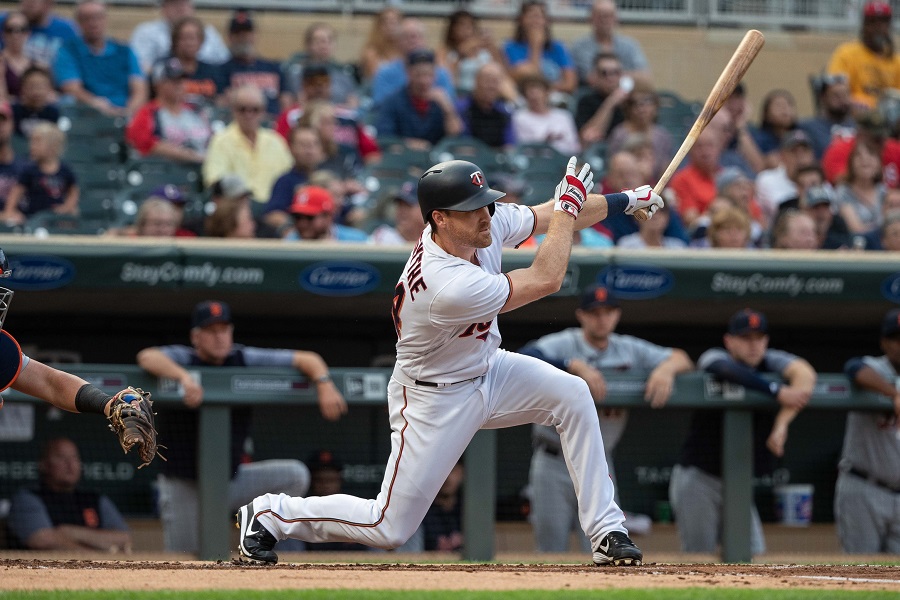 With a 5-for-5 night on Thursday night at Target Field, Logan Forsythe is now 22-for-49, hitting .449/.500/.531 (1.031) with four doubles in his 14 games since joining the Twins. Obviously that is a very small sample. In his 70 games with the Dodgers this year, he had hit just .207/.270/.290 (.560) with ten doubles and two home runs. It appears this will be a trade that could be beneficial to both teams. Brian Dozier has also played in 14 games since joining the Dodgers. He is hitting .255/.400/.532 (.932) with four doubles, three homers and 12 RBI (including a walkoff sacrifice fly in extra innings on Wednesday night in LA. So what should the Twins do as it relates to Logan Forsythe? There really may be three options. Should The Twins Try to Capitalize on Forsythe’s Hot Start by Looking to Trade Him? There is just under two weeks before the August trade deadline. The Twins should try to trade him for something. While they aren’t going to find a GM in baseball willing to overlook his past two seasons because of two really good weeks, the Twins clearly want to continue accumulating talent for the future. They won’t get anything resembling a blue-chip prospect for five weeks of Forsythe, but they might find a suitor remaining for the versatile infielder. Should The Twins Try to Sign Forsythe Right Now to a Contract for 2018? The Twins could decide that Nick Gordon needs more time in AAA next year to continue his development. They may determine that they would like to have a one year stop gap, like Forsythe, to play second base until Gordon is deemed ready. Again, based on his struggles over the last couple of seasons in Los Angeles, and his injuries the last couple of years, he likely is a guy who would get a one-year deal in the neighborhood of $2 million. Derek Falvey and Thad Levine could reach out to Forsythe right now and make him that offer. There would appear to be little reason for Forsythe to accept it, though he could just as easily struggle over the next two or three weeks. Should The Twins Sit Back and Let It Play Out? Or they could just let it play out. Let Forsythe work to continue gain value the rest of the season as he looks to become a free agent at season’s end. From the Twins perspective, they certainly can see his value, especially on a one year, stop gap type of deal. No matter how strong Forsythe finishes the season, his next contract likely will remain a one-year deal at less than $3-4 million. The financial risk of waiting isn’t huge. The risk of him going to one of the other 29 teams if he becomes a free agent might be a little bigger. Truthfully, there isn’t a wrong (or bad) answer in that group. Signing him to a one-year, low-cost deal makes a lot of sense. Forsythe is and has always been a very professional hitter. It’s great to see him playing like he did during much of his time in Tampa. So if the Twins can add another prospect with a chance, that’s not a bad deal for a three week rental. Or the Twins can just let him keep playing and see what happens. Following the game, in an interview with FSN's Audra Martin, Forsythe said (regarding his 5-for-5 night), "Sometimes you get lucky." Maybe in this case, the Twins got a little bit lucky. https://twitter.com/fsnorth/status/1030302942870401025 Is there a best option in your opinion? Share your thoughts below.
 -
Twins Daily Roundtable: Closing Time
Seth Stohs replied to Cody Christie's topic in Twins Daily Front Page News
I'm getting really, really good at forgetting to respond to Cody. Oops! Anyway, my answer to who should be the Twins closer... "Whoever." It doesn't matter to me. I'm good with Hildenberger getting the first shot. Now that he's had saves in back-to-back games, if there is another save opportunity on Thursday, maybe I'd go with May, or Duffey, or Rogers... or Magill. Or, whoever. Later in September, could be Busenitz or Curtiss or Anderson or Reed... Or, whoever. It's good for all of them to get high-leverage spots at this point.- 25 replies
-
- 4
-
-
- trevor may
- trevor hildenberger
- (and 2 more)
-
Of course, Drew Butera was 3-years older at the time... Oh, and he's in his 9th MLB season... And, anyone who watched Rortvedt last year and watched him again this year and worries about the numbers just isn't watching. He's made some solid strides. No one is saying that he is a finished project. It'll take him a while to get to the big leagues, but he's got a chance. And, I was doing a story on the 2016 draft... So, no reason for me to ask him about other guys...
- 29 replies
-
- 7
-
-
- alex kirilloff
- akil baddoo
- (and 3 more)
-
I'm pretty sure none of that matters even a little bit.
- 29 replies
-
- 1
-
-
- alex kirilloff
- akil baddoo
- (and 3 more)
-
I mean, if Nick Gordon ranks #10 in the Twins system, Twins fans should be thrilled about the system. That said, I never think it's fair to expect All Star appearances for any prospect. That might be the ceiling, but a more likely scenario might be that he's "just" a solid MLB second baseman for a bunch of years... and that's pretty OK too. Not a transformational player, but a real solid player is good too.
- 33 replies
-
- 2
-
-
- jorge alcala
- gilberto celestino
- (and 3 more)
-
Borderline Top 100. May be in some. May not be in others. Top 10 Twins guy next year? Absolutely. A 22 year old in AAA is impressive.
- 33 replies
-
- 1
-
-
- jorge alcala
- gilberto celestino
- (and 3 more)
-
He's got really solid numbers. The batting average is fairly low, but that on-base skills are fantastic and he's got real good pop. He runs the bases well and he's a good outfielder. He's put in the time ad he hasn't been overwhelmed in any part of the game. I think it's a given he moves up.
- 33 replies
-
- 2
-
-
- jorge alcala
- gilberto celestino
- (and 3 more)
-
I'd say Graterol instead of Gonsalves... but yeah, huge haul
-
Agree with some of thise, but Gonsalves's one start tonight will likely have very little impact on his call up (or not), just like Romero's potential call up will have very littler or nothing to do with "another start.
