



Seth Stohs
-
Posts
25,909 -
Joined
-
Last visited
-
Days Won
109
Content Type
Profiles
News
Minnesota Twins Videos
2026 Minnesota Twins Top Prospects Ranking
2022 Minnesota Twins Draft Picks
Minnesota Twins Free Agent & Trade Rumors, Notes, & Tidbits
Guides & Resources
2023 Minnesota Twins Draft Picks
The Minnesota Twins Players Project
2024 Minnesota Twins Draft Picks
2025 Minnesota Twins Draft Pick Tracker
2026 Minnesota Twins Draft Tracker: Picks & Bonuses
Forums
Blogs
Events
Store
Downloads
Gallery
Everything posted by Seth Stohs
-
 The Astros have an incredible lineup. They play strong defense. Their starting rotation is remarkable. Their bullpen is deep and strong. And, Alex Bregman cannot be stopped. Or at least the Twins couldn’t find a way all series. Jorge Polanco and Max Kepler each had two hits, and Willians Astudillo homered for the Twins. Image courtesy of Troy Taormina, USA Today The Astros have an incredible lineup. They play strong defense. Their starting rotation is remarkable. Their bullpen is deep and strong. And, Alex Bregman cannot be stopped. Or at least the Twins couldn’t find a way all series. Jorge Polanco and Max Kepler each had two hits, and Willians Astudillo homered for the Twins. Snapshot (chart via FanGraphs) Odorizzi: 29 Game Score, 4.2 IP, 4 H, 5 R, 5 ER, 4 K, 4 BB, 55.3% strikes (52 of 94 pitches) Home Runs: Astudillo (2) Multi-Hit Games: Polanco (2-for-4), Kepler (2-for-4) WPA of 0.1 or higher: None WPA of -0.1 or lower: Odorizzi (-.241) Early in the game, things looked OK for the Twins. Jake Odorizzi started out with two scoreless innings. The Twins had their opportunities early against Astros rookie starter Framber Valdez. They had runners in scoring position but were unable to capitalize. Odorizzi then gave up two-run homers to Alex Bregman in the third inning and Evan Gattis in the fourth inning. And from there, the Astros piled on a bit. Odorizzi just didn’t throw enough strikes. As much as the goal was to not let Bregman beat them, he had the two-run homer and in the eighth inning, he put the icing on the cake with a bases-clearing double. On a related note, I like cake. I rarely have cake, but I do like it. Sometimes I like just the vanilla cake with vanilla icing. Sometimes, chocolate cake is good, especially with some creamy chocolate icing (most of the time it’s a little too rich for my liking). My favorite might be vanilla (yellow) cake with chocolate frosting. Although strawberry shortcake is also fantastic! Back to Jake Odorizzi… in his post game presser, Mike Berardino asked him if he might be interested in being a “Primary” pitcher. Fair to say he doesn’t seem too interested in it. Anyway, back to the Twins. Willians Astudillo DHd and hit a home run. He now has two home runs, two strikeouts and zero walks. Yes, his scouting report and minor league track record have been proven pretty accurate through his small-sample-size big league career. https://twitter.com/fsnorth/status/1037517440211513344 It was a rough game for Tyler Austin on Wednesday. He started and played first base. He went 0-for-3 with three strikeouts. Later in the game, he was chasing a pop up, but he slipped on the warning track near the first base dugout and landed hard. An inning later he was removed from the game for a pinch hitter for precautionary reasons. Austin now has 26 strikeouts in 78 plate appearances (33.3%). While that isn’t great, it is worth noting that in his time with the Yankees this year, he struck out 40.1% of his 132 plate appearances (53 Ks). Also of note, he has seven home runs in 78 plate appearances with the Twins. He had eight home runs in 132 plate appearances with the Yankees. Improvements. A brief look at the number of pitches thrown by the relievers in Wednesday’s game: Andrew Vasquez (8), John Curtiss (24), Oliver Drake (7), Taylor Rogers (6), Matt Belisle (29). https://twitter.com/fsnorth/status/1037551908615929857 What else got your talking and asking questions throughout Wednesday’s game? Next Three Games Thu: Off Fri vs. KC, 7:10 pm CT: TBD (meaning, Opener to go with “primary” Stephen Gonsalves) Sat vs KC, 6:10 pm CT: Jose Berrios Sun vs KC, 1:10 pm CT: TBD (reportedly Zack Littell and Chase De Jong piggybacking) Last Three Games MIN 10, TEX 7: Tex-plosion! HOU 4, MIN 1: Astros Take Advantage of Pivotal Polanco Error HOU 5, MIN 2: Rough Opener, Strong Stewart Homecoming View full article
 -
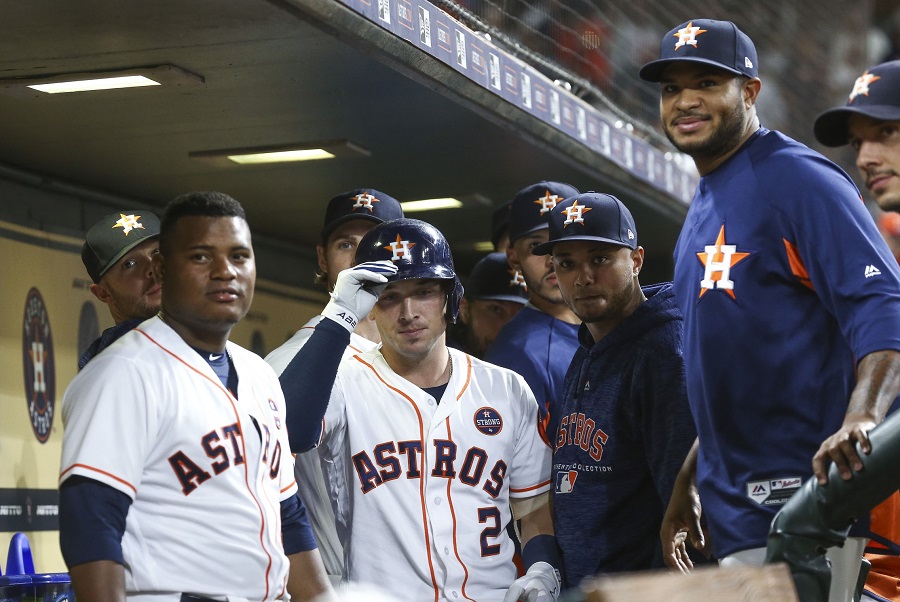 Snapshot (chart via FanGraphs) Odorizzi: 29 Game Score, 4.2 IP, 4 H, 5 R, 5 ER, 4 K, 4 BB, 55.3% strikes (52 of 94 pitches) Home Runs: Astudillo (2) Multi-Hit Games: Polanco (2-for-4), Kepler (2-for-4) WPA of 0.1 or higher: None WPA of -0.1 or lower: Odorizzi (-.241) Early in the game, things looked OK for the Twins. Jake Odorizzi started out with two scoreless innings. The Twins had their opportunities early against Astros rookie starter Framber Valdez. They had runners in scoring position but were unable to capitalize. Odorizzi then gave up two-run homers to Alex Bregman in the third inning and Evan Gattis in the fourth inning. And from there, the Astros piled on a bit. Odorizzi just didn’t throw enough strikes. As much as the goal was to not let Bregman beat them, he had the two-run homer and in the eighth inning, he put the icing on the cake with a bases-clearing double. On a related note, I like cake. I rarely have cake, but I do like it. Sometimes I like just the vanilla cake with vanilla icing. Sometimes, chocolate cake is good, especially with some creamy chocolate icing (most of the time it’s a little too rich for my liking). My favorite might be vanilla (yellow) cake with chocolate frosting. Although strawberry shortcake is also fantastic! Back to Jake Odorizzi… in his post game presser, Mike Berardino asked him if he might be interested in being a “Primary” pitcher. Fair to say he doesn’t seem too interested in it. Anyway, back to the Twins. Willians Astudillo DHd and hit a home run. He now has two home runs, two strikeouts and zero walks. Yes, his scouting report and minor league track record have been proven pretty accurate through his small-sample-size big league career. https://twitter.com/fsnorth/status/1037517440211513344 It was a rough game for Tyler Austin on Wednesday. He started and played first base. He went 0-for-3 with three strikeouts. Later in the game, he was chasing a pop up, but he slipped on the warning track near the first base dugout and landed hard. An inning later he was removed from the game for a pinch hitter for precautionary reasons. Austin now has 26 strikeouts in 78 plate appearances (33.3%). While that isn’t great, it is worth noting that in his time with the Yankees this year, he struck out 40.1% of his 132 plate appearances (53 Ks). Also of note, he has seven home runs in 78 plate appearances with the Twins. He had eight home runs in 132 plate appearances with the Yankees. Improvements. A brief look at the number of pitches thrown by the relievers in Wednesday’s game: Andrew Vasquez (8), John Curtiss (24), Oliver Drake (7), Taylor Rogers (6), Matt Belisle (29). https://twitter.com/fsnorth/status/1037551908615929857 What else got your talking and asking questions throughout Wednesday’s game? Next Three Games Thu: Off Fri vs. KC, 7:10 pm CT: TBD (meaning, Opener to go with “primary” Stephen Gonsalves) Sat vs KC, 6:10 pm CT: Jose Berrios Sun vs KC, 1:10 pm CT: TBD (reportedly Zack Littell and Chase De Jong piggybacking) Last Three Games MIN 10, TEX 7: Tex-plosion! HOU 4, MIN 1: Astros Take Advantage of Pivotal Polanco Error HOU 5, MIN 2: Rough Opener, Strong Stewart Homecoming
 -
Yes...
-
HOU 5, MIN 2: Rough Opener, Strong Stewart Homecoming
Seth Stohs replied to Seth Stohs's topic in Twins Daily Front Page News
Or maybe they would have. No way to know, and that's what I tried to illustrate. Who knows how Stewart would have done in the first inning against their top hitters. Maybe fine, maybe not.- 55 replies
-
- 3
-

-
- kohl stewart
- miguel sano
- (and 3 more)
-
When facing an opposing pitcher such as Justin Verlander, falling behind early is not an ideal strategy. For the second time this week (and ever), the Twins employed the “Opener” concept in Tuesday night’s game. This time, it was Trevor May who started and was replaced in the second inning by the “primary” pitcher, Kohl Stewart, who went to high school at St. Pius X high school, a ten mile commute from Minute Maid Park. Image courtesy of Troy Taormina, USA Today When facing an opposing pitcher such as Justin Verlander, falling behind early is not an ideal strategy. For the second time this week (and ever), the Twins employed the “Opener” concept in Tuesday night’s game. This time, it was Trevor May who started and was replaced in the second inning by the “primary” pitcher, Kohl Stewart, who went to high school at St. Pius X high school, a ten mile commute from Minute Maid Park. Snapshot (chart via FanGraphs) May: 18 Game Score, 1.0 IP, 5 H, 4 R, 4 ER, 0 K, 0 BB, 69.2% strikes (18 of 26 pitches) Home Runs: Polanco (4) Multi-Hit Games: Grossman (2-for-3) WPA of 0.1 or higher: Grossman (.154), Stewart (.101) WPA of -0.1 or lower: May -0.302 The Sample Size is just two, so making any grand statements about the Opener concept at this point would be silly. The “Openers” have been non-good, but the young pitchers who have come after them have been pretty solid. https://twitter.com/MikeBerardino/status/1037167887637606400 Gabriel Moya gave up two, first-inning runs on Sunday. In this game, Trevor May gave up four runs in the first inning. Littell performed pretty well on Sunday, and Stewart was terrific for five innings and twice through the Astros lineup. He gave up just three hits and one walk and didn’t allow a run. He struck out three batters. So, did they do better because of the “opener” or did they do better because when they came on in the second inning, the team was already behind and there was, at least theoretically, less pressure. Did Stewart pitch better because he now has three prior starts to learn from? Did Stewart pitch well because he was pitching at home, in front of many friends and family members? How much did pitching to Chris Gimenez help him? Doesn’t really matter why he pitched better, if you ask me (and you probably won’t). The coaches and Stewart will sift through the data tonight and tomorrow. What matters is that he pitched really well. In those five innings, he was more economical than he has been, throwing just 73 pitches (44 strikes, 60%, still not ideal). But as much as young pitchers can learn from their rough outings, it can be equally important for them to experience some success. https://www.youtube.com/watch?v=Y3a4q7eB2Yo YouTube video by Mike Berardino, Pioneer Press If nothing else, there is no reason to give up on the Opener concept yet. Aside from Stewart, the only other real positive was Robbie Grossman had a couple of hits including an RBI double. In 13 games since returning from the disabled list, Grossman has hit .342 (13-for-38). In seven games on this current road trip, he has hit .429 (9-for-21). As much as it may make sense for the Twins to move on from Grossman with newer options, he continues to be a reliable guy in taking quality at- bats. He works the counts well, and he is capable of these types of streaks. While he isn’t a great outfielder, he does make nearly all of the plays that he gets to. He is making $2 million in 2018. My guess for what he might make in 2019 would be in the $3-4 million range. For a part-time DH, part-time OF, pinch-hitting option on a team with a lot of young, inexperienced hitters in need of playing time, it might not be out of the realm of possibility to bring him back again. (Though I would still think it’s not terribly likely.) Jorge Polanco added his fourth homer of the season in the ninth, though it was too little, too late. On a roster that includes the reigning AL MVP (Jose Altuve), the reigning World Series MVP (George Springer) and a likely future MVP in Carlos Correa, the Astros best player this year has been third baseman Alex Bregman. In this game, he took over the MLB doubles lead from Eduardo Escobar. With three in this game, Bregman now has 46 two-baggers on the season. Maybe the best news to come out of Houston for the Twins on Tuesday night is that Miguel Sano appears to “only” have a leg bruise. So I don’t have to type out the play-by-play, here is a view of when Sano got injured and Twins fans all over gasped, wondering aloud why we can’t have nice things (again). https://twitter.com/DWolfsonKSTP/status/1037142436290748416 Sano left the game on a cart. Fortunately, x-rays were negative, which is positive for Sano and Twins fans. Instead of likely being done for the year, he could be back in the lineup in the not-too-distant future, though they will certainly be cautious. This is likely the first time that Sano has felt any sort of pain through his left leg, the titanium rod-filled one. Molitor noted after the game that he felt pain up and down his leg, down even to his ankle. He probably got a bit scared, I know I would, and wisely stayed off of it as a precaution. Looking at the video, his leg and knee just stopped at the bag, so if it’s truly just a bruise, it is very lucky. https://twitter.com/fsnorth/status/1037187188646014977 While Tom has stopped doing the daily reliever pitch count chart, I figured that I would at least update you on the Twins who pitched on Tuesday. In the “Opener” role, Trevor May threw 26 pitches. Oliver Drake came in for the seventh inning and needed 19 pitches. Tyler Duffey had a very nice, tidy, nine-pitch eighth inning. By the way, Ryan Pressly was really good for the Astros. He was throwing hard, spinning it well, and putting up numbers. But he struck out the side against the Twins in the eighth inning. He struck out the pinch-hitting Mitch Garver, Joe Mauer and Logan Forsythe. While the radar gun looked the same, Pressly appeared so much more confident on the mound. He looked smoother, more in control. In his time with the Astros, he has 22 strikeouts without issuing a walk. Next Three Games Wed at HOU, 7:10 pm CT: Jake Odorizzi vs. Framber Valdez Thu: Off Fri vs. KC, 7:10 pm CT: TBD (meaning, Opener to go with “primary” Stephen Gonsalves) Sat vs KC, 6:10 pm CT: Jose Berrios vs Somebody Last Three Games TEX 18, MIN 4: Speechless TEX 7, MIN 4: Is Jose OK? MIN 10, TEX 7: Tex-plosion! HOU 4, MIN 1: Astros Take Advantage of Pivotal Polanco Error View full article
- 55 replies
-
- 1
-
-
- kohl stewart
- miguel sano
- (and 3 more)
-
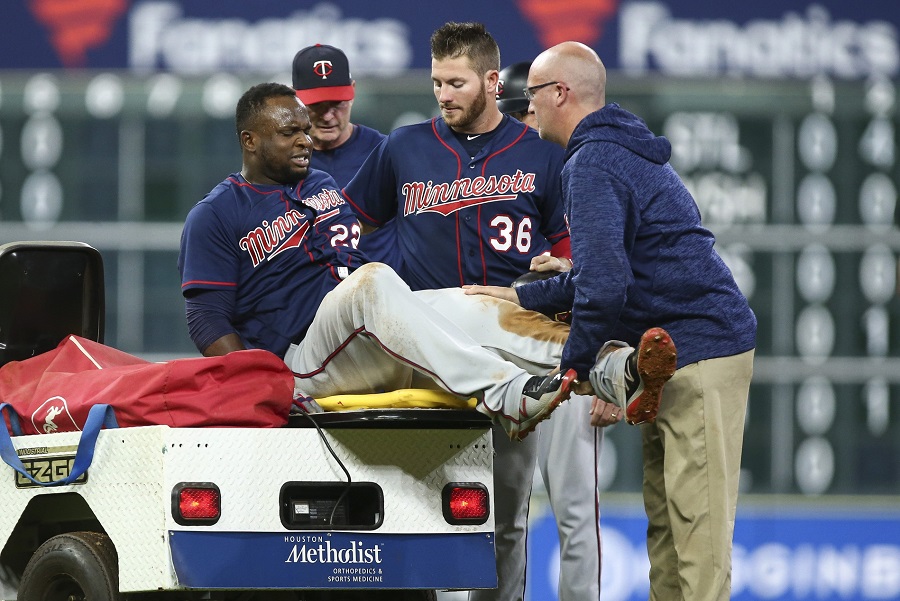 Snapshot (chart via FanGraphs) May: 18 Game Score, 1.0 IP, 5 H, 4 R, 4 ER, 0 K, 0 BB, 69.2% strikes (18 of 26 pitches) Home Runs: Polanco (4) Multi-Hit Games: Grossman (2-for-3) WPA of 0.1 or higher: Grossman (.154), Stewart (.101) WPA of -0.1 or lower: May -0.302 The Sample Size is just two, so making any grand statements about the Opener concept at this point would be silly. The “Openers” have been non-good, but the young pitchers who have come after them have been pretty solid. https://twitter.com/MikeBerardino/status/1037167887637606400 Gabriel Moya gave up two, first-inning runs on Sunday. In this game, Trevor May gave up four runs in the first inning. Littell performed pretty well on Sunday, and Stewart was terrific for five innings and twice through the Astros lineup. He gave up just three hits and one walk and didn’t allow a run. He struck out three batters. So, did they do better because of the “opener” or did they do better because when they came on in the second inning, the team was already behind and there was, at least theoretically, less pressure. Did Stewart pitch better because he now has three prior starts to learn from? Did Stewart pitch well because he was pitching at home, in front of many friends and family members? How much did pitching to Chris Gimenez help him? Doesn’t really matter why he pitched better, if you ask me (and you probably won’t). The coaches and Stewart will sift through the data tonight and tomorrow. What matters is that he pitched really well. In those five innings, he was more economical than he has been, throwing just 73 pitches (44 strikes, 60%, still not ideal). But as much as young pitchers can learn from their rough outings, it can be equally important for them to experience some success. https://www.youtube.com/watch?v=Y3a4q7eB2Yo YouTube video by Mike Berardino, Pioneer Press If nothing else, there is no reason to give up on the Opener concept yet. Aside from Stewart, the only other real positive was Robbie Grossman had a couple of hits including an RBI double. In 13 games since returning from the disabled list, Grossman has hit .342 (13-for-38). In seven games on this current road trip, he has hit .429 (9-for-21). As much as it may make sense for the Twins to move on from Grossman with newer options, he continues to be a reliable guy in taking quality at- bats. He works the counts well, and he is capable of these types of streaks. While he isn’t a great outfielder, he does make nearly all of the plays that he gets to. He is making $2 million in 2018. My guess for what he might make in 2019 would be in the $3-4 million range. For a part-time DH, part-time OF, pinch-hitting option on a team with a lot of young, inexperienced hitters in need of playing time, it might not be out of the realm of possibility to bring him back again. (Though I would still think it’s not terribly likely.) Jorge Polanco added his fourth homer of the season in the ninth, though it was too little, too late. On a roster that includes the reigning AL MVP (Jose Altuve), the reigning World Series MVP (George Springer) and a likely future MVP in Carlos Correa, the Astros best player this year has been third baseman Alex Bregman. In this game, he took over the MLB doubles lead from Eduardo Escobar. With three in this game, Bregman now has 46 two-baggers on the season. Maybe the best news to come out of Houston for the Twins on Tuesday night is that Miguel Sano appears to “only” have a leg bruise. So I don’t have to type out the play-by-play, here is a view of when Sano got injured and Twins fans all over gasped, wondering aloud why we can’t have nice things (again). https://twitter.com/DWolfsonKSTP/status/1037142436290748416 Sano left the game on a cart. Fortunately, x-rays were negative, which is positive for Sano and Twins fans. Instead of likely being done for the year, he could be back in the lineup in the not-too-distant future, though they will certainly be cautious. This is likely the first time that Sano has felt any sort of pain through his left leg, the titanium rod-filled one. Molitor noted after the game that he felt pain up and down his leg, down even to his ankle. He probably got a bit scared, I know I would, and wisely stayed off of it as a precaution. Looking at the video, his leg and knee just stopped at the bag, so if it’s truly just a bruise, it is very lucky. https://twitter.com/fsnorth/status/1037187188646014977 While Tom has stopped doing the daily reliever pitch count chart, I figured that I would at least update you on the Twins who pitched on Tuesday. In the “Opener” role, Trevor May threw 26 pitches. Oliver Drake came in for the seventh inning and needed 19 pitches. Tyler Duffey had a very nice, tidy, nine-pitch eighth inning. By the way, Ryan Pressly was really good for the Astros. He was throwing hard, spinning it well, and putting up numbers. But he struck out the side against the Twins in the eighth inning. He struck out the pinch-hitting Mitch Garver, Joe Mauer and Logan Forsythe. While the radar gun looked the same, Pressly appeared so much more confident on the mound. He looked smoother, more in control. In his time with the Astros, he has 22 strikeouts without issuing a walk. Next Three Games Wed at HOU, 7:10 pm CT: Jake Odorizzi vs. Framber Valdez Thu: Off Fri vs. KC, 7:10 pm CT: TBD (meaning, Opener to go with “primary” Stephen Gonsalves) Sat vs KC, 6:10 pm CT: Jose Berrios vs Somebody Last Three Games TEX 18, MIN 4: Speechless TEX 7, MIN 4: Is Jose OK? MIN 10, TEX 7: Tex-plosion! HOU 4, MIN 1: Astros Take Advantage of Pivotal Polanco Error
 -
Doesn't matter to me.
-
As we passed Labor Day, the minor league season has come to an end. Next week, we’ll start announcing the Twins Daily Minor League awards for 2018. This week, we will celebrate the strong performances from the season’s final month. It may be surprising that August marks the first time that we have a repeat winner for Hitter of the Month. It probably won’t surprise you to learn which player is the repeat winner. Previous Hitters of the Month for 2018: April 2018: Zander Wiel, Chattanooga Lookouts May 2018: Alex Kirilloff, Cedar Rapids Kernels June 2018: Luis Arraez, Ft. Myers Miracle July 2018: Ryan Jeffers, Cedar Rapids Kernels August 2018: See below... Image courtesy of Linwood Ferguson (photo of Alex Kirilloff) As we passed Labor Day, the minor league season has come to an end. Next week, we’ll start announcing the Twins Daily Minor League awards for 2018. This week, we will celebrate the strong performances from the season’s final month. It may be surprising that August marks the first time that we have a repeat winner for Hitter of the Month. It probably won’t surprise you to learn which player is the repeat winner. Previous Hitters of the Month for 2018: April 2018: Zander Wiel, Chattanooga Lookouts May 2018: Alex Kirilloff, Cedar Rapids Kernels June 2018: Luis Arraez, Ft. Myers Miracle July 2018: Ryan Jeffers, Cedar Rapids Kernels August 2018: See below... Let’s take a look at the Top 4 hitters for the month of August, but first here are some players deserving of honorable mention. HONORABLE MENTION Luis Arraez - Chattanooga Lookouts - 28-81, .346/.393/.444 (.838) with two doubles and two homers. Colton Burns - Elizabethton Twins - 16-51, .314/.435/.627 (1.063) with four doubles and four home runs. Trevor Casanova - Elizabethton Twins - 19-52, .365/.397/.577 (.973) with five doubles, two homers, seven RBIs. Trevor Larnach - Elizabethton Twins/Cedar Rapids Kernels - 30-105, .286/.364/.476 (.841), nine doubles, one triple, three homers, 12 RBIs. Luke Raley - Chattanooga Lookouts - 23-84, .274/.382/.440 (.823) with one double, two triples, three homers and 13 RBI. Ben Rodriguez - Cedar Rapids Kernels - 24-91, .264/.358/.462 (.819) with ten doubles, one triple, two homers and 20 RBIs. Ben Rortvedt - Ft. Myers Miracle - 16-56, .286/.344/.464 (.809) with five doubles, one triple, one homer and ten RBIs. THE TOP FOUR HITTERS Number 4 – Chattanooga Lookouts - Jaylin Davis - .290/.368/.473 (.841). 27-93 with five doubles, four home runs and 15 RBIs. 2018 has been a year of improvement for Jaylin Davis. He has dropped his strikeout rate some and increased his walk rate. He has successfully moved from High-A to Double-A. In the final week of August, Davis learned that he would be representing the Twins in the Arizona Fall League. While Davis is not a big man, he is incredibly strong and full of power potential. He will need to continue showing plate discipline and strike zone judgment, but he’s put himself in a good situation going into 2019. Number 3 - Cedar Rapids Kernels – 2B Michael Helman - .367/.407/.510 (.918), 36-98 with six doubles, one triple, two homers and 14 RBIs. The Twins were excited that Helman, a shortstop from Texas A&M, was available when they made their first pick on Day 3 of June’s draft. Since signing officially on the final day, he has primarily played second base. He has also been hitting pretty much from the start. In 12 games in Elizabethton, he hit .375. In 26 games with the Kernels, he has hit .359. Over his final seven games of the month, he hit .429 (12-for-28) with three doubles and a homer. He had 12 multi-hit games in 24 games played during the month including his first three (and four of his first five) of the month after being promoted. Number 2 - Cedar Rapids Kernels – SS Michael Davis - .289/.312/.578 (.890), 26-90 with six doubles, one triple, six homers and 21 RBIs. With how quickly Davis has adjusted to pro ball and life in the Midwest League, one can’t help but wonder how it is possible that Michael Davis was available to the Twins in the 24th round of this year’s draft. After just three games in Elizabethton, Davis was promoted to Cedar Rapids where he hasn’t missed a beat. While it could potentially be hard to maintain success with the 31 strikeouts/3 walk ratio he had in August, when you produce the kind of power he produced, it can be very impressive. Not only that, but he’s playing a solid shortstop as well. Over his final seven games of the month, Davis hit .519 (14-for-27) with a double, triple, homer and 15 RBIs, helping the Kernels earn their 2nd half division title. And the Twins Minor League Hitter of the Month is: Ft. Myers Miracle – OF Alex Kirilloff - .351/.387/.550 (.936), 39-111 with ten doubles, four homers and 16 RBIs. Kirilloff put together one of the best seasons in recent Twins minor league history. He was our choice for Minor League Hitter of the Month in May and now again in August. Interestingly, Kirilloff’s OPS for the month of August was under 1.000 for the first time since April. But he led the Miracle to a playoff berth on the last day of the season. He continued to provide doubles and added more home runs during the month than he had previously with the Miracle this year. The former first-round pick finished his first full season of playing as a professional with 44 doubles, seven triples, 20 home runs and 101 RBIs.We would like to congratulate Alex Kirilloff, Twins Daily’s choice for Minor League Hitter of the Month for August 2018. Feel free to share your thoughts and ask questions. View full article
- 17 replies
-
- 1
-
-
- alex kirilloff
- michael davis
- (and 3 more)
-
 Let’s take a look at the Top 4 hitters for the month of August, but first here are some players deserving of honorable mention. HONORABLE MENTION Luis Arraez - Chattanooga Lookouts - 28-81, .346/.393/.444 (.838) with two doubles and two homers. Colton Burns - Elizabethton Twins - 16-51, .314/.435/.627 (1.063) with four doubles and four home runs. Trevor Casanova - Elizabethton Twins - 19-52, .365/.397/.577 (.973) with five doubles, two homers, seven RBIs. Trevor Larnach - Elizabethton Twins/Cedar Rapids Kernels - 30-105, .286/.364/.476 (.841), nine doubles, one triple, three homers, 12 RBIs. Luke Raley - Chattanooga Lookouts - 23-84, .274/.382/.440 (.823) with one double, two triples, three homers and 13 RBI. Ben Rodriguez - Cedar Rapids Kernels - 24-91, .264/.358/.462 (.819) with ten doubles, one triple, two homers and 20 RBIs. Ben Rortvedt - Ft. Myers Miracle - 16-56, .286/.344/.464 (.809) with five doubles, one triple, one homer and ten RBIs. THE TOP FOUR HITTERS Number 4 – Chattanooga Lookouts - Jaylin Davis - .290/.368/.473 (.841). 27-93 with five doubles, four home runs and 15 RBIs. 2018 has been a year of improvement for Jaylin Davis. He has dropped his strikeout rate some and increased his walk rate. He has successfully moved from High-A to Double-A. In the final week of August, Davis learned that he would be representing the Twins in the Arizona Fall League. While Davis is not a big man, he is incredibly strong and full of power potential. He will need to continue showing plate discipline and strike zone judgment, but he’s put himself in a good situation going into 2019. Number 3 - Cedar Rapids Kernels – 2B Michael Helman - .367/.407/.510 (.918), 36-98 with six doubles, one triple, two homers and 14 RBIs. The Twins were excited that Helman, a shortstop from Texas A&M, was available when they made their first pick on Day 3 of June’s draft. Since signing officially on the final day, he has primarily played second base. He has also been hitting pretty much from the start. In 12 games in Elizabethton, he hit .375. In 26 games with the Kernels, he has hit .359. Over his final seven games of the month, he hit .429 (12-for-28) with three doubles and a homer. He had 12 multi-hit games in 24 games played during the month including his first three (and four of his first five) of the month after being promoted. Number 2 - Cedar Rapids Kernels – SS Michael Davis - .289/.312/.578 (.890), 26-90 with six doubles, one triple, six homers and 21 RBIs. With how quickly Davis has adjusted to pro ball and life in the Midwest League, one can’t help but wonder how it is possible that Michael Davis was available to the Twins in the 24th round of this year’s draft. After just three games in Elizabethton, Davis was promoted to Cedar Rapids where he hasn’t missed a beat. While it could potentially be hard to maintain success with the 31 strikeouts/3 walk ratio he had in August, when you produce the kind of power he produced, it can be very impressive. Not only that, but he’s playing a solid shortstop as well. Over his final seven games of the month, Davis hit .519 (14-for-27) with a double, triple, homer and 15 RBIs, helping the Kernels earn their 2nd half division title. And the Twins Minor League Hitter of the Month is: Ft. Myers Miracle – OF Alex Kirilloff - .351/.387/.550 (.936), 39-111 with ten doubles, four homers and 16 RBIs. Kirilloff put together one of the best seasons in recent Twins minor league history. He was our choice for Minor League Hitter of the Month in May and now again in August. Interestingly, Kirilloff’s OPS for the month of August was under 1.000 for the first time since April. But he led the Miracle to a playoff berth on the last day of the season. He continued to provide doubles and added more home runs during the month than he had previously with the Miracle this year. The former first-round pick finished his first full season of playing as a professional with 44 doubles, seven triples, 20 home runs and 101 RBIs. We would like to congratulate Alex Kirilloff, Twins Daily’s choice for Minor League Hitter of the Month for August 2018. Feel free to share your thoughts and ask questions.
 -
Across the Meadow: The Buxton Saga
Seth Stohs replied to Jeremy Nygaard's topic in Twins Daily Front Page News
I don't think anyone does (or should) think that final paragraph. Just because we disagree with a decision he and Thad Levine make doesn't mean they aren't doing what they feel is in the best long-term interests of the organization. While I think this situation is bad, it doesn't mean they don't know what they're doing or aren't leading the organization in the right direction. -
Twins Minor League Report (9/3): Regular Season Ends
Seth Stohs replied to Seth Stohs's topic in Twins Daily Front Page News
Pineda was ruled out after having knee surgery Zack Granite was shut down a couple of months ago with his shoulder injury. He began rehabbing a couple of weeks ago.- 30 replies
-
- 2
-
-
- mitchell kranson
- chase de jong
- (and 3 more)
-
Twins Minor League Report (9/3): Regular Season Ends
Seth Stohs replied to Seth Stohs's topic in Twins Daily Front Page News
The two aren't related though... Petit was the option in the middle infield as a utility guy. He can play 2B, 3B and SS... Wiel can play 1B/LF... not the same. And, we all saw the struggles Gordon had at Rochester, so we can understand him not coming up. So, I don't have any problem with Petit.- 30 replies
-
- 2
-
-
- mitchell kranson
- chase de jong
- (and 3 more)
-
Labor Day always marks the final regular season minor league games. The Rochester Red Wings and Chattanooga Lookouts seasons ended. Three more Red Wings players were called up to the Twins following the game. The Kernels, whose playoff run begins on Wednesday, began six hours late. See how they did and who they will play starting Wednesday. Ft. Myers and Elizabethton had the day off as they prepare for their upcoming playoff series. Image courtesy of Seth Stohs, Twins Daily (photo of Mitchell Kranson) Labor Day always marks the final regular season minor league games. The Rochester Red Wings and Chattanooga Lookouts seasons ended. Three more Red Wings players were called up to the Twins following the game. The Kernels, whose playoff run begins on Wednesday, began six hours late. See how they did and who they will play starting Wednesday. Ft. Myers and Elizabethton had the day off as they prepare for their upcoming playoff series. Keep reading to find out more on the night in the Twins minor league system on Monday afternoon, please feel free to discuss and ask questions. TRANSACTIONS The Twins announced that RHP Chase De Jong and John Curtiss will also be recalled and in uniform for the Twins on Tuesday. Logan Morrison has been placed on the 60-day disabled list, allowing the Twins to add Gregorio Petit to the roster and promote him as well. RED WINGS REPORT Rochester 2, Lehigh Valley 4 (10 innings) Box Score Through nine innings, this was a 1-1 game. Then came extra frames when the Red Wings gave up three runs and were only able to counter with one run in the bottom of the inning. The Red Wings finish their season with a record of 64-76. Chase De Jong gave up one run on four hits and a walk through the first five innings. He struck out seven. John Curtiss struck out two in his inning. Ryan Eades struck out three batters over his two scoreless innings. Ryan Harper pitched a scoreless ninth inning, but he gave up three runs (two earned) on four hits in the tenth frame. He struck out two. Luke Bard came on and got the final out. Kennys Vargas likely played his final game in the Twins organization as he can become a free agent at season’s end. He went 2-for-3 with a walk and his 22nd and 23rd doubles of the year. A night after his walk off homer, Zander Wiel added his first AAA triple. Victor Tademo made his first Red Wings appearance and had a single. CHATTANOOGA CHATTER Chattanooga 4, Jackson 2 Box Score Sean Poppen put together another really solid, quality start, but he gets another no decision because he left the game with the Lookouts down 2-0. Down 2-0 going into the eighth inning, Jimmy Kerrigan’s sixth home run got the Lookouts on the scoreboard. In the top of the ninth, Luis Arraez came up with the bases loaded and delivered a two-run single to give the team a lead. Kerrigan came back up and provided a little insurance with a sacrifice fly. Mitchell Kranson went 2-for-3 including his ninth double in the ninth inning. Arraez went 2-for-4. Poppen gave up two runs on seven hits over 6 1/3 innings. He walked one and struck out five. Tyler Jay came on to get the final two outs of the seventh inning and worked a perfect eighth inning as well. Devin Smeltzer gave up a hit, but he struck out two in a scoreless ninth inning for his fourth save. MIRACLE MATTERS Ft. Myers Box Score The Miracle begin their Florida State League playoff series on Tuesday night. KERNELS NUGGETS Cedar Rapids 2, Beloit 3 Box Score This game was scheduled for 2:00 central time. At 8:20 p.m., the game began in Beloit after a far-too-long rain delay that was necessitated by the Snappers needing a win to make the playoffs. https://twitter.com/CRKernels/status/1036774870254845952 Tyler Watson started for the Kernels. The southpaw had a Quality Start. Despite giving up nine hits, he gave up just three runs over six innings. He struck out seven batters without a walk. Calvin Faucher threw a scoreless inning as well. Ricky Ramirez struck out two in a perfect eighth inning. The Kernels took a 1-0 lead in the top of the second inning. Jacob Pearson doubled and then scored on a single from Trey Cabbage. Trevor Larnach went 2-for-4. Following his double, the Twins top 2017 pick scored on a Michael Helman single. These two teams will begin a playoff series on Wednesday, also in Beloit. E-TWINS E-TALK Elizabethton Box Score The E-Twins begin the Appalachian League championship series on Tuesday. STARS OF THE DAY Twins Daily Hitter of the Day: Kennys Vargas, Rochester Red Wings (2-3, BB, 2-2B(23)). Twins Daily Pitcher of the Day: Chase De Jong, Rochester Red Wings (5 IP, 4 H, 1 ER, 1 BB, 7 K) PROSPECT SUMMARY Here’s a look at how the Twins Daily Midseason Top 20 Twins Prospects performed. #1 - Royce Lewis (Ft. Myers) - No Game Scheduled #2 - Alex Kirilloff (Ft. Myers) - No Game Scheduled #3 - Brusdar Graterol (Ft. Myers) - No Game Scheduled #4 - Nick Gordon (Rochester) - 0-3, BB, R, K #5 - Stephen Gonsalves (Minnesota) - Did not pitch #6 - Trevor Larnach (Cedar Rapids) - #7 - Brent Rooker (Chattanooga) - 0-4, 2 K #8 - Akil Baddoo (Cedar Rapids) - #9 -Wander Javier - out of for the season #10 - Zack Littell (Rochester) - Did not pitch #11 - Blayne Enlow (Cedar Rapids) - Did not pitch #12 - LaMonte Wade (Rochester) - 1-5, 2 K #13 - Travis Blankenhorn (Ft. Myers) - No Game Scheduled #14 - Lewis Thorpe (Rochester) - Did not pitch #15 - Ben Rortvedt (Ft. Myers) - No Game Scheduled #16 - Yunior Severino (Elizabethton) - No Game Scheduled #17 - Lewin Diaz (Ft. Myers) - Out for the season (wrist) #18 - Ryan Jeffers (Cedar Rapids) - #19 - Jacob Pearson (Cedar Rapids) - #20 - Luis Arraez (Chattanooga) - 2-4, 2 RBI #21 - Jose Miranda (Ft. Myers) - No Game Scheduled *Since Wander Javier is out, I’d add #21 to the list. TUESDAY’S PROBABLE STARTERS Rochester - Season Complete Chattanooga - Season Complete Palm Beach @ Ft. Myers (5:30 CST) - RHP Andro Cutura Cedar Rapids - Playoff series starts on Wednesday Elizabethton @ Princeton (6:00 CST) - RHP Austin Schulfer (Game 1 of Appy League championship series) GCL Twins - Season Completed Please feel free to ask any questions about Monday’s games, or ask any questions you may have. View full article
- 30 replies
-
- 1
-
-
- mitchell kranson
- chase de jong
- (and 3 more)
-
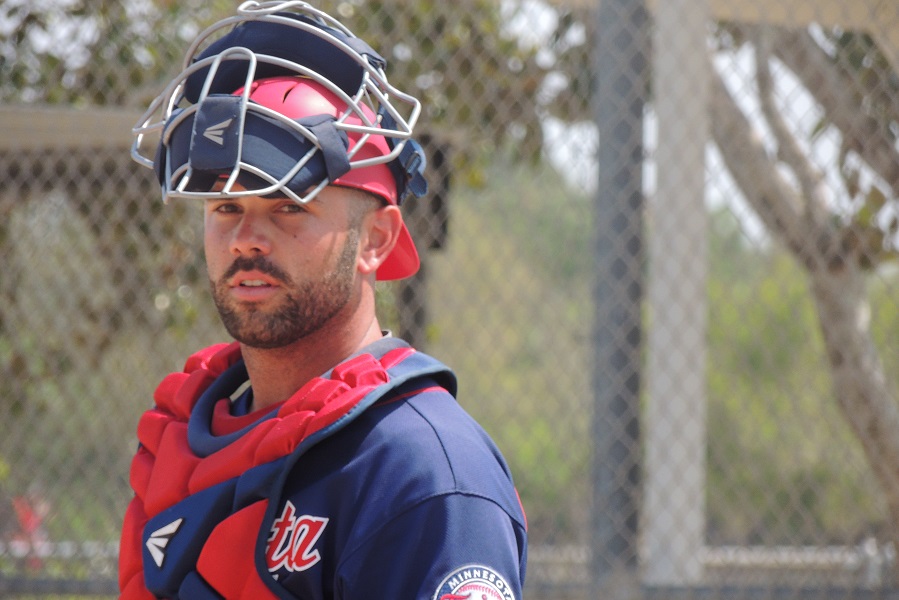 Keep reading to find out more on the night in the Twins minor league system on Monday afternoon, please feel free to discuss and ask questions. TRANSACTIONS The Twins announced that RHP Chase De Jong and John Curtiss will also be recalled and in uniform for the Twins on Tuesday. Logan Morrison has been placed on the 60-day disabled list, allowing the Twins to add Gregorio Petit to the roster and promote him as well. RED WINGS REPORT Rochester 2, Lehigh Valley 4 (10 innings) Box Score Through nine innings, this was a 1-1 game. Then came extra frames when the Red Wings gave up three runs and were only able to counter with one run in the bottom of the inning. The Red Wings finish their season with a record of 64-76. Chase De Jong gave up one run on four hits and a walk through the first five innings. He struck out seven. John Curtiss struck out two in his inning. Ryan Eades struck out three batters over his two scoreless innings. Ryan Harper pitched a scoreless ninth inning, but he gave up three runs (two earned) on four hits in the tenth frame. He struck out two. Luke Bard came on and got the final out. Kennys Vargas likely played his final game in the Twins organization as he can become a free agent at season’s end. He went 2-for-3 with a walk and his 22nd and 23rd doubles of the year. A night after his walk off homer, Zander Wiel added his first AAA triple. Victor Tademo made his first Red Wings appearance and had a single. CHATTANOOGA CHATTER Chattanooga 4, Jackson 2 Box Score Sean Poppen put together another really solid, quality start, but he gets another no decision because he left the game with the Lookouts down 2-0. Down 2-0 going into the eighth inning, Jimmy Kerrigan’s sixth home run got the Lookouts on the scoreboard. In the top of the ninth, Luis Arraez came up with the bases loaded and delivered a two-run single to give the team a lead. Kerrigan came back up and provided a little insurance with a sacrifice fly. Mitchell Kranson went 2-for-3 including his ninth double in the ninth inning. Arraez went 2-for-4. Poppen gave up two runs on seven hits over 6 1/3 innings. He walked one and struck out five. Tyler Jay came on to get the final two outs of the seventh inning and worked a perfect eighth inning as well. Devin Smeltzer gave up a hit, but he struck out two in a scoreless ninth inning for his fourth save. MIRACLE MATTERS Ft. Myers Box Score The Miracle begin their Florida State League playoff series on Tuesday night. KERNELS NUGGETS Cedar Rapids 2, Beloit 3 Box Score This game was scheduled for 2:00 central time. At 8:20 p.m., the game began in Beloit after a far-too-long rain delay that was necessitated by the Snappers needing a win to make the playoffs. https://twitter.com/CRKernels/status/1036774870254845952 Tyler Watson started for the Kernels. The southpaw had a Quality Start. Despite giving up nine hits, he gave up just three runs over six innings. He struck out seven batters without a walk. Calvin Faucher threw a scoreless inning as well. Ricky Ramirez struck out two in a perfect eighth inning. The Kernels took a 1-0 lead in the top of the second inning. Jacob Pearson doubled and then scored on a single from Trey Cabbage. Trevor Larnach went 2-for-4. Following his double, the Twins top 2017 pick scored on a Michael Helman single. These two teams will begin a playoff series on Wednesday, also in Beloit. E-TWINS E-TALK Elizabethton Box Score The E-Twins begin the Appalachian League championship series on Tuesday. STARS OF THE DAY Twins Daily Hitter of the Day: Kennys Vargas, Rochester Red Wings (2-3, BB, 2-2B(23)). Twins Daily Pitcher of the Day: Chase De Jong, Rochester Red Wings (5 IP, 4 H, 1 ER, 1 BB, 7 K) PROSPECT SUMMARY Here’s a look at how the Twins Daily Midseason Top 20 Twins Prospects performed. #1 - Royce Lewis (Ft. Myers) - No Game Scheduled #2 - Alex Kirilloff (Ft. Myers) - No Game Scheduled #3 - Brusdar Graterol (Ft. Myers) - No Game Scheduled #4 - Nick Gordon (Rochester) - 0-3, BB, R, K #5 - Stephen Gonsalves (Minnesota) - Did not pitch #6 - Trevor Larnach (Cedar Rapids) - #7 - Brent Rooker (Chattanooga) - 0-4, 2 K #8 - Akil Baddoo (Cedar Rapids) - #9 -Wander Javier - out of for the season #10 - Zack Littell (Rochester) - Did not pitch #11 - Blayne Enlow (Cedar Rapids) - Did not pitch #12 - LaMonte Wade (Rochester) - 1-5, 2 K #13 - Travis Blankenhorn (Ft. Myers) - No Game Scheduled #14 - Lewis Thorpe (Rochester) - Did not pitch #15 - Ben Rortvedt (Ft. Myers) - No Game Scheduled #16 - Yunior Severino (Elizabethton) - No Game Scheduled #17 - Lewin Diaz (Ft. Myers) - Out for the season (wrist) #18 - Ryan Jeffers (Cedar Rapids) - #19 - Jacob Pearson (Cedar Rapids) - #20 - Luis Arraez (Chattanooga) - 2-4, 2 RBI #21 - Jose Miranda (Ft. Myers) - No Game Scheduled *Since Wander Javier is out, I’d add #21 to the list. TUESDAY’S PROBABLE STARTERS Rochester - Season Complete Chattanooga - Season Complete Palm Beach @ Ft. Myers (5:30 CST) - RHP Andro Cutura Cedar Rapids - Playoff series starts on Wednesday Elizabethton @ Princeton (6:00 CST) - RHP Austin Schulfer (Game 1 of Appy League championship series) GCL Twins - Season Completed Please feel free to ask any questions about Monday’s games, or ask any questions you may have.
 -
He will most likely play in Elizabethton next year... possibly in Cedar Rapids. Though he has been in my Top 50 the last year.
-
Vargas? No. Mauer's at 1B and Tyler Austin should play there when Mauer isn't.
-
It depends, and it still depends on that Core (Buxton, Sano, Berrios, Rosario, Polanco, Kepler)... but while much of the AAA level was filled with minor league free agents, there are several starters and relievers as Gordon and Wade to fill spots. Thorpe and Rooker from AA. Win-Loss record doesn't matter in the minors at all and isn't indicative of big league success. (though I think that learning to win and compete for playoff spots, etc., can be good for development). And, as we've heard, At least before yesterday,t he Twins were on a pace this season in which they scored about the same number of runs and had given up like 40 runs less than last year. So, those one-run losses have certainly altered the trajectory of the season.
-
Twins Minor League Report (8/31): E-Twins Take Game 1
Seth Stohs replied to Seth Stohs's topic in Twins Daily Front Page News
Updated article... Johnny Field, Chris Gimenez and Tyler Duffey are being recalled. Andrew Vasquez added to the 40 and called up. Adalberto Mejia to the 60 Day DL.- 20 replies
-
- 3
-
-
- yunior severino
- ricky de la torre
- (and 3 more)
-
Elizabethton started its quest for another Appalachian League title on Friday night with a road game. They got a strong start and some youngsters really stepped up their offense in a nice win. They can clinch a spot in the championship series with a win on Saturday (or Sunday, if needed). In addition, Lewis Thorpe and Tyler Wells had strong starts. Alex Kirilloff reached another milestone, but how did the Miracle do in their attempt to get in to the Florida State League playoffs? Image courtesy of Seth Stohs, Twins Daily (photos of Yunior Severino, Ricky De La Torre) Elizabethton started its quest for another Appalachian League title on Friday night with a road game. They got a strong start and some youngsters really stepped up their offense in a nice win. They can clinch a spot in the championship series with a win on Saturday (or Sunday, if needed). In addition, Lewis Thorpe and Tyler Wells had strong starts. Alex Kirilloff reached another milestone, but how did the Miracle do in their attempt to get in to the Florida State League playoffs? Keep reading to find out more on the night in the Twins minor league system on Friday, please feel free to discuss and ask questions. TRANSACTIONS The Twins announced that Matt Belisle would be activated from the DL on Saturday. September call ups for Saturday will include: Johnny Field, Chris Gimenez and Tyler Duffey. There had been reports from Rochester that Zack Littell left the field with his duffle bag. It's possible that they just aren't going to activate him until Sunday or something. It appears LHP Andrew Vasquez has been called up as well. He began the 2018 season in Ft. Myers.. RED WINGS REPORT Rochester 1, Lehigh Valley 3 Box Score Lewis Thorpe made his final minor league start of the 2018 season on Friday night, though he still took the loss. The southpaw from Australia worked the first seven innings. He was charged with three unearned runs on four hits and a walk. He struck out eight. He gave up the three runs in the sixth innings. With one out, Thorpe committed an error, then walked a batter. The big blow was a three-run homer that followed. Ryne Harper worked two scoreless, hitless innings. The Red Wings managed just five hits. Jon Kemmer had two hits. Zander Wiel added a single and a walk. Byron Buxton was 0-for-3 with a strikeout. He was also hit by a pitch. CHATTANOOGA CHATTER Chattanooga 4, Jackson 1 Box Score It’s been a terrific season for righty Tyler Wells. He gave up just one run on five hits over 5 2/3 innings. He uncharacteristically walked four, but he (characteristically) struck out eight. Casey Crosby got the final out of the sixth inning and worked a scoreless seventh frame as well. Tyler Jay worked a scoreless eighth inning, and Devin Smeltzer recorded his third save with a perfect ninth. Jimmy Kerrigan led the offense. He went 3-for-4 with his seventh double. Luis Arraez added two singles. Mitchell Kranson singled and walked twice. Luke Raley was 1-for-3 with a walk and drove in two runs. MIRACLE MATTERS Ft. Myers 2, Clearwater 10 Box Score The Miracle came into the season’s final weekend with a 1 1/2 game lead for a playoff spot. On this night, they were unable to help their own cause. Griffin Jax had his first rough start of the season. He gave up six runs (five earned) on eight hits and two walks in just 2 2/3 innings. Kevin Marnon came on and gave up two runs on five hits, a walk and a hit batter over the next two innings. Alex Phillip made his Twins debut and threw 2 1/3 scoreless innings without even giving up a base runner. He struck out two. Adam Bray was charged with two runs on six hits over the final two innings. He struck one out. Phillips was signed out of the independent Frontier League this week. Reports indicate that he is aggressive in the strike zone. His fastball sits 91 to 93 mph and he has both a slider and a curveball, both of which were referred to as “good pitches.” Royce Lewis went 2-for-4 in the game. Alex Kirilloff went 1-for-1 with three walks. He homered in his first at-bat of the game. It was his 20th overall of the season. He also has 101 RBI. KERNELS NUGGETS Cedar Rapids 5, Burlington 2 Box Score How did Michael Davis last until the 24th round in this year’s draft. All he’s done since signing is mash to the tune of a .308 average with now nine home runs. The biggest came tonight when, down a run in the bottom of the eighth inning, he crushed a grand slam that proved to be the game winner. Gabriel Maciel went 3-for-4. Victor Tademo was 2-for-3 with a walk and his first Midwest League double. Melvi Acosta started. The righty gave up two runs on five hits and a walk in just five innings. He struck out two. Moises Gomez came on and threw two zeroes on the scoreboard. Zach Neff worked both the eighth and ninth frames to be credited with the Win. E-TWINS E-TALK Elizabethton 7, Kingsport 3 Box Score The E-Twins began their annual playoff run with a game in Kingsport. After the win, Game 2 (and Game 3, if necessary) will be played in Elizabethton. The offense showed up, but it was a terrific start by 2018 pick Josh Winder. The seventh-round pick gave up one run on four hits over the first six innings. He walked none and struck out eight. JT Perez came in for the seventh and got two outs. However, he gave up one run on one hit and three walks. Both outs he recorded came on strikeouts. Jacob Blank got the final seven outs to record the save. Five of the outs came on strikeouts. He gave up one run on one hit and two walks. Yunior Severino and Ricky De La Torre, the youngest players on the team, each had three hits. Severino had a double. Gilberto Celestino went 2-for-4 with a two-run homer. Alex Robles had two hits and drove in three runs. Chris Williams had a single and two walks. STARS OF THE DAY Twins Daily Hitter of the Day: Yunior Severino, Elizabethton Twins (3-5, 2B, 2 R). Twins Daily Pitcher of the Day: Josh Winder, Elizabethton Twins (6 IP, 4 H, 1 ER, 0 BB, 8 K) PROSPECT SUMMARY Here’s a look at how the Twins Daily Midseason Top 20 Twins Prospects performed. #1 - Royce Lewis (Ft. Myers) - 2-4,K #2 - Alex Kirilloff (Ft. Myers) - 1-1, 3 BB, HR(7), R, RBI #3 - Brusdar Graterol (Ft. Myers) - Did not pitch #4 - Nick Gordon (Rochester) - 0-4, 2 K, R, K #5 - Stephen Gonsalves (Minnesota) - 3.2 IP, 6 H, 6 R, 3 ER, 4 BB, 0 K. #6 - Trevor Larnach (Cedar Rapids) - 0-3, BB, K #7 - Brent Rooker (Chattanooga) - 0-4, IBB, K #8 - Akil Baddoo (Cedar Rapids) - did not play #9 -Wander Javier - out of for the season #10 - Zack Littell (Rochester) - Did not pitch #11 - Blayne Enlow (Cedar Rapids) - Did not pitch #12 - LaMonte Wade (Rochester) - 1-4, 2B(9) #13 - Travis Blankenhorn (Ft. Myers) - 0-4, K #14 - Lewis Thorpe (Rochester) - 7 IP, 4 H, 3 R, 0 ER, 1 BB, 8 K #15 - Ben Rortvedt (Ft. Myers) - 0-3, BB, RBI #16 - Yunior Severino (Elizabethton) - 3-5, 2B, 2 R, K #17 - Lewin Diaz (Ft. Myers) - Out for the season (wrist) #18 - Ryan Jeffers (Cedar Rapids) - did not play #19 - Jacob Pearson (Cedar Rapids) - 1-4, R, K #20 - Luis Arraez (Chattanooga) - 2-5, 2 R, K #21 - Jose Miranda (Ft. Myers) - 1-4, R, K *Since Wander Javier is out, I’d add #21 to the list. SATURDAY’S PROBABLE STARTERS Lehigh Valley @ Rochester (5:05 CST) - RHP Fernando Romero (5-5, 3.49 ERA) Chattanooga @ Jackson (6:05 CST) - LHP Dietrich Enns (4-5, 4.01 ERA) Clearwater @ Ft. Myers (5:00 CST) - RHP Edwar Colina (0-1, 5.79 ERA) Cedar Rapids @ Beloit (7:00 CST) - RHP Carlos Suniaga (3-4, 3.89 ERA) Kingsport @ Elizabethton (5:00 CST) - RHP Luis Rijo GCL Twins - Season Completed Please feel free to ask any questions about Friday’s games, or ask any questions you may have. View full article
- 20 replies
-
- 1
-
-
- yunior severino
- ricky de la torre
- (and 3 more)
-
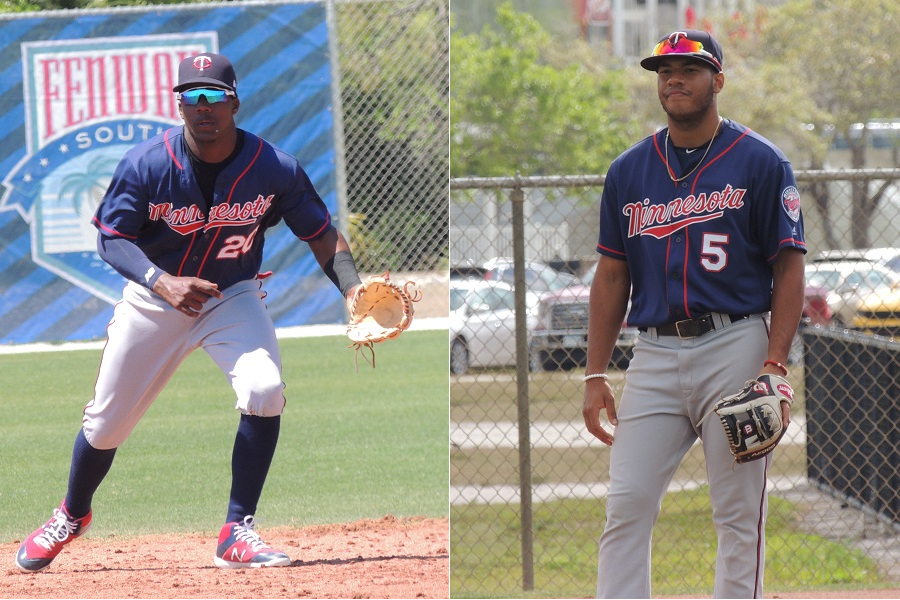 Keep reading to find out more on the night in the Twins minor league system on Friday, please feel free to discuss and ask questions. TRANSACTIONS The Twins announced that Matt Belisle would be activated from the DL on Saturday. September call ups for Saturday will include: Johnny Field, Chris Gimenez and Tyler Duffey. There had been reports from Rochester that Zack Littell left the field with his duffle bag. It's possible that they just aren't going to activate him until Sunday or something. It appears LHP Andrew Vasquez has been called up as well. He began the 2018 season in Ft. Myers.. RED WINGS REPORT Rochester 1, Lehigh Valley 3 Box Score Lewis Thorpe made his final minor league start of the 2018 season on Friday night, though he still took the loss. The southpaw from Australia worked the first seven innings. He was charged with three unearned runs on four hits and a walk. He struck out eight. He gave up the three runs in the sixth innings. With one out, Thorpe committed an error, then walked a batter. The big blow was a three-run homer that followed. Ryne Harper worked two scoreless, hitless innings. The Red Wings managed just five hits. Jon Kemmer had two hits. Zander Wiel added a single and a walk. Byron Buxton was 0-for-3 with a strikeout. He was also hit by a pitch. CHATTANOOGA CHATTER Chattanooga 4, Jackson 1 Box Score It’s been a terrific season for righty Tyler Wells. He gave up just one run on five hits over 5 2/3 innings. He uncharacteristically walked four, but he (characteristically) struck out eight. Casey Crosby got the final out of the sixth inning and worked a scoreless seventh frame as well. Tyler Jay worked a scoreless eighth inning, and Devin Smeltzer recorded his third save with a perfect ninth. Jimmy Kerrigan led the offense. He went 3-for-4 with his seventh double. Luis Arraez added two singles. Mitchell Kranson singled and walked twice. Luke Raley was 1-for-3 with a walk and drove in two runs. MIRACLE MATTERS Ft. Myers 2, Clearwater 10 Box Score The Miracle came into the season’s final weekend with a 1 1/2 game lead for a playoff spot. On this night, they were unable to help their own cause. Griffin Jax had his first rough start of the season. He gave up six runs (five earned) on eight hits and two walks in just 2 2/3 innings. Kevin Marnon came on and gave up two runs on five hits, a walk and a hit batter over the next two innings. Alex Phillip made his Twins debut and threw 2 1/3 scoreless innings without even giving up a base runner. He struck out two. Adam Bray was charged with two runs on six hits over the final two innings. He struck one out. Phillips was signed out of the independent Frontier League this week. Reports indicate that he is aggressive in the strike zone. His fastball sits 91 to 93 mph and he has both a slider and a curveball, both of which were referred to as “good pitches.” Royce Lewis went 2-for-4 in the game. Alex Kirilloff went 1-for-1 with three walks. He homered in his first at-bat of the game. It was his 20th overall of the season. He also has 101 RBI. KERNELS NUGGETS Cedar Rapids 5, Burlington 2 Box Score How did Michael Davis last until the 24th round in this year’s draft. All he’s done since signing is mash to the tune of a .308 average with now nine home runs. The biggest came tonight when, down a run in the bottom of the eighth inning, he crushed a grand slam that proved to be the game winner. Gabriel Maciel went 3-for-4. Victor Tademo was 2-for-3 with a walk and his first Midwest League double. Melvi Acosta started. The righty gave up two runs on five hits and a walk in just five innings. He struck out two. Moises Gomez came on and threw two zeroes on the scoreboard. Zach Neff worked both the eighth and ninth frames to be credited with the Win. E-TWINS E-TALK Elizabethton 7, Kingsport 3 Box Score The E-Twins began their annual playoff run with a game in Kingsport. After the win, Game 2 (and Game 3, if necessary) will be played in Elizabethton. The offense showed up, but it was a terrific start by 2018 pick Josh Winder. The seventh-round pick gave up one run on four hits over the first six innings. He walked none and struck out eight. JT Perez came in for the seventh and got two outs. However, he gave up one run on one hit and three walks. Both outs he recorded came on strikeouts. Jacob Blank got the final seven outs to record the save. Five of the outs came on strikeouts. He gave up one run on one hit and two walks. Yunior Severino and Ricky De La Torre, the youngest players on the team, each had three hits. Severino had a double. Gilberto Celestino went 2-for-4 with a two-run homer. Alex Robles had two hits and drove in three runs. Chris Williams had a single and two walks. STARS OF THE DAY Twins Daily Hitter of the Day: Yunior Severino, Elizabethton Twins (3-5, 2B, 2 R). Twins Daily Pitcher of the Day: Josh Winder, Elizabethton Twins (6 IP, 4 H, 1 ER, 0 BB, 8 K) PROSPECT SUMMARY Here’s a look at how the Twins Daily Midseason Top 20 Twins Prospects performed. #1 - Royce Lewis (Ft. Myers) - 2-4,K #2 - Alex Kirilloff (Ft. Myers) - 1-1, 3 BB, HR(7), R, RBI #3 - Brusdar Graterol (Ft. Myers) - Did not pitch #4 - Nick Gordon (Rochester) - 0-4, 2 K, R, K #5 - Stephen Gonsalves (Minnesota) - 3.2 IP, 6 H, 6 R, 3 ER, 4 BB, 0 K. #6 - Trevor Larnach (Cedar Rapids) - 0-3, BB, K #7 - Brent Rooker (Chattanooga) - 0-4, IBB, K #8 - Akil Baddoo (Cedar Rapids) - did not play #9 -Wander Javier - out of for the season #10 - Zack Littell (Rochester) - Did not pitch #11 - Blayne Enlow (Cedar Rapids) - Did not pitch #12 - LaMonte Wade (Rochester) - 1-4, 2B(9) #13 - Travis Blankenhorn (Ft. Myers) - 0-4, K #14 - Lewis Thorpe (Rochester) - 7 IP, 4 H, 3 R, 0 ER, 1 BB, 8 K #15 - Ben Rortvedt (Ft. Myers) - 0-3, BB, RBI #16 - Yunior Severino (Elizabethton) - 3-5, 2B, 2 R, K #17 - Lewin Diaz (Ft. Myers) - Out for the season (wrist) #18 - Ryan Jeffers (Cedar Rapids) - did not play #19 - Jacob Pearson (Cedar Rapids) - 1-4, R, K #20 - Luis Arraez (Chattanooga) - 2-5, 2 R, K #21 - Jose Miranda (Ft. Myers) - 1-4, R, K *Since Wander Javier is out, I’d add #21 to the list. SATURDAY’S PROBABLE STARTERS Lehigh Valley @ Rochester (5:05 CST) - RHP Fernando Romero (5-5, 3.49 ERA) Chattanooga @ Jackson (6:05 CST) - LHP Dietrich Enns (4-5, 4.01 ERA) Clearwater @ Ft. Myers (5:00 CST) - RHP Edwar Colina (0-1, 5.79 ERA) Cedar Rapids @ Beloit (7:00 CST) - RHP Carlos Suniaga (3-4, 3.89 ERA) Kingsport @ Elizabethton (5:00 CST) - RHP Luis Rijo GCL Twins - Season Completed Please feel free to ask any questions about Friday’s games, or ask any questions you may have.
 -
Learning goes far beyond stats, but on another level, isn't learning to play in a playoff chase, and hopefully in a playoff series or two a learning experience?
- 18 replies
-
- 5
-
-
- minnesota twins
- derek molina
- (and 1 more)
-
Thad Levine said at the Baseball Prospectus event on Saturday that if he even suggests moving Alex Kirilloff to AA this year that someone needs to slap him. Lots of reason to keep him in Ft. Myers and I guarantee he is continuing to learn.
- 18 replies
-
- 3
-
-
- minnesota twins
- derek molina
- (and 1 more)
-
Yeah, pitchers sliding practice (PSP) in spring training is fun to watch. HA!
-
1.) Wells was told he had reached the # of innings this year that they wanted him at. This isn't about 'deserving', it's about what's' best for the players involved. 2.) Jax did well. He didn't start pitching this season until about June 1 (in games), and his job in the Air Force right now is preparing and working on baseball. So, no surprise in that one.
-
When healthy, Robinson is incredibly intriguing, especially if he throws strikes... Throws like 98-99, can be a good slider.

