



Seth Stohs
-
Posts
25,909 -
Joined
-
Last visited
-
Days Won
109
Content Type
Profiles
News
Minnesota Twins Videos
2026 Minnesota Twins Top Prospects Ranking
2022 Minnesota Twins Draft Picks
Minnesota Twins Free Agent & Trade Rumors, Notes, & Tidbits
Guides & Resources
2023 Minnesota Twins Draft Picks
The Minnesota Twins Players Project
2024 Minnesota Twins Draft Picks
2025 Minnesota Twins Draft Pick Tracker
2026 Minnesota Twins Draft Tracker: Picks & Bonuses
Forums
Blogs
Events
Store
Downloads
Gallery
Everything posted by Seth Stohs
-
Twins 2018 Short Season Pitcher Of The Year
Seth Stohs replied to Seth Stohs's topic in Twins Daily Front Page News
It doesn't help (and shouldn't hurt) any sort of prospect status. It just kind of is what it is. Hildenberger and Vasquez both spent their draft seasons in the GCL. They can only have so many pitchers at each level, and only so many in Elizabethton, so the rest of them go to the GCL. They're usually the guys drafted in the later rounds. -
Alex Phillips signed from Evansville. I chatted a bit with Travis Harrison about him (Travis is with Evansville this year). Said he's 91-94 with a lot of strikes. Good slider and curveball. Attacks the zone.
- 17 replies
-
- 4
-

-
- ryan costello
- edwar colina
- (and 2 more)
-
http://www.startribune.com/fellow-late-bloomer-aaron-hicks-preaches-patience-with-byron-buxton/492920331/ Chip Scoggins talked to former Twins OF and current Yankees star CF Aaron Hicks about his struggles adjusting to the big leagues and believes that the Twins and their fans need to remain patient with Byron Buxton:
-
Twins 2018 Short Season Pitcher Of The Year
Seth Stohs posted a topic in Twins Daily Front Page News
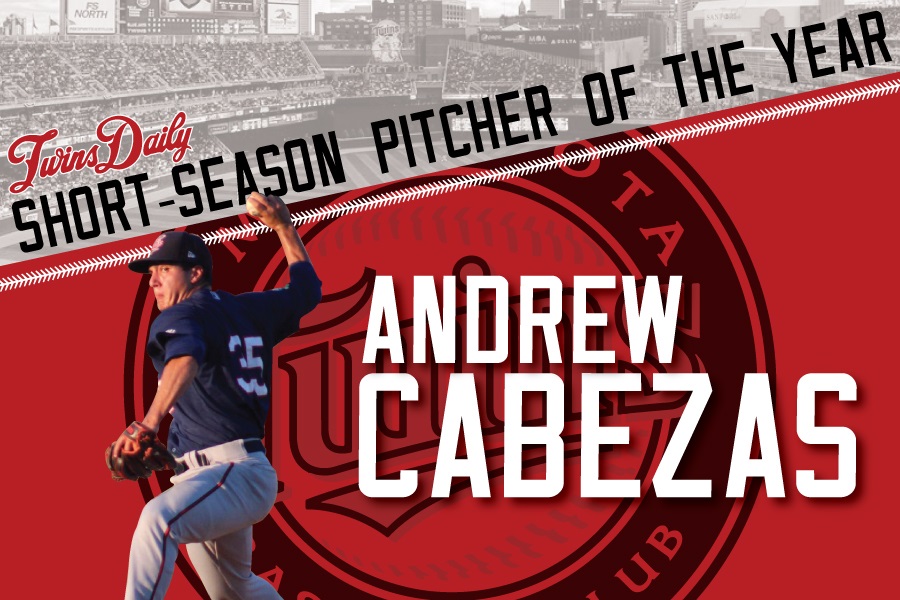
At the end of June each year, not long after the completion of the draft, the short-season minor leagues begin. The GCL Twins stay in Ft. Myers, and the Elizabethton Twins take the long bus ride to Tennessee. The GCL Twins finished just outside of the playoffs. The E-Twins just won their eighth Appalachian League title since the turn of the century and second in a row. The last couple of seasons, Twins Daily has added two annual awards for the short-season Twins players. Tomorrow we’ll hand out the award for the top hitter in the short-season teams, but today, we’ll start with the pitchers. Image courtesy of Mariana Guzman (graphics by Finn Pearson) The previous winners of the Short-Season Pitcher of the Year awards have gone on to continued success. Our 2016 choice was Huascar Ynoa. He had spent that summer in the GCL, and he began 2017 with Elizabethton. However, at the July trade deadline, he was traded to Atlanta in exchange for lefty Jaime Garcia.In 116 1/3 innings, he struck out 131 batters between Low A and High A. The 2017 winner was lefty Jovani Moran who was dominant in the Elizabethton bullpen that year (to the tune of 51 strikeouts and six walks over 28 1/3 innings). He began this year in Cedar Rapids where he was our choice for minor league relief pitcher of the month in June with the Kernels and then July with the Ft. Myers Miracle. As you’ll read below, there were several pitchers on the Twins short-season teams who put together real solid seasons. Most of the Elizabethton starters were really good throughout the year. Of course, we are generally talking about a limited number of innings due to their seasons being just two months long. One poor outing can have an effect on their overall numbers. Six Twins Daily Minor League writers voted for the various awards this year. For the short-season pitcher of the year, we each voted for five players. The player who was voted as #1 received five points, #2 received four points and so on with the #5 vote receiving one point. Results were tabulated and can be found below. Short profiles of our top five are to follow, but first, some players worthy of honorable mention. These players also received votes. Others Receiving Votes: Austin Schulfer - Elizabethton Twins - 11 G, 7 GS, 3-0, 1.58 ERA, 1.20 WHIP, 40.0 IP, 33 H, 15 BB, 34 K Michael Montero - GCL Twins - 12 G, 1 GS, 4-1, 1 Save, 2.41 ERA, 1.07 WHIP, 33.2 IP, 26 H, 10 BB, 21 K Josh Winder - Elizabethton Twins - 9 GS, 3-1, 3.72 ERA, 1.11 WHIP, 38.2 IP, 37 H, 6 BB, 42 K. Landon Leach - GCL Twins - 7 G, 6 GS, 0-1, 2.18 ERA, 1.26 WHIP, 20.2 IP, 16 H, 10 BB, 16 K Kai-Wei Teng - GCL Twins - 10 G, 9 GS, 3-3, 3.59 ERA, 1.20 WHIP, 42.2 IP, 36 H, 15 BB, 47 K Short-Season Pitcher of the Year Here are the top five vote getters for Twins Short Season Minor League Pitcher of the Year. #5 – Donny Breek, GCL Twins: 10 G, 8 GS, 2-1, 2.89 ERA, 1.15 WHIP, 37.1 IP, 26 H, 17 BB, 41 K Breek signed after the 2017 season out of The Netherlands. He arrived in Ft. Myers after regular spring training but for extended spring training. In 2016, the Twins liked something they saw from the then-16-year-old who posted a 7.51 ERA and a WHIP over 2.00 in the Dutch Major League in 2016. Breek did a nice job for the GCL Twins. He was once named the Twins minor league pitcher of the week. He’s got good stuff, though he is quite raw. #4 – Luis Rijo, Elizabethton Twins: 5 GS, 2-0, 1.27 ERA, 0.89 WHIP, 21.1 IP, 15 H, 4 BB 17 K Rijo came to the Twins organization at the July 31 trade deadline. He was acquired along with Tyler Austin from the Yankees in exchange for Lance Lynn. Rijo had primarily pitched for the Yankees Appy League affiliate, though he also had made one start in the Florida State League and one start in the New York-Penn League. The Twins sent him to E-Town and he helped the team to an Appy League title. While he pitched in just five games (and just over four innings per start), he continued to post real strong numbers in the Twins organization. #3 – Erik Cha, GCL Twins/Elizabethton Twins: 15 G, 2-0, 1.37 ERA, 1.14 WHIP, 26.1 IP, 23 H, 7 BB, 29 K Cha was the Twins 17th round draft pick in 2018 out of Cal State-Fullerton. He turned 21 shortly after the draft and began his career in the GCL. 13 of his 15 games came in the GCL, but he was promoted to Elizabethton where he made two appearances and then worked in the Appy League playoffs as well. #2 – Prelander Berroa, GCL Twins/Elizabethton Twins: 10 G, 8 GS, 2-0, 2.81 ERA, 1.22 WHIP, 41.2 IP, 33 H, 15 BB, 41 K The Twins signed Berroa on July 2, in 2016. He pitched in the Dominican Summer League in 2017. His numbers weren’t good, but the Twins saw enough to bring him Stateside in 2018. He spent most of his season in the GCL. He had a nine strikeout, one-hit, scoreless outing in the GCL. After the GCL season, he moved up to Elizabethton where he made one appearance in the regular season. Finally, he worked five innings of one-run ball in the E-Twins championship-clinching game. Pitcher of the Year – Andrew Cabezas, Elizabethton Twins:. 11 G 9 GS,, 1-3, 2.74 ERA, 0.96 WHIP, 46.0 IP, 30 H, 14 BB, 44 K. Cleveland drafted Andrew Cabezas in the 34th round of the 2015 draft out of high school. However, he decided to stay close to home and attend the University of Miami. In his first two seasons at Miami, he worked primarily out of the bullpen. This season, he made ten starts and nine relief outings. In his three years, he went a combined 14-8 with five saves. He had a 3.69 ERA and struck out more than a batter per inning. The Twins drafted him in the 18th round in 2018 and signed him for $90,000. He signed quickly and reported to Ft. Myers before making the trek north up to Elizabethton. For the most part, Cabezas was used as a starter and did quite well. As you can imagine, the transition from The U of Miami to Elizabethton, Tennessee, was an adjustment. According to Cabezas, “There was a big transition from playing from University of Miami to playing with the E-Twins. From playing in front of a couple thousands fans compared to a couple hundred, the atmosphere of playing every night, the town itself... Miami and Elizabethton are completely different in their own ways.” As you can see above and from him winning this award, Cabezas handled the transition well. He felt that the key was being aggressive and efficient with his pitches. The right-hander pointed out, “(The key) was definitely getting after batters much more efficiently. I was able to go deep in games by having the hitter making quick contact, not letting them do much. That’s probably the #1 thing that helped me out big time this season.” His manager, the legendary Ray Smith, pointed out that Cabezas has an “attack mentality.” He continued, “(Cabezas) was able to slow his delivery down some. He could spin the ball and change speeds. He threw it over the plate for most of the season. He fields his position well. He took the ball consistently. Hitting is all about rhythm and timing, and good pitching can upset that rhythm and timing. Cabezas has ‘funk.’ Hesitation pitches, semi-quick pitches, unusual deliveries.” Twins minor league director, Jeremy Zoll, spoke of what helped Cabezas to his quick pro start. “We knew we were getting some polish in Andrew having worked his way through the Miami program. It’s a bulldog mentality out there. He goes out there and attacks guys. Good feel for how to attack guys and utilize his pitches. Does a good job of getting ground balls. Really fills up the zone. The thing that really stands out with him is his slider. We think that’s really going to continue to be a good weapon for him here as he continues to develop and harness it and play other pitches off of that.” The E-Twins had a really strong starting rotation as evidenced by the other starters mentioned above. It was the key to the E-Twins winning their 2018 Appalachian League championship this year. Cabezas thoroughly enjoyed being a part of the championship team. “It was amazing! The fact the coaches had the confidence to choose me to pitch Game #3, do-or-die game, it really meant a lot because I love games with that much adversity. I haven’t won a championship since high school so I definitely missed that feeling. By winning the Appalachian League championship, it definitely made my first year playing pro baseball a thing to remember most!” With his track record as a reliever at Miami, it’s natural to wonder whether Cabezas will stick as a starter or potentially move to the bullpen. “We’ll see” is how Jeremy Zoll responded to that question. He continued, “We’re going to give him every opportunity to continue to start here and see how his changeup continues to develop and ultimately how he holds up over the course of a full season.” There you have it, the top pitchers in the short season leagues for the Minnesota Twins in 2017. The Ballots In an attempt to be transparent, here are the votes from our Twins Daily minor league writers: Seth Stohs – 1) Prelander Berroa, 2) Austin Schulfer, 3) Andrew Cabezas, 4) Donny Breek, 5) Josh Winder Jeremy Nygaard – 1) Andrew Cabezas, 2) Michael Montero, 3) Erik Cha, 4) Donny Breek, 5) Prelander Berroa Cody Christie – 1) Luis Rijo, 2) Andrew Cabezas, 3) Prelander Berroa, 4) Donny Breek, 5) Michael Montero Tom Froemming - 1) Andrew Cabezas, 2) Josh Winder, 3) Erik Cha, 4) Kai-Wei Teng, 5) Donny Breek Steve Lein – 1) Luis Rijo, 2) Andrew Cabezas, 3) Michael Montero, 4) Donny Breek, 5) Kai-Wei Teng Ted Schwerzler - 1) Erik Cha, 2) Austin Schulfer, 3) Landon Leach, Prelander Berroa, 5) Andrew Cabezas Feel free to discuss. What do you think? How would you rank them? How would your ballot look? View full article -
 The previous winners of the Short-Season Pitcher of the Year awards have gone on to continued success. Our 2016 choice was Huascar Ynoa. He had spent that summer in the GCL, and he began 2017 with Elizabethton. However, at the July trade deadline, he was traded to Atlanta in exchange for lefty Jaime Garcia.In 116 1/3 innings, he struck out 131 batters between Low A and High A. The 2017 winner was lefty Jovani Moran who was dominant in the Elizabethton bullpen that year (to the tune of 51 strikeouts and six walks over 28 1/3 innings). He began this year in Cedar Rapids where he was our choice for minor league relief pitcher of the month in June with the Kernels and then July with the Ft. Myers Miracle. As you’ll read below, there were several pitchers on the Twins short-season teams who put together real solid seasons. Most of the Elizabethton starters were really good throughout the year. Of course, we are generally talking about a limited number of innings due to their seasons being just two months long. One poor outing can have an effect on their overall numbers. Six Twins Daily Minor League writers voted for the various awards this year. For the short-season pitcher of the year, we each voted for five players. The player who was voted as #1 received five points, #2 received four points and so on with the #5 vote receiving one point. Results were tabulated and can be found below. Short profiles of our top five are to follow, but first, some players worthy of honorable mention. These players also received votes. Others Receiving Votes: Austin Schulfer - Elizabethton Twins - 11 G, 7 GS, 3-0, 1.58 ERA, 1.20 WHIP, 40.0 IP, 33 H, 15 BB, 34 K Michael Montero - GCL Twins - 12 G, 1 GS, 4-1, 1 Save, 2.41 ERA, 1.07 WHIP, 33.2 IP, 26 H, 10 BB, 21 K Josh Winder - Elizabethton Twins - 9 GS, 3-1, 3.72 ERA, 1.11 WHIP, 38.2 IP, 37 H, 6 BB, 42 K. Landon Leach - GCL Twins - 7 G, 6 GS, 0-1, 2.18 ERA, 1.26 WHIP, 20.2 IP, 16 H, 10 BB, 16 K Kai-Wei Teng - GCL Twins - 10 G, 9 GS, 3-3, 3.59 ERA, 1.20 WHIP, 42.2 IP, 36 H, 15 BB, 47 K Short-Season Pitcher of the Year Here are the top five vote getters for Twins Short Season Minor League Pitcher of the Year. #5 – Donny Breek, GCL Twins: 10 G, 8 GS, 2-1, 2.89 ERA, 1.15 WHIP, 37.1 IP, 26 H, 17 BB, 41 K Breek signed after the 2017 season out of The Netherlands. He arrived in Ft. Myers after regular spring training but for extended spring training. In 2016, the Twins liked something they saw from the then-16-year-old who posted a 7.51 ERA and a WHIP over 2.00 in the Dutch Major League in 2016. Breek did a nice job for the GCL Twins. He was once named the Twins minor league pitcher of the week. He’s got good stuff, though he is quite raw. #4 – Luis Rijo, Elizabethton Twins: 5 GS, 2-0, 1.27 ERA, 0.89 WHIP, 21.1 IP, 15 H, 4 BB 17 K Rijo came to the Twins organization at the July 31 trade deadline. He was acquired along with Tyler Austin from the Yankees in exchange for Lance Lynn. Rijo had primarily pitched for the Yankees Appy League affiliate, though he also had made one start in the Florida State League and one start in the New York-Penn League. The Twins sent him to E-Town and he helped the team to an Appy League title. While he pitched in just five games (and just over four innings per start), he continued to post real strong numbers in the Twins organization. #3 – Erik Cha, GCL Twins/Elizabethton Twins: 15 G, 2-0, 1.37 ERA, 1.14 WHIP, 26.1 IP, 23 H, 7 BB, 29 K Cha was the Twins 17th round draft pick in 2018 out of Cal State-Fullerton. He turned 21 shortly after the draft and began his career in the GCL. 13 of his 15 games came in the GCL, but he was promoted to Elizabethton where he made two appearances and then worked in the Appy League playoffs as well. #2 – Prelander Berroa, GCL Twins/Elizabethton Twins: 10 G, 8 GS, 2-0, 2.81 ERA, 1.22 WHIP, 41.2 IP, 33 H, 15 BB, 41 K The Twins signed Berroa on July 2, in 2016. He pitched in the Dominican Summer League in 2017. His numbers weren’t good, but the Twins saw enough to bring him Stateside in 2018. He spent most of his season in the GCL. He had a nine strikeout, one-hit, scoreless outing in the GCL. After the GCL season, he moved up to Elizabethton where he made one appearance in the regular season. Finally, he worked five innings of one-run ball in the E-Twins championship-clinching game. Pitcher of the Year – Andrew Cabezas, Elizabethton Twins:. 11 G 9 GS,, 1-3, 2.74 ERA, 0.96 WHIP, 46.0 IP, 30 H, 14 BB, 44 K. Cleveland drafted Andrew Cabezas in the 34th round of the 2015 draft out of high school. However, he decided to stay close to home and attend the University of Miami. In his first two seasons at Miami, he worked primarily out of the bullpen. This season, he made ten starts and nine relief outings. In his three years, he went a combined 14-8 with five saves. He had a 3.69 ERA and struck out more than a batter per inning. The Twins drafted him in the 18th round in 2018 and signed him for $90,000. He signed quickly and reported to Ft. Myers before making the trek north up to Elizabethton. For the most part, Cabezas was used as a starter and did quite well. As you can imagine, the transition from The U of Miami to Elizabethton, Tennessee, was an adjustment. According to Cabezas, “There was a big transition from playing from University of Miami to playing with the E-Twins. From playing in front of a couple thousands fans compared to a couple hundred, the atmosphere of playing every night, the town itself... Miami and Elizabethton are completely different in their own ways.” As you can see above and from him winning this award, Cabezas handled the transition well. He felt that the key was being aggressive and efficient with his pitches. The right-hander pointed out, “(The key) was definitely getting after batters much more efficiently. I was able to go deep in games by having the hitter making quick contact, not letting them do much. That’s probably the #1 thing that helped me out big time this season.” His manager, the legendary Ray Smith, pointed out that Cabezas has an “attack mentality.” He continued, “(Cabezas) was able to slow his delivery down some. He could spin the ball and change speeds. He threw it over the plate for most of the season. He fields his position well. He took the ball consistently. Hitting is all about rhythm and timing, and good pitching can upset that rhythm and timing. Cabezas has ‘funk.’ Hesitation pitches, semi-quick pitches, unusual deliveries.” Twins minor league director, Jeremy Zoll, spoke of what helped Cabezas to his quick pro start. “We knew we were getting some polish in Andrew having worked his way through the Miami program. It’s a bulldog mentality out there. He goes out there and attacks guys. Good feel for how to attack guys and utilize his pitches. Does a good job of getting ground balls. Really fills up the zone. The thing that really stands out with him is his slider. We think that’s really going to continue to be a good weapon for him here as he continues to develop and harness it and play other pitches off of that.” The E-Twins had a really strong starting rotation as evidenced by the other starters mentioned above. It was the key to the E-Twins winning their 2018 Appalachian League championship this year. Cabezas thoroughly enjoyed being a part of the championship team. “It was amazing! The fact the coaches had the confidence to choose me to pitch Game #3, do-or-die game, it really meant a lot because I love games with that much adversity. I haven’t won a championship since high school so I definitely missed that feeling. By winning the Appalachian League championship, it definitely made my first year playing pro baseball a thing to remember most!” With his track record as a reliever at Miami, it’s natural to wonder whether Cabezas will stick as a starter or potentially move to the bullpen. “We’ll see” is how Jeremy Zoll responded to that question. He continued, “We’re going to give him every opportunity to continue to start here and see how his changeup continues to develop and ultimately how he holds up over the course of a full season.” There you have it, the top pitchers in the short season leagues for the Minnesota Twins in 2017. The Ballots In an attempt to be transparent, here are the votes from our Twins Daily minor league writers: Seth Stohs – 1) Prelander Berroa, 2) Austin Schulfer, 3) Andrew Cabezas, 4) Donny Breek, 5) Josh Winder Jeremy Nygaard – 1) Andrew Cabezas, 2) Michael Montero, 3) Erik Cha, 4) Donny Breek, 5) Prelander Berroa Cody Christie – 1) Luis Rijo, 2) Andrew Cabezas, 3) Prelander Berroa, 4) Donny Breek, 5) Michael Montero Tom Froemming - 1) Andrew Cabezas, 2) Josh Winder, 3) Erik Cha, 4) Kai-Wei Teng, 5) Donny Breek Steve Lein – 1) Luis Rijo, 2) Andrew Cabezas, 3) Michael Montero, 4) Donny Breek, 5) Kai-Wei Teng Ted Schwerzler - 1) Erik Cha, 2) Austin Schulfer, 3) Landon Leach, Prelander Berroa, 5) Andrew Cabezas Feel free to discuss. What do you think? How would you rank them? How would your ballot look?
 -
Article: Where Are The Twins Getting It Wrong?
Seth Stohs replied to Nick Nelson's topic in Twins Daily Front Page News
It all goes back to Sano/Buxton not doing much this year. Polanco missing a half season. Santana and Castro being hurt 90% of the year. Etc. I definitely think that the Falvey/Levine combination will be just fine. They just need more time. They've done a lot of good things. But this was an interesting line to me: This is the feeling from people in and outside the organization. I've talked to many players still in the organization and some now outside of the organization. I've been told by several that they feel like "just a number." A lot of guys signed or drafted before the new regime feel like their time may be short... Terry Ryan was very present. It was important to him that the players knew he was around, and they knew he could be communicated with, etc. He spent a lot of time at the affiliates. It's a completely different culture. Even if some of the names are the same. There have been a lot of guys let go (front office types, scouts, etc.). Some have remained but the culture is completely different. It's all business.. and that doesn't have to be a bad thing.- 236 replies
-
- 17
-
-
Aside from the big league club, the Ft. Myers Miracle are the final Twins affiliate whose season continues. And on Monday night, the Miracle season ended with a Florida State League championship! They join the Elizabethton Twins as the two Twins affiliates to win a championship in 2018!Congratulations to the Florida State League champion Ft. Myers Miracle! MIRACLE MATTERS Ft. Myers 8, Daytona 5 Box Score The Miracle begin their Florida State League playoff series on Tuesday night. What a performance by right-hander Edwar Colina! Promoted to the Miracle for one regular season start, Colina has done well with the Miracle and he came up huge for them on Monday night. The right-hander gave up three second inning runs, but it came with the help of two errors which made all three runs unearned. He kept pitching and worked a total of 6 2/3 innings. He gave up just the three unearned runs on two hits. He walked four and struck out six. Having fallen behind 3-0 after two innings, the Miracle responded very well right away in the top of the third. Jose Miranda and Travis Blankenhorn each singled in a run to cut the deficit to 3-2. With two outs, Ryan Costello drilled a three-run homer to push the lead to 5-3. Alex Kirilloff led off the fifth inning with a double. After a walk, Travis Blankenhorn advanced the runners with a bunt. He was also safe at first on an error. Caleb Hamilton grounded out to score a run. With two outs, Shane Carrier knocked in two runs with a single to give the Miracle an 8-3 lead. Adam Phillips came on and got the final out of the seventh inning. He came back out for the eighth frame. With one out, he gave up a single. It was followed by a two-run homer off the bat of Ibandel Isabel. He led the Florida State League with 35 home runs during the regular season. After a walk, a hard-hit grounder hit the mound and bounced right to Travis Blankenhorn who completed a double play to end the inning and end the threat. Hector Lujan came on for the ninth inning. After a fly out, he gave up a single. However, for the second straight inning, a ground ball to Travis Blankenhorn resulted in an inning-ending double play, which was also a game-ending and championship-winning double play! Congratulations to the Ft. Myers Miracle! STARS OF THE DAY Twins Daily Hitter of the Day: Ryan Costello, Ft. Myers Miracle (2-4, HR, 3 RBI). Twins Daily Pitcher of the Day: Edwar Colina, Ft. Myers Miracle (6.2 IP, 2 H, 3 R, 0 ER, 4 BB, 6 K) PROSPECT SUMMARY Here’s a look at how the Twins Daily Midseason Top 20 Twins Prospects performed. #1 - Royce Lewis (Ft. Myers) - 1-4, BB, R #2 - Alex Kirilloff (Ft. Myers) - 1-5, 2B, R #3 - Brusdar Graterol (Ft. Myers) - Did not pitch #13 - Travis Blankenhorn (Ft. Myers) - 1-3, 2 R, RBI, SH #15 - Ben Rortvedt (Ft. Myers) - Did not play #21 - Jose Miranda (Ft. Myers) - 1-4, BB, 2 R, RBI TUESDAY’S PROBABLE STARTERS No more Games Scheduled (until the Arizona Fall League. Please feel free to ask any questions about Monday’s game, or ask any questions you may have. Click here to view the article
- 17 replies
-
- 4
-
-
- ryan costello
- edwar colina
- (and 2 more)
-
 Congratulations to the Florida State League champion Ft. Myers Miracle! MIRACLE MATTERS Ft. Myers 8, Daytona 5 Box Score The Miracle begin their Florida State League playoff series on Tuesday night. What a performance by right-hander Edwar Colina! Promoted to the Miracle for one regular season start, Colina has done well with the Miracle and he came up huge for them on Monday night. The right-hander gave up three second inning runs, but it came with the help of two errors which made all three runs unearned. He kept pitching and worked a total of 6 2/3 innings. He gave up just the three unearned runs on two hits. He walked four and struck out six. Having fallen behind 3-0 after two innings, the Miracle responded very well right away in the top of the third. Jose Miranda and Travis Blankenhorn each singled in a run to cut the deficit to 3-2. With two outs, Ryan Costello drilled a three-run homer to push the lead to 5-3. Alex Kirilloff led off the fifth inning with a double. After a walk, Travis Blankenhorn advanced the runners with a bunt. He was also safe at first on an error. Caleb Hamilton grounded out to score a run. With two outs, Shane Carrier knocked in two runs with a single to give the Miracle an 8-3 lead. Adam Phillips came on and got the final out of the seventh inning. He came back out for the eighth frame. With one out, he gave up a single. It was followed by a two-run homer off the bat of Ibandel Isabel. He led the Florida State League with 35 home runs during the regular season. After a walk, a hard-hit grounder hit the mound and bounced right to Travis Blankenhorn who completed a double play to end the inning and end the threat. Hector Lujan came on for the ninth inning. After a fly out, he gave up a single. However, for the second straight inning, a ground ball to Travis Blankenhorn resulted in an inning-ending double play, which was also a game-ending and championship-winning double play! Congratulations to the Ft. Myers Miracle! https://twitter.com/MiracleBaseball/status/1039341368915546112 STARS OF THE DAY Twins Daily Hitter of the Day: Ryan Costello, Ft. Myers Miracle (2-4, HR, 3 RBI). Twins Daily Pitcher of the Day: Edwar Colina, Ft. Myers Miracle (6.2 IP, 2 H, 3 R, 0 ER, 4 BB, 6 K) PROSPECT SUMMARY Here’s a look at how the Twins Daily Midseason Top 20 Twins Prospects performed. #1 - Royce Lewis (Ft. Myers) - 1-4, BB, R #2 - Alex Kirilloff (Ft. Myers) - 1-5, 2B, R #3 - Brusdar Graterol (Ft. Myers) - Did not pitch #13 - Travis Blankenhorn (Ft. Myers) - 1-3, 2 R, RBI, SH #15 - Ben Rortvedt (Ft. Myers) - Did not play #21 - Jose Miranda (Ft. Myers) - 1-4, BB, 2 R, RBI TUESDAY’S PROBABLE STARTERS No more Games Scheduled (until the Arizona Fall League. Please feel free to ask any questions about Monday’s game, or ask any questions you may have.
 -
Corey Koskie's Interview with Joe Mauer
Seth Stohs replied to Seth Stohs's topic in Minnesota Twins Talk
I listened back to one of Koskie's other podcasts, his first one actually, and he told a couple of stories for him time in E-Town that had me equal parts laughing and scared. Ha! -
https://anchor.fm/linklete/episodes/Joe-Mauer--Minnesota-Twins-e264ri As I've mentioned here before, Corey Koskie started his website Linklete (http://linklete.com/) with this as kind of the mission statement: He also recently started a podcast for the show. In this week's podcast, he interviewed Joe Mauer about growing up, youth sports, his parents and siblings and how they helped and competed, getting to the big leagues, getting hurt and recovering. Joe was really good and opened up. I enjoyed it.
-
1.) that would mean a Florida State League championship, which would be awesome. but 2.) Kinda sad to think about...
- 11 replies
-
- 3
-
-
- travis blankenhorn
- bryan sammons
- (and 3 more)
-
Yes... I mean, borderline top 30 type... maybe a little higher
- 11 replies
-
- 1
-
-
- travis blankenhorn
- bryan sammons
- (and 3 more)
-
Starting pitching wins, right? Elizabethton just won an Appy League championship in large part because of their starting pitching and that is shown below. There are some new names on this list and one guy whose name we’ve seen most months this year. But this month’s winner is a tremendous story. He missed almost exactly two years of playing time due to a major surgery, but he’s come back strong. And don’t misinterpret that comment as saying it’s just a nice story, but this month’s winner also has some good upside which we might see when some of the reins are loosened next year. Previous Starting Pitchers of the Month for 2018: April 2018: Aaron Slegers, Rochester Red Wings May 2018: Brusdar Graterol, Cedar Rapids Kernels June 2018: Tyler Wells, Fort Myers Miracle July 2018: Bailey Ober, Cedar Rapids Kernels August 2018: Keep reading (or look at the graphic for this story)Before we share our choices for the Twins Minor League Top Five Starters for August, there are some terrific starting performers that just missed the cut. In fact, I find this month’s rankings really difficult, so I’m going to rank a Top Six instead of Top Five. You can discuss who should rank higher or lower. HONORABLE MENTION Edwar Colina - Cedar Rapids Kernels/Ft. Myers Miracle - 4 GS, 26.0 IP, 1.73 ERA, 0.96 WHIP, 17 H, 8 BB, 30 KRandy Dobnak - Cedar Rapids Kernels - 6 G, 5 GS, 27.2 IP, 1.63 ERA, 1.12 WHIP, 9 H, 8 BB, 19 KBrusdar Graterol - Ft. Myers Miracle - 5 G, 30.0 IP, 1.80 ERA, 1.10 ERA, 26 H, 7 BB, 25 KCarlos Suniaga - Cedar Rapids Kernels - 4 G, 2 GS, 18.0 IP, 1.00 ERA, 0.94 WHIP, 15 H, 2 BB, 16 KKai-Wei Teng - GCL Twins - 4 G, 18.2 IP, 2.89 ERA, 1.13 WHIP, 16 H, 5 BB, 19 KTHE TOP SIX STARTING PITCHERS #6 - RHP Tyler Wells - Chattanooga Lookouts - 6 G, 5 GS, 1.65 ERA, 1.13 WHIP, 32.2 IP, 23 H, 14 BB, 39 K Tyler Wells has had a tremendous season. Interestingly, after pitching well in Ft. Myers and earning his promotion, a case could be made the he was even better upon joining the Lookouts. He really did a nice job of limiting runs and base runners. He also has enough stuff to miss bats and accumulate strikeouts. For the month, opponents hit just .205/.291/.286 (.572) against him. Wells was the Twins 15th-round pick in 2015 out of Cal State-San Bernadino. He worked hard, losing 25+ pounds last offseason and it’s paid off in his results. #5 - RHP Austin Schulfer - Elizabethton Twins - 5 G, 4 GS, 0.00 ERA, 1.10 WHIP, 20.0 IP, 14 H, 8 BB, 18 K The E-Twins got some incredible starting pitching in August. Schulfer is the first of three that made this Top 6 list. Schulfer was the Twins 19th-round pick this June out of the University of Wisconsin-Milwaukee. Please tell me that I should have had him higher on this list. I mean, he did not give up an earned run (three unearned runs) the whole month, in 20 innings. Opponents hit just .206/.325/.250 (.575) off of him for the month.Overall, he went 3-0 with a 1.58 ERA over 40 innings in his pro debut. And he (and the other E-Twins listed below) will get their championship rings in March. #4 - RHP Luis Rijo - Elizabethton Twins - 5 GS, 1.27 ERA, 0.89 WHIP, 21.1 IP, 15 H, 4 BB, 17 K Luis Rijo came to the Twins with Tyler Austin in a July 31st trade from the Yankees for Lance Lynn. Earlier in the year, he made one start for the High-A club in Tampa (2 runs in 6 IP). He also made one start for the Yankees affiliate in the New York-Penn League (6 IP, 2 R). The Twins didn’t have him go real long in games after joining his new team, but they got some really strong innings. Rijo doesn’t profile as a top of the line starter, but he’s produced so far. Also, he just turned 20 years old this week. For the month, opponents hit .195/.253/.286 off of him. #3 - RHP Jhoan Duran - Cedar Rapids Kernels - 5 GS, 2.48 ERA, 0.97 WHIP, 29.0 IP, 19 H, 9 BB, 36 K The Twins acquired Duran from the Arizona Diamondback as part of the Eduardo Escobar trade in late July. He began the season in the Midwest League and was 5-4 with a 4.73 ERA in 15 starts for Kane County. As impressive as his August numbers were, I’d remind you that it does not include his July 30th Twins organization debut when he threw seven no-hit innings for the Kernels. Duran’s certainly got intriguing upside. For the month, opponents hit just .186/.257/.265 (.521) off of him. He struck out ten in the Kernels first playoff game as well. #2- RHP Andrew Cabezas - Elizabethton Twins - 5 G, 2.35 ERA, 0.78 WHIP, 23.0 IP, 12 H, 6 BB, 21 K Cabezas was Cleveland’s 34th-round pick in 2015 out of high school in southeast Florida. Instead of signing, he stayed close to home and pitched for three seasons at the University of Miami. The Twins picked him this year in the 18th round. The E-Twins starting pitchers have been tremendous, particularly in August, and Cabezas has been a leader for the group. In August, opponents hit just .146/.222/.232 (.454) off of the right-hander. And the Twins Minor League Starting Pitcher of the Month is: Ft. Myers Miracle - RHP Andro Cutura - 5 G, 4 GS, 0.87 ERA, 0.77 WHIP, 31.0 IP, 17 H, 7 BB, 25 K On May 12, 2016, Andro Cutura walked three and struck out three over two scoreless innings in a game against Wisconsin. He left the game, and on April 20, 2018, he returned to the mound for the Ft. Myers Miracle. Two long years after an elbow injury that led to Tommy John surgery and the rehab that followed. But the recently-turned-25-year-old has come back strong and was at his best in August. For the month, opponents hit just .160/.233/.245 (.478) off of him. He limited hits. He limited walks. He recorded some strikeouts. Despite returning to the mound only in late April, he has accumulated 101 innings this season. Overall, he is 4-6 with a 3.65 ERA, but more important, he’s back at 100% and starting to show what he can do. Cutura was the Twins seventh-round pick in 2014 out of Southeastern Louisiana University. Congratulations to our Twins Daily Minor League Starting Pitcher of the Month of August, Ft. Myers Miracle right-hander Andro Cutura. Feel free to discuss and ask questions. Click here to view the article
- 4 replies
-
- 1
-
-
- andro cutura
- andrew cabezas
- (and 3 more)
-
Twins Minor League Starting Pitcher Of The Month - August 2018
Seth Stohs posted an article in Minor Leagues
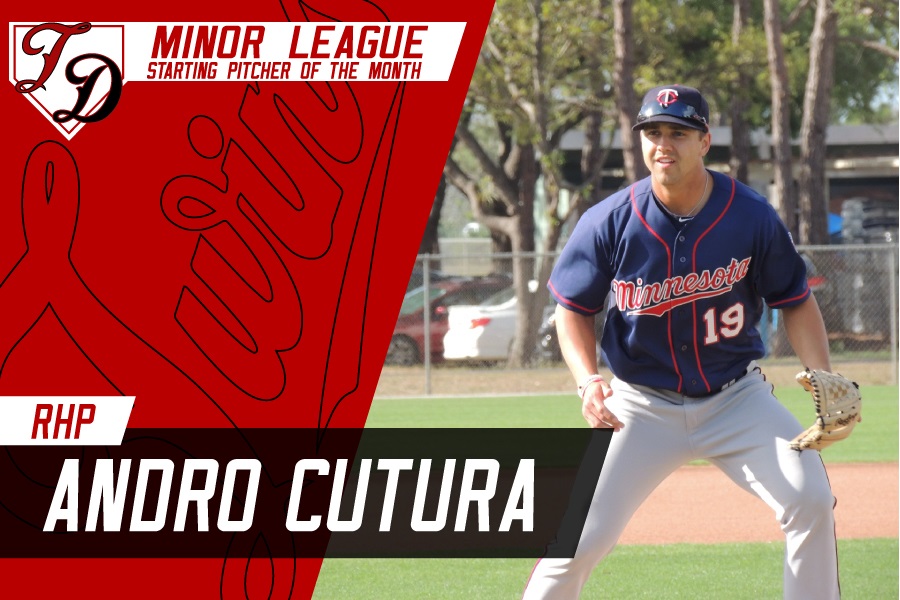 Before we share our choices for the Twins Minor League Top Five Starters for August, there are some terrific starting performers that just missed the cut. In fact, I find this month’s rankings really difficult, so I’m going to rank a Top Six instead of Top Five. You can discuss who should rank higher or lower. HONORABLE MENTION Edwar Colina - Cedar Rapids Kernels/Ft. Myers Miracle - 4 GS, 26.0 IP, 1.73 ERA, 0.96 WHIP, 17 H, 8 BB, 30 K Randy Dobnak - Cedar Rapids Kernels - 6 G, 5 GS, 27.2 IP, 1.63 ERA, 1.12 WHIP, 9 H, 8 BB, 19 K Brusdar Graterol - Ft. Myers Miracle - 5 G, 30.0 IP, 1.80 ERA, 1.10 ERA, 26 H, 7 BB, 25 K Carlos Suniaga - Cedar Rapids Kernels - 4 G, 2 GS, 18.0 IP, 1.00 ERA, 0.94 WHIP, 15 H, 2 BB, 16 K Kai-Wei Teng - GCL Twins - 4 G, 18.2 IP, 2.89 ERA, 1.13 WHIP, 16 H, 5 BB, 19 K THE TOP SIX STARTING PITCHERS #6 - RHP Tyler Wells - Chattanooga Lookouts - 6 G, 5 GS, 1.65 ERA, 1.13 WHIP, 32.2 IP, 23 H, 14 BB, 39 K Tyler Wells has had a tremendous season. Interestingly, after pitching well in Ft. Myers and earning his promotion, a case could be made the he was even better upon joining the Lookouts. He really did a nice job of limiting runs and base runners. He also has enough stuff to miss bats and accumulate strikeouts. For the month, opponents hit just .205/.291/.286 (.572) against him. Wells was the Twins 15th-round pick in 2015 out of Cal State-San Bernadino. He worked hard, losing 25+ pounds last offseason and it’s paid off in his results. #5 - RHP Austin Schulfer - Elizabethton Twins - 5 G, 4 GS, 0.00 ERA, 1.10 WHIP, 20.0 IP, 14 H, 8 BB, 18 K The E-Twins got some incredible starting pitching in August. Schulfer is the first of three that made this Top 6 list. Schulfer was the Twins 19th-round pick this June out of the University of Wisconsin-Milwaukee. Please tell me that I should have had him higher on this list. I mean, he did not give up an earned run (three unearned runs) the whole month, in 20 innings. Opponents hit just .206/.325/.250 (.575) off of him for the month.Overall, he went 3-0 with a 1.58 ERA over 40 innings in his pro debut. And he (and the other E-Twins listed below) will get their championship rings in March. #4 - RHP Luis Rijo - Elizabethton Twins - 5 GS, 1.27 ERA, 0.89 WHIP, 21.1 IP, 15 H, 4 BB, 17 K Luis Rijo came to the Twins with Tyler Austin in a July 31st trade from the Yankees for Lance Lynn. Earlier in the year, he made one start for the High-A club in Tampa (2 runs in 6 IP). He also made one start for the Yankees affiliate in the New York-Penn League (6 IP, 2 R). The Twins didn’t have him go real long in games after joining his new team, but they got some really strong innings. Rijo doesn’t profile as a top of the line starter, but he’s produced so far. Also, he just turned 20 years old this week. For the month, opponents hit .195/.253/.286 off of him. #3 - RHP Jhoan Duran - Cedar Rapids Kernels - 5 GS, 2.48 ERA, 0.97 WHIP, 29.0 IP, 19 H, 9 BB, 36 K The Twins acquired Duran from the Arizona Diamondback as part of the Eduardo Escobar trade in late July. He began the season in the Midwest League and was 5-4 with a 4.73 ERA in 15 starts for Kane County. As impressive as his August numbers were, I’d remind you that it does not include his July 30th Twins organization debut when he threw seven no-hit innings for the Kernels. Duran’s certainly got intriguing upside. For the month, opponents hit just .186/.257/.265 (.521) off of him. He struck out ten in the Kernels first playoff game as well. #2- RHP Andrew Cabezas - Elizabethton Twins - 5 G, 2.35 ERA, 0.78 WHIP, 23.0 IP, 12 H, 6 BB, 21 K Cabezas was Cleveland’s 34th-round pick in 2015 out of high school in southeast Florida. Instead of signing, he stayed close to home and pitched for three seasons at the University of Miami. The Twins picked him this year in the 18th round. The E-Twins starting pitchers have been tremendous, particularly in August, and Cabezas has been a leader for the group. In August, opponents hit just .146/.222/.232 (.454) off of the right-hander. And the Twins Minor League Starting Pitcher of the Month is: Ft. Myers Miracle - RHP Andro Cutura - 5 G, 4 GS, 0.87 ERA, 0.77 WHIP, 31.0 IP, 17 H, 7 BB, 25 K On May 12, 2016, Andro Cutura walked three and struck out three over two scoreless innings in a game against Wisconsin. He left the game, and on April 20, 2018, he returned to the mound for the Ft. Myers Miracle. Two long years after an elbow injury that led to Tommy John surgery and the rehab that followed. But the recently-turned-25-year-old has come back strong and was at his best in August. For the month, opponents hit just .160/.233/.245 (.478) off of him. He limited hits. He limited walks. He recorded some strikeouts. Despite returning to the mound only in late April, he has accumulated 101 innings this season. Overall, he is 4-6 with a 3.65 ERA, but more important, he’s back at 100% and starting to show what he can do. Cutura was the Twins seventh-round pick in 2014 out of Southeastern Louisiana University. Congratulations to our Twins Daily Minor League Starting Pitcher of the Month of August, Ft. Myers Miracle right-hander Andro Cutura. Feel free to discuss and ask questions.
 -
I'd have to give it more thought... but Jeffers and Duran are both easily Top 20 Twins prospects. I suspect Duran could be close to 10. Jeffers profiles a lot like Garver, but he's got a higher draft status, so he is very much intriguing. Rortvedt is a level ahead of Jeffers and is about 2 years younger, so that factors into prospect status. But, obviously on-field next year will tell us much more.
- 18 replies
-
- 1
-
-
- ryan jeffers
- gariel macial
- (and 3 more)
-
Not very, but they're on a schedule that they have to keep.
- 18 replies
-
- 1
-
-
- ryan jeffers
- gariel macial
- (and 3 more)
-
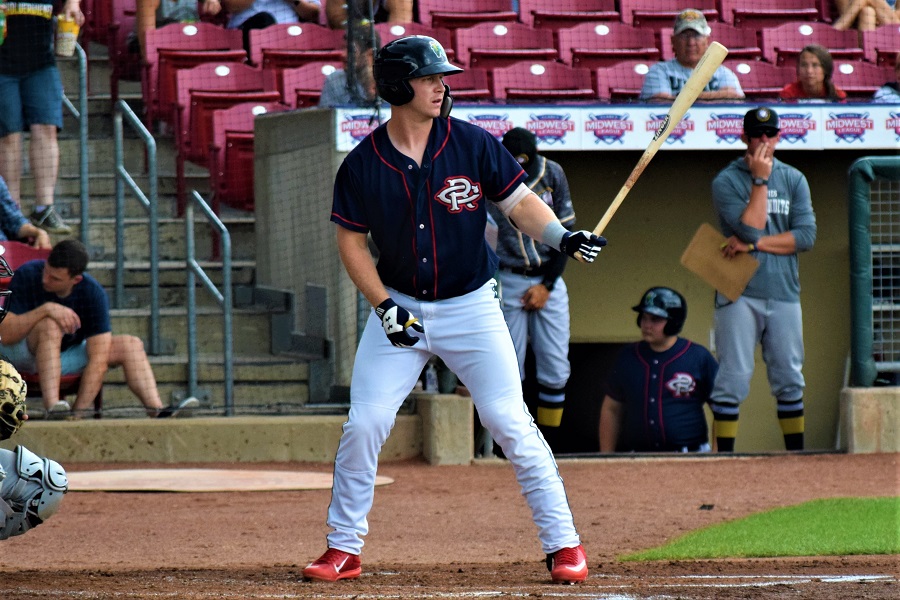
A day after the Elizabethton Twins won another Appalachian League championship and the Ft. Myers Miracle advanced to the Florida State League championship series, the Cedar Rapids Kernels began their Midwest League playoff run. The Kernels powered their way to be a big win in Beloit.Keep reading to find out more on the one playoff game played on Thursday night in the Twins system. Please feel free to discuss and ask questions. TRANSACTIONS NoneRED WINGS REPORT Season Complete. CHATTANOOGA CHATTER Season Complete. MIRACLE MATTERS Ft. Myers Box Score The Miracle begin the Florida State League championship series on Friday night. KERNELS NUGGETS Cedar Rapids 10, Beloit 1 Box Score The Kernels finished their regular season in Beloit. The Snappers won, which gave them a spot in the playoffs and a Game 1 home game. Cedar Rapids made the trip back for Game 1 in the Best of 3 series. The teams head to Cedar Rapids on Friday for either one game (if the Kernels win) or two games (if the Snappers win the first game). The Kernels got another terrific start from Jhoan Duran and they powered their way at the plate for a big win. Duran gave up just one run on three hits over six innings. He walked three and struck out ten. Johan Quezada gave up just one hit over the next two innings. He struck out four batters. Rickey Ramirez struck out one in a scoreless ninth. Ryan Jeffers and Gabriel Maciel each hit solo home runs in the second inning to give the Kernels a 2-0 lead. Duran gave up one run in the bottom of the second. But in the third innings, Trevor Larnach singled in Michael Helman, who had doubled, to get that run back. After a Jeffers single, Ben Rodriguez walked to load the bases. Maciel picked up a second RBI with another walk. The game stayed at 4-1 until the eighth inning when the Kernels broke it open. After three walks, Trey Cabbage came on to pinch hit for Victor Tademo and crushed a grand slam to push the lead to 8-1. In the ninth inning, Ryan Jeffers added a two-run homer, his second of the game for the final 10-1 margin. Jeffers went 3-for-4 with a walk, two homers and three RBI. E-TWINS E-TALK Elizabethton Box Score The E-Twins won the Appalachian League championship on Wednesday night. STARS OF THE DAY Twins Daily Hitter of the Day: Ryan Jeffers, Cedar Rapids (3-4, BB, 2-HR, 3 RBI). Twins Daily Pitcher of the Day: Jhoan Duran, Cedar Rapids Kernels (6 IP, 3 H, 1 ER, 3 BB, 10 K) PROSPECT SUMMARY Here’s a look at how the Twins Daily Midseason Top 20 Twins Prospects performed. #1 - Royce Lewis (Ft. Myers) - No Game Scheduled #2 - Alex Kirilloff (Ft. Myers) - No Game Scheduled #3 - Brusdar Graterol (Ft. Myers) - No Game Scheduled #5 - Stephen Gonsalves (Minnesota) - Did not pitch #6 - Trevor Larnach (Cedar Rapids) - 1-4, BB, 2 R, RBI #8 - Akil Baddoo (Cedar Rapids) - 1-4, BB, 2 K #10 - Zack Littell (Minnesota) - Did not pitch #11 - Blayne Enlow (Cedar Rapids) - Did not pitch #13 - Travis Blankenhorn (Ft. Myers) - No Game Scheduled #15 - Ben Rortvedt (Ft. Myers) - No Game Scheduled #18 - Ryan Jeffers (Cedar Rapids) - 3-4, BB, 2-HR, 3 R, 3 RBI #19 - Jacob Pearson (Cedar Rapids) - Did not play #21 - Jose Miranda (Ft. Myers) - No Game Scheduled FRIDAY’S PROBABLE STARTERS Rochester - Season Complete Chattanooga - Season Complete Daytona @ Ft. Myers (6:00 CST) - TBD Beloit @ Cedar Rapids (6:00 CST) - RHP Randy Dobnak (Game 2). If Game 3 is necessary, LHP Bryan Sammons will start. Elizabethton - Season Complete GCL Twins - Season Complete Please feel free to ask any questions about Thursday’s game, or ask any questions you may have. Click here to view the article
-
Twins Minor League Report (9/6): Kernels Dominate Game 1
Seth Stohs posted an article in Minor Leagues
 Keep reading to find out more on the one playoff game played on Thursday night in the Twins system. Please feel free to discuss and ask questions. TRANSACTIONS None RED WINGS REPORT Season Complete. CHATTANOOGA CHATTER Season Complete. MIRACLE MATTERS Ft. Myers Box Score The Miracle begin the Florida State League championship series on Friday night. KERNELS NUGGETS Cedar Rapids 10, Beloit 1 Box Score The Kernels finished their regular season in Beloit. The Snappers won, which gave them a spot in the playoffs and a Game 1 home game. Cedar Rapids made the trip back for Game 1 in the Best of 3 series. The teams head to Cedar Rapids on Friday for either one game (if the Kernels win) or two games (if the Snappers win the first game). The Kernels got another terrific start from Jhoan Duran and they powered their way at the plate for a big win. Duran gave up just one run on three hits over six innings. He walked three and struck out ten. Johan Quezada gave up just one hit over the next two innings. He struck out four batters. Rickey Ramirez struck out one in a scoreless ninth. Ryan Jeffers and Gabriel Maciel each hit solo home runs in the second inning to give the Kernels a 2-0 lead. Duran gave up one run in the bottom of the second. But in the third innings, Trevor Larnach singled in Michael Helman, who had doubled, to get that run back. After a Jeffers single, Ben Rodriguez walked to load the bases. Maciel picked up a second RBI with another walk. The game stayed at 4-1 until the eighth inning when the Kernels broke it open. After three walks, Trey Cabbage came on to pinch hit for Victor Tademo and crushed a grand slam to push the lead to 8-1. In the ninth inning, Ryan Jeffers added a two-run homer, his second of the game for the final 10-1 margin. Jeffers went 3-for-4 with a walk, two homers and three RBI. E-TWINS E-TALK Elizabethton Box Score The E-Twins won the Appalachian League championship on Wednesday night. STARS OF THE DAY Twins Daily Hitter of the Day: Ryan Jeffers, Cedar Rapids (3-4, BB, 2-HR, 3 RBI). Twins Daily Pitcher of the Day: Jhoan Duran, Cedar Rapids Kernels (6 IP, 3 H, 1 ER, 3 BB, 10 K) PROSPECT SUMMARY Here’s a look at how the Twins Daily Midseason Top 20 Twins Prospects performed. #1 - Royce Lewis (Ft. Myers) - No Game Scheduled #2 - Alex Kirilloff (Ft. Myers) - No Game Scheduled #3 - Brusdar Graterol (Ft. Myers) - No Game Scheduled #5 - Stephen Gonsalves (Minnesota) - Did not pitch #6 - Trevor Larnach (Cedar Rapids) - 1-4, BB, 2 R, RBI #8 - Akil Baddoo (Cedar Rapids) - 1-4, BB, 2 K #10 - Zack Littell (Minnesota) - Did not pitch #11 - Blayne Enlow (Cedar Rapids) - Did not pitch #13 - Travis Blankenhorn (Ft. Myers) - No Game Scheduled #15 - Ben Rortvedt (Ft. Myers) - No Game Scheduled #18 - Ryan Jeffers (Cedar Rapids) - 3-4, BB, 2-HR, 3 R, 3 RBI #19 - Jacob Pearson (Cedar Rapids) - Did not play #21 - Jose Miranda (Ft. Myers) - No Game Scheduled FRIDAY’S PROBABLE STARTERS Rochester - Season Complete Chattanooga - Season Complete Daytona @ Ft. Myers (6:00 CST) - TBD Beloit @ Cedar Rapids (6:00 CST) - RHP Randy Dobnak (Game 2). If Game 3 is necessary, LHP Bryan Sammons will start. Elizabethton - Season Complete GCL Twins - Season Complete Please feel free to ask any questions about Thursday’s game, or ask any questions you may have.
 -
It was about that time that people were saying that .500 would be a good goal... My how things change quickly...
-
Field, Grossman... Rosario's been out for a week. Cave hasn't missed many games since taking over in the outfield, that's just aday off. Gimenez... I don''t know. Garver can't catch all the time. Belisle... cuz he's on the roster and his new mechanics to have him throwing harder with a lot more movement. Was interesting to watch last night. Once he regains command from a new arm slot, he may have bought himself another year... Obviously Moiltor doesn't get to choose who is on the roster... The lineup... yeah, I don't' know. I figure if guys are on the roster, they've got to play them once in awhile.
- 37 replies
-
- 1
-
-
- alex bregman
- jorge polanco
- (and 3 more)
-
Just wanted to start a quick forum thread to encourage people to post their predictions for the 2018 Minnesota Vikings season. Here are some of my predictions: Record: 11-5, 1st in the NFC North.
-
I'm making an assumption that the Twins have already decided the Anderson and Reed will be added to the 40 in November and they don't need to further evaluate them. But they're using September to give a few other guys evaluation time to see if they'll stay on the 40. I could, of course, be wrong. Eades is solid. He won't' be a free agent until after next year.
- 12 replies
-
- 3
-
-
- jake reed
- derek molina
- (and 3 more)
-
Earlier this week, we announced the Twins Daily Minor League Hitter of the Month (Alex Kirilloff). Today, we discuss some of the top relief pitchers in the Twins minor leagues in August. I’ll be honest, even with the honorable mentions, there could have been even more. But when we get to the top of the list, you’ll fully understand the choice. You’ll also get to learn a little more about some guys you may not know as much about. Previous Relief Pitchers of the Month for 2018: April 2018: Nick Anderson, Rochester Red Wings May 2018: Todd Van Steensel, Chattanooga Lookouts June 2018: Jovani Moran, Cedar Rapids Kernels July 2018: Jovani Moran, Ft. Myers Miracle August 2018:Before we share our choices for the Twins Minor League Top Five Relievers for August, here are some terrific bullpen performances that just missed the cut. HONORABLE MENTION Colton Davis, Ft. Myers Miracle, 8 G, 2.19 ERA, 1.14 WHIP, 12.1 IP, 6 H, 8 BB, 17 K.Ryan Eades, Chattanooga Lookouts/Rochester Red Wings, 9 G, 3 GS, 1.00 ERA, 1.11 WHIP, 18.0 IP, 15 H, 5 BB, 22 K.Moises Gomez, Cedar Rapids Kernels, 6 G, 2.19 ERA, 0.81 WHIP, 12.1 IP, 10 H, 0 BB, 11 KRyne Harper, Rochester Red Wings, 9 G, 3.06 ERA, 0.91 WHIP, 17.2 IP, 13 H, 3 BB, 21 K.Jose Martinez, Cedar Rapids Kernels, 5 G, 2.77 ERA, 0.85 WHIP, 13.0 IP, 7 H, 4 BB, 15 KMichael Montero, GCL Twins, 5 G, 0.71 ERA, 0.95 WHIP, 12.2 IP, 8 H, 4 BB, 8 KJovani Moran, Ft. Myers Miracle, 8 G, 3.12 ERA, 1.10 WHIP, 17.1 IP, 11 H, 8 BB, 23 K.Cody Stashak, Chattanooga Lookouts, 7 G, 0.84 ERA, 0.94 WHIP, 10.2 IP, 10 H, 0 BB, 8 KTHE TOP FIVE RELIEF PITCHERS #5 - Johan Quezada - Elizabethton/Cedar Rapids Kernels - 6 G, 0.75 ERA, 1.00 WHIP, 12.0 IP, 9 H, 3 BB, 15 K Quezada signed with the Twins way back in 2012. He was a skinny kid. Since then, he has grown to 6-8 and over 240 pounds. He was posting upper-90s velocities until shoulder problems cost him the 2017 season. He returned this year and got into some games in Elizabethton. However, he has done a nice job since joining the Kernels in the middle of August. Recent reports had him hitting 99 mph again. He is already 24. He signed a little later and the shoulder issues have cost him time, but he is certainly one to watch over the next year as he could move fast if he can stay healthy. In August, opponents hit just .209/.261/.233 (.493) off of him. #4 - Jake Reed - Rochester Red Wings - 8 G, 0.71 ERA, 0.87 WHIP, 12.2 IP, 6 H, 5 BB,18 K Lots of talk about Byron Buxton, and deservingly so. Because he’s one of us and struck out a ton of batters in Rochester this year, we also hear a lot, wondering why Nick Anderson wasn’t promoted. However, it is inexplicable to me that Jake Reed didn’t get called up for September. They were fortunate that he wasn’t selected in the Rule 5 draft a year ago. After this season, it’s much more unlikely that he would again. His season started out slow, but since June 1st, he has a 1.43 ERA and 38 strikeouts in 37 2/3 innings. August was his best month as he didn’t give up runs, didn’t allow base runners and even walked less than he did over the course of the season. Opponents hit just .143/.234/.167 (.401) off of him in the month, and he missed a lot of bats. #3 - Derek Molina - Cedar Rapids Kernels - 6 G, 1.35 ERA, 0.75 WHIP, 13.1 IP, 7 H, 3 BB, 22 K While he can occasional struggle with his control, Derek Molina is very intriguing because he misses a lot of bats. And, he’s only been pitching full time since the Twins made him their 14th-round pick in the 2017 draft out of Merced College in California. In August, things came together nicely for him. Opponents hit just ..146/.196/.188 (.384) against him. Molina throws a good fastball, a solid curveball and an improving changeup. Check out this Q&A with Molina from earlier this season. #2 - Hector Lujan - Ft. Myers Miracle - 8 G, 1.42 ERA, 0.63 WHIP, 12.2 IP, 6 H, 2 BB, 16 K Three rounds after taking this month’s top reliever, the Twins selected his Westmont College teammate Hector Lujan. Lujan had a terrific 2017 season in which he led the Twins minor leagues in saves for the Cedar Rapids Kernels. After a slow start with the Miracle this year, he really came on strong. August was easily his best month. His control improved and his stuff definitely helped him miss bats. For the month, opponents hit just .133/.170/.200 (.370) against him. He will participate in the Arizona Fall League this year. And the Twins Minor League Relief Pitcher of the Month is: Chattanooga Lookouts/Rochester Red Wings – LHP Andrew Vasquez - 9 G, 0.61 ERA, 0.89 WHIP, 14.2 IP, 8 H, 5 BB, 30 K Andrew Vasquez pitched in the Florida State League All-Star Game in mid-June. Following the game, he was promoted to Double-A Chattanooga. He spent almost exactly one month with the Lookouts before being promoted to Triple-A Rochester. He spent about eight days with the Red Wings, and following the August 31st game, he was told that he was heading to the big leagues. As we have seen in his two short appearances with the Twins, Vasquez is primarily a slider pitcher. His fastball sits 89-90 mph, but it is his breaking ball that can be absolutely devastating to opposing hitter. A quick look at his above-mentioned stat line for August, he averaged over two strikeouts per inning. In August, opponents hit just .157/.259/.176 (.435) off of him. Vasquez was the Twins 32nd-round pick in 2015 out of Westmont College (after three years at UC-Santa Barbara). He went to the GCL that year where he walked 15 batters (and struck out 22) in 12 1/3 innings. He was moved along slowly as he worked through his control issues. But once he had command of his control, he flew up the system. This year, he has 108 strikeouts in 69 1/3 innings. He was an easy pick to be added to the 40-man roster in the offseason, so the Twins brought him up for September. There were several strong relief pitcher performances in August throughout the Twins minor league system, and at least another handful probably could have been mentioned. It was a good month for each of these pitchers mentioned today, but it was a great month, which culminated in his first big league call-up. Congratulations to Andrew Vasquez, the Twins Daily Minor League Relief Pitcher of the Month for August 2018. Click here to view the article
- 12 replies
-
- 1
-
-
- jake reed
- derek molina
- (and 3 more)
-
Twins Minor League Relief Pitcher Of The Month - August 2018
Seth Stohs posted an article in Minor Leagues
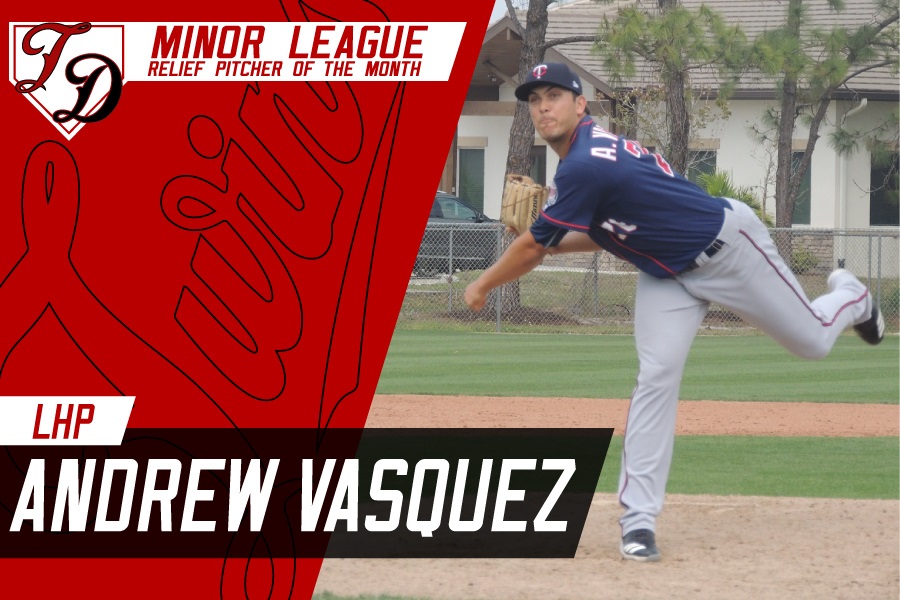 Before we share our choices for the Twins Minor League Top Five Relievers for August, here are some terrific bullpen performances that just missed the cut. HONORABLE MENTION Colton Davis, Ft. Myers Miracle, 8 G, 2.19 ERA, 1.14 WHIP, 12.1 IP, 6 H, 8 BB, 17 K. Ryan Eades, Chattanooga Lookouts/Rochester Red Wings, 9 G, 3 GS, 1.00 ERA, 1.11 WHIP, 18.0 IP, 15 H, 5 BB, 22 K. Moises Gomez, Cedar Rapids Kernels, 6 G, 2.19 ERA, 0.81 WHIP, 12.1 IP, 10 H, 0 BB, 11 K Ryne Harper, Rochester Red Wings, 9 G, 3.06 ERA, 0.91 WHIP, 17.2 IP, 13 H, 3 BB, 21 K. Jose Martinez, Cedar Rapids Kernels, 5 G, 2.77 ERA, 0.85 WHIP, 13.0 IP, 7 H, 4 BB, 15 K Michael Montero, GCL Twins, 5 G, 0.71 ERA, 0.95 WHIP, 12.2 IP, 8 H, 4 BB, 8 K Jovani Moran, Ft. Myers Miracle, 8 G, 3.12 ERA, 1.10 WHIP, 17.1 IP, 11 H, 8 BB, 23 K. Cody Stashak, Chattanooga Lookouts, 7 G, 0.84 ERA, 0.94 WHIP, 10.2 IP, 10 H, 0 BB, 8 K THE TOP FIVE RELIEF PITCHERS #5 - Johan Quezada - Elizabethton/Cedar Rapids Kernels - 6 G, 0.75 ERA, 1.00 WHIP, 12.0 IP, 9 H, 3 BB, 15 K Quezada signed with the Twins way back in 2012. He was a skinny kid. Since then, he has grown to 6-8 and over 240 pounds. He was posting upper-90s velocities until shoulder problems cost him the 2017 season. He returned this year and got into some games in Elizabethton. However, he has done a nice job since joining the Kernels in the middle of August. Recent reports had him hitting 99 mph again. He is already 24. He signed a little later and the shoulder issues have cost him time, but he is certainly one to watch over the next year as he could move fast if he can stay healthy. In August, opponents hit just .209/.261/.233 (.493) off of him. #4 - Jake Reed - Rochester Red Wings - 8 G, 0.71 ERA, 0.87 WHIP, 12.2 IP, 6 H, 5 BB,18 K Lots of talk about Byron Buxton, and deservingly so. Because he’s one of us and struck out a ton of batters in Rochester this year, we also hear a lot, wondering why Nick Anderson wasn’t promoted. However, it is inexplicable to me that Jake Reed didn’t get called up for September. They were fortunate that he wasn’t selected in the Rule 5 draft a year ago. After this season, it’s much more unlikely that he would again. His season started out slow, but since June 1st, he has a 1.43 ERA and 38 strikeouts in 37 2/3 innings. August was his best month as he didn’t give up runs, didn’t allow base runners and even walked less than he did over the course of the season. Opponents hit just .143/.234/.167 (.401) off of him in the month, and he missed a lot of bats. #3 - Derek Molina - Cedar Rapids Kernels - 6 G, 1.35 ERA, 0.75 WHIP, 13.1 IP, 7 H, 3 BB, 22 K While he can occasional struggle with his control, Derek Molina is very intriguing because he misses a lot of bats. And, he’s only been pitching full time since the Twins made him their 14th-round pick in the 2017 draft out of Merced College in California. In August, things came together nicely for him. Opponents hit just ..146/.196/.188 (.384) against him. Molina throws a good fastball, a solid curveball and an improving changeup. Check out this Q&A with Molina from earlier this season. #2 - Hector Lujan - Ft. Myers Miracle - 8 G, 1.42 ERA, 0.63 WHIP, 12.2 IP, 6 H, 2 BB, 16 K Three rounds after taking this month’s top reliever, the Twins selected his Westmont College teammate Hector Lujan. Lujan had a terrific 2017 season in which he led the Twins minor leagues in saves for the Cedar Rapids Kernels. After a slow start with the Miracle this year, he really came on strong. August was easily his best month. His control improved and his stuff definitely helped him miss bats. For the month, opponents hit just .133/.170/.200 (.370) against him. He will participate in the Arizona Fall League this year. And the Twins Minor League Relief Pitcher of the Month is: Chattanooga Lookouts/Rochester Red Wings – LHP Andrew Vasquez - 9 G, 0.61 ERA, 0.89 WHIP, 14.2 IP, 8 H, 5 BB, 30 K Andrew Vasquez pitched in the Florida State League All-Star Game in mid-June. Following the game, he was promoted to Double-A Chattanooga. He spent almost exactly one month with the Lookouts before being promoted to Triple-A Rochester. He spent about eight days with the Red Wings, and following the August 31st game, he was told that he was heading to the big leagues. As we have seen in his two short appearances with the Twins, Vasquez is primarily a slider pitcher. His fastball sits 89-90 mph, but it is his breaking ball that can be absolutely devastating to opposing hitter. A quick look at his above-mentioned stat line for August, he averaged over two strikeouts per inning. In August, opponents hit just .157/.259/.176 (.435) off of him. Vasquez was the Twins 32nd-round pick in 2015 out of Westmont College (after three years at UC-Santa Barbara). He went to the GCL that year where he walked 15 batters (and struck out 22) in 12 1/3 innings. He was moved along slowly as he worked through his control issues. But once he had command of his control, he flew up the system. This year, he has 108 strikeouts in 69 1/3 innings. He was an easy pick to be added to the 40-man roster in the offseason, so the Twins brought him up for September. There were several strong relief pitcher performances in August throughout the Twins minor league system, and at least another handful probably could have been mentioned. It was a good month for each of these pitchers mentioned today, but it was a great month, which culminated in his first big league call-up. Congratulations to Andrew Vasquez, the Twins Daily Minor League Relief Pitcher of the Month for August 2018.

