



Seth Stohs
-
Posts
25,909 -
Joined
-
Last visited
-
Days Won
109
Content Type
Profiles
News
Minnesota Twins Videos
2026 Minnesota Twins Top Prospects Ranking
2022 Minnesota Twins Draft Picks
Minnesota Twins Free Agent & Trade Rumors, Notes, & Tidbits
Guides & Resources
2023 Minnesota Twins Draft Picks
The Minnesota Twins Players Project
2024 Minnesota Twins Draft Picks
2025 Minnesota Twins Draft Pick Tracker
2026 Minnesota Twins Draft Tracker: Picks & Bonuses
Forums
Blogs
Events
Store
Downloads
Gallery
Everything posted by Seth Stohs
-
Joe Mauer had been given Wednesday afternoon off in Chicago. On Thursday night, the Twins returned home to Target Field and Mauer was back in the lineup, Mauer singled to tie Rod Carew for second on the Twins all-time hits list. On Friday, he executed a perfect hit-and-run for a single and hit #2,086, passing the great Carew. On Saturday night, the Minnesota Twins honored Hall of Famer Jim Thome in a pregame ceremony. Joe Mauer caught the ceremonial first pitch from his former teammate and then went out and added two more base knocks on his quest toward catching Kirby Puckett atop the Twins all-time hit list. Or just to end his season strong. Image courtesy of Brad Rempel, USA Today Joe Mauer had been given Wednesday afternoon off in Chicago. On Thursday night, the Twins returned home to Target Field and Mauer was back in the lineup, Mauer singled to tie Rod Carew for second on the Twins all-time hits list. On Friday, he executed a perfect hit-and-run for a single and hit #2,086, passing the great Carew. On Saturday night, the Minnesota Twins honored Hall of Famer Jim Thome in a pregame ceremony. Joe Mauer caught the ceremonial first pitch from his former teammate and then went out and added two more base knocks on his quest toward catching Kirby Puckett atop the Twins all-time hit list. Or just to end his season strong. There are a lot of similarities between Jim Thome and Joe Mauer, though they may not be obvious at first glance. Sure, Mauer has been mostly a singles and doubles hitter, batting for high average while Thome knocked over 600 home runs in his career. Mauer is long and lean while Thome is power-packed and burly. Hey, there’s a reason that the Paul Bunyan comparisons (and bobbleheads) have been made. But as Paul Molitor discussed the impact that Thome made in his brief time in Minnesota, it was natural for the conversation to swing toward Mauer and his accomplishments on and off the field. Jim Thome spent the 2010 season with the Twins and hit 25 home runs. In 2011, he played with the Twins until an August 25th trade sent him back to Cleveland. According to Molitor, Thome certainly made an impact. “He did. I think it’s to his credit that, although the time wasn’t very long, there was a bigger impact that maybe didn’t match up with the time.” Molitor continued, “What he did on the field was obviously impressive, added to his Hall of Fame credentials, but the influence he had on our group of young players. I remember in spring training, he’d go over to to the minor league fields to get extra at bats. Just the way he responded to those young kids and the example he set (provided an impact). He never took himself too seriously. It was always about enjoying the game and trying to make people around him better. It’s nice that we have the chance to honor him tonight.” But both Jim Thome and Joe Mauer are such nice people, caring people. Generally, they are quiet people as well. But don’t doubt their drive. Players don’t achieve as much as Thome and Mauer have in their careers without being extremely competitive and driven. Molitor noted. “I don’t think that you should be misled by the external demeanor or the fire of both of those guys. For a long time, I’d be asked ‘What’s Joe like in the clubhouse?’ He’s top shelf. You may not see it. He handles the ups and downs without the heavy outbursts. But even last night, in talking to his teammates, it was about staying in the moment and looking forward to come out today and trying to win a baseball game.” He noted that Mauer and Thome are strong leaders. “People define vocal. Vocal doesn’t mean volume.” Jim Thome’s career began in 1991 in Cleveland. At that time, Molitor’s Milwaukee Brewers were still in the American League. Then Molitor moved to the Blue Jays and ended his career with three years for the Twins. So, he saw a lot of Thome through the 1998 season when Molitor retired. Molitor noted that it’s been a long time, but he remembers Thome’s early years. “I remember him coming up as a third baseman. I’m not sure if I bunted on him somewhere along the way. You could tell early on. A guy who was exuberant on the field and played with passion and his power stuck out back then as a young player, maybe a little smaller version of the current Jim Thome. His run in Cleveland. Transition to first baseman. DH. Turned into one of the better power hitters of his generation.” In the same way that Thome had an impact on the field and in the clubhouse, Mauer still is having an impact. One way that he does that is providing a game ball after each Twins win. The ball doesn’t always go to the obvious choice. According to Molitor, “I think his biggest intent in getting up there is to make sure he recognizes all the little contributions. It’s not always about the two-run homer or the 7-inning shutout. It can be about a guy making a play or advancing a runner or battling with two strikes.” After the Friday night game when Mauer passed Rod Carew on the Twins all-time hit list, Molitor addressed the team following the game. “We took a moment. Talked about the history of the organization, how far back it goes, and over that span of time, Joe has more hits than anyone wearing this uniform than anyone else except one guy. It speaks a lot.” The Twins have stated publicly that they have not approached Mauer about a contract extension, and the Mauer side hasn’t reached out to them about his plans beyond 2018 when his contract ends and he can become a free agent. Mauer continues to do so much around the community. You may hear often about the work he and his wife Maddie do with the Gillette’s Childrens Hospital, but we have probably all heard stories of things that Mauer has done in the community which have never been made public. Mauer has been making an impact in the Twin Cities for a couple of decades. Jim Thome impacted this community for a couple of seasons. Both are Hall of Famers on and off the field. View full article
- 3 replies
-
- 3
-

-
- paul molitor
- jim thome
- (and 1 more)
-
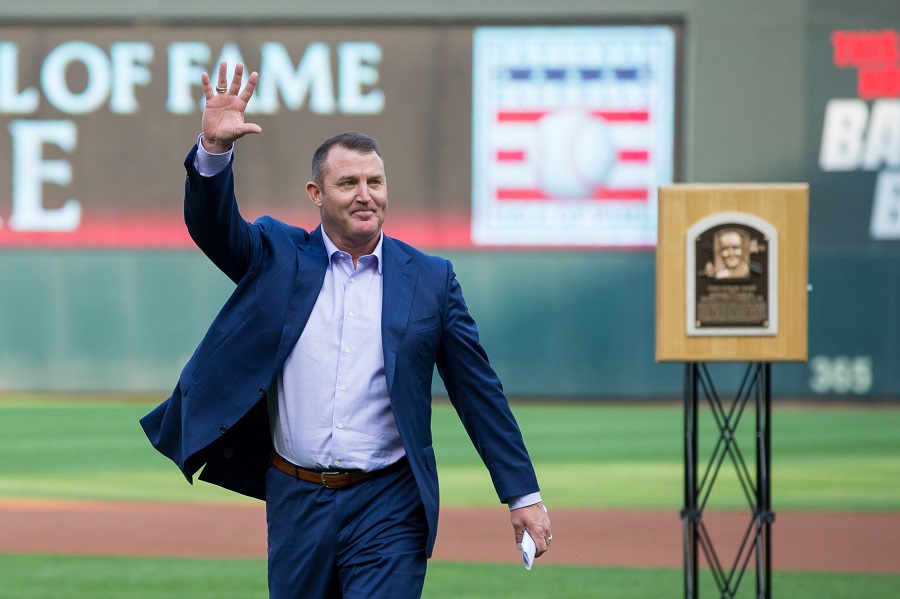 There are a lot of similarities between Jim Thome and Joe Mauer, though they may not be obvious at first glance. Sure, Mauer has been mostly a singles and doubles hitter, batting for high average while Thome knocked over 600 home runs in his career. Mauer is long and lean while Thome is power-packed and burly. Hey, there’s a reason that the Paul Bunyan comparisons (and bobbleheads) have been made. But as Paul Molitor discussed the impact that Thome made in his brief time in Minnesota, it was natural for the conversation to swing toward Mauer and his accomplishments on and off the field. Jim Thome spent the 2010 season with the Twins and hit 25 home runs. In 2011, he played with the Twins until an August 25th trade sent him back to Cleveland. According to Molitor, Thome certainly made an impact. “He did. I think it’s to his credit that, although the time wasn’t very long, there was a bigger impact that maybe didn’t match up with the time.” Molitor continued, “What he did on the field was obviously impressive, added to his Hall of Fame credentials, but the influence he had on our group of young players. I remember in spring training, he’d go over to to the minor league fields to get extra at bats. Just the way he responded to those young kids and the example he set (provided an impact). He never took himself too seriously. It was always about enjoying the game and trying to make people around him better. It’s nice that we have the chance to honor him tonight.” But both Jim Thome and Joe Mauer are such nice people, caring people. Generally, they are quiet people as well. But don’t doubt their drive. Players don’t achieve as much as Thome and Mauer have in their careers without being extremely competitive and driven. Molitor noted. “I don’t think that you should be misled by the external demeanor or the fire of both of those guys. For a long time, I’d be asked ‘What’s Joe like in the clubhouse?’ He’s top shelf. You may not see it. He handles the ups and downs without the heavy outbursts. But even last night, in talking to his teammates, it was about staying in the moment and looking forward to come out today and trying to win a baseball game.” He noted that Mauer and Thome are strong leaders. “People define vocal. Vocal doesn’t mean volume.” Jim Thome’s career began in 1991 in Cleveland. At that time, Molitor’s Milwaukee Brewers were still in the American League. Then Molitor moved to the Blue Jays and ended his career with three years for the Twins. So, he saw a lot of Thome through the 1998 season when Molitor retired. Molitor noted that it’s been a long time, but he remembers Thome’s early years. “I remember him coming up as a third baseman. I’m not sure if I bunted on him somewhere along the way. You could tell early on. A guy who was exuberant on the field and played with passion and his power stuck out back then as a young player, maybe a little smaller version of the current Jim Thome. His run in Cleveland. Transition to first baseman. DH. Turned into one of the better power hitters of his generation.” In the same way that Thome had an impact on the field and in the clubhouse, Mauer still is having an impact. One way that he does that is providing a game ball after each Twins win. The ball doesn’t always go to the obvious choice. According to Molitor, “I think his biggest intent in getting up there is to make sure he recognizes all the little contributions. It’s not always about the two-run homer or the 7-inning shutout. It can be about a guy making a play or advancing a runner or battling with two strikes.” After the Friday night game when Mauer passed Rod Carew on the Twins all-time hit list, Molitor addressed the team following the game. “We took a moment. Talked about the history of the organization, how far back it goes, and over that span of time, Joe has more hits than anyone wearing this uniform than anyone else except one guy. It speaks a lot.” The Twins have stated publicly that they have not approached Mauer about a contract extension, and the Mauer side hasn’t reached out to them about his plans beyond 2018 when his contract ends and he can become a free agent. Mauer continues to do so much around the community. You may hear often about the work he and his wife Maddie do with the Gillette’s Childrens Hospital, but we have probably all heard stories of things that Mauer has done in the community which have never been made public. Mauer has been making an impact in the Twin Cities for a couple of decades. Jim Thome impacted this community for a couple of seasons. Both are Hall of Famers on and off the field.
 -
 The game really changes on the Eddie Rosario fly out in the bottom of the 7th. He came up with two on and two outs and crushed a Familia fastball fastball. Some (ok me) thought it was gone, but it was caught at the wall... Instead of being up 5-4 going to the 8th inning, they remained down 4-2 and the A's scored two right in the top of the 8th.
- 20 replies
-
- 5
-
-
- stephen gonsalves
- miguel sano
- (and 2 more)
-
Added a few quotes from Molitor and Gonsalves from after the game in the clubhouse...
- 20 replies
-
- 3
-
-
- stephen gonsalves
- miguel sano
- (and 2 more)
-
Nothing official yet on Wilson/Astudillo, though it does make sense. I'm sure we'll hear in the morning when that early-morning Rochester to Minneapolis direct flight gets here.
-
Yup, he's 4 for his last 31 (7 games) and 2 for his last 21 (4 games). Nothing to worry about... but that FSL can drain guys... we also forget that he and Kirilloff are finishing up their first full MiLB seasons... they've got to be wearing down... Not as an excuse, but it would be understandable. Then again, they have like 10-11 games left, they could each get 20 more hits and we won't be surprised. Ha!
-
Twins Minor League Report (8/22): Blank Blanks Reds
Seth Stohs replied to Seth Stohs's topic in Twins Daily Front Page News
Maybe people saw this on Twitter, but Andrew Vasquez was promoted to Rochester today. Casey Crosby off the DL for Chattanooga.- 27 replies
-
- 3
-
-
- jacob blank
- trevor larnach
- (and 3 more)
-
Twins Minor League Report (8/22): Blank Blanks Reds
Seth Stohs replied to Seth Stohs's topic in Twins Daily Front Page News
Correct... we have a tendency to blame the player... It could be the injuries have taken away some ability. It could be that he just shouldnt have been drafted where he was in the first place... but he can't just say no. I know I wouldn't. We have this tendency, I think, to place struggles on the field with some sort of character flaw, and that's not fair at all. I often hear people say that Player X "didn't reach his potential." Well, maybe that player did. The truthful saying would be that Player X "didn't reach his perceived potential" or "didn't reach what I wanted him to." Disclaimer: I personally haven't' given up on Jay. He's made it through this season relatively healthy. Maybe he gets a full offseason and takes a step next year.- 27 replies
-
- 4
-
-
- jacob blank
- trevor larnach
- (and 3 more)
-
Twins Minor League Report (8/22): Blank Blanks Reds
Seth Stohs replied to Seth Stohs's topic in Twins Daily Front Page News
I would guess that Andrew Vasquez has passed him by in terms of 40-man roster pecking order... though not protecting Jay would make him a solid, maybe even strong candidate to be selected.- 27 replies
-
- 1
-
-
- jacob blank
- trevor larnach
- (and 3 more)
-
Twins Minor League Report (8/22): Blank Blanks Reds
Seth Stohs replied to Seth Stohs's topic in Twins Daily Front Page News
Yes... previous high was 6.- 27 replies
-
- 2
-
-
- jacob blank
- trevor larnach
- (and 3 more)
-
It was another busy day in the Minnesota Twins minor league system. Each of the affiliates played. Zander Wiel recorded his first Rochester hit. Clark Beeker was solid in his first Double A start. Alex Kirilloff kept up an impressive streak while Taylor Grzelakowski continued an impressive season with another strong game. Akil Baddoo and Trevor Larnach powered the Kernels to a win. The E-Twins needed 11 innings and got great relief work from Jacob Blank while Jean Carlos Arias had a couple of big hits. The GCL Twins tried to come back from a big deficit in a rare night game in the Gulf Coast League. Image courtesy of Seth Stohs, Twins Daily (photo of Jean Carlos Arias) It was another busy day in the Minnesota Twins minor league system. Each of the affiliates played. Zander Wiel recorded his first Rochester hit. Clark Beeker was solid in his first Double A start. Alex Kirilloff kept up an impressive streak while Taylor Grzelakowski continued an impressive season with another strong game. Akil Baddoo and Trevor Larnach powered the Kernels to a win. The E-Twins needed 11 innings and got great relief work from Jacob Blank while Jean Carlos Arias had a couple of big hits. The GCL Twins tried to come back from a big deficit in a rare night game in the Gulf Coast League. Keep reading to find out more on the night in the Twins minor league system on Wednesday. As always, please feel free to discuss and ask questions. TRANSACTIONS Utility man Taylor Motter was released by the Twins. He’d been playing in Rochester. RED WINGS REPORT Rochester 2, Pawtucket 7 Box Score Fernando Romero was on the mound for the Red Wings. The right-hander went the first three innings. He gave up three runs on four hits. He walked a batter, hit a batter and struck out two in three innings. Tyler Duffey came on and gave up two runs on four hits in two innings. He struck out three. Ryne Harper gave up two runs on three hits over 2 2/3 innings. He walked two, hit one and struck out two. John Curtiss got the final four outs. Kennys Vargas had another strong game. He went 2-for-3 with a walk and his 16th double. Zander Wiel had a hit in his fist at bat, the first hit of his Triple-A career. Byron Buxton went 0-for-4 with two strikeouts. CHATTANOOGA CHATTER Chattanooga 2, Montgomery 3 Box Score Clark Beeker made his first Double-A start for the Lookouts on Wednesday night. The right-hander from Davidson gave up just two hits over four shutout innings. He struck out two without issuing a walk. Anthony Marzi came on and worked the next two innings. The left-hander gave up one run on two hits and a walk. Tyler Jay worked the final two innings and gave up two runs (1 earned) on two hits, a walk and a hit batter. The Lookouts had just five hits in this game. Jaylin Davis provided the offense with a two-run, first-inning homer, his sixth with the Lookouts. Brent Rooker had a single and was hit by a pitch. MIRACLE MATTERS Ft. Myers 6, Palm Beach 1 Box Score Andro Cutura missed nearly two seasons after Tommy John surgery. On Wednesday, he turned 25 and celebrated with a Win. The right-hander gave up just one run on four hits in seven innings. He walked three and struck out four. Adam Bray gave up two hits over two scoreless innings to end the game. Taylor Grzelakowski led the way with a 3-for-5 game. He hit his 23rd double. Mark Contreras went 2-for-4 with a walk and his 15th double. Eddie De La Trinidad was 2-for-5 with his second double. Ben Rortvedt went 2-for-4 with his seventh Miracle double. Caleb Hamilton went 2-for-3 with a walk. Ryan Costello also had two hits. Alex Kirilloff extended his on-base streak to 33 games. Jose Miranda also doubled. KERNELS NUGGETS Cedar Rapids 8, Wisconsin 4 Box Score Akil Baddoo paced the way early for the Kernels. In the first inning, he began the game with his 11th triple. An inning later, his 11th home run was a two-run shot that was the big hit in a five-run inning. Baddoo also walked once. Trevor Larnach went 3-for-5 with his sixth double and his second home run. Michael Helman went 2-for-4 with his third double. Michael Davis went 2-for-4 with his eighth double. Trey Cabbage knocked his 19th double, which Ben Rodriguez’s first triple drove in two runs. Blayne Enlow made the start. He gave up one run on four hits over five innings to pick up his third win of the year. He walked one, hit two and struck out eight batters. Jared Finkel went the next 2 2/3 innings. He gave up three runs on five hits and a walk. Derek Molina got the final four outs and gave up just one hit. E-TWINS E-TALK Elizabethton 2, Greeneville 1 (11 innings) Box Score Jean Carlos Arias has struggled since being demoted to the E-Twins. He had an early single. In the ninth inning, he singled in the game-tying run. And in the bottom of the 11th inning, he singled in Trevor Casanova with the game-winning run. DaShawn Keirsey had a single and two walks. Tyler Palm had another strong start. The lanky right-hander started with six scoreless innings. His final line was one run over 6 1/3 innings. He walked one, hit one and struck out four. Augustana University’s Jacob Blank came on and gave up just one hit over the final 4 2/3 innings. He intentionally walked one and struck out five to record his first professional win. GCL TWINS TALK GCL Twins 7, GCL Rays 8 Box Score The Twins played a rare night game in the Gulf Coast League. A six-run fourth inning put the Twins in a hold. However, in the seventh inning, they mounted a comeback. They scored six runs of their own to tie the game. However, in the bottom of the inning, they gave up what proved to be the game-winning run. Prelander Berroa started and gave up seven runs (just two earned) on eight hits and a walk over the first 3 2/3 innings. He struck out four. Denny Bentley came on and finished out the fourth and worked a scoreless fifth inning. Steven Cruz gave up one run on one hit and three walks over the next 1 2/3 innings. He struck out two. Petru Balan got the final four outs. He gave up one hit, walked two and struck out one. Shane Carrier had two doubles in the game. Estamy Urena was 2-for-4 with a walk. Victor Tademo also had two hits in the game. STARS OF THE DAY Twins Daily Hitter of the Day: Jean Carlos Arias, Elizabethton Twins (3-5, game-tying and game-winning hits). Twins Daily Pitcher of the Day: Jacob Blank, Elizabethton Twins (4.2 IP, 1 H, 0 ER, 1 IBB, 5 K) PROSPECT SUMMARY Here’s a look at how the Twins Daily Midseason Top 20 Twins Prospects performed. #1 - Royce Lewis (Ft. Myers) - 1-5 #2 - Alex Kirilloff (Ft. Myers) - 1-5, 2B(23), R, RBI, K #3 - Brusdar Graterol (Ft. Myers) - Did not pitch #4 - Nick Gordon (Rochester) - 1-4, R, K #5 - Stephen Gonsalves (Minnesota) - Did not pitch #6 - Trevor Larnach (Cedar Rapids) - 3-5, 2B(6), HR(2), 2 R, 2 RBI #7 - Brent Rooker (Chattanooga) - 1-3, HBP, R, K #8 - Akil Baddoo (Cedar Rapids) - 2-4, BB, 3B(11), HR(11), 2 R, 2 RBI #9 -Wander Javier - out of for the season #10 - Zack Littell (Rochester) - Did not pitch #11 - Blayne Enlow (Cedar Rapids) - 5 IP, 4 H, 1 ER, 1 BB, 8 K) #12 - LaMonte Wade (Rochester) - 0-4, K #13 - Travis Blankenhorn (Ft. Myers) - Did not play #14 - Lewis Thorpe (Rochester) - Did not pitch #15 - Ben Rortvedt (Ft. Myers) - 2-4, 2B(7), R #16 - Yunior Severino (Elizabethton) - 0-1 #17 - Lewin Diaz (Ft. Myers) - Out for the season (wrist) #18 - Ryan Jeffers (Cedar Rapids) - 1-5, R #19 - Jacob Pearson (Cedar Rapids) - Did not play #20 - Luis Arraez (Chattanooga) - 1-3 #21 - Jose Miranda (Ft. Myers) - 1-4, 2B(3), R, RBI, K *Since Wander Javier is out, I’d add #21 to the list. THURSDAY’S PROBABLE STARTERS Pawtucket @ Rochester (6:05 CST) - RHP Zack Littell (4-6, 3.63 ERA) Chattanooga @ Montgomery (6:35 CST) - RHP Sean Poppen (5-6, 3.55 ERA) Ft. Myers @ Palm Beach (5:30 CST) - LHP Bryan Sammons (1-1, 8.20 ERA) Cedar Rapids @ Beloit (7:00 CST) - RHP Melvi Acosta (2-4, 2.56 ERA) Greeneville @ Elizabethton (6:00 CST) - RHP Andrew Cabezas (1-3, 2.95 ERA) GCL Twins - No Game Scheduled Please feel free to ask any questions about Wednesday’s games, or ask any questions you may have. View full article
-
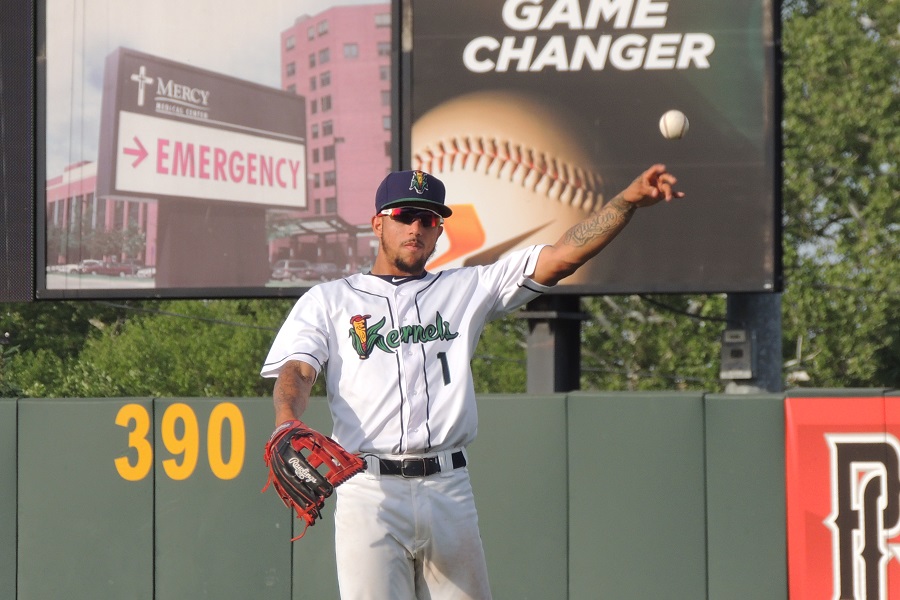 Keep reading to find out more on the night in the Twins minor league system on Wednesday. As always, please feel free to discuss and ask questions. TRANSACTIONS Utility man Taylor Motter was released by the Twins. He’d been playing in Rochester. RED WINGS REPORT Rochester 2, Pawtucket 7 Box Score Fernando Romero was on the mound for the Red Wings. The right-hander went the first three innings. He gave up three runs on four hits. He walked a batter, hit a batter and struck out two in three innings. Tyler Duffey came on and gave up two runs on four hits in two innings. He struck out three. Ryne Harper gave up two runs on three hits over 2 2/3 innings. He walked two, hit one and struck out two. John Curtiss got the final four outs. Kennys Vargas had another strong game. He went 2-for-3 with a walk and his 16th double. Zander Wiel had a hit in his fist at bat, the first hit of his Triple-A career. Byron Buxton went 0-for-4 with two strikeouts. CHATTANOOGA CHATTER Chattanooga 2, Montgomery 3 Box Score Clark Beeker made his first Double-A start for the Lookouts on Wednesday night. The right-hander from Davidson gave up just two hits over four shutout innings. He struck out two without issuing a walk. Anthony Marzi came on and worked the next two innings. The left-hander gave up one run on two hits and a walk. Tyler Jay worked the final two innings and gave up two runs (1 earned) on two hits, a walk and a hit batter. The Lookouts had just five hits in this game. Jaylin Davis provided the offense with a two-run, first-inning homer, his sixth with the Lookouts. Brent Rooker had a single and was hit by a pitch. MIRACLE MATTERS Ft. Myers 6, Palm Beach 1 Box Score Andro Cutura missed nearly two seasons after Tommy John surgery. On Wednesday, he turned 25 and celebrated with a Win. The right-hander gave up just one run on four hits in seven innings. He walked three and struck out four. Adam Bray gave up two hits over two scoreless innings to end the game. Taylor Grzelakowski led the way with a 3-for-5 game. He hit his 23rd double. Mark Contreras went 2-for-4 with a walk and his 15th double. Eddie De La Trinidad was 2-for-5 with his second double. Ben Rortvedt went 2-for-4 with his seventh Miracle double. Caleb Hamilton went 2-for-3 with a walk. Ryan Costello also had two hits. Alex Kirilloff extended his on-base streak to 33 games. Jose Miranda also doubled. KERNELS NUGGETS Cedar Rapids 8, Wisconsin 4 Box Score Akil Baddoo paced the way early for the Kernels. In the first inning, he began the game with his 11th triple. An inning later, his 11th home run was a two-run shot that was the big hit in a five-run inning. Baddoo also walked once. Trevor Larnach went 3-for-5 with his sixth double and his second home run. Michael Helman went 2-for-4 with his third double. Michael Davis went 2-for-4 with his eighth double. Trey Cabbage knocked his 19th double, which Ben Rodriguez’s first triple drove in two runs. Blayne Enlow made the start. He gave up one run on four hits over five innings to pick up his third win of the year. He walked one, hit two and struck out eight batters. Jared Finkel went the next 2 2/3 innings. He gave up three runs on five hits and a walk. Derek Molina got the final four outs and gave up just one hit. E-TWINS E-TALK Elizabethton 2, Greeneville 1 (11 innings) Box Score Jean Carlos Arias has struggled since being demoted to the E-Twins. He had an early single. In the ninth inning, he singled in the game-tying run. And in the bottom of the 11th inning, he singled in Trevor Casanova with the game-winning run. DaShawn Keirsey had a single and two walks. Tyler Palm had another strong start. The lanky right-hander started with six scoreless innings. His final line was one run over 6 1/3 innings. He walked one, hit one and struck out four. Augustana University’s Jacob Blank came on and gave up just one hit over the final 4 2/3 innings. He intentionally walked one and struck out five to record his first professional win. GCL TWINS TALK GCL Twins 7, GCL Rays 8 Box Score The Twins played a rare night game in the Gulf Coast League. A six-run fourth inning put the Twins in a hold. However, in the seventh inning, they mounted a comeback. They scored six runs of their own to tie the game. However, in the bottom of the inning, they gave up what proved to be the game-winning run. Prelander Berroa started and gave up seven runs (just two earned) on eight hits and a walk over the first 3 2/3 innings. He struck out four. Denny Bentley came on and finished out the fourth and worked a scoreless fifth inning. Steven Cruz gave up one run on one hit and three walks over the next 1 2/3 innings. He struck out two. Petru Balan got the final four outs. He gave up one hit, walked two and struck out one. Shane Carrier had two doubles in the game. Estamy Urena was 2-for-4 with a walk. Victor Tademo also had two hits in the game. STARS OF THE DAY Twins Daily Hitter of the Day: Jean Carlos Arias, Elizabethton Twins (3-5, game-tying and game-winning hits). Twins Daily Pitcher of the Day: Jacob Blank, Elizabethton Twins (4.2 IP, 1 H, 0 ER, 1 IBB, 5 K) PROSPECT SUMMARY Here’s a look at how the Twins Daily Midseason Top 20 Twins Prospects performed. #1 - Royce Lewis (Ft. Myers) - 1-5 #2 - Alex Kirilloff (Ft. Myers) - 1-5, 2B(23), R, RBI, K #3 - Brusdar Graterol (Ft. Myers) - Did not pitch #4 - Nick Gordon (Rochester) - 1-4, R, K #5 - Stephen Gonsalves (Minnesota) - Did not pitch #6 - Trevor Larnach (Cedar Rapids) - 3-5, 2B(6), HR(2), 2 R, 2 RBI #7 - Brent Rooker (Chattanooga) - 1-3, HBP, R, K #8 - Akil Baddoo (Cedar Rapids) - 2-4, BB, 3B(11), HR(11), 2 R, 2 RBI #9 -Wander Javier - out of for the season #10 - Zack Littell (Rochester) - Did not pitch #11 - Blayne Enlow (Cedar Rapids) - 5 IP, 4 H, 1 ER, 1 BB, 8 K) #12 - LaMonte Wade (Rochester) - 0-4, K #13 - Travis Blankenhorn (Ft. Myers) - Did not play #14 - Lewis Thorpe (Rochester) - Did not pitch #15 - Ben Rortvedt (Ft. Myers) - 2-4, 2B(7), R #16 - Yunior Severino (Elizabethton) - 0-1 #17 - Lewin Diaz (Ft. Myers) - Out for the season (wrist) #18 - Ryan Jeffers (Cedar Rapids) - 1-5, R #19 - Jacob Pearson (Cedar Rapids) - Did not play #20 - Luis Arraez (Chattanooga) - 1-3 #21 - Jose Miranda (Ft. Myers) - 1-4, 2B(3), R, RBI, K *Since Wander Javier is out, I’d add #21 to the list. THURSDAY’S PROBABLE STARTERS Pawtucket @ Rochester (6:05 CST) - RHP Zack Littell (4-6, 3.63 ERA) Chattanooga @ Montgomery (6:35 CST) - RHP Sean Poppen (5-6, 3.55 ERA) Ft. Myers @ Palm Beach (5:30 CST) - LHP Bryan Sammons (1-1, 8.20 ERA) Cedar Rapids @ Beloit (7:00 CST) - RHP Melvi Acosta (2-4, 2.56 ERA) Greeneville @ Elizabethton (6:00 CST) - RHP Andrew Cabezas (1-3, 2.95 ERA) GCL Twins - No Game Scheduled Please feel free to ask any questions about Wednesday’s games, or ask any questions you may have.
 -
On Day 3 of the 2018 MLB Draft, Brian Rapp was the 26th round draft pick by the Minnesota Twins. Earlier this year, the 22-year-old was the ACC Pitcher of the Year at Boston College. Rapp signed quickly signed in Ft. Myers. He was assigned to Elizabethton. Recently, Twins Daily caught up with the 2018 draft pick. So keep reading and get to know him. Like other college pitchers, the Twins tend to be quite cautious with their innings and usage in their first season. He has pitched in 35 1/3 innings over nine games, including six starts. He has 34 strikeouts to go with just eight walks. Image courtesy of Mike Gallagher (photo of Brian Rapp) On Day 3 of the 2018 MLB Draft, Brian Rapp was the 26th round draft pick by the Minnesota Twins. Earlier this year, the 22-year-old was the ACC Pitcher of the Year at Boston College. Rapp signed quickly signed in Ft. Myers. He was assigned to Elizabethton. Recently, Twins Daily caught up with the 2018 draft pick. So keep reading and get to know him. Like other college pitchers, the Twins tend to be quite cautious with their innings and usage in their first season. He has pitched in 35 1/3 innings over nine games, including six starts. He has 34 strikeouts to go with just eight walks. We would like to thank RHP Brian Rapp for taking time to answer our questions. Please feel free to ask questions and congratulate him in the Comments below. Seth Stohs (SS): Growing up in New Jersey, who was your favorite team to follow? Who were some of your favorite players? Brian Rapp (BR): I actually grew up a huge Mets fan. My first favorite player I can remember was Robin Ventura because he wore the number four and that was always my number growing up. In terms of pitchers, one name that sticks out was definitely Al Leiter, who I actually have had the privilege of getting to know and talk pitching with a bunch as he is a family friend. A little later on I really loved watching Johan Santana pitch even before he was a Met. Believe it or not, the Minnesota Twins were always my go-to team in MVP Baseball ’05 because of Santana and the likes of young Joe Mauer and Morneau. It’s a pretty cool thing now being in the Twins organization myself! SS: You led your high school team in New Jersey to a lot of wins and a championship. What were some of the better memories of your high school baseball career? Did you play other sports or were you involved in other activities? BR: During my years at Delbarton, I had a ton of unbelievable experiences. I really was so privileged to go there. Playing for the baseball program and Coach Bruce Shatel was something I had always wanted to do from the time I was able to read the sports section in the newspaper. I would say my favorite memory was winning the prestigious Morris County Tournament in 2012. Still to this day, it is up there as one of my favorite all time teams and clubhouses. We were just a tough, tight-knit group of guys, old and young that came together as brothers and were able to cap that off with a championship. Delbarton preaches brotherhood, as it is ingrained in us and you really saw it come to life, it was pretty cool. I also played basketball and soccer early on as well. SS: What was the decision like for you to attend the IMG Academy your senior year, and what was that experience like for you? BR: It was honestly one of the hardest decisions I had to make especially at that age. Delbarton was a dream for me and playing for that program was such a privilege. But when the opportunity presented itself, I really had to take time to think and consider IMG. I was a big soccer player growing up and actually had the opportunity to train with the ODP (Olympic Development Program), which coincidentally was held at IMG so I knew what it was all about. Luckily my best friend still to this day, Luke Bonfield, who was just in the National Championship with Arkansas and drafted by the Mets, decided to go as well and room together which helped lead me to my decision. Looking back, I ultimately think it was the best decision for my baseball career. Not only was I surrounded by top tier talent and facilities, but the experience taught me how hard I have to work in the game of baseball. I would go to class in the mornings and then be on the field from 1:30- 4:30/5, then go lift, and on non-lift days go to yoga or agility class. It was run basically like a college program, which helped my transition to college the following year. SS: What was the recruitment process like for you, and what was it about Boston College that made it the right choice for you? BR: My recruitment process started and ended pretty quickly. It was always a dream of mine to play baseball in the ACC, and I had talked to schools starting my freshman year and by the time my sophomore year came and I took my visit to BC, I really fell in love with the place and decided to commit. I really believed in the vision Coach Gambino had and that was something I wanted to be a part of. I also wanted to go to a school with high academic prestige, as I knew how important a strong degree is especially after your playing career is over. On top of all that I also grew up outside of NYC so I loved the idea of being in a big city and I ultimately could not be happier with the decision I made. My time at BC was unbelievable and will always be a major highlight in my life. SS: What were a couple of your highlights from your college years? BR: The biggest highlight for me was our 2016 postseason run. We made the ACC tournament and then the Ole Miss Regional, which we hadn’t done in years. We then went on to win that Oxford Regional and play in Game Three of our Super Regional against our conference opponent Miami. It still stings coming up one game short of the ultimate goal of going to Omaha but the brotherhood of that team will always stick out to me and something I will cherish for the rest of my life. Not only were we talented but we were as tight as can be and you could see that in our play. We had 11 pro guys on that squad all in which we still talk and I personally have leaned on a bunch during my transition to pro ball. *** Fun Fact, Fellow Twin and Ft. Myers Miracle Joe Cronin was my senior captain and leader of that great team. SS: Did you have the chance to speak with many scouts before the draft? What was your interaction with the Twins scout? BR: I was fortunate enough to be able to go through the process my junior year in which I met with many scouts throughout the year. It ultimately was a true blessing to be able to play this past spring focused on my play and really enjoying the game. I had met personally with John Wilson and then spoke to him again prior to the draft this June. John had actually watched me play in high school so it’s pretty cool to come back and ultimately get signed by him. He has been an unbelievable help during this transition and is an absolute wealth of knowledge that I know I can always lean on. I will forever be appreciative of him for believing in my abilities. SS: The Twins took you in the 26th round. Was that about where you were expecting to be selected? How did you find out that you had been drafted? How busy was your phone at that moment? BR: A scout in a meeting once told me you can’t have expectations going into the draft or no matter what, it will disappoint. I went into it this June with the mentality that there are tons of talented guys but I am right there with them. Whenever I hear my name called, no matter where, I would work harder than anyone else and take advantage of this honor and opportunity I was given. I received the call from John right as my name was to be announced. It was a pretty surreal moment. I was with my Mom and Dad and it definitely was a very emotional moment. From that point on until the next day or so my phone was blowing up from friends, family, and former teammates throughout the years. It was a very cool moment one that I’m super appreciative for all the support. SS: What has the adjustment been like for you so far, from the college game to the professional game, both on and off the field? BR: On the field the biggest adjustment is being at the park everyday and throwing everyday. In college we always had at least one off day per week and for me as a weekend guy I pitched once a week. It honestly isn’t a major adjustment but at first being on a new 5 day/6 day rotation and not having that extra day was something my arm and body needed to adjust to. Overall, my experience has been great. The one thing we do have is more time to solely focus on our craft and nutrition, which was pretty hard to do being in school. SS: What has the Elizabethton experience been like for you at the ballpark or away from it? BR: E-Town overall has be a great experience. Like I often tell people, I’m so appreciative to play this great game and at this level. This game has already taken me places like Elizabethton and all throughout the Appalachians in which this city boy from NJ/Boston would most likely never think to do o. The fans are awesome and filled with really great people. Off the field you can definitely see the difference compared to the Northeast and being in a city. The pace is definitely very slow compared to up to north but it is a change of pace that I definitely have learned to really appreciate. SS: Which pitches do you throw? What do you consider your out pitch? BR: I throw a four-seam, sinker, curveball, slider and changeup. In terms of an out pitch for me it really depends on my feel that day whether it’s my slider or curveball. SS: At this very early stage in your career, what would you say are your biggest strengths? BR: I’d like think that my biggest strength is my desire to learn and absorb as much knowledge as I can. You can learn so much about this game through watching others and talking with others. It really doesn’t matter who it’s with. Talking about the game, being receptive to ideas, and mixing and matching ideas and information into your own game is what it’s all about. There is so much information out there. Being an attentive student of the game is a strength that I look to hopefully continue to utilize. SS: What are the areas of your game that you would like to spend time working to improve in the offseason? BR: Like I said previously, there is so much out there to learn, especially in the pitching world. I think continuing to work on that side of the game along with getting stronger and eating right will be a great focus of mine! SS: What do you have planned for the offseason? What was your major in school? BR: My plan this offseason is to live and train in Boston and work with Dr. Mike Reinold and Champion PTP (former Head Red Sox Trainer) and possibly with Eric Cressey in Hudson, MA. I’m lucky to be able to live up in Boston with those two strong resources around, as they are two of the best in the business. My older brother is also an Army Ranger and is stationed on Oahu, HI, so my girlfriend Bella and I are going to head out there for two weeks around Thanksgiving time which we’re really excited about. I graduated from BC with a double major in Applied Psychology and Communication with a focus in Management and Leadership. This offseason I will also look to continue and finish studying to take my Series 7 Exam as well. SS: Who are some of the people who have helped you get to this point in your career? BR: First and foremost, my parents are the reason I am where I’m at today. Both of them taught me how to be a good person and how hard you have to work to be successful. The countless hours in the car driving me to practices and games and flying all over the place with me is just the tip of the iceberg. They have sacrificed so much for me to chase my dream and I will forever be grateful. I really am thankful to all the great coaches I had throughout my amateur career as well, as I was blessed with so many great ones. My high school coach Bruce Shatel was one that really stands out. He was the definition of a true mentor. He introduced me to the important mental side of the game especially from a pitching perspective. He always believed in me and allowed me to be myself, which really helped me flourish into the player I was to become. Not many coaches with his resume and accomplishments allow for that and that is what makes him so special and successful. And lastly, Mike Gambino. He instilled in all of us who play for him the importance of a hard work ethic, integrity, and having a vision. Character, Toughness, and Class are the three staples of our program at BC that I will always conduct myself in accordance. SS: Favorite Baseball movie? I hate this question because as a baseball guy there are way too many good ones. But if I had to choose, I guess you have to go with the classic Field of Dreams with Costner! “If you build it, he will come!” And most likely, Rapp will spend time in Cedar Rapids in 2019, approximately one hour from the Field of Dreams movie site. (Note - the first few times I went to Cedar Rapids, I made the trek up to Again, a huge Thank You to Elizabethton pitcher Brian Rapp for taking time to answer our questions. We wish him well the remainder of the season. Feel free to ask questions in the comments below. View full article
-
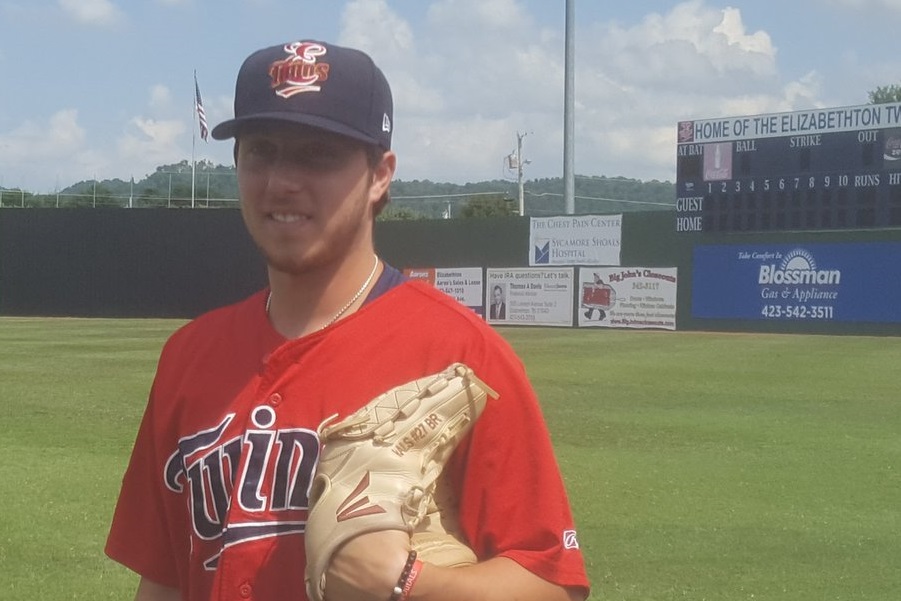 We would like to thank RHP Brian Rapp for taking time to answer our questions. Please feel free to ask questions and congratulate him in the Comments below. Seth Stohs (SS): Growing up in New Jersey, who was your favorite team to follow? Who were some of your favorite players? Brian Rapp (BR): I actually grew up a huge Mets fan. My first favorite player I can remember was Robin Ventura because he wore the number four and that was always my number growing up. In terms of pitchers, one name that sticks out was definitely Al Leiter, who I actually have had the privilege of getting to know and talk pitching with a bunch as he is a family friend. A little later on I really loved watching Johan Santana pitch even before he was a Met. Believe it or not, the Minnesota Twins were always my go-to team in MVP Baseball ’05 because of Santana and the likes of young Joe Mauer and Morneau. It’s a pretty cool thing now being in the Twins organization myself! SS: You led your high school team in New Jersey to a lot of wins and a championship. What were some of the better memories of your high school baseball career? Did you play other sports or were you involved in other activities? BR: During my years at Delbarton, I had a ton of unbelievable experiences. I really was so privileged to go there. Playing for the baseball program and Coach Bruce Shatel was something I had always wanted to do from the time I was able to read the sports section in the newspaper. I would say my favorite memory was winning the prestigious Morris County Tournament in 2012. Still to this day, it is up there as one of my favorite all time teams and clubhouses. We were just a tough, tight-knit group of guys, old and young that came together as brothers and were able to cap that off with a championship. Delbarton preaches brotherhood, as it is ingrained in us and you really saw it come to life, it was pretty cool. I also played basketball and soccer early on as well. SS: What was the decision like for you to attend the IMG Academy your senior year, and what was that experience like for you? BR: It was honestly one of the hardest decisions I had to make especially at that age. Delbarton was a dream for me and playing for that program was such a privilege. But when the opportunity presented itself, I really had to take time to think and consider IMG. I was a big soccer player growing up and actually had the opportunity to train with the ODP (Olympic Development Program), which coincidentally was held at IMG so I knew what it was all about. Luckily my best friend still to this day, Luke Bonfield, who was just in the National Championship with Arkansas and drafted by the Mets, decided to go as well and room together which helped lead me to my decision. Looking back, I ultimately think it was the best decision for my baseball career. Not only was I surrounded by top tier talent and facilities, but the experience taught me how hard I have to work in the game of baseball. I would go to class in the mornings and then be on the field from 1:30- 4:30/5, then go lift, and on non-lift days go to yoga or agility class. It was run basically like a college program, which helped my transition to college the following year. SS: What was the recruitment process like for you, and what was it about Boston College that made it the right choice for you? BR: My recruitment process started and ended pretty quickly. It was always a dream of mine to play baseball in the ACC, and I had talked to schools starting my freshman year and by the time my sophomore year came and I took my visit to BC, I really fell in love with the place and decided to commit. I really believed in the vision Coach Gambino had and that was something I wanted to be a part of. I also wanted to go to a school with high academic prestige, as I knew how important a strong degree is especially after your playing career is over. On top of all that I also grew up outside of NYC so I loved the idea of being in a big city and I ultimately could not be happier with the decision I made. My time at BC was unbelievable and will always be a major highlight in my life. SS: What were a couple of your highlights from your college years? BR: The biggest highlight for me was our 2016 postseason run. We made the ACC tournament and then the Ole Miss Regional, which we hadn’t done in years. We then went on to win that Oxford Regional and play in Game Three of our Super Regional against our conference opponent Miami. It still stings coming up one game short of the ultimate goal of going to Omaha but the brotherhood of that team will always stick out to me and something I will cherish for the rest of my life. Not only were we talented but we were as tight as can be and you could see that in our play. We had 11 pro guys on that squad all in which we still talk and I personally have leaned on a bunch during my transition to pro ball. *** Fun Fact, Fellow Twin and Ft. Myers Miracle Joe Cronin was my senior captain and leader of that great team. SS: Did you have the chance to speak with many scouts before the draft? What was your interaction with the Twins scout? BR: I was fortunate enough to be able to go through the process my junior year in which I met with many scouts throughout the year. It ultimately was a true blessing to be able to play this past spring focused on my play and really enjoying the game. I had met personally with John Wilson and then spoke to him again prior to the draft this June. John had actually watched me play in high school so it’s pretty cool to come back and ultimately get signed by him. He has been an unbelievable help during this transition and is an absolute wealth of knowledge that I know I can always lean on. I will forever be appreciative of him for believing in my abilities. SS: The Twins took you in the 26th round. Was that about where you were expecting to be selected? How did you find out that you had been drafted? How busy was your phone at that moment? BR: A scout in a meeting once told me you can’t have expectations going into the draft or no matter what, it will disappoint. I went into it this June with the mentality that there are tons of talented guys but I am right there with them. Whenever I hear my name called, no matter where, I would work harder than anyone else and take advantage of this honor and opportunity I was given. I received the call from John right as my name was to be announced. It was a pretty surreal moment. I was with my Mom and Dad and it definitely was a very emotional moment. From that point on until the next day or so my phone was blowing up from friends, family, and former teammates throughout the years. It was a very cool moment one that I’m super appreciative for all the support. SS: What has the adjustment been like for you so far, from the college game to the professional game, both on and off the field? BR: On the field the biggest adjustment is being at the park everyday and throwing everyday. In college we always had at least one off day per week and for me as a weekend guy I pitched once a week. It honestly isn’t a major adjustment but at first being on a new 5 day/6 day rotation and not having that extra day was something my arm and body needed to adjust to. Overall, my experience has been great. The one thing we do have is more time to solely focus on our craft and nutrition, which was pretty hard to do being in school. SS: What has the Elizabethton experience been like for you at the ballpark or away from it? BR: E-Town overall has be a great experience. Like I often tell people, I’m so appreciative to play this great game and at this level. This game has already taken me places like Elizabethton and all throughout the Appalachians in which this city boy from NJ/Boston would most likely never think to do o. The fans are awesome and filled with really great people. Off the field you can definitely see the difference compared to the Northeast and being in a city. The pace is definitely very slow compared to up to north but it is a change of pace that I definitely have learned to really appreciate. SS: Which pitches do you throw? What do you consider your out pitch? BR: I throw a four-seam, sinker, curveball, slider and changeup. In terms of an out pitch for me it really depends on my feel that day whether it’s my slider or curveball. SS: At this very early stage in your career, what would you say are your biggest strengths? BR: I’d like think that my biggest strength is my desire to learn and absorb as much knowledge as I can. You can learn so much about this game through watching others and talking with others. It really doesn’t matter who it’s with. Talking about the game, being receptive to ideas, and mixing and matching ideas and information into your own game is what it’s all about. There is so much information out there. Being an attentive student of the game is a strength that I look to hopefully continue to utilize. SS: What are the areas of your game that you would like to spend time working to improve in the offseason? BR: Like I said previously, there is so much out there to learn, especially in the pitching world. I think continuing to work on that side of the game along with getting stronger and eating right will be a great focus of mine! SS: What do you have planned for the offseason? What was your major in school? BR: My plan this offseason is to live and train in Boston and work with Dr. Mike Reinold and Champion PTP (former Head Red Sox Trainer) and possibly with Eric Cressey in Hudson, MA. I’m lucky to be able to live up in Boston with those two strong resources around, as they are two of the best in the business. My older brother is also an Army Ranger and is stationed on Oahu, HI, so my girlfriend Bella and I are going to head out there for two weeks around Thanksgiving time which we’re really excited about. I graduated from BC with a double major in Applied Psychology and Communication with a focus in Management and Leadership. This offseason I will also look to continue and finish studying to take my Series 7 Exam as well. SS: Who are some of the people who have helped you get to this point in your career? BR: First and foremost, my parents are the reason I am where I’m at today. Both of them taught me how to be a good person and how hard you have to work to be successful. The countless hours in the car driving me to practices and games and flying all over the place with me is just the tip of the iceberg. They have sacrificed so much for me to chase my dream and I will forever be grateful. I really am thankful to all the great coaches I had throughout my amateur career as well, as I was blessed with so many great ones. My high school coach Bruce Shatel was one that really stands out. He was the definition of a true mentor. He introduced me to the important mental side of the game especially from a pitching perspective. He always believed in me and allowed me to be myself, which really helped me flourish into the player I was to become. Not many coaches with his resume and accomplishments allow for that and that is what makes him so special and successful. And lastly, Mike Gambino. He instilled in all of us who play for him the importance of a hard work ethic, integrity, and having a vision. Character, Toughness, and Class are the three staples of our program at BC that I will always conduct myself in accordance. SS: Favorite Baseball movie? I hate this question because as a baseball guy there are way too many good ones. But if I had to choose, I guess you have to go with the classic Field of Dreams with Costner! “If you build it, he will come!” And most likely, Rapp will spend time in Cedar Rapids in 2019, approximately one hour from the Field of Dreams movie site. (Note - the first few times I went to Cedar Rapids, I made the trek up to Again, a huge Thank You to Elizabethton pitcher Brian Rapp for taking time to answer our questions. We wish him well the remainder of the season. Feel free to ask questions in the comments below.
 -
Twins Minor League Report (8/21): Rooker Slam!
Seth Stohs replied to Steve Lein's topic in Twins Daily Front Page News
I think he''s at that point where ,while I'm' sure he still wants to play MLB, there are going to be teams in Korea offering him $1.5-2 million/year for a couple of years. Hes' at the stage where he'll more seriously want to consider those offers.- 22 replies
-
- 6
-
-
- brent rooker
- randy dobnak
- (and 3 more)
-
We have learned a lot about the Opener concept that the Tampa Bay Rays are implementing in the big leagues this season. It is a concept that the Twins have used in the upper levels of their minor league system, and I fully expect that we will see it with the Twins often in 2019. However, as it relates to the Twins big league club, I think they should consider the idea of piggybacking their starting pitchers over the season's final three weeks. Image courtesy of Brad Rempel, USA Today (photo of Fernando Romero) We have learned a lot about the Opener concept that the Tampa Bay Rays are implementing in the big leagues this season. It is a concept that the Twins have used in the upper levels of their minor league system, and I fully expect that we will see it with the Twins often in 2019. However, as it relates to the Twins big league club, I think they should consider the idea of piggybacking their starting pitchers over the season's final three weeks. Last week one day, I was trying to think of the best way for the Twins to use the starting pitchers on their 40-man roster. (I mean, who doesn't sit around thinking about such things?) https://twitter.com/SethTweets/status/1030486736235913216 First, I think that as long as they are healthy, the Twins should continue with business as normal for Jose Berrios and Kyle Gibson. They have been reliable the majority of their 2018 seasons and should both reach 200 innings pitched this year. But that leaves three more rotation spots to fill. Jake Odorizzi will continue to pitch and the fact that they haven't traded him tells me that the front office must see him as a part of their 2019 plans. Right now, the other two rotation spots have been given to (or earned by) Kohl Stewart and Stephen Gonsalves, their first and fourth round picks, respectively, in the 2013 draft. But as September approaches and rosters can expand, there are other starting pitchers that I'm sure the Twins front office and coaching staff would like to get their eyes on. Guys that they would like to see work some big league innings as they will potentially play a bigger role in 2019. Fernando Romero made ten starts for the Twins earlier in the season, and he is likely to finish the season with the big league club. Zack Littell made one start and one relief appearance earlier in the season and is another candidate to get some innings. The forgotten name through much of the season is Michael Pineda. Coming off of midseason 2017 Tommy John surgery, the Twins signed the former All-Star to a two-year, $10 million deal. He is being paid $2 million this year to rehab and will make $8 million next year. After making two rehab starts in Ft. Myers, Pineda tossed four innings for the Red Wings last night. Rehab has been going well with reports of him sitting in the mid-90s. The reported plan is for him to make two more rehab starts for Rochester before joining the Twins. Because the Twins are out of contention, they can afford to give opportunities to several players. For guys like Stewart, Gonsalves, Littell and Romero, there is value in any inning pitched in the big leagues. Experience can teach a lot. All four have had Triple A success and are now ready to test themselves further in the big leagues. Even if they struggle, they will have move data points to explore, and more video to watch during the offseason. I would hope that they would also learn from Garvin Alston and Jeff Pickler as well as Mitch Garver and Bobby Wilson. They should go into the season with a good plan for how to make adjustments and things to work on improving. For Pineda, getting back is just the start, but keeping him progressing and staying healthy through the season is what matters. Get him some innings and get him to the offseason ready to prepare to be a top of the rotation starter in 2019. Getting opportunities, plural, will be important for each of them. They don't have to be six or seven inning appearances. In addition to simply getting opportunities, there is the theory (and the statistics to back it up) that the third time through the lineup can be difficult on a starting pitcher. So, by limiting these guys to three and possibly four innings, you're keeping them from that third time through the lineup. "Piggybacking" just means that someone will start and work three or four innings and then another starter will come in and hope to go another three or four innings. It is different than the Opener concept where a relief pitcher starts the game and works one, or maybe two, innings and turns it over to a starter who tries to provide six or seven innings before turning it over to the rest of the bullpen. On his newest The Scoops podcast, Darren Wolfson again interviewed Twins GM Thad Levine. Asked if any pitchers were on an innings limit, he mentioned only Fernando Romero. "Just because he is getting into the range that he has not achieved before. I think he more than most of these guys in a bona fide candidate for a little more of a limited role, whether than comes in the bullpen or that comes as a piggyback starter. We are going to be attentive to his innings." Levine also said, "We've had a lot of creative discussion with Garvin Alston and with Paul Molitor around the concept of "Do we rotate some of these guys through?". Do we go to a six man rotation? Do we piggyback some of these guys?" It really doesn't matter the order of the match ups that the Twins choose. They could piggyback hard throwers like Romero and Pineda. Or, they could team a hard thrower like Pineda and then send Gonsalves out in relief. What I would like to see is the groupings stick together in such a way that the piggybacker who starts one game would come out of the bullpen the next time. Starters can have routines, so it could be good to expand upon that but at the same time not being completely in a new situation. I believe when I posted that tweet last week, Thorpe had just made (or was about to make) his first AAA start. I think it it fairly unlikely that Lewis Thorpe debuts in 2019. Maybe that spot is taken by Odorizzi. The other reason I would like to see the two piggybacking starters limited to seven combined innings is because the Twins also will have several relievers that they need to evaluate over the season's final month. Trevor Hildenberger and Taylor Rogers have been very good most of the season. You kind of know what you have there. But Matt Magill was signed to a minor league contract this past offseason and didn't even get a big league invite. I'm sure they'd like to keep putting him in more high leverage situations. Oliver Drake is on his fifth team, but so far so good since joining the Twins. They'll want to evaluate his pitch repertoire to make sure that split-fingered fastball and his strikeout rate are legit. But the Twins also have decisions to make on 40-man roster guys like Alan Busenitz, Tyler Duffey, and John Curtiss. Hard-throwing Nick Anderson and Jake Reed are guys that they may want to add to the 40-man roster in the offseason and if so there could be value in giving them an opportunity in September. Also, if not added to the 40-man roster, Luke Bard and DJ Baxendale can become minor league free agents. With all those pitchers potentially on the roster, the goal could be for the starter to get through four innings. The piggybacker would know that he will start the fifth inning with the goal of getting through the seventh inning. First, that allows bullpen guys to work the eighth and ninth innings. And if the starter is unable to get through the fourth inning, bullpen guys can bridge that gap, allowing the piggybacker to prepare as he needs to be ready fore fifth. The Rochester season ends on Labor Day. There will be 25 games remaining or (math minor here) five times through the rotation. If they were to use the piggybacking concept for three rotation spots, those starters (six of them) could still get 15 to 18 more innings. Not huge numbers, but a good number for each of them to end the season. To me, piggybacking would be the easiest way to provide opportunities and experience while also being able to control innings for more pitchers. The bullpen will be full, but that's OK. What to you think? Would you be in favor of maintaining a five-man rotation, moving to a six-man rotation, or piggybacking in the rotation after the Triple-A season ends? Share your opinions below. View full article
- 38 replies
-
- 5
-
-
- jose berrios
- michael pineda
- (and 3 more)
-
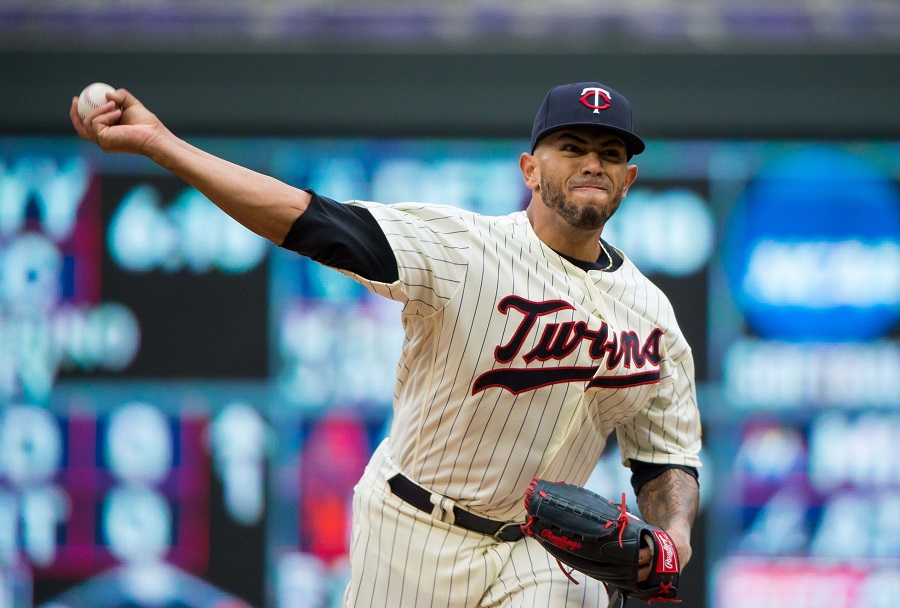 Last week one day, I was trying to think of the best way for the Twins to use the starting pitchers on their 40-man roster. (I mean, who doesn't sit around thinking about such things?) https://twitter.com/SethTweets/status/1030486736235913216 First, I think that as long as they are healthy, the Twins should continue with business as normal for Jose Berrios and Kyle Gibson. They have been reliable the majority of their 2018 seasons and should both reach 200 innings pitched this year. But that leaves three more rotation spots to fill. Jake Odorizzi will continue to pitch and the fact that they haven't traded him tells me that the front office must see him as a part of their 2019 plans. Right now, the other two rotation spots have been given to (or earned by) Kohl Stewart and Stephen Gonsalves, their first and fourth round picks, respectively, in the 2013 draft. But as September approaches and rosters can expand, there are other starting pitchers that I'm sure the Twins front office and coaching staff would like to get their eyes on. Guys that they would like to see work some big league innings as they will potentially play a bigger role in 2019. Fernando Romero made ten starts for the Twins earlier in the season, and he is likely to finish the season with the big league club. Zack Littell made one start and one relief appearance earlier in the season and is another candidate to get some innings. The forgotten name through much of the season is Michael Pineda. Coming off of midseason 2017 Tommy John surgery, the Twins signed the former All-Star to a two-year, $10 million deal. He is being paid $2 million this year to rehab and will make $8 million next year. After making two rehab starts in Ft. Myers, Pineda tossed four innings for the Red Wings last night. Rehab has been going well with reports of him sitting in the mid-90s. The reported plan is for him to make two more rehab starts for Rochester before joining the Twins. Because the Twins are out of contention, they can afford to give opportunities to several players. For guys like Stewart, Gonsalves, Littell and Romero, there is value in any inning pitched in the big leagues. Experience can teach a lot. All four have had Triple A success and are now ready to test themselves further in the big leagues. Even if they struggle, they will have move data points to explore, and more video to watch during the offseason. I would hope that they would also learn from Garvin Alston and Jeff Pickler as well as Mitch Garver and Bobby Wilson. They should go into the season with a good plan for how to make adjustments and things to work on improving. For Pineda, getting back is just the start, but keeping him progressing and staying healthy through the season is what matters. Get him some innings and get him to the offseason ready to prepare to be a top of the rotation starter in 2019. Getting opportunities, plural, will be important for each of them. They don't have to be six or seven inning appearances. In addition to simply getting opportunities, there is the theory (and the statistics to back it up) that the third time through the lineup can be difficult on a starting pitcher. So, by limiting these guys to three and possibly four innings, you're keeping them from that third time through the lineup. "Piggybacking" just means that someone will start and work three or four innings and then another starter will come in and hope to go another three or four innings. It is different than the Opener concept where a relief pitcher starts the game and works one, or maybe two, innings and turns it over to a starter who tries to provide six or seven innings before turning it over to the rest of the bullpen. On his newest The Scoops podcast, Darren Wolfson again interviewed Twins GM Thad Levine. Asked if any pitchers were on an innings limit, he mentioned only Fernando Romero. "Just because he is getting into the range that he has not achieved before. I think he more than most of these guys in a bona fide candidate for a little more of a limited role, whether than comes in the bullpen or that comes as a piggyback starter. We are going to be attentive to his innings." Levine also said, "We've had a lot of creative discussion with Garvin Alston and with Paul Molitor around the concept of "Do we rotate some of these guys through?". Do we go to a six man rotation? Do we piggyback some of these guys?" It really doesn't matter the order of the match ups that the Twins choose. They could piggyback hard throwers like Romero and Pineda. Or, they could team a hard thrower like Pineda and then send Gonsalves out in relief. What I would like to see is the groupings stick together in such a way that the piggybacker who starts one game would come out of the bullpen the next time. Starters can have routines, so it could be good to expand upon that but at the same time not being completely in a new situation. I believe when I posted that tweet last week, Thorpe had just made (or was about to make) his first AAA start. I think it it fairly unlikely that Lewis Thorpe debuts in 2019. Maybe that spot is taken by Odorizzi. The other reason I would like to see the two piggybacking starters limited to seven combined innings is because the Twins also will have several relievers that they need to evaluate over the season's final month. Trevor Hildenberger and Taylor Rogers have been very good most of the season. You kind of know what you have there. But Matt Magill was signed to a minor league contract this past offseason and didn't even get a big league invite. I'm sure they'd like to keep putting him in more high leverage situations. Oliver Drake is on his fifth team, but so far so good since joining the Twins. They'll want to evaluate his pitch repertoire to make sure that split-fingered fastball and his strikeout rate are legit. But the Twins also have decisions to make on 40-man roster guys like Alan Busenitz, Tyler Duffey, and John Curtiss. Hard-throwing Nick Anderson and Jake Reed are guys that they may want to add to the 40-man roster in the offseason and if so there could be value in giving them an opportunity in September. Also, if not added to the 40-man roster, Luke Bard and DJ Baxendale can become minor league free agents. With all those pitchers potentially on the roster, the goal could be for the starter to get through four innings. The piggybacker would know that he will start the fifth inning with the goal of getting through the seventh inning. First, that allows bullpen guys to work the eighth and ninth innings. And if the starter is unable to get through the fourth inning, bullpen guys can bridge that gap, allowing the piggybacker to prepare as he needs to be ready fore fifth. The Rochester season ends on Labor Day. There will be 25 games remaining or (math minor here) five times through the rotation. If they were to use the piggybacking concept for three rotation spots, those starters (six of them) could still get 15 to 18 more innings. Not huge numbers, but a good number for each of them to end the season. To me, piggybacking would be the easiest way to provide opportunities and experience while also being able to control innings for more pitchers. The bullpen will be full, but that's OK. What to you think? Would you be in favor of maintaining a five-man rotation, moving to a six-man rotation, or piggybacking in the rotation after the Triple-A season ends? Share your opinions below.
 -
I think he could be a 40-man roster add... but he's borderline.
- 18 replies
-
- 1
-
-
- johan quezada
- andrew vasquez
- (and 3 more)
-
Vargas by month: April: .190/.329/.302 (.631) May: .257/.303/.440 (.743) June: .167/.255/.238 (.493) You may say, well,, his May wasn't too awful, but in May, Logan Morrison hit .244/.369/.453 (.822).
- 18 replies
-
- 10
-
-
- johan quezada
- andrew vasquez
- (and 3 more)
-
Thrift Shop: 3 Sneaky Finds by the Front Office
Seth Stohs replied to Nick Nelson's topic in Twins Daily Front Page News
Yeah, I don't recall ever seeing an MLB hitter swing and miss by as much as he does so often... but when he does hit it... wow!!- 101 replies
-
- 3
-
-
- jake cave
- tyler austin
- (and 1 more)
-
It’s fair to say that The Debut of Stephen Gonsalves didn’t go as well as he would have liked. Debuts rarely do. But for the rest of his life, he can be called a big leaguer. And that’s what every player in the minor leagues dreams of. Monday in the minor leagues, both Rochester and Ft. Myers got a rare day off. But there was some terrific pitching and powerful hitting for Chattanooga. They also added a former big leaguer to their roster. Cedar Rapids scored a dozen and got a great relief appearance. Elizabethton played neighboring Johnson City in a doubleheader. And the GCL Twins got to face first-round pick Matthew Libertore for the third time. Image courtesy of Seth Stohs, Twins Daily (photo of Andrew Vasquez) It’s fair to say that The Debut of Stephen Gonsalves didn’t go as well as he would have liked. Debuts rarely do. But for the rest of his life, he can be called a big leaguer. And that’s what every player in the minor leagues dreams of. Monday in the minor leagues, both Rochester and Ft. Myers got a rare day off. But there was some terrific pitching and powerful hitting for Chattanooga. They also added a former big leaguer to their roster. Cedar Rapids scored a dozen and got a great relief appearance. Elizabethton played neighboring Johnson City in a doubleheader. And the GCL Twins got to face first-round pick Matthew Libertore for the third time. Keep reading to find out more on the night in the Twins minor league system on Monday. As always, please feel free to discuss and ask questions. TRANSACTIONS Chattanooga put RHP Omar Bencomo (foot) and infielder Chris Paul finger) on the disabled list. Catcher Brian Olson was activated. Also, the Twins signed RHP Austin Adams from the Sugar Land Skeeters and placed him on the Lookouts roster. Adams is 31-years-old and pitched in 53 games for Cleveland between 2014 and 2016. RED WINGS REPORT Rochester Box Score The Red Wings enjoyed a rare night off to watch the Stephen Gonsalves MLB debut. OK, it was a scheduled off-day, but still… https://twitter.com/RocRedWings/status/1031537024556298241 Also, Kennys Vargas was named the International League’s hitter of the week. https://twitter.com/RocRedWings/status/1031560369263849472 CHATTANOOGA CHATTER Chattanooga 6, Montgomery 2 Box Score The Lookouts used some well-timed long balls to take control of this game. Early on, Luke Raley hit his third Lookout homer, and later, Jimmy Kerrigan hit a long, three-run homer, his fifth with Chattanooga this year. Brian Navarreto went 3-for-4 with a couple of RBIs. Jaylin Davis reached .300 with a 2-for-4 night. He added a walk. Tyler Wells started and went the first five innings. He gave up two runs on seven hits and a walk. He struck out three batters. Williams Ramirez struck out three batters over two scoreless innings. Andrew Vasquez then gave up just one hit over two scoreless innings. He struck out six. MIRACLE MATTERS Ft. Myers Box Score The Miracle were also given the day off to watch Gonsalves debut. Or, it’s a scheduled day off. https://twitter.com/MiracleBaseball/status/1031553733543383042 KERNELS NUGGETS Cedar Rapids 12, Wisconsin 4 Box Score Down 4-3 going into the eighth inning, the Kernels scored four runs in the eighth and another five runs in the ninth to run away with the win in Wisconsin. Gabriel Maciel went 3-for-5 with his second triple and three runs scored. Ryan Jeffers was also 3-for-5 with three runs. Michael Helman went 2-for-4 with a walk and his second double. Trevor Larnach went 2-for-4 with a walk, his fifth double, and three runs scored. Those four were the first four hitters in the Kernels lineup. Number five hitter, Ben Rodriguez, added four RBIs. His 18th double cleared the bases. Tyler Watson started and was charged with four runs on four hits in 5 2/3 innings. He walked five and struck five out. Johan Quezada made his Kernels debut. After missing most of the past two years with shoulder injuries. On this day, he faced ten batters and got ten outs, six via the strikeout. E-TWINS E-TALK Game 1 - Elizabethton 8, Johnson City 6 Box Score The E-Twins scored six runs in the second inning and held on for a win in Game 1. Kody Funderburk made the start. The lefty gave up four runs on seven hits over 3 2/3 innings. He walked two and struck out four. Blair Lakso came in and got the win. He gave up two runs on two hits and five walks in 1 1/3 innings. Tanner Howell recorded his first E-Twins save with two innings of scoreless ball. He gave up one hit and walked one. Yeltsin Encarnacion led the offense. He went 3-for-3 with his fifth double. He scored three runs and stole his second base. Yunior Severino went 2-for-4 with two RBI. Gilberto Celestino was 2-for-4 with his third double and his eighth stolen base. Jared Akins hit his third double, and Ricky De La Torre hit his ninth. Game 2 - Elizabethton 3, Johnson City 2 (9 innings) Box Score With two outs in the bottom of the ninth, Trevor Casanova singled to score Yeltsin Encarnacion and give the E-Twins the win. https://twitter.com/ETwinsBaseball/status/1031760417146785792 Brian Rapp started and gave up two runs on five hits over 4 2/3 innings. He walked two and struck out four. Pedro Garcia came on and did well. He threw 4 1/3 scoreless innings. In the extra innings, both the eighth and the ninth, he was able to leave the bases loaded and keep the game tied. He gave up three hits, walked three and struck out four. Casanova led the way. He went 2-3 with a sacrifice fly to give him two of the three RBIs. The other run scored on a pinch-hit single by Chris Williams. Roberto Molina also had two hits. Gilberto Celestino went 1-for-3 with two walks. GCL TWINS TALK GCL Twins 0, GCL Rays 6 Box Score The Twins again had the opportunity to try to hit against Rays pitching prospect and 2018 first-round pick Matthew Libertore. It is the third time in the last few weeks that the Twins have faced the lefty. On this day, Libertore gave up three hits over five shutout innings. He struck out eight without issuing a walk. In the three starts combined, he has thrown 14 2/3 scoreless innings. He’s given up six hits, walked none and struck out 19. Shane Carrier led the offense with a 2-for-4 game. Erick Rivera added his fourth double. Andriu Marin started. He gave up two runs on six hits over 3 2/3 innings. He walked one, hit one and struck out five. Dylan Stowell gave up two unearned runs on one hit and two walks in his 1 1/3 innings. He struck out three. Erik Cha recorded the next four outs. He struck out one and didn’t allow a base runner. Niklas Rimmel gave up two runs on four hits over the final two innings. He struck out two. STARS OF THE DAY Twins Daily Hitter of the Day: Gabriel Maciel, Cedar Rapids Kernels (3-5, 3B(2), 3 R). Twins Daily Pitcher of the Day: Johan Quezada, Cedar Rapids Kernels (3.1 IP, 0 H, 0 ER, 0 BB, 6 K) PROSPECT SUMMARY Here’s a look at how the Twins Daily Midseason Top 20 Twins Prospects performed. #1 - Royce Lewis (Ft. Myers) - No Game Scheduled #2 - Alex Kirilloff (Ft. Myers) - No Game Scheduled #3 - Brusdar Graterol (Ft. Myers) - No Game Scheduled #4 - Nick Gordon (Rochester) - No Game Scheduled #5 - Stephen Gonsalves (Minnesota) - 1.1 IP, 6 H, 4 ER, 2 BB, 3 K #6 - Trevor Larnach (Cedar Rapids) - 2-4, BB, 2B(5), 3 R, RBI, K #7 - Brent Rooker (Chattanooga) - Did not play #8 - Akil Baddoo (Cedar Rapids) - Did not play #9 -Wander Javier - out of for the season #10 - Zack Littell (Rochester) - No Game Scheduled #11 - Blayne Enlow (Cedar Rapids) - Did not pitch #12 - LaMonte Wade (Rochester) - No Game Scheduled #13 - Travis Blankenhorn (Ft. Myers) - No Game Scheduled #14 - Lewis Thorpe (Rochester) - No Game Scheduled #15 - Ben Rortvedt (Ft. Myers) - No Game Scheduled #16 - Yunior Severino (Elizabethton) - 2-4, 2 RBI, R, K | 1-5, R, 2 K #17 - Lewin Diaz (Ft. Myers) - Out for the season (wrist) #18 - Ryan Jeffers (Cedar Rapids) - 3-5, 3 R #19 - Jacob Pearson (Cedar Rapids) - 0-5, 2 K, SB(6) #20 - Luis Arraez (Chattanooga) - 0-3, BB, R, K #21 - Jose Miranda (Ft. Myers) - No Game Scheduled *Since Wander Javier is out, I’d add #21 to the list. SUNDAY’S PROBABLE STARTERS Pawtucket @ Rochester (6:05 CST, completion of a suspended game + regularly scheduled game) - LHP Lewis Thorpe (0-1, 4.26 ERA), RHP Michael Pineda (rehab) Chattanooga @ Montgomery (6:35 CST) - TBD Ft. Myers @ Palm Beach (5:30 CST) - RHP Clark Beeker (4-7, 4.73 ERA) Cedar Rapids @ Beloit (7:00 CST) - RHP Randy Dobnak (8-5, 3.35 ERA) Greeneville @ Elizabethton (6:00 CST) - Luis Rijo (4-1, 2.06 ERA) GCL Rays @ GCL Twins (9:00 am CST) - TBD Please feel free to ask any questions about Monday’s games, or ask any questions you may have. View full article
- 18 replies
-
- 2
-
-
- johan quezada
- andrew vasquez
- (and 3 more)
-
Twins Minor League Report (8/20): Quezada, Vazquez Dominate
Seth Stohs posted an article in Minor Leagues
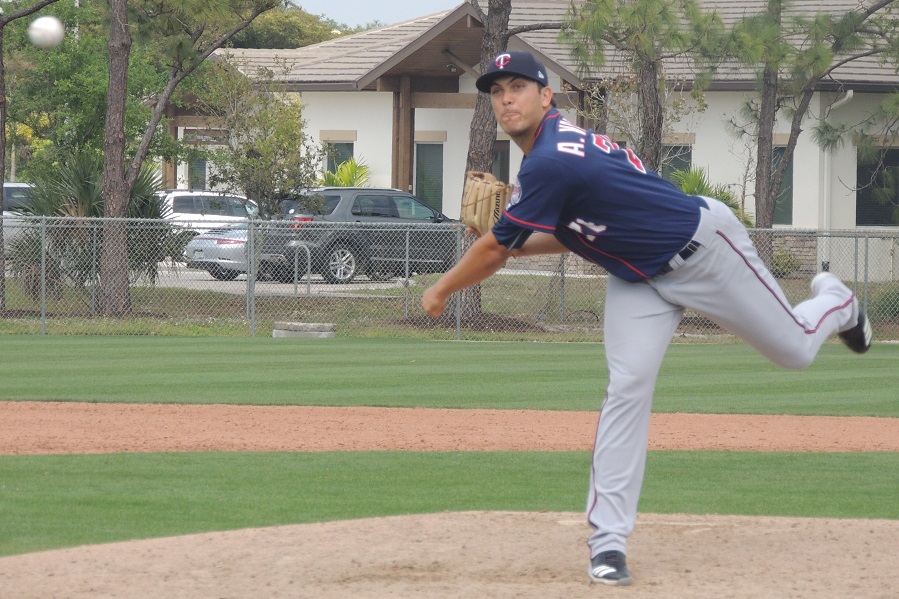 Keep reading to find out more on the night in the Twins minor league system on Monday. As always, please feel free to discuss and ask questions. TRANSACTIONS Chattanooga put RHP Omar Bencomo (foot) and infielder Chris Paul finger) on the disabled list. Catcher Brian Olson was activated. Also, the Twins signed RHP Austin Adams from the Sugar Land Skeeters and placed him on the Lookouts roster. Adams is 31-years-old and pitched in 53 games for Cleveland between 2014 and 2016. RED WINGS REPORT Rochester Box Score The Red Wings enjoyed a rare night off to watch the Stephen Gonsalves MLB debut. OK, it was a scheduled off-day, but still… https://twitter.com/RocRedWings/status/1031537024556298241 Also, Kennys Vargas was named the International League’s hitter of the week. https://twitter.com/RocRedWings/status/1031560369263849472 CHATTANOOGA CHATTER Chattanooga 6, Montgomery 2 Box Score The Lookouts used some well-timed long balls to take control of this game. Early on, Luke Raley hit his third Lookout homer, and later, Jimmy Kerrigan hit a long, three-run homer, his fifth with Chattanooga this year. Brian Navarreto went 3-for-4 with a couple of RBIs. Jaylin Davis reached .300 with a 2-for-4 night. He added a walk. Tyler Wells started and went the first five innings. He gave up two runs on seven hits and a walk. He struck out three batters. Williams Ramirez struck out three batters over two scoreless innings. Andrew Vasquez then gave up just one hit over two scoreless innings. He struck out six. MIRACLE MATTERS Ft. Myers Box Score The Miracle were also given the day off to watch Gonsalves debut. Or, it’s a scheduled day off. https://twitter.com/MiracleBaseball/status/1031553733543383042 KERNELS NUGGETS Cedar Rapids 12, Wisconsin 4 Box Score Down 4-3 going into the eighth inning, the Kernels scored four runs in the eighth and another five runs in the ninth to run away with the win in Wisconsin. Gabriel Maciel went 3-for-5 with his second triple and three runs scored. Ryan Jeffers was also 3-for-5 with three runs. Michael Helman went 2-for-4 with a walk and his second double. Trevor Larnach went 2-for-4 with a walk, his fifth double, and three runs scored. Those four were the first four hitters in the Kernels lineup. Number five hitter, Ben Rodriguez, added four RBIs. His 18th double cleared the bases. Tyler Watson started and was charged with four runs on four hits in 5 2/3 innings. He walked five and struck five out. Johan Quezada made his Kernels debut. After missing most of the past two years with shoulder injuries. On this day, he faced ten batters and got ten outs, six via the strikeout. E-TWINS E-TALK Game 1 - Elizabethton 8, Johnson City 6 Box Score The E-Twins scored six runs in the second inning and held on for a win in Game 1. Kody Funderburk made the start. The lefty gave up four runs on seven hits over 3 2/3 innings. He walked two and struck out four. Blair Lakso came in and got the win. He gave up two runs on two hits and five walks in 1 1/3 innings. Tanner Howell recorded his first E-Twins save with two innings of scoreless ball. He gave up one hit and walked one. Yeltsin Encarnacion led the offense. He went 3-for-3 with his fifth double. He scored three runs and stole his second base. Yunior Severino went 2-for-4 with two RBI. Gilberto Celestino was 2-for-4 with his third double and his eighth stolen base. Jared Akins hit his third double, and Ricky De La Torre hit his ninth. Game 2 - Elizabethton 3, Johnson City 2 (9 innings) Box Score With two outs in the bottom of the ninth, Trevor Casanova singled to score Yeltsin Encarnacion and give the E-Twins the win. https://twitter.com/ETwinsBaseball/status/1031760417146785792 Brian Rapp started and gave up two runs on five hits over 4 2/3 innings. He walked two and struck out four. Pedro Garcia came on and did well. He threw 4 1/3 scoreless innings. In the extra innings, both the eighth and the ninth, he was able to leave the bases loaded and keep the game tied. He gave up three hits, walked three and struck out four. Casanova led the way. He went 2-3 with a sacrifice fly to give him two of the three RBIs. The other run scored on a pinch-hit single by Chris Williams. Roberto Molina also had two hits. Gilberto Celestino went 1-for-3 with two walks. GCL TWINS TALK GCL Twins 0, GCL Rays 6 Box Score The Twins again had the opportunity to try to hit against Rays pitching prospect and 2018 first-round pick Matthew Libertore. It is the third time in the last few weeks that the Twins have faced the lefty. On this day, Libertore gave up three hits over five shutout innings. He struck out eight without issuing a walk. In the three starts combined, he has thrown 14 2/3 scoreless innings. He’s given up six hits, walked none and struck out 19. Shane Carrier led the offense with a 2-for-4 game. Erick Rivera added his fourth double. Andriu Marin started. He gave up two runs on six hits over 3 2/3 innings. He walked one, hit one and struck out five. Dylan Stowell gave up two unearned runs on one hit and two walks in his 1 1/3 innings. He struck out three. Erik Cha recorded the next four outs. He struck out one and didn’t allow a base runner. Niklas Rimmel gave up two runs on four hits over the final two innings. He struck out two. STARS OF THE DAY Twins Daily Hitter of the Day: Gabriel Maciel, Cedar Rapids Kernels (3-5, 3B(2), 3 R). Twins Daily Pitcher of the Day: Johan Quezada, Cedar Rapids Kernels (3.1 IP, 0 H, 0 ER, 0 BB, 6 K) PROSPECT SUMMARY Here’s a look at how the Twins Daily Midseason Top 20 Twins Prospects performed. #1 - Royce Lewis (Ft. Myers) - No Game Scheduled #2 - Alex Kirilloff (Ft. Myers) - No Game Scheduled #3 - Brusdar Graterol (Ft. Myers) - No Game Scheduled #4 - Nick Gordon (Rochester) - No Game Scheduled #5 - Stephen Gonsalves (Minnesota) - 1.1 IP, 6 H, 4 ER, 2 BB, 3 K #6 - Trevor Larnach (Cedar Rapids) - 2-4, BB, 2B(5), 3 R, RBI, K #7 - Brent Rooker (Chattanooga) - Did not play #8 - Akil Baddoo (Cedar Rapids) - Did not play #9 -Wander Javier - out of for the season #10 - Zack Littell (Rochester) - No Game Scheduled #11 - Blayne Enlow (Cedar Rapids) - Did not pitch #12 - LaMonte Wade (Rochester) - No Game Scheduled #13 - Travis Blankenhorn (Ft. Myers) - No Game Scheduled #14 - Lewis Thorpe (Rochester) - No Game Scheduled #15 - Ben Rortvedt (Ft. Myers) - No Game Scheduled #16 - Yunior Severino (Elizabethton) - 2-4, 2 RBI, R, K | 1-5, R, 2 K #17 - Lewin Diaz (Ft. Myers) - Out for the season (wrist) #18 - Ryan Jeffers (Cedar Rapids) - 3-5, 3 R #19 - Jacob Pearson (Cedar Rapids) - 0-5, 2 K, SB(6) #20 - Luis Arraez (Chattanooga) - 0-3, BB, R, K #21 - Jose Miranda (Ft. Myers) - No Game Scheduled *Since Wander Javier is out, I’d add #21 to the list. SUNDAY’S PROBABLE STARTERS Pawtucket @ Rochester (6:05 CST, completion of a suspended game + regularly scheduled game) - LHP Lewis Thorpe (0-1, 4.26 ERA), RHP Michael Pineda (rehab) Chattanooga @ Montgomery (6:35 CST) - TBD Ft. Myers @ Palm Beach (5:30 CST) - RHP Clark Beeker (4-7, 4.73 ERA) Cedar Rapids @ Beloit (7:00 CST) - RHP Randy Dobnak (8-5, 3.35 ERA) Greeneville @ Elizabethton (6:00 CST) - Luis Rijo (4-1, 2.06 ERA) GCL Rays @ GCL Twins (9:00 am CST) - TBD Please feel free to ask any questions about Monday’s games, or ask any questions you may have.
 -
I can''t imagine anyone (coaches or front office types) that wouldn't like 'lot of sink.'
