Seth Stohs
-
Posts
25,909 -
Joined
-
Last visited
-
Days Won
109
Content Type
Profiles
News
Minnesota Twins Videos
2026 Minnesota Twins Top Prospects Ranking
2022 Minnesota Twins Draft Picks
Minnesota Twins Free Agent & Trade Rumors, Notes, & Tidbits
Guides & Resources
2023 Minnesota Twins Draft Picks
The Minnesota Twins Players Project
2024 Minnesota Twins Draft Picks
2025 Minnesota Twins Draft Pick Tracker
2026 Minnesota Twins Draft Tracker: Picks & Bonuses
Forums
Blogs
Events
Store
Downloads
Gallery
Everything posted by Seth Stohs
-
 How many extra fans would that bring in? 10 home games to go... 3 vs Arizona, 3 vs Yankees, 4 vs Cleveland.
- 43 replies
-
- 2
-

-
- walker jenkins
- jonah bride
- (and 8 more)
-
Emmanuel Rodriguez has joined the Saints. Jimenez hasn't been added to the Kernels roster. Caden Kendle is off the IL with Julio Bonilla going on the development list. There is a ton to like about Rojas... As long as he doesn't end up with the yips, he'll be fine. He's so young. DeBarge is a good athlete. I don't think it's a top five speed guy in the organization, but he's a ballplayer. Good instincts. He's gotta be wearing down. He's been caught often of late and isn't going as much. Calling up Jenkins at the end of this season makes absolutely no sense. Especially from the 40-man roster angle. Why use up a 40-man roster spot that you don't have to just to get a 4-5 game glimpse of Jenkins now. In my opinion, they have a pretty strong idea of if Jenkins will make the Opening Day roster or not. Of course, I don't think moving him up to St. Paul was needed for that to be true. It might be just a nice thing to get him a week of games in St. Paul since he probably won't do any next year.
- 43 replies
-
- 2
-
-
- walker jenkins
- jonah bride
- (and 8 more)
-
Image courtesy of Ed Bailey (photo of Ben Ross) The Kernels played their final game of the regular season on Sunday. On Tuesday, they start their playoff run. The Mighty Mussels season came to an end on Sunday with another rain out which is certainly unfortunate. Wichita has its work cut out for them if they want to earn a playoff spot, but there Sunday win was absolutely huge for a number of reasons. And the Saints, well, hey, Walker Jenkins is going to make his CHS Field debut with the Saints on Tuesday night! TRANSACTIONS The Twins played catcher Ryan Jeffers on the 7-Day Concussion List on Sunday, retroactive to Friday. The Twins Also DFAd RHP Brooks Kriske. Taking those spots on the big-league roster are OF Carson McCusker and RHP Pierson Ohl. Wichita placed C/1B Nate Baez on the 7-Day IL. SAINTS SENTINEL St. Paul 1, Louisville 6 Box Score Jenkins Drills First Triple-A Home Run, Saints Lose 9th Straight Walker Jenkins hasn’t played in a home game for about a month. His last two series with the Win Surge were away from Wichita, and his first two weeks with the Saints have been spent in Toledo and Louisville. On Tuesday night, he will make his CHS Field debut. Tickets available! On Sunday, Jenkins had three more hits. In his six games played in Toledo, he had one hit in 20 at-bats. This week in Louisville, he went 13-for-25 (.520). He had at least one hit in all six games. He had at least two hits in five of the six games. He had three hits in two of the games. That is a pretty good week of baseball. Consider this, coming into the week, he was hitting .050. Heading into his first series in St. Paul, he is now hitting .311/.404/.489 (.893) with three doubles, a triple, and a home run. The Saints winning percentage this season is lower than the Twins winning percentage, but this can be a fun team to watch. This week, you can watch several of the Twins Top 20 prospects. Walker Jenkins (#1) and Gabriel Gonzalez (#10) are top ten Twins prospects in the lineup. Kyler Fedko (#19) has forced his way into the Top 20 with a tremendous season. Andrew Morris (#16) is expected to make the start on Tuesday which likely means that he will start next Sunday too. Mick Abel (#6), Connor Prielipp (#7), and Kendry Rojas (#9) are likely going to each get a start while Marco Raya (#15) has been working out of the bullpen the last few weeks. Two pitchers from Minnesota are on the Saints roster. Lefty Aaron Rozek has been an innings-eater in the organization for a few years now. John Klein was recently promoted to Triple-A and had his best outing last week. There are several players that we have seen with the Twins like DaShawn Keirsey, Jonah Bride and Jose Miranda. Former first-round pick Aaron Sabato has hit 13 homers with the Saints since coming up from Wichita. Tanner Schobel has been a Top 20 prospect. He just returned after missing about three months of the season with injury. And, Twins Daily readers love following Payton Eeles and his remarkable story. Oh, and since the Mighty Mussels season is over, I think we should expect to see Emmanuel Rodriguez return to the Saints. He is currently the #5 Twins prospect. Six home games left for the Saints. If you can get to CHS Field for a game or six, that’d be great. Check out the schedule here. Oh, yeah, back to the game. Kendry Rojas was on the mound to start for the Saints. The lefty walked two in the first innings, but a double play helped get out of that inning without giving up a run. In the second, he walked two and gave up a single run. In the third inning, a single and two walks, but no runs. So, Rojas went three innings and gave up just one run on three hits despite six walks. Jarret Whorff pitched the fourth inning and gave up one run on a hit and a walk. Marco Raya gave up four runs on four hits over 2 2/3 innings. He had two strikeouts, but two of the hits were home runs. Cody Laweryson came in and got the final four outs without any further damage. Jenkins had three of the Saints’ nine hits. Jonah Bride went 2-for-3 with a walk and a double. Fedko hit his eighth double since joining the Saints. St. Paul went 0-for-9 with runners in scoring position and left eight runners on base. Chase Petty faced his former organization for the second time this week. In this game, he gave up one run on seven hits and two walks in 6 1/3 innings. He is 6-11 with a 5.48 ERA at Triple-A this season. Petty made his MLB debut in last April. In it, he gave up nine earned runs on seven hits and two walks in 2 1/3 innings. He made another start in May. He went three innings and gave up four runs on six hits and six walks. He made one other appearance out of the Reds bullpen. He gave up an unearned run on one hit and a hit batter in 2/3 of an inning. He is 0-3 with a 19.50 ERA in the big leagues. Dude is just 22 years old with good stuff. He’ll have a nice career. Also, Christian Encarnacion-Strand went 2-for-4 on Sunday with a double and a home run. This year, he has 202 minor-league at-bats and hit .252/.321/.520 (.841) with 19 doubles and 10 homers. In 151 big-league at-bats, he has hit .208/.234/.377 (.611) with six homers. He has been injured quite a bit the last couple of years yet he is still just 25 years old. WIND SURGE WISDOM Wichita 12, Tulsa 11 Box Score Cossetti, Ross Power Wind Surge to Season’s Biggest Win When the week started, Wichita was two games behind Tulsa in a race for one playoff spot. On Sunday, the Wind Surge gave up a six-run lead, but Ben Ross saved the day with a walkoff home run in the bottom of the ninth inning to keep the team’s hope alive. Ryan Gallagher made the start. He was charged with three runs (2 earned) on four hits and two walks over 3 2/3 innings. He had three strikeouts. He left the game with the bases loaded and two outs in the fourth inning. Gabriel Yanez came in and got the third out without additional damage. The lefty tossed 2 1/3 scoreless innings. He gave up just one hit, walked none and struck out two batters. Wichita got on the scoreboard in the third inning, but it did not start out well. With one out, Kaelen Culpepper worked a 3-2 count before being hit by a pitch on the wrist area of his left hand. Clearly in a lot of pain, the decision was made to remove him from the game (obviously the right and easy decision despite the relative importance of the game for the Wind Surge). photos are screenshots from milb.tv. Jose Salas entered the game for him. He went to second on a ground out. Hendry Mendez then lined a single to right to drive in the team’s first run. Ricardo Olivar walked. Next, Andrew Cossetti hit a three-run homer to give his team a 4-3 lead. Wichita added on in the fifth frame. Kala’i Rosario led off with a double and went to third on a wild pitch. Then Hendry Mendez switched places with him with his first triple with the Wind Surge. After one out, Cossetti came up and walked. Soon after, Mendez scored on a balk which also moved Cossetti to second base. Following a second out, Jake Rucker walked before Maddux Houghton singled to center to drive in Cossetti with the team’s seventh run. John Stankiewicz came into the game for the seventh inning and gave up two runs on one hit and one walk. The first run scored on a “disengagement violation.” The second run of the inning scored on a wild pitch. With just a two-run, 7-5 lead, the Surge responded with four more runs in the bottom of the seventh. Olivar led off with a single. Cossetti came to the plate and drilled another home run, his 13th of the season. Ben Ross followed with a walk. With one out, he stole second base, and Houghton doubled to make it 10-5. With two outs, Salas drove in the 11th run with a single. Hunter Hoopes, who has quietly been one of the best relievers in the Twins minor leagues this season, came in for the eighth inning to protect a six-run lead. He got two fly outs to right field to start the inning, and then things went weird. First, he hit a batter. Then he walked three straight batters to make it 11-6. That was followed by a soft single to left to drive in two runs and make it 11-8. With two runners on, Jaylen Nowlin came in. The first batter he faced hit a triple which cut the Surge lead to 11-10. Nowlin then coaxed a flyout to end the inning. Nowlin returned for the top of the ninth, trying to hold on to a one-run lead. With one out, he issued a walk, but he got the second out right away on a ground out. He then threw two wild pitches which allowed the tying run to score. However, he got a strikeout to end the inning. Ben Ross came to the plate to lead off the bottom of the ninth. He didn’t wait long. He got a first pitch that was up in the zone (or maybe a bit above the zone) and drilled a long home run beyond the left field wall to give the Wind Surge a huge win. Andrew Cossetti went 2-for-4 with a walk, his 12th and 13th home runs, and five RBI. Hendry Mendez went 3-for-5 with a triple and two RBI. Maddux Houghton went -for-4 with his sixth double. Ross’s home run was his 12th of the season. With the win, the Wind Surge take the Propeller Series. It’s the first time that Wichita has won the season series with Tulsa since 2021. That might just be really important over the next week. The Wind Surge really needed that win. That would have been a bad loss. With the win, the series ended in a 3-3 tie. So, with one week left to play The Wind Surge are again two games behind Tulsa for the final playoff spot. The Wind Surge will head down to Texas to take on Corpus Christi. KERNELS NUGGETS Cedar Rapids 3, Quad Cities 4 Box Score Kernels Fall Way Behind Early, Score Late Early in the game, both teams put up multiple single-run innings. Quad Cities notched the lone ‘crooked’ number, and it was enough to give them a slight advantage in the final regular-season game for both teams. After four strikeouts on Saturday night, Kyle DeBarge led off the game on Sunday afternoon with his eighth home run of the season. The River Bandits evened the game at 1-1 in the bottom of the second. However, in the top of the third, Danny De Andrade started the inning with a triple. With one out, Poncho Ruiz doubled to give the Kernels a 2-1 lead. The River Bandits evened the game at 2-2 in the bottom of the third. With two outs in the top of the fifth inning, Misael Urbina walked. He went to third on a Ruiz single and scored on a single by Jaime Ferrer to make it 3-2 Kernels. The River Bandits didn’t score in the bottom of the fifth, or the bottom of the sixth inning. However, they scored two runs in the bottom of the seventh inning. The Kernels were unable to tie the score or reclaim the lead. Spencer Bengard started and went the first 3 2/3 innings. He gave up two runs (1 earned) on three hits and a walk. He had five strikeouts. Matt Gabbert went the final 4 1/3 innings. He gave up two runs (1 earned) on four hits. He had five strikeouts and no walks. Poncho Ruiz went 2-for-3 with a walk and his 13th double. DeBarge hit his eighth home run, but he also walked and stole his 66th base of the season. Brandon Winokur and Marek Houston did not play. Presumably they will be ready to go on Tuesday in Beloit. MUSSEL MATTERS Fort Myers, St. Lucie Box Score It’s Florida, It’s Sunday, It Rains. For the third straight Sunday, the Mighty Mussels game has been cancelled due to rain and poor field conditions. It is especially unfortunate as that was the final game of the season for Fort Myers. PLAYERS OF THE DAY Hitter of the Day Andrew Cossetti (Wichita): 2-for-4, BB, 2-HR(13), 3 R, 5 RBI, 2 K. Pitcher of the Day Gabriel Yanez (Wichita): 2 1/3 IP, 1 H, 0 R, 0 BB, 2 K, 26 pitches, 20 strikes (76.9%) PROSPECT SUMMARY Check out the Prospect Tracker for much more on our Twins Top 20 prospects after seeing how they did today. #1– Walker Jenkins (St. Paul) - 3-for-4, HR(1), R, RBI (played RF-CF) #2 - Luke Keaschall (Minnesota) - 1-for-4, R, 2-SB(11), K (played 2B) #3 - Kaelen Culpepper (Wichita) - 0-for-1, HBP (left game in 3rd inning) (played SS) #9 - Kendry Rojas (St. Paul) - 3 IP, 3 H, 1 ER, 6 BB, 1 K, 67 pitches, 33 strikes (49.3%) #10 - Gabriel Gonzalez (St. Paul) - 0-for-4, (DHd) #15 - Marco Raya (St. Paul) - 2 2/3 IP, 4 H, 4 ER, 0 BB, 2 K, 51 pitches, 31 strikes (60.8%) #17 - Kyle DeBarge (Cedar Rapids) - 1-for-3, BB, HR(8), R, RBI, SB(66), 2 K (played CF) #18 - Quentin Young (Fort Myers) - 1-for-4, R, K (played SS) #19 - Kyler Fedko (St. Paul) - 1-for-4, K (played LF) THE WEEK AHEAD Monday Minnesota @ LA Angels (8:38 PM CT) - TBD Tuesday Minnesota @ LA Angels (8:38 PM CT) - RHP Zebby Matthews (4-4, 4.73 ERA) Columbus @ St. Paul (6:37 PM CT) - RHP Andrew Morris (4-4, 4.08 ERA) Wichita @ Corpus Christi (6:35 PM CT) - TBD Game 1: Cedar Rapids @ Beloit (1:00 PM CT) - TBD Wednesday Minnesota @ LA Angels (3:07 PM CT) - RHP Taj Bradley (6-7, 4.92 ERA) Columbus @ St. Paul (6:37 PM CT) - RHP John Klein (0-3, 5.60 ERA) Wichita @ Corpus Christi (6:35 PM CT) - TBD Thursday Columbus @ St. Paul (6:37 PM CT) - TBD Wichita @ Corpus Christi (6:35 PM CT) - TBD Game 2: Beloit @ Cedar Rapids (6:35 PM CT) - TBD Friday Columbus @ St. Paul (6:37 PM CT) - RHP Mick Abel (7-2, 2.19 ERA) Wichita @ Corpus Christi (7:05 PM CT) - TBD Game 3 (if needed): Beloit @ Cedar Rapids (6:35 PM CT) - CURRENT W-L Records Minnesota Twins: 63-80 St. Paul Saints: 58-78 (25-38 second half) Wichita Wind Surge: 72-60 (35-28 second half) Cedar Rapids Kernels: 72-60 (30-33 second half, reg season complete, playoffs)) Fort Myers Mighty Mussels: 52-73 (25-36 second half, season complete) FCL Twins: 39-20 (finished 2nd in FCL playoffs) DSL Twins: 24-32 (season complete) Please feel free to ask questions about the teams, the rosters, and discuss today’s games, or anything else Twins minor-league related! View full article
-
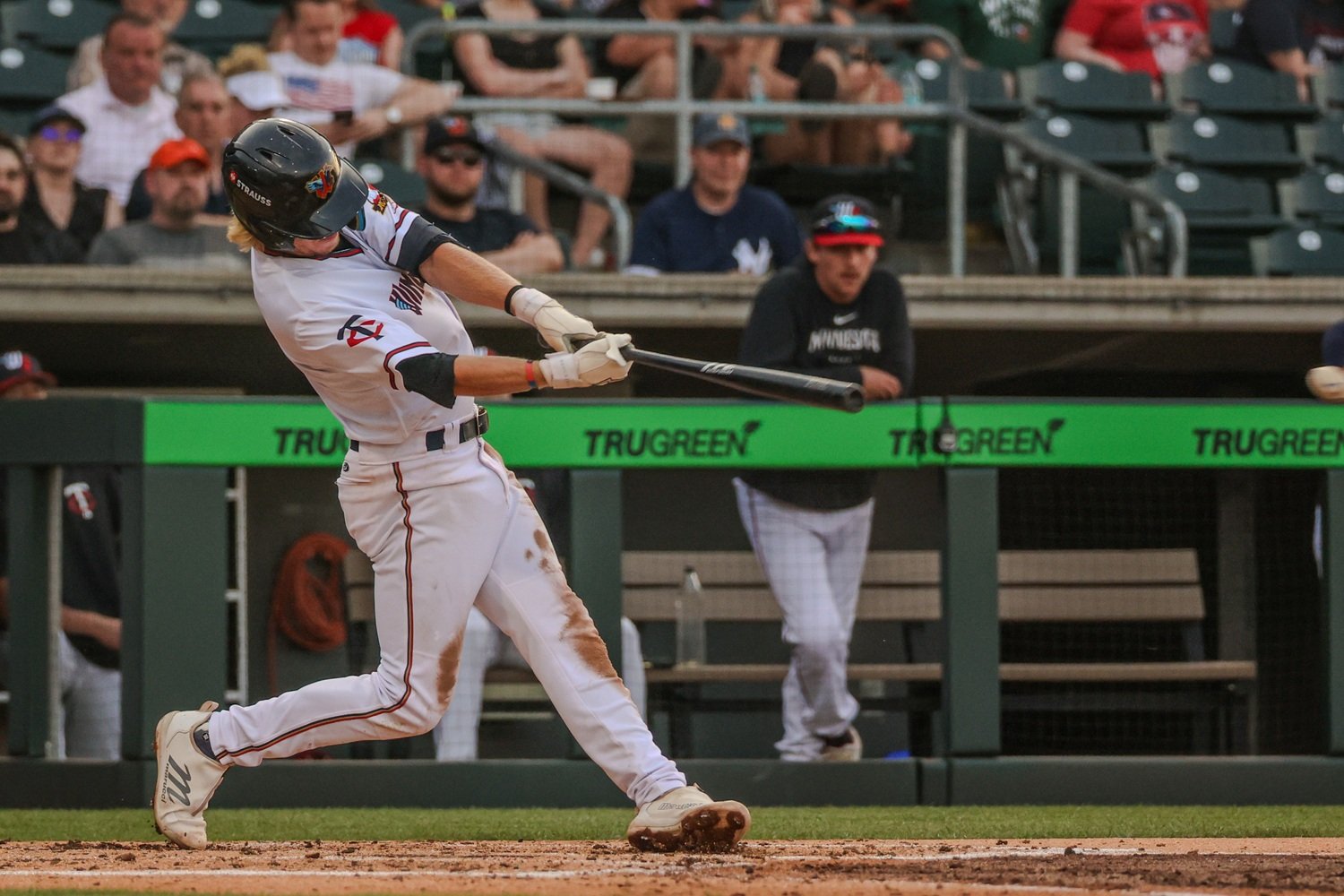 The Kernels played their final game of the regular season on Sunday. On Tuesday, they start their playoff run. The Mighty Mussels season came to an end on Sunday with another rain out which is certainly unfortunate. Wichita has its work cut out for them if they want to earn a playoff spot, but there Sunday win was absolutely huge for a number of reasons. And the Saints, well, hey, Walker Jenkins is going to make his CHS Field debut with the Saints on Tuesday night! TRANSACTIONS The Twins played catcher Ryan Jeffers on the 7-Day Concussion List on Sunday, retroactive to Friday. The Twins Also DFAd RHP Brooks Kriske. Taking those spots on the big-league roster are OF Carson McCusker and RHP Pierson Ohl. Wichita placed C/1B Nate Baez on the 7-Day IL. SAINTS SENTINEL St. Paul 1, Louisville 6 Box Score Jenkins Drills First Triple-A Home Run, Saints Lose 9th Straight Walker Jenkins hasn’t played in a home game for about a month. His last two series with the Win Surge were away from Wichita, and his first two weeks with the Saints have been spent in Toledo and Louisville. On Tuesday night, he will make his CHS Field debut. Tickets available! On Sunday, Jenkins had three more hits. In his six games played in Toledo, he had one hit in 20 at-bats. This week in Louisville, he went 13-for-25 (.520). He had at least one hit in all six games. He had at least two hits in five of the six games. He had three hits in two of the games. That is a pretty good week of baseball. Consider this, coming into the week, he was hitting .050. Heading into his first series in St. Paul, he is now hitting .311/.404/.489 (.893) with three doubles, a triple, and a home run. The Saints winning percentage this season is lower than the Twins winning percentage, but this can be a fun team to watch. This week, you can watch several of the Twins Top 20 prospects. Walker Jenkins (#1) and Gabriel Gonzalez (#10) are top ten Twins prospects in the lineup. Kyler Fedko (#19) has forced his way into the Top 20 with a tremendous season. Andrew Morris (#16) is expected to make the start on Tuesday which likely means that he will start next Sunday too. Mick Abel (#6), Connor Prielipp (#7), and Kendry Rojas (#9) are likely going to each get a start while Marco Raya (#15) has been working out of the bullpen the last few weeks. Two pitchers from Minnesota are on the Saints roster. Lefty Aaron Rozek has been an innings-eater in the organization for a few years now. John Klein was recently promoted to Triple-A and had his best outing last week. There are several players that we have seen with the Twins like DaShawn Keirsey, Jonah Bride and Jose Miranda. Former first-round pick Aaron Sabato has hit 13 homers with the Saints since coming up from Wichita. Tanner Schobel has been a Top 20 prospect. He just returned after missing about three months of the season with injury. And, Twins Daily readers love following Payton Eeles and his remarkable story. Oh, and since the Mighty Mussels season is over, I think we should expect to see Emmanuel Rodriguez return to the Saints. He is currently the #5 Twins prospect. Six home games left for the Saints. If you can get to CHS Field for a game or six, that’d be great. Check out the schedule here. Oh, yeah, back to the game. Kendry Rojas was on the mound to start for the Saints. The lefty walked two in the first innings, but a double play helped get out of that inning without giving up a run. In the second, he walked two and gave up a single run. In the third inning, a single and two walks, but no runs. So, Rojas went three innings and gave up just one run on three hits despite six walks. Jarret Whorff pitched the fourth inning and gave up one run on a hit and a walk. Marco Raya gave up four runs on four hits over 2 2/3 innings. He had two strikeouts, but two of the hits were home runs. Cody Laweryson came in and got the final four outs without any further damage. Jenkins had three of the Saints’ nine hits. Jonah Bride went 2-for-3 with a walk and a double. Fedko hit his eighth double since joining the Saints. St. Paul went 0-for-9 with runners in scoring position and left eight runners on base. Chase Petty faced his former organization for the second time this week. In this game, he gave up one run on seven hits and two walks in 6 1/3 innings. He is 6-11 with a 5.48 ERA at Triple-A this season. Petty made his MLB debut in last April. In it, he gave up nine earned runs on seven hits and two walks in 2 1/3 innings. He made another start in May. He went three innings and gave up four runs on six hits and six walks. He made one other appearance out of the Reds bullpen. He gave up an unearned run on one hit and a hit batter in 2/3 of an inning. He is 0-3 with a 19.50 ERA in the big leagues. Dude is just 22 years old with good stuff. He’ll have a nice career. Also, Christian Encarnacion-Strand went 2-for-4 on Sunday with a double and a home run. This year, he has 202 minor-league at-bats and hit .252/.321/.520 (.841) with 19 doubles and 10 homers. In 151 big-league at-bats, he has hit .208/.234/.377 (.611) with six homers. He has been injured quite a bit the last couple of years yet he is still just 25 years old. WIND SURGE WISDOM Wichita 12, Tulsa 11 Box Score Cossetti, Ross Power Wind Surge to Season’s Biggest Win When the week started, Wichita was two games behind Tulsa in a race for one playoff spot. On Sunday, the Wind Surge gave up a six-run lead, but Ben Ross saved the day with a walkoff home run in the bottom of the ninth inning to keep the team’s hope alive. Ryan Gallagher made the start. He was charged with three runs (2 earned) on four hits and two walks over 3 2/3 innings. He had three strikeouts. He left the game with the bases loaded and two outs in the fourth inning. Gabriel Yanez came in and got the third out without additional damage. The lefty tossed 2 1/3 scoreless innings. He gave up just one hit, walked none and struck out two batters. Wichita got on the scoreboard in the third inning, but it did not start out well. With one out, Kaelen Culpepper worked a 3-2 count before being hit by a pitch on the wrist area of his left hand. Clearly in a lot of pain, the decision was made to remove him from the game (obviously the right and easy decision despite the relative importance of the game for the Wind Surge). photos are screenshots from milb.tv. Jose Salas entered the game for him. He went to second on a ground out. Hendry Mendez then lined a single to right to drive in the team’s first run. Ricardo Olivar walked. Next, Andrew Cossetti hit a three-run homer to give his team a 4-3 lead. Wichita added on in the fifth frame. Kala’i Rosario led off with a double and went to third on a wild pitch. Then Hendry Mendez switched places with him with his first triple with the Wind Surge. After one out, Cossetti came up and walked. Soon after, Mendez scored on a balk which also moved Cossetti to second base. Following a second out, Jake Rucker walked before Maddux Houghton singled to center to drive in Cossetti with the team’s seventh run. John Stankiewicz came into the game for the seventh inning and gave up two runs on one hit and one walk. The first run scored on a “disengagement violation.” The second run of the inning scored on a wild pitch. With just a two-run, 7-5 lead, the Surge responded with four more runs in the bottom of the seventh. Olivar led off with a single. Cossetti came to the plate and drilled another home run, his 13th of the season. Ben Ross followed with a walk. With one out, he stole second base, and Houghton doubled to make it 10-5. With two outs, Salas drove in the 11th run with a single. Hunter Hoopes, who has quietly been one of the best relievers in the Twins minor leagues this season, came in for the eighth inning to protect a six-run lead. He got two fly outs to right field to start the inning, and then things went weird. First, he hit a batter. Then he walked three straight batters to make it 11-6. That was followed by a soft single to left to drive in two runs and make it 11-8. With two runners on, Jaylen Nowlin came in. The first batter he faced hit a triple which cut the Surge lead to 11-10. Nowlin then coaxed a flyout to end the inning. Nowlin returned for the top of the ninth, trying to hold on to a one-run lead. With one out, he issued a walk, but he got the second out right away on a ground out. He then threw two wild pitches which allowed the tying run to score. However, he got a strikeout to end the inning. Ben Ross came to the plate to lead off the bottom of the ninth. He didn’t wait long. He got a first pitch that was up in the zone (or maybe a bit above the zone) and drilled a long home run beyond the left field wall to give the Wind Surge a huge win. Andrew Cossetti went 2-for-4 with a walk, his 12th and 13th home runs, and five RBI. Hendry Mendez went 3-for-5 with a triple and two RBI. Maddux Houghton went -for-4 with his sixth double. Ross’s home run was his 12th of the season. With the win, the Wind Surge take the Propeller Series. It’s the first time that Wichita has won the season series with Tulsa since 2021. That might just be really important over the next week. The Wind Surge really needed that win. That would have been a bad loss. With the win, the series ended in a 3-3 tie. So, with one week left to play The Wind Surge are again two games behind Tulsa for the final playoff spot. The Wind Surge will head down to Texas to take on Corpus Christi. KERNELS NUGGETS Cedar Rapids 3, Quad Cities 4 Box Score Kernels Fall Way Behind Early, Score Late Early in the game, both teams put up multiple single-run innings. Quad Cities notched the lone ‘crooked’ number, and it was enough to give them a slight advantage in the final regular-season game for both teams. After four strikeouts on Saturday night, Kyle DeBarge led off the game on Sunday afternoon with his eighth home run of the season. The River Bandits evened the game at 1-1 in the bottom of the second. However, in the top of the third, Danny De Andrade started the inning with a triple. With one out, Poncho Ruiz doubled to give the Kernels a 2-1 lead. The River Bandits evened the game at 2-2 in the bottom of the third. With two outs in the top of the fifth inning, Misael Urbina walked. He went to third on a Ruiz single and scored on a single by Jaime Ferrer to make it 3-2 Kernels. The River Bandits didn’t score in the bottom of the fifth, or the bottom of the sixth inning. However, they scored two runs in the bottom of the seventh inning. The Kernels were unable to tie the score or reclaim the lead. Spencer Bengard started and went the first 3 2/3 innings. He gave up two runs (1 earned) on three hits and a walk. He had five strikeouts. Matt Gabbert went the final 4 1/3 innings. He gave up two runs (1 earned) on four hits. He had five strikeouts and no walks. Poncho Ruiz went 2-for-3 with a walk and his 13th double. DeBarge hit his eighth home run, but he also walked and stole his 66th base of the season. Brandon Winokur and Marek Houston did not play. Presumably they will be ready to go on Tuesday in Beloit. MUSSEL MATTERS Fort Myers, St. Lucie Box Score It’s Florida, It’s Sunday, It Rains. For the third straight Sunday, the Mighty Mussels game has been cancelled due to rain and poor field conditions. It is especially unfortunate as that was the final game of the season for Fort Myers. PLAYERS OF THE DAY Hitter of the Day Andrew Cossetti (Wichita): 2-for-4, BB, 2-HR(13), 3 R, 5 RBI, 2 K. Pitcher of the Day Gabriel Yanez (Wichita): 2 1/3 IP, 1 H, 0 R, 0 BB, 2 K, 26 pitches, 20 strikes (76.9%) PROSPECT SUMMARY Check out the Prospect Tracker for much more on our Twins Top 20 prospects after seeing how they did today. #1– Walker Jenkins (St. Paul) - 3-for-4, HR(1), R, RBI (played RF-CF) #2 - Luke Keaschall (Minnesota) - 1-for-4, R, 2-SB(11), K (played 2B) #3 - Kaelen Culpepper (Wichita) - 0-for-1, HBP (left game in 3rd inning) (played SS) #9 - Kendry Rojas (St. Paul) - 3 IP, 3 H, 1 ER, 6 BB, 1 K, 67 pitches, 33 strikes (49.3%) #10 - Gabriel Gonzalez (St. Paul) - 0-for-4, (DHd) #15 - Marco Raya (St. Paul) - 2 2/3 IP, 4 H, 4 ER, 0 BB, 2 K, 51 pitches, 31 strikes (60.8%) #17 - Kyle DeBarge (Cedar Rapids) - 1-for-3, BB, HR(8), R, RBI, SB(66), 2 K (played CF) #18 - Quentin Young (Fort Myers) - 1-for-4, R, K (played SS) #19 - Kyler Fedko (St. Paul) - 1-for-4, K (played LF) THE WEEK AHEAD Monday Minnesota @ LA Angels (8:38 PM CT) - TBD Tuesday Minnesota @ LA Angels (8:38 PM CT) - RHP Zebby Matthews (4-4, 4.73 ERA) Columbus @ St. Paul (6:37 PM CT) - RHP Andrew Morris (4-4, 4.08 ERA) Wichita @ Corpus Christi (6:35 PM CT) - TBD Game 1: Cedar Rapids @ Beloit (1:00 PM CT) - TBD Wednesday Minnesota @ LA Angels (3:07 PM CT) - RHP Taj Bradley (6-7, 4.92 ERA) Columbus @ St. Paul (6:37 PM CT) - RHP John Klein (0-3, 5.60 ERA) Wichita @ Corpus Christi (6:35 PM CT) - TBD Thursday Columbus @ St. Paul (6:37 PM CT) - TBD Wichita @ Corpus Christi (6:35 PM CT) - TBD Game 2: Beloit @ Cedar Rapids (6:35 PM CT) - TBD Friday Columbus @ St. Paul (6:37 PM CT) - RHP Mick Abel (7-2, 2.19 ERA) Wichita @ Corpus Christi (7:05 PM CT) - TBD Game 3 (if needed): Beloit @ Cedar Rapids (6:35 PM CT) - CURRENT W-L Records Minnesota Twins: 63-80 St. Paul Saints: 58-78 (25-38 second half) Wichita Wind Surge: 72-60 (35-28 second half) Cedar Rapids Kernels: 72-60 (30-33 second half, reg season complete, playoffs)) Fort Myers Mighty Mussels: 52-73 (25-36 second half, season complete) FCL Twins: 39-20 (finished 2nd in FCL playoffs) DSL Twins: 24-32 (season complete) Please feel free to ask questions about the teams, the rosters, and discuss today’s games, or anything else Twins minor-league related!
- 43 comments
-
- 6
-
-

-
- walker jenkins
- jonah bride
- (and 8 more)
-
Image courtesy of William Parmeter (photos of Bruin Agbayani and Quentin Young) Don't worry. Be happy! TRANSACTIONS RHP Tanner Andrews went on the Wind Surge 7-Day Injured List. Wichita activated RHPs Kyle Bischoff and Michael Martinez. SAINTS SENTINEL St. Paul 3, Louisville 4 Box Score Saints Fall Behind Early; Comeback Attempt Falls Short Connor Prielipp was back on the mound for the Saints, and he pitched pretty well. The southpaw gave up one run on three hits and three walks over four innings. He had five strikeouts. One could argue that the run he gave up shouldn’t have scored as a fly ball to left field landed after hitting the end of Gabriel Gonzalez’s glove. Christian MacLeod came on and gave up three runs (1 earned) on three hits and a walk over 2 2/3 innings. Trent Baker got the final out of the seventh inning but not before allowing two inherited runners to score. He pitched a scoreless eighth frame. The Saints offense took a while to find the scoreboard. Through seven innings, the Saints were down 4-0. In the top of the eighth, Payton Eeles was hit by a pitch to start things. With one out, Jose Miranda singled to center off of the pitcher. Eeles made it to third base. Noach Cardenas grounded out to short which drove in Eeles and Miranda advanced to second. Tanner Schobel lined a single up the middle to drive in Miranda and make it 4-2. With one out in the top of the ninth inning, Aaron Sabato came up and drilled his 13th Saints homer (22nd overall) to pull the Saints to within one run. Carson McCusker followed with a pinch-hit single. Will Holland ran for him. Unfortunately, the next two batters struck out and the Saints fell 4-3. Walker Jenkins began his Triple-A career by going 1-for-21. With a 2-for-4 on Saturday, he has gone 10-for-20 since that slow start and is now hitting .258 (.765) with the Saints. The Saints had seven hits and no walks. They went just 1-for-3 with runners in scoring position. WIND SURGE WISDOM Wichita 1, Tulsa 10 Box Score Wind Surge Fall Behind Early, Stay There Tulsa scored early and often and drilled the Wind Surge on Saturday. The loss puts Wichita three games behind Tulsa for the second playoff spot in the division. The Wind Surge won on Tuesday. When they won the first game of Thursday’s double header, the two teams were tied for that final playoff spot. However, since then, Tulsa has won the last three games by a combined score of 30-7. Ricky Castro started and gave up two runs in the first inning and three more in the second inning. In 1 2/3 innings, he gave up two hits and three walks. Darren Bowen inherited two runners and allowed one of them before getting out of the second inning. Bowen went 2 1/3 innings and gave up one run on two hits and two walks. Kade Bragg threw two innings and gave up two runs on two hits and two walks. Kyle Bischoff came in to start the seventh inning. He gave up a hit and two walks before coming out of the game. Michael Martinez came on with two runners on and allowed one inherited runner to score. He went the final three innings without giving up any runs. He gave up three hits, walked none and struck out three batters. Tulsa scored in five of the first seven innings (four of them were multi-run innings). The Wind Surge had a total of three hits in the game. Ben Ross went 2-for-4. Maddux Houghton had the other hit, an RBI single in the fifth inning. Penultimate: I've always liked the word penultimate. Short definition? Not the last, but the one before the last. The second-to-last. For the Kernels and the Mighty Mussels, Saturday night's games are their penultimate games of the 2025 regular season. Fortunately, the Kernels will be playing in the playoffs next week starting with Game 1 in Beloit. Game 2 and Game 3 (if necessary) will be in Cedar Rapids. KERNELS NUGGETS Cedar Rapids 2, Quad Cities 10 Box Score Kernels Fall Way Behind Early, Score Late Ty Langenberg has been much improved in the second half of this season. He’s been pitching quite well. Things didn’t go so well for him in this one, and frankly, he had to eat it for a while. The former Hawkeye gave up 10 runs on 11 hits and two walks over the first three innings. He had three strikeouts. He also had three wild pitches. After that, it was just about getting the final 15 outs. Julio Bonilla, Nick Trabacchi, and Brennen Oxford combined for five scoreless, hitless innings. They combined for three walks and eight strikeouts. The offense wasn’t exactly clicking in this game either. They did not score until the top of the ninth when they put a two on the scoreboard. With one out, Danny De Andrade walked and scored on a Misael Urbina double. With two outs, Urbina scored on a line-drive single by Jaime Ferrer. Prior to the ninth inning, the Saints had just two hits and two walks. Peyton Carr hit a double for his first Kernels hit. Urbina went 1-for-3 with a walk and his 15th double. A quick note: Brandon Winokur was hit in the hand by a pitch on Friday night. He was not in the lineup on Saturday, but I am told that he is doing fine. If I were to speculate, I would guess that he’s likely not to play again on Sunday, use the scheduled off day on Monday, and get back for Game 1 against Beloit on Tuesday. MUSSEL MATTERS Fort Myers 3, St. Lucie 14 Box Score It’s Florida; They Should Have Stopped to Count After One Inning The game began about an hour and 40 minutes late due to rain, but once they started, they were able to play uninterrupted. Down 1-0 going to the bottom of the first inning, the Mussels took the early lead. Emmanuel Rodriguez led off with a single. Quentin Young followed with a single. Bruin Agbayani walked to load the bases. Jacob McCombs grounded out, but Rodriguez scored, and the other runners moved up. Enrique Jimenez grounded out, and Young scored the second run. Eduardo Beltre followed with a two out double to drive in Agbayani. Through two innings, the Mussels held a 3-1 lead. And then… The Mets scored four runs in the third, three runs in the fourth, and five runs in the first inning to take a 13-3 lead through five innings. That was quick. Joel Garcia went the first three innings. He gave up five runs on five hits and a walk. He had three strikeouts. Dylan Questad came on in relief. He was charged with six runs on two hits and five walks in just 1 2/3 innings. He left the game with two runners on. Tyler Stasiowski came in and allowed both inherited runners to score and two more runs in his 1 1/3 innings. Tanner Hall struck out two in a scoreless seventh inning. Anthony Narvaez gave up a run on three hits and a walk in the eighth inning. Will Armbruester struck out one batter in a scoreless ninth inning. The Mussels spread out five more hits over the final eight innings. Bryan Acuna went 2-for-4. Bruin Agbayani went 1-for-2 with two walks. PLAYERS OF THE DAY Hitter of the Day Bruin Agbayani (Fort Myers): 1-for-2, 2 BB, R, K. Pitcher of the Day Michael Martinez (Wichita): 3 IP, 3 H, 0 R, 0 BB, 3 K, 36 pitches, 24 strikes (66.7%) PROSPECT SUMMARY Check out the Prospect Tracker for much more on our Twins Top 20 prospects after seeing how they did today. #1– Walker Jenkins (St. Paul) - 2-for-4, K (played CF) #2 - Luke Keaschall (Minnesota) - 1-for-4 (played 2B) #3 - Kaelen Culpepper (Wichita) - 0-for-3, BB (played SS) #4 - Eduardo Tait (Cedar Rapids) - 0-for-3, 2 K (caught) #5 - Emmanuel Rodriguez (St. Paul) - Rehab in FM: 1-for-5, R, 2 K (played CF) #7 - Connor Prielipp (St. Paul) - 4 IP, 3 H, 1 ER, 3 BB, 5 K, 76 pitches, 46 strikes (60.5%) #10 - Gabriel Gonzalez (St. Paul) - 1-for-4, 3 K, E (played LF) #17 - Kyle DeBarge (Cedar Rapids) - 0-for-4, 4 K (played SS) #18 - Quentin Young (Fort Myers) - 1-for-4, R, K (played SS) #19 - Kyler Fedko (St. Paul) - 0-for-4 (played RF) SUNDAY’S PITCHING PROBABLES St. Paul @ Louisville (12:05 PM CT) - LHP Kendry Rojas (1-2, 8.18 ERA) Tulsa @ Wichita (1:05 PM CT) - RHP Ryan Gallagher (4-1, 5.40 ERA) Cedar Rapids @ Quad Cities (1:00 PM CT) - RHP Spencer Bengard (5-2, 4.43 ERA) - season finale! (playoffs start Tuesday!) St. Lucie @ Fort Myers (11:05 AM CT) - RHP Jason Doktorczyk (3-6, 5.00 ERA) - season finale! CURRENT W-L RECORDS Minnesota Twins: 62-80 St. Paul Saints: 58-77 (25-37 second half) Wichita Wind Surge: 71-60 (34-28 second half) Cedar Rapids Kernels: 72-59 (30-32 second half) Fort Myers Mighty Mussels: 52-73 (25-36 second half) FCL Twins: 39-20 (finished 2nd in FCL playoffs) DSL Twins: 24-32 (season complete) Please feel free to ask questions about the teams, the rosters, and discuss today’s games, or anything else Twins minor-league related. View full article
- 13 replies
-
- 1
-
-
- walker jenkins
- aaron sabato
- (and 8 more)
-
Twins Minor League Report (9/6): The Sun Will Come Up Tomorrow
Seth Stohs posted an article in Minor Leagues
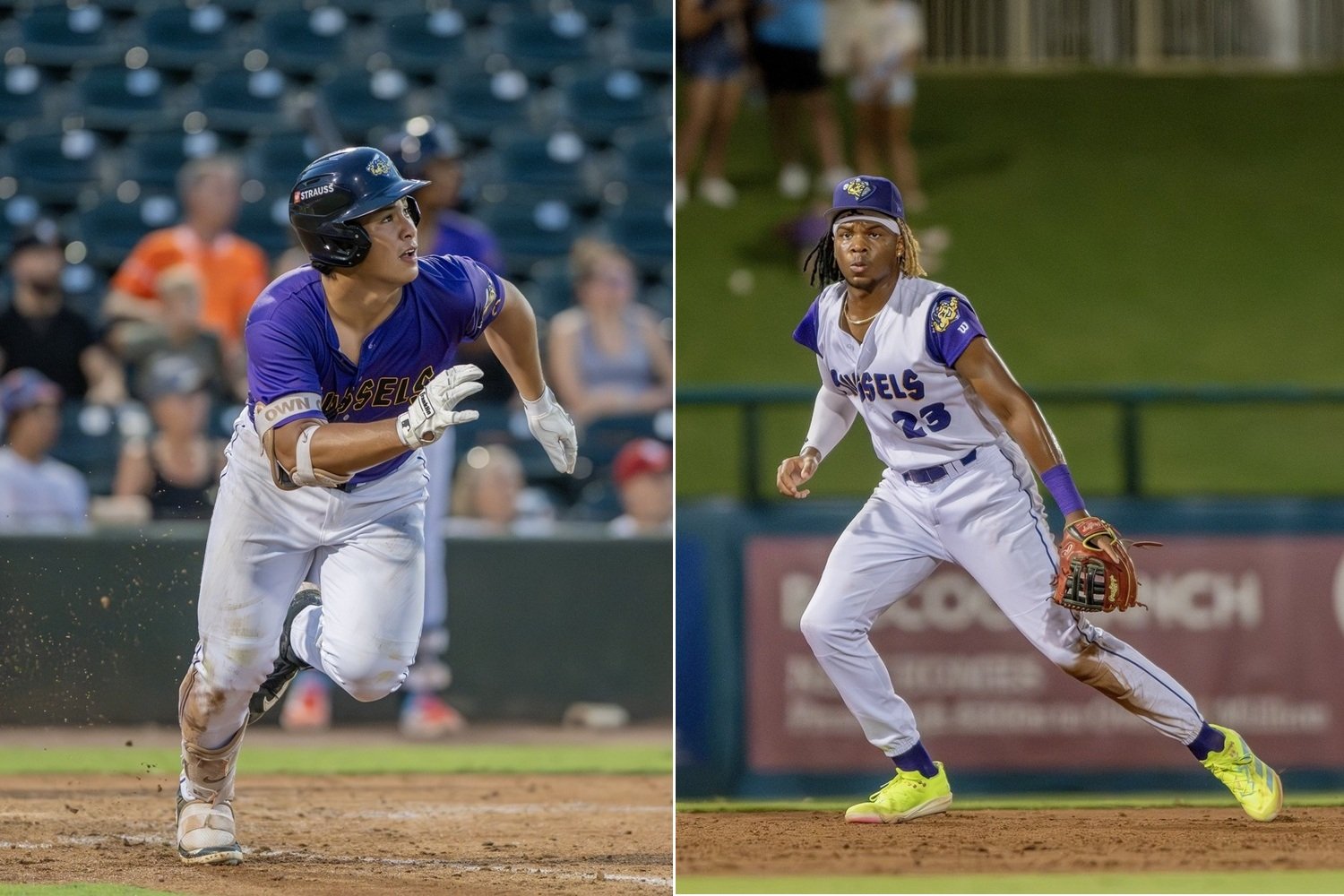 Don't worry. Be happy! TRANSACTIONS RHP Tanner Andrews went on the Wind Surge 7-Day Injured List. Wichita activated RHPs Kyle Bischoff and Michael Martinez. SAINTS SENTINEL St. Paul 3, Louisville 4 Box Score Saints Fall Behind Early; Comeback Attempt Falls Short Connor Prielipp was back on the mound for the Saints, and he pitched pretty well. The southpaw gave up one run on three hits and three walks over four innings. He had five strikeouts. One could argue that the run he gave up shouldn’t have scored as a fly ball to left field landed after hitting the end of Gabriel Gonzalez’s glove. Christian MacLeod came on and gave up three runs (1 earned) on three hits and a walk over 2 2/3 innings. Trent Baker got the final out of the seventh inning but not before allowing two inherited runners to score. He pitched a scoreless eighth frame. The Saints offense took a while to find the scoreboard. Through seven innings, the Saints were down 4-0. In the top of the eighth, Payton Eeles was hit by a pitch to start things. With one out, Jose Miranda singled to center off of the pitcher. Eeles made it to third base. Noach Cardenas grounded out to short which drove in Eeles and Miranda advanced to second. Tanner Schobel lined a single up the middle to drive in Miranda and make it 4-2. With one out in the top of the ninth inning, Aaron Sabato came up and drilled his 13th Saints homer (22nd overall) to pull the Saints to within one run. Carson McCusker followed with a pinch-hit single. Will Holland ran for him. Unfortunately, the next two batters struck out and the Saints fell 4-3. Walker Jenkins began his Triple-A career by going 1-for-21. With a 2-for-4 on Saturday, he has gone 10-for-20 since that slow start and is now hitting .258 (.765) with the Saints. The Saints had seven hits and no walks. They went just 1-for-3 with runners in scoring position. WIND SURGE WISDOM Wichita 1, Tulsa 10 Box Score Wind Surge Fall Behind Early, Stay There Tulsa scored early and often and drilled the Wind Surge on Saturday. The loss puts Wichita three games behind Tulsa for the second playoff spot in the division. The Wind Surge won on Tuesday. When they won the first game of Thursday’s double header, the two teams were tied for that final playoff spot. However, since then, Tulsa has won the last three games by a combined score of 30-7. Ricky Castro started and gave up two runs in the first inning and three more in the second inning. In 1 2/3 innings, he gave up two hits and three walks. Darren Bowen inherited two runners and allowed one of them before getting out of the second inning. Bowen went 2 1/3 innings and gave up one run on two hits and two walks. Kade Bragg threw two innings and gave up two runs on two hits and two walks. Kyle Bischoff came in to start the seventh inning. He gave up a hit and two walks before coming out of the game. Michael Martinez came on with two runners on and allowed one inherited runner to score. He went the final three innings without giving up any runs. He gave up three hits, walked none and struck out three batters. Tulsa scored in five of the first seven innings (four of them were multi-run innings). The Wind Surge had a total of three hits in the game. Ben Ross went 2-for-4. Maddux Houghton had the other hit, an RBI single in the fifth inning. Penultimate: I've always liked the word penultimate. Short definition? Not the last, but the one before the last. The second-to-last. For the Kernels and the Mighty Mussels, Saturday night's games are their penultimate games of the 2025 regular season. Fortunately, the Kernels will be playing in the playoffs next week starting with Game 1 in Beloit. Game 2 and Game 3 (if necessary) will be in Cedar Rapids. KERNELS NUGGETS Cedar Rapids 2, Quad Cities 10 Box Score Kernels Fall Way Behind Early, Score Late Ty Langenberg has been much improved in the second half of this season. He’s been pitching quite well. Things didn’t go so well for him in this one, and frankly, he had to eat it for a while. The former Hawkeye gave up 10 runs on 11 hits and two walks over the first three innings. He had three strikeouts. He also had three wild pitches. After that, it was just about getting the final 15 outs. Julio Bonilla, Nick Trabacchi, and Brennen Oxford combined for five scoreless, hitless innings. They combined for three walks and eight strikeouts. The offense wasn’t exactly clicking in this game either. They did not score until the top of the ninth when they put a two on the scoreboard. With one out, Danny De Andrade walked and scored on a Misael Urbina double. With two outs, Urbina scored on a line-drive single by Jaime Ferrer. Prior to the ninth inning, the Saints had just two hits and two walks. Peyton Carr hit a double for his first Kernels hit. Urbina went 1-for-3 with a walk and his 15th double. A quick note: Brandon Winokur was hit in the hand by a pitch on Friday night. He was not in the lineup on Saturday, but I am told that he is doing fine. If I were to speculate, I would guess that he’s likely not to play again on Sunday, use the scheduled off day on Monday, and get back for Game 1 against Beloit on Tuesday. MUSSEL MATTERS Fort Myers 3, St. Lucie 14 Box Score It’s Florida; They Should Have Stopped to Count After One Inning The game began about an hour and 40 minutes late due to rain, but once they started, they were able to play uninterrupted. Down 1-0 going to the bottom of the first inning, the Mussels took the early lead. Emmanuel Rodriguez led off with a single. Quentin Young followed with a single. Bruin Agbayani walked to load the bases. Jacob McCombs grounded out, but Rodriguez scored, and the other runners moved up. Enrique Jimenez grounded out, and Young scored the second run. Eduardo Beltre followed with a two out double to drive in Agbayani. Through two innings, the Mussels held a 3-1 lead. And then… The Mets scored four runs in the third, three runs in the fourth, and five runs in the first inning to take a 13-3 lead through five innings. That was quick. Joel Garcia went the first three innings. He gave up five runs on five hits and a walk. He had three strikeouts. Dylan Questad came on in relief. He was charged with six runs on two hits and five walks in just 1 2/3 innings. He left the game with two runners on. Tyler Stasiowski came in and allowed both inherited runners to score and two more runs in his 1 1/3 innings. Tanner Hall struck out two in a scoreless seventh inning. Anthony Narvaez gave up a run on three hits and a walk in the eighth inning. Will Armbruester struck out one batter in a scoreless ninth inning. The Mussels spread out five more hits over the final eight innings. Bryan Acuna went 2-for-4. Bruin Agbayani went 1-for-2 with two walks. PLAYERS OF THE DAY Hitter of the Day Bruin Agbayani (Fort Myers): 1-for-2, 2 BB, R, K. Pitcher of the Day Michael Martinez (Wichita): 3 IP, 3 H, 0 R, 0 BB, 3 K, 36 pitches, 24 strikes (66.7%) PROSPECT SUMMARY Check out the Prospect Tracker for much more on our Twins Top 20 prospects after seeing how they did today. #1– Walker Jenkins (St. Paul) - 2-for-4, K (played CF) #2 - Luke Keaschall (Minnesota) - 1-for-4 (played 2B) #3 - Kaelen Culpepper (Wichita) - 0-for-3, BB (played SS) #4 - Eduardo Tait (Cedar Rapids) - 0-for-3, 2 K (caught) #5 - Emmanuel Rodriguez (St. Paul) - Rehab in FM: 1-for-5, R, 2 K (played CF) #7 - Connor Prielipp (St. Paul) - 4 IP, 3 H, 1 ER, 3 BB, 5 K, 76 pitches, 46 strikes (60.5%) #10 - Gabriel Gonzalez (St. Paul) - 1-for-4, 3 K, E (played LF) #17 - Kyle DeBarge (Cedar Rapids) - 0-for-4, 4 K (played SS) #18 - Quentin Young (Fort Myers) - 1-for-4, R, K (played SS) #19 - Kyler Fedko (St. Paul) - 0-for-4 (played RF) SUNDAY’S PITCHING PROBABLES St. Paul @ Louisville (12:05 PM CT) - LHP Kendry Rojas (1-2, 8.18 ERA) Tulsa @ Wichita (1:05 PM CT) - RHP Ryan Gallagher (4-1, 5.40 ERA) Cedar Rapids @ Quad Cities (1:00 PM CT) - RHP Spencer Bengard (5-2, 4.43 ERA) - season finale! (playoffs start Tuesday!) St. Lucie @ Fort Myers (11:05 AM CT) - RHP Jason Doktorczyk (3-6, 5.00 ERA) - season finale! CURRENT W-L RECORDS Minnesota Twins: 62-80 St. Paul Saints: 58-77 (25-37 second half) Wichita Wind Surge: 71-60 (34-28 second half) Cedar Rapids Kernels: 72-59 (30-32 second half) Fort Myers Mighty Mussels: 52-73 (25-36 second half) FCL Twins: 39-20 (finished 2nd in FCL playoffs) DSL Twins: 24-32 (season complete) Please feel free to ask questions about the teams, the rosters, and discuss today’s games, or anything else Twins minor-league related.
- 13 comments
-
- 6
-
-
- walker jenkins
- aaron sabato
- (and 8 more)
-
If I read it right... Davis was outrighted, which means he was DFAd and taken off the 40-man roster. He cleared waivers and went back to St. Paul. Why would they want him? Cuz he throws a baseball and is breathing. Wichita has playoff hopes, so they shouldn't be getting anyone from there. So, they just need arms.
-
Wichita's playoff hopes are spelled out in their section above.
- 15 replies
-
- 2
-
-
-
- gabriel gonzalez
- kaelen culpepper
- (and 8 more)
-
Image courtesy of Ed Bailey, Wichita Wind Surge (photo of Sam Armstrong) TRANSACTIONS These transactions often come in a few days after they happen, but in recent days, the Twins have released four players from the DSL Twins roster. They released pitchers Brandy Ceballos, Jeicol Surumay, and Marlon Mirabal, and outfielder Cristian Bonifacio. SAINTS SENTINEL St. Paul 2, Louisville 4 Box Score Saints Face Old Friend, Old Friend Wins There was no score through two innings. Then the Saints scored two in the top of the third. With one out, Walker Jenkins beat out a slow roller to second base for a single. Gabriel Gonzalez followed with a single to right. Jenkins went to third, and when the throw went beyond the third baseman, he ran home with the first run. After an Aaron Sabato single, Gonzalez scored on a single by Carson McCusker to give the team a 2-0 lead. John Klein was on the mound to start for the Saints. He put two zeroes on the board. Then with the lead, he got the first two outs of the third inning. However, a double, a hit batter, and a walk loaded the bases. After a wild pitch, a two-run single gave the bats the 3-2 lead. He gave up a single to lead off the bottom of the fourth, but he responded by striking out the next three players, each with big-league service time. On the night, Klein went four innings. He gave up three runs on four hits, a walk, and a hit batter. He also had seven more strikeouts. Overall this season, the 23-year-old has 121 strikeouts in 98 1/3 innings. Unfortunately, the Saints offense was done scoring runs. Jarret Whorff came on and gave up one run on two hits over two innings. He struck out three batters. Pierson Ohl tossed two scoreless innings and struck out two batters. Hitting third and fourth in the Saints lineup, Walker Jenkins and Gabriel Gonzalez went 2-for-4. Each hit his third double with the Saints as well. Jhonny Pereda was also 2-for-4. By the way, the starting pitcher for Louisville in this game was #OldFriend Charlie Barnes. The southpaw was the Twins fourth-round pick in 2017 out of Clemson. In 2021, he pitched for the Saints and then made nine appearances (8 starts) for the Twins. He signed with the Lotte Giants for the 2022 season. Over three seasons, he went 32-28 with a 3.42 ERA. He made eight more starts for the Giants this season before he had a shoulder injury. Because Korean teams can only have three “foreign” players, if a guy gets hurt, he is usually released. That’s what happened to Barnes. In early August, he signed a minor-league deal with the Reds. He’s been building back up over his first three starts. On Thursday against his former team, he gave up two runs on eight hits over six innings and earned the Win. WIND SURGE WISDOM Game 1: Wichita 2, Tulsa 0 Box Score Armstrong, Paredes Combine for Two-Hit Shutout The Twins traded two months of Willi Castro in exchange for two Double-A starting pitchers. In Game 1, Sam Armstrong started and was fantastic! He tossed five innings of shutout baseball. He gave up just one hit and one walk ,and he had four strikeouts. The Wind Surge gave him a little run support in the first inning. Kaelen Culpepper led off with a single. With one out, he went to third on a single by Hendry Mendez. Ricardo Olivar put the team on the board with another single to make it 1-0. With two outs, Ben Ross singled to center which drove in Mendez and made it 2-0. That was it for Surge runs scored, so fortunately Armstrong was great. The final two innings went to a reliever who has been great all season, Mike Paredes. He struck out four batters and maintained the shutout to record his sixth save of the season. Culpepper went 2-for-3. Ross was also 2-for-3. Game 2: Wichita 5, Tulsa 14 Box Score Kaelen Culpepper Drills 20th HR of Season in Loss C.J. Culpepper has been really good in most of his starts this season. In August, he had three starts in which he gave up zero runs. His previous three starts all went five innings. On Thursday, we were reminded that he is human. He gave up six runs on nine hits and three walks over just 3 2/3 innings. Four of those runs came in the fourth inning. He had three strikeouts. John Stankiewicz has been strong since was signed after the 2020 draft. He gave up three runs on three hits and a walk in 1 1/3 innings. Jaylen Nowlin came on and gave up one run on two hits and a walk in his inning. Jacob Wosinski gave up four runs on four hits and a walk in his inning. Thankfully, as part of the doubleheader, it was just a seven-inning game. In this game, the Surge faced lefty Jackson Ferris, one of the top pitching prospects in the Dodgers system. Down 2-0 going to the bottom of the third inning, Maddux Houghton cut the lead in half with his first Wichita homer. With one out, Kaelen Culpepper hit his 11th Wind Surge homer to tie the game at 2-2. The Drillers scored the next seven runs which made it 9-2. The Surge got a run in the bottom of the fifth inning when Kala’i Rosario drove in Kyle Hess. Fast-forward to the bottom of the seventh inning. Now down 14-3, Wichita added two runs to their total. Kaelen Culpepper led off with a walk and scored on Kala’i Rosario’s 27th double. Ricardo Oliver and Andrew Cossetti walked to load the bases before Ross drove in the final run with a sacrifice fly. Rosario was 2-for-4 with a double and his 26th stolen base. Nate Baez was 2-for-3 with a walk. Kaelen Culpepper was 1-for-3 with a walk and a home run. In addition to it giving him 11 with the Surge, he had nine in Cedar Rapids. A little math tells us that he has now reached 20 home runs this season, joining Kyler Fedko (26), Kala’i Rosario (25), Carson McCusker (22), and Aaron Sabato (21) as Twins prospects to reach that milestone this season. The doubleheader split means that there is no change in the standings. Heading into the weekend, Tulsa is 35-25 and Wichita is 34-26. Springfield is four games ahead of Tulsa, but they won the first half title. So, Tulsa and Wichita are facing each other for three more games. Next week is the final week of the regular season. The Wind Surge will play at Corpus Christi. They are 23-37 in the second half. Tulsa will be hosting Arkansas next week. They are 30-30 in the second half. Should be fun to watch, and great for the minor leaguers to get to play “playoff-like” baseball games late in the season. KERNELS NUGGETS Cedar Rapids 9, Quad Cities 5 (10 innings) Box Score Amick, Urbina Power Kernels to Win This was a back-and-forth game in Davenport on Thursday night, and it wasn’t decided until 10 innings were completed. The game started with two scoreless innings, but then the Kernels broke the tie in the top of the third when Misael Urbina led off the inning with his fourth home run of the season. Billy Amick pushed the lead to 2-0 an inning later when he led off with his third homer of the year. Adrian Bohorquez started for the Kernels and went the first five innings. He started with four zeroes and then gave up a run in the fifth inning. Over those five innings, he gave up just the one run on two hits and a walk. He also had five strikeouts. Jacob Kisting started the sixth inning. He only recorded one out. He gave up two runs and left the game with the bases loaded. Nick Trabacchi came on and got the final two outs, but not before two inherited runners scored. Heading to the seventh inning, the River Bandits had a 5-2 lead. In the top of the seventh, Eduardo Tait led off with a double, his eighth in 28 games with the Kernels. He moved to third base on a ground out and scored on a single by Danny De Andrade. After a pitching change, Poncho Ruiz singled. After a wild pitch put runners on second and third, Urbina singled to drive in two runs and tie the game at 5-5. Brennen Oxford came in and pitched a scoreless seventh inning. Ruddy Gomez struck out four batters over two hitless innings. That sent the game to extra innings. In the top of the 10th, Urbina started at second base. Jaime Ferrer’s 20th double drove him in to make it 6-5. Ferrer advanced to third base on a deep fly ball to center by Jefferson Valladares. Kyle DeBarge walked, and Ferrer scored on a wild pitch. Bill Amick provided the final punch with his fourth Kernels home run which made it 9-5. Paulshawn Pasqualotto started the bottom of the 10th inning with a walk. After a line out, he struck out the next two batters to give the Kernels another win. Amick went 2-for-5 and doubled his season home run total to four. He drove in three runs. Urbina went 2-for-4 with a homer and three RBI. De Andrade went 2-for-5. MUSSEL MATTERS Fort Myers 6, St. Lucie 3 Box Score Sprock Drives in 4 to Lead Mussels; Hilker Dominant Pro Debut The St. Lucie Mets were the division champs in the first half and in the second half and likely are the favorites when the Florida State League playoffs start next week. In this game, the Mets scored two right away in the top of the first inning. The Mussels got on the board in the bottom of the third innings when Ian Daugherty hit his second home run to make it 2-1. With one out in the bottom of the fourth, Quentin Young and Enrique Jimenez walked. With two outs, Ryan Sprock knocked his second pro homer to give the Mussels a 4-2 lead. Christian Becerra made the start and tossed the first four innings. He gave up two runs on six hits. He also struck out four batters. 2025 draft pick Michael Hilker came in for the fifth inning. He had two strikeouts and fielded a bunt. He got another strikeout in the sixth inning. The first pro outing for Hilker was certainly a success. Six batters faced. Six outs. Three strikeouts. Oh, and the first Win as a pro. Ian Daugherty led off the fifth inning with a walk and went to second on a wild pitch. With one out, Bruin Agbayani walked. Quentin Young drove in the fifth run with a sacrifice fly. Enrique Jimenez singled Agbayani to third base. After Eduardo Beltre walked to load the bases, there was a pitching change. Ryan Sprock came to the plate and took a walk to drive in the sixth run of the game. Zander Sechrist gave up an unearned run on two hits in the seventh inning. Sam Rochard struck out two batters over the final two innings to record his second save. Ryan Sprock went 2-for-3 with a three-run homer, and an RBI walk. Quentin Young recorded his first professional hit, a solid single to right field. PLAYERS OF THE DAY Hitter of the Day Billy Amick (Cedar Rapids): 2-for-5, 2 HR(4), 2 R, 3 RBI, K. Kaelen Culpepper (Wichita): 3-for-6, BB, HR(11), 3 R, RBI, K. Ryan Sprock (Fort Myers): 2-for-3, BB, HR(2), R, 4 RBI, K. Pitcher of the Day Sam Armstrong (Wichita): 5 IP, 1 H, 0 R, 1 BB, 4 K, 61 pitches, 39 strikes (63.9%) PROSPECT SUMMARY Check out the Prospect Tracker for much more on our Twins Top 20 prospects after seeing how they did today. Notice the updated Top 20 prospect rankings. There were a few guys who moved a few spots and there are some new names at the back end. #1– Walker Jenkins (St. Paul) - 2-for-4, 2B(3), R, 2 K. (played CF) #2 - Luke Keaschall (Minnesota) - 4-for-5, 2 R, RBI, SB(9), (played 2B) #3 - Kaelen Culpepper (Wichita) - Game 1: 2-for-3, R; Game 2: 1-for-3, BB, HR(11), 2 R, RBI, K (played SS both games) #4 - Eduardo Tait (Cedar Rapids) - 2-for-5, 2B(8), R, 2 K (caught) #5 - Emmanuel Rodriguez (St. Paul) - Rehab in FM: 0-for-4, 3 K (played CF) #10 - Gabriel Gonzalez (St. Paul) - 2-for-4, 2B(3), R, K (DHd) #13 - Brandon Winokur (Cedar Rapids) - 0-for-5 (played SS) #17 - Kyle DeBarge (Cedar Rapids) - 1-for-4, BB, R, K, CS(8) (played CF) #18 - Quentin Young (Fort Myers) - 1-for-3, BB, R, RBI, K (played SS) #19 - Kyler Fedko (St. Paul) - 1-for-5, K, OF Assist (played LF) #20 - C.J. Culpepper (Wichita) - 3 2/3 IP, 9 H, 6 ER, 3 BB, 3 K, 73 pitches, 49 strikes (67.1%) TOMORROW’S PITCHING PROBABLES St. Paul @ Louisville (6:15 PM CT) - RHP Mick Abel (7-2, 2.22 ERA) Tulsa @ Wichita (7:05 PM CT) - RHP Alejandro Hidalgo (0-3, 11.49 ERA) Cedar Rapids @ Quad Cities (6:30 PM CT) - RHP Chase Chaney (7-4, 3.56 ERA) St. Lucie @ Fort Myers (6:05 PM CT) - LHP Michael Carpenter (0-6, 5.18 ERA) CURRENT W-L Records Minnesota Twins: 62-78 St. Paul Saints: 58-75 (25-35 second half) Wichita Wind Surge: 71-58 (34-26 second half) Cedar Rapids Kernels: 71-58 (29-31 second half) Fort Myers Mighty Mussels: 51-72 (24-35 second half) FCL Twins: 39-20 (finished 2nd in FCL playoffs) DSL Twins: 24-32 (season complete) Please feel free to ask questions about the teams, the rosters, and discuss today’s games, or anything else Twins minor-league related! View full article
- 15 replies
-
- 1
-
-
- gabriel gonzalez
- kaelen culpepper
- (and 8 more)
-
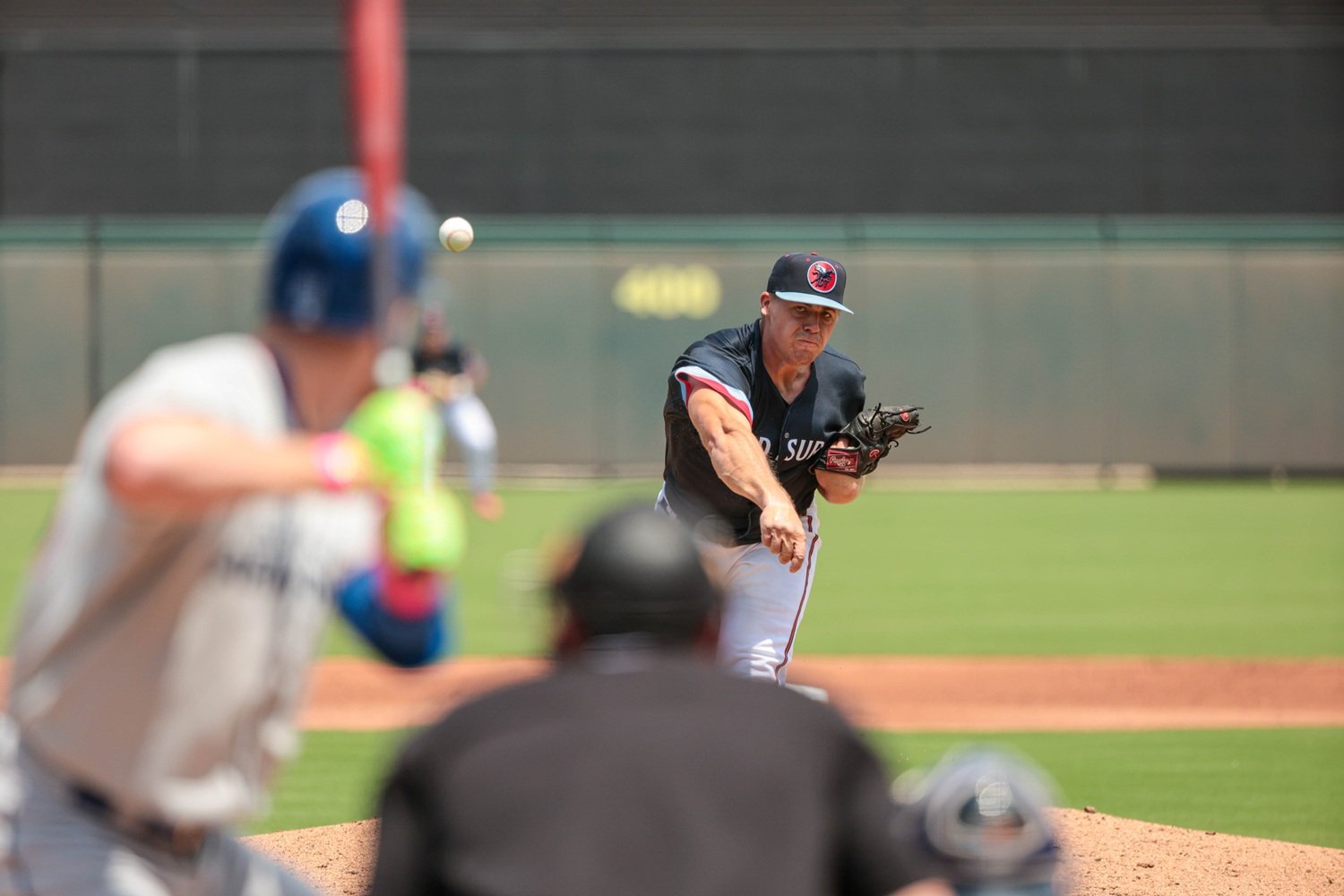 TRANSACTIONS These transactions often come in a few days after they happen, but in recent days, the Twins have released four players from the DSL Twins roster. They released pitchers Brandy Ceballos, Jeicol Surumay, and Marlon Mirabal, and outfielder Cristian Bonifacio. SAINTS SENTINEL St. Paul 2, Louisville 4 Box Score Saints Face Old Friend, Old Friend Wins There was no score through two innings. Then the Saints scored two in the top of the third. With one out, Walker Jenkins beat out a slow roller to second base for a single. Gabriel Gonzalez followed with a single to right. Jenkins went to third, and when the throw went beyond the third baseman, he ran home with the first run. After an Aaron Sabato single, Gonzalez scored on a single by Carson McCusker to give the team a 2-0 lead. John Klein was on the mound to start for the Saints. He put two zeroes on the board. Then with the lead, he got the first two outs of the third inning. However, a double, a hit batter, and a walk loaded the bases. After a wild pitch, a two-run single gave the bats the 3-2 lead. He gave up a single to lead off the bottom of the fourth, but he responded by striking out the next three players, each with big-league service time. On the night, Klein went four innings. He gave up three runs on four hits, a walk, and a hit batter. He also had seven more strikeouts. Overall this season, the 23-year-old has 121 strikeouts in 98 1/3 innings. Unfortunately, the Saints offense was done scoring runs. Jarret Whorff came on and gave up one run on two hits over two innings. He struck out three batters. Pierson Ohl tossed two scoreless innings and struck out two batters. Hitting third and fourth in the Saints lineup, Walker Jenkins and Gabriel Gonzalez went 2-for-4. Each hit his third double with the Saints as well. Jhonny Pereda was also 2-for-4. By the way, the starting pitcher for Louisville in this game was #OldFriend Charlie Barnes. The southpaw was the Twins fourth-round pick in 2017 out of Clemson. In 2021, he pitched for the Saints and then made nine appearances (8 starts) for the Twins. He signed with the Lotte Giants for the 2022 season. Over three seasons, he went 32-28 with a 3.42 ERA. He made eight more starts for the Giants this season before he had a shoulder injury. Because Korean teams can only have three “foreign” players, if a guy gets hurt, he is usually released. That’s what happened to Barnes. In early August, he signed a minor-league deal with the Reds. He’s been building back up over his first three starts. On Thursday against his former team, he gave up two runs on eight hits over six innings and earned the Win. WIND SURGE WISDOM Game 1: Wichita 2, Tulsa 0 Box Score Armstrong, Paredes Combine for Two-Hit Shutout The Twins traded two months of Willi Castro in exchange for two Double-A starting pitchers. In Game 1, Sam Armstrong started and was fantastic! He tossed five innings of shutout baseball. He gave up just one hit and one walk ,and he had four strikeouts. The Wind Surge gave him a little run support in the first inning. Kaelen Culpepper led off with a single. With one out, he went to third on a single by Hendry Mendez. Ricardo Olivar put the team on the board with another single to make it 1-0. With two outs, Ben Ross singled to center which drove in Mendez and made it 2-0. That was it for Surge runs scored, so fortunately Armstrong was great. The final two innings went to a reliever who has been great all season, Mike Paredes. He struck out four batters and maintained the shutout to record his sixth save of the season. Culpepper went 2-for-3. Ross was also 2-for-3. Game 2: Wichita 5, Tulsa 14 Box Score Kaelen Culpepper Drills 20th HR of Season in Loss C.J. Culpepper has been really good in most of his starts this season. In August, he had three starts in which he gave up zero runs. His previous three starts all went five innings. On Thursday, we were reminded that he is human. He gave up six runs on nine hits and three walks over just 3 2/3 innings. Four of those runs came in the fourth inning. He had three strikeouts. John Stankiewicz has been strong since was signed after the 2020 draft. He gave up three runs on three hits and a walk in 1 1/3 innings. Jaylen Nowlin came on and gave up one run on two hits and a walk in his inning. Jacob Wosinski gave up four runs on four hits and a walk in his inning. Thankfully, as part of the doubleheader, it was just a seven-inning game. In this game, the Surge faced lefty Jackson Ferris, one of the top pitching prospects in the Dodgers system. Down 2-0 going to the bottom of the third inning, Maddux Houghton cut the lead in half with his first Wichita homer. With one out, Kaelen Culpepper hit his 11th Wind Surge homer to tie the game at 2-2. The Drillers scored the next seven runs which made it 9-2. The Surge got a run in the bottom of the fifth inning when Kala’i Rosario drove in Kyle Hess. Fast-forward to the bottom of the seventh inning. Now down 14-3, Wichita added two runs to their total. Kaelen Culpepper led off with a walk and scored on Kala’i Rosario’s 27th double. Ricardo Oliver and Andrew Cossetti walked to load the bases before Ross drove in the final run with a sacrifice fly. Rosario was 2-for-4 with a double and his 26th stolen base. Nate Baez was 2-for-3 with a walk. Kaelen Culpepper was 1-for-3 with a walk and a home run. In addition to it giving him 11 with the Surge, he had nine in Cedar Rapids. A little math tells us that he has now reached 20 home runs this season, joining Kyler Fedko (26), Kala’i Rosario (25), Carson McCusker (22), and Aaron Sabato (21) as Twins prospects to reach that milestone this season. The doubleheader split means that there is no change in the standings. Heading into the weekend, Tulsa is 35-25 and Wichita is 34-26. Springfield is four games ahead of Tulsa, but they won the first half title. So, Tulsa and Wichita are facing each other for three more games. Next week is the final week of the regular season. The Wind Surge will play at Corpus Christi. They are 23-37 in the second half. Tulsa will be hosting Arkansas next week. They are 30-30 in the second half. Should be fun to watch, and great for the minor leaguers to get to play “playoff-like” baseball games late in the season. KERNELS NUGGETS Cedar Rapids 9, Quad Cities 5 (10 innings) Box Score Amick, Urbina Power Kernels to Win This was a back-and-forth game in Davenport on Thursday night, and it wasn’t decided until 10 innings were completed. The game started with two scoreless innings, but then the Kernels broke the tie in the top of the third when Misael Urbina led off the inning with his fourth home run of the season. Billy Amick pushed the lead to 2-0 an inning later when he led off with his third homer of the year. Adrian Bohorquez started for the Kernels and went the first five innings. He started with four zeroes and then gave up a run in the fifth inning. Over those five innings, he gave up just the one run on two hits and a walk. He also had five strikeouts. Jacob Kisting started the sixth inning. He only recorded one out. He gave up two runs and left the game with the bases loaded. Nick Trabacchi came on and got the final two outs, but not before two inherited runners scored. Heading to the seventh inning, the River Bandits had a 5-2 lead. In the top of the seventh, Eduardo Tait led off with a double, his eighth in 28 games with the Kernels. He moved to third base on a ground out and scored on a single by Danny De Andrade. After a pitching change, Poncho Ruiz singled. After a wild pitch put runners on second and third, Urbina singled to drive in two runs and tie the game at 5-5. Brennen Oxford came in and pitched a scoreless seventh inning. Ruddy Gomez struck out four batters over two hitless innings. That sent the game to extra innings. In the top of the 10th, Urbina started at second base. Jaime Ferrer’s 20th double drove him in to make it 6-5. Ferrer advanced to third base on a deep fly ball to center by Jefferson Valladares. Kyle DeBarge walked, and Ferrer scored on a wild pitch. Bill Amick provided the final punch with his fourth Kernels home run which made it 9-5. Paulshawn Pasqualotto started the bottom of the 10th inning with a walk. After a line out, he struck out the next two batters to give the Kernels another win. Amick went 2-for-5 and doubled his season home run total to four. He drove in three runs. Urbina went 2-for-4 with a homer and three RBI. De Andrade went 2-for-5. MUSSEL MATTERS Fort Myers 6, St. Lucie 3 Box Score Sprock Drives in 4 to Lead Mussels; Hilker Dominant Pro Debut The St. Lucie Mets were the division champs in the first half and in the second half and likely are the favorites when the Florida State League playoffs start next week. In this game, the Mets scored two right away in the top of the first inning. The Mussels got on the board in the bottom of the third innings when Ian Daugherty hit his second home run to make it 2-1. With one out in the bottom of the fourth, Quentin Young and Enrique Jimenez walked. With two outs, Ryan Sprock knocked his second pro homer to give the Mussels a 4-2 lead. Christian Becerra made the start and tossed the first four innings. He gave up two runs on six hits. He also struck out four batters. 2025 draft pick Michael Hilker came in for the fifth inning. He had two strikeouts and fielded a bunt. He got another strikeout in the sixth inning. The first pro outing for Hilker was certainly a success. Six batters faced. Six outs. Three strikeouts. Oh, and the first Win as a pro. Ian Daugherty led off the fifth inning with a walk and went to second on a wild pitch. With one out, Bruin Agbayani walked. Quentin Young drove in the fifth run with a sacrifice fly. Enrique Jimenez singled Agbayani to third base. After Eduardo Beltre walked to load the bases, there was a pitching change. Ryan Sprock came to the plate and took a walk to drive in the sixth run of the game. Zander Sechrist gave up an unearned run on two hits in the seventh inning. Sam Rochard struck out two batters over the final two innings to record his second save. Ryan Sprock went 2-for-3 with a three-run homer, and an RBI walk. Quentin Young recorded his first professional hit, a solid single to right field. PLAYERS OF THE DAY Hitter of the Day Billy Amick (Cedar Rapids): 2-for-5, 2 HR(4), 2 R, 3 RBI, K. Kaelen Culpepper (Wichita): 3-for-6, BB, HR(11), 3 R, RBI, K. Ryan Sprock (Fort Myers): 2-for-3, BB, HR(2), R, 4 RBI, K. Pitcher of the Day Sam Armstrong (Wichita): 5 IP, 1 H, 0 R, 1 BB, 4 K, 61 pitches, 39 strikes (63.9%) PROSPECT SUMMARY Check out the Prospect Tracker for much more on our Twins Top 20 prospects after seeing how they did today. Notice the updated Top 20 prospect rankings. There were a few guys who moved a few spots and there are some new names at the back end. #1– Walker Jenkins (St. Paul) - 2-for-4, 2B(3), R, 2 K. (played CF) #2 - Luke Keaschall (Minnesota) - 4-for-5, 2 R, RBI, SB(9), (played 2B) #3 - Kaelen Culpepper (Wichita) - Game 1: 2-for-3, R; Game 2: 1-for-3, BB, HR(11), 2 R, RBI, K (played SS both games) #4 - Eduardo Tait (Cedar Rapids) - 2-for-5, 2B(8), R, 2 K (caught) #5 - Emmanuel Rodriguez (St. Paul) - Rehab in FM: 0-for-4, 3 K (played CF) #10 - Gabriel Gonzalez (St. Paul) - 2-for-4, 2B(3), R, K (DHd) #13 - Brandon Winokur (Cedar Rapids) - 0-for-5 (played SS) #17 - Kyle DeBarge (Cedar Rapids) - 1-for-4, BB, R, K, CS(8) (played CF) #18 - Quentin Young (Fort Myers) - 1-for-3, BB, R, RBI, K (played SS) #19 - Kyler Fedko (St. Paul) - 1-for-5, K, OF Assist (played LF) #20 - C.J. Culpepper (Wichita) - 3 2/3 IP, 9 H, 6 ER, 3 BB, 3 K, 73 pitches, 49 strikes (67.1%) TOMORROW’S PITCHING PROBABLES St. Paul @ Louisville (6:15 PM CT) - RHP Mick Abel (7-2, 2.22 ERA) Tulsa @ Wichita (7:05 PM CT) - RHP Alejandro Hidalgo (0-3, 11.49 ERA) Cedar Rapids @ Quad Cities (6:30 PM CT) - RHP Chase Chaney (7-4, 3.56 ERA) St. Lucie @ Fort Myers (6:05 PM CT) - LHP Michael Carpenter (0-6, 5.18 ERA) CURRENT W-L Records Minnesota Twins: 62-78 St. Paul Saints: 58-75 (25-35 second half) Wichita Wind Surge: 71-58 (34-26 second half) Cedar Rapids Kernels: 71-58 (29-31 second half) Fort Myers Mighty Mussels: 51-72 (24-35 second half) FCL Twins: 39-20 (finished 2nd in FCL playoffs) DSL Twins: 24-32 (season complete) Please feel free to ask questions about the teams, the rosters, and discuss today’s games, or anything else Twins minor-league related!
- 15 comments
-
- 2
-
-
- gabriel gonzalez
- kaelen culpepper
- (and 8 more)
-
Rumor is Billy Amick listened... and then doubled his season HR total.
-
Walker JenkinsEduardo TaitLuke KeaschallKaelen CulpepperMick AbelEmmanuel RodriguezGabriel GonzalezKendry RojasAndrew MorrisBrandon WinokurCharlee SotoDasan HillQuentin YoungMarco RayaRiley QuickMarek HoustonHendry MendezKhadim DiawEduardo BeltreSantiago Castellanos
-
Image courtesy of Ed Bailey (photo of Kala'i Rosario) For the second straight week, the Mussels had games cancelled on Sunday. Their season includes just one more week of games, at Hammond Stadium in Fort Myers if you want to go. TRANSACTIONS There were a few moves on Sunday morning. Connor Prielipp was activated from the Development List for St. Paul, and Aaron Rozek was put on the Development List. Ricardo Olivar was activated from Wichita’s IL. Michael Martinez was placed on their Development List. SAINTS SENTINEL St. Paul 1, Toledo 2 Box Score Pablo Lopez is Ready After Strong Rehab Start. Saints Lose Late. It was a Triple-A pitching matchup for the ages! Pablo Lopez, making his third rehab start, was on the mound for the Saints. The home team Toledo Mudhens starter was long-time friend Randy Dobnak. Dobnak, who went 8-5 with a 3.12 ERA over 75 innings for the Twins in 2019 and 2020, was traded to the Tigers last month with Chris Paddack. On Sunday, he faced several of his literal #OldFriends with the Saints. “Dobber” tossed five scoreless innings. He gave up just two hits. He walked three and had three strikeouts. Pablo Lopez was even a little bit better. He tossed 5 2/3 scoreless innings. He gave up four hits, walked just one and had seven strikeouts. The pitcher who came in for the Mudhens after Dobnak was another long-time friend, Jordan Balazovic. He tossed a scoreless sixth inning. In the seventh, the Saints were able to get on the scoreboard. Carson McCusker led off with a solid single to left. He advanced to second base on a fielding error by another former Twins friend Akil Baddoo. After a strikeout, Jonah Bride singled to center to drive in McCusker with the unearned run. Lopez faced two batters in the sixth inning and got both out. With 82 pitches thrown, his night (and presumably his rehab assignment) is now over (though obviously not officially until he can pitch next and gets added back to the Twins roster. Lefty Connor Prielipp came on in relief. He struck out Jace Jung to end that inning. Baddoo led off the seventh with a single which was followed by another single. After a strikeout, Prielipp coaxed Kevin Newman into hitting into an inning-ending double play. Prielipp struck out two and got a ground out in a scoreless eighth which was only interrupted by a Parker Meadows walk. Prielipp was back out there for the bottom of the ninth inning. Jung led off with a single, and Baddoo moved him to third on another single. After a strikeout, Trei Cruz singled to drive in Jung and tie the game at 1-1. Next, Newman lined a single to center which scored Baddoo with the game-ending run. The Saints did very little on offense. Jonah Bride had three of the team’s five hits. Walker Jenkins had two of the Saints’ four walks. He was also hit by a pitch and stole his first Triple-A base. Gabriel Gonzalez had a single and a walk. WIND SURGE WISDOM Wichita 6, Arkansas 3 Box Score Surge Power Their Way to a Sweep of the Travelers On Sunday, Wichita grabbed an early lead, but when the Travelers came back, the Wind Surge put together a three-run inning to reclaim the lead and complete the six-game sweep over Arkansas. Wichita got on the board first when Andrew Cossetti drilled a leadoff home run to start the bottom of the second inning. He now has 11 on the season. With two outs in the fourth inning, Nate Baez hit his fifth homer to make it 2-0. Ricky Castro started for the home team. He tossed 3 1/3 scoreless innings. He gave up one hit, walked two and struck out two batters. Jacob Wosinski came into the fourth inning with two runners on base, but he kept both from scoring. He gave up one run in the fifth inning. Kade Bragg, who got the final out of the fifth frame, gave up a two-run homer in the top of the sixth inning that put Arkansas on top 3-2. But the Surge punched back with power. Kala’i Rosario led off the bottom of the sixth with his 24th home run of the season to tie the game. It also tied him for the franchise record for home runs in a season. What an August for Kala'i! With one out, Cossetti walked. He went to third on a Baez double. With two outs, Ben Ross drove in both with a double to give the Surge a 5-3 lead. The Surge added an insurance run in the seventh when Harry Genth scored on a Baez walk. Baez was the fourth Wichita player to walk that inning. John Stankiewicz worked a scoreless seventh inning, and Mike Paredes picked up his fifth save with four strikeouts over his two innings. Baez led the way. He went 2-for-3 with a walk, his eighth double and his fifth home run. Ben Ross was 3-for-4 with his 14th and 15th doubles; the latter gave his team a lead that they never gave up. With the sweep, the Wind Surge are 12 games over .500, their best mark of the season. KERNELS NUGGETS Cedar Rapids 2, Beloit 1 Box Score Win the 2nd Inning, Win the Game There were 17 half-innings played in Cedar Rapids on Sunday afternoon. Zero runs were scored in 15 of them. Nine innings were played in Cedar Rapids on Sunday afternoon. Zero runs were scored in eight of them. Sometimes the game can be won or lost in the second inning. Ty Langenberg has been pitching quite well of late. He gave up just one run on three hits and two walks over six innings. He had four strikeouts. Chase Chaney tossed three scoreless innings to close out the game and record his first save of the season. He gave up two hits and struck out three batters. Both teams went 1-2-3 in the first inning, so let’s take a look at the second frame. Langenberg walked the leadoff batter, but then he struck out the next two batters. After a stolen base, Jay Beshears doubled to drive in Beloit’s run. The bottom of the second began with a strikeout. Misael Urbina followed with his fourth triple of the season. He scored on a Poncho Ruiz single to center. After a second out, Jaime Ferrer singled Ruiz to second. Jefferson Valladares followed with his fourth double which drove in Ruiz and gave the Kernels the 2-1 lead. Frankly after that, there were very few scoring chances. Very few base runners. In the fifth inning, Kyle DeBarge singled and stole his 63rd base. He went to third on a wild pitch but was unable to score. The Kernels got two runners on (walk, hit batter) in the sixth. The Sky Carp had two singles in the top of the eighth inning but didn’t get a runner past second. Pitching was the story of the game, and Ty Langenberg and Chase Chaney were terrific. But so was the defense. Yes, there were strikeouts, but also a lot of ground ball outs, forced outs, double plays and a couple of caught steals. Six Kernels had one hit. There were three players who had a walk. Ruiz was the only Kernel with one hit and one walk. Valladares had the lone double, and Misael Urbina had the lone triple. MUSSEL MATTERS Fort Myers/Dunedin (cancelled) Box Score As per usual, baseball in August is always a question mark down in Florida. Sunday’s series finale in Dunedin was cancelled due to rain. So, the Mussels season road record was 25-39. They return to Hammond Stadium on Tuesday to host the St. Lucie Mets for, hopefully, six more games. And that will make the end of the Mussels 2025 season. PLAYERS OF THE DAY Hitter of the Day Nate Baez (Wichita): 2-for-3, BB, 2B(8), HR(5), 2 R, 2 RBI, Pitcher of the Day Ty Langenberg (Cedar Rapids): 6 IP, 3 H, 1 R, 2 BB, 4 K, 81 pitches, 55 strikes (61.6%) Chase Chaney (Cedar Rapids): 3 IP, 2 H, 0 R, 0 BB, 3 K, 51 pitches, 32 strikes (62.7%) PROSPECT SUMMARY Check out the Prospect Tracker for much more on our Twins Top 20 prospects after seeing how they did today. #1– Walker Jenkins (St. Paul) - 0-for-1, 2 BB, HBP, (DHd) #2 - Luke Keaschall (Minnesota) - 1-for-2, BB, HBP, 2 R, RBI (played 2B) #5 - Eduardo Tait (Cedar Rapids) - 0-for-4, 2 K (DHd) #6 - Connor Prielipp (St.Paul ) - 2 2/3 IP, 6 H, 2 ER, 1 BB, 5 K, 53 pitches, 34 strikes (64.2%) #7 - Dasan Hill (Cedar Rapids) - Sunday reports from multiple people tell me that Hill is fine and will make his next start. #11 - Gabriel Gonzalez (St. Paul) - 1-for-3, BB (played LF) #13 - Marek Houston (Cedar Rapids) - 0-for-4, K (played SS) #17 - Kyle DeBarge (Cedar Rapids) - 1-for-4, K, SB(63) (played CF) #20 - Hendry Mendez (Wichita) - 0-for-4, BB, SB(2) (played LF) WHAT’S NEXT? MONDAY White Sox @ Minnesota (1:10 PM CT) - TBD (4 game home series) TUESDAY St. Paul @ Louisville (5:35 PM CT) - LHP Kendry Rojas (1-1, 5.40 ERA) vs RHP Chase Petty (4-11, 5.77 ERA) Tulsa @ Wichita (7:05 PM CT) - TBD Cedar Rapids @ Quad Cities (6:30 PM CT) - TBD St. Lucie @ Fort Myers (6:05 PM CT) - TBD CURRENT W-L Records Minnesota Twins: 62-74 St. Paul Saints: 58-72 (25-32 second half) Wichita Wind Surge: 69-57 (32-25 second half) Cedar Rapids Kernels: 69-57 (29-31 second half) Fort Myers Mighty Mussels: 49-71 (22-34 second half) FCL Twins: 39-20 (finished 2nd in FCL playoffs) DSL Twins: 24-32 (season complete) Please feel free to ask questions about the teams, the rosters, and discuss today’s games, or anything else Twins minor-league related! View full article
- 11 replies
-
- 1
-
-
- walker jenkins
- jonah bride
- (and 8 more)
-
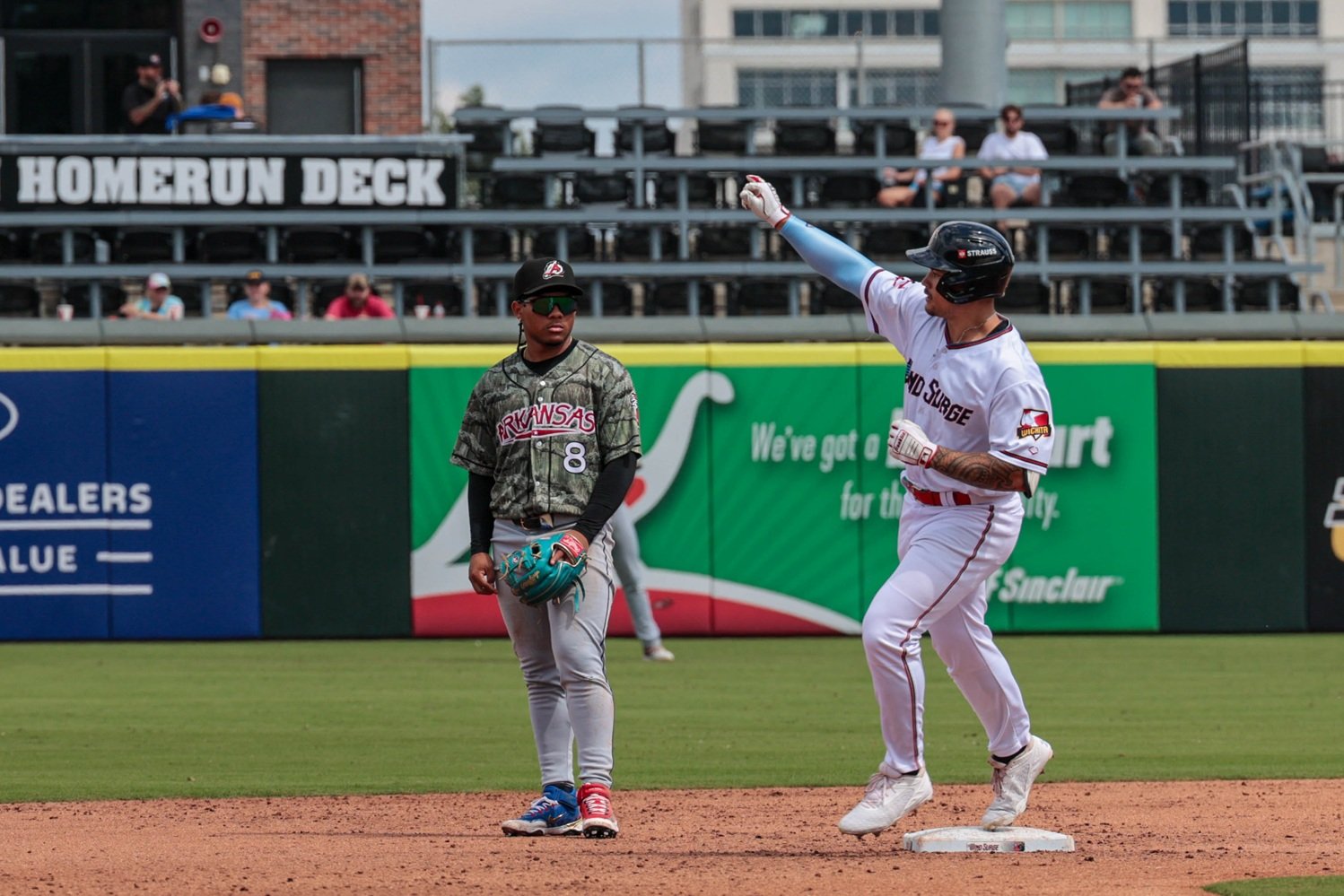 For the second straight week, the Mussels had games cancelled on Sunday. Their season includes just one more week of games, at Hammond Stadium in Fort Myers if you want to go. TRANSACTIONS There were a few moves on Sunday morning. Connor Prielipp was activated from the Development List for St. Paul, and Aaron Rozek was put on the Development List. Ricardo Olivar was activated from Wichita’s IL. Michael Martinez was placed on their Development List. SAINTS SENTINEL St. Paul 1, Toledo 2 Box Score Pablo Lopez is Ready After Strong Rehab Start. Saints Lose Late. It was a Triple-A pitching matchup for the ages! Pablo Lopez, making his third rehab start, was on the mound for the Saints. The home team Toledo Mudhens starter was long-time friend Randy Dobnak. Dobnak, who went 8-5 with a 3.12 ERA over 75 innings for the Twins in 2019 and 2020, was traded to the Tigers last month with Chris Paddack. On Sunday, he faced several of his literal #OldFriends with the Saints. “Dobber” tossed five scoreless innings. He gave up just two hits. He walked three and had three strikeouts. Pablo Lopez was even a little bit better. He tossed 5 2/3 scoreless innings. He gave up four hits, walked just one and had seven strikeouts. The pitcher who came in for the Mudhens after Dobnak was another long-time friend, Jordan Balazovic. He tossed a scoreless sixth inning. In the seventh, the Saints were able to get on the scoreboard. Carson McCusker led off with a solid single to left. He advanced to second base on a fielding error by another former Twins friend Akil Baddoo. After a strikeout, Jonah Bride singled to center to drive in McCusker with the unearned run. Lopez faced two batters in the sixth inning and got both out. With 82 pitches thrown, his night (and presumably his rehab assignment) is now over (though obviously not officially until he can pitch next and gets added back to the Twins roster. Lefty Connor Prielipp came on in relief. He struck out Jace Jung to end that inning. Baddoo led off the seventh with a single which was followed by another single. After a strikeout, Prielipp coaxed Kevin Newman into hitting into an inning-ending double play. Prielipp struck out two and got a ground out in a scoreless eighth which was only interrupted by a Parker Meadows walk. Prielipp was back out there for the bottom of the ninth inning. Jung led off with a single, and Baddoo moved him to third on another single. After a strikeout, Trei Cruz singled to drive in Jung and tie the game at 1-1. Next, Newman lined a single to center which scored Baddoo with the game-ending run. The Saints did very little on offense. Jonah Bride had three of the team’s five hits. Walker Jenkins had two of the Saints’ four walks. He was also hit by a pitch and stole his first Triple-A base. Gabriel Gonzalez had a single and a walk. WIND SURGE WISDOM Wichita 6, Arkansas 3 Box Score Surge Power Their Way to a Sweep of the Travelers On Sunday, Wichita grabbed an early lead, but when the Travelers came back, the Wind Surge put together a three-run inning to reclaim the lead and complete the six-game sweep over Arkansas. Wichita got on the board first when Andrew Cossetti drilled a leadoff home run to start the bottom of the second inning. He now has 11 on the season. With two outs in the fourth inning, Nate Baez hit his fifth homer to make it 2-0. Ricky Castro started for the home team. He tossed 3 1/3 scoreless innings. He gave up one hit, walked two and struck out two batters. Jacob Wosinski came into the fourth inning with two runners on base, but he kept both from scoring. He gave up one run in the fifth inning. Kade Bragg, who got the final out of the fifth frame, gave up a two-run homer in the top of the sixth inning that put Arkansas on top 3-2. But the Surge punched back with power. Kala’i Rosario led off the bottom of the sixth with his 24th home run of the season to tie the game. It also tied him for the franchise record for home runs in a season. What an August for Kala'i! With one out, Cossetti walked. He went to third on a Baez double. With two outs, Ben Ross drove in both with a double to give the Surge a 5-3 lead. The Surge added an insurance run in the seventh when Harry Genth scored on a Baez walk. Baez was the fourth Wichita player to walk that inning. John Stankiewicz worked a scoreless seventh inning, and Mike Paredes picked up his fifth save with four strikeouts over his two innings. Baez led the way. He went 2-for-3 with a walk, his eighth double and his fifth home run. Ben Ross was 3-for-4 with his 14th and 15th doubles; the latter gave his team a lead that they never gave up. With the sweep, the Wind Surge are 12 games over .500, their best mark of the season. KERNELS NUGGETS Cedar Rapids 2, Beloit 1 Box Score Win the 2nd Inning, Win the Game There were 17 half-innings played in Cedar Rapids on Sunday afternoon. Zero runs were scored in 15 of them. Nine innings were played in Cedar Rapids on Sunday afternoon. Zero runs were scored in eight of them. Sometimes the game can be won or lost in the second inning. Ty Langenberg has been pitching quite well of late. He gave up just one run on three hits and two walks over six innings. He had four strikeouts. Chase Chaney tossed three scoreless innings to close out the game and record his first save of the season. He gave up two hits and struck out three batters. Both teams went 1-2-3 in the first inning, so let’s take a look at the second frame. Langenberg walked the leadoff batter, but then he struck out the next two batters. After a stolen base, Jay Beshears doubled to drive in Beloit’s run. The bottom of the second began with a strikeout. Misael Urbina followed with his fourth triple of the season. He scored on a Poncho Ruiz single to center. After a second out, Jaime Ferrer singled Ruiz to second. Jefferson Valladares followed with his fourth double which drove in Ruiz and gave the Kernels the 2-1 lead. Frankly after that, there were very few scoring chances. Very few base runners. In the fifth inning, Kyle DeBarge singled and stole his 63rd base. He went to third on a wild pitch but was unable to score. The Kernels got two runners on (walk, hit batter) in the sixth. The Sky Carp had two singles in the top of the eighth inning but didn’t get a runner past second. Pitching was the story of the game, and Ty Langenberg and Chase Chaney were terrific. But so was the defense. Yes, there were strikeouts, but also a lot of ground ball outs, forced outs, double plays and a couple of caught steals. Six Kernels had one hit. There were three players who had a walk. Ruiz was the only Kernel with one hit and one walk. Valladares had the lone double, and Misael Urbina had the lone triple. MUSSEL MATTERS Fort Myers/Dunedin (cancelled) Box Score As per usual, baseball in August is always a question mark down in Florida. Sunday’s series finale in Dunedin was cancelled due to rain. So, the Mussels season road record was 25-39. They return to Hammond Stadium on Tuesday to host the St. Lucie Mets for, hopefully, six more games. And that will make the end of the Mussels 2025 season. PLAYERS OF THE DAY Hitter of the Day Nate Baez (Wichita): 2-for-3, BB, 2B(8), HR(5), 2 R, 2 RBI, Pitcher of the Day Ty Langenberg (Cedar Rapids): 6 IP, 3 H, 1 R, 2 BB, 4 K, 81 pitches, 55 strikes (61.6%) Chase Chaney (Cedar Rapids): 3 IP, 2 H, 0 R, 0 BB, 3 K, 51 pitches, 32 strikes (62.7%) PROSPECT SUMMARY Check out the Prospect Tracker for much more on our Twins Top 20 prospects after seeing how they did today. #1– Walker Jenkins (St. Paul) - 0-for-1, 2 BB, HBP, (DHd) #2 - Luke Keaschall (Minnesota) - 1-for-2, BB, HBP, 2 R, RBI (played 2B) #5 - Eduardo Tait (Cedar Rapids) - 0-for-4, 2 K (DHd) #6 - Connor Prielipp (St.Paul ) - 2 2/3 IP, 6 H, 2 ER, 1 BB, 5 K, 53 pitches, 34 strikes (64.2%) #7 - Dasan Hill (Cedar Rapids) - Sunday reports from multiple people tell me that Hill is fine and will make his next start. #11 - Gabriel Gonzalez (St. Paul) - 1-for-3, BB (played LF) #13 - Marek Houston (Cedar Rapids) - 0-for-4, K (played SS) #17 - Kyle DeBarge (Cedar Rapids) - 1-for-4, K, SB(63) (played CF) #20 - Hendry Mendez (Wichita) - 0-for-4, BB, SB(2) (played LF) WHAT’S NEXT? MONDAY White Sox @ Minnesota (1:10 PM CT) - TBD (4 game home series) TUESDAY St. Paul @ Louisville (5:35 PM CT) - LHP Kendry Rojas (1-1, 5.40 ERA) vs RHP Chase Petty (4-11, 5.77 ERA) Tulsa @ Wichita (7:05 PM CT) - TBD Cedar Rapids @ Quad Cities (6:30 PM CT) - TBD St. Lucie @ Fort Myers (6:05 PM CT) - TBD CURRENT W-L Records Minnesota Twins: 62-74 St. Paul Saints: 58-72 (25-32 second half) Wichita Wind Surge: 69-57 (32-25 second half) Cedar Rapids Kernels: 69-57 (29-31 second half) Fort Myers Mighty Mussels: 49-71 (22-34 second half) FCL Twins: 39-20 (finished 2nd in FCL playoffs) DSL Twins: 24-32 (season complete) Please feel free to ask questions about the teams, the rosters, and discuss today’s games, or anything else Twins minor-league related!
- 11 comments
-
- 3
-
-
- walker jenkins
- jonah bride
- (and 8 more)
-
sounds like Hill is just fine. Just had some tightness in his forearm. I don't know if they imaged it. I tried to get the opinion of multiple people but everything came back that he is just fine. I still think it'd be OK to shut him down for the season.
- 11 replies
-
- 5
-
-
- payton eeles
- gabriel gonzalez
- (and 8 more)
-
Hey all, I finished writing this around midnight last night... Did I really not publish it until now?!?! If so, my apologies.
- 11 replies
-
- 12
-
-
- payton eeles
- gabriel gonzalez
- (and 8 more)
-
Image courtesy of David Malamut It was a rough day for the Twins and their affiliates. But usually with the bad comes some good. Usually. For instance, Mick Abel had another rough outing for the Twins. On the other side, Taj Bradley was good. He gave up just one run in and struck out six batters in five innings. Byron Buxton hit his 28th home run. James Outman had two hits, and so did Trevor Larnach after his three hits on Friday night. Maybe most positive, Ryan Fitzgerald pitched a 1-2-3 inning! I mention that as a reminder that with the minor league games too, you can find good in the bad most of the time. There were a few rough games in the organization on Saturday night, but in each, there is something to hang onto. Wichita was the only affiliate to win on Saturday, but the biggest news of the day came out of Cedar Rapids. TRANSACTIONS None. Really. SAINTS SENTINEL St. Paul 1, Toledo 13 Box Score Saints Stifled and Tormented in Toledo. It was a rough one in Toledo. Pierson Ohl made his first appearance since coming back from the Twins. In three innings, he gave up three runs on four hits. He walked none and had five strikeouts. Jarret Whorff came on for the fourth inning. He recorded just two outs and was charged with six runs on six hits and two walks. Marco Raya came on with two runners on and issued a walk to load the bases before he got the final out without additional runs scored. However, he was in early season form unfortunately. In the fifth inning, Raya gave up two runs on two walks and a double. He came back out for the sixth inning. He walked the first two batters he faced before Darren McCaughan came on and struck out the next three batters. Raya’s final line was two runs on one hit and five walks in 1 1/3 innings. McCaughan worked two innings and gave up two runs (1 earned) on two hits and a walk. He struck out five. Erasmo Ramirez walked one in a scoreless inning in his first appearance since accepting the assignment to St. Paul. The Saints lone run came in the top of the sixth. Payton Eeles led off with a single. With one out, he moved up to second on a Gabriel Gonzalez single. DaShawn Keirsey singled to drive in Eeles with the lone run. The Saints had seven hits and two walks. Gonzalez went 3-for-4. Eeles was 2-for-3 with a walk. The bottom four in the Saints lineup accounted for 12 of the Saints 16 strikeouts. WIND SURGE WISDOM Wichita 5, Arkansas 2 Box Score Wichita Surges Ahead Early and Hangs on to Win The Wind Surge jumped out to an early 5-0 lead after two innings. That was about it for the offense, but the pitching staff held on to the lead the rest of the way. After a 31-minute rain delay the game started with Alejandro Hidalgo faced three batters in a scoreless top of the first inning. In the bottom of the first, Kaelen Culpepper and Kala’i Rosario started things with singles. Hendry Mendez laid down a sacrifice to advance runners to second and third base. Nate Baez grounded to second, and Culpepper beat a throw to the plate leaving runners on first and third. Andrew Cossetti singled to drive in the second run. With two outs, Jake Rucker singled to drive in Baez with the third run. Then with one out in the second inning, Maddux Houghton singled. Culpepper followed with a walk. Rosario singled to center to drive in Houghton, and then Mendez singled to drive in Culpepper and make it 5-0. That was it for the Surge scoring. Then it came down to the pitching, and they were good. Hidalgo gave up just one run on five hits in 4 2/3 innings. He had three strikeouts and no walks. Gabriel Yanez gave up one run on three hits in 1 1/3 innings. Logan Whitaker and Jaylen Nowlin each struck out two batters in a scoreless inning. Tanner Andrews picked up his second save with a scoreless ninth inning. Kaelen Culpepper went 3-for-3 with a walk. Kala’i Rosario was 2-for-5. Hendry Mendez was 2-for-3 with a walk and the sacrifice bunt. Jake Rucker was 2-for-2 with two walks. KERNELS NUGGETS Cedar Rapids 1, Beloit 6 Box Score Dasan Hill Sets Career-High Strikeout Mark in 3 2/3 Innings, Leaves with Injury Dasan Hill was back on the mound for the Kernels on Saturday, and he looked really good. The lanky left tossed three scoreless innings and gave up just two hits. He struck out one batter in the first inning, three batters in the second inning, two more in the third inning. In the fourth inning, he gave up a leadoff walk. He proceeded to strike out the next two batters, even though he didn’t quite look right. The second strikeout of the fourth inning came on an 84-mph changeup. But when he caught the throw back from the pitcher, he grimaced. He walked across the mound and looked in the dugout. Quickly, pitching coach Argenis Angulo was on the mound talking to the southpaw. Soon after, he called up manager Brian Meyer and the trainer. When the ump got to the mound, Angulo pointed to his elbow. When the manager got to the mound, Angulo pointed at Hill’s outer elbow. The trainer talked to him and checked things out. It didn’t take long for Meyer to look toward his bullpen and call on another pitcher. (the following are screenshots from MILB.com) It’s hard to read what happened, to be honest. We're talking about tightness in his forearm; it has to be a must to remove the pitcher from the game immediately. Hill appeared to be disappointed to leave the game, which seems positive. However, the next step will be to get some imaging done. We can hold our collective breaths. Brennen Oxford came on to replace Hill with a runner on second base. He gave up a walk and a double steal. That was followed by another walk. And then a balk drove in the inherited runner to score. The next two batters drove in runs with singles to make it 3-0. On a positive note, Marek Houston led off the bottom of the fourth with his first Kernels home run. And that was about it for the Kernels offense. Jaime Ferrer hit his 18th double, and Poncho Ruiz hit a single. Three hits, two walks. One hit batter. Just one run. Spencer Bengard came in to start the fifth inning and gave up two unearned runs over three innings. He had three strikeouts. Nick Trabacchi gave up a run on a solo homer and had two strikeouts in two innings. MUSSEL MATTERS Fort Myers 0, Dunedin 6 Box Score Enrique Jimenez Keeps Hitting, but Mussels Offense Goes Quiet Enrique Jimenez hit a single and a double in his four at-bats on Saturday night. Those were the only two hits for the Mussels in the game. Yilber Herrera walked and stole base. He had the Mussels only walk in the game. The Mussels had a season-high 16 strikeouts in the game. That is the offensive piece of this game recap. (Read that however you will.) The pitching wasn’t actually too bad. Joel Garcia drops to 0-3 with the Mussels, but he gave up just one run on four hits and a walk. He had three strikeouts. Tyler Stasiowski gave up one run on four hits and a walk over two innings. Jakob Hall gave up only a solo home run in his inning. Will Armbruester was charged with three runs (1 earned) on three hits in the eighth inning. PLAYERS OF THE DAY Hitter of the Day Kaelen Culpepper (Wichita): 3-for-3, BB, HBP, 2 R Pitcher of the Day Alejandro Hidalgo (Wichita): 4 2/3 IP, 5 H, 1 ER, 3 K, 63 pitches, 45 strikes (61.6%) PROSPECT SUMMARY Check out the Prospect Tracker for much more on our Twins Top 20 prospects after seeing how they did today. #1– Walker Jenkins (St. Paul) - 0-for-4, K, (played RF) #2 - Luke Keaschall (Minnesota) - 0-for-4, SB, (played 2B) #3 - Kaelen Culpepper (Wichita) - 3-for-3, BB, HBP, 2 R (played SS) #5 - Eduardo Tait (Cedar Rapids) - 0-for-3, BB, E (caught) #7 - Dasan Hill (Cedar Rapids) - 3 2/3 IP, 2 H, 1 ER, 2 BB, 8 K, 74 pitches, 45 strikes (60.8%) #8 - Mick Abel (Minnesota) - 1 IP, 7 H, 6 R, 5 ER, 1 BB, 1 K, 59 pitches, 37 strikes (62.7%) #11 - Gabriel Gonzalez (St. Paul) - 3-for-4, (played LF) #12 - Marco Raya (St. Paul) - 1 1/3 IP, 1 H, 2 ER, 5 BB, 2 K, 53 pitches, 26 strikes (49.1%) #13 - Marek Houston (Cedar Rapids) - 1-for-4, HR(1), R, RBI, K, E (played SS) #14 - Brandon Winokur (Cedar Rapids) - 0-for-4, 2 K (played CF) #17 - Kyle DeBarge (Cedar Rapids) - 0-for-3, BB, K (played 2B) #20 - Hendry Mendez (Wichita) - 2-for-3, BB, SH, BB, RBI (played LF) SUNDAY PITCHING PROBABLES St. Paul @ Toledo (5:05 PM CT) - RHP Pablo Lopez (0-2, 4.35 ERA) Arkansas @ Wichita (1:05 PM CT) - RHP Ricky Castro (3-3, 5.19 ERA) Beloit @ Cedar Rapids (1:05 PM CT) - RHP Ty Langenberg (4-5, 4.30 ERA) Fort Myers @ Dunedin (11:00 AM CT) - RHP Xavier Kolhosser (0-1, 9.00 ERA) CURRENT W-L Records Minnesota Twins: 61-74 St. Paul Saints: 58-71 (25-31 second half, 7th in IL West, 14 GB) Wichita Wind Surge: 68-57 (31-25 second half, 3rd in Texas Lg North, 4 GB) Cedar Rapids Kernels: 68-57 (28-31 second half, T-3rd in MWL West, 4.5 GB, first half winner) Fort Myers Mighty Mussels: 49-71 (22-34 second half 6th in FSL West, 9.5 GB) FCL Twins: 39-20 (finished 2nd in FCL playoffs) DSL Twins: 24-32 (season complete) Please feel free to ask questions about the teams, the rosters, and discuss today’s games, or anything else Twins minor-league related! View full article
-
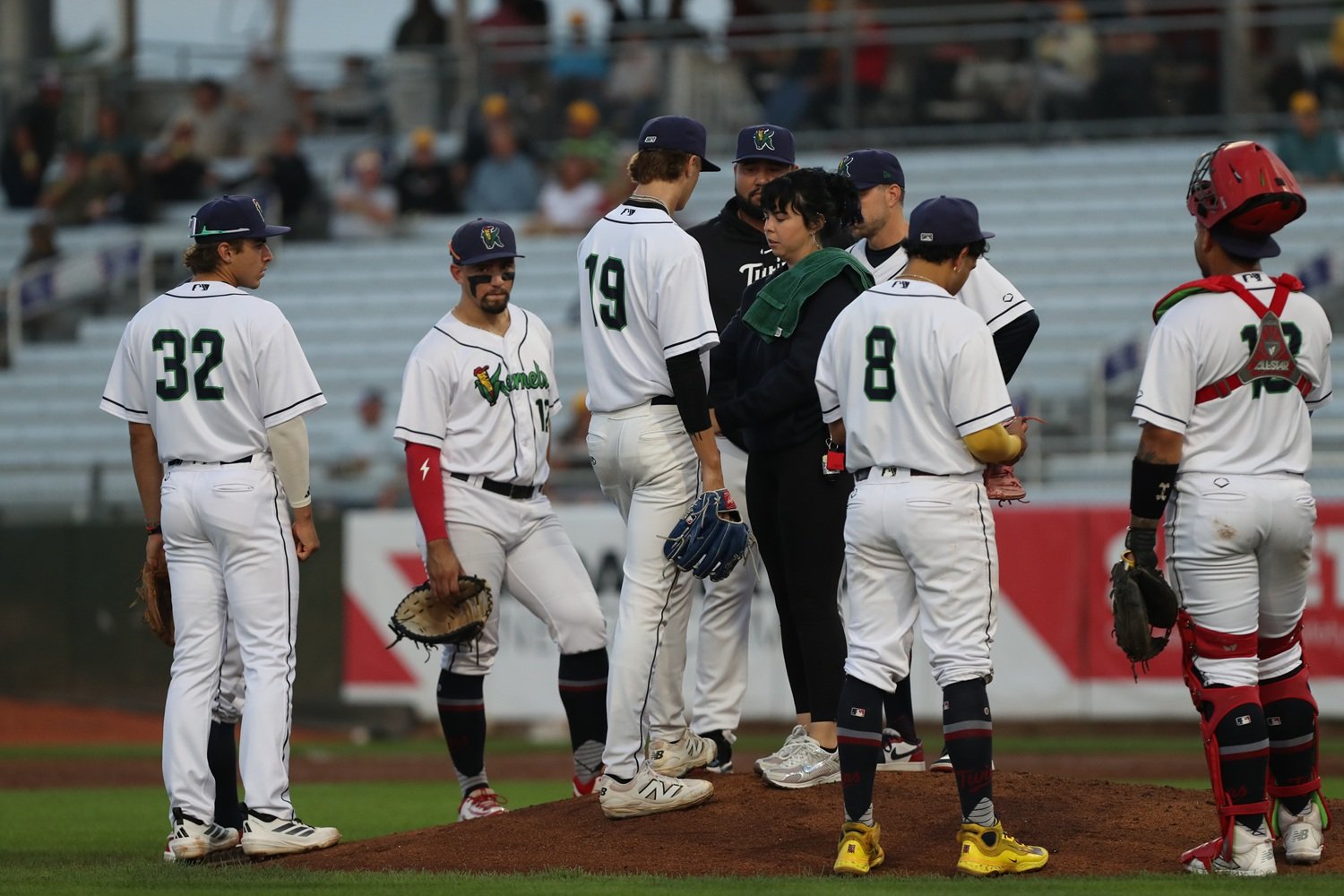 It was a rough day for the Twins and their affiliates. But usually with the bad comes some good. Usually. For instance, Mick Abel had another rough outing for the Twins. On the other side, Taj Bradley was good. He gave up just one run in and struck out six batters in five innings. Byron Buxton hit his 28th home run. James Outman had two hits, and so did Trevor Larnach after his three hits on Friday night. Maybe most positive, Ryan Fitzgerald pitched a 1-2-3 inning! I mention that as a reminder that with the minor league games too, you can find good in the bad most of the time. There were a few rough games in the organization on Saturday night, but in each, there is something to hang onto. Wichita was the only affiliate to win on Saturday, but the biggest news of the day came out of Cedar Rapids. TRANSACTIONS None. Really. SAINTS SENTINEL St. Paul 1, Toledo 13 Box Score Saints Stifled and Tormented in Toledo. It was a rough one in Toledo. Pierson Ohl made his first appearance since coming back from the Twins. In three innings, he gave up three runs on four hits. He walked none and had five strikeouts. Jarret Whorff came on for the fourth inning. He recorded just two outs and was charged with six runs on six hits and two walks. Marco Raya came on with two runners on and issued a walk to load the bases before he got the final out without additional runs scored. However, he was in early season form unfortunately. In the fifth inning, Raya gave up two runs on two walks and a double. He came back out for the sixth inning. He walked the first two batters he faced before Darren McCaughan came on and struck out the next three batters. Raya’s final line was two runs on one hit and five walks in 1 1/3 innings. McCaughan worked two innings and gave up two runs (1 earned) on two hits and a walk. He struck out five. Erasmo Ramirez walked one in a scoreless inning in his first appearance since accepting the assignment to St. Paul. The Saints lone run came in the top of the sixth. Payton Eeles led off with a single. With one out, he moved up to second on a Gabriel Gonzalez single. DaShawn Keirsey singled to drive in Eeles with the lone run. The Saints had seven hits and two walks. Gonzalez went 3-for-4. Eeles was 2-for-3 with a walk. The bottom four in the Saints lineup accounted for 12 of the Saints 16 strikeouts. WIND SURGE WISDOM Wichita 5, Arkansas 2 Box Score Wichita Surges Ahead Early and Hangs on to Win The Wind Surge jumped out to an early 5-0 lead after two innings. That was about it for the offense, but the pitching staff held on to the lead the rest of the way. After a 31-minute rain delay the game started with Alejandro Hidalgo faced three batters in a scoreless top of the first inning. In the bottom of the first, Kaelen Culpepper and Kala’i Rosario started things with singles. Hendry Mendez laid down a sacrifice to advance runners to second and third base. Nate Baez grounded to second, and Culpepper beat a throw to the plate leaving runners on first and third. Andrew Cossetti singled to drive in the second run. With two outs, Jake Rucker singled to drive in Baez with the third run. Then with one out in the second inning, Maddux Houghton singled. Culpepper followed with a walk. Rosario singled to center to drive in Houghton, and then Mendez singled to drive in Culpepper and make it 5-0. That was it for the Surge scoring. Then it came down to the pitching, and they were good. Hidalgo gave up just one run on five hits in 4 2/3 innings. He had three strikeouts and no walks. Gabriel Yanez gave up one run on three hits in 1 1/3 innings. Logan Whitaker and Jaylen Nowlin each struck out two batters in a scoreless inning. Tanner Andrews picked up his second save with a scoreless ninth inning. Kaelen Culpepper went 3-for-3 with a walk. Kala’i Rosario was 2-for-5. Hendry Mendez was 2-for-3 with a walk and the sacrifice bunt. Jake Rucker was 2-for-2 with two walks. KERNELS NUGGETS Cedar Rapids 1, Beloit 6 Box Score Dasan Hill Sets Career-High Strikeout Mark in 3 2/3 Innings, Leaves with Injury Dasan Hill was back on the mound for the Kernels on Saturday, and he looked really good. The lanky left tossed three scoreless innings and gave up just two hits. He struck out one batter in the first inning, three batters in the second inning, two more in the third inning. In the fourth inning, he gave up a leadoff walk. He proceeded to strike out the next two batters, even though he didn’t quite look right. The second strikeout of the fourth inning came on an 84-mph changeup. But when he caught the throw back from the pitcher, he grimaced. He walked across the mound and looked in the dugout. Quickly, pitching coach Argenis Angulo was on the mound talking to the southpaw. Soon after, he called up manager Brian Meyer and the trainer. When the ump got to the mound, Angulo pointed to his elbow. When the manager got to the mound, Angulo pointed at Hill’s outer elbow. The trainer talked to him and checked things out. It didn’t take long for Meyer to look toward his bullpen and call on another pitcher. (the following are screenshots from MILB.com) It’s hard to read what happened, to be honest. We're talking about tightness in his forearm; it has to be a must to remove the pitcher from the game immediately. Hill appeared to be disappointed to leave the game, which seems positive. However, the next step will be to get some imaging done. We can hold our collective breaths. Brennen Oxford came on to replace Hill with a runner on second base. He gave up a walk and a double steal. That was followed by another walk. And then a balk drove in the inherited runner to score. The next two batters drove in runs with singles to make it 3-0. On a positive note, Marek Houston led off the bottom of the fourth with his first Kernels home run. And that was about it for the Kernels offense. Jaime Ferrer hit his 18th double, and Poncho Ruiz hit a single. Three hits, two walks. One hit batter. Just one run. Spencer Bengard came in to start the fifth inning and gave up two unearned runs over three innings. He had three strikeouts. Nick Trabacchi gave up a run on a solo homer and had two strikeouts in two innings. MUSSEL MATTERS Fort Myers 0, Dunedin 6 Box Score Enrique Jimenez Keeps Hitting, but Mussels Offense Goes Quiet Enrique Jimenez hit a single and a double in his four at-bats on Saturday night. Those were the only two hits for the Mussels in the game. Yilber Herrera walked and stole base. He had the Mussels only walk in the game. The Mussels had a season-high 16 strikeouts in the game. That is the offensive piece of this game recap. (Read that however you will.) The pitching wasn’t actually too bad. Joel Garcia drops to 0-3 with the Mussels, but he gave up just one run on four hits and a walk. He had three strikeouts. Tyler Stasiowski gave up one run on four hits and a walk over two innings. Jakob Hall gave up only a solo home run in his inning. Will Armbruester was charged with three runs (1 earned) on three hits in the eighth inning. PLAYERS OF THE DAY Hitter of the Day Kaelen Culpepper (Wichita): 3-for-3, BB, HBP, 2 R Pitcher of the Day Alejandro Hidalgo (Wichita): 4 2/3 IP, 5 H, 1 ER, 3 K, 63 pitches, 45 strikes (61.6%) PROSPECT SUMMARY Check out the Prospect Tracker for much more on our Twins Top 20 prospects after seeing how they did today. #1– Walker Jenkins (St. Paul) - 0-for-4, K, (played RF) #2 - Luke Keaschall (Minnesota) - 0-for-4, SB, (played 2B) #3 - Kaelen Culpepper (Wichita) - 3-for-3, BB, HBP, 2 R (played SS) #5 - Eduardo Tait (Cedar Rapids) - 0-for-3, BB, E (caught) #7 - Dasan Hill (Cedar Rapids) - 3 2/3 IP, 2 H, 1 ER, 2 BB, 8 K, 74 pitches, 45 strikes (60.8%) #8 - Mick Abel (Minnesota) - 1 IP, 7 H, 6 R, 5 ER, 1 BB, 1 K, 59 pitches, 37 strikes (62.7%) #11 - Gabriel Gonzalez (St. Paul) - 3-for-4, (played LF) #12 - Marco Raya (St. Paul) - 1 1/3 IP, 1 H, 2 ER, 5 BB, 2 K, 53 pitches, 26 strikes (49.1%) #13 - Marek Houston (Cedar Rapids) - 1-for-4, HR(1), R, RBI, K, E (played SS) #14 - Brandon Winokur (Cedar Rapids) - 0-for-4, 2 K (played CF) #17 - Kyle DeBarge (Cedar Rapids) - 0-for-3, BB, K (played 2B) #20 - Hendry Mendez (Wichita) - 2-for-3, BB, SH, BB, RBI (played LF) SUNDAY PITCHING PROBABLES St. Paul @ Toledo (5:05 PM CT) - RHP Pablo Lopez (0-2, 4.35 ERA) Arkansas @ Wichita (1:05 PM CT) - RHP Ricky Castro (3-3, 5.19 ERA) Beloit @ Cedar Rapids (1:05 PM CT) - RHP Ty Langenberg (4-5, 4.30 ERA) Fort Myers @ Dunedin (11:00 AM CT) - RHP Xavier Kolhosser (0-1, 9.00 ERA) CURRENT W-L Records Minnesota Twins: 61-74 St. Paul Saints: 58-71 (25-31 second half, 7th in IL West, 14 GB) Wichita Wind Surge: 68-57 (31-25 second half, 3rd in Texas Lg North, 4 GB) Cedar Rapids Kernels: 68-57 (28-31 second half, T-3rd in MWL West, 4.5 GB, first half winner) Fort Myers Mighty Mussels: 49-71 (22-34 second half 6th in FSL West, 9.5 GB) FCL Twins: 39-20 (finished 2nd in FCL playoffs) DSL Twins: 24-32 (season complete) Please feel free to ask questions about the teams, the rosters, and discuss today’s games, or anything else Twins minor-league related!
- 11 comments
-
- 7
-
-
- payton eeles
- gabriel gonzalez
- (and 8 more)
-
Image courtesy of Ed Bailey (photo of CJ Culpepper) TRANSACTIONS The Mussels placed OF Jacob McCombs on the 7-Day Injured List with spasms in his left quad. SAINTS SENTINEL St. Paul 1, Toledo 2 Box Score Klein Shines in First Saints Start, but Offense Falls Short in Toledo John Klein made his first start (fourth appearance) for the Saints since his promotion from Wichita, and it was a good one, going six innings, giving up just two runs (one earned), and striking out six. But he fell to 0-2 with the Saints behind a quiet offense. The Mudhens grabbed a 2-0 lead in the bottom of the second inning. The Saints got on the scoreboard in the top of the fourth inning on Gabriel Gonzalez’s fourth Saints homer. The 21-year-old appears to really enjoy hitting in Toledo. Gonzalez has three home runs in four games there this week. Unfortunately, the Saints managed just four hits and two walks in the game. Noah Cardenas had a single and a walk. Cody Laweryson struck out three batters over two perfect innings. Travis Adams struck out two in a perfect ninth inning. Walker Jenkins went 0-for-3 with a walk and two strikeouts. Through his first four games, he is 1-for-15 (.067) with a double, two walks, and five strikeouts. Carson McCusker went 0-for-4 with four strikeouts. WIND SURGE WISDOM Wichita 3, Arkansas 0 Box Score Rucker Provides the Power While Culpepper, Four Relievers, Complete Shutout With the exception of the bottom of the fourth inning, there were no runs scored in this game. Fortunately, the Wind Surge were played at their home ballpark and hit in the bottom half throughout the game. With one out, Nate Baez and Ben Ross singled. With two outs, Jake Rucker’s sixth home run of the season drove in all three runs. The Wind Surge had just four hits. Three came in that fourth inning. The only other hit was a Kaelen Culpepper double, his seventh with Wichita. But in any shutout, the big story has to be the pitching, and C.J. Culpepper is putting himself in a better situation with every outing. He certainly appears to be back at full health. For the third straight outing, Culpepper tossed five innings. It is the second time in a row that he gave up no runs and he’s given up just one run over his last three starts. In five starts in August, he is 2-0 with a 1.17 ERA in 23 innings. From there, Michael Martinez, John Stankiewicz, Hunter Hoopes, and Kade Bragg each pitched a scoreless inning. For Bragg, it marked his third save since joining the Wind Surge. KERNELS NUGGETS Cedar Rapids 4, Beloit 5 (10 innings) Box Score Cubs Homers Top Kernels to Take Game and Series 4-2. The Kernels fell behind early in this one, fought back, sent it to extra frames, and then fell short in the tenth inning. Adrian Bohorquez gave up four runs on two hits, two hit batters, and three walks over 3 1/3 innings. He had seven strikeouts. All four runs came in the first inning courtesy of a grand slam off the bat of Brandon Compton, the Marlins' second-round pick from Arizona State. Eston Stuff got the next five outs and gave up just one hit. Jacob Kisting came on and tossed four scoreless, hitless innings. He walked one and struck out six batters. Ruddy Gomez gave up the unearned run in the tenth inning to take the loss. The Kernels got on the board in the bottom of the sixth. With two outs, Misael Urbina and Caden Kendle walked. Both scored on a double by Poncho Ruiz. In the bottom of the seventh, Eduardo Tait singled and went to second on a wild pitch. With two outs, Brandon Winokur singled to drive him in and cut the team’s deficit to 4-3. The Kernels went scoreless in the bottom of the eighth. The first two Kernels hitters in the bottom of the ninth also got out. However, just when you thought it was over, Kyle DeBarge hit a long solo home run to tie the score. Gomez allowed the Manfred Man to score in the top of the 10th. The Kernels got a runner to third in the bottom half of the inning but were unable to drive in the tying run. Tait went 2-for-5 with his seventh double. Brandon Winokur went 2-for-5 and an RBI. Jefferson Valladares went 2-for 4 with his third double. Prior to his game-tying home run, DeBarge was 0-for-4 with four strikeouts. MUSSEL MATTERS Fort Myers 11, Dunedin 4 Box Score Mighty Mussels Flex Their Muscles in Dunedin. The Mussels scored early and often on Friday night, maintaining a comfortable lead throughout the game. Dunedin actually took the early lead with a run in the bottom of the first frame. The Mussels tied it up in the top of the second when Ryan Sprock scored on a bases-loaded fielding error. The Blue Jays also went ahead with a single run in the bottom of the second. But in the top of the third, Mussels' right fielder Yasser Mercedes scored on a Daniel Pena single to tie the game. Yilber Herrera followed with his first Florida State League home run to give his team a 5-2 lead. The Mussels continued to show their Might-y-ness (if you will) in the fourth. Eduardo Beltre hit his second Fort Myers homer. Later in the inning, Peyton Carr hit a three-run homer that made it 9-2. Dunedin scored two more in the fourth to make it 9-4. However, in the top of the sixth Sprock knocked his first professional home run to make it 10-4. In the seventh, Mercedes drove in Emmanuel Rodriguez with a sacrifice fly. That gave the Mussels an 11-4 lead. Rodriguez, returning from an oblique injury, played center field for seven innings. He was 1-for-3 with two walks. Dameury Pena went 2-for-6 with his 10th double. Sprock was 2-for-3 with two walks and a homer. Carr went 2-for-4 with a walk and his fourth home run. Beltre went 1-for-3 with two walks and a homer. Daniel Pena went 1-for-3 with two walks. Herrera was 2-for-4 with a homer and three RBI. Michael Carpenter started and gave up four runs (three earned) on six hits and a walk over four innings. He struck out four batters. Anthony Narvaez came in and gave up one hit and one walk over two scoreless innings. Zander Sechrist gave up one hit over three scoreless innings to record his second save. PLAYERS OF THE DAY Hitter of the Day Ryan Sprock (Fort Myers): 2-for-3, 2 BB, HR(1), 4 R, RBI Pitcher of the Day CJ Culpepper (Wichita): 5 IP, 3 H, 0 R, 2 BB, HBP, 4 K, 74 pitches, 41 strikes (55.5%) PROSPECT SUMMARY Check out the Prospect Tracker for much more on our Twins Top 20 prospects after seeing how they did today. #1– Walker Jenkins (Wichita) - 0-for-3, BB, 2 K, (played CF) #2 - Luke Keaschall (Minnesota) - 0-for-4, BB, K, (played 2B) #3 - Kaelen Culpepper (Wichita) - 1-for-3, 2B(7), (played SS) #4 - Emmanuel Rodriguez (St. Paul) - Rehab in FM (1-for-3, 2 BB, R, K (played CF)) #5 - Eduardo Tait (Cedar Rapids) - 2-for-5, 2B(7), R, K (DH) #11 - Gabriel Gonzalez (St. Paul) - 2-for-4, HR(4), R, RBI, K (played LF) #14 - Brandon Winokur (Cedar Rapids) - 2-for-5, RBI, K (played SS) #17 - Kyle DeBarge (Cedar Rapids) - 1-for-5, HR(7), 4 K (played CF) #18 - C.J. Culpepper (Wichita) - 5 IP, 3 H, 0 R, 2 BB, HBP, 4 K, 74 pitches, 41 strikes (55.5%) #20 - Hendry Mendez (Wichita) - 0-for-2, 2 BB (played LF) SATURDAY PITCHING PROBABLES St. Paul @ Toledo (6:05 PM CT) - RHP Pierson Ohl (0-1, 2.82 ERA) Arkansas @ Wichita (6:05 PM CT) - RHP Alejandro Hidalgo (0-3, 15.55 ERA) Beloit @ Cedar Rapids (6:35 PM CT) - LHP Dasan Hill (0-1, 7.11 ERA) Fort Myers @ Dunedin (5:30 PM CT) - RHP Joel Garcia (0-2, 31.15 ERA) CURRENT W-L Records Minnesota Twins: 61-73 St. Paul Saints: 58-70 (25-30 second half, 7th in IL West, 14 GB) Wichita Wind Surge: 67-57 (30-25 second half, 3rd in Texas Lg North, 4 GB) Cedar Rapids Kernels: 68-56 (28-30 second half, T-3rd in MWL West, 4.5 GB, first half winner) Fort Myers Mighty Mussels: 49-70 (22-33 second half 6th in FSL West, 9.5 GB) FCL Twins: 39-20 (finished 2nd in FCL playoffs) DSL Twins: 24-32 (season complete) Please feel free to ask questions about the teams, the rosters, and discuss today’s games, or anything else Twins minor-league related in the comments below! View full article
-
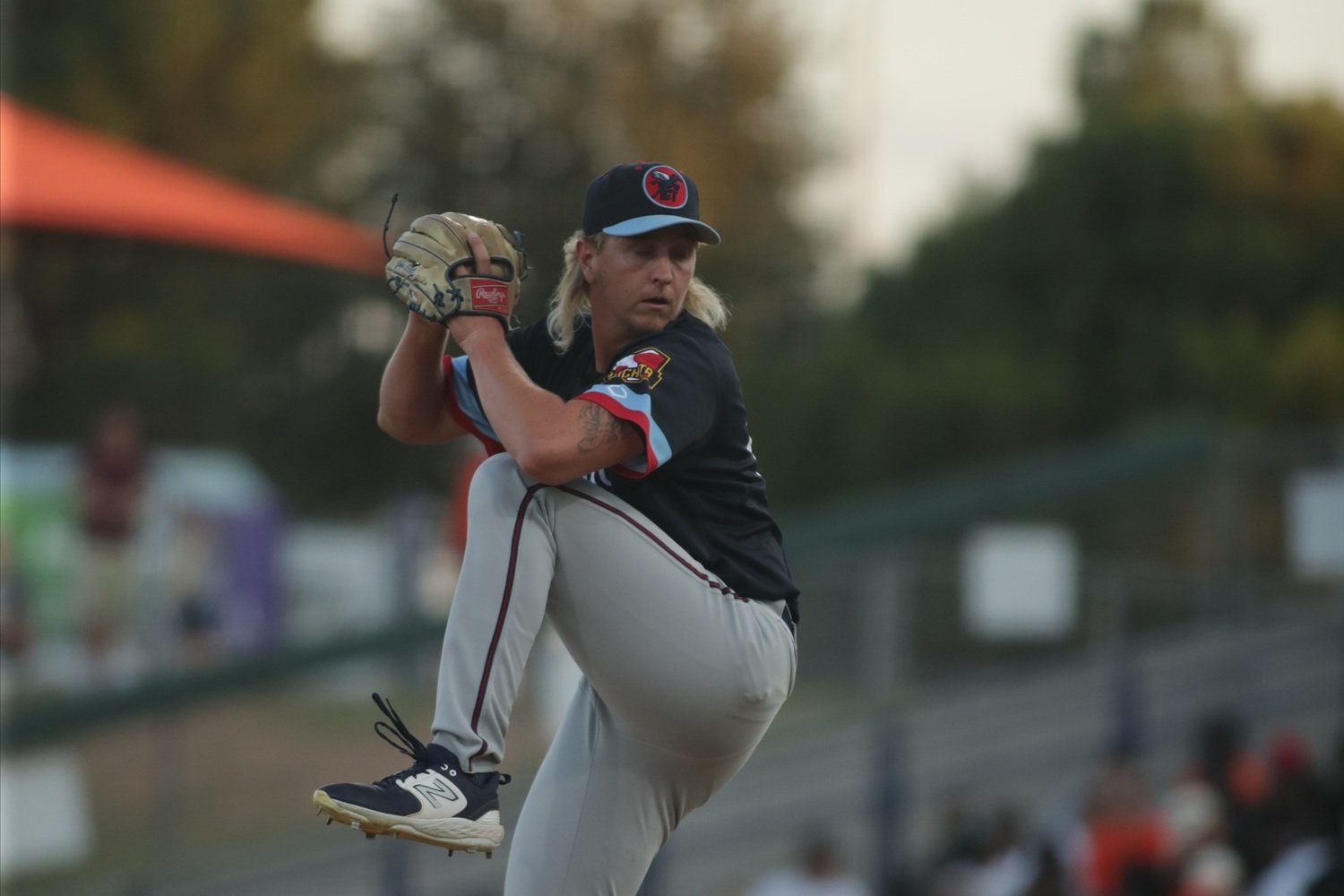 TRANSACTIONS The Mussels placed OF Jacob McCombs on the 7-Day Injured List with spasms in his left quad. SAINTS SENTINEL St. Paul 1, Toledo 2 Box Score Klein Shines in First Saints Start, but Offense Falls Short in Toledo John Klein made his first start (fourth appearance) for the Saints since his promotion from Wichita, and it was a good one, going six innings, giving up just two runs (one earned), and striking out six. But he fell to 0-2 with the Saints behind a quiet offense. The Mudhens grabbed a 2-0 lead in the bottom of the second inning. The Saints got on the scoreboard in the top of the fourth inning on Gabriel Gonzalez’s fourth Saints homer. The 21-year-old appears to really enjoy hitting in Toledo. Gonzalez has three home runs in four games there this week. Unfortunately, the Saints managed just four hits and two walks in the game. Noah Cardenas had a single and a walk. Cody Laweryson struck out three batters over two perfect innings. Travis Adams struck out two in a perfect ninth inning. Walker Jenkins went 0-for-3 with a walk and two strikeouts. Through his first four games, he is 1-for-15 (.067) with a double, two walks, and five strikeouts. Carson McCusker went 0-for-4 with four strikeouts. WIND SURGE WISDOM Wichita 3, Arkansas 0 Box Score Rucker Provides the Power While Culpepper, Four Relievers, Complete Shutout With the exception of the bottom of the fourth inning, there were no runs scored in this game. Fortunately, the Wind Surge were played at their home ballpark and hit in the bottom half throughout the game. With one out, Nate Baez and Ben Ross singled. With two outs, Jake Rucker’s sixth home run of the season drove in all three runs. The Wind Surge had just four hits. Three came in that fourth inning. The only other hit was a Kaelen Culpepper double, his seventh with Wichita. But in any shutout, the big story has to be the pitching, and C.J. Culpepper is putting himself in a better situation with every outing. He certainly appears to be back at full health. For the third straight outing, Culpepper tossed five innings. It is the second time in a row that he gave up no runs and he’s given up just one run over his last three starts. In five starts in August, he is 2-0 with a 1.17 ERA in 23 innings. From there, Michael Martinez, John Stankiewicz, Hunter Hoopes, and Kade Bragg each pitched a scoreless inning. For Bragg, it marked his third save since joining the Wind Surge. KERNELS NUGGETS Cedar Rapids 4, Beloit 5 (10 innings) Box Score Cubs Homers Top Kernels to Take Game and Series 4-2. The Kernels fell behind early in this one, fought back, sent it to extra frames, and then fell short in the tenth inning. Adrian Bohorquez gave up four runs on two hits, two hit batters, and three walks over 3 1/3 innings. He had seven strikeouts. All four runs came in the first inning courtesy of a grand slam off the bat of Brandon Compton, the Marlins' second-round pick from Arizona State. Eston Stuff got the next five outs and gave up just one hit. Jacob Kisting came on and tossed four scoreless, hitless innings. He walked one and struck out six batters. Ruddy Gomez gave up the unearned run in the tenth inning to take the loss. The Kernels got on the board in the bottom of the sixth. With two outs, Misael Urbina and Caden Kendle walked. Both scored on a double by Poncho Ruiz. In the bottom of the seventh, Eduardo Tait singled and went to second on a wild pitch. With two outs, Brandon Winokur singled to drive him in and cut the team’s deficit to 4-3. The Kernels went scoreless in the bottom of the eighth. The first two Kernels hitters in the bottom of the ninth also got out. However, just when you thought it was over, Kyle DeBarge hit a long solo home run to tie the score. Gomez allowed the Manfred Man to score in the top of the 10th. The Kernels got a runner to third in the bottom half of the inning but were unable to drive in the tying run. Tait went 2-for-5 with his seventh double. Brandon Winokur went 2-for-5 and an RBI. Jefferson Valladares went 2-for 4 with his third double. Prior to his game-tying home run, DeBarge was 0-for-4 with four strikeouts. MUSSEL MATTERS Fort Myers 11, Dunedin 4 Box Score Mighty Mussels Flex Their Muscles in Dunedin. The Mussels scored early and often on Friday night, maintaining a comfortable lead throughout the game. Dunedin actually took the early lead with a run in the bottom of the first frame. The Mussels tied it up in the top of the second when Ryan Sprock scored on a bases-loaded fielding error. The Blue Jays also went ahead with a single run in the bottom of the second. But in the top of the third, Mussels' right fielder Yasser Mercedes scored on a Daniel Pena single to tie the game. Yilber Herrera followed with his first Florida State League home run to give his team a 5-2 lead. The Mussels continued to show their Might-y-ness (if you will) in the fourth. Eduardo Beltre hit his second Fort Myers homer. Later in the inning, Peyton Carr hit a three-run homer that made it 9-2. Dunedin scored two more in the fourth to make it 9-4. However, in the top of the sixth Sprock knocked his first professional home run to make it 10-4. In the seventh, Mercedes drove in Emmanuel Rodriguez with a sacrifice fly. That gave the Mussels an 11-4 lead. Rodriguez, returning from an oblique injury, played center field for seven innings. He was 1-for-3 with two walks. Dameury Pena went 2-for-6 with his 10th double. Sprock was 2-for-3 with two walks and a homer. Carr went 2-for-4 with a walk and his fourth home run. Beltre went 1-for-3 with two walks and a homer. Daniel Pena went 1-for-3 with two walks. Herrera was 2-for-4 with a homer and three RBI. Michael Carpenter started and gave up four runs (three earned) on six hits and a walk over four innings. He struck out four batters. Anthony Narvaez came in and gave up one hit and one walk over two scoreless innings. Zander Sechrist gave up one hit over three scoreless innings to record his second save. PLAYERS OF THE DAY Hitter of the Day Ryan Sprock (Fort Myers): 2-for-3, 2 BB, HR(1), 4 R, RBI Pitcher of the Day CJ Culpepper (Wichita): 5 IP, 3 H, 0 R, 2 BB, HBP, 4 K, 74 pitches, 41 strikes (55.5%) PROSPECT SUMMARY Check out the Prospect Tracker for much more on our Twins Top 20 prospects after seeing how they did today. #1– Walker Jenkins (Wichita) - 0-for-3, BB, 2 K, (played CF) #2 - Luke Keaschall (Minnesota) - 0-for-4, BB, K, (played 2B) #3 - Kaelen Culpepper (Wichita) - 1-for-3, 2B(7), (played SS) #4 - Emmanuel Rodriguez (St. Paul) - Rehab in FM (1-for-3, 2 BB, R, K (played CF)) #5 - Eduardo Tait (Cedar Rapids) - 2-for-5, 2B(7), R, K (DH) #11 - Gabriel Gonzalez (St. Paul) - 2-for-4, HR(4), R, RBI, K (played LF) #14 - Brandon Winokur (Cedar Rapids) - 2-for-5, RBI, K (played SS) #17 - Kyle DeBarge (Cedar Rapids) - 1-for-5, HR(7), 4 K (played CF) #18 - C.J. Culpepper (Wichita) - 5 IP, 3 H, 0 R, 2 BB, HBP, 4 K, 74 pitches, 41 strikes (55.5%) #20 - Hendry Mendez (Wichita) - 0-for-2, 2 BB (played LF) SATURDAY PITCHING PROBABLES St. Paul @ Toledo (6:05 PM CT) - RHP Pierson Ohl (0-1, 2.82 ERA) Arkansas @ Wichita (6:05 PM CT) - RHP Alejandro Hidalgo (0-3, 15.55 ERA) Beloit @ Cedar Rapids (6:35 PM CT) - LHP Dasan Hill (0-1, 7.11 ERA) Fort Myers @ Dunedin (5:30 PM CT) - RHP Joel Garcia (0-2, 31.15 ERA) CURRENT W-L Records Minnesota Twins: 61-73 St. Paul Saints: 58-70 (25-30 second half, 7th in IL West, 14 GB) Wichita Wind Surge: 67-57 (30-25 second half, 3rd in Texas Lg North, 4 GB) Cedar Rapids Kernels: 68-56 (28-30 second half, T-3rd in MWL West, 4.5 GB, first half winner) Fort Myers Mighty Mussels: 49-70 (22-33 second half 6th in FSL West, 9.5 GB) FCL Twins: 39-20 (finished 2nd in FCL playoffs) DSL Twins: 24-32 (season complete) Please feel free to ask questions about the teams, the rosters, and discuss today’s games, or anything else Twins minor-league related in the comments below!
- 6 comments
-
- 3
-
-
-
- john klein
- gabriel gonzalez
- (and 2 more)
-
I think Winokur's performance has been pretty solid. We knew he was drafted as a great athlete and that he was raw, but to this point, he's more than held his own. He's not maybe as smooth/natural as Walker Jenkins, so him moving one level per season is fast enough. He's filled out the stat sheet nicely. He did say recently that he prefers 3B to SS, but he's done a very nice job at SS and I think they need to keep playing him there and keep him athletic enough to do it. He's pretty smooth. And he's fine in CF too. But offensively, I'm very encouraged. And he's just getting better.
- 28 replies
-
- 2
-
-
- kalai rosario
- walker jenkins
- (and 3 more)
-
They slipped him through last year, but that may have been helped by the fact that he missed like 10 weeks last year with injury. But he's gonna be hard to ignore this offseason. He's got the power (which has always been his thing), but he has more doubles. Still has a ton of strikeouts, but he's stolen like 25 bases this year too. Did he focus on speed and athleticism last offseason? If so, it appears to have worked, at least in the form of steals. I think that's been part of his issue in the outfield too. Being a little quicker and athletic only helps.
- 14 replies
-
- 4
-
-
- emmanuel rodriguez
- kalai rosario
- (and 3 more)
-
Image courtesy of Ed Bailey, Wichita Wind Surge (photo of Rubel Cespedes) We are approaching September, the final month of the regular season. Rosters will expand (but only by two), and especially with where the Twins are in the standings, opportunities will be given. The minor-league affiliates finish their season early, unless they are in the playoffs. It appears that the Cedar Rapids Kernels will be the lone Twins affiliate to reach the postseason… as they do every year. Fort Myers and Cedar Rapids seasons last two more weeks. Their final game is Sunday, September 7. Cedar Rapids begins their playoff run on Tuesday, September 9. Wichita plays for three more weeks. Their final game is Sunday, September 14. The Saints play for four more weeks. Their season concludes on September 21. It is in the offseason that decisions about 2026 roster building happen, if it hasn’t already happened. Some of those decisions will happen before the season ends. And some of those decisions are in preparation for moves in the offseason. For instance, the Twins front office may have already made decisions on some players. There may be people on the 40-man roster that they know will be DFAd or non-tendered in the offseason. With that knowledge, there might be an opportunity to DFA them in-season. That would allow that player to potentially catch on with another organization for a couple of weeks. It would also allow a 40-man spot to open up for a potential free agent or someone who would not be given that opportunity if the Twins were playing better and competing for a playoff spot. At the completion of the World Series, players eligible to become free agents become free agents. That includes minor leaguers. I’ve always said that I think that players who are signed or drafted by an organization and stay in that organization continuously without making it to the big leagues until they become free agents deserve more recognition. That is seriously impressive. Those players are obviously very, very good baseball players that just didn’t get a big-league call. There are currently five players in that exact situation with the Twins. Three of them signed with the Twins during the international signing period of 2018-19. Two others were drafted by the Twins in 2019 and remain in the organization. All five have spent seven seasons in the Twins system, and none of them have spent a day in the big leagues. So, as you read about these five players consider the three options that the Twins have for each, and think about what you would do? Add to the 40-man roster before the end of the World Series. The Twins have done this with a few players, most recently catcher Jair Camargo. Re-sign them to a minor-league contract. This can be done before or after the World Series. It can also be done before or after the Rule 5 draft. If the player signs back with the Twins before the Rule 5 draft, he is again subject to selection in the Rule 5. If he waits and signs after the Rule 5 draft, he’s heading to Fort Myers for spring training. Let them go as free agents. This is often the case, but as a free agent (for the first time since signing with the Twins, they (their representatives) have the right to chat with all 30 organizations, and even teams in Japan, Korea, Europe, or Mexico. And they could sign later with an independent team in hopes of getting another opportunity with an affiliate. Or they retire from baseball. 2019 MLB Draft Picks Consider this. The Minnesota Twins drafted 41 players. 32 of them signed. The first-round pick, 13th overall, was infielder Keoni Cavaco. He never reached Double-A. Their Competitive Balance Pick, 39th overall, was Matt Wallner who already has spent parts of three seasons in the big leagues. Their second-round pick was Matt Canterino, one of the most talented pitchers with some of the best “stuff” that we have seen from a pitching prospect. Unfortunately injuries have limited him to just 85 innings since he was drafted. He hasn’t pitched in a game since 2022. He was on the 40-man roster for over two years. After impressing early in spring training, he was injured and needed season-ending surgery. They removed him from the 40-man roster and then signed him to a two-year minor-league deal. Aside from Wallner, six more Twins 2019 draft picks have reached the big leagues. That includes three players the Twins traded as prospects: Spencer Steer (3rd), Sawyer Gipson-Long (6th), and Casey Legumina (8th). Brent Headrick (9th) debuted with the Twins, pitched in parts of two seasons before the Twins DFAd him. The Yankees claimed him, and he’s been solid when called upon out of their bullpen. Finally, Louis Varland (15th) and Edouard Julien (18th) each spent parts of three seasons with the Twins. Varland was inexplicably traded last month, and Julien’s offseason could be interesting. (The Twins also took Stillwater LHP Drew Gilbert in the 35th round, but he went to the University of Tennessee and three years later was a first-round pick. He made his MLB debut this month with the Giants and has a homer.) A few more players got close and had their moments as a prospect. Fifth round pick Seth Gray showed impressive power in the lower levels of the minor leagues. 29th round pick Alex Isola spent a couple of seasons at Triple-A St. Paul. Isola was released late in spring training. He has played this season with Lancaster in the Atlantic League. On Monday, the Twins released 2019 seventh-round draft pick Anthony Prato. He had a bit of a breakout in 2022 in Cedar Rapids, adding extra base power, and showing the ability to play around the diamond. He ended that season playing even better at Wichita. In 2023, he struggled early with the Wind Surge, but there was a need in St. Paul and Prato got the call. In 72 games with St. Paul in 2023, he hit .302/.452/.539 (.990) with 23 doubles and 10 homers. He returned to the Saints in 2024 and hit .228/.370/.350 (.720) with 20 doubles, six triples and three homers. In 82 games this year, he hit .259/.396/.360 (.755) with nine doubles, a triple and four homers. In 260 games with the Saints, he had 36 bases. He is the Saints franchise career leader by being hit by 31 pitches. An on-base machine. He should get more opportunities with other organizations for 2026, or he could potentially play in Japan or Korea and make some money. So as of this moment, there are two players remaining that fit the criteria of a.) 2019 draft pick and b.) stayed in the organization c.) without getting to the big leagues. With a month left in the season, they remain with the Twins. Have you already figured out who they are? Will Holland Holland and Julien were teammates at Auburn for three years. In 2019, they played in the College World Series. During the CWS, the Twins used their fifth-round pick on Holland, an exceptionally athletic shortstop, one of the fastest players in college baseball. He had a big offensive year as a sophomore, hitting .313/.406/.530 (.936) with 18 doubles and 12 homers. There was certainly steam that he could be a first-round pick in 2019, but instead he hit .246/.376/.401 (.777) with nine doubles and nine homers. The Twins bet on his athleticism and potential and saw a good hitter with speed and a little pop in his bat. It took a while for his offensive game to come back. He hit for a low average, but he generally had a good on-base percentage, and he showed enough pop to compile lots of extra base hits. He moved up to St. Paul in 2024 and hit .299/.428/.556 (.983) with 10 doubles, a triple and six homers in just 41 games. Unfortunately, his season ended with an injury. He missed a couple of months again this season with injury, but in 57 games, he has hit .220/.319/.382 (.700) with seven doubles and seven homers. Will Holland can play in the big leagues. No question in my mind. He has a good approach at the plate. His speed can be game-changing as a pinch runner but also on defense. He can play a solid shortstop, and he’s spent time at both third base and second base. He has also spent a lot of time at all three outfield spots. He has the speed to play center, and he has a strong arm. Can he keep the strikeouts down enough to be a decent contributor offensively? That’s really the one big question, in my mind. Cody Laweryson With their 14th round pick in 2019, the Twins selected Laweryson out of the University of Maine. He had a strong showing that summer in Elizabethton and was named the Twins Daily Short Season Minor League Pitcher of the Year. In 2021, he was a starter at Cedar Rapids. He returned to the Kernels in 2022 and that’s when he transferred to the bullpen. Before the mid-point of the season, he was promoted to Wichita where he went 5-0 with a 1.06 ERA over 59 2/3 innings. He had 69 strikeouts. It earned him an invitation to big-league camp in 2023 and spent that full season with the Saints. He posted a 4.80 ERA and started having some arm injuries and spending time on the IL. In 2024, he spent the full season back in Wichita and posted a 6.82 ERA. This season, he split the season between Wichita and St. Paul and just recently returned from the Injured List. 2018-2019 International Signing Period Likewise, international signings from the 2018-19 international signing period will also be eligible for free agency following the World Series unless they are added to the 40-man roster before the conclusion of the World Series. There are three players that the Twins signed during the 2018-19 international signing period that have remained in the Twins organization to this day. Misael Urbina In July of 2018, MLB.com ranked their Top 30 international prospects and the Venezuelan-born Urbina was Number 3 on that list. The Twins signed the outfielder for $2.75 million. He made his pro debut in the DSL in 2019 and his .279 with 14 doubles, five triples, two homers, and 19 stolen bases. He also walked 23 times with just 14 strikeouts. When baseball returned in 2021, he moved up to Fort Myers, skipping the FCL. In 101 games, he hit .191/.299/.286 with 12 doubles, five homers and 16 steals. He repeated at Fort Myers in 2022 and played in just 50 games due to injury. He hit .246 with 16 doubles and five homers. In 2023, he made the jump to Cedar Rapids where he was almost a year-and-a-half younger than the average hitter. In 102 games, he hit .180/.289/.282 (.571) with 18 doubles, three triples, and four home runs. He returned to the Kernels in 2024 and hit .218/.335/.324 (.659) with 16 doubles, two triples and five home runs. In April he turned 23, and he celebrated in Cedar Rapids for the third straight year. Hopefully someone took him to Bushwood. He just came back from the injured list. In 64 games this season, he has hit .243/.354/.386 (.740) with 14 doubles, two triples, and three home runs. Just last weekend, he had a four-hit game. Rubel Cespedes Prior to 2021, the international signing period began July 2nd and went the full year. In 2021, the beginning of the signing period moved to January which made it easier to determine when a player could become a free agent. Cespedes signed very late in the signing period. The Twins signed him on April 29, 2019. He was already 18. A month later, he was added to the DSL Twins roster. He came to the States in 2021 and played in the FCL. He then spent the 2022 and 2023 seasons in Fort Myers with the Mussels. He added doubles power in 2022 and in 2023, he hit .233 with 26 doubles, two triples, and 13 home runs. He began getting playing time in big-league spring training games and advanced to Cedar Rapids in 2024. He got off to a fast start and played well throughout the year. In 110 games, he hit .282/.346/.431 (.777) with 22 doubles, two triples and 12 home runs. He has played in 91 games for Double-A Wichita this year. He has split his time between first base, third base, and DH. He has hit .244/.307/.395 with 21 doubles, three triples and nine home runs. Julio Bonilla Bonilla signed even later than Cespedes. He signed with the Twins on June 1, 2019, three weeks later, he was officially assigned to the DSL Twins. The Santo Domingo native pitched in the DSL in 2019, 2021 and 2022 before coming to the States in 2023 to pitch for the FCL Twins. He threw 25 1/3 innings in both 2019 and 2022, and that remains his season high. He’s struggled on the mound, and he’s struggled to remain on the mound. In 2024, he pitched in 19 games and 23 innings for the Mighty Mussels. He had a 7.83 ERA, a 1.78 WHIP, and 18 walks (7.0 per 9.0 IP). He did strike out 27 batters, but he hit three and threw four wild pitches. He went on the Injured List June 3rd and returned June 18th. He went on the IL on July 16th and returned on August 12th. He went on the IL on August 27th for the remainder of the season. He began the 2025 season on the Mussels 60-Day injured List. He began a rehab assignment in mid-June and was activated on July 7th. In 10 innings over eight outings, he gave up four runs on 10 hits and four walks, but he also struck out 12 batters. On August 13th, he was promoted to Cedar Rapids where he has pitched three innings in three games. He’s given up three runs on two hits and three walks, and he’s got four strikeouts. Easy choice to let the 24-year-old go, right? But I spent time looking at his Statcast game data, and it’s easy to understand the intrigue. Bonilla stands 6-3. He throws four different pitches. He has two fastballs (Four-seam and sinker) that average about 94 mph and touched 97. His cutter sits in the 86-88 range. He also throws a low-90s slider. He gets a ton of movement on the sinker and even the four-seamer. In his first four appearances in Fort Myers, he threw approximately 25-30% of his pitches outside the strike zone. In his last four appearances with the Mussels, he was closer to 50/50. If a team knew he could stay healthy, which no team can say with certainty about any pitcher, especially with Bonilla. But just based on his stuff and velocity, he seems like he’d be a great project to take on and see what he can become. There you have it. There are five players in the Minnesota Twins organization who will become free agents after spending the past seven seasons in the Twins system. These players deserve recognition for their “service time,” and it is worth discussing if the Twins should bring any of them back in the offseason. What do you think? Would you try to sign any of these players? My Opinion 1.) Add none of them to the 40-man roster. 2.) Attempt to re-sign all of them, but especially Holland, Cespedes and Bonilla. Your turn. Which, if any, of these players would you attempts to bring keep in the organization for 2026? Also, thank you for reading through here about these five guys who have toiled in the minors for so long and deserve to be recognized. View full article
-
5 Impending Minnesota Twins Free Agents You Hadn't Yet Thought About
Seth Stohs posted an article in Minor Leagues
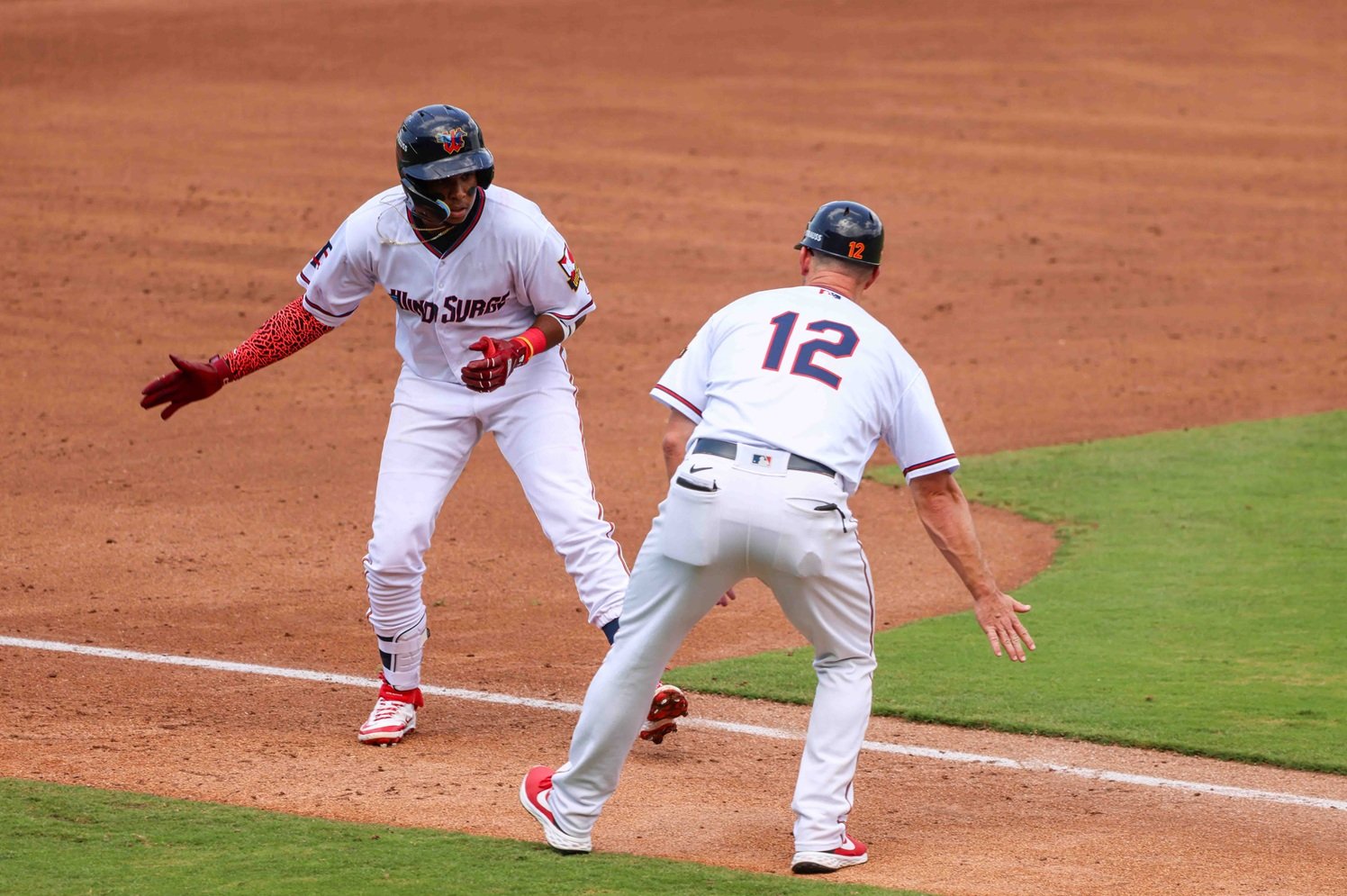 We are approaching September, the final month of the regular season. Rosters will expand (but only by two), and especially with where the Twins are in the standings, opportunities will be given. The minor-league affiliates finish their season early, unless they are in the playoffs. It appears that the Cedar Rapids Kernels will be the lone Twins affiliate to reach the postseason… as they do every year. Fort Myers and Cedar Rapids seasons last two more weeks. Their final game is Sunday, September 7. Cedar Rapids begins their playoff run on Tuesday, September 9. Wichita plays for three more weeks. Their final game is Sunday, September 14. The Saints play for four more weeks. Their season concludes on September 21. It is in the offseason that decisions about 2026 roster building happen, if it hasn’t already happened. Some of those decisions will happen before the season ends. And some of those decisions are in preparation for moves in the offseason. For instance, the Twins front office may have already made decisions on some players. There may be people on the 40-man roster that they know will be DFAd or non-tendered in the offseason. With that knowledge, there might be an opportunity to DFA them in-season. That would allow that player to potentially catch on with another organization for a couple of weeks. It would also allow a 40-man spot to open up for a potential free agent or someone who would not be given that opportunity if the Twins were playing better and competing for a playoff spot. At the completion of the World Series, players eligible to become free agents become free agents. That includes minor leaguers. I’ve always said that I think that players who are signed or drafted by an organization and stay in that organization continuously without making it to the big leagues until they become free agents deserve more recognition. That is seriously impressive. Those players are obviously very, very good baseball players that just didn’t get a big-league call. There are currently five players in that exact situation with the Twins. Three of them signed with the Twins during the international signing period of 2018-19. Two others were drafted by the Twins in 2019 and remain in the organization. All five have spent seven seasons in the Twins system, and none of them have spent a day in the big leagues. So, as you read about these five players consider the three options that the Twins have for each, and think about what you would do? Add to the 40-man roster before the end of the World Series. The Twins have done this with a few players, most recently catcher Jair Camargo. Re-sign them to a minor-league contract. This can be done before or after the World Series. It can also be done before or after the Rule 5 draft. If the player signs back with the Twins before the Rule 5 draft, he is again subject to selection in the Rule 5. If he waits and signs after the Rule 5 draft, he’s heading to Fort Myers for spring training. Let them go as free agents. This is often the case, but as a free agent (for the first time since signing with the Twins, they (their representatives) have the right to chat with all 30 organizations, and even teams in Japan, Korea, Europe, or Mexico. And they could sign later with an independent team in hopes of getting another opportunity with an affiliate. Or they retire from baseball. 2019 MLB Draft Picks Consider this. The Minnesota Twins drafted 41 players. 32 of them signed. The first-round pick, 13th overall, was infielder Keoni Cavaco. He never reached Double-A. Their Competitive Balance Pick, 39th overall, was Matt Wallner who already has spent parts of three seasons in the big leagues. Their second-round pick was Matt Canterino, one of the most talented pitchers with some of the best “stuff” that we have seen from a pitching prospect. Unfortunately injuries have limited him to just 85 innings since he was drafted. He hasn’t pitched in a game since 2022. He was on the 40-man roster for over two years. After impressing early in spring training, he was injured and needed season-ending surgery. They removed him from the 40-man roster and then signed him to a two-year minor-league deal. Aside from Wallner, six more Twins 2019 draft picks have reached the big leagues. That includes three players the Twins traded as prospects: Spencer Steer (3rd), Sawyer Gipson-Long (6th), and Casey Legumina (8th). Brent Headrick (9th) debuted with the Twins, pitched in parts of two seasons before the Twins DFAd him. The Yankees claimed him, and he’s been solid when called upon out of their bullpen. Finally, Louis Varland (15th) and Edouard Julien (18th) each spent parts of three seasons with the Twins. Varland was inexplicably traded last month, and Julien’s offseason could be interesting. (The Twins also took Stillwater LHP Drew Gilbert in the 35th round, but he went to the University of Tennessee and three years later was a first-round pick. He made his MLB debut this month with the Giants and has a homer.) A few more players got close and had their moments as a prospect. Fifth round pick Seth Gray showed impressive power in the lower levels of the minor leagues. 29th round pick Alex Isola spent a couple of seasons at Triple-A St. Paul. Isola was released late in spring training. He has played this season with Lancaster in the Atlantic League. On Monday, the Twins released 2019 seventh-round draft pick Anthony Prato. He had a bit of a breakout in 2022 in Cedar Rapids, adding extra base power, and showing the ability to play around the diamond. He ended that season playing even better at Wichita. In 2023, he struggled early with the Wind Surge, but there was a need in St. Paul and Prato got the call. In 72 games with St. Paul in 2023, he hit .302/.452/.539 (.990) with 23 doubles and 10 homers. He returned to the Saints in 2024 and hit .228/.370/.350 (.720) with 20 doubles, six triples and three homers. In 82 games this year, he hit .259/.396/.360 (.755) with nine doubles, a triple and four homers. In 260 games with the Saints, he had 36 bases. He is the Saints franchise career leader by being hit by 31 pitches. An on-base machine. He should get more opportunities with other organizations for 2026, or he could potentially play in Japan or Korea and make some money. So as of this moment, there are two players remaining that fit the criteria of a.) 2019 draft pick and b.) stayed in the organization c.) without getting to the big leagues. With a month left in the season, they remain with the Twins. Have you already figured out who they are? Will Holland Holland and Julien were teammates at Auburn for three years. In 2019, they played in the College World Series. During the CWS, the Twins used their fifth-round pick on Holland, an exceptionally athletic shortstop, one of the fastest players in college baseball. He had a big offensive year as a sophomore, hitting .313/.406/.530 (.936) with 18 doubles and 12 homers. There was certainly steam that he could be a first-round pick in 2019, but instead he hit .246/.376/.401 (.777) with nine doubles and nine homers. The Twins bet on his athleticism and potential and saw a good hitter with speed and a little pop in his bat. It took a while for his offensive game to come back. He hit for a low average, but he generally had a good on-base percentage, and he showed enough pop to compile lots of extra base hits. He moved up to St. Paul in 2024 and hit .299/.428/.556 (.983) with 10 doubles, a triple and six homers in just 41 games. Unfortunately, his season ended with an injury. He missed a couple of months again this season with injury, but in 57 games, he has hit .220/.319/.382 (.700) with seven doubles and seven homers. Will Holland can play in the big leagues. No question in my mind. He has a good approach at the plate. His speed can be game-changing as a pinch runner but also on defense. He can play a solid shortstop, and he’s spent time at both third base and second base. He has also spent a lot of time at all three outfield spots. He has the speed to play center, and he has a strong arm. Can he keep the strikeouts down enough to be a decent contributor offensively? That’s really the one big question, in my mind. Cody Laweryson With their 14th round pick in 2019, the Twins selected Laweryson out of the University of Maine. He had a strong showing that summer in Elizabethton and was named the Twins Daily Short Season Minor League Pitcher of the Year. In 2021, he was a starter at Cedar Rapids. He returned to the Kernels in 2022 and that’s when he transferred to the bullpen. Before the mid-point of the season, he was promoted to Wichita where he went 5-0 with a 1.06 ERA over 59 2/3 innings. He had 69 strikeouts. It earned him an invitation to big-league camp in 2023 and spent that full season with the Saints. He posted a 4.80 ERA and started having some arm injuries and spending time on the IL. In 2024, he spent the full season back in Wichita and posted a 6.82 ERA. This season, he split the season between Wichita and St. Paul and just recently returned from the Injured List. 2018-2019 International Signing Period Likewise, international signings from the 2018-19 international signing period will also be eligible for free agency following the World Series unless they are added to the 40-man roster before the conclusion of the World Series. There are three players that the Twins signed during the 2018-19 international signing period that have remained in the Twins organization to this day. Misael Urbina In July of 2018, MLB.com ranked their Top 30 international prospects and the Venezuelan-born Urbina was Number 3 on that list. The Twins signed the outfielder for $2.75 million. He made his pro debut in the DSL in 2019 and his .279 with 14 doubles, five triples, two homers, and 19 stolen bases. He also walked 23 times with just 14 strikeouts. When baseball returned in 2021, he moved up to Fort Myers, skipping the FCL. In 101 games, he hit .191/.299/.286 with 12 doubles, five homers and 16 steals. He repeated at Fort Myers in 2022 and played in just 50 games due to injury. He hit .246 with 16 doubles and five homers. In 2023, he made the jump to Cedar Rapids where he was almost a year-and-a-half younger than the average hitter. In 102 games, he hit .180/.289/.282 (.571) with 18 doubles, three triples, and four home runs. He returned to the Kernels in 2024 and hit .218/.335/.324 (.659) with 16 doubles, two triples and five home runs. In April he turned 23, and he celebrated in Cedar Rapids for the third straight year. Hopefully someone took him to Bushwood. He just came back from the injured list. In 64 games this season, he has hit .243/.354/.386 (.740) with 14 doubles, two triples, and three home runs. Just last weekend, he had a four-hit game. Rubel Cespedes Prior to 2021, the international signing period began July 2nd and went the full year. In 2021, the beginning of the signing period moved to January which made it easier to determine when a player could become a free agent. Cespedes signed very late in the signing period. The Twins signed him on April 29, 2019. He was already 18. A month later, he was added to the DSL Twins roster. He came to the States in 2021 and played in the FCL. He then spent the 2022 and 2023 seasons in Fort Myers with the Mussels. He added doubles power in 2022 and in 2023, he hit .233 with 26 doubles, two triples, and 13 home runs. He began getting playing time in big-league spring training games and advanced to Cedar Rapids in 2024. He got off to a fast start and played well throughout the year. In 110 games, he hit .282/.346/.431 (.777) with 22 doubles, two triples and 12 home runs. He has played in 91 games for Double-A Wichita this year. He has split his time between first base, third base, and DH. He has hit .244/.307/.395 with 21 doubles, three triples and nine home runs. Julio Bonilla Bonilla signed even later than Cespedes. He signed with the Twins on June 1, 2019, three weeks later, he was officially assigned to the DSL Twins. The Santo Domingo native pitched in the DSL in 2019, 2021 and 2022 before coming to the States in 2023 to pitch for the FCL Twins. He threw 25 1/3 innings in both 2019 and 2022, and that remains his season high. He’s struggled on the mound, and he’s struggled to remain on the mound. In 2024, he pitched in 19 games and 23 innings for the Mighty Mussels. He had a 7.83 ERA, a 1.78 WHIP, and 18 walks (7.0 per 9.0 IP). He did strike out 27 batters, but he hit three and threw four wild pitches. He went on the Injured List June 3rd and returned June 18th. He went on the IL on July 16th and returned on August 12th. He went on the IL on August 27th for the remainder of the season. He began the 2025 season on the Mussels 60-Day injured List. He began a rehab assignment in mid-June and was activated on July 7th. In 10 innings over eight outings, he gave up four runs on 10 hits and four walks, but he also struck out 12 batters. On August 13th, he was promoted to Cedar Rapids where he has pitched three innings in three games. He’s given up three runs on two hits and three walks, and he’s got four strikeouts. Easy choice to let the 24-year-old go, right? But I spent time looking at his Statcast game data, and it’s easy to understand the intrigue. Bonilla stands 6-3. He throws four different pitches. He has two fastballs (Four-seam and sinker) that average about 94 mph and touched 97. His cutter sits in the 86-88 range. He also throws a low-90s slider. He gets a ton of movement on the sinker and even the four-seamer. In his first four appearances in Fort Myers, he threw approximately 25-30% of his pitches outside the strike zone. In his last four appearances with the Mussels, he was closer to 50/50. If a team knew he could stay healthy, which no team can say with certainty about any pitcher, especially with Bonilla. But just based on his stuff and velocity, he seems like he’d be a great project to take on and see what he can become. There you have it. There are five players in the Minnesota Twins organization who will become free agents after spending the past seven seasons in the Twins system. These players deserve recognition for their “service time,” and it is worth discussing if the Twins should bring any of them back in the offseason. What do you think? Would you try to sign any of these players? My Opinion 1.) Add none of them to the 40-man roster. 2.) Attempt to re-sign all of them, but especially Holland, Cespedes and Bonilla. Your turn. Which, if any, of these players would you attempts to bring keep in the organization for 2026? Also, thank you for reading through here about these five guys who have toiled in the minors for so long and deserve to be recognized.
- 4 comments
-
- 14
-
-
- rubel cespedes
- julio bonilla
- (and 3 more)